Get 20% OFF All Premium 3D & STL Models!

The world of digital content creation, from blockbuster video games to cinematic automotive renders and cutting-edge AR/VR experiences, is built upon the foundation of high-quality 3D assets. For automotive designers, game developers, and visualization artists, the ability to source and integrate meticulously crafted 3D car models is paramount. These digital replicas aren’t just pretty pictures; they are complex technical constructions that serve as the backbone for countless virtual realities.
In this comprehensive guide, we’ll explore the intricate process of utilizing professional-grade 3D car models, delving into their technical specifications, integration workflows, and the diverse applications they enable. We’ll specifically highlight the exceptional qualities of the VAZ Lada Samara 2115 Sedan 3D Model available on 88cars3d.com, a prime example of a versatile asset designed for peak performance across various digital platforms.
Whether you’re crafting an urban driving simulator set in an Eastern European city, designing a nostalgic render, or bringing a piece of automotive history to life in an immersive AR application, understanding the nuances of 3D car models is crucial. Let’s embark on a journey through the technical landscape of digital automotive design.
When acquiring a 3D model, particularly a complex asset like a car, understanding the various file formats is critical. Each format serves specific purposes, optimized for different software, engines, or end-use applications. The VAZ Lada Samara 2115 3D Model, for instance, comes equipped with a comprehensive suite of formats, ensuring maximum compatibility and utility for any project.
The .blend format is the native file type for Blender, a powerful and widely used open-source 3D creation suite. A .blend file typically contains the entire Blender scene, including the 3D model’s geometry, materials, textures, lighting, camera setups, and even animations. For artists working primarily in Blender, this format offers the most direct and editable access to the model. You can modify every aspect, from the mesh topology to the shader nodes and rigging. The .blend file for the Lada Samara 2115 would allow immediate customization, shader tweaking, and rendering within Blender’s Cycles or Eevee render engines.
The .fbx (Filmbox) format is a proprietary file format owned by Autodesk, but it has become an industry standard for exchanging 3D data between different software applications and game engines. It’s renowned for its ability to store not just mesh data, but also crucial elements like animations, bone rigging, skinning, camera information, and lighting. This makes .fbx ideal for pipelines involving multiple software, such as modeling in Blender or 3ds Max, then exporting to Unreal Engine or Unity for game development. Its robust support for skeletal animation makes it the go-to choice for real-time applications where vehicles need to have functioning wheels, steering, and suspension. For the Lada Samara 2115, the .fbx is likely the most used format for game development due to its efficiency and comprehensive data storage.
The .obj (Wavefront OBJ) format is one of the oldest and most universally supported 3D file formats. It’s a simple, text-based format primarily used for transferring geometric data – vertices, normals, UV coordinates, and faces. While it doesn’t typically store advanced features like animation or rigging, it’s incredibly reliable for sharing static mesh data across almost any 3D software. An accompanying .mtl (Material Template Library) file usually defines basic material properties and texture references. For the Lada Samara 2115, the .obj format is perfect for artists needing to import the base mesh into less common 3D applications or for general architectural visualization where complex animations aren’t required.
The .glb (GL Transmission Format Binary) is the binary version of glTF, a royalty-free specification for the efficient transmission and loading of 3D scenes and models by applications. It’s designed for speed and compactness, often embedding textures and other data directly within a single file. .glb is rapidly becoming the standard for 3D on the web, AR (Augmented Reality), and VR (Virtual Reality) platforms due to its efficiency and PBR (Physically Based Rendering) material support. If you’re building an interactive web experience or an AR app featuring the VAZ Lada Samara 2115, the .glb format is your best bet for optimized performance and visual fidelity.
The .stl (Stereolithography) format is the de facto standard for 3D printing. It represents a 3D model as a series of connected triangles (a triangular mesh) without any color, texture, or material information. Its simplicity makes it universally compatible with 3D printers and slicing software. When preparing the VAZ Lada Samara 2115 for physical output, the .stl file will be used, requiring careful attention to scale, wall thickness, and print orientation, as detailed in the product specifications. This format bridges the gap between digital asset and tangible object.
The .ply (Polygon File Format) is a versatile file type for storing 3D data, particularly from 3D scanners. It can store a wider range of properties than .obj or .stl, including color, transparency, normals, texture coordinates, and even reliability information for each vertex or face. While not as universally used as .fbx or .obj for general asset exchange, .ply is valuable for applications requiring high precision mesh data, such as scientific visualization, CAD workflows, or when detailed surface information beyond basic geometry is needed. For the Lada Samara 2115, it offers an alternative for highly detailed geometric analysis or specific industrial applications.
The .unreal format, or more accurately, assets packaged for Unreal Engine, typically refers to a combination of .fbx files containing the mesh, alongside configured materials, textures, and blueprints specific to the Unreal Engine environment. While not a standalone file type like .fbx, having an “.unreal” option often implies the model has been pre-imported, optimized, and set up within an Unreal project, saving significant integration time. This means materials are PBR-ready, collision meshes might be pre-generated, and pivots are correctly aligned for immediate use within a game or simulation project built on Unreal Engine. This option for the VAZ Lada Samara 2115 drastically accelerates development for Unreal-focused teams.
Similar to .blend for Blender, the .max format is the native scene file for Autodesk 3ds Max, a leading software for 3D modeling, animation, and rendering. A .max file encapsulates the entire 3ds Max scene, including geometry, modifiers, materials, lights, cameras, and animation data. For professionals using 3ds Max, this format provides the highest level of editability and allows access to all the original construction data and hierarchy. It’s perfect for complex rendering setups, cinematic animations, and architectural visualizations, offering complete control over the VAZ Lada Samara 2115 model within the 3ds Max ecosystem.
The inclusion of such a diverse range of formats for the VAZ Lada Samara 2115 3D Model underscores its professional-grade versatility, catering to virtually any digital production pipeline.
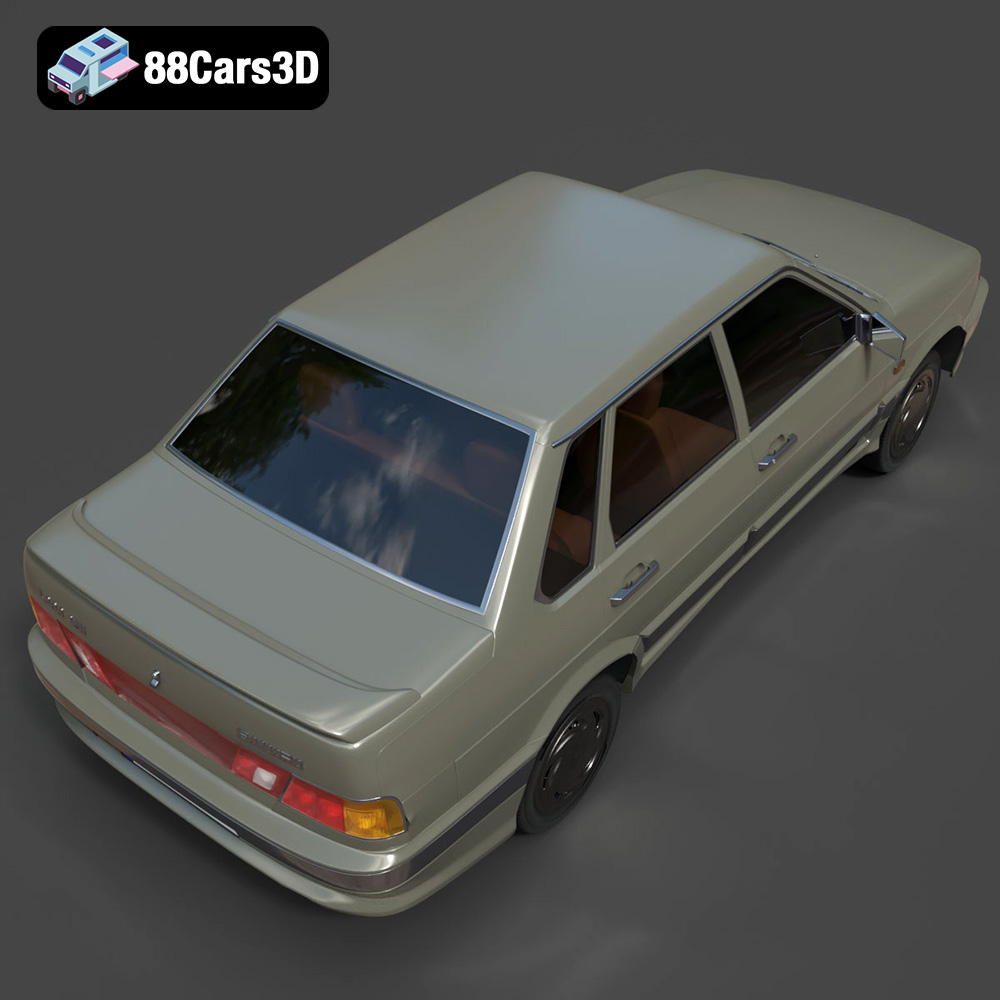
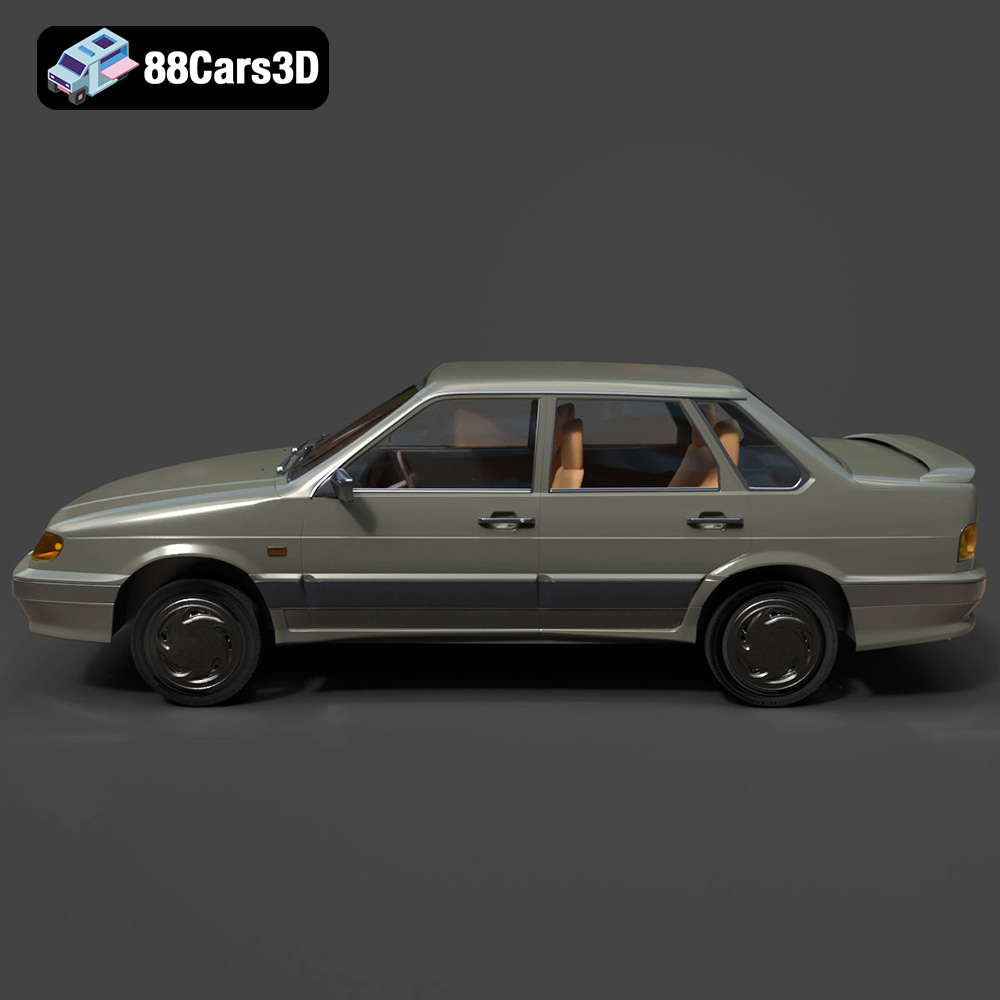
The VAZ Lada Samara 2115 Sedan (1997-2008) holds a unique position in automotive history, symbolizing robust practicality and a distinct design aesthetic. Recreating such an iconic vehicle in 3D requires an acute eye for detail and a deep understanding of optimized mesh construction. The 3D model of the Lada Samara 2115 available at 88cars3d.com exemplifies this balance, offering both visual fidelity and technical efficiency.
The model meticulously captures the VAZ Lada Samara 2115’s signature angular lines and aerodynamic front fascia. Every curve and panel gap has been faithfully recreated to ensure real-world scale accuracy, a critical factor for professional rendering and realistic simulations. From the detailed front grille and distinct headlight assemblies to the authentic exhaust system and undercarriage details, no element is overlooked. The factory-style wheels and realistic tire treads further enhance its realism, making it suitable for close-up renders where authenticity is paramount. This attention to exterior detail ensures that whether the car is seen in a wide shot in a game or a focused product render, its identity is unmistakable and visually convincing.
Beyond the exterior, the Lada Samara 2115 model boasts a fully detailed cockpit and interior. This includes accurately modeled front and rear seat configurations, a realistic dashboard and steering wheel design, an authentic instrument cluster, and detailed center console. For game developers, this level of interior detail is crucial for first-person POV experiences, allowing players to feel truly immersed within the vehicle. Critically, this intricate detail is balanced with game-ready optimization. The model strikes a perfect equilibrium, maintaining high visual realism while keeping an efficient triangle count. This clean topology ensures smooth performance in real-time rendering engines like Unreal and Unity, preventing performance bottlenecks while still delivering a high-quality visual experience.
One of the significant advantages of this VAZ Lada Samara 2115 3D model is its setup for animation. It features separate wheels, suspension, and steering components, each with properly configured pivot points. This means animators can easily simulate realistic wheel rotation, independent suspension travel, and accurate steering, adding dynamic realism to any scene. Furthermore, the real-world scale accuracy, based on actual vehicle chassis dimensions, guarantees correct proportions and fit within virtual environments. This level of technical preparation saves countless hours for developers and artists, allowing them to focus on creative tasks rather than fundamental setup. The clean, well-organized mesh is also ideal for customization, allowing users to easily change body colors, tire textures, or adjust material finishes for diverse artistic visions.
The true power of a high-quality 3D asset lies in its seamless integration into various professional workflows. The VAZ Lada Samara 2115 3D Model is designed with this versatility in mind, providing artists and developers with the flexibility to use it across their preferred software and engines.
For cinematic renders and detailed visualizations, 3ds Max and Blender are industry mainstays. When working with the Lada Samara 2115 model in 3ds Max, the native .max file offers immediate access to the entire scene, including materials and lights if pre-configured. Artists can leverage 3ds Max’s powerful modeling tools for further customization, or its robust rendering engines like V-Ray or Corona for photorealistic output. Similarly, Blender users benefit from the .blend file, enabling direct manipulation within its intuitive interface. Here, the model can be easily integrated into Cycles or Eevee render pipelines, allowing for advanced material creation using shader nodes, intricate lighting setups, and complex camera animations. For both platforms, the model’s clean topology and accurate UVs (implicitly understood for game-ready models) ensure that textures can be applied precisely, and global illumination calculations are optimized for realistic light bounces.
Game development demands performance, and the VAZ Lada Samara 2115 3D Model is specifically optimized for this environment. The .fbx format is the bridge for importing the model into Unreal Engine or Unity. For Unreal, the “.unreal” option, if it refers to a pre-configured asset, significantly streamlines the process. This typically means the mesh, PBR materials, and potentially basic collision setups are already configured. For both engines:
The model’s “game-ready optimization” ensures that despite its detailed exterior and interior, it maintains an efficient triangle count, which is essential for maintaining high frame rates in demanding game environments. This makes it an ideal 3D car model for racing titles, open-world adventures, and professional driving simulators, ready to hit the virtual roads right out of the box.
The utility of high-quality 3D assets extends far beyond traditional rendering and game development. The VAZ Lada Samara 2115 3D Model is also a powerful tool for emerging technologies like Augmented Reality (AR) and Virtual Reality (VR), as well as the tangible world of 3D printing, showcasing the incredible versatility of a well-crafted digital asset.
AR and VR are transforming how we interact with digital content, offering immersive experiences that blend virtual objects with the real world or create entirely new realities. For these platforms, optimized assets are non-negotiable, and the Lada Samara 2115 model is ideally suited for such applications. The inclusion of the .glb format is particularly advantageous here. .glb files are designed for efficient transmission and loading in web and mobile environments, making them perfect for AR applications where models need to appear instantly on a smartphone camera feed. Imagine a virtual showroom where customers can explore the Lada Samara in full 3D, changing colors and examining interior details through their phone, or a VR driving experience that places them directly into the driver’s seat of this classic sedan. The model’s clean topology and optimized polycount ensure smooth performance even on less powerful mobile AR devices, preventing lag and delivering a seamless user experience. Furthermore, its real-world scale accuracy is vital for convincing AR placements, ensuring the virtual car appears proportionate to its real-world surroundings.
For hobbyists, collectors, or even professional designers wanting a physical prototype, 3D printing offers an exciting avenue. The VAZ Lada Samara 2115 3D Model is fully convertible to the .stl format, the industry standard for 3D printing. This allows users to bring the iconic sedan to life as a tangible object. The provided 3D print settings are invaluable for achieving optimal results:
Whether for display-scale hobbyists or detailed prototypes, the ability to physically manifest the VAZ Lada Samara 2115 from its digital form is a testament to the comprehensive design and versatility of 88cars3d.com’s offerings.
In the competitive fields of 3D rendering and game development, an asset’s technical underlying structure is just as important as its visual appeal. The VAZ Lada Samara 2115 3D Model stands out due to its adherence to best practices in 3D asset creation, guaranteeing both stellar aesthetics and robust performance.
The term “game-ready” is not just a marketing buzzword; it signifies a meticulous approach to 3D modeling. For the Lada Samara 2115, this means the model features an optimized triangle count that strikes a perfect balance between visual fidelity and real-time engine performance. A clean topology, meaning a well-structured and organized mesh with efficient polygon distribution, is fundamental. This ensures that the model renders smoothly without artifacts, facilitates efficient UV mapping for texture application, and is easy to modify if customization is required. For game developers, this translates to faster load times, smoother frame rates, and less need for costly optimization in post-production. It’s a critical advantage, especially for scenarios involving multiple vehicles on screen or complex interactive environments. The model’s optimized geometry for first-person POV in gaming further underscores its practical utility for immersive experiences.
Accuracy is key in professional 3D work. The VAZ Lada Samara 2115 model is built with real-world scale accuracy, based on actual vehicle chassis dimensions. This is vital for maintaining realism in simulations, architectural visualizations, and game environments, ensuring that the car looks and feels correctly proportioned within any scene. Furthermore, the proper pivot setup for steering, wheel rotation, and suspension travel is a subtle yet powerful technical advantage. Correct pivots mean that animations can be applied directly and realistically without extensive setup or re-rigging, saving significant development time. The model’s stated compatibility with major 3D software platforms and real-time rendering engines, reinforced by the multitude of included file formats (.blend, .fbx, .obj, .glb, .stl, .ply, .unreal, .max), ensures it can be integrated into virtually any professional pipeline with minimal friction.
While the model is highly detailed out-of-the-box, its underlying structure is built for customization. Artists can easily change body colors, applying anything from authentic factory finishes to custom metallic paints, adapting the vehicle’s appearance to suit different artistic visions or client requirements. Modifying tire textures for off-road versus street variants allows the same base model to serve diverse narrative or gameplay contexts. Adjusting material finishes (matte, gloss, metallic) provides further aesthetic flexibility. Even adapting lighting for different environments is simplified, thanks to the model’s clean material setup. This adaptability makes the VAZ Lada Samara 2115 not just a static asset, but a flexible toolkit for a wide range of creative projects, maximizing its value for designers and developers looking for high-quality 3D car models.
The landscape of digital content creation is constantly evolving, demanding not only creativity but also a deep understanding of technical tools and assets. High-quality 3D car models like the VAZ Lada Samara 2115 Sedan (1997-2008) are more than just virtual objects; they are meticulously engineered components designed to elevate your projects across rendering, game development, AR/VR, and even 3D printing.
We’ve explored how a diverse range of file formats caters to specific workflows, from the detailed editing capabilities of .blend and .max to the universal compatibility of .fbx and .obj, and the specialized applications of .glb for AR/VR and .stl for tangible outputs. The VAZ Lada Samara 2115 3D Model stands out with its authentic design, intricate interior, game-ready optimization, and animation-friendly components, providing a robust foundation for any creative endeavor. Its seamless integration into major software like 3ds Max, Blender, Unreal Engine, and Unity, coupled with its vast customization potential, makes it an invaluable asset for professionals.
Whether you’re building a nostalgic Eastern European city scene, an immersive driving simulator, or a cutting-edge AR configurator, investing in technically sound and visually stunning 3D car models is a decision that pays dividends in quality and efficiency. The VAZ Lada Samara 2115 3D Model exemplifies the premium assets available at 88cars3d.com, empowering creators to achieve their artistic and technical visions with confidence. Explore the possibilities and bring your digital worlds to life with precision and authenticity.
Experience the iconic design of the VAZ Lada Samara 2115 Sedan (1997-2008), a quintessential representation of Russian automotive engineering. Known for its practical styling, aerodynamic front fascia, and robust daily-driver heritage, this compact sedan holds a special place in automotive history. Our 3D model meticulously captures its signature angular lines, distinct headlight assemblies, and practical four-door silhouette. This premium 3D model features game-ready optimization, balancing a meticulously clean topology with high visual fidelity. Designed with versatility in mind, the mesh provides exceptional detail for close-up renders while maintaining an efficient triangle count tailored for seamless integration into real-time rendering engines, AR/VR platforms, and high-end animations.
$19.99
.blend
.fbx
.glb
.lada
.max
.obj
.ply
.rendering
.sedan
.stl
.unreal
.vaz
car-3d-model
classic-car
game asset
game-ready
low-poly
optimized
russian-car
samara-2115
VR/AR