Get 20% OFF All Premium 3D & STL Models!

In the dynamic world of 3D modeling, where photorealism meets performance optimization, the demand for meticulously crafted assets is ever-present. From the bustling streets of virtual cities to the hallowed halls of digital museums, a well-executed 3D model can breathe life into any project. Few vehicles hold as much cultural and historical significance as the VAZ Zhiguli 2101. Affectionately known as the “Kopeyka,” this Soviet-era classic, introduced in 1970, transcends mere transportation to become a symbol of an era. Its rugged design, utilitarian charm, and widespread presence cemented its place in automotive history. For artists, game developers, and visualization specialists, bringing such an iconic vehicle into the digital realm requires precision, technical expertise, and an understanding of its unique character.
Today, we delve into the art and engineering behind creating and utilizing premium 3D car models, focusing specifically on how a truly exceptional asset like the VAZ Zhiguli 2101 1970 3D Model elevates a project. This model, available through 88cars3d.com, is not just a digital replica; it’s a meticulously engineered solution designed for diverse applications, from high-fidelity automotive rendering to immersive game development and beyond. We’ll explore the technical considerations, workflow advantages, and creative possibilities that such a comprehensive 3D asset brings to the table, ensuring your projects stand out with authenticity and performance.
When working with 3D assets, selecting the correct file format is crucial for workflow efficiency, compatibility, and achieving the desired outcome. Each format serves a specific purpose, optimized for different software, applications, and pipelines. Understanding their nuances is key to leveraging premium 3D car models like the VAZ Zhiguli 2101 effectively.
The .blend format is the native file type for Blender, an increasingly popular open-source 3D creation suite. A .blend file is more than just a model; it’s a complete scene package, containing all project data including meshes, materials, textures, lighting, cameras, animations, physics simulations, and even custom scripts. This makes it ideal for users deeply integrated into the Blender ecosystem, allowing for non-destructive workflows, easy modification of modifiers, and leveraging Blender’s powerful Cycles and Eevee rendering engines. For the VAZ Zhiguli 2101, having a .blend file provides artists with full editability, enabling deep customization and seamless integration into Blender-based projects without any conversion artifacts.
.fbx (Filmbox) is a proprietary file format owned by Autodesk and has become the de facto standard for exchanging 3D data between various software applications, particularly in game development (Unreal Engine, Unity) and animation pipelines. It supports geometry, animation data (skeletal animation, morph targets), scene hierarchy, material properties, and textures. Its robustness and wide support make it excellent for transferring complex animated assets. When importing the VAZ Zhiguli 2101 3D Model as an .fbx, artists can expect well-preserved hierarchies for wheels, suspension, and steering, making it straightforward to set up animation and physics in real-time environments.
.obj (Wavefront OBJ) is one of the oldest and most universally supported 3D file formats. It’s a simple, text-based format primarily used to describe 3D geometry – vertices, faces, normals, and UV coordinates. While it can reference external material files (.mtl) for basic color and texture information, it doesn’t store animation or scene hierarchy. Its simplicity ensures maximum compatibility across virtually all 3D software. The VAZ Zhiguli 2101 in .obj format is perfect for static renders or for importing into software where you plan to rebuild materials and possibly rigging from scratch, offering a clean mesh to start with.
.glb is the binary version of the glTF (Graphics Language Transmission Format) format, specifically designed for efficient transmission and loading of 3D scenes and models by engines and applications. It’s quickly becoming the standard for web-based 3D, AR, and VR experiences because it bundles all assets (geometry, materials, textures, animations) into a single compact file. This “all-in-one” package significantly reduces load times and simplifies deployment. For interactive applications featuring the VAZ Zhiguli 2101, its .glb version is optimized for smooth performance in virtual showrooms, mobile AR apps, and browser-based configurators.
.stl (Stereolithography) is another widely adopted format, primarily associated with 3D printing and CAD software. It represents a 3D model as a series of connected triangles (a tessellated surface) without any color, texture, or material information. Its strength lies in describing the surface geometry for physical fabrication. The VAZ Zhiguli 2101 3D Model, when provided in .stl, is ready for direct slicing and printing, allowing hobbyists and professionals to create tangible replicas of this classic vehicle. This format enables the model to bridge the gap between digital design and physical reality.
.ply (Polygon File Format) is a versatile format for storing 3D data, particularly useful for scanned data, point clouds, and mesh models with various properties like color, transparency, and even texture coordinates per vertex. It supports both ASCII and binary representations and is often used in scientific, engineering, and 3D scanning applications where precise mesh data and associated attributes are critical. For the VAZ Zhiguli 2101, the .ply format could be used for advanced analysis, reverse engineering, or for projects requiring high-precision mesh data for CAD integration.
While not a standard file extension in the same vein as .fbx or .obj, “.unreal” typically refers to an asset that has been specifically prepared and optimized for direct import and use within Unreal Engine. This often means the asset includes pre-configured materials, LODs (Levels of Detail), collision meshes, proper pivot points, and possibly even Blueprints for quick integration. For a complex asset like the VAZ Zhiguli 2101, an “unreal” version implies that significant effort has gone into making it truly game-ready, saving developers countless hours on setup and optimization within the engine itself, ensuring peak performance and visual quality straight out of the box.
The .max file format is the native project file for Autodesk 3ds Max, a powerful 3D modeling, animation, rendering, and compositing software. Like .blend files, .max files contain all scene data, including geometry, materials, textures, lights, cameras, animations, and plug-in data. It’s a cornerstone for architectural visualization, product design, and cinematic animation. For professionals using 3ds Max, the .max version of the VAZ Zhiguli 2101 provides complete flexibility for advanced rigging, complex automotive rendering setups, and integration into larger visualization projects, offering the highest level of editability and compatibility within the 3ds Max environment.
Recreating a classic car in 3D is an act of digital preservation, a challenge to meticulously translate every curve, rivet, and material into a virtual form. The VAZ Zhiguli 2101 is not just any car; it’s a cultural icon, and its 3D model must reflect that legacy with absolute fidelity. The VAZ Zhiguli 2101 1970 3D Model from 88cars3d.com rises to this challenge, offering an unparalleled level of detail and historical accuracy.
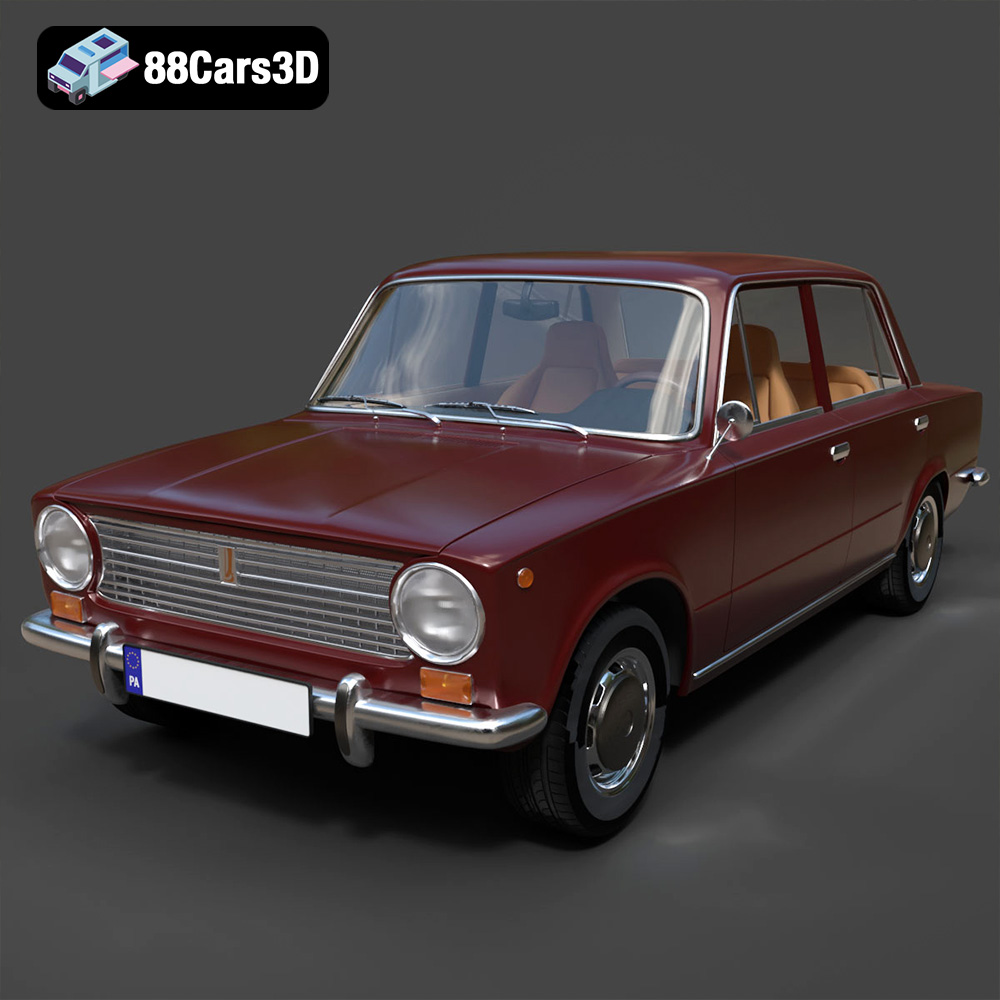
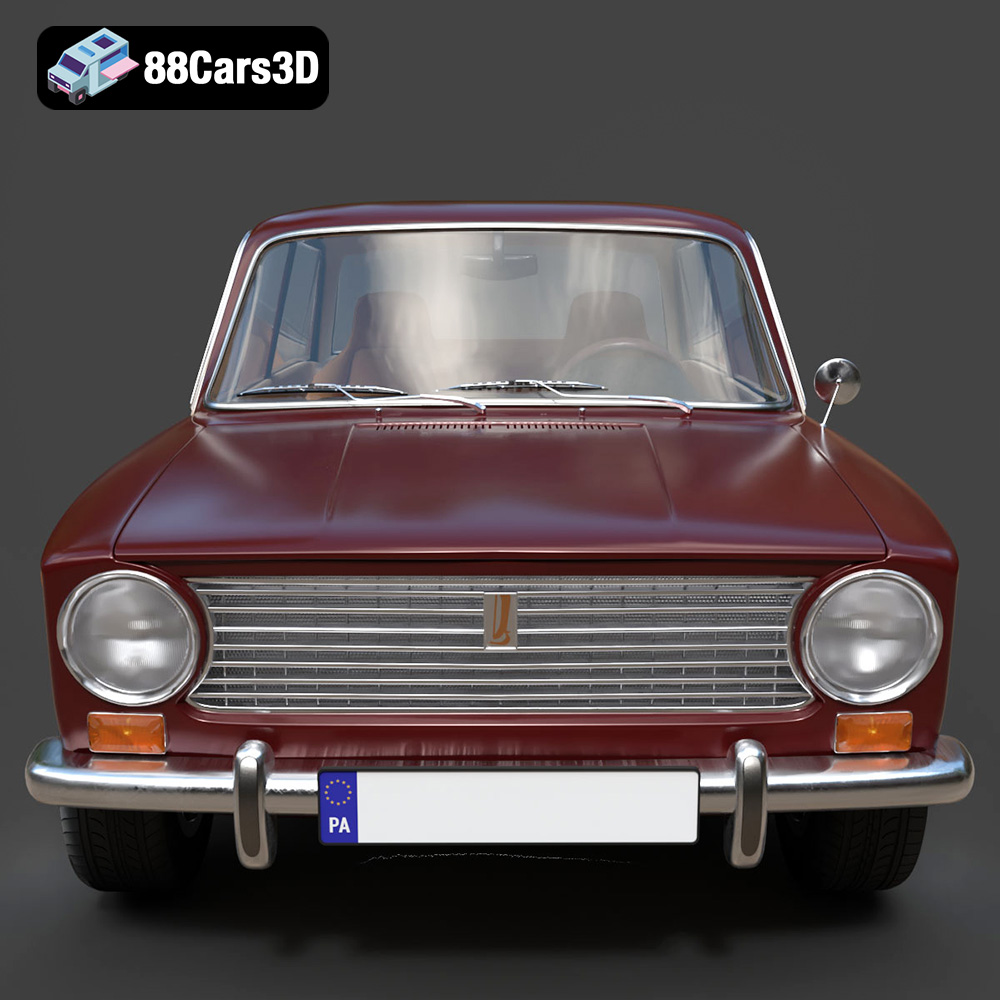
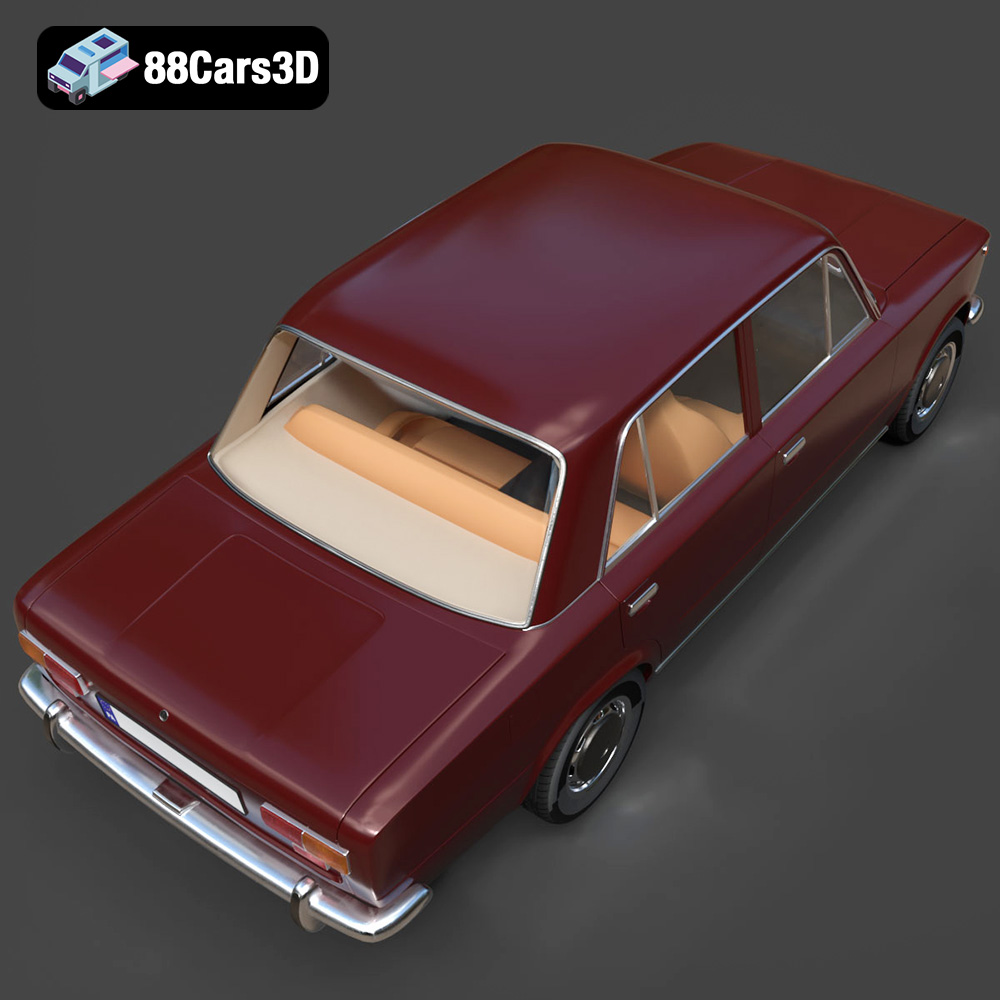
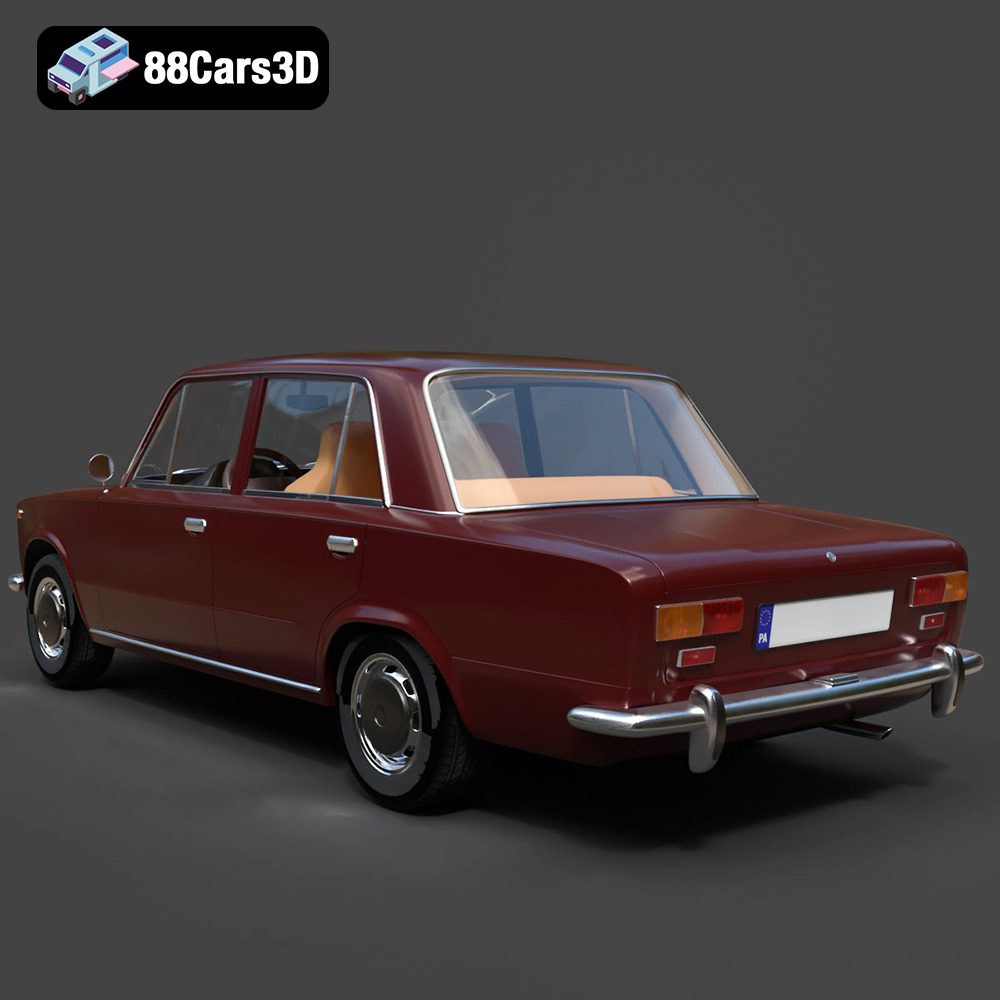
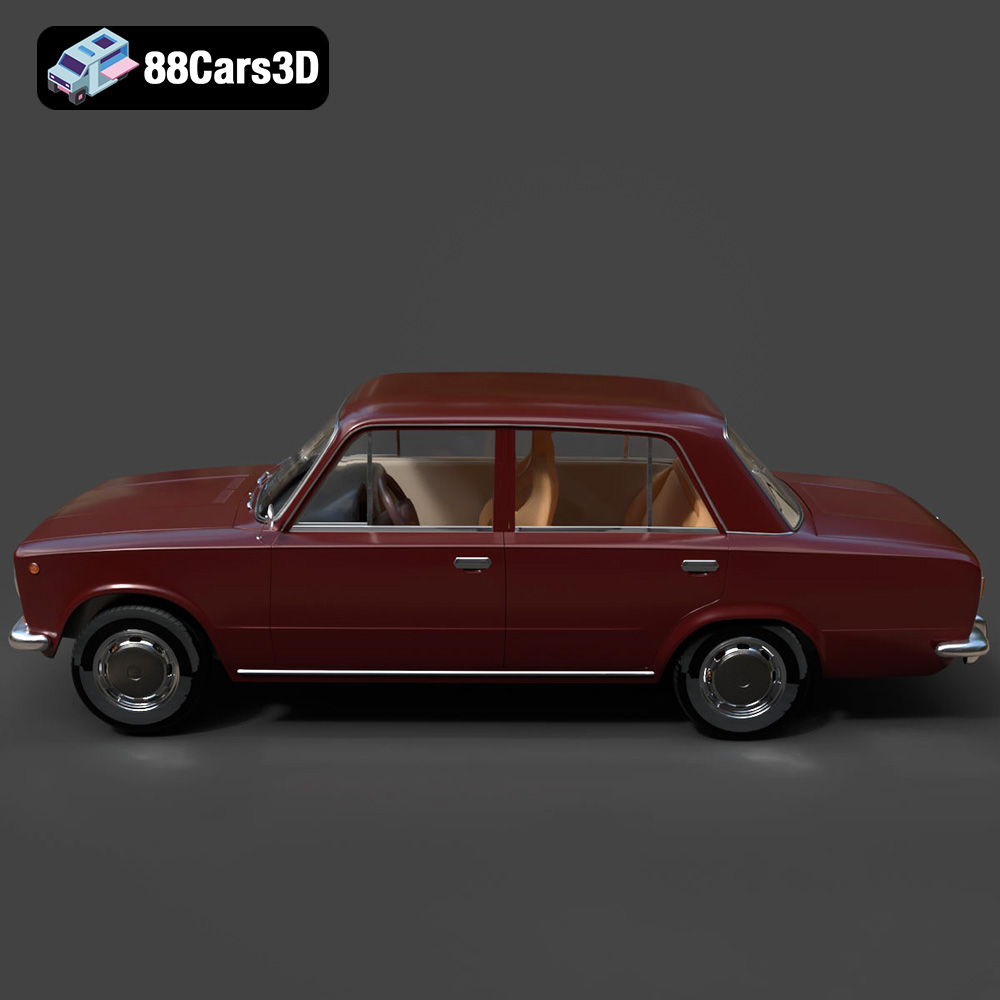
The charm of the “Kopeyka” lies in its no-nonsense, robust design, a testament to Soviet engineering adapting the Fiat 124 for harsher conditions. This 3D model captures its essence perfectly. From the instantly recognizable signature round headlights with their detailed glass fluting to the distinct chrome grille that defines its front fascia, every element speaks of authenticity. The classic boxy silhouette and faithfully replicated raised suspension geometry, designed for rough terrain, are all present. Even under the hood, a detailed 1.2L OHC inline-four engine block ensures that the model holds up to scrutiny from every angle. The stamped steel wheels, iconic chrome hubcaps, and vintage tread tires further enhance its realism, making it ideal for period-accurate scenes or close-up automotive rendering.
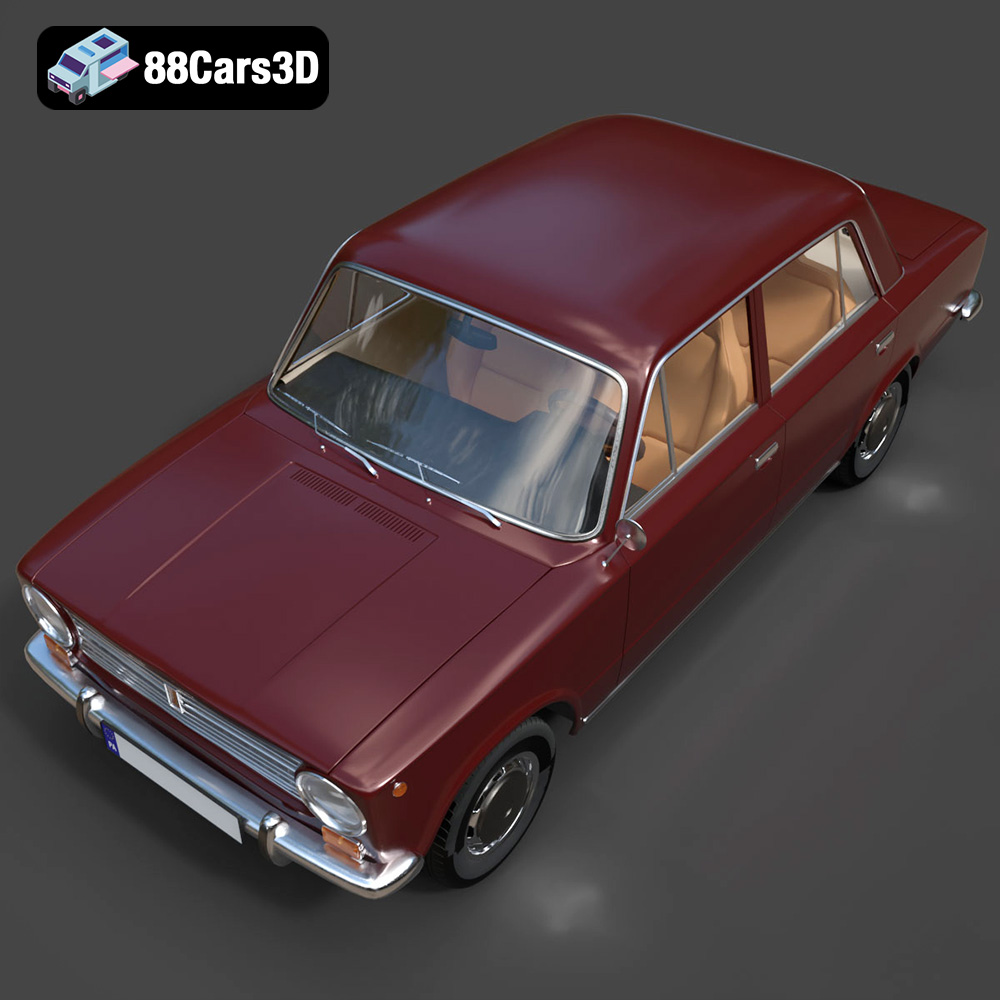
A truly immersive 3D car model doesn’t stop at the exterior. The VAZ Zhiguli 2101’s interior is a journey back in time, characterized by its utilitarian yet functional design. This model meticulously recreates the authentic vintage leatherette seats and classic interior door panels, invoking the feel of its era. The slim-profile classic steering wheel with its chrome horn ring, the minimalist horizontal analog instrument cluster, and the dashboard details are all faithfully represented. Crucially for game assets, the accurate manual floor shifter, pedals, and period-correct dashboard switches are modeled with optimized geometry, making the VAZ Zhiguli 2101 an excellent choice for first-person POV in gaming or detailed virtual reality experiences.
In modern 3D production, visual fidelity must always be balanced with performance. A beautiful model that cripples a game engine or causes slow renders is of little use. The VAZ Zhiguli 2101 1970 3D Model stands out because it strikes this critical balance, delivering high-end visuals while remaining highly optimized for real-time applications.
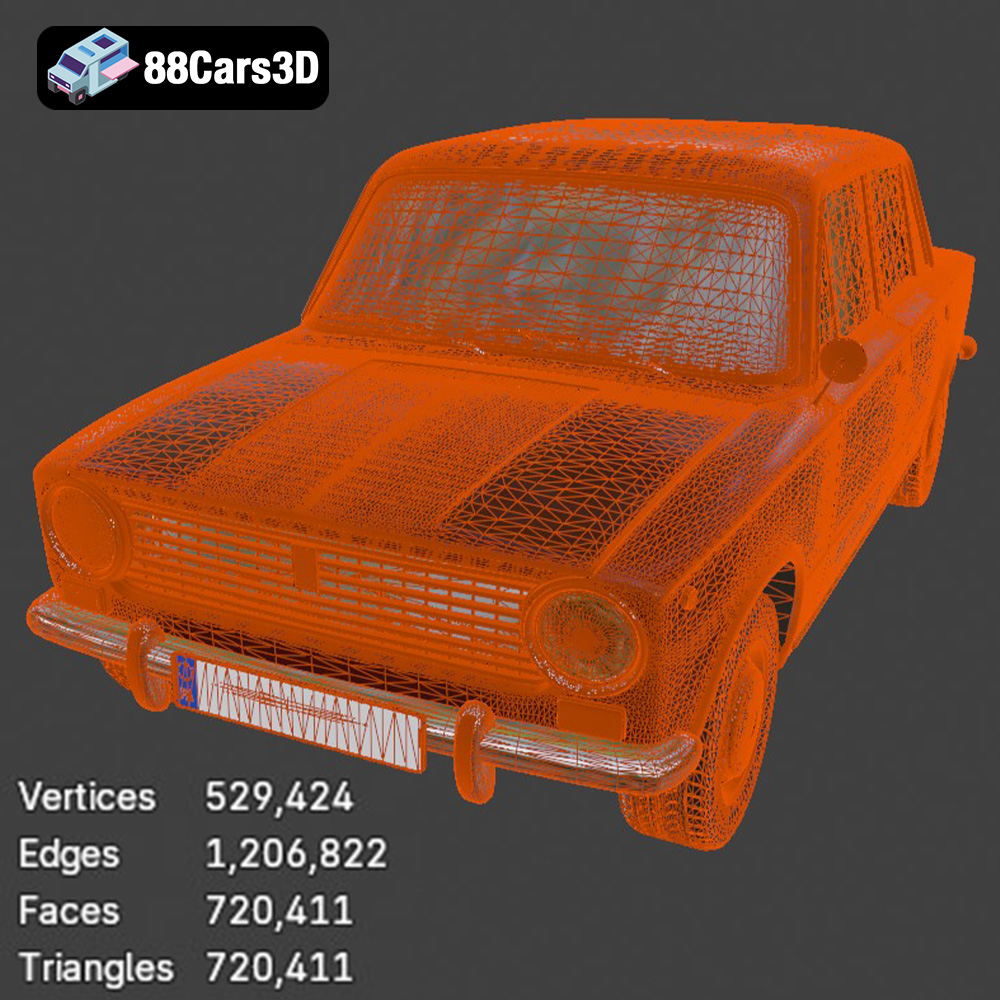
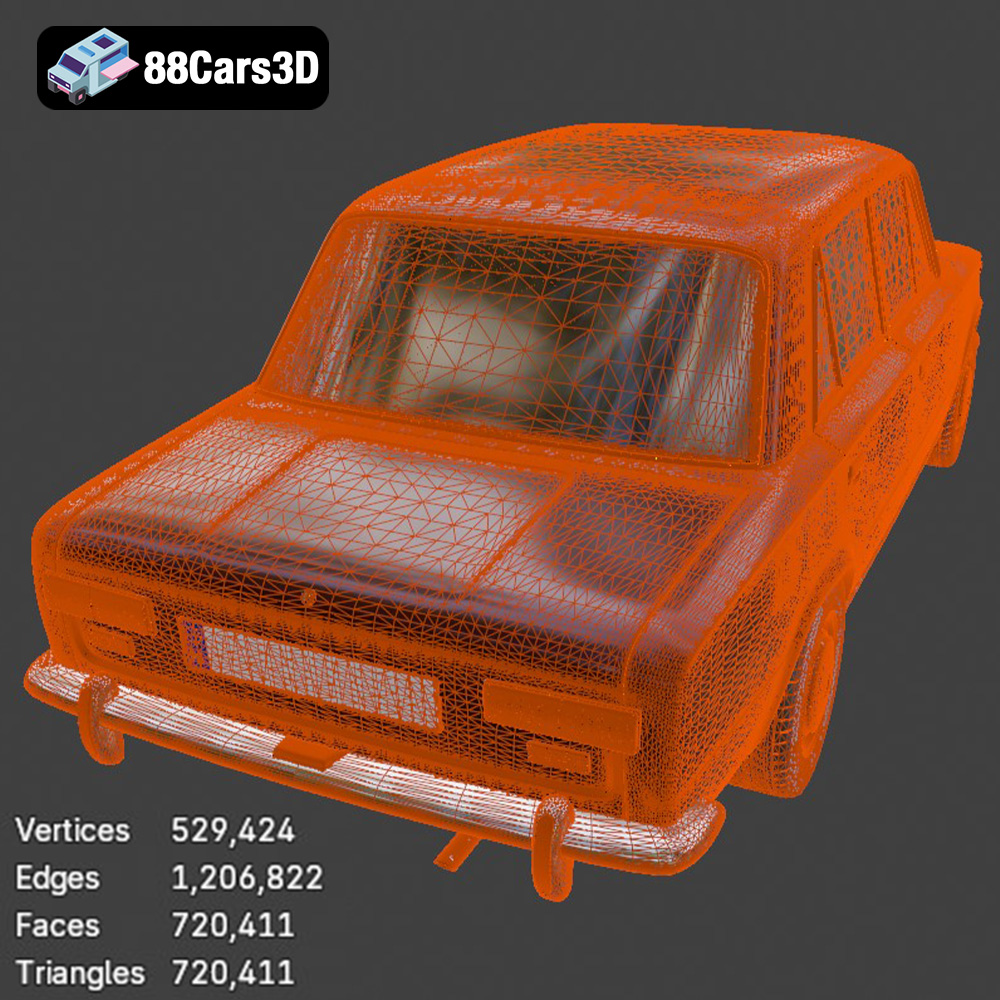
The model boasts approximately 150,000 triangles, a carefully chosen polycount that ensures a perfect balance for real-time engines like Unreal Engine and Unity, without sacrificing visual realism. This optimization means that developers can integrate the VAZ Zhiguli 2101 into their projects without worrying about excessive resource consumption. For game development, this translates to smoother frame rates and the ability to populate scenes with multiple vehicles without performance bottlenecks. For AR/VR, it ensures fluid, responsive interactions and immersive experiences that don’t suffer from lag or visual stuttering, proving its mettle as a truly game-ready 3D car model.
Beyond polycount, the model’s technical specifications are designed for maximum utility in professional workflows. Its real-world scale accuracy, based on actual vehicle chassis dimensions, ensures that it fits seamlessly into any scene without requiring manual adjustments. Furthermore, the proper pivot setup for steering, wheel rotation, and suspension travel is a significant advantage. This pre-configured setup dramatically reduces the time and effort required for rigging and animation, allowing artists and developers to quickly animate the vehicle or integrate it into physics simulations. Assets from 88cars3d.com, like the VAZ Zhiguli 2101, are engineered to be dropped directly into major 3D software and real-time rendering engines, ready for immediate use, saving invaluable production time.
The versatility of a well-designed 3D model like the VAZ Zhiguli 2101 1970 3D Model opens doors to a multitude of creative and professional applications. Its historical accuracy and technical optimization make it a valuable asset across various industries.
For game developers, this game asset is a goldmine. Its optimized polycount and game-ready structure make it ideal for open-world games set in historical contexts, where a fleet of period-accurate vehicles can greatly enhance immersion. Racing titles focusing on classic cars, or realistic driving simulators, can leverage its accurate geometry and pivot setups for authentic handling and visual representation. Imagine navigating a virtual 1970s Eastern European city in a perfectly replicated “Kopeyka” – the level of detail and performance ensures a truly engaging player experience. This model perfectly complements historical settings, providing an authentic touch to any digital environment.
The rise of augmented and virtual reality demands highly optimized, visually appealing 3D content. The VAZ Zhiguli 2101 3D Model is perfect for immersive virtual showrooms, allowing potential buyers or enthusiasts to explore the car in a full 360-degree environment. Car configurators can offer extensive customization options, letting users change colors, materials, and even view the detailed interior in VR. For mobile AR experiences, where performance is paramount, the .glb format of the model ensures quick loading and smooth interaction, enabling users to place a virtual Zhiguli 2101 in their real-world environment with impressive realism.
Beyond interactive applications, the model excels in pre-rendered scenarios. For brand campaigns, lifestyle scenes, or studio lighting setups, the VAZ Zhiguli 2101 offers exceptional fidelity for automotive rendering. Advertising agencies can use it for captivating visuals, while architects and urban planners can integrate it into visualizations of period-specific environments. The high level of detail in both exterior and interior, combined with flexibility across various file formats like .max and .blend, allows rendering artists to push the boundaries of photorealism, creating stunning images and animations that effectively convey a nostalgic narrative.
The journey of a 3D model doesn’t always end on a screen. For enthusiasts and collectors, the ability to transition a digital asset into a physical object offers a unique dimension of appreciation. The VAZ Zhiguli 2101 1970 3D Model is provided in a format suitable for 3D printing, enabling creators to bring this classic car into the tangible world.
The inclusion of the .stl format means the VAZ Zhiguli 2101 is ready for physical fabrication. This process involves more than just hitting print; it requires careful consideration of scale, material, and printer capabilities. Hobbyists can create display-scale models, from 1:12 to 1:24, capturing the essence of the “Kopeyka” on their desk or shelf. This transformation from pixels to plastic is a testament to the model’s robust geometry and clean mesh, ensuring that even intricate details are preserved during the printing process.
To achieve the best results, specific 3D print settings are recommended. A layer height of 0.04–0.12 mm is ideal, with resin printing often recommended for capturing the fine details like the grille texture or subtle body lines. Wall thickness between 1.2–2.0 mm ensures structural integrity, while an infill of 20–30% provides a good balance between strength and material usage. Supports will be required for overhangs and delicate parts like the exhaust system, mirrors, and specific undercarriage components. For optimal strength, printing the frame angled is often advised, with wheels printed separately for better detail and articulation. Post-processing, including sanding, priming, and painting with authentic factory colors and metallic finishes, transforms the raw print into a stunning miniature replica, truly honoring the original vehicle.
A truly professional 3D asset provides not just a final product, but a foundation for endless creative exploration. The VAZ Zhiguli 2101 1970 3D Model is designed with versatility in mind, offering artists ample scope for customization to fit any project’s unique vision.
Artists gain significant creative freedom with this model. They can easily change body colors, experimenting with factory-accurate hues or exploring custom finishes like matte, gloss, or metallic looks. The ability to modify tire textures allows for variations from standard street tires to more rugged off-road variants, adapting the vehicle to different environments and narratives. Furthermore, adjusting material finishes across various components – from the chrome accents to the interior leatherette – enables precise control over the visual aesthetic. Adapting lighting setups for different environments, be it a sun-drenched rural road or a dimly lit urban alley, further enhances the model’s integration into diverse scenes, ensuring it always looks its best. This level of customization ensures the VAZ Zhiguli 2101 1970 3D Model is a flexible tool in any artist’s arsenal.
The true value of a professionally developed 3D car model lies in the time and effort it saves. Starting with a high-quality, pre-optimized model like the VAZ Zhiguli 2101 means artists don’t have to build complex geometry from scratch or painstakingly optimize it for performance. This allows them to focus their creative energy on customization, scene composition, and storytelling. Whether for a tight deadline on a game project or a high-stakes automotive rendering campaign, relying on a robust asset from 88cars3d.com ensures a smooth workflow, superior end results, and the confidence that the technical foundation is solid. It’s an investment in efficiency and quality that pays dividends throughout the production pipeline.
The VAZ Zhiguli 2101, or “Kopeyka,” is more than just a car; it’s a testament to automotive history, resilience, and iconic design. Bringing such a legendary vehicle into the digital realm requires exceptional skill and a deep understanding of 3D production principles. The VAZ Zhiguli 2101 1970 3D Model exemplifies this dedication, offering a meticulously crafted, game-ready asset that excels across an impressive range of applications.
From its historically accurate exterior and faithfully recreated vintage interior to its optimized topology and extensive file format support, this model is designed to meet the rigorous demands of modern creative professionals. Whether you’re developing immersive games, producing high-fidelity automotive rendering for marketing campaigns, crafting interactive AR/VR experiences, or even physically 3D printing a scale replica, this 3D car model provides an unparalleled foundation. Its versatility, performance, and attention to detail make it an indispensable tool for any artist or developer seeking to enrich their projects with a touch of authentic automotive heritage.
Explore the full potential of premium 3D assets and elevate your creative endeavors. Discover the VAZ Zhiguli 2101 1970 3D Model and many other high-quality 3D car models at 88cars3d.com, where precision meets passion in the digital automotive world.
The VAZ Zhiguli 2101, affectionately known as the “Kopeyka”, is a legendary Soviet classic introduced in 1970. Based on the Fiat 124 but extensively re-engineered for rugged conditions, this meticulously crafted 3D model captures its signature round headlights, distinct chrome grille, and authentic vintage styling. Optimized for game-ready performance and high visual fidelity, it’s perfect for historic driving simulators, Cold War era city environments, and immersive VR experiences.
$19.99
.1970
.blend
.fbx
.glb
.max
.obj
.ply
.rendering
.sedan
.stl
.unreal
.vaz
.zhiguli
car-3d-model
classic-car
game asset
game-ready
low-poly
optimized
soviet-car
VR/AR
zhiguli-2101