Get 20% OFF All Premium 3D & STL Models!

In the expansive and ever-evolving landscape of 3D design, the demand for highly detailed, versatile, and optimized digital assets has never been greater. From the breathtaking realism of cinematic renders to the immersive interactivity of virtual reality, every pixel, polygon, and texture plays a crucial role in creating believable and engaging experiences. Whether you’re a game developer crafting a sprawling open world, an architect visualizing a future structure, or a medical professional creating training simulations, the quality of your 3D models directly impacts the final output.
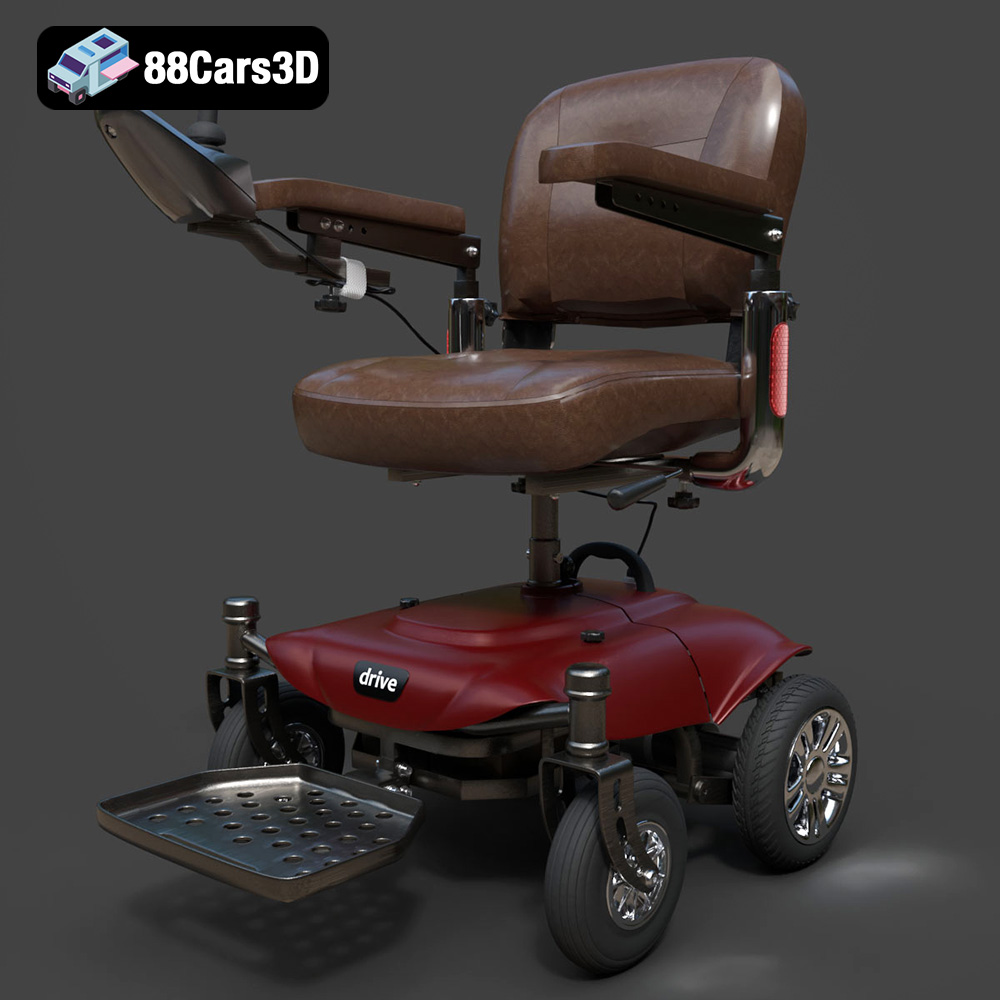
Today, we delve into the technical intricacies and broad applications of such assets, using a prime example: the Wheelchair 08 3D Model. This meticulously crafted model, available on 88cars3d.com, is a testament to the blend of artistic precision and technical optimization required for modern digital content creation. It serves as an excellent case study to explore how a single, well-engineered asset can bridge the gaps between various industry needs, from real-time performance to high-resolution offline rendering and even physical prototyping.
The journey of any 3D model, from creation to implementation, often involves navigating a diverse ecosystem of file formats. Each format is designed with specific use cases and software ecosystems in mind, offering unique advantages in terms of compatibility, data integrity, and feature support. Understanding these nuances is paramount for any professional working with 3D assets, ensuring smooth workflows and optimal performance. The Wheelchair 08 3D Model exemplifies this versatility by being available in a comprehensive suite of formats, catering to virtually every professional need.
The .blend file format is native to Blender, the powerful open-source 3D creation suite. When you download a .blend file like that of the Wheelchair 08, you’re not just getting the mesh; you’re receiving a complete, editable Blender scene. This includes the model’s geometry, materials, textures, lighting, camera setups, and even animation data if present. For artists and studios heavily invested in Blender, this format offers unparalleled flexibility for further modifications, rigging, or integration into existing Blender projects. It’s the ideal choice for those who need full creative control and the ability to dissect and understand the original artist’s workflow.
Autodesk’s .fbx (Filmbox) format has become the de facto standard for exchanging 3D data between various applications, especially within game development and animation pipelines. Its strength lies in its ability to encapsulate complex scene data, including meshes, materials, textures, cameras, lights, and animation, in a robust and widely supported package. For real-time engines like Unreal Engine and Unity, .fbx is often the preferred import format, ensuring that models like the Wheelchair 08 transition smoothly with minimal setup, preserving pivot points, rigging, and animation data crucial for dynamic scenes.
The .obj (Wavefront OBJ) format is one of the oldest and most universally supported 3D file formats. It’s excellent for geometry exchange due to its simplicity and plaintext structure, making it highly compatible across virtually all 3D software. While .obj files effectively store vertex positions, UV coordinates, and normals, their material support is often limited to basic color and texture references (via an accompanying .mtl file) and does not typically include advanced PBR material properties. For the Wheelchair 08, the .obj version is perfect when you need to import the core mesh into a software that might struggle with more complex formats, or when you intend to rebuild materials from scratch.
The .glb (GL Transmission Format Binary) is rapidly gaining traction as a streamlined, efficient format for web-based 3D, augmented reality (AR), and virtual reality (VR) applications. It’s essentially a binary version of glTF, packing geometry, materials, textures, and animation into a single, compact file. This “all-in-one” nature makes it incredibly efficient for streaming and display in browsers or mobile AR/VR environments, reducing loading times and simplifying deployment. The Wheelchair 08 in .glb format is perfectly suited for interactive product viewers on websites, AR medical training apps, or VR accessibility simulations, providing a lightweight yet visually rich experience.
The .stl (Stereolithography) format is the cornerstone of 3D printing. It represents a 3D model as a collection of triangles, defining only the surface geometry without color, texture, or material information. When preparing the Wheelchair 08 for physical fabrication, the .stl file becomes indispensable. It’s the format read by slicing software, which then translates the mesh into instructions for a 3D printer. While it lacks visual data, its simplicity makes it ideal for rapid prototyping, model making, and creating tangible versions of digital designs, as described for the Wheelchair 08’s use in dioramas or display-scale models.
The .ply (Polygon File Format) is often used for storing 3D scanner data and highly precise polygon meshes. Unlike .stl, it can store color information, transparency, and sometimes even normal vectors per vertex or face. It’s particularly useful in scientific visualization, CAD, and applications requiring high-fidelity geometric data for analysis or reverse engineering. For specialized tasks involving the Wheelchair 08 where precise geometric analysis or complex data representation is needed, the .ply format offers a robust solution.
The .unreal file format, or more commonly, assets packaged and ready for Unreal Engine (often as part of an asset pack with specific folder structures), signifies a model that has been meticulously prepared and optimized for Epic Games’ powerful real-time engine. This usually means proper scaling, collision meshes, LODs (Levels of Detail), and sometimes even pre-configured materials or blueprints. For developers looking to drop the Wheelchair 08 directly into their Unreal project with minimal fuss, this format ensures maximum compatibility and performance, accelerating development time significantly.
Finally, the .max file is the native format for Autodesk 3ds Max, a leading software for 3D modeling, animation, and rendering. Similar to .blend, a .max file contains the entire scene, including all models, lights, cameras, materials, and animation. For professionals operating within the 3ds Max ecosystem, having the Wheelchair 08 in this format means access to all the original scene setups, modifiers, and intricate material definitions, allowing for extensive customization and rendering using advanced renderers like V-Ray or Corona.
The availability of the Wheelchair 08 in such a wide array of formats underscores its adaptability and positions it as a truly versatile asset, ready for any pipeline and project requirement.
Creating a 3D model that looks visually stunning is one challenge; creating one that performs flawlessly in real-time engines and adapts to various rendering scenarios is another entirely. The Wheelchair 08 3D Model stands as a prime example of an asset engineered to meet these rigorous demands, bridging the gap between high-end visual fidelity and optimized real-time performance.
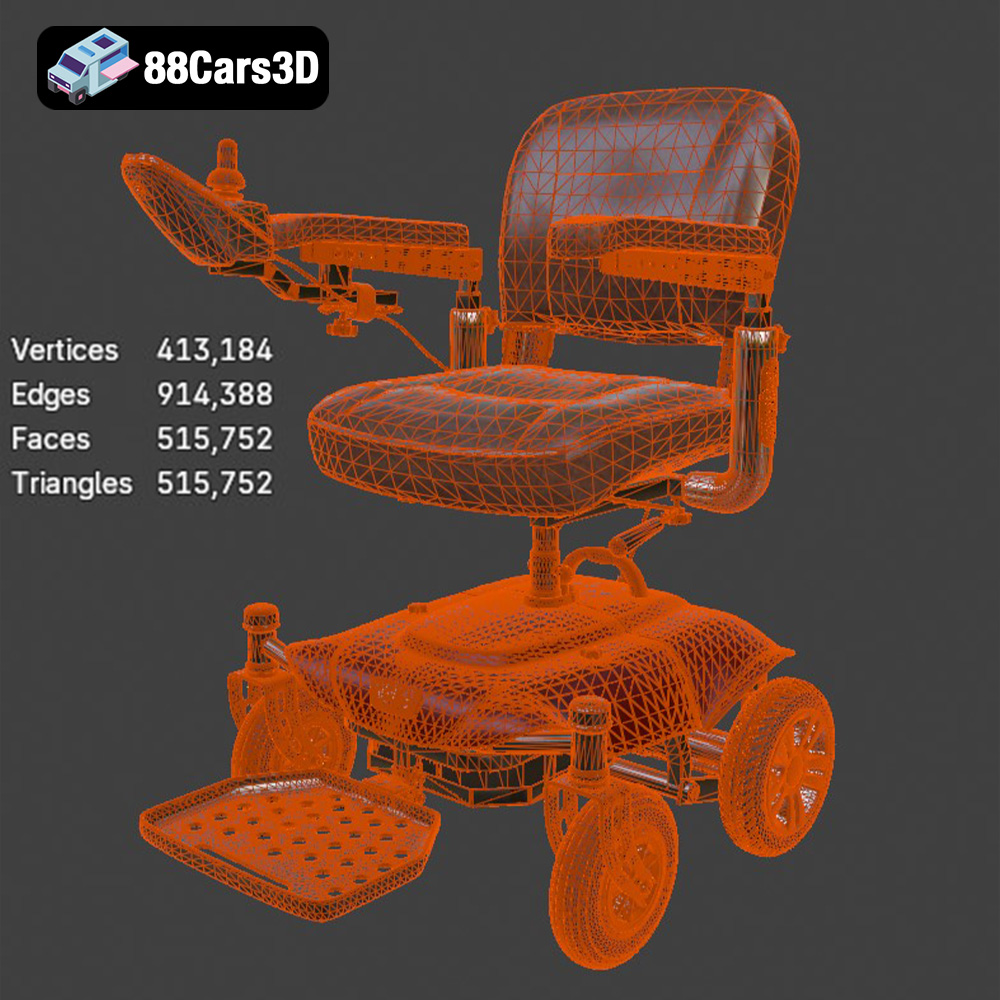
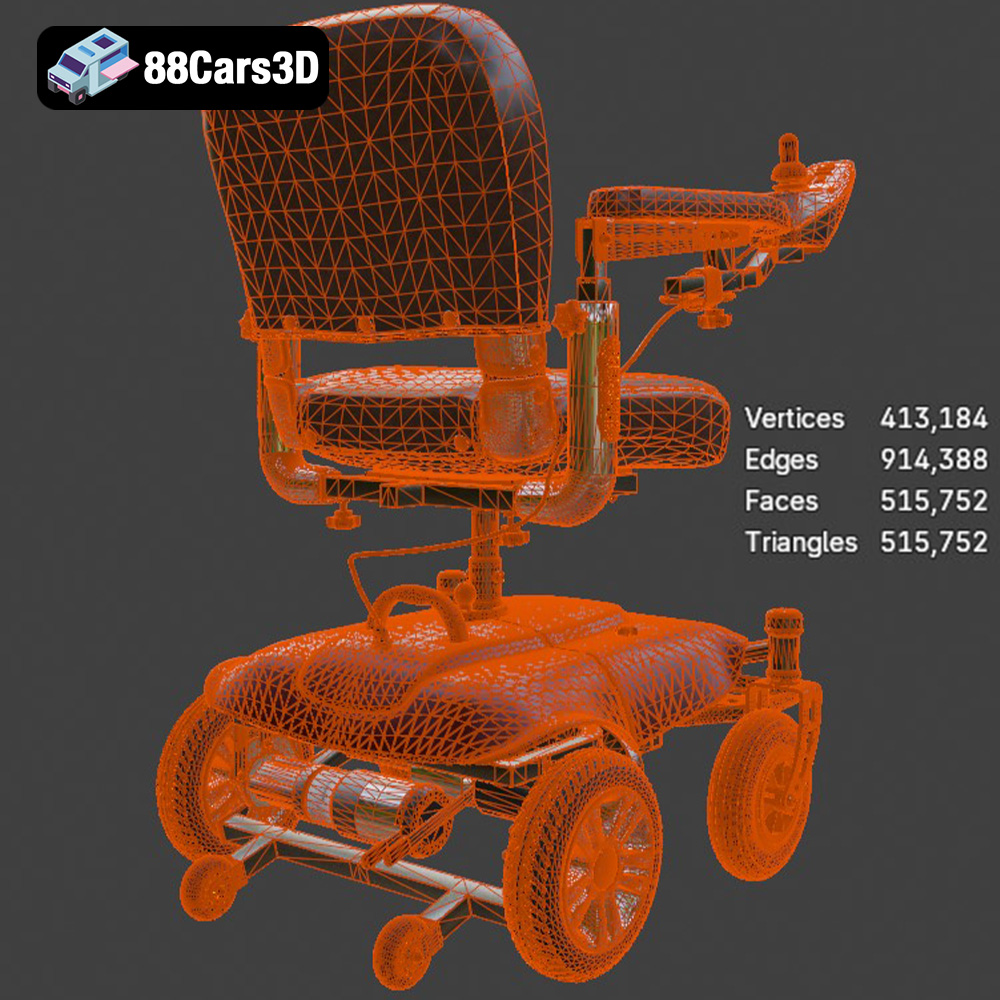
At the core of any high-quality 3D asset is its geometry. Precision modeling involves crafting a mesh that accurately represents the real-world object while adhering to best practices for clean topology. This means primarily using quads, ensuring even edge flow, and avoiding n-gons or excessive triangulation where possible. For game-ready assets, optimization is key. The Wheelchair 08, with approximately 35,000 triangles, strikes an exceptional balance. This poly count is low enough to ensure efficient rendering in game engines like Unreal and Unity, preventing performance bottlenecks, yet high enough to retain the intricate details of its tubular frame, spokes, and mechanical components. This careful optimization allows for high-end visual realism without compromising real-time frame rates, a critical factor for immersive gaming and AR/VR experiences.
Beyond the mesh, materials and textures breathe life into a 3D model. Modern rendering heavily relies on Physically Based Rendering (PBR) workflows, which simulate how light interacts with surfaces in the real world. This involves meticulously crafted texture maps (Albedo/Base Color, Metallic, Roughness, Normal, Ambient Occlusion) that define properties like color, reflectivity, and surface imperfections. The Wheelchair 08 utilizes this approach with its ergonomic fabric seating, textured rubber pneumatic tires, and metallic frame components. Each material is carefully defined to react realistically to various lighting conditions, from the sterile brightness of a hospital environment to the subtle ambient light of a home. Clean UV unwrapping, ensuring no overlapping or stretching of textures, is essential for this realism, a standard upheld in the Wheelchair 08 model.
For dynamic and interactive applications, a 3D model must not only look good but also be prepared for movement. This involves setting up proper pivot points and, if necessary, a basic skeletal rig. The Wheelchair 08 is designed with this in mind, featuring proper pivot setups for its main rear wheels, caster swiveling, and footrest adjustment. This technical detail is invaluable for animators and developers who need to simulate realistic movement. Imagine the ease of animating the wheelchair rolling down a corridor in a game, or its footrests adjusting in an AR configurator – these functionalities are directly supported by the model’s inherent readiness for animation, saving countless hours in post-import setup.
The versatility of a well-crafted 3D asset like the Wheelchair 08 extends across numerous professional domains, providing tangible value and enhancing the realism and functionality of diverse digital projects.
Game developers constantly seek high-quality, optimized assets to populate their virtual worlds. The Wheelchair 08 is an ideal game asset for a range of titles, from immersive medical horror games set in abandoned hospitals to realistic urban open-world environments. Its optimized polycount of approximately 35,000 triangles ensures it can be integrated into scenes without bogging down performance, a critical consideration for smooth gameplay. Imagine a detailed hospital scene in Unreal Engine, where multiple Wheelchair 08 models are scattered, adding to the atmosphere and realism. This saves development teams crucial time and resources, allowing them to focus on gameplay mechanics and narrative rather than modeling common environmental props from scratch. Models like this facilitate faster iteration and higher quality in the competitive gaming industry.
Augmented Reality (AR) and Virtual Reality (VR) are transforming medical training, rehabilitation, and accessibility design. The Wheelchair 08 is perfectly suited for these immersive applications. In medical training simulations, it can provide realistic interaction scenarios for healthcare professionals learning patient handling or emergency procedures. For accessibility configurators, users could virtually “try out” different wheelchair types or visualize how a specific model fits within their living space using AR. The model’s availability in the lightweight .glb format is particularly advantageous here, enabling smooth, real-time rendering in web-based AR/VR viewers or mobile applications, making complex medical visualization more accessible than ever.
Architects and visualization artists often require highly detailed props to populate their scenes, adding context, human scale, and a sense of realism to their designs. The Wheelchair 08 excels in this area, making it an excellent addition to clinical architectural renders, rehabilitation center visualizations, or even general lifestyle scenes. Placing this model in a hospital waiting room render, for instance, immediately conveys a sense of purpose and realism that generic placeholders cannot achieve. Furthermore, it’s invaluable for showcasing accessibility compliance in architectural designs, allowing stakeholders to visualize how spaces accommodate mobility devices. The meticulously modeled geometry ensures clean shading and realistic reflections under various lighting conditions, making it an indispensable asset for conveying professional and impactful visualizations.
While a high-quality base model is a fantastic starting point, the ability to customize it to fit specific project needs is what truly unleashes its potential. The Wheelchair 08 3D Model is built with customization in mind, offering designers and artists the flexibility to adapt it to their unique vision and requirements.
The product description highlights the ease with which aspects like frame colors and fabric textures can be modified. This is a game-changer for projects requiring specific aesthetics or brand integration. For example, a hospital simulation might require a standard chrome frame with a medical blue fabric, while a more modern architectural visualization might opt for a sleek matte black frame with a custom nylon upholstery variant. The underlying material setup of the Wheelchair 08 allows for simple adjustments to color swatches or the swapping of texture maps, enabling artists to quickly iterate on different looks without having to re-model the asset. This level of control saves significant time in the design and production phases.
The visual impact of any 3D model is heavily influenced by its environment and lighting. The Wheelchair 08 is designed to look convincing whether placed in a brightly lit, sterile hospital ward or a dramatically lit, cinematic scene. Its PBR materials ensure that light interacts naturally with its metallic frame, rubber tires, and fabric seat. Artists can experiment with different lighting setups – perhaps harsh directional light to emphasize its contours or soft ambient lighting for a more subdued atmosphere – confident that the model will react realistically. This adaptability makes it suitable for a wide range of visual narratives, from factual presentations to emotive storytelling. Whether it’s integrated into a scene for automotive rendering (in a garage setting, for example) or an architectural walkthrough, its fidelity shines through.
In fast-paced development cycles, time is a precious commodity. Starting with a high-quality, pre-optimized asset like the Wheelchair 08 allows teams to bypass the time-consuming initial modeling and texturing phases. This enables rapid prototyping, where designers can quickly test concepts, layouts, and interactions within their virtual environments. Instead of building a wheelchair from scratch, artists can focus on refining scene composition, character animation, or lighting scenarios, pushing the boundaries of their creative output. This efficiency is particularly valuable for projects that require numerous common props, allowing resources to be allocated to unique or bespoke elements.
While digital visualization is powerful, sometimes a tangible, physical representation of a 3D model offers unique advantages. The Wheelchair 08 3D Model is not just designed for virtual worlds; it’s also prepared for the physical realm through 3D printing.
The inclusion of the .stl file format is crucial for anyone looking to bring the Wheelchair 08 into the physical world. The product description provides detailed 3D print settings, which are vital for a successful print. Considerations such as recommended scales (1:12, 1:18, 1:24), layer height (0.04–0.12 mm for resin printing), wall thickness (1.2–2.0 mm), and infill (20–30%) are not arbitrary. These specifications ensure that the delicate tubular details, spokes, and other fine features of the wheelchair are accurately reproduced. The recommendation for resin printing over FDM highlights the need for precision to capture the intricate geometry. Furthermore, guidance on supports and print orientation – specifically printing the frame angled for structural integrity and wheels separately – demonstrates a deep understanding of 3D printing best practices for complex models. Without such considerations, fine details like push rims and armrests could fail or be poorly rendered.
A physically printed Wheelchair 08 opens up a range of new applications. For hobbyists and diorama creators, it provides an authentic, scaled prop to enhance miniature scenes, adding a layer of realism to historical or contemporary setups. In medical education, a physical model can serve as a tactile teaching aid, allowing students to examine the components and mechanics of a mobility device in a way that a screen cannot fully replicate. For product designers or accessibility consultants, a 3D printed prototype can be invaluable for physical reviews, demonstrating scale, form, and potential interaction points before costly manufacturing processes begin. Post-processing, including sanding, priming, and applying authentic medical equipment finishes, further elevates these physical models, making them indistinguishable from professional prototypes.
The journey from a blank canvas to a fully realized 3D asset is a complex dance of technical skill and artistic vision. The Wheelchair 08 3D Model stands as a shining example of how meticulously crafted assets can serve as foundational elements across a multitude of industries. Its thoughtful design, balancing visual fidelity with real-time optimization, makes it an indispensable tool for game development, AR/VR simulations, architectural visualization, and even tangible 3D printing applications.
By understanding the nuances of various file formats and the technical specifications required for different pipelines, professionals can make informed decisions that streamline their workflows and elevate the quality of their final products. Whether you’re enhancing a virtual hospital scene, developing an immersive medical training module, or simply looking for a high-quality prop to populate your next render, the Wheelchair 08 offers unparalleled versatility and realism. For those seeking premium 3D assets that blend technical excellence with practical utility, explore the extensive catalog of high-quality models available at 88cars3d.com.
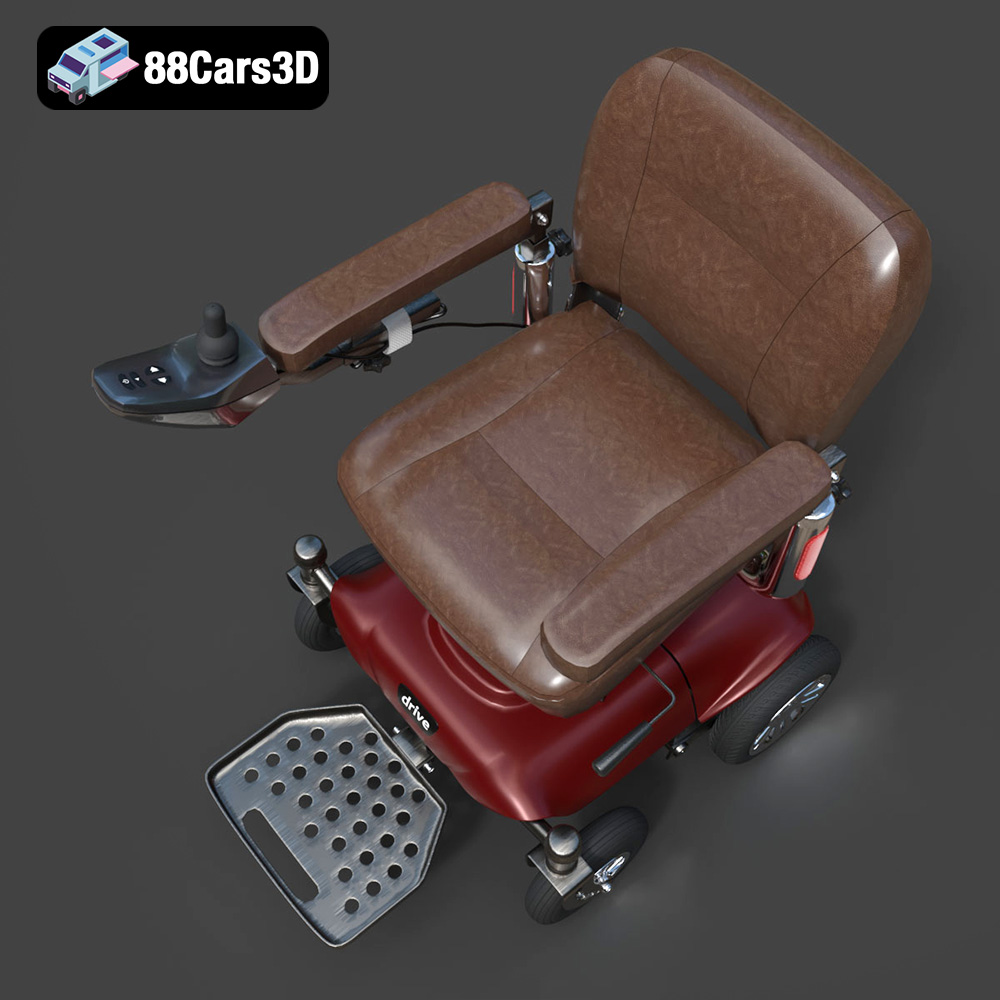
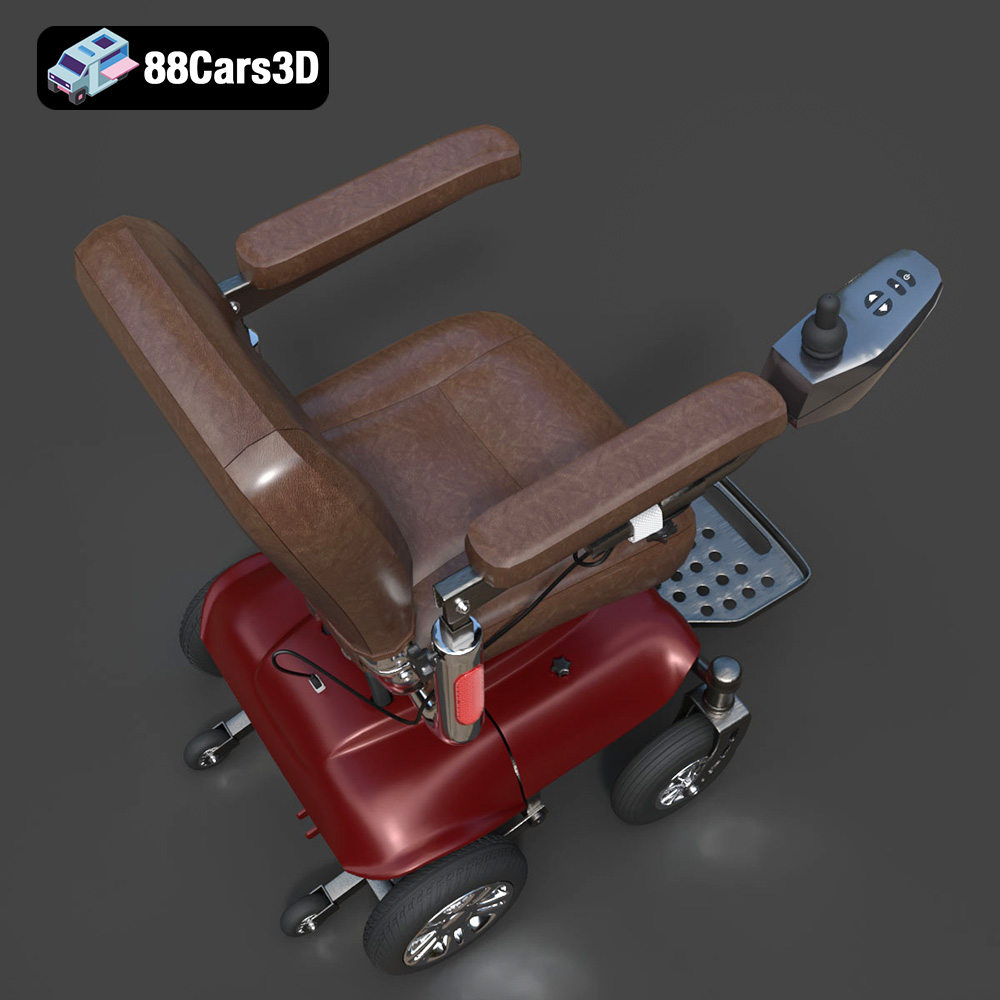
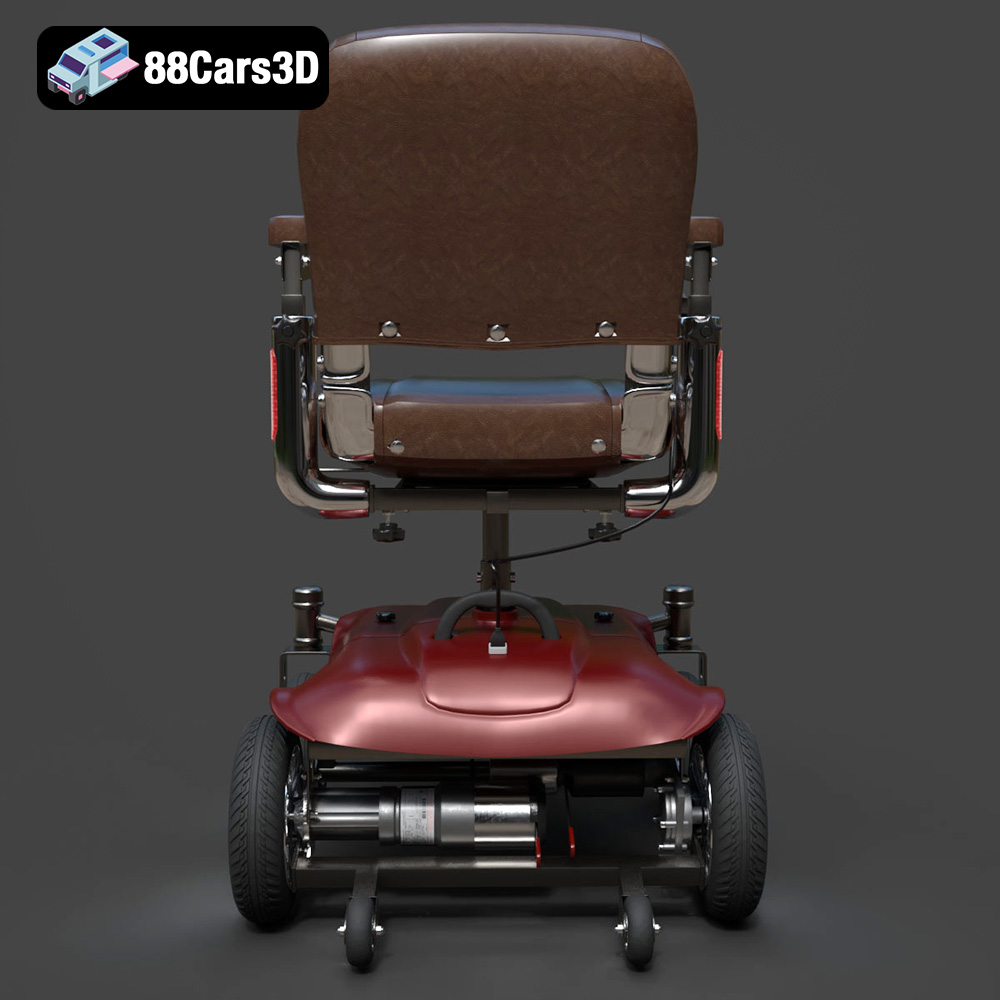
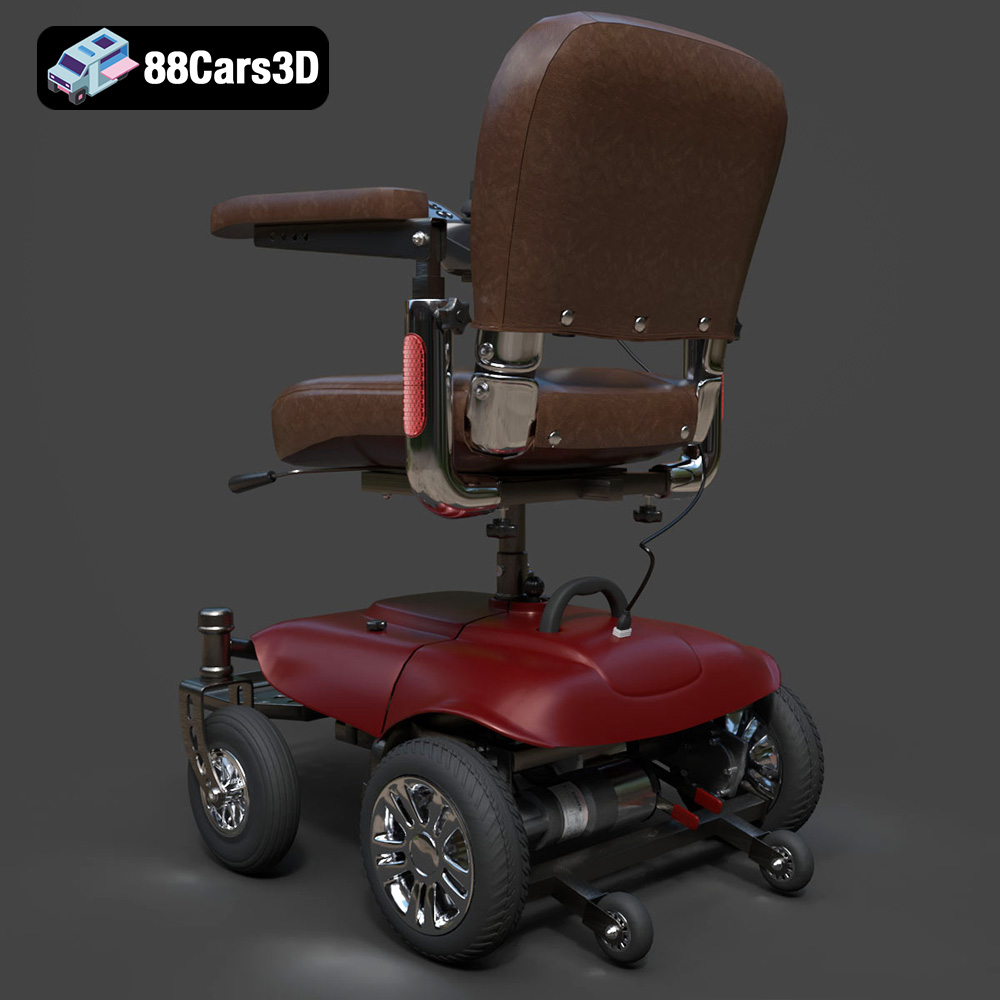
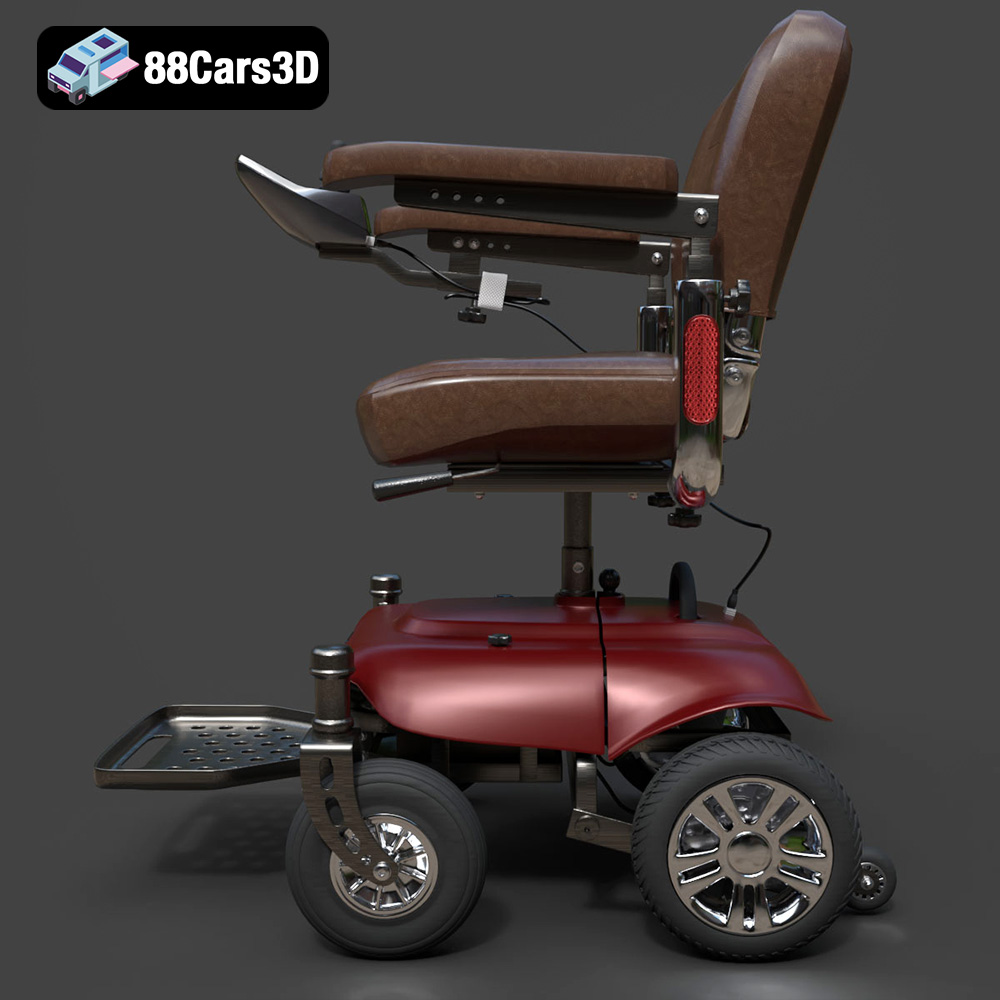
Introducing the Wheelchair 08, a highly realistic and detailed 3D model representing a modern manual mobility device. Designed with meticulous attention to detail, this model captures the essential elements of hospital-grade and everyday mobility equipment. It features a sturdy tubular folding frame, ergonomic fabric seating, detailed push rims for manual propulsion, and adjustable footrests, making it an indispensable asset for any medical or accessibility-focused digital environment.
Engineered with exceptional topology and a balanced triangle count, this game-ready model provides high-end visual fidelity without compromising real-time performance. Its meticulously modeled geometry ensures clean shading and realistic reflections under various lighting conditions, making it the perfect bridge between high-quality offline rendering and efficient real-time engine processing for game development, AR/VR, and medical animation.
Perfect for hospital environments, rehabilitation center visualizations, medical training simulations, and architectural accessibility showcases.
.blend, .fbx, .obj, .glb, .stl, .ply, .unreal, .max
Tags:
wheelchair, wheelchair-08, medical-equipment, hospital-prop, mobility-device, game-ready, low-poly, optimized, 3d-model, game-asset, rendering, vr-ar, blend, fbx, obj, glb, stl, ply, unreal, max
$19.99
.blend
.fbx
.glb
.max
.obj
.ply
.rendering
.stl
.unreal
3d model
game asset
game-ready
hospital-prop
low-poly
medical-equipment
mobility-device
optimized
VR/AR
wheelchair
wheelchair-08