Get 20% OFF All Premium 3D & STL Models!

In the rapidly evolving landscape of digital media, the demand for hyper-realistic and performance-optimized 3D car models has never been greater. From blockbuster video games to cutting-edge architectural visualizations, and from immersive virtual reality experiences to intricate 3D prints, a high-quality automotive asset is often the cornerstone of a compelling project. It’s not just about creating a static image; it’s about capturing the soul, the engineering marvel, and the aesthetic prowess of a vehicle in a digital format that can be manipulated, animated, and interacted with.
Consider the Mercedes-Benz AMG GT 63 4-Door Coupe – a vehicle that perfectly encapsulates the fusion of raw power and luxurious sophistication. Replicating such an icon digitally requires an exceptional level of detail, precision, and technical foresight. A premium 3D model of this caliber isn’t merely a visual representation; it’s a meticulously crafted digital twin, engineered to meet the stringent demands of professional workflows across various industries. Such models provide the foundation for designers, developers, and artists to push boundaries, delivering experiences that are both visually stunning and technically robust.
The essence of automotive design lies in its physical presence – the curve of a fender, the gleam of chrome, the intricate texture of a leather interior. Translating these tactile qualities into the digital realm requires more than just artistic skill; it demands a deep understanding of 3D modeling principles. Every polygon, every material shader, and every texture map contributes to the illusion of reality. A truly exceptional 3D car model, like the Mercedes-Benz AMG GT 63 4-Door Coupe available on 88cars3d.com, doesn’t just look good; it feels authentic, evoking the same sense of awe and admiration as its real-world counterpart.
Modern applications, whether real-time game engines or high-resolution offline renderers, present a dual challenge: photorealistic detail combined with optimal performance. A model burdened by excessive polygons or poorly optimized textures can cripple a project, leading to slow rendering times or unplayable frame rates. Conversely, a model lacking sufficient detail will fail to convince. The sweet spot lies in intelligent topology, efficient UV mapping, and expertly crafted materials that deliver visual fidelity without compromise. This balance is critical, particularly for assets intended for diverse applications ranging from cinematic cutscenes to interactive AR experiences.
The versatility of a premium 3D car model is often defined by its compatibility across various software and platforms. This interoperability is achieved through the support of a range of file formats, each with its own strengths, ideal use cases, and technical characteristics. Understanding these formats is crucial for any professional integrating 3D assets into their workflow, ensuring seamless transitions and optimal performance. The Mercedes-Benz AMG GT 63 4-Door Coupe 3D model, for instance, offers a comprehensive suite of formats, catering to virtually any professional requirement.
The availability of multiple formats, such as those provided with the Mercedes-Benz AMG GT 63 4-Door Coupe 3D model, empowers users to select the optimal file for their specific needs. For game development, .fbx and .unreal are typically preferred. For high-fidelity rendering and animation in specific software, native formats like .blend or .max offer the most control. For web-based AR/VR, .glb is the clear winner, and for physical replicas, .stl is non-negotiable. This comprehensive support ensures that the investment in a premium 3D car model delivers maximum utility across a wide spectrum of digital and physical applications.
Creating a 3D model of a luxury vehicle like the Mercedes-Benz AMG GT 63 4-Door Coupe is a complex endeavor, blending artistic skill with rigorous technical understanding. Every aspect, from the underlying mesh to the final materials, must be meticulously planned and executed to achieve a professional-grade asset that performs as well as it looks.
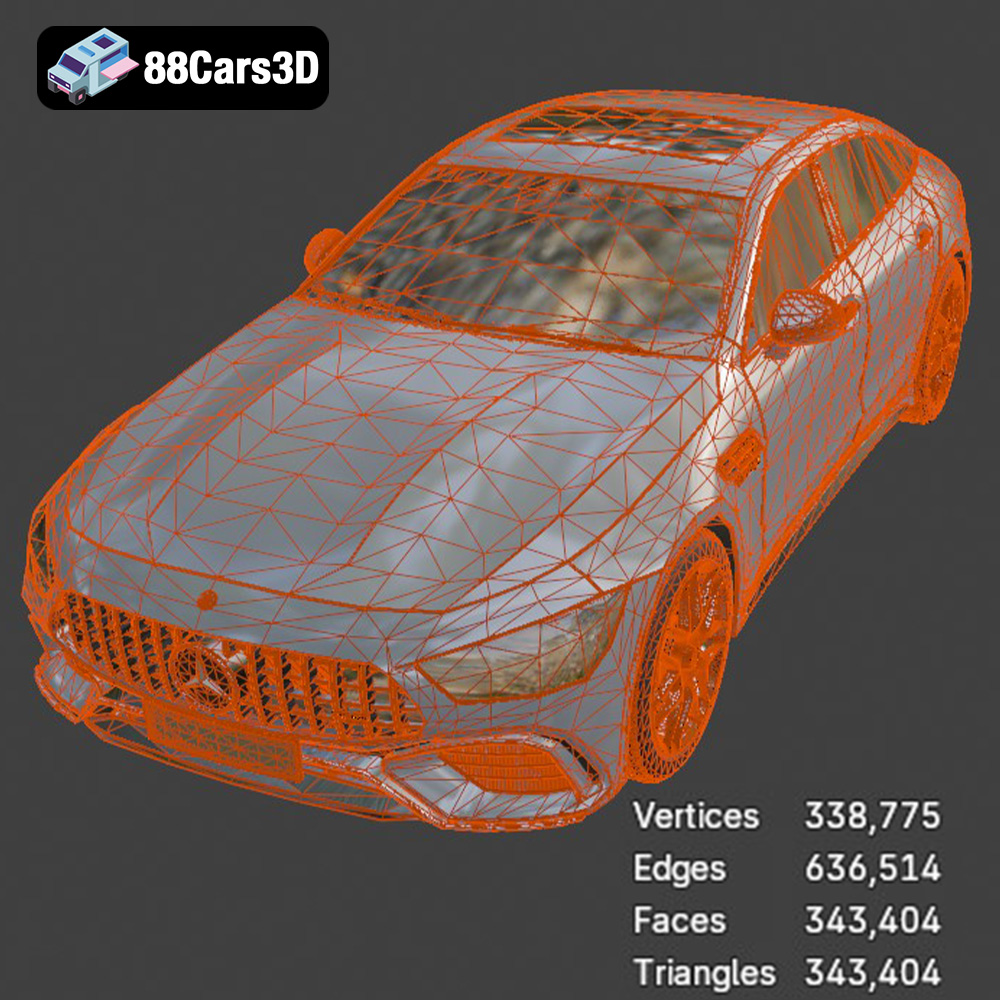
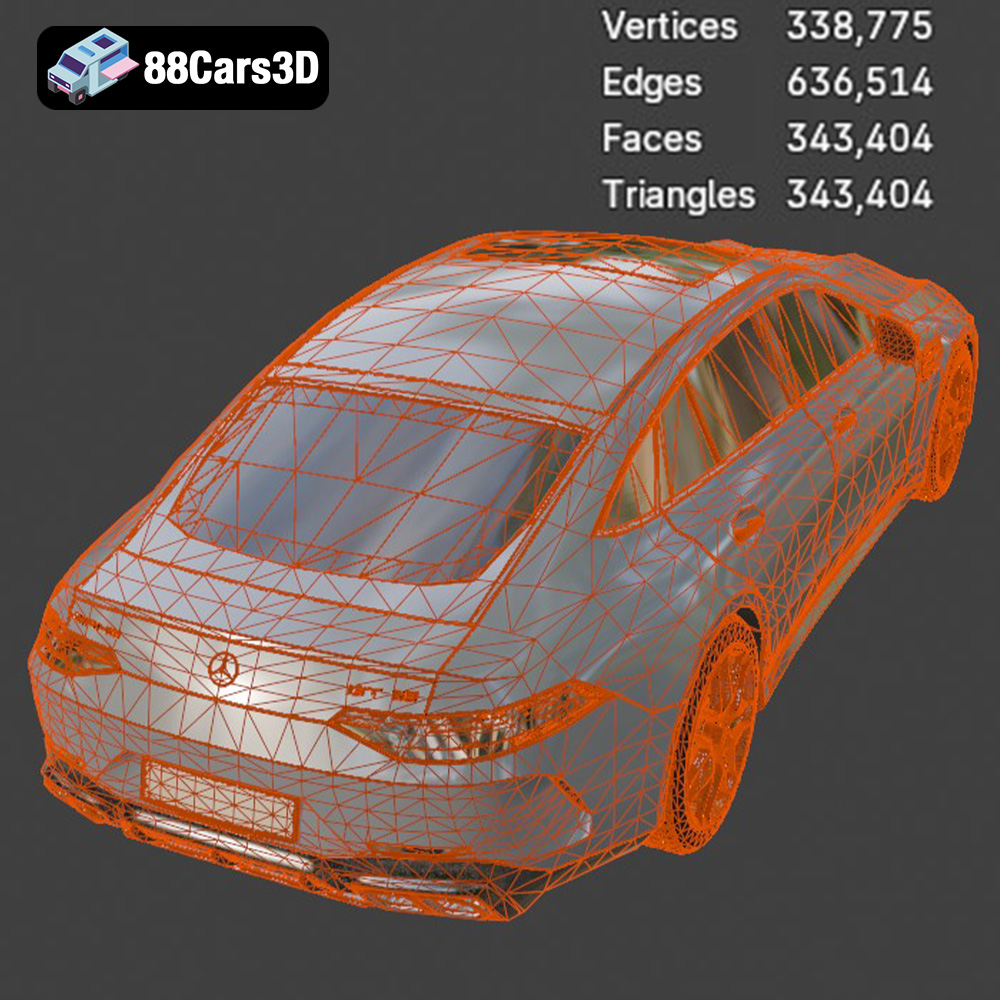
The foundation of any good 3D model is its topology – the arrangement of its polygons. For an automotive asset, clean, quad-based topology is paramount, ensuring smooth subdivision, deformation, and animation. The Mercedes-Benz AMG GT 63 model exemplifies this with its “premium topology and an optimized triangle count.” This means the mesh is constructed to maintain sharp character lines and smooth curves without an unnecessarily high polygon count, which is crucial for game-ready performance. A game-ready asset needs to strike a delicate balance: enough polygons to capture detail (e.g., the signature Panamericana grille or the muscular proportions) but not so many that it bogs down a real-time engine. Furthermore, adhering to “real-world scale accuracy” ensures that the model integrates seamlessly into architectural visualizations or simulations, maintaining correct proportions relative to environments and other assets.
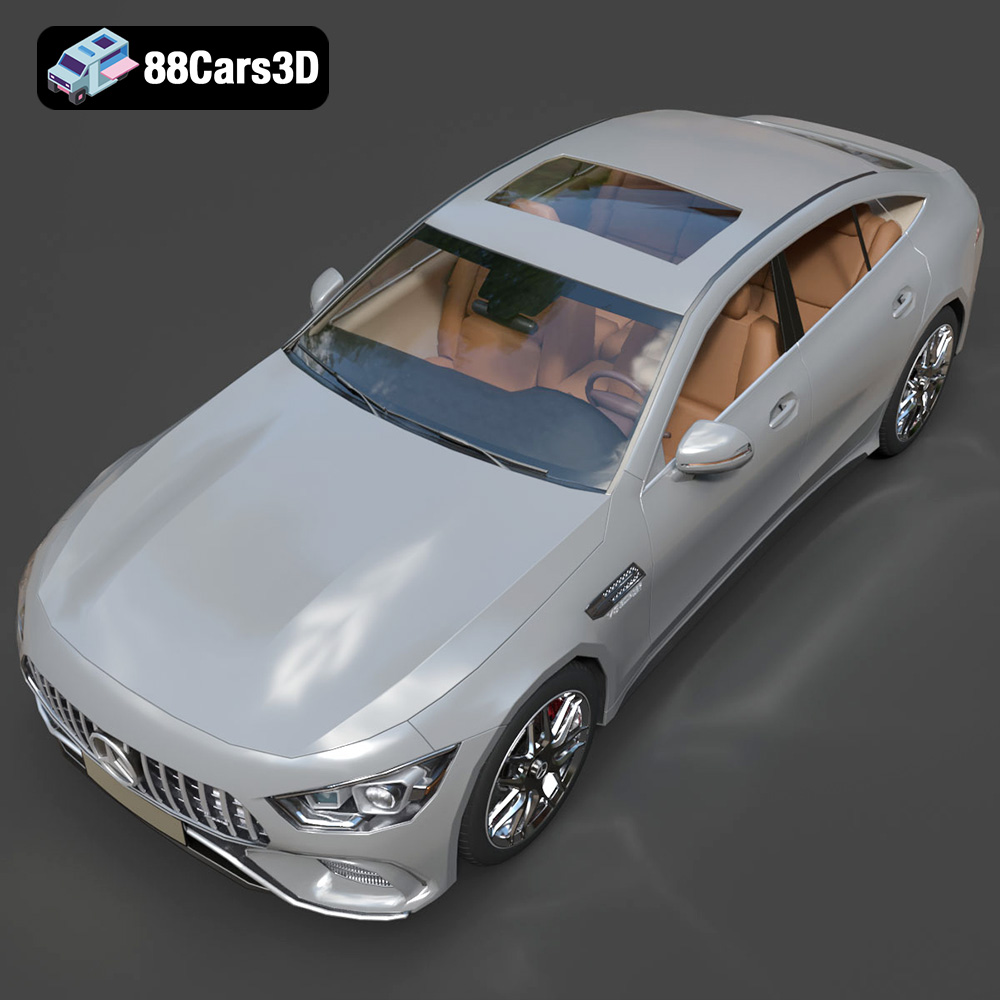
Beyond the mesh, textures and materials bring a model to life. Effective UV mapping is essential, ensuring that textures wrap accurately and without distortion across the model’s surface. High-resolution texture maps, often employing PBR (Physically Based Rendering) workflows, recreate the metallic sheen of the paint, the intricate weaves of interior fabrics, and the subtle reflections of glass and chrome. The product description highlights “premium stitching details” in the AMG performance seats and “authentic AMG forged alloy wheels and performance tire treads,” indicating careful attention to these material properties. These details are what sell the illusion of reality, especially in high-end automotive rendering.
A static model is useful, but an animatable one unlocks a world of possibilities. For a car model, this means “proper pivot setup for steering, wheel rotation, and suspension travel.” Separating components like wheels, suspension, and steering allows animators to accurately simulate driving dynamics. This is invaluable for game development, where realistic vehicle physics are critical, and for cinematic renders where the car needs to interact dynamically with its environment. The Mercedes-Benz AMG GT 63 4-Door Coupe 3D model is designed with this flexibility in mind, making it a powerful tool for dynamic scenes.
The utility of a high-quality 3D car model extends far beyond simple imagery. The Mercedes-Benz AMG GT 63 4-Door Coupe 3D model, with its versatile file formats and technical optimizations, is a powerhouse for a multitude of professional applications, demonstrating the value proposition of assets found on platforms like 88cars3d.com.
Game development stands out as a primary application. The “Game-Ready & Optimized” nature of the AMG GT 63 model, with its “high-efficiency polygon structure,” makes it perfect for titles ranging from open-world adventures to high-octane racing simulators. Developers can integrate this model directly into engines like Unreal and Unity, confident that it will perform smoothly while maintaining visual realism. The “optimized geometry for first-person POV in gaming” ensures that the detailed cockpit, with its “accurate dual-screen MBUX digital instrument cluster” and “V8-styled center console layout,” holds up under intense scrutiny from players.
Beyond gaming, the model excels in visualization. Architects and interior designers can place the Mercedes-Benz AMG GT 63 into their scenes to add a touch of luxury and realism to exterior renders or opulent garage visualizations. For automotive marketing and advertising, the model becomes a crucial asset for “brand campaigns, lifestyle scenes, and studio lighting setups.” It allows for dynamic shots, virtual color changes, and showcasing the vehicle in environments that might be impractical or impossible to film in reality, all while maintaining the highest fidelity.
Augmented and Virtual Reality demand highly optimized assets for seamless interaction. The .glb file format, specifically designed for web and mobile performance, makes the AMG GT 63 model “perfect for immersive virtual showrooms, configurators, and mobile AR experiences.” Customers can explore the car in a 3D space, customize colors, and view it in their driveway through AR, transforming the purchasing journey. The ability to “change body/tank colors” and “adjust material finishes” digitally is invaluable for these interactive applications.
The inclusion of the .stl format broadens the model’s application to the physical world. Hobbyists and professionals alike can leverage this to create tangible replicas of the Mercedes-Benz AMG GT 63. Whether for display, prototyping, or scale modeling, the ability to translate a digital asset into a physical object opens new avenues. The detailed “3D Print Settings” provided (recommended scale, layer height, infill, supports) ensure that users can achieve optimal results, highlighting the model’s versatility even for tactile creation.
The journey from a downloaded 3D car model to a fully integrated asset in a professional project involves specific workflows tailored to different software and engines. High-quality assets, such as the Mercedes-Benz AMG GT 63 4-Door Coupe model, are designed to streamline these processes, offering compatibility and optimized structures for popular industry tools.
For artists and studios using Autodesk 3ds Max, the inclusion of the native .max file format is a significant advantage. This allows direct access to the original scene setup, including potentially complex material networks, modifier stacks, and animation rigs. Professionals can leverage 3ds Max’s robust modeling tools for further detailing, or its powerful animation features to create intricate sequences involving the car’s “separate wheels, suspension, and steering components.” For high-end “rendering & visualization,” 3ds Max, often paired with renderers like V-Ray or Corona, can produce photorealistic images and animations that are indistinguishable from real-life photography, making the AMG GT 63 a central element in luxury brand campaigns or architectural walkthroughs.
Blender, an increasingly popular open-source 3D suite, offers incredible flexibility. The .blend file provides a complete scene, enabling users to delve into every aspect of the Mercedes-Benz AMG GT 63 model. Indie game developers or smaller studios can utilize Blender’s comprehensive toolset for additional rigging, animation, or custom material adjustments before exporting to game engines. Its powerful Cycles and Eevee renderers make it suitable for both offline cinematic renders and real-time previews. Blender’s non-destructive workflow allows artists to experiment with “customization options” like body colors and material finishes, then seamlessly integrate their modified asset into their desired final output.
Unreal Engine is at the forefront of real-time photorealism, making it a natural home for premium 3D car models like the AMG GT 63. The .fbx and, critically, the .unreal formats provide a direct pipeline. Importing an .fbx asset into Unreal often requires careful attention to material setup and lightmap UV generation. However, a .unreal file implies a pre-configured asset, potentially saving hours of setup time. This means the model is already optimized for Unreal’s rendering pipeline, with PBR materials correctly applied, and possibly even collision meshes and physics assets configured. This allows game developers to instantly drop the “AMG GT 63 4-Door Coupe 3D model” into their levels, focusing on gameplay mechanics or cinematic sequences rather than asset preparation, thus speeding up production and ensuring consistent quality.
Investing in a high-quality 3D car model isn’t just about obtaining a single asset; it’s about acquiring a versatile foundation that can adapt to evolving project needs and creative visions. The Mercedes-Benz AMG GT 63 4-Door Coupe 3D model, with its inherent flexibility, illustrates how premium assets are designed for longevity and customization.
One of the significant advantages of working with detailed 3D models is the ability to customize them without compromising quality. The product description highlights “Customization Options” such as changing body colors, modifying tire textures, and adjusting material finishes (matte, gloss, metallic). This means a single base model can be transformed to fit diverse brand aesthetics or narrative requirements. For instance, a game might feature multiple variants of the AMG GT 63 – a sleek, glossy street racer, or a rugged, matte-finished concept for a post-apocalyptic setting. Visualizers can quickly iterate through color schemes to match a client’s specific vision for an advertising campaign, showcasing the vehicle in various lighting conditions and environments.
The provision of multiple file formats (.blend, .fbx, .obj, .glb, .stl, .ply, .unreal, .max) is a key aspect of future-proofing. As software evolves and new platforms emerge, having the asset in various compatible formats ensures its continued usability. If a project shifts from desktop rendering to mobile AR, the .glb format is ready. If a team transitions from 3ds Max to Blender, the .blend file ensures full editability. This adaptability protects the initial investment and extends the lifespan of the asset across different technological paradigms. A well-constructed 3D car model, particularly one designed with “real-world scale accuracy” and “proper pivot setup” for animation, inherently possesses the foundational qualities that allow it to be modified and repurposed effectively for years to come.
In the demanding world of digital content creation, the difference between a good project and a great one often hinges on the quality of its assets. High-fidelity 3D car models are not just visual elements; they are complex technical achievements that serve as the backbone for immersive games, stunning visualizations, interactive experiences, and even physical prototypes. The Mercedes-Benz AMG GT 63 4-Door Coupe 3D model stands as a prime example of such an asset, meticulously crafted for performance, detail, and unparalleled versatility across a spectrum of professional applications.
Its comprehensive file format support, from game-ready .fbx and .unreal to editable .blend and .max, along with formats for AR/VR (.glb) and 3D printing (.stl), ensures that creative professionals have the tools they need for any endeavor. Whether you’re an automotive designer seeking a realistic rendering, a game developer building the next blockbuster, or an architect enriching a visualization, investing in premium 3D car models from trusted sources like 88cars3d.com provides an undeniable advantage. Embrace the power of expertly crafted digital assets and elevate your projects to new heights of realism and engagement.
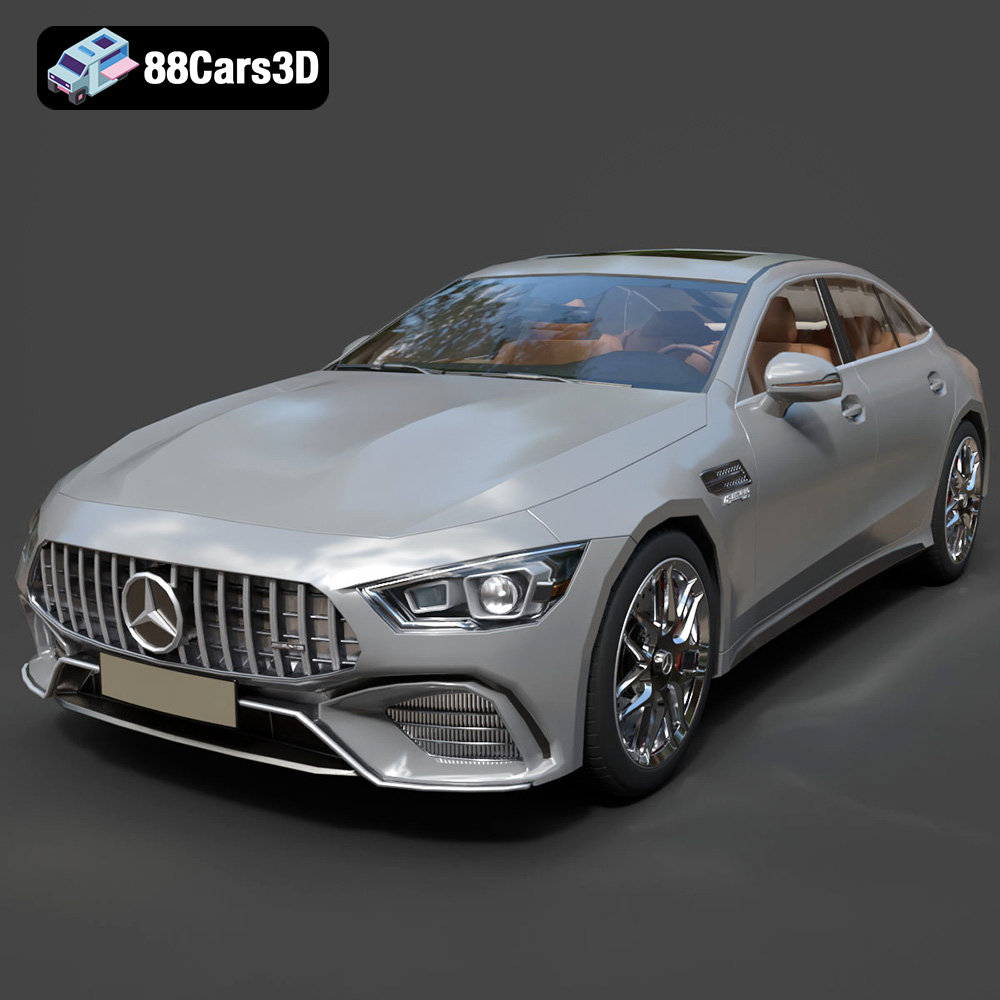
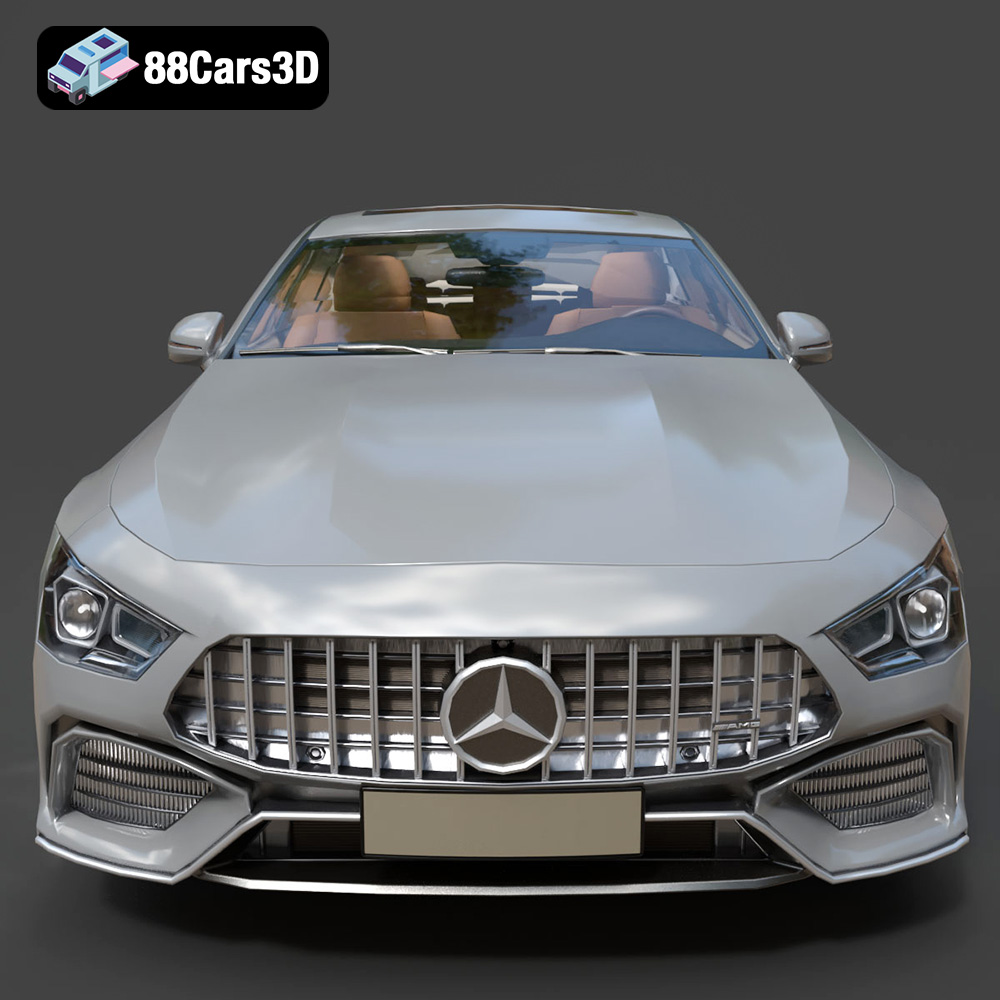
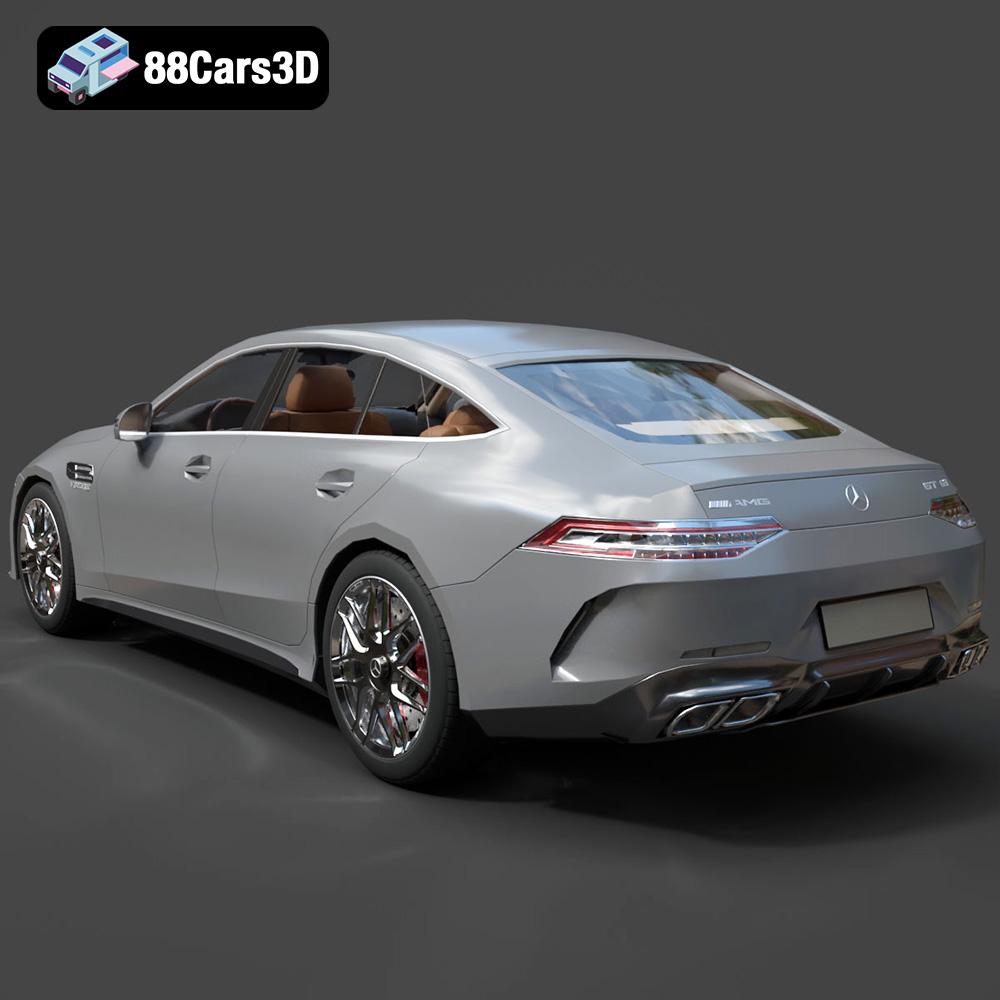
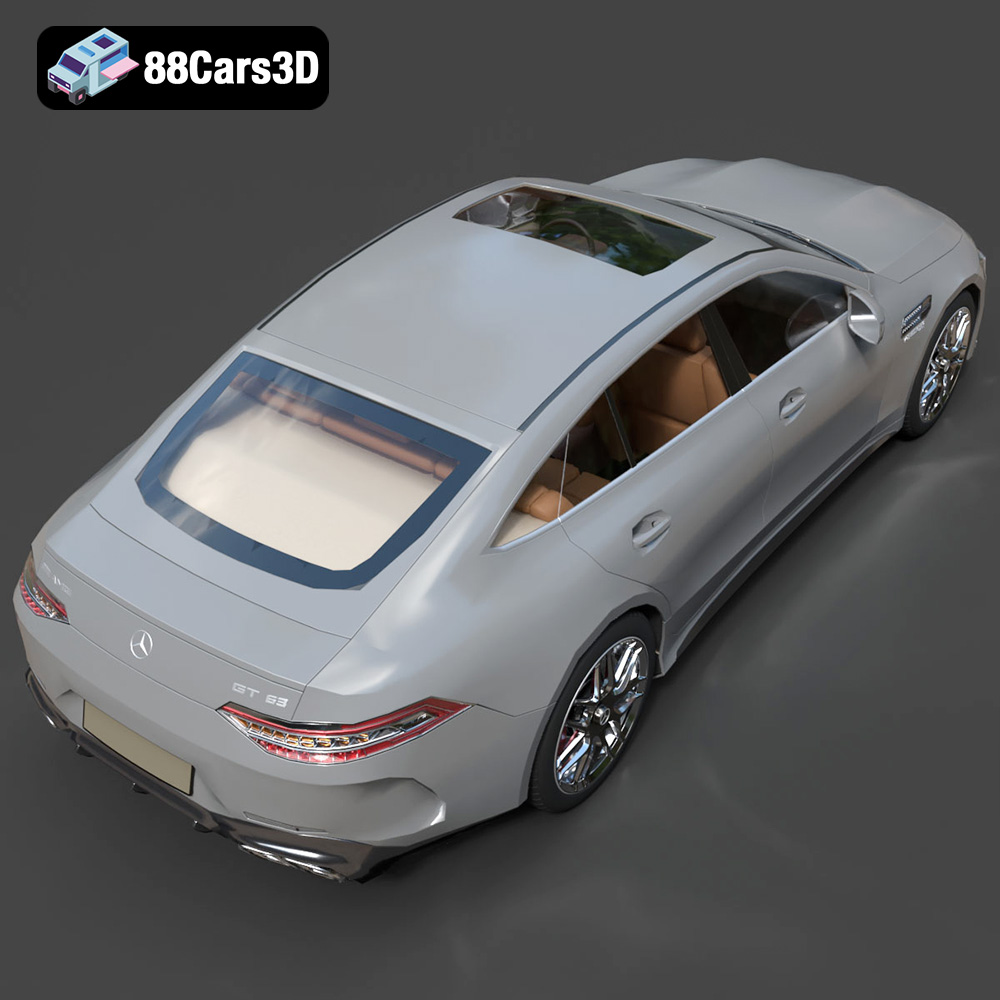
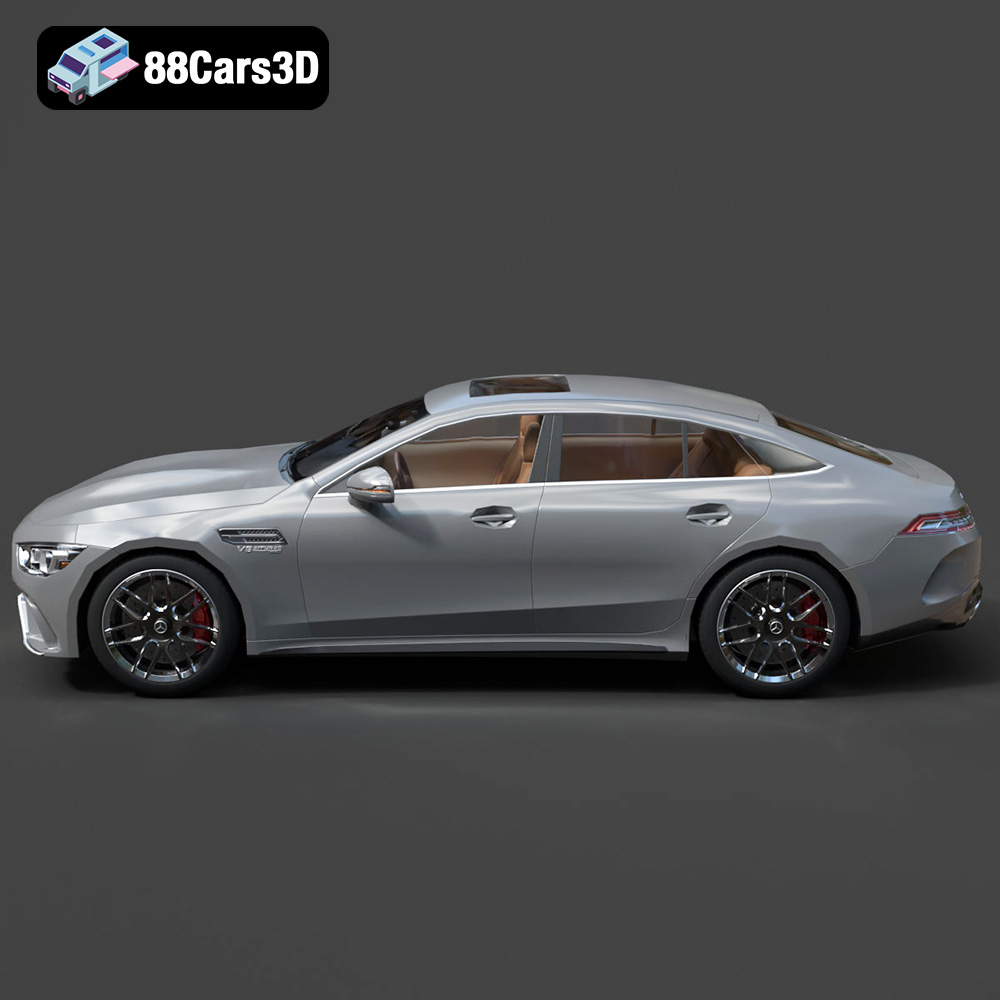
Experience the perfect fusion of track-ready performance and executive luxury with this incredibly detailed 3D model of the Mercedes-Benz AMG GT 63 4-Door Coupe. Renowned for its aggressive stance, signature Panamericana grille, and sweeping coupe roofline seamlessly integrated into a four-door design, this vehicle represents the pinnacle of modern AMG engineering. The model meticulously captures the muscular proportions, the distinct quad exhaust system, and the intricacies of the potent 4.0L V8 biturbo engine layout, delivering an authentic digital twin of the Affalterbach masterpiece. Crafted with premium topology and an optimized triangle count, this model is engineered for uncompromising visual fidelity and game-ready performance. Whether deployed in demanding real-time engines like Unreal and Unity, or utilized in high-resolution offline renders, the mesh maintains smooth curves and sharp character lines without heavy performance overhead. It serves as a superior asset for game development, high-end architectural visualizations, and immersive virtual reality experiences. Perfect for urban driving games, high-end racing simulators, luxury lifestyle renders, and automotive configurators.
$19.99
.blend
.fbx
.glb
.max
.obj
.ply
.rendering
.sedan
.sports car
.stl
.unreal
4-door-coupe
amg-gt-63
car-3d-model
game asset
game-ready
low-poly
luxury car
mercedes-benz
optimized
VR/AR