Get 20% OFF All Premium 3D & STL Models!

In the dynamic worlds of automotive design, game development, and architectural visualization, the demand for exceptionally detailed and technically robust 3D car models has never been higher. These aren’t just pretty pictures; they are complex digital assets that must meet stringent requirements for real-time performance, photorealistic rendering, and even physical fabrication. From bringing a new vehicle concept to life in a marketing campaign to populating a vast open-world game, the underlying quality of the 3D model dictates the success of the entire project.
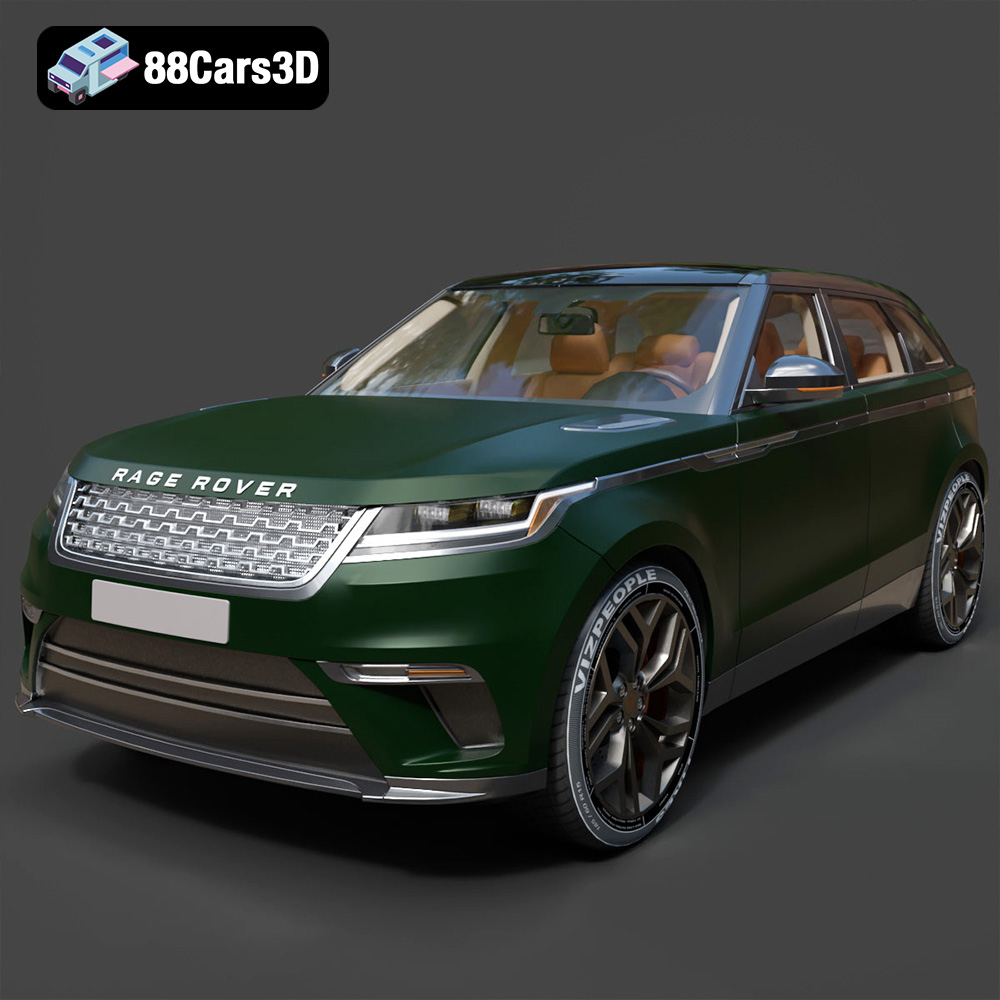
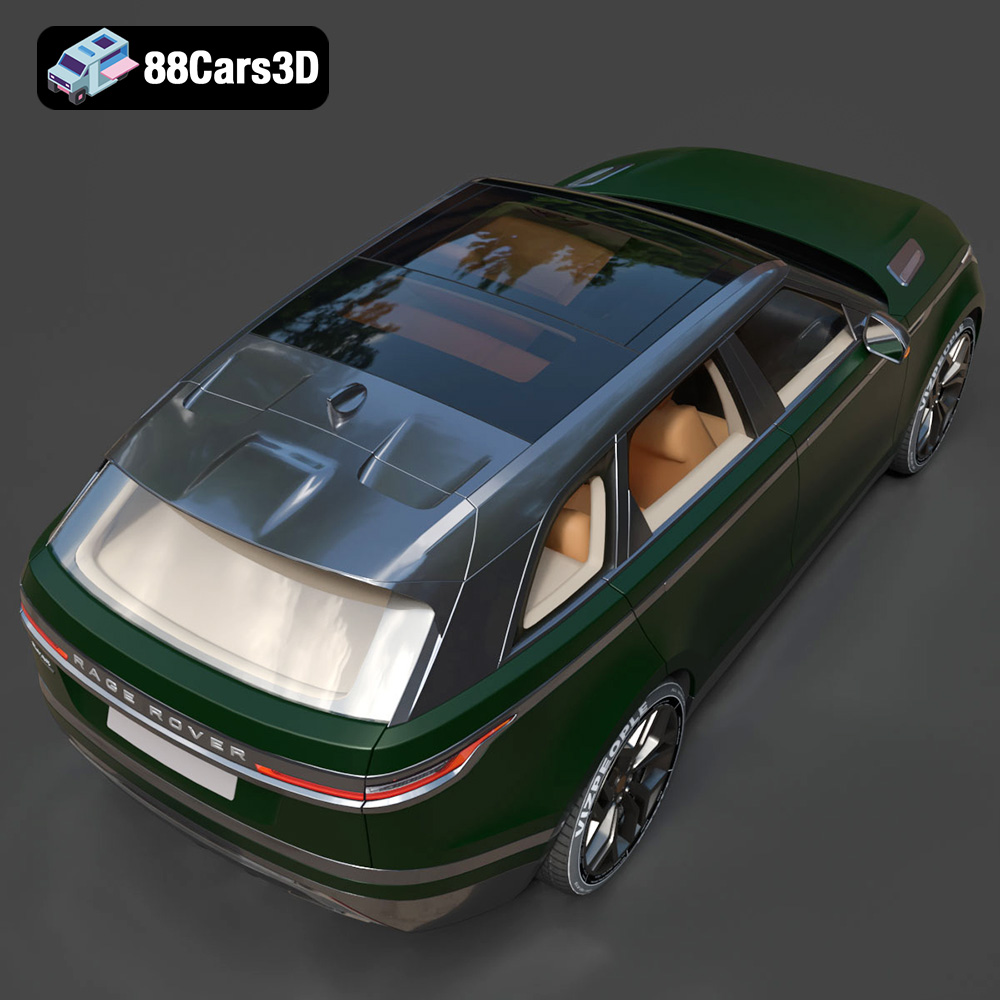
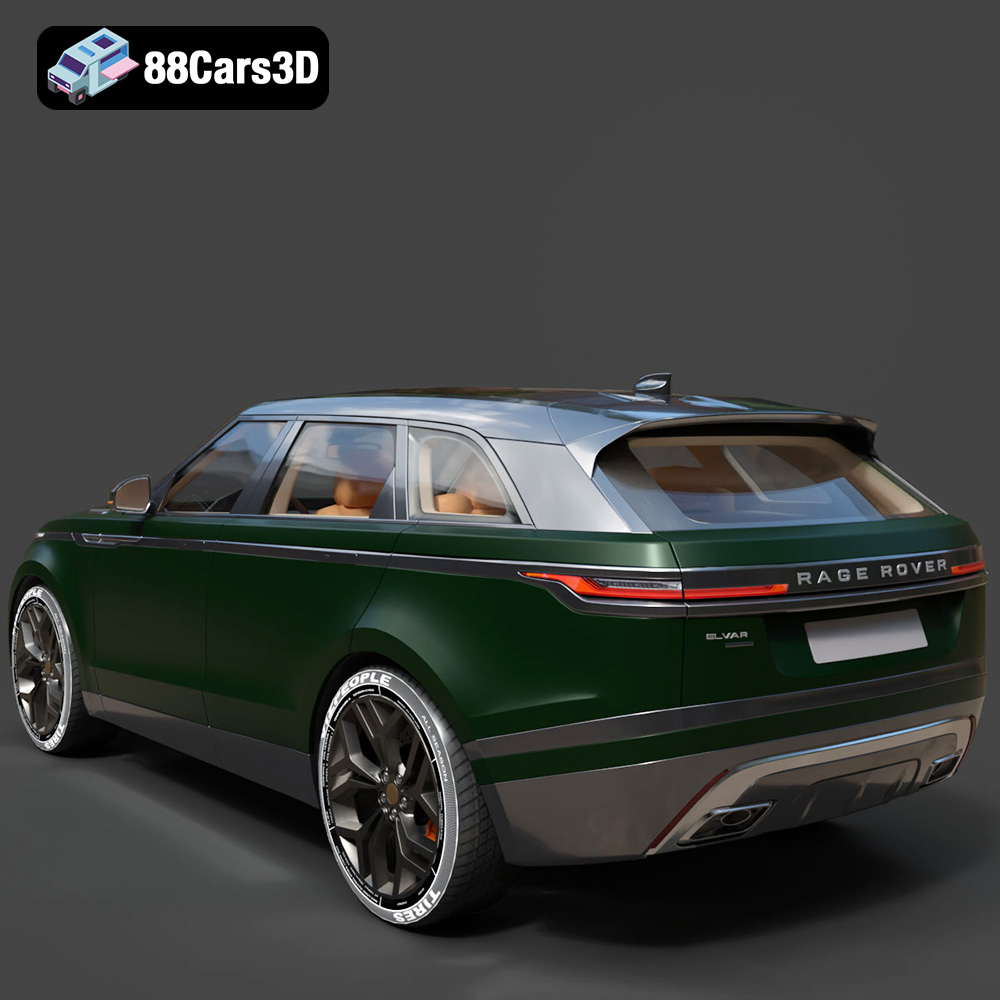
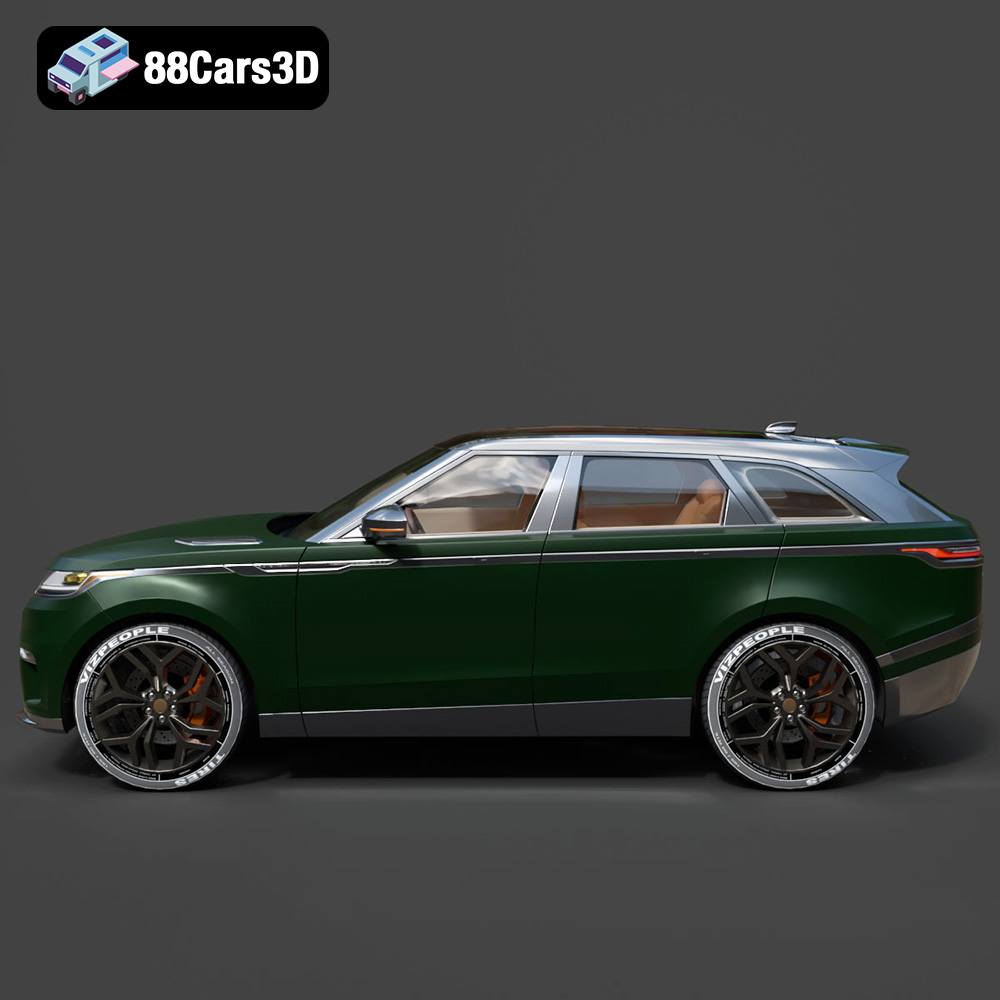
Today, we delve into the intricate processes and technical considerations behind crafting such assets, using a prime example of modern automotive excellence: the Rage Rover Elvar-07. This luxury SUV, with its striking aerodynamic silhouette and commanding road presence, is more than just a design marvel; its 3D model represents a benchmark for game-ready optimization and rendering fidelity. Throughout this discussion, we’ll explore how models like the Rage Rover Elvar-07, available on marketplaces like 88cars3d.com, empower professionals across various industries to achieve stunning visual results and seamless integration into their workflows.
When acquiring a premium 3D car model like the Rage Rover Elvar-07, understanding the various file formats included is crucial for maximizing its utility across different software and pipelines. Each format serves a specific purpose, offering unique advantages for particular applications, from real-time game engines to detailed rendering and even 3D printing. The comprehensive package for the Elvar-07 includes .blend, .fbx, .obj, .glb, .stl, .ply, .unreal, and .max, ensuring unparalleled versatility.
The .blend file format is the native project file for Blender, the widely popular open-source 3D creation suite. When you receive a .blend file, you’re getting the fully editable Blender scene, complete with all materials, textures, lighting setups, and even any modifiers or rigging applied to the model. This is ideal for users who operate primarily within Blender, allowing for deep customization, animation, and rendering directly within the software. Artists can easily adjust PBR material properties, modify geometry, or set up bespoke camera animations for cinematic sequences using Blender’s Cycles or Eevee render engines.
FBX (Filmbox) is arguably the most ubiquitous 3D file format in the industry, especially for game development and animation pipelines. Developed by Autodesk, it’s designed to store not only geometry but also crucial data like materials, textures, animations, rigging, and camera information in a single, well-structured file. This makes it the go-to format for transferring assets between different 3D software packages (e.g., 3ds Max to Maya) and, critically, for importing into real-time engines like Unreal Engine and Unity. The Rage Rover Elvar-07 in .fbx format ensures that all its detailed PBR materials and optimized mesh data are perfectly preserved for seamless integration into your chosen engine, ready for immediate use in game levels or interactive experiences.
OBJ (or Wavefront OBJ) is a simple, universal geometry definition file format that primarily stores 3D model data such as vertices, faces, normals, and UV coordinates. While it doesn’t typically embed animations or advanced material definitions, its simplicity makes it incredibly compatible across virtually all 3D software platforms. It’s an excellent choice for cross-software compatibility when you primarily need the raw mesh data, which can then be used to rebuild materials in your target application. For the Rage Rover Elvar-07, the .obj provides a robust, foundational mesh that can be imported and textured in any environment, making it a reliable fallback.
GLB (GL Transmission Format Binary) is a modern, efficient format specifically optimized for the web, augmented reality (AR), and virtual reality (VR) applications. It’s a binary container that bundles 3D models, textures, and PBR materials into a single file, making it incredibly lightweight and fast to load. This makes the Elvar-07 .glb model perfect for immersive virtual showrooms, online configurators, or mobile AR experiences where performance and rapid deployment are paramount. Its efficiency ensures smooth, interactive viewing even on less powerful devices.
STL (Stereolithography) is the de facto standard file format for 3D printing. It represents a 3D model as a series of connected triangles, defining only the surface geometry of the object. While it lacks color or texture information, it’s precisely what 3D printers need to understand the physical shape to be printed. The Rage Rover Elvar-07 .stl file allows hobbyists and professionals alike to bring this digital masterpiece into the physical world, creating display-scale models with accurate proportions and fine details, as detailed in the product’s recommended print settings.
PLY (Polygon File Format) is another format for storing 3D models, often used for scanned data, CAD, and scientific analysis. It can store a wider range of information than OBJ, including color, transparency, and different types of surface properties per vertex or face. While less common for everyday 3D asset exchange compared to FBX, the .ply format for the Elvar-07 offers a precise, detailed mesh representation that can be valuable for specific engineering, reverse engineering, or high-fidelity analytical applications where granular surface data is important.
The .unreal format implies a pre-configured, engine-ready asset specifically tailored for Unreal Engine. This often means the asset has already been imported, optimized, and set up within an Unreal project structure, potentially including Blueprints, material instances, and collision meshes. For the Rage Rover Elvar-07, an .unreal file would significantly streamline the integration process, allowing developers to drop the vehicle directly into their game or visualization project with minimal setup, saving valuable development time and ensuring consistent quality.
Similar to .blend for Blender, .max is the native project file for Autodesk 3ds Max, a powerhouse for 3D modeling, animation, and rendering, particularly in architectural visualization and high-end automotive rendering. The .max file provides the fully editable scene, enabling users to access all aspects of the Rage Rover Elvar-07 model, including its original mesh, modifiers, materials, lighting, and animation setups. This format is crucial for users who wish to leverage 3ds Max’s robust toolset for creating complex animations, highly realistic V-Ray or Corona renders, or integrating the car into large architectural scenes.
The availability of these diverse formats ensures that the Rage Rover Elvar-07 from 88cars3d.com is not just a high-quality model, but a truly versatile one, adaptable to almost any professional 3D workflow.
Creating a 3D car model that excels in both visual realism and technical performance is a sophisticated endeavor, blending artistic vision with engineering precision. The Rage Rover Elvar-07 model exemplifies this fusion, designed from the ground up to meet the demanding standards of various industries. Its success lies in several key areas: authentic design replication, optimal topology, and advanced material systems.
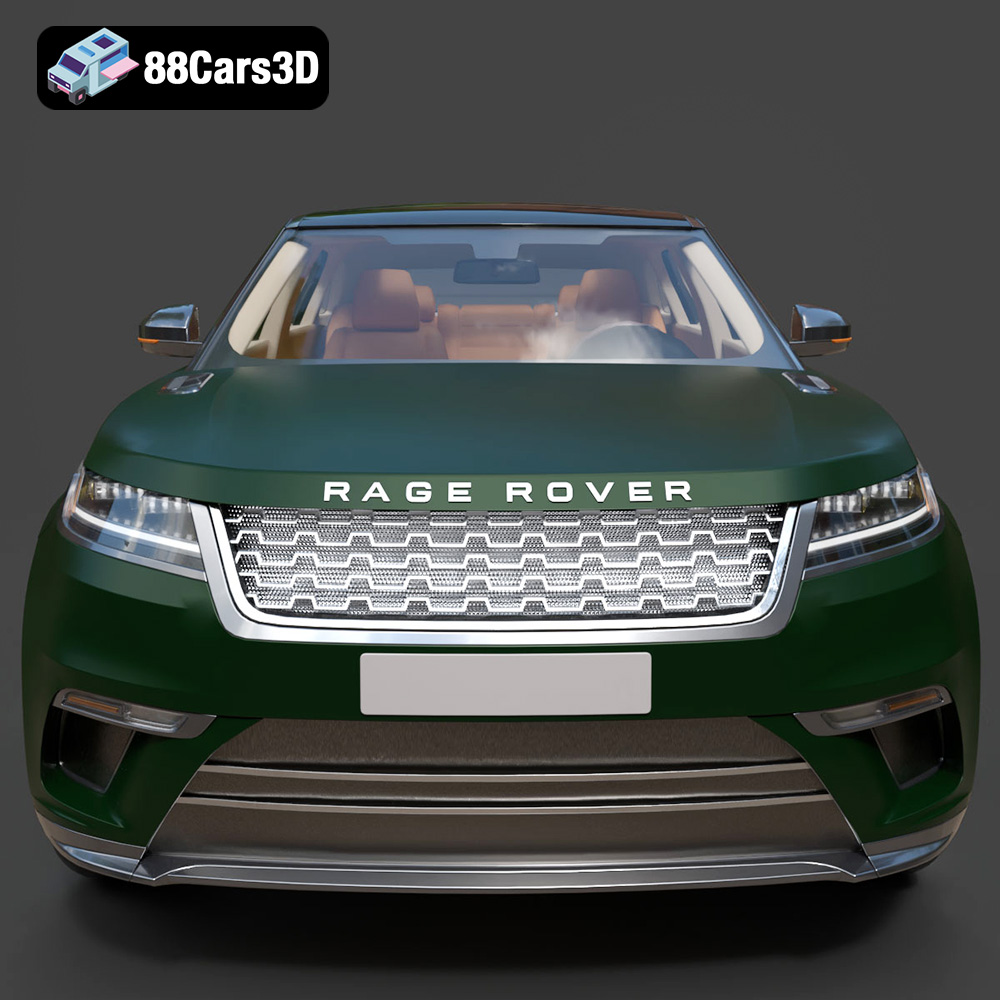
At the heart of any compelling automotive 3D model is its accuracy to the real-world counterpart. The Rage Rover Elvar-07 model meticulously captures the vehicle’s “striking, aerodynamic silhouette with commanding road presence.” This includes the avant-garde styling, the distinctive floating roofline, flush deployable door handles, and the bold front grille flanked by sleek LED matrix headlights. Achieving this level of detail requires careful attention to reference imagery, precise modeling techniques, and a deep understanding of automotive aesthetics. The model’s “accurate Rage Rover Elvar-07 frame geometry and authentic SUV proportions” ensure that whether viewed from a distance or in an extreme close-up, the vehicle’s identity is unmistakable. Every curve, panel gap, and ventilation slit is faithfully reproduced, laying the groundwork for true photorealism.
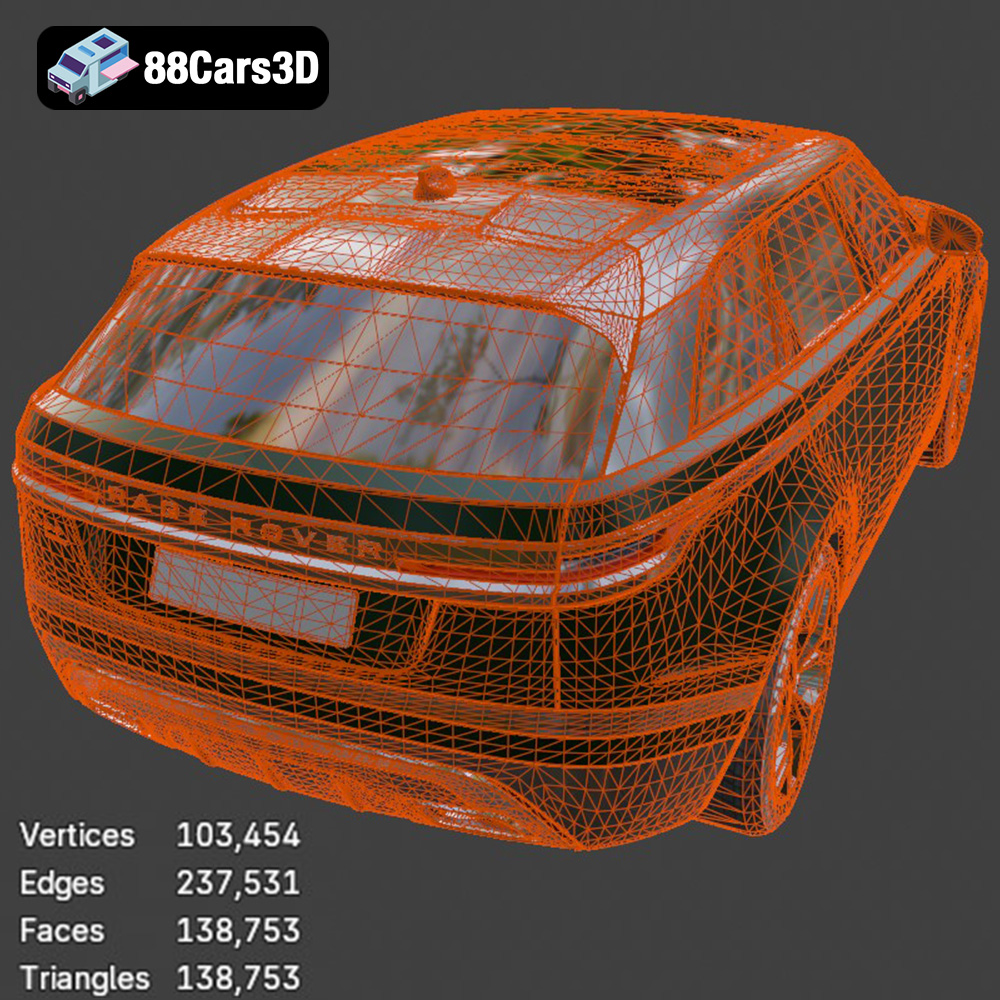
Beyond visual accuracy, the underlying mesh topology is paramount, especially for assets intended for real-time applications like games and AR/VR. The Rage Rover Elvar-07 boasts “optimal topology with an efficient triangle count,” approximately 150,000 triangles. This figure represents a sweet spot, balancing high-end visual realism with performance efficiency. A clean, well-optimized mesh ensures smooth deformation during animation, prevents shading artifacts, and allows for efficient rendering. For game developers, this means the vehicle can be spawned multiple times in a scene without significant performance impact, while still maintaining “premium visual fidelity” in a cinematic render. The model’s “optimized geometry for first-person POV in gaming and VR simulations” further emphasizes its readiness for interactive experiences where every detail inside the cockpit counts.
Photorealistic rendering in modern 3D environments relies heavily on Physically Based Rendering (PBR) materials. These materials simulate how light interacts with surfaces in the real world, producing highly convincing results. The Rage Rover Elvar-07 model features “detailed PBR materials” which include textures for albedo (color), roughness (surface smoothness), metallic (reflectivity), normal (surface detail), and ambient occlusion. These textures are meticulously crafted to represent the luxurious leather-style seating with detailed stitching, the modern digital instrument cluster, the glossy paint, and the metallic accents. This PBR workflow ensures that the model looks consistent and realistic under various lighting conditions, whether it’s a studio render or dynamic in-game lighting. The “high-resolution LED matrix headlights and wraparound taillights with internal housing details” are brought to life through sophisticated emissive and transparent materials, adding another layer of realism.
The true value of a high-quality 3D asset like the Rage Rover Elvar-07 lies in its seamless integration into diverse professional workflows. Whether you’re a seasoned artist using 3ds Max for architectural visualization, a game developer working with Unreal Engine, or an indie creator leveraging Blender, the goal is to get the model into your scene quickly and effectively, while maintaining its premium visual fidelity.
For artists working with Autodesk 3ds Max, the included .max file is a direct plug-and-play solution. Users can open the scene, and the Rage Rover Elvar-07 will be ready for immediate manipulation. This allows for deep customization, such as adjusting body colors, material finishes, or even modifying specific components. For rendering, 3ds Max users can easily set up V-Ray or Corona Renderer, applying the provided PBR textures to create stunning studio renders or integrate the SUV into complex architectural scenes. The model’s “proper pivot setup for steering, wheel rotation, and suspension travel” is particularly beneficial for animation, allowing artists to quickly rig and animate the vehicle for dynamic sequences.
For those using other DCC software, the .fbx and .obj formats are invaluable. Importing the .fbx file into Maya, Cinema 4D, or Houdini will bring in the geometry, UVs, and often a basic material setup, ready for texture re-connection and advanced shader creation specific to that software’s render engine.
Blender users benefit directly from the .blend file, providing a native, fully editable scene. This allows for immediate access to the model’s mesh, PBR materials, and any initial scene setup. Artists can leverage Blender’s powerful Cycles render engine for photorealistic output or the real-time Eevee engine for quick previews and animations. Customization options are extensive: changing body colors using Blender’s node editor, modifying tire textures, or adjusting material finishes are straightforward. The modular design of the Elvar-07, with “separate wheels, suspension, and steering components for animation,” makes it incredibly user-friendly for rigging and creating dynamic driving sequences directly within Blender.
Game developers and AR/VR specialists will find the Rage Rover Elvar-07 particularly appealing due to its “Game-Ready & Optimized” nature. Importing the .fbx or the specific .unreal asset into Unreal Engine or Unity is a streamlined process. Once imported, the PBR textures are connected to material instances, automatically creating realistic surface properties. The optimized polycount of ~150,000 triangles ensures excellent performance, even when multiple instances of the vehicle are present. Developers can integrate the model into a vehicle blueprint in Unreal Engine or attach a car controller script in Unity, allowing for interactive driving experiences, virtual showrooms, or physics-based simulations. The “real-world scale accuracy” further enhances the immersion in virtual environments, providing a sense of genuine presence for users.
The utility of a high-quality 3D car model extends far beyond static renders. For the Rage Rover Elvar-07, its design and technical specifications make it an ideal candidate for cutting-edge game development, augmented reality (AR), and virtual reality (VR) applications, where performance, immersion, and interactivity are paramount.
Game development demands a delicate balance between visual fidelity and performance. The Rage Rover Elvar-07’s “approximately 150,000 triangles strikes perfect balance for real-time engines (Unreal, Unity) while maintaining high-end visual realism.” This optimized polycount is crucial for maintaining high frame rates in open-world racing games, simulators, or any environment where numerous complex assets need to be rendered simultaneously. Its “game-ready” status means developers don’t have to spend valuable time on re-topology or extensive optimization. The model’s modularity, with “separate wheels, suspension, and steering components for animation,” facilitates easy rigging and integration with vehicle physics systems, allowing players to experience realistic driving dynamics and customizable options within the game world.
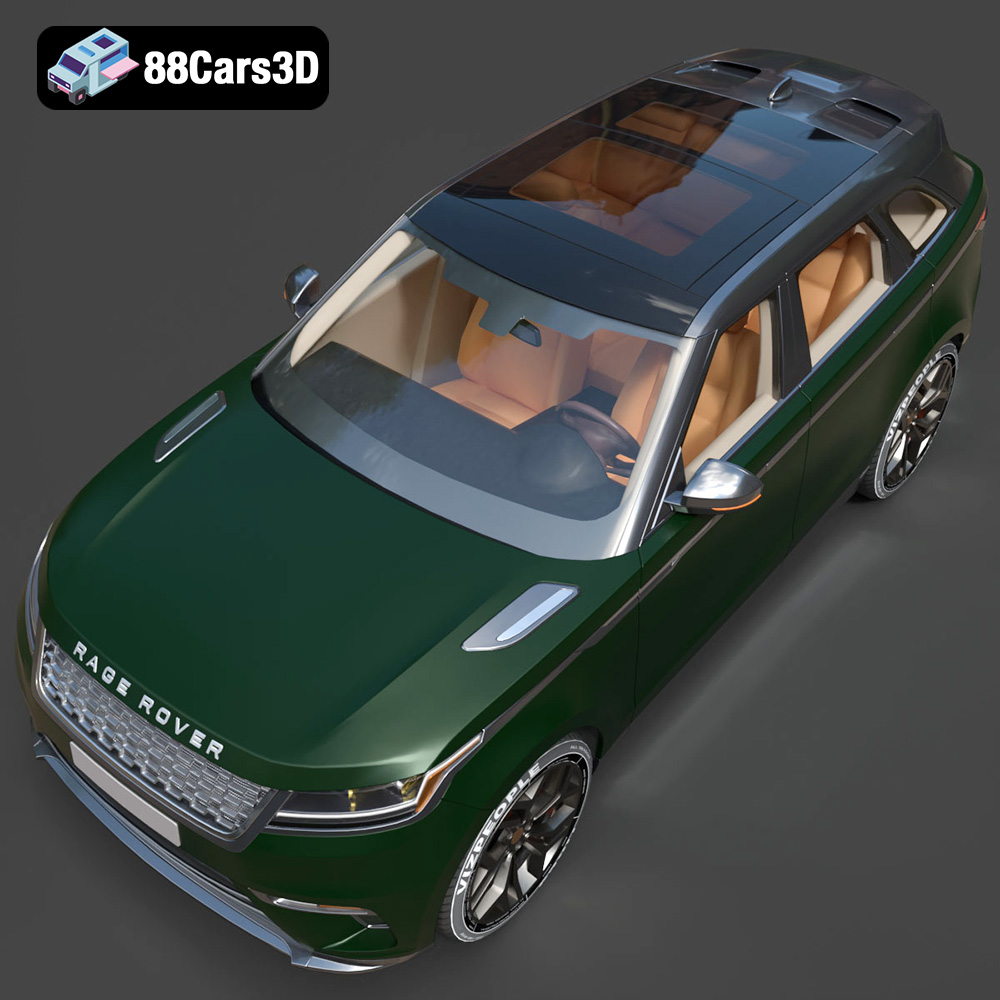
Furthermore, the inclusion of a “fully realized interior” with “optimized geometry for first-person POV” means that the Elvar-07 is not just an exterior shell. Players can step inside, experience a detailed cockpit with “luxurious leather-style seating,” a “modern digital instrument cluster,” and a “dual-screen center infotainment system,” enhancing the immersion for racing titles or role-playing games where interior detail matters.
The growth of AR and VR technologies has created new frontiers for 3D automotive models. Virtual showrooms, interactive configurators, and mobile AR experiences require highly efficient models that can load quickly and perform smoothly on various devices. The Rage Rover Elvar-07, particularly with its .glb format, is “perfect for immersive virtual showrooms, configurators, and mobile AR experiences.” Imagine a customer being able to walk around the Elvar-07 in their living room via AR, changing its color or interior trim in real-time. In VR, the detailed interior allows for a truly convincing experience, enabling users to explore the vehicle’s cabin as if they were physically present, examining every stitch and button. This level of realism, combined with optimization, positions the Elvar-07 as a powerful tool for next-generation interactive marketing and product showcasing.
While the primary focus of 3D car models is often digital visualization, the ability to transition from screen to physical object is a significant advantage. The Rage Rover Elvar-07 model is not only designed for digital rendering but also engineered to be “convertible to .stl format for display-scale hobbyists,” making it suitable for 3D printing.
The .stl file format, included with the Rage Rover Elvar-07, is the industry standard for 3D printing. This format strips away all color and material data, leaving only the raw triangular mesh geometry—exactly what a 3D printer needs to build the object layer by layer. This capability allows enthusiasts and designers to create tangible replicas of the luxury SUV, whether for display, prototyping, or custom model building.
Achieving a high-quality physical print requires specific settings, which are thoughtfully provided for the Elvar-07 model:
By adhering to these detailed guidelines, users can transform the digital Rage Rover Elvar-07 into an impressive physical model, showcasing the versatility of high-quality 3D assets from 88cars3d.com.
A truly professional 3D model isn’t just a static asset; it’s a flexible foundation for boundless creative expression and customization. The Rage Rover Elvar-07 embodies this principle, offering extensive options for artists, designers, and developers to tailor the model to their specific project needs.
The ability to customize the visual characteristics of the Rage Rover Elvar-07 significantly enhances its value. The model is built to allow for easy adjustments, such as:
A key aspect of realistic rendering is how a model interacts with its environment. The Elvar-07’s robust material system allows it to shine in various lighting setups:
This inherent flexibility means the Rage Rover Elvar-07 isn’t just a static object; it’s a versatile tool that adapts to virtually any creative vision or technical requirement, making it an invaluable asset for any professional leveraging 3D car models.
The journey from concept to a fully realized 3D automotive model is complex, requiring a blend of artistic skill, technical acumen, and an understanding of diverse industry pipelines. The Rage Rover Elvar-07 stands as a testament to what’s achievable in high-fidelity 3D modeling: a product that not only captures the luxurious aesthetic of a modern SUV but is also meticulously engineered for performance across rendering, game development, AR/VR, and even 3D printing applications.
Through its optimized topology, detailed PBR materials, and the provision of a comprehensive array of file formats (.blend, .fbx, .obj, .glb, .stl, .ply, .unreal, .max), this model offers unparalleled versatility and ease of integration into any professional workflow. Whether you are aiming for a breathtaking cinematic render, populating an immersive open-world game, creating an interactive virtual showroom, or producing a detailed physical replica, the Elvar-07 provides the robust foundation needed for success. Its game-ready optimization and customization options ensure it remains a valuable asset for years to come.
For professionals seeking to elevate their projects with top-tier 3D car models, exploring resources like 88cars3d.com offers access to assets that truly meet and exceed industry standards, enabling creators to push the boundaries of visual excellence and interactive experiences.
The Rage Rover Elvar-07 represents the pinnacle of modern luxury SUV design, combining a striking, aerodynamic silhouette with commanding road presence. Known for its avant-garde styling, this vehicle features a floating roofline, flush deployable door handles, and a bold front grille flanked by sleek, aggressive LED matrix headlights. The elegant yet muscular body proportions exude both high-end sophistication and rugged off-road capability, making it a highly sought-after aesthetic in automotive design. This meticulously crafted 3D model boasts optimal topology with an efficient triangle count, making it perfectly game-ready without sacrificing premium visual fidelity. The asset is engineered for seamless integration into real-time rendering pipelines, featuring detailed PBR materials, precisely modeled exterior components, and a fully realized interior. Whether viewed up close in a cinematic render or driven in a real-time engine, the model holds up to the highest professional standards. Perfect for high-end automotive visualizations, next-gen open-world racing games, architectural visualization scenes, and immersive VR showroom experiences.
$19.99
.blend
.fbx
.glb
.luxury suv
.max
.obj
.ply
.rendering
.stl
.unreal
car-3d-model
elvar-07
game asset
game-ready
low-poly
off-road
optimized
rage-rover
SUV
VR/AR