Get 20% OFF All Premium 3D & STL Models!

In the rapidly evolving landscape of 3D visualization, game development, and advanced simulations, the quality of a digital asset can make or break a project. From the subtle glint on a metallic surface in an automotive rendering to the precise collision detection in a high-fidelity simulator, every detail matters. Professionals across industries demand not just visually appealing models, but also technically sound, optimized assets that seamlessly integrate into complex workflows. This is particularly true for heavy-duty vehicles, where complex engineering and robust utility need to be accurately represented.
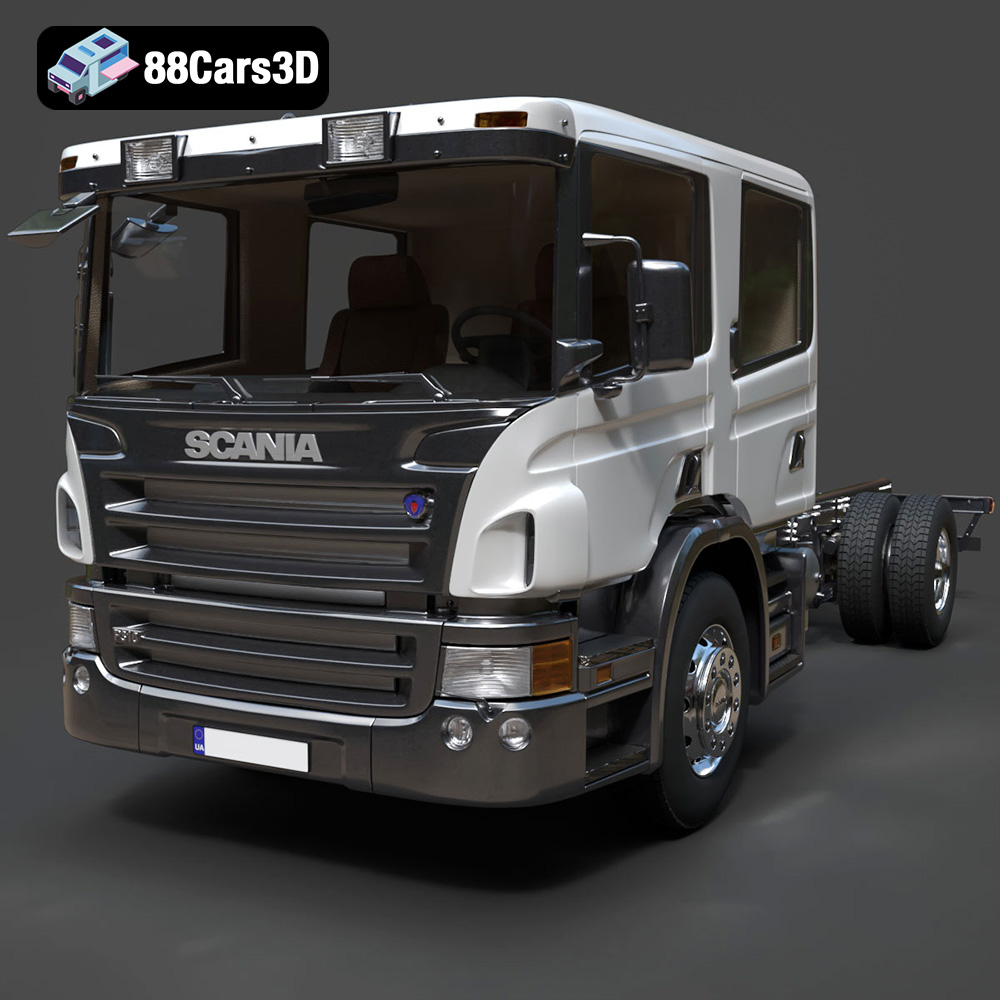
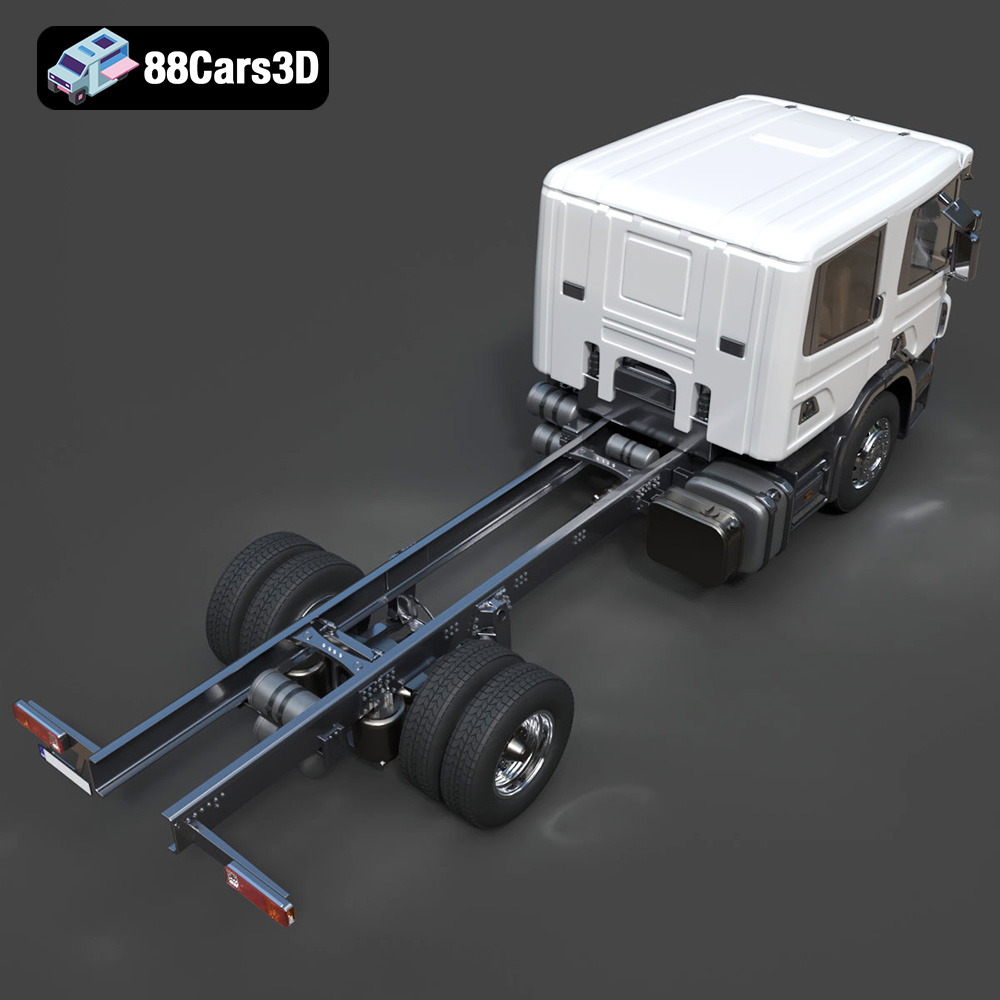
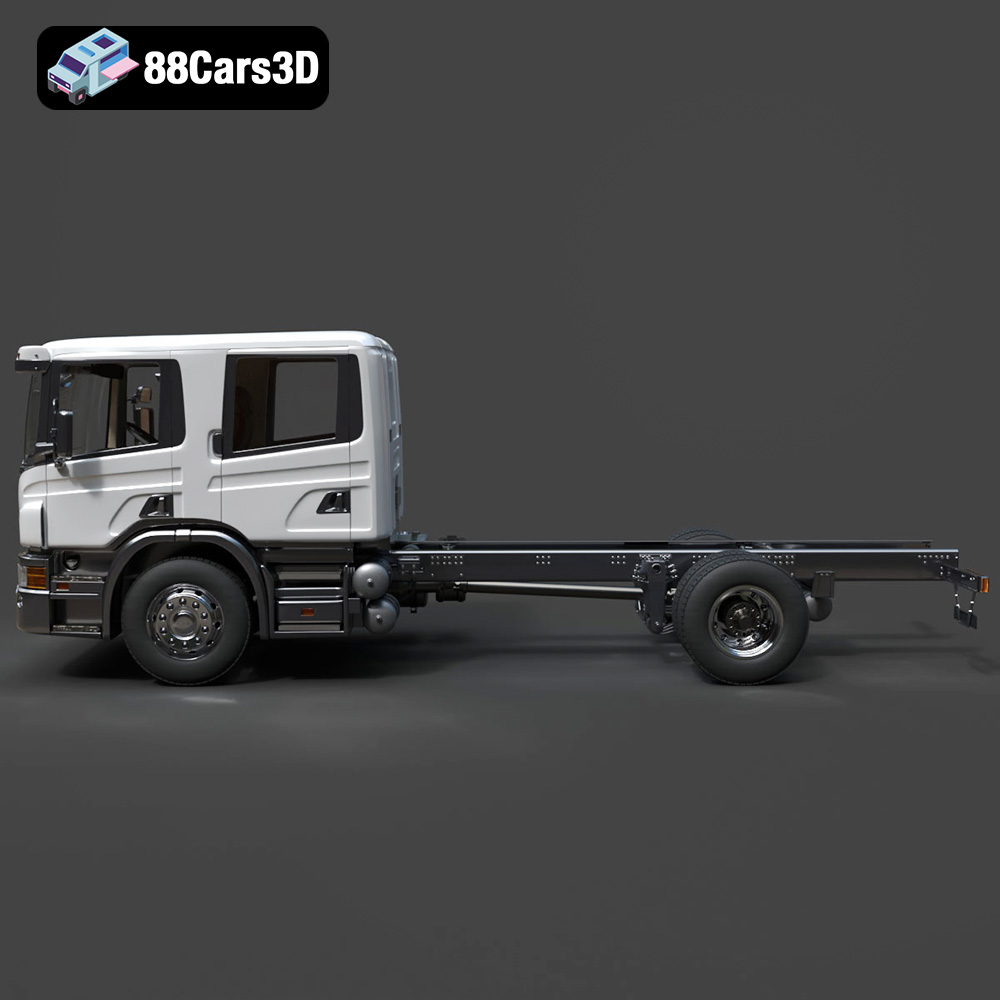
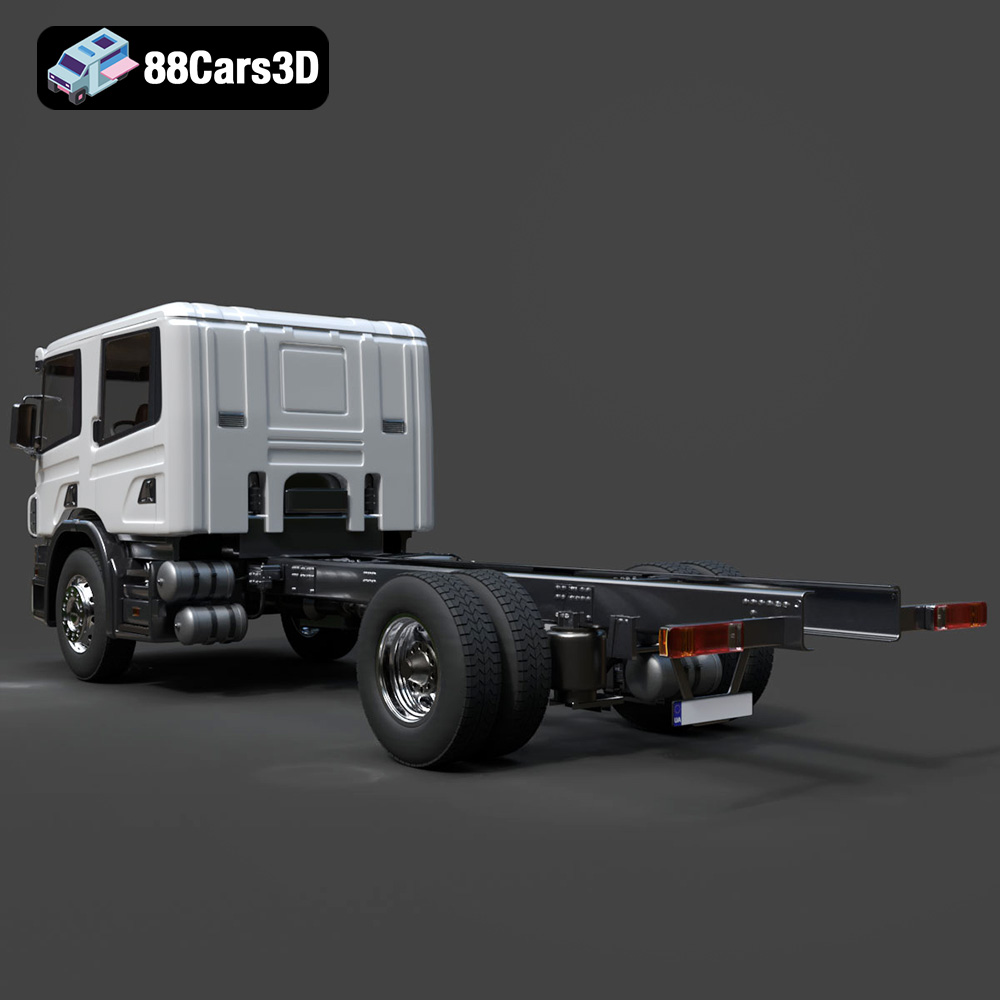
Today, we’re taking an in-depth look at a prime example of such a versatile and production-ready asset: the Scania P310 Crew Cab Chassis Truck 2011 3D Model. This meticulously crafted 3D model isn’t just a static representation; it’s a foundational tool for a multitude of applications, from emergency response simulations to high-end commercial visualizations and even physical 3D prints. Its blend of high fidelity and game-ready optimization makes it an invaluable asset for anyone working with 3D car models and intricate machinery.
The core of any successful 3D project lies in the quality of its assets. Generic or poorly optimized models can lead to a cascade of problems, from performance bottlenecks in real-time applications to visual inconsistencies in high-resolution renders. This is why investing in premium 3D models, such as those found on 88cars3d.com, is a strategic decision for any serious developer or designer.
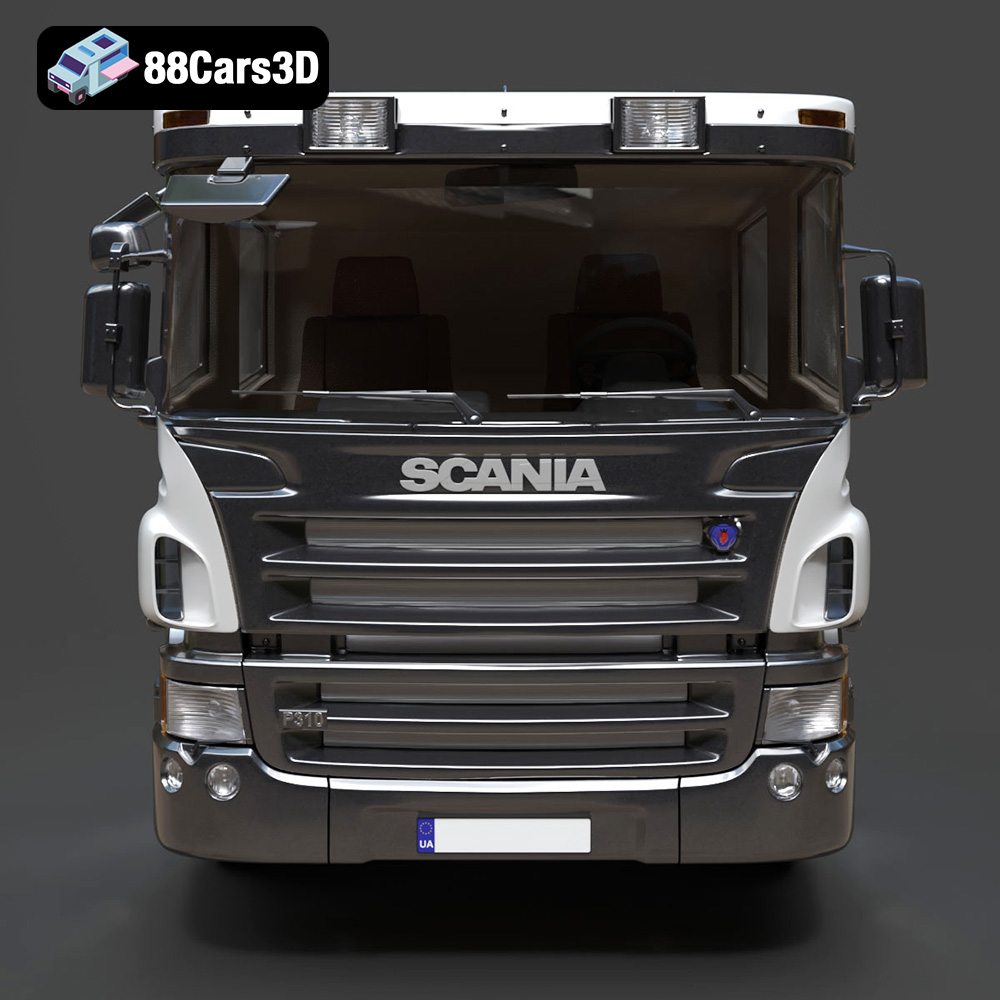
Automotive design and visualization demand an unparalleled level of accuracy. A vehicle like the Scania P310, known for its robust engineering and specific utility, requires its digital counterpart to reflect every curve, panel gap, and mechanical component with precision. The Scania P310 Crew Cab Chassis Truck 2011 3D model excels here, faithfully capturing the iconic flat-front P-series crew cab, robust exposed chassis rails, heavy-duty drivetrain components, and commercial-grade fixtures. This attention to real-world scale and proportion ensures that any rendering or simulation built around this model will be inherently believable and professional.
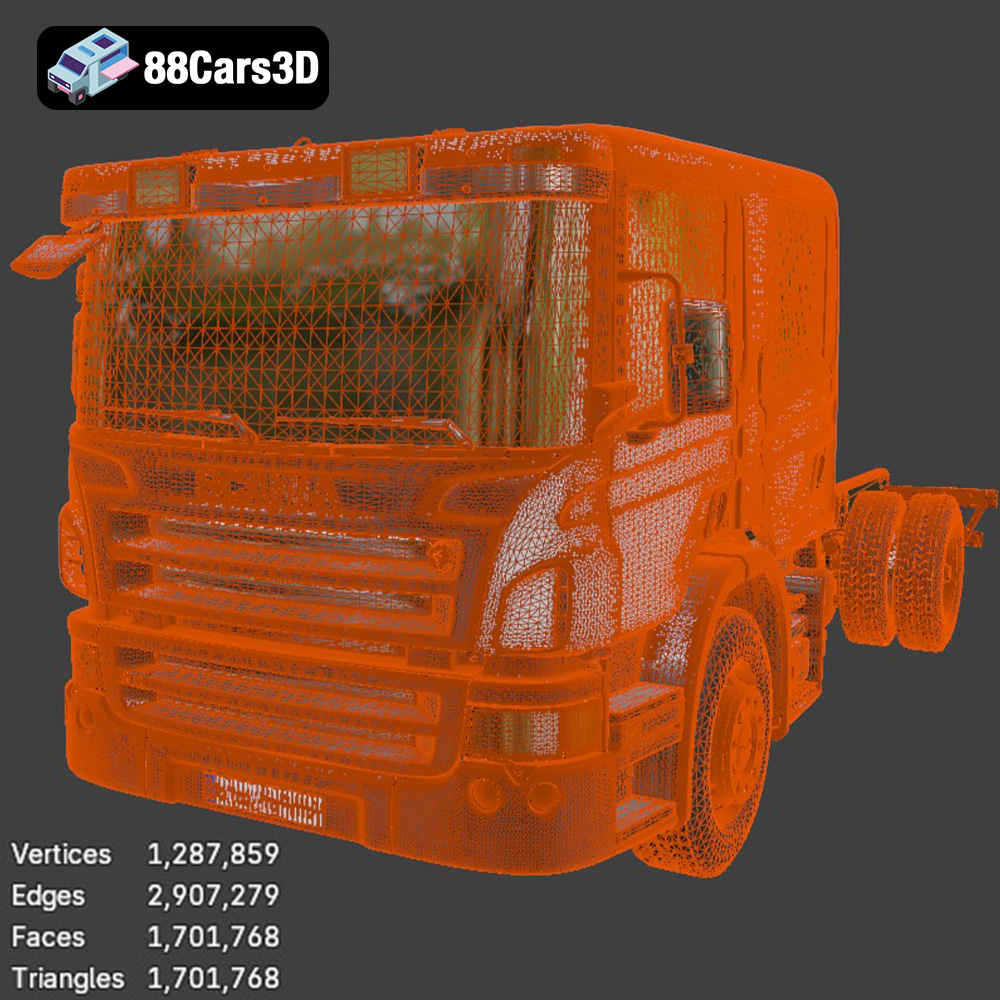
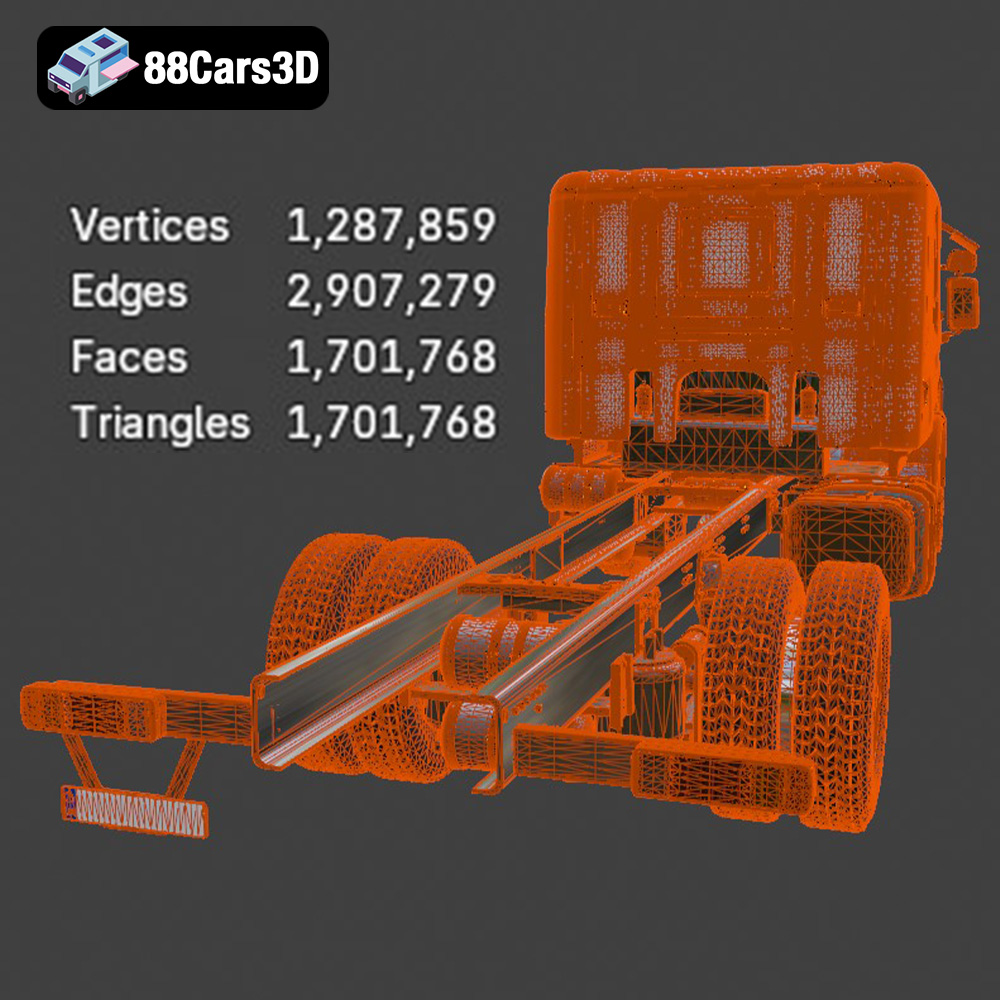
Time is a critical resource in any production environment. Starting with a high-quality, pre-optimized 3D model significantly reduces development time and costs. Instead of spending countless hours modeling a vehicle from scratch, or fixing topology issues from a subpar asset, artists can immediately focus on scene composition, lighting, texturing, or integration into a game engine. The Scania P310 model, with its organized geometry and clean topology (1,701,768 triangles), is designed for immediate deployment, accelerating projects whether you’re working on automotive rendering for a marketing campaign or building intricate game assets for a new title.
One of the most crucial aspects of working with 3D models, especially those as complex and versatile as the Scania P310, is understanding the various file formats available. Each format serves a specific purpose, offering different levels of compatibility, optimization, and feature retention across software and applications. The Scania P310 model comes packed with a comprehensive set of formats, ensuring it’s ready for any professional pipeline.
The comprehensive range of included file formats for the Scania P310 Crew Cab Chassis Truck 2011 3D model underscores its adaptability, ensuring that whether your project demands native editing, cross-platform compatibility, real-time optimization, web integration, or physical output, you have the right tool for the job. This foresight in asset preparation is a hallmark of the quality found at 88cars3d.com.
Beyond file formats, the true value of a premium 3D model lies in its inherent design and technical execution. The Scania P310 model isn’t just a generic truck; it’s a specialized commercial vehicle meticulously recreated in the digital realm. Its design ensures both visual accuracy and technical performance across various applications.
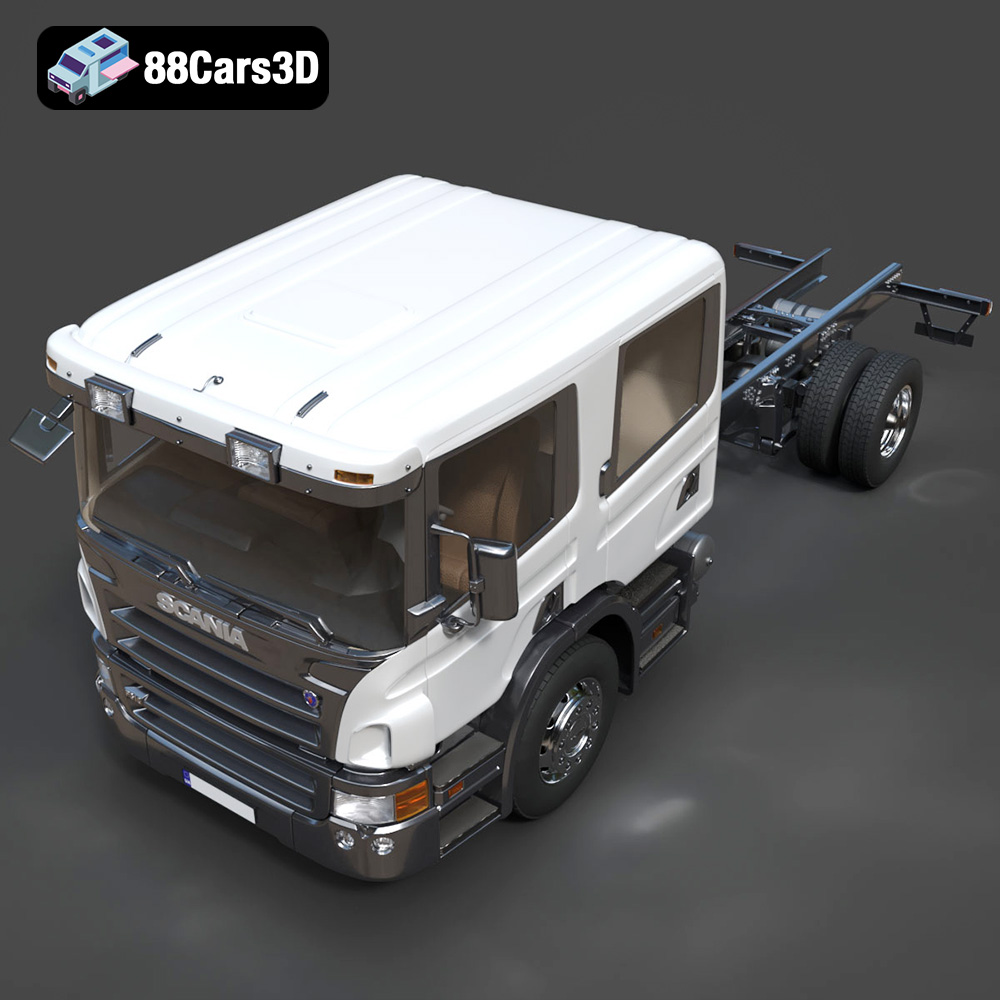
The exterior of the Scania P310 3D model is a testament to careful observation and modeling. It boasts accurate Scania P310 Crew Cab Chassis Truck frame geometry and proportions, essential for realistic representations. Furthermore, it features a detailed engine block and robust commercial drivetrain, heavy-duty commercial exhaust system, and signature Scania lighting details—elements that are often overlooked in less detailed models but are critical for high-fidelity rendering and simulation. For animators, the inclusion of separate wheels, suspension, and steering components with proper pivot setups is a game-changer, allowing for realistic wheel rotation, steering articulation, and suspension travel without complex rigging from scratch.
The attention to detail extends to the interior, a crucial aspect for immersive experiences, especially in first-person simulations or AR/VR applications. The multi-passenger crew cab seating details with accurate upholstery textures, heavy-duty commercial steering wheel, comprehensive dashboard, and instrument cluster details all contribute to a believable cockpit environment. Critically, the geometry is optimized for first-person POV in gaming and VR simulators. This means that while the overall model maintains high visual realism, the polygon budget for interior elements is wisely spent where the user’s eye will naturally focus, providing depth without sacrificing real-time performance.
The Scania P310 model’s technical specifications highlight its suitability for professional production. With 1,701,768 triangles, it strikes an excellent balance, providing sufficient detail for high-end rendering without being excessively heavy for real-time engines like Unreal and Unity. Real-world scale accuracy, based on actual vehicle chassis dimensions, ensures consistent integration into scenes and simulations. The proper pivot setup for crucial components further enhances its utility, reducing preparation time for animators and technical artists. These advantages collectively make it a truly “game-ready” and “optimized” asset, ready for the most demanding projects.
The true strength of a versatile 3D asset is its ability to adapt to a myriad of professional applications. The Scania P310 Crew Cab Chassis Truck 3D model is designed with this versatility in mind, ready to be a central component in various industries.
For game developers, finding the right balance between visual fidelity and performance is an ongoing challenge. The Scania P310 model’s “Game-Ready & Optimized” status means it’s perfectly suited for open-world games, racing titles, and vehicle simulators. With its 1.7 million triangle count, it offers substantial detail, making it ideal for hero vehicles or close-up gameplay. The inclusion of the .unreal format means it can be directly imported into Unreal Engine, potentially pre-configured with materials and colliders, accelerating the integration process. In a heavy-duty truck simulator, for example, players could drive this Scania model, experiencing realistic suspension physics and detailed cockpit views, all powered by an efficient game asset.
Automotive rendering demands photorealism. Advertising agencies, industrial design studios, and visualization specialists regularly require high-fidelity 3D car models for marketing materials, product showcases, and client presentations. Whether using 3ds Max with V-Ray or Blender with Cycles, the Scania P310 model provides an excellent foundation. Its accurate geometry, detailed textures (implied by “accurate upholstery textures” and overall fidelity), and clean topology allow artists to create stunning studio lighting setups, environmental renders, or even highly detailed exploded views for technical manuals. Customization options, such as changing body colors or material finishes, further enhance its utility for brand-specific campaigns.
Immersive technologies like Augmented Reality (AR) and Virtual Reality (VR) are transforming how industries train personnel and visualize products. The optimized nature of the Scania P310 model makes it perfect for AR/VR applications. Imagine a virtual showroom where potential buyers can walk around and even “sit inside” a Scania P310 using a VR headset, exploring its features in real-world scale. For industrial training, this model could be integrated into an emergency response simulator, allowing firefighters or utility workers to practice operating the vehicle in a safe, virtual environment, mastering controls and procedures before interacting with real-world equipment. The .glb format, in particular, facilitates its use in mobile AR experiences and browser-based configurators.
A truly versatile 3D model extends its utility beyond just screen-based applications. The Scania P310 Crew Cab Chassis Truck 2011 3D model also offers avenues for physical creation and extensive digital customization, catering to a broader spectrum of user needs.
The ability to transform a digital model into a physical object opens up new creative and practical possibilities. With its inclusion of the .stl format, the Scania P310 model is ready for 3D printing. Hobbyists can create intricate display-scale models, while professionals might use it for rapid prototyping or to create physical representations for client presentations. The product description provides clear 3D print settings recommendations, including scale (1:12 / 1:18 / 1:24), layer height, wall thickness, infill, and crucial support requirements. This guidance is invaluable for achieving a successful print, especially for detailed parts like the exhaust system or suspension components. Resin printing is specifically recommended for its ability to capture fine details, ensuring that the essence of the digital model is translated accurately into a tangible form.
No two projects are exactly alike, and the need for customization is paramount. The Scania P310 model offers various customization options to tailor it to specific requirements. Users can easily change body and tank colors to match factory specifications, custom finishes, or specific brand liveries. Modifying tire textures from standard road variants to off-road or heavy-duty industrial treads allows for adaptation to different environments or use cases. Adjusting material finishes (matte, gloss, metallic) provides complete control over the vehicle’s aesthetic, from a brand-new showroom look to a weathered utility workhorse. Finally, adapting lighting for different environments is essential for realistic rendering, allowing the model to shine whether under harsh desert sun or the subtle glow of city lights. This level of flexibility ensures that the Scania P310 3D model is not just an asset, but a adaptable foundation for countless creative endeavors.
In the demanding world of 3D content creation, the availability of high-quality, technically robust 3D car models is a cornerstone for success. The Scania P310 Crew Cab Chassis Truck 2011 3D Model stands out as an exceptional example of such an asset. Its meticulous detail, accurate real-world scale, game-ready optimization, and comprehensive file format support make it an indispensable tool for game developers, automotive rendering specialists, AR/VR content creators, and even 3D printing enthusiasts.
Whether you’re crafting an immersive simulation, producing a stunning commercial visualization, or building a physical scale model, this Scania P310 model provides the fidelity and flexibility required. Its careful balance of polycount and detail ensures peak performance across various platforms and applications, embodying the quality and versatility that professionals expect. Discover this model and a vast array of other premium 3D car models by visiting 88cars3d.com, where cutting-edge digital assets are readily available to elevate your next project.
Experience the sheer utility and robust engineering of the Scania P310 Crew Cab Chassis Truck 2011. Renowned worldwide for its heavy-duty versatility, this commercial vehicle serves as the ultimate foundation for fire engines, rescue vehicles, and municipal utility fleets. This 3D model faithfully captures its iconic flat-front P-series crew cab, robust exposed chassis rails, heavy-duty drivetrain components, and commercial-grade fixtures.
Crafted with meticulous attention to detail, this 3D model boasts a topology of 1,701,768 triangles, ensuring maximum visual fidelity for close-up shots while maintaining game-ready optimization. Its highly accurate geometry makes it a premium asset for game development, high-end commercial visualization, industrial training simulators, and immersive AR/VR applications.
Perfect for heavy-duty truck simulators, emergency response simulations, industrial commercial renderings, and virtual utility fleet configurators.
.blend, .fbx, .obj, .glb, .stl, .ply, .unreal, .max
Tags:
scania, p310, crew-cab, chassis-truck, commercial-truck, heavy-duty, utility-vehicle, truck-3d-model, game-ready, optimized, game-asset, rendering, vr-ar, blend, fbx, obj, glb, stl, ply, unreal, max
$37.50
.blend
.fbx
.glb
.max
.obj
.ply
.rendering
.scania
.stl
.unreal
chassis-truck
commercial-truck
crew-cab
game asset
game-ready
heavy-duty
optimized
p310
truck-3d-model
utility-vehicle
VR/AR