Get 20% OFF All Premium 3D & STL Models!

In the vast tapestry of automotive history, some vehicles transcend mere transportation to become cultural touchstones. The VAZ Lada 21099, a four-door sedan variant of the iconic Samara family, undoubtedly holds such a place, particularly in Eastern European motoring. Launched in 1990, its utilitarian, boxy styling, robust engineering, and undeniable presence on the roads of its era cemented its status. For designers, game developers, animators, and visualization artists today, capturing the essence of such a vehicle means more than just replicating its form; it means understanding its soul and translating it into a versatile, high-fidelity 3D asset.
The digital age demands equally robust and thoughtfully crafted 3D car models. Whether you’re building a hyper-realistic street environment for a game, creating an immersive AR experience, or developing a detailed visualization for a historical documentary, the quality of your assets dictates the success of your project. This is where a meticulously crafted asset like the VAZ Lada 21099 (1990) 3D model from 88cars3d.com proves invaluable. It’s not just a collection of polygons; it’s a detailed, game-ready, and render-optimized recreation, designed to integrate seamlessly into a myriad of professional workflows. This article will delve into the technical intricacies, practical applications, and creative possibilities unlocked by such a specialized 3D car model, illustrating how it bridges the gap between digital artistry and historical accuracy.
The versatility of a 3D car model hinges significantly on the file formats it supports. Each format is designed with specific use cases and software ecosystems in mind, offering unique advantages for different stages of a production pipeline. The VAZ Lada 21099 1990 3D model, available on 88cars3d.com, ships with a comprehensive suite of formats, ensuring maximum compatibility and utility for diverse projects.
The .blend file is the native format for Blender, a powerful open-source 3D creation suite. For users who work primarily in Blender, this format is ideal. It provides a fully editable scene, retaining all project-specific data, including geometry, materials (often set up with Cycles or Eevee shaders), textures, lighting, cameras, and even animation rigs if present. This means you can open the Lada model in Blender and immediately begin custom modifications, from tweaking material parameters and adjusting the mesh to setting up custom renders or integrating it into a larger Blender project without any conversion issues or loss of data fidelity. It offers the most flexibility for iterative design and deep customization within the Blender ecosystem.
The .fbx (Filmbox) format is arguably the most widely adopted interchange format in the 3D industry, particularly favored in game development and animation. Developed by Autodesk, FBX excels at preserving complex scene data like geometry, materials (with PBR maps), textures, skeletal animations, and cameras, making it ideal for transferring assets between different 3D applications and game engines. For the VAZ Lada 21099 model, the FBX version is perfectly suited for import into Unreal Engine, Unity, and other real-time pipelines, ensuring that the optimized mesh, PBR materials, and pivot setups (for wheels, steering, suspension) are translated accurately, ready for game logic and interactivity.
The .obj (Wavefront OBJ) format is a venerable and highly compatible format, often considered a universal standard. While it primarily stores geometric data (vertices, normals, UVs, faces) and references external material files (.mtl), it is less adept at handling animation or complex material setups beyond basic color and texture maps. Its strength lies in its simplicity and near-universal support across almost all 3D software. When working with the Lada 21099, the OBJ format is excellent for cross-software compatibility, allowing artists to import the raw mesh into virtually any modeling application for sculpting, retopology, or basic rendering where advanced PBR material conversion might be handled separately.
The .glb (GL Transmission Format Binary) is the binary version of glTF, a royalty-free specification for 3D scenes and models. GLB is designed for efficient transmission and loading of 3D assets, making it perfect for web-based 3D viewers, AR/VR experiences, and mobile applications. It packages all model data, including geometry, materials, textures, and animations, into a single file. This ‘single-file’ advantage is crucial for quick loading and deployment in environments where every byte counts. The Lada 21099 GLB model is thus optimized for immersive virtual showrooms, configurators, and sharing 3D content directly within browsers or social media platforms without complex setups.
The .stl (Stereolithography) format is the de facto standard for 3D printing. It represents 3D surfaces as a collection of unconnected triangular facets, defining the geometry without any color, texture, or material information. For hobbyists and professionals looking to bring the VAZ Lada 21099 into the physical world, the STL variant is essential. It’s directly compatible with 3D slicer software, allowing users to prepare the model for additive manufacturing. As detailed in the product description, specific settings for scale, layer height, infill, and supports are critical to successfully printing a detailed model of this classic sedan.
The .ply (Polygon File Format) is another format that stores 3D data, often used for scanned 3D objects or for applications requiring precise mesh data. It can store a variety of properties including color, transparency, surface normals, and texture coordinates. While less common for general 3D asset exchange than FBX or OBJ, PLY is valued in fields like CAD, scientific visualization, and industrial design where accurate geometric representation for analysis or reverse engineering is paramount. It provides a robust alternative for intricate mesh data of the Lada 21099 when high precision is required.
The .unreal format signifies an asset specifically prepared or packaged for direct integration into Unreal Engine. While often derived from FBX, a .unreal file might include pre-configured assets like static meshes, skeletal meshes, materials, and even simple Blueprints, saving significant setup time within the engine. This makes the Lada 21099’s .unreal package a true plug-and-play solution for developers utilizing Unreal Engine, ensuring optimal performance and visual fidelity straight out of the box, with PBR materials correctly linked and collision meshes potentially pre-generated.
The .max format is the native file format for Autodesk 3ds Max, a leading software for 3D modeling, animation, rendering, and compositing. Similar to a .blend file for Blender, the .max file contains the complete scene data, including geometry, lights, cameras, materials, modifiers, and animation. For professionals working in 3ds Max, the Lada 21099 .max file offers complete control over the model, enabling advanced rendering with engines like V-Ray or Corona, detailed animation setups, and integration into complex architectural or product visualization scenes. It is the definitive choice for artists seeking full creative freedom within the 3ds Max environment.
This diverse range of formats underlines the commitment of 88cars3d.com to providing truly versatile 3D car models, ensuring that regardless of your software or project requirements, the VAZ Lada 21099 model is ready to be put to work.
Recreating a vehicle like the VAZ Lada 21099 in 3D is a meticulous process that combines artistic interpretation with technical rigor. It’s about more than just matching blueprints; it’s about understanding the vehicle’s unique design language, its quirks, and its historical context. The Lada 21099’s distinctive ‘boxy’ aesthetic, a hallmark of its era, demands particular attention to sharp angles, defined creases, and pragmatic contours that are faithfully reproduced in this 3D model.
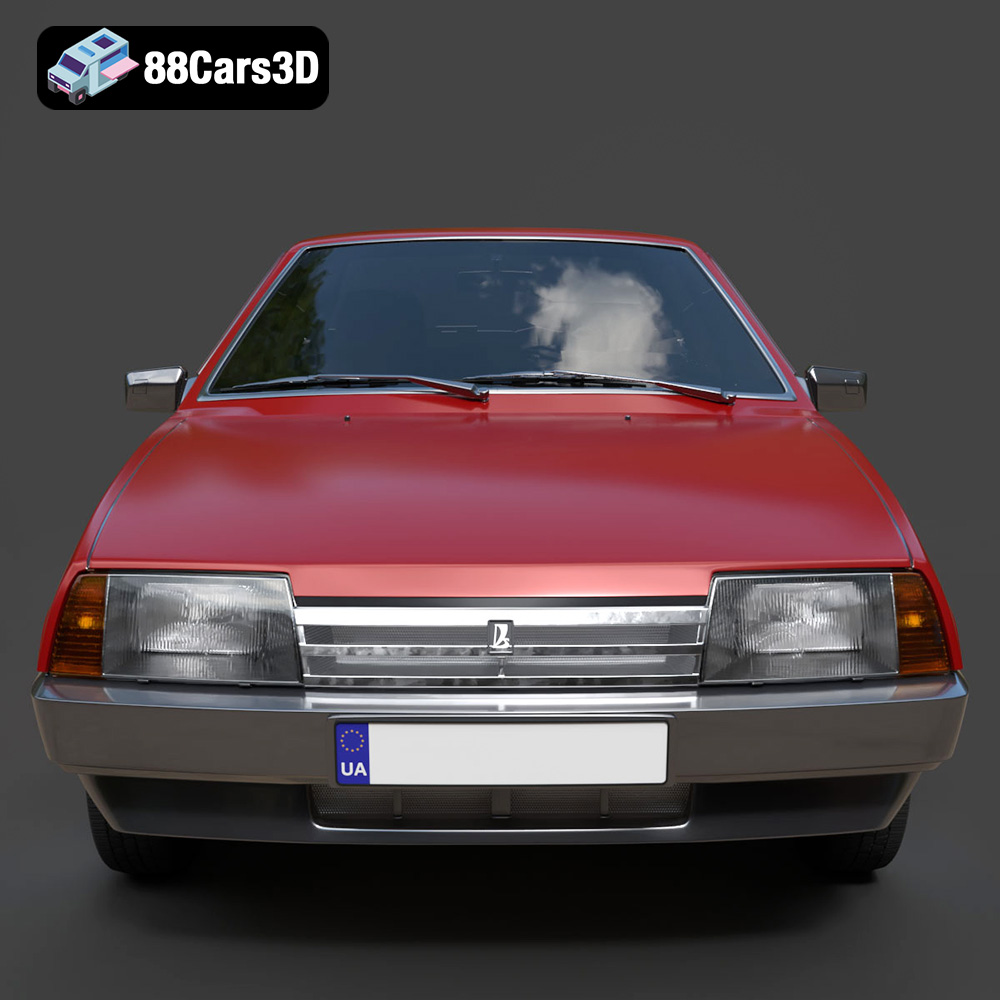
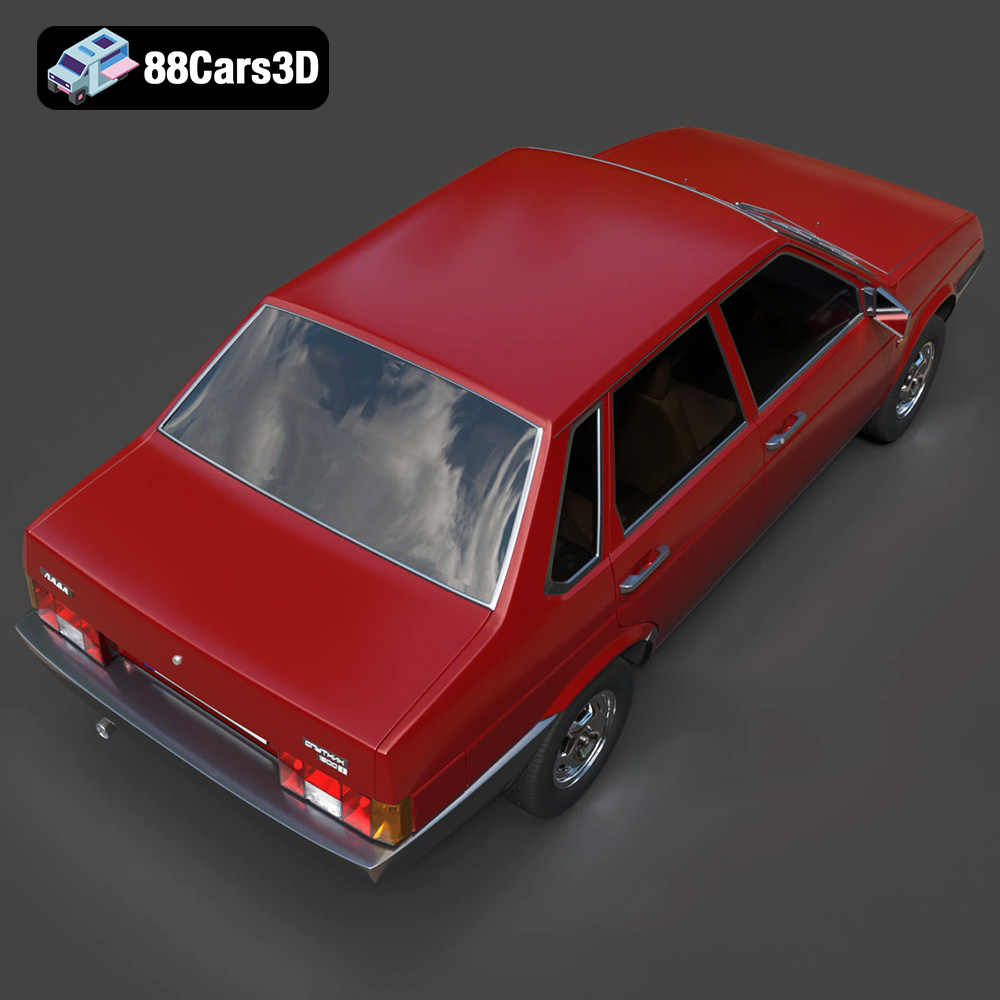
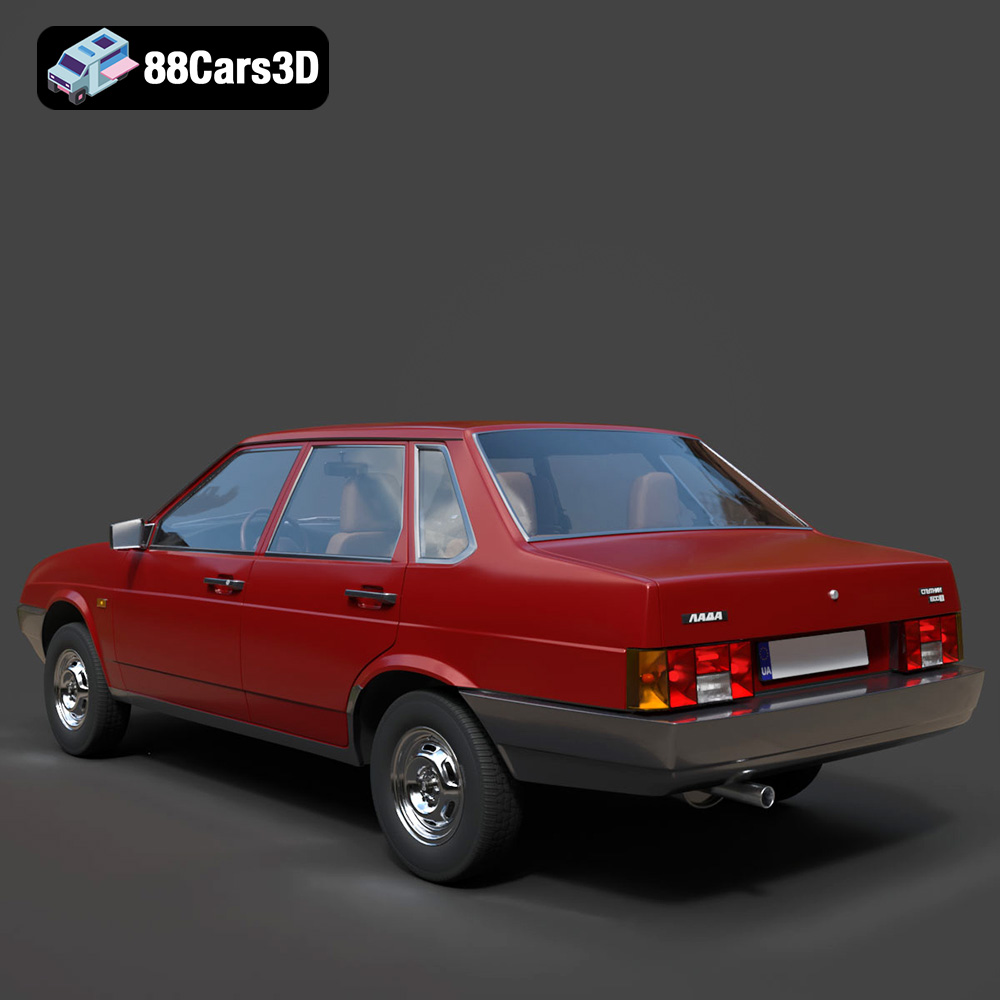
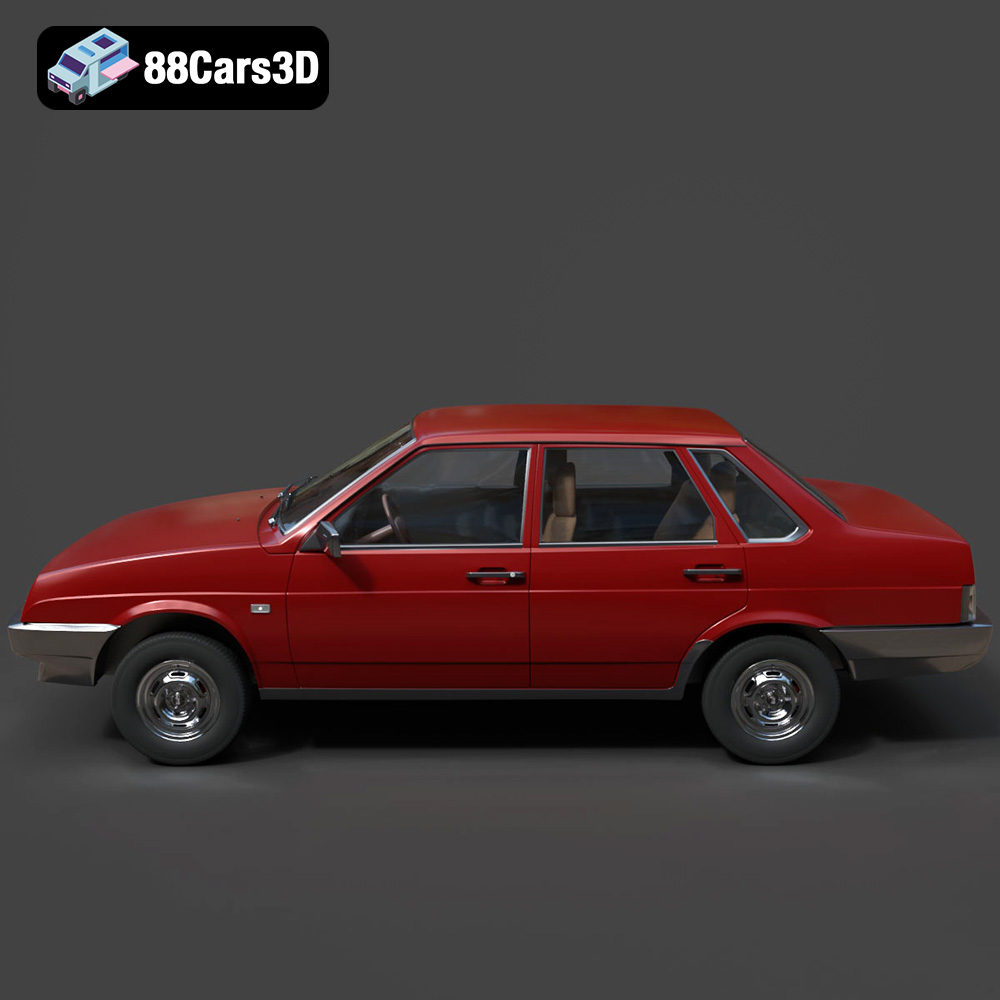
The exterior of the VAZ Lada 21099 model is a testament to detailed observation. From the angular front grille and rectangular halogen headlights that define its face to the characteristic high rear deck and stark, pragmatic lines, every feature is rendered with precision. The underlying topology is optimized, striking a perfect balance: a ~250,000 triangle count ensures it’s game-ready for real-time engines like Unreal and Unity, while still maintaining superb visual fidelity for high-end rendering. This “sweet spot” polycount is critical; too low, and details are lost; too high, and performance suffers. Furthermore, the model includes accurate representations of the classic 1.5L inline-four engine block and the single tailpipe exhaust system, details often overlooked in less comprehensive models but crucial for close-up renders or under-the-hood inspections.
Authentic lighting details, from the rectangular headlights to the distinct segmented taillights, ensure the model looks correct under various lighting conditions. Period-correct steel wheels with accurate tire treads and optional hubcaps add another layer of authenticity, hinting at the vehicle’s heritage. Even the suspension details, featuring detailed front MacPherson struts and rear beam suspension, are modeled separately, paving the way for realistic animation and interaction.
A truly comprehensive 3D car model doesn’t stop at the exterior. The interior of the VAZ Lada 21099 is meticulously recreated to provide an authentic retro cockpit experience. This includes detailed representations of the cloth and vinyl seat textures, the classic angular dashboard, and the characteristic steering wheel. The analogue instrument cluster, complete with accurate dial layouts, and the original manual shifter, handbrake, and basic pedal box, all contribute to a believable, immersive environment. For game developers, this optimized geometry is crucial, ensuring that the model performs well even in first-person perspectives, allowing players to fully inhabit the virtual vehicle without performance bottlenecks.
The use of accurate PBR (Physically Based Rendering) materials throughout both the interior and exterior ensures that the model reacts realistically to light, mimicking how real-world materials scatter and reflect light. This is paramount for achieving photorealistic renders and consistent visuals across different rendering engines and lighting scenarios.
The demand for high-quality, performant 3D car models in real-time applications like video games, AR/VR experiences, and interactive simulators has never been higher. The VAZ Lada 21099 3D model is specifically engineered to excel in these demanding environments, balancing visual appeal with optimization strategies that ensure smooth performance.
As mentioned, the ~250,000 triangle count of this Lada model is a prime example of intelligent polycount management. For modern game engines like Unreal Engine and Unity, this level of detail allows for close-up shots and high visual fidelity without overtaxing GPU resources, especially for a single vehicle. Developers often work with multiple LOD (Level of Detail) meshes, but a well-optimized base mesh like this significantly reduces the initial workload. The model’s clean topology also aids in efficient UV unwrapping, which is essential for texture mapping and light baking, contributing to visually appealing and performant game assets.
Crucially, the model features cleanly separated components and proper pivot setups for steering, wheel rotation, and suspension travel. This is not merely a visual detail; it’s a functional requirement for game development. Correct pivots mean that animators and technical artists can easily set up vehicle physics, rigging, and interactive controls without having to manually adjust transforms or hierarchies, saving countless hours in the development pipeline. Whether the car needs to drive, have its doors open, or react to dynamic environments, these foundational elements are already in place.
For Augmented Reality (AR) and Virtual Reality (VR) applications, performance is paramount. Lag or low frame rates can quickly break immersion and lead to user discomfort. The VAZ Lada 21099 model’s optimized geometry and PBR materials make it an ideal candidate for such immersive experiences. Its .glb format is specifically designed for efficient web and mobile deployment, crucial for virtual showrooms or configurators where the Lada might be viewed on a smartphone or through a VR headset. The real-world scale accuracy further enhances the sense of presence in AR/VR, allowing users to interact with a true-to-life representation of the vehicle.
Consider a virtual museum experience showcasing iconic vehicles. The Lada 21099 could be a centerpiece, allowing users to walk around it, inspect its interior in VR, or even place it in their living room via AR, all while maintaining smooth performance thanks to its optimized design. This capability extends to educational simulations, virtual training, or even interactive marketing campaigns where potential customers could explore the vehicle in a highly engaging digital format.
While the Lada 21099 model is optimized for real-time applications, its high-quality assets and PBR materials also make it exceptionally suitable for static rendering, architectural visualization, and cinematic animations. The nuances of its design, combined with professional material setups, allow for stunning photorealistic outputs.
For high-end rendering, the flexibility to customize materials is crucial. The VAZ Lada 21099 model, with its PBR texture maps, allows artists to easily adjust body colors, material finishes (matte, gloss, metallic, weathered), and even tire textures. Imagine rendering the Lada in classic factory shades, or perhaps a weathered, rust-patina finish for a post-apocalyptic scene. These options enable artists to create specific moods and narratives, whether for advertising campaigns, lifestyle scenes, or detailed product shots.
Using a software like 3ds Max with V-Ray or Corona Renderer, or Blender with Cycles, artists can set up intricate studio lighting scenarios, applying advanced ray tracing to achieve hyper-realistic reflections, refractions, and global illumination. The detailed frame geometry, engine block representation, and interior components truly shine under these conditions, producing images suitable for print, high-definition video, or product portfolios.
The separate, animatable components—wheels, suspension, and steering—are a game-changer for animators. Instead of a static prop, the Lada 21099 becomes a dynamic character in a scene. Imagine an animation showcasing the car driving down a digitally recreated Eastern European street, its suspension reacting to bumps, wheels turning realistically, and even a glimpse of the detailed interior. This level of control is invaluable for creating believable automotive sequences for films, commercials, or even interactive training modules. The VAZ Lada 21099 offers the foundational assets to build compelling visual stories, whether it’s a nostalgic trip back to the 90s or a rugged vehicle surviving in a desolate future.
The journey of a 3D model doesn’t always end on a screen. For enthusiasts, collectors, or even design professionals, bringing a digital asset into the physical realm through 3D printing offers a unique form of engagement. The VAZ Lada 21099 3D model supports this through its inclusion of the .stl format, making it ready for fabrication.
The .stl file format is the standard for communicating 3D geometry to 3D printers. While the digital model is highly detailed, optimizing it for physical output involves specific considerations. The product description provides excellent guidelines, recommending scales like 1:12, 1:18, or 1:24, which are common for hobbyist vehicle models. These scales balance detail retention with manageable print times and material usage.
Key print settings such as layer height (0.04–0.12 mm, with resin printing recommended for fine details) are crucial for capturing the Lada’s sharp lines and intricate components without visible layer lines. Wall thickness (1.2–2.0 mm) ensures structural integrity, preventing fragile parts. Infill percentages (20–30%) contribute to material efficiency and strength. The advice on supports for detailed parts like the exhaust, mirrors, and steering wheel is vital, as these overhangs would otherwise fail during printing. Proper print orientation, like printing the frame angled, also maximizes structural integrity and minimizes visible support marks.
Once printed, the raw 3D model requires post-processing to achieve a polished finish. Sanding, priming, and painting are essential steps. The product suggests authentic factory colors with metallic or matte finishes, offering a pathway to a truly accurate miniature replica. This hands-on process allows creators to further customize their Lada model, perhaps adding weathering effects, custom decals, or even integrating functional elements like rolling wheels if the print is designed with that in mind. This blend of digital creation and physical craftsmanship truly brings the iconic Lada 21099 to life in a new dimension.
A truly valuable 3D asset is one that seamlessly integrates into a variety of professional pipelines. The VAZ Lada 21099 1990 3D Model, with its diverse file formats and optimized structure, is designed precisely for this purpose. Let’s explore its application across common industry software and scenarios.
For Blender artists, the native .blend file is a significant advantage. Upon opening, the model is fully intact, with PBR materials already set up for Cycles or Eevee. Artists can instantly begin custom texture work, add the model to an existing scene, or prepare it for animation. For example, creating a nostalgic animation of the Lada driving through a Blender-generated urban environment would involve linking the separate wheels and suspension components to an armature or constraint system, then animating the vehicle along a path. The detailed interior makes it perfect for first-person camera shots within the animation, adding depth and realism. Blender’s robust rendering capabilities, whether photorealistic with Cycles or real-time with Eevee, ensure high-quality output for film, game cinematics, or architectural visualization projects.
Professionals working in Autodesk 3ds Max will find the .max file format indispensable. It allows for direct manipulation of the original model, which can be crucial for projects requiring specific modifications or integrating the Lada into complex architectural scenes rendered with V-Ray or Corona. Imagine an architectural visualization project needing a period-correct vehicle parked outside a building. Importing the .max file means the artist has full control over the model’s geometry, modifiers, and materials, allowing for precise adjustments to match the scene’s aesthetic, such as applying specific weathering effects or customizing the paint finish to reflect a particular mood. The animatable parts also make it suitable for adding dynamic elements to arch-viz walkthroughs or product showcases.
For game developers and real-time visualization specialists using Unreal Engine, the .fbx and .unreal formats are critical. Importing the optimized .fbx file of the VAZ Lada 21099 is straightforward, with PBR textures automatically connecting to Unreal’s material system. The clean mesh and proper pivot points are immediately usable with Unreal’s vehicle physics system, allowing developers to quickly implement driveable mechanics. Alternatively, the .unreal asset might offer a more streamlined import, potentially including pre-configured static meshes, skeletal meshes, and basic materials. This model is perfect for creating open-world games set in Eastern European landscapes, post-apocalyptic survival scenarios, or even educational simulations where historical vehicles are explored interactively. The ~250,000 triangle count ensures that multiple Lada vehicles can be present in a scene without significant performance impact, crucial for realistic crowd or traffic simulations.
Even for less specialized applications, the .obj and .glb files provide immense value. An architect might use the .obj for a quick import into SketchUp or other CAD software for spatial planning. A web developer could embed the .glb file of the Lada 21099 directly into a website, allowing visitors to view and interact with the 3D model in their browser—a powerful tool for marketing or educational content. The versatility provided by these multiple formats underscores the thoughtfulness behind the asset packaging available at 88cars3d.com.
The VAZ Lada 21099 is more than just a car; it’s a piece of cultural history. Translating that history into a high-quality 3D model requires technical expertise, an eye for detail, and a deep understanding of how such an asset will be used across various industries. The VAZ Lada 21099 (1990) 3D Model delivers on all fronts, providing a robust, versatile, and historically accurate digital recreation.
From its meticulously captured exterior and immersive interior to its optimized ~250,000 triangle count and comprehensive suite of file formats (.blend, .fbx, .obj, .glb, .stl, .ply, .unreal, .max), this model is engineered for peak performance in real-time game engines, stunning photorealistic renders, engaging AR/VR experiences, and even tangible 3D prints. Its detailed components, PBR materials, and proper pivot setups streamline professional workflows in Blender, 3ds Max, Unreal Engine, and beyond, empowering creators to bring their visions to life with unparalleled efficiency and fidelity. Whether you’re a game developer crafting an immersive world, an animator producing a cinematic sequence, or an artist seeking a foundation for architectural visualization, this Lada model from 88cars3d.com stands as a testament to quality and versatility, proving that even a utilitarian icon can be a muse for cutting-edge digital creation.
The VAZ Lada 21099 (1990) is an iconic four-door sedan that defined an era of Eastern European motoring. Born from the highly successful Samara family, this distinctive vehicle is celebrated for its utilitarian, boxy styling, robust engineering, and cultural significance. The 3D model meticulously captures its recognizable exterior, from the sharp, angular front grille and rectangular halogen headlights to the characteristic high rear deck and stark, pragmatic lines that make it instantly recognizable. This premium 3D model is built with high-quality topology and an optimized triangle count, ensuring it performs flawlessly in real-time engines while maintaining superb visual fidelity. Designed for maximum versatility, the model features cleanly separated components and accurate PBR materials, making it a perfect fit for game development, high-end rendering, animation, and immersive AR/VR experiences. Perfect for Eastern European street environments, post-apocalyptic scenes, retro driving games, and historical urban visualizations.
$19.99
.1990
.blend
.fbx
.glb
.lada
.max
.obj
.ply
.rendering
.sedan
.stl
.unreal
.vaz
21099
car-3d-model
classic-car
game asset
game-ready
low-poly
optimized
russian-car
soviet-car
VR/AR