Get 20% OFF All Premium 3D & STL Models!

In the vast landscape of 3D modeling, certain vehicles resonate with a unique charm, transcending mere aesthetics to embody cultural narratives, historical contexts, and a rugged practicality that appeals to creators worldwide. From sleek supercars to robust off-roaders, each automotive design presents a fresh challenge and opportunity for digital artists and developers. Yet, there’s a special place for utilitarian classics, vehicles celebrated for their reliability and unpretentious character.
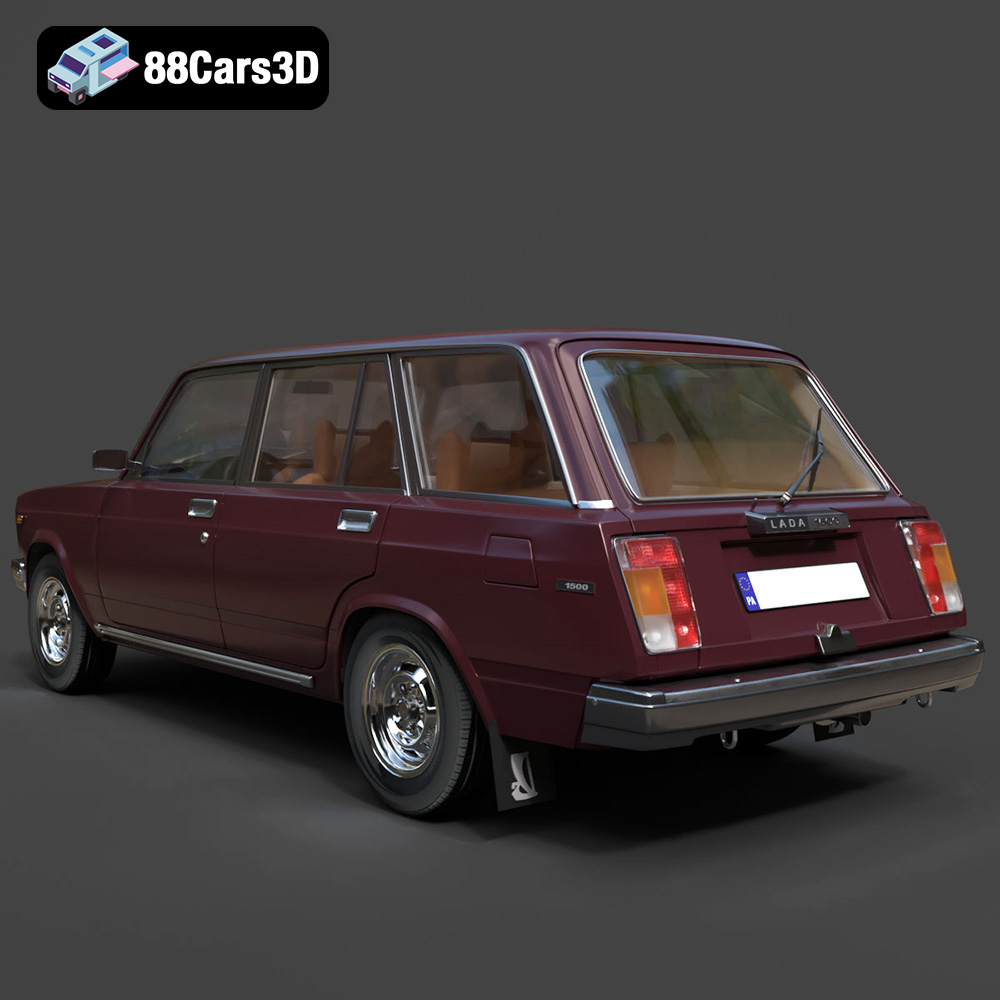
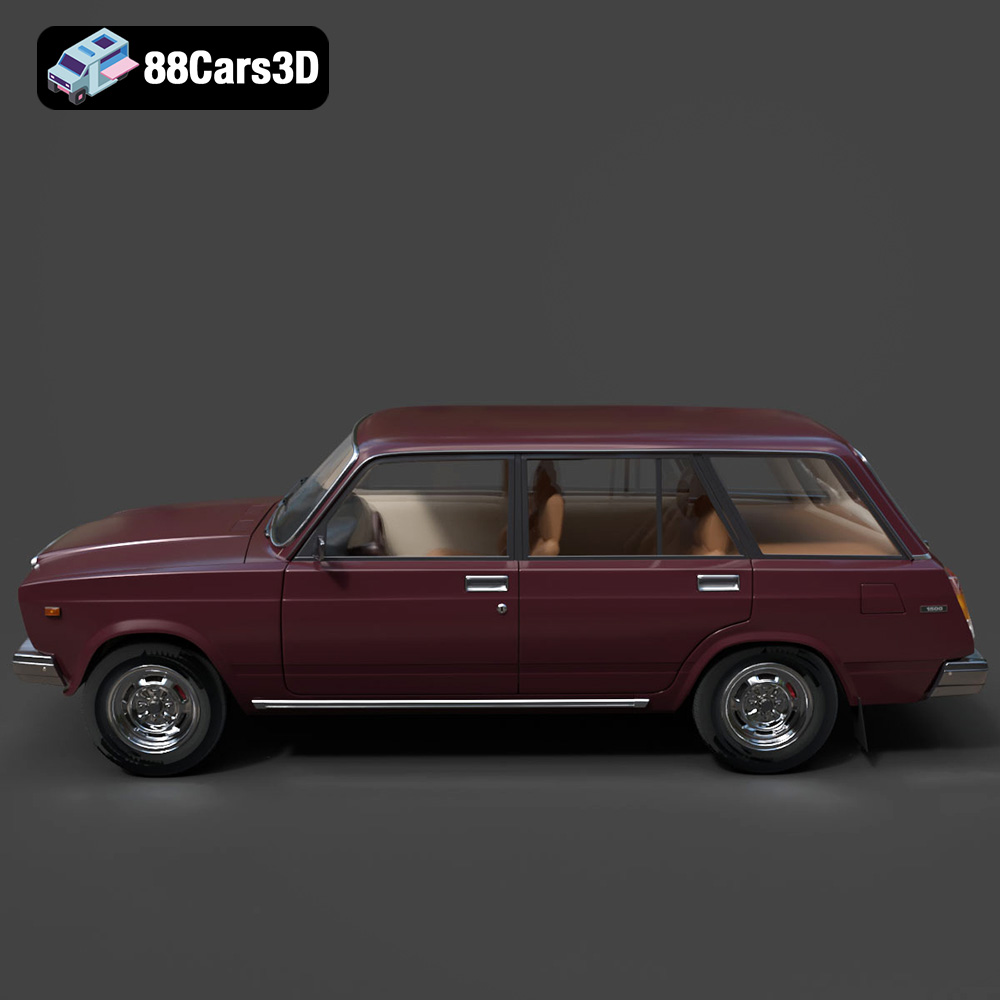
Today, we delve into one such iconic vehicle that brings a distinctive flavor to any digital project: the VAZ Zhiguli 21041 2006-2008. Known internationally as the Lada Estate, this station wagon is a symbol of Eastern European motoring heritage, celebrated for its durability and distinctive retro styling. For 3D artists, game developers, and visualization specialists, acquiring a meticulously crafted 3D car model like the VAZ Zhiguli 21041 from a reputable source like 88cars3d.com isn’t just about obtaining an asset; it’s about unlocking a gateway to new creative possibilities, injecting authenticity and character into scenes ranging from post-apocalyptic landscapes to vibrant city simulations.
This article will explore the technical nuances of working with high-quality 3D car models, using the VAZ Zhiguli 21041 as our primary example. We’ll examine file formats, optimization strategies, and professional workflows, demonstrating how such a versatile asset can elevate your projects.
The success of any 3D asset lies in its ability to convincingly replicate real-world details. For a vehicle like the VAZ Zhiguli 21041, capturing its “rugged charm” means meticulous attention to its rectangular headlights, signature front grille, and the unique proportions of its extended cabin. These subtle yet crucial elements define its identity. A high-quality 3D model doesn’t just look like the car; it feels like the car, even in a digital environment. This level of detail is paramount whether you’re crafting an immersive game world or a high-resolution marketing render.
While some vehicles appeal to a universal sense of luxury or speed, the VAZ Zhiguli 21041 offers a niche appeal that is surprisingly broad. Its aesthetic fits perfectly into scenarios requiring a sense of realism from a specific era or region. Imagine it as a weathered prop in a historical drama, a reliable workhorse in an open-world survival game, or an unexpected vintage find in a modern urban scene. Its versatility stems directly from its authentic representation, making it a powerful tool for visual storytelling that goes beyond typical glamorous automotive representations.
When working with 3D car models, understanding the various file formats is not just a matter of technical proficiency; it’s crucial for optimizing your workflow, ensuring compatibility, and achieving the desired output for diverse applications, from game development to 3D printing. The VAZ Zhiguli 21041 3D model, for instance, comes equipped with a comprehensive suite of formats, each serving a specific purpose. Let’s break down these essential file types.
The
These two formats are the workhorses of 3D asset exchange. The
The
When your digital model needs to become a physical object, formats like
The
Beyond file formats, the intrinsic quality of a 3D car model is defined by its technical specifications. The VAZ Zhiguli 21041 3D model from 88cars3d.com exemplifies a balance between visual fidelity and performance efficiency, making it a game-ready asset that doesn’t compromise on realism. Its design and construction cater to a wide array of professional demands.
The cornerstone of a high-quality, game-ready 3D model is optimized geometry. With approximately 120,000 triangles, the VAZ Zhiguli 21041 strikes an impressive balance. This polygon count is low enough to ensure smooth real-time performance in modern gaming engines like Unreal and Unity, preventing frame rate drops and optimizing asset loading. Simultaneously, it’s high enough to retain the intricate details that make the vehicle recognizable and visually compelling. This careful optimization is crucial for open-world games and simulations where numerous vehicles might be present on screen simultaneously, demanding efficient rendering without sacrificing the visual experience.
A truly versatile 3D car model offers depth beyond its exterior shell. The VAZ Zhiguli 21041 features an accurately modeled exterior, capturing the station wagon’s distinct frame, proportions, and iconic components such as rectangular headlights, classic block taillights, and factory-accurate steel wheels with tire treads. Peeling back the hood reveals a detailed inline-four engine block, complete with an authentic utilitarian exhaust system. The model’s realism extends to the underside with standard leaf-spring rear suspension details. Crucially, the cockpit and interior are equally detailed, boasting period-accurate vinyl and cloth seat texturing, a classic thin-rimmed steering wheel, a utilitarian dashboard, and a minimalist instrument cluster. Even the manual gear shifter, pedals, and handbrake are meticulously modeled, making it ideal for first-person POV in gaming scenarios.
For dynamic applications like games, simulations, or animated sequences, a 3D car model must be prepared for movement. The VAZ Zhiguli 21041 excels in this regard, featuring proper pivot setups for essential movable parts. This means wheels are correctly positioned for rotation, suspension components are separated for realistic travel, and steering elements are independently manipulable. This pre-rigged structure significantly reduces the workload for animators and technical artists, allowing for quick integration into physics engines and animation sequences, resulting in believable vehicle dynamics straight out of the box.
The versatility of a well-crafted 3D car model like the VAZ Zhiguli 21041 truly shines in its application across various professional domains. From interactive experiences to static renders, its adaptability makes it a valuable asset for diverse creative endeavors.
For game developers, the VAZ Zhiguli 21041 is an ideal
In
The VAZ Zhiguli 21041 is also perfectly suited for modern AR/VR applications. Its optimized geometry and inclusion of the .glb format make it ideal for immersive virtual showrooms, interactive configurators, and mobile AR experiences. Imagine a user interacting with a virtual Lada on their smartphone, walking around it, opening doors, or even customizing its paint job in real-time. In VR, it could serve as a historical vehicle in a virtual museum or an interactive element in a training simulation. The model’s balanced detail allows for high fidelity without taxing the performance limits of AR/VR devices, ensuring a smooth and engaging user experience.
The utility of high-quality
The inclusion of the .stl format is crucial for transitioning from the digital realm to a tangible object. STL files represent the surface geometry of a 3D model using a series of triangles, making them the universal language for most 3D printers. When preparing the VAZ Zhiguli 21041 for 3D printing, the .stl file ensures that the printer receives a clear and accurate representation of the vehicle’s form. This allows hobbyists to create scale models for display, custom dioramas, or even as components for larger projects.
Successful 3D printing requires careful consideration of settings. For the VAZ Zhiguli 21041, recommended scales like 1:12, 1:18, or 1:24 offer a good balance between detail and printability. Layer height is critical for surface smoothness; 0.04–0.12 mm is suggested, with resin printing recommended for capturing the finest details like the utilitarian exhaust system or the intricacies of the engine block. Wall thickness (1.2–2.0 mm) and infill (20–30%) ensure structural integrity. Crucially, supports will be required for overhangs and intricate parts such as the mirrors, wipers, and the exhaust system to prevent warping and ensure accurate geometry. Printing the frame at an angle and wheels separately can optimize both structural strength and print quality. Post-processing, including sanding, priming, and applying authentic factory colors with metallic finishes, will bring the physical model to life, replicating the rugged charm of the original VAZ Zhiguli 21041.
A premium 3D car model, particularly one as versatile as the VAZ Zhiguli 21041, provides a robust foundation for extensive customization. This adaptability is key for artists and developers looking to integrate the model seamlessly into diverse creative visions without starting from scratch.
The VAZ Zhiguli 21041 serves as an excellent base for material and texture experimentation. Artists can easily change body colors, applying anything from factory-accurate shades to custom, stylized finishes. Imagine transforming it from a pristine, showroom-ready vehicle to a rusty, weathered survivor for a post-apocalyptic scene, or even a sleek, modernized custom build. Tire textures can be modified to reflect different scenarios, from standard street variants to rugged off-road treads, further enhancing its narrative. Adjusting material finishes – be it matte, gloss, or metallic – allows for fine-tuning the vehicle’s appearance to match specific lighting conditions or artistic styles. This flexibility is vital for any project requiring distinct visual storytelling.
Beyond the vehicle itself, customization extends to how it interacts with its digital environment. The VAZ Zhiguli 21041’s real-world scale and accurate geometry make it a perfect candidate for diverse environmental integration. Adjusting lighting setups, for instance, can drastically alter the mood and presentation of the car. A soft, diffused studio light can highlight its classic lines for a showcase render, while dramatic, high-contrast lighting can emphasize its ruggedness in a more cinematic or game-oriented scene. Integrating the model into various backdrops – from a desolate landscape to a bustling urban street – is made simple thanks to its optimized construction, allowing artists to quickly iterate on scene compositions and visual narratives without performance bottlenecks.
The VAZ Zhiguli 21041 2006-2008 3D model is more than just a digital replica; it’s a testament to the power of meticulous 3D artistry and strategic optimization. Its detailed construction, encompassing both exterior and interior fidelity, combined with a pragmatic polygon count and animation-ready components, positions it as an invaluable asset for a myriad of professional applications. Whether your project demands compelling
Understanding the array of file formats, from the editable .blend and .max to the universal .fbx and .obj, and the specialized .glb and .stl, empowers creators to seamlessly integrate this model into any workflow. It’s a prime example of how a carefully engineered 3D asset can streamline production, enhance visual quality, and unlock creative potential. For those seeking high-quality, game-ready 3D car models that offer both character and technical excellence, exploring the offerings at 88cars3d.com is a step towards elevating your next project.
Experience the rugged charm and utilitarian heritage of Eastern European motoring with the VAZ Zhiguli 21041 2006-2008. Also known internationally as the Lada Estate, this iconic station wagon is renowned for its durability, boxy retro styling, and unpretentious mechanical design. Our meticulously crafted 3D model captures the distinct rectangular headlights, signature front grille, and spacious extended cabin that made this vehicle a staple of transportation. Constructed with game-ready optimization and visual fidelity in mind, this 3D model boasts an efficient topology of approximately 120,000 triangles. It delivers stunning realism without compromising real-time performance, making it the perfect asset for demanding rendering environments and modern gaming engines alike. Perfect for post-apocalyptic environments, Eastern European city simulators, retro driving games, and architectural visualization.
$19.99
.blend
.fbx
.glb
.lada
.max
.obj
.ply
.rendering
.stl
.unreal
.vaz
2104
car-3d-model
classic-car
game asset
game-ready
low-poly
optimized
russian-car
station-wagon
VR/AR
zhiguli-21041