Get 20% OFF All Premium 3D & STL Models!

In the dynamic world of digital content creation, the demand for realistic, optimized, and versatile 3D assets has never been higher. From blockbuster video games and immersive virtual reality experiences to compelling automotive advertising and architectural visualizations, 3D car models form the backbone of countless projects. These digital representations are far more than just pretty pictures; they are complex engineering marvels, meticulously crafted to serve specific technical and artistic requirements.
The journey of creating a truly exceptional 3D car model involves a deep understanding of automotive design, topology optimization, material science, and rendering pipelines. It’s about capturing the soul of a vehicle, ensuring every curve and detail translates faithfully into the digital realm, while simultaneously preparing it for the rigorous demands of real-time engines or high-fidelity renders. This delicate balance is precisely what makes a premium 3D asset invaluable.
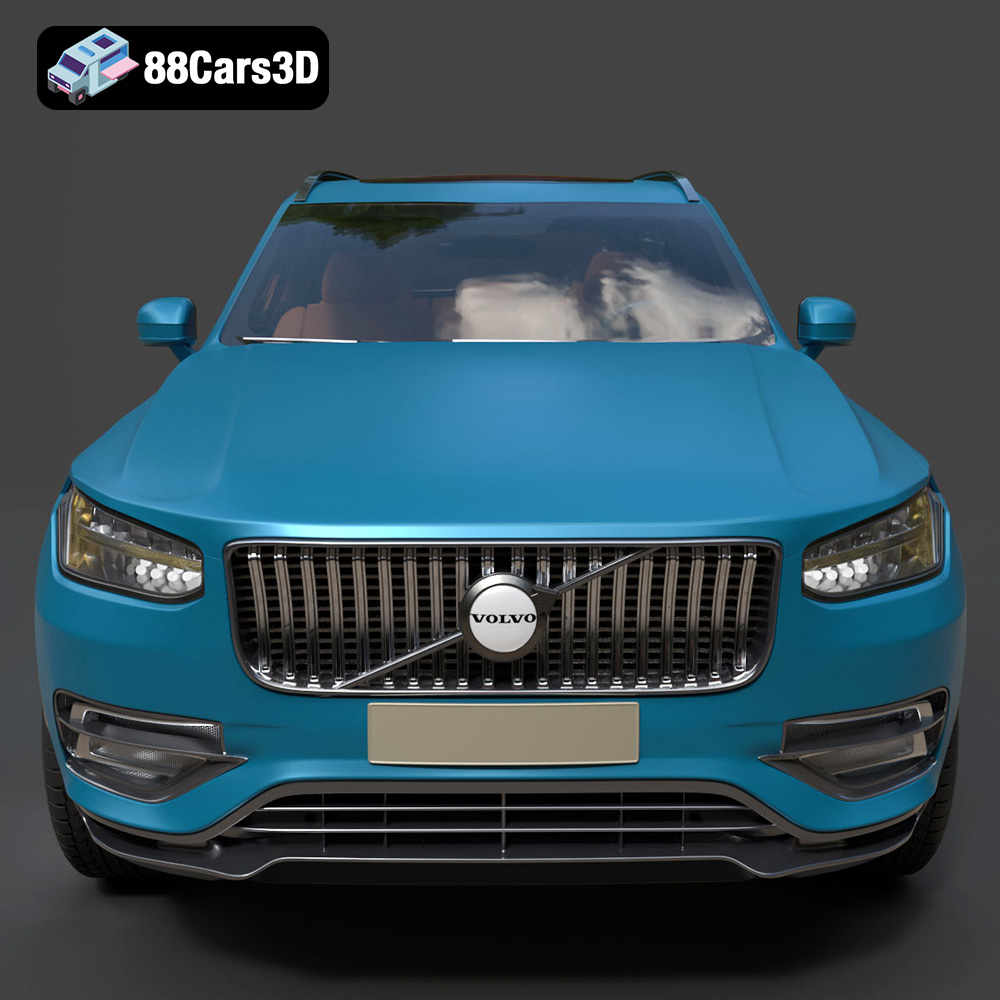
Today, we’re delving into a prime example of such an asset: the Volvo XC90 2008 3D model. This particular model stands out as a testament to thoughtful design and robust technical execution, offering a gateway to a myriad of professional applications. It encapsulates the robust elegance and pioneering spirit of the first-generation XC90, transforming it into a highly versatile digital asset ready for anything from open-world game environments to detailed product showcases.
The Volvo XC90 2008 represents a significant era in automotive history, pioneering the mid-size luxury crossover SUV segment with an unwavering commitment to safety and a distinct Scandinavian design philosophy. Its blend of practical utility, commanding presence, and understated sophistication made it an instant classic. Translating such an iconic vehicle into a high-quality 3D model requires an acute eye for detail and an understanding of its legacy.
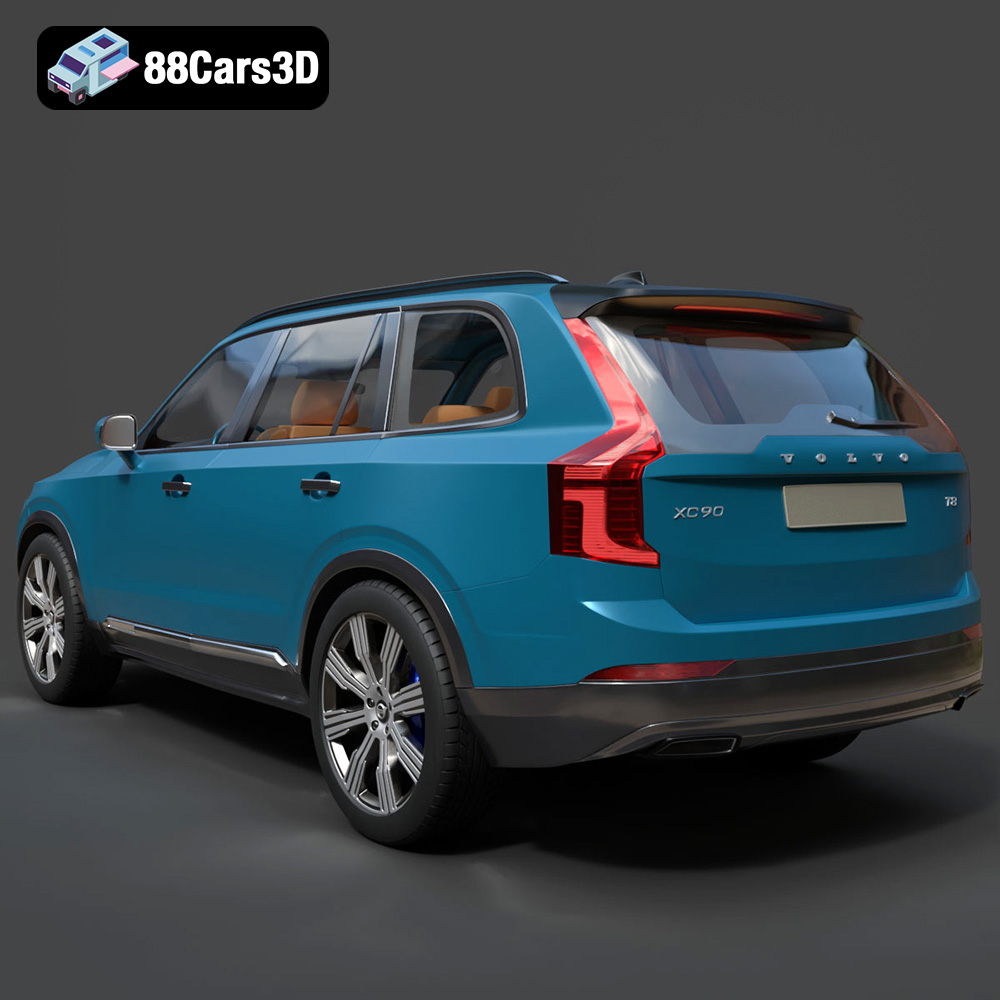
The first-generation XC90 wasn’t just a vehicle; it was a statement. It combined a spacious, family-friendly interior with robust engineering and Volvo’s legendary safety innovations. Its exterior, characterized by an imposing stance, a classic front grille, and distinctive vertical taillight profiles, exuded a unique blend of ruggedness and luxury. For 3D artists and developers, this makes the XC90 an excellent subject: it possesses a strong visual identity that is immediately recognizable and evokes a sense of reliability and timeless design. A well-crafted 3D model of this vehicle allows creators to tap into this established brand recognition and emotional resonance, enhancing the believability and impact of their digital scenes.
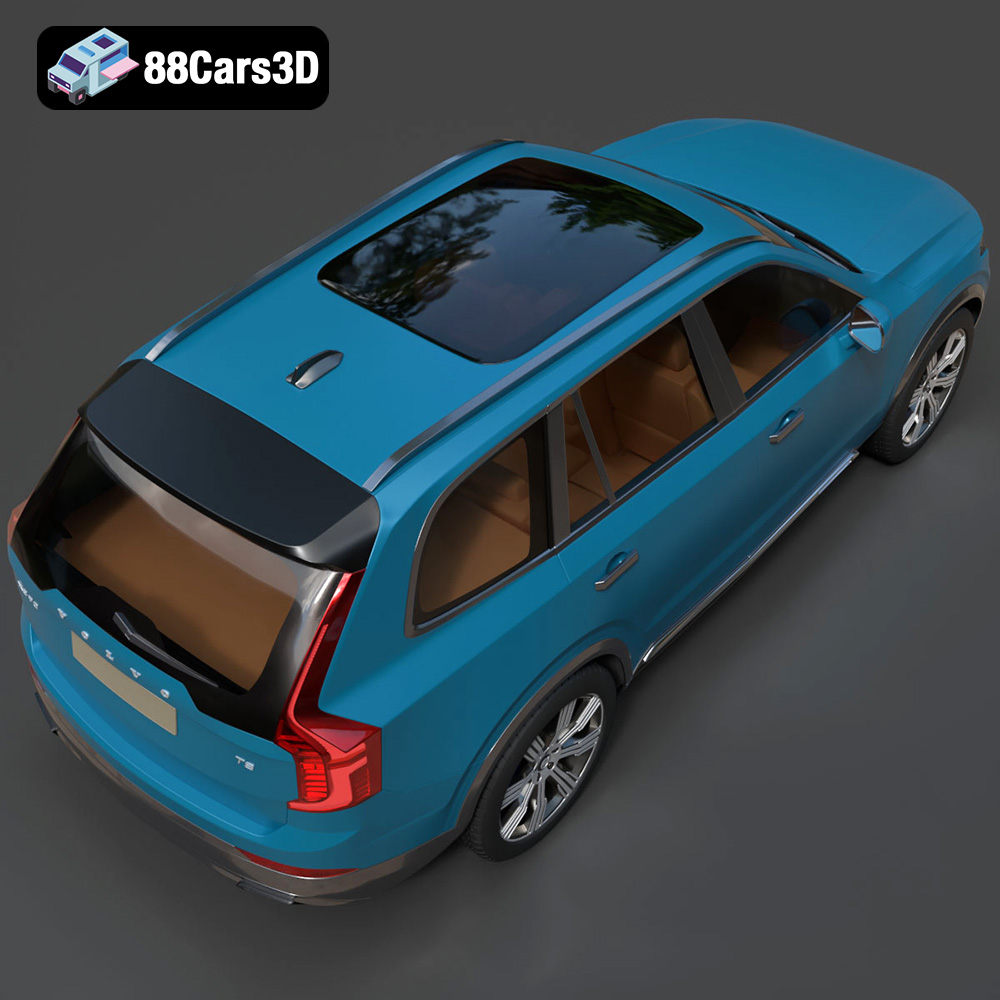
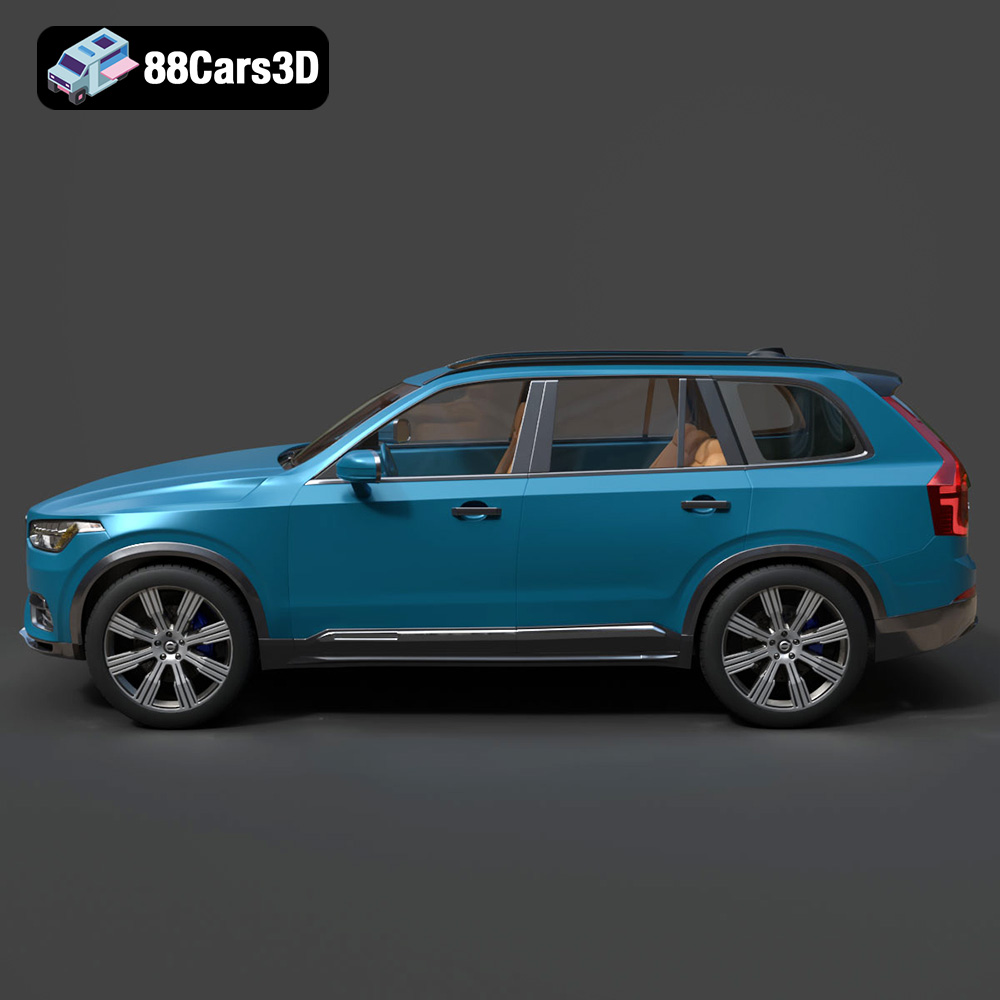
Capturing the essence of a real-world vehicle like the Volvo XC90 2008 in a 3D model is a complex task that goes beyond mere aesthetics. It demands a meticulous recreation of its physical attributes, ensuring that the digital model not only looks authentic but also performs optimally within various digital environments. The 88cars3d.com model of the XC90 2008 accomplishes this by meticulously recreating every element, from the solid chassis geometry and the nuanced exterior details like the headlight housings and practical roof rails, to the intricate interior features.
This attention to detail extends to functional elements crucial for animation and interactive experiences. Features like separate wheels, suspension, and steering components, coupled with a proper pivot setup, ensure that the model is ready for realistic movement and interaction. The balance between high visual fidelity and game-ready optimization, featuring a topology of approximately 350,000 triangles, is a testament to its engineering. This careful construction ensures smooth reflections and flawless integration, making it the ultimate asset for projects requiring both aesthetic excellence and real-time performance.
The choice of file format is a critical decision in any 3D workflow, directly impacting compatibility, functionality, and optimization for specific applications. A high-quality 3D asset, such as the Volvo XC90 2008 3D model, typically comes with a suite of formats to ensure maximum versatility across various software and platforms. Understanding each format’s strengths and ideal use cases is essential for any professional working with 3D car models.
The **.blend** format is Blender’s native file type, offering a comprehensive and fully editable scene. When you receive a .blend file, you’re getting not just the mesh, but also materials, textures, lighting setups, cameras, animations, and even physics simulations, all within a single package. This format is ideal for artists who primarily use Blender and require full creative control, allowing for deep customization of materials, topology adjustments, or integration into existing Blender projects without any loss of data fidelity. It’s perfect for complex scene development, animation, and rendering within the Blender environment.
Autodesk’s **.fbx** (Filmbox) format has become an industry staple for exchanging 3D data between different software applications. Its key strength lies in its ability to encapsulate a wide range of data, including geometry, materials, textures, animations, and skeletal data. For game development, especially with engines like Unreal Engine and Unity, .fbx is often the go-to format. It maintains pivot points, hierarchies, and animation data reliably, making it excellent for real-time pipelines where objects need to move and interact. When importing into a game engine, .fbx ensures that all the crucial animated and structural data of a car model, such as the separate wheels and suspension of the Volvo XC90 2008, are preserved.
The **.obj** (Wavefront Object) format is one of the oldest and most widely supported 3D file formats. It’s a universal choice for simple geometry exchange, storing vertex positions, normals, texture coordinates (UVs), and face definitions. While it doesn’t support animation or complex material definitions (it typically links to a separate .mtl file for basic material properties), its widespread compatibility makes it a safe bet for cross-software workflows. If you need to import a mesh into almost any 3D application, .obj is a reliable option. It’s excellent for raw geometry transfer where you plan to rebuild materials or animations from scratch in your target software.
The **.glb** (GL Transmission Format Binary) format is the binary version of glTF, a royalty-free specification for the efficient transmission and loading of 3D scenes and models by engines and applications. .glb packages all necessary data—geometry, textures, and PBR (Physically Based Rendering) materials—into a single file. This makes it incredibly efficient and optimized for use in augmented reality (AR), virtual reality (VR), and browser-based 3D applications. Its compact size and ease of integration make it perfect for interactive web experiences, virtual showrooms, or mobile AR applications where the Volvo XC90 2008 could be displayed directly in a user’s environment.
The **.stl** (Stereolithography) format is the standard for 3D printing. It represents 3D surfaces as a series of connected triangles (a triangulated mesh) without color or texture information. Its simplicity makes it universally understood by 3D slicing software. When preparing a model like the Volvo XC90 2008 for physical fabrication, converting it to .stl is the first step. For hobbyists wanting a display-scale model, this format is indispensable, allowing them to bring their digital car model into the physical world.
The **.ply** (Polygon File Format) is a versatile format for storing 3D data from scanners or other precision sources. It can store not only vertex positions and faces but also properties like color, transparency, normals, texture coordinates, and even scalar properties at each vertex. While less common for general asset exchange than .fbx or .obj, it’s particularly useful in fields requiring high precision, such as scientific analysis, CAD (Computer-Aided Design) applications, or when working with highly detailed scan data. It allows for a robust representation of intricate mesh data, which could be beneficial for specialized analyses of the XC90’s geometry.
The **.unreal** format signifies an asset specifically prepared or exported for Unreal Engine. While often derived from .fbx imports, this designation implies that the model has likely undergone specific optimizations, material setups, and perhaps even collision meshes configured for Unreal Engine’s unique pipeline. It suggests a higher level of “plug-and-play” readiness, reducing setup time and ensuring optimal performance within Unreal’s powerful real-time rendering environment. For game developers using Unreal, having an .unreal file or a model explicitly designed for the engine is a significant advantage.
Similar to .blend for Blender, **.max** is the native file format for Autodesk 3ds Max, a leading software for 3D modeling, animation, and rendering. An .max file contains the complete 3ds Max project, including geometry, materials, textures, lighting, cameras, animations, and scene settings. It’s the format of choice for professionals deeply entrenched in the 3ds Max ecosystem, offering the most comprehensive editing capabilities and integration with specialized plugins and renderers like V-Ray or Corona. For those needing to animate or render the Volvo XC90 2008 with the full power of 3ds Max, this format provides the most flexibility and control.
The true value of a professional 3D car model lies in its technical integrity. It’s not enough for it to simply look good; it must be built with precision and foresight to perform seamlessly across diverse applications. The Volvo XC90 2008 3D model is a testament to this philosophy, engineered to meet stringent technical specifications.
One of the most critical aspects of a game-ready asset is its topology, specifically its polygon count. The Volvo XC90 2008 model boasts approximately 350,000 triangles. This figure strikes an ideal balance, offering exceptional visual fidelity necessary for realistic renders while maintaining a polycount that allows for real-time rendering performance in demanding environments like Unreal Engine or Unity. A well-optimized mesh flow ensures smooth reflections on the car’s surfaces, which is crucial for achieving photorealism, especially on automotive paintwork. The carefully constructed topology minimizes artifacts and maximizes efficiency, making the model a joy to work with for both artists and developers.
The fidelity of a 3D model is defined by its accuracy to the real-world counterpart. This model excels in recreating the XC90 2008’s distinct features:
Beyond static representation, a truly useful 3D car model is one that can be easily animated and integrated into dynamic scenes. The Volvo XC90 2008 3D model is built with this in mind, featuring a proper pivot setup for steering, wheel rotation, and suspension travel. This means animators can quickly set up realistic vehicle dynamics without extensive rigging work. Furthermore, the model adheres to real-world scale accuracy, based on actual vehicle chassis dimensions. This is crucial for seamless integration into architectural visualizations, urban traffic simulations, or any scene where accurate size and proportion are paramount for believability.
The versatility of the Volvo XC90 2008 3D model makes it an indispensable asset across various professional disciplines. Its robust design and multiple file formats ensure seamless integration into diverse production pipelines, saving valuable time and resources for artists and developers.
For game developers, the 88cars3d.com XC90 model is a game-changer. Optimized with approximately 350,000 triangles, it strikes a perfect balance between visual quality and performance, making it ideal for real-time engines like Unreal Engine and Unity. The inclusion of .fbx and .unreal formats specifically caters to these environments, ensuring smooth imports and minimal setup. This model can serve as a primary vehicle in open-world games, a featured car in racing titles, or a highly detailed asset in driving simulators. Its accurate physics pivots for wheels and suspension further enhance the realism of in-game vehicle dynamics, providing an immersive experience for players. Imagine the XC90 traversing a sprawling virtual city or participating in a detailed simulation of daily traffic.
When it comes to automotive rendering, visual fidelity is paramount. Advertising agencies, design studios, and visualization artists demand models that can stand up to extreme close-ups and dramatic lighting. The Volvo XC90 2008 model, with its meticulous detailing and clean topology, is perfectly suited for this. Using the .max or .blend formats, artists can leverage powerful rendering software like 3ds Max (with V-Ray or Corona) or Blender (with Cycles or Eevee) to create stunning, photorealistic images and animations. From studio-style product shots showcasing its “robust elegance” to lifestyle scenes depicting it in a serene natural environment, the model’s quality ensures that the final output is indistinguishable from reality. Its detailed exterior and interior features allow for dynamic camera angles, highlighting everything from the leather seat texturing to the intricate instrument cluster.
The burgeoning fields of Augmented Reality (AR) and Virtual Reality (VR) demand highly optimized, yet visually rich, 3D assets. The .glb format included with the XC90 model is specifically designed for these applications, offering a compact and efficient way to display 3D content on the web, in mobile AR apps, or within immersive VR showrooms. Imagine a potential buyer exploring the XC90’s interior in a virtual showroom or seeing a life-sized model appear in their driveway via an AR app. This model facilitates the creation of interactive configurators, allowing users to virtually customize colors, wheels, and interior options, providing a compelling and engaging pre-purchase experience without needing a physical vehicle present.
Beyond digital displays, the Volvo XC90 2008 3D model offers tangible applications through 3D printing. The inclusion of the .stl format makes it readily convertible for physical fabrication. Hobbyists, designers, and engineers can print display-scale models (e.g., 1:12, 1:18, 1:24) for detailed prototyping or collectible items. The provided 3D print settings, including recommended layer height, wall thickness, infill, and support requirements, guide users through the process of achieving optimal results. Resin printing is specifically recommended for capturing the fine details like the exhaust, mirrors, and roof rails, ensuring a high-quality physical replica that truly reflects the digital model’s accuracy. Post-processing with sanding, primer, and authentic factory colors can further enhance the realism of the printed model.
A truly professional 3D car model offers more than just fidelity; it provides the flexibility to adapt to diverse creative visions and project requirements. The Volvo XC90 2008 3D model, available on 88cars3d.com, is designed with customization at its core, enabling artists and developers to modify its appearance and behavior to perfectly fit their scenes.
The ability to easily change fundamental aesthetic properties is crucial. With this XC90 model, you’re not locked into a single look. Artists can effortlessly change body colors, experimenting with a spectrum of authentic factory colors or creating custom finishes that match a specific brand identity or mood. This extends to material finishes, allowing for transitions between matte, gloss, and metallic looks, each dramatically altering how light interacts with the vehicle’s surfaces. Furthermore, modifying tire textures from street variants to off-road options can quickly transform the car’s character, making it suitable for a wider array of environments and narratives. This level of aesthetic control ensures that the model can be seamlessly integrated into diverse visual campaigns, from sleek urban advertisements to rugged adventure scenarios.
Beyond surface aesthetics, the model’s adaptability shines in how it responds to different environments and lighting setups. Whether you’re aiming for a bright, sunny outdoor scene, a moody twilight shot, or a dramatic studio render, the model’s optimized materials and clean geometry react realistically to various lighting conditions. Artists can adjust lighting to emphasize specific features, create dramatic shadows, or highlight the car’s “imposing stance.” The robust construction of the model ensures that even under extreme lighting, artifacts are minimized, and reflections remain smooth and accurate. This dynamic adaptability is key for any project that requires the same core asset to perform convincingly across a range of atmospheric conditions and creative intents.
The journey from concept to a fully realized 3D automotive asset is a complex one, requiring both artistic vision and technical mastery. As the digital landscape continues to expand, the demand for high-quality, versatile 3D car models like the Volvo XC90 2008 becomes ever more critical. These assets are not merely decorative elements; they are foundational components that empower creators in game development, automotive rendering, AR/VR experiences, and even 3D printing, to build compelling and immersive digital worlds.
The Volvo XC90 2008 3D model is a prime example of an asset that excels in these areas. Its meticulous detailing, optimized topology, and comprehensive support for various file formats (.blend, .fbx, .obj, .glb, .stl, .ply, .unreal, .max) make it an incredibly valuable addition to any professional’s toolkit. Whether you’re crafting a realistic racing simulator, producing a stunning automotive advertisement, or designing an interactive virtual showroom, this model provides the quality, flexibility, and technical readiness required for success.
Investing in high-quality 3D car models from trusted sources like 88cars3d.com streamlines workflows, reduces development time, and ultimately elevates the visual standard of any project. It allows designers and developers to focus on creativity and innovation, knowing that the foundational assets are robust and performant. As the boundaries of digital reality continue to blur, the power of a well-crafted 3D model remains an indispensable tool for bringing visions to life.
Experience the robust elegance of the Volvo XC90 2008, a trailblazing mid-size luxury crossover SUV that redefined family safety and Scandinavian design. This highly accurate 3D model captures the imposing stance, classic front grille, and distinctive taillight profile that made the first-generation XC90 an automotive icon. From the solid chassis geometry to the nuanced exterior details like the headlight housings and practical roof rails, every element is faithfully recreated. Engineered for maximum versatility, this 3D model features game-ready optimization with a meticulously balanced topology (approximately 350,000 triangles). It delivers exceptional visual fidelity without compromising real-time rendering performance, making it the ultimate asset for interactive applications. The mesh flow is carefully constructed to ensure smooth reflections and flawless integration into any digital environment. Perfect for open-world game environments, virtual car showrooms, architectural visualizations, and urban traffic simulations.
$19.99
.2008
.blend
.fbx
.glb
.luxury suv
.max
.obj
.ply
.rendering
.stl
.unreal
.volvo
.xc90
car-3d-model
family-car
game asset
game-ready
low-poly
optimized
Scandinavian design
SUV
VR/AR