Get 20% OFF All Premium 3D & STL Models!

In the vibrant world of automotive design and digital art, few creations capture the imagination quite like a restomod that seamlessly blends heritage with cutting-edge performance. The Ford Mustang Mach 40 stands as a testament to this philosophy, an engineering marvel that fuses the timeless aesthetic of a 1969 Mustang Mach 1 with the ferocious, mid-engine heart of a Ford GT40. For 3D artists, game developers, and visualization specialists, recreating such an icon in the digital realm presents both a challenge and an incredible opportunity. The quest for realism, optimization, and versatility is paramount, demanding 3D car models that are not just visually stunning but also technically robust.
When searching for premium assets, creators need models that can transcend various applications—from photorealistic renders in advertising campaigns to high-performance real-time environments in gaming. This isn’t just about capturing polygons; it’s about embodying the spirit and intricate engineering of the vehicle. A prime example of such an asset is the Ford Mustang Mach 40 3D model, which brings this legendary custom build to life with stunning fidelity. It represents the pinnacle of detailed 3D car models, designed for a multitude of professional applications.
Creating a truly exceptional 3D car model, especially one as unique as the Ford Mustang Mach 40, involves a meticulous understanding of both automotive design and digital craftsmanship. It’s about translating physical attributes into a digital form that retains every curve, every shadow, and every mechanical detail.
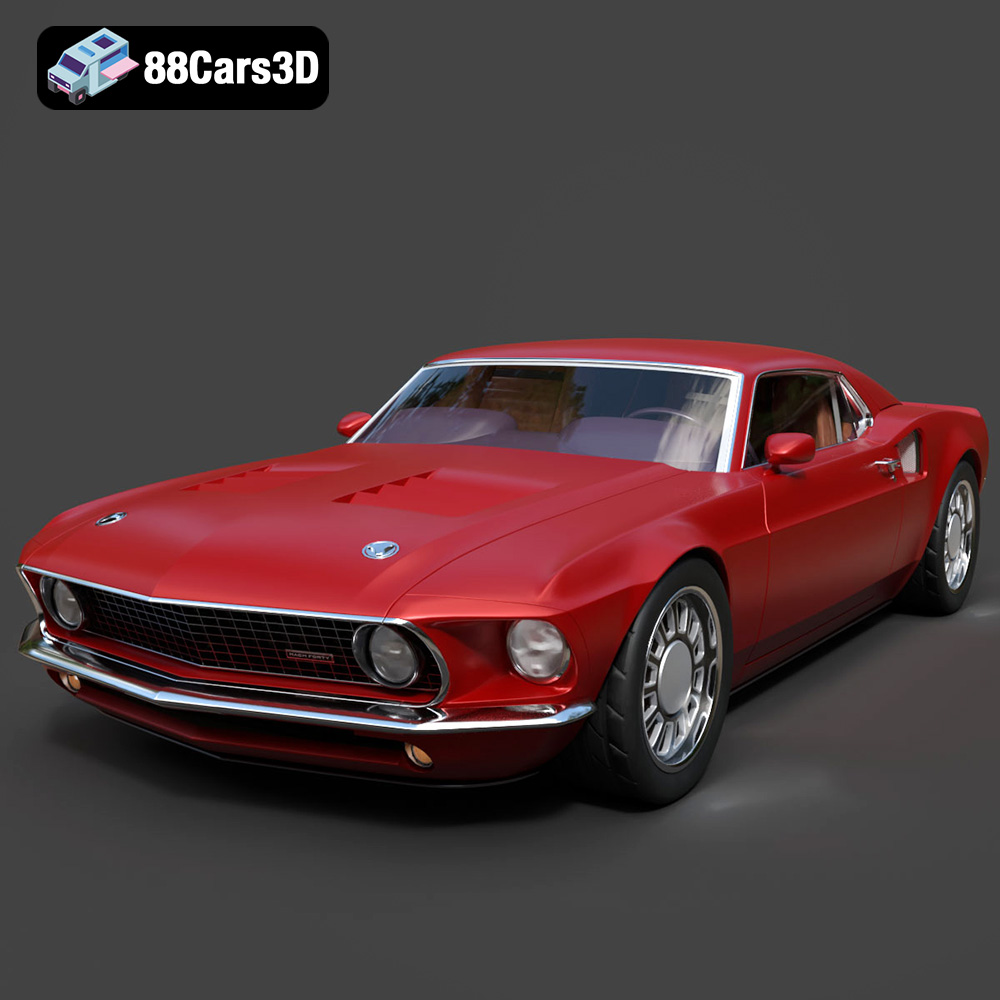
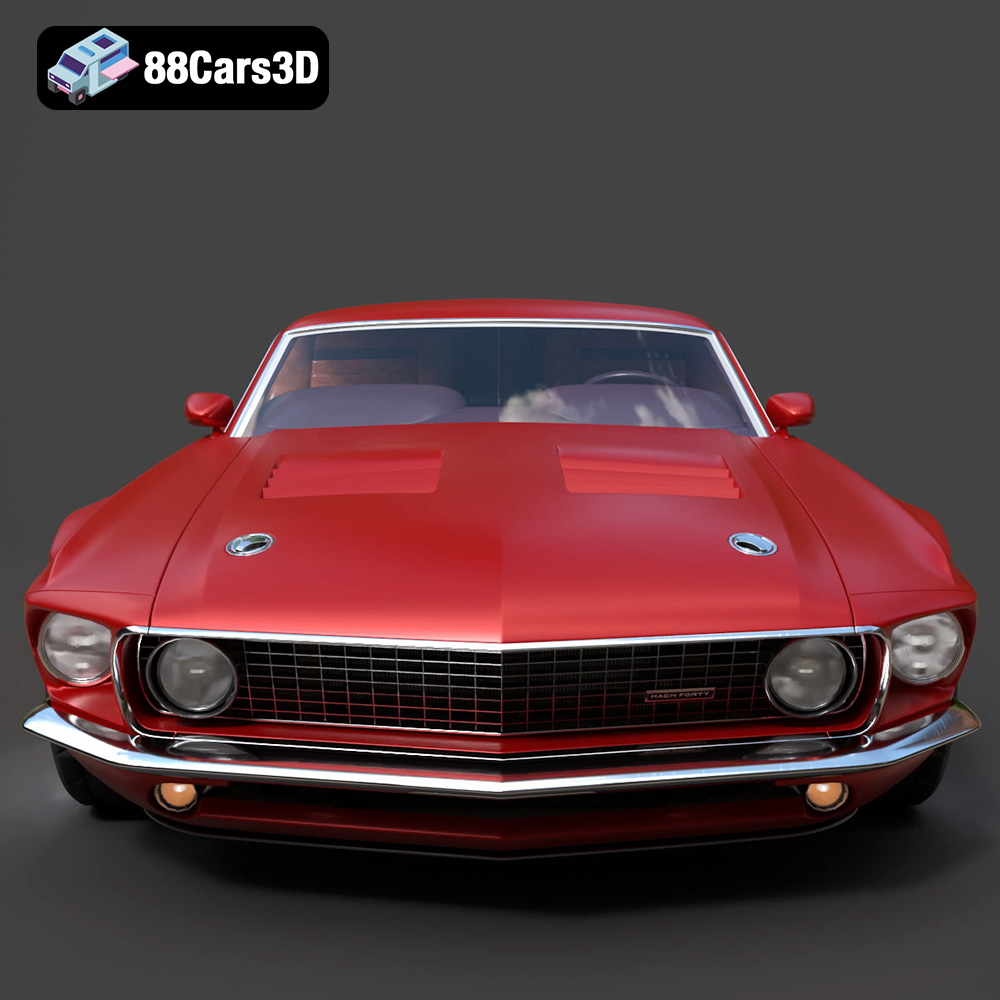
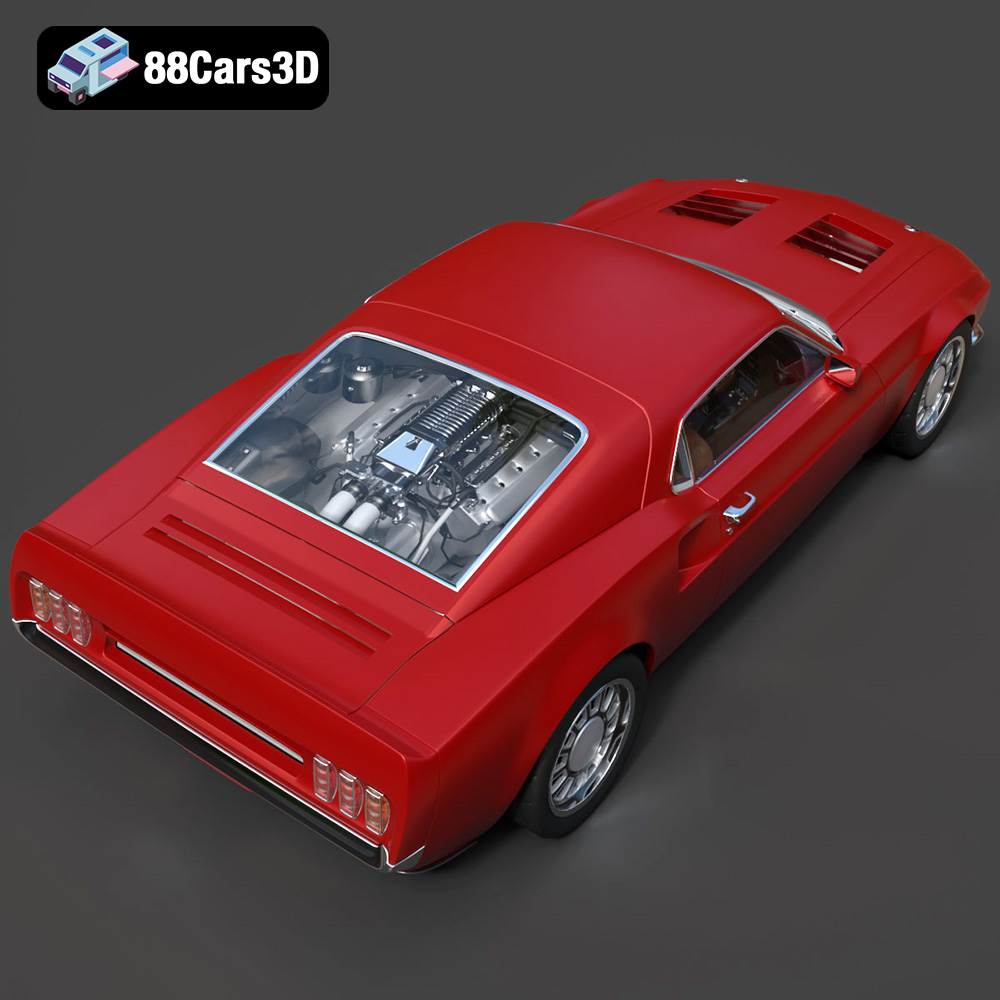
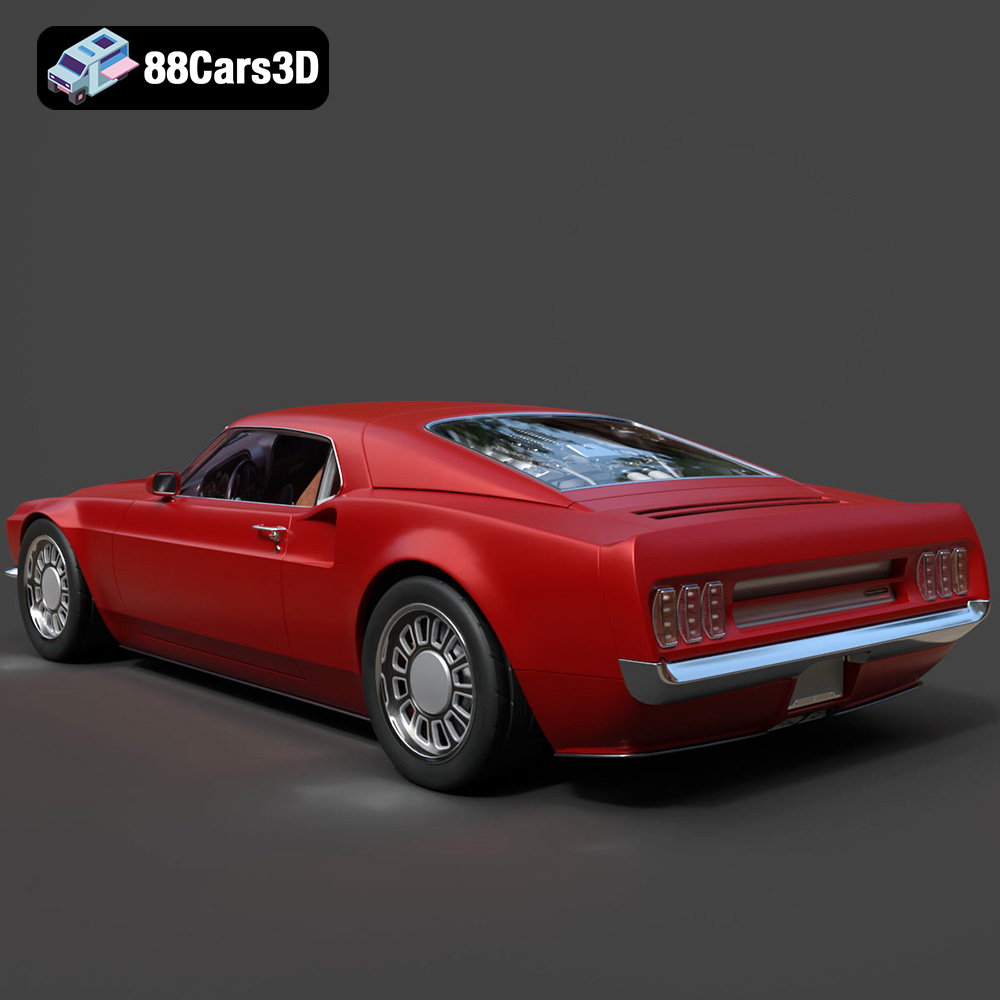
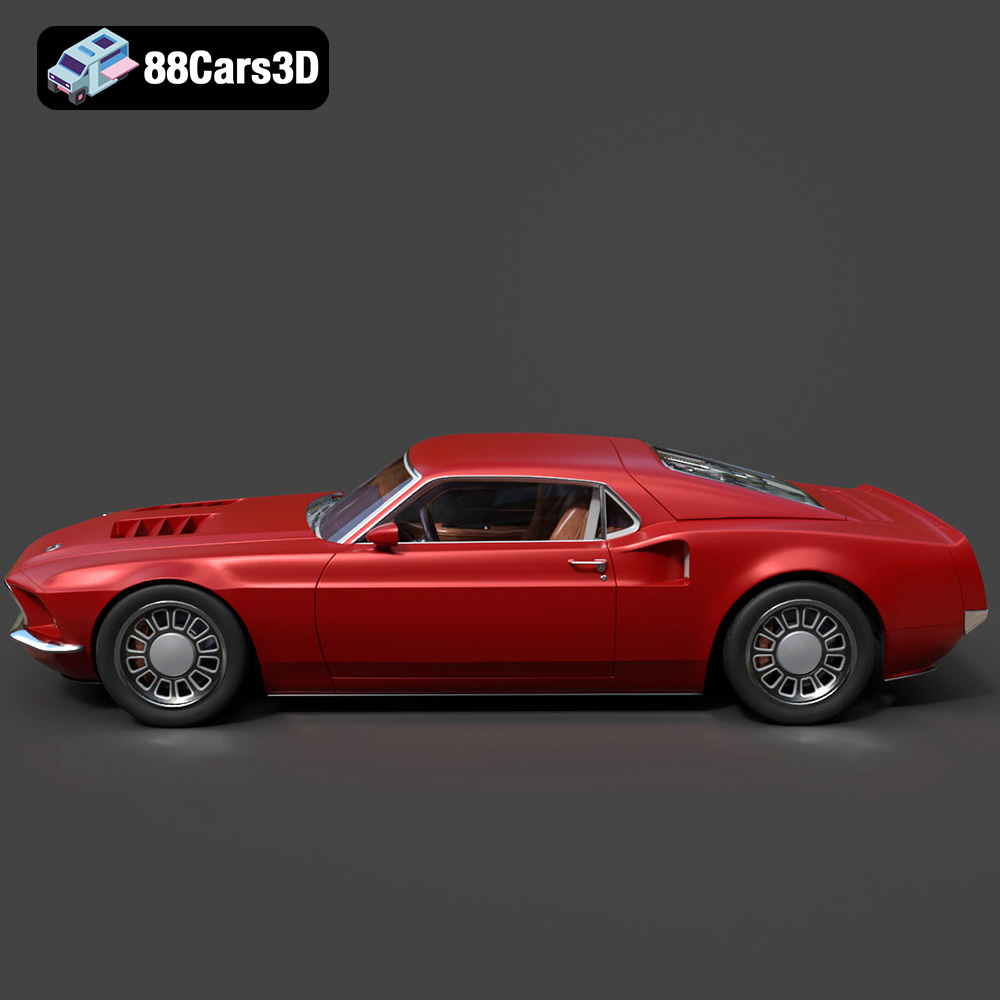
The Ford Mustang Mach 40’s design narrative is one of bold fusion. Its widebody stance and aggressive aerodynamic cues are not merely stylistic choices; they are functional elements that hint at the mid-mounted supercharged V8 engine beneath. Replicating this in a 3D model requires precision modeling. Every panel gap, every vent, and the distinctive proportions of the widebody kit must be accurately represented. The featured Ford Mustang Mach 40 3D model excels here, boasting accurate geometry that faithfully reproduces the custom build’s visual impact. From the iconic 1969-style quad headlights to the custom LED taillights, and the deep-dish staggered alloy wheels with their realistic high-performance tire treads, the exterior features are meticulously crafted. Even the independent suspension and slotted brake rotors with custom calipers are individually detailed, allowing for dynamic camera angles and close-up renders that showcase the engineering.
The interior is no less critical. For applications like virtual showrooms or first-person gaming perspectives, the cockpit must feel authentic. The Mach 40 model provides custom retro-modern bucket seats with detailed stitching, a period-correct yet modernized steering wheel, and a detailed instrument cluster with classic analog gauges. These elements are not just visually present but are also optimized for efficiency, ensuring that the model is suitable for a wide range of uses, from static renders to interactive real-time experiences.
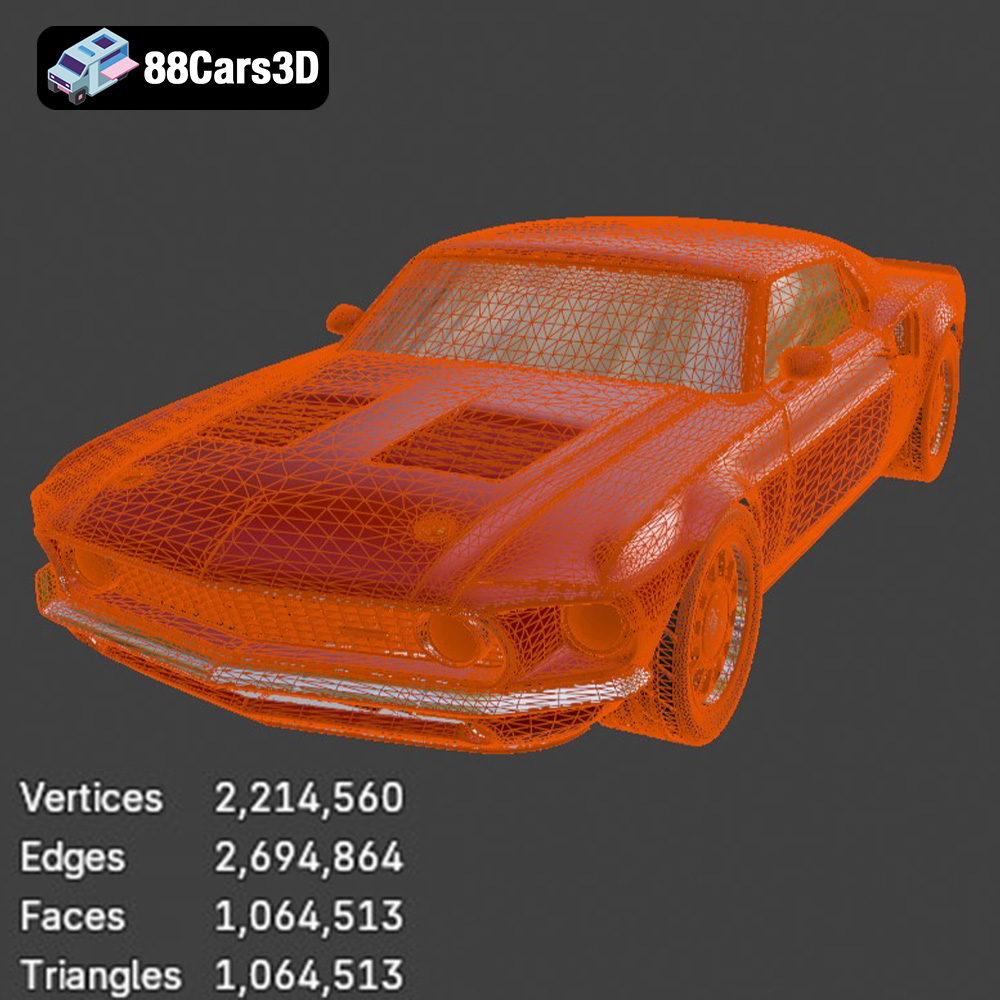
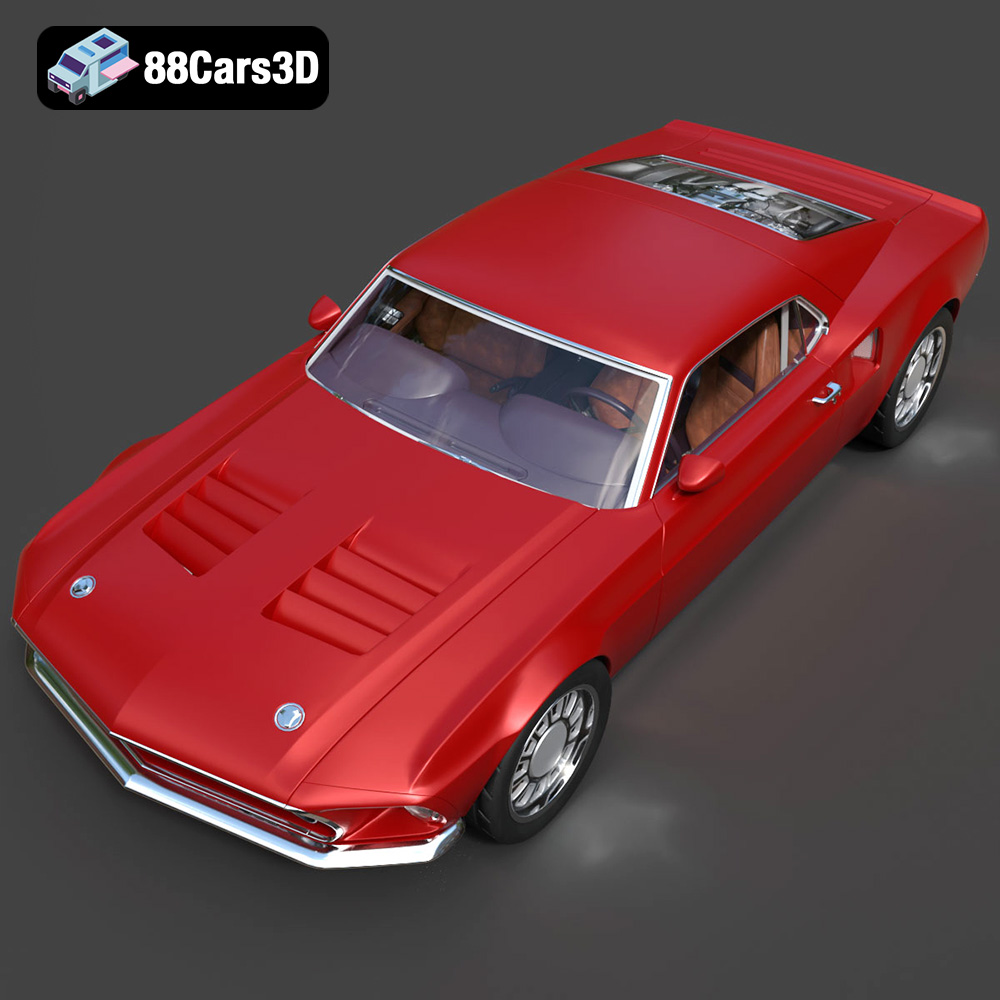
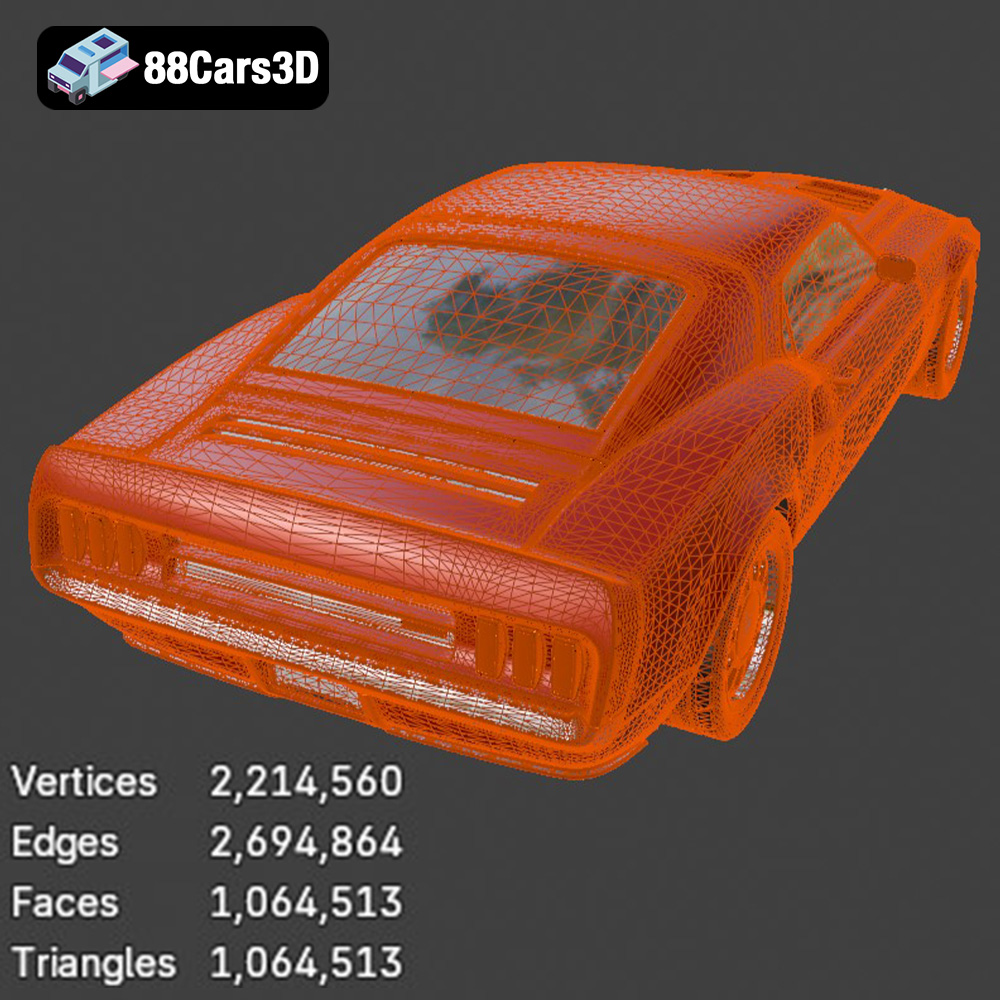
A significant challenge in 3D asset creation is balancing visual realism with performance optimization. A model that looks incredible but brings a game engine to its knees or takes hours to render is often impractical. This is where technical specifications become crucial. The Ford Mustang Mach 40 3D model strikes an impressive balance with a triangle count of 1,064,513. This polycount is high enough to ensure stunning visual fidelity for close-up renders and cinematic animations, capturing the intricate details of the mid-mounted 5.4L supercharged V8 engine visible under the rear glass, while remaining optimized enough for demanding real-time applications like high-end game development, virtual reality (VR), and augmented reality (AR).
Furthermore, features like real-world scale accuracy and proper pivot setups for steering, wheel rotation, and suspension travel are fundamental. These “under-the-hood” details are what allow animators to bring the car to life realistically and what enable game developers to integrate the model seamlessly into their physics engines. The meticulous attention to these technical aspects ensures that the model is not just a pretty face but a truly versatile and functional asset.
The versatility of a 3D model often hinges on the range of file formats it supports. Each format serves specific purposes, offering advantages in terms of compatibility, features, and optimization for different stages of a professional workflow. When you invest in high-quality 3D car models like the Ford Mustang Mach 40, having access to multiple formats ensures maximum utility across various software and platforms.
The .blend format is the native file type for Blender, a powerful and popular open-source 3D creation suite. A .blend file typically encapsulates the entire Blender scene, including the 3D mesh, materials, textures, lighting, cameras, animations, and even rigging information. For artists who primarily work in Blender, this format offers the most flexibility and editable features. It’s perfect for making custom modifications, experimenting with new shaders, or integrating the model into existing Blender projects without losing any native data. The Ford Mustang Mach 40 3D model, when provided in .blend, gives artists a fully editable starting point for complex scene development and customization.
.fbx (Filmbox) is a proprietary file format owned by Autodesk and is widely considered an industry standard for 3D asset exchange between different software applications. Its strength lies in its ability to store not just mesh data, but also complex animation, rigging, materials (though material definitions can vary across software), and even camera and lighting information. This makes .fbx an ideal choice for pipelines involving multiple software packages, such as modeling in 3ds Max or Blender, animation in Maya, and then exporting to game engines like Unreal Engine or Unity. For the Ford Mustang Mach 40, the .fbx format ensures excellent compatibility and transferability for game development and real-time visualization.
The .obj (Wavefront Object) format is one of the oldest and most universally supported 3D file formats. It’s a simple, text-based format primarily used for transferring geometric data (vertices, normals, texture coordinates, and faces) between different 3D applications. While .obj doesn’t typically store animation or rigging data, it’s incredibly robust for basic mesh exchange and widely supported across virtually all 3D software. Materials are usually defined in a companion .mtl (Material Template Library) file. The .obj version of the Ford Mustang Mach 40 is excellent for ensuring cross-software compatibility, especially if you need a clean mesh to start a new project in an uncommon application or for archival purposes.
.glb (GL Transmission Format Binary) is the binary version of glTF, a royalty-free specification for the efficient transmission and loading of 3D scenes and models by applications. It’s often referred to as the “JPEG of 3D” due to its optimization for web, AR (Augmented Reality), and VR (Virtual Reality) applications. A single .glb file can contain geometry, materials, textures, animations, and skeletal structures, making it highly portable and efficient for real-time viewing in browsers or mobile AR/VR experiences. For showcasing the Ford Mustang Mach 40 in an immersive virtual showroom or a web-based configurator, the .glb format is indispensable due to its compact size and efficient loading.
The .stl (Stereolithography) format is the de facto standard for 3D printing. It represents a 3D model as a collection of unconnected triangular facets, defining only the surface geometry without color, texture, or other properties. While not ideal for rendering, its simplicity makes it perfect for additive manufacturing processes. The Ford Mustang Mach 40 3D model, when converted to .stl, allows hobbyists and professionals to bring the digital design into the physical world through 3D printing, creating scale models for display or prototyping. Details like recommended scale, layer height, and support structures are crucial for successful .stl output.
.ply (Polygon File Format or Stanford Triangle Format) is another common format for storing 3D data, particularly useful for scanned data, CAD, and engineering applications. It can store a wider range of properties than .obj, including color, transparency, and sometimes even normal and depth information per vertex or face. It’s known for its precision in representing mesh data and is often used in scientific visualization and analysis. While less common for general rendering than .fbx or .obj, a .ply version of the Ford Mustang Mach 40 offers a highly accurate and precise mesh representation, valuable for specific engineering or reverse-engineering tasks.
The .unreal format isn’t a standalone file type in the traditional sense, but rather implies a model that is meticulously prepared and optimized for direct import and use within Unreal Engine. This often means the .fbx file has been set up with specific naming conventions, material slots, and potentially even LOD (Level of Detail) meshes ready to be processed by Unreal’s asset pipeline. An “Unreal-ready” asset like the Ford Mustang Mach 40 ensures a smoother workflow, requiring minimal adjustments for textures, materials, and collision setups once inside the engine. This significantly reduces development time for game studios.
The .max format is the native file type for Autodesk 3ds Max, a leading 3D modeling, animation, rendering, and compositing software. Similar to .blend, a .max file contains the complete scene data, including all geometry, modifiers, materials, textures, lighting, camera settings, and animations within the 3ds Max environment. For professionals whose primary workflow revolves around 3ds Max, having the Ford Mustang Mach 40 in .max format provides the ultimate control for complex rendering setups, detailed material adjustments, or integrating the model into elaborate architectural visualization scenes. It ensures full editability and preserves all the intricate details created within 3ds Max.
By offering this comprehensive suite of formats, a high-quality model like the Ford Mustang Mach 40 ensures it can be effectively utilized by virtually any 3D professional, regardless of their preferred software or end-use application. This flexibility is a hallmark of truly professional 3D car models available on platforms like 88cars3d.com.
The demanding world of game development requires 3D assets that are not only visually compelling but also perfectly optimized for real-time performance. This means intelligent polycount management, efficient UV mapping, and properly configured materials.
With a triangle count of 1,064,513, the Ford Mustang Mach 40 3D model strikes a critical balance for game development. This polycount allows for impressive visual realism, making the car suitable for current-generation console and PC titles without being excessively heavy. High-end racing games or open-world environments benefit greatly from such detail, as players often interact closely with vehicles. The model’s “Game-Ready” designation also implies careful optimization of its geometry, ensuring clean topology and efficient use of polygons. For example, less visible areas might have lower detail, while crucial exterior features maintain high fidelity. Furthermore, attributes like real-world scale accuracy and proper pivot setups for steering, wheel rotation, and suspension travel are critical for integration with physics engines, ensuring realistic movement and handling within the game.
When importing an asset like the Ford Mustang Mach 40 into game engines like Unreal Engine or Unity, the .fbx and Unreal-ready formats are invaluable. Developers can import the .fbx, which carries mesh, UVs, and often skeletal and animation data. Post-import, the focus shifts to setting up PBR (Physically Based Rendering) materials. This involves creating materials that mimic real-world light interactions, using textures for Albedo (color), Normal maps (surface detail), Roughness, Metallic, and Ambient Occlusion. The detailed model ensures that these textures can be applied effectively, bringing out the nuances of the paintwork, the reflectivity of the chrome, and the texture of the tires.
For high-performance games, LODs (Levels of Detail) are essential. While the primary model is detailed, developers will often generate lower-polygon versions for when the car is far from the camera, dynamically swapping them to maintain frame rates. A well-constructed base model like the Mach 40 simplifies the process of generating these LODs, leading to a smoother development pipeline. The fact that its components (wheels, suspension, steering) are separated also simplifies rigging for physics and animation, enabling realistic vehicle dynamics and driving experiences.
Beyond visual fidelity, the Mach 40 model’s separate components offer significant opportunities for game interactivity. Imagine a racing game where battle damage deforms specific panels, or a configurator where players can customize wheel designs, body colors, or even open the doors and examine the interior. The detailed mid-mounted 5.4L supercharged V8 engine, visible under the rear glass, could be a focal point for a virtual mechanic simulator or a showcase element in a car customization menu. The “optimized geometry for first-person POV in gaming” for the cockpit and interior features means players can step inside, look around, and interact with the detailed instrument cluster, custom pedals, and billet shifter, enhancing immersion in driving simulators or open-world exploration games.
For advertising, architectural visualization, and product showcasing, photorealism is the ultimate goal. The Ford Mustang Mach 40 3D model provides an exceptional foundation for achieving breathtaking renders.
Artists using 3ds Max (with the .max file) or Blender (with the .blend file) can leverage advanced rendering engines like V-Ray, Corona Renderer, or Cycles to produce truly photorealistic images and animations. The process begins with importing the model and setting up an environment. This often involves HDR (High Dynamic Range) image-based lighting for realistic reflections and ambient light, complemented by carefully placed area lights to emphasize specific features of the Mach 40. The detailed surface topology of the model allows materials to truly shine. Creating realistic car paint (multi-layered shaders with flakes and clear coat), tire rubber, and metallic finishes on the custom high-performance dual exhaust system is crucial. The separate components, such as wheels and suspension, allow for precise material assignments and the application of realistic displacement or normal maps for fine details. A studio setup might involve complex camera movements and depth of field effects to create cinematic allure around the Mach 40.
In architectural visualization (arch-viz), a high-quality vehicle asset can breathe life into an otherwise static scene. Placing the Ford Mustang Mach 40 in the driveway of a modern luxury home or a sleek commercial building instantly elevates the scene’s realism and aspirational quality. Its aggressive stance and unique design make it a powerful focal point. For marketing campaigns, whether for the automotive industry itself, or for products that align with a high-performance, luxurious lifestyle, the Mach 40 is an ideal prop. It can be showcased in various environments—from urban landscapes to expansive natural settings—with its customizable body colors (e.g., metallic silver, classic muscle car hues) and material finishes (matte, gloss, carbon fiber) allowing it to adapt to diverse brand aesthetics. The level of detail ensures it stands up to the scrutiny of high-resolution print and video advertisements.
The success of a photorealistic render lies heavily in the interplay of lighting, materials, and textures. For the Ford Mustang Mach 40, this means meticulously defining the car’s paint to react accurately to light, showing specular highlights and reflections. Tire textures can be modified from street to track slicks to suit the narrative, and the subtle variations in material finishes can communicate luxury or raw performance. The detailed lighting, including the iconic quad headlights and custom LED taillights, can be made emissive in renders, casting realistic light and adding atmosphere to nighttime or moody scenes. Professionals leveraging models from 88cars3d.com can expect assets that support these advanced rendering techniques out of the box, offering a solid foundation for their creative visions.
The convergence of digital design and physical manufacturing has opened new avenues for creators. The Ford Mustang Mach 40 3D model, with its .stl format option, bridges this gap, enabling tangible replicas.
Converting a complex 3D model like the Ford Mustang Mach 40 to a printable .stl file requires careful consideration. While the .stl format itself is simple, ensuring the mesh is “manifold” (watertight, without gaps or overlapping polygons) is crucial for a successful print. Professional models are typically designed with clean topology that makes this conversion straightforward. The recommended scales (1:12, 1:18, 1:24) are standard for hobbyist and collector models, allowing for a good balance of detail and manageable print size. Smaller scales might lose some of the finer details, while larger scales require more material and print time.
For fine details, resin printing is often recommended over FDM (Fused Deposition Modeling) due to its ability to achieve much finer layer heights (0.04–0.12 mm). Resin printers also produce smoother surfaces, reducing the need for extensive sanding. Regardless of the printer type, supports are almost always required for complex parts like exhaust systems, mirrors, and spoilers to prevent drooping during printing. Careful print orientation is also vital; for instance, printing the frame angled can improve structural integrity, while wheels are typically printed separately for optimal detail and easier post-processing. After printing, models require post-processing—sanding, priming, and then painting with authentic factory colors and metallic finishes to truly bring out the Mach 40’s splendor.
For the avid hobbyist, printing a scaled model of the Ford Mustang Mach 40 can be a rewarding project, allowing for personalized painting and display. It offers a tangible connection to the digital asset. On a professional level, 3D printing can be used for rapid prototyping of custom parts or for creating physical concept models. While not for full-scale functional parts, it allows designers to quickly evaluate shapes and proportions in a physical form, complementing the digital design process. This versatility underscores the value of well-prepared 3D car models like those found on 88cars3d.com, extending their utility beyond purely digital applications.
A truly valuable 3D asset is not just a finished product, but a foundation for further creative exploration. The Ford Mustang Mach 40 3D model offers significant customization potential, enhancing workflow efficiency for professionals.
The ability to customize a 3D model is paramount for artists and studios who need to adapt assets to specific client requirements or creative visions. With the Ford Mustang Mach 40 model, users can easily change body colors—experimenting with metallic silver, classic muscle car hues, or even unique custom palettes. Modifying tire textures, from street-legal treads to aggressive track slicks, allows the car to be placed in different racing or performance contexts. Adjusting material finishes (matte, gloss, carbon fiber) can dramatically alter the vehicle’s character, transforming it from a sleek show car to a rugged track machine. Furthermore, adapting lighting for different environments, whether it’s a sunny outdoor scene or a moody studio setup, further expands its application. The inclusion of editable native files like .blend and .max facilitates these changes directly within the artist’s preferred software, making detailed adjustments efficient and precise.
The comprehensive nature of the Ford Mustang Mach 40 3D model, including its multitude of file formats (.blend, .fbx, .obj, .glb, .stl, .ply, .unreal, .max) and detailed technical specifications, represents a significant time-saver. Instead of spending countless hours modeling such a complex vehicle from scratch or painstakingly optimizing a low-quality model, professionals can immediately integrate this ready-to-use asset into their projects. This accelerates development cycles for games, shortens rendering times for visualizations, and allows artists to focus on creative direction rather than technical hurdles. The proper pivot setups and separated components also streamline animation and rigging processes, further enhancing workflow efficiency. Investing in high-quality, versatile 3D car models like this Mach 40 from trusted marketplaces like 88cars3d.com is a strategic decision that empowers creators to deliver exceptional results faster and with greater consistency.
The world of 3D modeling for automotive design, game development, and visualization is constantly evolving, demanding assets that are both visually stunning and technically robust. The Ford Mustang Mach 40 3D model stands as an exemplar of such quality, perfectly marrying the iconic appeal of a legendary custom build with the precision and optimization required by today’s leading professionals. From its meticulously crafted exterior and interior details to its game-ready polycount and comprehensive file format support, it offers unparalleled versatility.
Whether you’re developing a high-octane racing game, crafting photorealistic marketing renders, designing an immersive AR/VR experience, or even bringing the digital design to life through 3D printing, this model provides an exceptional foundation. Its detailed features, such as the visible mid-mounted supercharged V8, the custom widebody, and the fully modeled interior, ensure that every application benefits from a high degree of realism and fidelity. By understanding the nuances of different 3D file formats and leveraging the technical advantages of a well-prepared asset, artists and developers can unlock new creative possibilities and significantly enhance their workflow efficiency. For those seeking premium 3D car models that combine artistry with technical excellence, 88cars3d.com offers a curated selection designed to meet the highest professional standards.
The Ford Mustang Mach 40 is a legendary custom build that flawlessly merges the classic 1969 Mustang Mach 1 styling with the mid-engine performance and chassis dynamics of a Ford GT40. This iconic restomod features a breathtaking widebody stance, aggressive aerodynamic cues, and a visible mid-mounted supercharged V8 engine that redefines American muscle.
This highly detailed 3D model boasts a triangle count of 1,064,513, ensuring stunning visual fidelity and precise topology. Designed for versatility, it delivers exceptional realism for close-up renders while maintaining an optimized structure suitable for high-end game development, virtual reality (VR), augmented reality (AR), and professional cinematic animation.
Perfect for high-octane racing games, automotive configurators, cinematic garage scenes, and photorealistic architectural visualizations.
.blend, .fbx, .obj, .glb, .stl, .ply, .unreal, .max
Tags:
ford, mustang-mach-40, muscle-car, custom-car, mid-engine, game-ready, low-poly, optimized, car-3d-model, game-asset, rendering, vr-ar, blend, fbx, obj, glb, stl, ply, unreal, max
$37.50
.blend
.fbx
.ford
.glb
.max
.obj
.ply
.rendering
.stl
.unreal
car-3d-model
custom-car
game asset
game-ready
low-poly
mid-engine
muscle-car
mustang-mach-40
optimized
VR/AR