Get 20% OFF All Premium 3D & STL Models!

In the rapidly evolving landscape of 3D visualization, automotive design stands as a cornerstone, pushing the boundaries of realism and interactive experience. From blockbuster game titles and cinematic advertisements to immersive AR/VR configurators and detailed engineering analyses, the demand for high-fidelity 3D car models has never been greater. Professional artists, developers, and designers require assets that not only look stunning but are also technically sound, optimized for performance, and versatile across multiple platforms. This article delves into the intricacies of acquiring, utilizing, and integrating premium 3D vehicle assets into diverse projects, with a special focus on a remarkable example of futuristic design: the Mercedes Vision EQS 3D Model. This particular model, available on 88cars3d.com, encapsulates the essence of progressive luxury and serves as an excellent case study for what constitutes a truly valuable digital asset in today’s demanding creative industries.
The choice of file format is often the first critical decision in any 3D project, dictating compatibility, feature retention, and overall workflow efficiency. A high-quality 3D car model, such as the Mercedes Vision EQS 3D Model, is typically offered in a variety of formats to ensure maximum versatility for different pipelines and applications. Understanding the nuances of each is essential for professional use.
The `.blend` format is native to Blender, the powerful open-source 3D creation suite. When you download a `.blend` file, you’re getting the entire project scene, including the model’s geometry, materials, textures, lighting, camera setups, and even animations. This format is ideal for users deeply integrated into the Blender ecosystem, offering full editability. Artists can directly access and modify the topology, adjust UV maps, tweak shader networks, or even re-rig components. For the Mercedes Vision EQS 3D Model, a `.blend` file provides a complete foundation for advanced customization, allowing developers to integrate it into a Blender-based production pipeline with ease, leveraging Blender’s robust rendering capabilities like Cycles or Eevee.
The Filmbox (`.fbx`) format is an industry-standard proprietary file format developed by Autodesk for 3D content exchange. It’s revered for its ability to store not just geometry and materials, but also animations, skinning, blend shapes, and camera information in a single file. This makes `.fbx` an indispensable format for game development, particularly for engines like Unreal Engine and Unity. Its widespread adoption ensures excellent compatibility across most major 3D software (3ds Max, Maya, Blender, Cinema 4D) and real-time platforms. For the Mercedes Vision EQS, an `.fbx` file ensures that the optimized mesh, separate components (wheels, steering), and basic material assignments translate seamlessly, ready for engine-specific material setup and animation integration.
The Wavefront OBJ (`.obj`) format is one of the oldest and most universally supported 3D file formats. It’s a simple, text-based format primarily used for transferring geometry data (vertices, normals, UVs, faces) and basic material references (via an accompanying `.mtl` file). While it doesn’t support advanced features like animation or rigging, its simplicity and widespread compatibility make it an excellent choice for basic model exchange between different 3D applications. If you need a clean mesh of the Mercedes Vision EQS for sculpting, retopology, or simply importing into a software that might not support `.fbx` or `.blend` as robustly, `.obj` is a reliable fallback.
The GL Transmission Format Binary (`.glb`) is the binary version of glTF (GL Transmission Format), a royalty-free specification for the efficient transmission and loading of 3D scenes and models by applications. `.glb` is self-contained, packing all assets (geometry, textures, animations) into a single binary file. Its optimization for real-time web and AR/VR applications makes it a powerhouse for interactive experiences. For a futuristic concept like the Mercedes Vision EQS, `.glb` is perfect for deploying interactive 3D viewers on websites, showcasing the vehicle in augmented reality apps on mobile devices, or integrating it into virtual showrooms without complex setups.
The Stereolithography (`.stl`) format is the de-facto standard for 3D printing. It represents a 3D model as a collection of unconnected triangular facets, without color, texture, or other CAD attributes. While it’s not suitable for rendering or animation, its simplicity makes it ideal for rapid prototyping and additive manufacturing. For hobbyists or professionals looking to bring the Mercedes Vision EQS concept to life as a physical model, an `.stl` file from 88cars3d.com provides a print-ready mesh, complete with structural considerations for successful fabrication.
The Polygon File Format (`.ply`), also known as the Stanford Triangle Format, is primarily used for storing 3D data from 3D scanners. It can store not only geometry but also color, transparency, and sometimes even confidence values for each vertex. While less common for general model exchange than `.obj` or `.fbx`, `.ply` is particularly useful in scientific, engineering, or CAD environments where precision and attribute data are paramount. For highly detailed surface analysis or integration with specific industrial software, the Mercedes Vision EQS in `.ply` format offers a robust data structure.
While not a universally recognized standalone file format like `.fbx` or `.obj`, `.unreal` often refers to assets specifically packaged or configured for Unreal Engine. This might imply an `.fbx` that has been thoroughly tested, imported, and set up within Unreal, or a complete Unreal Engine project file containing the asset with all its materials, textures, and blueprints already optimized for the engine’s rendering pipeline. The Mercedes Vision EQS 3D Model, offered with this designation, signifies a streamlined integration process for Unreal Engine developers, saving considerable time on asset preparation and material setup.
The `.max` format is the native file format for Autodesk 3ds Max, a leading software for 3D modeling, animation, and rendering. Similar to Blender’s `.blend` file, a `.max` file contains the complete scene data, including geometry, materials, textures, lighting, cameras, and animations. It offers full editability within 3ds Max, allowing advanced users to dissect and manipulate every aspect of the model. For high-end architectural visualizations, automotive commercials, or detailed animations, the `.max` version of the Mercedes Vision EQS provides direct access to a professionally prepared scene, enabling artists to leverage 3ds Max’s powerful rendering engines like V-Ray or Corona.
The Mercedes Vision EQS represents a bold leap into the future of automotive design, and its digital counterpart must capture every essence of that vision. A premium 3D model, such as the one available at 88cars3d.com, is not merely a collection of polygons; it’s a meticulous digital sculpture reflecting months of design iterations and technical precision.
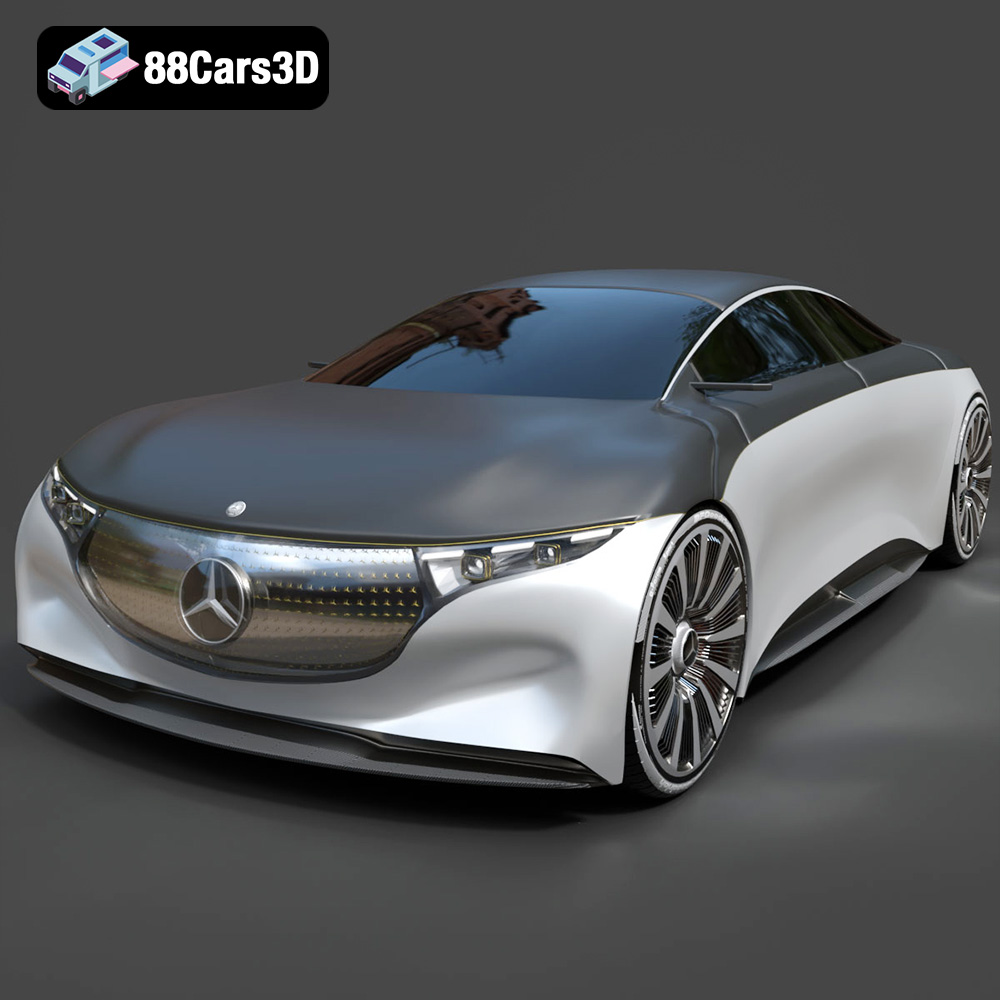
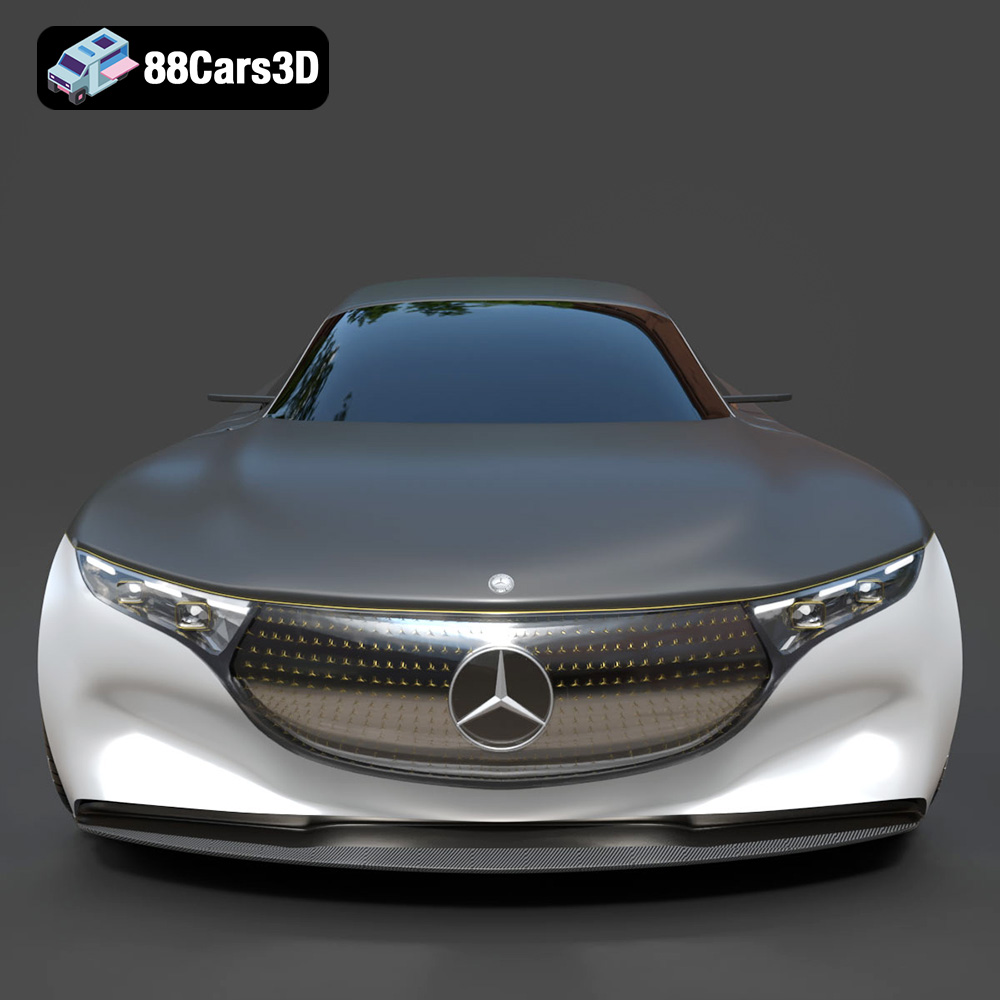
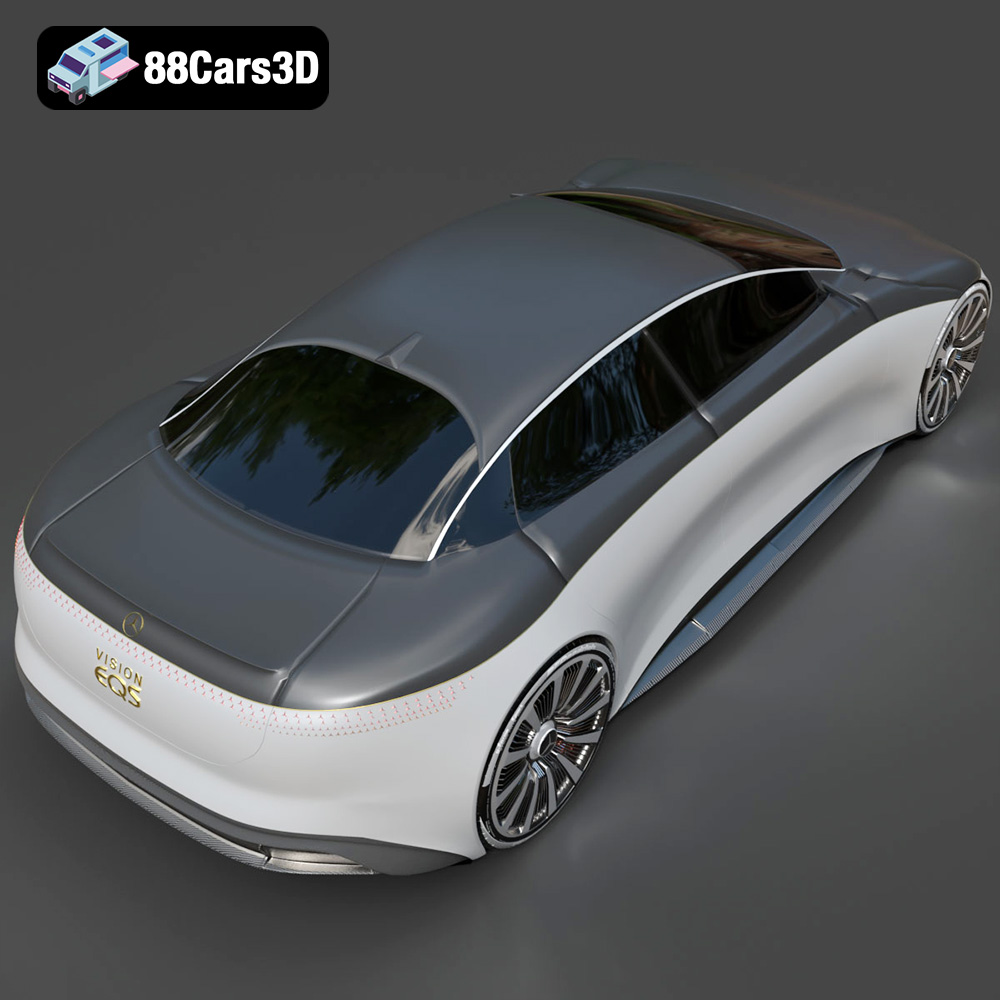
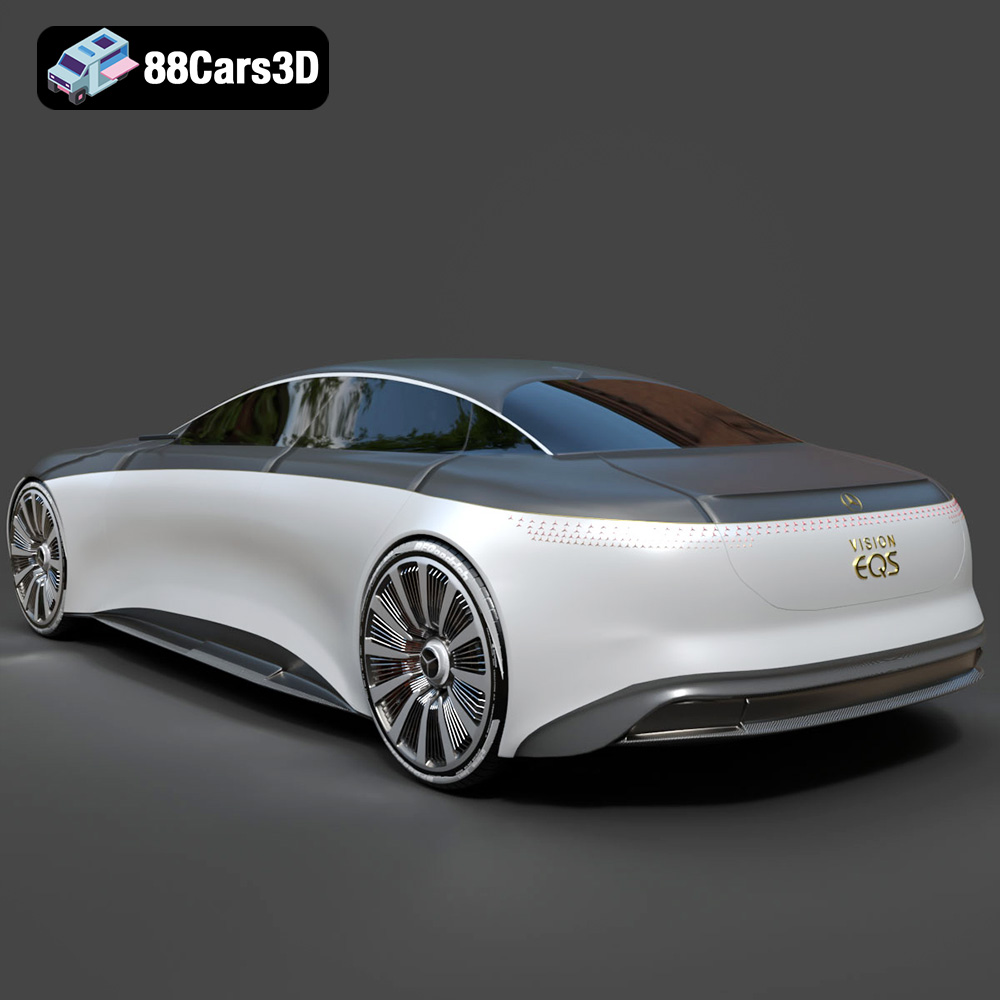
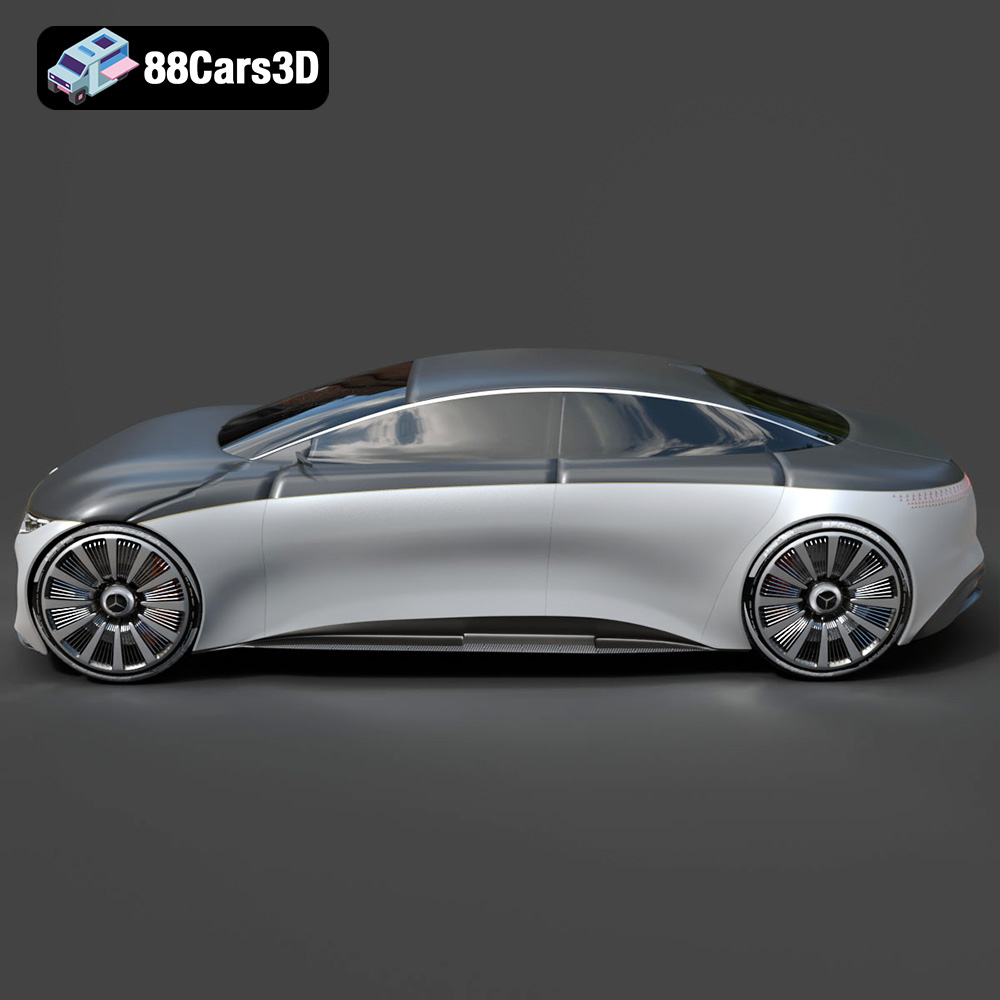
The core appeal of the Vision EQS lies in its seamless “one bow” proportion and majestic aerodynamic profile. Translating this into a 3D model requires exceptional skill in surface modeling and topology. The Mercedes Vision EQS 3D Model achieves this by boasting clean topology that faithfully reproduces every sensual curve and aerodynamic crease. Special attention is given to the sweeping 360-degree continuous “Lightbelt” and the stunning digital front grille embedded with glowing LED stars—elements that define its avant-garde aesthetic. These features are not just visually present but are modeled with enough detail to allow for realistic lighting simulations and material assignments, making it perfect for high-end automotive visualization.
While the exterior commands immediate attention, the interior of a luxury concept vehicle is equally critical for a holistic experience. The Mercedes Vision EQS 3D Model includes a sculptured, yacht-inspired luxury cabin styling. This means detailed geometry for the futuristic rectangular steering wheel, an advanced digital dashboard, a spacious floating center console, and organic seating geometry. Crucially, even subtle details like ambient lighting strips integrated into the door panels are accounted for. This level of interior fidelity is vital for first-person perspective applications, such as game walkthroughs, virtual configurators, or even cinematic interior shots where the camera might linger on the opulent details. The optimized geometry ensures that even with a detailed interior, the model remains suitable for real-time applications without compromising performance.
Creating a beautiful 3D car model is one challenge; making it truly versatile for various professional applications is another. Optimization is paramount, especially when bridging the gap between high-fidelity rendering and real-time performance.
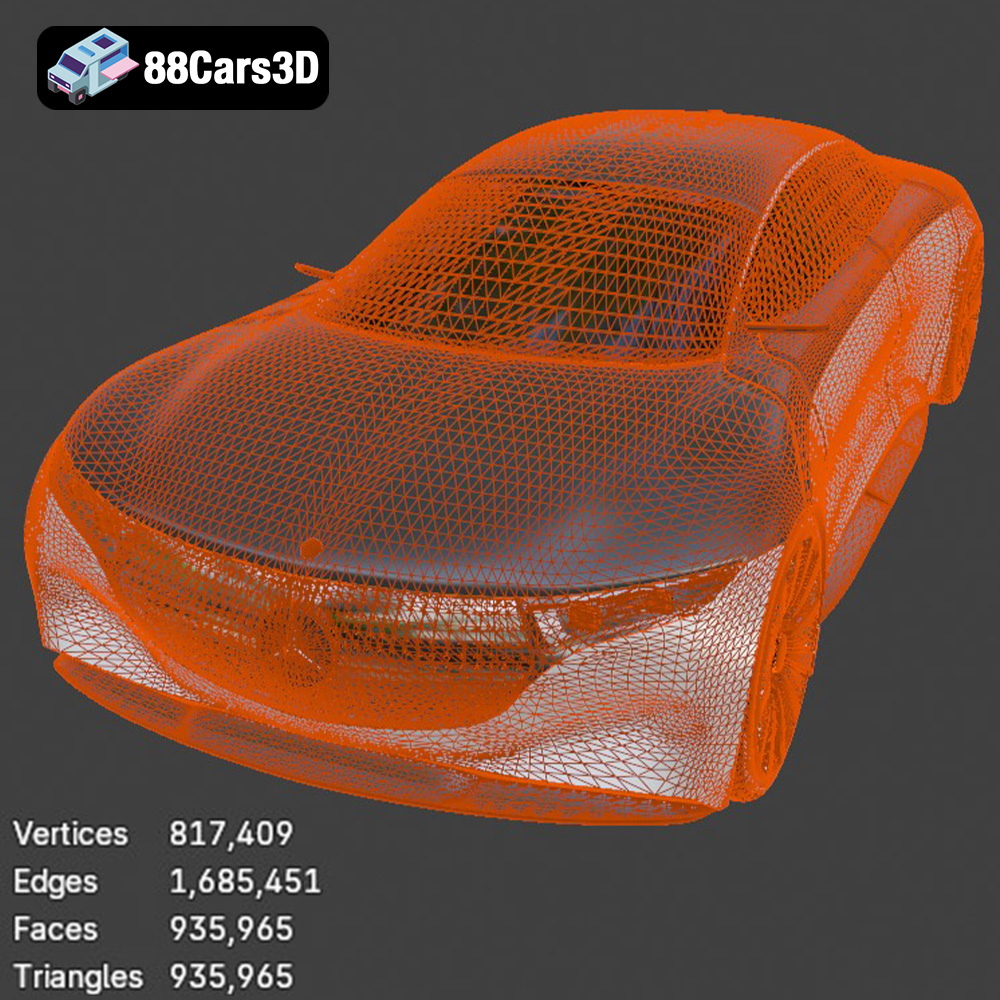
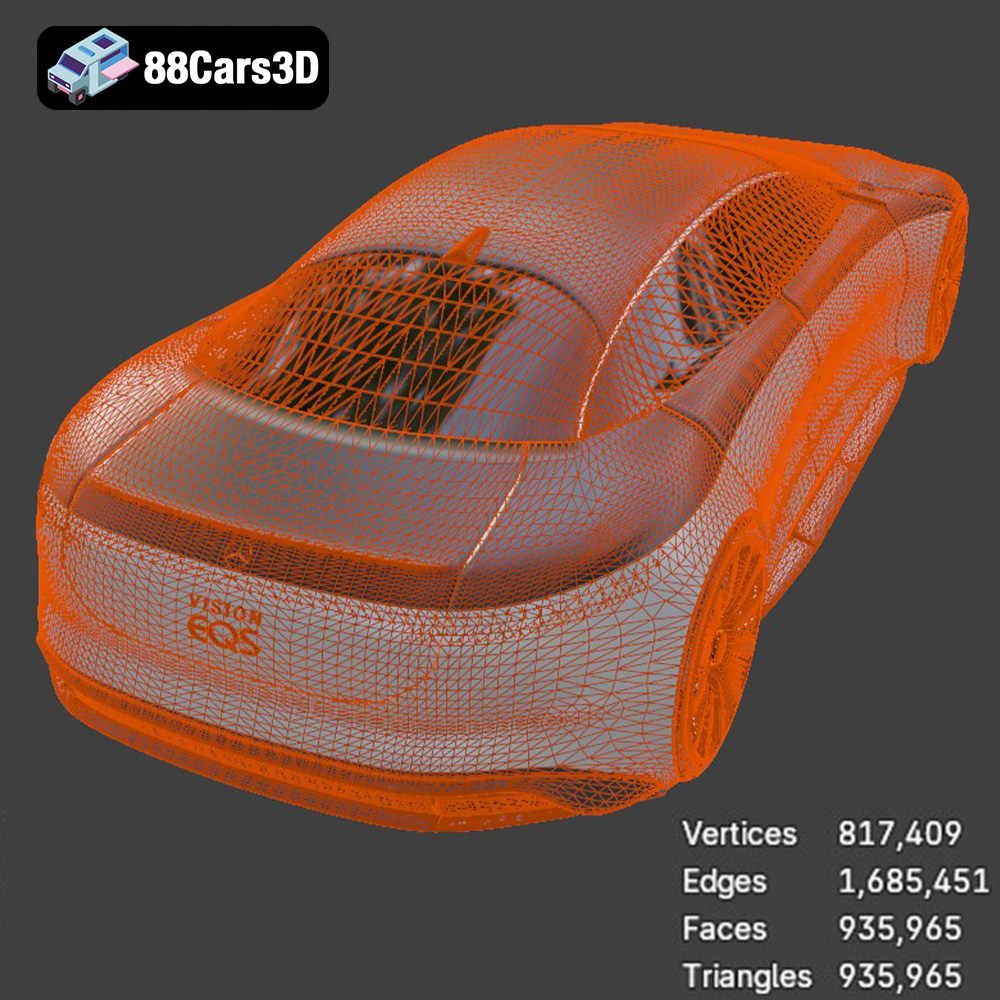
The Mercedes Vision EQS 3D Model from 88cars3d.com strikes an impeccable balance with approximately 450,000 triangles. This poly count is a sweet spot: high enough to convey breathtaking visual fidelity and intricate details like the digital grille and intricate body lines, yet optimized for seamless integration into real-time engines like Unreal Engine and Unity. This careful optimization means developers don’t have to spend valuable time on complex retopology or decimation processes, making it a truly “game-ready” asset right out of the box.
Beyond poly count, the technical integrity of a 3D model is defined by its foundational setup. The Mercedes Vision EQS 3D Model adheres to real-world scale accuracy, based on the actual vehicle chassis, which is essential for consistent scene composition and realistic physics simulations in games or visualizations. Furthermore, proper pivot setups are implemented for crucial components. This includes correct pivots for steering, allowing realistic turning animations, accurate wheel rotation for driving simulations, and precise suspension travel, enabling dynamic vehicle movements over uneven terrain. All these components—wheels, suspension, and steering—are separated, offering maximum flexibility for animation and interactive control within game engines or animation software. This level of technical consideration significantly reduces post-acquisition setup time and enhances the overall quality of the end product.
The true value of a premium 3D car model is realized through its seamless integration into established professional workflows across different industries. The Mercedes Vision EQS 3D Model is designed to accelerate projects in game development, architectural visualization, advertising, and more.
For game developers, the `unreal` and `fbx` formats are critical. When working in Unreal Engine, developers can import the optimized `.fbx` or the pre-configured `.unreal` asset. The ~450k triangle count means it can be dropped into open-world environments, high-octane racing titles, or detailed simulators without crippling frame rates. The separated components and proper pivot setups are invaluable. Developers can easily attach physics assets, set up custom control blueprints for driving mechanics, and implement engine-specific material instances to bring the Vision EQS to life with realistic reflections, emissive lighting for the Lightbelt, and dynamic shadows. Imagine this futuristic EV cruising through a cyberpunk cityscape or speeding down a hyperloop track in a next-generation racing game.
For high-end automotive rendering, the `.max` and `.blend` files offer unparalleled flexibility. In 3ds Max, artists can load the scene, which often comes with basic lighting and camera setups. They can then apply advanced V-Ray or Corona Renderer materials, set up intricate studio lighting environments, and render photo-realistic images or cinematic animations. The clean topology of the Mercedes Vision EQS 3D Model ensures smooth subdivisions for close-up shots, eliminating artifacts. Similarly, Blender users can leverage the `.blend` file to utilize Cycles or Eevee, adjusting shaders, adding intricate details with procedural textures, and animating the vehicle for commercials or design showcases. A common workflow involves importing the model into 3ds Max, setting up a virtual showroom scene with reflective floors and dynamic lighting, and then rendering a series of stills and animations that highlight the car’s progressive design for an advertising campaign.
The `.glb` format is particularly powerful for creating immersive AR/VR experiences. Imagine a luxury EV digital showroom where prospective buyers can walk around the Mercedes Vision EQS in virtual reality, open the doors, and explore the futuristic cockpit in full 3D. Or an augmented reality app that projects the car onto a real-world driveway through a smartphone camera. The `.glb` format’s optimization ensures quick loading times and smooth interaction on various devices. Its self-contained nature simplifies deployment, making it an ideal choice for interactive configurators and marketing tools that showcase the vehicle in a dynamic, engaging manner.
The versatility of a high-quality 3D model extends beyond digital environments, reaching into the physical realm through 3D printing. The Mercedes Vision EQS 3D Model provides an `.stl` file, making it accessible for rapid prototyping and hobbyist projects.
For enthusiasts, designers, or educators, printing a physical model of a concept car offers a tangible connection to the design. The `.stl` format simplifies the preparation for 3D printers. The product description provides specific recommendations for optimal printing, such as using a scale of 1:12, 1:18, or 1:24. Resin printing is often recommended for finer details, ensuring that the intricate digital grille and the continuous light band are accurately represented.
Successful 3D printing requires attention to structural integrity. Recommendations like a layer height of 0.04–0.12 mm and a wall thickness of 1.2–2.0 mm ensure print quality. Importantly, the model is prepared with considerations for supports, which are required for complex parts like mirrors and lower diffusers. Printing the frame angled for structural integrity and separating wheels ensures better print quality and easier assembly. Post-processing steps, including sanding, priming, and applying authentic factory colors with metallic finishes, can elevate a raw 3D print to a collector’s display piece. This feature extends the utility of the Mercedes Vision EQS 3D Model beyond pixels, into a physical manifestation of automotive innovation.
In a competitive digital landscape, the quality of your assets directly impacts the perceived value and professionalism of your final product. Investing in premium 3D car models, like those found on 88cars3d.com, is a strategic decision for several reasons.
Firstly, **time is money**. Developing a complex, high-fidelity car model from scratch is an incredibly time-consuming and resource-intensive endeavor. By acquiring a pre-made, optimized model like the Mercedes Vision EQS 3D Model, artists and developers can significantly cut down on production schedules, allowing them to focus on creative direction, animation, rendering, or game logic rather than foundational asset creation.
Secondly, **consistency and accuracy**. Professional 3D models are built with real-world scale, accurate proportions, and clean topology. This ensures that the vehicle looks correct from all angles, integrates seamlessly into virtual environments, and behaves predictably in simulations. Subpar models can lead to visual glitches, incorrect proportions, and a breakdown of realism, ultimately detracting from the user experience.
Finally, **versatility and optimization**. High-quality models are designed with diverse applications in mind. They are often offered in multiple formats, pre-optimized for different engines and software, and structured for ease of customization. This flexibility allows a single asset to be repurposed across various projects—from a marketing visualization to a racing game—maximizing its value and utility. When you choose a model from 88cars3d.com, you are choosing an asset that meets these rigorous professional standards, ensuring your projects are built on a solid foundation of technical excellence and visual appeal.
The world of 3D visualization and real-time interactive experiences is constantly evolving, driven by the desire for unparalleled realism and immersive detail. For automotive enthusiasts and professionals alike, high-quality 3D car models are the backbone of this evolution. The Mercedes Vision EQS 3D Model stands as a testament to what is possible, offering a meticulously crafted digital representation of futuristic luxury. Its blend of breathtaking visual fidelity, game-ready optimization, and comprehensive file format support makes it an invaluable asset for anyone working in automotive rendering, game development, AR/VR, or even 3D printing. By choosing a premium model like this one from 88cars3d.com, you equip yourself with a tool that not only inspires creativity but also streamlines your workflow, allowing you to focus on bringing your most ambitious projects to life. Whether you’re designing the next blockbuster game or crafting a groundbreaking virtual showroom, the right 3D asset can truly drive your vision forward.
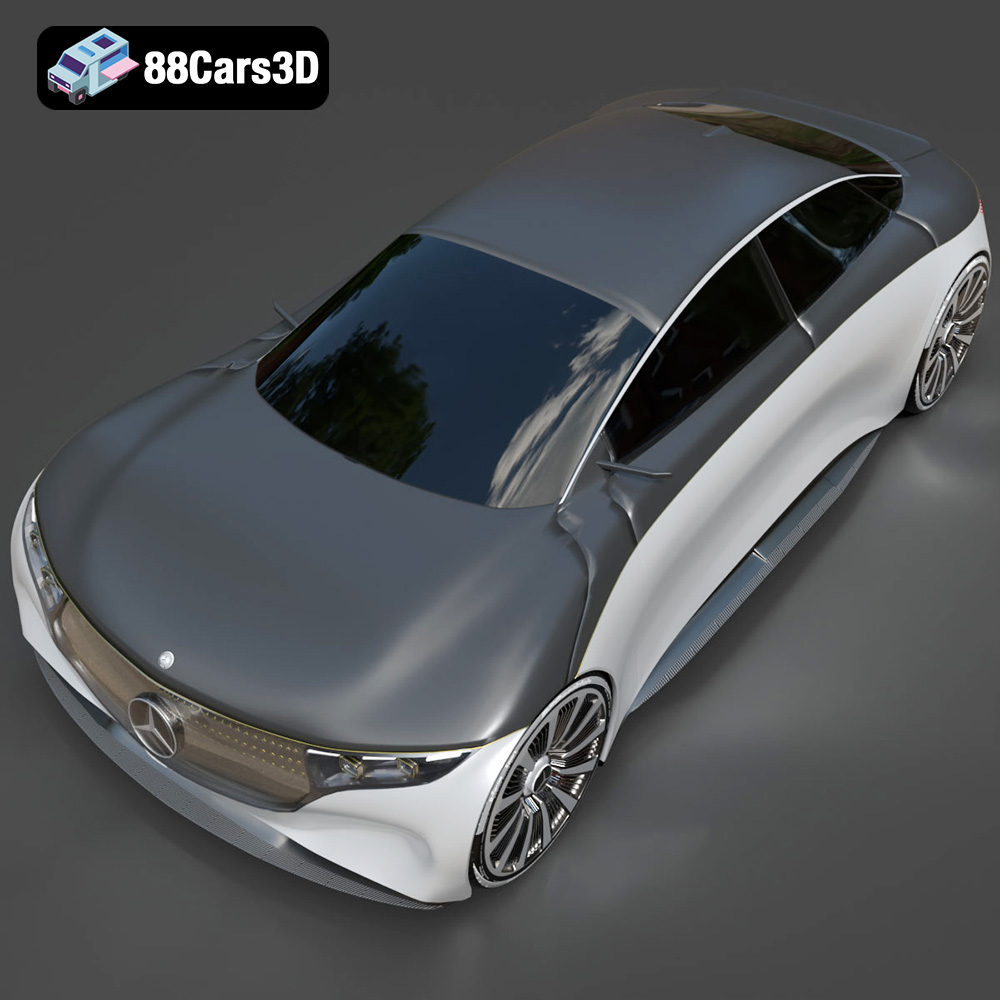
Experience the future of progressive luxury with the Mercedes Vision EQS concept vehicle. This breathtaking electric luxury sedan is defined by its seamless “one bow” proportion, majestic aerodynamic profile, and avant-garde aesthetic. Key visual elements include the sweeping 360-degree continuous “Lightbelt” that visually divides the upper and lower body, the stunning digital front grille embedded with glowing LED stars, and the fluid, sculpture-like integration of the cabin and exterior. This premium 3D model boasts exceptional quality with approximately 450,000 triangles, offering an impeccable balance between breathtaking visual fidelity and game-ready optimization. The clean topology captures every sensual curve and aerodynamic crease, making it the ultimate asset for high-end automotive visualization, game development, and immersive AR/VR experiences.
$19.99
.blend
.fbx
.glb
.max
.mercedes
.obj
.ply
.rendering
.stl
.unreal
car-3d-model
concept-car
electric-car
game asset
game-ready
low-poly
luxury-ev
optimized
vision-eqs
VR/AR