Get 20% OFF All Premium 3D & STL Models!

In the dynamic world of 3D content creation, the demand for highly detailed, performance-optimized assets is ceaseless. From the adrenaline-fueled tracks of racing games to the sleek, interactive showrooms of automotive configurators, the quality of a 3D vehicle model can make or break an immersive experience. Crafting a truly exceptional 3D car model requires a delicate balance of artistic fidelity, engineering precision, and technical optimization, ensuring it performs flawlessly across diverse platforms and applications.
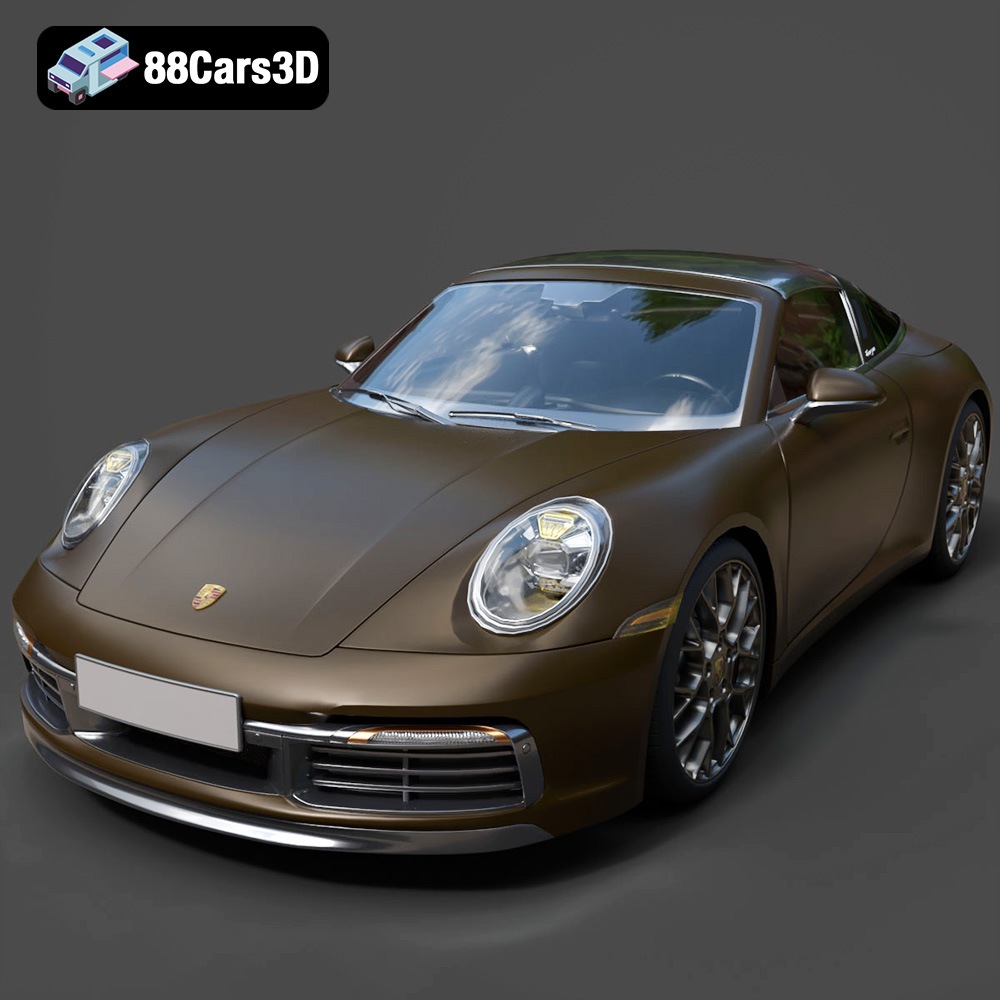
At the heart of this challenge lies the commitment to capturing not just the visual aesthetics but the very essence of a vehicle. Take, for instance, the legendary Porsche 911 Targa. Its iconic silhouette, distinctive Targa roof system, and meticulous German engineering make it a dream subject for 3D artists. When a model like the Porsche 911 Targa 3D model from 88cars3d.com enters the scene, it doesn’t just represent a car; it embodies a promise of quality, versatility, and deep technical consideration designed to elevate any project it becomes a part of. This particular model stands as a testament to what’s achievable when expertise meets passion, offering a game-ready asset that doesn’t compromise on the visual realism demanded by professional productions.
The choice of file format is a fundamental decision in any 3D workflow, dictating compatibility, feature retention, and overall project efficiency. A high-quality 3D car model, such as the Porsche 911 Targa, typically comes packaged in multiple formats to cater to various professional pipelines. Understanding these formats is crucial for artists, developers, and designers to leverage their assets effectively.
The .blend format is the native file type for Blender, a powerful open-source 3D creation suite. When you receive a .blend file, you’re getting a complete Blender scene, including the mesh, materials, textures, lighting, cameras, animation data, and even physics simulations. This format is ideal for users working primarily in Blender who require full editability. Artists can dissect the model’s topology, modify materials, adjust UVs, or even re-rig and animate elements directly within its native environment. For the Porsche 911 Targa, a .blend file means you have direct access to every component, allowing for deep customization and fine-tuning before export to other engines or renderers.
Autodesk’s .fbx (Filmbox) format is arguably the most widely adopted interchange format in the 3D industry, especially for game development and animation. It excels at preserving complex data, including meshes, materials, textures, animations, skinning, and camera information, making it incredibly versatile. For real-time engines like Unreal Engine and Unity, .fbx is the go-to format for importing assets. Its robust nature ensures that the Porsche 911 Targa’s optimized geometry, proper pivot setups, and material assignments translate seamlessly, ready for the next stage of development, be it setting up collisions or applying real-time shaders.
The .obj (Wavefront OBJ) format is a universal standard, widely supported across almost all 3D software. It primarily stores geometry (vertices, normals, UVs, faces) and can reference external material (.mtl) files for basic color and texture information. While .obj is excellent for mesh exchange due to its broad compatibility, it does not support animation, rigging, or complex material networks. For the Porsche 911 Targa, an .obj file provides a clean mesh, perfect for importing into a new software where you intend to build new materials from scratch or for foundational modeling tasks.
.glb is the binary version of the glTF (GL Transmission Format) format, specifically designed for efficient transmission and loading of 3D scenes and models on the web, in AR, and VR applications. It encapsulates all necessary data—geometry, materials, textures, animations—into a single, self-contained file. This makes .glb files incredibly portable and fast-loading, ideal for interactive web viewers, virtual showrooms, and augmented reality experiences where bandwidth and performance are critical. The Porsche 911 Targa .glb ensures that this detailed vehicle can be showcased interactively in a browser or on a mobile device with minimal effort and maximum visual impact.
.stl (STereoLithography) is the de facto standard file format for 3D printing. It represents a 3D model as a series of connected triangles, describing only the surface geometry of an object without color, texture, or other advanced attributes. When preparing the Porsche 911 Targa for 3D printing, the .stl version provides a watertight, triangulated mesh ready for slicing software. It’s crucial for enthusiasts who wish to bring the digital model into the physical world, creating scale replicas for display or collection.
The .ply (Polygon File Format or Stanford Triangle Format) is a versatile format often used for storing 3D scanner data. It can store a variety of properties including color, transparency, surface normals, and texture coordinates, often associated with each vertex or face. While not as universally used as .fbx or .obj for general asset exchange, .ply is valued in scientific, engineering, and CAD applications where precise mesh data, potentially with per-vertex color, is required. For the Porsche 911 Targa, a .ply file might be useful in workflows that involve mesh analysis or data comparison.
While not a standard external file extension in the traditional sense, “.unreal” typically implies an asset that has been specifically prepared and optimized for direct import or use within Unreal Engine. This could be a meticulously prepared .fbx file with correct scale, material slots, collision meshes, and LODs (Levels of Detail), or even a pre-packaged Unreal Engine asset containing blueprints and specific engine setups. For a complex asset like the Porsche 911 Targa, an “unreal” variant means minimal setup time, allowing developers to drop the car directly into their project with confidence in its performance and visual fidelity.
The .max format is the native file type for Autodesk 3ds Max, a leading software for 3D modeling, animation, rendering, and visualization. Similar to .blend, a .max file contains the complete scene data, including geometry, materials, textures, lighting, cameras, animation, and scene setup. It offers full editability within 3ds Max, making it invaluable for artists whose primary DCC (Digital Content Creation) tool is 3ds Max. This format allows for advanced rendering setups, complex material creation using V-Ray or Corona, and sophisticated animation workflows for the Porsche 911 Targa, leveraging all the powerful features of 3ds Max.
Creating a 3D car model that truly resonates with audiences goes far beyond simply mimicking its shape. It involves a deep understanding of automotive design principles, meticulous attention to detail, and a mastery of 3D software. The Porsche 911 Targa 3D model exemplifies this fusion of art and engineering, offering a benchmark for high-fidelity automotive assets.
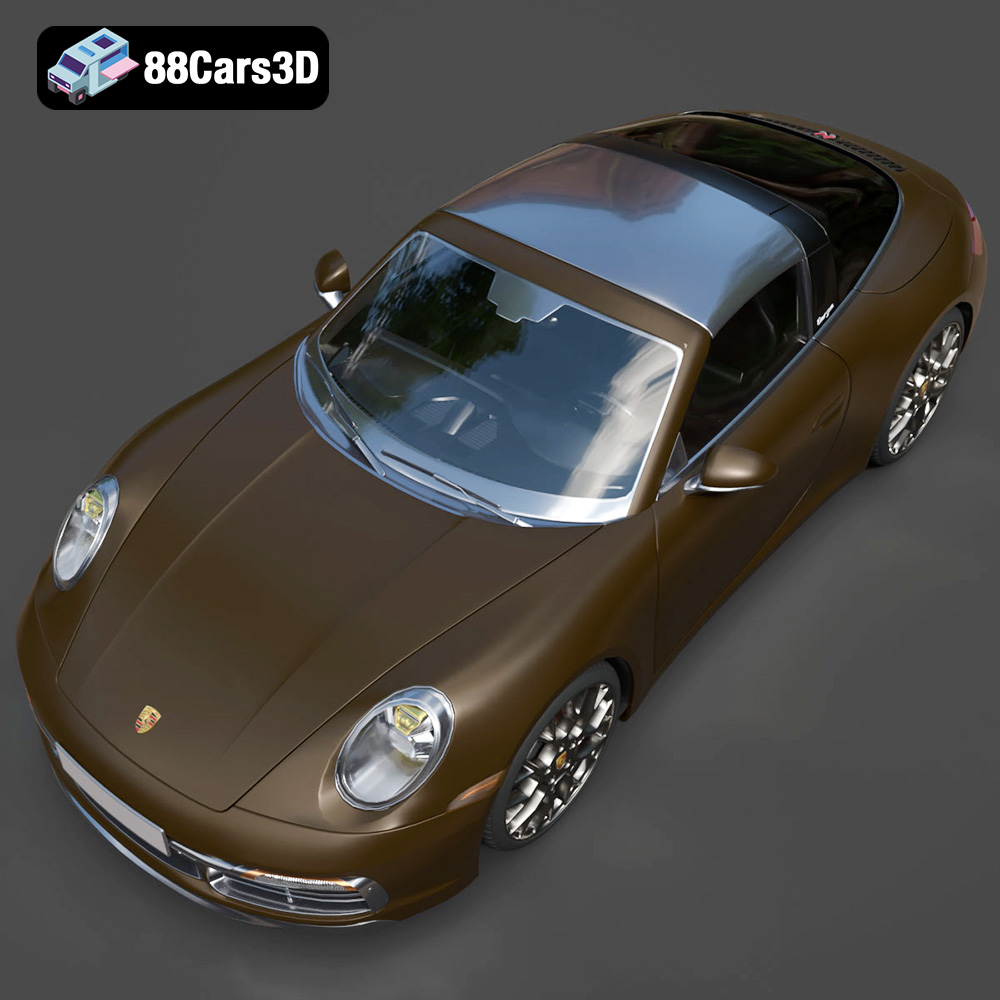
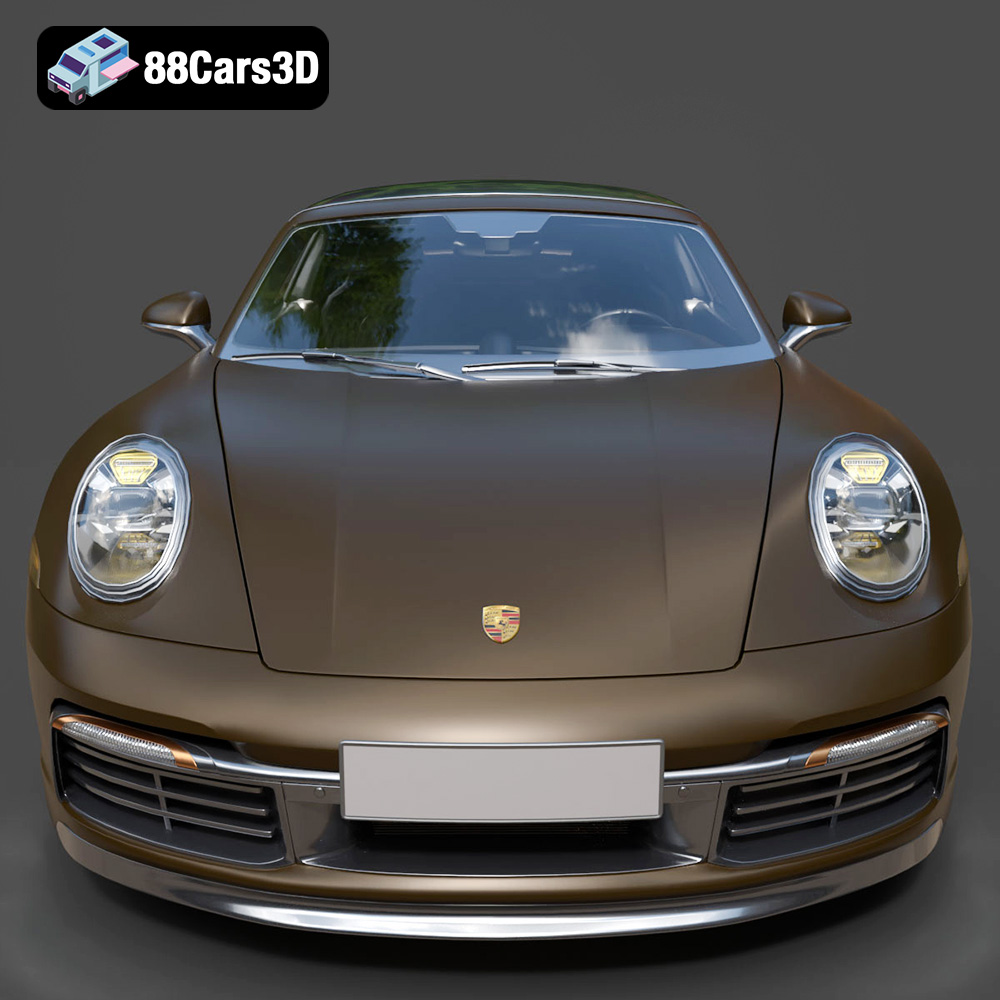
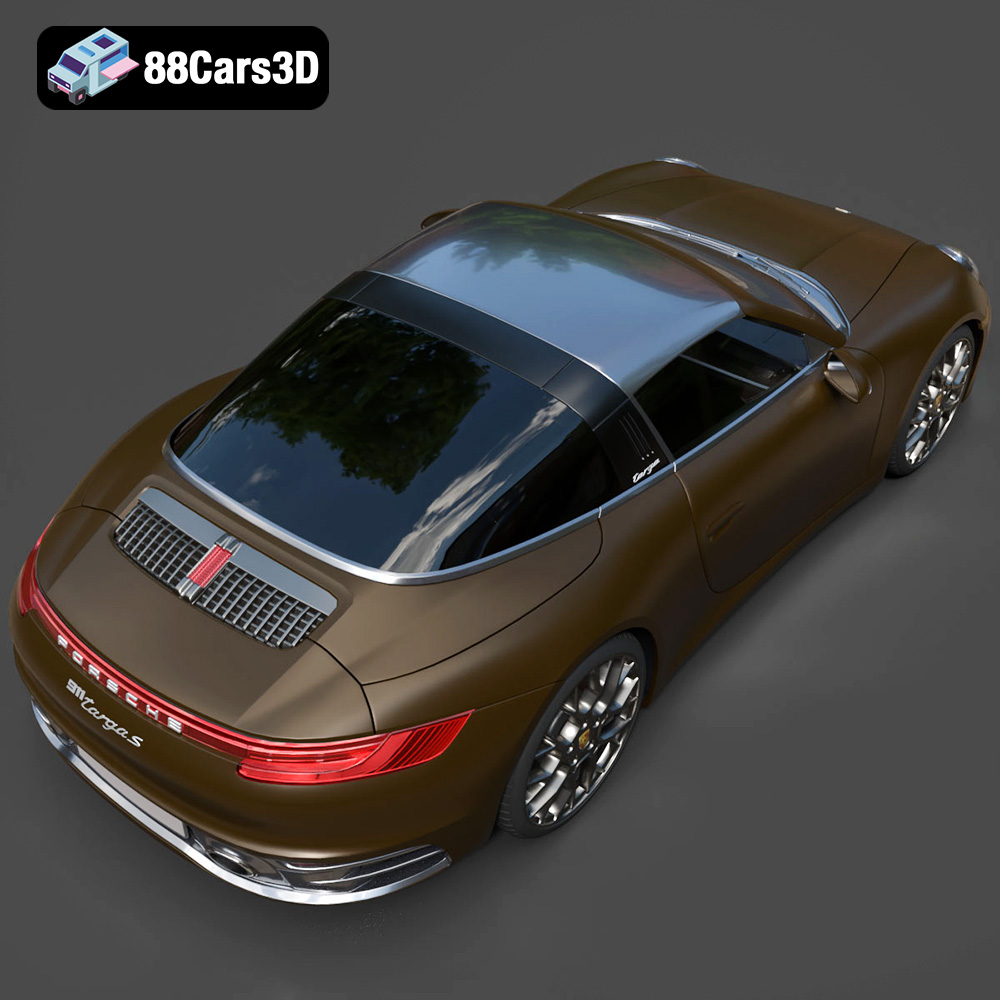
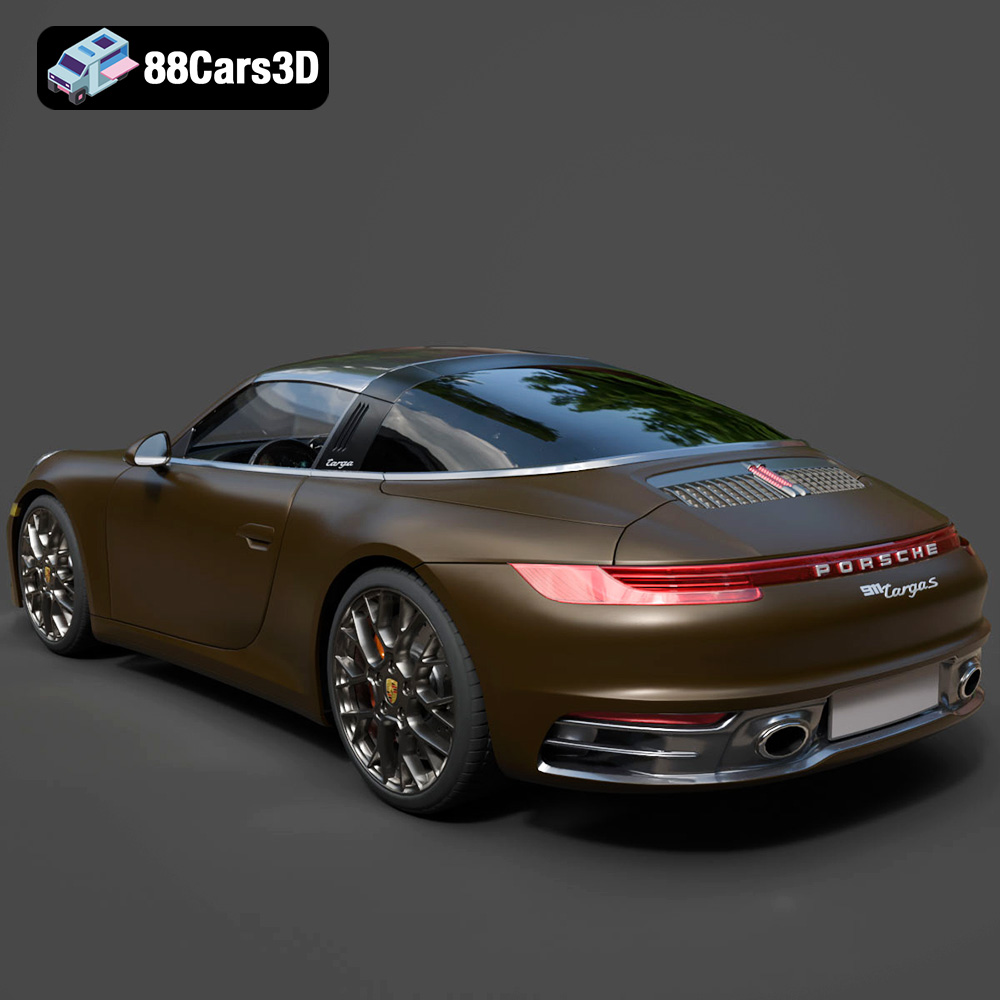
The Porsche 911 Targa is instantly recognizable, and translating that identity into a 3D model requires precision. This model meticulously captures the car’s signature round headlights, the distinctive wide rear fenders that define its powerful stance, and the sleek, integrated glass dome of the Targa roof. Every curve, every vent, and even the aggressive exhaust system is reproduced with impeccable accuracy, based on the actual vehicle chassis. This level of detail extends to the high-resolution premium alloy wheels, complete with branded brake calipers, and the aerodynamic undercarriage, all contributing to a convincing and visually stunning representation that makes it perfect for automotive rendering.
For many applications, particularly in game development or VR showrooms, the interior of a vehicle is just as crucial as its exterior. The Porsche 911 Targa 3D model doesn’t disappoint here, featuring a cockpit crafted for realism. Premium sport seats with realistic leather textures and stitching invite closer inspection. The authentic sport steering wheel, classic 5-dial instrument cluster with accurate gauge details, and a meticulously detailed center console, pedals, levers, and PDK/manual shifter components are all present. This optimized interior geometry is vital for providing an authentic first-person perspective in gaming or a truly immersive virtual tour, enhancing the overall user experience.
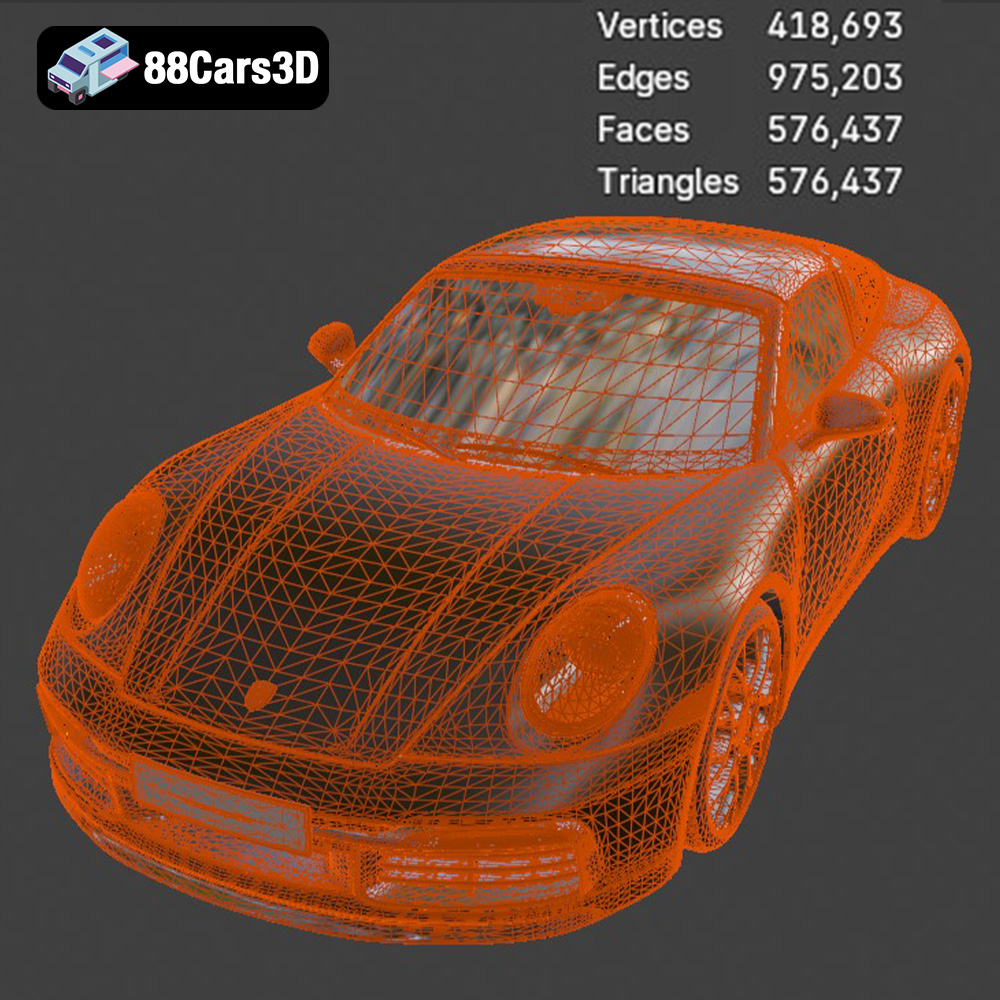
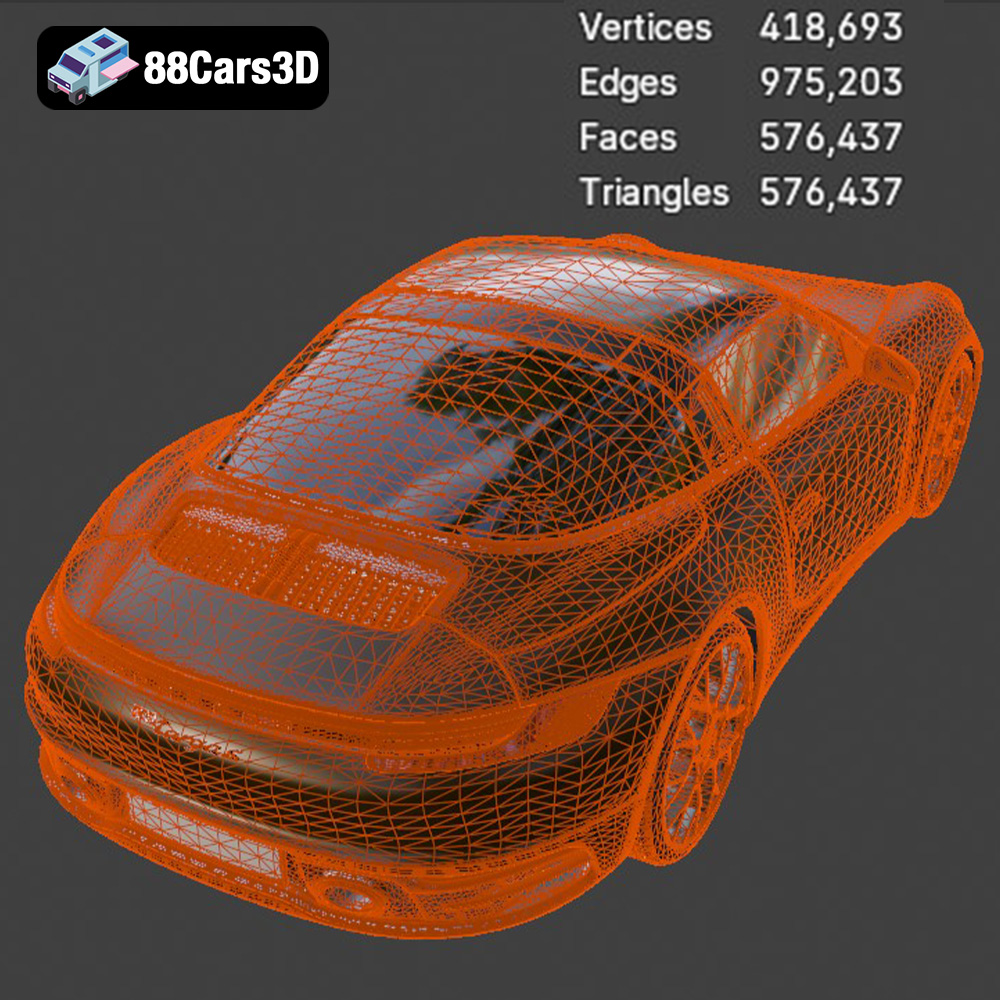
Achieving both visual fidelity and optimal performance is a constant challenge in 3D modeling. This Porsche 911 Targa model strikes a masterful balance with approximately 250,000 triangles. This poly count is “game-ready,” meaning it’s optimized for real-time engines like Unreal and Unity without sacrificing the high-end visual realism expected in professional CGI animations or visualizations. The model boasts flawless reflections, a direct result of clean, optimized topology and carefully crafted materials. Proper UV mapping, though not explicitly detailed in the product description, is implicitly present to allow for high-resolution textures and realistic material rendering, ensuring the surfaces interact with light in a physically accurate manner.
For game developers and real-time visualization artists, the efficiency with which a 3D asset integrates into their engine is paramount. The Porsche 911 Targa 3D model is specifically designed for seamless integration, offering features that streamline the process for major platforms like Unreal Engine and Unity.
Unreal Engine, known for its photorealistic rendering and robust development tools, is a prime target for high-quality 3D car models. When working with the Porsche 911 Targa, developers typically import the optimized .fbx file (or utilize the dedicated .unreal asset). The process involves:
Unity, with its versatility for various game types and interactive experiences, also benefits greatly from well-prepared 3D assets. The workflow for incorporating the Porsche 911 Targa is similar to Unreal, but with Unity-specific considerations:
Beyond initial integration, ongoing optimization is key for any game asset. The Porsche 911 Targa’s core technical advantages contribute significantly here:
This careful planning means that whether you’re building an open-world racing game or a sophisticated VR configurator, the Porsche 911 Targa model provides a solid, performant foundation, ensuring your project runs smoothly while looking spectacular.
The versatility of a premium 3D model extends far beyond traditional screen-based rendering. With advancements in augmented reality (AR), virtual reality (VR), and 3D printing, a single, well-crafted asset can serve a multitude of innovative purposes. The Porsche 911 Targa 3D model is engineered to excel in these emerging fields, opening new avenues for interaction and physical creation.
Augmented and Virtual Reality platforms demand highly optimized yet visually rich 3D assets to create convincing immersive experiences. The Porsche 911 Targa 3D model is ideally suited for this due to its game-ready polycount and meticulous detailing. Imagine:
The model’s real-world scale accuracy and proper pivot setup are critical for believable AR/VR interactions, allowing for intuitive manipulation and exploration.
For hobbyists, collectors, and design professionals, the ability to transform a digital model into a tangible object is incredibly exciting. The Porsche 911 Targa 3D model, with its included .stl format, is perfectly convertible for 3D printing. This means enthusiasts can produce highly detailed physical replicas of this iconic sports car. To ensure optimal print quality, several considerations are crucial:
Through its robust design and support for diverse file formats, this 3D car model from 88cars3d.com bridges the digital and physical realms, empowering creators across the spectrum of 3D applications.
One of the hallmarks of a truly professional 3D asset is its flexibility for customization. The Porsche 911 Targa 3D model is designed to be a versatile foundation, offering numerous options for artists and developers to tailor its appearance to their specific project needs, whether for automotive rendering, game environments, or cinematic sequences.
The model’s clean topology and well-organized material groups allow for extensive customization of its visual properties. Artists can easily:
This level of material and texture customizability ensures the Porsche 911 Targa can seamlessly fit into a wide array of visual styles and project requirements.
Beyond static renders, the potential for animation unlocks dynamic storytelling and interactive gameplay. The Porsche 911 Targa 3D model is engineered with animation in mind:
From subtle material shifts to complex animated sequences, the Porsche 911 Targa 3D model empowers creators with the tools to realize their most ambitious visions, making it an invaluable game asset for any discerning professional.
The journey from conceptual design to a fully realized, interactive 3D automotive model is a intricate one, demanding a blend of artistic vision, technical precision, and a deep understanding of diverse application needs. The Porsche 911 Targa 3D model stands as a prime example of what can be achieved when these elements converge.
Throughout this exploration, we’ve seen how this particular asset from 88cars3d.com excels in every crucial aspect. Its meticulous detailing captures the legendary essence of the Porsche 911 Targa, from its iconic exterior features to its faithfully reproduced cockpit. Technically, its game-ready optimization at ~250,000 triangles, real-world scale, and thoughtful pivot setups ensure top-tier performance and ease of integration into demanding real-time environments like Unreal Engine and Unity. Furthermore, its broad compatibility with various file formats—from .blend and .max for comprehensive editing to .fbx for universal exchange, .glb for AR/VR, and .stl for tangible 3D prints—makes it an exceptionally versatile tool for any professional workflow.
Whether you’re an independent game developer crafting an open-world racing title, an architectural visualization studio needing a luxury vehicle to adorn a high-end garage render, or an AR/VR innovator building immersive car configurators, this Porsche 911 Targa 3D model delivers. It provides not just a visually stunning representation but a technically robust foundation that saves development time and elevates the final product. Investing in high-quality 3D car models like this is not just about acquiring an asset; it’s about investing in the efficiency, realism, and creative potential of your projects.
For those seeking to infuse their creations with unparalleled automotive authenticity and technical excellence, the Porsche 911 Targa 3D model from 88cars3d.com represents an opportunity to leverage a truly professional-grade game asset. It’s an asset that embodies the best practices in 3D modeling, ready to drive your projects towards new horizons of visual fidelity and interactive immersion.
The Porsche 911 Targa is a legendary sports car that perfectly bridges the gap between a classic coupe and a full convertible. Renowned for its iconic Targa roof system, distinctive rear-engine layout, and timeless aerodynamic silhouette, this vehicle represents the pinnacle of German engineering. The 3D model captures its signature round headlights, wide rear fenders, sleek glass dome, and aggressive exhaust system with impeccable precision. This Porsche 911 Targa 3D model is crafted with exceptional topology and a highly optimized triangle count, ensuring it is fully game-ready without sacrificing visual fidelity. The asset boasts flawless reflections and meticulously modeled surface details, making it an outstanding choice for professional 3D production. It is heavily optimized for seamless integration into game engines like Unreal Engine and Unity, as well as high-end CGI animations, VR showrooms, and interactive web experiences. Perfect for open-world racing games, luxury lifestyle visualizations, interactive AR configurators, and architectural renders.
$19.99
.blend
.fbx
.glb
.max
.obj
.ply
.porsche
.rendering
.sports car
.stl
.unreal
car-3d-model
game asset
game-ready
low-poly
luxury car
optimized
porsche-911-targa
VR/AR