Get 20% OFF All Premium 3D & STL Models!

In the rapidly evolving landscape of digital content creation, the demand for exquisite 3D assets is at an all-time high. From blockbuster video games to cutting-edge architectural visualizations and immersive AR/VR experiences, high-quality 3D models form the very backbone of compelling digital environments. Nowhere is this more apparent than in the automotive sector, where precision, realism, and optimization are paramount. Automotive design, advertising, and simulation rely heavily on accurate 3D representations that can convey the intricate details, luxurious finishes, and dynamic presence of real-world vehicles.
Gone are the days when simple, low-polygon models sufficed. Today’s audiences expect photorealism, dynamic interactivity, and an unparalleled level of detail, even in real-time applications. This shift has driven content creators to seek out 3D car models that not only look stunning but are also technically robust and adaptable across various platforms and engines. Whether it’s a meticulously crafted classic or a futuristic concept, the underlying data must support diverse workflows, from static renders to complex animations and physics simulations.
The challenge for any 3D artist or developer is striking the delicate balance between visual fidelity and performance efficiency. A model that looks incredible but brings a game engine to its knees is impractical. Conversely, an optimized model lacking detail fails to engage. The solution lies in expertly crafted assets that marry optimized topology with rich visual information, allowing for scalable detail and seamless integration. This is precisely where models like the Porsche 911 Targa 3D Model excel, offering a game-ready solution without compromising on the iconic beauty and engineering prowess of its real-world counterpart.
Navigating the world of 3D modeling often means grappling with a multitude of file formats, each designed with specific purposes, compatibilities, and technical advantages. Choosing the correct format for your project is crucial for efficient workflow, data integrity, and optimal performance. When acquiring a premium 3D car model, such as the Porsche 911 Targa, understanding the nuances of the included file types is a vital part of leveraging its full potential.
The .blend format is native to Blender, the powerful open-source 3D creation suite. A .blend file saves an entire Blender scene, including all 3D geometry, materials (with Cycles/Eevee specific shaders), textures, lighting, cameras, animations, and even physics simulations. This makes it an ideal choice for artists working primarily within Blender, offering full editability and preserving all scene data in a highly organized manner. If you plan to modify the model extensively, create custom animations, or render using Blender’s native renderers, the .blend file provides the most comprehensive starting point.
As a proprietary format developed by Autodesk, .fbx has become an industry-standard format for exchanging 3D data between various software applications. It is renowned for its robust support of geometry, materials, animations (skeletal and blend shapes), cameras, and lights. .fbx is particularly favored in game development for engines like Unreal Engine and Unity, and in film/VFX pipelines, due to its ability to transfer complex animated scenes with relative ease. When working with the Porsche 911 Targa 3D model in a real-time environment, .fbx is often the go-to format for its efficient handling of meshes, UVs, and PBR materials, ensuring assets are “game-ready” for immediate import.
The .obj (Wavefront OBJ) format is one of the oldest and most widely supported 3D file formats. It is a universal format known for its simplicity and excellent cross-software compatibility, often acting as a reliable fallback when other formats present issues. An .obj file primarily stores geometric data (vertices, normals, texture coordinates, and faces) and typically references an accompanying .mtl (Material Template Library) file for basic material properties. While it doesn’t support animation or rigging, its widespread compatibility makes it perfect for transferring static meshes between almost any 3D application for modeling, texturing, or rendering purposes.
.glb (GL Transmission Format Binary) is an increasingly popular format optimized for efficient transmission and loading of 3D scenes and models in web, AR, and VR applications. It is a binary version of .gltf, embedding all assets like geometry, textures, and animations into a single file, which simplifies sharing and reduces load times. For interactive web experiences, mobile AR configurators, or virtual showrooms featuring the Porsche 911 Targa, the .glb format offers superior performance and integration capabilities, ensuring a smooth, real-time user experience.
The .stl (STereoLithography) format is the ubiquitous standard for 3D printing. It represents a 3D model as a collection of unconnected triangles, defining only the surface geometry of an object without color, texture, or material information. While not suitable for rendering or animation, .stl is the direct conduit for bringing digital designs into the physical world. For hobbyists or professionals looking to 3D print the Porsche 911 Targa for display, rapid prototyping, or model kits, the .stl file is essential. Careful attention to mesh integrity and manifold geometry is critical for successful printing.
The .ply (Polygon File Format, or Stanford Triangle Format) is another format primarily used for storing 3D data from 3D scanners. It can store a wider range of information than .obj or .stl, including color, transparency, surface normals, and even confidence values for each vertex. While less common in typical animation or game development workflows, .ply is valuable for precise mesh analysis, scientific visualization, and specific CAD applications where detailed point cloud or polygonal data is required. For highly accurate reproductions or reverse engineering, a .ply version of a 3D car model can offer enhanced data integrity.
While not a standalone file format in the traditional sense, “.unreal” often refers to assets specifically packaged and optimized for direct import into Unreal Engine projects. This can include pre-setup Blueprints, Material Instances, and Static Meshes that leverage Unreal’s specific PBR workflow, LODs (Levels of Detail), and collision setups. A model provided in this format, such as the Porsche 911 Targa, ensures minimal setup time and maximum performance within the Unreal Engine ecosystem, making it truly “engine-ready” for game developers and real-time visualization specialists.
The .max format is the native file type for Autodesk 3ds Max, a powerful and widely used 3D modeling, animation, and rendering software. Like .blend, a .max file stores an entire scene, including geometry, materials, textures, lighting, cameras, animation keyframes, and modifiers. It offers full editability within 3ds Max, making it the preferred choice for artists who use the software for high-end automotive rendering, detailed product visualizations, and complex animation sequences. The .max file provides the most control for advanced lighting setups, V-Ray or Corona renders, and intricate scene compositions.
Creating a truly remarkable 3D car model goes far beyond simply replicating its silhouette. It demands meticulous attention to detail, a deep understanding of automotive design, and technical expertise to ensure it functions flawlessly across diverse digital applications. The Porsche 911 Targa 3D Model embodies these principles, capturing the essence of this legendary sports car with astonishing fidelity.
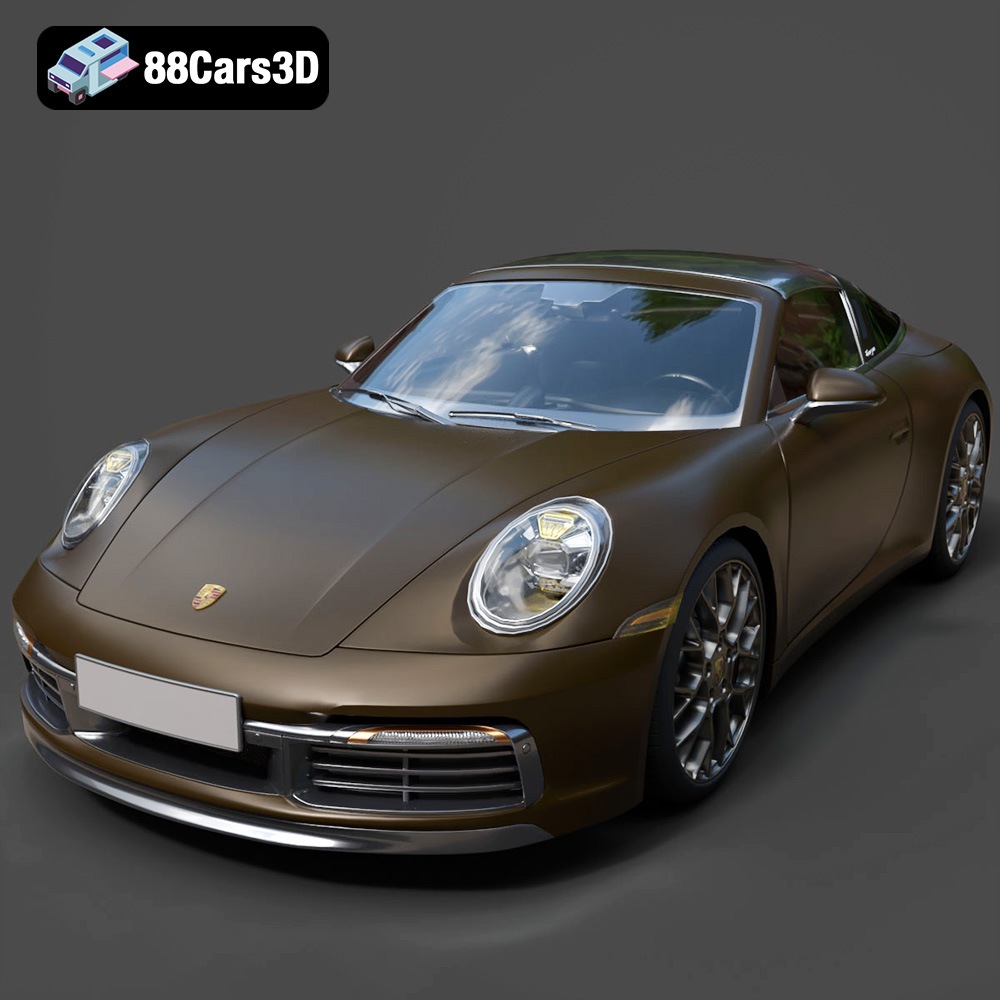
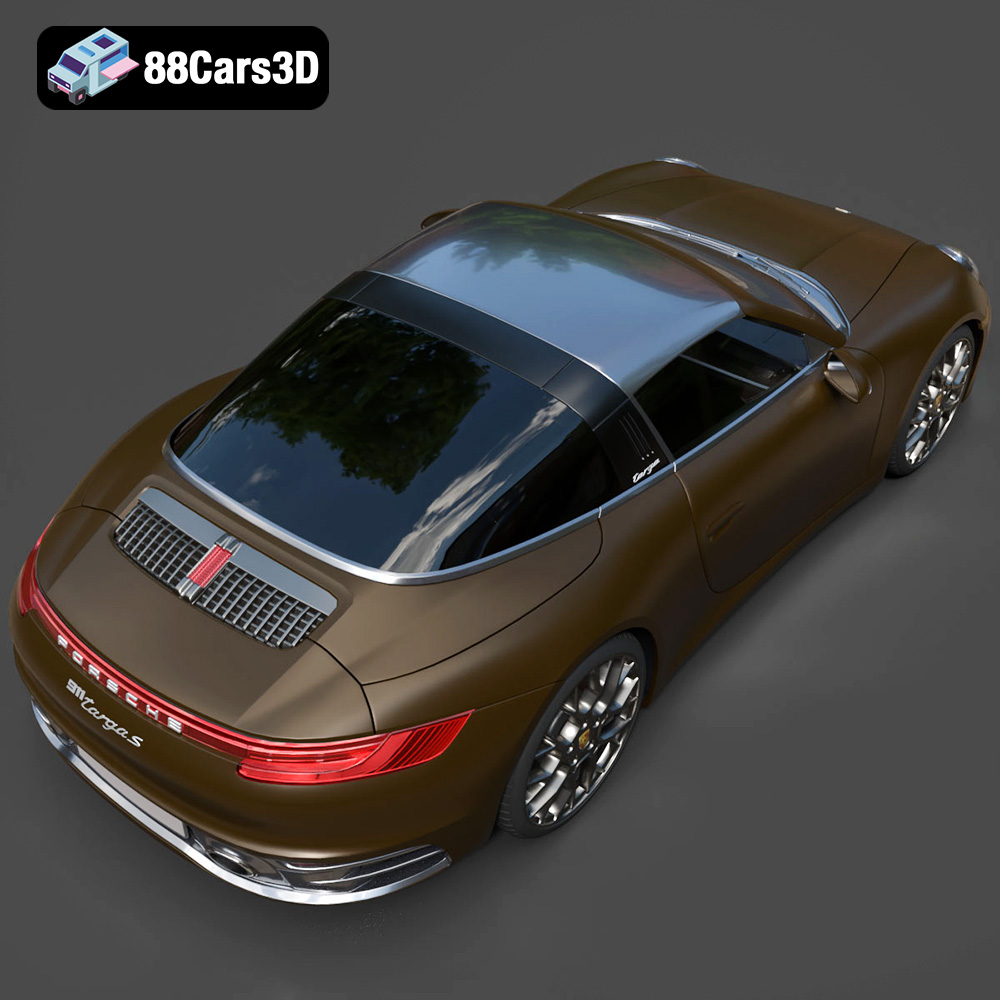
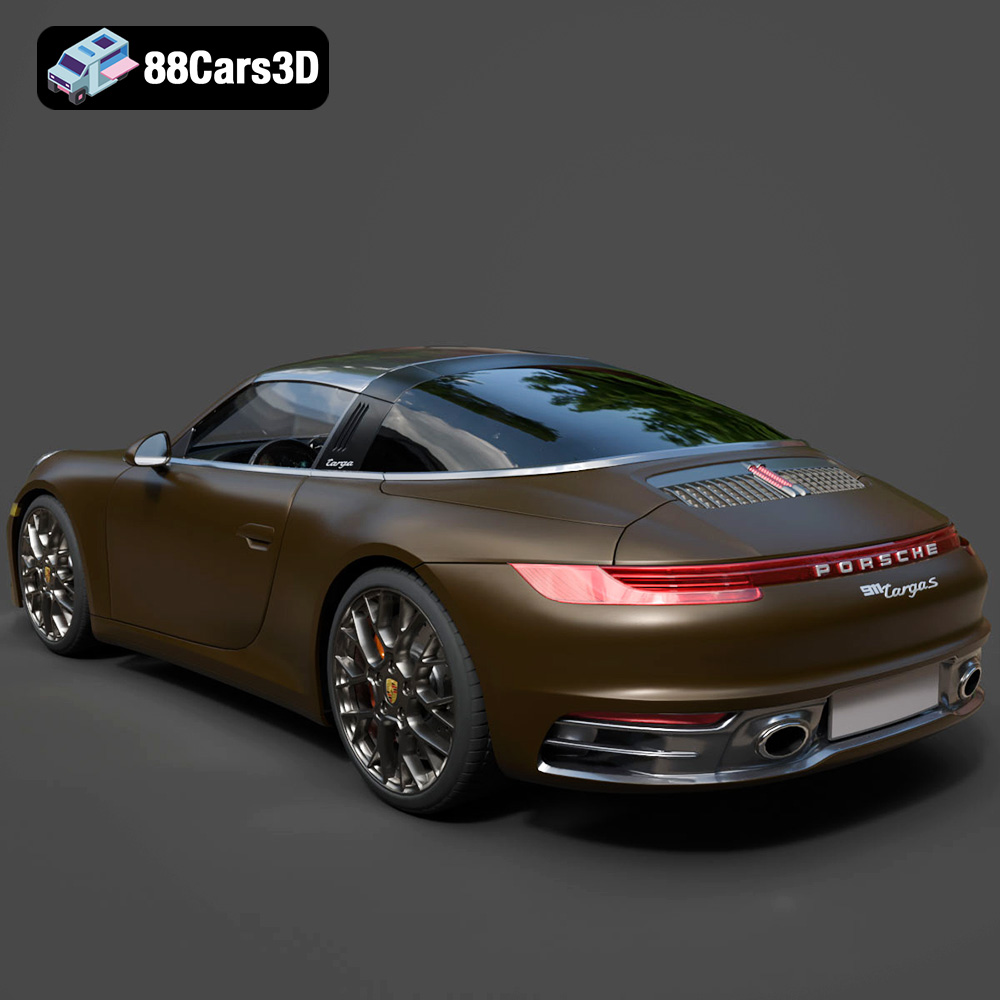
The exterior of any automotive 3D model is its most immediate visual identifier. For the Porsche 911 Targa, this means capturing its signature round headlights, wide rear fenders, the sleek glass dome, and the distinctive Targa roof system. A premium model will feature accurate frame geometry, authentic dual exhaust systems, and aerodynamic undercarriage details. Crucially, elements like high-resolution premium alloy wheels with branded brake calipers and a detailed suspension system are not just visual flair but contribute to realistic physics and animation. The ability to separate components like wheels, doors, and the hood allows for dynamic interactive experiences and realistic animations.
While often seen less, the interior of a 3D car model is vital for true immersion, especially in gaming and VR. The Porsche 911 Targa 3D model showcases a meticulously crafted cockpit with premium sport seats, realistic leather texture and stitching, an authentic sport steering wheel, and a classic 5-dial instrument cluster. Details down to the center console, pedals, levers, and the PDK/manual shifter are modeled with precision. This level of interior detail is critical for first-person perspective (POV) in gaming, creating a convincing and interactive environment for the user.
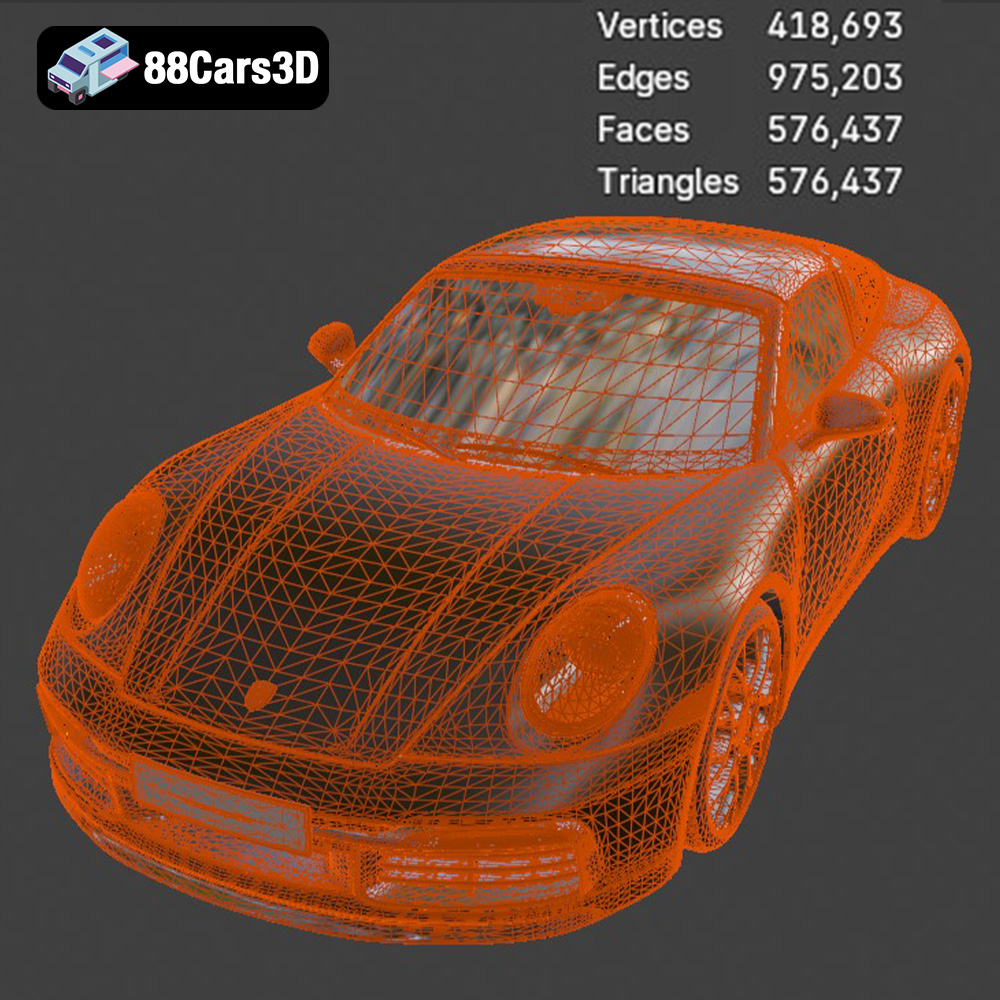
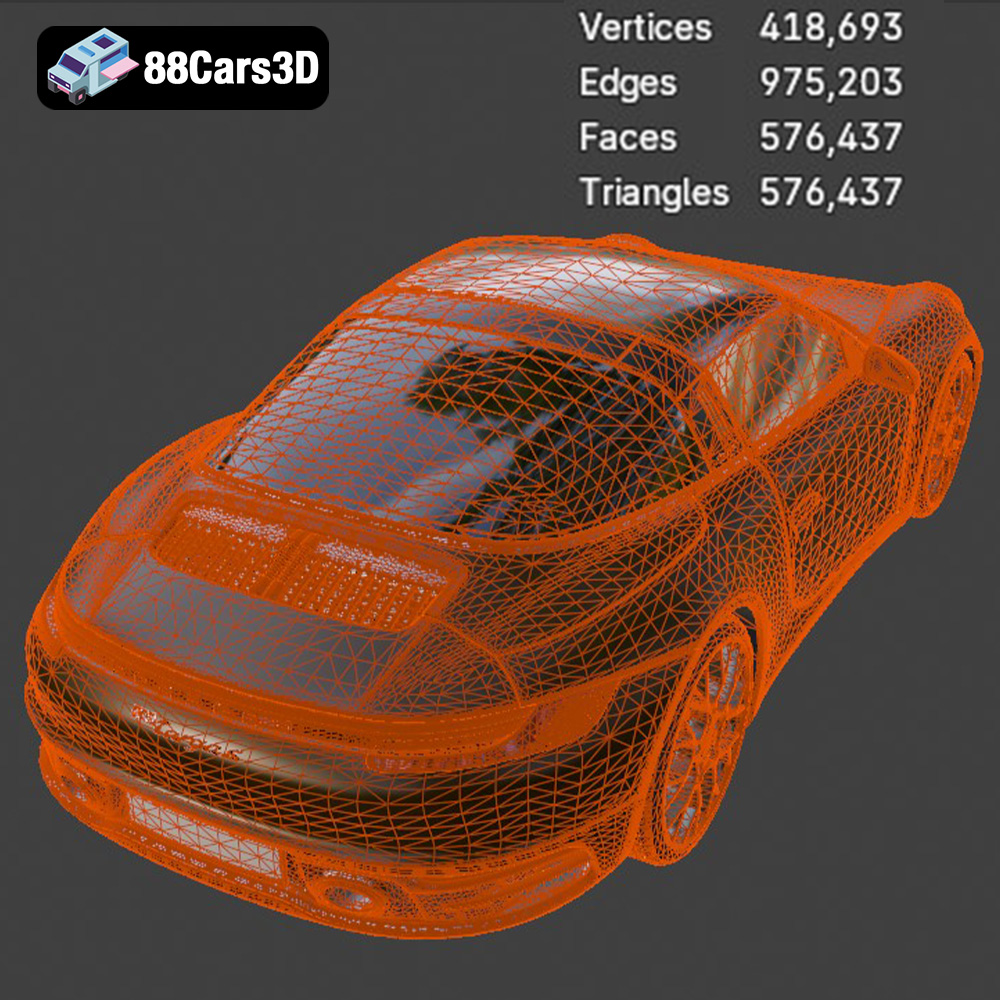
Beyond visual appeal, the technical underpinnings are what make a 3D model truly professional. Exceptional topology ensures smooth deformations during animation and clean reflections under various lighting conditions. Real-world scale accuracy is non-negotiable for architectural visualization and seamless integration into existing scenes. The Porsche 911 Targa 3D model, for instance, is crafted with a game-ready optimization of approximately 250,000 triangles. This strikes an ideal balance, providing high-end visual realism without overburdening real-time engines like Unreal or Unity. Furthermore, a proper pivot setup for steering, wheel rotation, and suspension travel is essential for realistic animation and physics, enabling dynamic control and believable vehicle behavior.
The versatility of a well-engineered 3D car model, such as those found at 88cars3d.com, is its greatest asset. These models are not confined to a single purpose but are designed to be adaptable across a spectrum of professional applications, from interactive entertainment to high-fidelity visualization.
For game developers, the Porsche 911 Targa 3D Model is an ideal asset. Its optimized polycount of ~250,000 triangles is perfect for real-time engines like Unreal Engine and Unity, allowing for smooth framerates even in complex open-world racing titles or simulators. The “game-ready” designation means the model comes with clean topology, proper UV mapping, and often pre-configured materials, significantly reducing development time. The separated components (wheels, doors, hood) are crucial for implementing physics-based damage, interactive elements, or advanced vehicle control systems. Developers can focus on gameplay mechanics, knowing the visual asset is already robust and optimized for performance without sacrificing the stunning visual realism players expect.
The burgeoning fields of Augmented Reality (AR) and Virtual Reality (VR) demand highly optimized yet visually rich 3D assets. Imagine a virtual showroom where customers can explore the Porsche 911 Targa in full 3D, changing colors, inspecting the interior, or even “sitting” inside the cockpit using a VR headset. Models like this Targa, optimized for efficient loading (especially with .glb format), are perfect for such immersive experiences. They power interactive AR configurators on mobile devices, allowing users to place a virtual car in their driveway or office, offering a truly engaging pre-purchase experience for luxury vehicles.
For advertising, architectural visualization, or product design showcases, photorealistic rendering is king. Artists using software like 3ds Max or Blender can leverage the detailed geometry and PBR (Physically Based Rendering) materials of the Porsche 911 Targa 3D Model to create breathtaking static images and animations. The flawless reflections, meticulously modeled surface details, and accurate proportions ensure that the vehicle looks authentic under any studio lighting setup or integrated into complex architectural scenes. The editability provided by formats like .max or .blend allows for fine-tuning materials, adjusting lighting rigs, and animating intricate sequences for brand campaigns, cinematic renders, or high-impact lifestyle scenes.
The secret to a successful 3D model lies in its meticulous optimization. This process ensures that the asset performs efficiently across various platforms while maintaining its visual integrity. It’s a craft that balances artistic vision with technical constraints.
A high polycount typically correlates with greater detail, but it can cripple real-time applications. The ~250,000 triangle count of the Porsche 911 Targa 3D Model represents a strategic balance. This figure is low enough for smooth performance in modern game engines, allowing multiple vehicles or complex environments without excessive strain. Yet, it’s high enough to capture the complex curves, sharp edges, and intricate components of the Porsche, ensuring that close-up shots and high-resolution renders still look incredibly detailed. Achieving this balance requires expert modeling techniques, including strategic use of subdivision surfaces and normal mapping to fake higher detail where needed.
Flawless reflections and realistic material surfaces are not just about high-resolution textures; they stem from proper UV mapping and a well-executed PBR (Physically Based Rendering) workflow. UV mapping is the process of unwrapping the 3D model’s surface onto a 2D plane, allowing textures to be accurately applied without stretching or distortion. For vehicles, this is critical for applying paint finishes, tire treads, and interior fabrics seamlessly. PBR materials, comprising maps like Albedo (color), Normal (surface detail), Roughness (specularity), Metallic (reflectivity), and Ambient Occlusion, are essential for achieving photorealism. These maps interact with light in a physically accurate manner, ensuring the Porsche 911 Targa looks realistic under any lighting condition, from a sunny racetrack to a dimly lit garage.
For any interactive or animated application, correctly set pivot points are non-negotiable. The Porsche 911 Targa 3D Model features a proper pivot setup for crucial elements like steering, wheel rotation, and suspension travel. This means that when an animator or game developer needs to make the wheels spin, the steering turn, or the suspension react to bumps, these actions can be implemented smoothly and realistically without needing to manually adjust origins. For more complex animations, basic rigging might also be included, allowing for easy manipulation of doors, hood, or convertible tops, enhancing the model’s dynamic capabilities.
Beyond digital screens, high-quality 3D models offer a tangible pathway to creation through 3D printing. This technology allows enthusiasts and professionals alike to hold a physical manifestation of their favorite virtual vehicles. The Porsche 911 Targa 3D Model, with its included .stl format, opens up this exciting avenue.
Converting a game-ready 3D model into a printable object requires specific considerations. The .stl format simplifies the geometry into a series of triangles, which 3D printers understand. However, the model must be “manifold” – meaning it has no holes, self-intersecting geometry, or inverted normals – to ensure a solid, printable shell. Software like Blender or Meshmixer can be used to perform checks and repairs. Scaling is also critical; the recommended scales of 1:12, 1:18, or 1:24 for the Porsche 911 Targa model provide a good balance between detail retention and manageable print size for display-scale hobbyists.
To achieve the finest details of the Porsche 911 Targa, such as its exhaust system, mirrors, or intricate interior, resin printing (SLA/DLP) is highly recommended over filament-based (FDM) printing. Resin printers can achieve significantly finer layer heights (0.04–0.12 mm), capturing delicate features more accurately. Proper print orientation (e.g., printing the frame angled for structural integrity, wheels separately) and strategically placed supports are essential to prevent warping and ensure overhangs are printed correctly. After printing, post-processing steps like sanding, applying primer, and painting with authentic factory colors and metallic finishes will elevate the printed model to a truly collectible piece, mimicking the real car’s luster.
For hobbyists, 3D printing the Porsche 911 Targa offers immense satisfaction in creating a bespoke model. For professionals, it’s invaluable for rapid prototyping, concept validation, or creating physical marketing props. Imagine showcasing a physical model of a custom-designed vehicle alongside its digital counterpart in a presentation. The tactile experience adds another dimension to visualization, making the digital design tangible and impressive. 88cars3d.com provides the foundation for both digital and physical artistry.
The true power of a versatile 3D asset lies in its capacity for customization. A premium 3D car model is not just a static object but a dynamic canvas for creative expression, allowing artists and developers to tailor it precisely to their project’s needs.
The Porsche 911 Targa 3D Model offers extensive customization options, allowing users to dramatically alter its appearance. Changing body colors, from classic factory finishes to custom matte, gloss, or metallic looks, is straightforward thanks to well-organized materials. Tire textures can be swapped between street variants for sleek urban scenes or off-road options for adventurous environments. Material finishes across the entire vehicle can be adjusted to match different lighting conditions or stylistic choices. This adaptability makes the model suitable for a vast array of scenarios, from a pristine studio render to a gritty, high-octane game scene.
With its separate wheels, doors, hood, and steering components, the Porsche 911 Targa is built for animation. Artists can create realistic driving sequences, opening and closing doors for interactive experiences, or showcasing the engine block for technical demonstrations. The proper pivot setup streamlines these animations, allowing for dynamic camera shots, engaging cinematic cutscenes, or responsive vehicle controls in a game. This level of granular control empowers creators to tell compelling visual stories with the vehicle as the star.
The journey with high-quality 3D car models doesn’t have to end with just one. Platforms like 88cars3d.com specialize in providing a wide selection of meticulously crafted vehicles. Whether you’re building an entire virtual car collection, populating a game world with diverse automobiles, or continuously updating your visualization library, a reliable source for pre-optimized, professional-grade 3D car models is invaluable. The Porsche 911 Targa 3D Model is just one example of the excellence available, ready to integrate into any serious digital production pipeline.
The demand for high-fidelity 3D car models in today’s digital landscape underscores their critical role in game development, AR/VR experiences, and professional visualization. Assets like the Porsche 911 Targa 3D Model exemplify the pinnacle of technical craftsmanship, offering a harmonious blend of stunning visual realism and robust optimization. Its diverse file formats, from game-ready .fbx and .unreal to editable .blend and .max, ensure maximum compatibility across all major software and engines, while the .stl option even bridges the gap to physical creation through 3D printing.
By understanding the technical specifications, file format nuances, and potential applications, artists and developers can unlock unparalleled creative potential. Whether you’re designing the next big racing title, crafting an immersive virtual showroom, or producing photorealistic automotive renders, investing in a high-quality 3D car model is an investment in efficiency, quality, and audience engagement. Explore the possibilities and elevate your projects with premium 3D models available at 88cars3d.com.
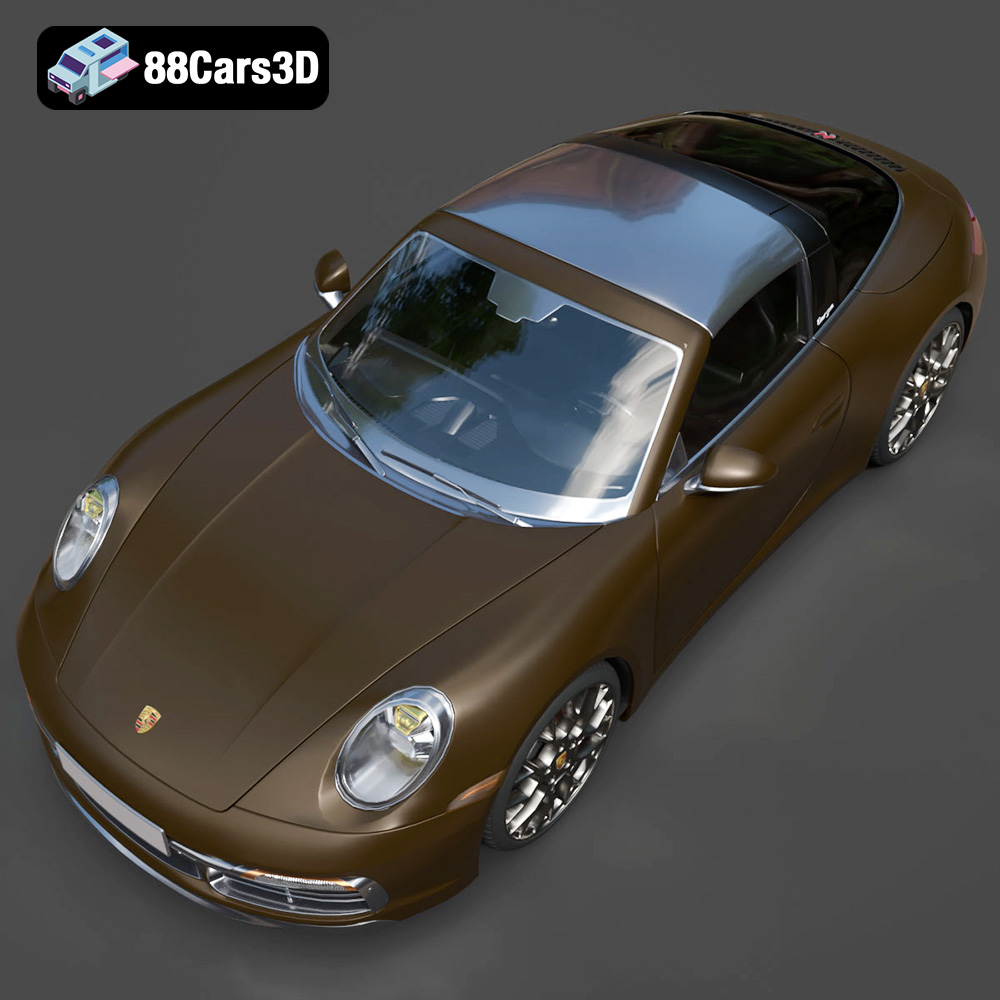
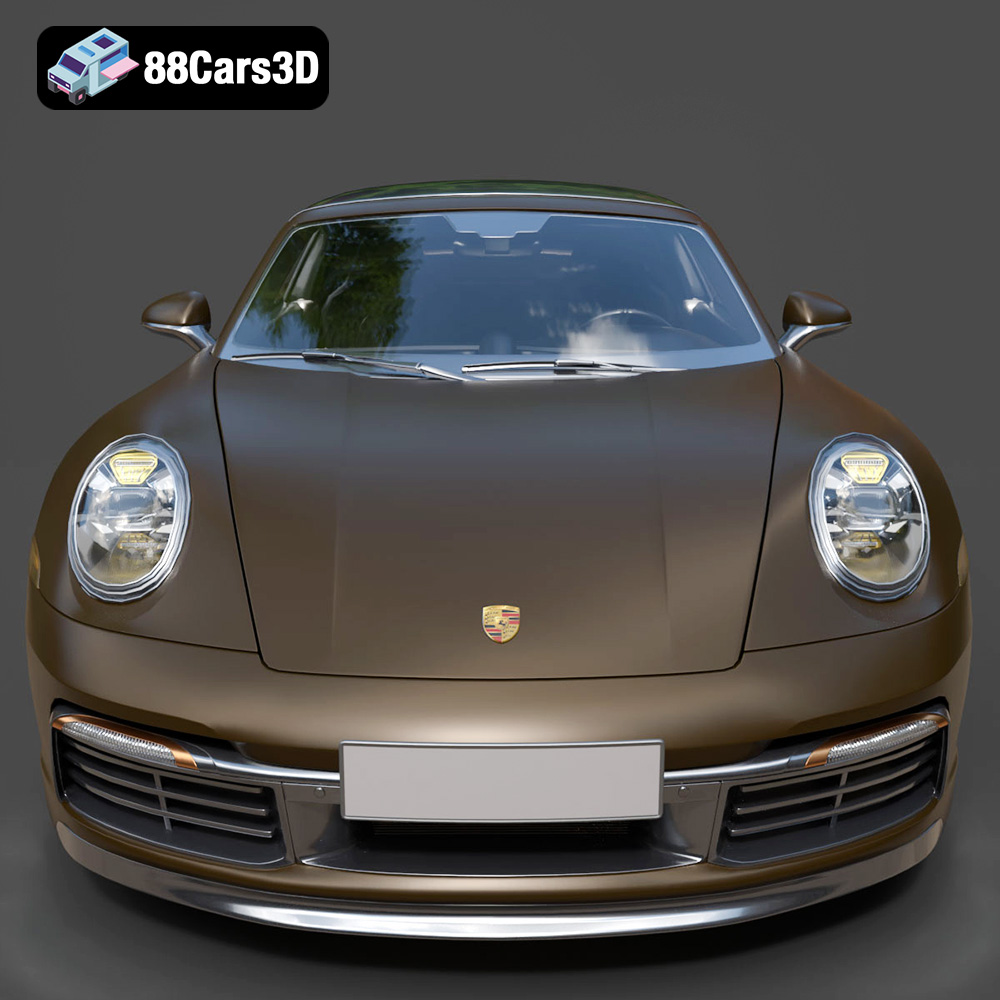
The Porsche 911 Targa is a legendary sports car that perfectly bridges the gap between a classic coupe and a full convertible. Renowned for its iconic Targa roof system, distinctive rear-engine layout, and timeless aerodynamic silhouette, this vehicle represents the pinnacle of German engineering. The 3D model captures its signature round headlights, wide rear fenders, sleek glass dome, and aggressive exhaust system with impeccable precision. This Porsche 911 Targa 3D model is crafted with exceptional topology and a highly optimized triangle count, ensuring it is fully game-ready without sacrificing visual fidelity. The asset boasts flawless reflections and meticulously modeled surface details, making it an outstanding choice for professional 3D production. It is heavily optimized for seamless integration into game engines like Unreal Engine and Unity, as well as high-end CGI animations, VR showrooms, and interactive web experiences. Perfect for open-world racing games, luxury lifestyle visualizations, interactive AR configurators, and architectural renders.
$19.99
.blend
.fbx
.glb
.max
.obj
.ply
.porsche
.rendering
.sports car
.stl
.unreal
car-3d-model
game asset
game-ready
low-poly
luxury car
optimized
porsche-911-targa
VR/AR