Get 20% OFF All Premium 3D & STL Models!

In the fast-evolving landscape of digital content creation, the demand for hyper-realistic and functionally versatile 3D models has never been higher. From exhilarating racing simulators to immersive architectural visualizations and cutting-edge AR/VR experiences, high-fidelity assets are the bedrock of compelling visual narratives. Few automotive brands embody innovation and design excellence quite like Porsche, and their electric marvel, the Taycan 4S Cross Turismo 2021, is a testament to both performance and aesthetic appeal. Capturing this blend of form and function in a digital medium requires meticulous attention to detail, optimized topology, and a deep understanding of professional workflows. This is precisely where a premium 3D car model, such as the Porsche Taycan 4S Cross Turismo 2021 available on 88cars3d.com, becomes an indispensable tool for artists, developers, and designers alike.
This article delves into the technical intricacies and creative potential unlocked by such a sophisticated asset. We’ll explore the crucial role of diverse file formats, examine how this exceptional 3D model integrates into industry-standard software like 3ds Max, Blender, and Unreal Engine, and highlight its versatility across game development, visualization, and even 3D printing. Join us as we navigate the digital highways of automotive design and discover how a meticulously crafted 3D model can elevate your projects to unprecedented levels of realism and immersion.
The strength of any professional 3D car model lies not just in its visual fidelity but also in its adaptability across various software environments and pipelines. This adaptability is primarily facilitated by the range of file formats it supports. Each format offers distinct advantages, catering to specific use cases, software compatibilities, and data requirements. Understanding these nuances is critical for artists and developers to streamline their workflows and ensure their assets perform optimally. The Porsche Taycan 4S Cross Turismo 2021 3D model from 88cars3d.com is provided in a comprehensive suite of formats, empowering users with unparalleled flexibility.
The `.blend` format is native to Blender, the increasingly popular open-source 3D creation suite. When you receive a model in `.blend` format, you’re getting a complete Blender scene file. This means the model comes with all its associated data: meshes, materials, textures, lighting setups, cameras, animation data, and even modifiers. For Blender users, this is the most convenient format, offering full editability. You can dive deep into the model’s structure, adjust its topology, modify materials through shader nodes, or even re-rig components for custom animations without any data loss or conversion artifacts. It’s perfect for artists who prefer to work within the Blender ecosystem for advanced customization and rendering with Cycles or Eevee.
`.fbx` (Filmbox) is a proprietary file format owned by Autodesk and has become the de facto standard for 3D data interchange between various software packages, particularly in game development and animation. Its robust support for complex scene data, including meshes, materials (often PBR-ready), textures, cameras, lights, skeletal animations, and blend shapes, makes it incredibly versatile. For game engines like Unreal Engine and Unity, `.fbx` is the preferred import format due to its ability to retain hierarchical structures and animation data efficiently. When working with the Taycan model, an `.fbx` file ensures that all crucial elements like separate wheels and suspension components, along with their pivot points, are preserved upon import into your chosen engine or DCC application.
The `.obj` (Wavefront OBJ) format is one of the oldest and most universally supported 3D file formats. It’s primarily used for exchanging raw geometric data – vertices, faces, normals, and UV coordinates. While it’s highly compatible across almost all 3D software, it has limitations: it does not support animation, rigging, or advanced material properties directly (though it can reference an accompanying `.mtl` file for basic material definitions). For static meshes or when you need a clean geometric base without any embedded scene data, `.obj` is an excellent choice. It’s a reliable fallback for cross-software compatibility and a good starting point for detailed sculpting or retopology work.
`.glb` (GL Transmission Format Binary) is a modern, compact, and efficient format designed for fast loading and rendering in web browsers, augmented reality (AR), and virtual reality (VR) applications. It’s the binary version of `.gltf` and bundles all necessary assets – geometry, textures, animations, and PBR materials – into a single file. This self-contained nature makes `.glb` ideal for interactive web experiences, mobile AR apps where file size and loading speed are paramount, and immersive VR showrooms. The Taycan model in `.glb` ensures that its striking visuals translate seamlessly into real-time, interactive environments with minimal overhead.
`.stl` (Stereolithography) is the most common file format for 3D printing. It represents a 3D model as a series of connected triangles, defining only the surface geometry of an object without color, texture, or other CAD data. For the Porsche Taycan 4S Cross Turismo 2021, an `.stl` export means the model is ready to be sliced and sent to a 3D printer. Achieving a high-quality print requires a “watertight” mesh, meaning there are no holes or gaps in the surface, which is a key characteristic of well-prepared `.stl` files. The inclusion of this format allows hobbyists and professionals to bring the digital model into the physical world.
The `.ply` (Polygon File Format) is another format that describes a 3D object as a collection of polygons, but it can also store additional data such as color, transparency, and range data (from 3D scanners) per vertex or per face. While less common for general 3D asset exchange than FBX or OBJ, `.ply` is particularly useful in scientific, engineering, and CAD applications where precise mesh data, often with per-vertex attributes, is crucial. It’s often used for scanned data or models that require detailed analysis of their surface properties.
The `.unreal` format, in this context, refers to an asset that is specifically packaged or configured for direct use within Unreal Engine. While Unreal primarily imports `.fbx` for models, a `.unreal` package might imply an already imported, textured, material-set-up, and potentially blueprint-integrated asset or even an Unreal project file snippet. This signifies that the model has undergone the necessary optimizations, material creation (often using Material Instances for easy customization), and potential LOD (Level of Detail) generation, making it truly “game-ready” for immediate deployment in an Unreal project. This dramatically reduces setup time for developers focusing on real-time rendering.
Similar to `.blend` for Blender, `.max` is the native project file format for Autodesk 3ds Max, a powerful 3D modeling, animation, and rendering software widely used in architectural visualization, game development, and film. A `.max` file contains the complete scene, including geometry, modifiers, materials (V-Ray, Corona, Physical), lights, cameras, animation, and rigging information. For 3ds Max users, this format offers the highest level of detail and control, allowing direct access to the original scene setup, making complex customizations and high-end automotive rendering effortless.
The availability of the Porsche Taycan 4S Cross Turismo 2021 model in such a diverse array of formats ensures that regardless of your preferred software or project requirements, you have a solid foundation to build upon, significantly enhancing efficiency and creative freedom.
Integrating a high-quality 3D car model like the Porsche Taycan into a professional project involves a series of technical steps, from importing and material setup to lighting and animation. Whether you’re working in a traditional DCC (Digital Content Creation) application or a real-time game engine, a well-prepared asset makes all the difference.
For artists specializing in high-fidelity automotive rendering, 3ds Max, often paired with V-Ray or Corona Renderer, is a powerhouse. The inclusion of a `.max` file for the Taycan 4S Cross Turismo 2021 is invaluable here. Upon opening the file, you’ll find the model with its meticulously crafted topology and potentially pre-configured materials, ready for adjustment.
The first step often involves verifying and adjusting the PBR (Physically Based Rendering) materials. For car paint, this means fine-tuning metallic and roughness values to perfectly mimic the Taycan’s factory finishes or custom colors. Interior materials like leather, carbon fiber, and digital screens require precise texture maps and shader settings to convey realism. Lighting is paramount: often, studio lighting setups using HDRI (High Dynamic Range Image) environment maps combined with targeted area lights are employed to highlight the car’s curves and reflections. For exterior shots, a realistic environment HDRI provides natural reflections and ambient light, while a sun/sky system simulates dynamic outdoor conditions. The separate components like wheels and suspension allow for detailed shadow casting and realistic suspension compression in animations.
Blender offers an equally robust environment for working with the Taycan model, especially with the provided `.blend` file. Its Cycles and Eevee render engines are capable of producing stunning visuals.
After opening the `.blend` file, artists can leverage Blender’s powerful modeling and sculpting tools for any micro-adjustments or custom additions. The model’s clean topology ensures smooth subdivision if further detail is needed. Material setup in Blender’s shader editor allows for node-based complexity, perfect for creating nuanced car paint with clear coats, metallic flakes, and intricate interior fabrics. For animation, the properly set pivot points for the wheels, steering, and suspension are crucial. You can easily rig the car using constraints for realistic turning, braking, and suspension travel, making it an excellent base for short films, commercials, or interactive presentations. The ability to change body colors and material finishes is straightforward through material adjustments.
For game developers and AR/VR creators, Unreal Engine is the go-to platform. The optimized nature and `.fbx` (or `.unreal`) format of the Taycan model are perfect for this environment.
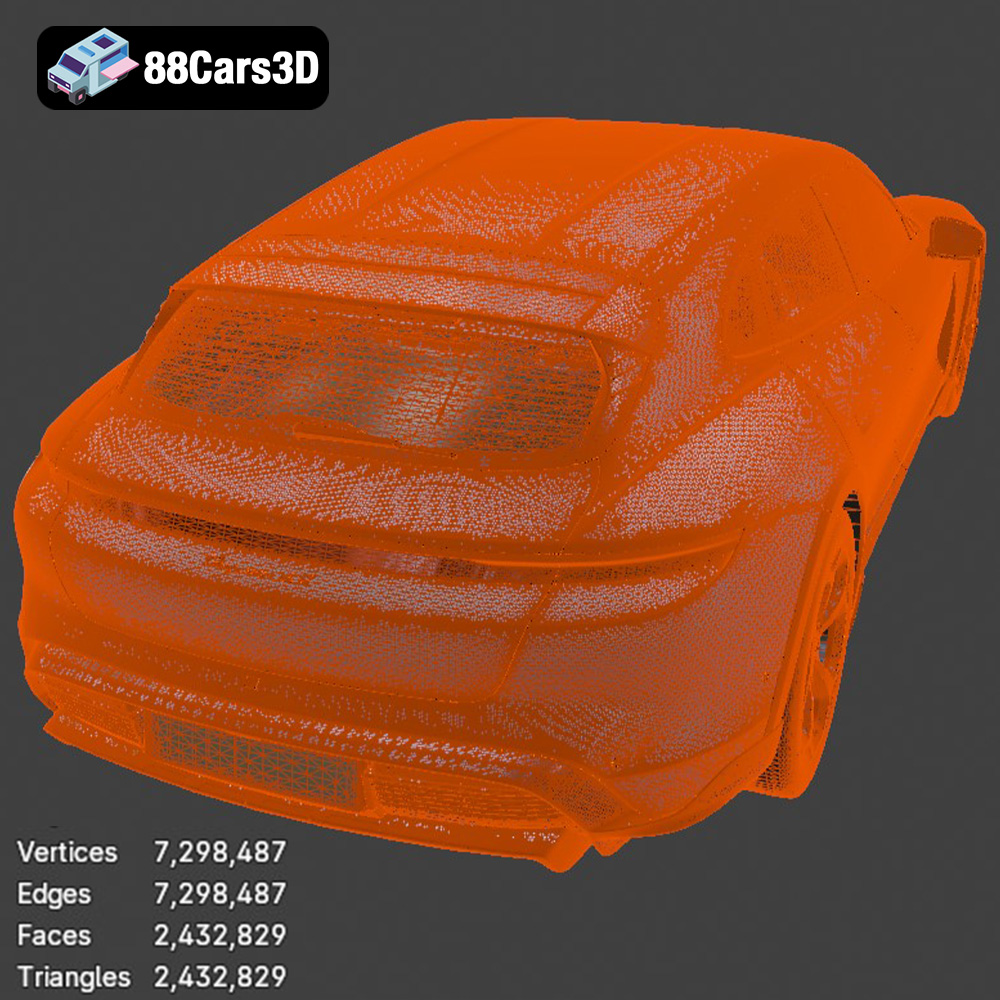
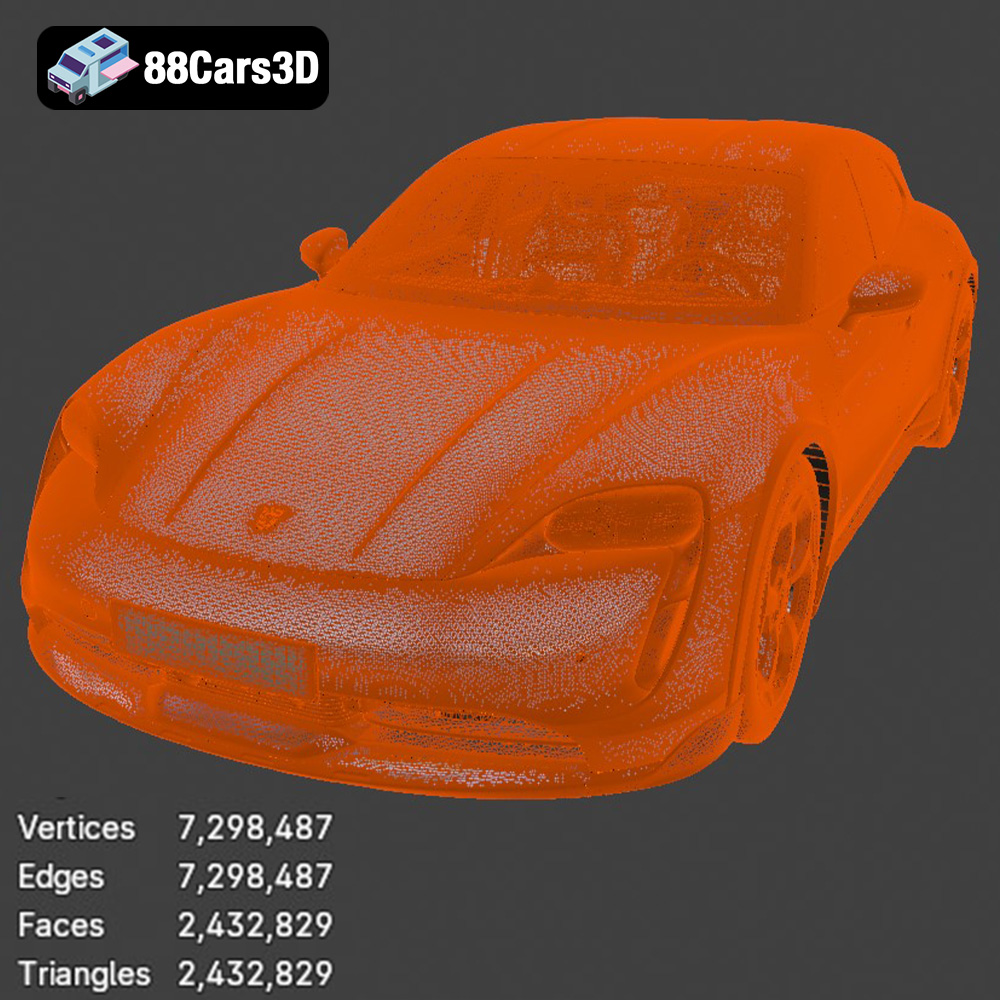
Importing the `.fbx` file into Unreal Engine brings in the geometry, skeletal structure (if applicable), and initial material slots. The next step involves creating robust PBR materials using Unreal’s Material Editor. This typically involves importing texture maps (Albedo/Base Color, Normal, Roughness, Metallic, Ambient Occlusion) and setting up Material Instances. Material Instances allow for quick customization of colors, finishes, and texture variations directly within the editor without recompiling shaders, which is ideal for in-game customization or configurators. The model’s 2,432,829 triangles strike an excellent balance, providing high visual fidelity for close-ups while being manageable for real-time performance. For truly AAA titles, Level of Detail (LOD) generation would further optimize performance, allowing the engine to swap to simpler versions of the model when it’s further from the camera. The pre-calibrated suspension details and separate components simplify the process of setting up vehicle physics and animations, making the Porsche Taycan 4S Cross Turismo 2021 an ideal game asset.
Creating a 3D model that looks phenomenal in a static render is one challenge, but making it perform flawlessly in a real-time game engine is another entirely. The Porsche Taycan 4S Cross Turismo 2021 model demonstrates a masterful balance between visual complexity and performance optimization, making it truly “game-ready.”
The model’s stated 2,432,829 triangles might seem high for some game-ready assets, but for a high-detail vehicle in modern AAA games, it’s carefully considered. This polycount allows for the intricate surface transitions, sharp edges, and detailed interior components of the Taycan to be accurately represented without relying heavily on normal maps to fake geometry. In today’s engines, with advanced culling, LOD systems, and powerful GPUs, such a polycount is manageable, especially for hero vehicles or close-up shots where visual fidelity is paramount. For racing titles or open-world games where the vehicle is constantly visible and interactive, this level of detail immerses the player. The key is “carefully structured,” indicating that the topology is clean and efficient, preventing performance bottlenecks.
While not explicitly detailed in the polycount, the “meticulously modeled” and “exceptional topology” naturally imply proper UV unwrapping. UV maps are crucial for applying textures accurately to the 3D surface. A well-laid-out UV map minimizes stretching, maximizes texture resolution, and allows for efficient texture baking (e.g., ambient occlusion, light maps, normal maps from higher-res versions). For game assets, clean UVs are essential for PBR workflows, ensuring that metallic, roughness, and normal maps align perfectly to create realistic surface properties. The ability to modify tire textures and material finishes suggests a modular and well-organized texture set, enabling customization.
A truly game-ready car model extends beyond static visuals to interactive functionality. The Porsche Taycan model’s separate wheels, suspension, and steering components, along with proper pivot setup, are vital for dynamic gameplay. This allows developers to:
This level of modularity and pre-preparation significantly reduces development time and allows for robust physics and animation systems to be built around the asset, crucial for racing titles and immersive simulators.
The utility of a high-fidelity 3D car model like the Porsche Taycan 4S Cross Turismo 2021 extends far beyond the realm of interactive entertainment. Its detailed craftsmanship makes it an invaluable asset for various professional visualization and rendering applications, from marketing campaigns to architectural presentations and immersive AR/VR experiences.
The demand for stunning automotive visuals in marketing and advertising is constant. Manufacturers, design studios, and advertising agencies frequently utilize 3D models to create captivating imagery before a physical vehicle even exists, or to complement traditional photography. The Taycan model’s “unmatched visual fidelity for high-end rendering” means it can be placed in any environment – a luxurious studio, a dynamic cityscape, or a serene natural landscape – and rendered with photorealistic precision. This allows for:
The model’s ability to react beautifully to diverse lighting scenarios is key to achieving these compelling visuals.
Augmented Reality (AR) and Virtual Reality (VR) are transforming how consumers interact with products, especially high-value items like automobiles. A detailed 3D car model is the foundation for creating immersive virtual showrooms where potential buyers can explore the Taycan 4S Cross Turismo from any angle, open doors, examine the interior, and even “drive” it in a simulated environment. The optimized `.glb` format is particularly suited for these applications, ensuring smooth performance on various devices. Imagine a customer using a mobile AR app to place the Taycan in their driveway, scaled accurately, and then walking around it to appreciate its design and features. This level of interaction enhances engagement and drives purchasing decisions.
While primarily an automotive asset, a premium 3D car model is also a staple in architectural visualization. Placing a realistic vehicle in an architectural render adds a sense of scale, life, and aspirational context to a building or urban design project. The Porsche Taycan, with its distinctive shooting brake silhouette and electric vehicle appeal, can enhance the sophistication of a modern architectural scene. Its high detail ensures that even in wide shots, it holds up, and in closer views, it contributes meaningfully to the overall realism of the environment. Integrating such a polished asset elevates the entire presentation, making the architectural vision more tangible and relatable.
The journey of a 3D model doesn’t always end on a screen. For enthusiasts, collectors, and designers, the ability to physically hold a miniature replica of a vehicle can be incredibly rewarding. The Porsche Taycan 4S Cross Turismo 2021 3D model offers this exciting possibility, thanks to its inclusion of the `.stl` format and detailed 3D print settings.
3D printing a complex object like a car model requires careful preparation. The `.stl` format represents the model’s geometry as a mesh of triangles, which is then sliced into thin layers by 3D printing software. The quality of the original 3D model, specifically its “watertight” nature and clean topology, is paramount for successful printing. Any gaps or inverted normals in the mesh can lead to errors during slicing.
The provided print settings for the Taycan model are excellent starting points:
After printing, the model often requires post-processing to achieve a professional finish. This can include removing supports, sanding to smooth out layer lines or support marks (especially crucial for FDM prints), and applying primer. For a truly authentic look, artists can meticulously paint the model with automotive-grade paints, matching factory colors, applying metallic finishes, and adding clear coats for a glossy sheen. The ability to customize digitally (e.g., change body colors, modify tire textures) can also inform physical customization choices. This blend of digital precision and physical craftsmanship brings the Porsche Taycan 4S Cross Turismo 2021 to life in a tangible form.
The digital realm offers boundless opportunities for creativity and innovation, particularly in automotive design and visualization. A high-quality 3D car model, such as the Porsche Taycan 4S Cross Turismo 2021 available on 88cars3d.com, serves as a versatile and indispensable asset for professionals across various industries. From its meticulous detail and optimized topology to its compatibility with a wide array of file formats, this model is engineered to integrate seamlessly into diverse workflows.
We’ve explored how its comprehensive file formats cater to specific needs, enabling everything from full editability in Blender and 3ds Max to efficient integration into real-time environments like Unreal Engine, and even preparing it for physical 3D printing. The balance struck between high visual fidelity and game-ready optimization ensures that whether you’re developing a cutting-edge racing game, producing a captivating automotive advertisement, or creating an immersive AR/VR showroom, this model delivers unparalleled performance and aesthetic excellence.
Investing in meticulously crafted 3D car models saves invaluable time and resources, allowing artists and developers to focus on creative execution rather than foundational asset creation. The Porsche Taycan 4S Cross Turismo 2021 model exemplifies the standard of quality and versatility that empowers professionals to push the boundaries of digital realism. For those seeking to elevate their projects with premium 3D assets, exploring the selection at 88cars3d.com is a definitive step toward achieving professional-grade results.
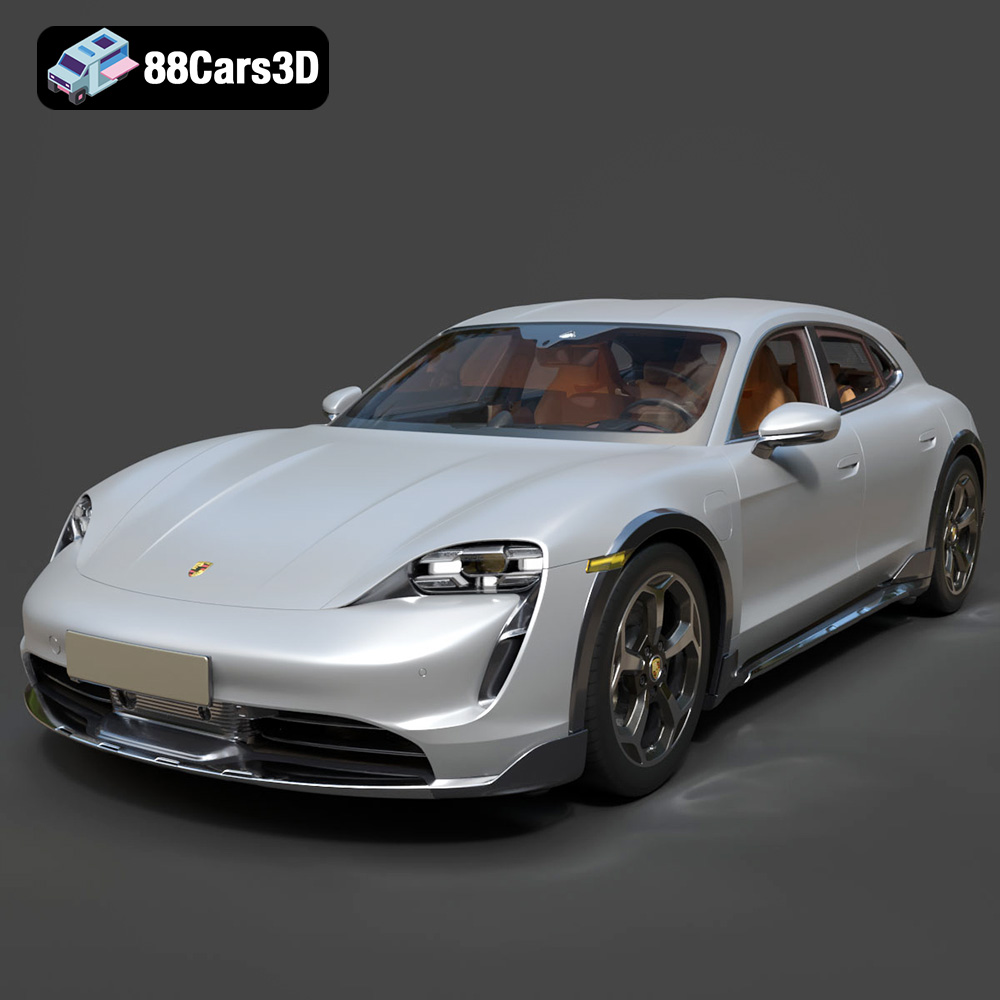
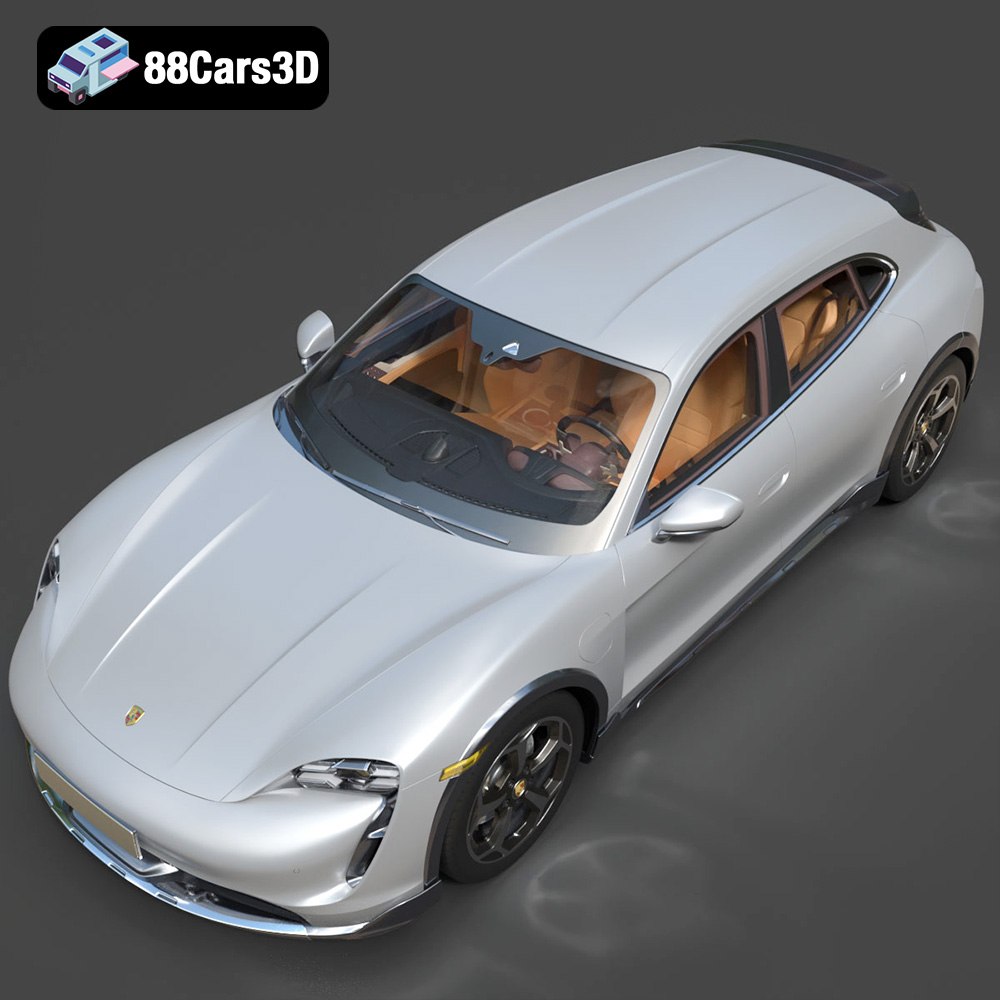
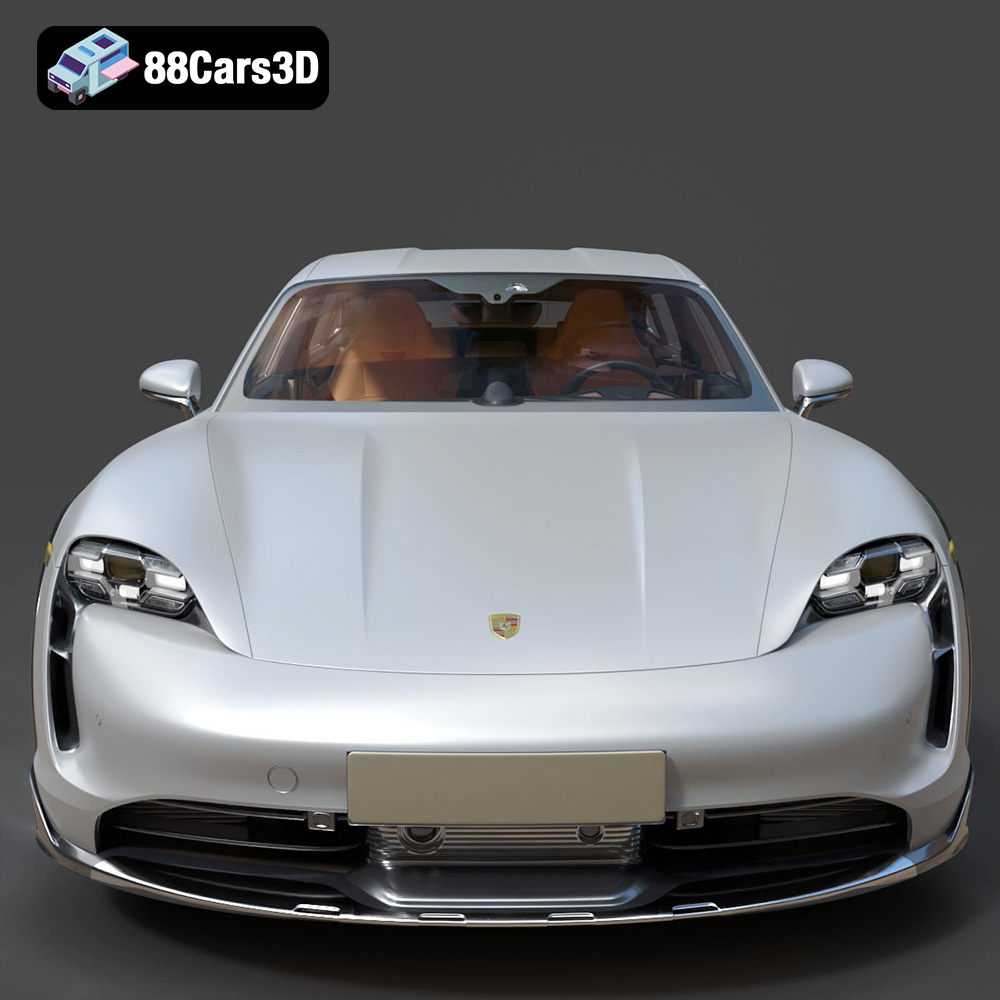
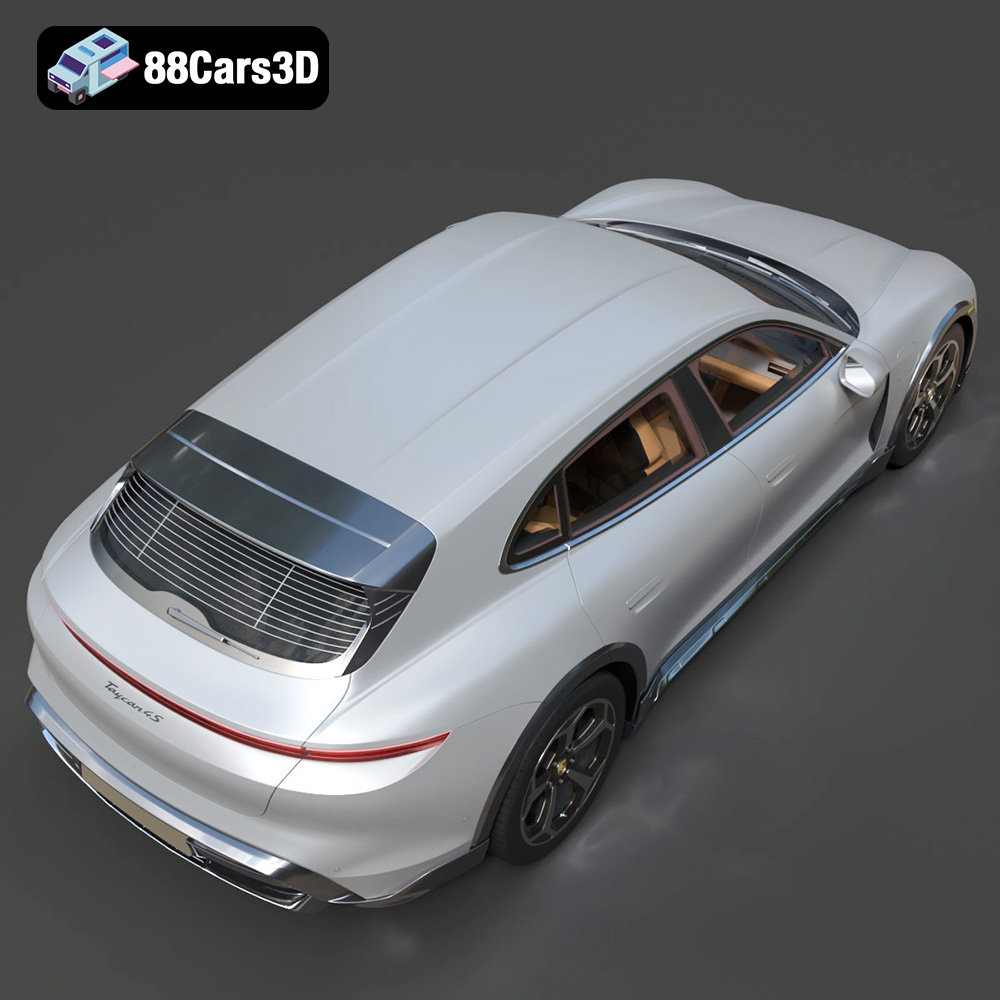
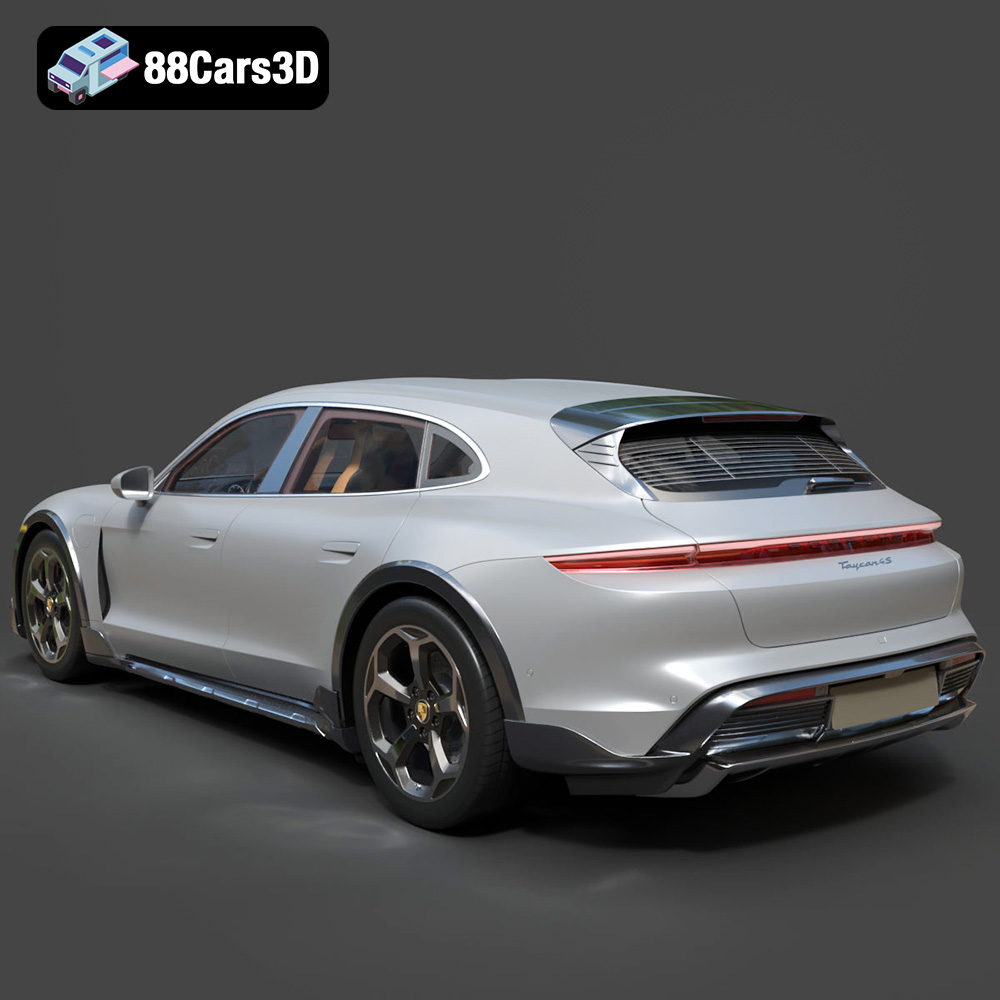
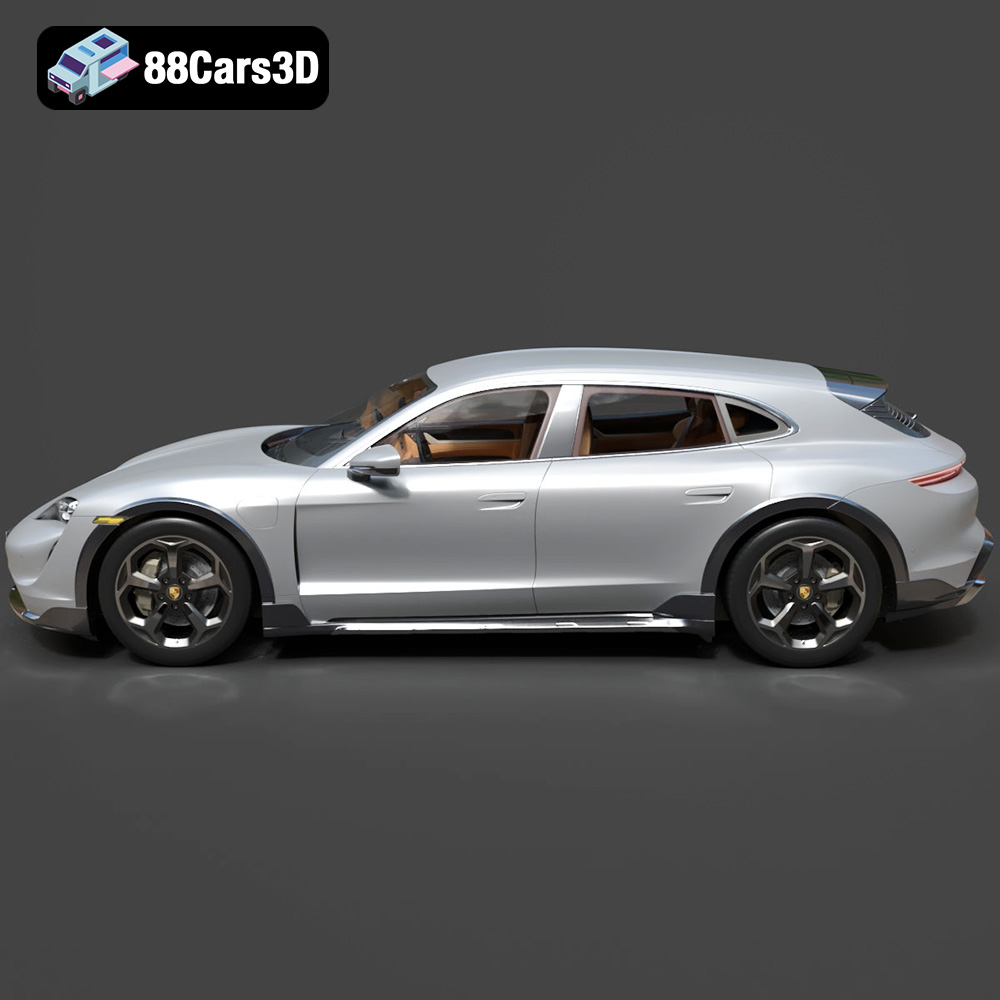
The Porsche Taycan 4S Cross Turismo 2021 represents the perfect synthesis of electric performance and rugged, real-world versatility. As an evolution of Porsche’s groundbreaking EV, this model features a distinctive shooting brake silhouette, offering increased headroom and cargo space alongside increased ground clearance. It is defined by iconic Porsche styling cues, including the signature four-point LED matrix headlights, protective off-road design elements on the wheel arches, and a muscular rear light strip. The absence of traditional exhaust systems is countered by a sleek, aerodynamically optimized rear diffuser and striking aero-style alloy wheels.
This highly detailed 3D model boasts an impressive 2,432,829 triangles, delivering unmatched visual fidelity for high-end rendering while being carefully structured for advanced real-time engines. Meticulously modeled to capture the real-world scale and complex surface transitions of the physical vehicle, it features exceptional topology that reacts beautifully to studio and natural lighting environments. Whether used for game development, AR/VR applications, animation, or commercial visualization, this asset is built to meet professional industry standards.
Perfect for AAA racing titles, high-end automotive configurators, architectural visualizations, and immersive virtual reality showrooms.
.blend, .fbx, .obj, .glb, .stl, .ply, .unreal, .max
Tags:
porsche, taycan-4s-cross-turismo, 2021, electric-car, ev, sports-wagon, crossover, car-3d-model, game-ready, optimized, high-poly, game-asset, rendering, vr-ar, blend, fbx, obj, glb, stl, ply, unreal, max
$37.50
.2021
.blend
.crossover
.ev
.fbx
.glb
.max
.obj
.ply
.porsche
.rendering
.stl
.unreal
car-3d-model
electric-car
game asset
game-ready
high poly
optimized
sports-wagon
taycan-4s-cross-turismo
VR/AR