Get 20% OFF All Premium 3D & STL Models!

In the dynamic world of 3D visualization, game development, and automotive design, the difference between a good project and a truly exceptional one often lies in the quality and fidelity of its assets. A photorealistic vehicle can instantly ground a scene, conveying depth, scale, and an unparalleled sense of reality. Whether you’re crafting an open-world game, designing an architectural walkthrough, or producing a high-end commercial, the need for meticulously detailed and optimized 3D car models is paramount.
Today’s artists and developers demand not just visual accuracy, but also technical versatility. Assets must be game-ready, animation-friendly, and compatible across a myriad of software platforms and rendering engines. This journey into achieving such realism brings us to explore a prime example: the Skoda Octavia Taxi 2008 3D Model. This particular asset embodies the convergence of detailed design, technical optimization, and broad applicability, making it an invaluable addition for professionals seeking to enhance their urban environments and bring authentic European flair to their digital creations. From its iconic silhouette to its carefully modeled interior, this model offers a robust foundation for diverse creative endeavors, ensuring your projects stand out with professional-grade realism.
The choice of file format for a 3D model is far more than a technicality; it’s a strategic decision that dictates compatibility, functionality, and performance across different stages of your project. Professionals rely on specific formats tailored to their workflow, be it real-time game engines, high-fidelity rendering, or even physical fabrication. The Skoda Octavia Taxi 2008 3D Model from 88cars3d.com exemplifies this versatility by offering a comprehensive suite of formats, each serving distinct purposes and optimizing for specific applications.
The .blend format is the native file type for Blender, an increasingly popular open-source 3D creation suite. A .blend file typically contains an entire scene, encompassing not just the mesh geometry but also materials, textures, lighting, cameras, animations, physics simulations, and even custom scripts. For artists working primarily in Blender, this format offers maximum editability and full access to all design parameters of the Skoda Octavia Taxi. It’s ideal for those who need to extensively modify the model, re-rig it, add complex animations, or integrate it into a larger Blender-based project with minimal friction.
.fbx (Filmbox) is arguably the most widely used proprietary 3D file format for exchanging data between various 3D software applications and game engines. Developed by Autodesk, FBX is excellent for transferring models, animations, cameras, and lights while preserving complex data like bone structures, skinning, and blend shapes. It is the go-to format for seamless integration into real-time pipelines like Unreal Engine and Unity, making it perfect for game developers looking to drop the Skoda Octavia Taxi into their virtual worlds with all its animations and material assignments intact. Its robust metadata support ensures that crucial information about the asset is carried across platforms.
The .obj (Wavefront Object) format is a universal standard, prized for its simplicity and broad compatibility. It primarily stores geometric data such as vertices, normals, UV coordinates, and faces. While it can reference external material files (.mtl) for basic color and texture information, it does not support complex shading networks, animations, or rigging. For the Skoda Octavia Taxi, an .obj file is perfect when you need a clean, static mesh for importing into virtually any 3D software for rendering or further modeling, where you intend to apply your own materials and lighting.
.glb (GL Transmission Format, binary version) is a relatively newer format rapidly gaining traction for web-based 3D, augmented reality (AR), and virtual reality (VR) applications. It’s a self-contained asset, embedding all geometry, textures, and PBR (Physically Based Rendering) materials into a single, compact file. This optimization makes the Skoda Octavia Taxi 2008 3D Model in .glb format incredibly efficient for quick loading and rendering in browsers, mobile AR apps, and immersive VR experiences, providing a streamlined workflow for interactive 3D content.
.stl (Stereolithography) is the de facto standard for 3D printing. It represents a 3D model as a series of connected triangles (tessellation) on its surface, defining only the geometry of the object. It does not carry color, texture, or material information. For hobbyists or professionals looking to bring the Skoda Octavia Taxi into the physical realm as a scale model, the .stl format is essential. It provides a clean, printable mesh that can be directly fed into slicing software for additive manufacturing processes.
The .ply (Polygon File Format) is often used for storing 3D scanner data, representing a mesh with vertex colors, normals, and texture coordinates. While less common for general asset exchange, it’s valuable for applications requiring high precision or direct representation of scan data, such as reverse engineering, scientific visualization, or CAD/CAM workflows. For the Skoda Octavia model, it offers an alternative for precise geometric analysis or integration into specialized engineering software.
While not a standalone file extension like the others, an “.unreal” asset typically refers to a model that has been specifically prepared, imported, and configured within an Unreal Engine project. This means the Skoda Octavia Taxi has likely been imported via FBX, its materials have been set up using Unreal’s PBR shader system, collisions have been defined, LODs (Levels of Detail) have been generated, and it’s ready to be dropped into a level. This “engine-ready” state saves developers significant time and effort, ensuring optimal performance and visual fidelity within Unreal Engine.
The .max format is the native file type for Autodesk 3ds Max, a powerful 3D modeling, animation, and rendering software. Similar to .blend, a .max file contains the entire scene, including complex geometries, modifiers, animation keyframes, lighting setups, and advanced V-Ray or Corona Renderer materials. For users deeply embedded in 3ds Max workflows, the .max version of the Skoda Octavia Taxi provides the most flexibility for high-end automotive rendering, architectural visualization, and intricate animation sequences, allowing full access to all aspects of the model’s construction and scene integration.
The Skoda Octavia Taxi 2008 represents more than just a car; it’s a cultural icon across European cities, symbolizing reliability and the everyday urban commute. Translating such a recognizable vehicle into a high-quality 3D asset requires a meticulous approach to both aesthetics and technical specifications. The Skoda Octavia Taxi 2008 3D Model available at 88cars3d.com stands as a testament to this commitment, offering a faithful digital recreation that excels in capturing its real-world counterpart.
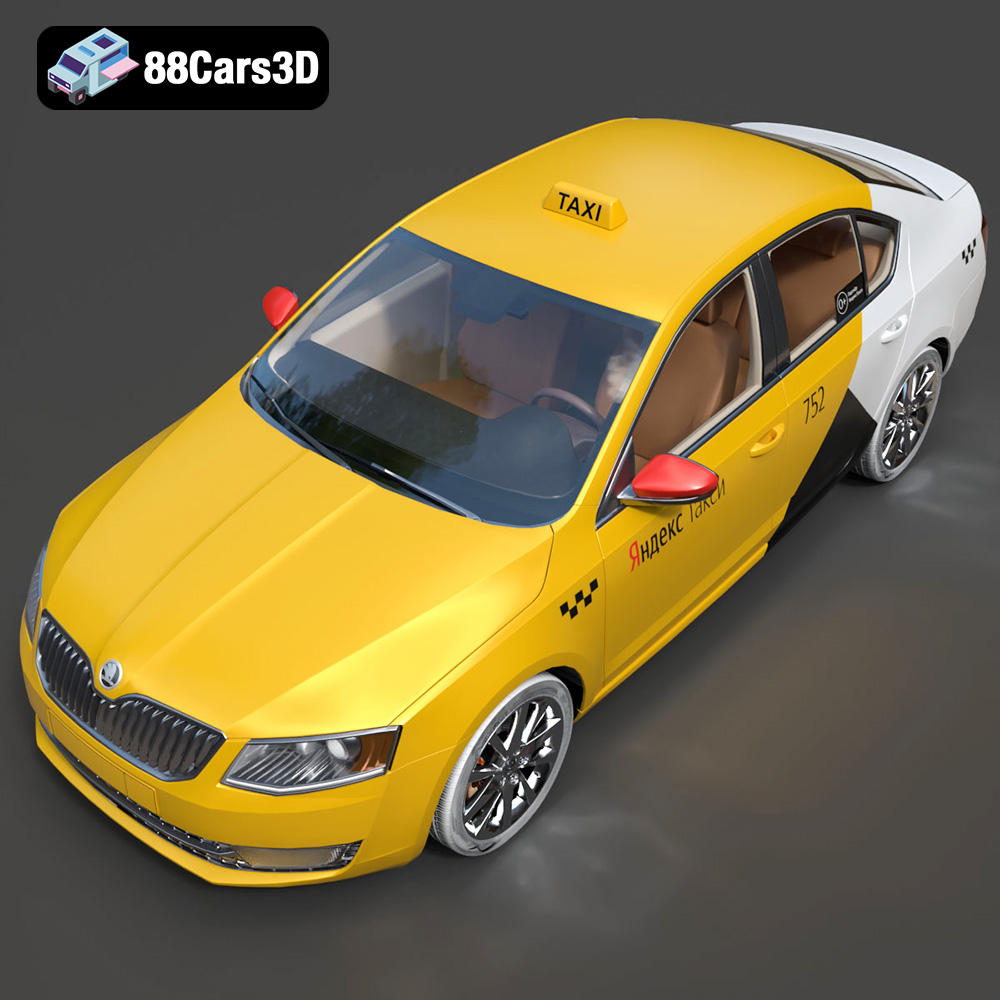
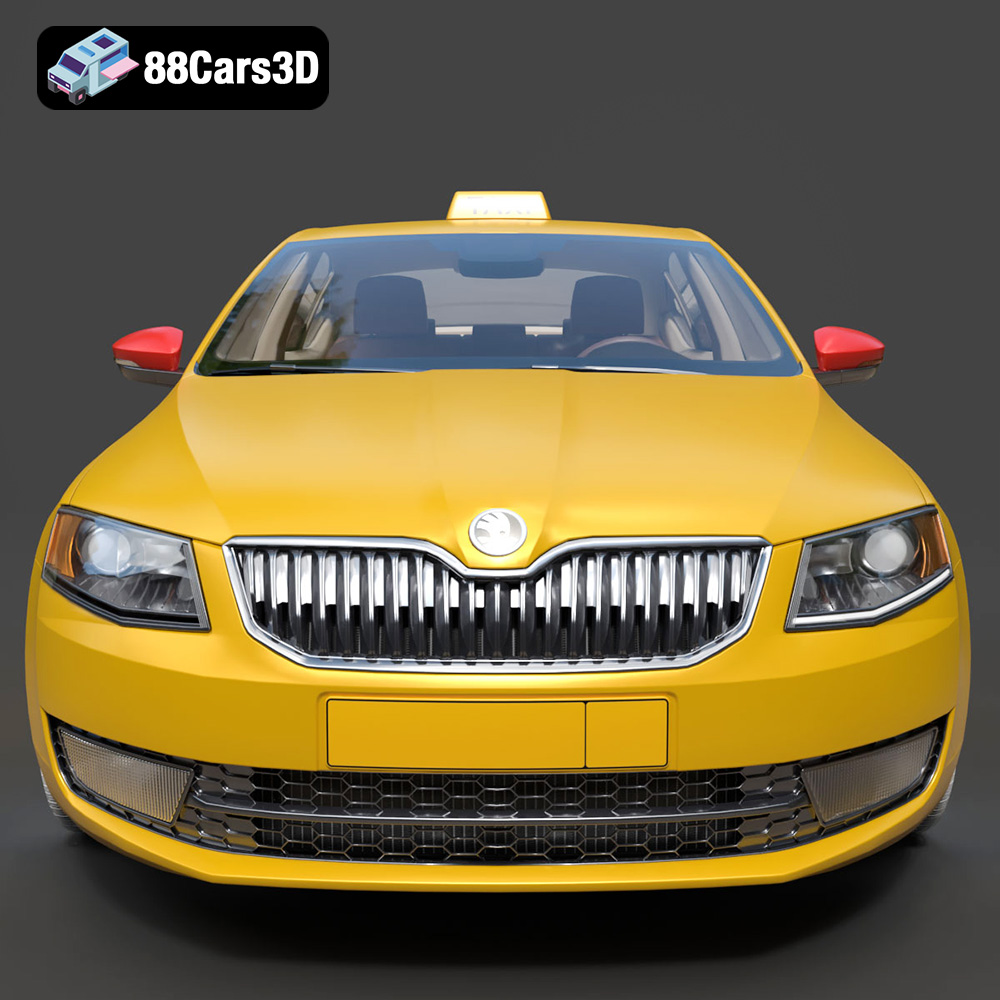
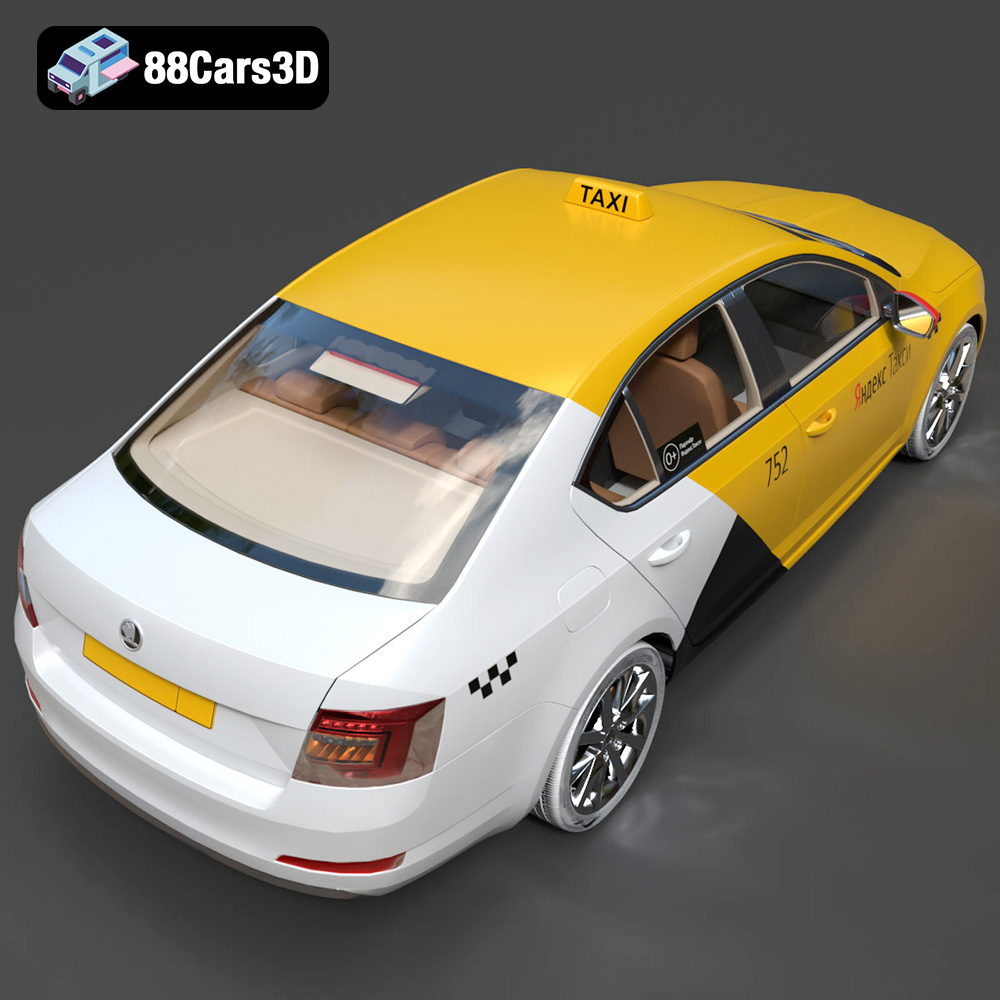
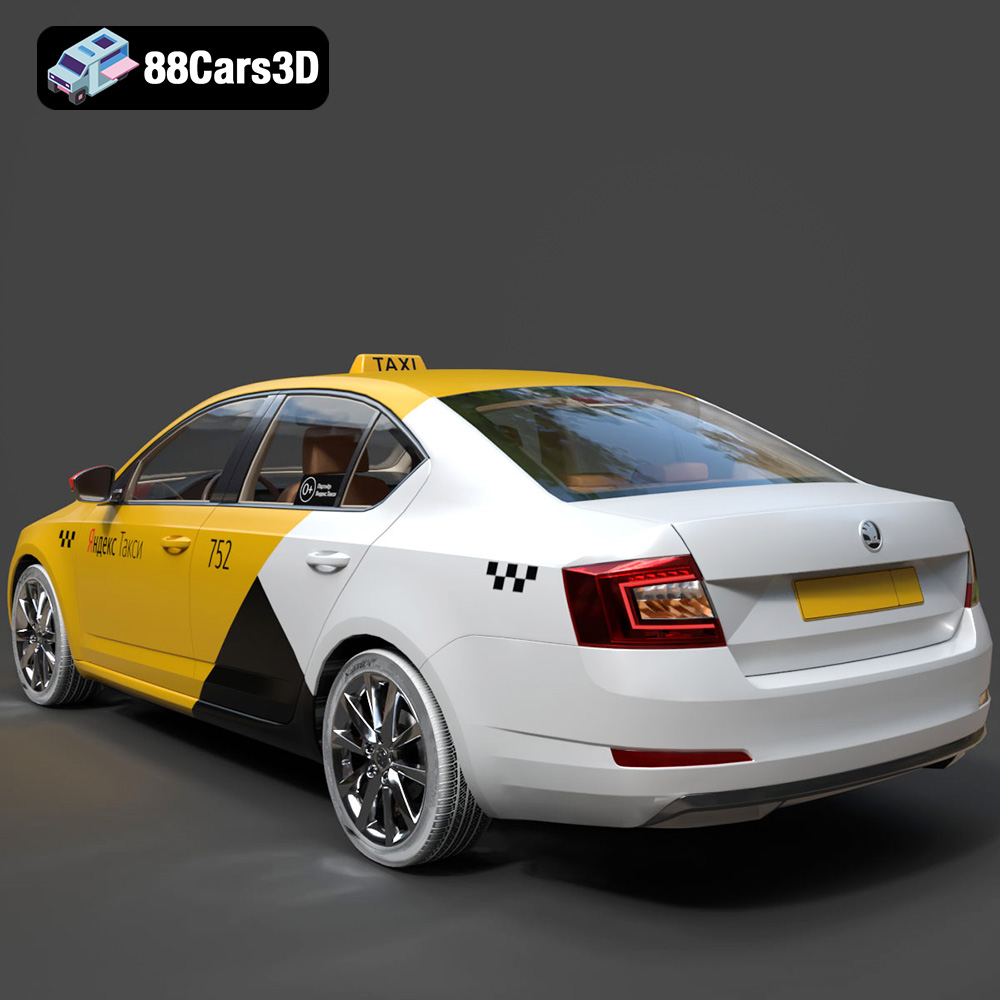
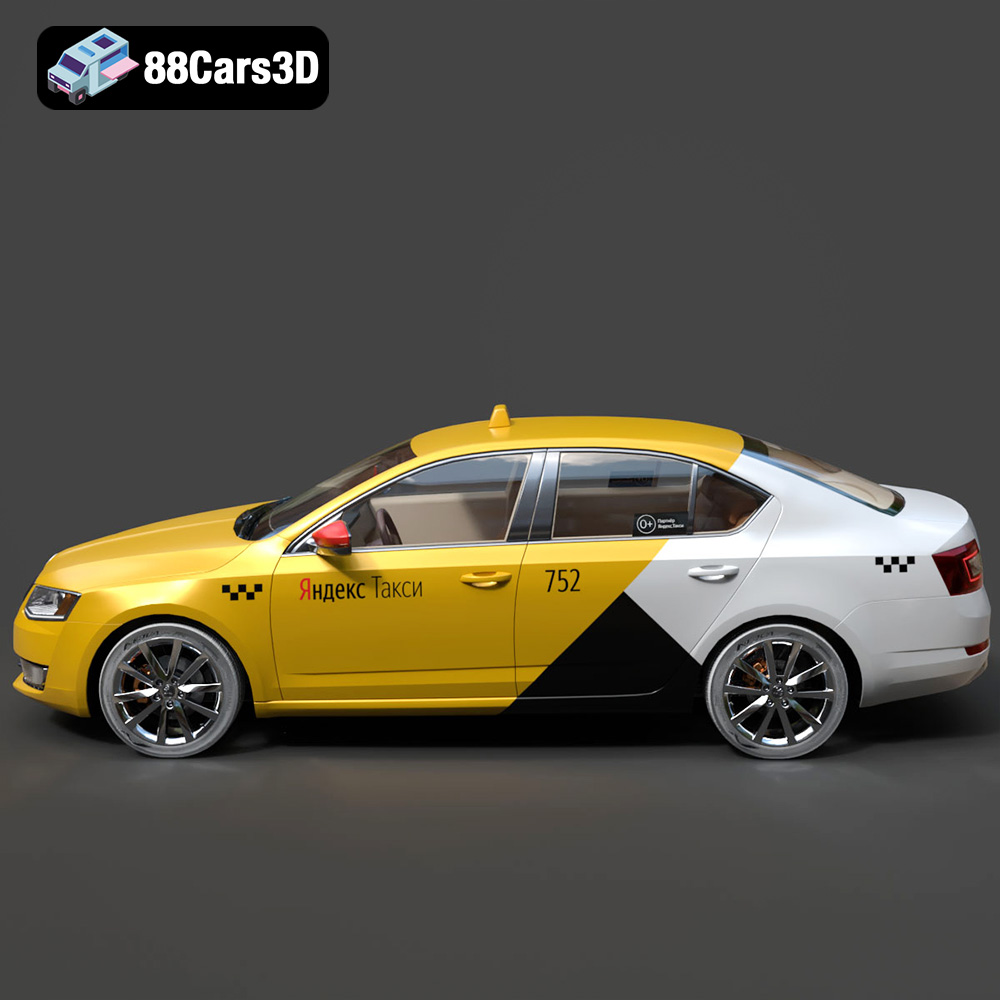
The exterior of this 3D model is a masterclass in capturing the distinctive styling of the second-generation Octavia. From its aerodynamic yet robust silhouette to the classic vertical-slat Skoda grille, every curve and panel line has been precisely replicated. The model includes standard taxi livery elements, making it immediately recognizable and ready for deployment in city scenes. Critical details like realistic halogen headlight housings and the distinct C-shaped taillights contribute significantly to its visual accuracy. Furthermore, the classic multi-spoke alloy wheels with realistic tire tread and a standard urban suspension setup ensure the vehicle sits correctly within any digital environment, reinforcing its authentic presence.
An often-overlooked aspect in many 3D car models is the interior, but for immersive experiences like AR/VR or first-person gaming, it’s crucial. The Skoda Octavia Taxi model shines here with a realistically modeled cockpit. It features authentic fabric and durable plastic interior textures, perfectly reflecting the utilitarian nature of a commercial vehicle. Artists will appreciate the detailed four-spoke steering wheel, instrument cluster, and a center console thoughtfully equipped with a taximeter placement. Even the pedals, gear shifter, and handbrake details are present, offering a complete and believable environment for those moments when the camera peers inside. The optimized geometry ensures that even from a first-person perspective, the interior remains visually appealing without bogging down performance.
A truly professional 3D car model is not merely a static mesh; it’s an assembly of components designed for dynamic interaction. This Skoda Octavia Taxi 3D model exemplifies this with its modular design. Components such as the wheels, doors, suspension, and steering are separated and properly pivoted. This thoughtful preparation is invaluable for animators, allowing for realistic wheel rotation, independent suspension travel, functional door openings, and accurate steering movements. This ‘animation-ready’ state dramatically reduces setup time in professional pipelines, empowering artists to integrate the vehicle seamlessly into complex sequences, driving simulations, or interactive experiences.
In the realm of 3D assets, technical specifications are as important as visual aesthetics. A stunning model that cripples a game engine or takes hours to render is often impractical. The Skoda Octavia Taxi 2008 3D Model strikes an impressive balance, engineered for both high-end visualization and real-time engine efficiency, making it a versatile asset for various professional applications.
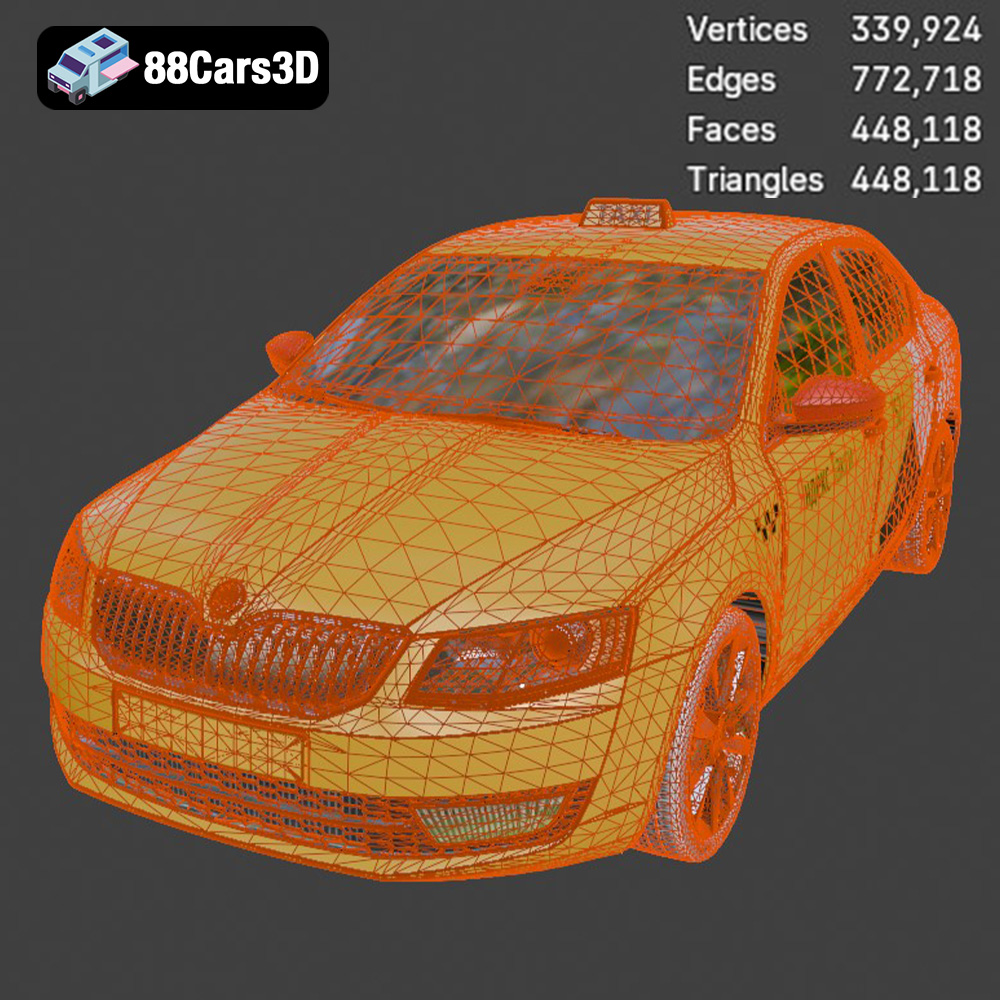
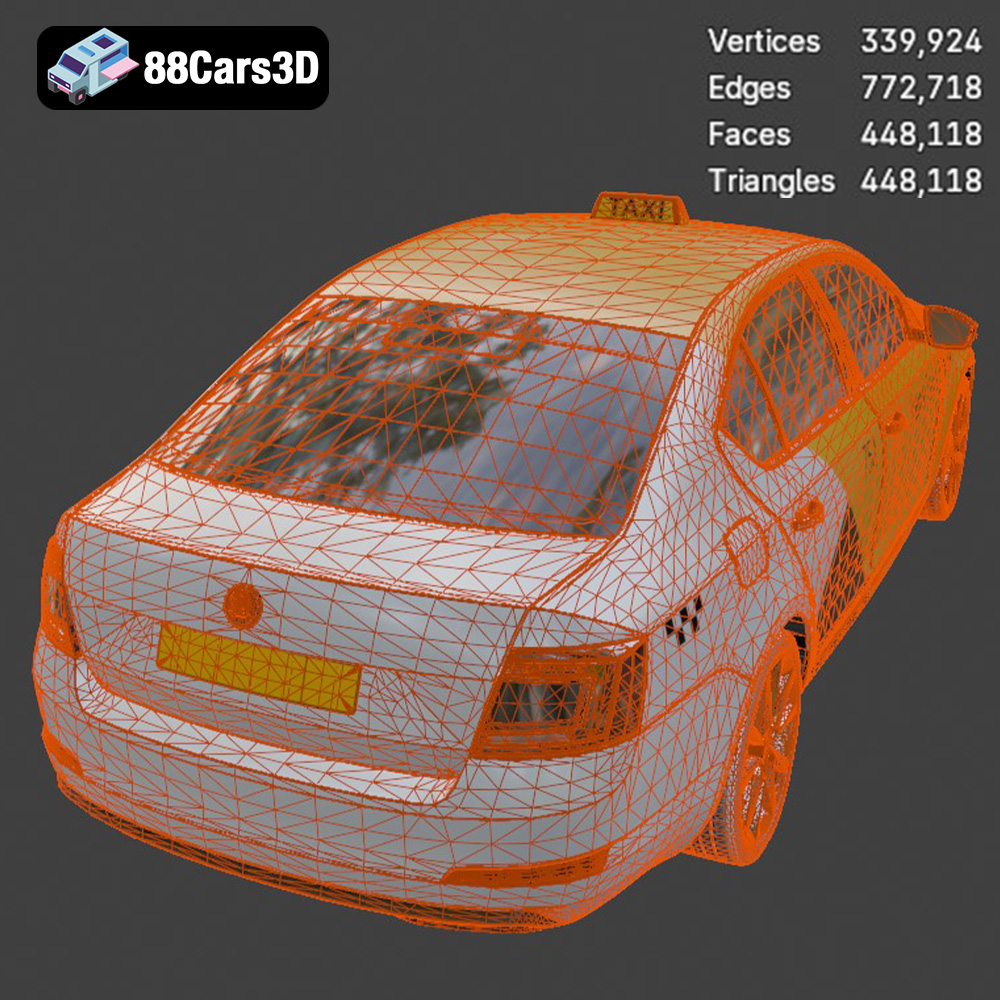
The model boasts a highly detailed topology of approximately 448,118 triangles. This polycount is strategically chosen to provide exceptional visual fidelity necessary for close-up rendering and detailed cinematics, while simultaneously maintaining structural optimization suitable for modern real-time engines like Unreal and Unity. This careful balance means artists get a rich, detailed model without the excessive polycount that can hinder performance in interactive applications. The clean mesh and precise edge loops are indicative of a model built with efficiency and subdivision readiness in mind, allowing for further smoothing if ultra-high resolution rendering is required.
Modern rendering relies heavily on Physically Based Rendering (PBR) workflows to achieve photorealistic results. The Skoda Octavia Taxi model is equipped for this, offering sharp reflections, precise edge loops, and distinct material zones. These attributes are crucial for PBR shaders to accurately simulate how light interacts with different surfaces—from the metallic sheen of the paintwork to the matte finish of the plastic trim and the subtle texture of the tires. This attention to material definition ensures that when integrated into advanced rendering engines, the vehicle will react to lighting in a physically accurate and visually convincing manner, enhancing the overall realism of any scene it inhab inhabits.
Accuracy in 3D modeling extends beyond visual details to include real-world scale. The Skoda Octavia Taxi 3D model adheres to actual vehicle chassis dimensions, ensuring it integrates seamlessly into scenes without requiring scale adjustments that can disrupt physics or environmental interactions. Furthermore, its proper pivot setup for steering, wheel rotation, and suspension travel is a crucial technical advantage for animation and simulation. Being compatible with major 3D software platforms and real-time rendering engines means this asset is a plug-and-play solution, significantly reducing the integration workload for artists and developers across diverse workflows.
The true value of a professional 3D asset lies in its adaptability and seamless integration into various creative pipelines. The Skoda Octavia Taxi 2008 3D Model from 88cars3d.com is designed to be a versatile workhorse, enhancing everything from interactive gaming experiences to high-fidelity cinematic productions.
For game developers, this model is an ideal asset for populating open-world city games, racing titles, and vehicle simulators. Its optimized polycount and game-ready status (especially in .fbx and .unreal formats) mean it can be dropped directly into engines like Unreal Engine or Unity with minimal fuss. Imagine dense urban environments bustling with realistic traffic, or a detailed mission involving a taxi chase through city streets. The modular design, with separate wheels and suspension, allows for accurate physics simulations and dynamic vehicle behavior, bringing an unprecedented level of realism to in-game driving mechanics. It can serve as a primary drivable vehicle or a believable background element, contributing to a truly immersive gameplay experience.
Architectural visualization (ArchViz) and cinematic productions demand impeccable realism to suspend disbelief. The Skoda Octavia Taxi provides an excellent solution for injecting life and authenticity into static architectural renders or dynamic animated sequences. Picture a modern building illuminated at dusk, with this iconic taxi idling at the curb, its headlights casting realistic glows. For commercial advertisements, urban planning presentations, or short films, this highly detailed model elevates scene fidelity. Its robust geometry and PBR-ready materials ensure stunning results in renderers like V-Ray, Corona, or Cycles, making it a valuable asset for any professional aiming for photorealistic automotive rendering.
The burgeoning fields of Augmented Reality (AR) and Virtual Reality (VR) thrive on optimized, high-quality 3D assets. With its game-ready optimization and dedicated .glb format, the Skoda Octavia Taxi 2008 3D model is perfectly suited for immersive AR/VR experiences. Developers can create interactive virtual showrooms where users can inspect the taxi up close, or build realistic urban environments for VR training simulations. For mobile AR applications, the compact nature of the .glb format ensures fast loading times and smooth performance, allowing users to place a virtual Skoda Octavia Taxi right in their physical environment with surprising realism. This model is a foundational element for building compelling and interactive digital narratives.
While primarily designed for digital applications, the versatility of a well-constructed 3D model extends into the physical realm. The Skoda Octavia Taxi 2008 3D Model offers a clear pathway to physical manifestation through 3D printing, catering to hobbyists, collectors, and even professionals in need of tangible prototypes or display pieces.
The inclusion of the .stl file format is crucial for 3D printing. This format strips away textures and animations, providing a clean, manifold mesh that defines the object’s surface geometry. The recommended scales (1:12, 1:18, 1:24) are popular choices for model cars, allowing for a balance between detail and printability. For successful prints, precise settings are advised: a layer height of 0.04–0.12 mm is ideal, with resin printing often recommended for capturing the fine details and smooth surfaces inherent in the model. Wall thickness suggestions of 1.2–2.0 mm ensure structural integrity, while an infill of 20–30% provides strength without excessive material usage or print time.
Successful 3D printing, especially for complex objects like vehicle models, often requires careful planning regarding supports and print orientation. The Skoda Octavia Taxi model, with its intricate details like mirrors, exhaust, and interior components, will necessitate strategically placed supports to prevent sagging or deformation during the printing process. Printing the frame angled can improve structural integrity, while printing wheels separately allows for cleaner results and easier assembly. Post-processing is key to transforming a raw print into a display-worthy piece. This can involve sanding to remove layer lines, applying primer for an even surface, and finally, painting with authentic factory colors, perhaps with metallic finishes to truly emulate the original vehicle. This bridge from digital asset to physical object showcases the profound versatility of high-quality 3D car models.
A superior 3D model isn’t just about static detail; it’s about the flexibility it offers to adapt to diverse creative visions. The Skoda Octavia Taxi 2008 3D Model is designed with customization in mind, empowering artists and developers to tailor its appearance to perfectly fit specific project requirements and narrative contexts.
The model’s clean material separation allows for extensive aesthetic customization. Artists can easily change body colors, transforming the standard taxi yellow into a sleek black executive car, a vibrant custom regional taxi livery, or any other color scheme imaginable. Beyond paint, the ability to modify tire textures—from brand new street variants to worn urban ones—adds another layer of realism. Material finishes can also be adjusted, allowing for matte, gloss, or metallic looks on various components, providing granular control over the vehicle’s visual characteristics. This adaptability ensures that the single asset can serve multiple roles across different scenes or game levels, significantly enhancing its utility.
Beyond the vehicle’s intrinsic appearance, its integration into varied environments is crucial. The model is prepared to adapt to different lighting scenarios, making it suitable for both bright, sunny day scenes and dramatic, neon-lit night cityscapes. By adjusting material reflections, light emissives (for headlights and taillights), and overall color grading, the Skoda Octavia Taxi can believably exist in any digital milieu. This flexibility reduces the need for multiple distinct models, streamlining workflows and allowing artists to focus on environmental storytelling rather than asset creation. Whether for a bustling daytime street or a moody evening alley, the model can be dynamically adapted to contribute authentically to the desired atmosphere.
In the expansive and ever-evolving landscape of 3D content creation, high-quality, versatile 3D car models are indispensable tools for professionals across industries. The Skoda Octavia Taxi 2008 3D Model stands out as an exemplary asset, meticulously crafted to meet the stringent demands of modern game development, cinematic rendering, AR/VR experiences, and even 3D printing. Its combination of authentic European styling, robust interior detailing, and advanced technical optimization—including an ideal polycount and PBR-ready materials—makes it a powerful addition to any digital arsenal.
Moreover, the comprehensive range of file formats available, from the native editability of .blend and .max to the universal compatibility of .fbx and .obj, and the specialized applications of .glb, .stl, and .ply, ensures that this model is ready for virtually any workflow. This thoughtful consideration for technical flexibility, coupled with its animation readiness and extensive customization options, positions the Skoda Octavia Taxi as far more than just a static prop; it’s a dynamic foundation for creative expression.
For artists, developers, and designers seeking to elevate their projects with realistic urban elements and truly professional-grade automotive assets, exploring the offerings at 88cars3d.com is a crucial step. Assets like this Skoda Octavia Taxi 2008 3D Model demonstrate the commitment to quality and technical excellence that can transform your digital visions into stunning realities, ensuring your work resonates with unparalleled authenticity and impact.
The Skoda Octavia Taxi 2008 is a ubiquitous and iconic European workhorse, renowned for its reliability, spacious interior, and unmatched practicality. This 3D model faithfully captures the distinctive styling of the second-generation Octavia, complete with standard taxi livery elements, an aerodynamic yet robust silhouette, realistic lighting clusters, and the classic vertical-slat Skoda grille. Whether navigating bustling city streets or waiting at a busy transport hub, this model embodies the ultimate everyday urban commute. Boasting a highly detailed topology of approximately 448,118 triangles, this game-ready 3D asset delivers exceptional visual fidelity while maintaining structural optimization. It is meticulously crafted to support seamless integration into modern real-time engines, offering sharp reflections, precise edge loops, and distinct material zones. It is fully equipped for game development, AR/VR experiences, animation, and high-end automotive visualization.
$26.00
.2008
.blend
.fbx
.glb
.max
.obj
.ply
.rendering
.sedan
.stl
.taxi
.unreal
car-3d-model
game asset
game-ready
low-poly
octavia-taxi
optimized
Skoda
VR/AR