Get 20% OFF All Premium 3D & STL Models!

In the expansive and ever-evolving landscape of digital content creation, the demand for high-fidelity 3D assets is insatiable. From AAA game titles to photorealistic architectural visualizations, and from immersive AR/VR experiences to captivating cinematic animations, the quality of 3D models dictates the perceived realism and overall impact of a project. Automotive models, in particular, stand as a testament to precision and artistic skill, demanding meticulous attention to detail to faithfully represent their real-world counterparts. A truly exceptional 3D car model goes beyond mere aesthetics; it embodies technical prowess, optimization, and versatility.
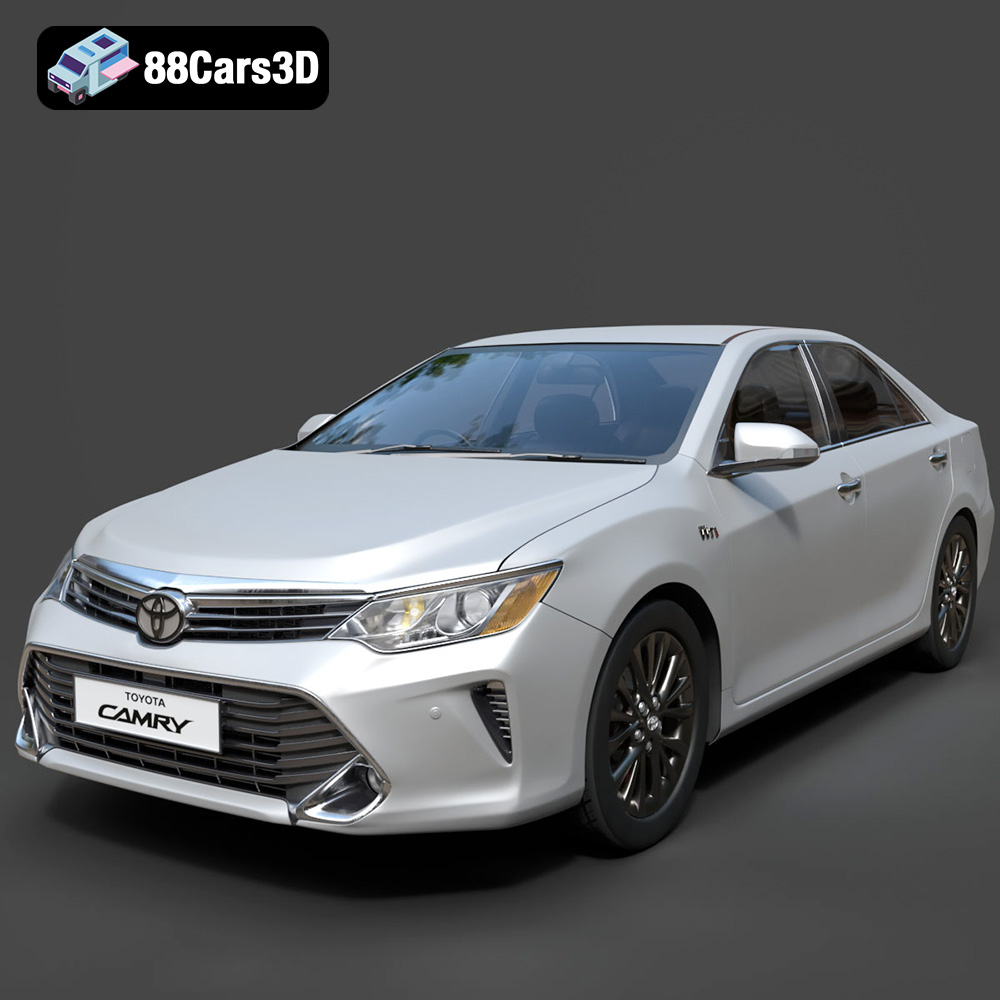
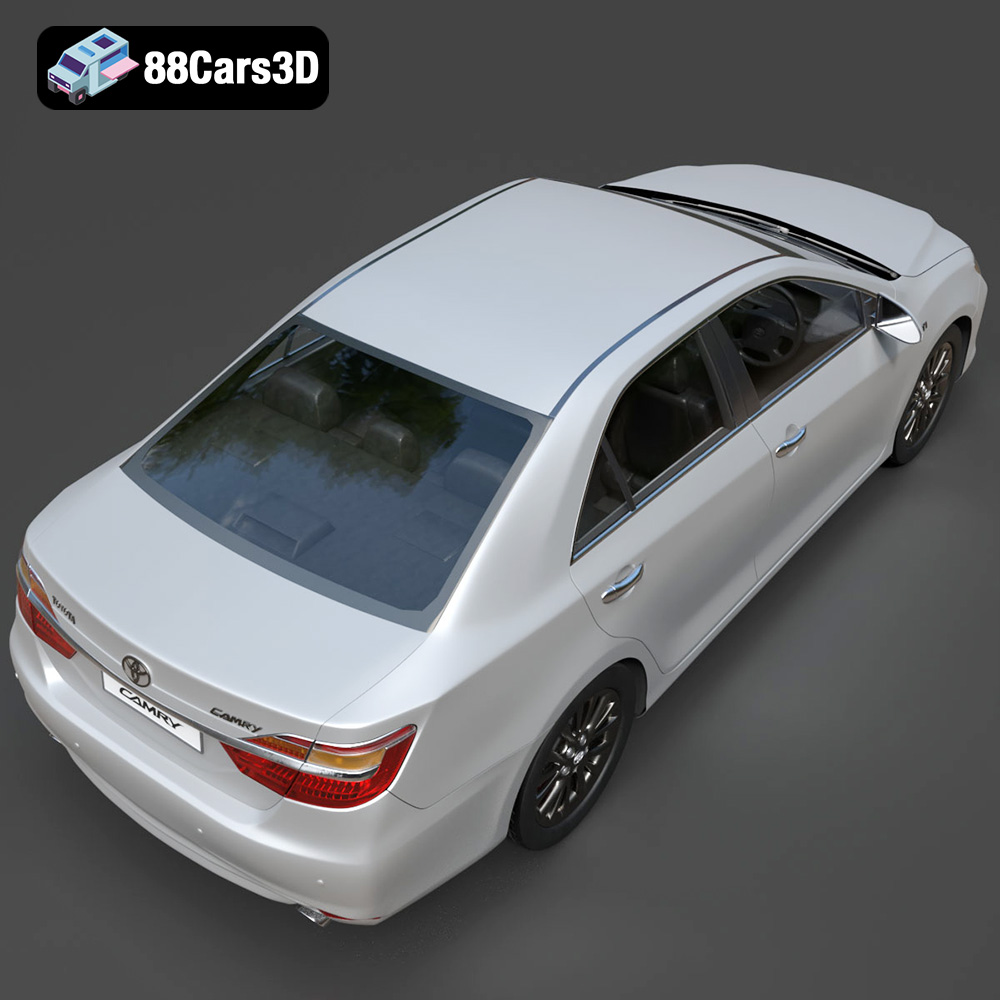
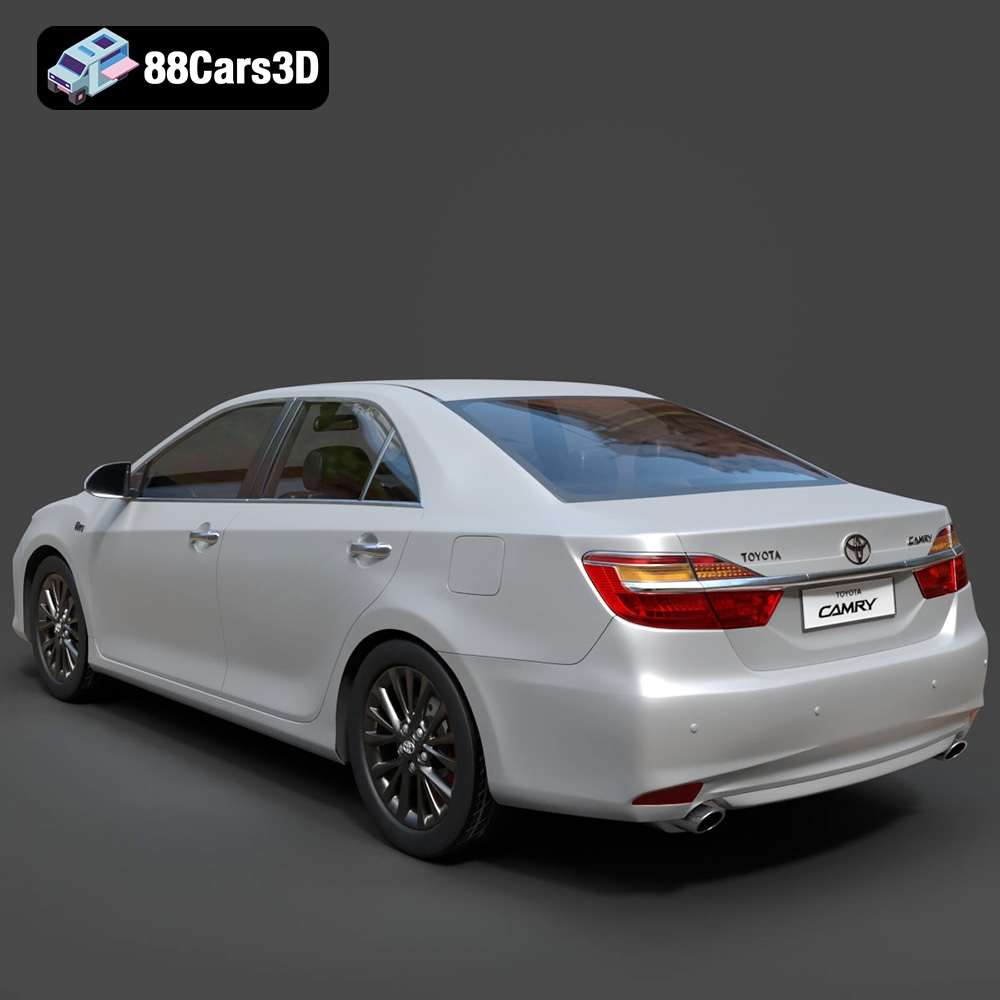
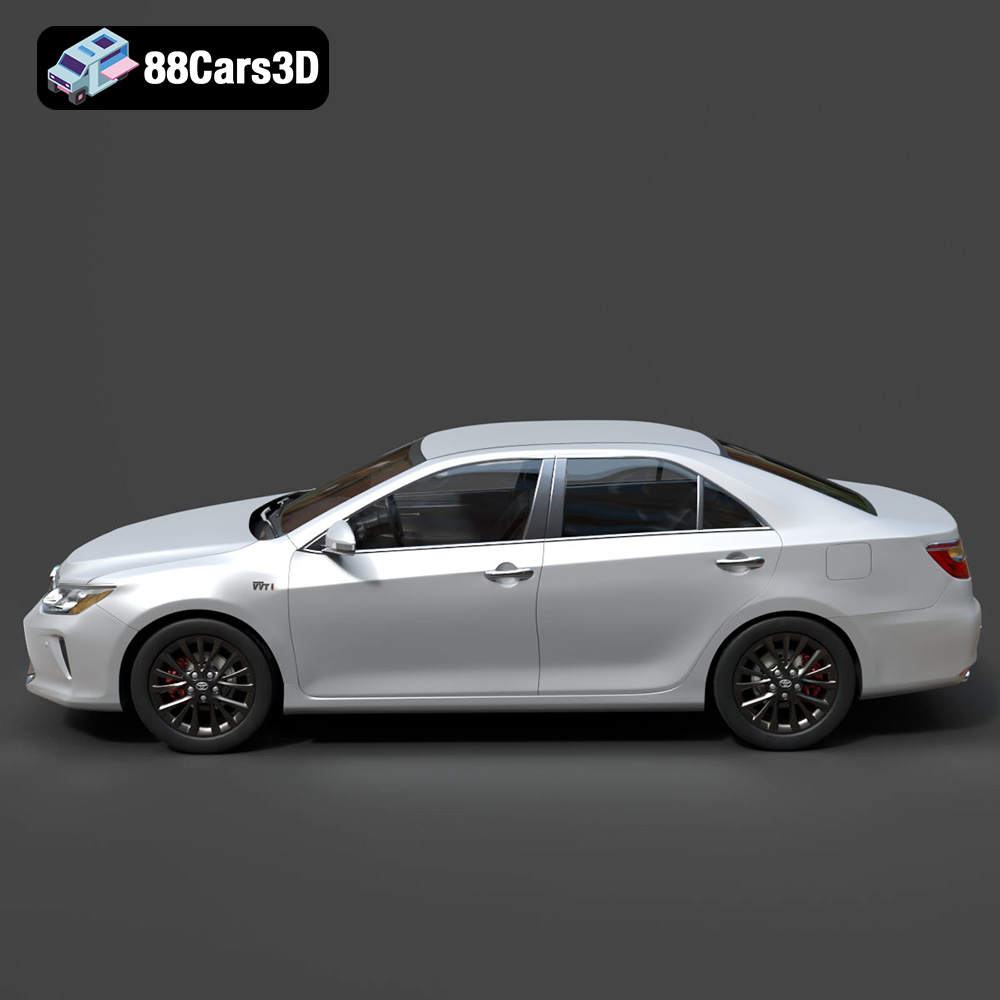
Today, we’re going to peel back the layers of what makes a premium 3D vehicle asset truly valuable, exploring the technical intricacies, diverse applications, and workflow advantages it brings. We’ll specifically highlight an outstanding example from 88cars3d.com: the Toyota Camry 2008 3D Model. This model serves as an excellent case study for understanding how a well-crafted asset can empower creators across various industries, offering a blend of detail and optimization that meets rigorous professional standards.
When working with 3D assets, particularly complex ones like vehicle models, understanding the nuances of various file formats is paramount. Each format is designed with specific strengths and intended applications, impacting compatibility, data retention, and performance across different software and platforms. The Toyota Camry 2008 3D model, for instance, is offered in a comprehensive suite of formats, ensuring maximum flexibility for any project pipeline.
The .blend format is the native file type for Blender, a powerful open-source 3D creation suite. A .blend file typically encapsulates an entire scene, including mesh data, materials, textures, lighting, cameras, animations, modifiers, and even custom scripts. This makes it an ideal choice for users who wish to delve deep into the model’s construction, make significant modifications, or integrate it into a Blender-centric workflow. For the Toyota Camry 2008, the .blend file would provide the most complete and editable version, allowing artists to tweak topology, adjust material nodes, or even re-rig components for advanced animation within Blender.
FBX (Filmbox) is an Autodesk-owned proprietary file format widely recognized as the industry standard for exchanging 3D data between different software applications. Its strength lies in its ability to store a vast array of 3D data, including geometry, materials, textures, animation, skeletal rigs, and even cameras and lights, while maintaining scene hierarchy. This makes .fbx incredibly valuable for game development, serving as the preferred import format for engines like Unreal Engine and Unity. When using the Camry 2008 .fbx, developers can expect a streamlined import process with crucial elements like correct pivot points for wheels and doors, and properly assigned materials ready for engine-specific shader setup.
OBJ (Object) is one of the oldest and most universally supported 3D file formats. It is a simple, text-based format primarily used to store 3D geometry (vertices, normals, texture coordinates, and faces) and material references (via an accompanying .mtl file). While it doesn’t support animation or rigging, its widespread compatibility makes it a safe bet for basic model exchange between virtually any 3D software. For the Camry 2008, the .obj version is excellent for static renders, cross-platform modeling, or as a fallback when other formats might cause issues, ensuring the core geometry is always accessible.
GLB is the binary version of glTF (GL Transmission Format), often referred to as the “JPEG of 3D.” It’s an open-standard, royalty-free specification designed for efficient transmission and loading of 3D scenes and models by applications. A .glb file packages geometry, materials, textures, animation, and scene hierarchy into a single, self-contained binary file, making it incredibly lightweight and fast to load. This optimization makes it perfect for web-based 3D viewers, AR/VR applications, and mobile experiences, where file size and performance are critical. The Camry 2008 .glb model would be ready for instant deployment in a virtual showroom or an augmented reality app on a smartphone.
STL (STereoLithography) is the de facto standard file format for 3D printing. It represents a 3D model as a series of connected triangles (a triangular mesh) without any color, texture, or material information. Its simplicity makes it universally compatible with 3D slicers and printers. For the Toyota Camry 2008, the .stl format allows enthusiasts and professionals to bring the digital model into the physical world, creating scale models for display, prototyping, or dioramas. The product description’s specific 3D print settings highlight the practical application of this format.
PLY (Polygon File Format) is another format for storing 3D data, typically used for models generated by 3D scanners, CAD software, or for scientific and analytical purposes. It can store a variety of properties including color, transparency, surface normals, and range data. While less common for general asset exchange than FBX or OBJ, it offers precision in mesh representation and is valuable in workflows requiring high-accuracy geometric data or for specific visualization tools. The Camry 2008 .ply offers an alternative for highly precise mesh analysis or integration into specific engineering visualization tools.
While not a standalone file extension in the traditional sense like .fbx or .obj, “.unreal” typically refers to an asset that has been specifically prepared and perhaps exported or packaged for direct import and optimal performance within Unreal Engine. This often implies proper material separation, LODs (Levels of Detail), collision meshes, and pivot points already configured to Unreal’s specifications. The presence of an “.unreal” variant for the Camry 2008 signifies that it has undergone a specific optimization pass, making it a near plug-and-play solution for developers working in Unreal, saving significant time on setup and configuration.
The .max format is the native file type for Autodesk 3ds Max, one of the leading professional 3D modeling, animation, and rendering software packages. Similar to .blend, a .max file contains the complete scene data, allowing for full editability, complex rigging, advanced material setups using V-Ray or Corona renderers, and high-fidelity animation sequences. Artists using 3ds Max would find the Camry 2008 .max file invaluable for integrating it into complex architectural visualizations, creating detailed cinematic sequences, or for any project requiring the robust feature set of 3ds Max.
Creating a compelling 3D car model is a delicate balance of artistic vision and engineering precision. It’s not just about replicating shapes; it’s about capturing the essence of the vehicle, its functional mechanics, and its presence. This starts with an acute understanding of real-world automotive design principles.
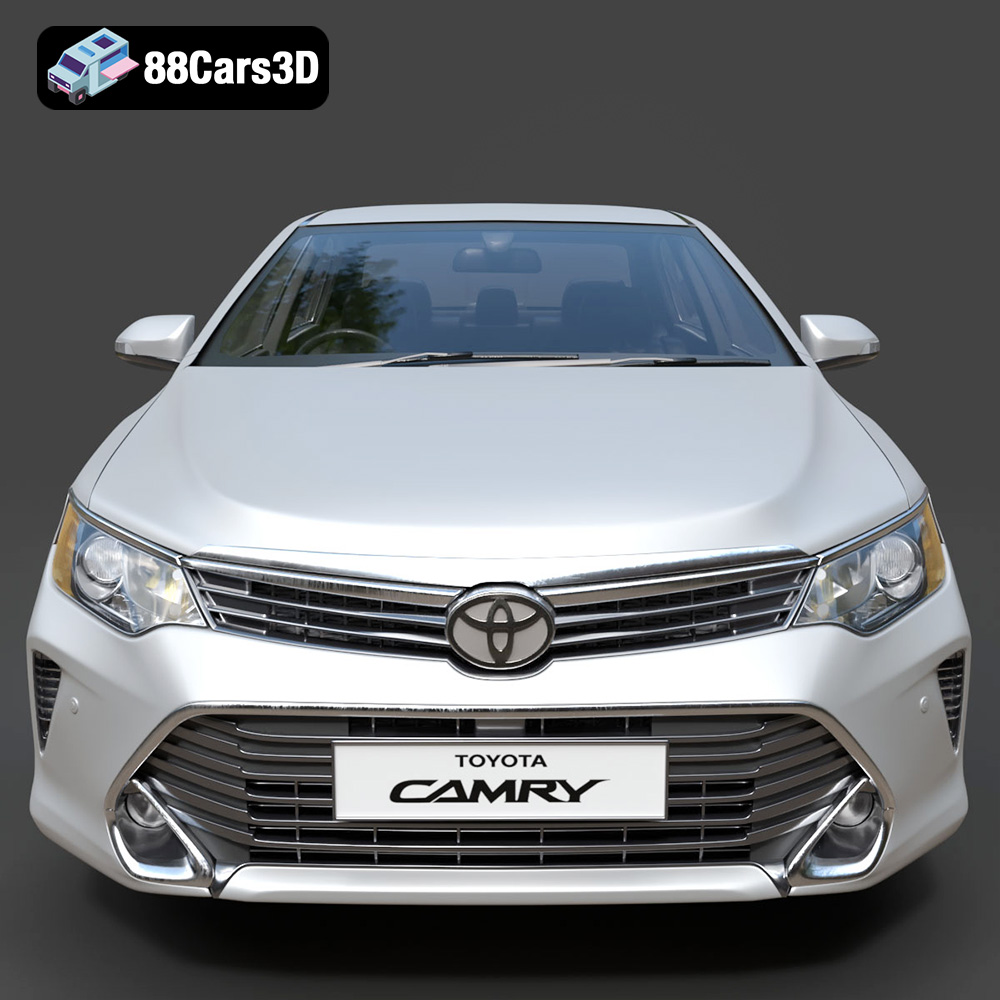
A successful automotive 3D model begins with meticulous reference gathering and an unwavering commitment to accurate proportions. The Toyota Camry 2008, for instance, possesses a distinctive silhouette – a balance of aerodynamic sleekness and robust practicality. Recreating this requires precise measurement and careful topology, ensuring every curve, crease, and panel gap aligns with the original vehicle. The model’s description highlights its “accurate frame geometry and sedan proportions,” which is fundamental. This level of detail extends to the “sleek aerodynamic profile” and “distinctive front grille,” elements that instantly identify the car.
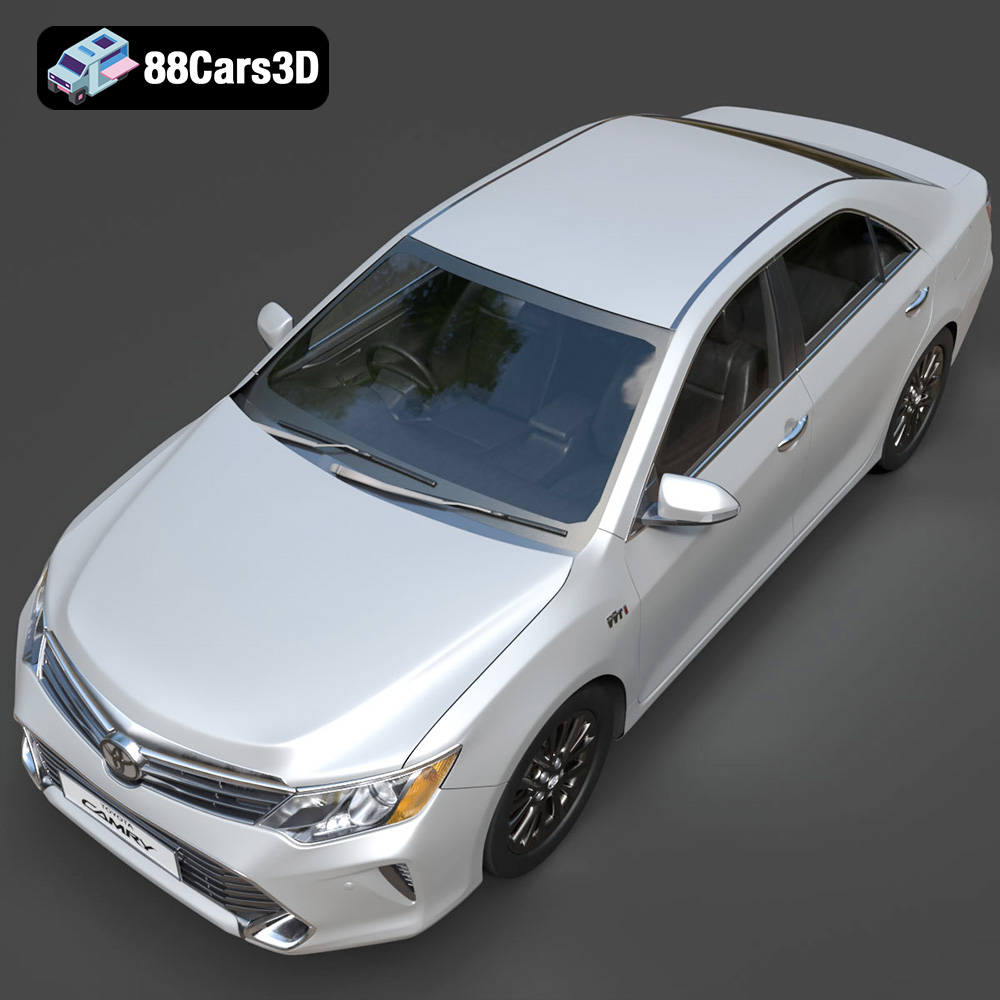
Professional-grade 3D car models demand an exhaustive approach to both exterior and interior details. For the exterior, this includes high-fidelity lighting assemblies (projector-style headlights, distinct taillights), authentic OEM-style alloy wheels with realistic tread patterns, and even the subtle complexities of the exhaust system and undercarriage. On the inside, elements like the “detailed standard fabric/leather seating simulation,” “accurate steering wheel and central console details,” and “replicated instrument cluster” are crucial for immersive experiences, especially in first-person perspectives for games or VR. The Toyota Camry 2008 model’s comprehensive feature list underscores this commitment to holistic detail.
Beyond visual accuracy, technical realism is key for dynamic applications. This involves ensuring components are properly separated and pivoted for animation. Features like “separate wheels, suspension components, and steering assemblies for easy animation” are critical for game developers and animators. A proper pivot setup allows for realistic wheel rotation, independent suspension travel, and accurate steering, transforming a static model into a dynamic asset capable of complex interactions within a virtual environment. This foresight in preparation is what elevates a basic model to a professional-grade asset.
The Toyota Camry 2008 3D model available on 88cars3d.com isn’t just visually appealing; it’s engineered for performance and versatility. Understanding its technical specifications reveals its suitability for a wide range of demanding digital projects.
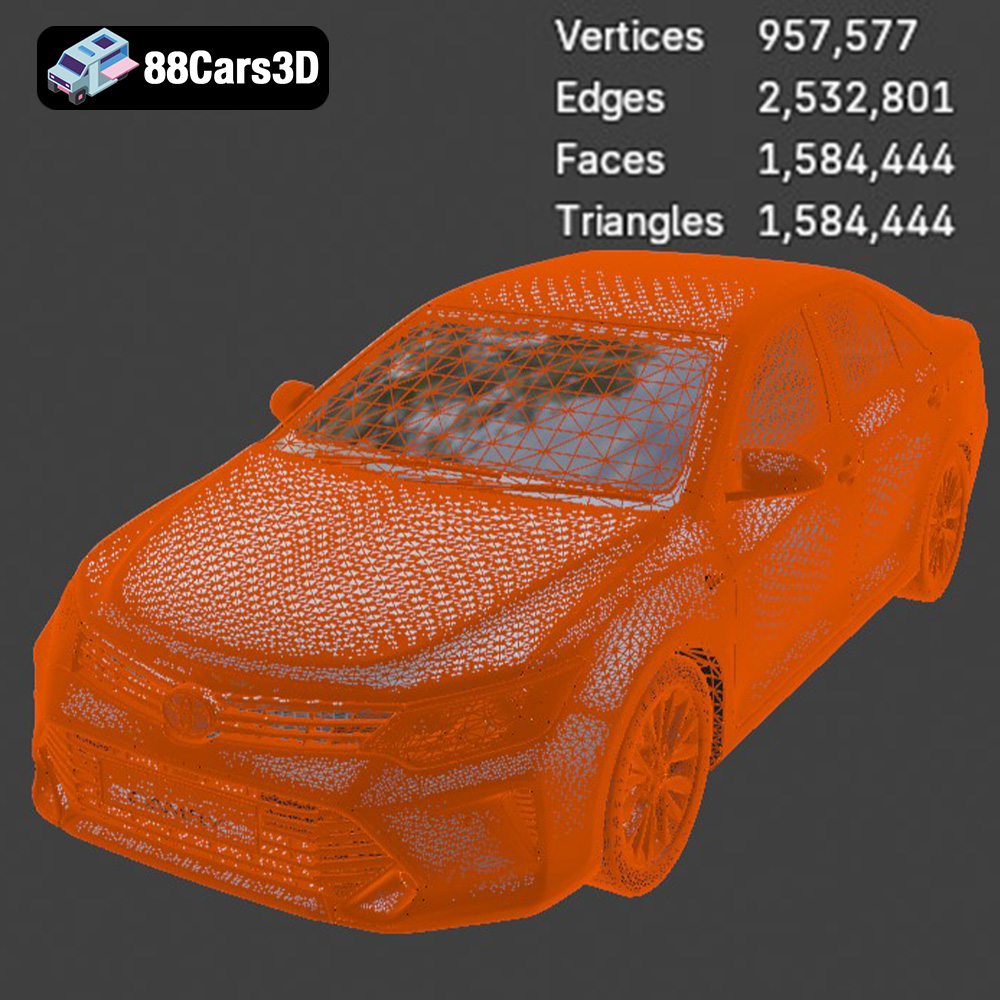
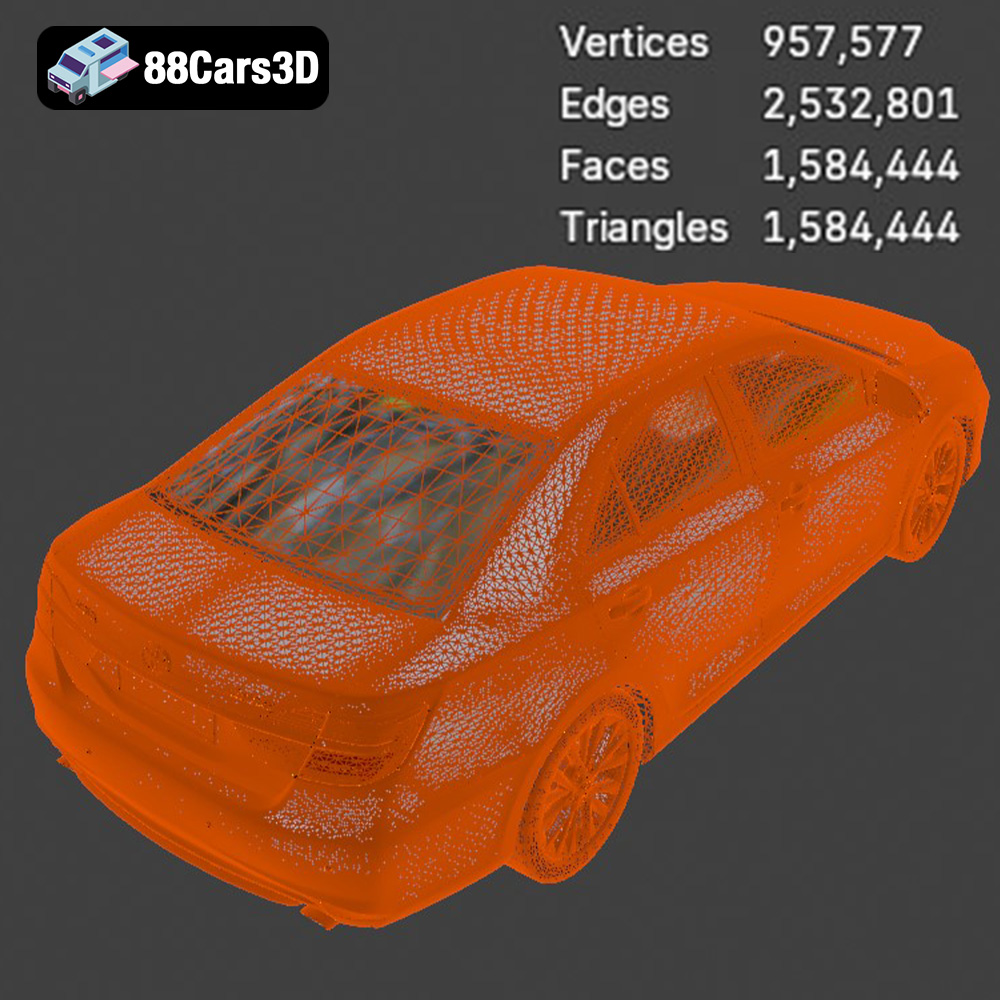
One of the most critical aspects for any 3D model, especially for real-time applications like games or AR/VR, is its polygon count and topology. The Camry 2008 model boasts an “optimized topology and a balanced triangle count (~120,000 triangles).” This figure strikes an excellent balance: it’s high enough to maintain “high-end visual realism,” capturing the car’s curves and details without noticeable faceting, yet low enough to ensure “game-ready performance” without heavily impacting frame rates. Clean, efficient topology also means easier UV unwrapping, better deformation if animated, and smoother subdivision if higher detail is needed for close-up renders.
Maintaining real-world scale is non-negotiable for professional 3D assets. Whether dropped into an architectural visualization scene alongside real-world building dimensions or used in a simulator, accurate scaling ensures credibility and seamless integration. The Camry 2008 model is built with “real-world scale accuracy based on the actual vehicle chassis,” which is a fundamental requirement for believable scene composition and interaction with other scaled assets.
While the initial model comes with robust material definitions, the ability to customize these is a significant advantage. The description mentions options to “change body colors to match authentic factory paint codes (e.g., Magnetic Gray, Super White),” “modify tire textures for different wear levels,” and “adjust material finishes including matte, gloss, and metallic clear coats.” This flexibility allows artists to tailor the vehicle to specific lighting conditions, brand requirements, or narrative contexts, from a pristine showroom model to a well-used urban vehicle.
The true value of a versatile 3D asset is its ability to seamlessly integrate into diverse professional pipelines, saving time and delivering high-quality results across the board. The Toyota Camry 2008 3D model exemplifies this versatility, catering to numerous industry needs.
For game developers, the Camry 2008 is a ready-to-use asset, particularly for open-world games, racing titles, and city traffic simulators. Its optimized polycount (~120,000 triangles) is crucial for maintaining performance in real-time engines like Unreal and Unity. The “proper pivot setup for steering, wheel rotation, and suspension travel” simplifies rigging and animation, allowing developers to quickly implement realistic driving physics and interactive elements. Imagine populating a vast urban environment with authentic vehicles, creating dynamic traffic flows, or providing players with a familiar vehicle to interact with—the Camry 2008 fits perfectly into these scenarios.
The burgeoning fields of Augmented Reality (AR) and Virtual Reality (VR) demand highly optimized yet visually rich models. The Camry 2008, especially in .glb format, is “perfect for immersive virtual showrooms, vehicle configurators, and mobile AR experiences.” In a virtual showroom, customers could explore the car from every angle, customize its paint, and even “sit” inside, leveraging the “optimized geometry tailored for first-person POV.” For AR, placing a virtual Camry 2008 in a real-world driveway offers compelling visualization for sales or design review.
Architectural visualization (ArchViz) often requires realistic environmental context. Populating exterior renders of buildings or urban planning projects with authentic vehicles adds life and scale to a scene. The “real-world scale accuracy” and highly detailed exterior of the Camry 2008 make it an “excellent for architectural visualizations, brand campaigns, and lifestyle scenes.” Whether parked realistically in front of a new development or driving through a bustling street, it enhances the believability and narrative of the visualization.
The utility of high-quality 3D models extends beyond digital screens. With advancements in manufacturing technologies, these assets can be transformed into tangible objects, opening up new avenues for prototyping, display, and educational tools.
The inclusion of an .stl format for the Toyota Camry 2008 model is a game-changer for anyone interested in physical replication. The description meticulously outlines “3D Print Settings,” including recommended scales (1:18 / 1:24), layer heights (0.04–0.12 mm), infill, and crucial support requirements. This level of detail ensures that “display-scale hobbyists and diorama builders” can achieve high-quality physical models. Resin printing is specifically recommended for “fine details” like side mirrors and undercarriage, highlighting an understanding of best practices for achieving precision in physical output. This empowers designers to create physical prototypes, collectible models, or educational tools from the digital asset.
The journey from a raw 3D print to a polished physical model is just as important as the digital creation. The suggested “post-processing” steps – sanding, primer, and authentic factory colors with metallic finishes – guide users towards creating truly authentic replicas. This thoughtful inclusion demonstrates a comprehensive understanding of the entire workflow, from digital asset acquisition to physical realization. Such guidance adds immense value for users aiming for museum-quality scale models.
High-quality 3D car models are the bedrock of compelling visual narratives. Whether it’s a promotional video, an advertisement, or a cinematic sequence, the fidelity of the vehicle asset directly contributes to the overall impact.
For cinematic rendering, detail is paramount. The Toyota Camry 2008 model, with its comprehensive geometry and separate, animatable components, is perfectly suited for high-end rendering in software like 3ds Max (using the .max file) or Blender (using the .blend file). Artists can leverage advanced rendering engines like V-Ray, Corona, or Cycles to achieve photorealistic lighting, reflections, and material shaders. The ability to “adapt lighting elements for day, night, or cinematic environments” allows for dynamic scene creation, from a moody evening shot to a bright, sunlit commercial. Such control is vital for producing professional-grade marketing and animation content.
The asset’s “separated wheels, suspension components, and steering assemblies” are not just for game physics; they are ideal for creating sophisticated animations. Imagine a complex car commercial sequence where the suspension articulates over a bump, or the steering wheel turns with precision during a dynamic cornering shot. The “proper pivot setup” ensures that these animations are technically correct and visually convincing, elevating the realism of any automotive animation project, whether for a client presentation or an educational simulation.
Ultimately, a detailed 3D car model like the Camry 2008 serves as a powerful tool for visual storytelling. It can anchor an urban scene, define a character’s lifestyle, or add a layer of authenticity to a historical recreation. Its versatility in terms of applications and file formats ensures that creators are not limited by technical constraints but are empowered to focus on their creative vision. Whether it’s for “brand campaigns” or “lifestyle scenes,” the model provides a reliable and high-quality foundation.
The journey through the intricate world of professional 3D car models reveals a fascinating blend of artistic craftsmanship and technical engineering. From meticulous topology and real-world scale to diverse file format support and versatile application across industries, a truly valuable 3D asset must meet a rigorous set of standards. The Toyota Camry 2008 3D Model from 88cars3d.com stands out as an exemplary product, embodying these principles with its optimized geometry, detailed features, and broad compatibility. Whether you are a game developer needing high-performance game assets, an architectural renderer creating immersive visualizations, an AR/VR designer crafting interactive experiences, or a hobbyist venturing into 3D printing, this model offers a robust and adaptable solution. It’s a testament to how thoughtfully prepared 3D car models can streamline workflows, enhance realism, and unlock new creative possibilities for professionals and enthusiasts alike.
Experience the reliability and classic design of the Toyota Camry 2008 with this premium 3D model. Known globally for its legendary durability, comfortable ride, and status as a defining mid-size sedan, this generation of the Camry features a sleek aerodynamic profile, a distinctive front grille, and well-proportioned lines. The model perfectly captures its iconic contemporary styling, showcasing true-to-life details including its standard alloy wheels, lighting assemblies, and signature exhaust configuration. Crafted with meticulous attention to detail, this 3D model boasts optimized topology and a balanced triangle count (~120,000 triangles), ensuring game-ready performance without compromising on visual fidelity. Designed for maximum versatility, it serves as an exceptional asset for game development, immersive AR/VR applications, architectural visualizations, and high-end animations. Perfect for urban traffic simulations, modern city environments, parking lot visualizations, and virtual showrooms.
$19.99
.blend
.fbx
.glb
.max
.obj
.ply
.rendering
.sedan
.stl
.toyota
.unreal
camry-2008
car-3d-model
family-car
game asset
game-ready
low-poly
mid-size-car
optimized
VR/AR