Get 20% OFF All Premium 3D & STL Models!

The world of 3D modeling has revolutionized how we interact with, visualize, and develop around automobiles. From high-fidelity cinematic renders to performance-optimized game assets, 3D car models are the bedrock of countless digital experiences. They empower designers, game developers, architects, and artists to bring vehicles to life in virtual environments with unparalleled realism and precision. The demand for meticulously crafted models that balance aesthetic accuracy with technical efficiency has never been higher, especially when it comes to vehicles with a rich history and distinct character.
Among these revered classics stands the VAZ Lada 2108 1984. This vehicle, a symbol of innovation in its era, now takes on new life in the digital realm as a high-quality 3D model. More than just a static representation, this digital asset from 88cars3d.com captures the essence of the original, making it an invaluable tool for a diverse range of projects. Whether you’re building an immersive open-world game, designing a historical visualization, or simply appreciating automotive engineering, understanding the intricacies of such 3D models and their applications is crucial.
Navigating the diverse landscape of 3D model file formats is fundamental for any professional working with digital assets. Each format is designed with specific use cases in mind, offering unique advantages in terms of compatibility, data integrity, and pipeline efficiency. Knowing which format to use and when can significantly streamline your workflow and ensure the optimal performance of your 3D car models. The VAZ Lada 2108 1984 3D model, for instance, is offered in a comprehensive suite of formats to cater to virtually any professional need.
The `.blend` format is the native file type for Blender, the popular open-source 3D creation suite. When you acquire a model in `.blend` format, you’re getting a complete Blender project file. This means it includes the mesh, materials (often PBR-ready setups), textures, lighting, camera settings, and even animations, if present. For artists and studios primarily using Blender, this format offers maximum editability and immediate integration into existing Blender projects. It preserves all native Blender modifiers, rigging, and shader nodes, allowing for deep customization of the VAZ Lada 2108 model’s paint, interior fabrics, or even structural components. It’s the go-to for iterative design and comprehensive artistic control.
The Filmbox (`.fbx`) format is an industry-standard proprietary file format developed by Autodesk, primarily used for interoperability between 3D software applications and game engines. It’s excellent for transferring 3D models along with complex data such as animations, skeletal rigs, and PBR material assignments. When integrating a 3D car model like the Lada 2108 into Unreal Engine or Unity, `.fbx` is almost always the preferred choice due to its robust support for mesh data, material channels, and crucially, animation data for wheels, doors, and suspension. It offers a good balance of detail retention and optimization, making it a cornerstone for game development and real-time visualization.
The Wavefront OBJ (`.obj`) format is one of the most widely supported and universal 3D file formats. It’s a simple, text-based format that primarily describes 3D geometry – vertices, faces, normals, and UV coordinates. While it doesn’t natively support animations or complex material nodes, it’s incredibly reliable for transferring static mesh data between almost any 3D software application. For tasks requiring only the raw geometric data of the VAZ Lada 2108, perhaps for retopology in ZBrush or initial import into CAD software, `.obj` is a safe and highly compatible choice. Material information is typically stored in an accompanying `.mtl` (Material Template Library) file.
The GL Transmission Format Binary (`.glb`) is the binary version of glTF, a royalty-free specification for the efficient transmission and loading of 3D scenes and models by applications. `GLB` bundles the model’s geometry, textures, and animations into a single file, making it incredibly convenient and efficient for web-based 3D, augmented reality (AR), and virtual reality (VR) applications. Its compact size and optimized structure ensure fast loading times and smooth performance in browsers or on mobile devices. For showcasing the VAZ Lada 2108 in a virtual showroom or an AR experience, `.glb` provides an ideal, lightweight, and visually rich solution.
Stereolithography (`.stl`) is the de facto standard file format for 3D printing. It represents a 3D model as a collection of unconnected triangles, describing only the surface geometry without color, texture, or other model attributes. While seemingly simplistic, this triangulation is precisely what 3D printers understand. When preparing the VAZ Lada 2108 for physical fabrication, converting it to `.stl` is the essential step. It’s critical that the original mesh is watertight (no holes) to ensure a successful print. The product description highlights the Lada 2108’s suitability for conversion to `.stl`, with specific recommendations for print scale and settings.
The Polygon File Format (`.ply`), also known as the Stanford Triangle Format, is primarily used to store 3D data from 3D scanners. It can store a variety of properties including color, transparency, surface normals, and range data, making it more comprehensive than `.stl` for certain applications. While less common for general 3D asset exchange than `.fbx` or `.obj`, `.ply` can be particularly useful in scientific visualization, CAD, or for detailed analysis of mesh properties where precision is paramount. For specialized engineering or historical documentation tasks involving the Lada 2108’s geometry, `.ply` offers a robust solution.
While not a universally recognized standalone file extension in the same vein as `.fbx` or `.obj`, the inclusion of `.unreal` in the list typically signifies an asset pack specifically prepared and optimized for direct import or even existing as an Unreal Engine project file (e.g., a `.uasset` file or part of a content pack). This means the model often comes pre-configured with Unreal-specific materials (e.g., master materials with instances), proper collision meshes, LODs (Levels of Detail), and blueprint setups for immediate use within an Unreal project. This direct integration is a massive time-saver for developers utilizing the VAZ Lada 2108 within the Unreal ecosystem.
The `.max` format is the native file type for Autodesk 3ds Max, one of the leading software packages for 3D modeling, animation, and rendering. Similar to `.blend` for Blender, a `.max` file contains a complete 3ds Max scene, including all geometry, materials, lighting, cameras, animation timelines, and modifiers. For professionals entrenched in the Autodesk ecosystem, this format offers unparalleled access to the original project, allowing for intricate modifications, advanced animation rigging, and high-end rendering using engines like V-Ray or Corona. For those needing to deeply integrate the VAZ Lada 2108 into a 3ds Max-centric pipeline for cinematic sequences or detailed product visualization, the `.max` file is indispensable.
The art of creating compelling 3D car models lies in the meticulous balance between artistic interpretation and technical precision. For historical vehicles, this means a deep understanding of the original design, engineering, and cultural context. The VAZ Lada 2108 1984 3D model stands as a prime example of this philosophy, offering a digital asset that is both visually striking and technically sound.
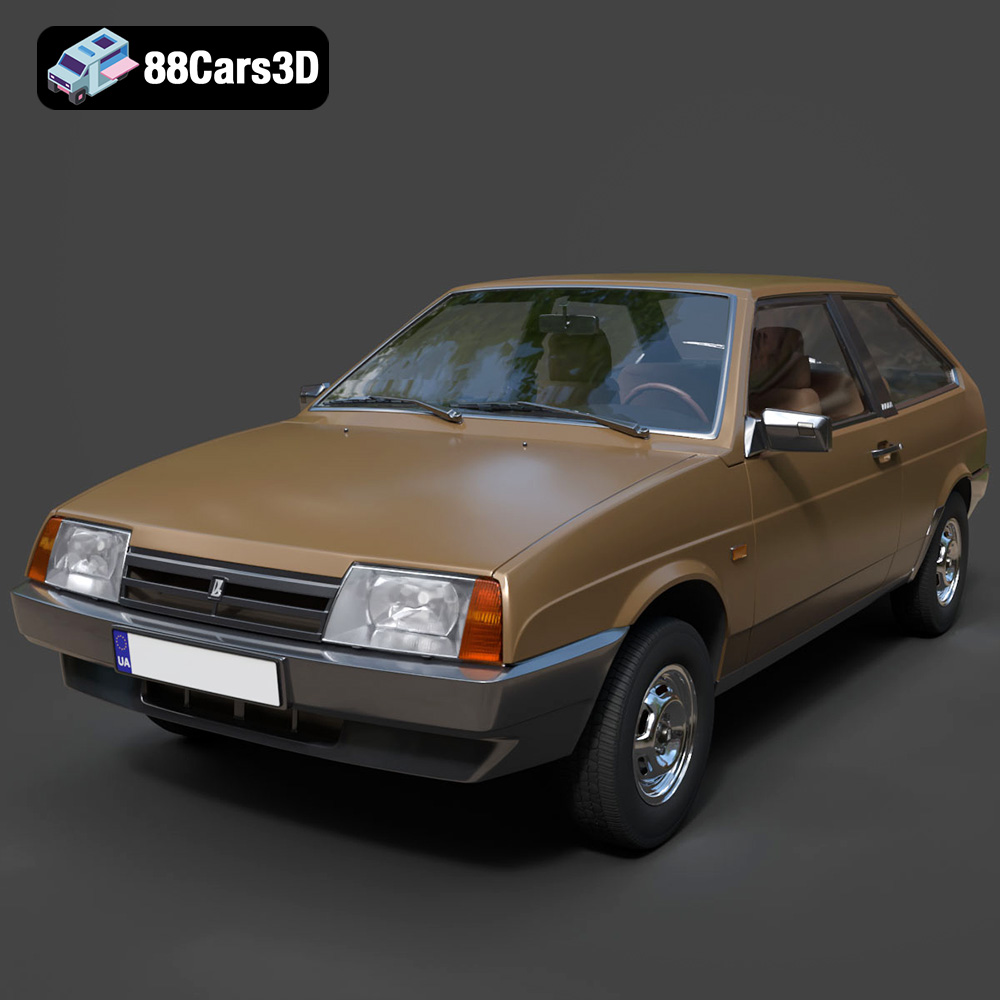
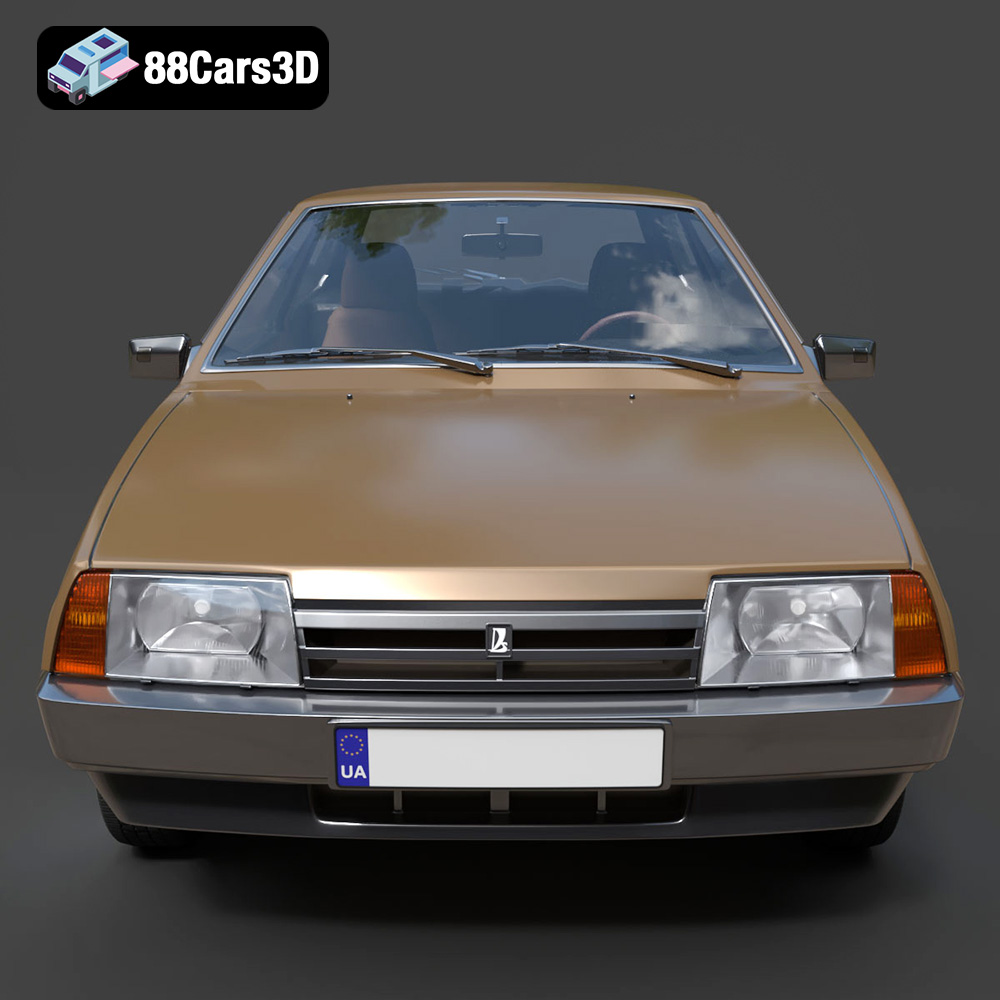
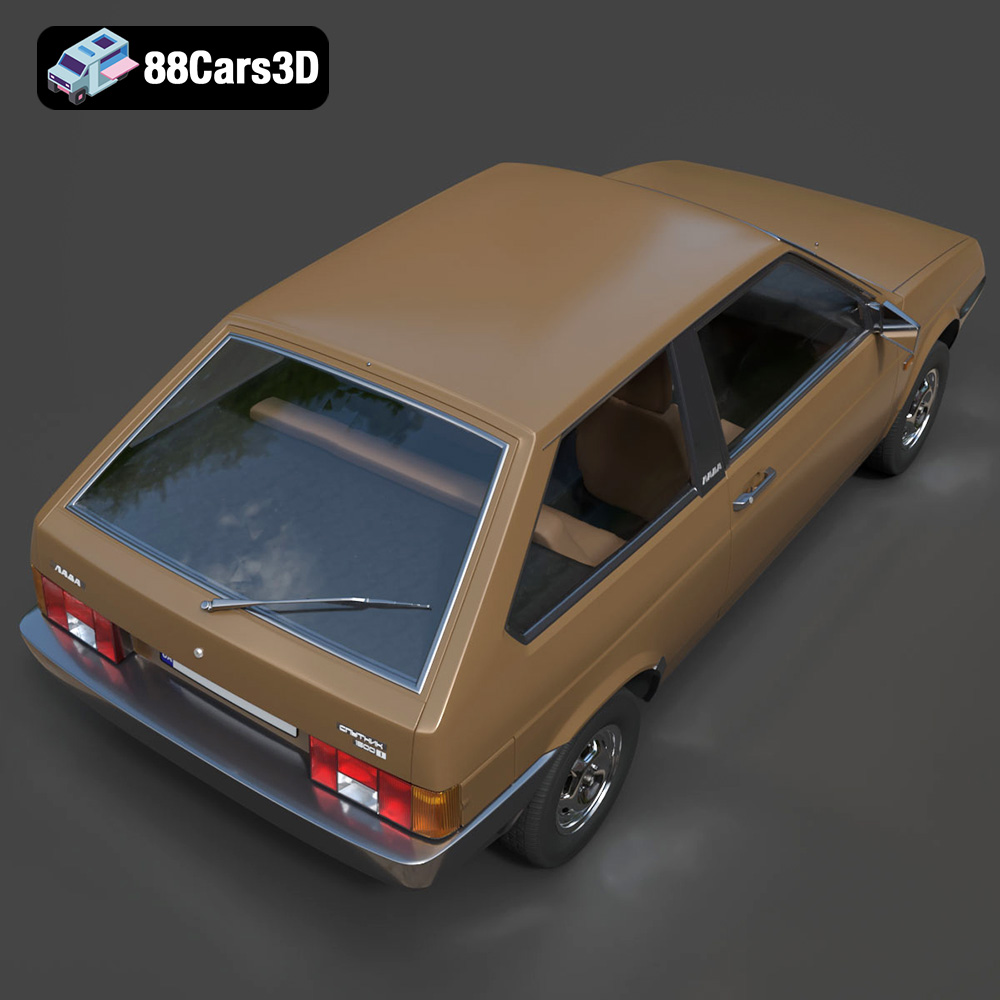
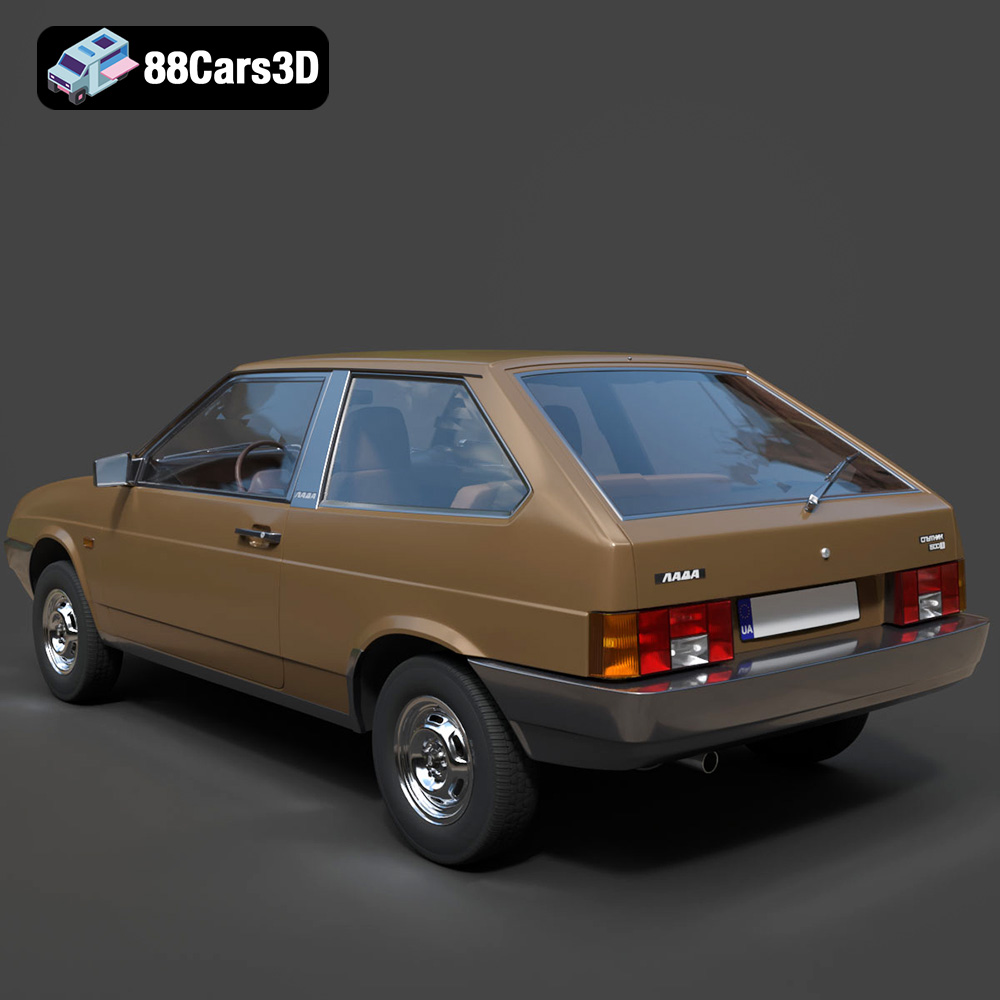
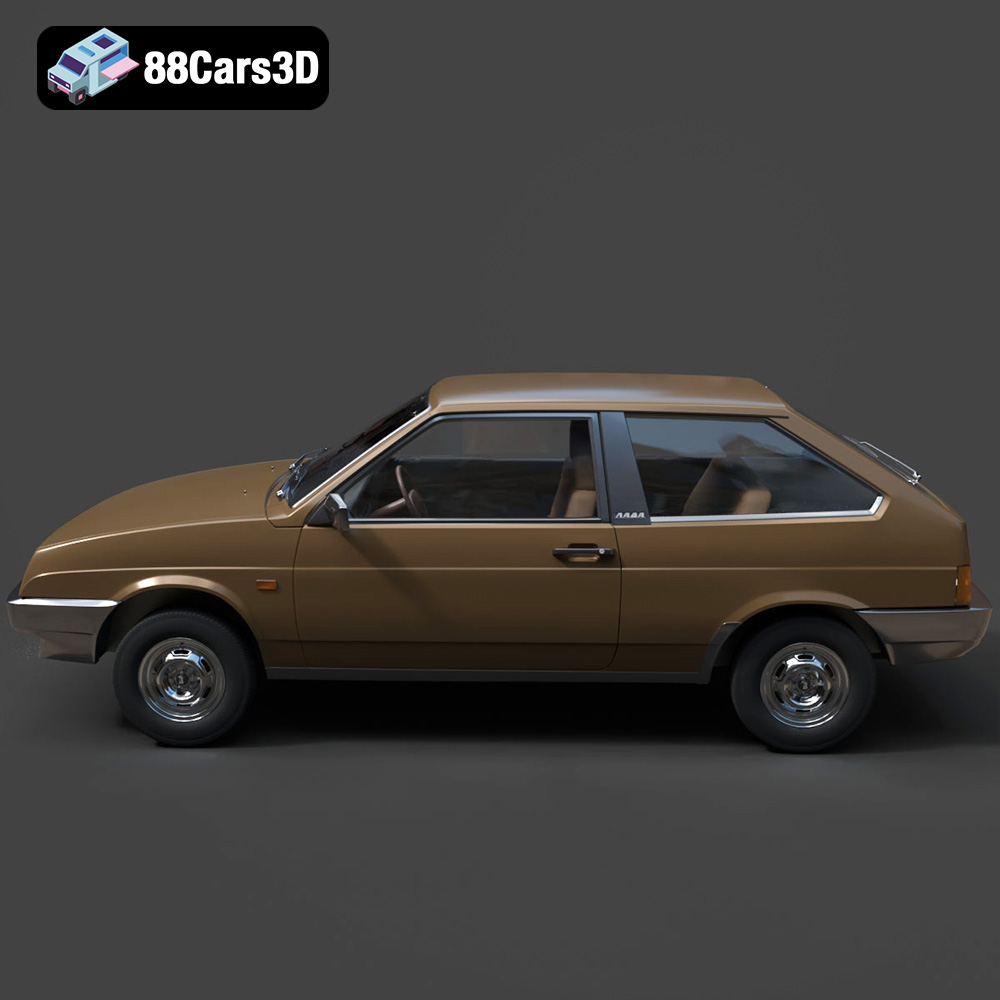
The VAZ Lada 2108, introduced in 1984, was a landmark in Soviet automotive design, moving away from traditional rear-wheel-drive platforms to embrace a modern front-wheel-drive hatchback configuration. This 3D model from 88cars3d.com expertly captures its iconic wedge-shaped aerodynamic profile, a hallmark of 1980s automotive aesthetics. The distinct rectangular headlights, a defining feature of its utilitarian aesthetic, are faithfully recreated, lending immediate recognition to the vehicle. Every curve and panel has been carefully sculpted to reflect the original vehicle’s unique proportions and character, ensuring that its legacy is honored in the digital realm.
Beyond its exterior, the model delves into the engineering specifics that made the Lada 2108 unique. An accurately recreated transverse engine bay setup hints at the groundbreaking mechanical design, while the authentic exhaust system routing and classic wheel design speak volumes about the attention to detail. The undercarriage, often overlooked, is also faithfully represented, making the model suitable for intricate simulations or close-up shots.
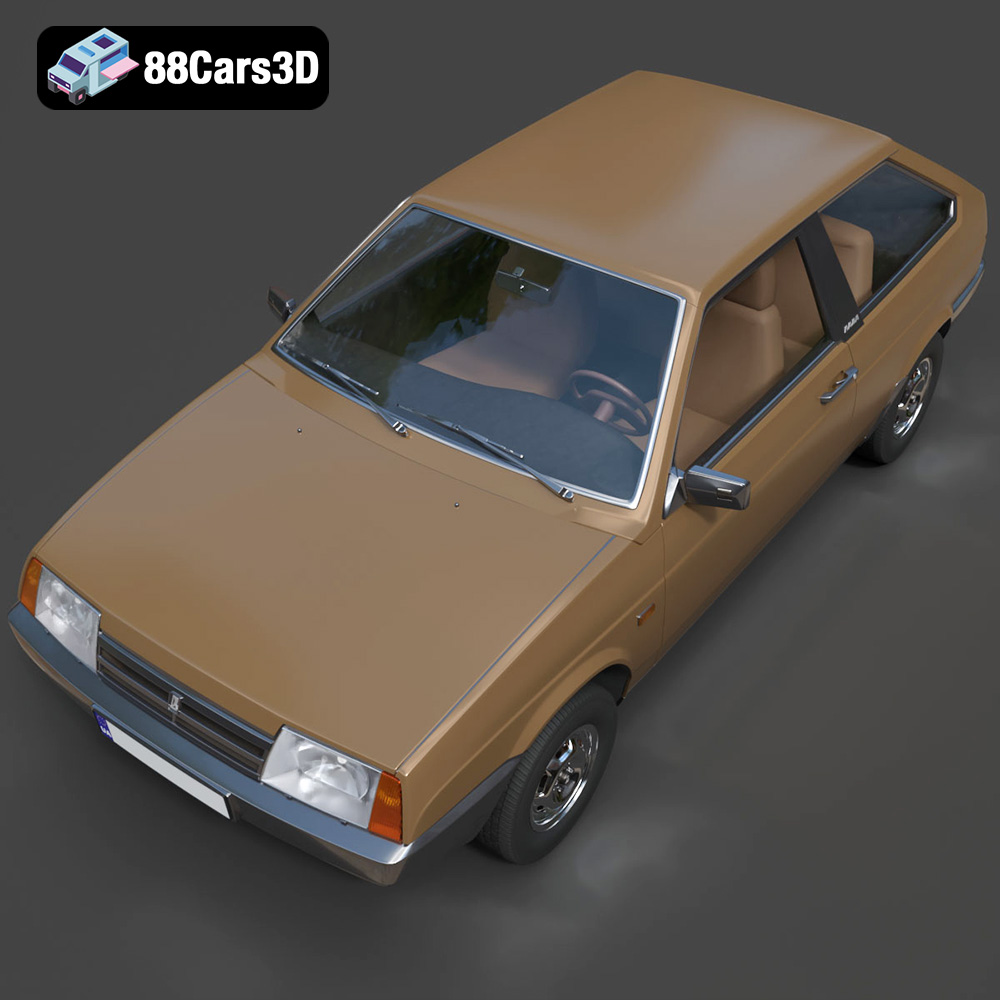
The interior is equally compelling, designed for both aesthetic appeal and functional realism. Classic cloth and vinyl seat details with accurate stitching lines evoke the era, while the two-spoke steering wheel and era-correct analog instrument cluster and dashboard layout transport the viewer directly into the cockpit. Detailed control elements, including pedals, handbrake, and manual shifter, provide a sense of completeness. This level of detail makes the model perfect for first-person perspectives in games or interactive virtual tours, ensuring an immersive user experience.
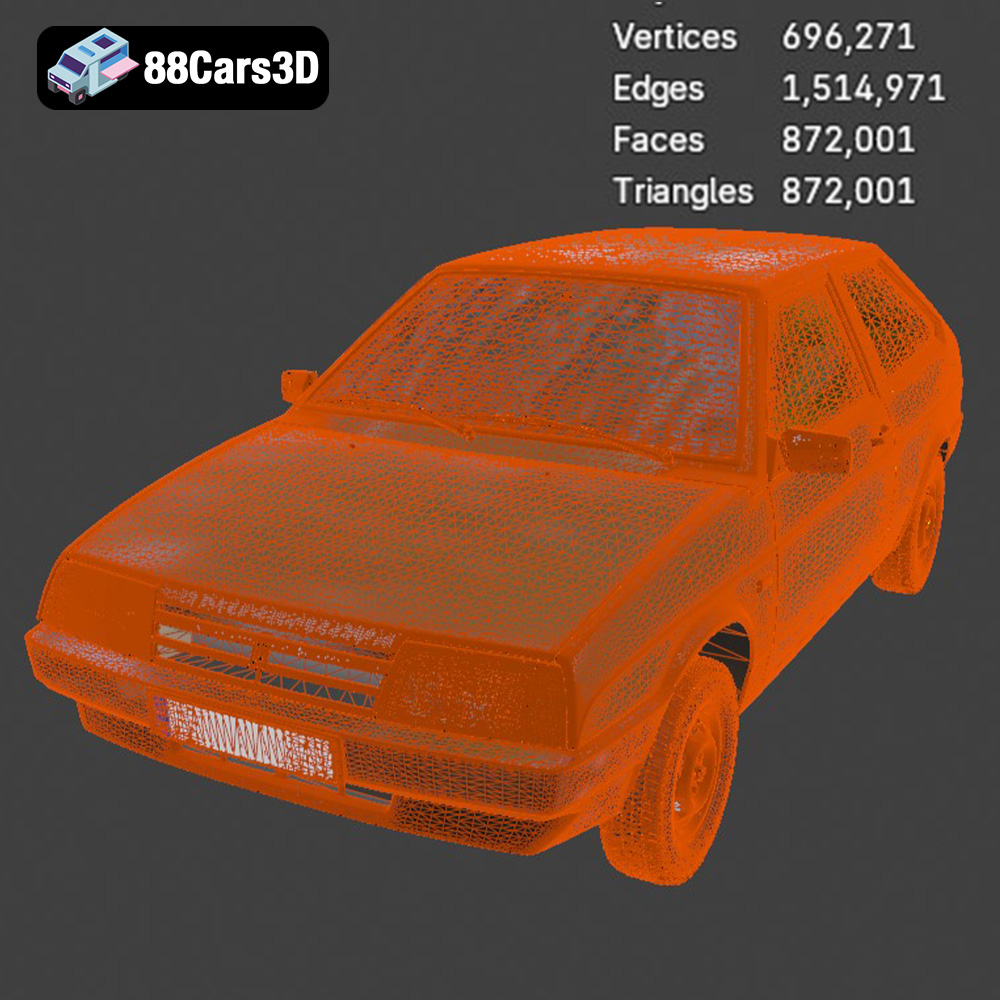
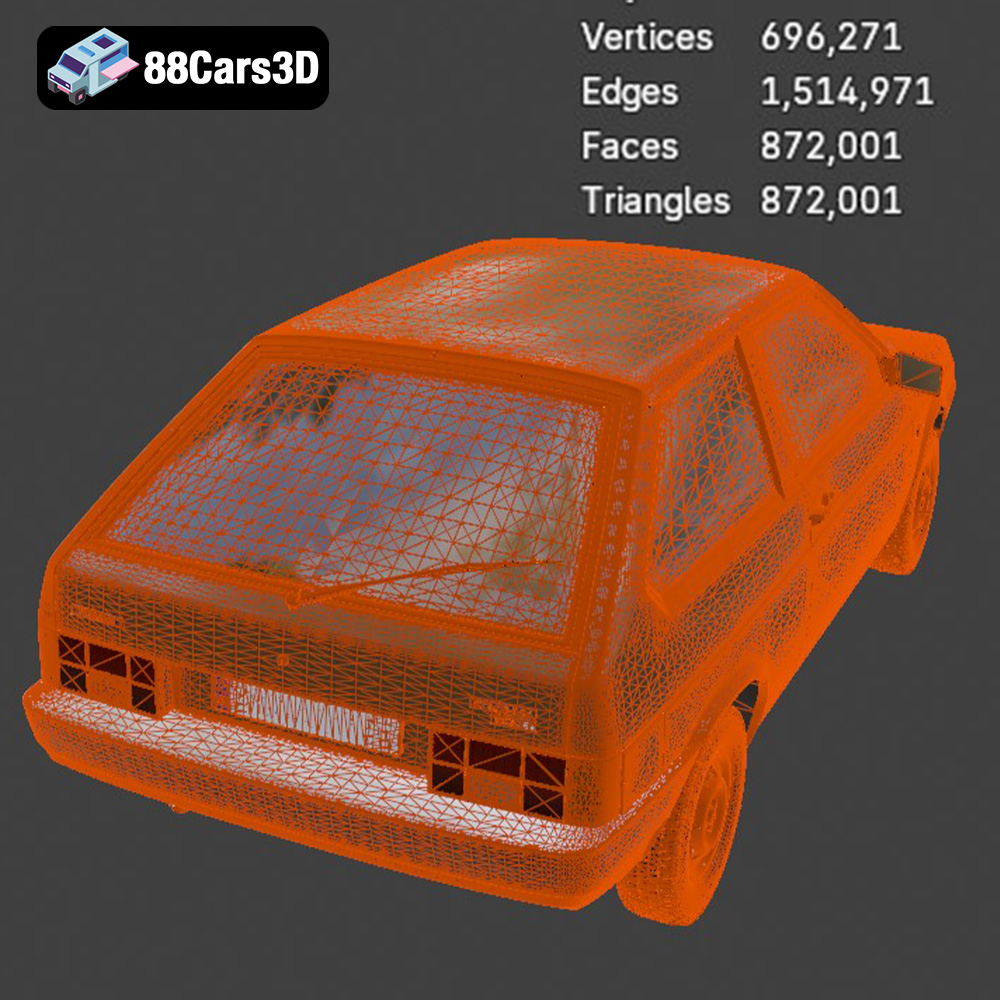
A critical aspect of any professional 3D model is its technical optimization. The VAZ Lada 2108 model boasts an optimized triangle count of approximately 250,000 polygons. This figure is a testament to its “game-ready” status, striking an excellent balance between high visual fidelity and maintaining superb performance in real-time environments such as Unreal Engine or Unity. The clean topology ensures flawless reflections and realistic lighting interactions, which is crucial for modern physically based rendering (PBR) pipelines. Real-world scale accuracy, based on actual vehicle chassis, further enhances its utility, providing a solid foundation for simulation and accurate placement within virtual scenes. Proper pivot setups for steering, wheel rotation, and suspension travel are also included, simplifying animation and dynamic interactions.
The true value of a high-quality 3D car model, such as the VAZ Lada 2108, is realized through its seamless integration into diverse professional workflows. Whether the end goal is a captivating cinematic, an interactive game, or a detailed architectural visualization, the process demands specific tools and techniques.
For game developers, the VAZ Lada 2108 3D model is a treasure trove. Its optimized ~250,000 triangle count is perfectly suited for real-time engines like Unreal Engine and Unity. When importing into Unreal, for instance, developers would typically use the `.fbx` or the specific `.unreal` file provided. The model’s separate wheels, suspension, and steering components are crucial for creating dynamic vehicle physics, allowing for realistic driving mechanics and suspension travel. LODs (Levels of Detail) can be easily generated or adjusted to ensure performance scalability across different hardware specifications. The clean topology and proper UV mapping facilitate the creation of custom PBR materials, allowing artists to achieve photorealistic paint finishes, worn textures, or even dirt and grime effects, bringing the classic Lada to life in an open-world environment or a historical racing game.
In the realm of architectural visualization, product rendering, or automotive marketing, the demand for photorealistic imagery is paramount. The VAZ Lada 2108 model, available in `.max` and `.blend` formats, offers complete flexibility for artists using 3ds Max or Blender. In 3ds Max, artists can leverage advanced rendering engines like V-Ray or Corona to produce stunning visuals. The model’s accurate frame geometry and detailed components allow for precise lighting setups, showcasing reflections off the metallic finishes and intricate shadow play. Blender users benefit from the native `.blend` file, offering full access to material nodes, modifiers, and the powerful Cycles or Eevee renderers. This allows for rapid iteration on material finishes, lighting conditions, and camera angles to create compelling studio renders or integrate the vehicle into lifestyle scenes. The ability to modify tire textures, adjust body colors, and adapt lighting ensures the model can fit any creative brief, from showcasing factory-spec authenticity to a customized, restomod aesthetic.
The burgeoning fields of Augmented Reality (AR) and Virtual Reality (VR) offer new frontiers for experiencing 3D car models. The `.glb` format, specifically optimized for web and mobile performance, makes the VAZ Lada 2108 3D model an ideal candidate for immersive applications. Imagine a virtual showroom where potential buyers can walk around the Lada, inspect its interior in 360 degrees, or even customize its paint job in real-time. For AR experiences, the model can be accurately scaled and placed within a real-world environment using a smartphone, allowing users to “see” the Lada parked in their driveway. The optimized geometry ensures smooth frame rates on mobile devices and VR headsets, delivering a truly engaging and interactive experience without sacrificing visual quality.
The utility of a robust 3D model extends far beyond digital screens. For enthusiasts, hobbyists, and even professional designers, the ability to physically manifest a digital creation through 3D printing offers a tangible connection to the virtual. The VAZ Lada 2108 1984 3D model is designed with this versatility in mind, offering not only digital perfection but also a clear pathway to physical realization.
The inclusion of the `.stl` format and detailed 3D print settings for the VAZ Lada 2108 underscores its readiness for additive manufacturing. For hobbyists wanting a display-scale replica, this is a significant advantage. The recommended scales (1:12, 1:18, 1:24) cater to popular modeling preferences, allowing for a desktop display or a larger, more detailed piece.
The technical specifications for printing are crucial:
Post-processing, including sanding, priming, and painting with authentic factory colors, can truly transform a 3D print into a museum-quality scale model. This functionality transforms the digital VAZ Lada 2108 from 88cars3d.com into a physical collectible, celebrating automotive history in a tactile form.
Beyond personal projects, detailed 3D car models play a pivotal role in professional visualization. For automotive brands or historical archives, precise 3D models of classic cars like the Lada 2108 serve as invaluable assets. They can be used for:
The model’s high fidelity, accurate geometry, and clean topology make it perfect for studio lighting setups and cinematic sequences, delivering compelling visual narratives that resonate with audiences.
In today’s fast-paced digital landscape, particularly within game development and interactive experiences, the balance between visual fidelity and performance optimization is critical. A beautifully detailed 3D car model is only truly valuable if it can run smoothly across target platforms. The VAZ Lada 2108 1984 3D model exemplifies this crucial equilibrium.
The approximately 250,000 triangle count of the VAZ Lada 2108 is a deliberate choice, reflecting a deep understanding of real-time rendering constraints. While a high-polygon model might boast incredible detail, it can quickly bog down game engines, leading to poor frame rates and an unsatisfactory user experience. Conversely, a model that is too low-poly might lack the visual realism demanded by modern titles.
This model strikes a perfect balance:
The demands of AR/VR are even more stringent when it comes to performance. Immersive environments require not just stable frame rates, but also minimal latency to prevent motion sickness and ensure a comfortable user experience. The VAZ Lada 2108 model, particularly in its `.glb` format, is highly suitable for these applications due to its inherent optimization.
These technical considerations are vital for creating compelling and smooth immersive experiences, making the Lada 2108 model a versatile asset for the cutting edge of digital interaction.
A truly professional 3D car model offers more than just out-of-the-box utility; it provides a canvas for customization and ensures longevity through adaptability. The VAZ Lada 2108 1984 3D model excels in this regard, offering creators the flexibility to tailor it to specific project needs and ensuring its relevance across future updates and artistic directions.
The provided file formats and thoughtful construction of the Lada 2108 model empower users with extensive customization options:
This level of customization means that the single purchase of this 3D car model from 88cars3d.com can serve multiple purposes across different projects, maximizing its value and utility.
In the fast-evolving world of 3D technology, asset longevity is key. A well-constructed 3D model is future-proof, meaning it can be easily updated and adapted to new software versions, rendering techniques, or hardware capabilities.
This adaptability ensures that the VAZ Lada 2108 1984 3D model remains a valuable asset for years to come, offering a robust foundation for endless creative possibilities.
The VAZ Lada 2108 1984 holds a special place in automotive history, symbolizing a pivotal moment in Soviet engineering. In the digital age, this legacy is not only preserved but actively expanded through meticulously crafted 3D car models. The detailed 3D model of the Lada 2108 discussed here offers a testament to the power of modern 3D asset creation – blending historical accuracy with technical optimization for a diverse range of applications.
From the granular detail of its wedge-shaped profile and authentic interior to its optimized polygon count, this model is built for purpose. It serves as an invaluable asset for game developers building immersive open-world environments, for artists striving for photorealistic renders in 3ds Max or Blender, for AR/VR pioneers creating interactive experiences, and even for hobbyists looking to 3D print a tangible piece of automotive history. The comprehensive range of included file formats ensures unparalleled compatibility and flexibility, making it a cornerstone for professional workflows.
Investing in high-quality 3D models like the VAZ Lada 2108 from 88cars3d.com isn’t just about acquiring a digital asset; it’s about gaining a powerful tool that saves development time, enhances visual fidelity, and unlocks boundless creative possibilities. As the digital frontier continues to expand, assets that marry historical significance with technical excellence will remain at the forefront of innovation, driving digital dreams for years to come.
The VAZ Lada 2108, introduced in 1984, marked a revolutionary step in Soviet automotive engineering as the first front-wheel-drive hatchback from the renowned manufacturer. This 3D model captures its iconic wedge-shaped aerodynamic profile, distinct rectangular headlights, and functional utilitarian aesthetic. Featuring an accurately recreated transverse engine bay setup, authentic exhaust system routing, and classic wheel design, this model honors the legacy of the vehicle that mobilized a generation.
$19.99
.blend
.fbx
.glb
.hatchback
.lada
.max
.obj
.ply
.rendering
.stl
.unreal
.vaz
1984
2108
car-3d-model
classic-car
game asset
game-ready
low-poly
optimized
samara
soviet-car
VR/AR