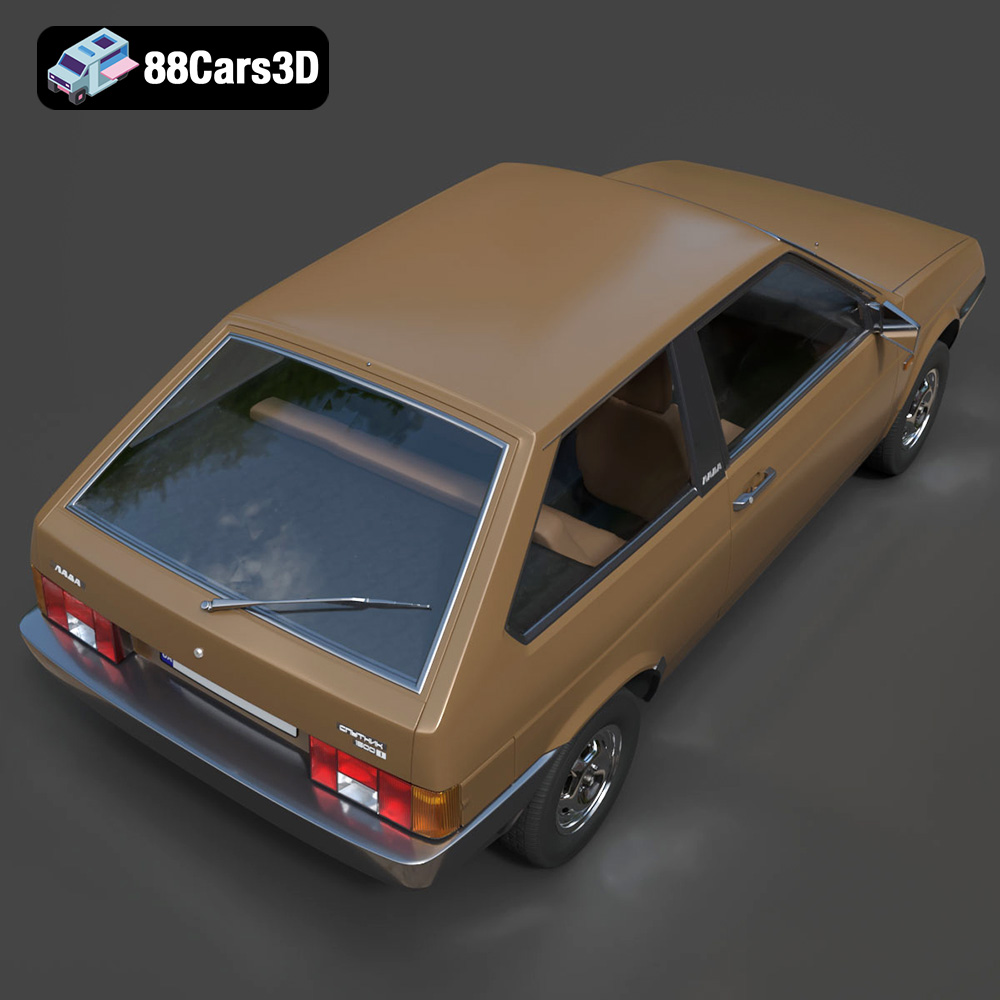
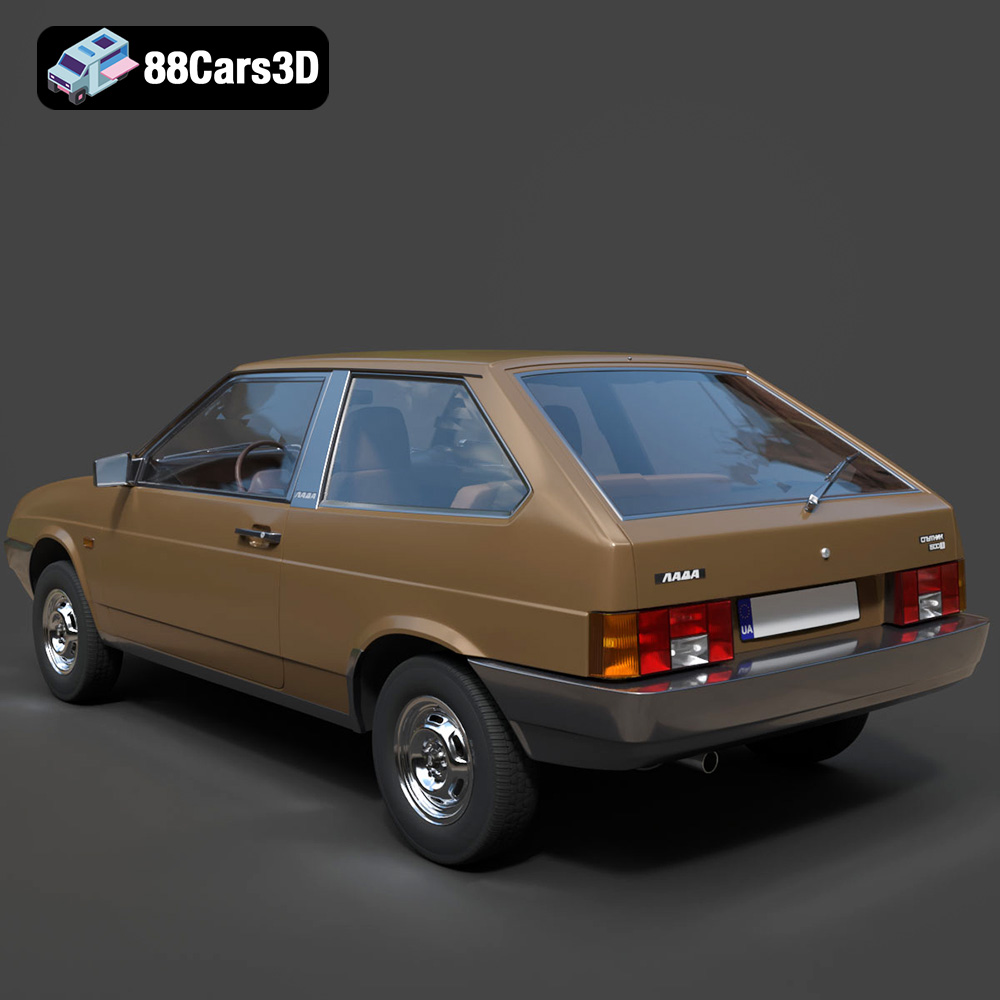
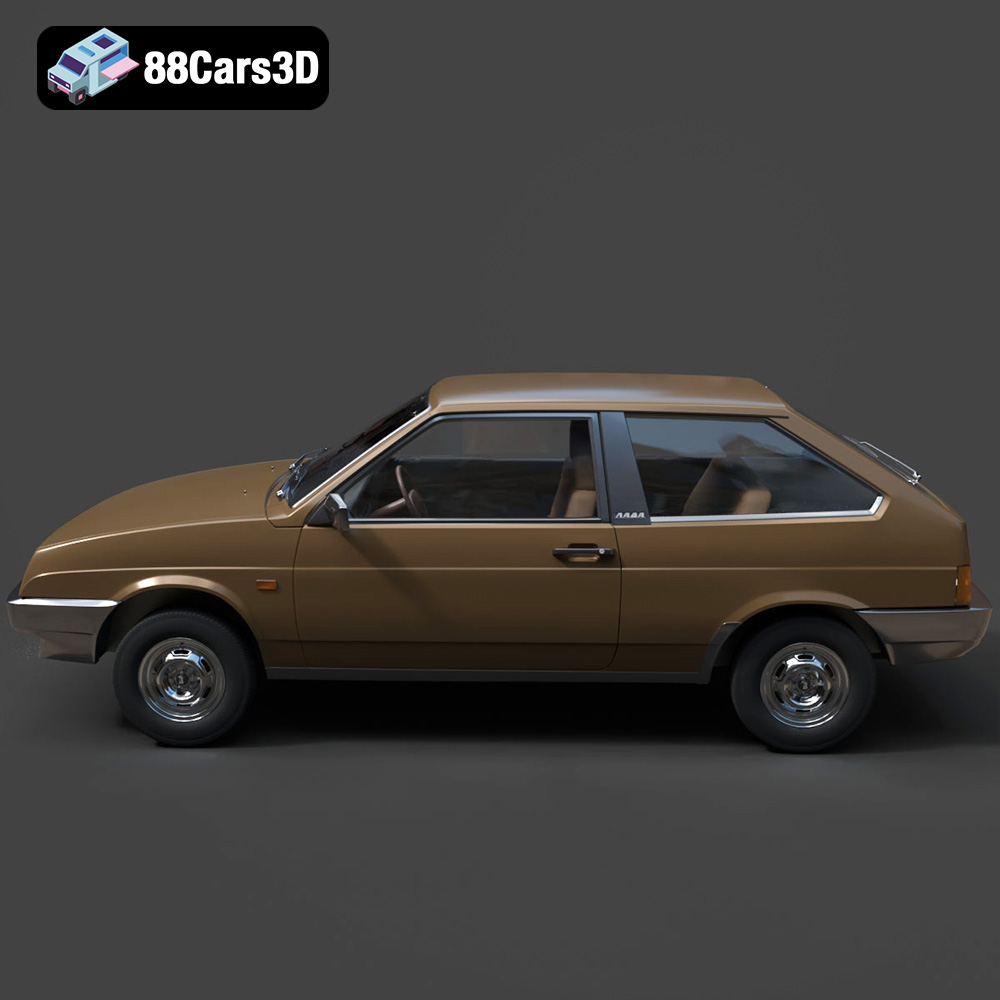
Get 20% OFF All Premium 3D & STL Models!

In the rapidly evolving landscape of 3D visualization and real-time experiences, the demand for meticulously crafted assets continues to grow. From blockbuster video games to immersive virtual showrooms and cutting-edge AR/VR applications, the foundation of any compelling digital environment lies in the quality and authenticity of its models. Automotive models, in particular, hold a unique place, representing not just vehicles but symbols of design, engineering, and cultural history.
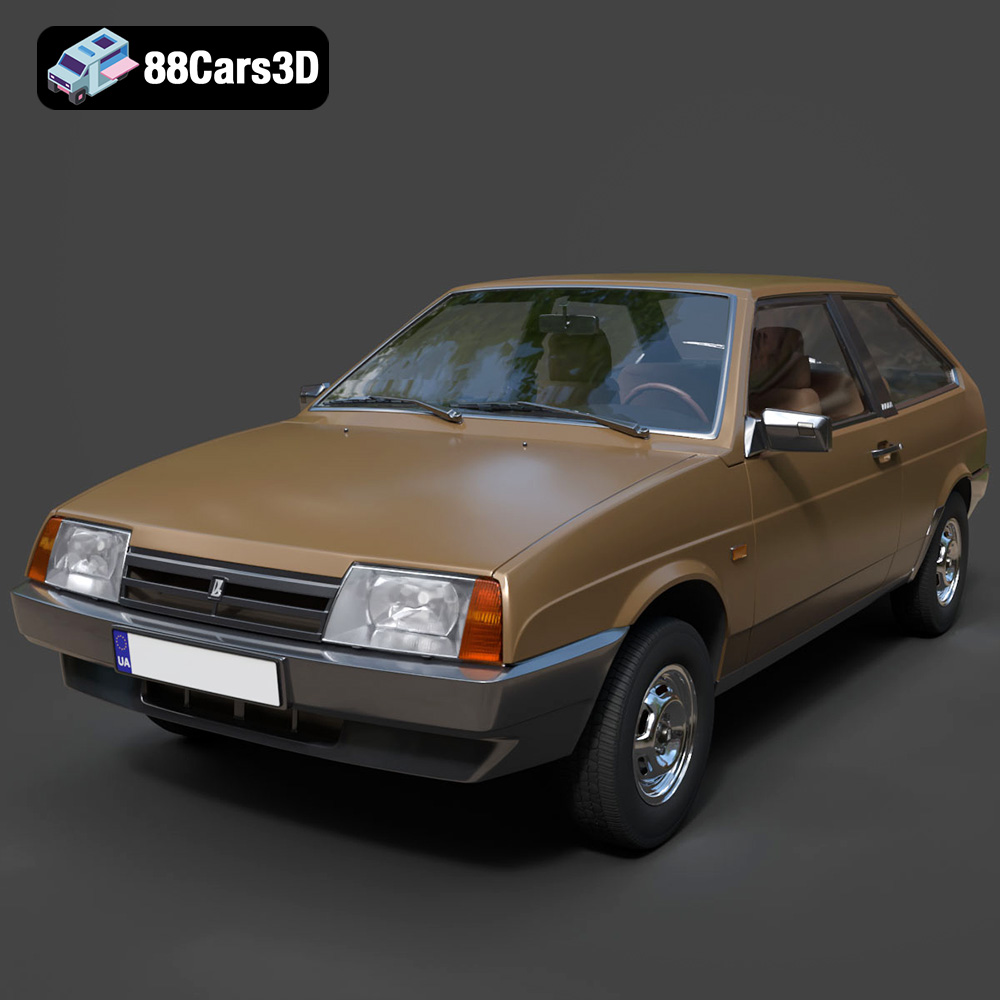
Today, we’re diving deep into the world of 3D car models, exploring how a historically significant vehicle like the VAZ Lada 2108 1984 can transcend its original form to become a versatile and indispensable asset in professional pipelines. The Lada 2108, a trailblazer in Soviet automotive engineering as the first front-wheel-drive hatchback, carried a distinctive wedge-shaped profile and a utilitarian aesthetic that mobilized a generation. Its digital reincarnation as a high-fidelity 3D model, available on platforms like 88cars3d.com, offers an unparalleled opportunity for creators to infuse their projects with a touch of authentic history and robust technical performance.
This article will delve into the technical intricacies of developing and utilizing such a model, discussing everything from file formats and poly counts to professional workflows in leading software like 3ds Max, Blender, and Unreal Engine. We will uncover how a detailed asset like the VAZ Lada 2108 3D model is not merely a visual replica but a carefully optimized tool designed for diverse applications, from high-fidelity rendering to interactive game environments and even 3D printing.
The versatility of a 3D model is often defined by the array of file formats it supports. Each format is designed with specific use cases and software ecosystems in mind, offering different advantages for compatibility, data integrity, and pipeline efficiency. When acquiring a comprehensive asset like the VAZ Lada 2108 3D model, understanding these formats is crucial for seamless integration into your projects.
The .blend file format is Blender’s native project file. It encapsulates an entire Blender scene, including not just the mesh data for the VAZ Lada 2108 but also its materials, textures, lighting, camera setups, animations, and even physics simulations. This format is ideal for users working primarily within Blender, offering full editability and preserving all scene information. It’s a “live” project file, meaning you can open it and immediately begin modifying, re-texturing, rigging, or animating the model with all its original settings intact. For artists who want to delve into the model’s construction, understand its material setup, or adapt it extensively, the .blend file provides the most comprehensive starting point.
.fbx (Filmbox) is arguably the most widely adopted interchange format in the 3D industry, especially crucial for real-time engines like Unreal and Unity. Developed by Autodesk, FBX excels at preserving a wide range of data, including mesh geometry, materials (though often simplified or requiring re-setup in the target application), textures (often packed or referenced), skeletal animations, and even blend shapes. Its robust support for hierarchies and animation makes it the go-to choice for exporting game assets like the VAZ Lada 2108 into real-time pipelines where performance and animation fidelity are paramount. When importing an FBX, users typically get clean mesh data and basic material assignments, ready for advanced shader setup in the engine.
The .obj (Wavefront Object) format is a near-universal standard for 3D geometry. It’s an older, simpler format primarily focused on storing mesh data (vertices, normals, UVs, faces) and material references (via an accompanying .mtl file). While it doesn’t support animation or complex scene data, its simplicity makes it incredibly compatible across virtually all 3D software. If you need to import the VAZ Lada 2108 into a niche rendering application, CAD software, or an older 3D package, OBJ is often the most reliable choice for transferring the pure geometric form. Artists often use OBJ for static renders or for transferring models where complex rigging or animation is not required.
.glb (GL Transmission Format Binary) is the binary version of glTF, a royalty-free specification for the efficient transmission and loading of 3D scenes and models by applications. GLB packs all asset data—geometry, materials, textures, animations—into a single, self-contained file. This makes it incredibly efficient for web-based 3D viewers, AR/VR experiences, and mobile applications where file size and quick loading are critical. The VAZ Lada 2108 in GLB format would be perfectly optimized for displaying in a virtual showroom or an augmented reality app, offering a streamlined experience without requiring external texture files.
.stl (Stereolithography) is the de facto standard for 3D printing. This format represents a 3D model as a series of connected triangles, describing only the surface geometry without any color, texture, or material information. For hobbyists or professionals looking to physically manifest the VAZ Lada 2108, the STL file provides the necessary data for a 3D printer to slice and build the model layer by layer. The Lada model, being convertible to .stl, opens up possibilities for display-scale replicas, requiring specific preparation like ensuring manifold geometry and appropriate scale.
The .ply (Polygon File Format) is a flexible format primarily used for storing 3D data from 3D scanners, CAD systems, and scientific applications. It can store not only vertex positions and faces but also properties like color, transparency, normals, texture coordinates, and even properties per face or vertex. While less common for general-purpose asset exchange than FBX or OBJ, PLY offers a robust way to preserve detailed mesh information, making it suitable for high-precision modeling, archival, or analysis of the VAZ Lada 2108’s intricate geometry.
While not a universal file format in the same way as FBX or OBJ, a dedicated .unreal file often implies a pre-packaged asset designed specifically for the Unreal Engine. This could mean a .uasset file or a collection of files ready for direct import, potentially including custom collision meshes, LODs (Levels of Detail), and a basic material setup already configured within Unreal. This streamlines the process significantly, requiring minimal setup from the user. For game developers leveraging the VAZ Lada 2108 model, an Unreal-ready package can save hours of optimization and material calibration.
Similar to .blend for Blender, .max is the native scene file format for Autodesk 3ds Max. It stores the complete 3ds Max project, including geometry, materials, textures, lighting, cameras, animation keyframes, and plugins. For users of 3ds Max, the .max file provides the most comprehensive and editable version of the VAZ Lada 2108, allowing them to fully leverage Max’s powerful modeling, rigging, animation, and rendering tools. It’s the ideal format for artists who want full control over the model’s original construction and intend to integrate it deeply into a 3ds Max-centric workflow.
The true value of a 3D car model extends far beyond its visual appeal. It lies in the meticulous attention to technical detail that ensures both aesthetic fidelity and practical usability across diverse platforms. The VAZ Lada 2108 1984 3D model is an excellent case study in this balance, showcasing how thoughtful design choices translate into a high-performance asset.
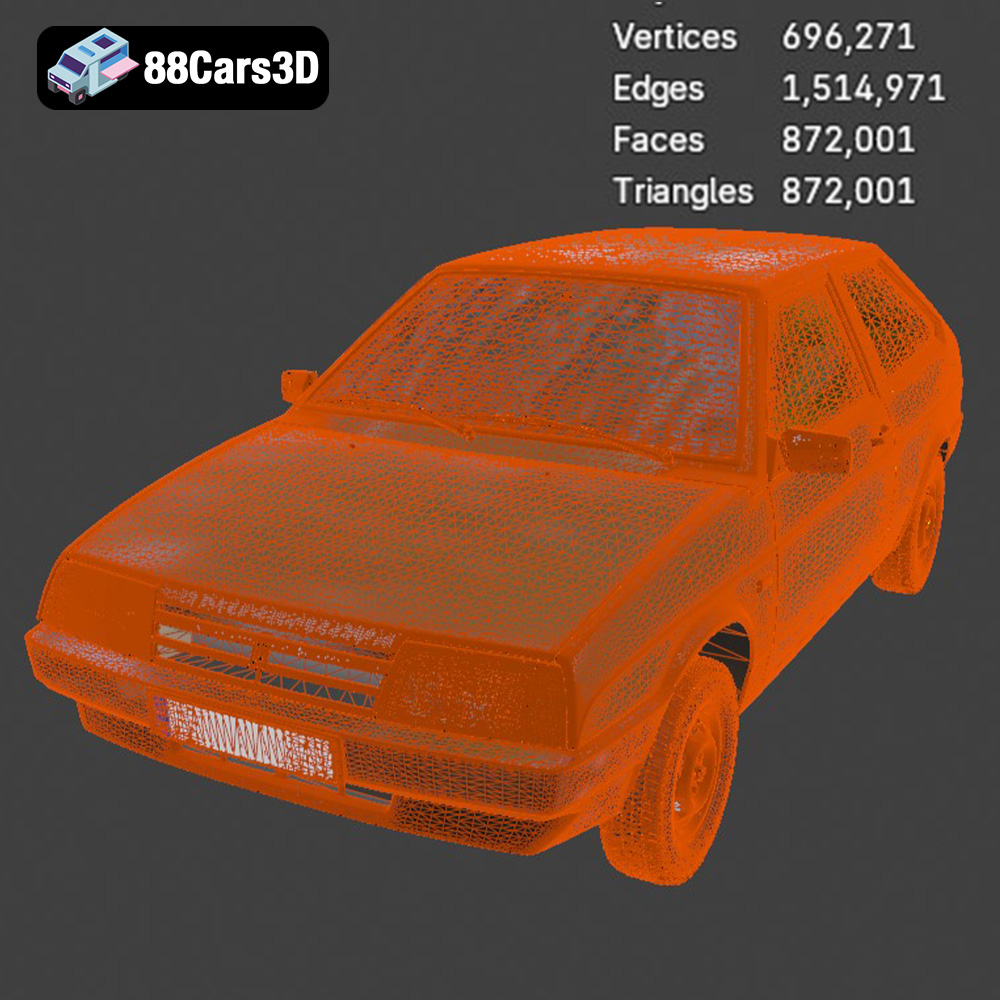
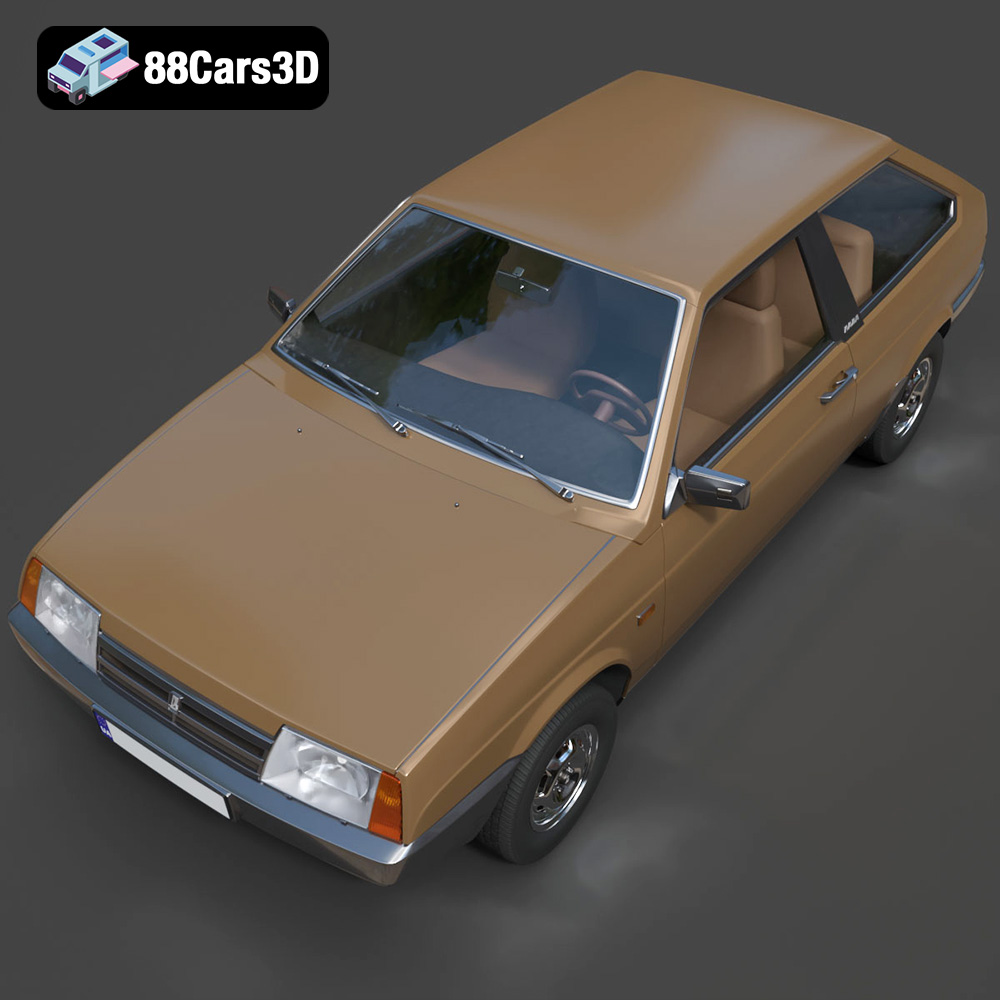
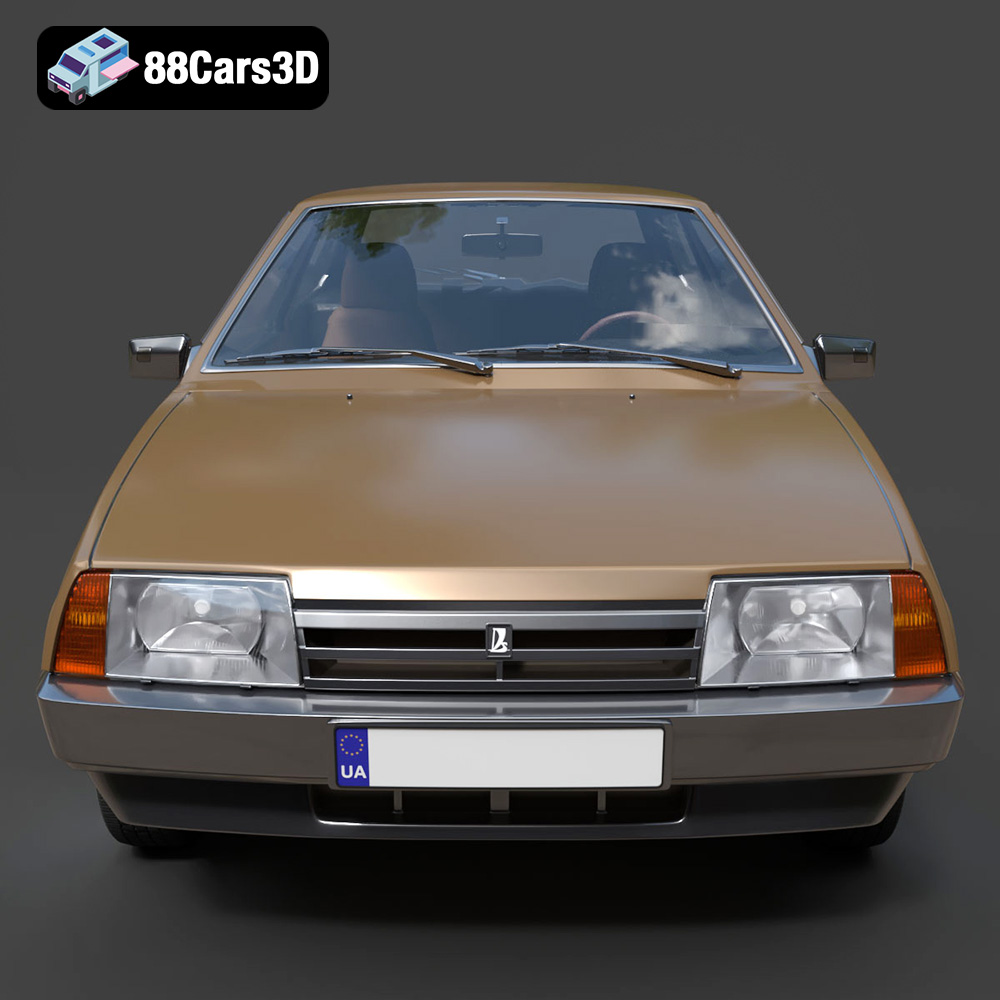
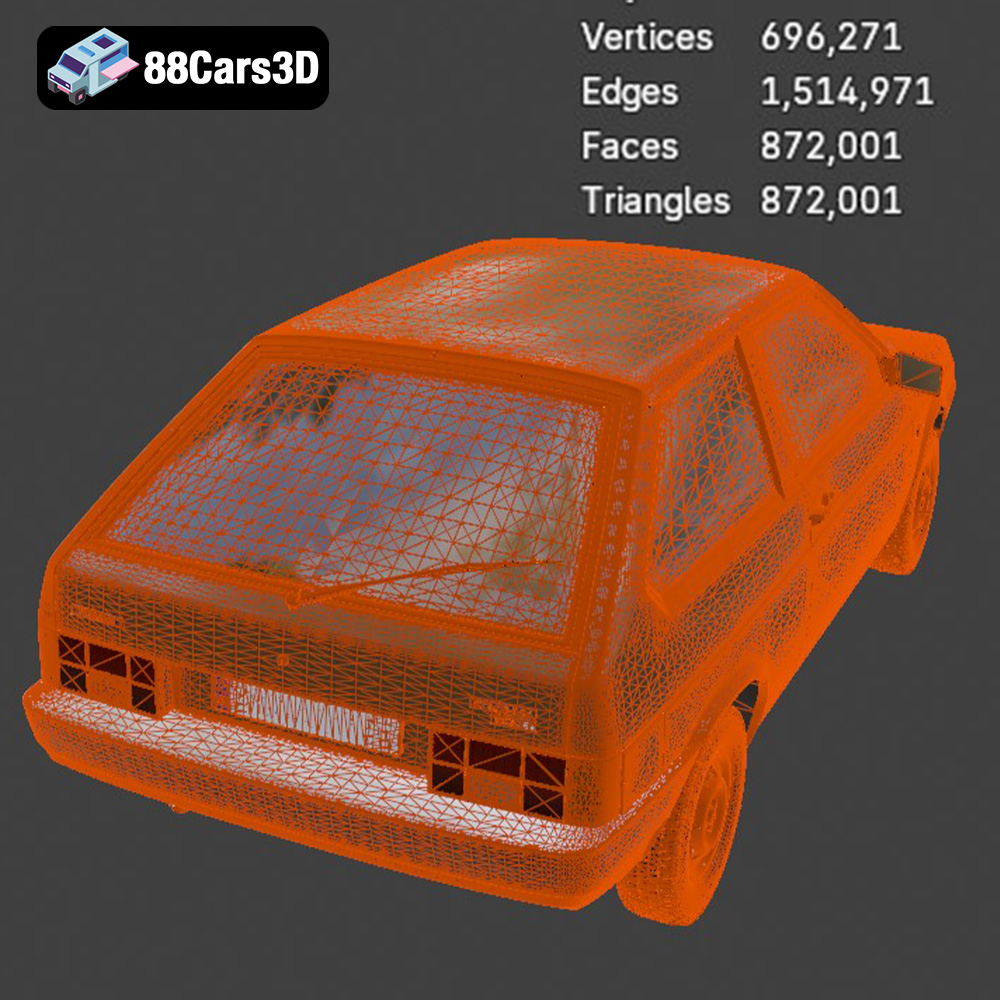
Capturing the iconic wedge-shaped profile and utilitarian aesthetic of the VAZ Lada 2108 required a precise hand. The model features accurate frame geometry, body panels, and proportions, faithfully replicating the original vehicle. A critical technical specification for any 3D asset, especially for real-time applications, is its polygon count. This Lada model boasts an optimized triangle count of approximately 250,000 polygons. This strikes a near-perfect balance, offering sufficient detail for close-up renders and maintaining high visual fidelity, while simultaneously ensuring excellent performance within demanding real-time engines like Unreal and Unity. The clean topology further guarantees flawless reflections and realistic lighting interactions, which are crucial for photorealistic automotive rendering.
Authenticity goes beyond the surface. This model meticulously recreates key mechanical and interior features, enhancing its utility for various projects.
Beyond raw polygon counts, several technical attributes elevate this Lada model into a professional-grade asset:
A high-quality 3D car model like the VAZ Lada 2108 is a powerful starting point, but its true potential is unlocked through skilled integration into various professional workflows. Whether your goal is cinematic rendering, interactive game development, or architectural visualization, understanding the pipeline is key.
For high-fidelity automotive rendering, 3ds Max and Blender stand out as industry leaders, each offering robust toolsets for modeling, texturing, lighting, and rendering. The VAZ Lada 2108 3D model, with its .max and .blend file formats, is perfectly suited for both.
In 3ds Max, a typical workflow would involve importing the .max file (or .fbx if starting from scratch). Artists would then focus on setting up a compelling studio or environmental lighting rig using V-Ray or Corona Renderer. The Lada’s clean topology ensures that reflections on its distinct body panels behave realistically, a crucial factor for automotive aesthetics. Materials would be fine-tuned—car paint shaders with clear coat layers, realistic glass, tire rubber, and chrome accents. The separate components (wheels, suspension) allow for dynamic camera angles and even subtle animations like suspension compression to add realism to static renders. Leveraging 3ds Max’s powerful rendering capabilities, studios can create stunning marketing visuals or detailed showcases for the VAZ Lada 2108, highlighting its historical significance with photorealistic precision.
Blender, with its Cycles and Eevee render engines, provides an equally powerful and often more accessible platform. Importing the native .blend file means all original materials and scene setups are instantly available. Artists can easily customize the Lada’s body colors (e.g., authentic factory colors or custom finishes), modify tire textures, or adjust material finishes from matte to glossy to metallic, all within Blender’s intuitive node-based shader editor. For cinematic animations, Blender’s robust animation tools can bring the separate components of the Lada to life, creating dynamic sequences of the vehicle in motion or interacting with its environment. This flexibility makes the VAZ Lada 2108 an ideal asset for independent artists and studios alike, looking to produce high-quality renders and animations.
The “game-ready” nature of the VAZ Lada 2108 3D model truly shines when integrated into real-time environments like Unreal Engine. Its optimized ~250,000 triangle count is a sweet spot for performance without sacrificing visual detail, making it an excellent game asset.
For Unreal Engine, the .fbx or the dedicated .unreal file format would be the preferred import method. Upon importing, developers would set up physically based rendering (PBR) materials, leveraging Unreal’s sophisticated material editor. This involves assigning base color, normal maps, roughness, metallic, and ambient occlusion textures to achieve realistic surface properties. The clean UVs of the Lada model ensure accurate texture projection and minimal distortion. Collision meshes, often generated automatically or provided with the .unreal asset, are crucial for realistic physics interactions within the game world.
The separate, pivot-correct components of the Lada (wheels, suspension, steering) are vital for game development. Developers can easily integrate these into a vehicle blueprint, allowing for realistic steering, acceleration, braking, and suspension dynamics. LODs (Levels of Detail) can be further generated or refined within Unreal to ensure optimal performance across different viewing distances, allowing the game to automatically switch to lower-poly versions of the Lada when it’s far from the camera, thereby saving precious rendering resources. This model is perfect for historical racing games, open-world environments set in Eastern Europe, or even as background traffic in larger simulations, providing authentic visual context without taxing engine performance.
The utility of a robust 3D car model extends far beyond static renders or cinematic sequences. Its technical foundations allow for dynamic integration into interactive experiences, virtual reality, augmented reality, and even tangible physical manifestations through 3D printing.
As previously discussed, the VAZ Lada 2108 3D model is explicitly designed to be game-ready. Its optimized poly count and clean topology are critical for maintaining high frame rates in complex game environments. Imagine this classic hatchback as a drivable vehicle in an open-world simulation, faithfully representing the era. Its detailed interior, optimized for first-person POV, allows players to experience the car from the driver’s seat, adding to the immersion. For racing titles, the separate, animatable components enable realistic physics and handling, making it a compelling choice for historical racing circuits or rally stages. The ability to customize body colors and material finishes means developers can offer players personalization options, extending engagement with the asset.
Augmented Reality (AR) and Virtual Reality (VR) represent powerful new frontiers for showcasing automotive designs. The VAZ Lada 2108 model, particularly in its efficient .glb format, is ideally suited for these applications. Picture a virtual showroom where potential buyers or enthusiasts can walk around, inspect the Lada from every angle, open doors, and even sit inside the virtual cockpit. For AR experiences, the model could be overlaid onto a real-world environment via a smartphone, allowing users to “park” the classic car in their driveway or office. The optimized geometry ensures smooth performance on mobile devices and VR headsets, delivering a fluid and engaging interactive experience without lag, making it perfect for virtual configurators or educational historical automotive tours.
While often overlooked in digital production, the ability to convert a 3D model into a physical object via 3D printing adds another layer of versatility. The VAZ Lada 2108 can be converted to an .stl format, which is the standard for 3D printers. This opens up possibilities for hobbyists, collectors, or designers to create display-scale replicas. The product description provides detailed recommendations for 3D print settings:
This capability allows enthusiasts to not just interact with the Lada digitally, but to hold a physical representation of this iconic vehicle in their hands, bridging the gap between digital asset and tangible collectible.
The dual demand for stunning visuals and seamless performance is a constant challenge in 3D production. A high-quality 3D car model like the VAZ Lada 2108 demonstrates how careful optimization techniques enable both. This model is a prime example of balancing detail for realism with efficiency for real-time applications.
As noted, the VAZ Lada 2108 model comes with approximately 250,000 triangles. This figure isn’t arbitrary; it’s a carefully considered balance. For many modern game engines and AR/VR platforms, a vehicle of this complexity, especially a hero asset, needs enough polygons to hold its shape and allow for smooth curves and details. Simultaneously, it must not be so dense that it cripples performance when multiple vehicles or complex environments are present. The “clean topology” mentioned for the Lada model means that these polygons are efficiently distributed, avoiding unnecessary density in flat areas and concentrating detail where it matters, such as edges, curves, and intricate components.
For game development and AR/VR, optimization goes beyond just the base mesh. The Lada model’s design inherently supports several real-time performance enhancements:
By offering a model with such inherent technical advantages, 88cars3d.com provides professionals with assets that not only look incredible but are also built for demanding production environments, minimizing the need for extensive rework.
The world of 3D modeling is a fusion of artistic vision and technical precision, where every polygon and every material setting contributes to the final immersive experience. As we’ve explored through the lens of the VAZ Lada 2108 1984 3D model, a truly professional asset is more than just a digital replica; it’s a versatile tool engineered for demanding workflows across multiple industries.
From its authentic wedge-shaped profile and detailed interior to its optimized ~250,000 triangle count, the VAZ Lada 2108 model exemplifies the meticulous craftsmanship required for high-end 3D car models. We’ve seen how its array of supported file formats—from the fully editable .blend and .max files to the industry-standard .fbx, the web-optimized .glb, and the 3D print-ready .stl—makes it an incredibly adaptable resource. Whether you are aiming for photorealistic automotive rendering in 3ds Max or Blender, developing immersive game assets for Unreal Engine, creating interactive AR/VR experiences, or even producing physical models through 3D printing, this Lada model provides a solid, performance-optimized foundation.
The ability to customize body colors, material finishes, and tire textures further enhances its utility, allowing artists and developers to integrate it seamlessly into any creative vision, be it a historical racing game, a nostalgic cinematic, or a virtual showroom. This focus on both aesthetic fidelity and technical usability is what sets exceptional 3D assets apart.
For those seeking to elevate their projects with high-quality, game-ready, and render-optimized 3D car models, resources like 88cars3d.com offer a curated selection of assets that meet professional standards. The VAZ Lada 2108 1984 3D model stands as a testament to the power of well-crafted digital content, ready to drive your creative endeavors forward.
The VAZ Lada 2108, introduced in 1984, marked a revolutionary step in Soviet automotive engineering as the first front-wheel-drive hatchback from the renowned manufacturer. This 3D model captures its iconic wedge-shaped aerodynamic profile, distinct rectangular headlights, and functional utilitarian aesthetic. Featuring an accurately recreated transverse engine bay setup, authentic exhaust system routing, and classic wheel design, this model honors the legacy of the vehicle that mobilized a generation. Crafted with an optimized triangle count of approximately 250,000 polygons, this 3D model delivers high visual fidelity while maintaining excellent performance in real-time environments. The clean topology ensures flawless reflections and realistic lighting interactions, making it highly versatile for modern digital production pipelines such as game development, AR/VR experiences, and high-end automotive visualization. Perfect for historical racing games, open-world environments with Eastern European settings, virtual showrooms, and nostalgic cinematic animations.
$19.99
.blend
.fbx
.glb
.hatchback
.lada
.max
.obj
.ply
.rendering
.stl
.unreal
.vaz
1984
2108
car-3d-model
classic-car
game asset
game-ready
low-poly
optimized
samara
soviet-car
VR/AR