Get 20% OFF All Premium 3D & STL Models!

In the dynamic world of digital content creation, the demand for high-quality 3D assets is perpetually accelerating. From groundbreaking video games and immersive virtual reality experiences to photorealistic architectural visualizations and compelling marketing campaigns, 3D car models stand as a cornerstone for various industries. These aren’t just decorative elements; they are complex technical assets requiring meticulous craftsmanship, a deep understanding of engineering, and an eye for artistic detail. A truly exceptional 3D car model bridges the gap between digital precision and real-world authenticity, offering unparalleled versatility for creators.
Consider a vehicle like the VAZ Lada 21099 (1990). While it might seem like a simple, utilitarian sedan, its cultural significance and distinctive design make it an invaluable subject for a premium 3D model. Capturing its iconic, boxy styling, the specific details of its angular grille, and the unique character that defines Eastern European motoring requires more than just a surface-level scan. It demands a sophisticated approach to topology, PBR materials, and a deep understanding of various file formats to ensure it performs flawlessly across diverse digital platforms. This article delves into the technical intricacies that elevate standard 3D car models to professional-grade assets, demonstrating how models like the VAZ Lada 21099 become indispensable tools for designers, developers, and artists alike.
Classic cars hold a unique allure, transcending mere transportation to become symbols of history, culture, and design philosophy. In the digital realm, this appeal is amplified, offering creators a rich palette for storytelling, world-building, and high-fidelity rendering. Incorporating authentic classic automotive assets allows for the creation of scenes imbued with nostalgia, historical accuracy, or even speculative futures.
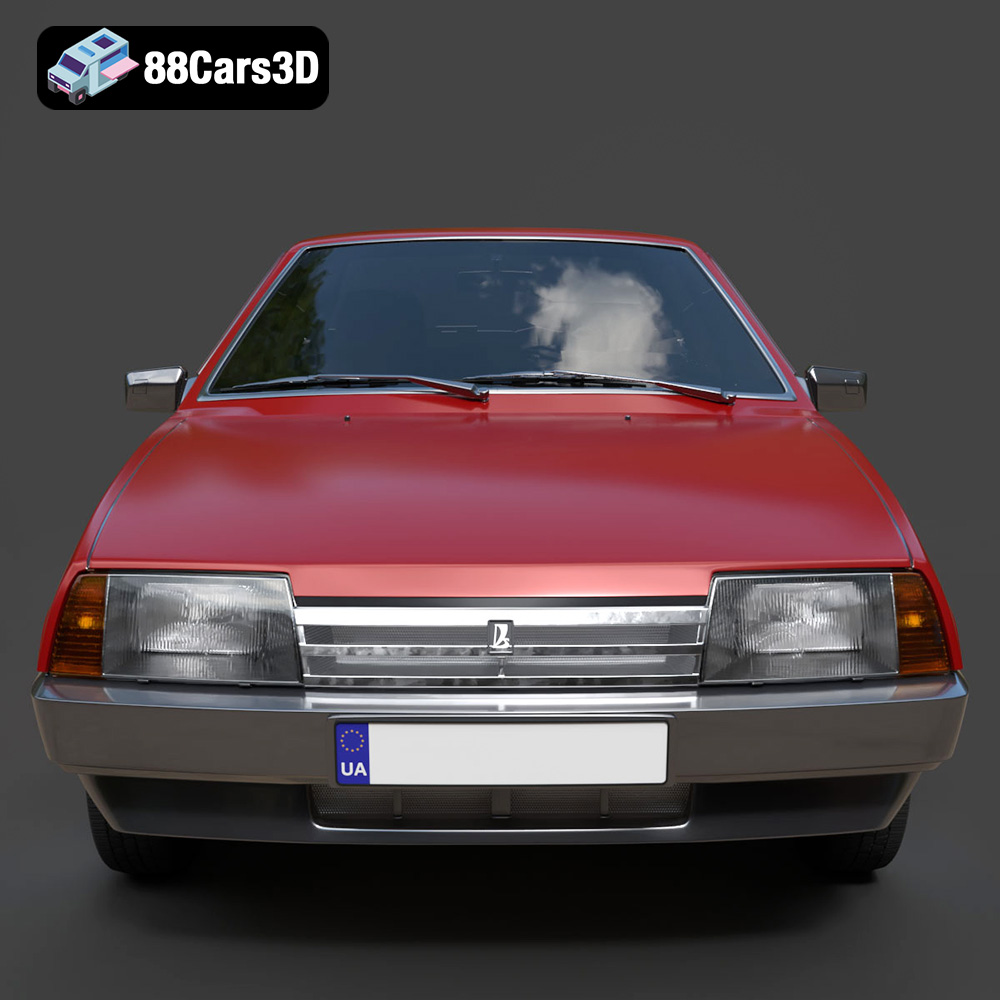
Vehicles like the VAZ Lada 21099 are more than just cars; they are cultural touchstones. The 1990 VAZ Lada 21099, with its distinctive four-door sedan profile, robust engineering, and utilitarian design, is an emblem of Eastern European motoring. A high-quality 3D model of such a vehicle allows artists and developers to accurately portray specific eras and geographical contexts. From its sharp, angular front grille and rectangular halogen headlights to its characteristic high rear deck and stark, pragmatic lines, every detail contributes to its unmistakable identity. Recreating this essence digitally provides a powerful tool for historical preservation and artistic expression, enabling detailed virtual reconstructions of period environments.
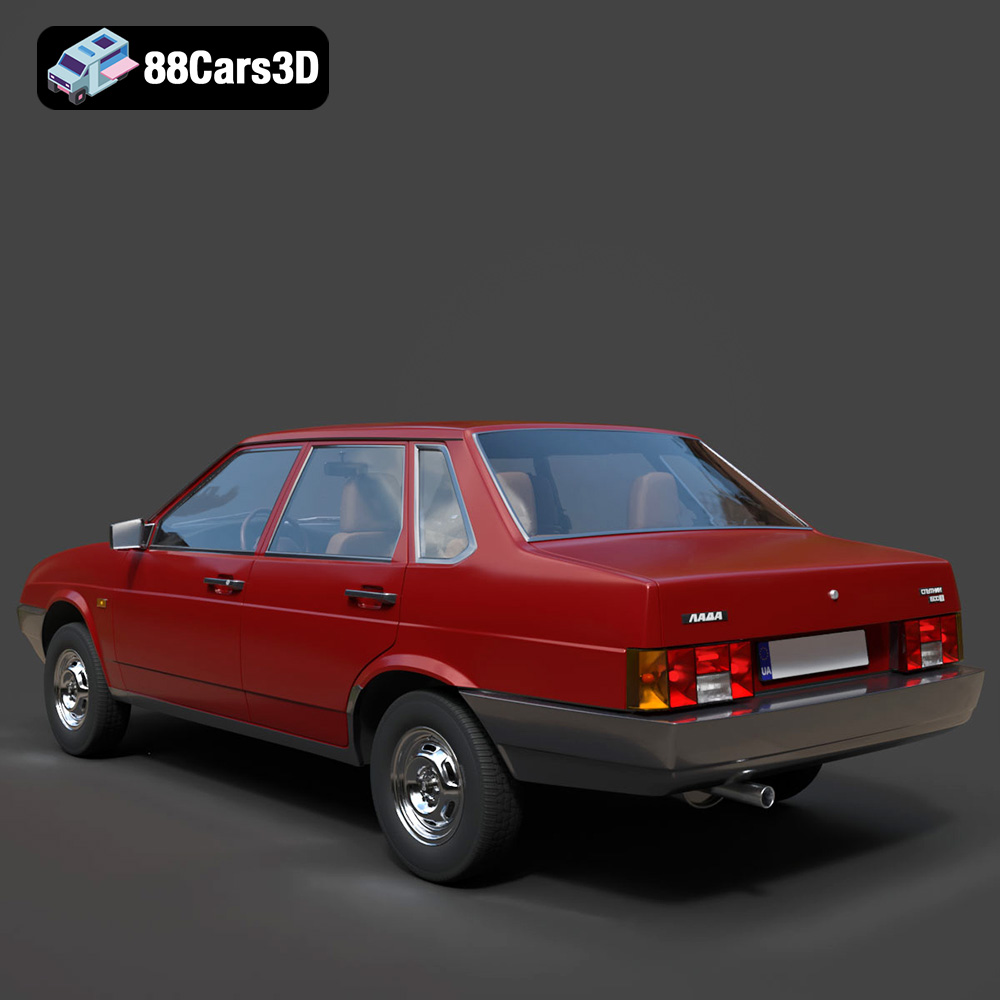
Realism is paramount in many digital productions, especially in game development, AR/VR, and cinematic rendering. Generic vehicles can break immersion, but a meticulously crafted 3D car model, true to its real-world counterpart, elevates the entire experience. This includes not only the accurate exterior geometry but also crucial interior details like authentic retro cloth and vinyl seat textures, the classic angular dashboard, and a period-correct analogue instrument cluster. Such attention to detail in a 3D car model ensures that a virtual scene feels lived-in and believable, whether it’s an open-world game set in a post-apocalyptic landscape or an immersive historical visualization.
The VAZ Lada 21099 (1990) 3D model epitomizes the blend of cultural significance and technical excellence. Its robust geometry, optimized triangle count of around 250,000, and accurate PBR materials make it highly versatile. It’s perfect for rendering detailed Eastern European street environments, creating authentic retro driving games, or populating historical urban visualizations. The model’s clean topology ensures it performs flawlessly in real-time engines like Unreal and Unity while maintaining superb visual fidelity for high-end rendering. This duality – cultural icon and technical powerhouse – makes it an invaluable asset for any serious digital artist or developer looking for quality 3D car models.
The world of 3D modeling is rich with diverse software and applications, each with its own preferred way of handling data. Navigating this ecosystem effectively requires a clear understanding of various 3D model file formats. The choice of format is not arbitrary; it dictates compatibility, performance, and the type of data (geometry, materials, animations, scene structure) that can be reliably transferred between different platforms. A comprehensive asset, such as the VAZ Lada 21099 3D model available on 88cars3d.com, often comes bundled with multiple formats to ensure maximum utility for professionals.
The `.blend` file format is native to Blender, the powerful open-source 3D creation suite. When you download a `.blend` file, you’re not just getting the model; you’re often getting the complete Blender scene. This includes all geometry, materials, textures, lighting setups, cameras, animation data, modifiers, and even the scene’s physics simulations. For artists primarily working in Blender, this format offers the most flexibility for editing and modification without any loss of data that can occur during format conversions. It’s ideal for deep customization, animation work, or integrating the model directly into a Blender-centric pipeline.
FBX (Filmbox) is a proprietary file format owned by Autodesk, widely recognized as the industry standard for 3D data exchange, especially between digital content creation (DCC) tools and game engines. Its strength lies in its ability to store a comprehensive array of 3D data, including geometry (meshes), materials, textures, animations (skeletal and blend shapes), cameras, and lights, all within a single file. For developers working with Unreal Engine, Unity, or other real-time pipelines, `.fbx` is often the go-to choice due to its robust support for animation, hierarchical structures, and instances. The VAZ Lada 21099 3D model in `.fbx` ensures smooth import into these engines, preserving pivots and animation readiness.
OBJ (Object) is one of the oldest and most universally supported 3D file formats. It’s a simple, text-based format primarily used to store 3D geometry – vertices, UVs, normals, and faces. Material definitions are typically handled in an accompanying `.mtl` (material) file. While `.obj` is excellent for cross-software compatibility, its simplicity means it generally does not store animation, rigging, or scene hierarchy data. It’s often preferred when you need a clean mesh for sculpting, texturing in external applications, or simply importing geometry without any extraneous scene information. The `.obj` version of the VAZ Lada 21099 is perfect for basic imports into almost any 3D software.
GLB is the binary version of glTF (GL Transmission Format), an open-standard 3D file format for 3D scenes and models. Designed to be compact, efficient, and easy to parse, `.glb` is quickly becoming the “JPEG of 3D” for web-based applications, AR (Augmented Reality), and VR (Virtual Reality). It packages all assets – geometry, materials, textures, and animations – into a single, self-contained binary file, making it incredibly easy to load and display in browsers or mobile AR/VR viewers. For showcasing the VAZ Lada 21099 in an interactive web configurator or an AR experience, the `.glb` format is an optimal choice.
STL (Standard Tessellation Language or Stereolithography) is the most common file format for 3D printing. Unlike other formats that store material and texture data, `.stl` focuses purely on the surface geometry of a 3D object, represented by a series of interconnected triangles. It defines the exact shape of an object for fabrication. When preparing a model like the VAZ Lada 21099 for 3D printing, conversion to `.stl` is essential. The model’s print settings, such as recommended scales (1:12, 1:18, 1:24), layer height, infill, and support requirements, are crucial for successful physical output.
PLY (Polygon File Format or Stanford Triangle Format) is another format primarily used for storing 3D data, often originating from 3D scanners. It can store a wider range of information than `.obj` or `.stl`, including color, transparency, normals, texture coordinates, and even properties per vertex or face. It supports both ASCII and binary encodings. While less common for general asset exchange than `.fbx`, `.ply` is valuable for applications requiring high precision mesh data, such as scientific visualization, CAD, or analysis where detailed point cloud information is relevant.
The `.unreal` format typically refers to asset packages specifically optimized for or exported directly from Unreal Engine. These assets often come pre-configured with Unreal materials, blueprints, collision data, and level of detail (LOD) settings, ensuring seamless integration and optimal performance within an Unreal Engine project. While not a standalone “file format” in the same way as `.fbx` or `.obj`, having an `.unreal` package means the asset, like the VAZ Lada 21099, is ready for immediate deployment in real-time environments, saving developers considerable setup time and ensuring engine-native efficiency.
Similar to `.blend` for Blender, the `.max` file format is native to Autodesk 3ds Max. It stores a complete 3ds Max scene, including all geometry, modifiers, materials, textures, lighting, cameras, animation tracks, and render settings. For artists and studios heavily invested in the 3ds Max ecosystem, the `.max` file provides the most comprehensive and editable version of the VAZ Lada 21099, allowing for intricate adjustments, complex rigging, or integration into larger 3ds Max-based animation and rendering projects without any conversion artifacts.
The visual appeal of a 3D car model is intrinsically linked to its underlying technical structure. A premium asset, such as the VAZ Lada 21099 (1990) available at 88cars3d.com, is distinguished not just by its accurate representation but by its robust engineering under the hood – its topology, material fidelity, and modular design. These technical specifications are crucial for ensuring versatility and performance across various professional applications.
Optimized topology is the bedrock of a high-performing 3D model. It refers to the arrangement and flow of polygons (triangles and quads) that define the mesh. Good topology ensures smooth deformations for animation, clean subdivision for high-resolution rendering, and efficient processing in real-time engines. For the VAZ Lada 21099, a game-ready asset, the approximately 250,000 triangle count strikes a perfect balance. This polycount is sufficiently detailed to maintain superb visual fidelity and realism, capturing the distinct lines and contours of the Lada, while remaining optimized enough for real-time applications like Unreal Engine and Unity without causing performance bottlenecks. This careful balance prevents unnecessary geometric complexity, making the model responsive and efficient.
Physical Based Rendering (PBR) materials are fundamental for achieving photorealistic results in modern rendering and real-time environments. PBR pipelines simulate how light interacts with surfaces in the real world, producing highly convincing reflections, refractions, and diffuse lighting effects. The VAZ Lada 21099 3D model incorporates accurate PBR materials, meaning its surfaces—from the metallic sheen of the body paint and the rubber of the tires to the subtle reflection of the glass and the texture of the interior fabric—react realistically to various lighting conditions. This fidelity is achieved through detailed texture maps (albedo, normal, roughness, metallic, ambient occlusion) that precisely mimic the properties of real-world materials, ensuring the model looks stunning whether it’s under harsh sunlight or subtle studio lighting.
A professional 3D car model is not a monolithic object; it’s a collection of intelligently separated components designed for maximum flexibility. The VAZ Lada 21099 demonstrates this principle with its cleanly separated parts: independent wheels, suspension components, and steering elements. This modularity is critical for animation, allowing artists to rig and animate elements like steering, wheel rotation, and suspension travel with precision. Furthermore, proper pivot setups are pre-configured, making it straightforward to add motion to the model. The inclusion of a detailed engine block representation (based on the classic 1.5L inline-four) and an accurate exhaust system further enhances its utility, enabling close-up shots or even cutaway animations for educational or marketing purposes. This meticulous preparation makes the model truly “animation-ready” and robust for diverse professional applications.
The true value of a premium 3D car model lies in its seamless integration into various professional workflows. The VAZ Lada 21099 (1990) 3D model, with its optimized geometry, PBR materials, and comprehensive file format support, is engineered for exactly this purpose. Whether you’re a game developer, an automotive renderer, or an AR/VR content creator, this asset provides a robust foundation for your projects.
For game developers, performance and visual quality are paramount. The VAZ Lada 21099 is meticulously optimized with a ~250,000 triangle count, striking an ideal balance for real-time engines like Unreal and Unity. Its game-ready status means it comes with proper pivot setups for crucial animations such as steering, wheel rotation, and suspension travel, significantly reducing setup time.
When precision and photorealism are the goals, dedicated rendering software shines. The VAZ Lada 21099 model is perfectly suited for high-end automotive rendering, capable of producing stunning visuals for marketing, cinematic sequences, or artistic presentations.
The demand for interactive 3D content for AR/VR applications is rapidly growing. The VAZ Lada 21099 3D model’s optimization and format support make it ideal for these immersive technologies.
Beyond digital displays, the VAZ Lada 21099 3D model also serves as an excellent foundation for physical fabrication. The `.stl` format is specifically provided for 3D printing, enabling hobbyists and professionals to bring this iconic vehicle into the tangible world.
A high-quality 3D car model is not a static entity; it’s a dynamic canvas awaiting creative expression. The VAZ Lada 21099 (1990) 3D model, with its well-structured geometry and PBR materials, offers extensive customization options that allow artists to transform it to fit virtually any narrative or aesthetic. This adaptability is key to maximizing its utility across diverse projects.
The visual impact of a 3D car model often hinges on its aesthetic presentation. The VAZ Lada 21099 provides a rich foundation for various stylistic interpretations.
A vehicle rarely exists in isolation. The VAZ Lada 21099 excels at integrating into broader scene compositions, enhancing environmental storytelling. Its inherent character evokes specific narratives and settings.
The VAZ Lada 21099 is more than just a car; it’s a character. Its “boxy styling” and “pragmatic lines” lend it a distinct personality that can be exploited for creative effect.
The realm of 3D modeling demands a blend of technical mastery and artistic vision. High-quality 3D car models are not merely visual assets; they are complex, engineered components designed for versatility and performance across a myriad of digital platforms. From game development to cinematic rendering, AR/VR experiences, and even 3D printing, the effectiveness of these assets hinges on meticulous detailing, optimized topology, and comprehensive file format support.
The VAZ Lada 21099 (1990) 3D model stands as a testament to this philosophy. It encapsulates an iconic vehicle’s cultural significance and distinctive design, while simultaneously delivering professional-grade technical specifications. Its game-ready optimization with a ~250,000 triangle count, accurate PBR materials, and modular components ensure it performs flawlessly in real-time engines and renders with stunning fidelity. The availability in formats like .blend, .fbx, .obj, .glb, .stl, .ply, .unreal, and .max makes it an incredibly adaptable asset, ready for any pipeline.
Whether you’re populating an Eastern European street scene, crafting a retro racing game, or simply admiring its robust design in a virtual showroom, the VAZ Lada 21099 offers immense creative potential. For those seeking premium 3D car models that combine historical accuracy with technical excellence, resources like 88cars3d.com provide a curated selection of assets that meet the highest professional standards, empowering creators to bring their most ambitious visions to life.
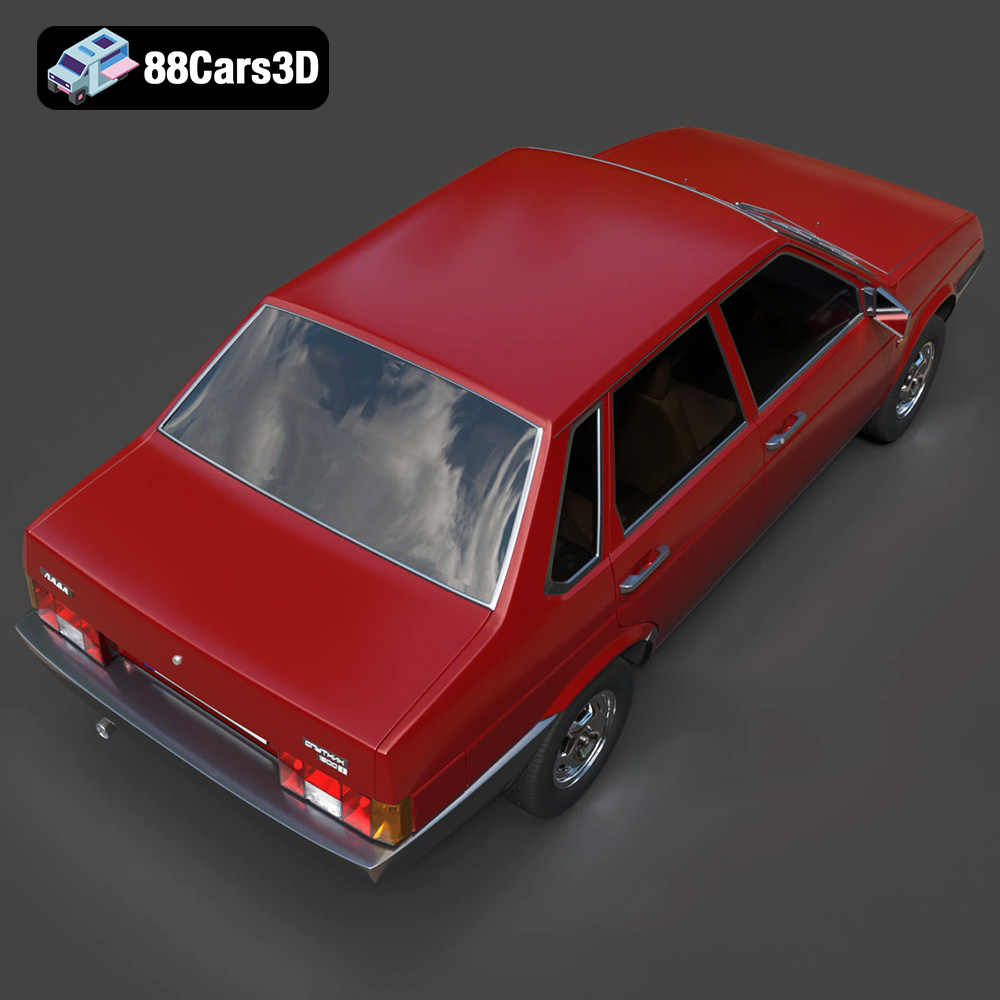
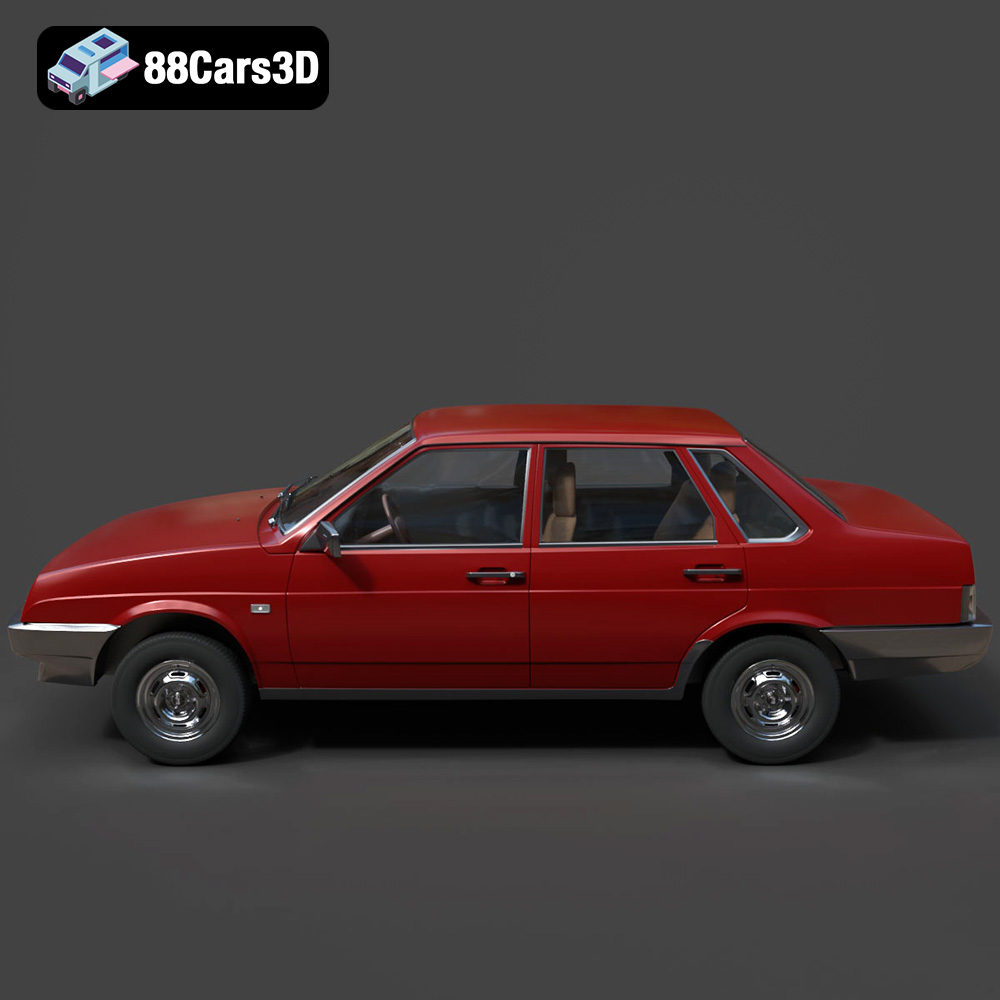
The VAZ Lada 21099 (1990) is an iconic four-door sedan that defined an era of Eastern European motoring. Born from the highly successful Samara family, this distinctive vehicle is celebrated for its utilitarian, boxy styling, robust engineering, and cultural significance. The 3D model meticulously captures its recognizable exterior, from the sharp, angular front grille and rectangular halogen headlights to the characteristic high rear deck and stark, pragmatic lines that make it instantly recognizable. This premium 3D model is built with high-quality topology and an optimized triangle count, ensuring it performs flawlessly in real-time engines while maintaining superb visual fidelity. Designed for maximum versatility, the model features cleanly separated components and accurate PBR materials, making it a perfect fit for game development, high-end rendering, animation, and immersive AR/VR experiences. Perfect for Eastern European street environments, post-apocalyptic scenes, retro driving games, and historical urban visualizations.
$19.99
.1990
.blend
.fbx
.glb
.lada
.max
.obj
.ply
.rendering
.sedan
.stl
.unreal
.vaz
21099
car-3d-model
classic-car
game asset
game-ready
low-poly
optimized
russian-car
soviet-car
VR/AR