In the dynamic world of 3D visualization, the quality of your assets can make or break a project. From the intricate details of a virtual showroom to the adrenaline-pumping realism of a racing game, precision-engineered 3D models are the bedrock of immersive digital experiences. Automotive design, in particular, demands an exceptionally high standard, where every curve, every reflection, and every component must faithfully replicate its real-world counterpart. This pursuit of perfection is precisely where premium 3D car models shine, offering artists and developers a powerful shortcut to unparalleled realism and efficiency.
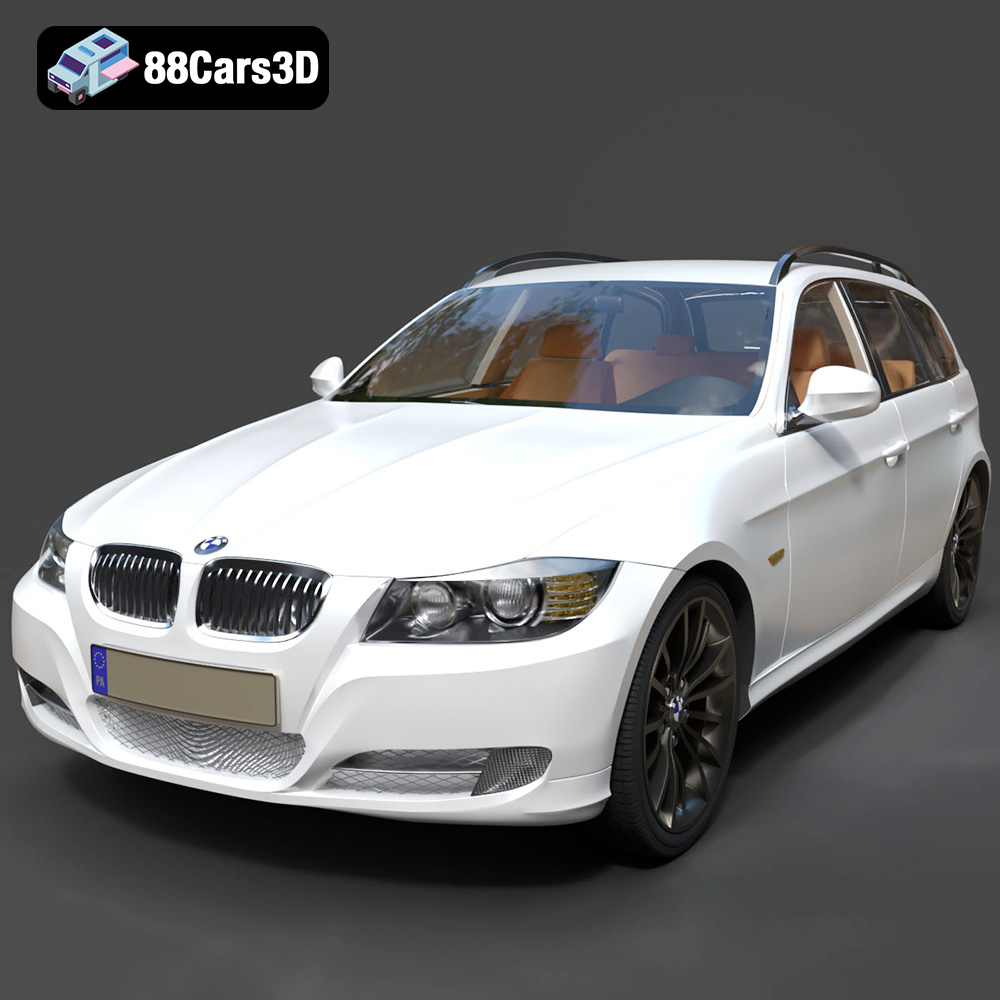
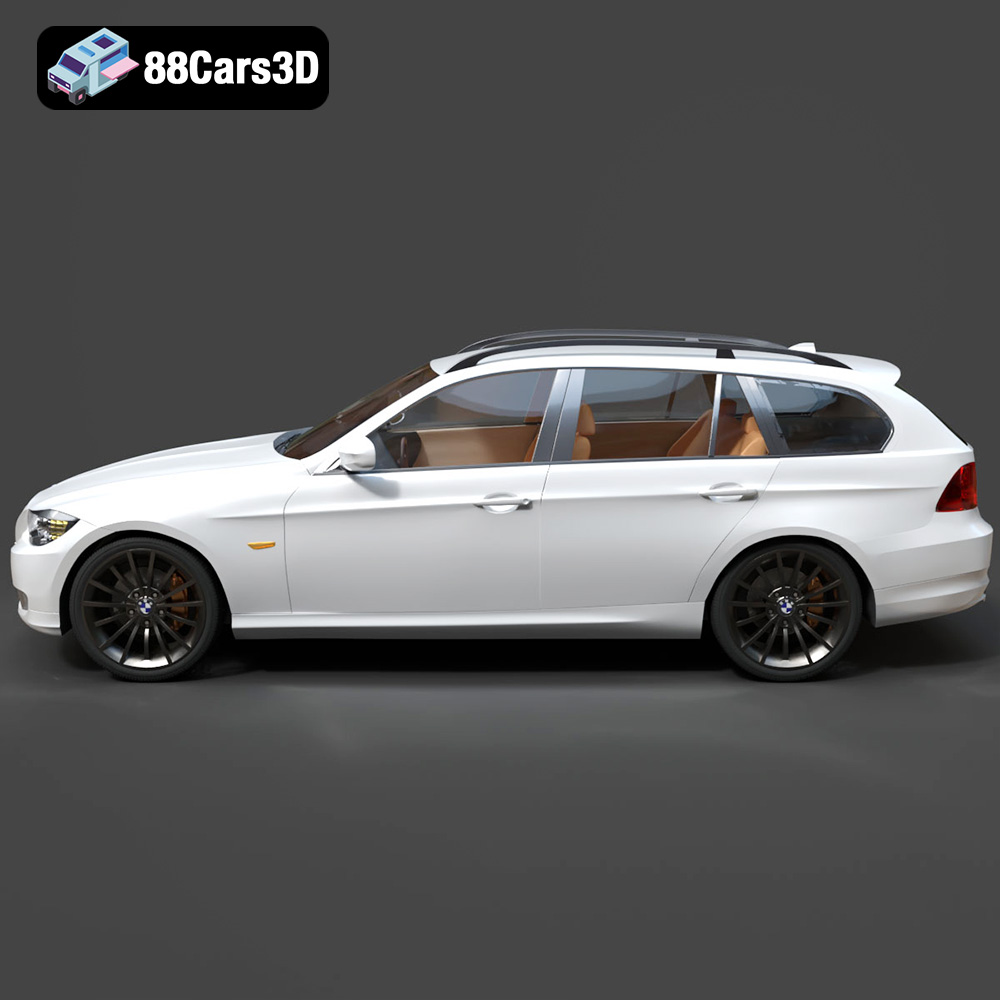
Today, we’re diving deep into an exemplary case study that encapsulates this commitment to quality: the BMW 3 Series Touring 2011 3D Model. This meticulously crafted asset, available on 88cars3d.com, is not just a digital representation; it’s a comprehensive toolkit designed to elevate projects across game development, architectural visualization, AR/VR experiences, and high-end automotive rendering. It’s an estate version of the iconic E91/F31 generation, capturing the renowned Bavarian engineering, sporting the signature split kidney grilles, dynamic sweeping lines, and a spacious yet aerodynamic profile that defined this versatile family car. Its inclusion in a professional workflow means instant access to an asset that meets rigorous industry standards, ready for immediate integration and customization.
The Foundation of Digital Realism: Why High-Quality 3D Car Models Matter
The digital age has blurred the lines between imagination and reality, especially within industries reliant on visual communication. For automotive enthusiasts, designers, game developers, and marketers, the ability to present vehicles with stunning accuracy is not merely a luxury but a necessity. High-quality 3D car models serve as the cornerstone of this digital realism, providing a foundation that can be adapted for countless applications.
Bridging Design and Digital Experience
In the realm of automotive design and marketing, 3D models are indispensable. Before a single physical prototype is built, vehicles are meticulously designed and refined in a virtual space. High-fidelity 3D car models allow designers to iterate rapidly, explore various aesthetic choices, and even simulate real-world conditions like lighting and aerodynamics. Beyond design, these models are critical for creating compelling marketing materials. Imagine a car configurator where a prospective buyer can customize every aspect of their dream car, from paint color to rim style, and see it rendered in photorealistic detail – this is only possible with a robust 3D model. Such assets, like the BMW 3 Series Touring 2011, facilitate rich, interactive experiences that deeply engage the audience.
The Demands of Modern Visualization
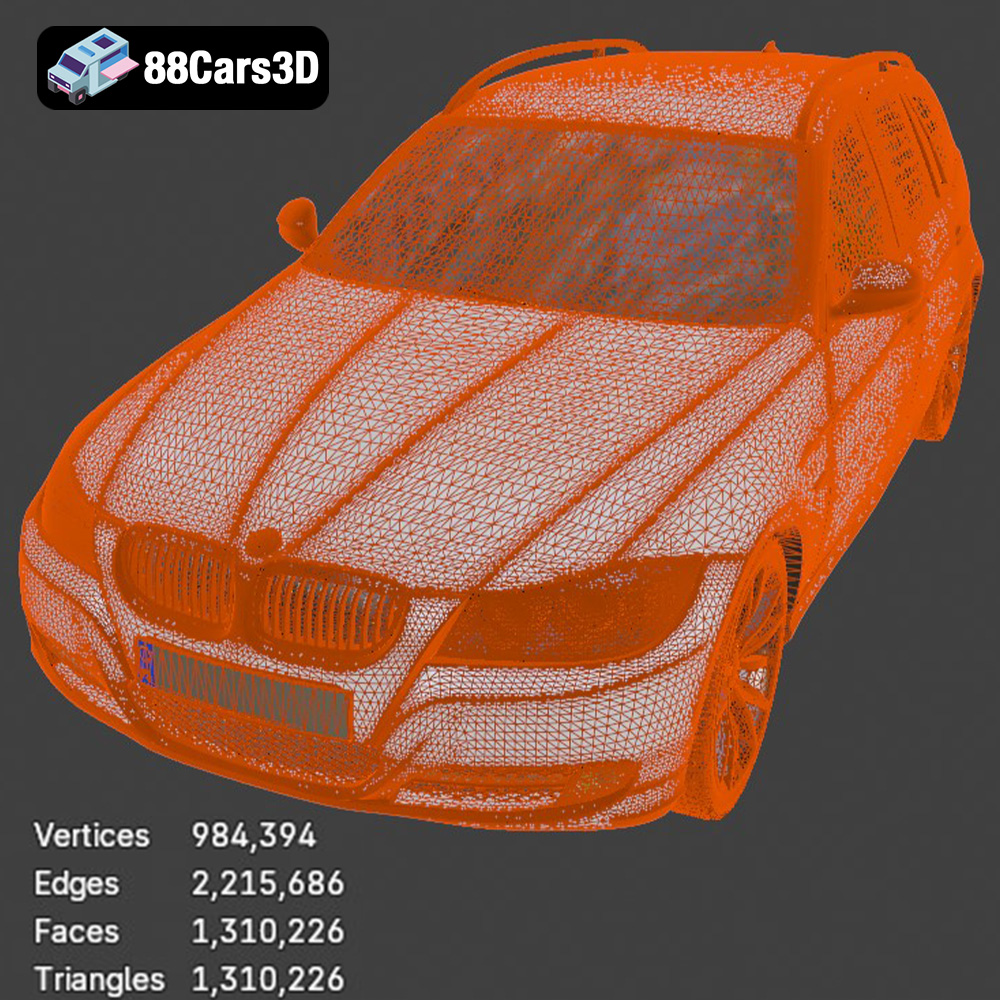
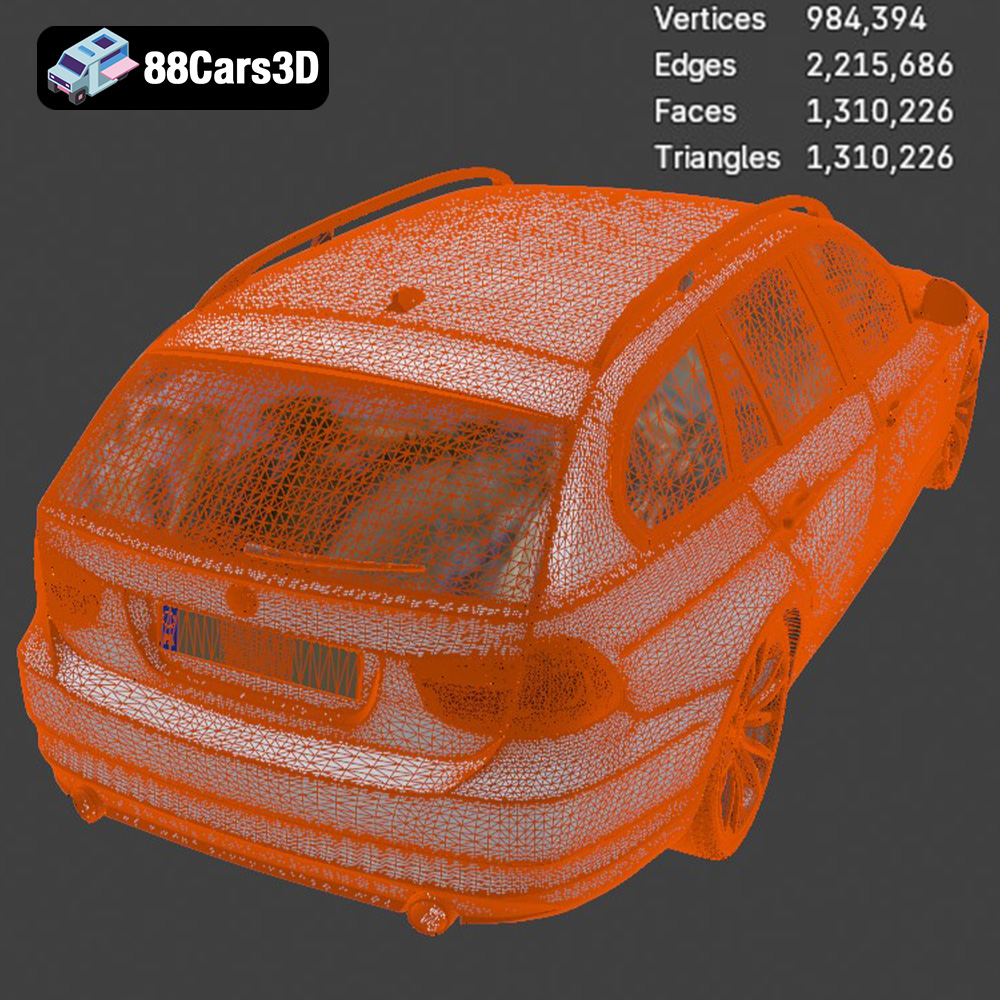
Whether it’s a sprawling open-world game, an immersive virtual reality showroom, or an architectural visualization placing a car in a realistic driveway scene, the demand for visual fidelity is relentless. Low-quality models with poor topology, inaccurate proportions, or lacking detail can instantly pull users out of an immersive experience. Professional workflows require models that are not only visually striking but also technically optimized. This means clean geometry, efficient poly counts, proper UV mapping, and a logical hierarchy for animation. For game developers, a “game-ready” asset like the BMW 3 Series Touring 2011, with its optimized 1,310,226 triangle count, ensures smooth performance without sacrificing visual quality, making it a stellar example of a professional game asset.
The Edge of Pre-Built Assets
While creating a 3D car model from scratch offers ultimate control, it is an incredibly time-consuming and expensive endeavor, often requiring specialized skills in modeling, texturing, rigging, and optimization. For many projects, especially those with tight deadlines or budget constraints, leveraging high-quality, pre-built 3D car models from marketplaces like 88cars3d.com provides an invaluable advantage. These assets are often developed by expert artists, ensuring accuracy, optimal performance, and compatibility across various software and engines. Investing in a pre-made model like the BMW 3 Series Touring 2011 allows teams to focus their resources on other critical aspects of their project, confident in the visual quality of their automotive components.
Understanding 3D Model File Formats
The versatility of a 3D model often lies in the breadth of file formats it supports. Each format is designed with specific use cases, compatibilities, and technical advantages in mind. Understanding these distinctions is crucial for selecting the right asset for your project and ensuring a smooth workflow. The BMW 3 Series Touring 2011 3D model, for instance, comes packed with a comprehensive array of formats, catering to almost any professional need.
Native and Universal Formats for 3D Editing
- .blend (Blender): This is Blender’s native file format, offering a complete scene package. A .blend file typically includes not just the mesh data but also materials, textures, lighting, cameras, animation data, and even physics simulations. For artists working primarily in Blender, this format provides full editability and preserves all project settings, making it ideal for customization, animation, or rendering within the Blender ecosystem. The BMW 3 Series Touring 2011 in .blend format allows for direct manipulation of every component, from adjusting material shaders to re-rigging suspension.
- .max (3ds Max): Similar to .blend for Blender, .max is the native file format for Autodesk 3ds Max. It’s a comprehensive scene file, preserving all aspects of a 3ds Max project, including geometry, materials, lighting, animation, and scene settings. For professionals operating within the Autodesk suite, the .max file of the BMW 3 Series Touring 2011 provides the highest level of control and fidelity for high-end rendering, architectural visualization, and complex animation sequences where 3ds Max excels.
- .obj (Wavefront OBJ): Considered a universal format, .obj is widely supported across almost all 3D software. It primarily stores geometry data (vertices, normals, UV coordinates) and can reference external material files (.mtl) for basic color and texture information. While it doesn’t typically store advanced material properties, rigging, or animation, its widespread compatibility makes it an excellent choice for cross-software transfers or as a base mesh for sculpting or retopology. The .obj version of the BMW 3 Series Touring 2011 ensures basic geometric fidelity across any platform.
Real-Time Engine and Web-Optimized Formats
- .fbx (Filmbox): Developed by Autodesk, .fbx is a highly versatile and widely adopted format, especially prevalent in game development and animation pipelines. It can store not only geometry but also materials, textures, animations, rigging, and even camera data, making it ideal for transferring complex animated assets between different software and into game engines like Unreal Engine and Unity. The .fbx variant of the BMW 3 Series Touring 2011 is crucial for its “game-ready” designation, ensuring all animated parts and materials translate seamlessly.
- .unreal (Unreal Engine Asset): This isn’t a single file format in the traditional sense, but rather an indication that the asset is provided in a package optimized for direct import and use within Unreal Engine. This often means pre-configured materials, LODs (Levels of Detail), and a proper hierarchy set up within a .uasset or similar structure, streamlining the integration process significantly. For developers working with Unreal, the .unreal inclusion for the BMW 3 Series Touring 2011 means immediate drag-and-drop functionality, saving countless hours on setup.
- .glb (GL Transmission Format Binary): As the binary version of glTF, .glb is an increasingly popular, royalty-free format optimized for efficient transmission and loading of 3D scenes and models on the web, in AR, and VR applications. It encapsulates all necessary data (geometry, materials, textures, animations) into a single compact file, making it perfect for interactive web viewers, social media filters, and mobile AR experiences. The .glb version of the BMW 3 Series Touring 2011 is excellent for showcasing the model in a virtual showroom directly within a browser or on a mobile device.
Specialized Formats for Manufacturing and Analysis
- .stl (Stereolithography): This format is the de facto standard for 3D printing. It represents a 3D model as a series of connected triangles (a tessellated surface) without color, texture, or other CAD attributes. While it lacks detail for rendering, its simplicity makes it universally compatible with 3D printers and slicing software. The .stl version of the BMW 3 Series Touring 2011 allows hobbyists and professionals to bring the digital model into the physical world, creating tangible miniatures or prototypes with specific print settings provided.
- .ply (Polygon File Format/Stanford Triangle Format): The .ply format is primarily used for storing 3D data from 3D scanners, CAD programs, or for scientific analysis. It can store various properties beyond just geometry, such as color, transparency, normals, texture coordinates, and confidence values for each vertex or face. While less common for rendering, it’s valuable for precision modeling, mesh analysis, and interoperability with specific engineering or simulation software. The inclusion of .ply for the BMW 3 Series Touring 2011 offers additional flexibility for specialized applications or data exchange.
Crafting Automotive Excellence: Deep Dive into the BMW 3 Series Touring 2011 Model
The true value of a premium 3D model lies in its meticulous attention to detail and technical craftsmanship. The BMW 3 Series Touring 2011 3D model from 88cars3d.com exemplifies this, offering a comprehensive and accurate digital representation ready for diverse high-end applications. It’s designed to exceed expectations, from intricate exterior components to a fully realized interior, all optimized for performance.
Exterior Fidelity: From Grille to Tailpipe
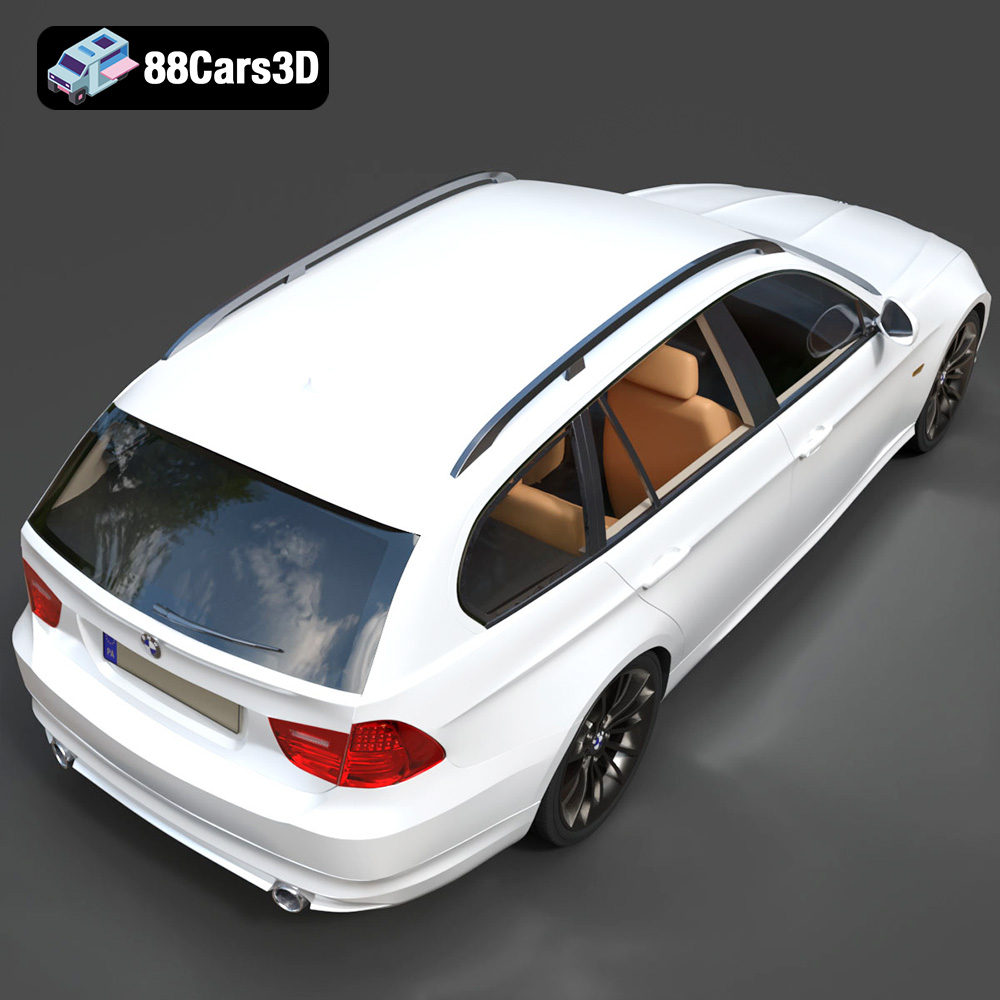
The essence of the BMW 3 Series Touring 2011’s design is captured with stunning accuracy. The model faithfully reproduces the car’s distinctive frame geometry and sweeping estate proportions, instantly recognizable as the E91/F31 generation. Every critical exterior feature has been sculpted with precision:
- Signature Lighting: The iconic “angel-eye” headlights and L-shaped taillights are meticulously modeled, ready for realistic light emission setups in rendering engines.
- Aerodynamic Details: From the signature split kidney grilles to the dynamic sweeping lines along the body, the model captures the aerodynamic profile of the vehicle.
- Wheels and Suspension: Precision-modeled alloy wheels with high-traction tire treads are included, alongside detailed suspension and brake caliper components. Crucially, wheels, suspension, and steering components are separated, enabling realistic animation for racing simulators or interactive configurators.
- Engine Bay and Exhaust: Even the engine bay components feature authentic block shaping, and the twin exhaust system is rendered with convincing detail, adding to the overall realism.
This level of exterior fidelity ensures that the model holds up under close-up shots and various lighting conditions, making it an ideal choice for automotive rendering and marketing visuals.
Interior Immersion: A Virtual Cockpit Experience
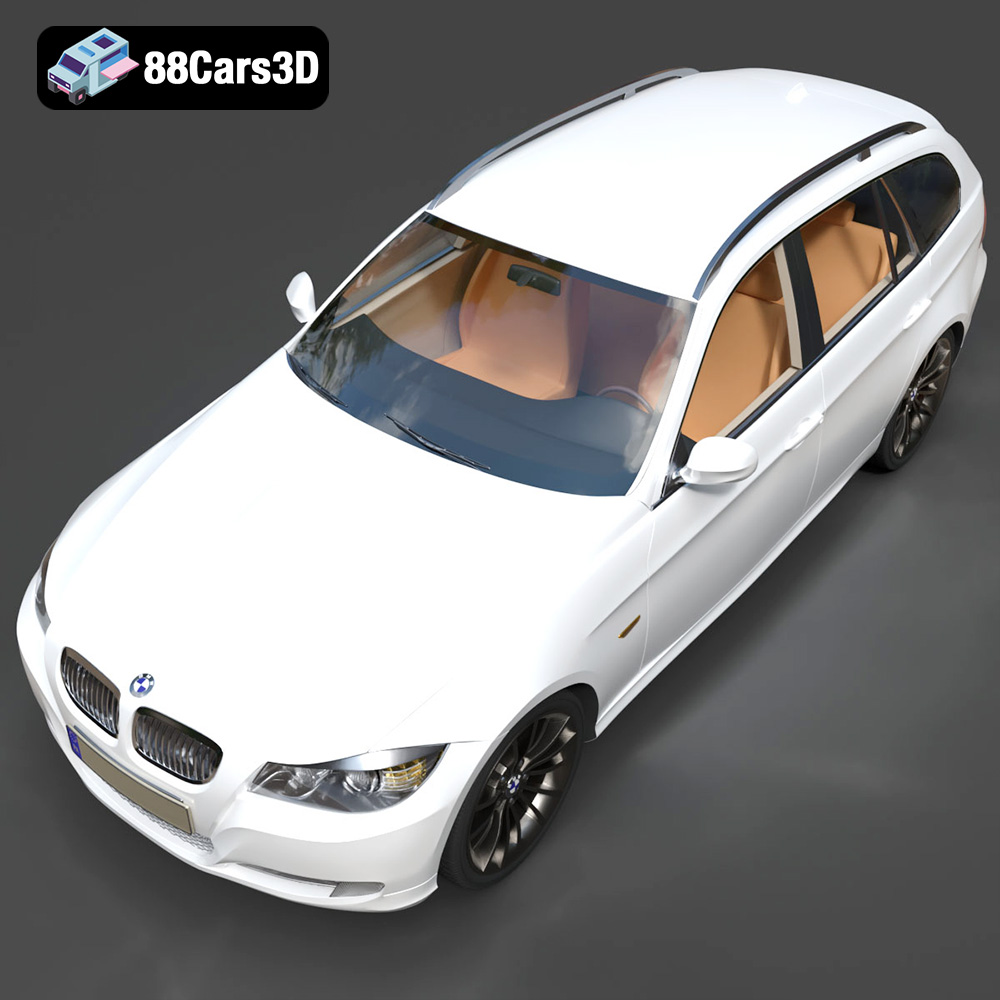
Beyond the impressive exterior, the BMW 3 Series Touring 2011 model offers a fully realized interior, providing an immersive experience whether viewed from a distance or in a first-person perspective. This attention to cockpit and cargo area details is paramount for applications like virtual showrooms, AR/VR experiences, or in-game driving.
- Detailed Seating: Leather-textured seating and the expansive cargo area proportions are accurately reproduced, inviting users into a comfortable and practical space.
- Control Elements: The multi-function steering wheel, column setup, instrument cluster, and iDrive infotainment screen are rendered with high fidelity. Precision control details, including pedals, indicator stalks, and the gear shifter, are all present and accounted for.
- Optimized for POV: The interior geometry is optimized specifically for first-person POV in gaming and VR, ensuring a smooth and convincing experience for the user interacting with the virtual vehicle.
This complete interior allows for comprehensive visualization and interaction, expanding the model’s utility significantly.
Technical Mastery: Optimization for Performance and Realism
Technical specifications are where a professional 3D model truly distinguishes itself. The BMW 3 Series Touring 2011 is built with performance and versatility in mind:
- Game-Ready & Optimized: With a triangle count of 1,310,226, the model strikes a perfect balance. It delivers high-end visual realism suitable for cinematic renders, yet remains optimized for real-time engines like Unreal Engine and Unity, ensuring smooth frame rates without compromising detail. This makes it an ideal game asset.
- Real-World Scale Accuracy: The model is built to real-world scale based on actual vehicle chassis dimensions, crucial for accurate architectural visualizations, AR/VR experiences, and ensuring proper interaction with other scene assets.
- Proper Pivot Setup: A critical technical advantage for animated projects, the model features a proper pivot setup for steering, wheel rotation, and suspension travel. This means animators can quickly and easily bring the vehicle to life without extensive rigging work.
These technical advantages translate directly into saved development time and higher-quality outputs for any project incorporating this exceptional 3D car model.
Professional Workflows: Integrating the BMW 3 Series Touring 2011 into Your Pipeline
The true power of a high-quality 3D car model like the BMW 3 Series Touring 2011 lies in its seamless integration into diverse professional workflows. Its multi-format availability and optimized geometry ensure it’s a versatile game asset for developers and a robust tool for render artists.
Game Development with Unreal Engine and Unity
For game developers, efficiency and performance are paramount. The BMW 3 Series Touring 2011 3D model is designed from the ground up to be “game-ready.”
- Unreal Engine Workflow: Leveraging the .fbx or .unreal formats, developers can import the model directly into Unreal Engine. The optimized polycount (1,310,226 triangles) allows for excellent visual fidelity even in demanding open-world environments or racing simulators. With separate components for wheels, steering, and suspension, it’s straightforward to set up vehicle physics, rigging, and animation blueprints. Materials can be quickly adapted using Unreal’s powerful material editor, and the real-world scale ensures accurate collision detection and spatial relationships within the game world.
- Unity Workflow: Similarly, the .fbx format makes integration into Unity a breeze. The model’s clean topology and proper pivot points simplify the process of adding wheel colliders, suspension joints, and steering logic. Developers can apply Unity’s Standard or URP/HDRP materials to achieve various looks, from realistic physically-based rendering (PBR) to stylized appearances. Its optimization makes it perfect for mobile racing titles, urban driving games, or as a background vehicle populating virtual cities. This BMW model truly serves as a versatile game asset.
The model’s technical specifications, including real-world scale accuracy and proper pivot setup, drastically reduce development time, allowing teams to focus on gameplay mechanics and environmental design.
High-End Automotive Rendering in 3ds Max and Blender
For artists focused on photorealistic imagery and cinematic sequences, the BMW 3 Series Touring 2011 model offers a rich foundation for automotive rendering.
- 3ds Max Workflow: The native .max file provides maximum flexibility within Autodesk 3ds Max. Artists can easily apply advanced V-Ray or Corona Renderer materials, set up complex lighting scenarios, and integrate the car into architectural visualizations or product showcases. The detailed exterior and interior features mean that close-up renders will maintain stunning clarity and realism. Animation of doors, wheels, and steering is simplified due to the model’s logical hierarchy and pivot points, allowing for dynamic lifestyle animations or virtual product tours.
- Blender Workflow: The .blend file offers the same level of control for Blender users. Leveraging Blender’s Cycles or Eevee render engines, artists can achieve breathtaking results. Customization options, such as changing body colors or material finishes (matte, gloss, metallic), are easily implemented. The model’s clean topology makes it amenable to subdivision surfacing for even higher detail in static hero shots, if desired, without introducing artifacts. It’s an ideal asset for brand campaigns or high-fidelity studio lighting setups.
The exceptional detail of the model, from engine bay components to brake caliper details, ensures that every render communicates professionalism and visual excellence.
AR/VR and Web-Based Visualization Strategies
As augmented and virtual reality become more prevalent, the need for optimized 3D assets that can perform well on diverse hardware increases. The BMW 3 Series Touring 2011 is perfectly suited for these emerging platforms.
- AR/VR Experiences: With its optimized geometry and game-ready status, the model can be deployed in immersive virtual showrooms or automotive configurators for headsets like Meta Quest or HoloLens. The detailed interior, with its optimized geometry for first-person POV, creates a truly convincing presence within VR. For AR experiences on mobile devices, the .glb format is particularly powerful, allowing users to place a virtual BMW 3 Series Touring 2011 in their real-world environment.
- Web-Based Viewers: The .glb format is also ideal for interactive web applications. Showrooms on websites can integrate the model for 360-degree views, color changes, and even basic animations, enhancing user engagement without requiring powerful local hardware. This makes it excellent for showcasing products on e-commerce platforms or creating engaging virtual marketing experiences directly in a browser.
The model’s versatility ensures it can deliver stunning visuals and interactive experiences across both traditional and cutting-edge digital platforms.
Beyond the Screen: 3D Printing and Customization
The utility of a high-quality 3D model extends far beyond digital rendering. The BMW 3 Series Touring 2011 also offers pathways to tangible creations and vast customization, making it an incredibly flexible asset for various projects.
Transforming Digital into Tangible: The STL Workflow
For hobbyists, educators, or design professionals, the ability to convert a digital model into a physical object via 3D printing opens up new dimensions of creativity and prototyping. The inclusion of the .stl format for the BMW 3 Series Touring 2011 model caters directly to this.
- Recommended Settings: To achieve optimal results, specific 3D print settings are recommended. For example, scales like 1:12, 1:18, or 1:24 are ideal for display models. A layer height between 0.04–0.12 mm, especially with resin printing, is crucial for capturing the fine details of the car.
- Structural Considerations: Recommendations for wall thickness (1.2–2.0 mm), infill (20–30%), and the necessity of supports for intricate parts like exhausts, mirrors, and side skirts ensure structural integrity and successful prints. Printing the frame angled and wheels separately is a common practice to maximize detail and minimize support material.
- Post-processing: The journey from raw print to finished model often involves post-processing steps such as sanding, priming, and applying authentic factory colors with metallic finishes. This allows enthusiasts to create highly detailed, display-scale replicas of the BMW 3 Series Touring 2011, making the virtual car a physical reality.
This capability transforms a digital asset into a physical prototype or collectible, adding immense value for designers and enthusiasts alike.
Personalization and Adaptability for Diverse Projects
A truly professional 3D model offers significant scope for customization, allowing artists to adapt it to specific project requirements. The BMW 3 Series Touring 2011 model is no exception, providing numerous options for personalization:
- Color and Finish Modification: Users can easily change body colors to match factory specifications, apply custom finishes, or experiment with matte, gloss, or metallic material variations. This is vital for brand consistency in marketing or for artistic expression in game design.
- Texture Adaptation: Modifying tire textures for winter vs. street variants can instantly alter the model’s appearance and suitability for different virtual environments. This flexibility ensures the model remains relevant across a wide array of scenes and seasons.
- Lighting and Environment Integration: The model’s clean geometry and proper UVs make it highly adaptable to different lighting setups, from studio product shots to dynamic outdoor scenes. This versatility allows it to seamlessly integrate into any digital environment, maintaining its visual integrity and enhancing the overall scene.
These customization options empower artists to transform the base model into something uniquely tailored to their vision, maximizing its utility across various creative endeavors.
Case Study: Architectural Visualization with the BMW 3 Series Touring 2011
Consider an architectural visualization project where a newly designed luxury home needs a realistic vehicle to populate its driveway or garage. Using a generic or low-quality car model would detract from the scene’s realism. However, integrating the BMW 3 Series Touring 2011 3D model immediately elevates the visual quality. Its real-world scale ensures perfect proportionality within the architectural context. Artists can easily adjust its color to complement the building’s facade, animate its wheels for a dynamic “arrival” shot, or even open its doors to showcase a detailed interior, giving life and context to the virtual home. This integration demonstrates how high-quality 3D car models are not just for automotive projects but are essential tools for creating compelling, believable environments in any visualization field.
Conclusion
The pursuit of digital realism in 3D modeling demands assets that are not only visually stunning but also technically robust and versatile. The 88cars3d.com BMW 3 Series Touring 2011 3D Model stands as a testament to this principle, offering an exceptional blend of aesthetic fidelity and technical optimization. From its meticulously crafted exterior and immersive interior to its game-ready polycount and extensive file format support, this model is engineered to elevate projects across game development, high-end automotive rendering, AR/VR experiences, and even 3D printing.
By providing a comprehensive suite of formats including .blend, .fbx, .obj, .glb, .stl, .ply, .unreal, and .max, this asset ensures seamless integration into virtually any professional workflow. It empowers artists and developers to save valuable time, achieve unparalleled realism, and focus their creative energy on bringing their visions to life. Whether you’re designing the next big racing game, creating a photorealistic architectural visualization, or developing an interactive virtual showroom, investing in high-quality 3D car models like the BMW 3 Series Touring 2011 is a decision that will profoundly impact the success and visual impact of your project.
Featured 3D Model
BMW 3 Series Touring 2011 3D Model Download STL FBX OBJ GLB Blend
Experience the perfect blend of performance and practicality with the BMW 3 Series Touring 2011. This estate version of the iconic E91/F31 generation features renowned Bavarian engineering, sporting the signature split kidney grilles, dynamic sweeping lines, and a spacious yet aerodynamic profile. Designed to capture the essence of this versatile family car, the model highlights distinct visual cues including detailed twin exhaust tips, striking headlight clusters, and a meticulously crafted wheel setup that emphasizes its sporty stance. This 3D model boasts exceptional topology with a triangle count of 1,310,226, ensuring high visual fidelity while remaining optimized for various digital applications. Whether you are developing modern driving simulators, creating immersive AR/VR automotive configurators, or producing high-end architectural and lifestyle visualizations, this asset delivers unparalleled realism. Its careful construction ensures seamless integration into real-time engines like Unreal Engine and Unity.
$37.50
View This Model
Related Tags
.2011
.blend
.bmw
.fbx
.glb
.max
.obj
.ply
.rendering
.stl
.touring
.unreal
3-series
car-3d-model
estate-car
game asset
game-ready
low-poly
optimized
station-wagon
VR/AR