Get 20% OFF All Premium 3D & STL Models!

In the fast-evolving landscape of digital content creation, the demand for realistic and performant 3D assets is more critical than ever. From blockbuster video games to cutting-edge automotive visualizations and immersive AR/VR experiences, the quality of a 3D model can make or break a project. Automotive design, in particular, thrives on precision and visual fidelity, making high-quality 3D car models indispensable tools for artists, developers, and designers. These models aren’t just static representations; they are dynamic digital blueprints that power innovation, accelerate development, and captivate audiences.
Today, we delve into the intricate world of professional 3D automotive assets, exploring their technical nuances, diverse applications, and the workflows that bring them to life. We’ll examine how a meticulously crafted model, such as the BMW Vision Next 100 Concept 2016 3D model, stands as a prime example of what’s possible when precision engineering meets digital artistry. This groundbreaking concept car, celebrating BMW’s centenary, embodies futuristic mobility, and its digital counterpart offers an unparalleled resource for anyone pushing the boundaries of virtual creation.
Choosing the right file format is a foundational decision in any 3D project, directly impacting compatibility, functionality, and workflow efficiency. High-quality 3D car models, especially those designed for professional use like the BMW Vision Next 100 Concept 2016 available on 88cars3d.com, are often provided in a suite of formats to cater to diverse industry needs. Each format carries its own strengths and is optimized for specific applications, from rendering and animation to real-time engines and 3D printing. Understanding these distinctions is crucial for seamless integration and optimal performance.
The .blend file format is the native project file for Blender, the popular open-source 3D creation suite. When you download a .blend file, you’re getting a fully editable Blender scene, complete with materials, textures, lighting setups, cameras, and even animation data if present. For artists primarily working within Blender, this format offers maximum flexibility. You can easily modify geometry, adjust materials using Blender’s powerful node-based shader editor, tweak physics simulations, or integrate the model into a larger Blender project without any data loss or conversion artifacts. The BMW Vision Next 100 model in .blend format provides a comprehensive starting point for Blender users, allowing for deep customization and integration into their unique creative workflows.
.fbx (Filmbox) is arguably the most widely adopted proprietary 3D asset exchange format, developed by Autodesk. Its strength lies in its ability to store not just mesh data (vertices, faces, UVs) but also animation, skeletal information (rigging), cameras, lights, and even basic material properties. This makes .fbx an ideal choice for pipelines involving multiple software packages, especially for game development with engines like Unreal Engine and Unity. When exporting from 3ds Max or Blender to Unreal, .fbx ensures that animations and complex hierarchies are preserved. The BMW Vision Next 100 Concept 2016 in .fbx format is therefore perfect for developers looking to quickly integrate this high-fidelity vehicle into a real-time environment.
The .obj (Wavefront Object) format is a universal standard for 3D geometry. It’s a plain-text format that primarily stores vertex positions, UV coordinates, normals, and face information. While it doesn’t typically support animation, rigging, or advanced material definitions directly within the file (textures are linked via a separate .mtl file), its widespread support makes it an excellent choice for cross-software compatibility. Almost every 3D application can import and export .obj files, making it a reliable fallback for transferring mesh data. For the BMW Vision Next 100, the .obj format ensures that the core geometry and UVs can be accessed in virtually any 3D package, providing a solid foundation for remeshing, sculpting, or simply for rendering in a new environment.
.glb (GL Transmission Format Binary) is an increasingly important format, especially for modern applications like Augmented Reality (AR), Virtual Reality (VR), and web-based 3D viewers. It’s the binary form of glTF, designed to be a compact, efficient, and runtime-deliverable format. A .glb file encapsulates all necessary data—geometry, materials, textures, animations—into a single file, making it incredibly easy to load and display in browsers or mobile AR/VR apps. The BMW Vision Next 100 model in .glb format is tailor-made for interactive virtual showrooms, mobile AR experiences, or web-based product configurators, offering a streamlined asset that loads quickly and looks great on various platforms.
.stl (Stereolithography) is the de facto standard for 3D printing. It represents a 3D model as a series of connected triangles, describing only the surface geometry of an object without color, texture, or other CAD attributes. While simple, its ubiquity ensures compatibility with virtually all 3D printers and slicer software. For enthusiasts looking to bring the BMW Vision Next 100 Concept 2016 into the physical world, the .stl format allows for outputting a display-scale model. The product description for this model even provides recommended print settings, highlighting the thought put into its physical manifestation.
The .ply (Polygon File Format) is another widely used format for storing 3D data, particularly favored in applications involving 3D scanning, scientific visualization, and CAD (Computer-Aided Design). Similar to .obj, it defines geometry, but it can also store additional properties like color per vertex, normal vectors, and even transparency. It’s often used when high precision and detailed vertex attributes are crucial. For advanced users working with the BMW Vision Next 100 Concept 2016 model for analysis, reverse engineering, or integration into engineering pipelines, the .ply format offers a robust and detailed representation.
The .unreal format refers to assets specifically prepared and packaged for direct import into Unreal Engine projects. While usually, .fbx is imported and then converted by Unreal, an asset described as “.unreal” often implies it has undergone specific optimizations and packaging within an Unreal project structure. This could include pre-configured materials, collision meshes, LODs (Levels of Detail), and blueprint setups, making it an engine-ready asset for real-time environments. For game developers using Unreal Engine, the .unreal file for the BMW Vision Next 100 offers a plug-and-play solution, significantly reducing setup time and streamlining integration.
Finally, the .max file format is the native project file for Autodesk 3ds Max, a powerful and widely used 3D modeling, animation, and rendering software. Similar to .blend files for Blender, a .max file contains the entire scene data, including all geometry, modifiers, materials (especially V-Ray or Corona setups), lighting, cameras, and animation curves. For professionals who rely on 3ds Max for high-end rendering and detailed animation, the .max format for the BMW Vision Next 100 Concept 2016 provides full access to the original project setup, allowing for advanced rendering, intricate scene composition, and complex animation sequences without any loss of fidelity or flexibility.
By offering the BMW Vision Next 100 Concept 2016 in such a comprehensive array of formats, 88cars3d.com ensures that this exceptional 3D car model is accessible and immediately useful across virtually any professional pipeline, empowering artists and developers with choice and flexibility.
The BMW Vision Next 100 Concept 2016 is not merely a vehicle; it’s a statement about the future of mobility, a fusion of innovative design and advanced technology. Capturing such a visionary concept in 3D requires an extraordinary level of detail and technical precision. The 3D model available on 88cars3d.com embodies this principle, offering a digital asset that is as groundbreaking as its physical inspiration.
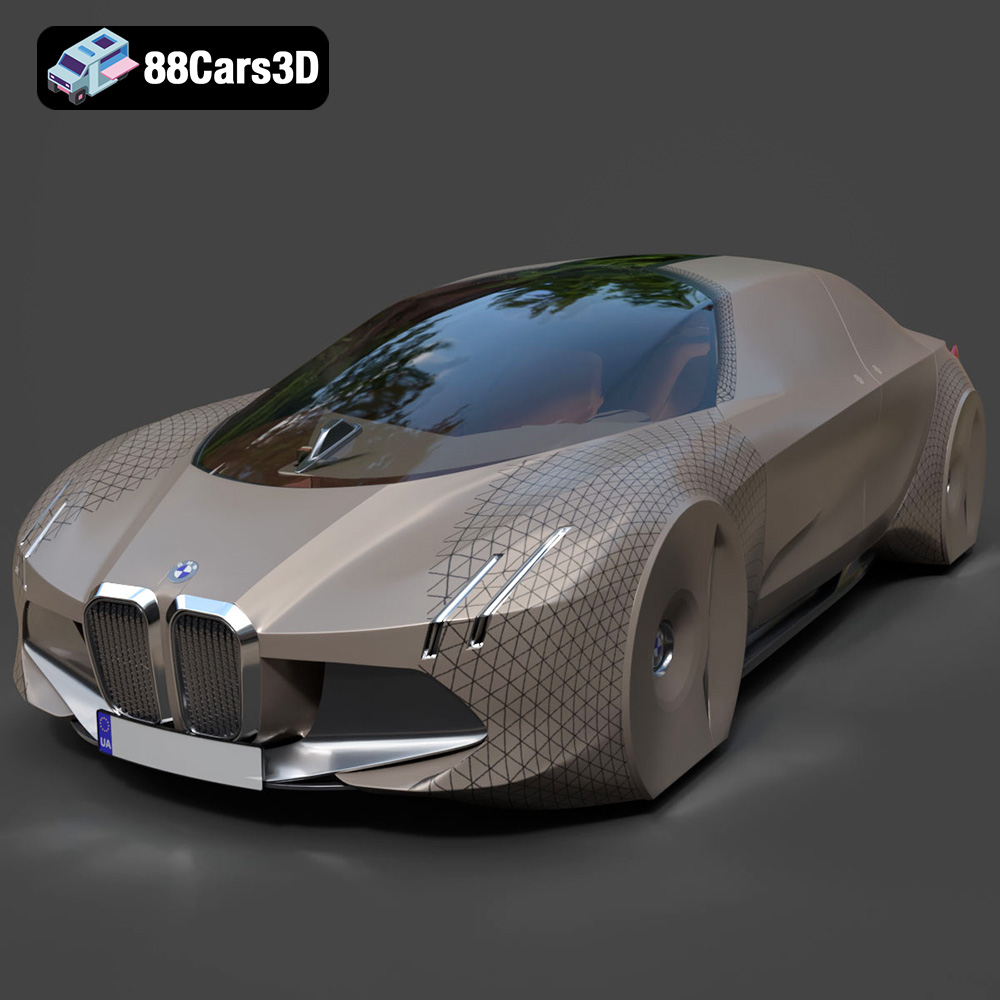
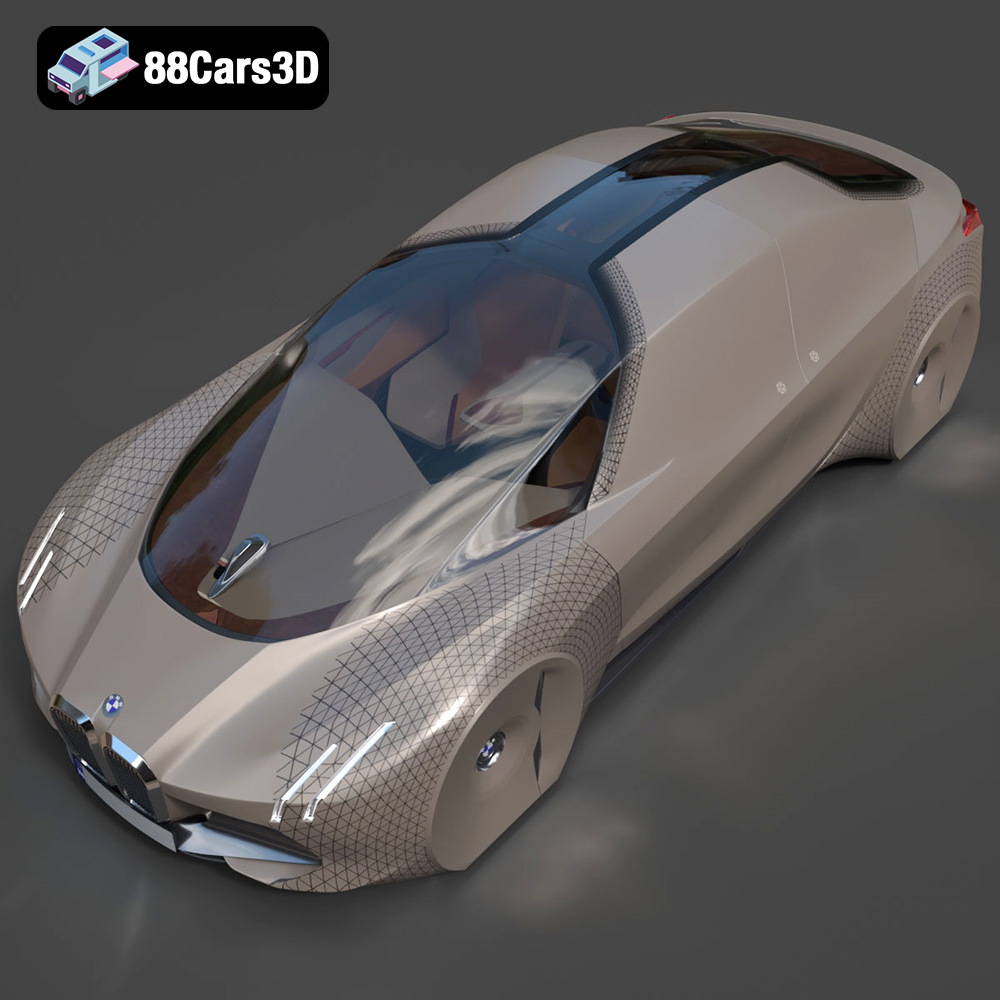
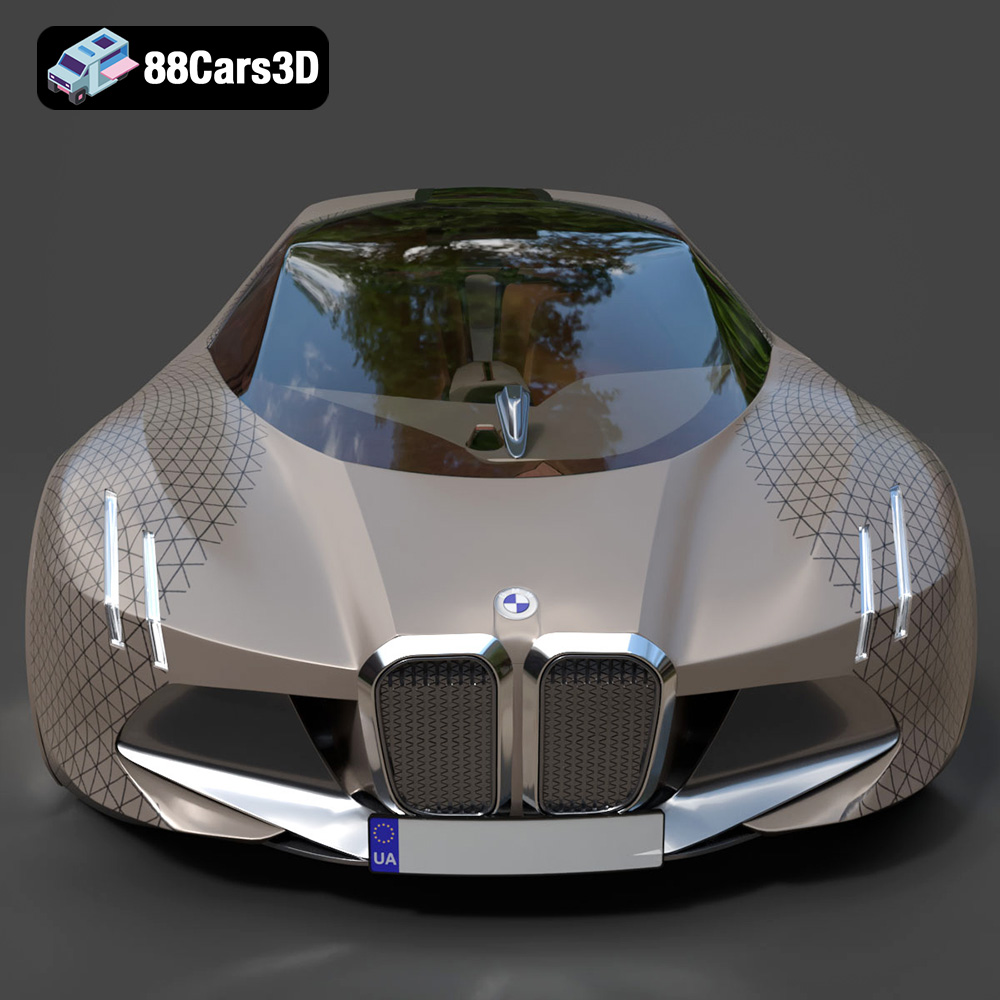
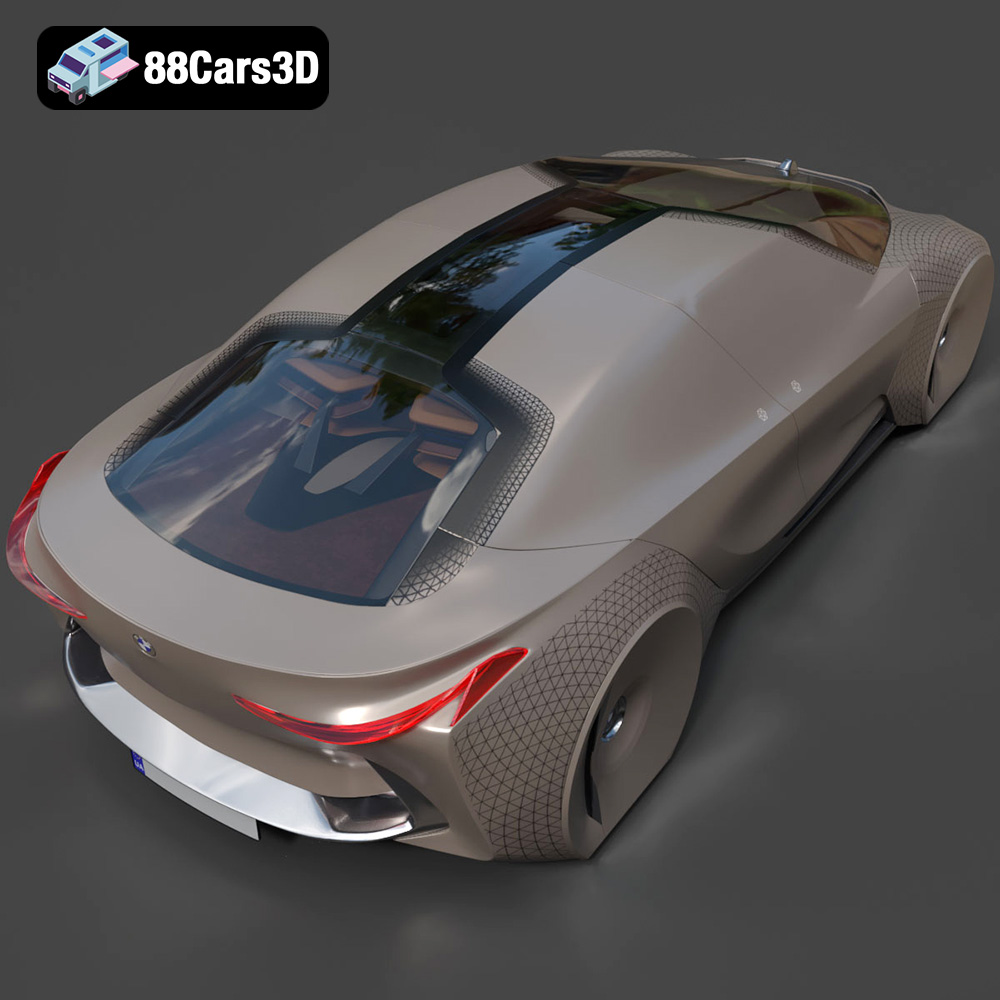
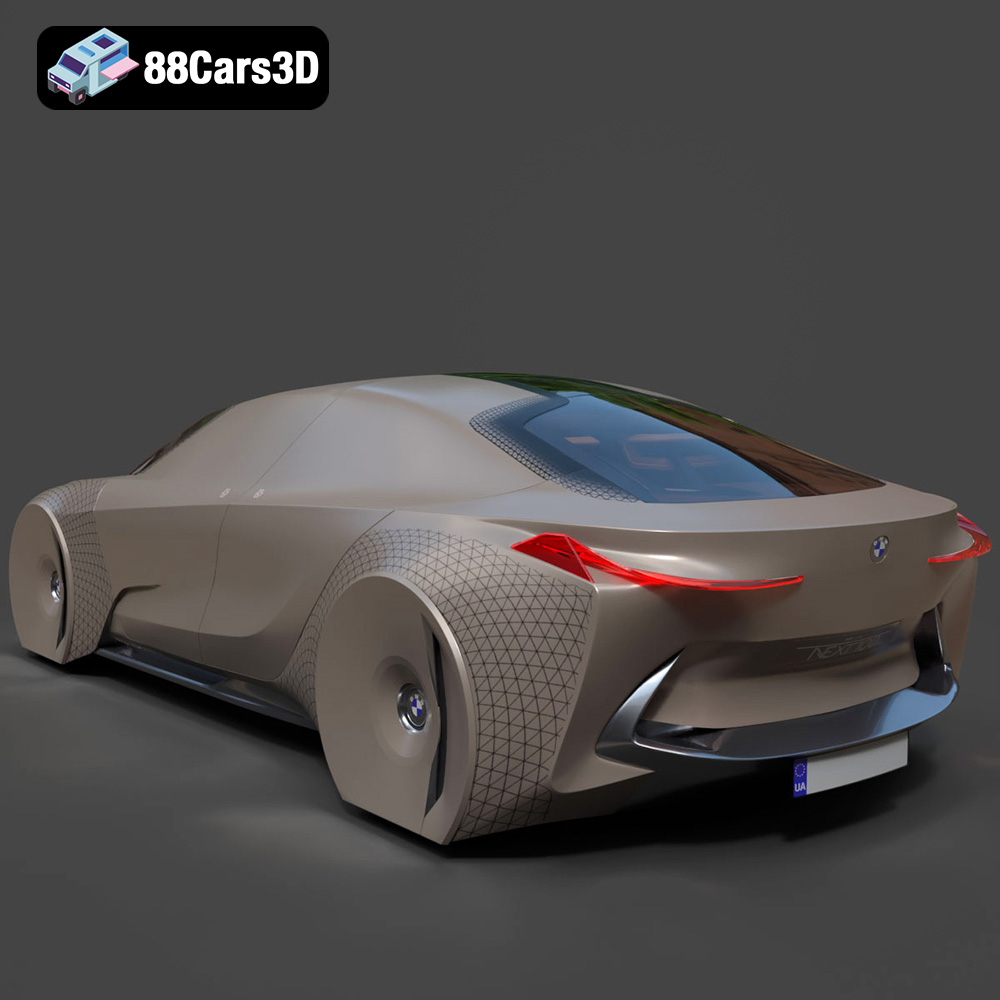
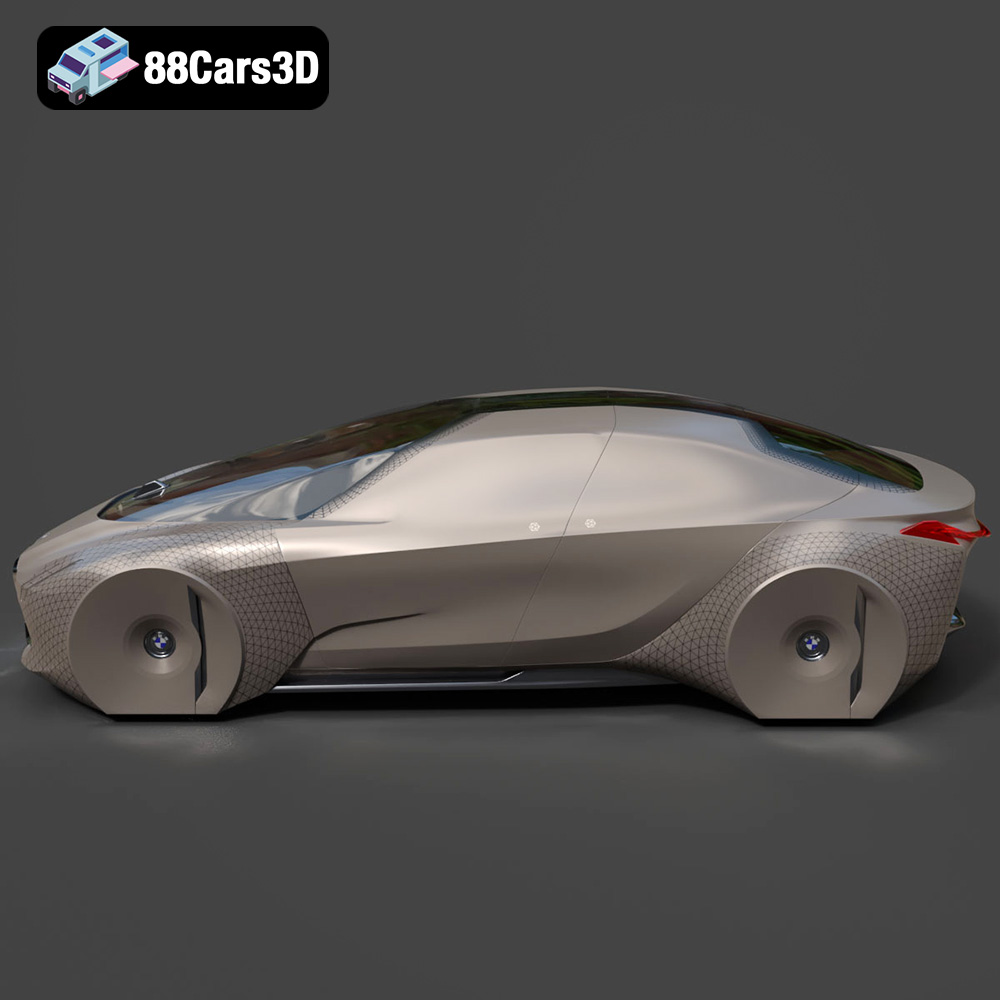
The exterior of the BMW Vision Next 100 is defined by its iconic ‘Alive Geometry’ – a design philosophy that envisions the car’s surfaces dynamically adapting to its surroundings and movements. This concept is meticulously translated into the 3D model, featuring closed wheel arches that articulate aerodynamic sophistication and a seamless, flowing form. The striking copper bodywork, a signature element of the concept, is rendered with exceptional fidelity, showcasing its unique reflective qualities under various lighting conditions. Details like the reimagined twin-kidney grille and futuristic lighting elements are accurately modeled, ensuring that the essence of BMW’s forward-thinking design is preserved. The separate wheels and steering components are a crucial technical advantage, enabling specialized animation setups for dynamic simulations, racing games, or cinematic presentations where individual wheel articulation is paramount.
Stepping into the digital cockpit of the BMW Vision Next 100 reveals an ultra-high-quality (HQ) interior that perfectly mirrors the concept’s innovative approach to driving. The transition between manual ‘Boost’ and autonomous ‘Ease’ driving modes is reflected in the lounge-style seating and the retractable futuristic steering wheel. Every element, from the advanced digital dashboard to conceptual head-up display elements and sleek, organic interior trim, is modeled with astounding attention to detail. This HQ interior is not just for show; it’s optimized geometry for spectacular first-person point-of-view experiences in gaming and VR, making it an ideal asset for immersive virtual showrooms or detailed AR applications where users can explore the cabin intimately.
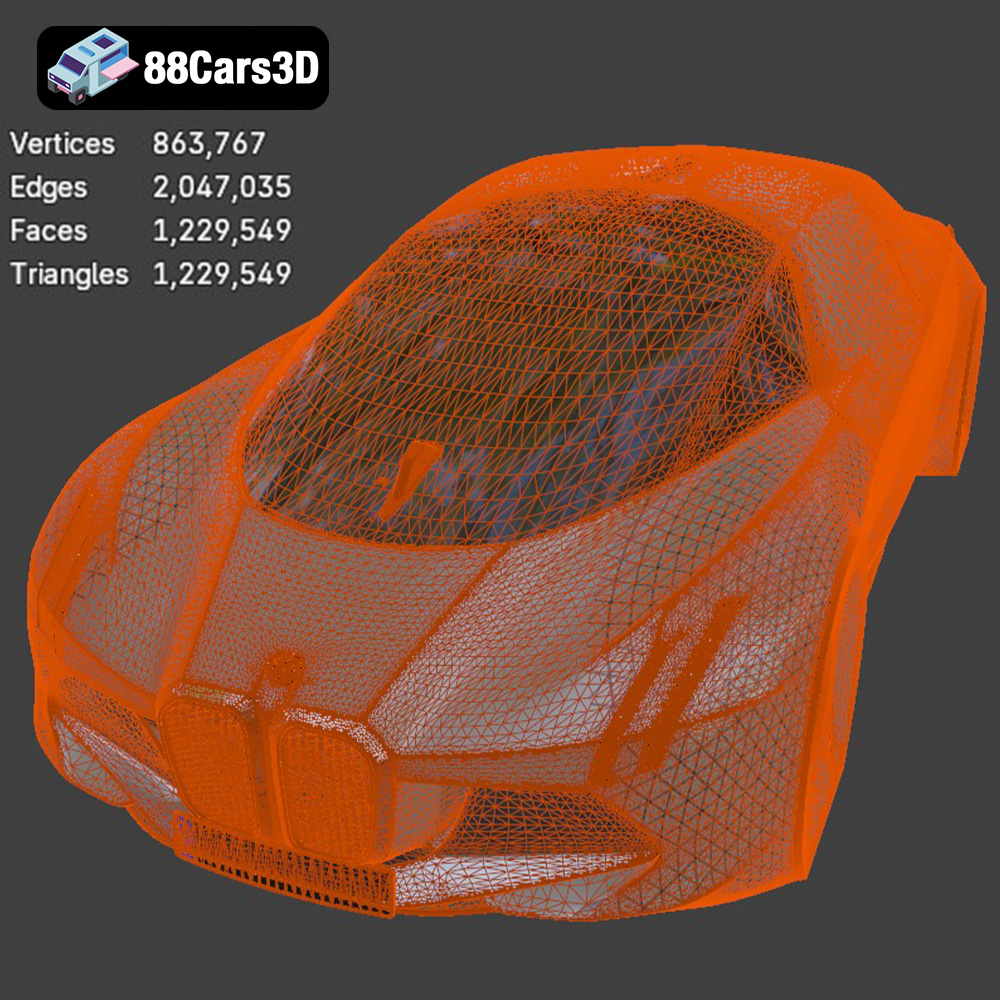
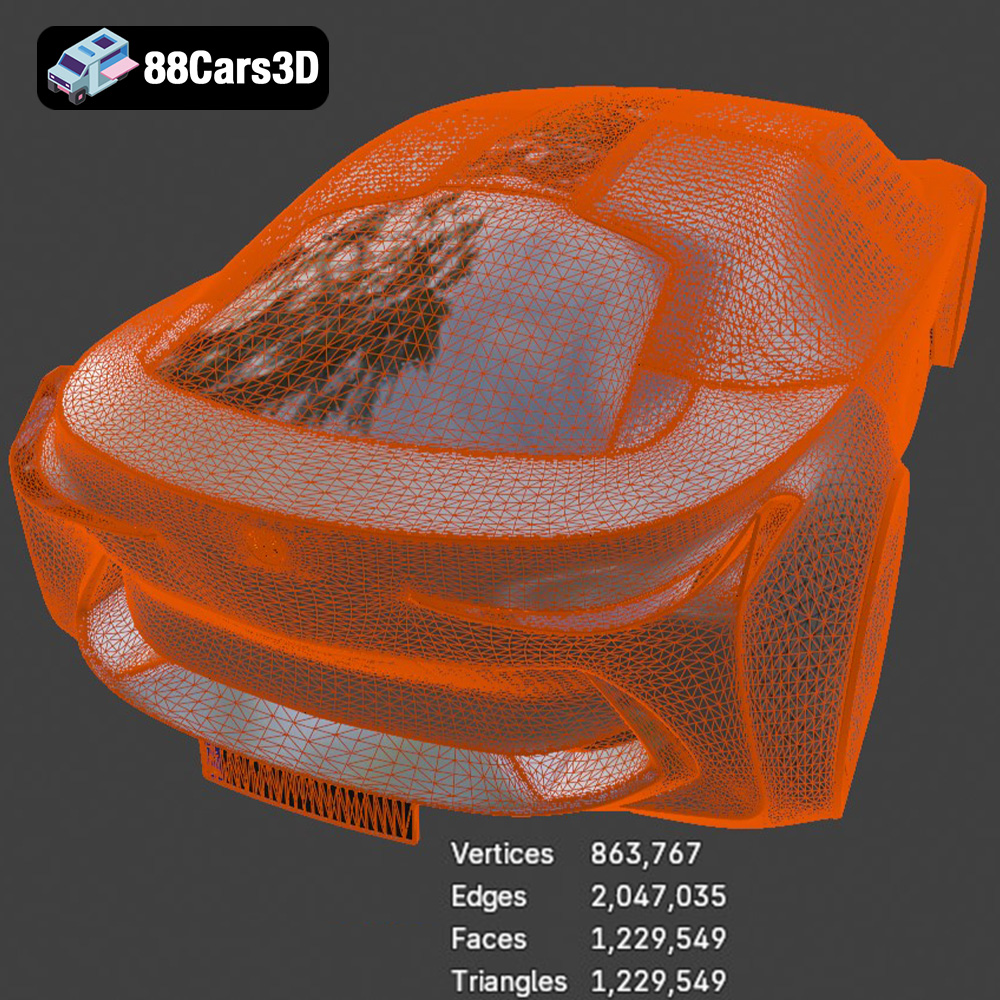
The technical specifications of this BMW Vision Next 100 3D model underscore its professional-grade quality. Boasting 1,229,549 triangles, it strikes an exceptional balance between visual fidelity and optimized structures for high-end rendering and advanced real-time applications. This polygon count is carefully chosen to deliver photorealistic visual realism without excessively burdening next-gen real-time engines like Unreal and Unity. Furthermore, the model adheres to real-world scale accuracy, based on the actual BMW concept vehicle dimensions, which is vital for architectural visualizations, accurate game environments, or AR applications where objects must integrate seamlessly with the real world. The proper pivot setup for steering, wheel rotation, and futuristic suspension travel ensures that animators and developers have a game-ready asset that behaves realistically with minimal setup.
The true power of a meticulously crafted 3D car model like the BMW Vision Next 100 Concept 2016 lies in its versatility across professional pipelines. Whether for game development, high-end visualization, or interactive experiences, these assets serve as foundational elements.
In game development, integrating a detailed 3D car model requires a keen understanding of performance optimization. Using the provided .fbx or .unreal formats, developers can efficiently import the BMW Vision Next 100 into engines like Unreal Engine or Unity. The 1.2 million triangle count is robust for next-gen titles but might still require further optimization for older hardware or mobile platforms.
This makes the BMW Vision Next 100 a prime candidate for open-world futuristic games, high-end racing titles, and sci-fi simulators where visual fidelity is paramount.
For advertising, marketing, and design reviews, automotive rendering demands absolute realism. Professionals using software like 3ds Max (with the .max file), Blender (with the .blend file), or Maya, often pair them with renderers like V-Ray, Corona, or Cycles.
The immersive nature of AR/VR benefits immensely from high-quality 3D car models. The .glb format, optimized for AR/VR and browser-based display, is particularly useful here.
The HQ interior is especially valuable for AR/VR, allowing users to virtually sit inside and experience the futuristic cabin from a first-person perspective, making it perfect for immersive virtual showrooms or interior configurators.
Beyond file formats and general workflows, the intrinsic technical details of a 3D model dictate its true value and versatility. The BMW Vision Next 100 Concept 2016 3D model is built with these professional considerations at its core.
The stated 1,229,549 triangles (approximately 615,000 polygons for quads) for the BMW Vision Next 100 model is a significant number, placing it squarely in the “high-quality” category.
The key is that the model provides enough geometric data to satisfy demanding visual requirements, allowing artists to choose where and how to optimize without compromising the core design.
Clean and efficient UV mapping is as crucial as geometry. While not explicitly detailed in the product description, a high-quality model implies well-unwrapped UVs.
The mention of “Separate wheels and steering components for specialized animation setups” and “Proper pivot setup for steering, wheel rotation, and futuristic suspension travel” is a significant technical advantage.
This level of preparation ensures that the BMW Vision Next 100 model is not just a static display piece but a truly dynamic asset ready for motion.
The versatility and technical excellence of the BMW Vision Next 100 Concept 2016 3D model open doors to numerous professional applications across industries.
Automotive brands are increasingly leveraging 3D car models for virtual showrooms, allowing customers to explore vehicles from the comfort of their homes. A model with an HQ interior, like this BMW concept, becomes central to such experiences. Users can virtually walk around the car, open doors, and even “sit” inside, customizing colors and materials in real-time. This provides an engaging, interactive experience that traditional 2D images cannot match. The .glb format is particularly well-suited for web-based configurators, allowing for quick loading and interaction directly in a browser.
For advertising campaigns, product reveals, and marketing materials, high-fidelity 3D car models are the backbone of cinematic visualizations. Agencies use models like the BMW Vision Next 100 to create stunning renders and animations that showcase the vehicle’s design and features in dynamic, visually rich environments. The model’s meticulous detail, from its copper bodywork to its intricate lighting elements, allows for breathtaking close-ups and dramatic lighting setups that captivate audiences. This eliminates the need for expensive physical prototypes and elaborate real-world shoots, offering immense flexibility and cost-effectiveness.
In the gaming industry, the demand for realistic vehicles in open-world games and racing simulations is constant. The BMW Vision Next 100 model, with its game-ready optimization and proper pivot setups, fits perfectly into this niche. Developers can use it to populate futuristic cityscapes, design unique race tracks, or create compelling player-controlled vehicles. Its design also makes it ideal for sci-fi themed games where conceptual vehicles are a must. Similarly, for VR driving simulators or augmented reality experiences, the model’s accurate scale and detailed interior facilitate truly immersive interactions.
Beyond direct commercial applications, 3D concept car models play a vital role in the internal design and development processes of automotive companies and design studios. Designers can use these models to explore different iterations, test new features, or integrate the concept into virtual environments for context review. While the BMW Vision Next 100 is a finished concept, its high-quality digital twin can serve as a benchmark or inspiration for future projects, allowing designers to study its forms, proportions, and material treatments in a flexible 3D environment using software like 3ds Max or Blender.
The journey of a 3D model doesn’t always end on a screen. For enthusiasts, collectors, or designers who want to bring digital concepts into the physical realm, 3D printing offers an exciting avenue. The BMW Vision Next 100 Concept 2016 3D model, specifically provided in .stl format, is perfectly suited for this transition.
The .stl format, as discussed earlier, translates the complex geometry of the BMW Vision Next 100 into a printable mesh of triangles. This allows hobbyists and professionals alike to physically manifest this futuristic vehicle. Whether creating a desk ornament, a scale model for a diorama, or a prototype for further physical refinement, the .stl file provides the necessary data.
The product description offers valuable insights into 3D printing the model:
Bringing a 3D print to life often involves a significant amount of post-processing.
This process transforms a raw 3D print into a stunning physical replica, demonstrating the full lifecycle of a high-quality 3D car model from digital concept to tangible art piece.
The world of 3D content creation is fueled by precision, versatility, and an unwavering commitment to detail. High-quality 3D car models are at the forefront of this revolution, enabling artists, developers, and designers to push creative boundaries across industries. The BMW Vision Next 100 Concept 2016 3D model exemplifies this standard, offering an exceptional asset that balances intricate detail with optimized performance across a multitude of file formats.
From powering next-generation video games and creating photorealistic automotive visualizations to building immersive AR/VR experiences and even producing physical 3D prints, this model provides a comprehensive solution for diverse professional needs. Its detailed exterior, ultra-high-quality interior, game-ready optimizations, and robust file format support underscore its value as a truly versatile and technically superior digital asset.
For anyone seeking to integrate a visionary automotive design into their projects, the BMW Vision Next 100 Concept 2016 from 88cars3d.com offers an unparalleled resource. It represents not just a vehicle, but a blueprint for the digital future, ready to be driven, rendered, and experienced in countless innovative ways. Explore this and other exceptional 3D car models on 88cars3d.com to elevate your next project.
The BMW Vision Next 100 Concept 2016 is a groundbreaking masterpiece designed to celebrate the centenary of the legendary Bavarian automaker. This highly detailed 3D model captures the essence of futuristic mobility, featuring its iconic ‘Alive Geometry’ closed wheel arches, advanced aerodynamic copper bodywork, and reimagined twin-kidney grille. The high-quality (HQ) interior perfectly reflects the transition between manual ‘Boost’ and autonomous ‘Ease’ driving modes, making it an exceptional centerpiece for any digital environment.
$37.50
.2016
.blend
.bmw
.fbx
.glb
.max
.obj
.ply
.rendering
.stl
.unreal
car-3d-model
concept-car
game asset
game-ready
optimized
vision-next-100
VR/AR