Get 20% OFF All Premium 3D & STL Models!

In the vast landscape of digital content creation, the demand for high-quality, meticulously crafted 3D car models has never been higher. From the hyper-realistic simulations of a cutting-edge racing game to the immersive environments of architectural visualization, a vehicle model serves as a critical component, often defining the aesthetic and technical prowess of an entire project. Beyond mere aesthetics, these digital assets must be engineered with precision, optimized for performance, and versatile enough to integrate into diverse workflows.
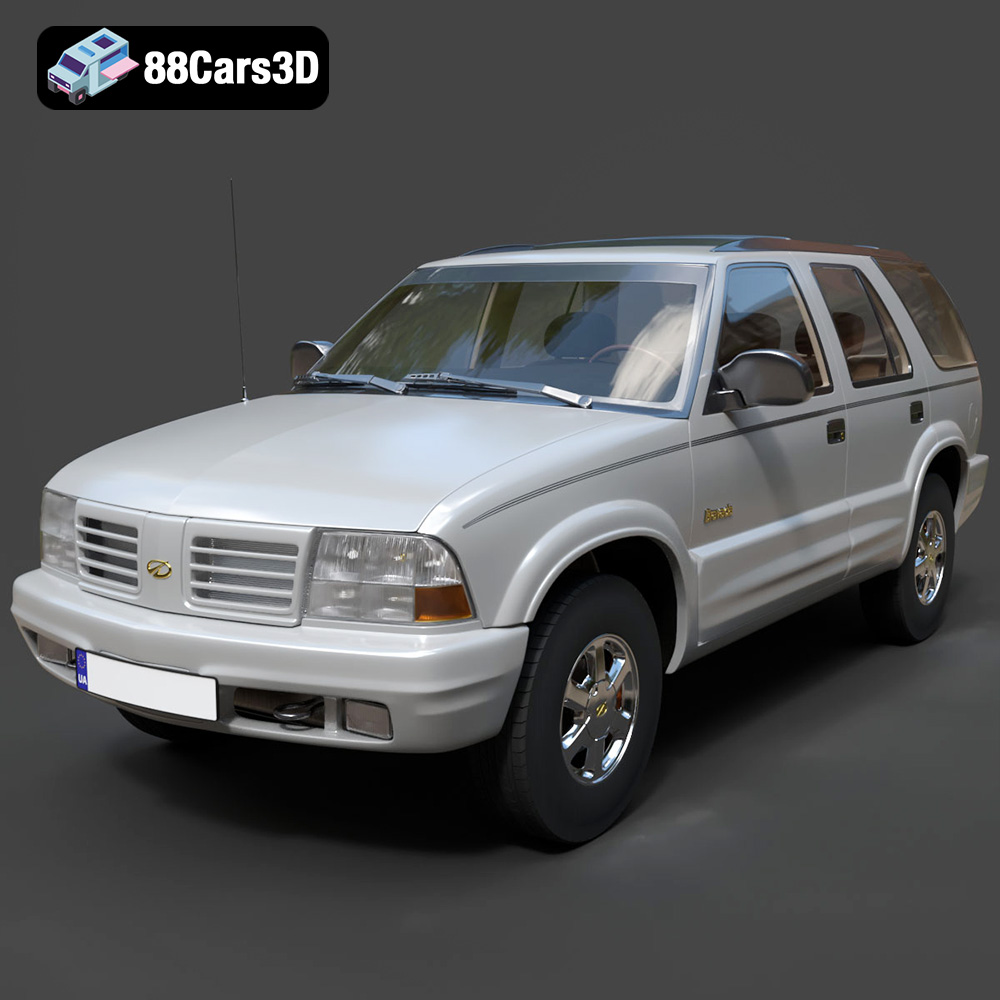
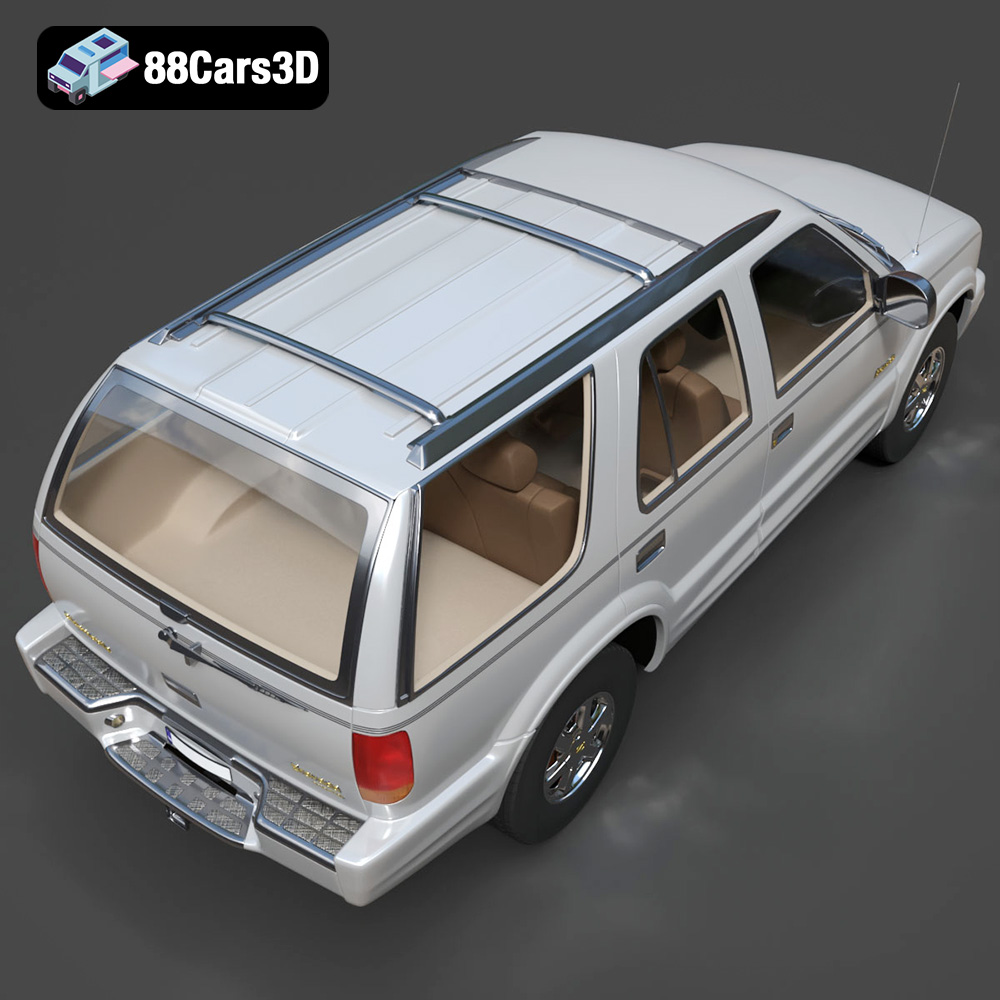
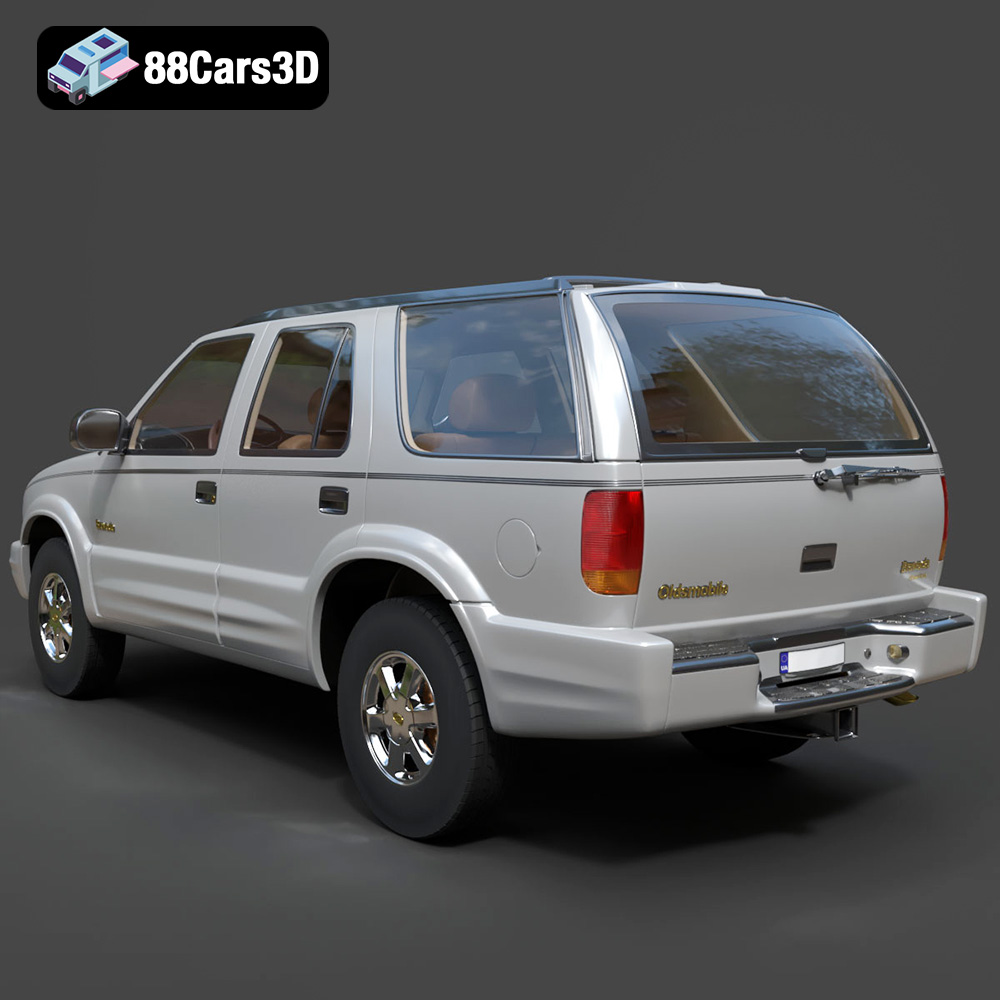
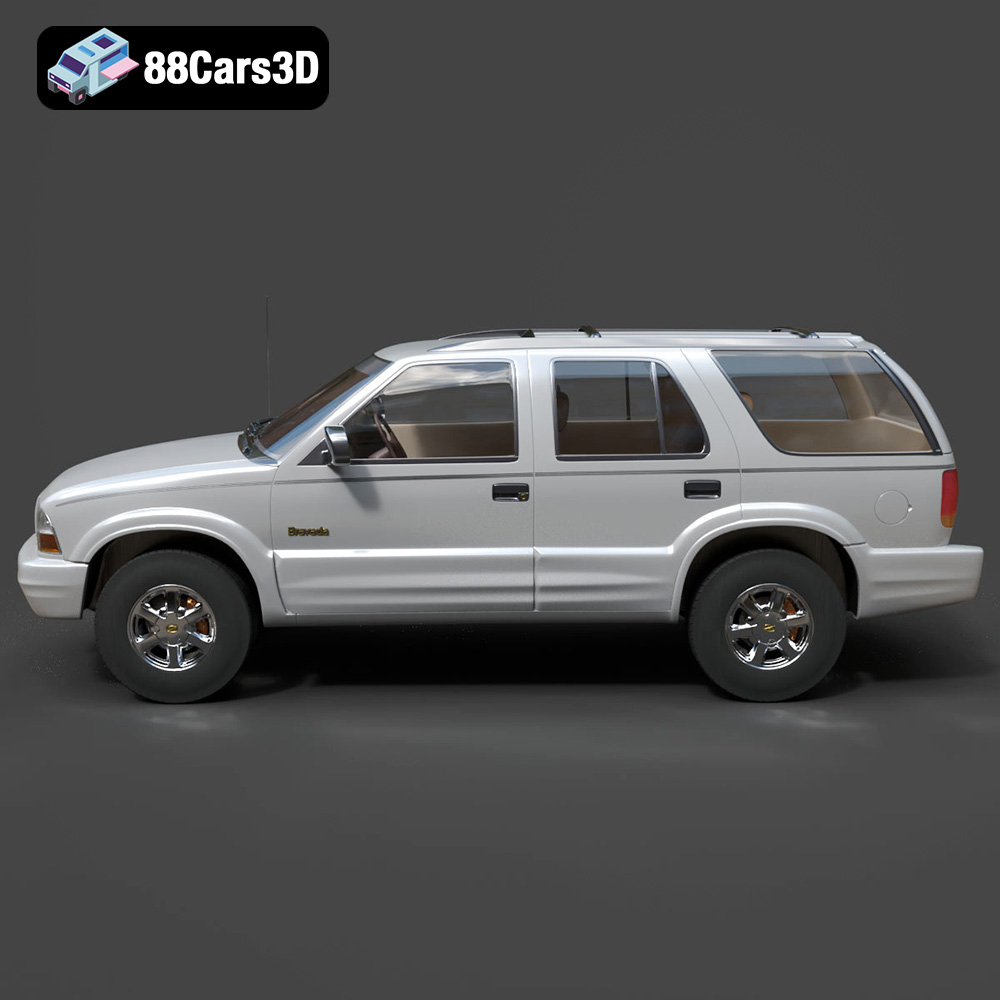
Today, we delve into the intricate world of automotive 3D modeling, exploring the technical considerations, artistic nuances, and practical applications that elevate a simple mesh into a professional-grade asset. We’ll examine how expert creators fuse historical accuracy with digital innovation, using a prime example: the General Motors Oldsmobile Bravada Mk2f 1998-08 3D Model. This particular model, available on 88cars3d.com, is a testament to the blend of detail and optimization required for modern digital pipelines, offering a glimpse into the sophisticated capabilities designers and developers can unlock.
The journey of a 3D model, from concept to deployment, often involves transitioning through various software packages and platforms. This necessitates a robust understanding of file formats, each designed with specific strengths, compatibilities, and use cases. Choosing the correct format is paramount for ensuring data integrity, optimizing performance, and maximizing utility across different pipelines. The Oldsmobile Bravada Mk2f model thoughtfully offers a comprehensive suite of formats, ensuring its adaptability for virtually any project.
The .blend format is the native file type for Blender, the powerful open-source 3D creation suite. A .blend file encapsulates an entire Blender scene, including all mesh data, materials, textures, lighting, cameras, animations, rigging, and even internal scripts. It’s fully editable, making it ideal for artists who primarily work within the Blender ecosystem and require complete control over the asset. For a model like the Bravada, the .blend file would provide access to its meticulously structured geometry, detailed material setups for the ribbed leather-style seats, and potentially even its pivot setups for animation directly within Blender.
Autodesk’s .fbx (Filmbox) format is arguably the most widely adopted interchange format in the 3D industry, especially for game development and real-time applications. It excels at transferring 3D model data, including geometry, materials, textures, animations, and rigs, between different 3D software packages (e.g., 3ds Max, Maya, Cinema 4D, Blender) and game engines like Unreal Engine and Unity. Its binary nature makes it efficient for complex scenes. For the Oldsmobile Bravada, the .fbx format is crucial for importing its optimized mesh and material assignments directly into game engines, preserving its game-ready structure and separate animated components.
The .obj (Wavefront OBJ) format is a universal, human-readable ASCII-based format that primarily stores 3D geometry data (vertices, normals, texture coordinates, faces) and references external material files (.mtl). While it doesn’t support animation or rigging, its simplicity and wide compatibility make it an excellent choice for basic mesh exchange across virtually all 3D software. When maximum compatibility is required without the need for animation, the .obj version of the Bravada is a reliable choice for initial modeling or sculpting phases.
.glb (GL Transmission Format Binary) is an increasingly popular format, especially for AR, VR, and web-based 3D applications. It’s a binary version of the glTF format, consolidating all model data (geometry, materials, textures, animations) into a single, compact file. This “all-in-one” package makes it incredibly efficient for streaming and displaying 3D models quickly on various devices, including mobile. The Bravada’s .glb file is perfect for virtual showrooms on the web or immersive mobile AR experiences, where fast loading and efficient rendering are critical.
.stl (Stereolithography) is the de facto standard file format for 3D printing. It represents a 3D model as a series of connected triangles (a tessellated surface) without color, texture, or material information. Its primary purpose is to define the surface geometry of an object for manufacturing. The Bravada’s .stl variant is specifically tailored for hobbyists and professionals looking to create physical replicas, allowing for precise control over scales (1:12, 1:18, 1:24 recommended) and print settings, as detailed in the product description.
.ply (Polygon File Format or Stanford Triangle Format) is another format for storing 3D data, particularly useful for scanned data, CAD applications, and scientific visualization. It can store a wider range of properties than .obj, including color per vertex, transparency, and range data, making it a robust option for precision meshes and analysis. While less common for general artistic asset exchange, its inclusion for the Bravada highlights its suitability for advanced engineering or precise visual inspection.
The .unreal format signifies an asset specifically prepared and optimized for direct import into Unreal Engine. While often imported via .fbx, having a .unreal specific asset implies pre-configured settings, potentially including collision meshes, LODs (Levels of Detail), and material instances tailored for the engine’s renderer. This saves significant development time, ensuring the Bravada can be dropped into an Unreal project with minimal setup, instantly leveraging its game-ready optimization and visual fidelity.
Finally, the .max format is the native scene file for Autodesk 3ds Max, a leading 3D modeling, animation, and rendering software. Similar to .blend, a .max file contains the complete scene data, offering full editability within 3ds Max. This is invaluable for professionals who use 3ds Max for high-end rendering (e.g., V-Ray, Arnold), complex animation, or integrating the Bravada into detailed architectural visualization scenes where the full range of 3ds Max’s tools is required.
Creating a truly exceptional 3D car model is an intricate dance between artistic interpretation and rigorous technical execution. It demands not just an eye for detail but also a deep understanding of geometry, optimization, and material science. The General Motors Oldsmobile Bravada Mk2f 1998-08 model exemplifies these principles, showcasing how a historical vehicle can be meticulously recreated for the digital age.
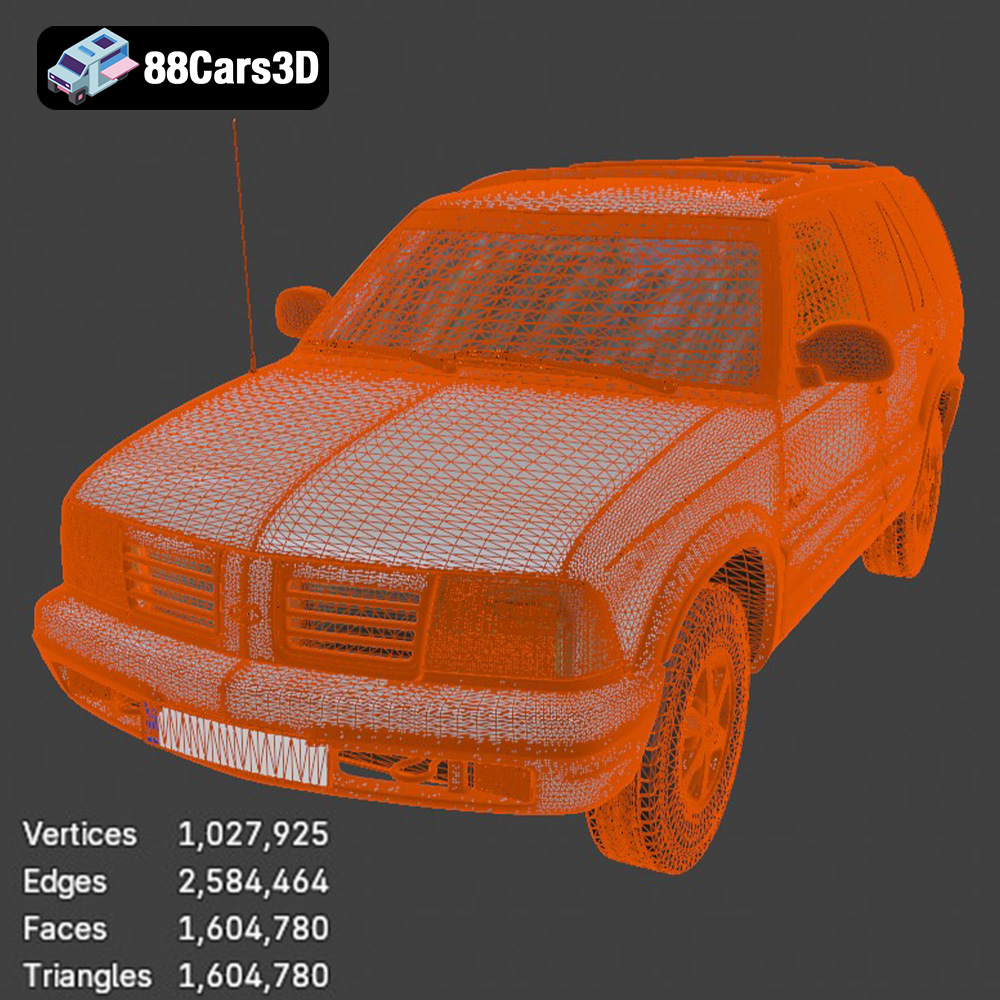
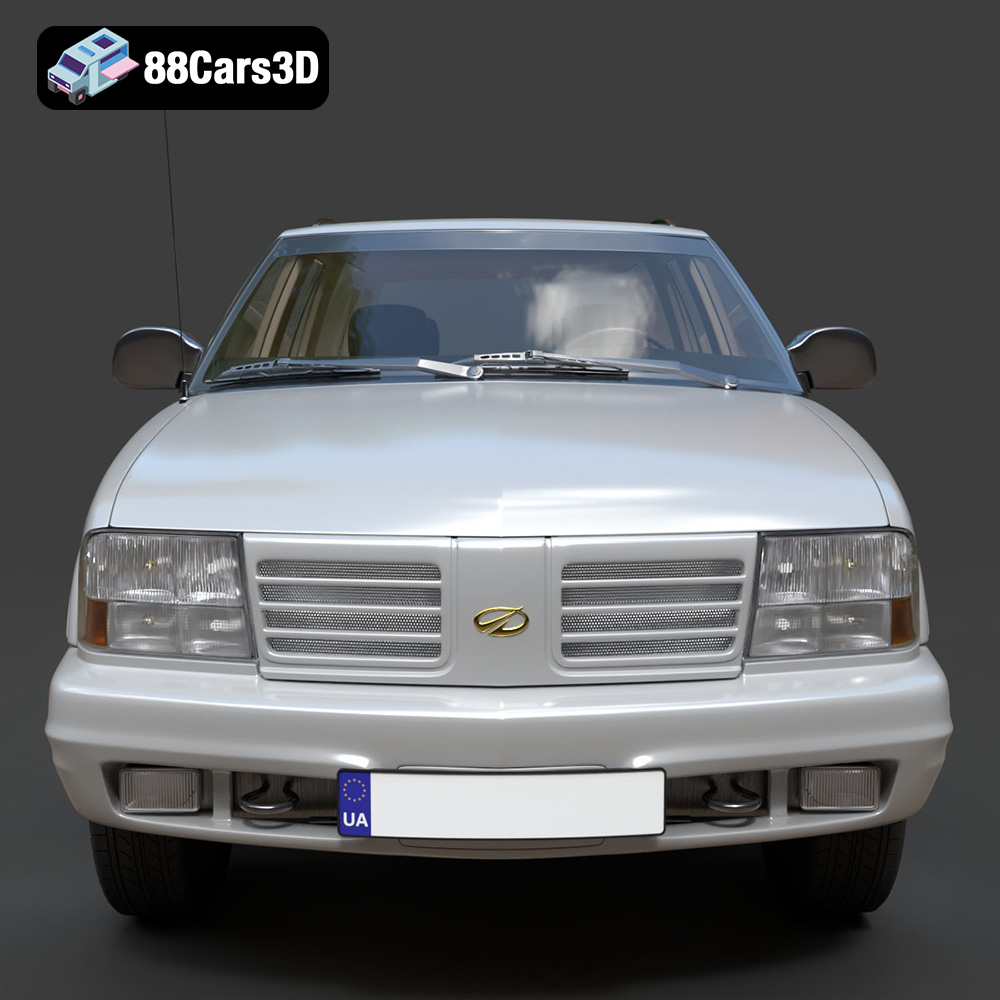
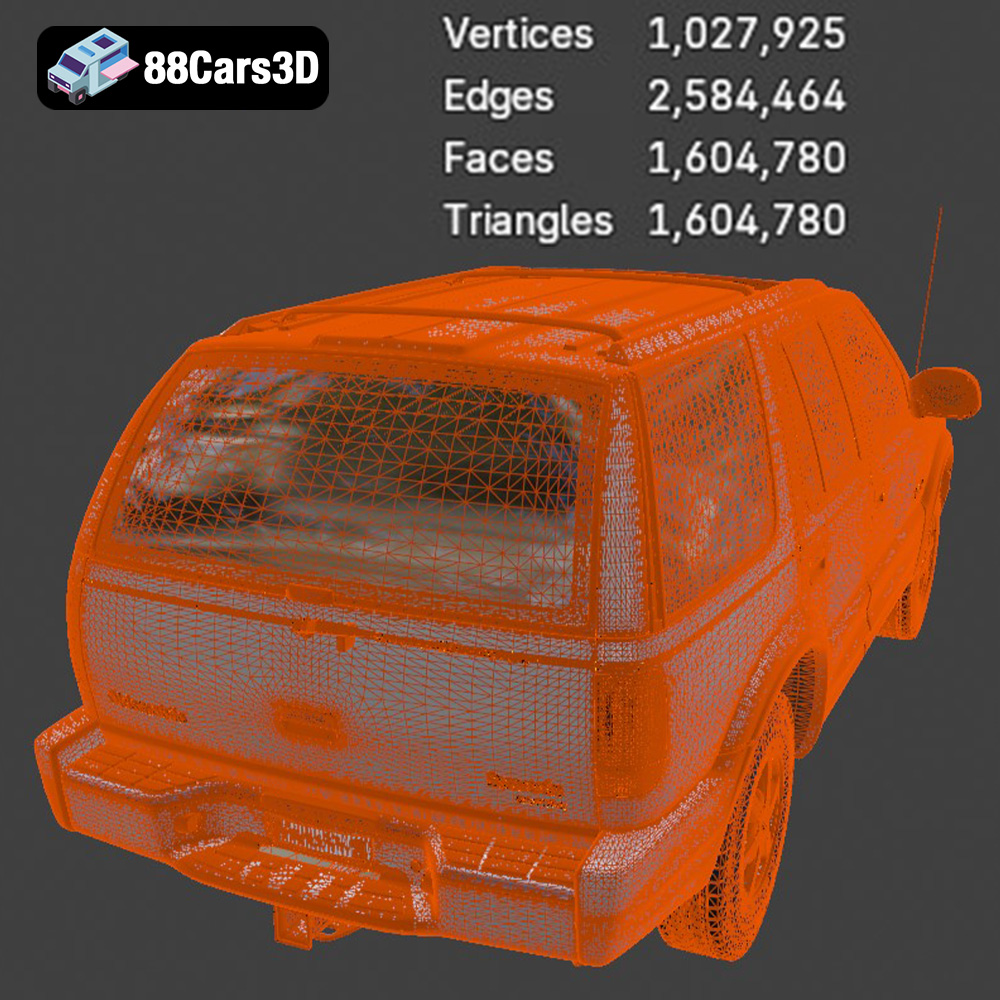
The foundation of any high-quality 3D model is its topology – the arrangement of vertices, edges, and faces that form the mesh. For automotive models, this is especially critical, as surfaces need to be perfectly smooth and reflective. The Bravada model, boasting 1,604,780 triangles, strikes a remarkable balance. This polygon count is high enough to capture the subtle curves, sharp lines, and intricate elements of the Oldsmobile’s exterior, such as the iconic split front grille and seamlessly integrated aerodynamic styling cues, without becoming overly dense and unmanageable for real-time applications.
Key areas like the high-resolution lighting fixtures, including the distinct split headlights and integrated taillights, require precise geometric definition to reflect light accurately. Even the undercarriage components and the detailed 4.3L Vortec V6 engine block styling representations are rendered with an impressive level of fidelity, which is crucial for close-up shots or interactive inspections.
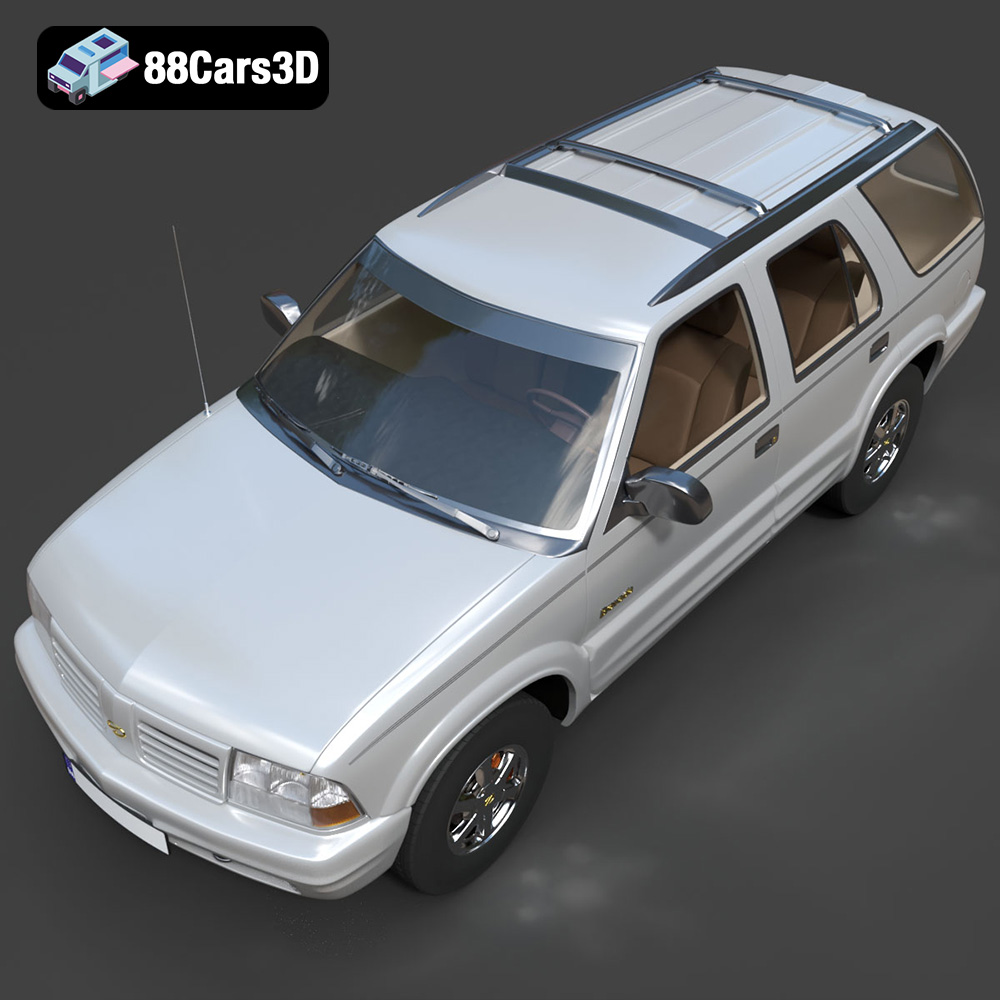
While the exterior often grabs immediate attention, the interior of a 3D car model can make or break an immersive experience, especially for first-person perspectives in games or VR walkthroughs. The Oldsmobile Bravada Mk2f model doesn’t shy away from this challenge. Its cockpit features luxurious ribbed leather-style seat detailing and plush cabin textures that evoke the period-correct feel of a premium SUV.
Every element, from the accurate dashboard with its center console and wood-grain accent styling to the detailed instrument cluster showcasing period-correct analog gauges, is precision-modeled. Even smaller components like foot pedals, the steering column, and the floor-mounted automatic shifter contribute to an authentic and believable environment. This level of interior detail is paramount for applications like virtual dealership showrooms or historical driving simulations.
Once a 3D model is sculpted with precision, the next step is to bring it to life through rendering and visualization. This process involves setting up materials, lighting, and camera angles to create stunning, photorealistic images or animations. Professional workflows often leverage powerful software like 3ds Max and advanced rendering engines.
For artists focusing on cinematic rendering or hyper-realistic architectural visualization, 3ds Max remains a cornerstone. The inclusion of the native .max file format for the Oldsmobile Bravada Mk2f is a significant advantage. Within 3ds Max, artists can fully leverage advanced renderers like V-Ray or Arnold to achieve unparalleled realism.
The workflow typically involves importing the Bravada, refining its materials using physically based rendering (PBR) workflows to accurately simulate the reflections and refractions of painted metal, glass, and chrome. Advanced lighting setups, including HDRI environments and studio lights, can be used to showcase the vehicle’s form and finish. Artists can also utilize 3ds Max’s robust animation tools to create elaborate sequences, perhaps depicting the Bravada cruising through an urban landscape or parked in a luxurious virtual garage, complete with subtle suspension travel and wheel rotation thanks to the model’s proper pivot setup.
Blender, with its powerful Cycles and Eevee renderers, offers an equally compelling platform for visualizing the Bravada. The .blend file provides a complete scene, allowing immediate access to materials and scene setups. Cycles, a physically based ray-tracing renderer, can produce stunning photorealistic results, ideal for high-quality marketing visuals or brand campaigns.
For faster, real-time feedback and animation, Blender’s Eevee renderer is an excellent alternative, offering impressive visual quality without the lengthy render times. Artists can quickly experiment with different lighting scenarios, body/tank colors, and material finishes (matte, gloss, metallic) to explore various customization options provided by the model. The ability to modify tire textures from all-season to potential off-road variants further extends its versatility in different scene contexts.
The ultimate test for many 3D car models lies in their performance within real-time environments, particularly game engines. Here, a delicate balance must be struck between visual fidelity and computational efficiency. The Oldsmobile Bravada Mk2f model is explicitly designed with this challenge in mind, boasting game-ready optimization.
Unreal Engine stands at the forefront of real-time rendering, powering some of the most visually stunning games and interactive experiences. The Bravada’s optimized geometry, with its 1,604,780 triangles, is specifically structured for real-time engines, ensuring high-definition details in exterior paneling and complex light housings without compromising frame rates. The inclusion of a dedicated .unreal format, alongside the widely compatible .fbx, streamlines the import process into Unreal Engine. Developers can drop the model directly into their projects, knowing it’s already prepped for the engine’s rendering pipeline.
For open-world games, racing titles, or simulators, the Bravada serves as an exceptional asset. Its real-world scale accuracy and proper pivot setup for steering, wheel rotation, and suspension travel are critical for realistic vehicle physics and animation within the game engine. Imagine an urban driving simulation where players can experience the authentic feel of a late 90s luxury SUV, navigating bustling city streets or exploring historical period-correct environments.
Unity, another dominant force in game development, also benefits immensely from models optimized like the Bravada. The .fbx format ensures seamless import, and Unity’s robust material system allows for quick setup of PBR materials to make the Bravada shine. Whether developing for PC, console, or mobile platforms, the model’s balanced polycount ensures it can perform efficiently across a wide range of hardware.
Developers can utilize Unity’s extensive asset store for vehicle physics systems, quickly integrating the Bravada for interactive driving experiences. The separate wheels, suspension, and steering components are invaluable for creating complex vehicle rigging and realistic simulation of movement, making it ideal for everything from casual mobile games to professional-grade simulators.
The utility of a high-quality 3D car model extends far beyond traditional rendering and gaming. Emerging technologies like Augmented Reality (AR) and Virtual Reality (VR), along with the tangible realm of 3D printing, offer exciting new avenues for interaction and creation.
The Oldsmobile Bravada Mk2f model is perfectly suited for immersive AR/VR applications. Its optimized geometry and comprehensive file format support, particularly the .glb format, make it ideal for virtual showrooms, configurators, and mobile AR experiences. Imagine a prospective buyer exploring the Bravada in a VR headset, walking around the vehicle, examining its exterior features, and stepping inside to inspect the detailed cockpit and dashboard from a first-person perspective.
In AR, the Bravada could be projected into a real-world environment, allowing users to visualize the car in their driveway or garage via a smartphone or tablet. This not only enhances engagement but also provides a powerful tool for marketing and product visualization, blurring the lines between the digital and physical worlds. The fidelity of the detailed independent front and solid axle rear suspension components would be clearly visible even in an AR overlay.
For enthusiasts and hobbyists, the ability to physically hold a miniature replica of their favorite vehicle is a unique joy. The Oldsmobile Bravada Mk2f model includes a meticulously prepared .stl file, making it directly convertible for 3D printing. The product description even provides specific print settings, guiding users to achieve the best possible results.
Recommended scales (1:12, 1:18, 1:24) cater to various display needs, while suggested layer heights (0.04–0.12 mm) emphasize the recommendation for resin printing to capture fine details. Clear instructions on wall thickness, infill, and required supports (especially for delicate parts like exhaust and mirrors) ensure a successful print. The advice to print the frame angled for structural integrity and wheels separately demonstrates a thoughtful consideration for the physical manufacturing process, allowing hobbyists to create authentic factory-colored models with metallic finishes after post-processing.
A truly valuable 3D asset is not a static object but a versatile foundation that can be adapted and customized to meet evolving project needs. The General Motors Oldsmobile Bravada Mk2f 3D Model offers robust customization options, extending its lifespan and utility across numerous creative endeavors.
The ability to easily modify the vehicle’s appearance is a cornerstone of modern 3D workflows. With the Bravada model, artists can readily change body/tank colors, choosing from authentic factory hues or experimenting with custom finishes. This is critical for matching brand guidelines, creating unique car liveries, or depicting the vehicle in different periods or states of wear. The detailed model allows for precise adjustments to material finishes—from a high-gloss showroom sheen to a more rugged, matte appearance—adapting it for various scenes, whether a luxury car advertisement or a gritty post-apocalyptic game setting.
Furthermore, the option to modify tire textures allows for visual customization, enabling artists to swap between standard all-season variants and potentially more aggressive off-road or performance-oriented treads. This level of granular control ensures that the Bravada can seamlessly integrate into diverse narratives and visual styles without requiring extensive re-modeling.
Beyond surface aesthetics, the Bravada model is designed to adapt to different lighting environments. This means the materials are set up in a way that allows them to react realistically to various lighting conditions, from bright outdoor sunlight to dramatic indoor studio setups or moody night scenes. This flexibility is invaluable for animators and render artists who need to place the vehicle in a wide array of contextual settings without tedious material adjustments.
A premium 3D car model, like those found on 88cars3d.com, acts as a long-term investment. Its high-fidelity detail ensures it remains relevant even as rendering technologies advance, and its optimized geometry allows it to scale effectively across different platforms and fidelity requirements. The comprehensive file format support further future-proofs the asset, guaranteeing compatibility with future software versions and emerging technologies.
The journey of a 3D car model from concept to a deployed asset is a sophisticated blend of artistry, technical precision, and strategic optimization. From meticulous topology and interior fidelity to seamless integration into diverse software and real-time engines, every aspect demands expert attention. The Oldsmobile Bravada Mk2f 1998-08 3D Model stands as a shining example of such excellence, embodying the rigorous standards required for professional-grade content creation.
Whether you’re a game developer crafting immersive open worlds, an architectural visualizer aiming for hyper-realism, an AR/VR designer building interactive experiences, or a hobbyist aspiring to 3D print a classic ride, this model offers the versatility, detail, and optimization necessary to elevate your projects. Its comprehensive suite of file formats ensures compatibility across virtually all major pipelines, making it a truly invaluable asset. Explore the possibilities and enhance your digital library with premium 3D car models like the Oldsmobile Bravada Mk2f 1998-08, available now at 88cars3d.com.
The Oldsmobile Bravada Mk2f (1998-08) stands as a distinct symbol of late 90s and early 2000s American luxury SUVs. Known for its sophisticated SmartTrak all-wheel-drive system, this mid-size premium utility vehicle blends rugged capability with upscale comfort. The model captures the vehicle’s signature design elements, including the iconic Oldsmobile split front grille, seamless body-colored lower cladding, and smoothly integrated aerodynamic styling cues that set it apart from its corporate siblings. Boasting a meticulous topology with a triangle count of 1,604,780, this 3D model delivers high-fidelity visual quality without compromising performance. Designed with game-ready optimization in mind, the geometry is expertly structured for real-time engines, rendering high-definition details in the exterior paneling, complex light housings, and undercarriage components. It serves as an exceptional asset for developers and artists focusing on game development, immersive AR/VR experiences, animation, and hyper-realistic architectural visualization. Perfect for urban driving simulations, virtual dealership showrooms, historical 90s-era automotive scenes, and cinematic rendering projects.
$37.50
.blend
.fbx
.glb
.luxury suv
.max
.obj
.oldsmobile
.ply
.rendering
.stl
.unreal
bravada
bravada-mk2f
car-3d-model
classic-suv
game asset
game-ready
low-poly
optimized
SUV
VR/AR