Get 20% OFF All Premium 3D & STL Models!

In the rapidly evolving landscape of digital content creation, the demand for incredibly detailed and technically sound 3D assets is higher than ever. From cinematic visual effects to immersive game worlds and photorealistic architectural visualizations, 3D models form the very bedrock of these experiences. Nowhere is this more apparent than in the automotive industry, where precision and aesthetic fidelity are paramount. A meticulously crafted 3D car model isn’t just a digital object; it’s a statement of engineering, design, and artistic prowess, capable of bringing visions to life.
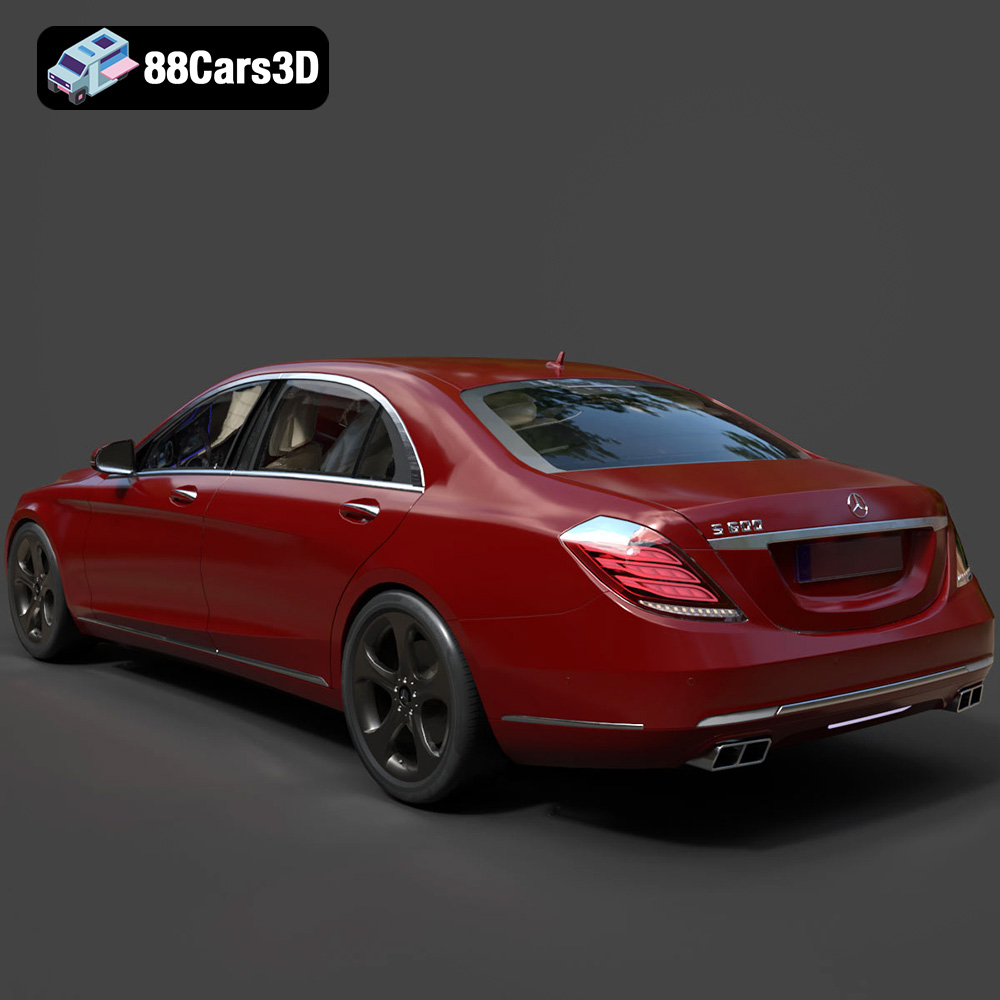
Today, artists, developers, and designers seek assets that not only look stunning but are also engineered for seamless integration across diverse platforms and demanding workflows. This quest for excellence often leads professionals to specialized marketplaces like 88cars3d.com, which offer a curated selection of high-quality 3D car models. Among these, the Mercedes-Benz S-Class LWB 2017 3D Model stands out as a prime example of what a truly premium asset should embody – a harmonious blend of luxurious detail, optimal performance, and broad compatibility. This article delves into the technical intricacies of utilizing such models, exploring their applications, and understanding the vital role they play in modern digital production.
When working with 3D models, especially complex automotive designs, selecting the correct file format is a critical decision that impacts workflow, compatibility, and the final output. Each format is designed with specific use cases and technical considerations in mind. Understanding these nuances ensures a smooth production pipeline and maximizes the utility of your 3D car models.
The .blend file format is the native file type for Blender, the powerful and versatile open-source 3D creation suite. A .blend file isn’t just a mesh; it’s a complete scene package. It encapsulates all aspects of a Blender project, including the 3D model geometry, materials, textures, lighting, cameras, animations, rigging, and even scene settings. For users primarily working within Blender, this format offers unparalleled flexibility. You can open, modify, and render the Mercedes Benz S Class LWB 2017 3D Model directly in Blender, leveraging all of its features without data loss or conversion artifacts. This makes it ideal for artists who want full editability and control over every component of the model within their preferred software.
.fbx (Filmbox) is arguably the most widely adopted proprietary 3D file format for data exchange between various 3D software applications and game engines. Developed by Autodesk, FBX is highly versatile, capable of storing not only model geometry (meshes, polygons) but also crucial data like materials, textures, animations, rigging, lights, and camera information. Its robust support for animation data makes it an ideal choice for exporting animated 3D car models – like the Mercedes S-Class with its separate wheels and suspension – into real-time pipelines such such as Unreal Engine and Unity. When you download an FBX file, you’re getting a package that’s engineered for compatibility and efficient transfer, minimizing the need for complex setup in the target application.
The .obj (Wavefront OBJ) format is a simple, widely supported, and often considered the universal standard for exchanging 3D geometry. It primarily stores vertex data, texture coordinates, normals, and polygonal faces. While it doesn’t typically store advanced features like animation, rigging, or scene-specific lighting, its strength lies in its simplicity and compatibility across virtually every 3D modeling software. For sharing basic mesh data of the Mercedes S-Class 2017, especially when focusing purely on the model’s form and topology, OBJ is an excellent, reliable choice. Textures are usually referenced via an accompanying .mtl (material library) file.
.glb (GLB file format) is the binary version of glTF (GL Transmission Format), a royalty-free specification for the efficient transmission and loading of 3D scenes and models by applications. GLB files package all assets – geometry, materials, textures, and even animations – into a single, self-contained binary file. This optimization makes .glb files incredibly efficient for web-based 3D applications, augmented reality (AR), virtual reality (VR), and mobile experiences. For showcasing the Mercedes S-Class in a virtual showroom on a website or deploying it in a mobile AR configurator, the .glb format offers superior performance and ease of use, delivering a rich 3D experience with minimal load times.
The .stl (Stereolithography) file format is the de facto standard for 3D printing. Unlike other formats that describe surfaces, STL represents a 3D object as a collection of triangular facets, defining only the surface geometry of a 3D model without any color, texture, or other CAD attributes. When preparing the Mercedes Benz S Class LWB 2017 for physical production, such as creating a display-scale model, converting it to .stl is the necessary step. While it sacrifices visual data, it provides the precise geometric information required for 3D printers to accurately reproduce the object layer by layer, as highlighted in the detailed 3D print settings for this specific model.
.ply (Polygon File Format, also known as the Stanford Triangle Format) is another format used to store 3D data, particularly from 3D scanners. It can store a variety of properties, including color, transparency, surface normals, and texture coordinates, in addition to XYZ coordinates of vertices and the connections between them. While less common for general animation, PLY is valued in scientific, engineering, and CAD applications where precise mesh data, often originating from scanned real-world objects, is crucial for analysis or reconstruction. It offers a more detailed representation of mesh attributes than OBJ for certain technical applications.
The .unreal file format isn’t a single, standalone file type in the same way FBX or OBJ is. Instead, it refers to assets specifically optimized and integrated within the Unreal Engine project structure. When a 3D model like the Mercedes S-Class is provided in an “unreal” format, it typically means it comes pre-packaged as an Unreal Engine asset, often as a Uasset or a collection of files ready to be dropped into an Unreal project. This includes not just the mesh, but also pre-configured materials, textures, LODs (Levels of Detail), and potentially Blueprints or animation setups. This provides a direct, engine-ready solution, saving developers significant setup time and ensuring optimal performance within the Unreal environment.
Finally, .max is the native file format for Autodesk 3ds Max, a professional 3D computer graphics program for making 3D animations, models, games, and images. Similar to Blender’s .blend, a .max file stores an entire 3ds Max scene, including all geometry, materials, textures, lights, cameras, modifiers, and animation data. For users working in a 3ds Max pipeline, having the Mercedes S-Class LWB 2017 model available in .max format offers full editability and access to all the original scene setups, enabling complex animations, detailed rendering, and integration into existing Max projects without any loss of fidelity or original scene structure.
The journey from a physical vehicle to a stunning 3D car model begins with meticulous attention to detail and a profound understanding of automotive design principles. A premium asset, such as the Mercedes-Benz S-Class LWB 2017 3D Model available at 88cars3d.com, is not merely a collection of polygons; it’s a digital sculpture, carefully engineered to replicate its real-world counterpart with uncanny accuracy.
The hallmark of a high-quality 3D car model lies in its geometric accuracy. For the Mercedes S-Class, this means faithfully recreating its commanding presence, elegant flowing body lines, and the iconic prominent chrome grille. Real-world scale accuracy, based on actual vehicle chassis dimensions, is non-negotiable. This ensures that when the model is placed in an environment, whether it’s an architectural visualization or a game level, it feels natural and proportionate. The elongated chassis, a defining characteristic of the LWB variant, must be precisely replicated to convey its stately, unparalleled road presence.
Beyond raw geometry, the finer surface details elevate a good model to an exceptional one. The Mercedes S-Class model boasts high-resolution multibeam LED headlights and Stardust effect taillights, each capturing the intricate lighting patterns of the real car. Authentic multi-spoke alloy wheels, complete with precise tire tread patterns, add another layer of realism. The distinction between various materials—the glint of chrome, the subtle reflections of paintwork, the texture of rubber, and the sophisticated air suspension details—is crucial for achieving photorealistic results in automotive rendering. These elements are not just textures; they are often carefully sculpted geometry and intricate material shaders.
A true premium 3D car model doesn’t stop at the exterior. The interior, often overlooked in lower-quality assets, is where the luxury experience truly resides. The Mercedes S-Class LWB 2017 model features a meticulously detailed cockpit, including luxurious quilted leather seating, an intricate multi-function steering wheel with wood trim, and the impressive widescreen dual-display digital instrument cluster and infotainment system. Even refined central console elements with polished metal switches and touchpads are accurately represented. This level of interior detail is critical for applications like virtual showrooms, cinematic shots, and even first-person perspectives in high-fidelity games, where players might step inside the vehicle.
Professional 3D workflows demand assets that are not only visually impressive but also technically sound and easily adaptable. A model like the Mercedes Benz S Class LWB 2017 3D Model is designed to be a versatile workhorse, compatible with major 3D software platforms and real-time rendering engines, ensuring it slots seamlessly into diverse production pipelines.
For many professionals in automotive rendering and visualization, Autodesk 3ds Max remains a cornerstone. The availability of the Mercedes S-Class model in .max format means artists can immediately dive into advanced rendering setups using engines like V-Ray or Corona. Within 3ds Max, the separate wheels, suspension, and steering components become invaluable. This allows for intricate animation sequences, from dynamic driving shots showcasing realistic suspension travel and steering mechanics to detailed breakdowns of the vehicle’s engineering. Artists can also easily modify materials, experiment with studio lighting, and composite the car into complex archviz scenes, offering unparalleled control over the final output.
Blender’s open-source nature and comprehensive toolset have made it a favorite among independent artists and large studios alike. With the Mercedes S-Class LWB 2017 model provided in its native .blend format, Blender users gain full access to the model’s structure, materials, and any pre-configured elements. This allows for extensive customization, from adjusting paint finishes and tire textures to implementing custom rigging and animation. Blender’s powerful Cycles and Eevee renderers can produce stunning photorealistic or stylized visuals, making the model suitable for a wide range of projects, from indie games to promotional renders. The full editability ensures that artists can adapt the asset to their specific creative vision without limitations.
The inclusion of .fbx and .obj formats in the Mercedes S-Class package from 88cars3d.com underscores its universal compatibility. .fbx, as an industry standard, facilitates smooth transitions to other Autodesk products like Maya, or directly into game engines. .obj provides a clean mesh for sculpting in ZBrush, texturing in Substance Painter, or importing into CAD software for engineering analysis. This multi-format approach ensures that regardless of the artist’s primary toolset, they can integrate this premium 3D car model into their existing pipeline efficiently, reducing friction and accelerating production timelines.
In the realm of game development, where performance is as crucial as visual fidelity, 3D car models must strike a delicate balance. The Mercedes-Benz S-Class LWB 2017 3D Model exemplifies a ‘game-ready’ asset, meticulously optimized to perform flawlessly within demanding real-time engines like Unreal Engine and Unity without compromising its high-end visual realism.
A key technical advantage of this model is its optimized polycount of approximately 500k triangles. While this might seem high for older game engines, it’s a perfect balance for modern AAA titles, open-world games, and racing simulators. This triangle count allows for exceptional visual detail, capturing every curve and panel gap of the S-Class, while remaining performant enough for real-time rendering at high frame rates. Crucially, “optimized” also refers to the underlying topology—the organization of polygons. Clean, quad-based topology ensures smooth deformations during animation and efficient UV mapping for texture application, which is vital for any game asset.
The availability of the Mercedes S-Class model in .fbx and specifically .unreal formats streamlines its integration into the leading game engines. For Unreal Engine, the .unreal package can include pre-configured materials, textures, and even basic collision meshes, significantly reducing setup time for developers. In both Unreal and Unity, the properly set pivots for steering, wheel rotation, and suspension travel are critical. This allows game developers to instantly implement realistic vehicle physics and animation, from tire spin and steering input to dynamic suspension reacting to terrain. This pre-configuration means less time spent on foundational setup and more time on gameplay mechanics and environmental design.
For open-world games or driving simulators, the ability to experience the car from a first-person perspective is immersive. The optimized geometry for first-person POV in the S-Class model ensures that the detailed cockpit, with its luxurious quilted leather seating and widescreen dual-display, holds up to close scrutiny. Furthermore, features like separate wheels, suspension, and steering components are not just for animation; they enable dynamic interaction. Game systems can independently control these parts, allowing for realistic damage models, custom modifications, or interactive elements within the game world, pushing the boundaries of realism in game development.
The utility of a high-quality 3D car model extends far beyond traditional rendering and game development. The Mercedes-Benz S-Class LWB 2017 3D Model, with its versatile file formats and meticulous detail, is an invaluable asset for cutting-edge applications in augmented reality (AR), virtual reality (VR), high-end visualization, and even physical 3D printing.
Augmented Reality and Virtual Reality are transforming how we interact with digital content. The .glb format, optimized for AR and VR, makes the Mercedes S-Class model perfect for immersive virtual showrooms, where potential buyers can explore the vehicle in 1:1 scale within a VR headset, opening doors, sitting inside, and interacting with features. For mobile AR experiences, users can project the S-Class onto their driveway or living room floor, customizing colors and viewing intricate details in real-time through their smartphone camera. These applications are particularly impactful for luxury brands, offering a unique and engaging way to showcase products, a perfect fit for a vehicle of the S-Class’s caliber.
In the world of advertising and marketing, photorealistic renders are paramount. The Mercedes S-Class LWB 2017 model excels in rendering and visualization workflows. Its accurate geometry, high-resolution textures, and detailed materials make it an excellent choice for brand campaigns, lifestyle scenes, and studio lighting setups. Whether it’s showcasing the car in a sleek urban environment, a serene countryside drive, or a dramatic studio spotlight, the model’s fidelity ensures that every render is indistinguishable from real photography. This capability saves time and cost compared to physical photoshohoots, while offering endless creative possibilities for camera angles, environments, and lighting scenarios.
For enthusiasts and designers alike, the ability to transition a digital asset into a physical object is thrilling. The Mercedes S-Class 3D model is convertible to the .stl format, making it suitable for 3D printing. This opens up possibilities for creating display-scale hobbyist models, educational prototypes, or bespoke gifts. The provided 3D print settings, such as recommended scales (1:12, 1:18, 1:24), layer height, wall thickness, infill, and crucial support requirements for detailed parts, guide users in achieving optimal physical results. Post-processing steps like sanding, priming, and applying authentic factory colors with metallic finishes further bridge the gap between the digital and physical realms, allowing for stunning tangible representations of this iconic vehicle.
A truly versatile 3D car model is not static; it’s a dynamic foundation for endless creative possibilities. The Mercedes-Benz S-Class LWB 2017 3D Model from 88cars3d.com offers extensive customization options, ensuring it remains relevant and adaptable across a multitude of projects and future design trends.
One of the most immediate and impactful customization options is the ability to change body and tank colors. Whether it’s applying authentic factory colors to match real-world specifications or experimenting with custom finishes like matte, gloss, or metallic, the model provides the flexibility to match specific brand guidelines or artistic visions. Beyond color, the ability to adjust material finishes allows for subtle yet significant changes in appearance—from the deep luster of a polished chrome grille to the understated elegance of brushed aluminum trim or the luxurious texture of quilted leather seating. This granular control over materials ensures that the S-Class can perfectly fit the aesthetic demands of any scene or application.
The environment in which a 3D car model is presented profoundly influences its perception. The S-Class model is designed to adapt to diverse lighting scenarios. Artists can modify environmental lighting to simulate different times of day, weather conditions, or studio setups, showcasing the vehicle’s form and details under varying light. Furthermore, the ability to modify tire textures—switching between off-road, street, or even racing variants—adds another layer of contextual realism, allowing the car to seamlessly integrate into urban landscapes, rugged terrains, or high-speed tracks within a game or visualization. These adaptive capabilities make the asset incredibly versatile for narrative storytelling or dynamic interactive experiences.
The underlying structure of the Mercedes S-Class model, with its separate components like wheels, suspension, and steering, is a testament to its future-proof design. This modularity not only aids in animation and game physics but also allows for potential future upgrades or modifications. Should new technologies emerge that require different levels of detail or specific component interactions, the model’s separated parts make it easier to isolate and update specific elements without having to rework the entire asset. This inherent flexibility ensures that the investment in a high-quality 3D model from 88cars3d.com continues to yield value for years to come, accommodating evolving project needs and industry standards.
The journey through the world of digital automotive design reveals a landscape where precision, versatility, and technical excellence are paramount. A truly outstanding 3D car model, such as the Mercedes-Benz S-Class LWB 2017, is more than just a visual treat; it’s a meticulously engineered asset built to serve a diverse array of professional applications.
From understanding the critical role of various file formats like .blend, .fbx, .obj, and .unreal in streamlining workflows, to appreciating the fine art of crafting photorealistic geometry and interior details, the technical depth required to produce and utilize such models is immense. Whether it’s integrating into complex animation projects in 3ds Max, building immersive game worlds with optimized assets for Unreal Engine, creating captivating AR/VR experiences with .glb, or even producing physical replicas via 3D printing with .stl, a premium 3D car model provides the foundational quality necessary for success.
The Mercedes-Benz S-Class LWB 2017 3D Model stands as a testament to this commitment to quality, offering a game-ready, highly detailed, and widely compatible solution for professionals across industries. Its optimized polycount, real-world scale, separate animatable components, and comprehensive file format support ensure it meets the rigorous demands of modern digital production. Investing in such high-caliber 3D car models from reputable sources like 88cars3d.com empowers creators to push the boundaries of realism and immersion, driving innovation in automotive rendering, game development, and interactive visualization.
The 2017 Mercedes-Benz S-Class Long Wheelbase (LWB) is the pinnacle of executive luxury and German engineering. Renowned for its commanding presence, this flagship sedan features elegant, flowing body lines, an iconic prominent chrome grille, and sophisticated multibeam LED lighting. The elongated chassis not only enhances rear-passenger space but gives the vehicle a stately, unparalleled road presence. This premium 3D model boasts exceptional topology and optimized triangle count, ensuring it perfectly balances high-end visual fidelity with game-ready performance. Carefully crafted with precision, it captures every curve of the S-Class majestic silhouette, making it an outstanding asset for high-level digital production. Perfect for luxury car configurators, executive transport simulations, cinematic archviz scenes, and AAA racing or open-world games.
$19.99
.2017
.blend
.fbx
.glb
.max
.obj
.ply
.rendering
.stl
.unreal
car-3d-model
executive-car
game asset
game-ready
low-poly
luxury-sedan
mercedes-benz
optimized
s-class-lwb
VR/AR