Get 20% OFF All Premium 3D & STL Models!

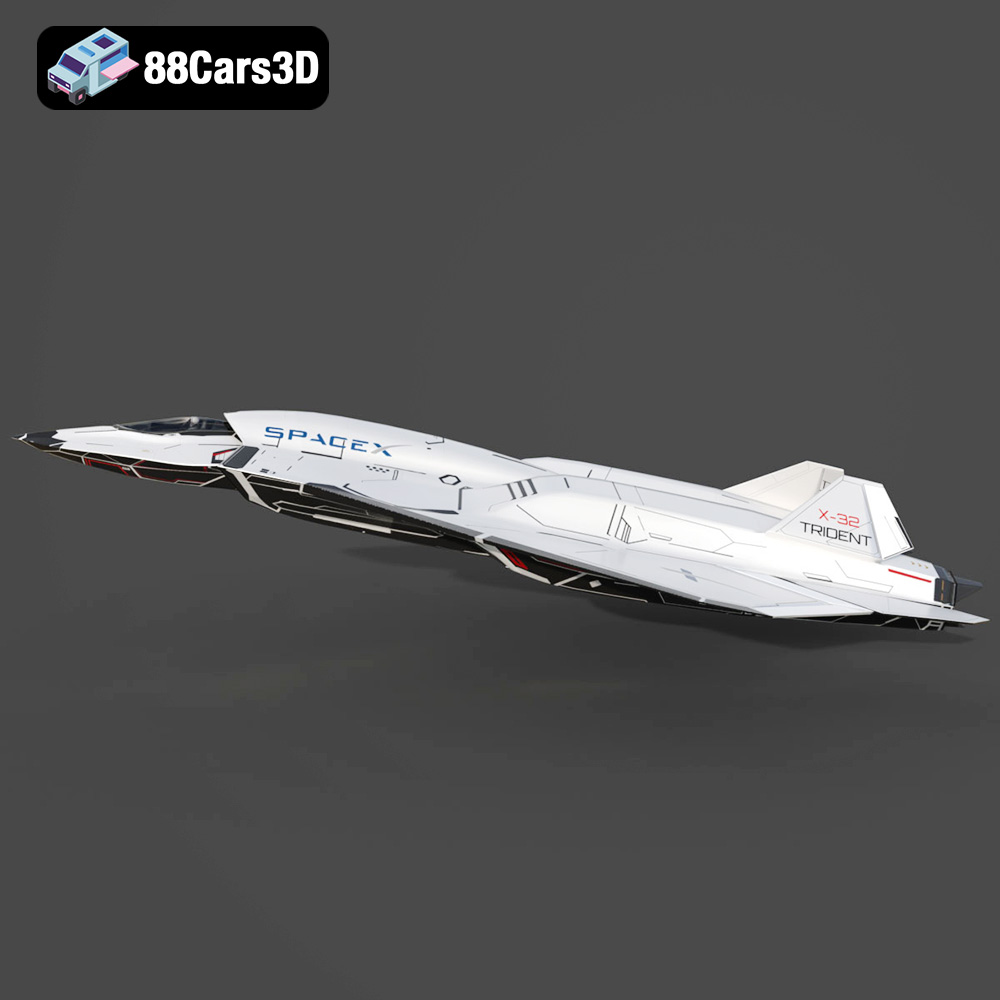
In the expansive and ever-evolving realms of 3D design, simulation, and entertainment, the demand for meticulously crafted and technically robust 3D models is perpetually on the rise. From the hyper-realistic vehicles populating open-world games to the stunning cinematics that define blockbuster films, the foundation of any compelling visual experience lies in the quality of its assets. Today, we’re diving deep into an exemplary piece of digital artistry that bridges the gap between imaginative science fiction and practical application: the SpaceX Trident Star Fighter 3D Model. This formidable starship isn’t just a flight of fancy; it’s a testament to precision modeling, optimized topology, and versatile integration, making it an indispensable asset for a myriad of projects. Whether you’re an indie game developer charting new galaxies, a cinematic artist crafting epic space battles, or an architect visualizing future aerospace concepts, understanding the technical prowess behind such a model is crucial. Join us as we explore the intricate details, professional workflows, and diverse applications of this magnificent digital spacecraft, available for download at 88cars3d.com, and discover how it can elevate your next creative endeavor.
Navigating the landscape of 3D model production and deployment requires a solid grasp of various file formats, each with its own strengths and ideal use cases. The SpaceX Trident Star Fighter 3D Model offers a comprehensive suite of formats, ensuring maximum compatibility and flexibility across different software and platforms. Understanding when and why to choose a specific format is paramount for an efficient workflow.
The .blend format is Blender’s native file type, storing an entire Blender scene with all its data: meshes, materials, textures, lighting, cameras, animations, physics simulations, and more. For users working primarily in Blender, this is the most flexible and editable format. It allows for complete control over every aspect of the model, from adjusting polygon flow to modifying shader networks. Developers often prefer .blend for initial modeling, texturing, and rigging because it retains all modifiers and non-destructive workflows, making iterative changes straightforward. When you download the Trident Star Fighter in .blend, you get a fully prepped scene, ready for immediate tweaking or rendering within Blender.
FBX (Filmbox) is a proprietary file format developed by Autodesk, widely recognized as the industry standard for 3D data interchange. It’s especially ideal for game development pipelines, particularly with engines like Unreal Engine and Unity. FBX excels at preserving crucial data like animation, rigging, skinning, and blend shapes, alongside geometry, materials, and textures. Its robust nature makes it the go-to format for exporting animated assets into real-time environments, where performance and data integrity are critical. The Trident Star Fighter’s .fbx version is perfectly structured for quick import and setup in these engines, retaining its proper pivot setups for animation and scene hierarchy.
OBJ (or Wavefront OBJ) is one of the oldest and most universally supported 3D file formats. It primarily stores geometric data – vertices, normals, UV coordinates, and faces – and can reference external material (.mtl) files for basic color and texture information. While it doesn’t support animation or advanced scene data, its widespread compatibility makes it an excellent choice for cross-software transfers when you only need the raw mesh data. For the Trident Star Fighter, the .obj format is perfect for bringing the core model into virtually any 3D software for further refinement, texturing in a different package, or simply as a fallback for maximum compatibility.
GLB (GL Transmission Format Binary) is the binary version of glTF, an open standard for 3D scenes and models. It’s explicitly designed for efficient transmission and loading of 3D models in web-based applications, augmented reality (AR), and virtual reality (VR) environments. GLB packages all assets – geometry, textures, animations – into a single file, reducing HTTP requests and load times. This optimization makes it incredibly valuable for interactive 3D viewers on websites or for deploying models in mobile AR apps. The Trident Star Fighter in .glb format ensures a smooth, high-fidelity experience in emerging platforms where lightweight, performant assets are paramount.
STL (STereoLithography) is the de facto standard file format for 3D printing. It represents a 3D model as a series of connected triangles (a tessellation) that approximate the surface geometry. STL files contain only the surface geometry of a 3D object, without any color, texture, or material information. For hobbyists and professionals looking to physically manifest the Trident Star Fighter, the .stl format is essential. The model’s description even details recommended print settings, highlighting its suitability for various scales and resin printing for fine details, demonstrating a thoughtful approach to physical fabrication.
PLY (Polygon File Format, or Stanford Triangle Format) is a file format for storing 3D data, particularly from 3D scanners. It can store a variety of properties including color, transparency, surface normals, and range data, making it useful for scientific applications, CAD, and precise mesh analysis. While less common for direct rendering than FBX or OBJ, the .ply format for the Trident Star Fighter offers a high-fidelity representation of its geometry, useful for reverse engineering, structural analysis, or integration into specialized engineering visualization tools where mesh integrity is paramount.
The .unreal format, often referencing assets directly imported and optimized within the Unreal Engine project structure, signifies a model that is truly “engine-ready.” This typically means the model has been correctly scaled, materials are set up using Unreal’s physically based rendering (PBR) pipeline, and any necessary collision meshes or LODs (Levels of Detail) are prepared. For the Trident Star Fighter, an .unreal asset ensures minimal setup time, allowing developers to drop the model straight into their levels and immediately begin lighting, animating, and scripting interactions without extensive re-work. This level of pre-optimization is a massive time-saver for Unreal Engine developers.
The .max format is the native file type for Autodesk 3ds Max, a powerful 3D modeling, animation, and rendering software widely used in architectural visualization, game development, and film. Similar to .blend for Blender, the .max file encapsulates the entire scene, including editable meshes, complex modifiers, material networks, lights, cameras, and animation data. Providing the Trident Star Fighter in .max format grants 3ds Max users full access to the original project file, allowing for intricate modifications, custom animations, and high-fidelity rendering within their preferred environment. This ensures complete creative control for those deeply integrated into the Autodesk ecosystem.
The availability of such a diverse array of formats for the SpaceX Trident Star Fighter 3D Model underscores its versatility and the commitment to supporting a wide range of professional workflows. This thoughtful inclusion of formats ensures that users, regardless of their preferred software or end-use application, can integrate this stunning asset seamlessly into their projects.
Designing a compelling sci-fi vehicle is about more than just aesthetics; it’s about crafting a narrative, implying functionality, and evoking a sense of wonder. The SpaceX Trident Star Fighter 3D model stands as a prime example of expert conceptual design translated into a high-fidelity digital asset. It manages to fuse the sleekness of advanced aerospace engineering with the rugged, purposeful look of a combat-ready starship.
A great sci-fi vehicle doesn’t just look cool; it suggests a story of its own. The Trident Star Fighter’s “sleek aerodynamic hull” speaks to speed and efficiency, even in the vacuum of space, while its “triple-engine propulsion system” hints at immense power and advanced thrust vectoring capabilities. The distinctive trident-shaped wing configuration isn’t merely stylistic; it implies sophisticated maneuverability and stability, perhaps for atmospheric flight or rapid evasive action in dogfights. Every element, from the “intricate thruster exhaust system” to the “high-tech weaponry integrations,” contributes to a cohesive design language that feels both plausible and awe-inspiring. This meticulous attention to design principles ensures the model isn’t just visually striking but also believable within its fictional universe.
The exterior of the Trident Star Fighter is a masterclass in adding intricate detail without sacrificing performance. Features like “advanced dynamic lighting details for navigation and engine glow” are crucial for bringing the model to life in renders and real-time environments. The “retractable landing gear and specialized sci-fi paneling” add layers of realism and functionality, suggesting complex internal mechanisms. Furthermore, the inclusion of “articulated aerodynamic wing flaps and weapon hardpoints” not only enhances visual interest but also provides practical points for animation and customization. For artists working on cinematics or game assets, these separated components offer unparalleled flexibility, allowing for dynamic sequences that make the star fighter feel responsive and alive.
Beyond the impressive exterior, the Trident Star Fighter boasts a fully realized cockpit, designed for optimal immersion, especially in gaming and VR applications. The “futuristic pilot command seat with anti-G shock absorption” grounds the user experience in realism, while the “holographic heads-up display (HUD) and tactical control panels” immediately immerse the pilot in a high-tech operational environment. Details like a “detailed digital instrument cluster,” “navigation screens,” and tactile controls like the flight stick and throttle reinforce the feeling of being in command of a powerful vessel. This level of interior detail, optimized for first-person POV, is invaluable for space exploration simulators and VR experiences where the user’s connection to their craft is paramount. Such thoughtful inclusions showcase how high-quality 3D car models and vehicle assets, regardless of their environment, elevate the user’s sense of presence.
The true value of a professional 3D model lies not just in its aesthetic appeal but also in its technical integrity and optimization. The SpaceX Trident Star Fighter 3D Model exemplifies this balance, offering a robust foundation for high-end rendering and real-time applications. The technical specifications provided speak volumes about its readiness for demanding production environments.
One of the most critical aspects of any 3D asset, especially for game development, is its polycount. The Trident Star Fighter’s “optimized topology of approximately 98,665 triangles” strikes a near-perfect balance. This polycount is substantial enough to deliver “stunning visual fidelity” with smooth curves and intricate details, preventing the faceted look often associated with overly low-poly models. Simultaneously, it remains lean enough for “game-ready performance” in demanding real-time engines like Unreal and Unity, where every millisecond counts. This careful optimization ensures that the model can be instantiated multiple times in a scene without excessively taxing the GPU. The “exceptionally clean edge flow” further contributes to good deformation during animation and clean subdivision for higher-resolution renders, if needed, making it a versatile “game asset.”
Precision in 3D modeling extends to scale and articulation. The Trident Star Fighter boasts “real-world scale accuracy based on advanced conceptual spacecraft design,” which is crucial for seamless integration into existing scenes and for maintaining visual consistency within a larger universe. When assets don’t adhere to a consistent scale, scenes can look disjointed and unrealistic. Furthermore, “proper pivot setup for landing gear deployment, canopy articulation, and thrust vectoring” is an essential technical advantage. Incorrect pivot points lead to complex and time-consuming rigging adjustments. Here, the model is prepared for animation out-of-the-box, allowing artists and developers to immediately create dynamic sequences like a star fighter launching, landing, or performing combat maneuvers, much like how high-quality 3D car models are prepped for realistic vehicle animations.
Beyond geometry, a model’s materials are key to its visual impact. The Trident Star Fighter offers extensive “customization options” for its materials, allowing artists to tailor its appearance to specific project needs. The ability to “change hull plating colors (e.g., stealth black, corporate white, military camo)” transforms its identity, adapting it for different factions or roles. “Modify emissive textures (engine glow, tactical lighting variants)” adds dynamic visual interest and aids in conveying mood or operational status. Adjusting “material finishes (matte radar-absorbent, gloss, metallic titanium)” provides granular control over how light interacts with the surface, crucial for realistic rendering in diverse environments, from the harsh glare of a binary star system to the muted tones of deep space. This level of material control empowers artists to push creative boundaries and achieve unique visual outcomes.
A high-quality 3D model is a powerful tool, but its true potential is realized when seamlessly integrated into professional workflows. The SpaceX Trident Star Fighter 3D Model is designed with this principle in mind, offering compatibility and features that streamline production across various applications.
For game developers, the Trident Star Fighter is a dream asset. Its “game-ready & optimized” polycount (98,665 triangles) ensures it can be deployed efficiently in titles ranging from “open-world space games” to intense “dogfighting titles” and “simulators.” The included .fbx and .unreal formats mean minimal import fuss for engines like Unreal and Unity. Developers can leverage its pre-set pivots for immediate animation of landing gear, canopy, and thrust vectoring, saving invaluable time on rigging. Imagine populating a vast galactic battlefield with squadrons of these fighters, each performing complex maneuvers, or offering players a customizable starship for their adventures. The optimized geometry also facilitates the creation of LODs (Levels of Detail) for even greater performance optimization over distance, ensuring a smooth experience without compromising visual quality up close. This model stands as a testament to what a premium “game asset” should be: ready for action.
While the name 88cars3d.com might suggest a focus on terrestrial vehicles, the principles of high-fidelity rendering and visualization apply universally. For cinematic artists and visualization specialists, the Trident Star Fighter provides an incredible foundation for “sci-fi cinematic campaigns” and “space environment scenes.” Its detailed geometry and customizable materials allow for breathtaking renders in engines like V-Ray, Corona, Arnold, or Redshift, especially when utilizing the .max or .blend formats for full scene control. Artists can choreograph complex flight paths, set up dramatic lighting scenarios in deep space or near alien planets, and create compelling narratives around this powerful vessel. The “advanced dynamic lighting details” and the capacity to “adapt lighting for different deep space or planetary atmospheric environments” mean the model reacts authentically to various lighting setups, yielding photorealistic results. The separate, animatable components (wings, landing gear, engines) enable a wide range of expressive animations, from subtle wing adjustments to full thrust vectoring maneuvers.
The inclusion of native .max and .blend files directly supports professional users of these dominant 3D software packages. For 3ds Max artists, the .max file means diving into a familiar environment, with all modifiers intact, allowing for non-destructive adjustments, custom rigging, or integration into existing scene files. The robust rendering capabilities of 3ds Max make it ideal for producing high-resolution stills and animations of the star fighter. Similarly, Blender users gain full access to the original project, enabling them to leverage Blender’s powerful Eevee and Cycles renderers, its comprehensive animation tools, and its active community. Whether it’s crafting a promotional video, a design review, or a visual effects shot, having the model in these native formats offers unparalleled creative freedom and efficiency.
The utility of a well-designed 3D model extends far beyond traditional screen-based rendering. The SpaceX Trident Star Fighter 3D Model is engineered to thrive in emerging technologies like Augmented Reality (AR), Virtual Reality (VR), and even physical fabrication through 3D printing, showcasing its true versatility.
The burgeoning fields of AR and VR demand highly optimized yet visually appealing 3D assets. The Trident Star Fighter is “perfect for immersive virtual showrooms, configurators, and mobile AR experiences” thanks to its careful balance of detail and performance. The .glb format, specifically optimized for web, AR, and VR, ensures quick loading times and smooth interaction within these demanding environments. Imagine showcasing the star fighter in an interactive virtual showroom, allowing users to walk around it, inspect its details, or even sit in the cockpit in VR. For AR applications, the model can be anchored in the real world, appearing to hover above a table or a floor, enabling potential customers or enthusiasts to examine its features up close using a smartphone or tablet. The “optimized geometry for first-person POV in gaming and VR space sims” further enhances the sense of presence and interactivity, making users feel truly connected to the starship. This capability underscores the model’s value as a cutting-edge “game asset” for modern platforms.
For enthusiasts, collectors, or model makers, the ability to transform a digital model into a physical object is incredibly exciting. The Trident Star Fighter is “convertible to .stl format for display-scale hobbyists,” opening up possibilities for 3D printing. The provided “3D Print Settings” are incredibly detailed, offering practical guidance for successful fabrication. Recommendations like “Layer height: 0.04–0.12 mm (Resin printing recommended for fine panel details)” and “Supports: Required for detailed parts like exhaust nozzles, landing gear, and wingtips” demonstrate a deep understanding of the physical printing process. The suggested “Print orientation: Fuselage printed angled for structural integrity; wings printed separately” highlights best practices for achieving a strong, accurate physical model. Post-processing advice, including “Sanding, primer, and authentic aerospace colors with metallic weathering finishes,” empowers users to create a museum-quality replica. This level of comprehensive guidance transforms a digital asset into a tangible collectible, bridging the gap between virtual and physical craftsmanship.
Beyond entertainment, the Trident Star Fighter can serve as a powerful tool for education and rapid prototyping. Aerospace engineering students could use the model to study conceptual vehicle design, analyzing its proportions, aerodynamic features, and hypothetical propulsion systems. Design firms could use it for quick visualization of futuristic concepts, iterating on different configurations or finishes in real-time. The .ply format, with its precision mesh capabilities, could even be used for certain analytical studies. The versatility across file formats means the model isn’t just a static display piece but a dynamic component in learning, exploration, and innovation. Just as 88cars3d.com offers high-fidelity 3D car models for visualization and training, this star fighter extends that principle to the cosmos.
The SpaceX Trident Star Fighter 3D Model is far more than just a visually striking spacecraft; it’s a meticulously engineered digital asset designed to meet the rigorous demands of modern 3D production pipelines. From its optimized geometry and game-ready performance to its extensive material customization options and broad file format compatibility, every aspect of this model speaks to quality and versatility. Whether you’re integrating it into a sprawling open-world game, crafting a cinematic masterpiece, developing an immersive AR/VR experience, or even bringing it to life as a physical 3D print, the Trident Star Fighter offers an unparalleled foundation for creative exploration.
Its thoughtful design, blending futuristic aesthetics with implied functionality, coupled with its technical robustness, makes it an invaluable addition to any professional’s asset library. This model stands as a prime example of the high-caliber “game assets” and specialized vehicle designs that empower creators to push the boundaries of digital realism and interactive experiences. Discover this exceptional model and a wide range of other premium 3D assets, including highly detailed 3D car models perfect for “automotive rendering” and visualization, at 88cars3d.com. Elevate your projects with assets built for excellence.
Explore the future of interstellar travel and combat with the highly detailed SpaceX Trident Star Fighter 3D model. Inspired by advanced aerospace engineering and futuristic sci-fi aesthetics, this spacecraft features a sleek aerodynamic hull, triple-engine propulsion system, and high-tech weaponry integrations. Its distinctive trident-shaped wing configuration and imposing thruster banks make it an iconic centerpiece for any galactic fleet or space-faring adventure.
$14.99
.blend
.fbx
.glb
.max
.obj
.ply
.rendering
.spacecraft
.spaceship
.stl
.unreal
game asset
game-ready
low-poly
optimized
sci-fi
spaceship-3d-model
spacex
trident-star-fighter
VR/AR