Get 20% OFF All Premium 3D & STL Models!

In the dynamic world of 3D visualization, automotive design, and game development, the demand for highly detailed and authentic models is relentless. Whether you’re crafting a hyper-realistic scene for a cinematic production, building an immersive virtual showroom, or developing the next generation of racing simulators, the quality of your foundational assets dictates the final output. Among the pantheon of classic motorcycles, the BMW R100R stands as an icon, a testament to timeless design and robust German engineering. Its distinctive silhouette, air-cooled boxer-twin engine, and signature retro styling make it a sought-after subject for digital artists and developers alike.
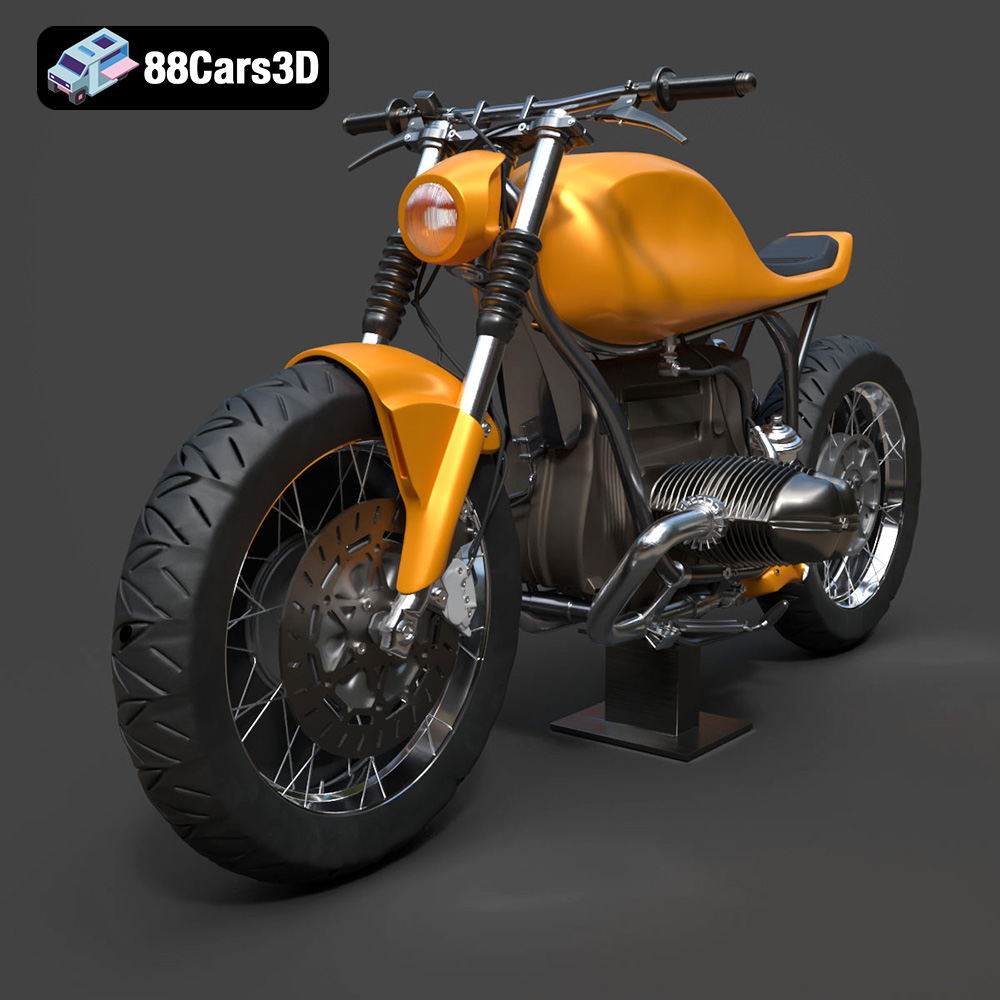
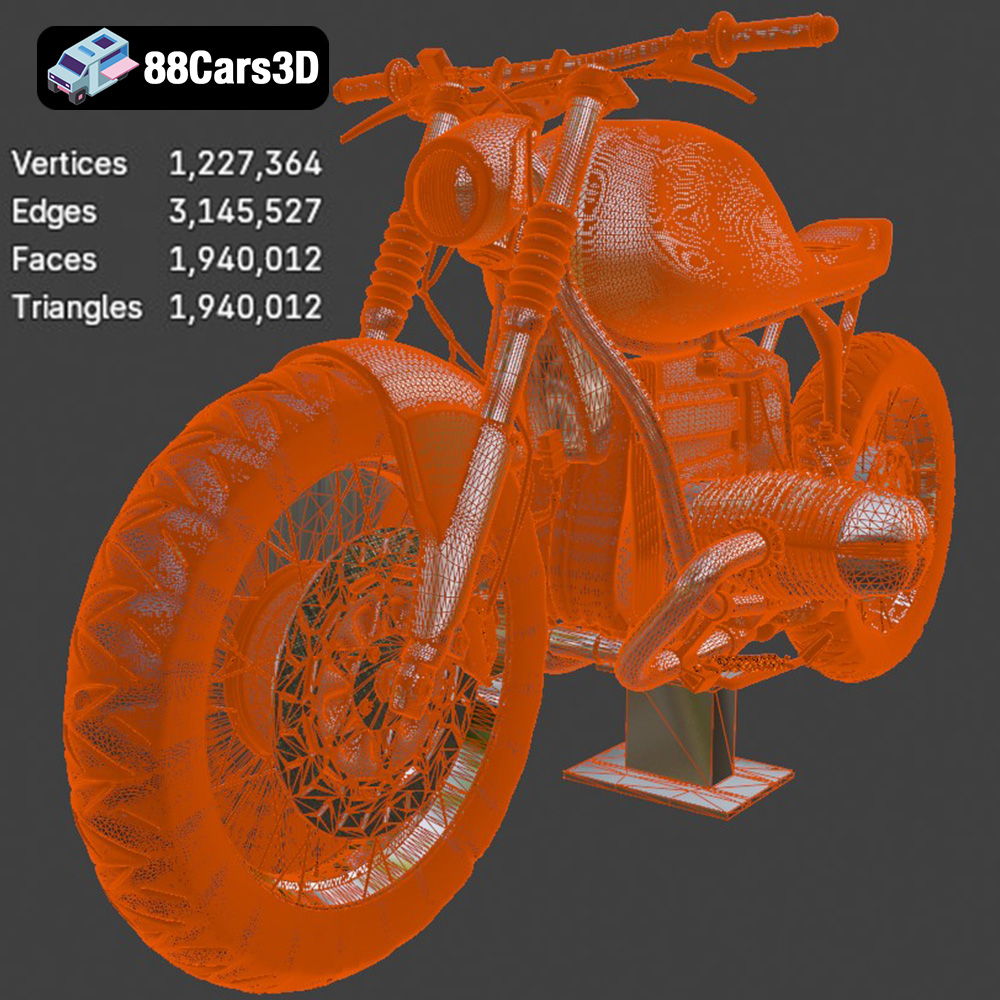
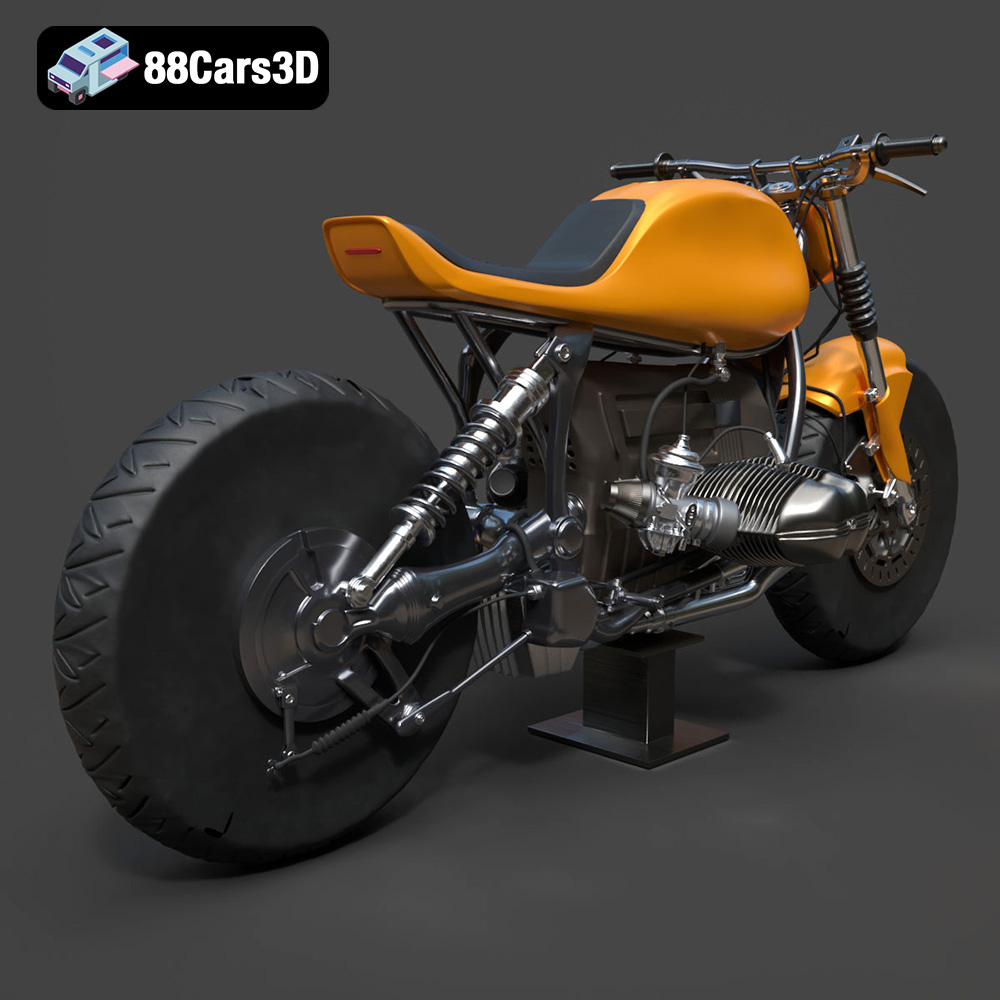
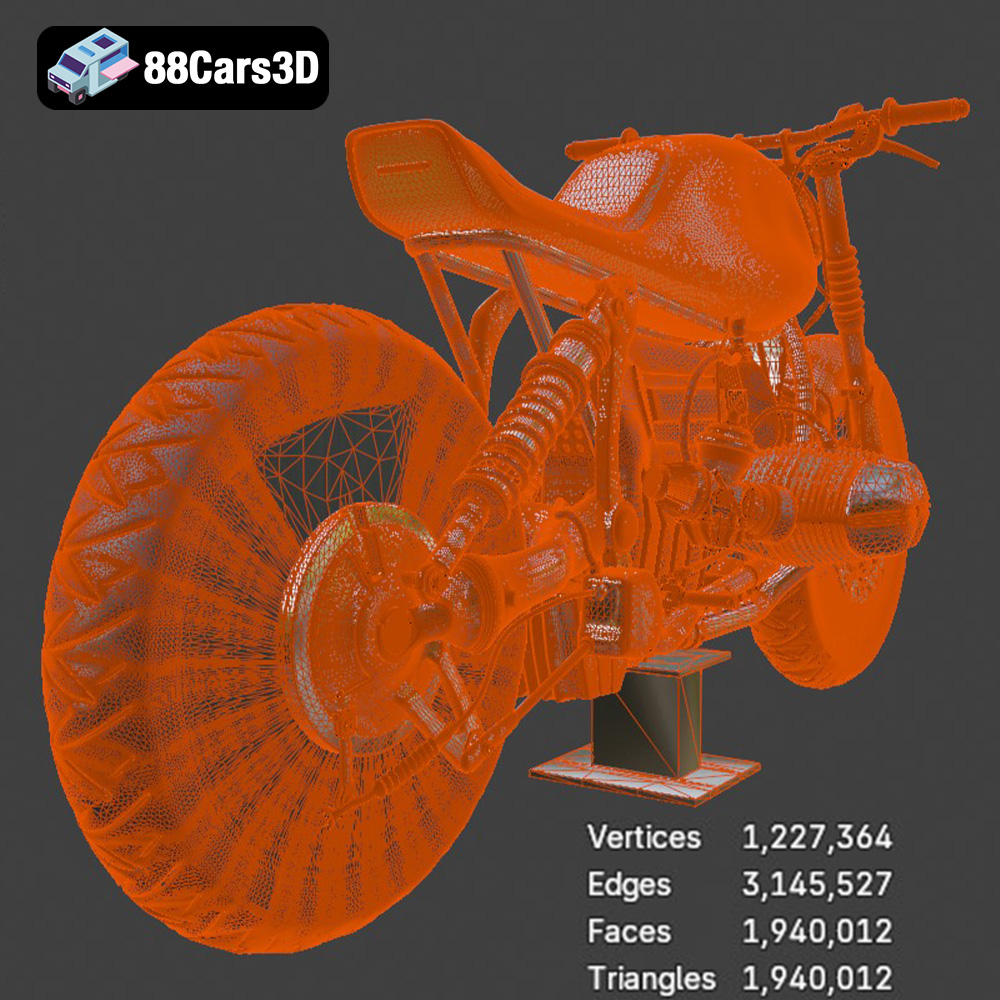
This pursuit of digital authenticity is precisely where a meticulously crafted asset like the BMW R100R 3D model becomes indispensable. Far more than just a collection of polygons, this high-fidelity recreation, available on 88cars3d.com, is engineered to bridge the gap between photorealism and interactive performance. With a staggering 1,940,012 triangles, it delivers unparalleled visual accuracy for extreme close-up shots while maintaining a well-structured topology that is perfectly suited for modern game engines and high-end visualization projects. This article will delve into the technical prowess of this exceptional 3D model, exploring its applications across various professional workflows, from automotive rendering to game asset development, and demonstrating how it empowers creators to achieve stunning results.
The BMW R100R embodies an era of motorcycling defined by raw power, elegant simplicity, and an unmistakable roadster spirit. Its iconic presence on the road has translated seamlessly into the digital realm, making it a favorite for artists seeking to evoke a sense of heritage and style. The challenge in 3D modeling such a classic is not just to replicate its form, but to capture its very essence – the proud protrusion of its cylinder heads, the authentic curve of its dual exhaust, and the intricate details of its cockpit.
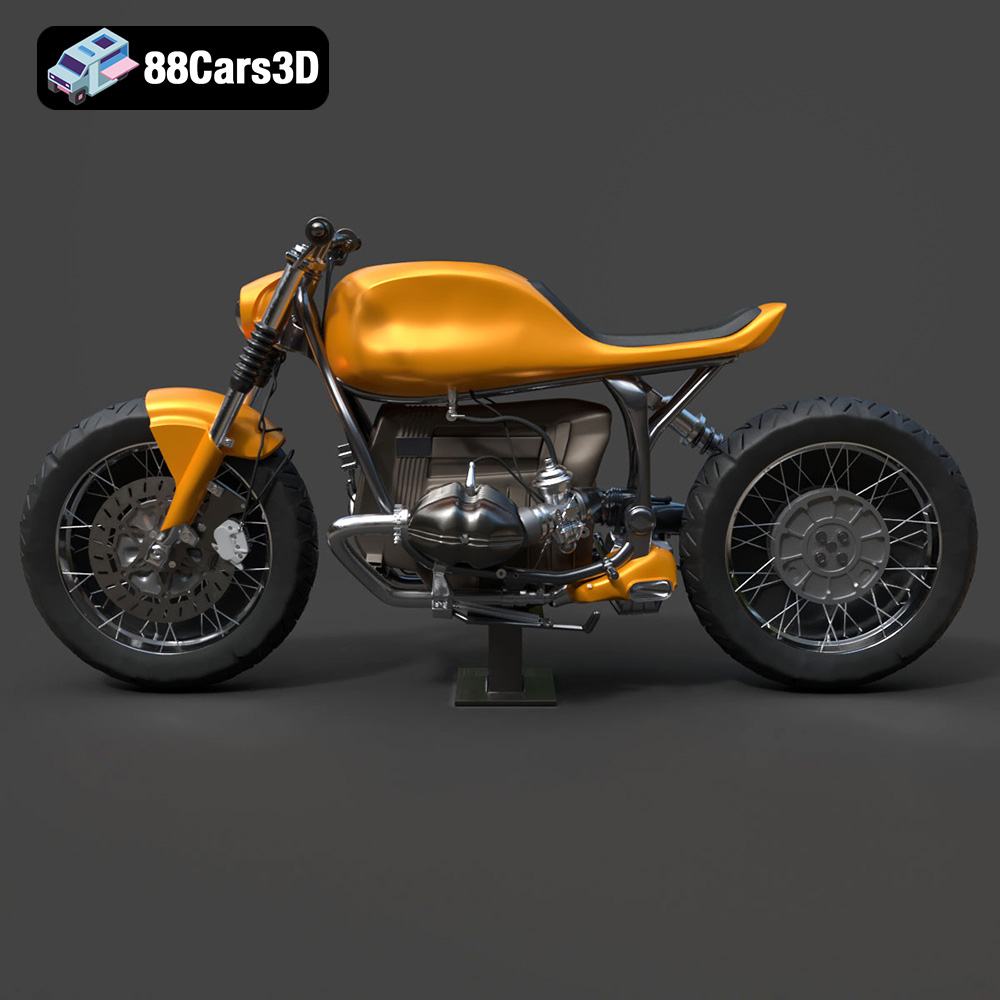
The designers of the BMW R100R 3D model have demonstrated a profound understanding of the original motorcycle’s aesthetic language. From the accurate tubular steel frame geometry to the classic proportions, every element has been carefully observed and translated. This digital replica isn’t merely an approximation; it’s a precise recreation, ensuring that whether viewed from a distance or in an extreme close-up, the model exudes the authentic charm of its real-world counterpart. This fidelity is critical for projects where brand recognition and historical accuracy are paramount, such as in marketing campaigns for classic car shows or documentary visualizations.
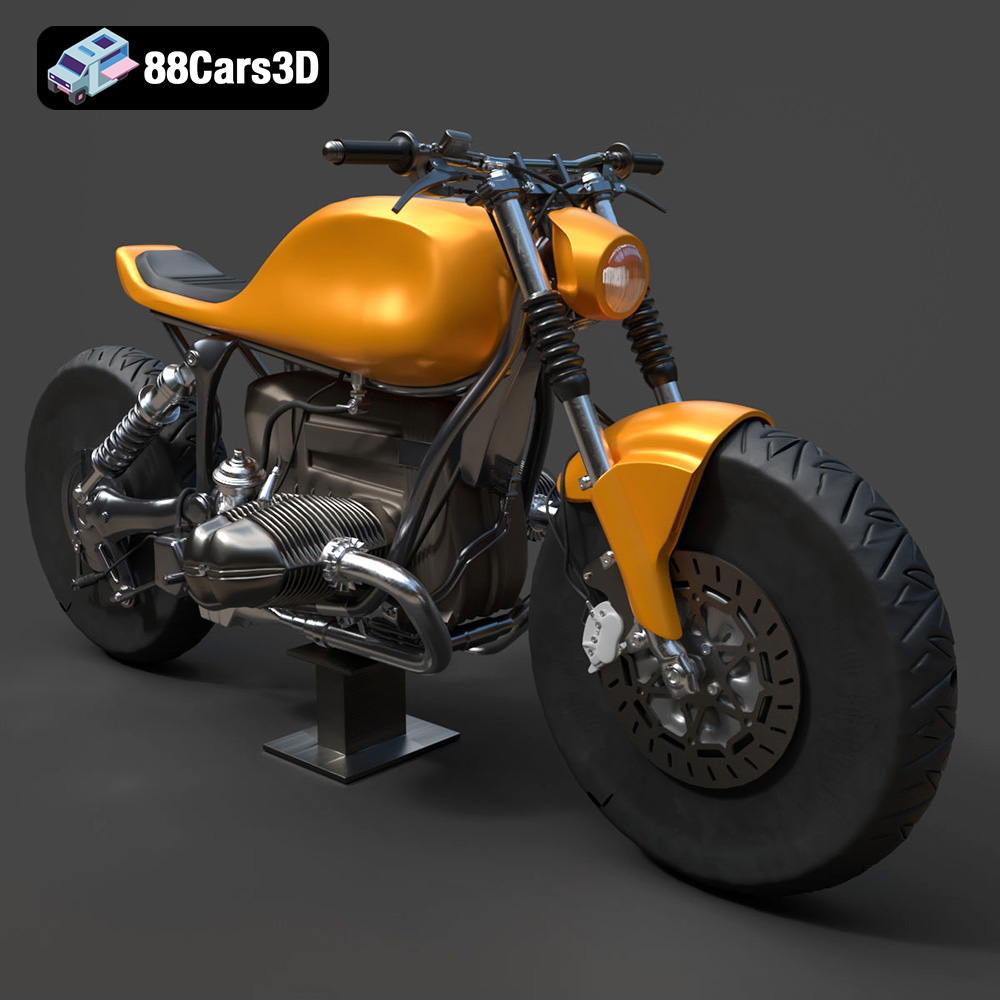
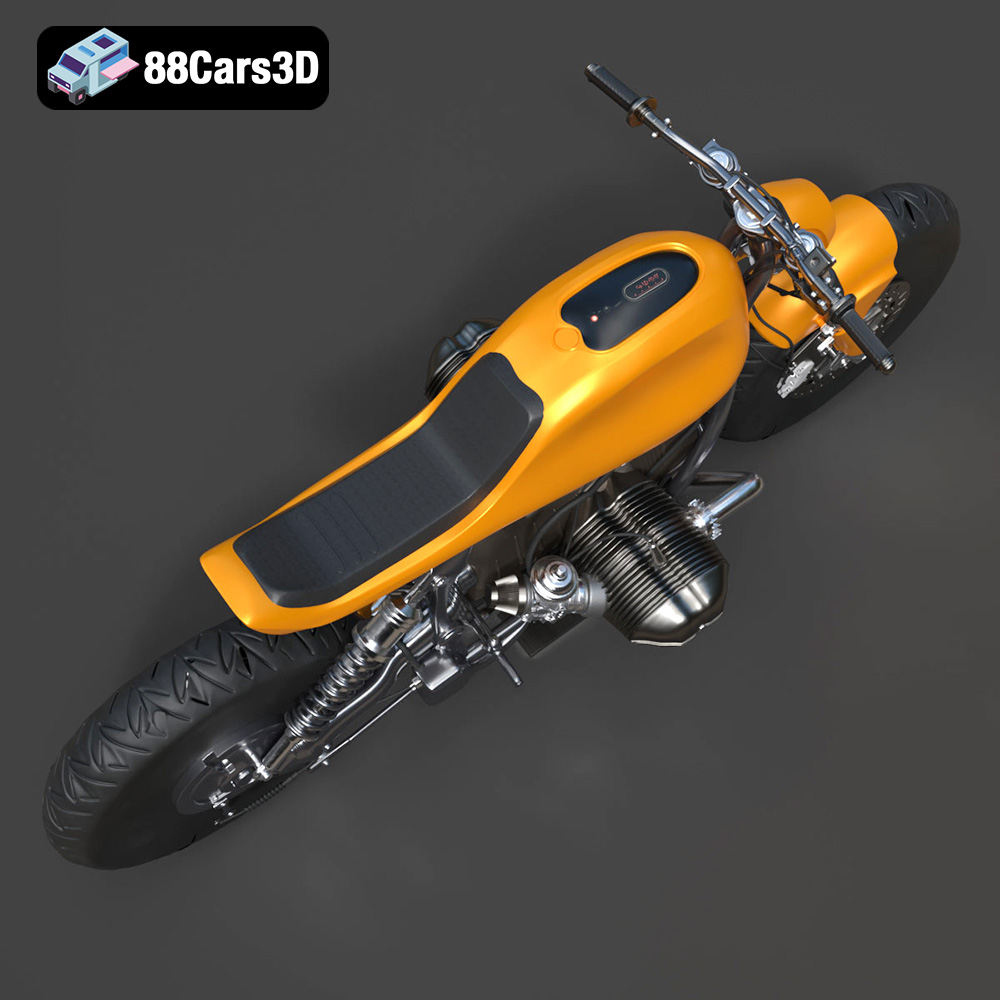
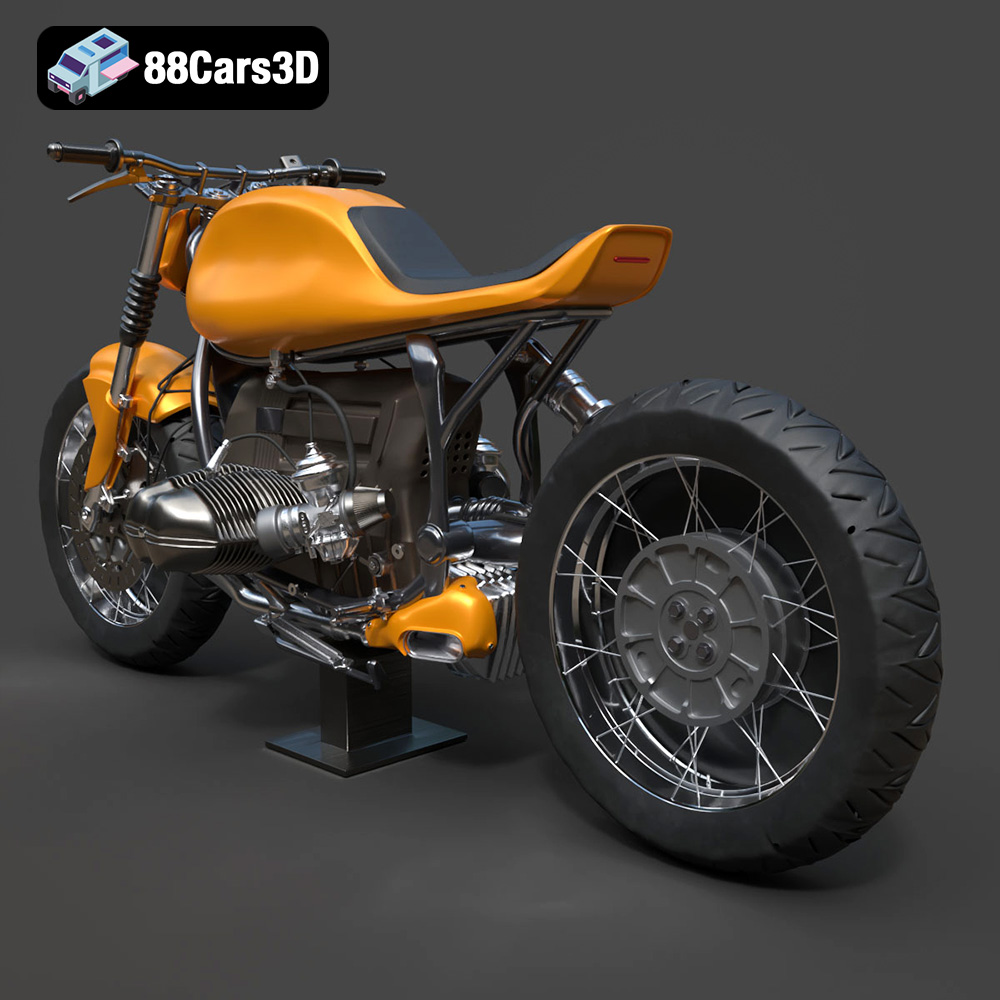
Beyond the overall silhouette, it’s the micro-details that elevate a good 3D model to an outstanding one. The BMW R100R model excels here, featuring a detailed air-cooled boxer-twin engine block with accurately finned cylinders, a classic chrome-finished dual exhaust system, and meticulously replicated round retro headlight and taillight assemblies. Even the wire-spoke wheels come with period-correct tire treads, and the signature Paralever rear suspension and telescopic front forks are faithfully modeled. The cockpit, too, boasts an accurately modeled stepped two-up saddle, classic wide handlebars with authentic grips and mirrors, and a detailed analog dual instrument cluster. This level of granular detail makes the model suitable for environments demanding the highest visual quality, from photorealistic renders to immersive AR/VR experiences where users can inspect every component.
When working with a versatile 3D asset like the BMW R100R, understanding the various file formats available is crucial for optimizing workflows and ensuring compatibility across different software and platforms. The model comes equipped with a comprehensive suite of formats, each serving specific purposes and offering unique advantages for professional artists and developers.
.fbx (Filmbox): Developed by Autodesk, FBX is the industry-standard format for exchanging 3D data between various applications. It’s particularly ideal for game development, virtual reality, and real-time pipelines because it supports not only mesh data but also animations, skinning, rigging, and PBR (Physically Based Rendering) materials. When integrating the BMW R100R into engines like Unreal Engine or Unity, the FBX file allows for a seamless transfer of complex animated parts (like separate wheels, suspension, and steering components) and material definitions, ensuring that the model retains its integrity and functionality in an interactive environment.
.glb (GL Transmission Format Binary): GLB is a binary version of the glTF (Graphics Language Transmission Format) standard, which is rapidly gaining traction due to its efficiency and compactness. It’s a self-contained format that bundles geometry, materials, textures, and even animations into a single file. This makes it optimized for web-based 3D, AR/VR applications, and mobile experiences where fast loading times and efficient rendering are paramount. For displaying the BMW R100R in a browser-based configurator or an augmented reality app, the GLB format provides an excellent balance of visual quality and performance.
.unreal: While not a standalone file format in the traditional sense, “unreal” typically refers to an asset that is pre-packaged or optimized for direct import and use within the Unreal Engine ecosystem. This might involve an FBX file with pre-configured materials, collision meshes, LODs (Levels of Detail), and blueprint setups designed to integrate effortlessly into an Unreal project. For developers working within Unreal, this format means less setup time and more focus on integration, leveraging the engine’s powerful rendering capabilities to bring the BMW R100R to life in game environments or simulations.
.blend (Blender File): As Blender’s native file format, .blend files contain the complete scene data, including mesh geometry, materials, textures, lighting, cameras, animation data, and modifiers. For Blender users, this offers maximum flexibility and editability, allowing for comprehensive customization of the BMW R100R model, from adjusting its topology to modifying its shader networks for bespoke rendering scenarios. It provides the most direct and powerful control over the asset within the Blender environment.
.max (3ds Max File): Similarly, .max is the native file format for Autodesk 3ds Max. This format provides a fully editable 3ds Max project, retaining all scene elements, modifiers, animation paths, and rendering settings. For professionals operating within the 3ds Max ecosystem, the .max file allows for intricate animation setups, advanced material development using V-Ray or Corona, and the ability to leverage 3ds Max’s extensive toolset for detailed scene assembly and high-quality automotive rendering.
.obj (Wavefront OBJ): OBJ is a universal geometry definition file format that is widely supported across almost all 3D software. While it primarily stores mesh data (vertices, normals, texture coordinates, and faces), it can reference external .mtl (material) files for basic color and shading properties. OBJ is excellent for reliable cross-software compatibility, serving as a robust exchange format when you need to transfer just the raw geometry of the BMW R100R without complex rigging or animation data. It’s a dependable choice for static renders or for importing into software that might not fully support more advanced formats.
.stl (Stereolithography): STL is the de facto standard file format for 3D printing. It represents the surface geometry of a 3D object using a collection of interconnected triangles, without any color, texture, or material information. The inclusion of an .stl file for the BMW R100R is a significant advantage for hobbyists and professionals looking to create physical prototypes or display models. It allows for direct conversion to printable G-code, enabling the creation of physical replicas at recommended scales like 1:12, 1:18, or 1:24, with specific settings for layer height, wall thickness, and supports.
.ply (Polygon File Format): PLY is a polygon file format primarily used for storing 3D data from 3D scanners. It can store a wider range of properties than OBJ, including color, transparency, normals, and even confidence values. While less common for direct asset exchange in content creation pipelines, its inclusion suggests the model’s potential for high-precision applications, possibly for integrating with scanned environments or for use in CAD or analysis software where precise mesh data is required.
By offering this diverse range of formats, the BMW R100R 3D model ensures maximum utility and flexibility, catering to virtually any professional 3D workflow you might encounter.
The creation of a truly professional 3D car model or motorcycle model like the BMW R100R involves a deep understanding of technical specifications that go beyond mere aesthetic representation. These technical advantages are what make an asset truly “game-ready” or suitable for “high-end visualization,” ensuring it performs optimally across various platforms and use cases.
The BMW R100R 3D model boasts 1,940,012 triangles, a figure that strikes an impressive balance. For modern real-time engines like Unreal and Unity, this polycount is substantial enough to deliver truly high-end visual realism, particularly for hero assets or close-up views. Yet, the product description emphasizes “well-structured topology,” indicating that this polycount isn’t arbitrary but optimized. Good topology means efficient mesh construction, allowing for smoother deformations during animation, cleaner UV unwrapping, and better performance even with a high polycount. This careful consideration ensures that the model can render beautifully without unduly taxing system resources, a critical factor in game development and interactive experiences.
The “well-structured topology” of the BMW R100R 3D model also implies meticulous UV mapping. While not explicitly detailed, a high-quality model designed for rendering and game development will inevitably feature clean, non-overlapping UVs. Proper UV mapping is essential for applying detailed textures, enabling artists to create realistic material finishes like chrome, painted metal, rubber, and leather without distortion. It’s the foundation for PBR workflows, allowing the integration of complex albedo, roughness, metallic, and normal maps that bring the model to life with photorealistic surface properties. The model’s “optimized geometry for first-person POV in gaming” further confirms this attention to detail, suggesting that even interior parts visible from the rider’s perspective are carefully mapped and textured.
A static model, however detailed, has limited utility in dynamic environments. The BMW R100R model addresses this by providing “proper pivot setup for steering, wheel rotation, and suspension travel.” This is a significant advantage, as correctly defined pivot points are the backbone of any animatable 3D asset. They allow animators to quickly and accurately articulate the motorcycle’s components, simulating realistic motion. For example, with correctly placed pivot points, the wheels can rotate around their axles, the steering can turn precisely, and the suspension can compress and extend naturally. This foundational setup significantly reduces the rigging and animation workload for game developers building racing titles or cinematics where the motorcycle’s movement is central to the narrative.
The true value of a premium 3D asset lies in its versatility and seamless integration into diverse professional pipelines. The BMW R100R 3D model, available on 88cars3d.com, is engineered with this adaptability in mind, making it a powerful tool for various industries.
For game developers, performance and visual fidelity are paramount. The BMW R100R’s “game-ready & optimized” designation, with its substantial yet balanced polycount of 1,940,012 triangles, positions it perfectly for modern real-time engines like Unreal and Unity. The included .fbx and .unreal formats streamline the import process, often requiring minimal setup before the model can be integrated into a game scene. Its proper pivot setup for steering, wheel rotation, and suspension travel is a huge time-saver for animators and programmers. Imagine populating an open-world game with this classic motorcycle, or featuring it as a primary vehicle in a high-fidelity racing simulator. The optimized geometry for first-person POV ensures that players will experience an immersive and detailed ride from the cockpit, enhancing the overall realism and engagement.
Automotive rendering demands extreme precision and the ability to showcase intricate details under various lighting conditions. With the BMW R100R 3D model’s inclusion of .max and .blend files, artists working in Autodesk 3ds Max and Blender have full access to the original project files. This allows for unparalleled customization: modifying materials, adjusting lighting setups for studio-quality renders, or even creating complex cinematic animations. Whether it’s rendering a striking hero shot for a marketing campaign, visualizing a vintage garage scene, or creating compelling lifestyle imagery, the high fidelity of the model ensures that every chrome gleam, every engine fin, and every tire tread is rendered with photorealistic accuracy. The ability to change body/tank colors, modify tire textures, and adjust material finishes (matte, gloss, metallic) provides complete creative control for tailor-made visualizations.
The applications extend beyond traditional rendering and gaming. For augmented reality (AR) and virtual reality (VR) experiences, the .glb format is a game-changer. It enables the creation of immersive virtual showrooms, interactive configurators, and mobile AR experiences where users can explore the BMW R100R in real-world environments or detailed virtual spaces. Imagine walking around the motorcycle, inspecting its engine, or even “sitting” on it in a virtual garage. The optimization for real-time engines makes this fluid and responsive.
Furthermore, the inclusion of the .stl format opens up exciting possibilities for 3D printing. Hobbyists, designers, and collectors can convert the digital model into a tangible replica. With recommended scales like 1:12, 1:18, or 1:24, and specific print settings for layer height, wall thickness, infill, and supports, users can create highly detailed physical models. Resin printing is recommended for capturing fine details, ensuring that the signature Paralever suspension, detailed instrument cluster, and wire-spoke wheels translate accurately into a physical form. Post-processing with sanding, primer, and authentic factory colors can result in stunning display-scale models.
A truly professional 3D asset provides not just a foundation but also the flexibility for extensive customization, allowing artists to adapt it to an endless array of creative visions and project requirements. The BMW R100R 3D model exemplifies this by offering robust customization options and fitting seamlessly into various real-world scenarios.
The beauty of a well-constructed 3D model lies in its capacity for transformation. The BMW R100R model offers significant avenues for customization. Artists can easily change body and tank colors, applying factory-correct hues or exploring custom finishes that reflect a client’s specific branding or artistic direction. The ability to modify tire textures allows for scenarios ranging from pristine street variants to rugged off-road versions, catering to different game environments or visualization themes. Adjusting material finishes—from matte to gloss to metallic—enables the recreation of diverse surface properties, enhancing realism in rendering. Furthermore, adapting lighting for different environments is crucial for setting the mood and showcasing details. Whether it’s a harsh studio spotlight, the soft glow of a sunset, or the dynamic illumination of a city street, the model responds realistically to varying light setups, crucial for high-end automotive rendering.
Consider a virtual showroom for a classic motorcycle dealership. The BMW R100R 3D model could be the centerpiece, allowing prospective buyers to interact with the motorcycle, change its colors, and view it from every angle in a photorealistic virtual environment. This enhances engagement and provides a superior browsing experience compared to static images.
In game development, imagine the R100R as a playable vehicle in an open-world adventure game set in a post-apocalyptic landscape or a classic-themed racing title. The “game-ready & optimized” nature, combined with proper pivot setups, ensures smooth performance and realistic handling. Its detailed cockpit is ideal for first-person viewpoints, truly immersing the player in the ride.
For cinematic animations or advertising campaigns, the model’s high fidelity makes it perfect for extreme close-up shots. A sequence could showcase the gleaming chrome, the intricate engine fins, or the classic leather saddle, all rendered with breathtaking photorealism. The separate wheels, suspension, and steering components facilitate complex animation sequences, bringing the motorcycle to life in dynamic scenes.
Even for educational or archival purposes, the model can serve as an invaluable tool. Museums could use it for interactive exhibits, allowing visitors to virtually disassemble and reassemble the motorcycle, understanding its engineering without touching a fragile exhibit. The versatility of the BMW R100R 3D model ensures it’s not just an asset, but a catalyst for creative innovation across numerous professional applications.
The journey from concept to a high-fidelity 3D asset is a testament to meticulous craftsmanship and technical expertise. The BMW R100R 3D model is an outstanding example of this dedication, offering a highly detailed, game-ready, and animation-friendly representation of a true automotive legend. Its impressive polycount, well-structured topology, and inclusion of diverse file formats like .blend, .fbx, .obj, .glb, .stl, .ply, .unreal, and .max ensure it can seamlessly integrate into virtually any professional workflow. Whether you’re engaged in the demanding world of game asset development, striving for photorealistic automotive rendering, creating immersive AR/VR experiences, or even prototyping with 3D printing, this model provides the quality and flexibility needed to bring your vision to life.
It stands as a testament to the power of digital assets in enabling unparalleled creativity and efficiency across various industries. For professionals seeking to elevate their projects with a truly authentic and technically robust classic motorcycle, the BMW R100R 3D model from 88cars3d.com represents an invaluable investment, promising exceptional results and streamlining your creative process. Explore the possibilities and unlock new dimensions for your automotive visualizations today.
The BMW R100R is a quintessential classic roadster that beautifully marries traditional motorcycle aesthetics with legendary German engineering. Known for its iconic air-cooled boxer-twin engine and distinctive retro styling, this motorcycle captures the spirit of vintage riding. Our meticulously crafted 3D model accurately recreates the unique silhouette, signature dual exhaust system, and unmistakable cylinder heads that protrude proudly from the frame. Featuring a staggering 1,940,012 triangles, this high-fidelity 3D model offers unparalleled visual accuracy and intricate detailing while maintaining a well-structured topology. It is perfectly suited for extreme close-up shots, high-end visualization, and modern game engines, bridging the gap between photorealism and interactive performance. Perfect for vintage garage scenes, hyper-realistic riding simulators, AR/VR showrooms, and cinematic animations.
$37.50
.blend
.bmw
.fbx
.glb
.max
.obj
.ply
.r100r
.rendering
.roadster
.stl
.unreal
classic-motorcycle
game asset
game-ready
high poly
motorcycle-3d-model
optimized
VR/AR