Get 20% OFF All Premium 3D & STL Models!

In the fast-paced realms of game development, automotive rendering, virtual reality, and industrial visualization, the demand for authentic, high-fidelity 3D car models has never been greater. These digital assets are more than just pretty pictures; they are the foundational elements that breathe life into virtual worlds, present product designs with unparalleled realism, and streamline complex production pipelines. From bustling city simulators to photorealistic marketing campaigns, the quality and versatility of your 3D models directly impact the success and immersion of your projects.
Today, we delve into the critical aspects that define a superior 3D vehicle asset, exploring its technical nuances, diverse applications, and how a meticulously crafted model can serve as a cornerstone for various professional endeavors. As a prime example of such an asset, we’ll frequently reference the Ford Transit Camion 2008 3D Model – a versatile and robust digital representation of a globally recognized commercial workhorse, readily available on 88cars3d.com, engineered to meet the stringent demands of modern digital content creation.
The landscape of digital content creation is constantly evolving, with increasing expectations for realism, performance, and adaptability. High-fidelity 3D car models are at the forefront of this evolution, serving as indispensable tools across a multitude of industries. Whether it’s to populate an expansive open-world game or to produce a stunning architectural visualization, the underlying quality of the 3D asset dictates its utility and impact.
In automotive rendering, the pursuit of photorealism is relentless. Designers, marketers, and engineers rely on 3D car models to visualize new concepts, create compelling advertisements, and simulate real-world scenarios long before physical prototypes exist. A model like the Ford Transit Camion 2008, with its accurate chassis, detailed grille, and authentic commercial aesthetic, provides the perfect base for creating lifelike scenes. Its precise proportions and material separation allow for realistic lighting studies, reflection tests, and the application of custom liveries, ensuring that the final renders are indistinguishable from photographs.
Beyond static images, quality 3D car models are crucial for interactive experiences. In virtual reality (VR) training simulations for fleet management or augmented reality (AR) applications for vehicle customization, these models offer a dynamic canvas. The ability to manipulate, inspect, and interact with a virtual vehicle in real-time requires a model that is not only visually appealing but also technically optimized. This means efficient geometry, correct real-world scale, and properly set up pivots for animation – all features meticulously integrated into the Ford Transit Camion 2008 3D Model.
Time is a valuable commodity in any production pipeline. Developing a high-quality 3D car model from scratch is a significant undertaking, requiring expert modeling, texturing, and optimization skills. Sourcing production-ready assets, such as those found on 88cars3d.com, allows studios and individual artists to dramatically accelerate their workflows. These pre-built models come optimized for various applications, saving countless hours and resources that can then be redirected to other critical aspects of a project. The Ford Transit Camion 2008, with its game-ready topology and broad format compatibility, exemplifies this efficiency, offering immediate integration into diverse projects.
The world of 3D modeling is vast, and a critical aspect of effectively utilizing 3D car models lies in understanding the various file formats available. Each format serves specific purposes, catering to different software, pipelines, and end-use applications. Selecting the right format is paramount for ensuring compatibility, maintaining data integrity, and achieving optimal performance. The Ford Transit Camion 2008 3D Model comes with a comprehensive suite of file formats, ensuring maximum flexibility for any project.
The .blend file format is the native file type for Blender, the popular open-source 3D creation suite. A .blend file typically encapsulates the entire Blender scene, including mesh data, materials, textures, lighting, animation, rigging, and even scene settings. For users deeply integrated into the Blender ecosystem, a .blend file offers the most complete and editable version of a model, providing full control over every aspect of its construction and presentation. This format is ideal for artists who wish to extensively customize the Ford Transit Camion 2008, from modifying geometry to creating bespoke animations directly within Blender.
Developed by Autodesk, the .fbx (Filmbox) format has become an industry-standard interchange format, particularly prevalent in game development and animation pipelines. FBX files can store a wide range of 3D data, including models, animation, cameras, lights, and skeleton deformations. Its robust support for animation data makes it indispensable for transferring animated 3D car models between different software packages like 3ds Max, Maya, Blender, and directly into game engines like Unreal Engine and Unity. For the Ford Transit Camion 2008, the .fbx version is crucial for its game-ready optimizations, ensuring efficient integration and animation capabilities within real-time applications.
The .obj (Wavefront OBJ) format is one of the most widely supported and universal 3D file formats. It is a simple, plain-text format that primarily describes 3D geometry (vertices, normals, texture coordinates, and faces). While it supports basic material definitions (via an accompanying .mtl file), it does not store animation or rigging data. Its strength lies in its excellent cross-software compatibility, making it a reliable choice for transferring static 3D models between virtually any 3D application. For artists needing to import the Ford Transit Camion 2008 into various rendering software without complex animation requirements, the .obj format offers seamless interoperability.
The .glb (GL Transmission Format Binary) is the binary version of glTF (GL Transmission Format). glTF is an open-standard 3D file format designed for the efficient transmission and loading of 3D scenes and models by applications. .glb files encapsulate 3D model data (geometry, materials, textures, animations, skinning) into a single, self-contained binary file, making them highly optimized for web-based AR, VR, and browser-based 3D viewers. For projects involving the Ford Transit Camion 2008 in web configurators, virtual showrooms, or light AR/VR experiences, the .glb format provides excellent performance and ease of deployment.
The .stl (Stereolithography) format is the de facto standard for 3D printing. It represents a 3D model as a series of connected triangles (a triangular mesh) without any color, texture, or material information. While simplistic, its widespread adoption by 3D printers and slicing software makes it essential for physical output. The Ford Transit Camion 2008 includes an .stl version, allowing hobbyists and professionals to 3D print the model for dioramas, physical prototypes, or educational purposes, bringing the digital asset into the tangible world.
The .ply (Polygon File Format, or Stanford Triangle Format) is another common format for storing 3D data, particularly useful for high-resolution scanned data and scientific applications. It supports both ASCII and binary representations and can store properties such as color, transparency, and normals per vertex or face. While not as universally used as .obj or .fbx for general modeling, .ply is valuable for applications requiring precise mesh information for CAD, analysis, or specific rendering pipelines. Its inclusion for the Ford Transit Camion 2008 adds another layer of versatility for specialized workflows.
While not a standalone file format in the same way as .fbx or .obj, the term .unreal in this context typically refers to an asset package specifically prepared and optimized for direct import and use within Unreal Engine. This often means the model has been exported with specific settings, material setups, and sometimes even pre-configured blueprints or scenes to ensure seamless integration and optimal performance within the engine. For game developers and real-time visualization artists, having the Ford Transit Camion 2008 ready for Unreal Engine streamlines the import process significantly, minimizing setup time and potential conversion issues.
The .max file format is the native format for Autodesk 3ds Max, a leading software for 3D modeling, animation, rendering, and visualization. A .max file contains all scene information, including geometry, materials, textures, lights, cameras, animation, and modifiers. For users of 3ds Max, this format offers the most complete and editable version of the Ford Transit Camion 2008, allowing for advanced rigging, complex animation sequences, and high-end photorealistic rendering using renderers like V-Ray or Corona. It provides the highest degree of flexibility for artists seeking to deeply integrate and modify the model within a professional 3ds Max workflow.
The Ford Transit Camion 2008 3D Model is a testament to meticulous digital craftsmanship, engineered to be a reliable and high-performing asset across various professional applications. It encapsulates the rugged functionality and iconic design of its real-world counterpart, making it an invaluable addition to any digital library.
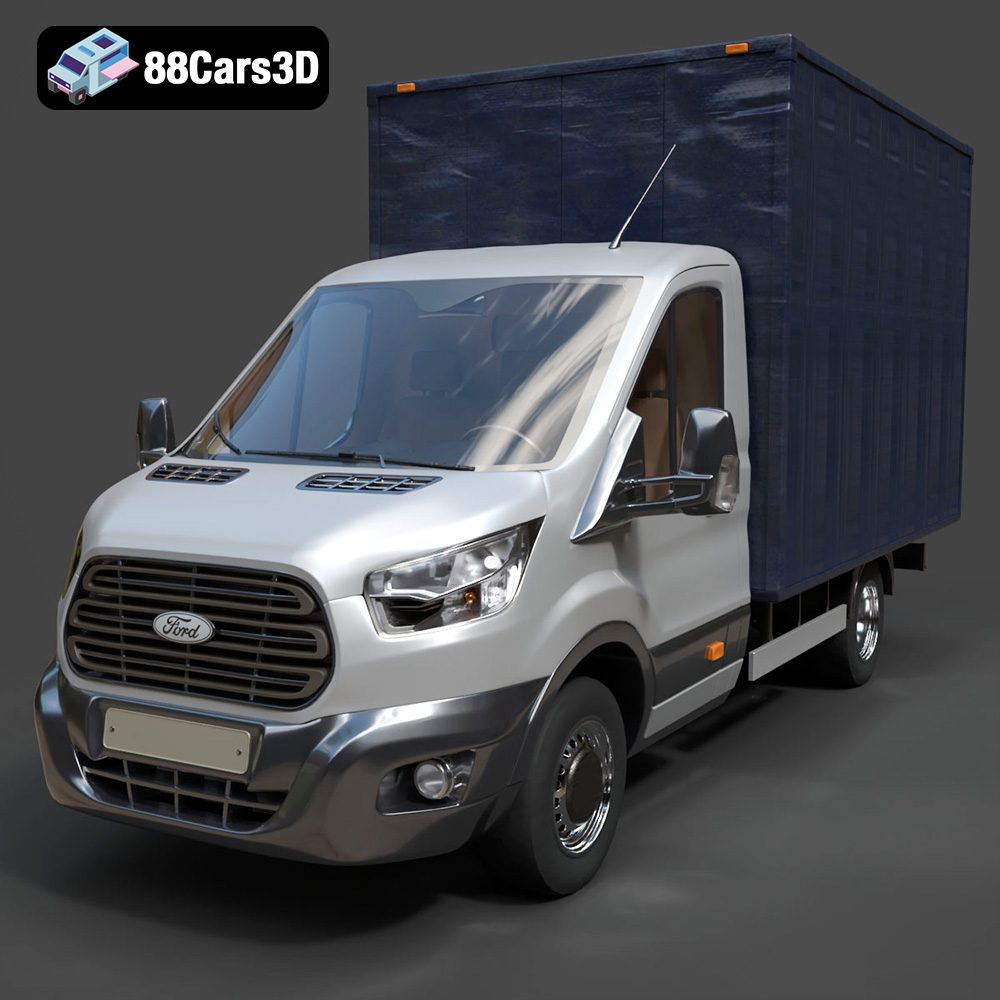
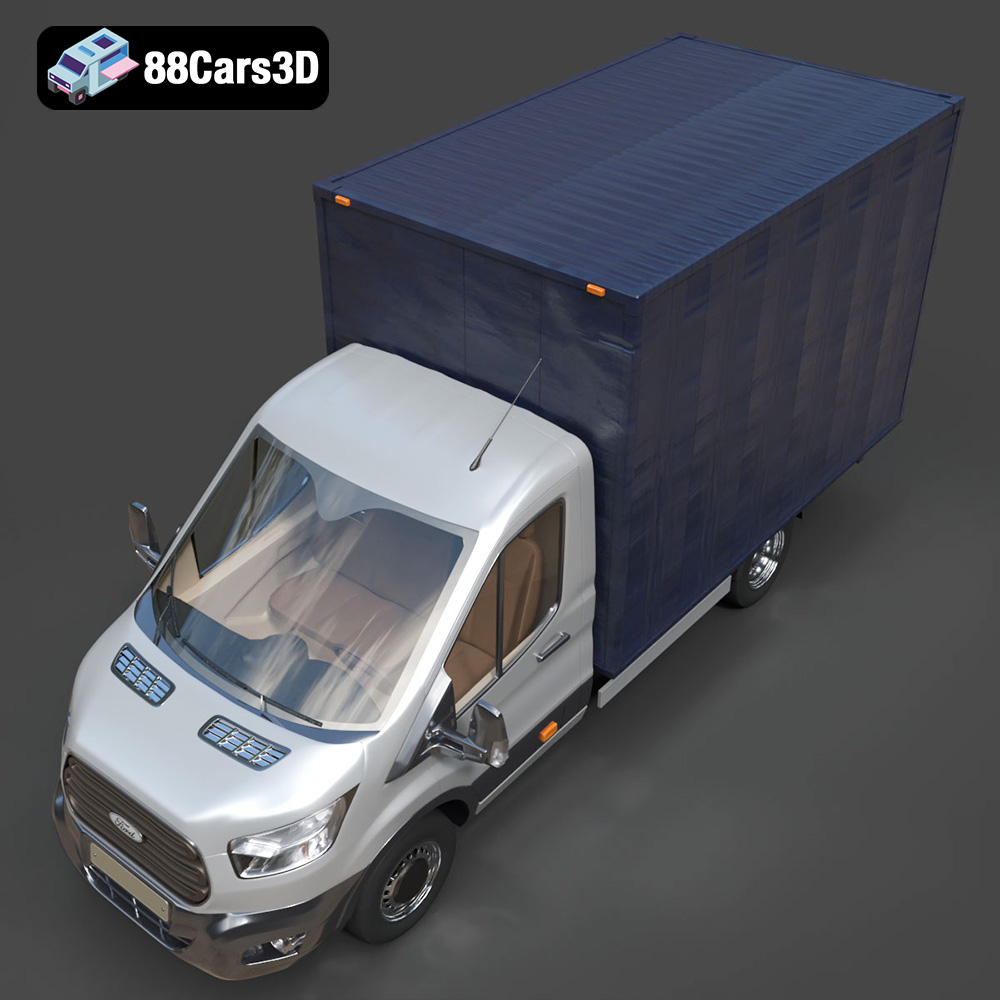
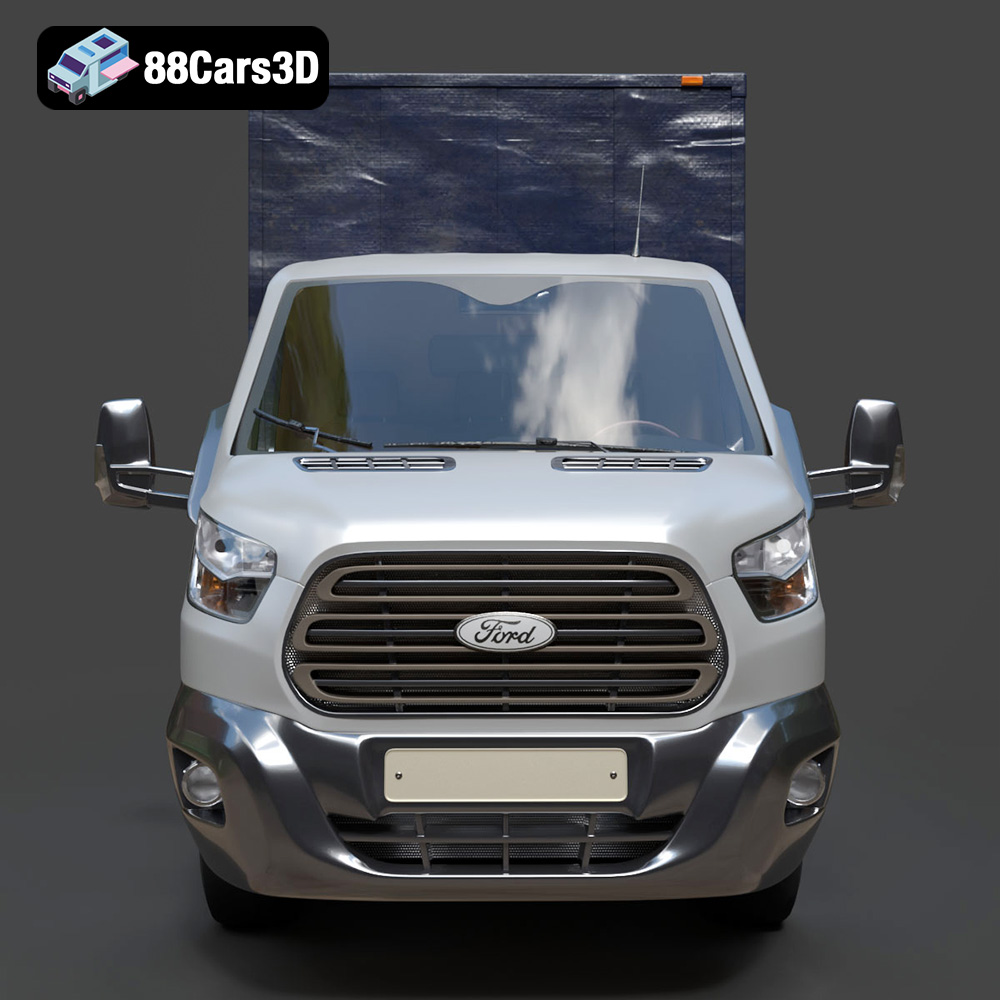
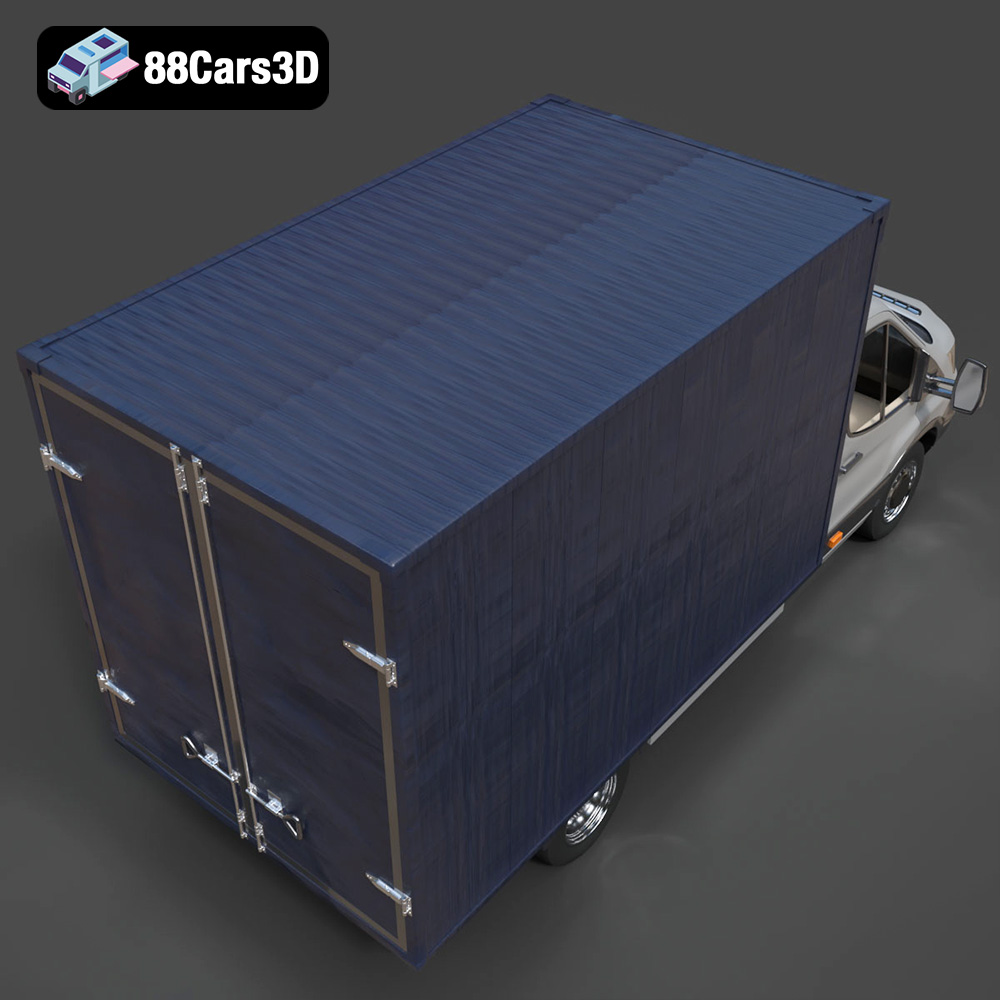
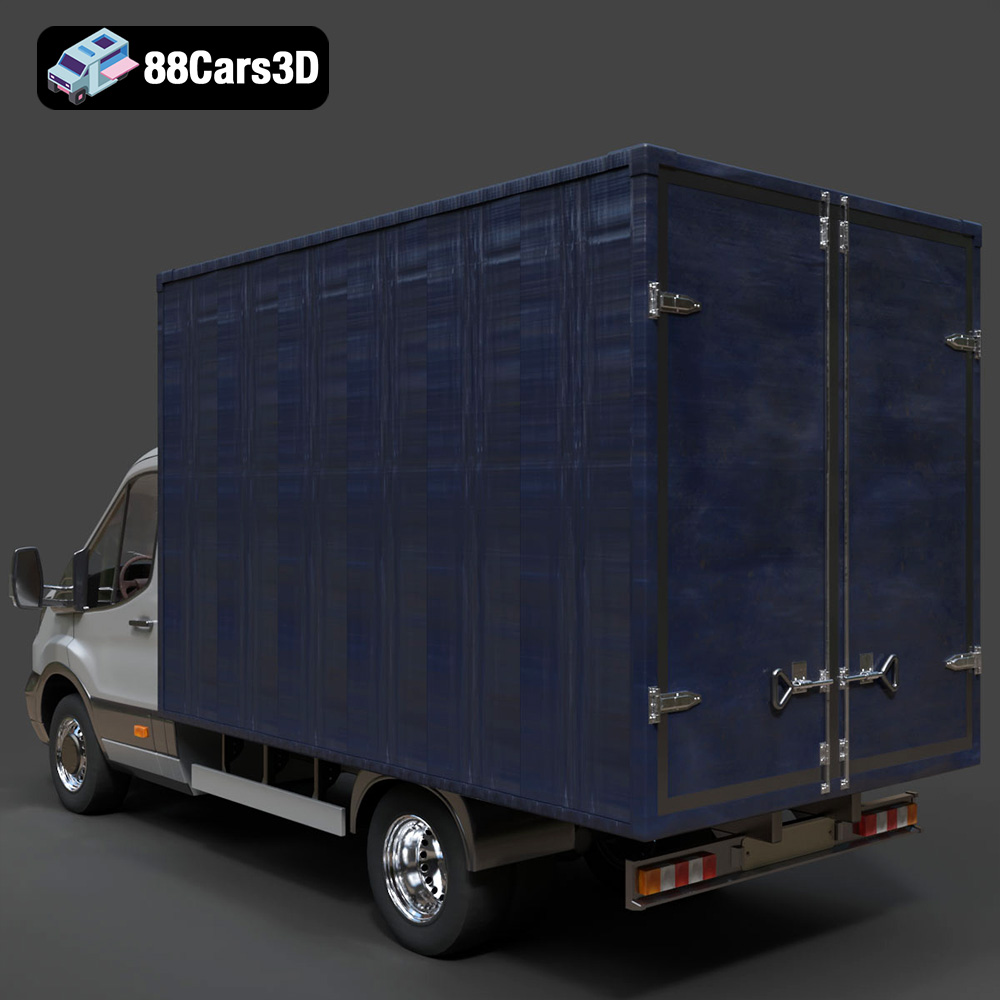
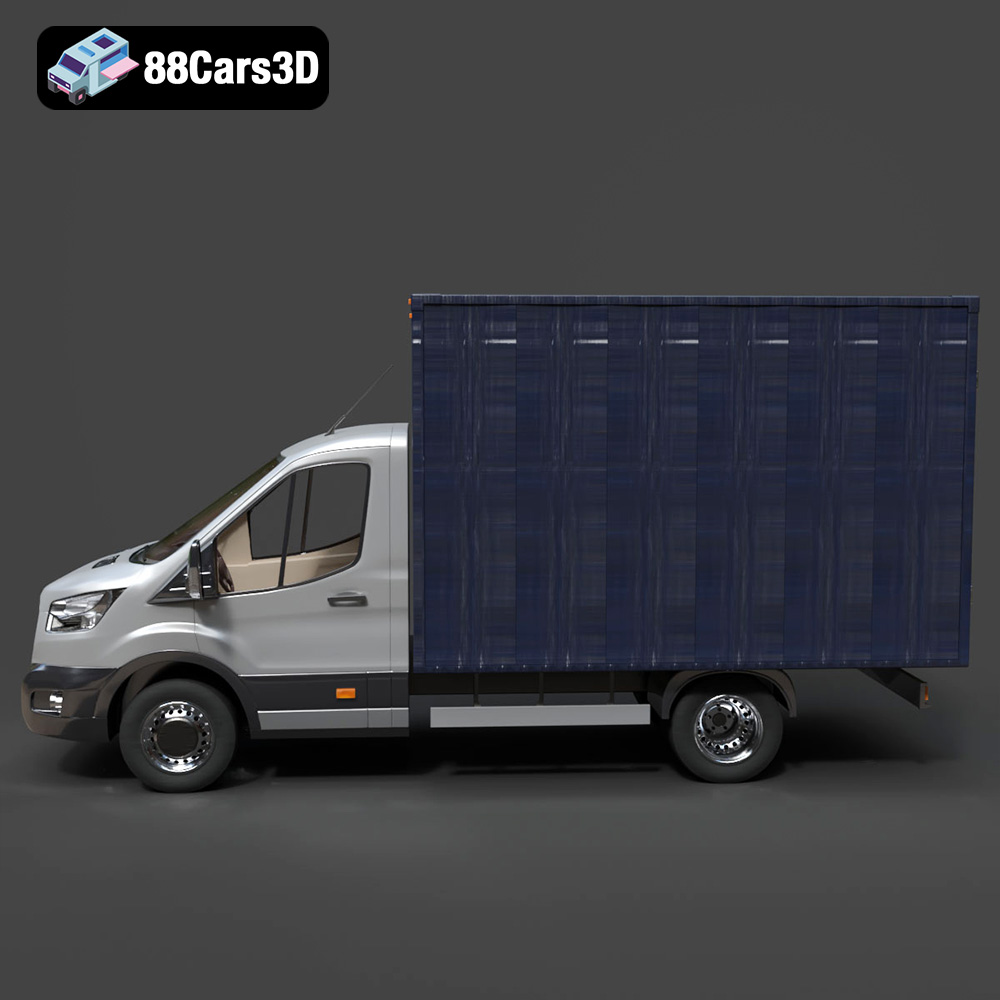
This 3D car model meticulously replicates the Ford Transit Camion 2008, capturing its utilitarian aesthetic with impressive accuracy. From the distinct front fascia, featuring the authentic grille design and robust bumper, to the heavy-duty chassis and spacious rear cargo box with modeled hinges and frame structure, every exterior detail is faithfully represented. Commercial-grade headlights, indicator markers, and taillights add to its realism, alongside detailed undercarriage elements like exhaust routing and suspension. The interior is equally well-considered, with an authentic commercial cabin, textured fabric seats, a detailed instrument cluster, and operational controls like the gear shifter and pedal assembly. This level of detail ensures the model is suitable for close-up renders and immersive first-person perspectives in driving simulators.
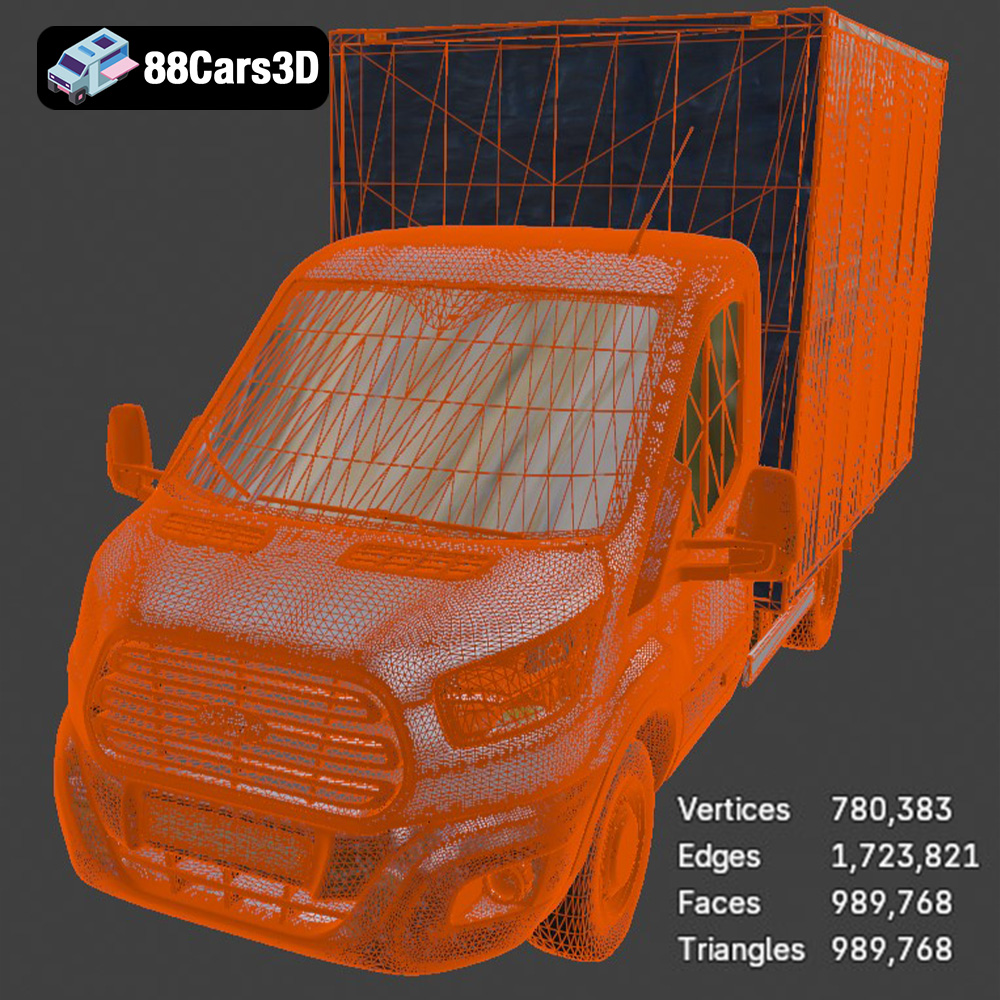
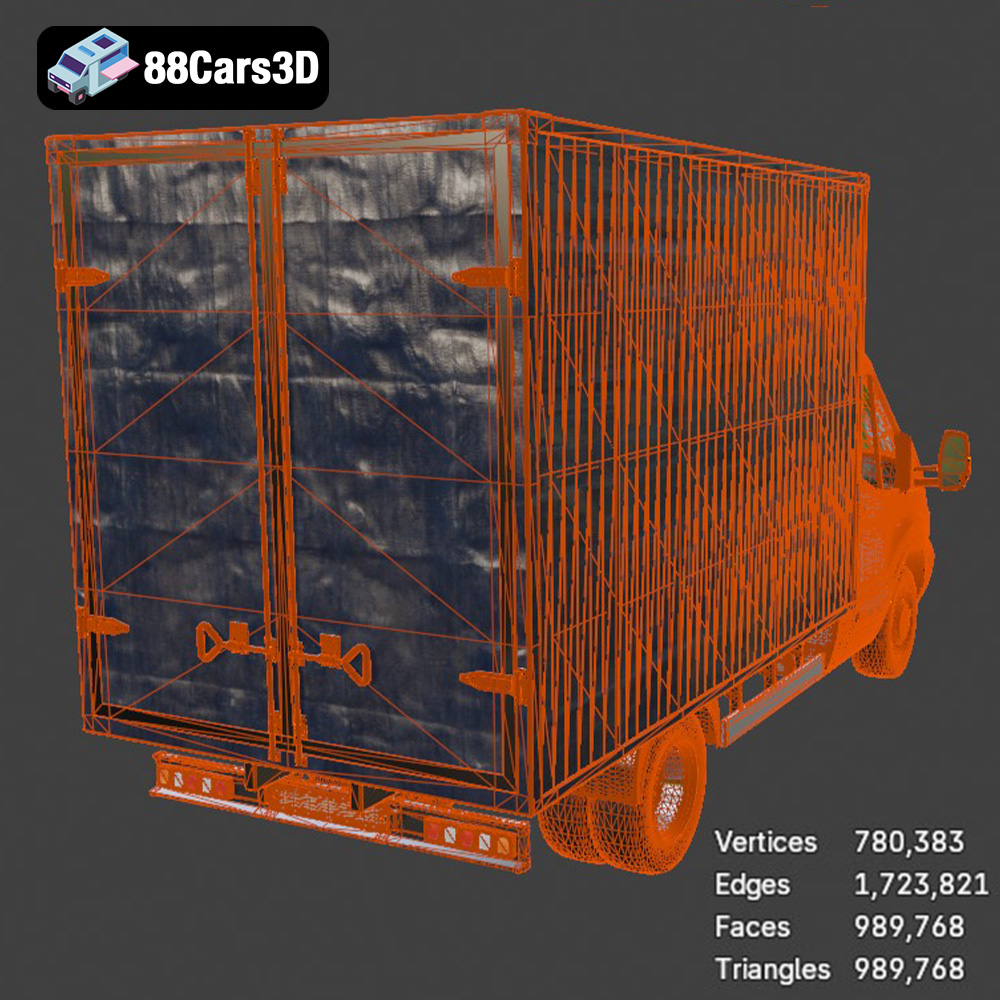
One of the most critical aspects for modern 3D car models, especially for game development and AR/VR, is optimized topology. The Ford Transit Camion 2008 boasts an efficient geometry with approximately 120,000 triangles. This polycount strikes an excellent balance, providing sufficient detail for high-end visual realism in close-up shots while remaining performant enough for real-time applications in engines like Unreal Engine and Unity. This “game-ready” optimization ensures smooth frame rates without sacrificing visual fidelity, a hallmark of well-engineered 3D assets.
Beyond its visual accuracy and optimized geometry, the Ford Transit Camion 2008 is designed for maximum versatility. It features distinct material separation, allowing artists to easily apply custom liveries, branding decals, and weathering effects to different parts of the vehicle. Want a clean street version or a rugged, dirt-splattered work truck? The model’s material setup supports such modifications with ease. Furthermore, real-world scale accuracy and proper pivot setups for steering, wheel rotation, and cargo door mechanics enable seamless animation. This makes it perfect for dynamic scenes, interactive simulations, and driving sequences, offering extensive customization options from changing cabin colors to adapting lighting for various environments.
The true value of a versatile 3D asset, like the Ford Transit Camion 2008 3D Model, lies in its seamless integration into diverse professional pipelines. Its broad compatibility and optimized structure make it an ideal candidate for various high-demand applications.
For game developers, the Ford Transit Camion 2008 is a perfect fit for populating virtual cities or serving as a primary vehicle in logistics simulators. Its optimized ~120k triangle count ensures it’s “game-ready,” delivering high visual quality without taxing engine performance. The inclusion of .fbx and .unreal formats facilitates direct import into popular game engines like Unreal Engine and Unity. Developers can leverage its proper pivot setup for animating wheels, steering, and cargo doors, creating dynamic and interactive vehicle behaviors for traffic AI, player-controlled vehicles, or mission objectives. The distinct material separation also allows for easy customization, letting studios apply unique skins, emergency vehicle liveries, or weathering effects to match their game’s aesthetic.
In the world of automotive rendering and architectural visualization, realism is paramount. The Ford Transit Camion 2008 provides an authentic backdrop or foreground element for urban scenes, industrial complexes, or commercial branding mockups. Using software like 3ds Max (.max file provided) or Blender (.blend file provided), artists can integrate the model into detailed environments. Its accurate proportions and fine details, from the grille to the undercarriage, shine in photorealistic renders. With the ability to easily adjust material finishes (matte plastics, gloss paint, rusted metals) and lighting setups, the model can convey different moods and scenarios, from a pristine delivery truck at a new showroom to a weathered fleet vehicle in a bustling city street. The .obj format further ensures compatibility with a wide array of rendering software, making it a flexible asset for any visualization project.
The burgeoning fields of AR and VR demand assets that are not only visually rich but also highly performant. The Ford Transit Camion 2008 excels here, offering a high-quality model optimized for immersive applications. Its real-world scale accuracy is crucial for believable AR overlays and VR environments, whether for virtual showrooms, fleet configurators, or VR maintenance training simulations. The .glb format, specifically designed for web-based AR/VR, ensures efficient loading and smooth interaction. Imagine a sales associate showcasing a customizable Transit in a client’s driveway via AR, or a mechanic training in VR by inspecting the detailed undercarriage and engine bay – this model provides the foundation for such cutting-edge experiences.
The utility of a robust 3D model extends far beyond digital screens. The Ford Transit Camion 2008 3D Model is also prepared for physical manifestation, opening up possibilities for collectors, hobbyists, and professionals alike through 3D printing.
Converting a digital 3D model into a tangible object requires careful preparation, and the .stl format is the industry standard for this process. The Ford Transit Camion 2008 includes a dedicated .stl file, ensuring that the model’s geometry is watertight and optimized for 3D printing. This means the mesh is free of errors like inverted normals or intersecting faces, which can cause issues during slicing. Preparing the model for printing involves considering wall thickness, overhangs, and the overall structural integrity of the print, all of which have been thoughtfully addressed to facilitate a successful physical output.
To achieve the best results when 3D printing the Ford Transit Camion 2008, specific print settings are recommended. For fine details, resin printing is often preferred over FDM, with layer heights between 0.04-0.12 mm. Wall thickness should be maintained between 1.2-2.0 mm for structural integrity, and an infill of 20-30% typically suffices. Supports will be required for intricate parts such as side mirrors, the undercarriage, and mudguards to prevent warping and ensure fidelity. Printing the frame angled and separate components like wheels and the cargo box separately can improve overall print quality and reduce support material. Post-processing, including sanding, priming, and painting with authentic factory colors and metallic finishes, can elevate the printed model to a display-worthy replica.
The ability to 3D print the Ford Transit Camion 2008 opens up a range of exciting applications. Hobbyists can create highly detailed scale models for dioramas, bringing urban scenes or logistics hubs to life on a tabletop. Educators can use the physical model as a teaching aid to explain vehicle design, commercial transport, or even the mechanics of 3D printing itself. For product designers or engineers, it can serve as a rapid prototype, offering a tangible representation for early-stage conceptualization and form factor evaluation. This seamless transition from digital to physical underscores the comprehensive utility of this versatile 3D car model.
In today’s competitive digital landscape, efficiency and quality are paramount. Investing in pre-built, high-quality 3D assets is a strategic decision that offers substantial returns for studios and individual artists alike.
When acquiring 3D car models, quality is non-negotiable. Assets from a reputable marketplace like 88cars3d.com are developed with professional standards in mind, undergoing rigorous quality assurance. This includes ensuring accurate real-world scale, clean and optimized topology, efficient UV mapping, and well-structured material setups. The Ford Transit Camion 2008 3D Model exemplifies this commitment to excellence, offering a product that is not only visually stunning but also technically robust and free from common modeling pitfalls, guaranteeing a smooth integration into any project.
One of the most significant advantages of utilizing ready-made 3D car models is the dramatic reduction in project timelines. Creating a vehicle model with the level of detail and optimization found in the Ford Transit Camion 2008 from scratch can take hundreds of hours of skilled labor. By purchasing a pre-optimized asset, designers and developers can immediately integrate it into their scenes, bypassing the time-consuming modeling and texturing phases. This allows teams to focus their creative energy on other critical aspects, accelerating production cycles and enabling faster delivery of projects.
Beyond time savings, there’s a clear economic benefit. The cost of hiring a 3D artist for the extensive hours required to model and optimize a vehicle like the Ford Transit Camion 2008 far outweighs the affordable price of a high-quality, pre-made asset. This makes platforms like 88cars3d.com an invaluable resource for studios of all sizes, democratizing access to professional-grade 3D content. Whether for a small indie game project, a large-scale architectural visualization, or a bespoke AR/VR experience, the value provided by such an asset significantly enhances project budgets and resource allocation.
The journey through the intricate world of 3D car models reveals their indispensable role in modern digital production. From shaping immersive game environments and delivering stunning automotive rendering to enabling innovative AR/VR experiences and even tangible 3D prints, the versatility and technical prowess of these assets are crucial.
The Ford Transit Camion 2008 3D Model stands as an exemplary product, embodying the core principles of quality, optimization, and broad compatibility. Its meticulous detail, game-ready topology, and comprehensive file format support ensure it seamlessly integrates into virtually any professional workflow, whether you’re a game developer leveraging Unreal Engine, a visualization artist working in 3ds Max, or a hobbyist bringing a digital design to life through 3D printing. Investing in such a well-crafted asset from a trusted source like 88cars3d.com not only streamlines your production but also elevates the overall quality and impact of your creative endeavors. Explore the possibilities and drive your projects forward with top-tier 3D models.
The Ford Transit Camion 2008 stands as a global icon of commercial reliability, serving as the backbone for countless logistics and delivery fleets worldwide. This 3D model meticulously captures the rugged utilitarian aesthetic of the beloved light commercial vehicle, featuring its distinct front fascia, heavy-duty chassis, and spacious rear cargo box. From the accurate grill design to the practical and robust exterior housing, every detail reflects the real-world functionality that has made the Transit a staple in the commercial transport sector. Crafted with an optimized topology of approximately 120,000 triangles, this game-ready model strikes the perfect balance between high visual fidelity and rendering efficiency. The geometry has been specifically tailored for real-time applications, ensuring smooth performance in game engines like Unreal Engine and Unity without sacrificing the intricate details necessary for close-up rendering. It features distinct material separation, enabling easy application of custom liveries and weathering effects. Perfect for urban logistics simulators, open-world city environments, commercial fleet visualizers, and VR training applications.
$19.99
.blend
.fbx
.ford
.glb
.max
.obj
.ply
.rendering
.stl
.unreal
box-truck
commercial-vehicle
game asset
game-ready
low-poly
optimized
transit-2008
transit-camion
truck-3d-model
VR/AR