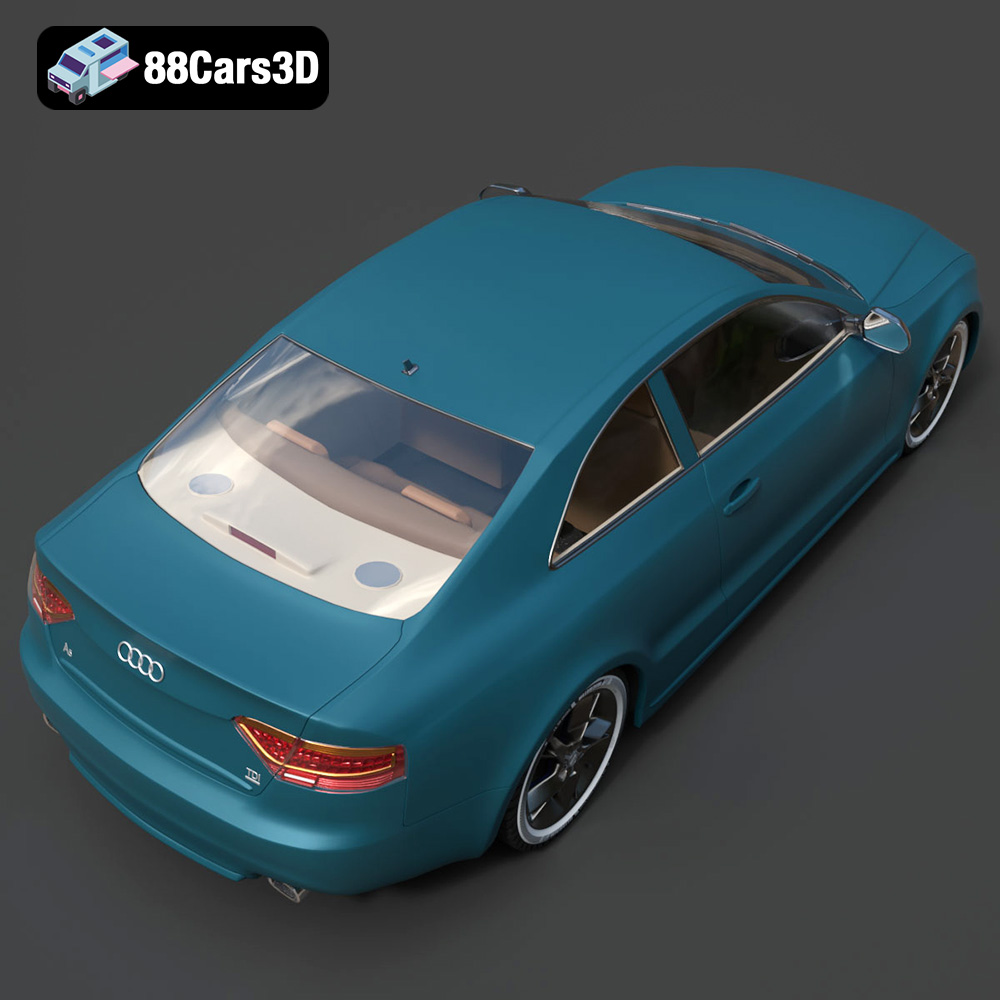
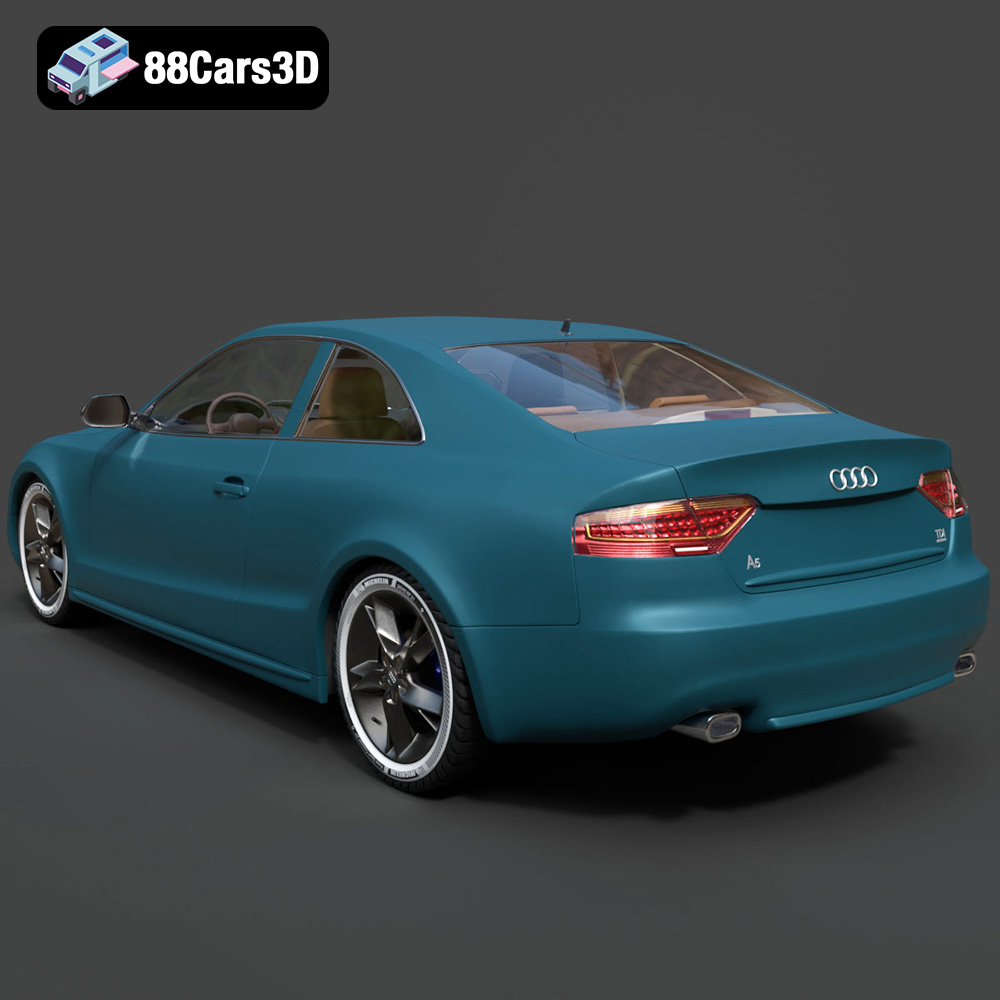
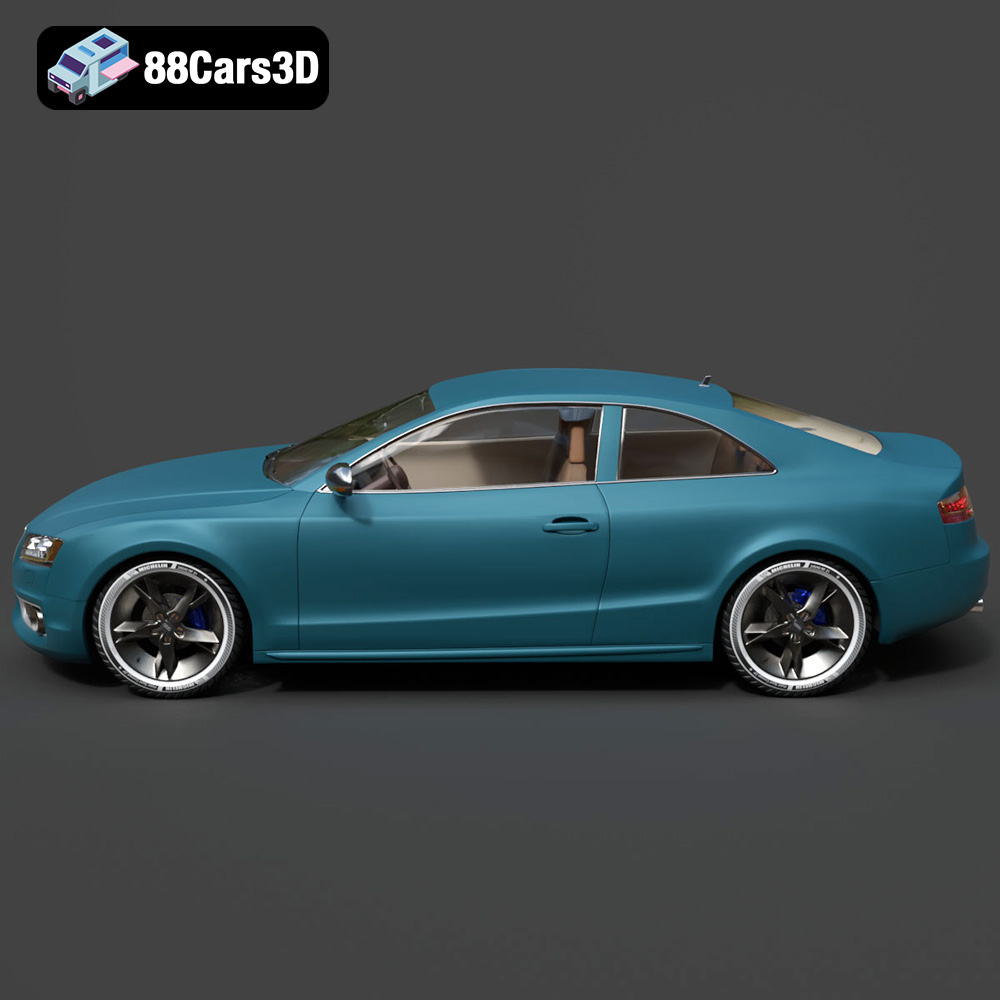
Get 20% OFF All Premium 3D & STL Models!

In the rapidly evolving landscape of digital content creation, high-quality 3D models are no longer just an advantage—they are a necessity. From blockbuster game titles and cinematic visual effects to cutting-edge architectural visualization and immersive AR/VR experiences, the demand for meticulously crafted assets is paramount. Automotive models, in particular, stand at the intersection of complex engineering and aesthetic design, requiring a delicate balance of accuracy, optimization, and visual fidelity.
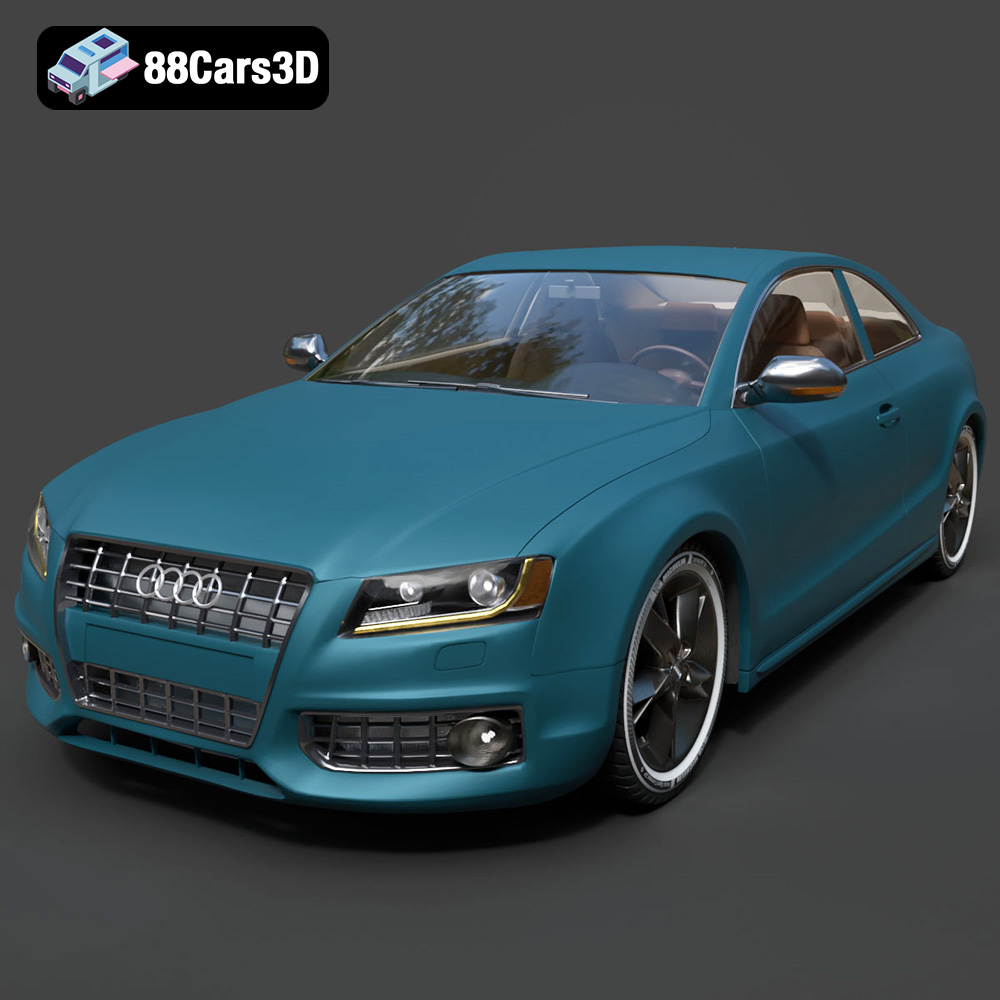
The quest for photorealism and seamless integration across diverse platforms often begins with the foundation of a well-built 3D model. Consider a vehicle like the 2008 Audi A5, a car that perfectly captured the essence of luxury and sportiness with its distinctive lines and sophisticated presence. To bring such an icon into the digital realm requires more than just a passing resemblance; it demands precision down to the smallest detail. This is where a professional-grade asset, like the Audi A5 2008 3D Model available on 88cars3d.com, becomes an invaluable tool. It represents the culmination of expert modeling techniques, optimized geometry, and versatile file format support, ready to power your next project.
This article will explore the technical intricacies and practical applications of premium 3D car models, guiding you through the considerations for various industries and demonstrating how an asset like the Audi A5 2008 model can elevate your professional workflow. We’ll delve into file formats, rendering techniques, game engine integration, and even the exciting possibilities of 3D printing.
The choice of a 3D model file format is critical and often dictated by the project’s specific requirements, target platform, and the software being used. A comprehensive 3D asset, such as the Audi A5 2008 3D Model from 88cars3d.com, often comes with a variety of formats to ensure maximum compatibility and utility. Understanding these distinctions is key to a smooth and efficient workflow, whether you’re working in game development, architectural visualization, or 3D printing.
The .blend format is the native file type for Blender, the popular open-source 3D creation suite. A .blend file typically contains the complete scene data, including geometry, materials, textures, animations, camera setups, lighting, and even physics simulations. This makes it incredibly powerful for artists who use Blender, as it allows for full editability and deep customization. For the Audi A5 2008 model, having a .blend file means artists can easily modify anything from panel gaps to material shaders, rig for animation, or adapt the model for specific rendering engines like Cycles or Eevee, leveraging Blender’s extensive toolset.
.fbx (Filmbox) is arguably the most widely adopted proprietary file format for 3D data exchange across different software applications. Developed by Autodesk, it excels at storing not just geometry, but also animation, cameras, lights, and skeletal data, making it ideal for pipelines involving multiple software packages like 3ds Max, Maya, Blender, Unity, and Unreal Engine. Its robust support for hierarchies and animations makes it a go-to for game development. When using the Audi A5 2008 model in .fbx format, you can expect clean transfer of the mesh, UVs, and potentially initial material assignments, ensuring it’s ready for immediate import into your engine or renderer of choice.
The .obj (Wavefront Object) format is one of the oldest and most universally supported 3D file formats. It’s a simple, text-based format that primarily stores geometry data (vertices, normals, texture coordinates, and faces) and can reference external material definition files (.mtl). While it lacks support for animation or advanced scene data, its widespread compatibility makes it excellent for basic mesh exchange between almost any 3D software. The Audi A5 2008 model in .obj ensures that virtually any 3D artist can open and work with its core geometry, making it a foundation for many projects.
.glb (GL Transmission Format Binary) is an increasingly important format, especially for web-based 3D, augmented reality (AR), and virtual reality (VR) applications. It’s the binary version of glTF, designed for efficient transmission and loading of 3D scenes and models. A .glb file packages everything—geometry, materials, textures, and even animations—into a single, compact file. This optimization is crucial for performance-sensitive environments where quick loading times and smaller file sizes are essential. For showcasing the Audi A5 2008 in an immersive AR experience or a browser-based configurator, the .glb format offers unparalleled efficiency and ease of deployment.
The .stl (STereoLithography) format is synonymous with 3D printing. It represents a 3D model as a collection of unconnected triangles, defining only the surface geometry without color, texture, or other attributes. This format is the standard input for virtually all 3D printers and slicing software. The Audi A5 2008 model, when converted to .stl, becomes a tangible object, allowing hobbyists or professionals to print scaled replicas, create prototypes, or even custom parts. The product description’s specific 3D print settings for the Audi A5 highlight the practical considerations for successful physical output.
.ply (Polygon File Format or Stanford Triangle Format) is another format used for representing 3D scanned data or models with complex topology. It can store not only geometry but also color, transparency, normals, and even confidence values for scanned points. While less common for general 3D asset exchange than .fbx or .obj, it’s valuable in scientific visualization, reverse engineering, and applications requiring highly detailed mesh data from real-world scans or precision modeling. For the Audi A5 2008 model, its inclusion offers options for highly technical workflows or specific academic projects.
The .unreal designation implies a model specifically optimized and structured for direct import and use within Unreal Engine. This could mean a packed asset with optimized materials, collision meshes, LODs (Levels of Detail), and possibly even Blueprints for interactive functionality. While not a standalone file extension in the same way as .fbx, it signifies a pre-configured asset that requires minimal setup once imported into an Unreal project. For the Audi A5 2008, having an “unreal” variant means a streamlined workflow for game developers looking to integrate the vehicle quickly and efficiently into their real-time environments.
The .max format is the native file type for Autodesk 3ds Max, a leading software for 3D modeling, animation, and rendering in architectural visualization, product design, and visual effects. Like .blend, a .max file contains the complete scene, including complex hierarchies, modifiers, materials, lighting, and animation data. Providing the Audi A5 2008 in .max format is invaluable for professionals heavily invested in the 3ds Max ecosystem, allowing them to access the original scene setup, modify parametric objects, and leverage the software’s powerful rendering capabilities with engines like V-Ray or Corona.
The availability of these diverse formats for the Audi A5 2008 3D Model underscores its versatility, catering to a wide range of professional needs and ensuring that artists and developers can integrate this high-quality asset into their preferred pipelines without compatibility headaches.
Automotive rendering is an art form that transforms digital models into breathtaking, photorealistic images and animations. It demands a deep understanding of light, materials, and composition, all while faithfully representing the vehicle’s design and character. A well-constructed 3D car model is the canvas upon which this art is painted.
Modern rendering relies heavily on Physically Based Rendering (PBR) materials, which simulate how light interacts with surfaces in the real world. For a car model like the Audi A5 2008, this means meticulously crafted shaders for its metallic paint, reflective chrome accents, glass, tire rubber, and luxurious interior leathers. Each material requires specific textures for its albedo (base color), roughness (micro-surface detail), metallicness, normal maps (fine surface bumps), and ambient occlusion. The “premium leather-textured seating” and “authentic factory alloy wheels wrapped in realistic performance tires” mentioned for the Audi A5 2008 model are critical elements that leverage PBR to achieve stunning realism. Artists would typically apply these high-resolution textures using UV mapping, ensuring they wrap seamlessly around the detailed geometry.
Lighting is the soul of any render. For automotive scenes, this often involves High Dynamic Range Images (HDRIs) that provide both realistic illumination and reflections from real-world environments. Studio lighting setups, using virtual softboxes and spotlights, are also common for showcasing design details or specific product features. The “optimized geometry for smooth reflections and accurate shading across all lighting scenarios” of the Audi A5 2008 3D Model is paramount here, as accurate mesh normals and clean topology ensure that light bounces and refracts believably, enhancing the car’s contours and paintwork. The ability to “adapt lighting for different environments” allows for versatility, from a sunny coastal drive to a moody urban night scene.
Even the most perfect render can be enhanced with post-processing. Techniques like color grading, depth of field, motion blur, lens flares, and subtle atmospherics add that final layer of cinematic polish. These steps can make the difference between a good render and a truly captivating image. When combining the detailed Audi A5 2008 3D Model with a dynamic environment, post-processing helps to integrate the vehicle seamlessly, making it feel like it truly belongs in the scene. Whether it’s for a brand campaign or a lifestyle rendering project, the goal is always to tell a compelling visual story.
Game development places unique demands on 3D assets. While visual fidelity is crucial, performance in real-time environments is equally, if not more, important. High-quality 3D car models are the backbone of racing games, open-world adventures, and immersive simulations, requiring careful optimization.
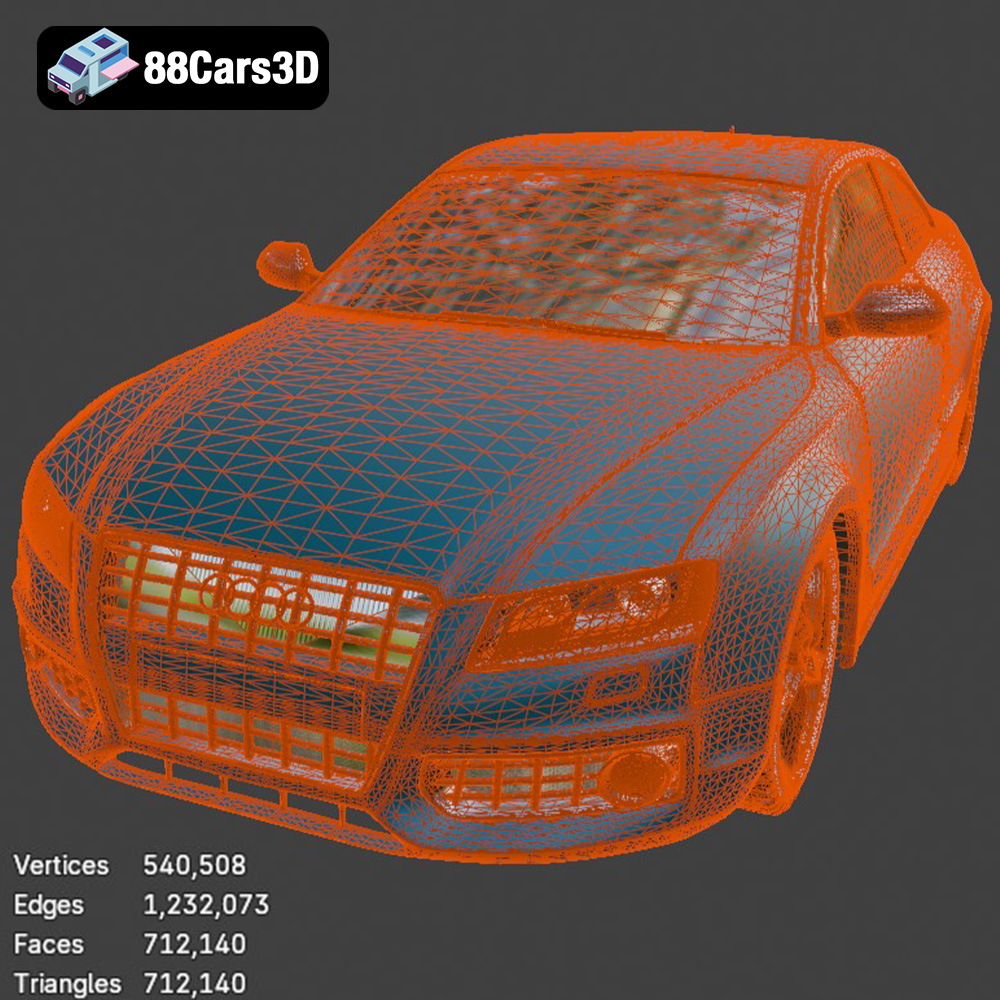
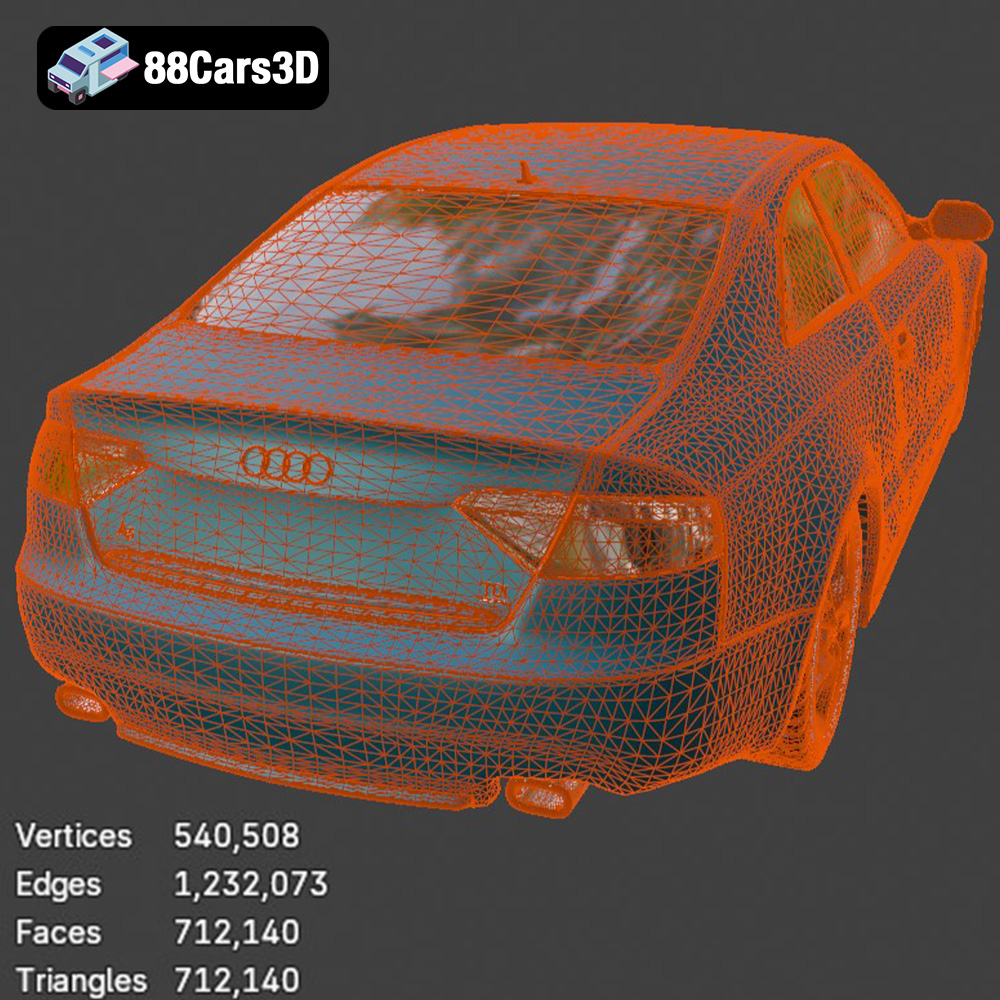
The primary challenge in game development is balancing visual quality with frame rate. This is where “Game-Ready & Optimized” assets shine. The Audi A5 2008 3D Model, with its “detailed geometry of 712,140 triangles,” strikes an excellent balance. This poly count is high enough to deliver “exceptional visual fidelity” for modern game engines like Unreal and Unity, ensuring smooth reflections and accurate shading, yet optimized enough to prevent performance bottlenecks. Techniques like Level of Detail (LODs), where simpler versions of the model are swapped in at a distance, and efficient UV unwrapping for texture atlases are often employed to maintain this balance. The “accurate Audi A5 2008 frame geometry, panel gaps, and classic coupe proportions” ensure that even with optimization, the car’s identity remains intact.
Integrating a 3D car model into a game engine involves several steps beyond simply importing the mesh. For Unreal Engine, this often means importing the .fbx or leveraging a pre-configured .unreal asset, then setting up PBR materials, collision meshes, and physics properties. Wheels, steering components, and suspension are typically separated and rigged for animation and physics interactions, a feature explicitly mentioned for the Audi A5 2008 model. In Unity, a similar process is followed, utilizing its robust physics system and material editor. The “proper pivot setup for steering, wheel rotation, and suspension travel” on the Audi A5 2008 model significantly streamlines the rigging and physics setup for developers, saving valuable time and ensuring realistic vehicle dynamics.
Realistic vehicle animation in games involves more than just spinning wheels. It encompasses intricate suspension travel, steering articulation, and even subtle body roll. The modular design of the Audi A5 2008 model, with “separate wheels, suspension, and steering components for animation,” is invaluable for developers. This allows for complex physics simulations and character animations where players can interact with the vehicle. The optimized geometry and clean topology also contribute to smoother animation playback and fewer artifacts, ensuring the Audi A5 looks superb whether it’s cruising down a virtual highway or drifting through a tight corner.
Augmented Reality (AR) and Virtual Reality (VR) are transforming how we interact with products, offering immersive experiences that bridge the gap between digital and physical. For the automotive industry, this means virtual showrooms, interactive configurators, and mobile AR experiences, all powered by high-quality 3D car models.
In AR/VR, performance is paramount, as maintaining a high and stable frame rate is crucial for preventing motion sickness and providing a comfortable user experience. The .glb format, with its compact size and efficient data structure, is explicitly designed for these environments. The Audi A5 2008 3D Model’s availability in .glb makes it “perfect for immersive virtual showrooms, configurators, and mobile AR experiences.” Its optimized geometry, while detailed, is lightweight enough to run smoothly on various devices, from high-end VR headsets to mobile AR applications. This ensures that the detailed exterior features and refined interior, including the “accurate instrument cluster and MMI infotainment screen,” are rendered flawlessly in real-time without compromising performance.
Virtual showrooms allow potential buyers to explore a vehicle’s features in detail, change colors, open doors, and even sit inside, all from the comfort of their home. A model like the Audi A5 2008, with its “detailed engine bay components” and “cockpit & interior features,” provides a rich foundation for such a showroom. Customization options, such as changing body colors or material finishes, can be easily implemented using game engine functionalities or web-based 3D frameworks. This interactive exploration, driven by an accurate and optimized 3D model, greatly enhances the customer journey and decision-making process.
Augmented Reality takes this a step further by overlaying digital content onto the real world. Imagine placing a full-scale Audi A5 2008 in your driveway using your smartphone. For such applications, extreme optimization and precise real-world scale are non-negotiable. The “real-world scale accuracy” of the Audi A5 2008 3D Model is critical here, ensuring that the virtual car appears correctly proportioned when superimposed onto the physical environment. From marketing campaigns to design reviews, AR applications powered by such detailed and optimized 3D car models offer a powerful new dimension of interaction.
Beyond screens, 3D printing offers an exciting pathway to bring digital 3D models into the physical world. For automotive enthusiasts, designers, and hobbyists, printing scale models of their favorite cars is a rewarding experience, and a high-quality 3D model is the starting point.
Converting a high-detail rendering model into a printable format requires specific considerations. The primary format for 3D printing is .stl, which simplifies the model’s surface into a mesh of triangles. The Audi A5 2008 3D Model is provided in .stl format, specifically tailored for printing. Key steps in preparation involve checking for manifold geometry (watertightness), ensuring wall thickness is sufficient, and strategically dividing the model into printable parts. The product description provides excellent guidance, recommending scales like 1:12, 1:18, or 1:24, and suggesting optimal layer height and infill for quality results. Features like “separate wheels, suspension, and steering components” are beneficial not just for animation, but also for printing components individually for better detail and assembly.
The choice of 3D printing technology significantly impacts the final product. For fine details and smooth surfaces, resin printing (SLA/DLP) is often recommended, as noted in the Audi A5’s print settings. This method excels at capturing intricate elements like the “high-resolution projector headlights” or the “detailed brake calipers, rotors, and sport suspension geometry.” FDM (Fused Deposition Modeling) printers, while more common for larger, less detailed prints, can still produce impressive results, especially for the main body frame, provided settings like layer height are optimized. The mention of “supports: Required for detailed parts like exhaust, mirrors, handlebars” is a crucial tip for successful prints, ensuring delicate features are not compromised during the printing process.
Once printed, a 3D car model often requires post-processing to achieve a professional finish. This can include removing supports, sanding to smooth out layer lines, priming to create a uniform surface, and finally, painting. For the Audi A5 2008, this would involve applying “authentic factory colors with metallic finishes” to truly replicate the car’s real-world appearance. The ability to “change body/tank colors” on the digital model also translates into creative freedom for physical customization, allowing hobbyists to experiment with different schemes before committing to paint. A well-printed and finished model becomes a display piece, a tangible representation of the digital artistry.
In a competitive digital landscape, the quality of your assets directly impacts the quality of your output. Investing in premium 3D car models like those found on 88cars3d.com offers significant advantages for professionals across various industries.
Creating a highly detailed, game-ready 3D car model from scratch is an incredibly time-consuming and expensive endeavor, requiring specialized skills in modeling, UV mapping, texturing, and optimization. By purchasing a pre-made, high-quality asset like the Audi A5 2008 3D Model, studios and individual artists can drastically reduce development cycles and costs. This allows them to allocate resources to other critical aspects of their projects, such as scene composition, animation, or interactive logic, rather than reinventing the wheel (pun intended).
Premium assets are typically created by experienced artists who adhere to industry best practices, ensuring clean topology, accurate scale, optimized poly counts, and consistent material setups. The “meticulously crafted 3D model” of the Audi A5 2008, with its “detailed geometry of 712,140 triangles” and “real-world scale accuracy,” guarantees a professional level of quality that would be challenging for every project to achieve internally. This consistency is vital for maintaining brand standards in visualization or ensuring a cohesive aesthetic across game assets.
Having a library of high-quality 3D car models at your fingertips empowers creative exploration. Instead of being limited by what can be modeled in-house or within tight deadlines, designers can experiment with different vehicles, scenarios, and visualizations. The versatility of the Audi A5 2008 3D Model, with its wide range of supported file formats and customization options, means it can be adapted to almost any creative vision, from urban driving simulations to high-end architectural visualizations or even product configurators. This freedom enables artists to push boundaries and deliver more impactful results.
The role of high-quality 3D car models in today’s digital industries cannot be overstated. They are the fundamental building blocks that enable stunning visualizations, immersive game worlds, cutting-edge AR/VR experiences, and even tangible physical creations. From the intricate detailing of a vehicle’s exterior and interior to the nuanced considerations of file formats and engine optimization, every aspect contributes to the final impact of a project.
The Audi A5 2008 3D Model stands as a testament to what a professionally crafted digital asset can offer. Its balanced geometry, extensive feature set, and wide array of supported file formats—including .blend, .fbx, .obj, .glb, .stl, .ply, .unreal, and .max—ensure its adaptability across virtually any professional workflow. Whether you are an automotive renderer seeking photorealism, a game developer optimizing for real-time performance, an AR/VR creator building immersive experiences, or a hobbyist venturing into 3D printing, this model provides a robust and reliable foundation.
Investing in such a versatile and meticulously detailed 3D car model from a reputable marketplace like 88cars3d.com is not merely a purchase; it’s an investment in efficiency, quality, and boundless creative potential. It allows professionals to focus on innovation and artistry, knowing that the core asset is expertly engineered and ready to perform. Explore the possibilities and elevate your next project with exceptional 3D models.
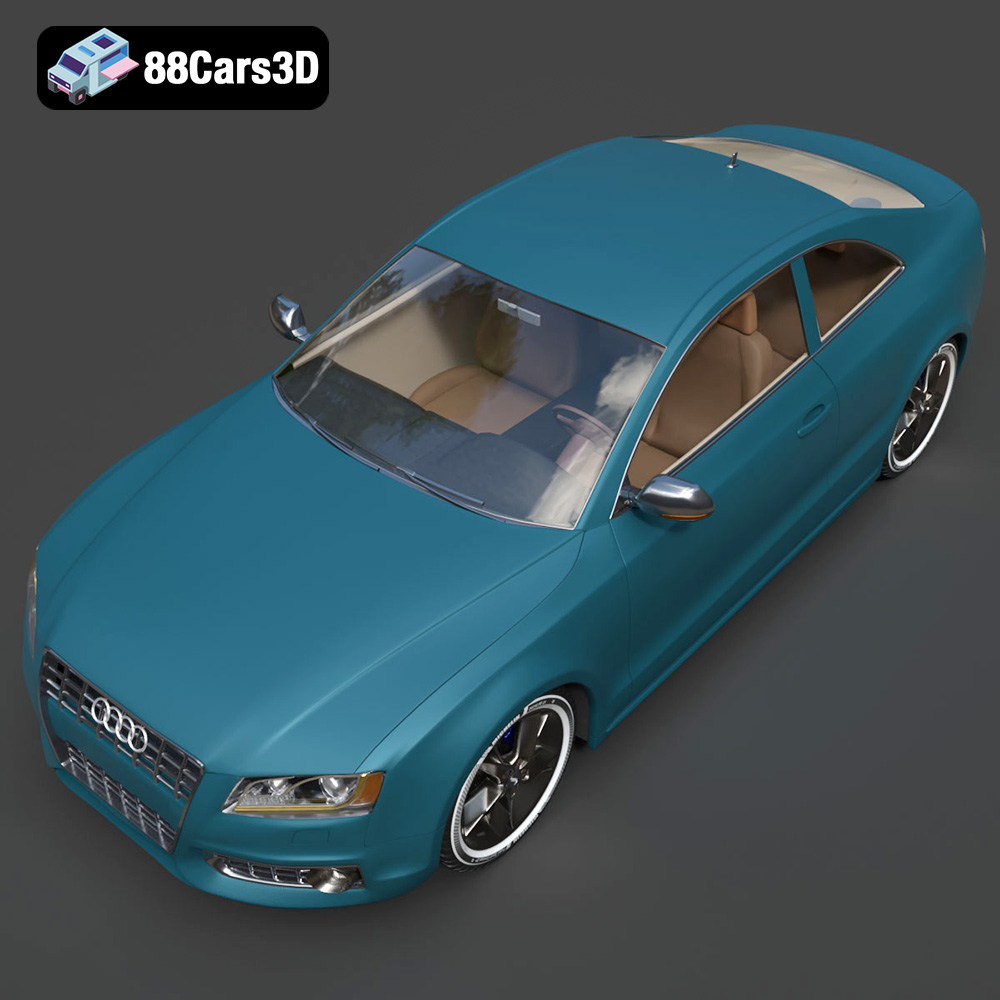
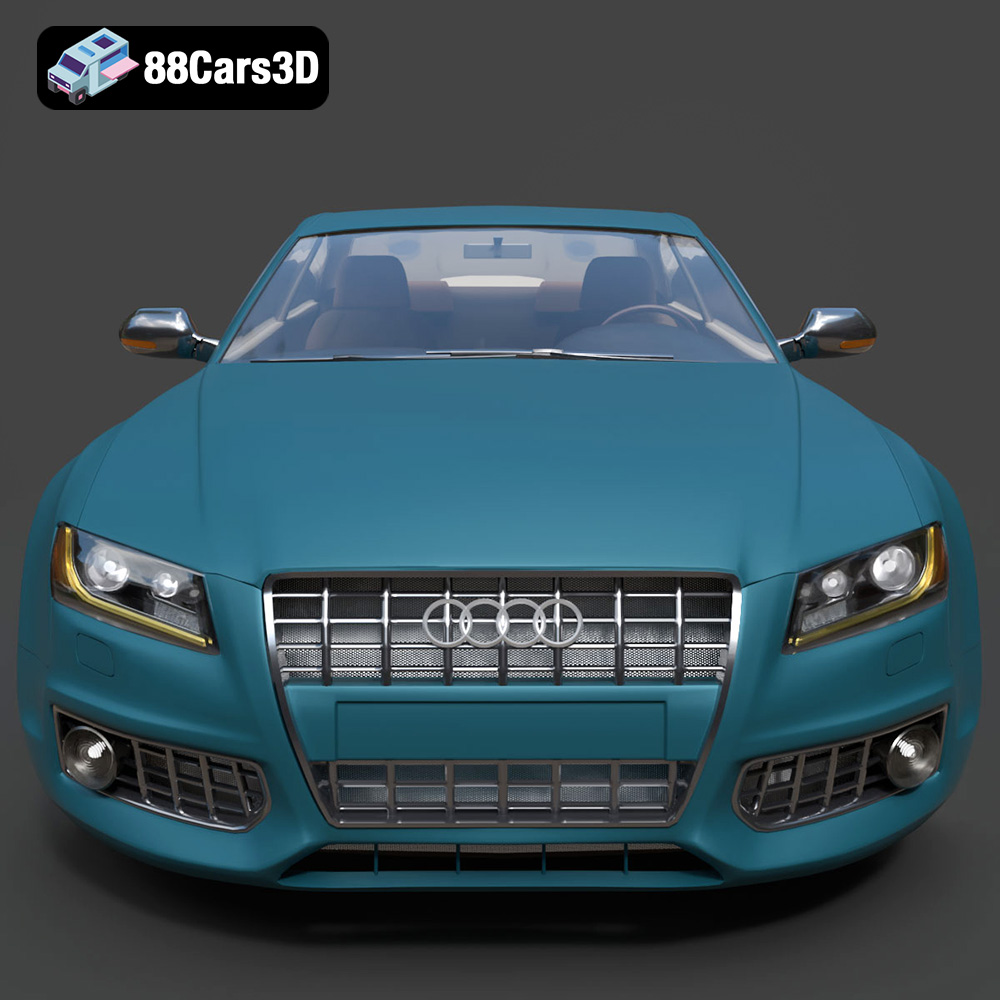
The 2008 Audi A5 redefined the modern luxury coupe segment with its perfectly balanced proportions, elegant flowing lines, and the iconic single-frame front grille. Known for blending grand touring comfort with sports-oriented performance, this model highlights Audi’s sophisticated design language from the late 2000s, featuring sharp shoulder lines, distinct projector headlights, and precisely modeled exhaust outlets. This meticulously crafted 3D model boasts a detailed geometry of 712,140 triangles, delivering exceptional visual fidelity while maintaining efficient performance for real-time applications. Optimized for game engines, AR/VR environments, and high-end CGI, the mesh ensures smooth reflections and accurate shading across all lighting scenarios. Perfect for urban driving simulations, high-end architectural visualizations, automotive configurators, and lifestyle rendering projects.
$26.00
.audi
.blend
.coupe
.fbx
.glb
.max
.obj
.ply
.rendering
.stl
.unreal
a5-2008
car-3d-model
game asset
game-ready
low-poly
luxury car
optimized
VR/AR