Get 20% OFF All Premium 3D & STL Models!

In the expansive and demanding world of 3D content creation, the ability to source and integrate high-quality, pre-made assets can be a game-changer for projects ranging from AAA game development to cutting-edge virtual reality simulations. While the focus often falls on sleek sports cars or futuristic spacecraft, the allure of military hardware, particularly iconic armored vehicles, holds a powerful draw. These formidable machines, with their intricate mechanics and imposing presence, offer unique challenges and immense creative potential for artists and developers.
Among the pantheon of legendary military vehicles, the BTR-80 stands as an enduring symbol of ruggedness and tactical versatility. This 8×8 wheeled amphibious armored personnel carrier, with its distinctive sloped armor and powerful armament, has seen action across the globe and remains instantly recognizable. Capturing such an intricate piece of engineering in a digital format requires a deep understanding of both aesthetics and technical optimization.
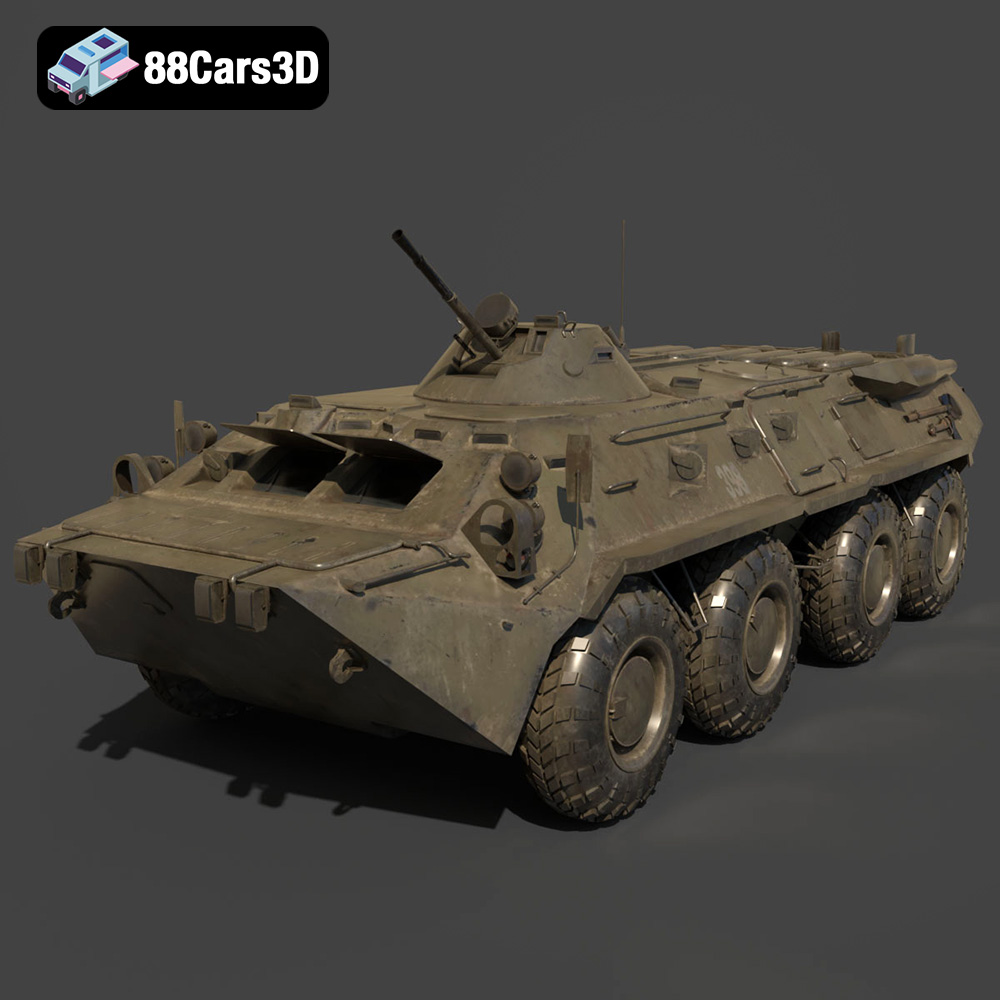
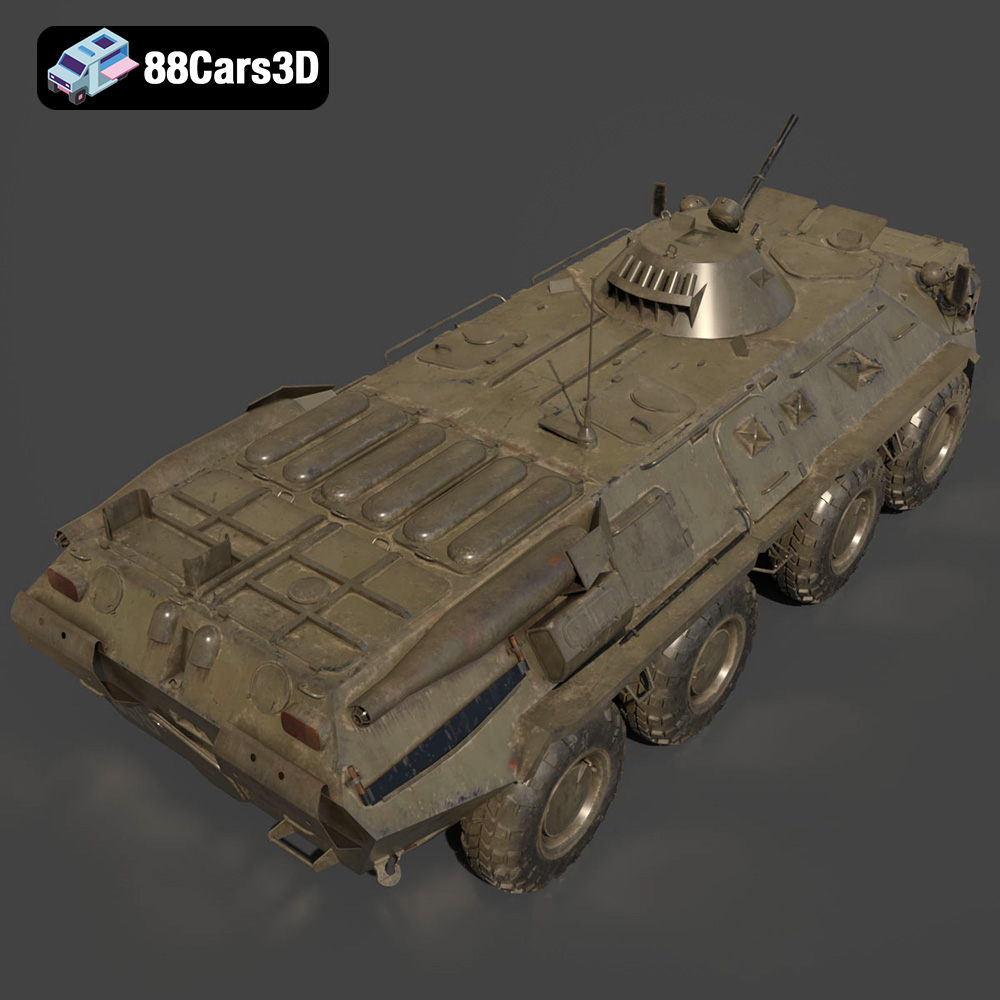
Today, we’re diving deep into an exceptional asset that embodies this blend of fidelity and performance: the BTR-80 3D Model available at 88cars3d.com. This meticulously crafted digital recreation isn’t just a static object; it’s a dynamic foundation for an incredible array of projects, engineered to meet the stringent demands of professional workflows across gaming, visualization, and extended reality.
The BTR-80 is more than just a vehicle; it’s a piece of military history, instantly recognizable for its aggressive silhouette and robust capabilities. Its presence evokes a sense of realism and tactical intensity in any scene it inhabits. For 3D artists and developers, the challenge lies in translating this real-world gravitas into a digital asset that performs flawlessly while maintaining visual integrity.
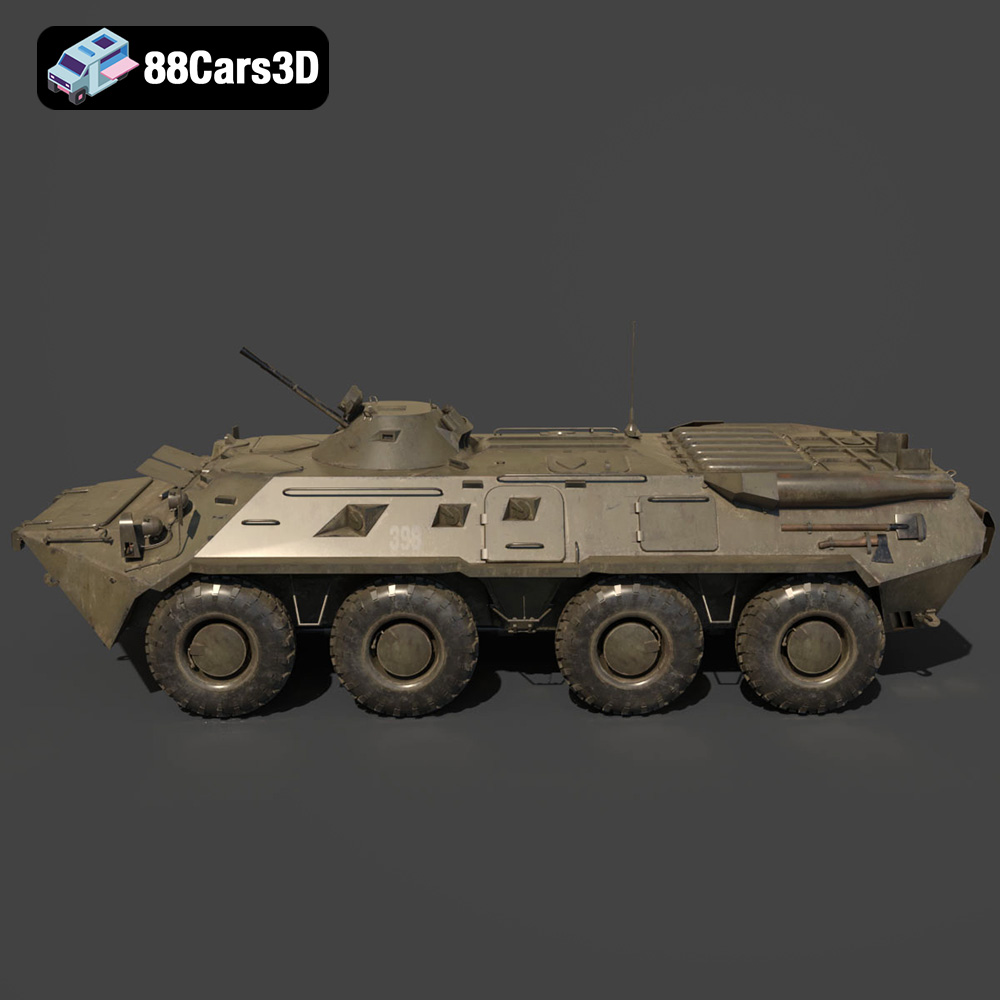
Originating in the Soviet Union in the 1980s, the BTR-80 was designed for high mobility and amphibious operations, serving as a versatile transport for infantry. Its 8×8 configuration provides excellent cross-country performance, while its sloped armor offers protection against small arms fire and shell splinters. The iconic BPU-1 turret, typically armed with a 14.5mm KPVT heavy machine gun and a coaxial 7.62mm PKT machine gun, gives it significant firepower. Recreating this vehicle accurately in 3D means respecting these design choices, ensuring that every curve, vent, and armament detail reflects the original engineering.
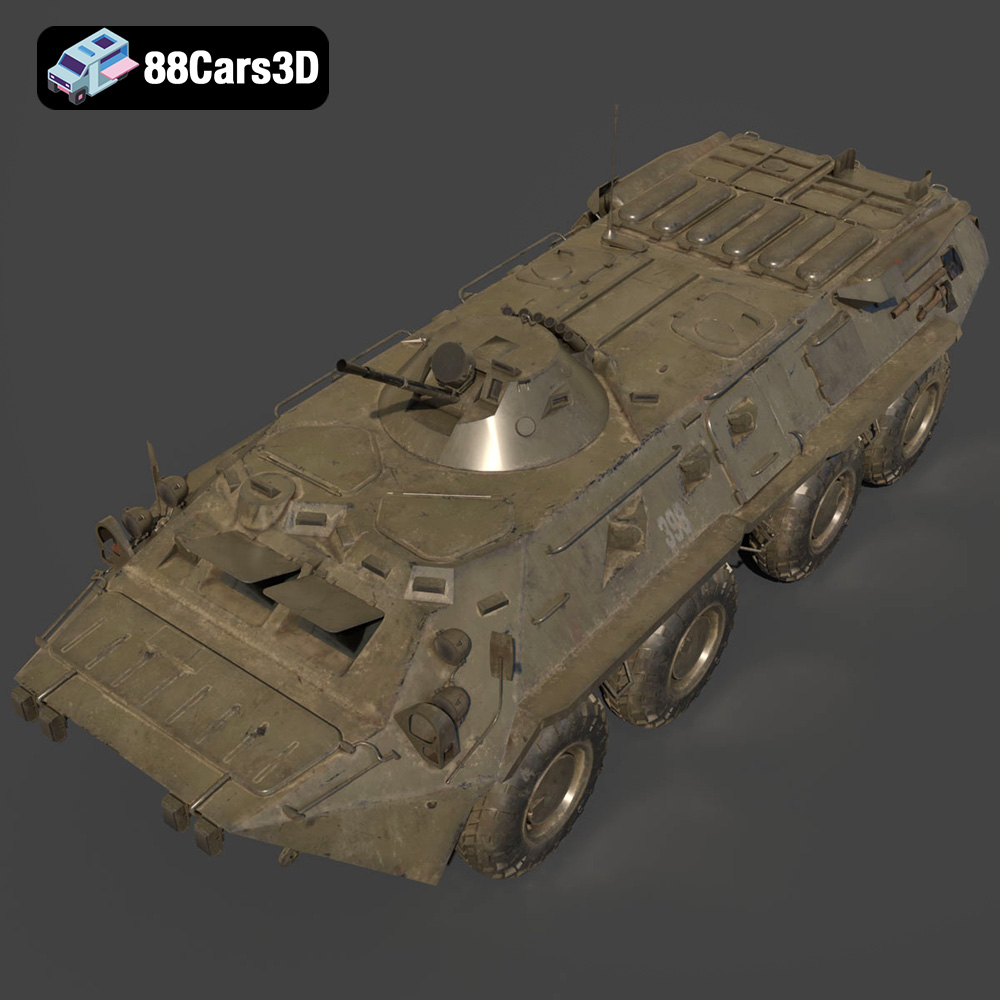
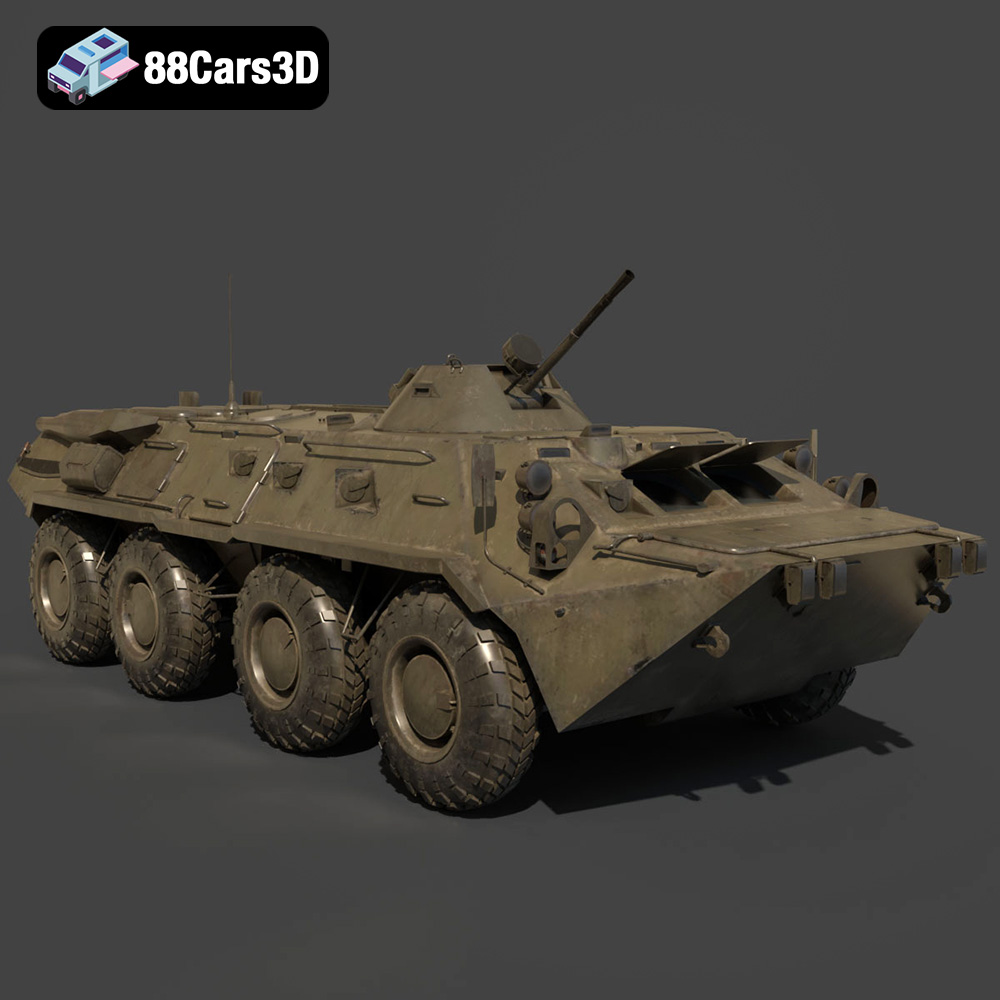
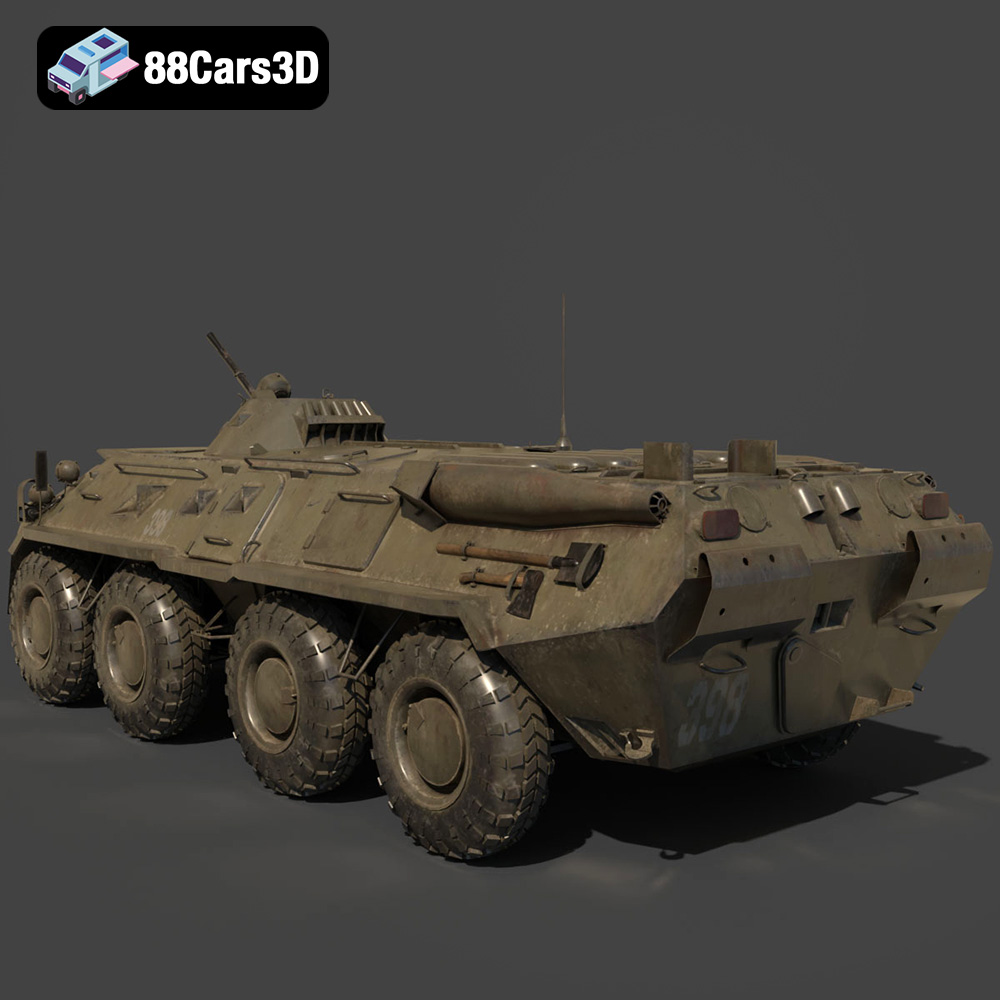
The BTR-80 3D Model from 88cars3d.com excels in this regard. Its creators have gone to great lengths to ensure real-world scale accuracy, based on actual BTR-80 blueprints and dimensions. From the detailed rear engine deck and exhaust systems for the KamAZ V8 diesel engine to the heavy-duty 8×8 drivetrain with rugged all-terrain tactical tires, the model is a testament to meticulous observation. Even the intricate periscopes, firing ports, and separate components like the turret, gun barrel, and hatches are prepared for rigging and animation, mirroring the operational functionality of its real-world counterpart. This level of detail is crucial for projects demanding authenticity, whether for a historical simulation or a realistic tactical shooter.
In the realms of game development and AR/VR, immersion is paramount. A single inaccurate detail can shatter the illusion of reality. The BTR-80 3D Model ensures this doesn’t happen, with its exceptional visual fidelity extending even to interior features. The driver and commander station viewports, periscope details, tactical steering yoke, essential dashboard instrumentation, and gunner station optics are all modeled. While utilitarian, the troop compartment layout with bench seating provides an optimized geometry for first-person perspectives, making it perfect for immersive virtual training modules or interactive battlefield scenarios where players might enter and operate the vehicle.
One of the most crucial aspects of working with 3D assets, especially for professionals, is understanding the various file formats available. Each format serves a specific purpose, offering different levels of compatibility, data retention, and optimization for distinct workflows. The BTR-80 3D Model conveniently offers a comprehensive suite of these formats, ensuring maximum flexibility for any project. Knowing when and why to choose a particular format is key to an efficient and successful 3D pipeline.
The .blend format is Blender’s native file type. It encapsulates an entire Blender project, including all mesh data, materials, textures, lighting setups, cameras, animations, rigging, and even scene settings. For users deeply integrated into the Blender ecosystem, a .blend file offers the most flexibility. It allows for complete customization, from modifying geometry and UVs to tweaking PBR materials or extending existing animations. If your primary workflow is Blender-centric, starting with the .blend file provides an uncompromised, editable foundation, making it ideal for artists who need to adapt the BTR-80 model extensively or integrate it into larger Blender-based scenes.
The .fbx (Filmbox) format is an industry-standard proprietary file format developed by Autodesk, renowned for its excellent support for 3D models, animation data, skeletal information (rigging), and blend shapes. It acts as a robust intermediary format, facilitating seamless data exchange between different 3D software applications and, crucially, game engines like Unreal Engine and Unity. When importing the BTR-80 as an .fbx, you can expect its optimized geometry, UVs, and often skeletal data to transfer efficiently. This format is the go-to for game developers due to its ability to handle complex animated assets with relative ease, ensuring that the BTR-80’s separate components (wheels, turret, guns) can be rigged and animated within the target engine.
The .obj (Wavefront OBJ) format is one of the oldest and most widely supported 3D file formats. It’s a simple, text-based format primarily used for exchanging raw geometry data, including vertices, faces, normals, and UV coordinates. While it doesn’t typically store animation, rigging, or advanced material properties, its universal compatibility makes it invaluable for cross-software workflows. If you need a clean mesh of the BTR-80 for sculpting in ZBrush, retopology in another program, or static rendering in almost any 3D application, .obj is an excellent choice. Material definitions are often stored in a companion .mtl file, referenced by the .obj, making it suitable for basic rendering setups.
The .glb (GL Transmission Format Binary) is the binary version of glTF, a royalty-free specification for the efficient transmission and loading of 3D scenes and models by applications. It’s quickly becoming the “JPEG of 3D” due to its highly optimized nature for web, AR (Augmented Reality), and VR (Virtual Reality) applications. A single .glb file packages geometry, materials, textures, and even animation into a compact, self-contained unit. For deploying the BTR-80 in a web-based configurator, an AR app on a mobile device, or an interactive VR experience, the .glb format provides excellent performance and ease of integration, ensuring fast load times and smooth rendering.
The .stl (Stereolithography) format is the standard file type for 3D printing. It describes only the surface geometry of a 3D object as a collection of unconnected triangles, without any color, texture, or material information. When preparing the BTR-80 for physical fabrication, converting it to .stl is a necessary step. This format is processed by slicing software which generates the toolpaths for your 3D printer. While it’s a representation of raw geometry, ensuring a watertight mesh and proper scale is crucial for successful prints. The BTR-80 model, with its robust detail, is ideal for creating physical dioramas or scale models, leveraging this format.
The .ply (Polygon File Format) is another format that describes a 3D object as a collection of polygons. It’s more flexible than .stl, allowing for the storage of various properties beyond just geometry, such as color, transparency, and even normal vectors per vertex or face. It’s often used for scanned 3D data, scientific visualizations, or applications requiring precision mesh data, such as CAD or finite element analysis. While less common for general asset exchange than FBX or OBJ, its ability to store more detailed per-vertex information can be valuable for niche engineering or analysis tasks involving the BTR-80’s structure.
The .unreal format, while not a standalone file extension in the traditional sense like FBX, refers to an asset that has been specifically prepared and optimized for direct import and use within Unreal Engine. This often implies an FBX file that follows Unreal’s specific import guidelines, has appropriate collision geometry, LODs (Levels of Detail), and a material setup compatible with Unreal’s Physically Based Rendering (PBR) system. For the BTR-80 model, an “.unreal” designation signifies that the model is ready to be dropped into an Unreal Engine project with minimal setup, making it an incredibly efficient choice for game developers looking to rapidly prototype or populate their virtual worlds.
The .max format is the native file type for Autodesk 3ds Max, one of the leading 3D modeling, animation, and rendering software packages. Similar to .blend for Blender, a .max file contains the complete scene data, including geometry, materials, lighting, cameras, animation, and any modifiers or procedural effects applied. For artists whose primary DCC (Digital Content Creation) tool is 3ds Max, having the BTR-80 available in this format means full editability. It’s perfect for high-fidelity rendering, complex animation sequences, or integrating the BTR-80 into existing 3ds Max projects where specific scene setups or render engine configurations (like V-Ray or Corona) are already in place.
The distinction between a visually stunning static render and a performant, interactive 3D model lies in its underlying engineering. For game development, AR/VR, and real-time simulations, optimization is key. The BTR-80 3D Model is meticulously crafted with these demands in mind, striking an excellent balance between visual fidelity and technical efficiency.
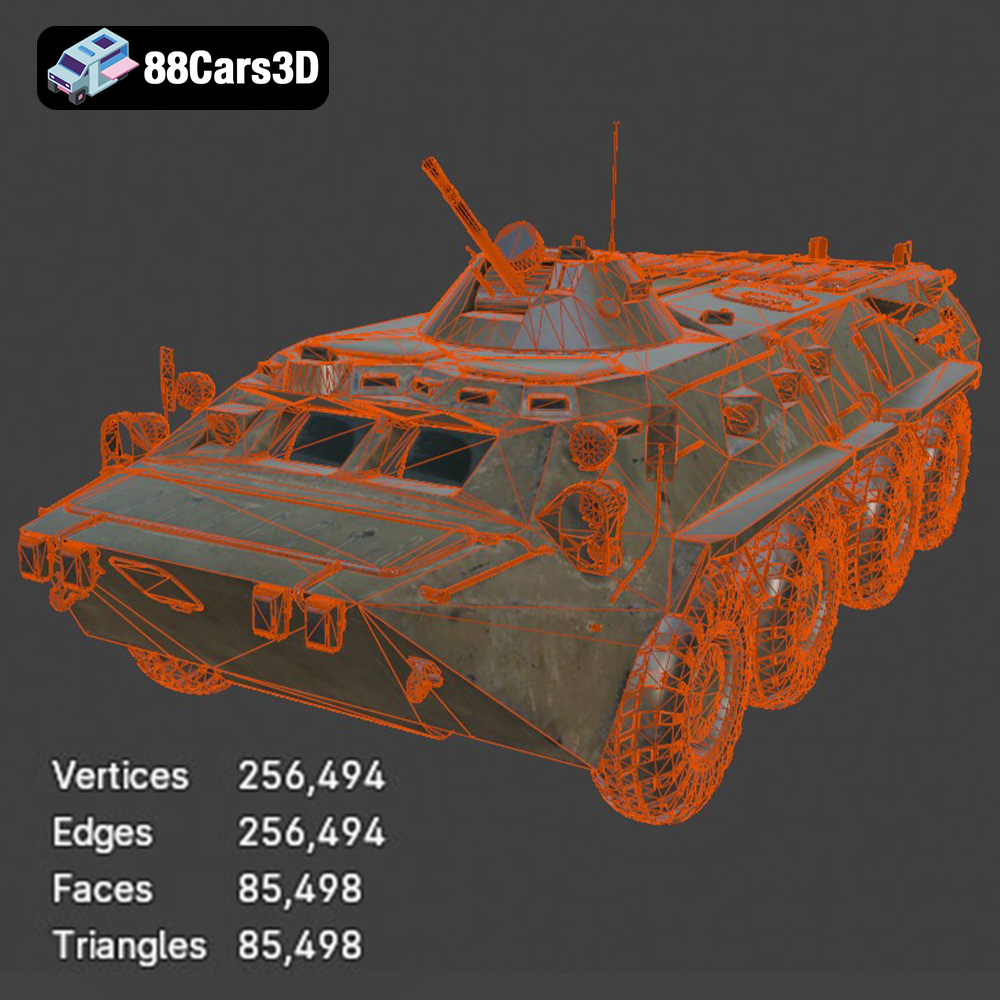
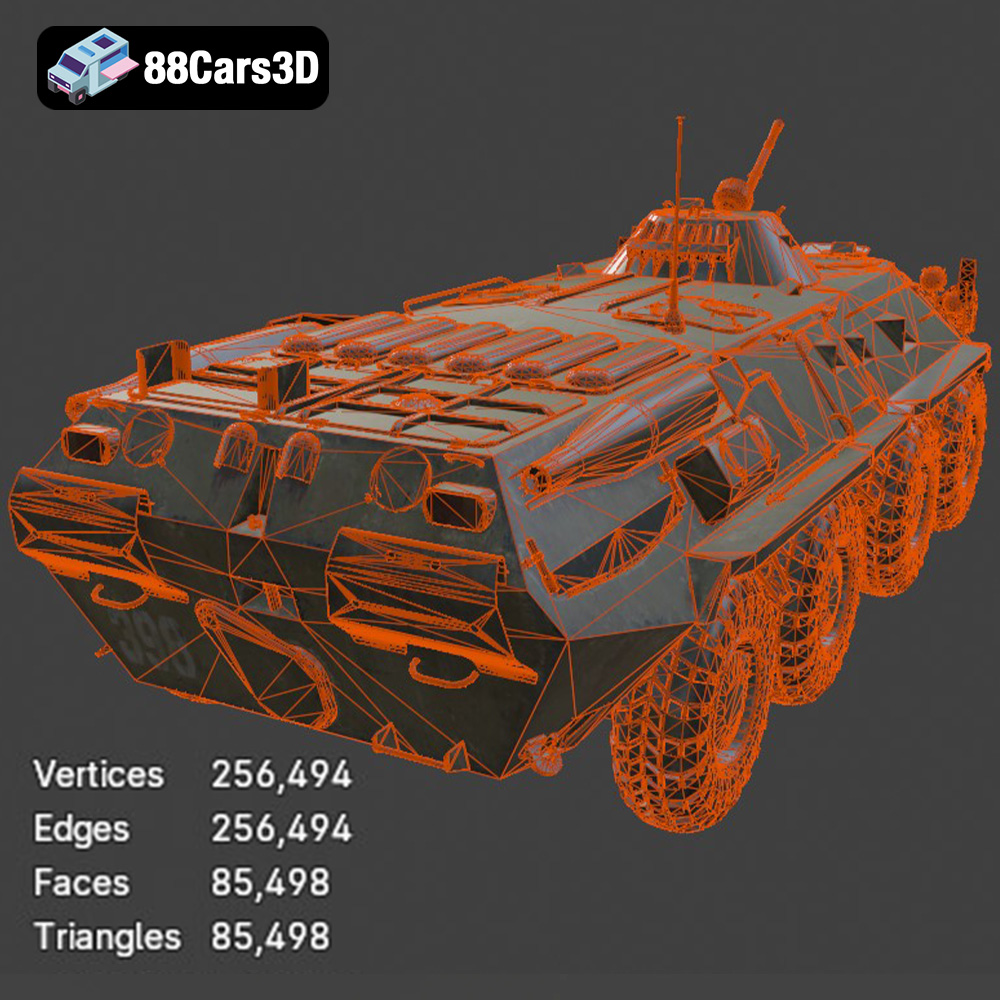
At 85,498 triangles, the BTR-80 3D Model demonstrates a carefully considered polycount. This isn’t a “low-poly” model in the traditional sense, which might sacrifice detail for extreme performance, nor is it an “ultra-high-poly” model that would cripple real-time framerates. Instead, it occupies the sweet spot of “game-ready” optimization. This polycount is sufficiently detailed to hold up in close-up shots and maintain crisp silhouettes, even at high resolutions, while remaining lean enough to be rendered efficiently in modern game engines like Unreal Engine and Unity. Clean geometry and efficient UV mapping ensure that texture detail shines through without artifacts, and the model benefits from flawless shading across its surfaces, enhancing realism without heavy computational overhead.
A static model, no matter how detailed, has limited utility in dynamic environments. The BTR-80 model comes with separate components—wheels, turret, gun barrel, and hatches—all prepared for rigging and animation. This modularity is a critical advantage. Developers can easily set up:
This pre-separated geometry significantly reduces development time, allowing artists to jump directly into animating and implementing gameplay mechanics, rather than spending hours preparing the model itself.
While not explicitly detailed in the product description, a model of this caliber, designated “game-ready,” invariably implies a PBR (Physically Based Rendering) material workflow. This means the model would come with or be easily adaptable to textures like Albedo (or Base Color), Normal, Metallic, Roughness, and Ambient Occlusion maps. These maps define how light interacts with the BTR-80’s surfaces, from the rough texture of its anti-slip coating to the subtle sheen of its weathered paint and the metallic gleam of its weaponry. PBR ensures consistent and realistic lighting across various rendering environments, from high-fidelity cinematic renders to real-time game engines, providing a truly professional finish to this 3D vehicle model.
The true value of a well-engineered 3D asset lies in its seamless integration into various professional pipelines. The BTR-80 3D Model, with its diverse file formats and optimized structure, is a versatile tool for different sectors of the digital creation industry.
For game developers, efficiency is paramount. The BTR-80’s “game-ready” optimization and inclusion of .fbx and .unreal formats make it a perfect candidate for immediate integration.
Beyond interactive applications, the BTR-80 3D Model shines in pre-rendered cinematics and visualizations.
The BTR-80’s utility extends to cutting-edge AR/VR applications, where immersion and performance are critical.
The journey of the BTR-80 3D Model can also culminate in a tangible object.
While the BTR-80 3D Model is highly detailed out of the box, its design allows for extensive customization, ensuring it can be adapted to virtually any project’s specific aesthetic and technical requirements. This adaptability is a hallmark of truly professional game assets and 3D car models.
The visual impact of any military vehicle often comes down to its finish. The BTR-80 model provides a robust base for modification:
The separation of components like the turret, gun barrel, wheels, and hatches isn’t just for animation; it also enables modular scene building.
While designed as a military vehicle, the BTR-80’s iconic shape and robust nature lend themselves to imaginative reinterpretations:
In a saturated market of digital assets, discerning professionals understand that quality and efficiency are paramount. When it comes to 3D car models and vehicle assets, 88cars3d.com stands out by offering meticulously crafted products like the BTR-80 3D Model. Investing in such assets is not merely a purchase; it’s a strategic decision that impacts project timelines, visual fidelity, and overall production value.
The BTR-80 3D Model exemplifies the commitment to precision and optimization found at 88cars3d.com. Every detail, from the accurate BTR-80 sloped hull geometry to the complex independent suspension, is a result of careful modeling. The optimized topology of 85,498 triangles showcases a deliberate balance between delivering high-end visual realism and ensuring real-time performance. This means developers aren’t spending countless hours cleaning up geometry, fixing UVs, or reducing polycounts to make an asset usable. Instead, they receive a model that is ready to be implemented, saving valuable development time and resources.
Time is a critical commodity in any creative pipeline. Designing a complex vehicle like the BTR-80 from scratch can take hundreds of hours for even an experienced 3D artist. By providing game assets that are not only high-quality but also pre-prepared for rigging, animation, and various engine integrations (with formats like .fbx, .blend, .unreal, and .max), 88cars3d.com significantly streamlines production workflows. This allows teams to focus their efforts on unique gameplay mechanics, narrative development, or innovative visualizations, rather than foundational asset creation.
Whether your project demands cinematic automotive rendering, immersive VR experiences, or robust game assets, the models available at 88cars3d.com are designed to meet a wide array of industry needs. The inclusion of multiple file formats—from .blend for full creative freedom in Blender, to .glb for web and AR/VR, and .stl for 3D printing—demonstrates an understanding of the diverse requirements across different sectors. This versatility ensures that professionals, hobbyists, and educators alike can find the right tools to bring their visions to life with confidence.
The BTR-80 is an iconic vehicle, and its digital rendition as the BTR-80 3D Model from 88cars3d.com is a prime example of a professional-grade asset. Engineered with exceptional visual fidelity, an optimized polycount, and prepared for dynamic rigging, it offers unparalleled versatility for game development, AR/VR training, cinematic rendering, and even 3D printing. Its comprehensive suite of file formats ensures seamless integration into virtually any professional workflow, making it a powerful foundation for immersive military simulations, engaging interactive experiences, and stunning visualizations.
For any artist or developer seeking to populate their digital worlds with authentic, high-performance vehicle models, the BTR-80 3D Model is an invaluable resource. It embodies the technical excellence and artistic precision that professionals demand, significantly accelerating production while elevating the quality of their final output. Explore this exceptional asset and many other high-quality 3D car models and game assets today at 88cars3d.com and give your projects the powerful visual edge they deserve.
The BTR-80 is an iconic 8×8 wheeled amphibious armored personnel carrier renowned for its ruggedness, high mobility, and unmistakable aggressive stance. This meticulously crafted 3D model captures the distinct heritage of the legendary military vehicle, showcasing its signature sloped armor plating, split side doors, and the imposing BPU-1 turret housing a 14.5mm KPVT heavy machine gun. Every visual element, from the rear-mounted engine deck exhausts and water jet propulsion ports to the intricate periscopes and firing ports, has been modeled to deliver a highly authentic representation of this tactical workhorse.
$14.99
.apc
.blend
.btr
.fbx
.glb
.max
.obj
.ply
.rendering
.stl
.unreal
armored-personnel-carrier
btr-80
game asset
game-ready
low-poly
military-3d-model
military-vehicle
optimized
VR/AR