Get 20% OFF All Premium 3D & STL Models!

In the vast and dynamic world of 3D content creation, the demand for highly detailed, accurately represented models spans far beyond concept cars and futuristic spaceships. Industries ranging from construction and mining to engineering and manufacturing increasingly rely on sophisticated 3D assets for everything from simulation and training to marketing and visualization. Crafting these industrial behemoths in a digital format presents a unique set of challenges, requiring a deep understanding of mechanical design, material science, and performance optimization. The goal is always to deliver models that not only look authentic but also function flawlessly within diverse digital environments, whether it’s a game engine, a high-fidelity renderer, or an AR/VR application.
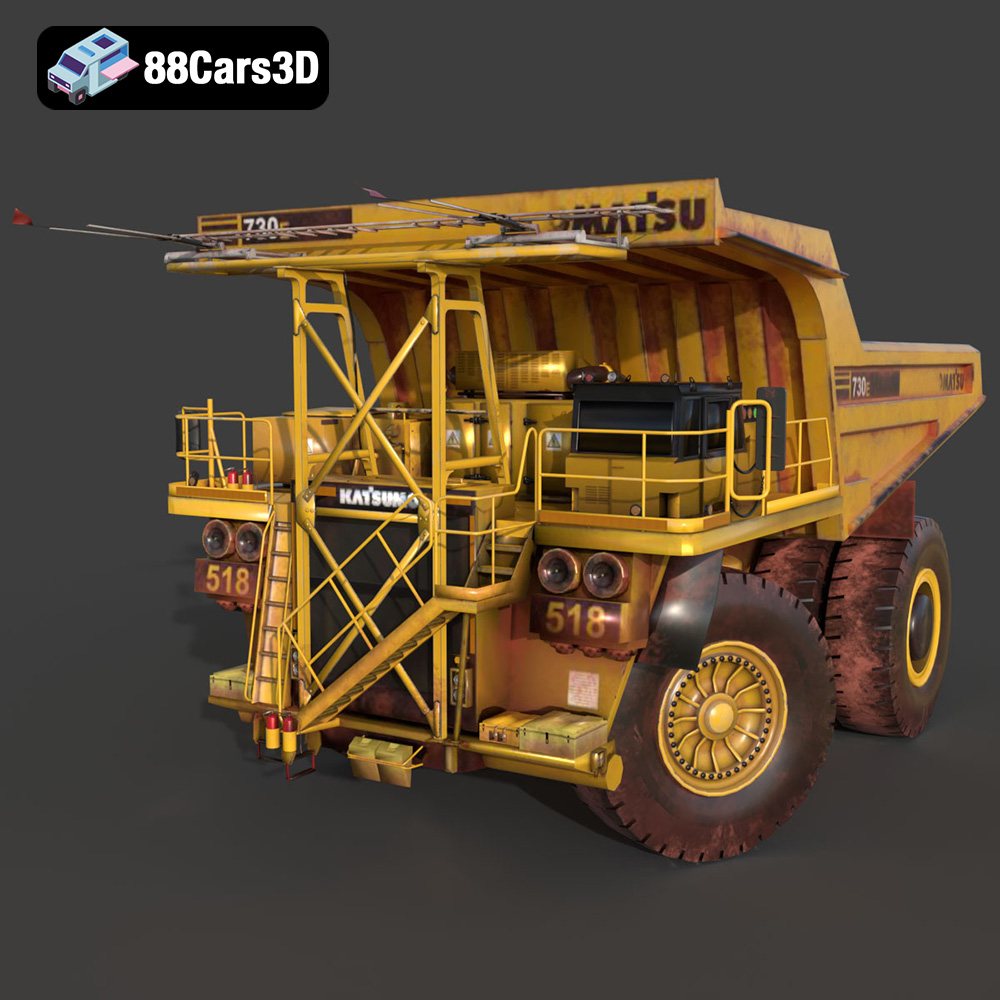
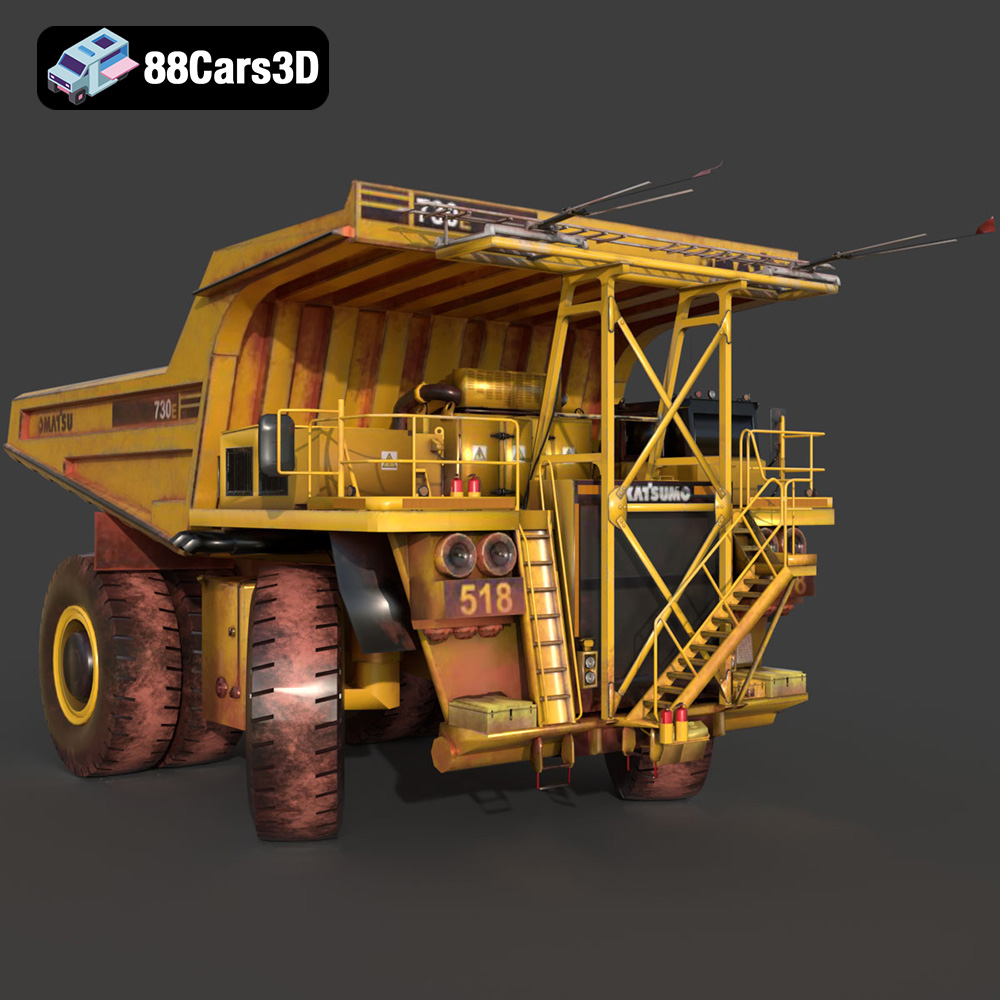
Achieving this level of excellence demands precision at every stage, from initial modeling and texturing to rigorous optimization and multi-format compatibility. It’s about more than just replicating geometry; it’s about capturing the essence of heavy-duty engineering, the wear and tear of a working machine, and the subtle nuances that bring a digital asset to life. Take, for example, the Komatsu 730E-08 – a true titan of the mining industry. Representing such a complex piece of machinery accurately in 3D, while ensuring it’s “game-ready,” is a testament to skilled 3D artistry and technical know-how. This particular 3D model, available on 88cars3d.com, exemplifies how a powerful real-world vehicle can be translated into a versatile digital asset, ready for the most demanding professional workflows.
The creation of high-quality industrial 3D models is a discipline that marries artistic talent with engineering exactitude. Unlike organic sculpting or abstract design, industrial modeling often starts with real-world blueprints, photographic references, and a meticulous understanding of mechanical principles. The end product must not only be visually convincing but also structurally sound in its digital representation, especially when destined for simulations or interactive experiences.
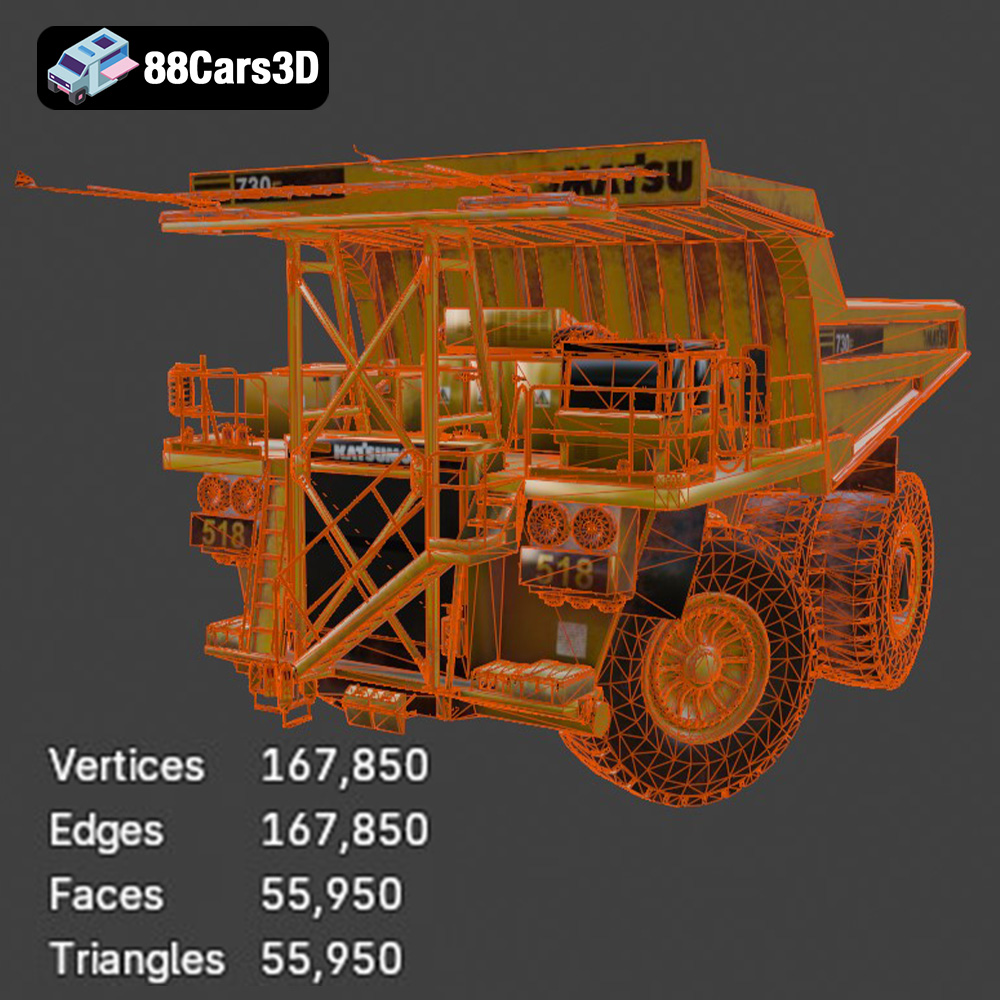
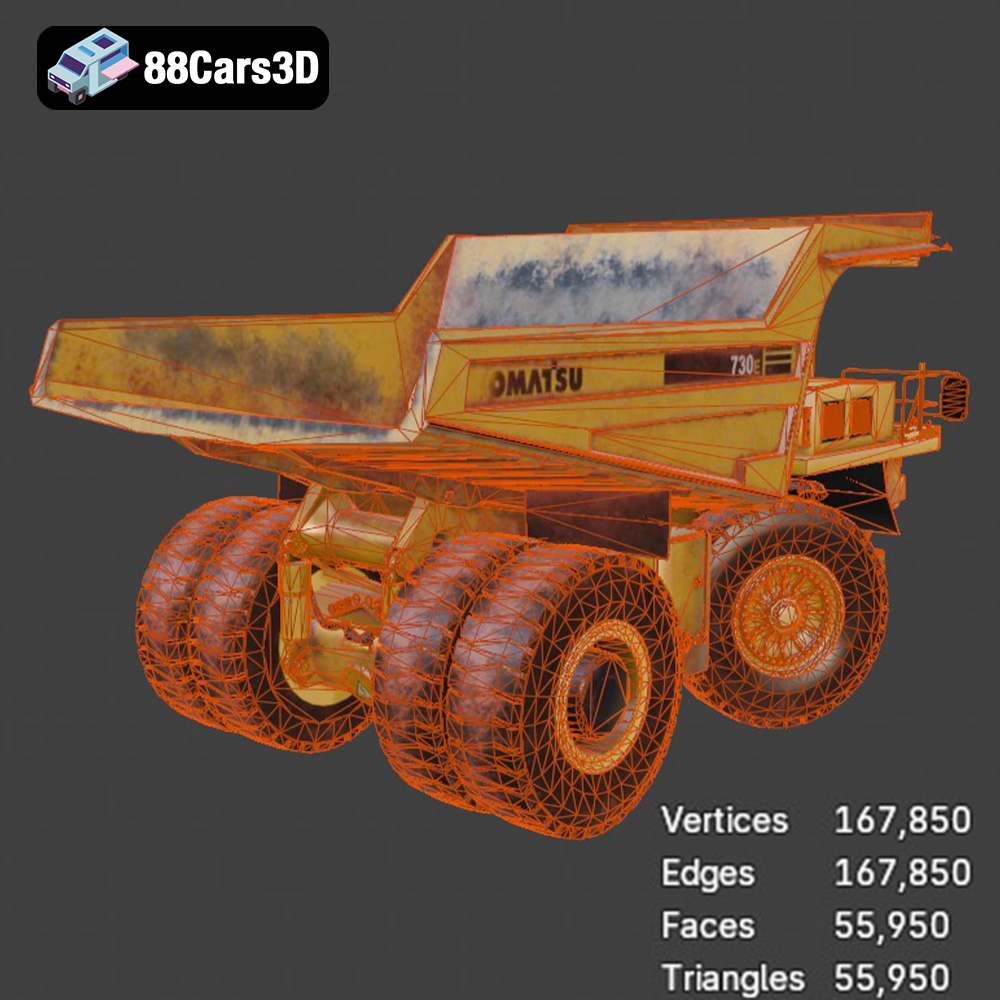
One of the most critical aspects of industrial 3D modeling is finding the delicate balance between detail and optimization. For a complex machine like the Komatsu 730E-08, every bolt, hydraulic line, and textured surface contributes to realism. However, excessive polygon counts or unoptimized textures can cripple performance in real-time applications like games or AR/VR. Experts meticulously model high-detail components where they matter most, while using techniques like normal mapping, displacement mapping, and intelligent topology reduction to maintain visual fidelity without overburdening rendering engines. The Komatsu 730E-08 model achieves this balance remarkably, boasting an optimized topology of 55,950 triangles, which is ideal for real-time engines while preserving superb visual fidelity.
Often, industrial designs originate in CAD software, which prioritizes precise engineering geometry over render-friendly meshes. Transforming these CAD models into usable 3D assets for game engines or visualization tools requires a specialized workflow. This typically involves retopology to create clean, quad-based meshes, UV unwrapping for efficient texturing, and careful material setup to simulate real-world surfaces. The process demands an understanding of how different software packages interpret data and how to prepare assets for seamless integration across various platforms, from 3ds Max to Blender and Unreal Engine.
For industrial models, real-world scale accuracy is paramount. Whether it’s for an architectural visualization of a construction site or a training simulation for heavy equipment operators, the digital model must correspond precisely to its physical counterpart. This not only ensures correct proportions but also facilitates accurate interactions within physics-based simulations. Every dimension, from the height of the dump body to the diameter of the massive industrial mining tires, must be faithfully reproduced. This attention to scale enhances immersion and provides a foundation for realistic scenarios, which is a key advantage of the Komatsu 730E-08 3D model.
Choosing the correct 3D model file format is crucial for workflow efficiency, compatibility, and achieving specific project goals. Different formats are optimized for various purposes, from retaining full editability to ensuring lightweight real-time performance or preparing for physical fabrication. Understanding the strengths and weaknesses of each is a hallmark of professional 3D content creation.
The Komatsu 730E-08 model available on 88cars3d.com offers all these formats, providing unparalleled flexibility for any project, from detailed animation in 3ds Max to game development in Unity or Unreal, and even 3D printing for a physical collectible.
The Komatsu 730E-08 is more than just a truck; it’s an engineering marvel, a symbol of brute force and unwavering reliability in the most challenging environments. Translating this colossus into a digital 3D model for game development, VR/AR, or visualization requires a masterful approach to retain its imposing presence while ensuring technical feasibility. This particular model serves as an excellent example of how to achieve this balance effectively.
The core challenge in creating a game-ready asset for such a complex machine lies in topology. A real Komatsu 730E-08 has countless individual components, each with intricate details. Directly modeling all these details would result in an astronomical polycount, rendering the model unusable for real-time applications. The Komatsu 730E-08 3D model strikes a perfect balance with 55,950 triangles. This polycount is sufficiently detailed to convey the rugged industrial styling and massive proportions without causing performance bottlenecks in game engines like Unreal or Unity. This optimization is critical for smooth frame rates and efficient resource usage, allowing for multiple instances of the truck in a scene or complex environments.
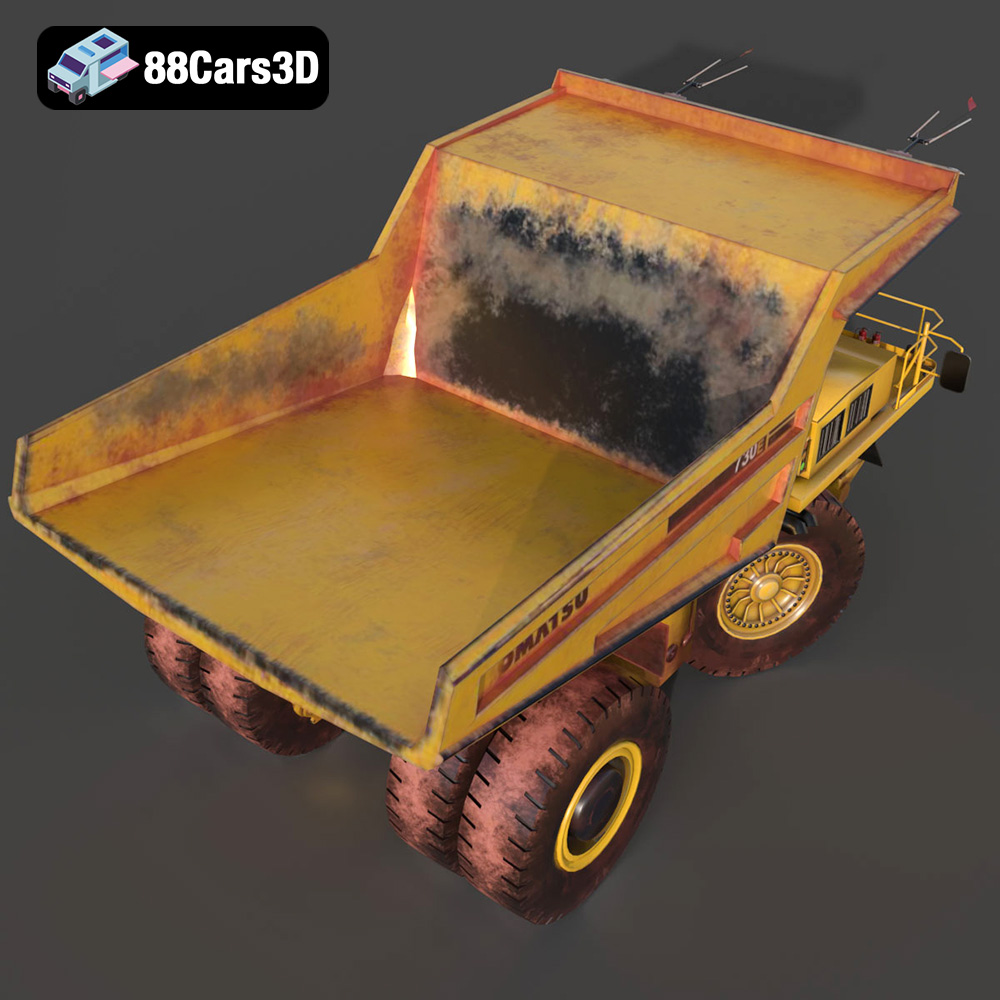
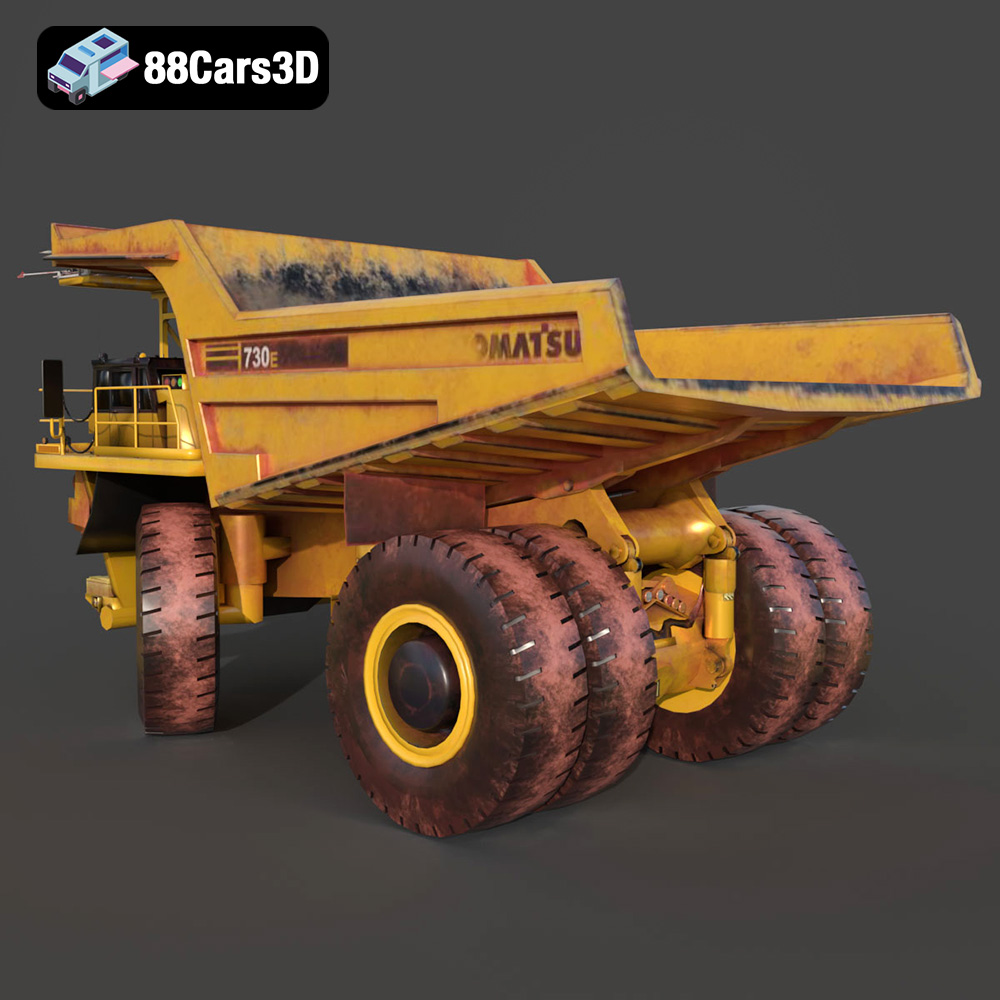
Beyond visual fidelity, functionality is key. A static model of a haul truck lacks the interactivity needed for simulations or games. This Komatsu model excels by featuring separate wheels, suspension, steering components, and a dump body for animation. This pre-segmented geometry is crucial for animators and game developers, as it allows for realistic movement and interaction. Proper pivot points are essential for these animations, enabling accurate steering, wheel rotation, suspension travel, and the iconic bed dumping mechanism. This level of preparation significantly reduces development time and ensures the model can be immediately integrated into interactive sequences, making it a valuable asset from 88cars3d.com.
The Komatsu 730E-08 model goes beyond just the exterior, offering a comprehensive representation of its features:
This attention to both external and internal detail allows the model to be utilized in a wider range of scenarios, from broad exterior shots in a cinematic to detailed cockpit views in a simulator.
Bringing a complex industrial asset like the Komatsu 730E-08 into a real-time engine such as Unreal Engine requires a systematic approach. The goal is to maximize visual quality while maintaining optimal performance, ensuring the model functions as intended within the interactive environment.
The process typically begins with importing the .fbx or .unreal file into Unreal Engine. During import, careful attention is paid to settings like scene scale, normal import methods, and whether to combine meshes or import them as separate components (which is crucial for the Komatsu’s animated parts). Once imported, the raw geometry needs materials. A physically based rendering (PBR) workflow is standard, requiring separate textures for Base Color, Normal, Roughness, Metallic, and Ambient Occlusion. For a vehicle like the Komatsu, materials would be meticulously crafted for the rugged metal chassis, the deep rubber tires, the glass windows, and the various interior components, simulating their real-world properties under different lighting conditions. This often involves creating master materials and then instancing them for specific parts to allow for easy color changes (e.g., custom factory colors) and material adjustments (matte, gloss, metallic).
Unreal Engine’s Blueprint visual scripting system is invaluable for bringing the Komatsu 730E-08 to life. Individual components (wheels, steering, dump body) imported as separate meshes can be assembled and controlled using Blueprints. For instance, a vehicle Blueprint class can be created to define movement, steering, and suspension. Further logic would be added to control the hydraulic dump mechanism, linking it to an input event (e.g., a button press) and defining its animation speed and range of motion. This modular approach allows for complex interactions without writing a single line of C++ code, making the Komatsu 730E-08 an ideal foundation for a fully functional heavy equipment simulator or game.
To ensure performance across various hardware configurations and viewing distances, Level of Detail (LOD) generation is critical. Unreal Engine can automatically generate LODs, but for complex assets, manual tweaking is often preferred to preserve critical silhouette details at lower poly counts. Other optimization techniques include intelligent texture packing (combining multiple texture maps into one for fewer draw calls), efficient collision meshes (using simpler shapes than the visual mesh), and proper culling settings. For a massive vehicle like the Komatsu 730E-08, these optimizations are essential for maintaining smooth frame rates, especially in large open-world mining environments where multiple vehicles might be present.
While the Komatsu 730E-08 model is optimized for real-time engines, its high-quality geometry and detailed components make it equally suitable for high-fidelity offline rendering. This is where the model can truly shine, showcasing intricate details and realistic materials that might be subtly compressed or simplified for real-time applications.
In rendering software like 3ds Max (with V-Ray or Corona Renderer) or Blender (with Cycles or Eevee), the Komatsu 730E-08 can be placed in a virtual studio environment. Here, artists have complete control over sophisticated lighting setups, using HDRIs, area lights, and volumetric effects to highlight the truck’s rugged features. Advanced material nodes can be used to simulate realistic metallic flake paints, greasy hydraulic components, and worn rubber tires with unparalleled accuracy. Post-processing effects, depth of field, and motion blur can be added to create stunning, photorealistic images or cinematic animations perfect for brand campaigns or product showcases. The inclusion of the .max and .blend files with the 88cars3d.com model provides the ultimate flexibility for these high-end rendering tasks.
The Komatsu 730E-08 is an invaluable asset for architectural visualization (ArchViz), particularly for projects involving industrial sites, mines, or large-scale construction developments. Placing this highly detailed truck within an architectural scene immediately adds a sense of scale, realism, and activity. Imagine a sprawling open-pit mine visualization where a fleet of these digital haul trucks operates, giving clients a vivid, dynamic impression of the future project. Furthermore, for companies in the heavy machinery sector, these models are perfect for creating impressive product showcases, allowing potential buyers to explore every angle and feature of the vehicle in a highly controlled, aesthetically pleasing environment.
In today’s visually driven marketing landscape, high-quality 3D renders are indispensable. The Komatsu 730E-08 3D model can be leveraged to create compelling brand campaigns, generating hero shots for advertisements, detailed explainer animations for product features, or engaging social media content. Its customizability – allowing changes to body/tank colors, tire textures, and material finishes – means it can be adapted to specific branding guidelines or campaign themes. This flexibility ensures that the asset remains relevant and impactful across a multitude of marketing touchpoints, significantly enhancing a brand’s digital presence.
The utility of high-quality industrial 3D models extends into emerging technologies like Augmented Reality (AR) and Virtual Reality (VR), as well as the increasingly accessible world of 3D printing. These applications offer new ways to interact with, visualize, and even physically manifest digital assets.
In VR, the Komatsu 730E-08 can become the centerpiece of immersive training simulations for new operators. Trainees can sit virtually inside the detailed cockpit, interact with controls, and learn operational procedures in a safe, controlled environment, reducing risks and costs associated with real-world training. For AR, the model can be overlaid onto real environments using a tablet or smartphone, allowing engineers to visualize the Komatsu 730E-08 at a construction site before its arrival, checking clearances or planning logistics. These immersive experiences are not just novelties; they are powerful tools for education, design review, and remote collaboration, capitalizing on the model’s game-ready optimization and detailed interior.
The Komatsu 730E-08 3D model, provided in the .stl format, opens up possibilities for physical creation. Hobbyists and professionals can 3D print scaled versions of this massive truck for display, prototyping, or even as parts of larger dioramas. The product description provides excellent guidelines for 3D printing: recommended scales (1:12 / 1:18 / 1:24), layer height, wall thickness, infill, and crucially, support requirements for detailed parts. Resin printing is recommended for capturing the fine details, ensuring that the finished physical model accurately reflects the digital one. Post-processing, including sanding, priming, and painting with authentic factory colors, can elevate a 3D print into a museum-quality replica, bringing a tangible dimension to the digital asset.
As industries embrace digitalization, the concept of a ‘digital twin’ – a virtual replica of a physical asset – is gaining traction. A high-fidelity 3D model like the Komatsu 730E-08 serves as a foundational component for such twins. Integrated with real-time sensor data, these digital models can provide engineers and managers with live insights into a machine’s performance, health, and operational status. Whether for predictive maintenance, remote operation, or complex scenario planning, a robust and accurate 3D model is the visual interface for these sophisticated systems, representing a significant step towards fully integrated digital workflows in heavy industry.
The digital landscape of 3D content creation is constantly evolving, demanding assets that are not only visually stunning but also technically robust and versatile. Whether you’re a game developer crafting an immersive mining simulator, an architect visualizing a colossal construction project, a marketer developing a cutting-edge brand campaign, or a hobbyist looking to 3D print an iconic machine, the quality of your foundational 3D models dictates the success and efficiency of your project.
The Komatsu 730E-08 3D model stands as a prime example of an asset engineered to meet these diverse professional demands. Its carefully optimized topology ensures game-ready performance, while its detailed exterior and fully functional interior elements provide the fidelity needed for high-end rendering and immersive AR/VR experiences. The provision of multiple industry-standard file formats – from .blend and .max for full editability to .fbx and .unreal for real-time integration, and .stl for 3D printing – guarantees seamless workflow integration across virtually any software or platform.
Investing in pre-made, high-quality 3D models like the Komatsu 730E-08 from reputable sources such as 88cars3d.com is a strategic decision that saves invaluable development time and resources. It allows artists and developers to focus on creativity and innovation, rather than spending countless hours modeling intricate details from scratch. Explore the potential of professional-grade 3D car models and heavy machinery assets to elevate your next project.
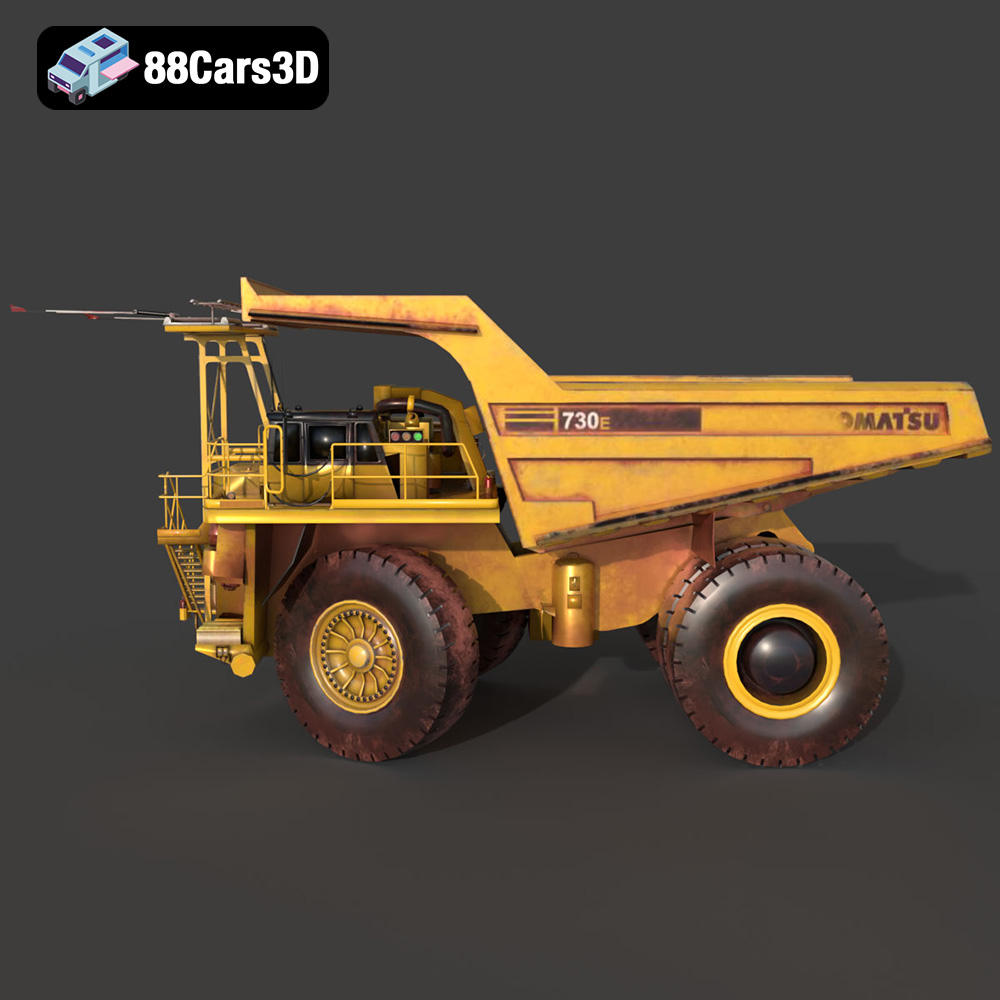
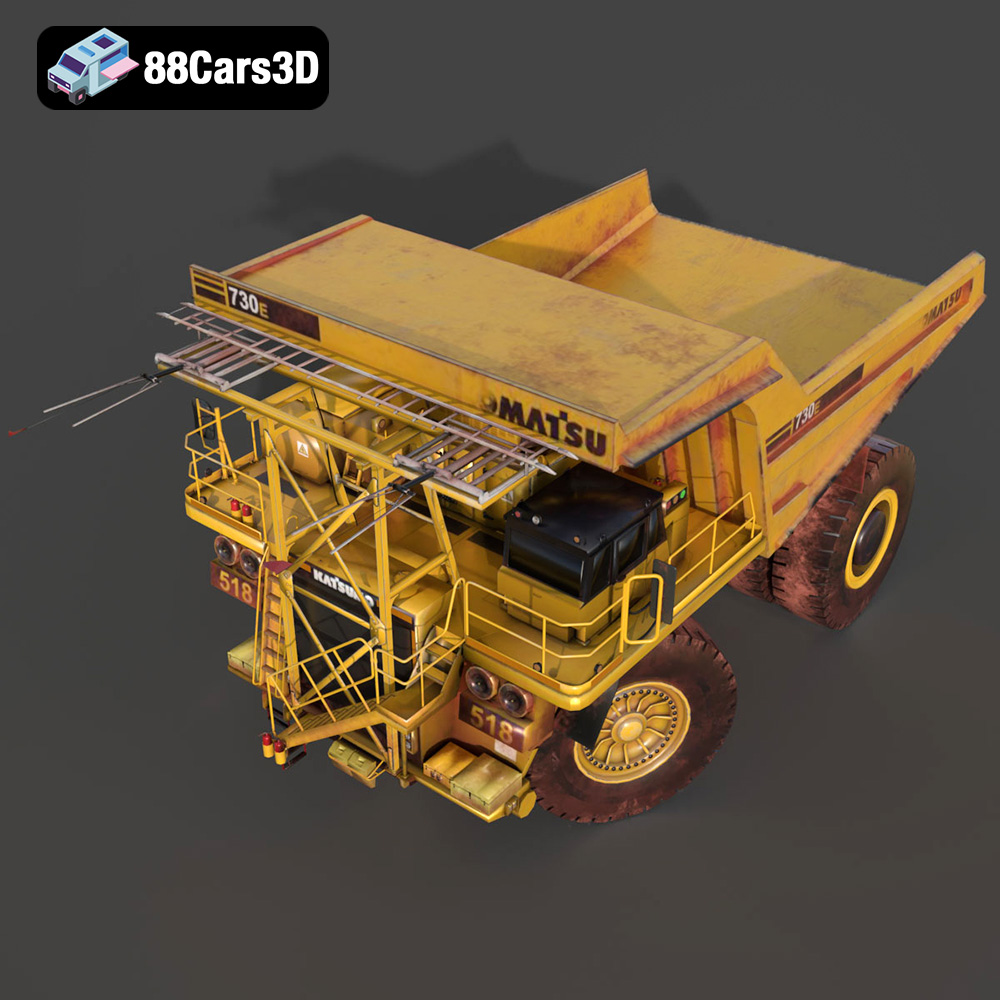
The Komatsu 730E-08 is a titan of the mining industry, renowned for its massive payload capacity, incredible durability, and advanced electric drive system. This colossal haul truck features rugged industrial styling, a mammoth dump body designed for heavy earthmoving, and a robust chassis built to withstand the harshest mining environments. This high-quality 3D model boasts a carefully optimized topology of 55,950 triangles, making it exceptionally game-ready while preserving superb visual fidelity. It is engineered for seamless integration into game engines, VR/AR simulations, heavy machinery animations, and industrial visualization projects.
$14.99
.blend
.fbx
.glb
.max
.obj
.ply
.rendering
.stl
.unreal
730e-08
game asset
game-ready
haul-truck
heavy-machinery
komatsu
low-poly
mining-truck
optimized
truck-3d-model
VR/AR