Get 20% OFF All Premium 3D & STL Models!

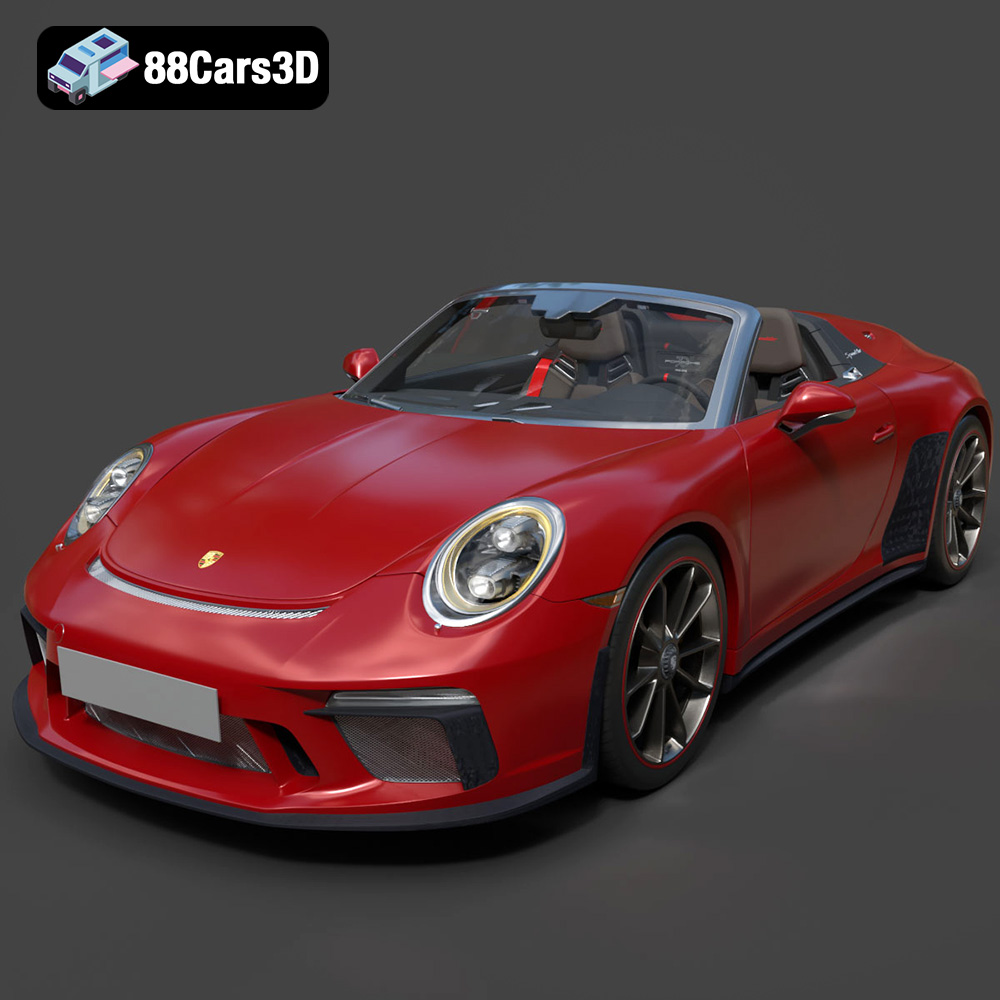
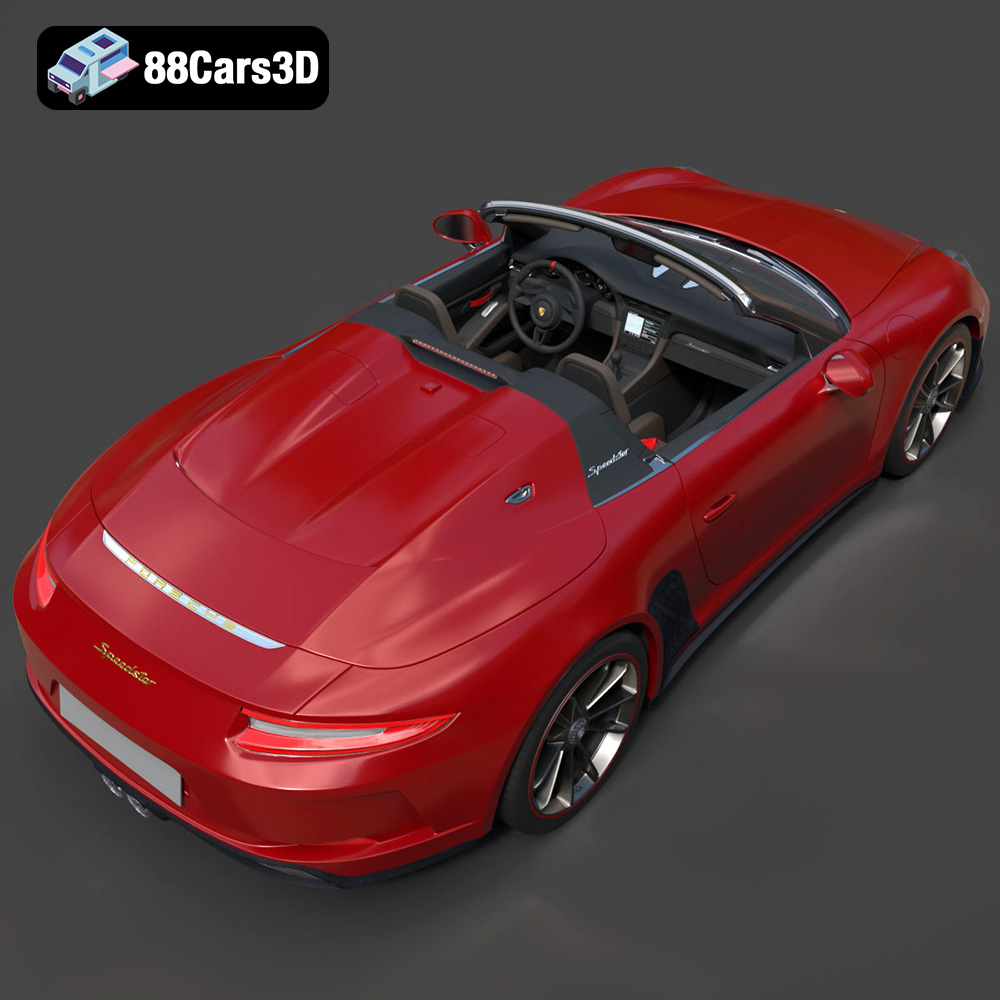
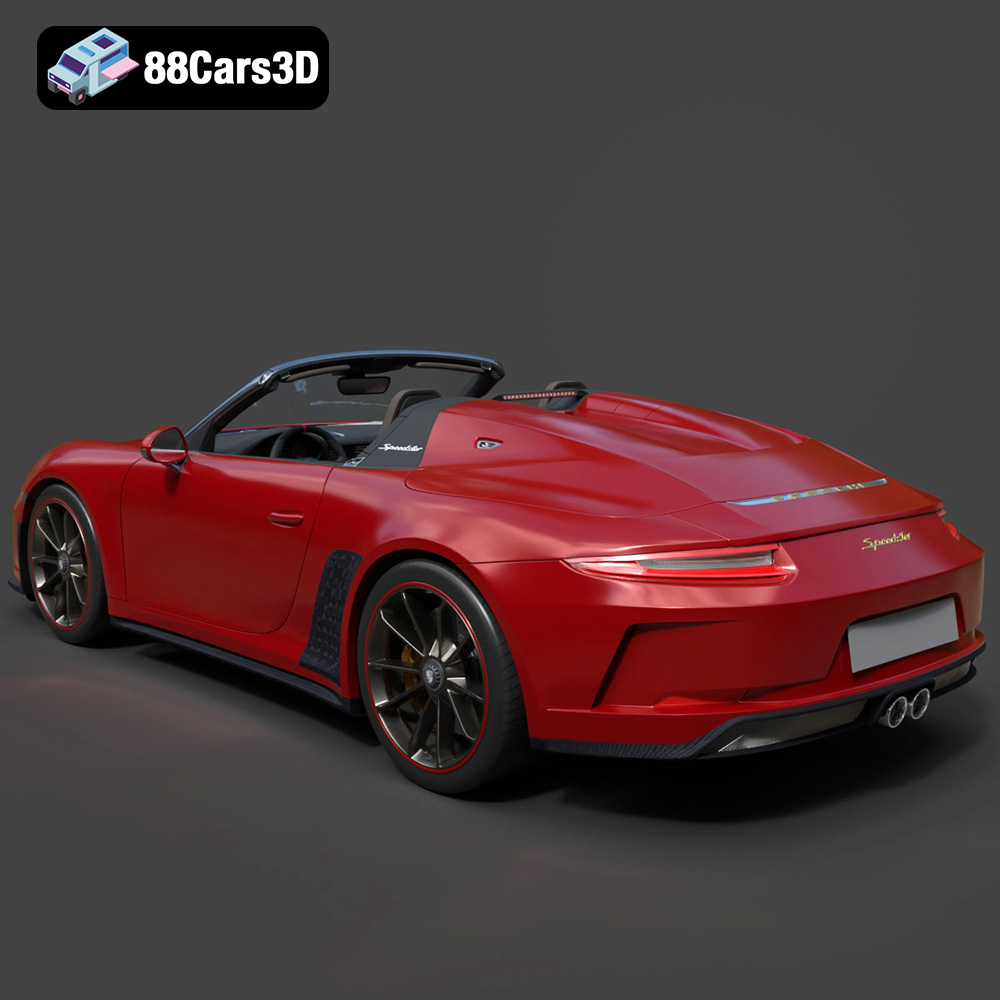
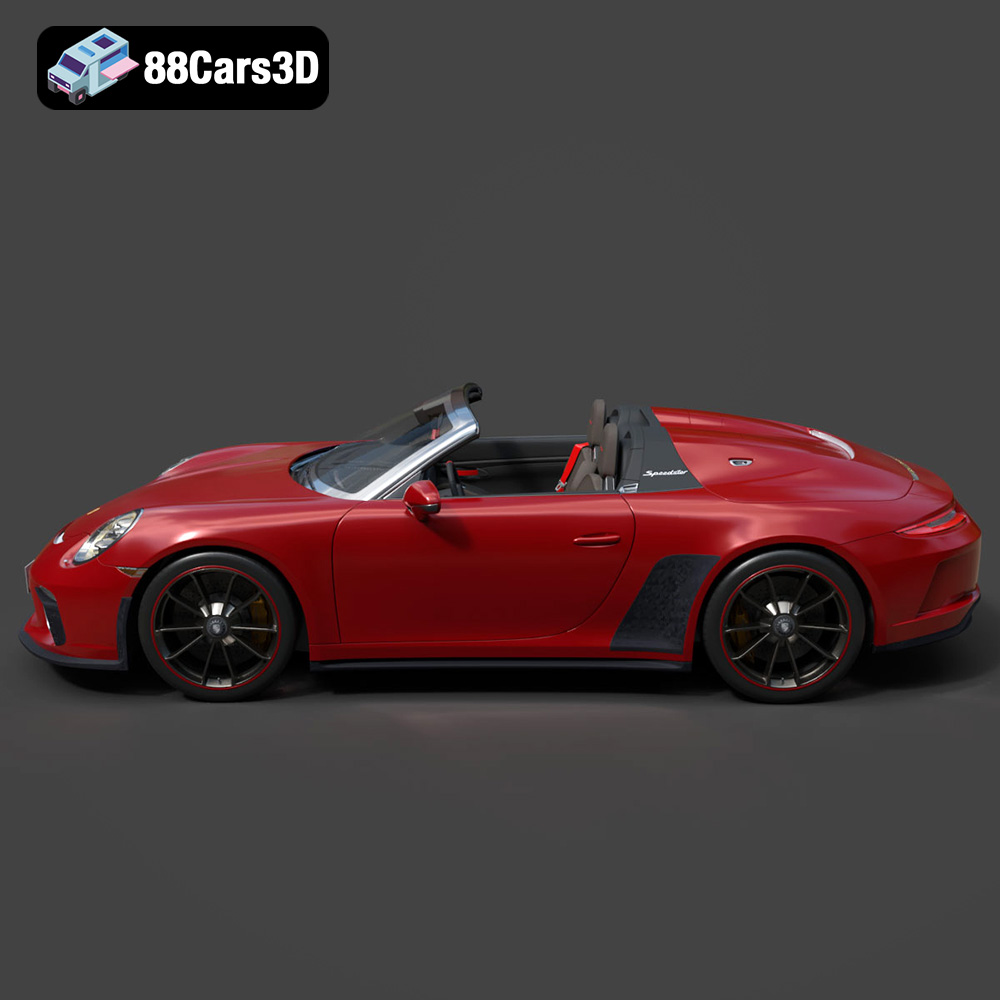
In the vibrant world of digital creation, where imagination meets engineering, the demand for exceptionally detailed and versatile 3D models continues to grow. From blockbuster game titles and immersive virtual reality experiences to high-fidelity architectural visualizations and compelling automotive advertisements, the quality of a 3D asset dictates the success of a project. At the pinnacle of such digital craftsmanship lies the accurate representation of iconic vehicles, none more so than the revered Porsche 911. This pursuit of perfection is exemplified by models like the Porsche 911 Speedster 2019 3D Model, a digital masterpiece that captures the essence of this legendary roadster.
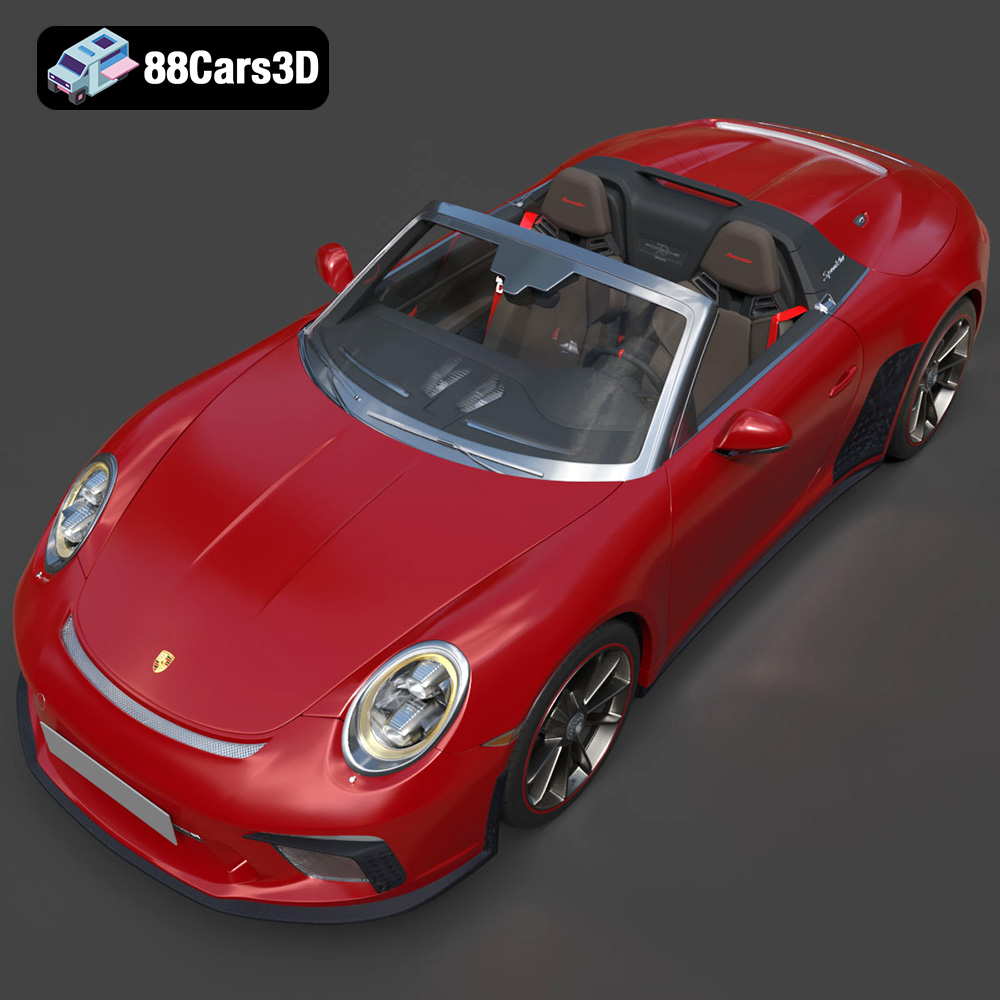
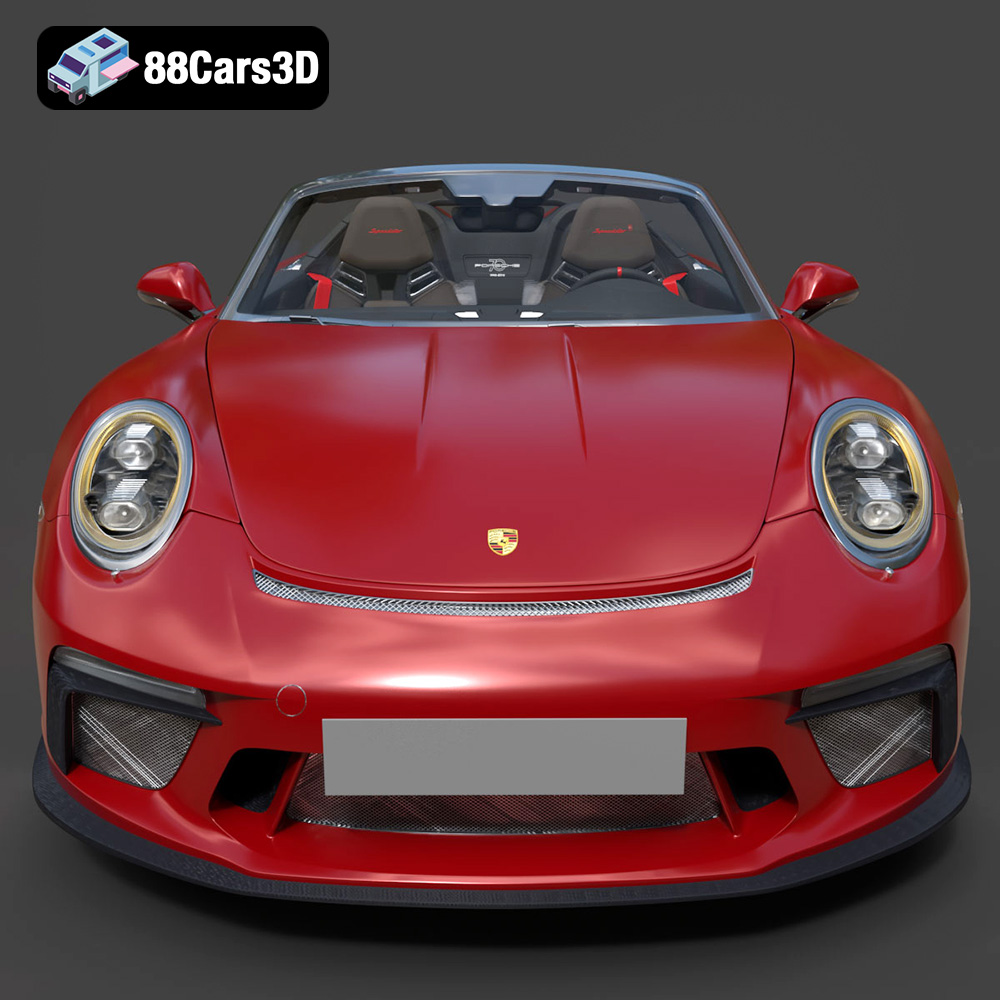
The 2019 Porsche 911 Speedster, a swansong for the 991 generation, is a car celebrated for its naturally aspirated 4.0-liter flat-six engine, its distinctive low-cut windshield, and the signature double-bubble rear deck. These elements contribute to its iconic status in the real world, and their faithful reproduction in a 3D model is what sets a premium asset apart. This particular model, available on 88cars3d.com, is not just a digital replica; it’s a meticulously engineered asset designed to integrate seamlessly into diverse professional workflows, from the most demanding automotive rendering pipelines to optimized game development environments.
Navigating the landscape of 3D modeling requires a fundamental understanding of various file formats, each serving specific purposes and catering to different software and platforms. Choosing the right format is critical for maintaining fidelity, ensuring compatibility, and optimizing performance in your project. The Porsche 911 Speedster 2019 3D Model package offers a comprehensive array of formats, providing unparalleled flexibility for professionals.
The .blend format is native to Blender, the popular open-source 3D creation suite. It’s an invaluable asset for anyone working within Blender, as it encapsulates the entire scene, including geometry, materials, textures, lighting, cameras, animations, and even modifiers. This allows for full editability and seamless integration into Blender-based pipelines. For artists looking to dissect the model’s construction, modify its materials, or build upon its existing setup within Blender, the .blend file offers the most comprehensive starting point.
Autodesk’s .fbx (Filmbox) format has emerged as a crucial standard for exchanging 3D data between various applications. Its strength lies in its ability to store not just geometry, UVs, and normals, but also hierarchical structures, animation data (skeletons, skinning, keyframes), and PBR (Physically Based Rendering) materials. This makes it ideal for game engines like Unreal Engine and Unity, as well as other DCC (Digital Content Creation) tools. When you need to move a complex animated car model like the Porsche Speedster from a modeling package to a real-time engine, .fbx is often the most reliable and efficient choice, preserving most of the original scene data.
The .obj (Wavefront Object) format is one of the oldest and most widely supported 3D file formats, making it a truly universal option. It primarily stores geometric data, including vertices, faces, normals, and UV coordinates. While it’s excellent for cross-software compatibility, it’s a simpler format and does not inherently support animations, advanced materials, or scene hierarchies. However, for sheer geometric interchange where the focus is on the mesh itself, .obj remains a robust and reliable choice, often serving as a fallback when other formats present compatibility issues.
.glb is the binary version of the glTF (Graphics Language Transmission Format) format, designed for efficient transmission and loading of 3D scenes and models by applications. It’s particularly optimized for augmented reality (AR), virtual reality (VR), and web-based displays due to its compact size and ability to embed PBR materials directly within the file. For developers creating interactive configurators, virtual showrooms, or mobile AR experiences featuring the Porsche 911 Speedster, the .glb format offers a streamlined workflow and superior performance.
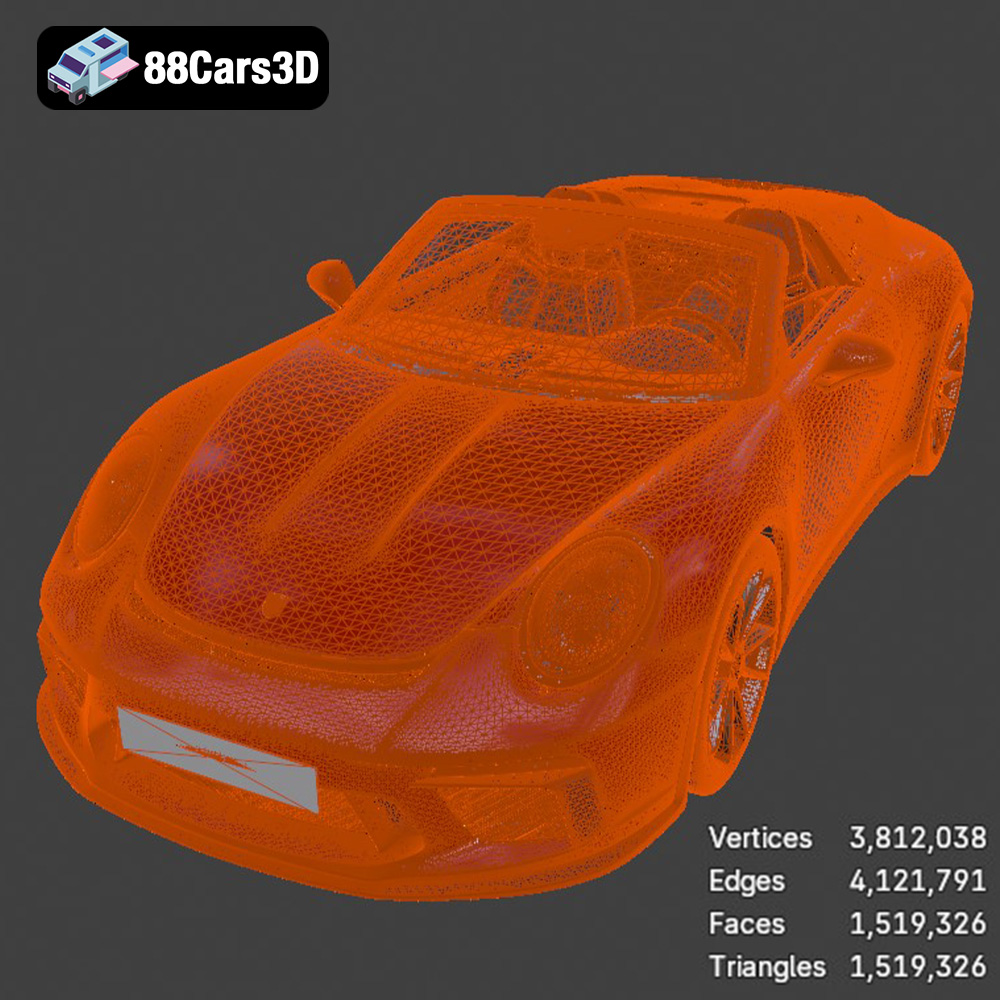
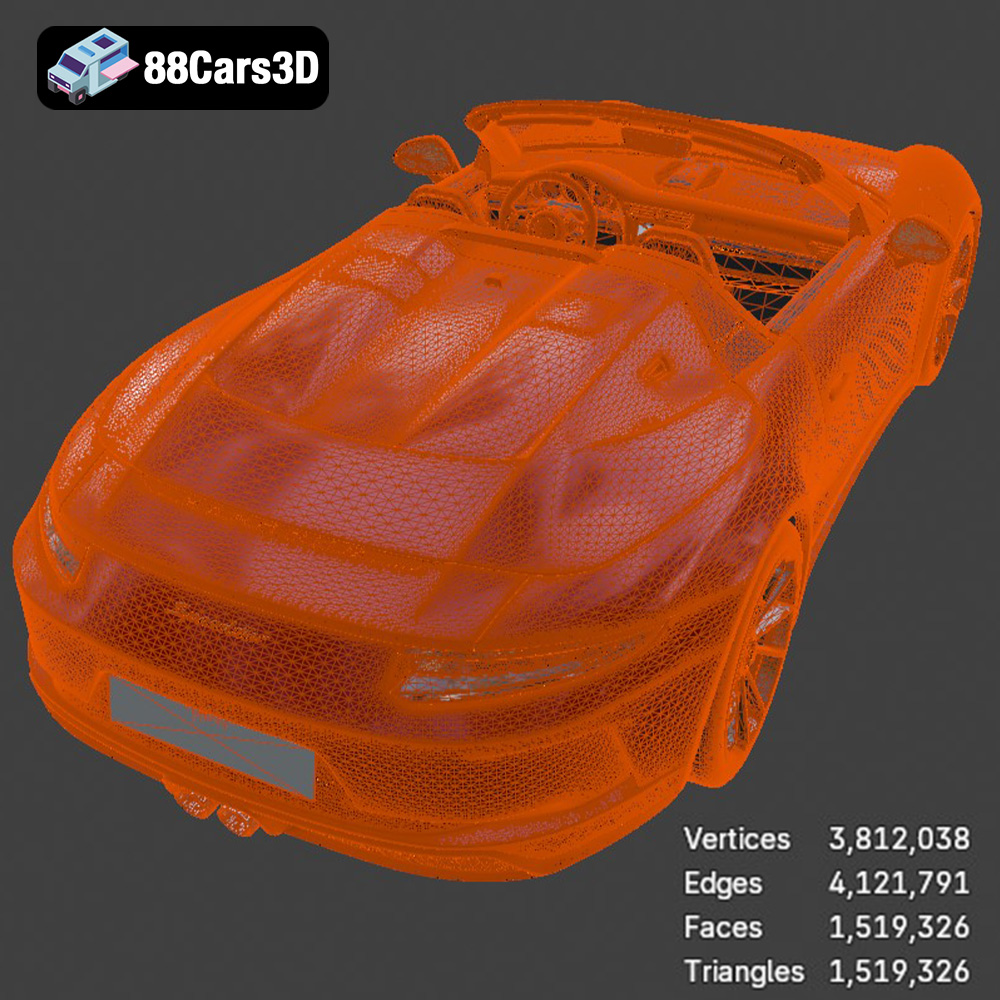
The .stl (Stereolithography) format is synonymous with 3D printing. It represents a 3D model as a collection of triangular facets, defining the surface geometry without any color, texture, or material information. This simplicity makes it universally accepted by 3D printers and slicing software. For hobbyists or professionals looking to physically manifest the strikes an impressive balance with 1,519,326 triangles. This polycount is sufficiently high to deliver photorealistic visual quality, allowing for extreme close-up rendering without loss of detail. At the same time, it’s optimized to be “game-ready,” meaning it can be efficiently integrated into modern game engines like Unreal and Unity. For truly demanding scenarios, further optimization through Levels of Detail (LODs) might be considered, but the base model provides a robust starting point that minimizes the need for extensive remeshing.
The digital automotive world is dynamic, with real-time rendering becoming increasingly prevalent across various industries. A high-quality 3D car model like the Porsche 911 Speedster is an invaluable asset for these demanding environments, offering both visual fidelity and optimized performance.
For game developers, the is designed with this application in mind, providing an accessible pathway from screen to tangible object.
For 3D printing, the .stl and .ply formats become central. The .stl file, in particular, is the universal standard for sending models to 3D printers. It strips away all non-geometric data, leaving a clean, triangulated mesh that the printer can interpret. The model’s structured topology and clean geometry make it an excellent candidate for conversion to a watertight .stl file, crucial for a successful print. Manifold geometry, where every edge is shared by exactly two faces, ensures there are no holes or internal inconsistencies that would cause printing errors.
While .stl is the go-to, the .ply format also offers robust data storage for precision meshes. Depending on the sophistication of the 3D printer and slicing software, .ply can sometimes preserve more detailed surface information or even color data (if applicable), which might be beneficial for certain advanced printing techniques, though for basic FDM or resin printing, .stl is generally sufficient.
The product description provides excellent guidance for 3D printing enthusiasts. Recommended scales (1:12, 1:18, 1:24) offer flexibility for different display sizes. A layer height of 0.04–0.12 mm, especially with resin printing, is ideal for capturing the fine details of the Speedster, such as the grille, headlight clusters, and interior elements. Resin printers are indeed superior for automotive models due to their ability to produce extremely smooth surfaces and intricate details without visible layer lines.
Proper wall thickness (1.2–2.0 mm) and infill (20–30%) ensure structural integrity without excessive material usage. Supports are critical for overhangs like the exhaust, mirrors, and the intricate undersides. Careful print orientation, such as printing the frame angled and wheels separately, further optimizes strength and detail. Post-processing, including sanding, priming, and painting with authentic factory colors and metallic finishes, transforms the raw print into a stunning, display-quality replica. This comprehensive approach ensures that the digital dream can become a beautiful physical reality.
A premium 3D asset should offer more than just static beauty; it should be a flexible foundation for creative exploration. The Porsche 911 Speedster 2019 3D Model provides extensive customization options, allowing artists and developers to tailor it precisely to their project’s needs.
One of the most powerful customization features is the ability to change body and tank colors. Whether it’s applying a classic Porsche factory color or experimenting with custom finishes like matte, gloss, or metallic, the model’s clean UV mapping and material separation make this process straightforward. Beyond color, the ability to modify tire textures (e.g., from street variants to track-focused slicks or even off-road styles, depending on the scenario) adds another layer of realism and versatility. Adjusting material finishes on carbon fiber, plastic, or leather components allows for fine-tuning the visual presentation to perfectly match any desired aesthetic or lighting environment. This level of material adaptability ensures the car can fit into any scene, from a gritty urban environment to a pristine studio shoot.
The thoughtful segmentation of the model, with separate wheels, suspension, and steering components, is a significant advantage for animators. This pre-rigged structure means that realistic steering, wheel rotation, and suspension travel can be implemented with minimal effort. This is crucial for creating dynamic sequences, whether for game cutscenes, cinematic commercials, or interactive simulations. The accurate real-world scale also simplifies integration into existing scenes, ensuring the car fits proportionally within architectural visualizations or environmental layouts.
Furthermore, adapting lighting for different environments is a core aspect of rendering. The model’s well-defined surfaces and robust materials respond predictably to various lighting setups, from diffuse studio lighting to dramatic outdoor conditions. This makes it a highly adaptable asset, capable of seamlessly transitioning between different visual styles and moods, ultimately maximizing its value as an investment for any digital production.
The world of 3D modeling demands precision, versatility, and an unwavering commitment to quality. The Porsche 911 Speedster 2019 3D Model exemplifies these characteristics, offering a meticulously crafted asset that serves a multitude of professional applications. From high-fidelity automotive rendering and game development to immersive AR/VR experiences and even tangible 3D prints, this model provides the technical sophistication and visual fidelity required for top-tier projects.
Its comprehensive package of file formats, including .blend, .fbx, .obj, .glb, .stl, .ply, .unreal, and .max, ensures seamless integration into virtually any workflow. The intricate details, game-ready optimization, and animation readiness make it a powerful tool for creators seeking to push the boundaries of digital realism. Investing in such a high-caliber 3D car model from a reputable source like 88cars3d.com allows professionals to streamline their production pipelines, achieve stunning visual results, and bring their creative visions to life with unparalleled authenticity. Whether you’re a game developer, an architect, a product visualizer, or a cinematic artist, this Porsche 911 Speedster model is a testament to what’s possible when passion meets precision in the digital realm.
The 2019 Porsche 911 Speedster is a masterpiece of modern automotive engineering mixed with rich heritage, marking the spectacular finale of the 991 generation. Renowned for its naturally aspirated 4.0-liter flat-six engine, unmistakable low-cut windshield, and signature double-bubble rear deck, this limited-edition roadster represents the purest essence of driving pleasure. Its aerodynamic styling, carbon fiber accents, and track-focused performance cues make it an iconic standout in any virtual environment. This exceptionally detailed 3D model boasts a high-fidelity geometry with 1,519,326 triangles, delivering photorealistic visual quality that holds up under extreme close-up rendering while maintaining a structured topology. It is precisely engineered for top-tier visual fidelity across multiple platforms, ensuring seamless integration into game development, high-end AR/VR experiences, architectural visualization, and cinematic animations. Perfect for high-speed racing simulations, luxury lifestyle visualizations, virtual configurators, and open-world automotive games.
$37.50
.2019
.blend
.fbx
.glb
.max
.obj
.ply
.porsche
.rendering
.sports car
.stl
.supercar
.unreal
911-speedster
car-3d-model
game asset
game-ready
high poly
luxury car
optimized
VR/AR