Get 20% OFF All Premium 3D & STL Models!

In the dynamic world of 3D visualization, automotive design, and interactive entertainment, the demand for exceptionally crafted 3D car models has never been higher. From breathtaking cinematic sequences to immersive virtual reality experiences and high-octane racing games, the fidelity of digital assets is paramount to success. Artists, developers, and designers constantly seek assets that not only look stunning but are also technically robust, optimized for performance, and versatile across multiple platforms.
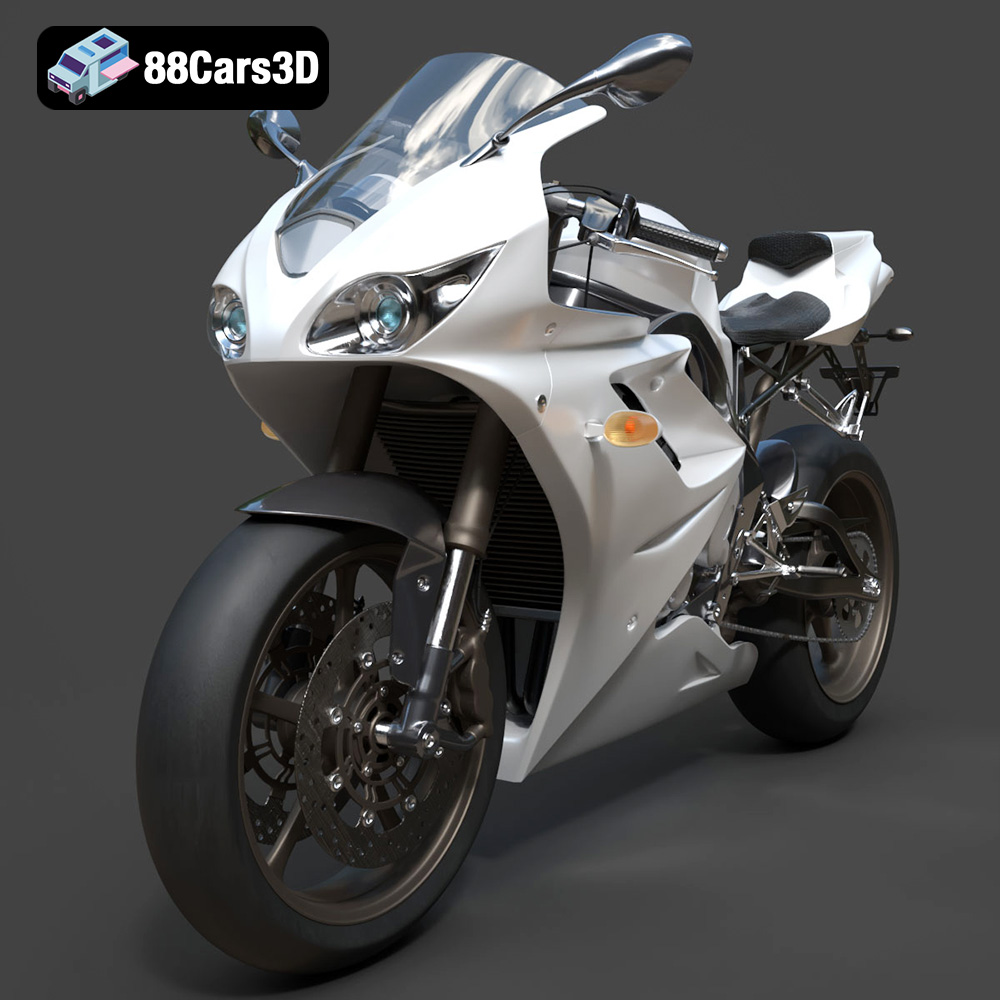
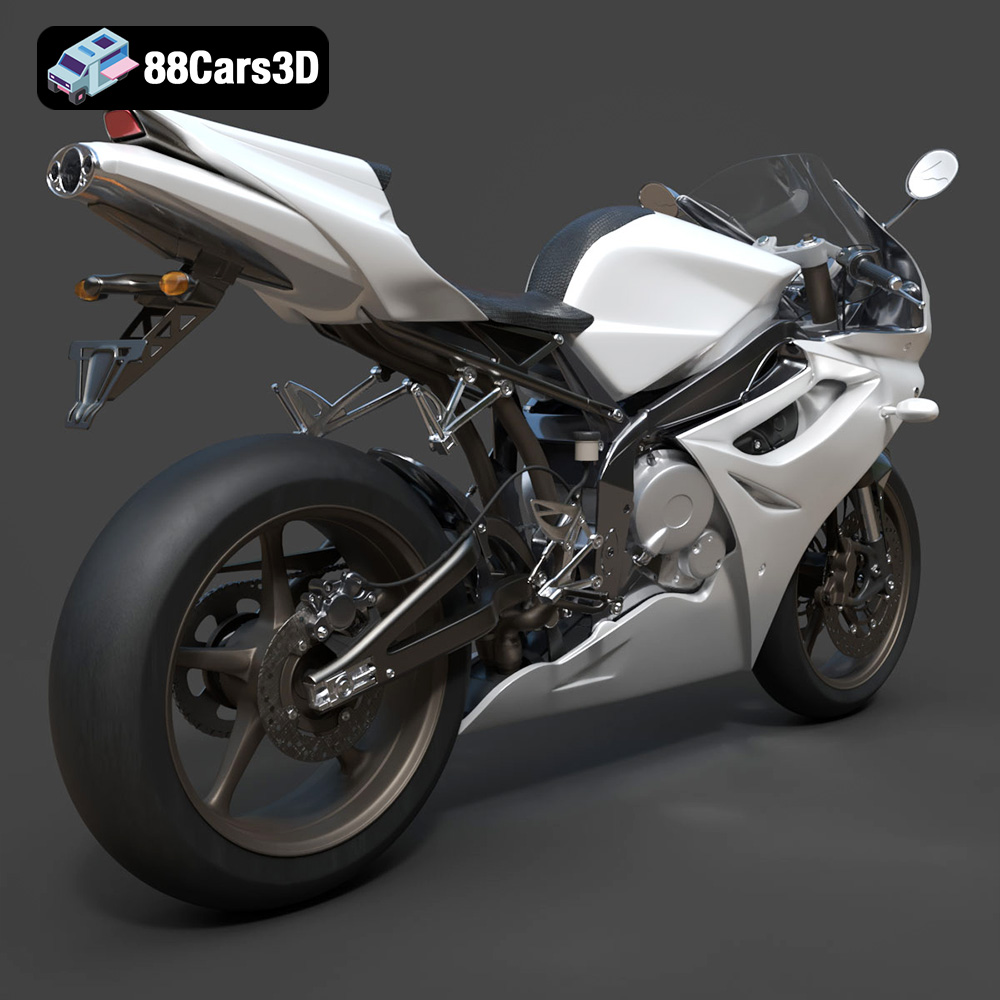
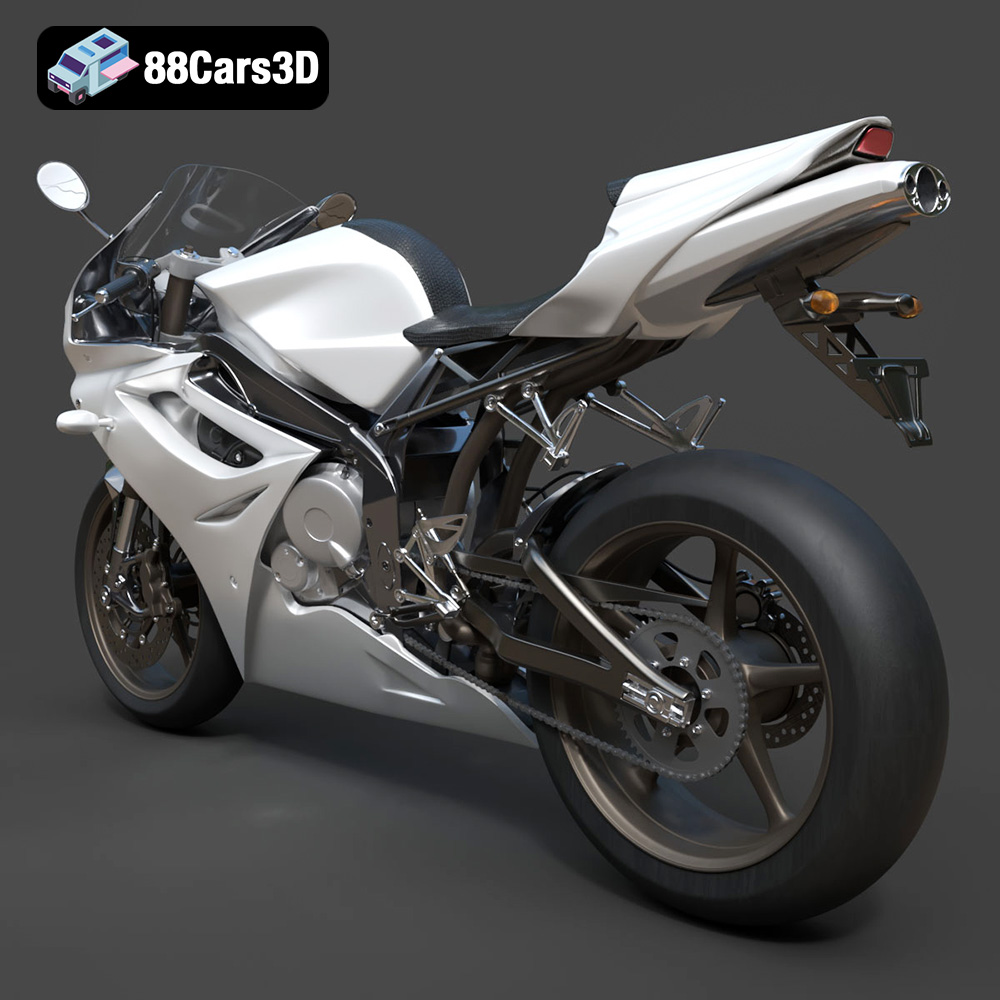
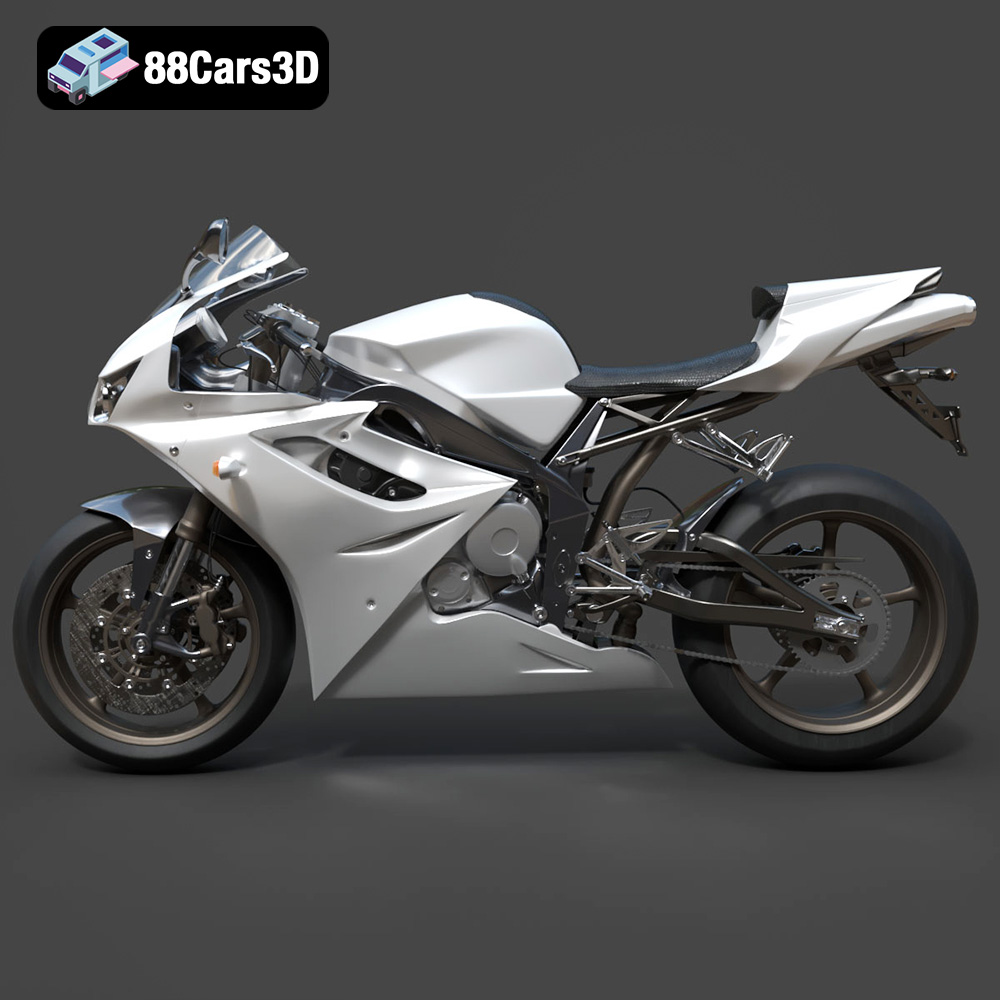
It’s within this pursuit of digital excellence that specialized marketplaces like 88cars3d.com shine, offering a curated selection of premium 3D models. A prime example of such an asset is the meticulously detailed Triumph Daytona 675 SE 2008 3D Model. This particular model isn’t just a digital replica; it’s a testament to the intricate balance between aesthetic accuracy and technical prowess, designed to integrate seamlessly into the most demanding professional workflows. Whether you’re an automotive rendering specialist, a game developer, or a VR/AR enthusiast, understanding the intricacies of such an asset and its myriad applications is key to unlocking its full potential.
Creating a truly remarkable 3D automotive model goes far beyond simply replicating shapes. It involves a deep understanding of engineering, aerodynamics, material science, and the specific demands of various digital pipelines. The Triumph Daytona 675 SE 2008 3D model exemplifies this holistic approach, offering a level of detail that captures the iconic British supersport’s essence.
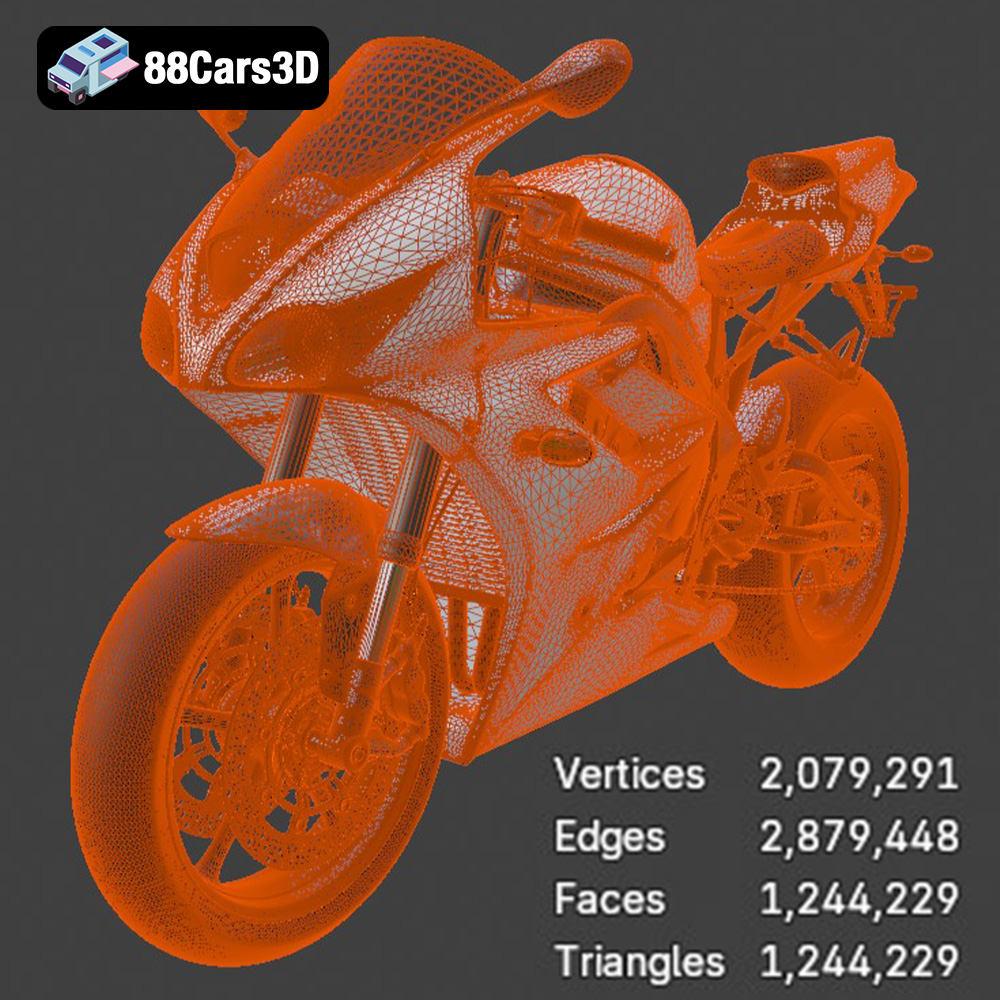
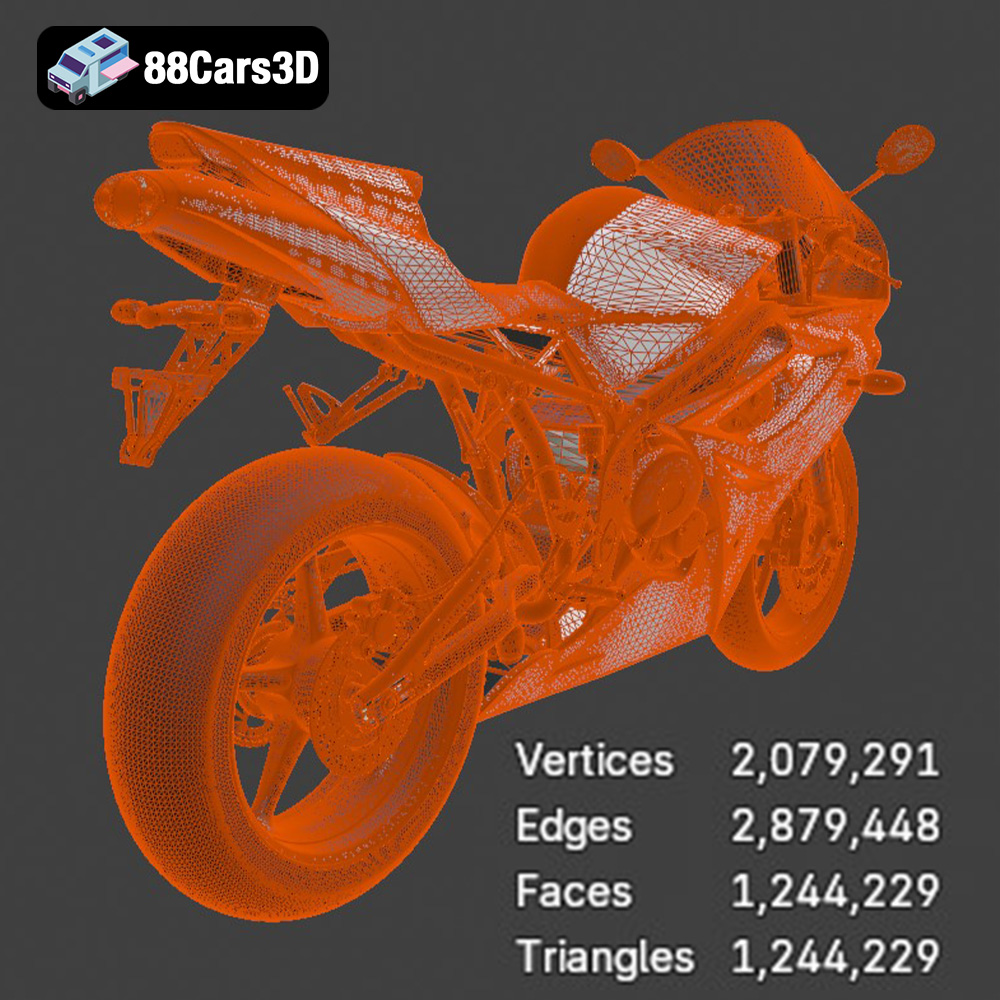
At the heart of any high-quality 3D model lies its geometry and topology. For the Triumph Daytona 675 SE, this means an impressive 1,244,229 triangles, a figure carefully chosen to provide unparalleled visual fidelity without crippling real-time performance. This polycount allows for the intricate details of the 675cc inline-triple engine block, complete with visible casing bolts and textures, the signature triple-pipe under-tail exhaust system, and the aerodynamically sculpted fairings to be accurately represented. Crucially, the topology is clean and efficient, preventing shading artifacts and ensuring smooth deformation if the model is animated. Separate components like wheels, suspension, and steering are articulated with proper pivot setups, enabling realistic animation of rotation, travel, and steering movements, which is vital for racing simulators and dynamic visualizations.
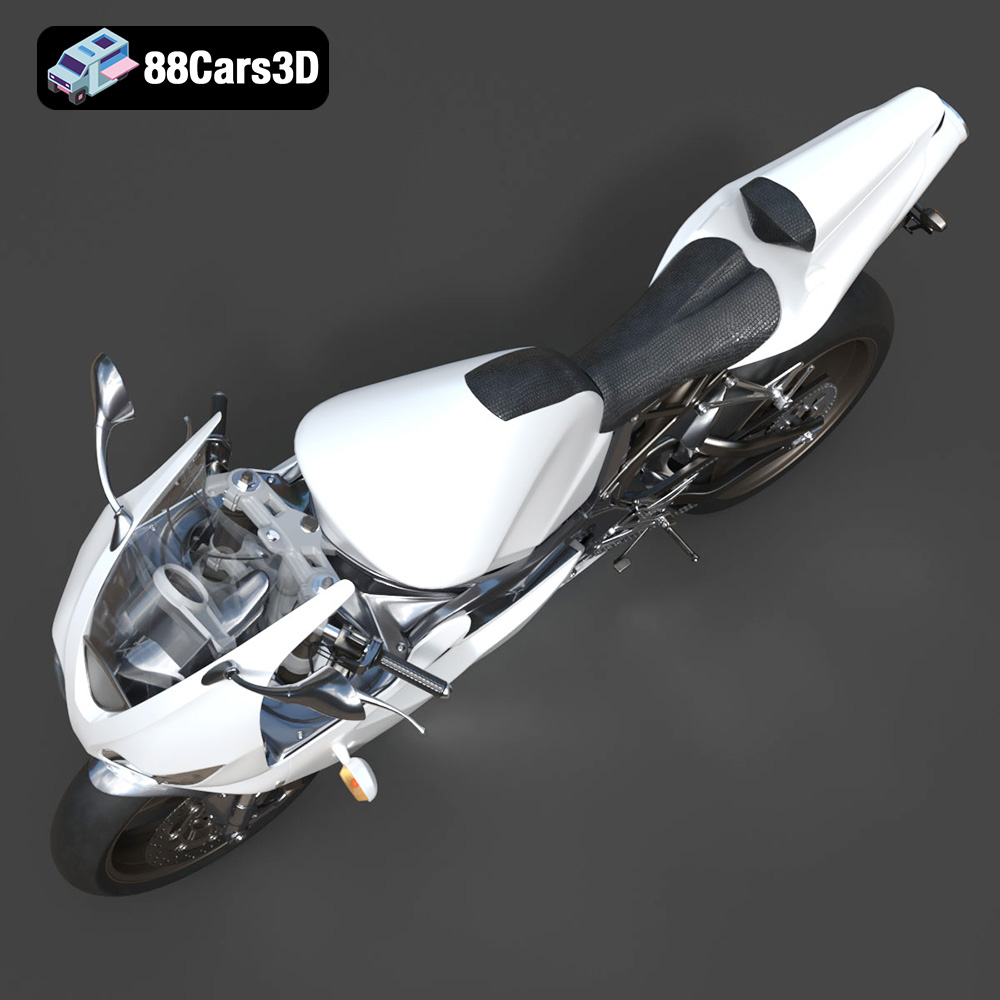
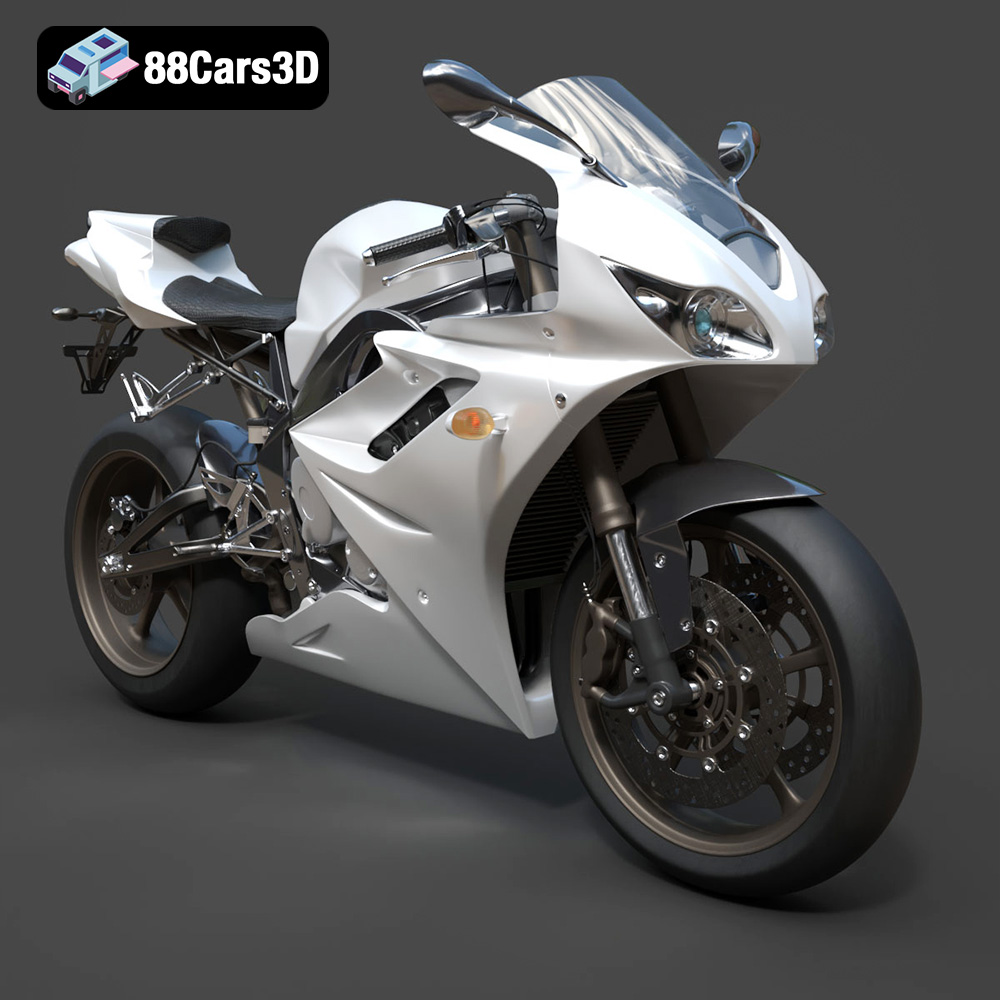
Beyond the mesh, the surface qualities define a model’s realism. The Triumph Daytona 675 SE 3D model features advanced materials and textures that accurately depict its metallic finishes, rubber tires with detailed treads, and the texture of its sport-focused split seat. The golden five-spoke alloy wheels, a hallmark of the Special Edition, are rendered with precision, reflecting light appropriately to convey their metallic sheen. This attention to material accuracy ensures that the model looks authentic under various lighting conditions, from studio renders to dynamic outdoor scenes, making it a perfect candidate for professional automotive rendering projects.
A truly versatile 3D model must be optimized for its intended use cases. While high polycounts are desirable for close-up renders, they can be prohibitive for real-time applications. The 1.2 million triangle count of this model strikes an exceptional balance, making it “game-ready” for demanding engines like Unreal Engine and Unity, while still delivering stunning detail for cinematic animations or AR/VR experiences. This strategic optimization means developers and artists don’t need to spend countless hours remodeling or retopologizing for different purposes, saving valuable time and resources.
The choice of file format is a critical decision in any 3D workflow, dictating compatibility, feature retention, and overall efficiency. The Triumph Daytona 675 SE 2008 3D model thoughtfully includes a comprehensive array of formats, ensuring its adaptability across virtually any professional pipeline. Understanding each format’s strengths and typical use cases is essential for maximizing a 3D asset’s potential.
The .blend format is native to Blender, the increasingly popular open-source 3D creation suite. When you download a .blend file, you’re getting a fully editable Blender scene. This includes not only the mesh data but also materials, textures, lighting setups, cameras, animation data, and even modifiers. For artists working primarily in Blender, this is often the most convenient and feature-rich format, allowing for direct manipulation, advanced rendering with Cycles or Eevee, and leveraging Blender’s robust animation tools without any data loss from conversion.
.fbx (Filmbox) is arguably the most widely adopted proprietary 3D file format for transferring models, animations, and scenes between different software applications. Developed by Autodesk, it’s ideal for game engines like Unreal Engine and Unity, as well as digital content creation (DCC) tools such as Maya, 3ds Max, and Cinema 4D. FBX excels at preserving a wide range of data, including geometry, UVs, textures, materials (though material definitions can sometimes vary between applications), bones, skinning, and animation. Its robust nature makes it an excellent choice for complex animated 3D car models and game assets requiring seamless integration into real-time pipelines.
The .obj (Wavefront OBJ) format is a venerable and widely supported open standard for 3D geometry. It stores vertex positions, UV coordinates, normals, and polygonal faces. While it doesn’t typically store animation or complex material definitions (materials are usually linked via a separate .mtl file), its universality makes it an excellent choice for basic mesh transfer between virtually any 3D software. For simple static meshes or as a fallback format, OBJ is invaluable for cross-software compatibility, ensuring the core geometry of the Triumph Daytona 675 SE remains accessible to all.
.glb (GL Transmission Format Binary) is the binary version of glTF, an open standard designed for the efficient transmission and loading of 3D scenes and models by engines and applications. GLB bundles all assets—geometry, textures, animations—into a single, self-contained binary file, making it exceptionally optimized for web-based 3D, augmented reality (AR), and virtual reality (VR) experiences. Its compact size and efficient parsing make it perfect for integrating the Triumph Daytona into virtual showrooms, web configurators, or mobile AR applications with minimal load times.
.stl (Stereolithography) is the de facto standard file format for 3D printing. It describes only the surface geometry of a 3D object using a mesh of interconnected triangles, without any color, texture, or material information. While simplistic, its widespread adoption by 3D printers and slicing software makes it indispensable. The inclusion of the .stl format for the Triumph Daytona 675 SE means enthusiasts can easily prepare the model for physical fabrication, bringing the digital motorcycle into the tangible world with appropriate print settings like those recommended for resin printing for fine details.
.ply (Polygon File Format or Stanford Triangle Format) is a versatile file format for storing 3D data, particularly useful for scanned data and precision meshes. It can store a variety of properties including color, transparency, surface normals, and range data, and it supports both point clouds and polygonal meshes. While less common for everyday artistic transfer than FBX or OBJ, PLY is valuable in CAD, reverse engineering, and scientific visualization contexts where precise mesh data, potentially from a laser scan, is crucial for analysis or manufacturing processes.
The .unreal format signifies an asset that has been specifically prepared and potentially imported into Unreal Engine, often implying optimal settings, collision meshes, LODs (Levels of Detail), and PBR (Physically Based Rendering) materials ready for immediate use within the engine. This dedicated format minimizes the setup time for game developers, offering a streamlined workflow for integrating the Triumph Daytona 675 SE directly into an Unreal project, complete with proper pivots and material assignments.
Finally, the .max format is native to Autodesk 3ds Max, one of the leading software packages for 3D modeling, animation, and rendering in architectural visualization, game development, and film. A .max file contains a complete 3ds Max scene, including all geometry, textures, materials (with complex procedural maps), lights, cameras, and animation data. For professionals using 3ds Max, this format offers the most control and flexibility for further editing, rigging, or advanced rendering with V-Ray, Corona, or Arnold, making it ideal for creating high-end cinematic sequences or detailed product shots of the Triumph Daytona 675 SE.
The real power of a meticulously crafted asset like the Triumph Daytona 675 SE 2008 3D model lies in its ability to seamlessly integrate into diverse professional workflows, accelerating project timelines and elevating visual quality across various industries.
For game developers, performance is paramount, but visual fidelity cannot be sacrificed. The Triumph Daytona 675 SE 3D model, with its optimized 1.2 million triangles and game-ready topology, is an ideal candidate for titles ranging from open-world adventures to dedicated racing simulators. In Unreal Engine or Unity, the included .fbx and .unreal formats streamline the import process. Developers can leverage the model’s proper pivot setup for animating realistic wheel rotation, suspension travel, and steering, creating dynamic gameplay. Its detailed cockpit is optimized for first-person POV, immersing players fully into the riding experience. This allows game studios to focus on gameplay mechanics rather than extensive asset creation and optimization, saving significant development time and resources while still delivering stunning visuals for their game assets.
In the realm of cinematic rendering, advertising, and product visualization, absolute realism is the goal. Using the .max or .blend files, artists can import the Triumph Daytona into 3ds Max or Blender, where its high detail shines. Studio lighting setups can highlight its athletic proportions, the gleam of its golden alloy wheels, and the texture of its seat. Customization options, such as changing body colors, modifying tire textures, or adjusting material finishes (e.g., to a matte or carbon fiber look), allow for endless creative possibilities to fit specific brand campaigns or lifestyle scenes. High-resolution renders can then be produced for marketing materials, virtual photography, or animated sequences, showcasing the bike in its full glory.
Augmented Reality (AR) and Virtual Reality (VR) are transforming how consumers interact with products. The Triumph Daytona’s .glb format makes it perfectly suited for immersive virtual showrooms or mobile AR experiences. Imagine a potential buyer exploring the bike in full 3D from their living room, rotating it, zooming in on the detailed engine block, or even placing it virtually in their driveway. For automotive companies, this translates to engaging product configurators and powerful marketing tools. The model’s optimized geometry ensures smooth performance even on less powerful mobile devices, making high-quality VR/AR experiences accessible and impactful.
The true value of a premium 3D model like the Triumph Daytona 675 SE 2008 lies not just in its out-of-the-box quality, but also in the creative freedom it offers. Professionals can tailor the asset to meet specific project demands, pushing boundaries in various real-world scenarios.
The base model provides an incredible foundation, but customization is where specific narratives come to life. Artists can easily modify body and tank colors to replicate factory Phantom Black, explore custom racing liveries, or experiment with futuristic finishes. Tire textures can be swapped between track slicks for a race-day feel and street variants for urban scenes. Adjusting material finishes from high-gloss to a satin matte or integrating carbon fiber accents allows for personalization that reflects specific design visions. This adaptability means the Triumph Daytona 675 SE can effortlessly transition from a pristine showroom model to a battle-hardened racing machine or a personalized cruiser, all within the same high-fidelity asset. Such flexibility is crucial for designers who need to rapidly iterate on concepts or fulfill unique client requests.
Beyond the digital realm, the included .stl format opens up avenues for physical creation through 3D printing. Enthusiasts, hobbyists, or even professional designers can print display-scale models of the Triumph Daytona 675 SE. The recommended settings—resin printing for fine details, specific layer heights, infill percentages, and support requirements—guide users in achieving accurate physical replicas. This capability extends beyond mere display; it allows for tactile interaction with a design, aiding in early-stage prototyping, educational purposes, or creating unique collectibles. Imagining the iconic triple under-tail exhaust system physically in hand, based on the digital blueprint, underscores the versatility of this 3D model.
Consider a professional racing simulator studio. They require vehicles that behave realistically and look authentic. The Triumph Daytona 675 SE 3D model offers the foundational geometry and articulation needed for precise physics simulations and stunning in-game visuals. For marketing agencies, the model becomes a centerpiece for compelling advertisements, allowing them to showcase the bike in fantastical environments or alongside other premium products without the need for expensive photoshoots. In education, engineering students could use the model to study motorcycle chassis geometry, suspension dynamics, or engine placement, dissecting its virtual components to understand real-world mechanical principles. These applications highlight the model’s capacity to serve multiple, high-impact purposes across diverse industries.
In a competitive digital landscape, the distinction between good and great often hinges on the quality of underlying assets. For 3D car models, this means a blend of aesthetic precision and technical robustness that ensures longevity and versatility for any project.
The 1,244,229 triangles of the Triumph Daytona 675 SE model perfectly illustrate the balance needed in modern 3D asset creation. While some might equate higher polycount with better quality, true expertise lies in achieving maximum visual fidelity with the most efficient polygon distribution. This “game-ready” optimization ensures that whether the model is rendered in a pre-computed cinematic or displayed in a real-time game engine, it performs smoothly without excessive computational load. This efficiency directly impacts frame rates in games, render times in animations, and loading speeds in AR/VR, making it a critical factor for professional projects where deadlines and performance targets are strict.
Accuracy in 3D modeling extends beyond visual appeal to fundamental measurements. The Triumph Daytona 675 SE 3D model is built with real-world scale accuracy, based on actual vehicle chassis dimensions. This precision is invaluable for product visualization, architectural integration, and simulation environments. When placing the model within a scene, artists can be confident that it will interact naturally with other objects and environments. Furthermore, the proper pivot setup for steering, wheel rotation, and suspension travel is a testament to the model’s design for dynamic use. This ensures that any animations or interactive controls will behave precisely as expected, reflecting the mechanical integrity of the real motorcycle.
Investing in high-quality 3D assets is an investment in future-proofing your digital library. Generic or poorly optimized models often require extensive rework, leading to inflated project costs and missed deadlines. By choosing a meticulously crafted asset like the Triumph Daytona 675 SE from 88cars3d.com, professionals acquire a robust foundation that can be adapted to emerging technologies and evolving project requirements. Its compatibility with major 3D software platforms and real-time rendering engines means it won’t become obsolete overnight, providing long-term value for automotive rendering, game assets, and other visualization needs. This strategic approach ensures that your creative resources are focused on innovation, not remediation.
The pursuit of digital realism in automotive visualization and interactive media demands assets that are both visually compelling and technically sound. The Triumph Daytona 675 SE 2008 3D Model stands as a shining example of this synergy, offering unparalleled detail, game-ready optimization, and broad compatibility across a spectrum of professional applications. From its meticulously recreated engine block to its perfectly articulated suspension, this model provides a versatile foundation for game developers, cinematic artists, AR/VR creators, and even 3D printing enthusiasts.
By understanding the nuances of file formats, the balance of polycount for performance, and the creative potential unlocked through customization, professionals can leverage such an asset to elevate their projects. Whether you’re crafting the next generation of racing simulators, producing captivating automotive rendering advertisements, or building immersive virtual experiences, the quality of your 3D car models is paramount. Discover this exceptional Triumph Daytona 675 SE 2008 3D model and many other premium game assets and automotive rendering solutions by visiting 88cars3d.com.
The Triumph Daytona 675 SE 2008 stands as a pinnacle of British supersport engineering, renowned for its distinctive howling 675cc inline-three engine and razor-sharp handling. This 3D model meticulously captures the Special Edition’s unique heritage and aggressive styling, featuring the iconic triple under-tail exhaust system, golden alloy wheels, and aerodynamically sculpted fairings that make it an unforgettable machine on both the track and the street.
Crafted with an impressive 1,244,229 triangles, this 3D model offers unparalleled visual fidelity and structural accuracy. The topology has been carefully managed to ensure excellent performance for high-end game development, cinematic animations, and cutting-edge AR/VR applications. Its stunning level of detail holds up perfectly in close-up renders while maintaining efficiency for real-time engines like Unreal Engine and Unity.
Perfect for high-octane racing simulators, virtual motorcycle showrooms, dynamic lifestyle animations, and hyper-realistic studio renders.
.blend, .fbx, .obj, .glb, .stl, .ply, .unreal, .max
Tags:
triumph, daytona-675, daytona-675-se, 2008, sports-bike, supersport, motorcycle-3d-model, game-ready, optimized, game-asset, rendering, vr-ar, blend, fbx, obj, glb, stl, ply, unreal, max
$37.50
.2008
.blend
.fbx
.glb
.max
.obj
.ply
.rendering
.stl
.supersport
.triumph
.unreal
daytona-675
daytona-675-se
game asset
game-ready
motorcycle-3d-model
optimized
sports-bike
VR/AR