Get 20% OFF All Premium 3D & STL Models!

In the vast landscape of 3D visualization and simulation, the demand for highly specialized and meticulously crafted models is ever-growing. From the intricate gears of an automotive engine to the complex hydraulics of industrial machinery, precision and performance are paramount. This holds especially true for heavy equipment, where realism is not just an aesthetic choice but often a functional necessity for training, engineering analysis, and immersive experiences.
Today, we’re delving into the world of large-scale construction and mining, specifically exploring the capabilities and applications of a sophisticated digital asset: the Wheel Tractor Scraper 3D Model. This formidable earth-hauling machine, a staple on global job sites, has been painstakingly recreated in a versatile 3D format, ready to power your next project. Whether you’re an architect visualizing a new development, a game developer building a realistic simulation, or an educator crafting VR training modules, understanding the technical depth of such an asset is crucial.
The Wheel Tractor Scraper is an icon of brute force and efficiency in the construction and mining industries. Its ability to excavate, transport, and deposit massive volumes of earth makes it indispensable for large infrastructure projects. Translating such a complex, articulated vehicle into a high-fidelity 3D model presents unique challenges and opportunities.
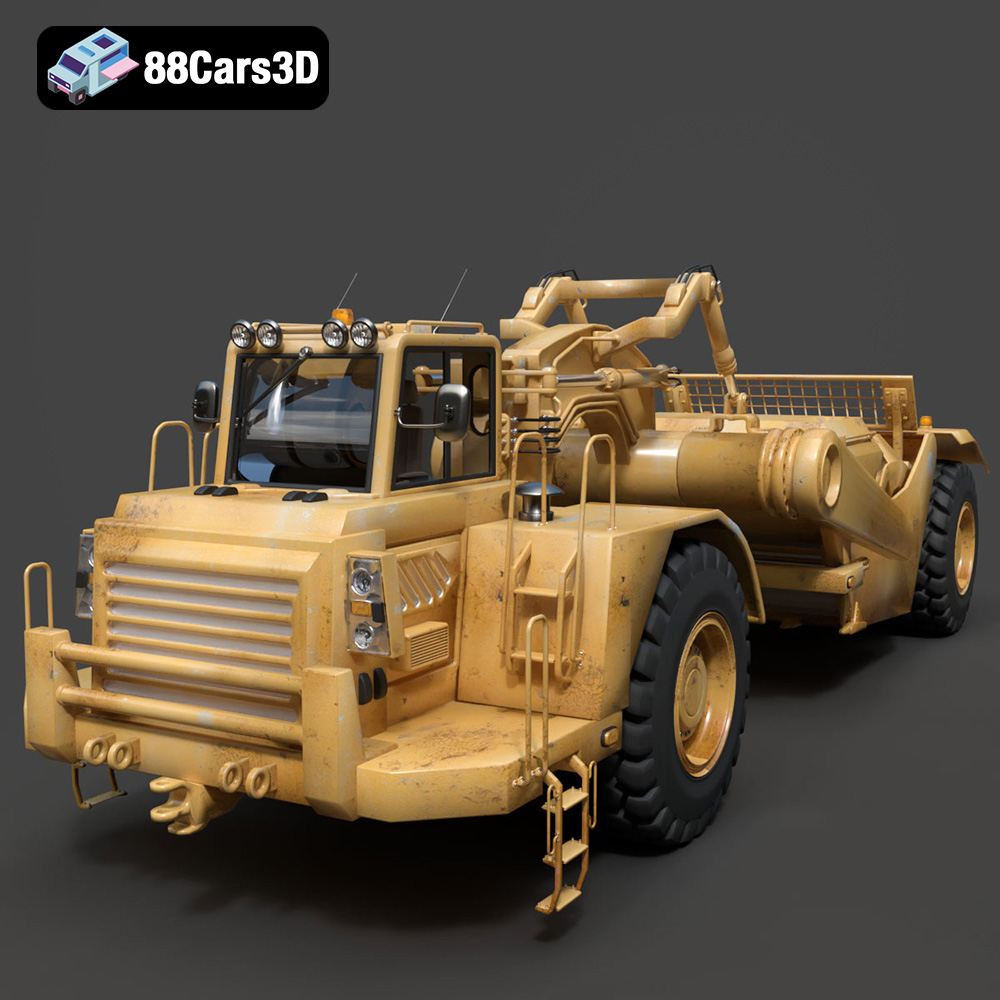
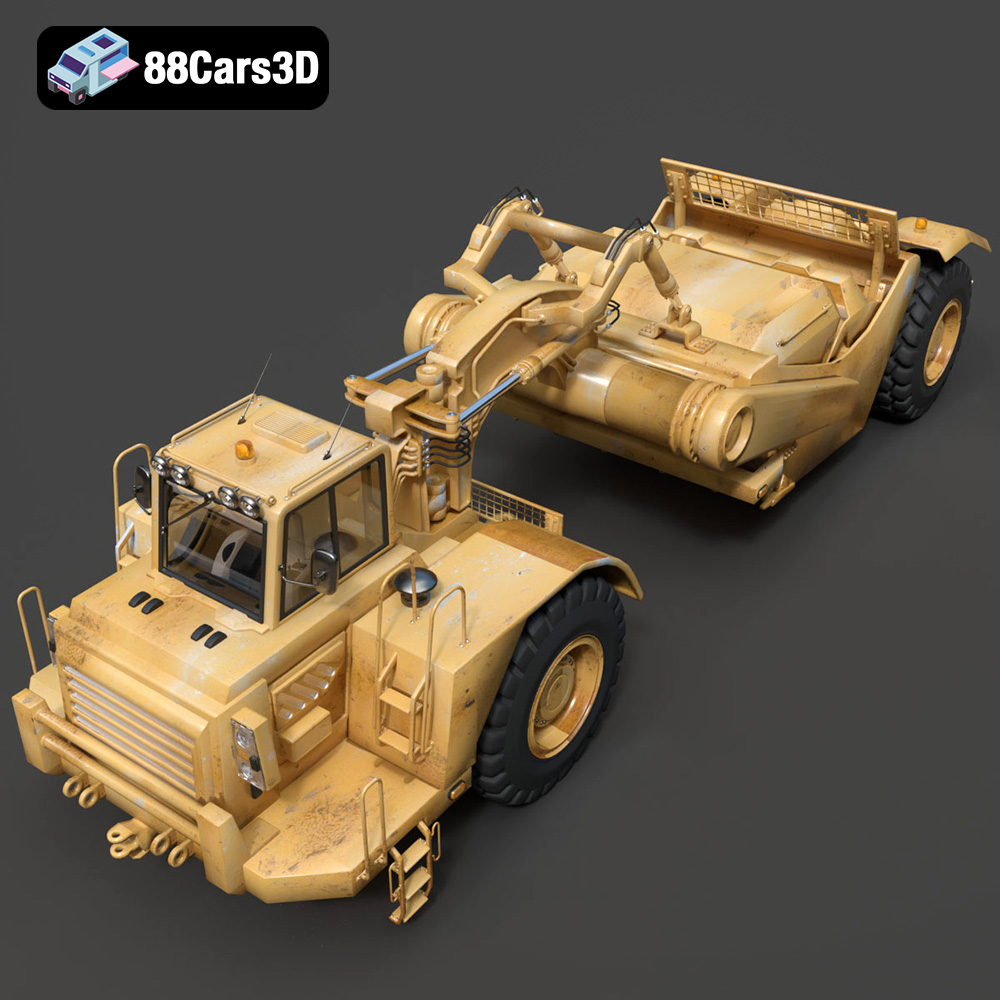
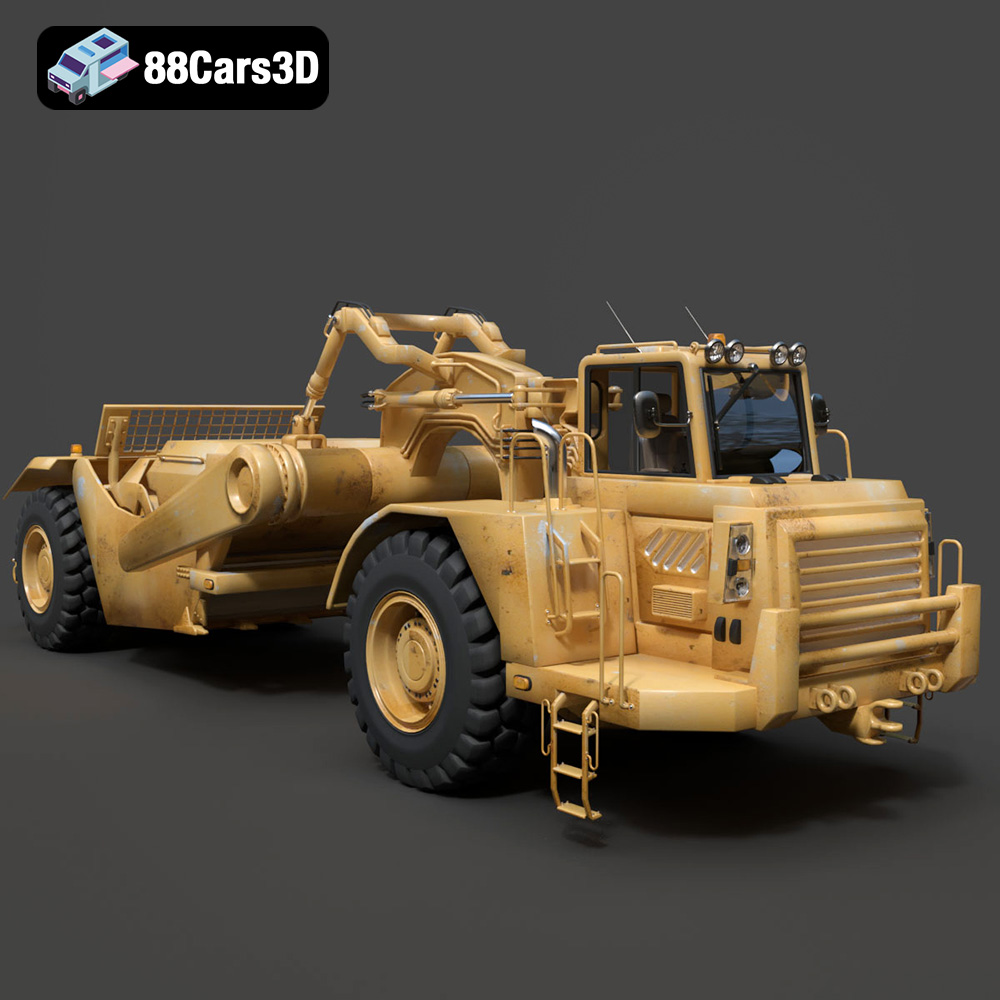
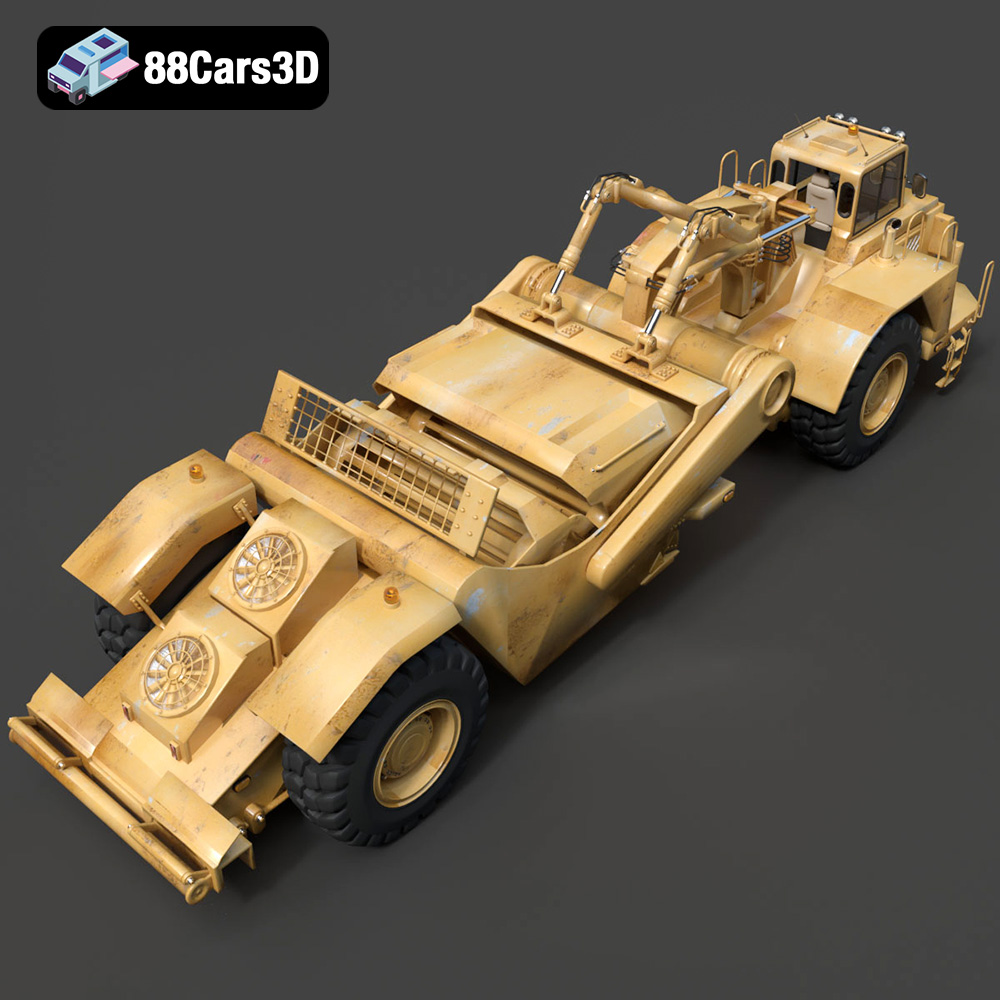
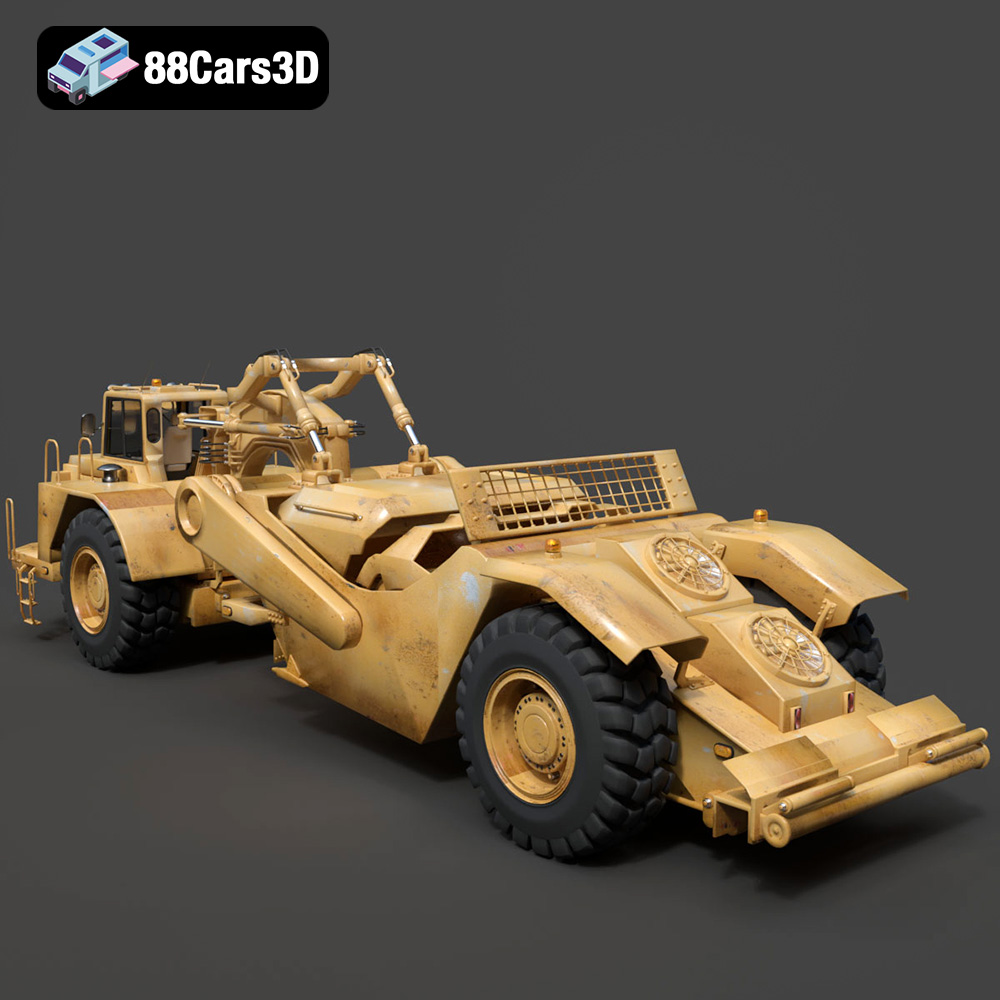
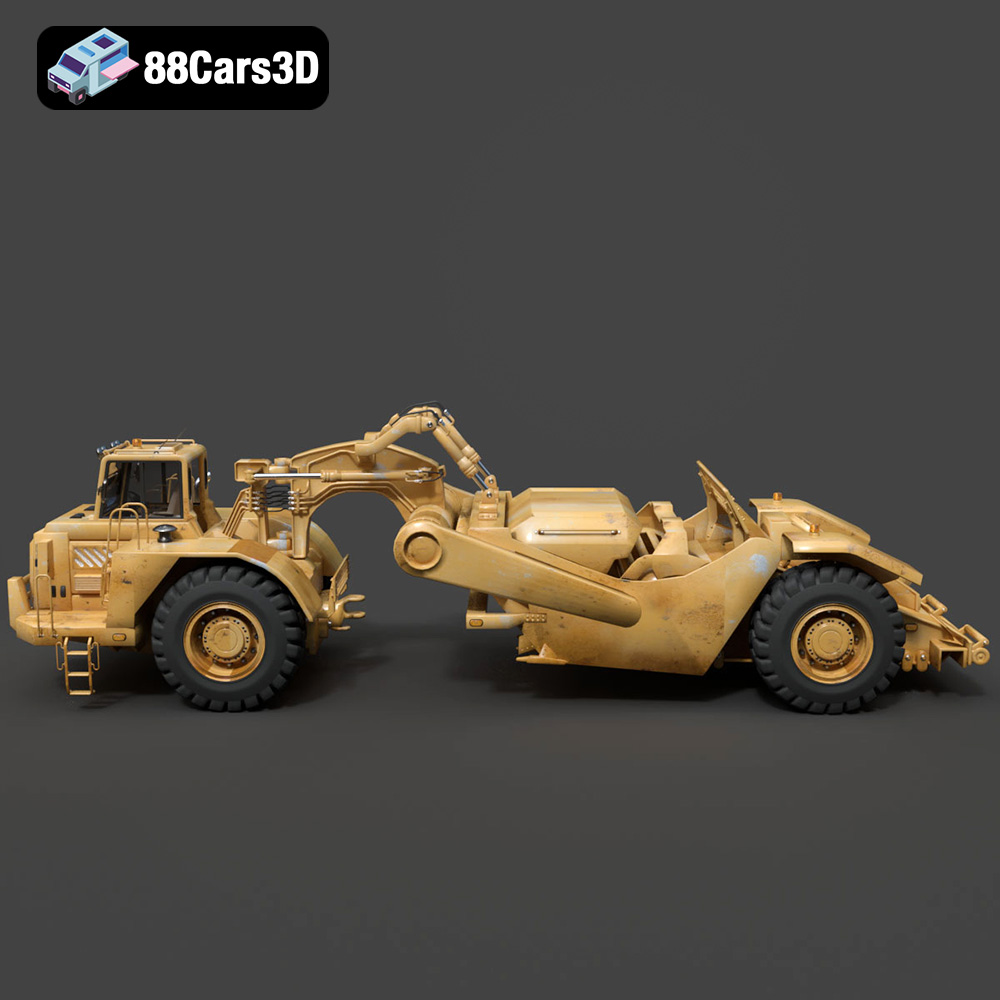
The Wheel Tractor Scraper 3D Model featured on 88cars3d.com stands out due to its commitment to authenticity. The exterior accurately captures the robust utilitarian design, from the articulated frame geometry and proportions to the detailed heavy-duty industrial diesel engine enclosure. Critical components like the fully modeled scraper bowl and its intricate hydraulic cylinder systems are present, reflecting the real-world mechanics. Functional safety lighting, beacons, and heavy-duty work lights are also incorporated, essential for realistic scene rendering and practical simulation. The massive off-road earthmoving tires boast deep tread patterns, while the robust suspension and reinforced heavy-duty axles underscore the model’s structural integrity.
Beyond the exterior, the model offers a surprisingly detailed cockpit and interior. An ergonomic heavy-equipment operator suspension seat, an industrial steering column with a heavy-duty directional wheel, and an accurate dashboard featuring simulated digital displays and gauges are all meticulously crafted. Detailed hydraulic control levers, joysticks, and floor pedals complete the immersive experience. This level of interior detail is particularly valuable for first-person perspective (POV) applications in gaming and virtual reality training, allowing operators to feel truly present within the machine.
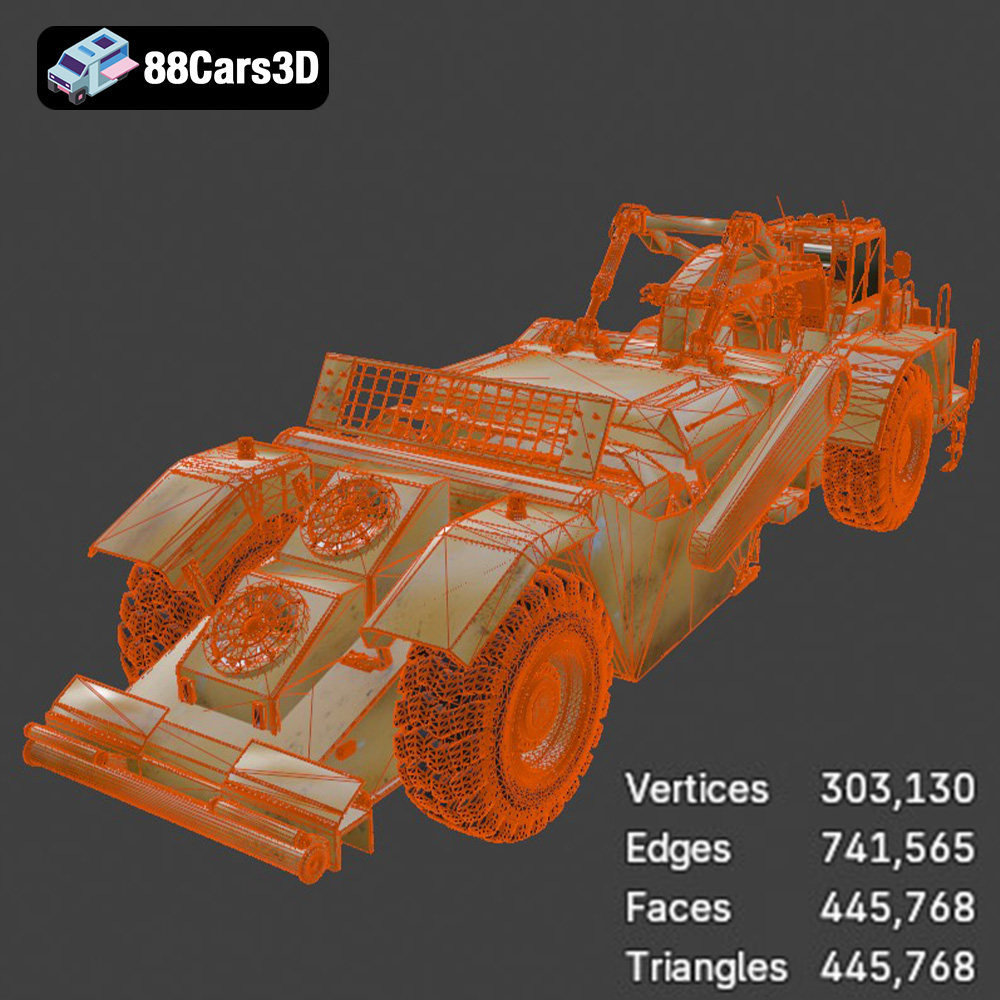
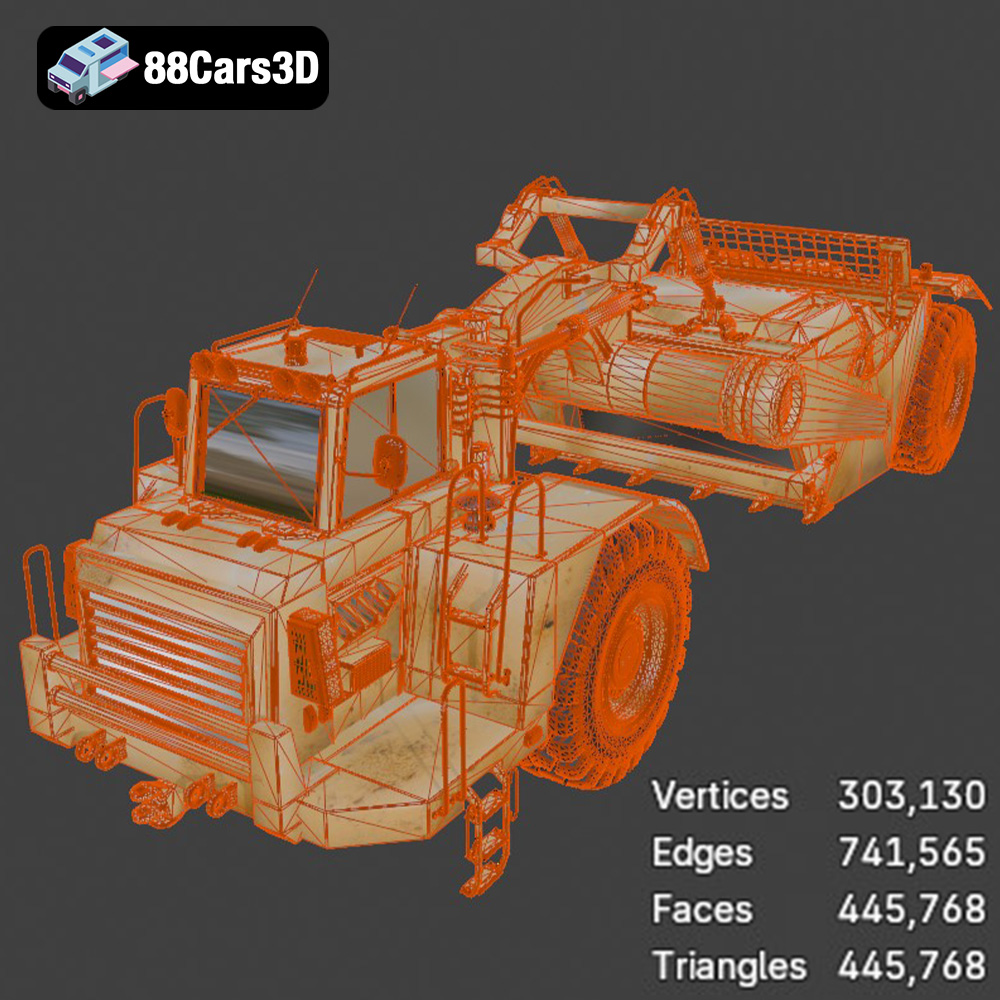
Achieving visual fidelity without sacrificing real-time performance is a delicate balance, especially for heavy equipment models. This Wheel Tractor Scraper model strikes that balance expertly with a carefully optimized topology of 445,768 triangles. This polycount ensures high-end visual realism suitable for marketing renders and detailed visualizations, while remaining “game-ready” for demanding real-time engines like Unreal Engine and Unity. The model is built to real-world scale accuracy, based on actual vehicle chassis dimensions, providing an authentic foundation for any project.
Crucially for animation and interactive applications, the model features proper pivot setups for steering, wheel rotation, and suspension travel. The separate wheels, articulation joints, and bowl components are designed to facilitate ease of rigging and animation, allowing for dynamic and realistic movement within simulations or cinematic sequences. These technical considerations make it an exceptional asset for heavy machinery simulators, industrial virtual reality training, and high-end construction site visualizations.
The versatility of a 3D model often hinges on its availability in various file formats, each optimized for different software, engines, or end-uses. The Wheel Tractor Scraper 3D Model is a prime example of this flexibility, offering a comprehensive suite of formats. Understanding what each format brings to the table is crucial for any 3D professional.
The native file format for Blender, .blend, provides the most complete and editable version of a model within the Blender ecosystem. When you download a .blend file, you’re getting the entire scene, including the mesh geometry, materials, textures, lighting, cameras, animations, and even modifiers. This format is ideal for users who wish to customize the model extensively, dissect its construction, or integrate it seamlessly into existing Blender projects. It offers maximum creative control and is perfect for animators and artists who prefer Blender’s powerful toolset for rendering and modeling.
The Filmbox (.fbx) format, developed by Autodesk, is one of the most widely used interchange formats in the 3D industry. It excels at transferring 3D models, complete with animation, rigging, and material information, between different software packages. For game developers, .fbx is the go-to format for importing assets into real-time engines like Unreal Engine and Unity. Its robust support for skeletal animation, blend shapes, and PBR (Physically Based Rendering) materials makes it essential for game-ready assets. The Wheel Tractor Scraper’s inclusion of an .fbx file ensures it can be quickly dropped into most game development pipelines.
The Wavefront OBJ (.obj) format is perhaps the most universally supported 3D file format. It’s a simple, text-based format that primarily stores geometry data (vertices, normals, texture coordinates, and faces). While it doesn’t natively support animation or advanced material properties in the same way .fbx does, its widespread compatibility makes it an invaluable choice for basic mesh transfer between virtually any 3D software. For rendering and visualization projects where animation isn’t the primary concern, or as a fallback for compatibility, .obj remains a reliable workhorse.
GL Transmission Format Binary (.glb) is the binary version of glTF, a royalty-free specification for the efficient transmission and loading of 3D scenes and models by engines and applications. .glb files package all necessary assets (geometry, materials, textures, animations) into a single, compact file. This optimization makes it perfect for web-based 3D viewers, augmented reality (AR), virtual reality (VR), and mobile applications where file size and load times are critical. Its PBR material support ensures high-quality rendering in a lightweight package.
Stereolithography (.stl) is the standard file format for 3D printing. It represents a 3D model as a collection of unconnected triangular facets, without color, texture, or other CAD attributes. While simple, its ubiquity in the 3D printing world means that any model intended for physical output must be convertible to or provided in .stl. The Wheel Tractor Scraper 3D Model, with its detailed geometry, is well-suited for conversion to .stl for hobbyists or professional display models, as detailed in its product description.
The Polygon File Format (.ply) is another mesh-based format often used for storing 3D data from 3D scanners. It can store a wider range of properties, including color, transparency, and surface normals per vertex or face, compared to .obj. While less common for general 3D asset exchange than .fbx or .obj, it finds its niche in applications requiring precise mesh data, such as scientific visualization, CAD, or analysis where attribute data beyond basic geometry is important.
While not a universal file extension in the same vein as .fbx or .obj, the mention of .unreal often refers to a model specifically prepared and optimized for direct import into Unreal Engine. This might imply pre-configured materials, collision meshes, or even blueprints ready for use within the engine environment. Such engine-specific assets significantly streamline the development workflow, saving time on setup and optimization within the engine itself, making it a valuable asset for Unreal-centric projects.
Similar to .blend for Blender, .max is the native file format for Autodesk 3ds Max. This format contains all scene information, including geometry, materials, textures, lighting, animation, and scene settings. For professionals using 3ds Max for architectural visualization, product rendering, or animation, having the native .max file offers the highest level of control and editability. It allows for advanced rendering setups, complex rigging, and integration with 3ds Max’s extensive plugin ecosystem.
Integrating a complex asset like the Wheel Tractor Scraper into a professional workflow requires more than just importing a file. It involves understanding software capabilities, optimizing for specific outputs, and leveraging the model’s inherent features for maximum impact.
For cinematic visuals, marketing materials, or detailed architectural visualizations, high-fidelity rendering is key. In 3ds Max, artists can utilize powerful renderers like V-Ray or Corona. Importing the .max or .fbx version of the Wheel Tractor Scraper provides a solid foundation. The workflow typically involves setting up PBR materials using the model’s included textures, adjusting lighting to emphasize the rugged details and scale, and placing the vehicle in a realistic environment. For instance, creating a dusty construction site scene would involve volumetric lighting for atmosphere, subtle particle effects for kicked-up dirt, and careful camera placement to convey the machine’s immense power.
Blender users, benefiting from the native .blend file, have similar powerful options with Cycles or Eevee. The integrated nature of Blender allows for immediate access to all components and materials. Artists can experiment with different shader networks to achieve highly realistic weathered metal, worn rubber, and grimy glass. Environmental lighting, such as HDRI maps depicting a sunny quarry or an overcast industrial yard, can dramatically enhance the realism of the render, positioning the Wheel Tractor Scraper authentically within its working context.
The “game-ready” optimization of the Wheel Tractor Scraper 3D Model makes it ideal for real-time applications. Importing the .fbx or .unreal file into Unreal Engine or Unity is typically a straightforward process. Once imported, developers will focus on setting up collision meshes for realistic interaction, applying PBR materials through the engine’s shader system, and potentially creating Levels of Detail (LODs) to manage performance as the vehicle moves further from the camera. The proper pivot setup for articulation joints and wheels significantly reduces the time needed for rigging and animation within the engine, allowing developers to quickly implement driving mechanics, hydraulic arm controls, and realistic suspension behavior. This makes it a perfect game asset for simulators or open-world games.
The optimized geometry and real-world scale of this heavy equipment model unlock significant potential for advanced applications like AR/VR and specialized simulations. For virtual reality training modules, the detailed cockpit allows for truly immersive first-person operator experiences. Trainees can interact with virtual controls, operate the scraper bowl, and navigate challenging virtual terrain, all within a safe and controlled environment. The .glb format is particularly suited for lightweight AR applications, allowing users to place a life-sized Wheel Tractor Scraper into their real-world environment via a mobile device, offering interactive product showcases or on-site planning tools. These applications push the boundaries of how 3D models are used, moving beyond static visualization to interactive, experience-driven content.
Developing game assets, especially for complex machinery like the Wheel Tractor Scraper, is a specialized discipline that balances visual fidelity with strict performance requirements. The asset available at 88cars3d.com demonstrates a deep understanding of these principles.
With 445,768 triangles, this Wheel Tractor Scraper model achieves a perfect balance for real-time engines. While this polycount is high enough to convey intricate details like the engine enclosure and hydraulic systems, it’s carefully managed to prevent excessive performance overhead. For larger scenes or open-world games, implementing Levels of Detail (LODs) would be the next step. LODs involve creating lower-polygon versions of the model that automatically swap in as the camera moves further away, drastically reducing the rendering load without a noticeable drop in visual quality to the player. The base model provides an excellent foundation for generating these LODs efficiently.
Effective UV mapping is critical for applying textures without distortion and for maximizing texture resolution. While specific UV details for this model aren’t explicitly listed, a professional game-ready asset will feature clean, non-overlapping UVs across its various components. This ensures that the massive off-road tires, metallic body panels, and interior dashboard elements can all receive high-resolution PBR textures (Albedo, Normal, Roughness, Metallic, Ambient Occlusion maps). These textures are what truly bring the model to life, simulating dirt, wear, scratches, and the inherent properties of different materials, making the heavy equipment feel grounded and authentic.
One of the standout features of this Wheel Tractor Scraper is its design for animation. The separate wheels, articulation joints, and bowl components, coupled with proper pivot setups, are invaluable. This means a technical artist can quickly rig the model for realistic movement. The articulated frame can bend, the wheels can rotate independently with accurate suspension travel, and the scraper bowl can be raised, lowered, and tilted just like its real-world counterpart. This pre-configured animation readiness significantly reduces development time for anyone building an interactive simulation or creating a detailed animation sequence, truly embodying the “game asset” philosophy.
The utility of a high-quality 3D model extends far beyond digital screens. With advancements in 3D printing and digital customization tools, models like the Wheel Tractor Scraper can be transformed into physical objects or adapted to fit unique creative visions.
For enthusiasts, educators, or engineers, turning a digital model into a tangible representation is incredibly rewarding. The Wheel Tractor Scraper 3D Model is convertible to the .stl format, making it suitable for 3D printing. The product description provides excellent guidance: recommended scales (1:12, 1:18, 1:24), layer heights, wall thickness, infill percentages, and crucial advice on supports and print orientation. Resin printing is often recommended for fine details on models of this complexity, ensuring the intricate hydraulic systems and interior cockpit elements are faithfully reproduced. Post-processing, including sanding, priming, and applying authentic factory colors or metallic finishes, can elevate a printed model into a display-worthy piece.
A versatile 3D asset provides a strong foundation for customization. The Wheel Tractor Scraper model offers ample opportunities for artistic expression. Users can easily change body and tank colors to reflect different factory liveries, simulate fleet branding, or create custom finishes. Modifying tire textures from standard off-road patterns to more specialized variants can adapt the vehicle for different virtual terrains. Adjusting material finishes (matte, gloss, metallic) allows for diverse visual moods, from brand-new showroom quality to heavily weathered and used equipment. Furthermore, adapting lighting setups can drastically alter the scene’s atmosphere, whether it’s the harsh midday sun of a desert mine or the dramatic glow of construction lights at night. This level of customization ensures the model remains relevant and adaptable across a multitude of projects and creative demands.
The world of 3D modeling for specialized vehicles and heavy equipment is a fascinating blend of technical precision and artistic vision. The Wheel Tractor Scraper 3D Model exemplifies the high standards expected by professionals across various industries, from game development and architectural visualization to AR/VR training and even 3D printing.
Its meticulously detailed exterior and interior, combined with optimized geometry and broad file format compatibility, make it an incredibly versatile asset. Whether you are aiming for photorealistic renders in 3ds Max, immersive simulations in Unreal Engine, or tangible display models via 3D printing, this model provides the robust foundation you need. Investing in high-quality 3D car models and heavy equipment assets from reputable marketplaces like 88cars3d.com ensures that your projects benefit from both exceptional visual fidelity and technical performance, allowing you to focus on bringing your creative visions to life. Explore the potential and elevate your next project with assets designed for excellence.
Discover the immense power of heavy earthmoving with this highly detailed Wheel Tractor Scraper 3D model. Known for its massive dirt-hauling capabilities in large-scale construction and mining, this articulated vehicle features an iconic open scraper bowl, heavy-duty hydraulic lifters, and a rugged industrial engine enclosure. Every element is crafted to highlight the robust utilitarian design that makes these machines essential on global job sites. This model is meticulously engineered with a balanced topology of 445,768 triangles, ensuring top-tier visual fidelity without sacrificing real-time performance. Its optimized geometry makes it an exceptional asset for heavy machinery simulators, industrial virtual reality training, and high-end construction site visualizations. Perfect for construction simulators, mining environment renders, heavy equipment VR training modules, and industrial animations.
$26.00
.blend
.fbx
.glb
.heavy-equipment
.industrial
.max
.obj
.ply
.rendering
.stl
.unreal
3d model
construction-vehicle
earthmover
game asset
game-ready
optimized
VR/AR
wheel-tractor-scraper