Get 20% OFF All Premium 3D & STL Models!

In the fast-paced realms of automotive design, game development, architectural visualization, and immersive AR/VR experiences, the quality of your 3D assets can make or break a project. A meticulously crafted 3D model isn’t just a visual element; it’s the foundation upon which photorealistic renders, engaging simulations, and interactive experiences are built. Investing in high-fidelity 3D car models ensures accuracy, efficiency, and ultimately, a superior end product that resonates with audiences.
Whether you’re a seasoned professional or an aspiring enthusiast, the demand for authentic, game-ready, and render-optimized vehicles is constant. These digital assets serve as the backbone for countless applications, from showcasing a new car’s features in a virtual showroom to populating a bustling open-world game environment. It’s about more than just aesthetics; it’s about structural integrity, technical precision, and seamless integration into diverse workflows. One such exemplar of this fusion of detail and versatility is the BMW X1 2013 3D model, a prime asset available at 88cars3d.com, designed to meet the rigorous demands of professional production pipelines across various industries.
The journey of a 3D model from creation to deployment often involves navigating a landscape of various file formats, each with its own strengths, weaknesses, and optimal use cases. Understanding these formats is crucial for any professional working with 3D assets, as selecting the right one can significantly impact workflow efficiency, compatibility, and the final quality of your project. The BMW X1 2013 3D model, like many high-quality assets on 88cars3d.com, is offered in a comprehensive range of formats to ensure maximum flexibility and integration.
The
.blend
format is Blender’s native file type, encapsulating an entire Blender scene. This means it includes not just the mesh data, but also materials, textures, lighting setups, camera positions, animation data, modifiers, and even custom scripts. It offers the most comprehensive and editable version of a model, making it ideal for artists who primarily work within Blender or wish to fully customize the asset. For the BMW X1 2013, the .blend file would allow for deep modifications to materials (e.g., swapping PBR textures, adjusting shader nodes), altering the model’s geometry with modifiers, or integrating it into a complex animation sequence directly within Blender.
Autodesk’s
.fbx
(Filmbox) format has become an industry standard for exchanging 3D data between different software applications, especially for animation and game development. It efficiently stores mesh data, skeletal animation, blend shapes, lights, cameras, and basic material properties. Its robust support in game engines like Unreal Engine and Unity makes it an indispensable choice for creating game assets. When you export the BMW X1 2013 as an .fbx, it maintains crucial animation-ready components such as properly set pivot points for wheels and steering, ensuring smooth integration into real-time environments for dynamic driving simulations or cinematic sequences.
The
.obj
(Wavefront Object) format is one of the most widely supported and universal formats for 3D geometry. It primarily stores vertex positions, UV coordinates, normals, and face information. While it supports basic material definitions via an accompanying .mtl file, it doesn’t typically store advanced material properties, animation, or scene data. The .obj format for the BMW X1 2013 is excellent for cross-software compatibility, serving as a reliable backbone for importing the model into almost any 3D application for rendering or further detailing where complex animations are not the primary concern.
GL Transmission Format Binary (
.glb
) is a compact, self-contained file format based on glTF (Graphics Language Transmission Format). It’s specifically optimized for efficient transmission and loading of 3D scenes and models on the web, in AR (Augmented Reality), and VR (Virtual Reality) applications. A .glb file typically embeds all assets—geometry, materials, textures, and animations—into a single file, making it incredibly convenient for quick deployment and real-time viewing on various platforms, including browsers and mobile devices. The BMW X1 2013 in .glb format would be perfect for an interactive car configurator embedded on a website or an AR experience allowing users to “place” the car in their real environment.
Stereolithography (
.stl
) is the de facto file format for 3D printing. It represents a 3D model as a series of connected triangles (a triangulated mesh) without any color, texture, or material information. Its simplicity makes it universally compatible with 3D printers and slicing software. For hobbyists or professionals looking to create a physical scale model of the BMW X1 2013, the .stl format is essential, allowing for direct preparation for printing with considerations for layer height, infill, and supports as detailed in the product specifications.
The Polygon File Format (
.ply
) is often used for storing 3D scan data and is capable of handling more complex information than .obj, including color per vertex, surface normals, and transparency. It’s particularly useful for precision applications like CAD, scientific visualization, or when working with high-density mesh data derived from laser scanning. While perhaps less common for ready-made automotive models, its inclusion for the BMW X1 2013 underscores its versatility for engineering analysis or specific visualization tasks requiring precise mesh representation.
While not a standalone file format in the traditional sense, the
.unreal
designation typically refers to assets specifically prepared and optimized for Unreal Engine. This often means the .fbx has been imported, materials have been set up using Unreal’s PBR workflow, collision meshes generated, LODs (Levels of Detail) configured, and perhaps even some basic blueprints or physics assets associated with it. This format streamlines the integration of the BMW X1 2013 into an Unreal project, saving developers significant time on asset preparation and ensuring optimal performance within the engine.
The
.max
file is Autodesk 3ds Max’s native project file. Similar to .blend, it contains the complete 3ds Max scene, including geometry, materials (often V-Ray or Corona), lighting, cameras, animation, and scene organization. It provides the most editable form of the model for users of 3ds Max, allowing for deep customization, complex rendering setups, and advanced animation rigging. For high-end architectural visualization or cinematic rendering, the .max version of the BMW X1 2013 offers unparalleled control and fidelity.
By providing the BMW X1 2013 3D model in such a rich array of formats, 88cars3d.com ensures that creators, regardless of their preferred software or end-use application, have the exact digital asset they need to succeed.
Automotive rendering is a specialized field that demands an acute understanding of light, materials, and composition to transform a 3D model into a photorealistic image or animation. The BMW X1 2013 3D model from 88cars3d.com provides an exceptional foundation for achieving stunning results across various rendering pipelines.
For high-fidelity rendering, professional artists often turn to tools like 3ds Max paired with render engines such as V-Ray or Corona, or Blender with its Cycles or Eevee renderers. The BMW X1 2013 model is designed to leverage these powerful platforms. In 3ds Max, the .max file provides an intact scene, potentially with pre-configured materials that can be easily adapted to V-Ray or Corona’s physical shading systems. This involves fine-tuning metallic flake properties for paint, setting up accurate rubber shaders for tires, and creating realistic glass for windows and headlights. The model’s intricate details, from the sculpted hood to the precise exhaust system, truly shine when illuminated by a global illumination solution, creating subtle reflections and refractions that mimic real-world physics.
Similarly, Blender users benefit from the .blend file, which offers full access to the model’s topology and materials. With Cycles, artists can achieve unbiased, physically accurate renders, making the most of the model’s detailed geometry and high-resolution textures. Eevee, Blender’s real-time render engine, allows for rapid iteration and stunning visual output suitable for presentations and animations where speed is critical. Both engines allow for detailed material node setups to achieve the authentic sheen of Bavarian paintwork or the subtle texture of the interior upholstery.
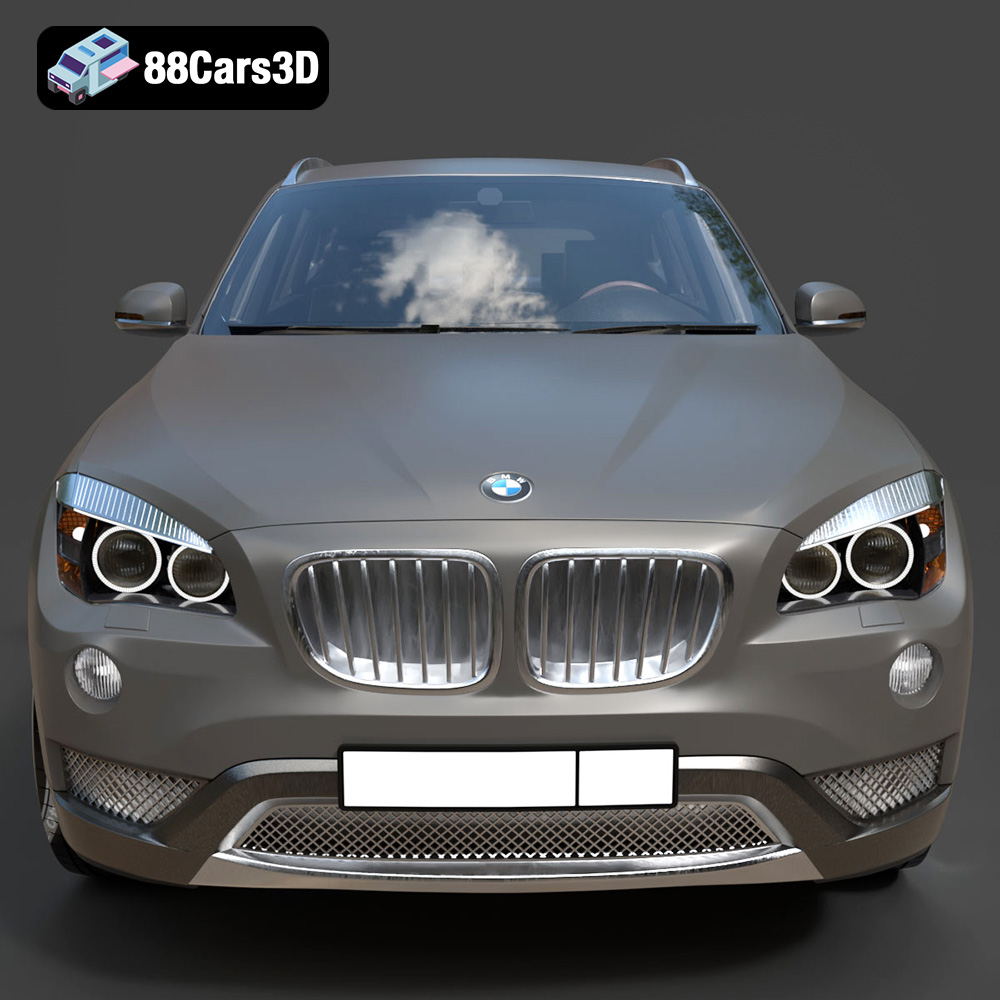
The choice between a studio setup and an environmental render significantly impacts the narrative and visual appeal of your automotive visualization. For studio shots, an artist might utilize a clean, controlled lighting environment, often incorporating large softboxes, rim lights, and precise reflections to highlight the BMW X1’s form and premium finish. HDR (High Dynamic Range) image-based lighting combined with specific area lights can create stunning reflections on the vehicle’s surface, emphasizing its curves and contours. The X1’s detailed exterior features, such as the signature kidney grille and twin-circular headlights, become focal points in such a controlled setting, allowing for close-up examination of the model’s fidelity.
Conversely, environmental renders place the BMW X1 2013 within a specific context, such as an urban street, a winding country road, or an architectural scene. This requires careful integration of the vehicle into a pre-existing 3D environment or photographic backplate. Techniques like matching perspective, integrating shadow catchers, and ensuring consistent lighting and atmospheric effects are crucial. The X1’s robust presence makes it an excellent candidate for architectural visualizations, blending seamlessly with modern buildings or acting as a focal point in a lifestyle render, creating a sense of realism and immersion that greatly enhances the visual storytelling.
The demands of real-time rendering in game development are distinct, prioritizing performance and efficiency without compromising visual quality. The BMW X1 2013 3D model is specifically designed as a game-ready asset, optimized to perform seamlessly within engines like Unreal and Unity.
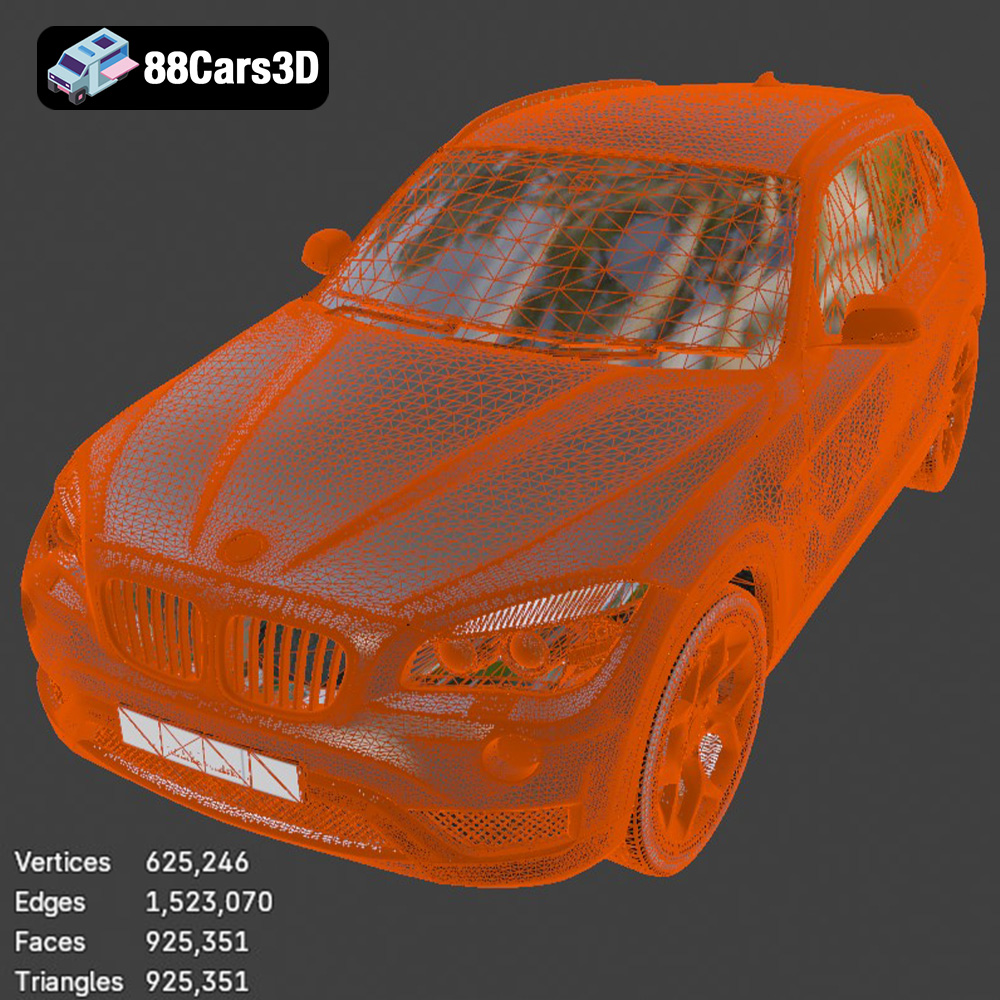
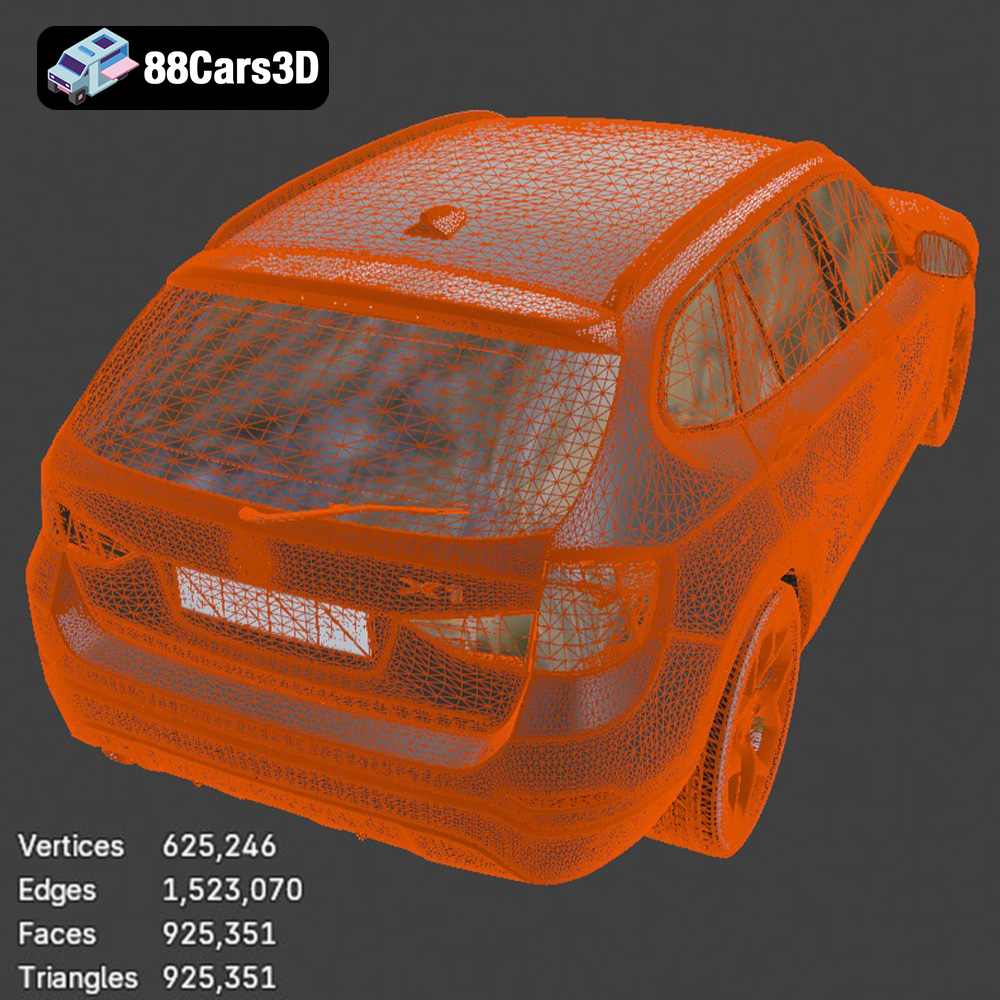
Game engines require models to be highly optimized to maintain fluid frame rates. The BMW X1 2013’s polygon count of 925,351 triangles strikes an excellent balance between visual fidelity and real-time performance. For Unreal Engine, the inclusion of the .unreal format means the asset is pre-configured, often with basic PBR (Physically Based Rendering) materials already set up, saving developers significant time. For more advanced setups, artists would import the .fbx, which allows for granular control over material instances, enabling quick customization of colors and finishes. Crucially, a game-ready asset like this often comes with a properly implemented collision mesh, essential for realistic physics interactions within the game world. Furthermore, implementing Levels of Detail (LODs) can further optimize performance, swapping lower-polygon versions of the car for distant shots, ensuring the game runs smoothly even with multiple vehicles on screen.
Beyond static representation, the BMW X1 2013 model is built for dynamic animation, a critical feature for racing games, simulators, and interactive experiences. The product description highlights “Separate wheels, suspension, and steering components for animation,” and “Proper pivot setup for steering, wheel rotation, and suspension travel.” This is invaluable for game developers. Each wheel can rotate independently, linked to the vehicle’s speed and steering input. The independent suspension representations mean that artists can simulate realistic up-and-down movement as the car traverses uneven terrain, adding a layer of authenticity to the driving experience. The steering components, with correctly placed pivots, allow for accurate steering animations, enhancing player immersion. These features, combined with the model’s real-world scale accuracy, make the BMW X1 2013 a perfect candidate for realistic driving simulators and open-world games where vehicle behavior is paramount.
The versatility of a high-quality 3D asset extends far beyond traditional rendering and game development, finding powerful applications in emerging technologies like Augmented Reality (AR), Virtual Reality (VR), and even physical fabrication through 3D printing.
AR and VR are transforming how we interact with digital content, offering immersive and interactive experiences. For the automotive industry, this means virtual showrooms, interactive car configurators, and mobile AR applications where users can “place” a vehicle in their driveway. The BMW X1 2013 3D model is ideally suited for these applications, particularly through its .glb file format. This format is optimized for web and real-time AR/VR platforms, embedding all necessary textures and materials into a single, compact file for efficient streaming and rendering. Its real-world scale accuracy is paramount here, ensuring that when the car appears in AR, it’s presented in its true size relative to the environment. Imagine prospective buyers exploring the detailed interior or walking around the exterior, changing colors and finishes in real-time, all powered by this highly optimized 3D model. The balanced polycount of 925,351 triangles ensures that even on mobile devices or VR headsets, the model maintains excellent visual fidelity without causing performance bottlenecks.
For enthusiasts, designers, or educators, the ability to physically hold a scale model of a digital asset adds another dimension of engagement. The BMW X1 2013 is provided in the .stl format, making it directly suitable for 3D printing. This opens up possibilities for creating detailed display models for personal collections, educational purposes, or even as prototypes in design studios. The product description provides specific 3D print settings, which are crucial for a successful print:
Post-processing, including sanding, priming, and painting with authentic factory colors, further elevates the printed model to a high-quality collectible. This capability truly showcases the versatile utility of a meticulously prepared 3D asset from 88cars3d.com.
The true value of a professional 3D car model lies in its underlying technical specifications and meticulous construction. The BMW X1 2013 model is a testament to this, engineered for both visual excellence and functional performance.
The reported triangle count of 925,351 for the BMW X1 2013 is a significant indicator of its quality. This polycount is carefully chosen to offer “exceptional visual fidelity and smooth surface reflections” while remaining “optimized for modern real-time rendering.” This balance is critical: too few polygons result in blocky, unrealistic surfaces, especially on curved areas, while too many can cripple performance in real-time applications. The expert optimization ensures clean edge flow, essential for proper deformation during animation and for accurate light reflections. This attention to detail means the model can withstand close-up cinematic shots, where imperfections in topology would be glaringly obvious.
The product description highlights numerous features that demonstrate the model’s commitment to authenticity. On the exterior, “Accurate BMW X1 2013 frame geometry and proportions” and “Detailed engine bay and undercarriage components” mean the model is faithful to the real vehicle, even in areas rarely seen. The “Intricately modeled twin-circular headlights and L-shaped taillights” are iconic BMW design elements, requiring precise modeling to capture their distinct look. High-resolution alloy wheels with detailed tire treads further enhance realism. Inside, the “Authentic multi-adjustable front seats and rear bench,” “Accurate driver-oriented dashboard and classic 3-spoke steering wheel,” and “Precisely modeled center console, iDrive controller, and gear shifter” create a fully immersive cockpit. This level of detail makes the BMW X1 2013 3D model ideal for first-person POV in gaming or detailed virtual tours, allowing users to experience the “authentic Bavarian styling” virtually.
Two often-overlooked but crucial technical aspects for 3D automotive models are real-world scale and pivot point accuracy. The BMW X1 2013 boasts “Real-world scale accuracy based on actual vehicle chassis,” which is fundamental for seamless integration into architectural scenes, virtual environments, or simulations. Without correct scale, a vehicle can appear unnaturally large or small, disrupting immersion. Equally important is the “Proper pivot setup for steering, wheel rotation, and suspension travel.” Incorrect pivot points can lead to janky, unrealistic animations. By having correctly placed pivots, the wheels rotate around their true center, the steering operates from its actual axis, and the suspension compresses and extends along its natural path. This technical precision ensures that any animation or interactive rigging applied to the model will behave in a physically believable manner, a hallmark of professional-grade 3D car models like those found on 88cars3d.com.
Acquiring a high-quality 3D asset like the BMW X1 2013 is just the first step. To truly leverage its potential, understanding customization options and integrating it efficiently into your workflow is key. The versatility offered by this specific model makes it an excellent template for various creative endeavors.
The BMW X1 2013 3D model is designed to be highly adaptable, allowing artists and developers to tailor it to specific project requirements. “Change body/tank colors” means easily swapping out the vehicle’s primary paint job, whether for demonstrating different factory options or applying custom artistic finishes. “Modify tire textures” opens up possibilities for urban street variants, off-road versions, or even performance slicks for racing scenarios. “Adjust material finishes (matte, gloss, metallic)” provides granular control over the car’s appearance, allowing for nuanced shifts in reflectivity and sheen to match different lighting conditions or stylistic choices. Furthermore, the ability to “Adapt lighting for different environments” is crucial for rendering. By simply tweaking an HDRI map or adjusting area lights, the same model can look stunning in a sunny outdoor scene, a moody urban night, or a pristine studio showcase. This flexibility reduces the need for multiple distinct models, making the BMW X1 2013 a highly efficient and versatile asset.
Efficient workflow is the cornerstone of successful 3D production. When you purchase a model like the BMW X1 2013 from 88cars3d.com, you’re not just getting geometry; you’re getting a pre-optimized asset that saves countless hours of modeling, unwrapping, and initial texturing. The availability in multiple file formats (.blend, .fbx, .obj, .glb, .stl, .ply, .unreal, .max) ensures seamless integration into virtually any professional pipeline, eliminating compatibility headaches. For example, a game developer can quickly pull the .fbx or .unreal version directly into their engine, while an architectural visualizer might opt for the .max or .blend file to integrate the vehicle into a detailed render scene. Knowing that the model comes with “proper pivot setup for steering, wheel rotation, and suspension travel” means animators can immediately begin rigging and keyframing without wasting time adjusting transform origins. This pre-production work done by experts allows artists to focus on creative tasks such as scene composition, material refinement, and animation, rather than basic asset creation or arduous cleanup, significantly accelerating project timelines and improving overall quality.
In the dynamic landscape of 3D visualization and real-time interactive experiences, the quality of your assets directly impacts the realism, performance, and overall impact of your projects. High-fidelity 3D car models are more than just static objects; they are versatile tools that drive innovation across automotive design, game development, AR/VR, and even tangible 3D printing. The meticulous attention to detail, technical optimization, and broad file format support found in assets like the BMW X1 2013 3D model exemplify what professionals demand from their digital libraries.
Whether you are crafting a photorealistic architectural visualization in 3ds Max, designing an immersive open-world racing game in Unreal Engine, building an interactive AR configurator, or even printing a physical scale model, the BMW X1 2013 offers the necessary precision, flexibility, and game-ready optimization. Its detailed exterior and interior, accurate topology, and animation-ready components make it an indispensable asset for a myriad of creative applications. By choosing such professionally developed 3D car models, artists and developers empower themselves with the tools to achieve unparalleled visual fidelity and efficiency in their creative endeavors. Explore this exceptional model and many others to elevate your projects to new heights at 88cars3d.com.
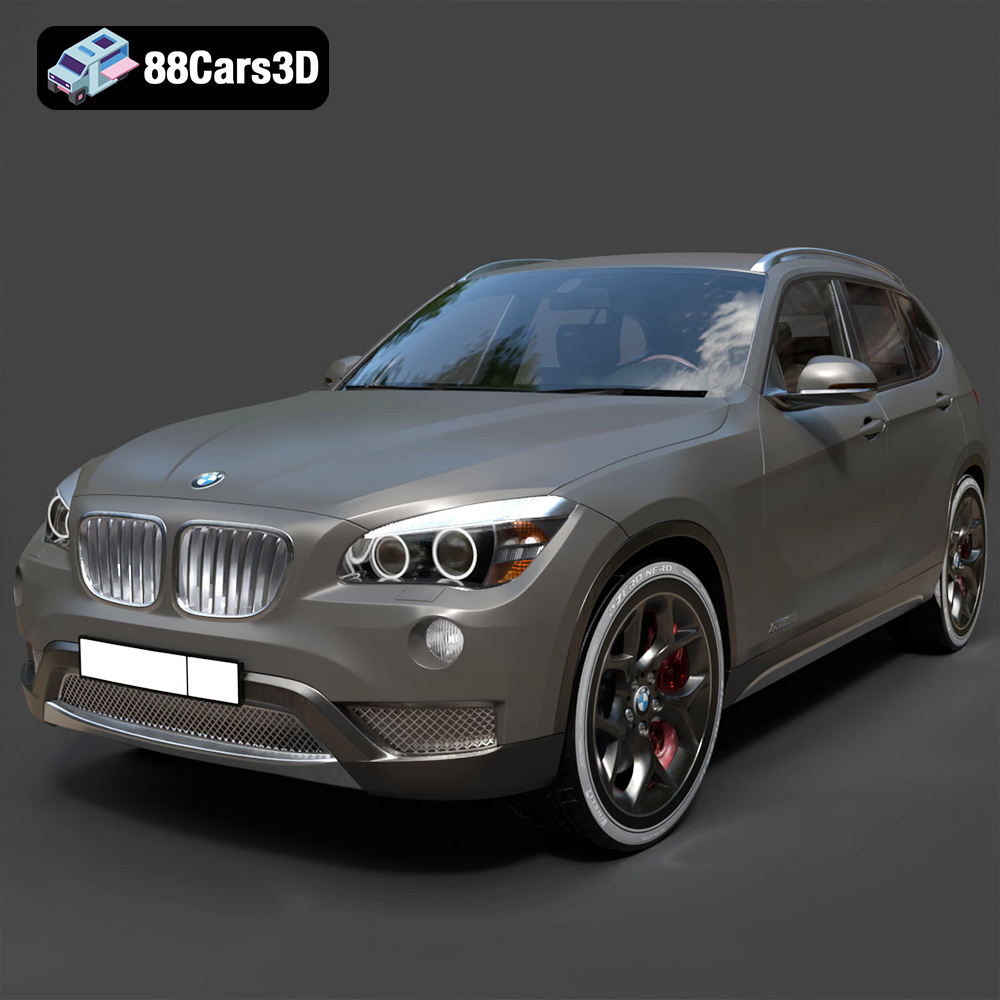
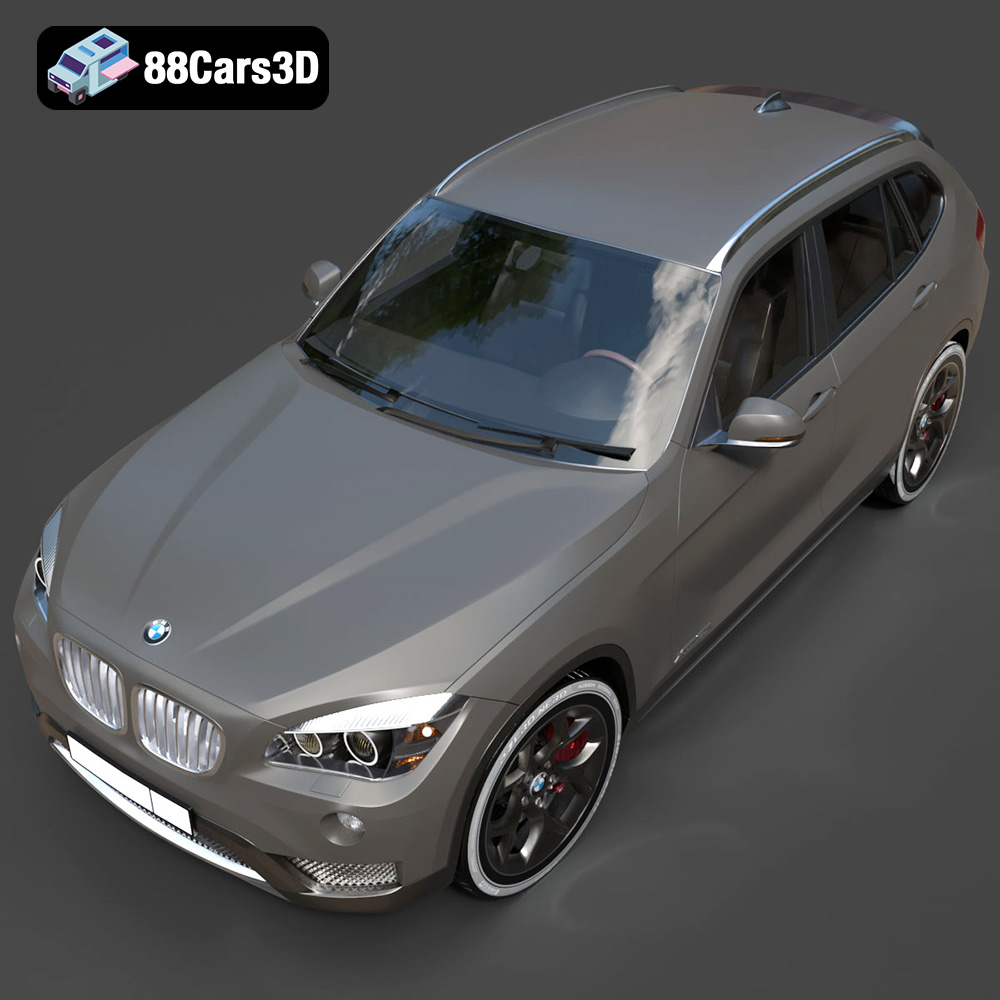
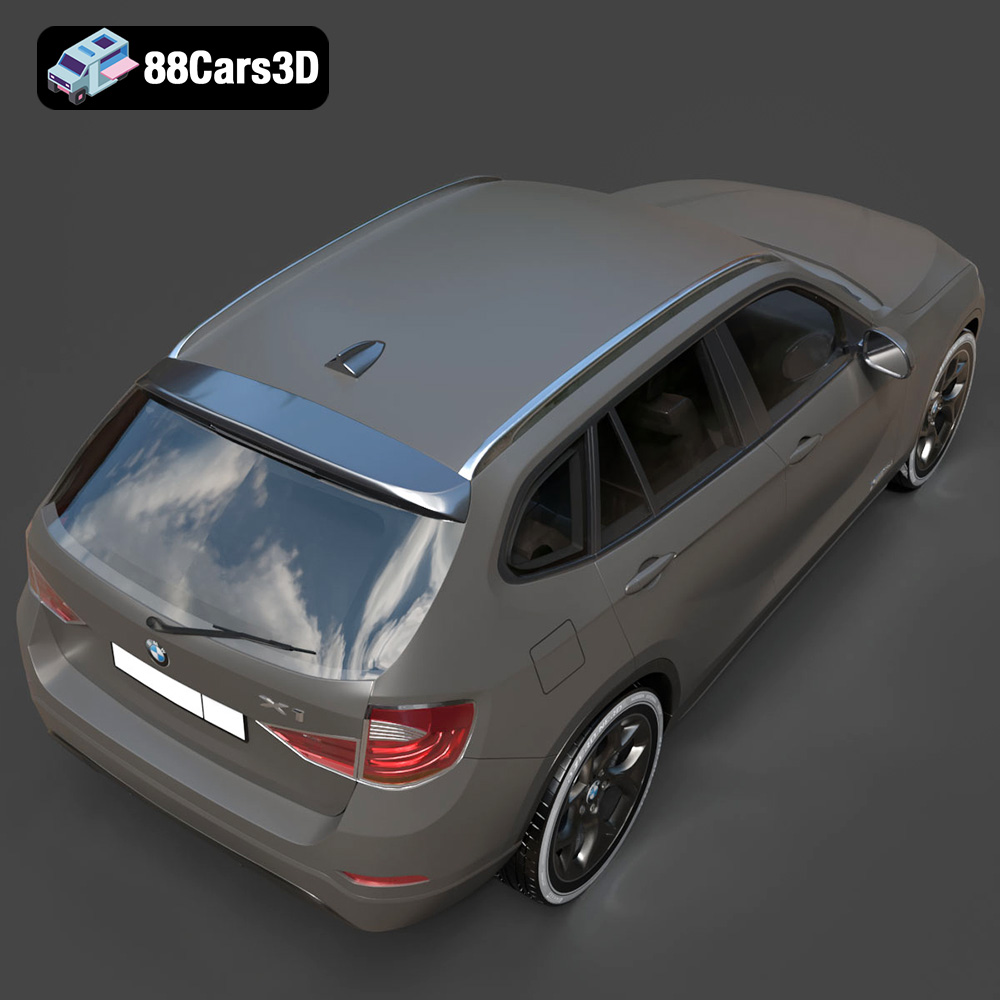
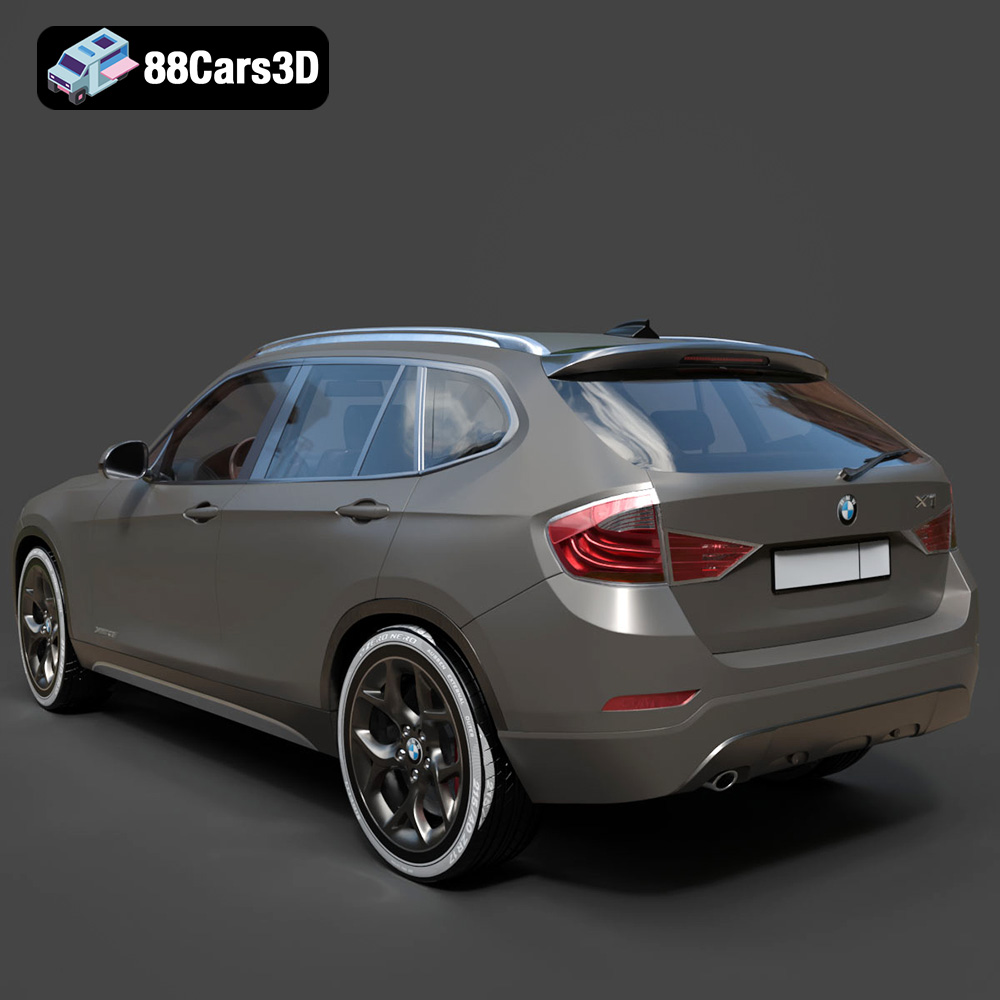
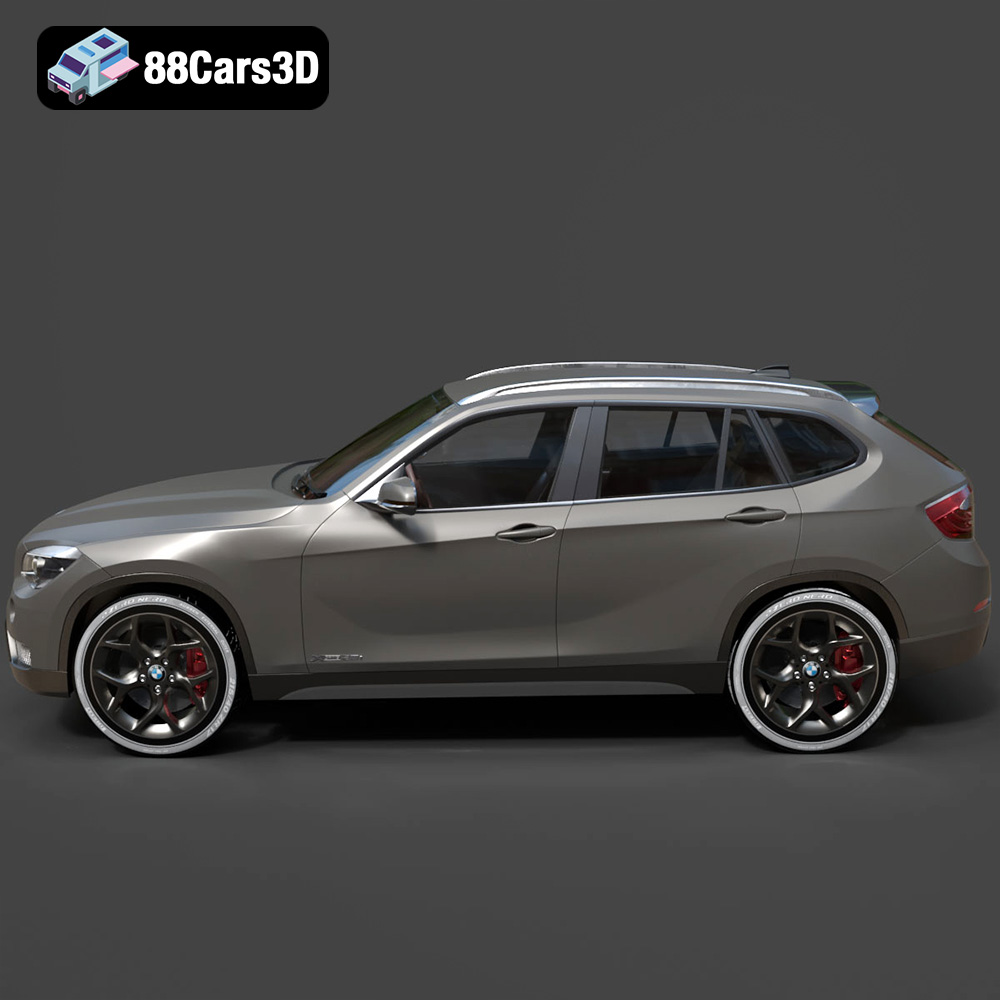
Discover the pioneer of the premium compact SUV segment with our highly accurate BMW X1 2013 3D model. This meticulously crafted digital asset captures the sporty, versatile essence of the first-generation E84 X1, blending the dynamic driving characteristics of a sports sedan with the commanding stance of an SAV (Sports Activity Vehicle). Highlighting iconic visual elements such as the signature kidney grille, sculpted hood, and unmistakable twin-circular headlights, this model brings authentic Bavarian styling to your virtual environment. Boasting a highly detailed topology with a triangle count of 925,351, this 3D model delivers exceptional visual fidelity and smooth surface reflections. Expertly optimized for modern real-time rendering, game engines, and high-end visualization workflows, the model ensures stunning photorealism without sacrificing structural accuracy. Whether used for up-close cinematic shots or dynamic driving animations, it stands ready to perform seamlessly.
$26.00
.2013
.blend
.bmw
.fbx
.glb
.max
.obj
.ply
.rendering
.stl
.unreal
car-3d-model
compact-suv
game asset
game-ready
optimized
SUV
VR/AR
x1