Get 20% OFF All Premium 3D & STL Models!

In the fast-evolving digital landscape, the demand for exceptionally detailed and versatile 3D car models is higher than ever. From breathtaking cinematic automotive rendering to immersive, real-time gaming environments and innovative AR/VR experiences, the quality of your digital assets dictates the success of your project. Creating these intricate models from scratch is a time-consuming and resource-intensive endeavor, often requiring a specialized skill set that many studios or individual artists might not possess. This is where pre-built, professionally crafted 3D models become invaluable, offering both efficiency and unparalleled fidelity.
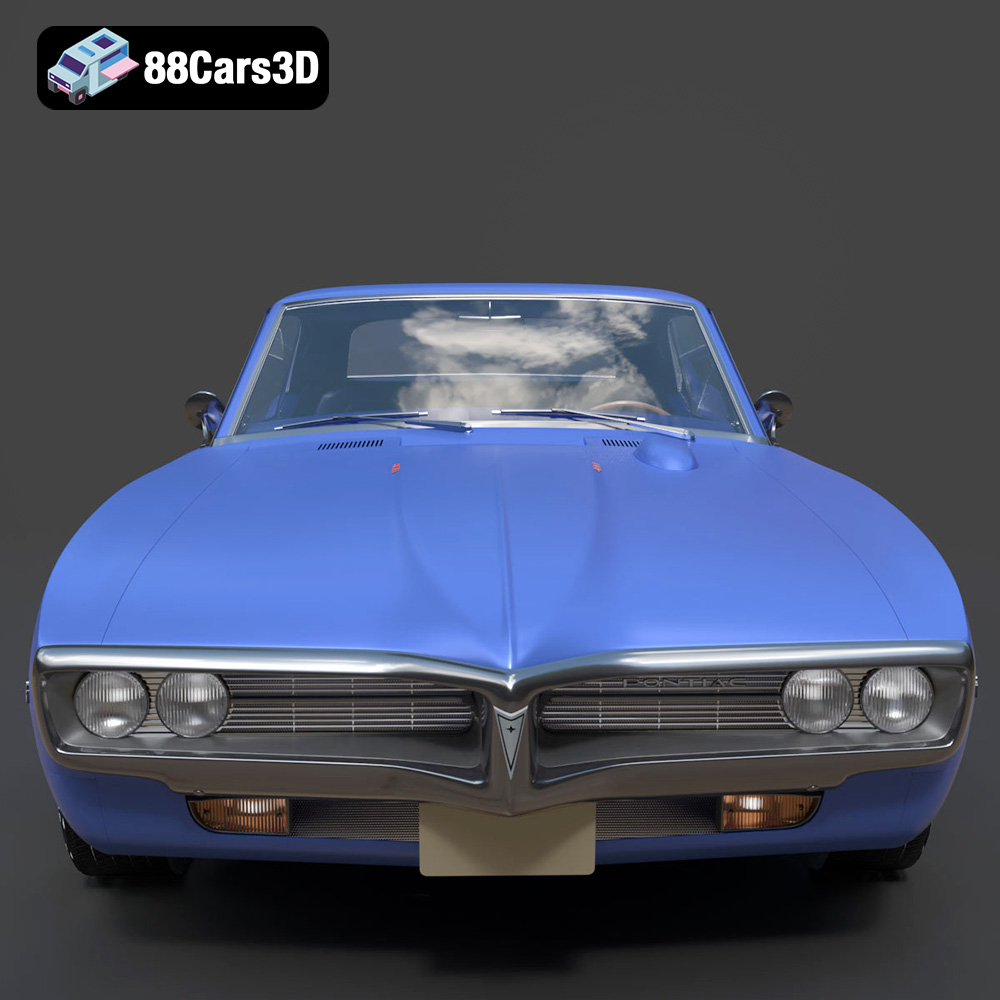
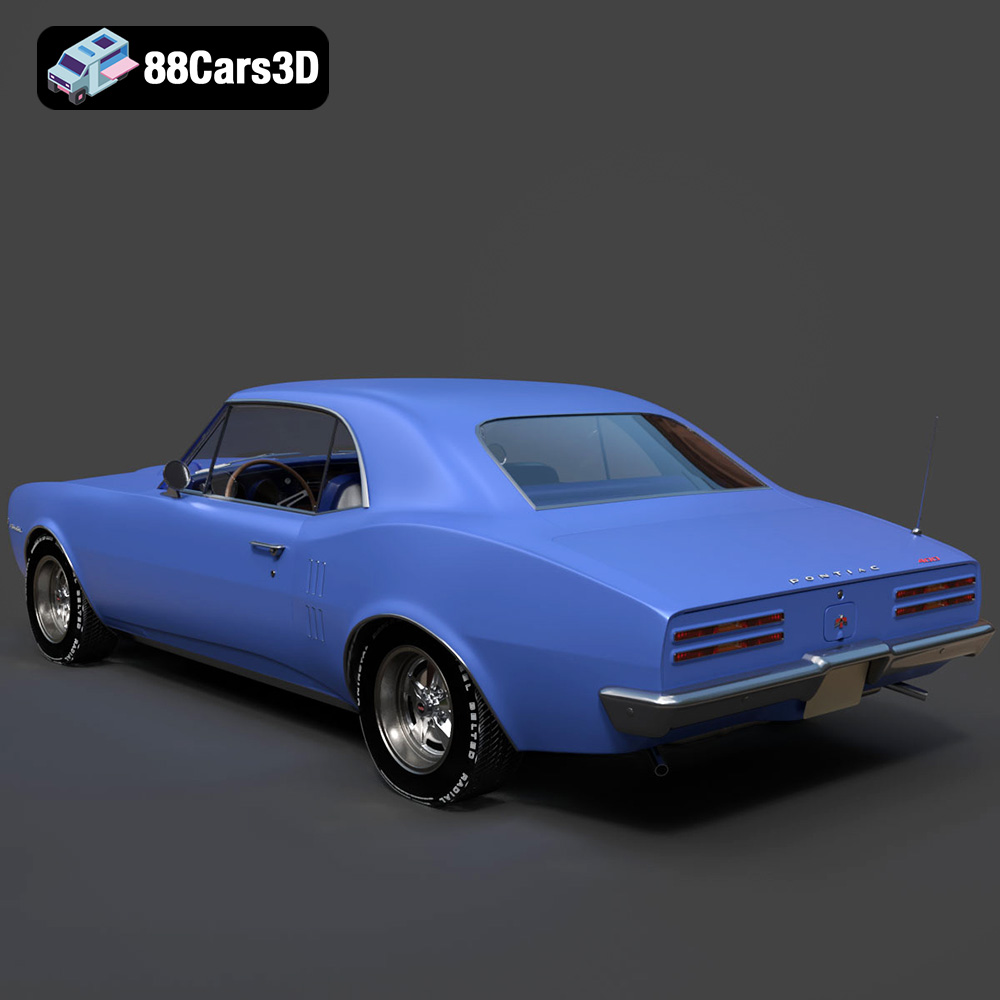
Today, we’re diving deep into an iconic piece of American automotive history, meticulously recreated for the digital age: the **Pontiac Firebird 1967 3D Model**. This digital replica isn’t just a static object; it’s a fully optimized, highly detailed asset designed to inject authenticity and performance into a myriad of professional applications. Whether you’re a game developer seeking the perfect muscle car for your open-world racer, a visualization artist aiming for photorealistic period scenes, or an enthusiast keen on 3D printing a piece of history, this model offers a robust foundation. Available at 88cars3d.com, it exemplifies the pinnacle of quality in downloadable 3D car models, ready to seamlessly integrate into your next ambitious project.
The utility and compatibility of any 3D model are intrinsically tied to the file formats it supports. A single, high-quality asset can serve vastly different purposes depending on how it’s packaged and optimized. Understanding these formats is crucial for any professional working with 3D content, as selecting the correct format ensures smooth workflows, preserves data integrity, and maximizes performance across various software and platforms. The Pontiac Firebird 1967 3D Model offers an extensive array of file types, making it incredibly adaptable. Let’s explore the most common and their specific applications.
The **.blend** file format is the native format for Blender, a powerful and widely used open-source 3D creation suite. When you download a .blend file, you’re getting a complete Blender scene, often including the raw mesh data, materials, textures, lighting setups, and even animation rigs. This offers the highest degree of editability and flexibility for Blender users. Artists can easily inspect the model’s construction, modify topology, adjust materials, or re-rig components with all the original scene information intact. It’s perfect for those who want to integrate the model deeply into a Blender-centric pipeline and leverage Blender’s robust feature set for further customization or scene assembly.
Autodesk’s **.fbx** (Filmbox) format has become an industry standard for interoperability, particularly between different 3D software applications and real-time game engines like Unreal Engine and Unity. FBX files can store a vast amount of 3D data, including mesh geometry, materials, textures, animations, skinning information, and even camera and light data. Its ability to maintain hierarchical structures and animation data makes it ideal for game development, cinematic rendering, and motion graphics workflows where animation transfer is critical. The Pontiac Firebird 1967, when supplied as .fbx, is highly optimized for performance in these real-time pipelines, ensuring efficient polycount and proper pivot setups for animation.
The **.obj** (Wavefront Object) format is one of the oldest and most universally supported 3D file formats. It’s a simple, text-based format primarily used to store geometric data such as vertices, normals, UV coordinates, and faces. While it can reference external material files (.mtl), its strength lies in its widespread compatibility across virtually all 3D software. For the Pontiac Firebird 1967, an .obj file provides a clean mesh that can be easily imported into any application for basic rendering or as a starting point for re-texturing and material setup in a new environment. It’s an excellent choice for cross-software compatibility when complex animations or advanced material definitions aren’t the primary concern.
The **.glb** (GLB/glTF Binary) format is a modern, efficient, and increasingly popular format designed specifically for the transmission of 3D scenes and models in a compact, single-file package. Built on the glTF (Graphics Language Transmission Format) standard, it’s optimized for web-based applications, augmented reality (AR), virtual reality (VR), and mobile viewing. GLB files embed textures and materials directly within the file, ensuring a self-contained and easily distributable asset. For the Pontiac Firebird 1967, the .glb format is perfect for virtual showrooms, AR car configurators, or presenting the model on a website, offering rapid loading and efficient rendering in these interactive, real-time environments.
The **.stl** (Stereolithography) format is the de facto standard for 3D printing. It represents a 3D model as a collection of unconnected triangular facets, defining only the surface geometry without color, texture, or internal structure. While not suitable for rendering or animation, its simplicity makes it ideal for additive manufacturing. Converting the Pontiac Firebird 1967 to .stl allows hobbyists and professionals alike to bring the digital muscle car into the physical world, creating tangible models for display or functional prototypes. The model’s optimized topology ensures a clean conversion for print-ready output.
The **.ply** (Polygon File Format) is another widely supported format often used for storing 3D scanner data, point clouds, and mesh data. It can store various properties beyond just geometry, such as color per vertex, normal vectors, and transparency, making it suitable for scientific visualization, CAD applications, and precise 3D analysis. While less common for general rendering than FBX or OBJ, its ability to store detailed mesh attributes can be valuable for niche applications requiring higher data fidelity for the Pontiac Firebird 1967 model.
The designation **.unreal** implies an asset that is specifically tailored and optimized for direct integration into Unreal Engine. While not a standalone file extension in the same vein as .fbx, it typically represents an Unreal Engine project package, asset pack, or a configured asset ready for drag-and-drop implementation. This means the model has likely undergone specific material setup, collision mesh generation, LOD (Level of Detail) optimization, and blueprint integration tailored for Unreal’s rendering pipeline and game logic. For the Pontiac Firebird 1967, an “Unreal-ready” asset significantly accelerates game development and real-time visualization projects, minimizing import issues and maximizing performance.
Finally, the **.max** format is the native project file for Autodesk 3ds Max, a leading software for 3D modeling, animation, rendering, and visualization. Similar to .blend, a .max file contains the complete scene, including all geometric data, materials, textures, lights, cameras, modifiers, and animation data. This format provides 3ds Max users with full access to the original project, allowing for intricate modifications, custom rigging, and advanced rendering setups using tools like V-Ray or Corona Renderer. The availability of the Pontiac Firebird 1967 in .max format ensures that professionals utilizing 3ds Max can fully leverage the model’s potential within their established workflows.
The inclusion of such a comprehensive range of formats for the Pontiac Firebird 1967 3D Model underscores its versatility and quality, making it an indispensable asset for virtually any 3D professional.
Bringing an iconic vehicle like the 1967 Pontiac Firebird into the digital realm requires more than just polygon modeling; it demands a deep understanding of automotive design, historical accuracy, and meticulous attention to detail. This specific 3D model transcends a simple representation, offering a true digital replica that breathes life into a legendary machine. The goal is always to capture the spirit and the precise visual nuances that made the original so beloved, and this model achieves that with remarkable success.
The 1967 Pontiac Firebird is instantly recognizable by its aggressive “Coke-bottle” styling, a distinctive design trend of the late 60s. This model accurately portrays those sculpted lines, from the flowing fenders to the subtle waistline taper. Crucially, the signature front split-grille bumper design, flanked by those iconic quad headlights, is recreated with exceptional precision. Every curve, vent, and panel gap reflects the genuine article. Further enhancing its authenticity are the details often overlooked in less professional models: a meticulously recreated V8 engine block visible through the hood, a classic dual exhaust system with polished chrome tips, and period-accurate rally wheels wrapped in realistic tire treads. Even the authentic leaf-spring rear and independent front suspension details are present, and critically, separated components for wheels, suspension, and steering ensure it’s ready for complex animations. This level of granular detail makes the Firebird perfect for close-up shots in cinematics or highly interactive virtual experiences.
The experience of a classic muscle car isn’t just about its exterior; the interior sets the mood and provides context. This Pontiac Firebird 1967 model includes a faithfully replicated cockpit that exudes vintage charm. From the textured, vinyl-style bucket seats that evoke the era to the classic three-spoke wooden steering wheel, every element contributes to an immersive experience. The deep-set analog instrument cluster and dashboard layout are historically accurate, along with the floor-mounted shifter and pedal placement. For game developers, the optimized geometry of the interior is a significant advantage, allowing for seamless first-person POV (Point-Of-View) camera angles without sacrificing performance. This ensures that players or viewers can truly feel like they are inside this powerful machine, enhancing realism and engagement.
Beyond aesthetic appeal, the true measure of a high-quality 3D model lies in its technical specifications and how well it integrates into professional production pipelines. The Pontiac Firebird 1967 3D Model excels in this regard, offering a blend of visual fidelity and optimization that makes it suitable for demanding projects.
One of the most critical aspects of any 3D asset, especially for real-time applications, is its polygon count. The Pontiac Firebird 1967 model boasts an exceptional topology of 3,853,174 triangles. This number strikes a near-perfect balance: it’s high enough to deliver unparalleled visual fidelity, capable of holding up under extreme close-up shots and high-resolution rendering, yet it remains optimized for high-end real-time applications. For game engines like Unreal Engine and Unity, this polycount means the model can be incorporated without crippling performance, potentially leveraging LOD (Level of Detail) systems for further optimization as distance from the camera increases. Furthermore, the model is built to real-world scale accuracy, based on actual vehicle chassis dimensions, ensuring consistent integration into larger scenes and simulations. Proper pivot setups for steering, wheel rotation, and suspension travel are already configured, saving countless hours for animators and riggers.
A truly professional 3D asset must be compatible with a diverse ecosystem of software and rendering engines. This Pontiac Firebird 3D model is designed with broad compatibility in mind, a testament to its professional pedigree. With native .blend and .max files, users of Blender and 3ds Max have direct access to the original project files for maximum flexibility. The inclusion of .fbx and .obj formats ensures seamless import into virtually any other 3D software, from Maya to Cinema 4D, and into real-time engines. For game developers, the “Unreal-ready” nature of the asset implies that materials, textures, and even potentially collision meshes are configured for direct import into Unreal Engine, streamlining the integration process. While not explicitly detailed, it’s understood that high-quality 3D car models like this come with well-organized UV mapping, allowing for easy application of textures and shaders, further enhancing its adaptability for various rendering scenarios, from physically-based rendering (PBR) in game engines to advanced ray tracing in architectural visualization. This robust cross-platform compatibility ensures that no matter your preferred workflow, the Firebird is ready to roll.
The true power of a meticulously crafted 3D model lies in its ability to serve as a versatile foundation for diverse creative and commercial endeavors. The Pontiac Firebird 1967 3D Model from 88cars3d.com is not just a digital asset; it’s a catalyst for innovation across multiple industries.
The broad appeal and technical robustness of this model make it ideal for numerous professional applications. For **Game Development**, it’s a perfect fit for open-world games, racing titles, and vehicle simulators. Its optimized polycount and real-world scale mean it can be directly integrated into game environments, offering players an authentic driving experience. In the realm of **AR/VR**, the Firebird shines as a central piece for immersive virtual showrooms, allowing potential buyers or enthusiasts to explore every detail of the classic car in a fully interactive 3D space. It can power configurators where users customize colors and features, or serve as a stunning prop in mobile AR experiences. For **Rendering & Visualization**, the model is a dream come true. Imagine it in high-resolution brand campaigns, lifestyle scenes bathed in realistic lighting, or perfectly lit studio setups showcasing its iconic lines. Its fidelity supports cinematic quality output, making it invaluable for advertising agencies and automotive design studios. Lastly, for **3D Printing**, the model’s clean mesh converts beautifully to .stl format, allowing hobbyists and collectors to fabricate physical display models, bringing a tangible piece of automotive history into their hands.
No two projects are exactly alike, and the ability to customize a 3D asset is paramount for delivering unique, tailored content. The Pontiac Firebird 1967 3D Model offers extensive customization options, empowering artists to adapt it to their specific creative vision. Users can easily change body colors, experimenting with authentic factory colors, modern metallic finishes, or custom artistic schemes. Tire textures can be modified to reflect different scenarios, from classic street variants to more aggressive off-road treads, if desired. Material finishes, such as matte, gloss, or metallic, can be adjusted across various components, allowing for nuanced realism or stylized effects. Furthermore, the model is built to respond well to diverse lighting setups, meaning artists can adapt it to any environment, from a sun-drenched Californian highway to a moody, rain-soaked urban street. This flexibility ensures that while the base model is historically accurate, its final presentation can be entirely unique to your project, reflecting your artistic intent and meeting specific client requirements.
One of the most exciting capabilities offered by a meticulously crafted 3D model like the Pontiac Firebird 1967 is the potential to transcend the digital screen and manifest as a physical object. The inclusion of the .stl file format and detailed 3D print settings transforms this digital asset into a blueprint for tangible creation, opening doors for hobbyists, collectors, and prototyping professionals.
To achieve a high-quality physical replica of the Firebird, understanding and adhering to recommended 3D print settings is crucial. The model is scaled for popular display sizes: 1:12, 1:18, or 1:24, offering flexibility depending on your desired output size and printer capabilities. For capturing the fine details of this muscle car, a low layer height of 0.04–0.12 mm is recommended. For truly exceptional fidelity, resin printing (SLA/DLP) is highly advised over FDM, as it allows for much finer resolution on intricate parts like the grille, engine block, and interior components. Wall thickness should be maintained between 1.2–2.0 mm to ensure structural integrity without making the model overly heavy or requiring excessive material. An infill density of 20–30% generally provides a good balance between strength and material usage. These parameters are designed to ensure that the iconic curves, sharp edges, and delicate features of the Firebird are accurately preserved in the physical print.
Due to the complex geometry and overhangs inherent in an automotive model, strategic use of support structures is absolutely required. Detailed parts such as the exhaust system, mirrors, and various undercarriage components will need careful support placement to prevent warping or deformation during the printing process. Optimal print orientation also plays a significant role; printing the main frame angled can improve structural integrity and reduce the need for excessive supports on critical areas. Separating components like the wheels for individual printing often yields better results, allowing for cleaner prints and easier post-processing. Once printed, the journey from raw plastic to a showroom-quality miniature Firebird involves diligent post-processing. This typically includes sanding to smooth out layer lines, applying primer for an even surface, and finally, painting with authentic factory colors and metallic finishes to truly capture the gleaming essence of the 1967 Pontiac Firebird. This process transforms the digital asset from 88cars3d.com into a stunning, physical collectible, showcasing the incredible versatility of high-quality 3D car models.
The pursuit of realism and efficiency in digital content creation demands high-quality assets that are both visually stunning and technically robust. The **Pontiac Firebird 1967 3D Model** stands as an exemplary representation of what professionally crafted 3D car models can offer. From its meticulously recreated “Coke-bottle” styling and detailed V8 engine to its historically accurate interior and optimized topology, every aspect is designed to meet the rigorous demands of professional workflows.
We’ve explored how its comprehensive range of file formats—including .blend, .fbx, .obj, .glb, .stl, .ply, .unreal, and .max—ensures unparalleled compatibility across diverse software and engines, empowering artists whether they are creating cinematic automotive rendering, developing immersive game assets, or fabricating physical replicas through 3D printing. This model is not just a digital representation; it’s a versatile tool ready to integrate into game development, AR/VR experiences, high-end visualizations, and more, offering extensive customization options to tailor it to any creative vision.
For professionals seeking to elevate their projects with premium 3D car models that combine historical accuracy with cutting-edge technical optimization, the Pontiac Firebird 1967 is an indispensable asset. Discover this exceptional model and a wide selection of other high-quality 3D assets to accelerate your projects at 88cars3d.com. Equip your creative arsenal with assets that perform as brilliantly as they look.
The 1967 Pontiac Firebird stands as a true American muscle car legend, introduced to dominate the late-60s pony car era. This digital replica captures its aggressive Coke-bottle styling, distinctive front split-grille bumper design, and iconic quad headlights. Every detail, from the meticulously recreated V8 engine block to the classic dual exhaust system, reflects the raw power and heritage of this historic vehicle. Featuring an exceptional topology of 3,853,174 triangles, this 3D model delivers unparalleled visual fidelity for close-up shots while remaining versatile enough for high-end real-time applications. Whether used in game development, AR/VR environments, detailed animation, or photorealistic visualization, it provides a premium foundation for any digital automotive project. Perfect for cinematic automotive rendering, period-accurate open-world racing games, immersive virtual showrooms, and historical vehicle animations.
$37.50
.1967
.blend
.fbx
.firebird
.glb
.max
.obj
.ply
.pontiac
.rendering
.stl
.unreal
car-3d-model
classic-car
game asset
game-ready
high poly
muscle-car
optimized
pony-car
VR/AR