Unlocking Infinite Universes: The Power of Production-Ready 3D Assets
In the vibrant and ever-evolving landscape of digital creation, the demand for high-quality, production-ready 3D assets has never been greater. From blockbuster video games and cinematic visual effects to immersive AR/VR experiences and detailed product visualizations, the foundational element remains the same: meticulously crafted 3D models. These assets are not just static objects; they are the building blocks of virtual worlds, the protagonists of digital narratives, and the very essence of interactive experiences.
The journey from concept to a tangible, usable 3D model is often complex and time-consuming, requiring expert artistic skill coupled with deep technical knowledge. This is where platforms like 88cars3d.com shine, offering a curated selection of premium 3D models designed to accelerate workflows and elevate creative projects. While 88cars3d.com is renowned for its exceptional collection of 3D car models and automotive rendering assets, its diverse catalog extends to a wide array of meticulously crafted objects, including futuristic spacecraft that redefine digital exploration. Today, we delve into one such remarkable asset: a stunning, game-ready Spaceship 3D model. This model exemplifies the blend of artistic vision and technical precision required for modern digital pipelines, offering creators an immediate launchpad into their sci-fi epics.
The Cornerstone of Digital Creation: Why High-Fidelity 3D Assets Matter
The quality of a 3D asset directly impacts the final output of any project. In industries where visual fidelity is paramount, such as game development and cinematic rendering, compromise is not an option. High-fidelity 3D models offer unparalleled realism, crucial for suspending disbelief and engaging audiences. However, “high-fidelity” must also be balanced with “optimization,” especially for real-time applications.
Visual Fidelity vs. Performance Optimization
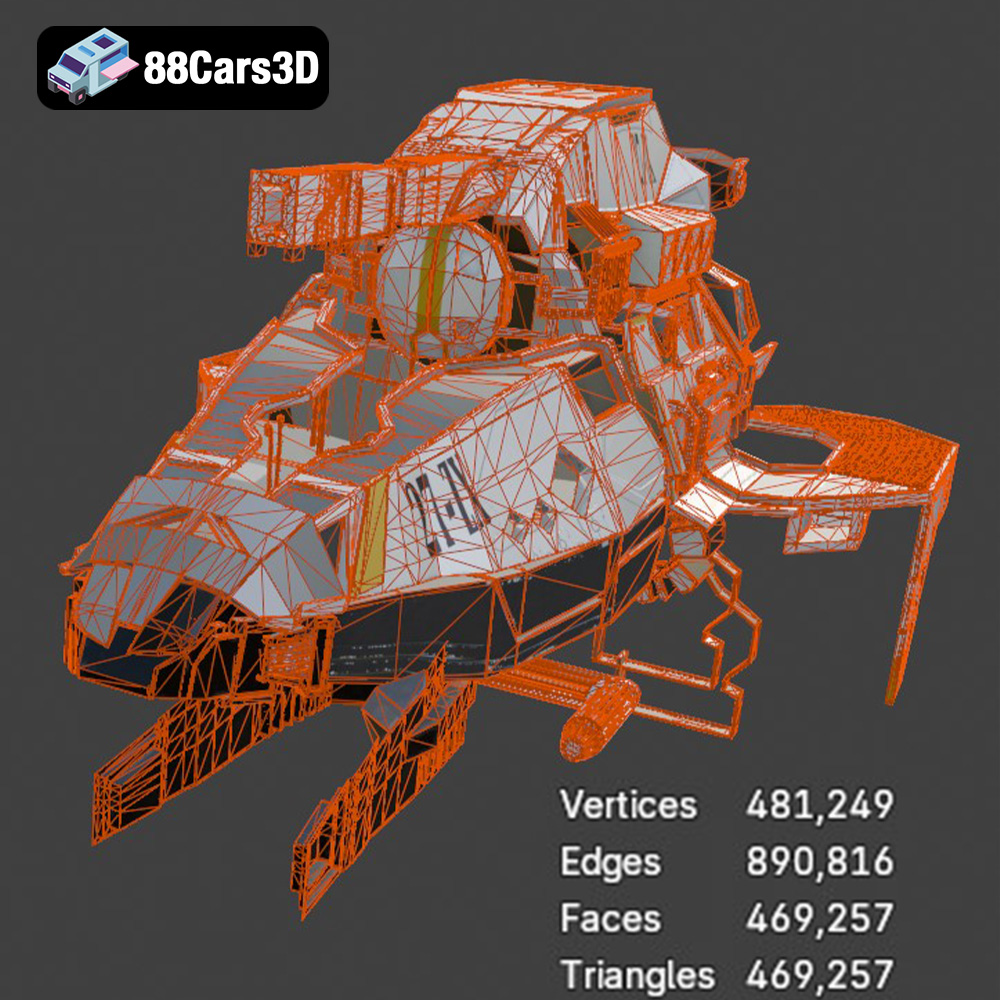
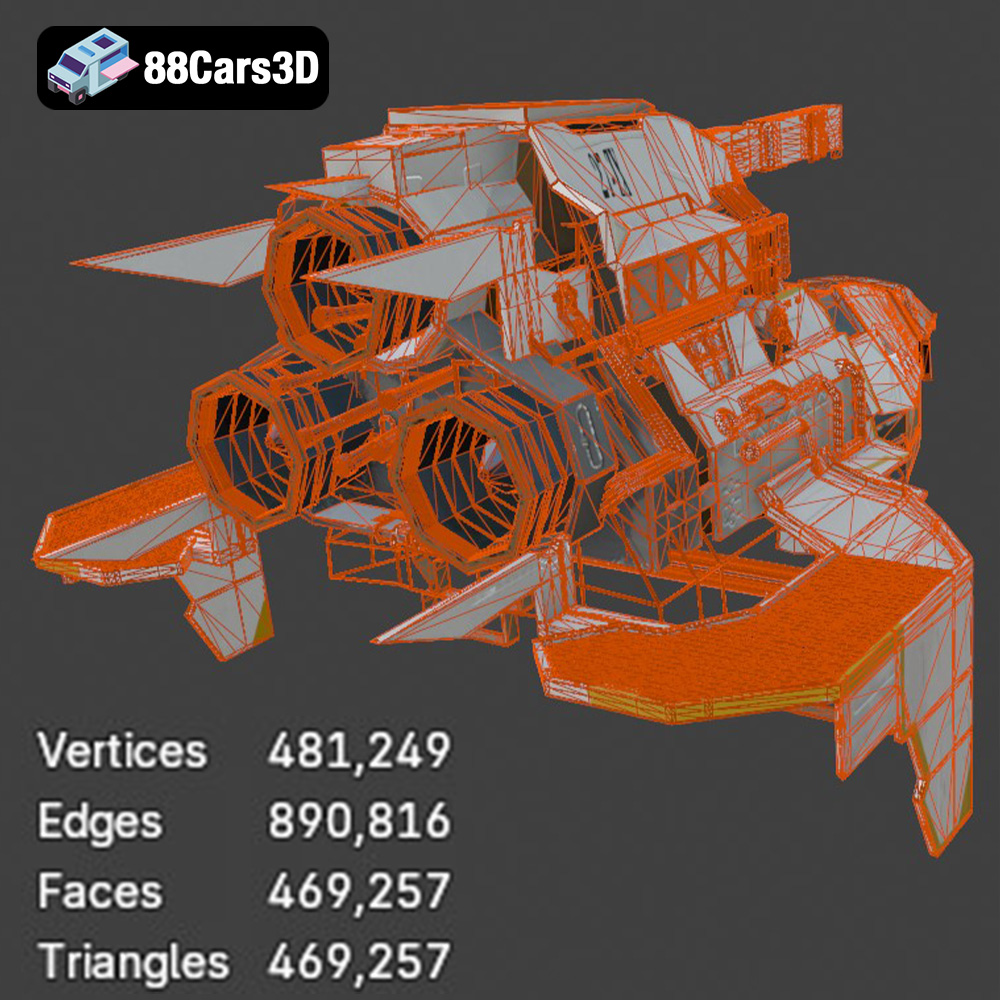
Achieving breathtaking visuals often comes at the cost of computational performance. A truly professional 3D asset strikes a delicate balance. For instance, the featured Spaceship 3D model boasts a detailed 469,257 triangle count. This seemingly high number is, in fact, optimized. It’s high enough to capture intricate details like hull plating, engine components, and cockpit interiors with exceptional clarity, yet carefully managed to ensure smooth performance in real-time environments like Unreal Engine and Unity. This balance is critical; a model that is too dense will cripple frame rates, while one that is too sparse will lack visual impact. The art lies in intelligent polygon distribution, using detail where it matters most and optimizing less visible areas.
- Subdivision Surfaces vs. Polygonal Modeling: While subdivision surfaces allow for smooth geometry from a low-poly base, game engines typically require triangulated polygonal meshes. Optimized high-poly models, like our Spaceship, are often the result of careful manual modeling or high-to-low poly baking processes, ensuring a clean, game-ready topology.
- Texture and Material Optimization: Beyond geometry, high-fidelity also encompasses expertly crafted PBR (Physically Based Rendering) textures and materials. These ensure that surfaces react realistically to light, adding depth and realism without excessive polygon count.
The Value of Production-Ready Assets
Time is a valuable commodity in any production pipeline. Creating complex 3D models from scratch can take hundreds of hours for even experienced artists. Investing in production-ready assets dramatically reduces development time, allowing teams to focus on core game mechanics, animation, or scene composition rather than foundational modeling tasks. A “production-ready” asset implies:
- Clean Topology: Well-organized mesh with proper edge flow, preventing rendering artifacts and simplifying UV mapping and animation.
- Proper UV Mapping: Efficiently unwrapped UVs ensure textures display correctly and without distortion. Many game-ready assets come with multiple UV sets for different material requirements.
- PBR Materials: Pre-configured materials optimized for standard rendering pipelines, often including Albedo/Base Color, Metallic, Roughness, Normal, and Ambient Occlusion maps.
- Correct Scale and Pivots: Modeled to real-world scale and with accurately placed pivot points for easy manipulation, animation, and integration into scenes. The Spaceship model, for example, features proper pivot setups for landing gear deployment, turret rotation, and thruster vectors.
- Wide Format Compatibility: Available in multiple formats to suit various software and engine requirements, minimizing conversion headaches.
The Spaceship 3D model epitomizes these advantages, offering a high-detail asset that is immediately usable across diverse projects, from cinematic renders to interactive simulations.
Understanding 3D Model File Formats
The choice of file format is a critical decision in any 3D workflow, dictating compatibility, feature retention, and overall efficiency. A truly versatile 3D asset, such as the Spaceship model from 88cars3d.com, is offered in a multitude of formats to cater to specific project needs. Understanding these distinctions is key to seamless integration and optimal performance.
Native Scene Formats: .blend and .max
- .blend (Blender): This is Blender’s native file format. It’s a complete scene package, storing not just the mesh data but also materials, textures (packed within), lighting, cameras, animation data, physics simulations, and even scene layouts. For Blender users, a `.blend` file offers the highest degree of editability and flexibility, allowing full access to the original project structure, modifiers, and non-destructive workflows. When you download the Spaceship in `.blend` format, you’re getting the artist’s full Blender project, ready for any modifications or deeper integration. It’s ideal for those who want to dissect the model, learn from its construction, or customize it extensively within the Blender ecosystem.
- .max (3ds Max): Similar to `.blend`, `.max` is the native file format for Autodesk 3ds Max. It encapsulates the entire 3ds Max scene, including geometry, materials (with all their specific settings like V-Ray, Corona, Arnold, etc.), lights, cameras, animations, and render settings. For professionals working in architectural visualization, automotive rendering (a core strength of 88cars3d.com’s offerings), or high-fidelity cinematic production using 3ds Max, the `.max` file provides an uncompromised starting point, preserving all original details and render-specific configurations of the Spaceship model.
Universal Exchange Formats: .fbx and .obj
- .fbx (Filmbox): Developed by Autodesk, FBX is arguably the most widely adopted exchange format in the 3D industry, especially for game development and animation. It’s designed to transfer a wide range of data, including geometry (meshes, polygons, vertices), materials (basic properties, though complex shaders might not transfer perfectly), textures (often referenced, not embedded), animation (skeletons, skinning, keyframes), cameras, and lights. Its robust support for animation makes it the go-to format for bringing animated characters and vehicles, like our Spaceship, into game engines like Unreal and Unity. An `.fbx` file of the Spaceship would be pre-configured with correct pivots and potentially separated parts ready for animation.
- .obj (Wavefront Object): One of the oldest and most universally supported 3D formats. OBJ is excellent for transferring pure geometric data – vertices, faces, UV coordinates. It typically references external `.mtl` (material library) files for basic material properties (color, specular) and texture maps. While `.obj` doesn’t support animation or advanced scene data, its simplicity and widespread compatibility make it an excellent choice for basic mesh transfer between virtually any 3D software. For the Spaceship, an `.obj` offers a clean mesh for sculpting, retopology, or rendering in an application where `.fbx` or native formats aren’t preferred or necessary.
Web & AR/VR Optimized: .glb
- .glb (GL Transmission Format Binary): This is the binary version of glTF (Graphics Language Transmission Format), designed for efficient transmission and loading of 3D scenes and models in web and AR/VR applications. `.glb` files package all necessary assets – geometry, textures, materials, and animations – into a single, self-contained binary file. This makes them incredibly portable and ideal for deployment in browsers, mobile AR apps, and WebGL contexts. The Spaceship `.glb` file is specifically optimized for these use cases, offering a high-quality model that can be instantly displayed and interacted with on the web or in mobile augmented reality, enabling immersive product showcases or interactive experiences.
Manufacturing & Engineering: .stl and .ply
- .stl (Stereolithography): This format is the industry standard for 3D printing. An `.stl` file describes only the surface geometry of a 3D object using a collection of interconnected triangles. It does not carry color, texture, or material information. The Spaceship `.stl` file is crucial for hobbyists or professionals looking to physically manifest the model, perhaps as a desk ornament or a detailed prop. It is ready to be sliced by 3D printing software, with the product description even providing recommended print settings like scale, layer height, and support requirements.
- .ply (Polygon File Format): Also known as the Stanford Triangle Format, `.ply` is primarily used for storing 3D data from 3D scanners, CAD applications, or scientific data visualization. It can store a wide range of properties, including color, transparency, surface normals, and texture coordinates, in addition to geometry. While less common for direct game asset use, its precision and ability to store rich mesh attributes make it valuable for specific engineering, analysis, or niche visualization tasks involving the Spaceship model.
Engine-Specific Integration: .unreal
- .unreal (Unreal Engine Asset): While not a standalone file extension in the traditional sense like `.fbx` or `.obj`, `.unreal` implies a package or asset specifically pre-configured and optimized for direct import and use within Unreal Engine. This often means the asset has been properly scaled, has collision meshes generated, materials set up within Unreal’s PBR system, and potentially even blueprint scripts for interactivity. For developers using Unreal, a `.unreal` asset (or an FBX perfectly tailored for Unreal) provides the quickest and most reliable path to integrating the Spaceship into their game, minimizing setup time and ensuring engine-native performance.
The comprehensive range of formats for the Spaceship 3D model underscores its versatility and the understanding of diverse user needs, ensuring that creators, regardless of their preferred software or end-use application, have the perfect starting point.
Deconstructing the Spaceship: A Masterclass in Sci-Fi Design
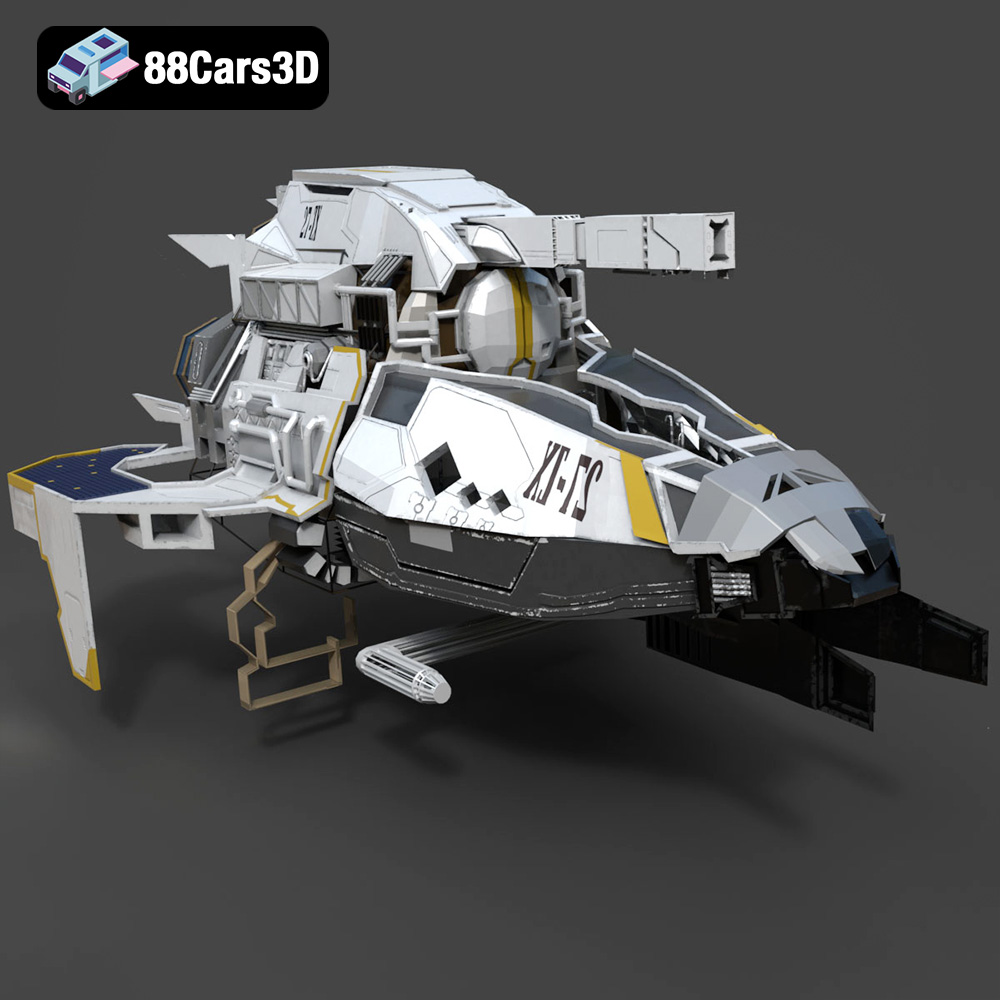
The Spaceship 3D model available on 88cars3d.com is more than just a collection of polygons; it’s a meticulously engineered piece of digital art designed for impact. Every curve, every plate, every thruster component has been crafted with a blend of aesthetic appeal and functional believability, making it an outstanding asset for any sci-fi project.
Exterior Aerodynamics and Combat Readiness
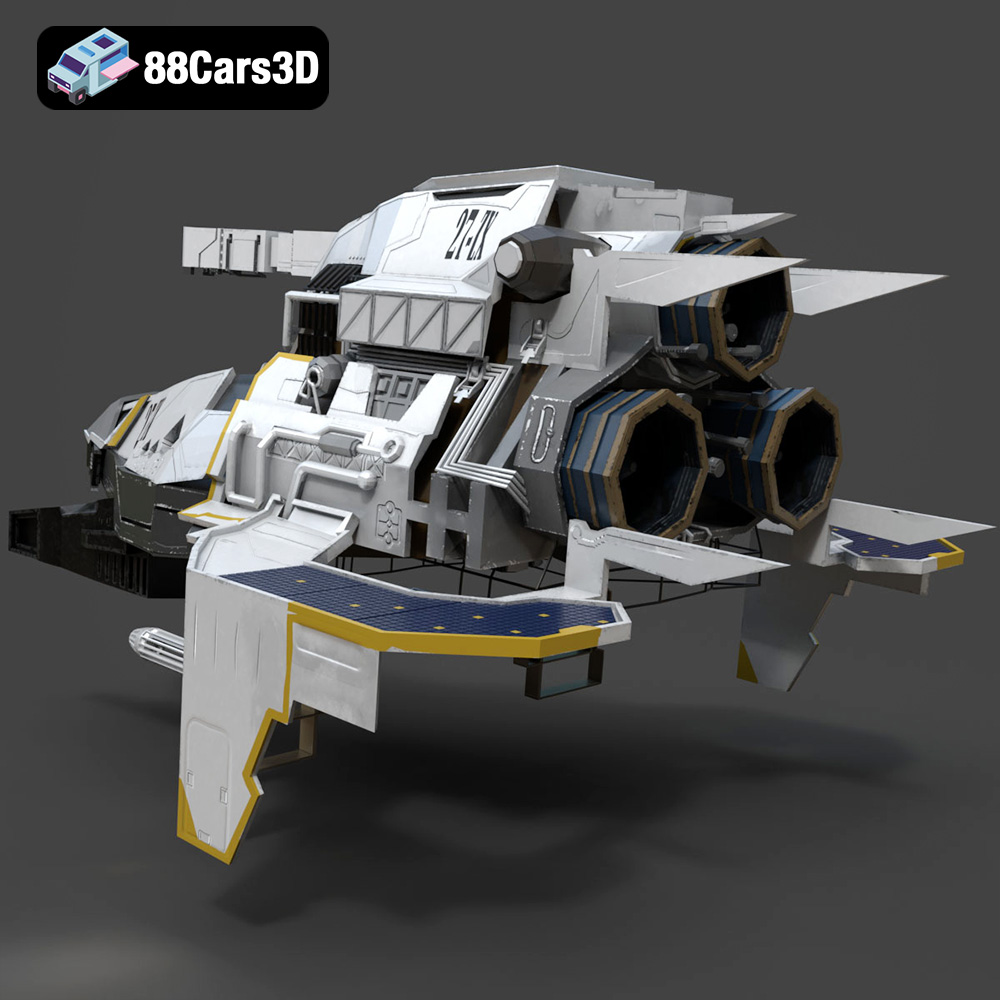
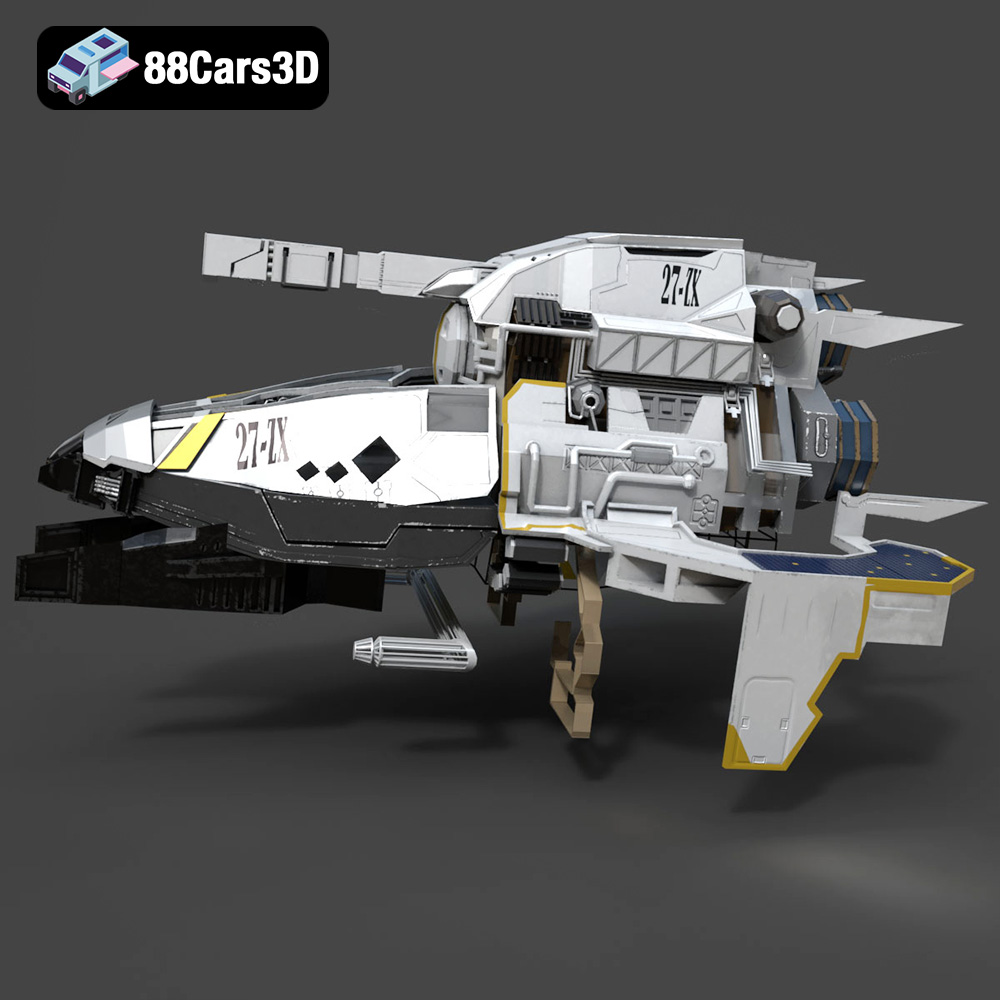
The model’s exterior is a testament to thoughtful futuristic design. Its advanced aerodynamic hull isn’t merely for show; it suggests a vessel built for speed and maneuverability, even in the vacuum of space where traditional aerodynamics don’t apply. The intricate exterior armor plating gives it a rugged, combat-ready appearance, hinting at interstellar skirmishes and deep-space perils. Key features include:
- Detailed Hyper-Drive Engine Blocks: These are not just generic cylinders but complex assemblies with modular energy nodes and high-tech exhaust systems, suggesting powerful propulsion capabilities. The design allows for dynamic lighting details, such as navigation beacons and engine glow, crucial for bringing the model to life in motion.
- Retractable Landing Gear and Structural Struts: These components are not only visually complete but also separated for animation, enabling realistic deployment sequences. This level of detail is vital for cinematic intros or in-game cutscenes.
- Integrated Weapon Bays and Defensive Shielding Emitters: These elements are subtly incorporated, maintaining the sleek silhouette while clearly communicating the vessel’s combat potential. Separate weapon turrets further enhance the model’s animation readiness.
This attention to detail ensures that the Spaceship looks formidable and functional from every angle, whether showcased in a high-resolution render or viewed up close in a game.
Immersive Cockpit and Interior Details
Beyond the impressive exterior, the Spaceship offers a fully realized interior, a feature often overlooked in many game assets but essential for truly immersive experiences, especially in first-person games or VR. The cockpit is designed with the pilot in mind, blending ergonomics with futuristic technology:
- Ergonomic Pilot Command Seat and Restraint Systems: Suggests comfort and safety during high-G maneuvers.
- Futuristic Flight Yoke and Navigation Controls: These elements are ready for interaction, providing visual cues for player input.
- Detailed Holographic Instrument Cluster and Dashboard Displays: These intricate details can be animated or textured with dynamic information, enhancing the sense of a living, breathing machine.
- Complex Control Panels, Throttle Levers, and Diagnostic Screens: Every button and switch contributes to the realism, making the interior feel like a functional command center.
The optimized geometry for first-person POV ensures that players or viewers experience a high level of detail without compromising performance when inside the Spaceship. This duality of detailed exterior and interior makes the model exceptionally versatile for various storytelling and gameplay scenarios.
Technical Prowess: Polycount and Optimization
As mentioned, the 469,257 triangle count is a testament to optimized design. This figure strikes a perfect balance, delivering visual realism that holds up under scrutiny while being performant enough for real-time engines. Such optimization isn’t accidental; it’s the result of strategic modeling techniques, efficient UV mapping, and a deep understanding of engine limitations.
- Game-Ready & Optimized: This label isn’t just marketing jargon. It means the model has undergone processes like proper retopology, efficient UV packing, and material assignment compatible with PBR workflows, making it plug-and-play for engines like Unreal and Unity.
- Real-World Scale Accuracy: Modeled to accurate real-world scale based on actual vehicle chassis concepts (even for a sci-fi vehicle!), ensuring it integrates seamlessly into scenes with other assets and environments, avoiding scale discrepancies that can break immersion.
- Proper Pivot Setup: The critical detail for animation. Separated components like landing gear, weapon turrets, and thrusters have correctly placed pivot points, allowing for immediate and realistic animation without tedious setup by the end-user.
This technical foundation makes the Spaceship 3D model a reliable and efficient asset for any professional production.
Integrating the Spaceship into Professional Workflows
The true value of a premium 3D asset lies in its seamless integration into various professional pipelines. The Spaceship 3D model, with its robust technical specifications and multiple file formats, is designed precisely for this purpose, empowering creators across different disciplines.
Game Engine Implementation (Unreal & Unity)
For game developers, the Spaceship model is a dream come true. Its “Game-Ready & Optimized” designation means it’s built from the ground up to thrive in real-time environments. In engines like Unreal Engine and Unity, the workflow is streamlined:
- Import: Using the `.fbx` or the specialized `.unreal` format ensures a quick and accurate import, retaining geometry, UVs, and basic material assignments. Textures are typically imported separately and linked to PBR materials within the engine.
- Material Setup: The model comes with PBR-ready textures, making the setup of materials within Unreal’s Material Editor or Unity’s Shader Graph straightforward. Albedo, Metallic, Roughness, Normal, and Ambient Occlusion maps are typically plugged directly into their corresponding slots for realistic surface representation.
- Animation: With separated components and proper pivot points, animating the landing gear, weapon turrets, or thruster vectors is intuitive. Developers can easily create animation blueprints or timeline animations for dynamic in-game events.
- Collision: For game physics, simple or complex collision meshes can be generated automatically or custom-built based on the model’s geometry, ensuring realistic interactions within the game world.
This direct compatibility makes it ideal for open-world space games, dogfighting titles, and simulators, providing immediate high-quality visuals for engaging gameplay.
High-End Cinematic Rendering (3ds Max, Blender)
Beyond games, the Spaceship model excels in cinematic production and high-resolution rendering. Artists using software like Autodesk 3ds Max or Blender can leverage the `.max` or `.blend` files, respectively, for maximum flexibility and detail:
- Full Scene Access: Native formats provide access to the original modeling data, allowing for deeper customization, re-lighting, or integration into complex scene graphs.
- Advanced Shading: Artists can easily adapt the PBR materials to advanced rendering engines like V-Ray, Corona, Arnold (for 3ds Max), or Cycles and Eevee (for Blender), taking advantage of specific renderer features for even greater realism. This includes volumetric effects for engine plumes or advanced subsurface scattering for certain materials.
- Animation and VFX: The model’s clean topology and separated parts are perfect for complex animation sequences and visual effects work. Whether it’s a dramatic fly-by, a tense docking sequence, or an explosive battle, the model provides the foundation for stunning visuals.
- Concept Art: For concept artists, the detailed model serves as an excellent base for paintovers, providing accurate perspective and complex mechanical details that would be time-consuming to draw from scratch.
This makes the model excellent for cinematic campaigns, space scenes, and studio lighting setups, where every pixel counts.
Augmented and Virtual Reality Experiences
AR/VR is another rapidly growing application area where high-quality 3D assets are crucial. The Spaceship model is perfectly suited for immersive virtual showrooms, configurators, and mobile AR experiences:
- Optimized for Real-time: The balanced polycount ensures smooth frame rates, a critical factor for preventing motion sickness and ensuring a comfortable VR experience.
- GLB Format: The inclusion of the `.glb` format is a direct nod to AR/VR and web-based applications. This single, self-contained file is highly efficient for deployment on web platforms (using WebGL) or mobile AR SDKs (like ARKit or ARCore), allowing users to view and interact with the Spaceship in their real-world environment or a fully virtual one.
- Immersive Details: The detailed cockpit interior, for instance, is ideal for first-person VR experiences, allowing users to “sit” in the pilot’s seat and feel truly immersed in the spaceship’s command center.
Whether for educational experiences, interactive product showcases, or next-gen entertainment, this model provides a solid foundation for captivating AR/VR content.
Beyond the Screen: 3D Printing and Customization Potential
The versatility of a well-crafted 3D model extends beyond digital screens. The Spaceship model also caters to the growing community of 3D printing enthusiasts and professionals, offering the unique opportunity to bring this digital marvel into the physical world. Furthermore, its design allows for extensive customization, empowering creators to make it truly their own.
Preparing for Physical Manifestation: 3D Printing Settings
For those who wish to hold a piece of the future in their hands, the Spaceship model is convertible to the `.stl` format, making it ready for 3D printing. The provided print settings are invaluable guidelines:
- Recommended Scale: Offering scales like 1:72, 1:144, or 1:350 allows users to choose based on their printer capabilities and desired display size, from tabletop models to larger, more imposing pieces.
- Layer Height (Resin Printing Recommended): The recommendation for 0.04–0.12 mm layer height, particularly with resin printing, highlights the model’s intricate details. Resin printers (SLA/DLP) are known for producing exceptionally fine features, essential for capturing the complex armor plating and exhaust nozzles of the Spaceship.
- Wall Thickness and Infill: These settings (1.2–2.0 mm wall thickness, 20–30% infill) ensure structural integrity for the printed model, preventing fragility and providing a satisfying weight.
- Supports and Orientation: The explicit mention of support requirements for detailed parts like exhaust nozzles, wings, and landing gear, along with an angled hull print orientation for structural integrity, demonstrates a deep understanding of 3D printing best practices. This guidance minimizes print failures and optimizes print quality.
- Post-processing: Suggestions for sanding, primer, and authentic sci-fi colors with metallic finishes or battle damage weathering guide users toward achieving a professional, display-ready physical model.
This comprehensive advice makes the Spaceship model not just a digital asset, but also a fantastic project for sci-fi hobbyists and collectors who appreciate tangible representations of digital artistry.
Personalizing Your Vessel: Customization Options
A high-quality asset serves as an excellent foundation, but the ability to customize it allows creators to inject their unique vision. The Spaceship model offers several avenues for personalization:
- Hull Armor Plating Colors: Easily change the primary color scheme to reflect different factions, corporate liveries, or personal preferences (e.g., military drab, sleek corporate, vibrant custom finishes). This can be achieved by adjusting material parameters or swapping texture maps.
- Decal Textures: Modify existing decal textures or add new ones for faction logos, warning labels, or weathering effects. This is crucial for storytelling, allowing the model to fit into specific lore or showcase its history of battles.
- Material Finishes: Adjust the material properties to achieve different looks, such as a matte radar-absorbent coating, a high-gloss polished finish, or a bare metallic hull. These changes dramatically alter how light interacts with the surface, influencing the model’s perceived age and function.
- Lighting Adaptation: Customize internal lighting (cockpit displays, navigation beacons) and external engine glows. This allows for dynamic visual storytelling, depicting different power states, damage levels, or atmospheric conditions.
These customization options ensure that while the Spaceship model provides a robust starting point, it can be uniquely tailored to fit any narrative or aesthetic requirement, making it an incredibly versatile asset for creative professionals.
Conclusion: Charting New Courses with Premium 3D Assets
The digital frontier is constantly expanding, and with it, the demand for sophisticated, production-ready 3D models continues to grow. From the intricate detailing of a hyper-drive engine to the optimized geometry for real-time performance, assets like the Spaceship 3D model are indispensable tools for modern creators across game development, cinematic rendering, AR/VR, and even 3D printing.
This Spaceship model is a prime example of an asset that perfectly balances high visual fidelity with technical optimization. Its comprehensive design, coupled with availability in a wide array of formats including .blend, .fbx, .obj, .glb, .stl, .ply, .unreal, and .max, ensures compatibility and efficiency across virtually any professional pipeline. Whether you’re building an expansive sci-fi universe in Unreal Engine, crafting a cinematic masterpiece in 3ds Max, or bringing a physical model to life through 3D printing, this asset provides the foundation for breathtaking results.
Investing in high-quality 3D assets from trusted marketplaces like 88cars3d.com empowers artists and developers to save invaluable time, elevate their visual standards, and focus on the core creative aspects of their projects. Explore the potential of this exceptional Spaceship 3D model and many other meticulously crafted assets, from realistic 3D car models to dynamic architectural elements, at 88cars3d.com, and launch your next project into the realm of the extraordinary.
Featured 3D Model
Spaceship 3D Model Download STL FBX OBJ GLB Blend
Prepare for launch with this stunning futuristic Spaceship, featuring an advanced aerodynamic hull design, state-of-the-art propulsion engines, and iconic sci-fi styling cues. Crafted with meticulous attention to detail, this vessel boasts intricate exterior armor plating, high-tech exhaust nodes, and a sleek silhouette designed for deep space exploration and interstellar combat. With a highly detailed 469,257 triangle count, this 3D model delivers exceptional visual fidelity while maintaining optimization for high-end rendering and next-gen game engines like Unreal and Unity. Perfect for space simulation games, sci-fi cinematic animations, VR experiences, and high-resolution concept art, this model is game-ready and available in multiple formats for seamless integration.
$26.00
View This Model
Related Tags
.blend
.fbx
.glb
.max
.obj
.ply
.rendering
.spacecraft
.spaceship
.stl
.unreal
game asset
game-ready
high poly
optimized
sci-fi
spaceship-3d-model
VR/AR