Get 20% OFF All Premium 3D & STL Models!

In the fast-evolving landscape of digital content creation, the demand for realistic, high-performance 3D models has never been greater. From captivating cinematic sequences to immersive game worlds and detailed architectural visualizations, the quality of a 3D asset dictates the success of a project’s visual appeal and technical efficiency. Automotive models, in particular, stand out as some of the most challenging and rewarding assets to master, requiring a blend of artistic precision and technical prowess.
This pursuit of perfection is precisely where professional marketplaces like 88cars3d.com shine, offering meticulously crafted 3D car models that serve as foundational elements for a myriad of applications. Today, we’re diving deep into the technical intricacies and versatile applications of a standout asset: the American Military Truck 3D Model. This isn’t just a digital representation; it’s a testament to rugged durability and tactical superiority, engineered to conquer the harshest digital terrains, whether in a high-octane game, a realistic simulation, or a stunning render.
Understanding the anatomy of such a complex asset, from its optimized topology to its multi-format availability, is key for any professional looking to elevate their projects. We’ll explore the workflows, technical specifications, and real-world implications of integrating a top-tier asset like the American Military Truck into diverse production pipelines.
The choice of file format for a 3D model is far more than a technicality; it’s a critical decision that impacts compatibility, editability, performance, and ultimately, the success of a project. Professional 3D car models, such as the American Military Truck from 88cars3d.com, are often provided in multiple formats to cater to diverse industry needs. Each format has its unique strengths, designed for specific workflows and applications.
The .blend file is Blender’s native format, renowned for its comprehensiveness. When you download a .blend file, you’re not just getting the mesh; you’re getting the entire Blender scene, complete with materials, textures, lighting, cameras, animation data, and even physics simulations. This makes it ideal for artists and studios who primarily use Blender and require full control over the asset. You can dissect the model, understand its construction, modify shaders, tweak geometry, or re-rig it for a custom animation. For educational purposes or for deep customization, the .blend file offers unparalleled flexibility.
The .fbx (Filmbox) format, originally developed by Kaydara and now owned by Autodesk, is arguably the most prevalent interchange format in the 3D industry. It’s a robust, binary format capable of storing not only geometry and UVs but also materials, textures, animations, skinning, and camera data. Its strength lies in its widespread support across major 3D applications (like 3ds Max, Maya, Blender) and, crucially, real-time game engines like Unreal Engine and Unity. For game developers or animators needing to transfer assets with complex rigging and animation between different software, .fbx is the go-to choice due to its excellent preservation of scene data and optimized performance for real-time pipelines.
The .obj (Wavefront OBJ) format is one of the oldest and most widely supported formats for pure geometry transfer. It’s a simple, human-readable text-based format that primarily stores vertex positions, UV coordinates, and face normals. While it can reference external material (.mtl) files, it doesn’t embed materials, textures, or animation data directly. This makes .obj excellent for static mesh exchange, offering universal compatibility for almost any 3D software. Its simplicity ensures high fidelity of geometric data, making it a reliable choice when you just need the core mesh to work with in a new application, perhaps for retopology or custom texturing.
The .glb (GL Transmission Format Binary) is a relatively newer format, gaining significant traction due to its optimization for web-based applications, augmented reality (AR), and virtual reality (VR). It’s a self-contained, binary version of the glTF format, meaning it embeds all assets—geometry, materials, textures, animations—into a single file. This “all-in-one” package significantly reduces load times and simplifies deployment, making it perfect for interactive 3D viewers on websites, AR apps on mobile devices, or lightweight VR experiences where performance and ease of use are paramount. Models like the American Military Truck in .glb format are ready for instant deployment in immersive web environments.
The .stl (Stereolithography) format is the ubiquitous standard for 3D printing. Unlike other formats that describe surfaces, .stl represents a 3D object as a collection of unconnected triangular facets, defining only the surface geometry without color, texture, or material information. This simplicity makes it ideal for rapid prototyping and additive manufacturing. For hobbyists or professionals planning to physically produce a replica of the American Military Truck, the .stl file is essential. Careful preparation and adherence to printing guidelines are necessary to translate digital fidelity into a tangible model.
The .ply (Polygon File Format) is another format focused on describing 3D objects as a list of polygons, often used for scanned data, CAD models, or scientific visualization. It can store various properties like color, transparency, and normal vectors for each vertex or face. While not as universally adopted as .obj or .fbx for general 3D art, it’s favored in specific engineering and analysis contexts where precise mesh data is critical. For complex simulations or detailed structural analysis, a .ply file might be preferred.
The .unreal designation typically refers to assets specifically configured or packaged for direct integration into Unreal Engine projects. While Unreal Engine primarily imports .fbx files, “Unreal-ready” implies that the asset has already undergone the necessary steps for optimal performance within the engine: proper scale, material setup, pivot points, collision meshes, and potentially even LODs (Levels of Detail). This dramatically streamlines the workflow for developers, allowing them to drag-and-drop the American Military Truck directly into their Unreal project with minimal setup, instantly boosting productivity.
Finally, the .max file is Autodesk 3ds Max’s native project format. Similar to .blend, it encapsulates the entire 3ds Max scene, including geometry, modifiers, materials (V-Ray, Corona, Physical Renderer), lighting, cameras, animation, and scene settings. It’s the preferred format for users of 3ds Max, providing maximum flexibility for complex animation, advanced rendering setups, and detailed modeling adjustments. For studios that use 3ds Max as their primary DCC (Digital Content Creation) tool, the .max file ensures complete control over the asset’s attributes and potential for extensive customization.
The provision of such a comprehensive array of formats for the American Military Truck model underscores its versatility and value, allowing professionals to choose the optimal format for their specific needs, thereby maximizing compatibility and efficiency across diverse creative pipelines.
At the heart of any exceptional 3D model lies meticulous craftsmanship, especially for assets destined for demanding real-time environments or high-fidelity rendering. The American Military Truck is a prime example of an asset engineered for peak performance without compromising visual integrity.
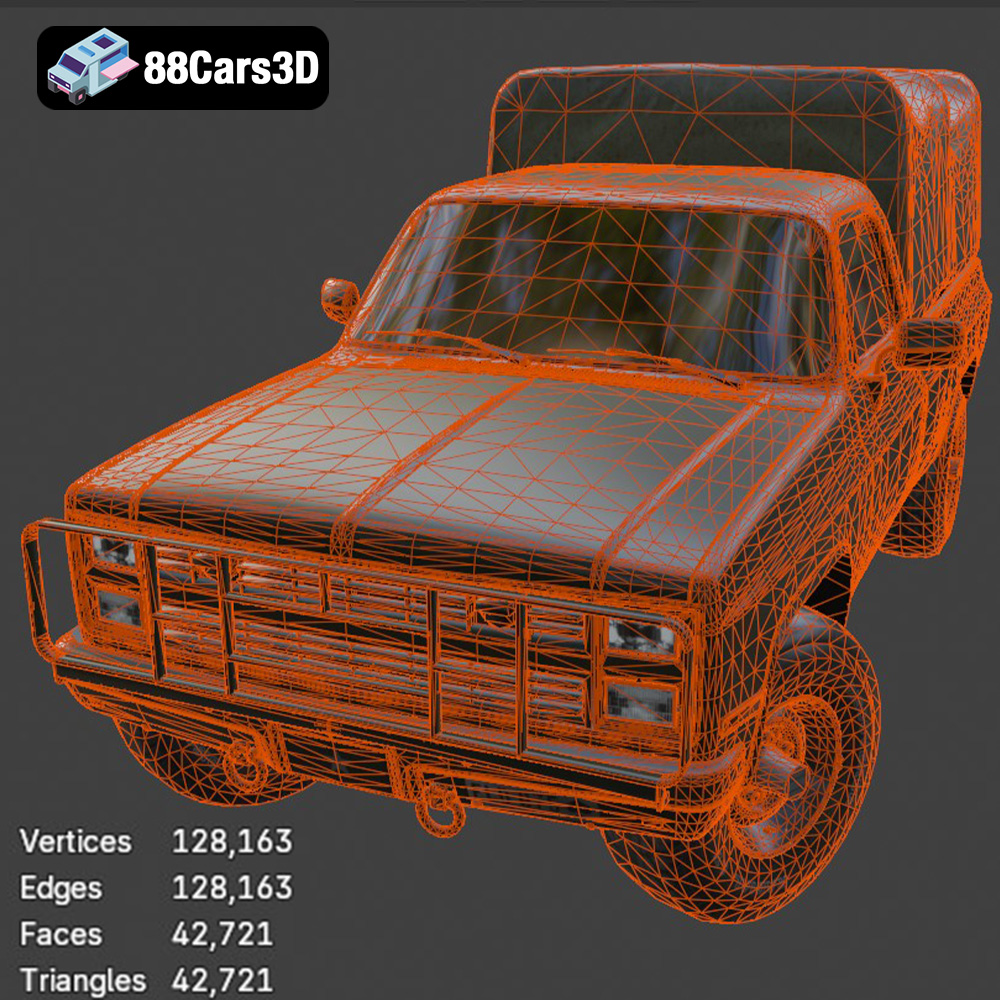
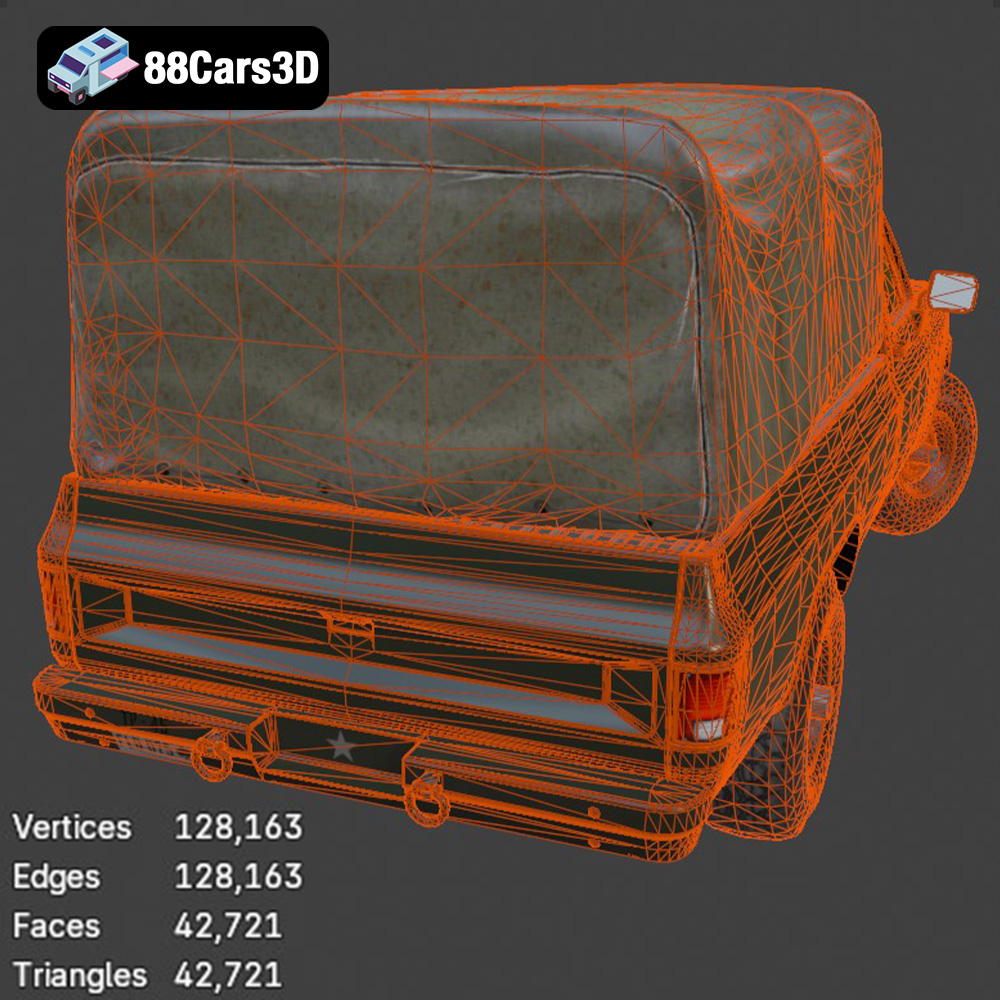
The model’s optimized topology of 42,721 triangles is a critical specification. In game development and real-time simulations, polycount (or tri-count) is a direct indicator of performance. A model with an excessive number of polygons can bog down rendering engines, leading to low frame rates. Conversely, too few polygons can result in a blocky, unrealistic appearance. The stated triangle count strikes an excellent balance, offering enough geometric detail to convey the rugged essence of the American Military Truck while remaining lean enough for smooth operation in engines like Unreal and Unity. This “game-ready” optimization means developers can integrate it directly, potentially with minor LOD (Level of Detail) adjustments for different viewing distances, knowing it will perform efficiently.
This careful optimization extends beyond just the raw polycount. It implies clean, well-structured mesh geometry, free from common issues like non-manifold edges, flipped normals, or excessive N-gons (polygons with more than four sides), which can cause rendering artifacts and pipeline complications. Such a clean base ensures seamless integration and reliable deformation for animation.
The product description highlights a wealth of detailed features that contribute significantly to the model’s realism. The “accurate American Military Truck frame geometry and tactical proportions” ensure that the digital model faithfully represents its real-world counterpart, crucial for military simulations or realistic visualizations. Beyond the overall silhouette, the model delves into finer details:
The attention to the cockpit and interior features further elevates the model’s utility, particularly for first-person perspective (FPV) gaming or VR experiences. “Utilitarian military-spec seating,” a “rugged steering wheel,” and a “detailed analog instrument cluster” all contribute to immersion. The “accurate control elements” like pedals, gear levers, and transfer case shifters are not merely aesthetic; they provide realistic visual cues for interactive simulations and can be hooked up to input systems for functional gameplay.
A key technical advantage is the “proper pivot setup for steering, wheel rotation, and suspension travel.” For any animated vehicle, correctly placed pivots are non-negotiable. Without them, wheels would rotate off-center, and suspension would compress unrealistically. The fact that the “wheels, suspension, and steering components” are separate means the model is inherently modular and animation-ready. This allows animators and developers to easily rig the vehicle for realistic movement, including turning wheels, compressing suspension, and steering, without needing to detach or re-parent parts, saving significant production time and effort.
This level of modularity and pre-configured animation readiness makes the American Military Truck an invaluable asset for complex automotive animations, interactive driving simulations, and dynamic gameplay.
The true potential of a high-fidelity 3D car model is unlocked through compelling rendering and visualization. Whether aiming for photorealism in a marketing campaign or stylistic integrity in a concept piece, the American Military Truck provides an excellent foundation for professional rendering workflows.
Professionals often leverage powerful DCC applications like 3ds Max or Blender for rendering. Upon importing the American Military Truck (.max or .blend format being ideal for native users, or .fbx for wider compatibility), the initial steps involve setting up the scene. This includes:
Beyond basic PBR, advanced shading techniques can further enhance realism. This might involve procedural textures for subtle grime or wear, or layered materials that simulate dirt over paint. The American Military Truck’s detailed geometry already supports realistic shadows and ambient occlusion, but high-resolution texture maps are essential for conveying the finer surface details of the reinforced body panels, deep tread patterns, and tactical dashboard. Leveraging texture painting software like Substance Painter can create highly believable wear-and-tear, adding a lived-in feel to the vehicle, essential for post-apocalyptic or battle-hardened scenarios.
For rendering, a key focus is on how light defines form and texture. The prominent vertical exhaust system and intake snorkels, for example, can be accentuated by rim lighting. The aggressive off-road tires benefit from lighting that catches the deep tread, emphasizing their ruggedness. For architectural or military visualizations, integrating the truck seamlessly into its environment requires consistent lighting and shadow casting, ensuring it feels naturally grounded in the scene. A quality asset like the American Military Truck from 88cars3d.com significantly reduces the artistic burden, providing a solid, detailed base from which to create stunning visuals.
Game development demands a unique blend of visual fidelity and uncompromising performance. The American Military Truck 3D model is specifically designed to meet these requirements, making it an ideal asset for game developers.
For game engines like Unreal Engine, the .fbx format is typically the most efficient for importing complex assets. The workflow often looks like this:
Even with an optimized base mesh of 42,721 triangles, further performance optimization is often necessary for open-world games or scenarios with many vehicles. This involves:
These techniques ensure that the American Military Truck looks fantastic up close but doesn’t strain the engine when viewed from afar or when multiple instances are present.
The versatility of this 3D model makes it suitable for a wide array of game genres:
The “game-ready & optimized” nature of this asset from 88cars3d.com directly translates into accelerated development cycles and a higher quality end product for players.
The utility of high-quality 3D assets extends far beyond traditional rendering and gaming. Augmented Reality (AR), Virtual Reality (VR), and 3D printing represent exciting new frontiers where meticulously crafted models like the American Military Truck truly shine.
AR and VR are transforming how we interact with digital content, offering unparalleled levels of immersion and interactivity. For these platforms, lightweight and optimized models are crucial, which is where the American Military Truck, especially in its .glb format, proves invaluable.
The .glb format’s self-contained nature and web-optimization significantly streamline the deployment of such experiences, making high-quality assets more accessible across various AR/VR platforms.
The ability to convert a digital model into a tangible object through 3D printing opens up a world of possibilities for hobbyists, collectors, and prototyping. The inclusion of the .stl format for the American Military Truck is a direct nod to this growing application.
However, 3D printing requires careful consideration of the model’s geometry and specific printer settings. The product’s advice on 3D print settings is crucial:
Post-processing, including sanding, priming, and painting with authentic finishes, is also highlighted, guiding users towards achieving a high-quality physical model that truly reflects the digital source. This comprehensive approach to 3D printing makes the American Military Truck an accessible and rewarding project for those looking to bridge the gap between digital and physical.
Investing in a high-quality 3D asset like the American Military Truck from 88cars3d.com isn’t just about immediate project needs; it’s about future-proofing your creative endeavors and unlocking maximum value through customization and versatility.
The provided customization options for the American Military Truck are not merely cosmetic; they represent powerful tools for artists and developers to tailor the asset to a specific project’s aesthetic and functional requirements:
These options, combined with the comprehensive file formats, empower users to iterate quickly and experiment with different visual styles without having to start from scratch or make destructive edits to the base mesh.
The true advantage of a well-engineered 3D asset lies in its reusability across multiple projects and platforms. A military truck model of this caliber can serve as a cornerstone asset in:
By providing a strong foundation of optimized geometry, detailed features, and animation readiness across a spectrum of file formats (.blend, .fbx, .obj, .glb, .stl, .ply, .unreal, .max), 88cars3d.com ensures that assets like the American Military Truck are not just purchases, but long-term investments in a studio’s or individual artist’s digital library. This strategic approach to asset creation is what separates generic models from professional-grade resources that genuinely enhance workflow and final product quality.
The journey through the technical specifications and versatile applications of the American Military Truck 3D Model underscores a fundamental truth in digital content creation: high-quality 3D assets are indispensable. From the foundational decision of choosing the right file format to the intricate workflows of rendering, game development, AR/VR, and even 3D printing, every aspect relies on a meticulously crafted model.
The American Military Truck stands as a paragon of this philosophy, offering an optimized topology, accurate detailing, and animation-ready features that cater to the demanding needs of modern digital production. Its adaptability, fueled by diverse file formats and customization options, ensures it’s not just a static object but a dynamic tool that can be shaped to fit virtually any creative vision.
Whether you are a game developer pushing the boundaries of realism, an architectural visualizer bringing scenes to life, or a hobbyist eager to print a tangible replica, investing in such a robust and versatile 3D model from a trusted source like 88cars3d.com is a decision that pays dividends in efficiency, quality, and creative potential. Elevate your next project with assets that are built to perform, built to inspire, and built to last.
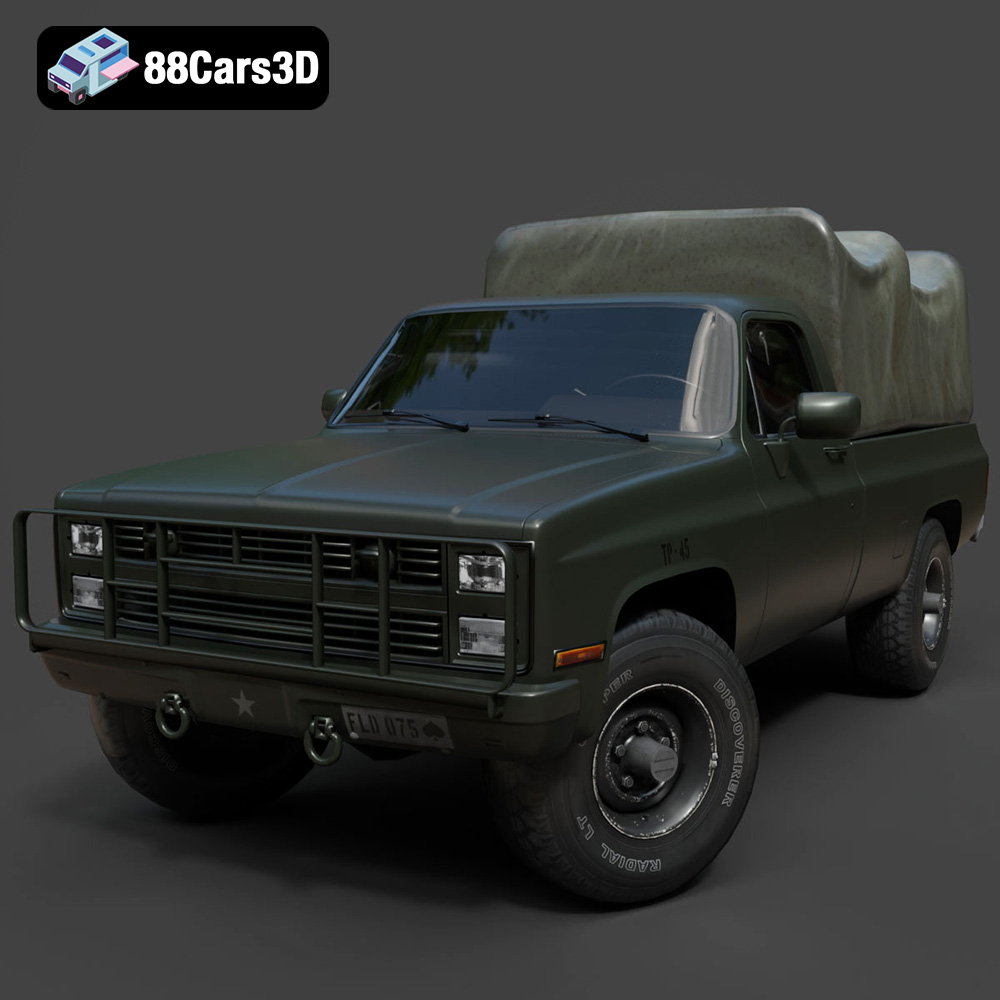
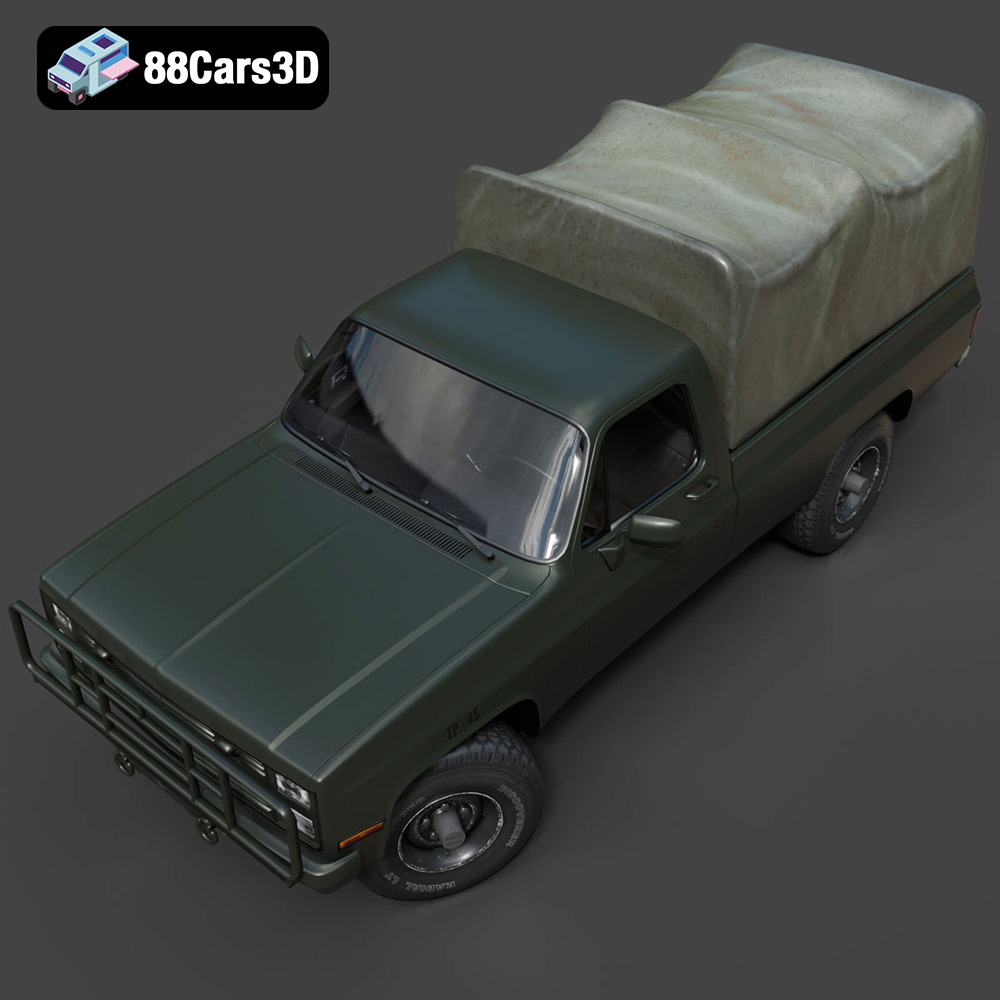
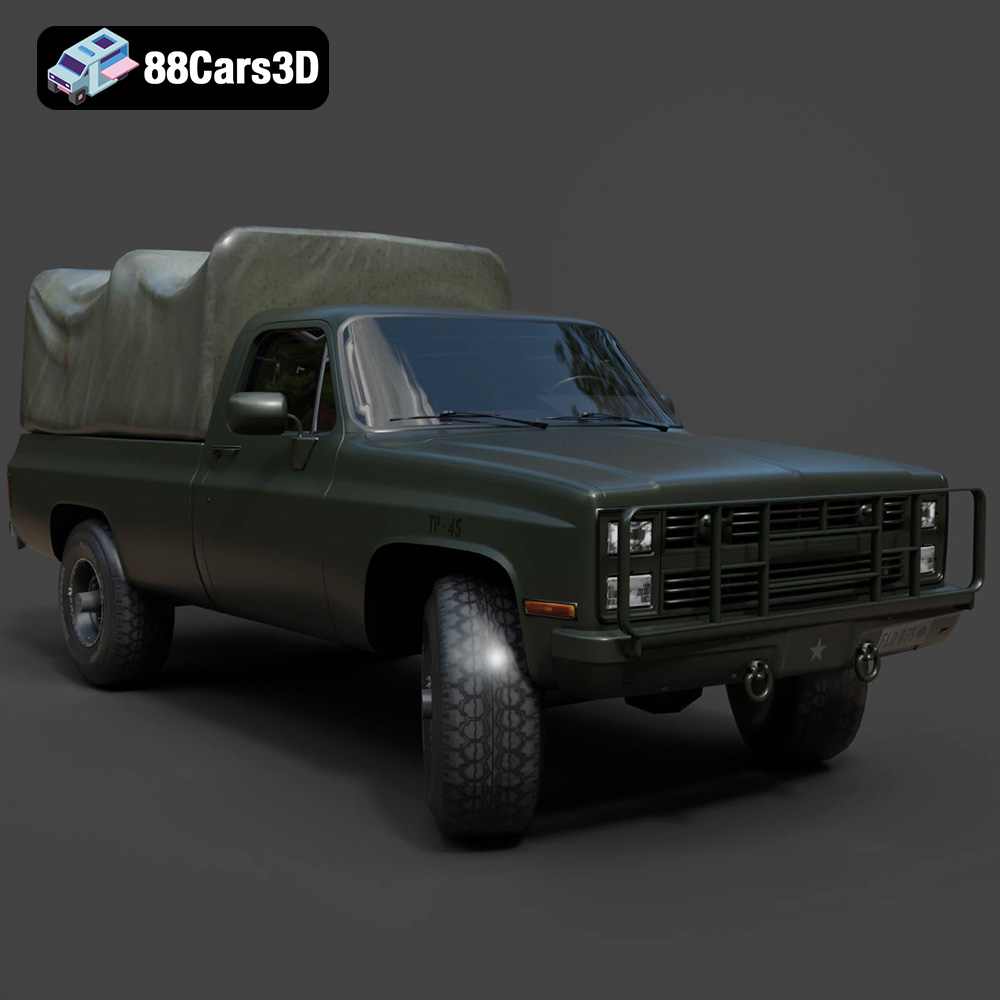
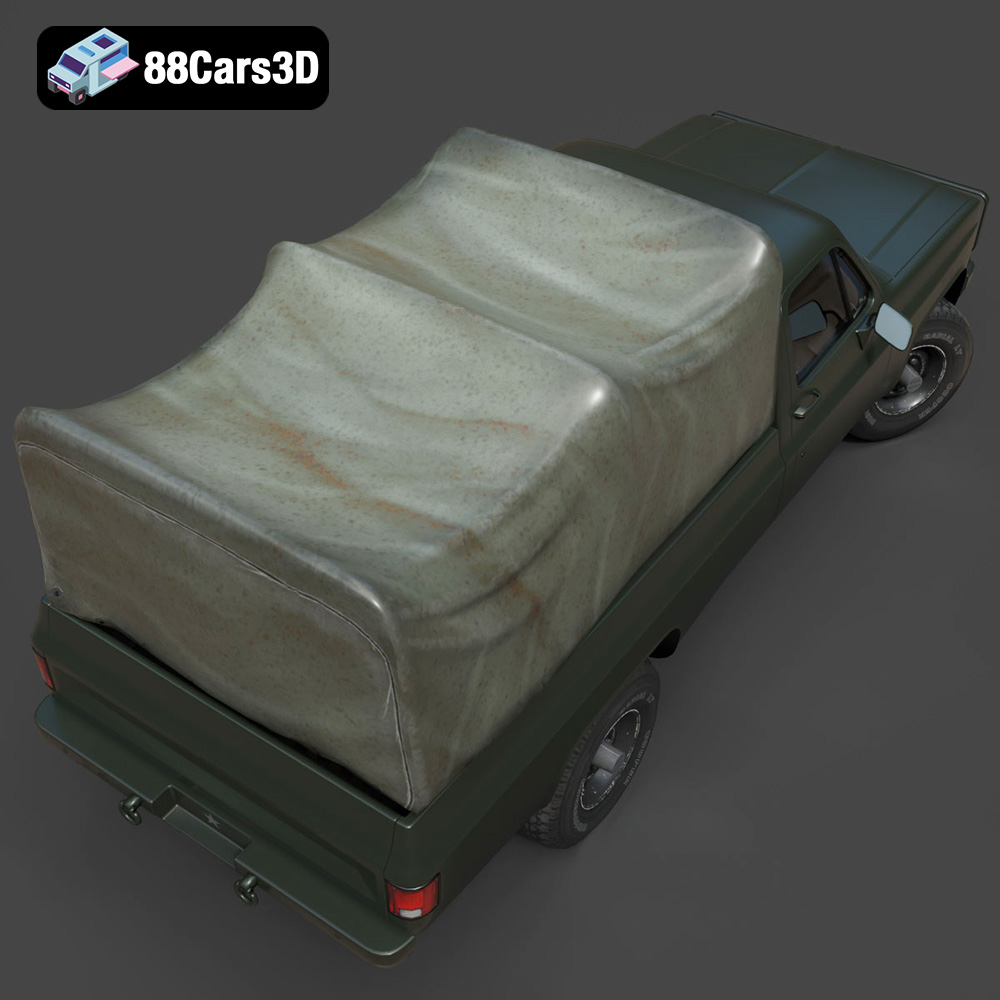
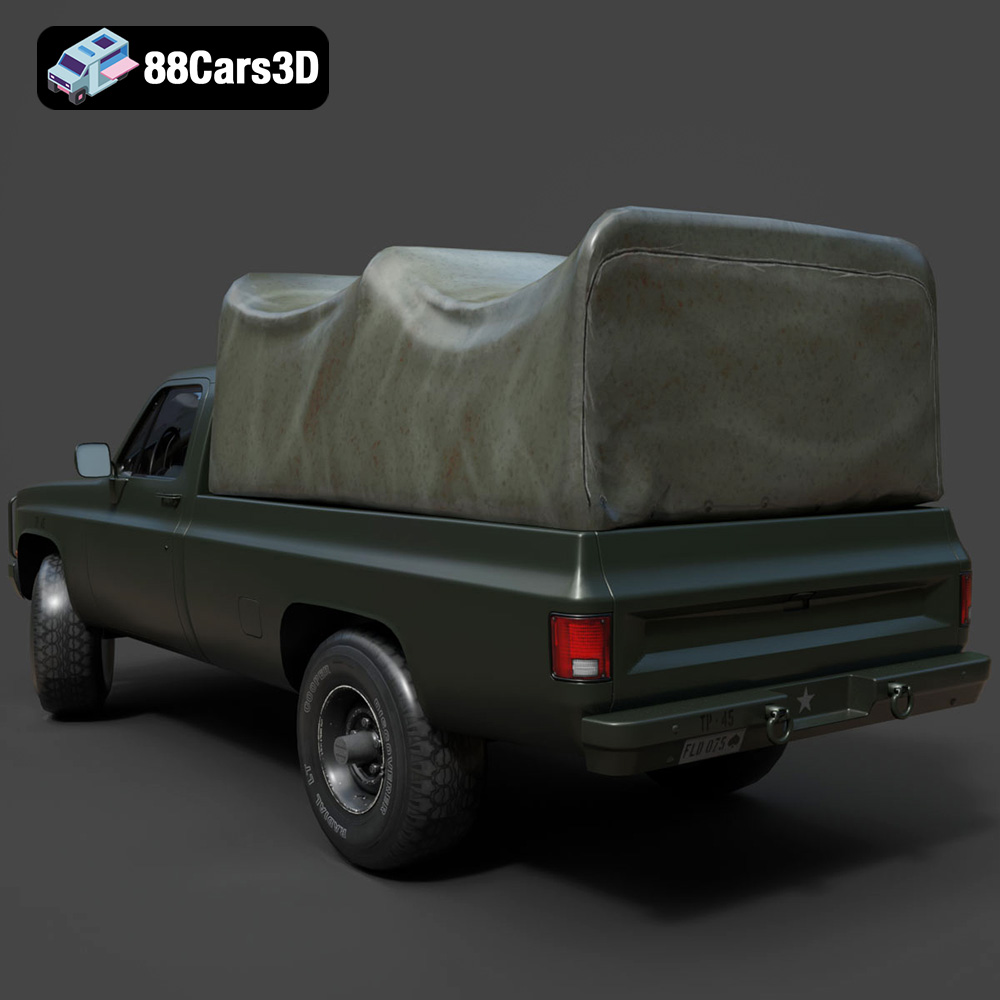
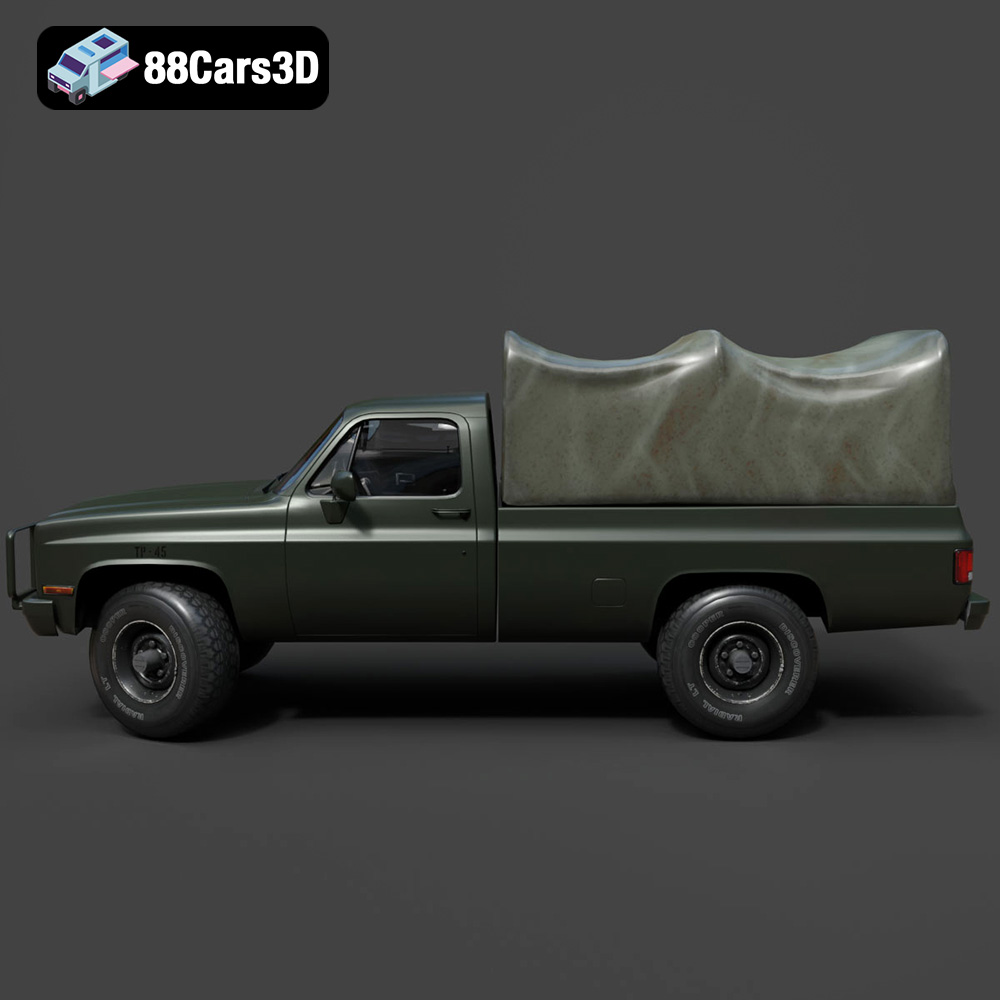
The American Military Truck stands as a symbol of rugged durability and tactical superiority. Known for its imposing presence and heavy-duty capabilities, this iconic tactical vehicle features a high-clearance chassis, reinforced body panels, and a powerful engine layout designed to conquer the harshest terrains. Its utilitarian design language, complete with rugged off-road tires and a prominent exhaust stack, perfectly captures the essence of modern armed forces logistics and transport.
This meticulously crafted 3D model boasts an optimized topology of 42,721 triangles, ensuring a perfect balance between game-ready performance and stunning visual fidelity. Engineered for seamless integration, it provides an exceptional level of detail suitable for modern game development, immersive AR/VR simulations, high-quality animations, and realistic architectural or military visualizations.
Perfect for military simulations, apocalyptic survival games, open-world environments, and tactical VR experiences.
.blend, .fbx, .obj, .glb, .stl, .ply, .unreal, .max
Tags:
american-military-truck, military, tactical-vehicle, army-truck, off-road, game-ready, low-poly, optimized, truck-3d-model, game-asset, rendering, vr-ar, blend, fbx, obj, glb, stl, ply, unreal, max
$14.99
.blend
.fbx
.glb
.max
.military
.obj
.ply
.rendering
.stl
.unreal
american-military-truck
army-truck
game asset
game-ready
low-poly
off-road
optimized
tactical-vehicle
truck-3d-model
VR/AR