Get 20% OFF All Premium 3D & STL Models!

In the rapidly evolving landscape of digital content creation, the demand for high-fidelity 3D models is constant, driving innovation across industries from game development and film to architectural visualization and product design. Whether you’re crafting an immersive open-world game, producing a cinematic advertisement, or designing a virtual reality experience, the quality of your foundational 3D assets dictates the ultimate success and realism of your project. High-quality 3D models provide the bedrock for compelling visuals, enabling creators to translate complex ideas into tangible, interactive, and visually stunning realities. From the intricate details of a supercar in automotive rendering to the precise engineering of an aircraft for flight simulators, professional-grade models save invaluable time and elevate production value.
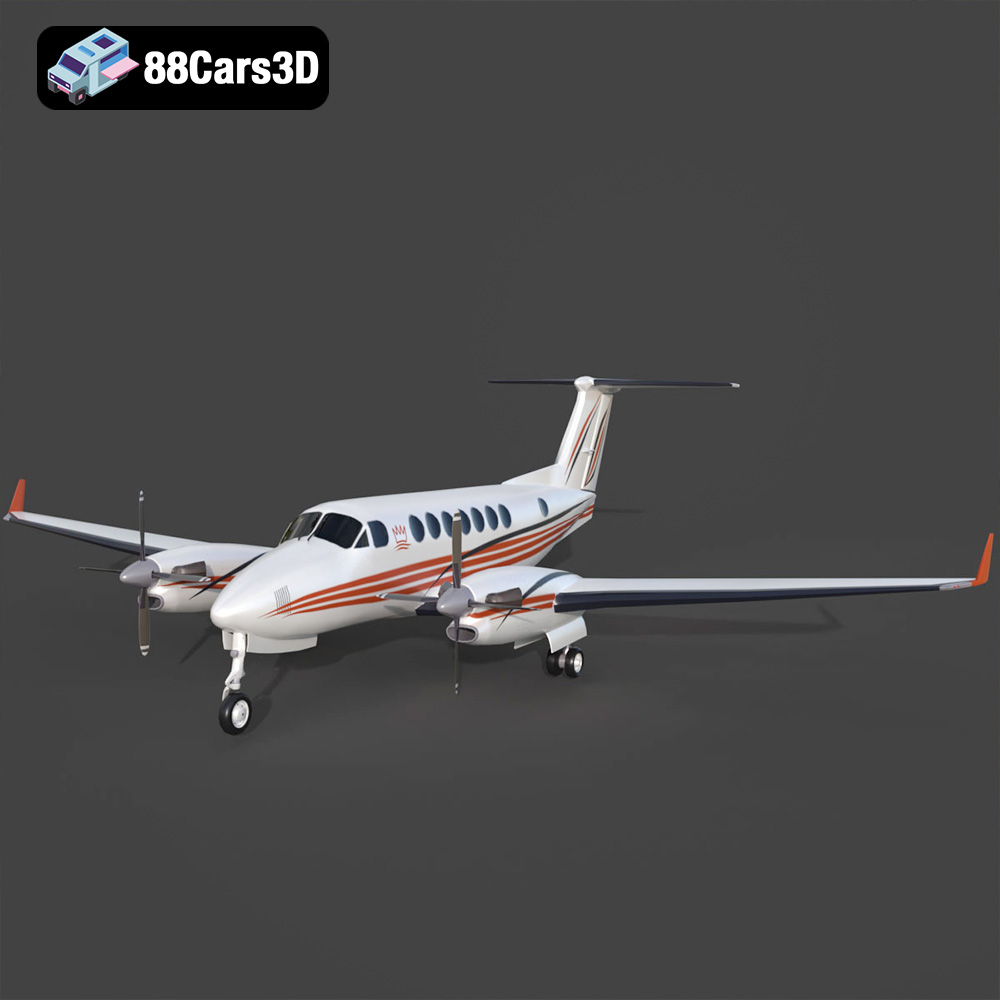
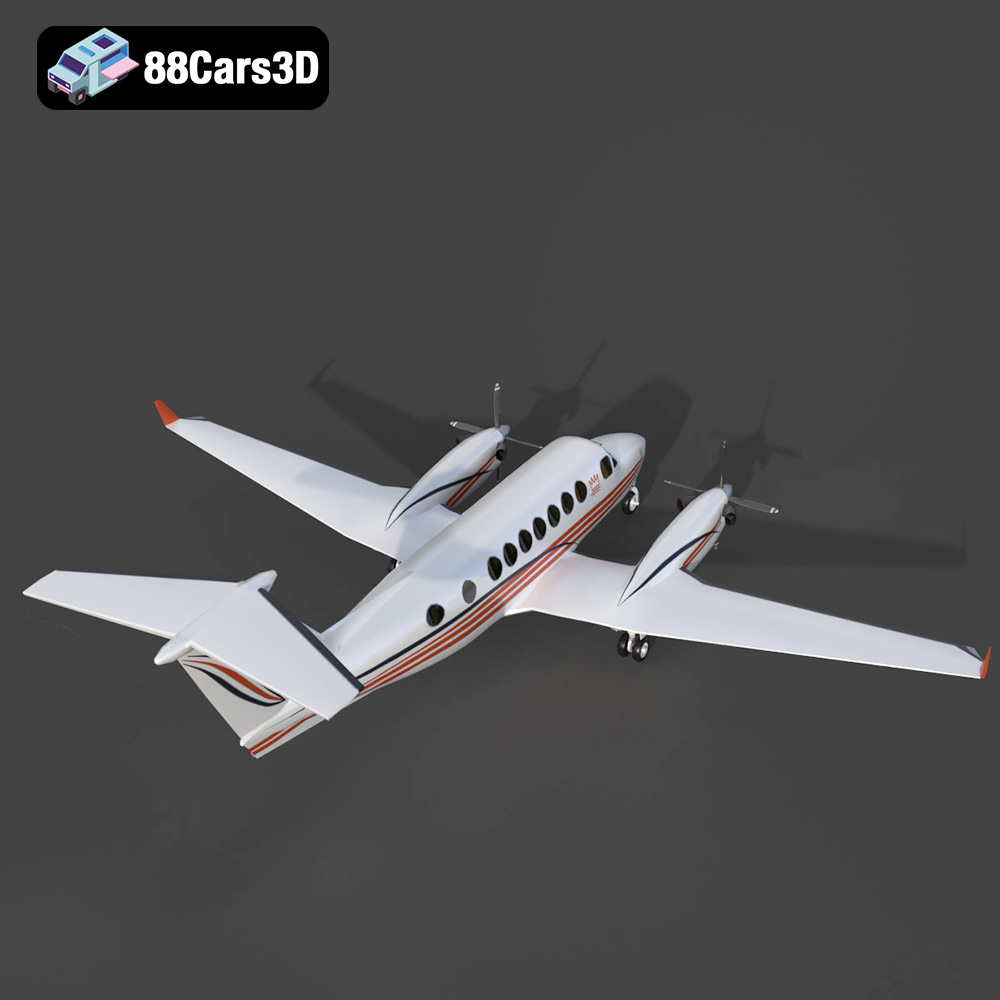
Today, we delve into a prime example of such a critical asset: the Beechcraft King Air B300 3D model. This iconic twin-turboprop aircraft, renowned for its versatility and executive comfort, has been meticulously recreated as a digital asset, offering a game-ready and highly optimized solution for a myriad of applications. Available on platforms like 88cars3d.com, this model exemplifies the blend of technical precision and artistic fidelity that modern projects demand. It’s an essential tool for anyone looking to integrate a realistic and performant aircraft into their digital endeavors, whether for professional simulation, captivating renders, or interactive AR/VR experiences. Understanding the technical nuances behind such an asset is crucial for maximizing its potential.
The world of 3D modeling is a rich ecosystem of software and platforms, each with its unique strengths and optimal use cases. To facilitate seamless transfer and integration of 3D models across these diverse environments, a variety of file formats have been developed. Each format serves a specific purpose, carrying different types of data and optimized for particular workflows. Choosing the right format is paramount for efficiency, compatibility, and preserving the integrity of your asset.
The .blend format is the native file type for Blender, the popular open-source 3D creation suite. A .blend file is a complete scene package, containing not just the mesh geometry but also materials, textures, lighting setups, animations, cameras, modifiers, and even scripts. This makes it an incredibly powerful format for Blender users, as it allows for full editability and preserves all aspects of the original project. For artists working exclusively or primarily within Blender, receiving an asset in .blend format means instant access to a fully configured scene ready for further development, customization, or rendering.
.fbx (Filmbox) is arguably the most widely adopted proprietary 3D file format for exchanging data between 3D software applications and game engines. Developed by Autodesk, FBX supports geometry, materials, textures, animation, cameras, and lights, making it ideal for complex animated scenes. Its robustness and broad support across software like 3ds Max, Maya, Cinema 4D, and game engines such as Unreal Engine and Unity, make it a go-to for game assets and real-time pipelines. When importing an .fbx, developers can expect most of their animations, bone rigs, and material assignments to transfer cleanly, streamlining the development process significantly.
The .obj (Wavefront OBJ) format is one of the oldest and most universally compatible 3D file formats. It primarily stores geometric data—vertices, normals, texture coordinates, and faces—along with references to external material files (.mtl). While it doesn’t support animation or rigging, its simplicity and widespread support make it an excellent choice for basic mesh exchange between almost any 3D software. If you need to import a model into a niche application or ensure maximum compatibility without complex features, .obj is often the safest bet. It’s particularly useful for static models and serves as a reliable fallback when other formats fail.
.glb (GLB format, a binary form of glTF – Graphics Language Transmission Format) is an increasingly popular format optimized for the efficient transmission and loading of 3D scenes and models by engines and applications. It packages geometry, materials, textures, and animation into a single compact file, making it ideal for web-based 3D viewers, AR/VR applications, and mobile experiences where file size and loading speed are critical. GLB is rapidly becoming the “JPEG of 3D” due to its efficiency and support across web browsers and platforms, enabling seamless display of 3D content in real-time environments like social media or e-commerce sites.
.stl (Stereolithography) is the de facto standard file format for 3D printing and computer-aided manufacturing. It represents a 3D model as a collection of unconnected triangular facets, defining only the surface geometry of an object without color, texture, or other properties. While simple, this format is universally accepted by 3D printers and slicing software, making it indispensable for physical prototyping and hobbyist projects. For the Beechcraft King Air B300 3D model, its availability in .stl format means enthusiasts can bring a physical replica of the aircraft into existence.
The .ply (Polygon File Format) is a versatile format for storing 3D data from 3D scanners, CAD systems, and other sources. Like .obj, it defines geometry, but it can also store a wider range of properties, including color, transparency, surface normals, and even confidence values for each vertex or face. It’s often used in scientific and engineering applications for storing complex mesh data with additional attributes, making it suitable for detailed analysis, reverse engineering, or high-precision industrial models.
The .unreal format, or more accurately, the asset structure tailored for Unreal Engine, implies an asset that is specifically pre-configured or exported in a way that minimizes setup time within Unreal Engine. This could involve an FBX export optimized for Unreal’s import settings, or even a pre-packaged Unreal project file. Such assets often come with proper material instances, collision meshes, LODs (Levels of Detail), and pivot points already set up to take full advantage of Unreal’s rendering pipeline. This “engine-ready” designation significantly accelerates integration for game developers and real-time visualization specialists.
Finally, the .max format is the native file type for Autodesk 3ds Max, a powerful 3D modeling, animation, rendering, and compositing software package. Similar to .blend, a .max file encapsulates an entire scene, including geometry, materials, textures, lights, cameras, animations, and scene settings. It offers full editability within 3ds Max, making it the preferred format for professionals working within the Autodesk ecosystem for high-end visualization, animation, and architectural rendering projects where maximum flexibility and control are required.
The Beechcraft King Air B300 is an aviation icon, and translating its distinctive design and intricate mechanics into a functional 3D model requires meticulous attention to detail and optimization. This particular 3D model stands out as a testament to balanced asset creation, delivering both visual fidelity and real-time performance. It’s an example of the quality 3D models you can find at 88cars3d.com, tailored for demanding digital environments.
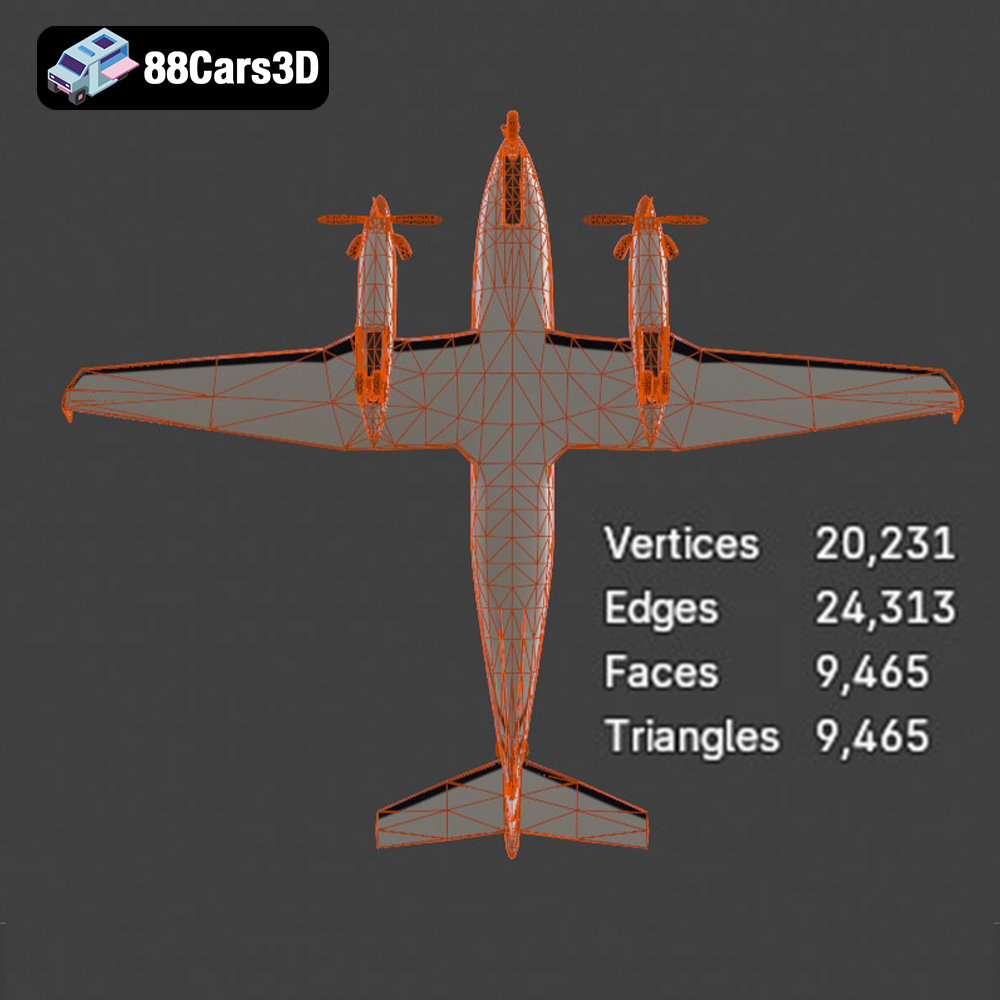
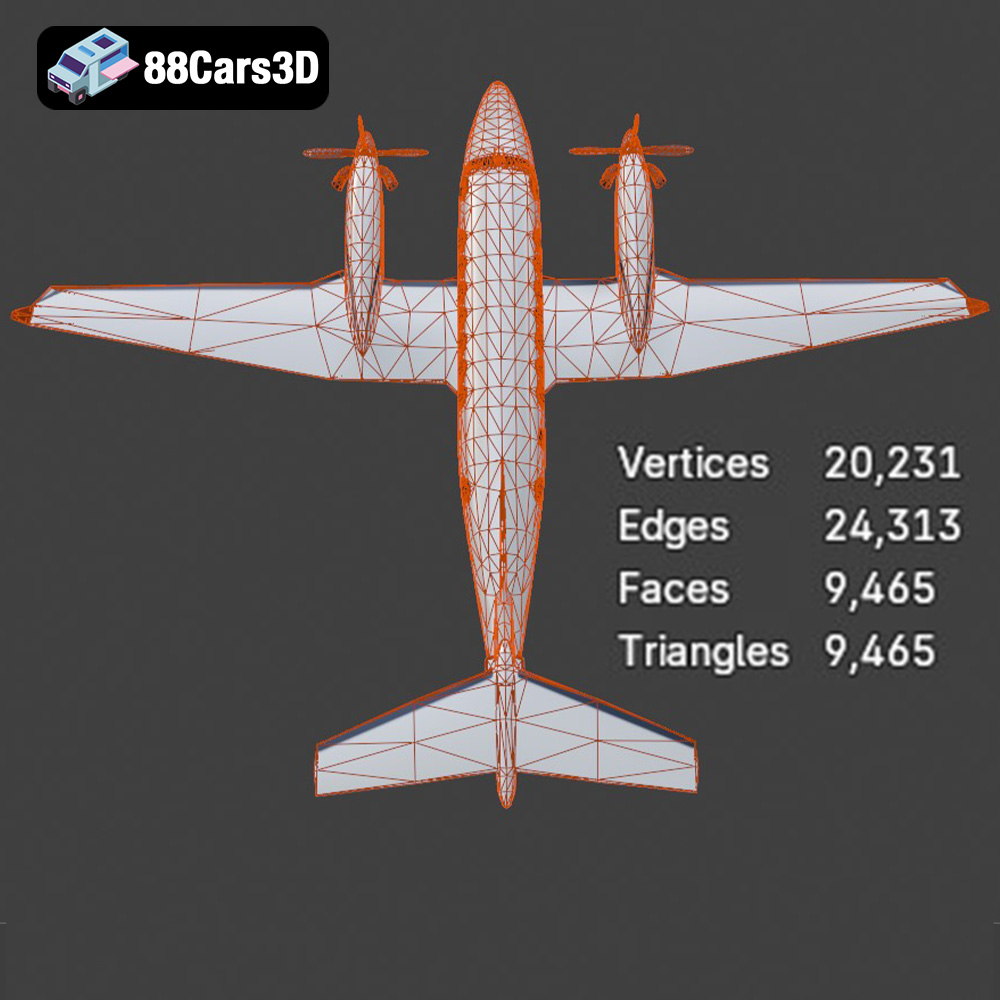
One of the most critical aspects of any game-ready asset is its topology, specifically its polygon count. The Beechcraft King Air B300 3D model boasts an incredibly optimized topology of just 9,465 triangles. This figure represents a sweet spot, providing sufficient detail for recognizable accuracy and sharp silhouettes without bogging down real-time engines. For game developers, particularly those creating flight simulators or open-world games with numerous assets, such a low poly count is crucial for maintaining high frame rates and ensuring smooth gameplay across a range of hardware specifications. The clean mesh structure also indicates careful manual optimization, reducing artifacts and improving rendering efficiency, which is paramount for both game assets and automotive rendering.
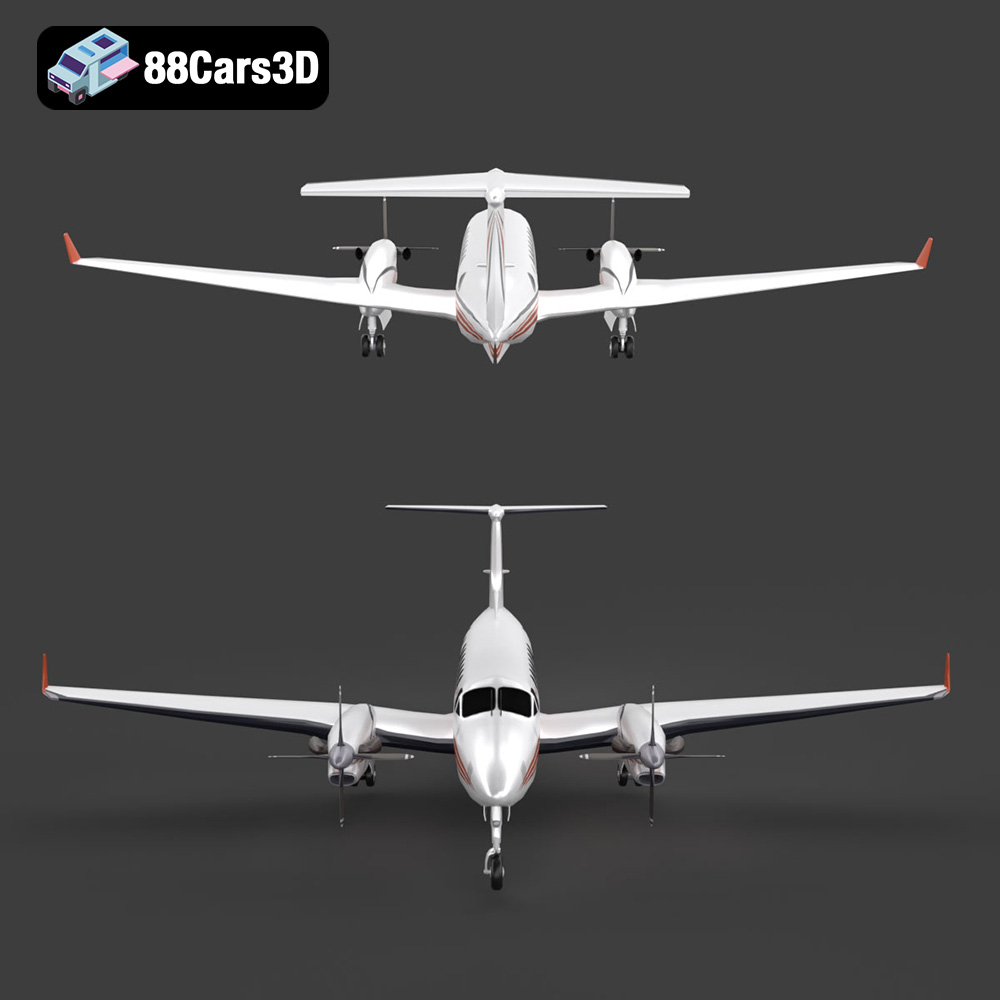
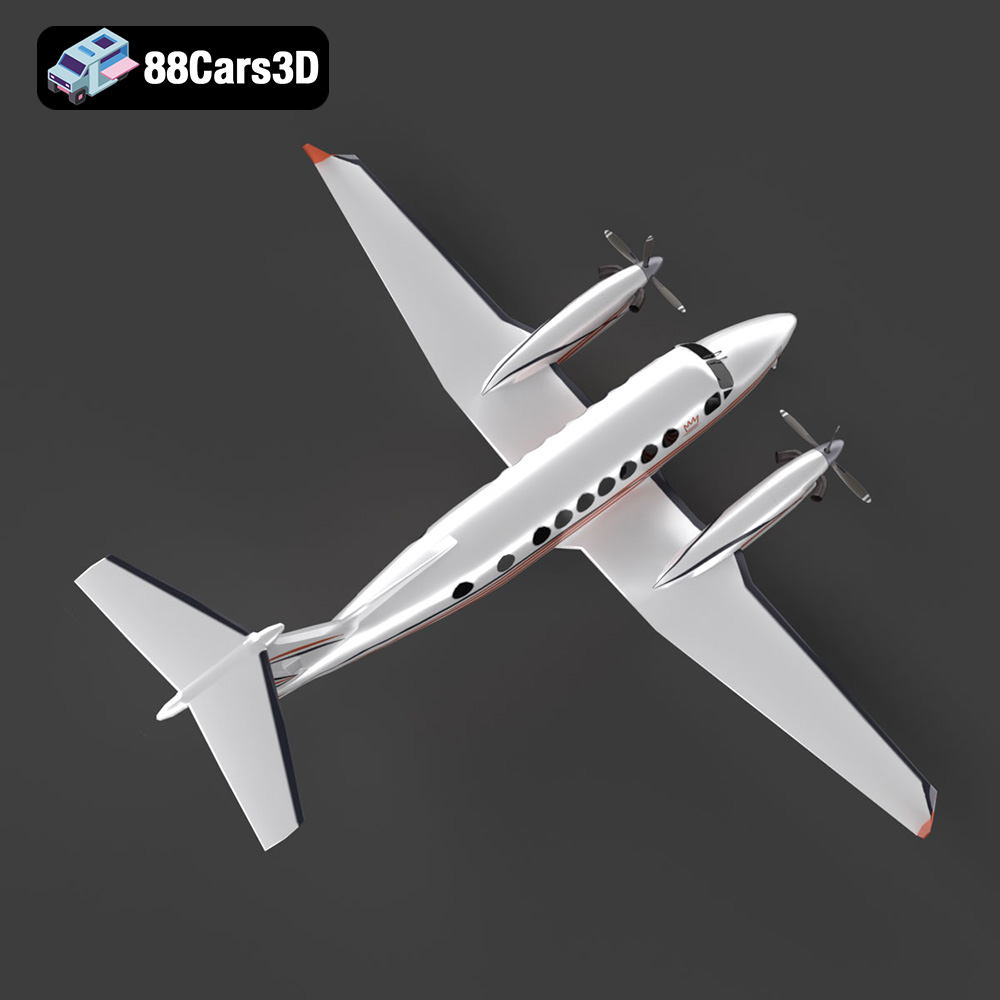
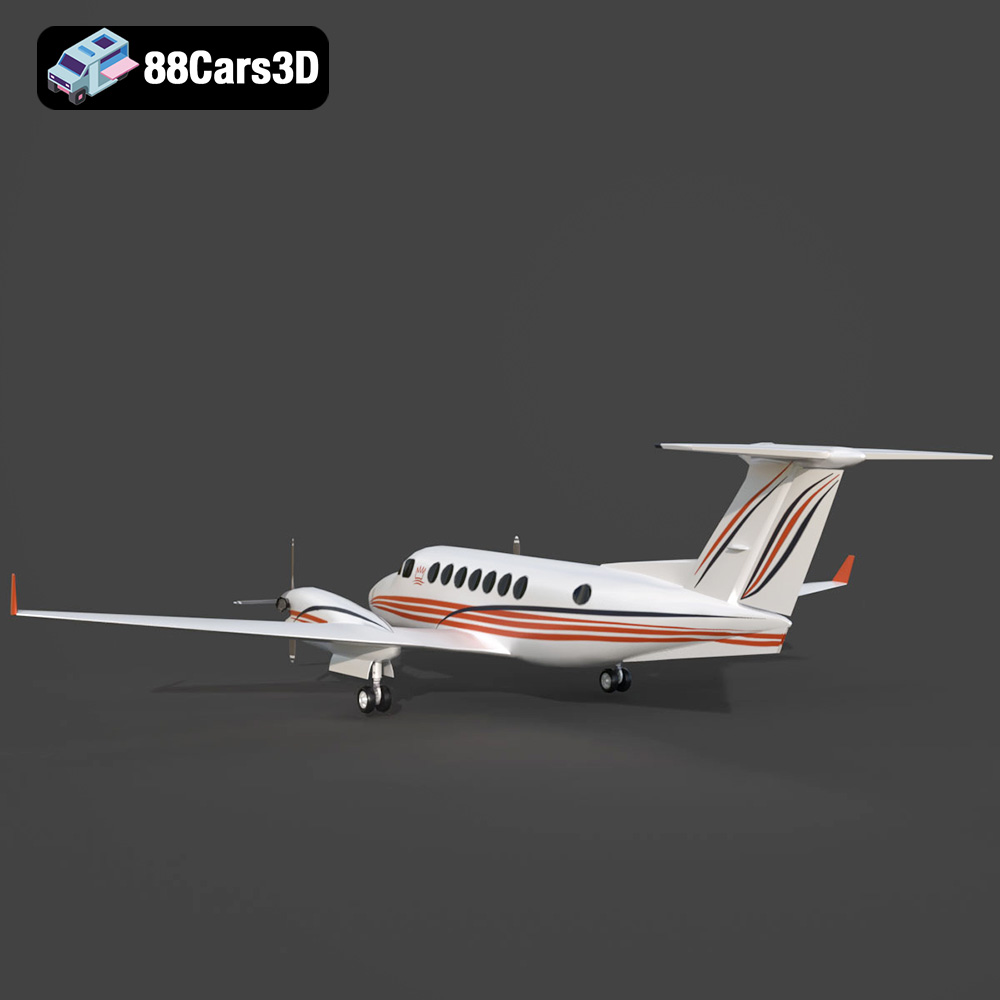
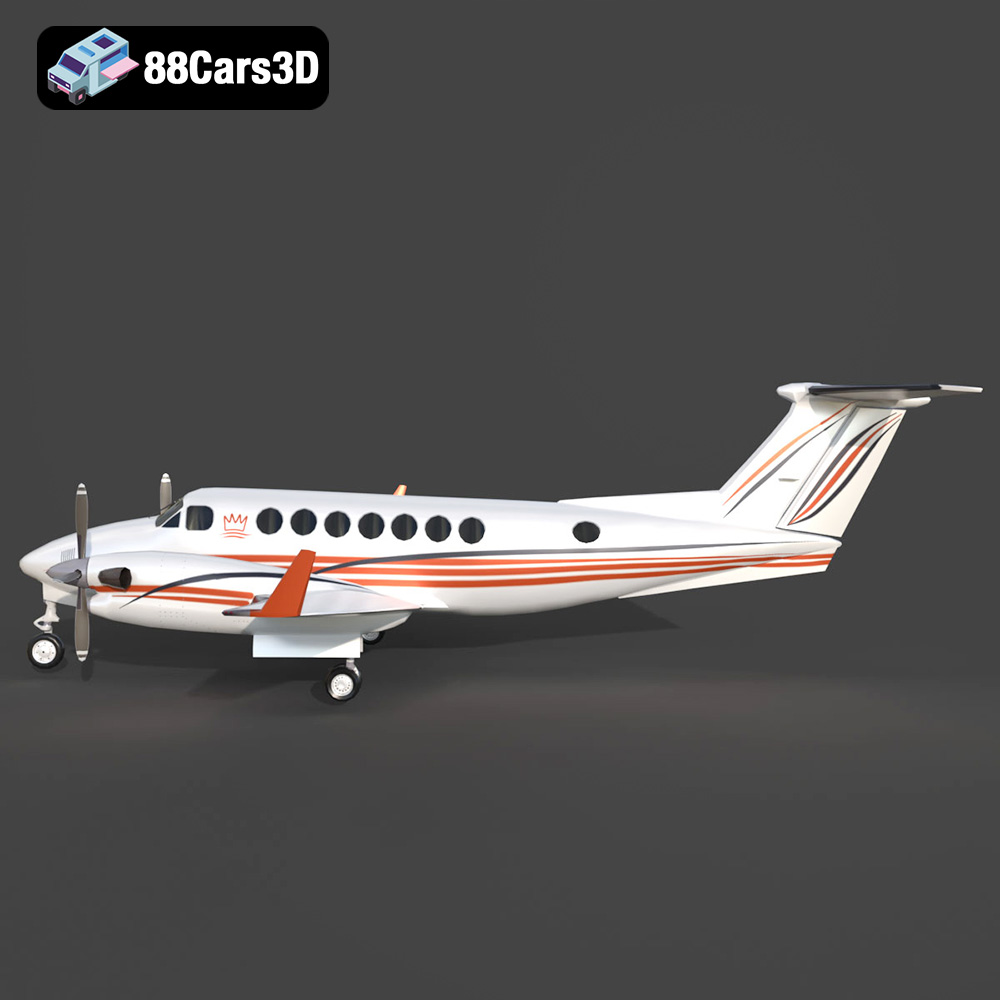
The model’s fidelity extends beyond its optimized polycount. Every major exterior feature of the King Air B300 has been accurately captured. This includes the authentic fuselage geometry and proportions, the distinctive T-tail empennage, and the swept-back wings. The dual Pratt & Whitney Canada PT6A engine cowlings and multi-blade propellers are intricately detailed, reflecting the aircraft’s powerful twin-turboprop configuration. Crucially, the exterior lighting setup, encompassing navigation, strobe, and landing lights, is realistically implemented, ready for atmospheric renders or dynamic in-game environments. The landing gear, wheels, and tire treads are also modeled with a high degree of precision, further enhancing realism.
The interior, though optimized, provides enough detail for first-person perspectives in flight simulators and gaming. The cockpit shell, windshield framing, detailed yoke, and representative glass-cockpit instrument panel layout are all authentically shaped. Modeled pilot and co-pilot seating complete the interior, offering a convincing environment for virtual pilots.
Accuracy in scale is non-negotiable for professional visualization and simulation. This 3D model adheres to real-world scale accuracy based on actual aircraft dimensions, ensuring it fits seamlessly into environments where realistic proportions are vital. Furthermore, the model is designed with animation in mind. Critical components such as the propellers, landing gear, ailerons, elevators, rudder, and flaps have proper pivot setups and are separated, making them “animated-ready.” This pre-rigging significantly streamlines the animation process, allowing developers and animators to quickly implement propeller rotation, landing gear retraction, and flight control movements without extensive re-modeling or re-rigging.
A versatile 3D asset like the Beechcraft King Air B300 3D model is invaluable because it can be seamlessly integrated into various professional pipelines. Its multi-format availability ensures compatibility, while its optimized structure allows for efficient use in demanding applications, from automotive rendering projects requiring detailed vehicles to complex flight simulations.
For game developers, especially those focused on flight simulators or open-world titles, the King Air B300 model is an ideal game asset. Its optimized 9,465-triangle count is perfectly suited for real-time engines like Unreal Engine and Unity. The inclusion of an .fbx file ensures straightforward import, bringing in geometry, materials, and potential rigging. For Unreal Engine specifically, the .unreal designation implies an asset ready to be dropped into a project with minimal setup, often including optimized textures, collision meshes, and potentially LODs (Levels of Detail) for performance at varying distances. Developers can set up material instances to easily swap liveries, integrate physics for flight dynamics, and script interactions for landing gear and control surfaces. The pre-separated and pivot-ready parts dramatically reduce the time spent on preparing the model for animation and gameplay.
For high-fidelity visualization and cinematic rendering, the model’s detail shines. Using the .blend or .max formats, artists have full access to the scene within their preferred software. In Blender (Cycles/Eevee) or 3ds Max (V-Ray/Corona), the model can be enhanced with advanced materials, complex lighting setups, and post-processing effects to achieve photorealistic results. The ability to customize fuselage livery, corporate striping, and material finishes (matte, gloss, metallic) allows for brand-specific visualizations or compelling marketing imagery. This makes it an excellent asset for corporate aviation campaigns, virtual showrooms, or even educational content where stunning visuals are paramount. The clean geometry also translates well for subdivision surfacing if ultra-high resolution close-ups are required, a common practice in automotive rendering and film production.
The burgeoning fields of Augmented Reality (AR) and Virtual Reality (VR) demand highly optimized assets that can be rendered smoothly on diverse hardware, including mobile devices. The Beechcraft King Air B300 model, especially in .glb format, is perfectly suited for these immersive experiences. Its optimized polycount ensures excellent performance in VR hangar experiences, pilot training scenarios, or mobile AR configurators where users can explore the aircraft in a real-world environment. The single-file nature of .glb makes it easy to deploy on web-based AR/VR platforms or integrate into dedicated AR/VR applications, offering interactive exploration or even virtual test flights.
Beyond the broad categories of game development and cinematic rendering, specialized 3D models like the Beechcraft King Air B300 serve crucial roles in niche applications, significantly enhancing realism and functionality in specific industries.
The primary application for a detailed aircraft 3D model like the King Air B300 is in flight simulation. From commercial pilot training to recreational simulators, highly accurate models are indispensable. The B300’s authentic fuselage geometry, detailed cockpit, and animated control surfaces contribute directly to an immersive and realistic training environment. Pilot trainees can interact with an aircraft that closely mirrors its real-world counterpart, practicing procedures, familiarizing themselves with controls, and understanding aerodynamic responses. The optimized interior geometry, designed for first-person POV, ensures that critical cockpit instruments and controls are legible and interactable, making it an invaluable game asset for serious simulation titles.
The availability of the Beechcraft King Air B300 3D model in .stl format opens up an entirely different realm of application: 3D printing. This allows enthusiasts, educators, and model makers to transform the digital asset into a tangible, physical object. Whether for display-scale models, educational aids, or custom dioramas, 3D printing provides a pathway to bring the virtual into the real. The product description even provides specific 3D print settings, recommending scales (1:48 / 1:72 / 1:144), layer heights (0.04–0.12 mm for resin printing), wall thickness, infill, and crucial support requirements. Printing the fuselage horizontally or angled for structural integrity and wings separately are practical tips for achieving the best results. Post-processing with sanding, primer, and authentic finishes can yield a stunning replica, demonstrating the incredible versatility of a well-prepared 3D model.
Purchasing a pre-made 3D model is often the fastest and most cost-effective way to acquire high-quality assets. However, a truly valuable asset offers flexibility for customization, ensuring it can adapt to diverse project requirements and remain relevant as needs evolve. The Beechcraft King Air B300 3D model excels in this regard, providing robust options for personalization.
One of the most common customization needs for aircraft models is changing the livery. The King Air B300 model allows for easy modification of fuselage livery and corporate striping. This means it can be adapted for different airlines, private owners, military applications, or even fictional brands, making it incredibly versatile for various narratives and corporate visualizations. Beyond paint schemes, artists can also adjust material finishes—from a glossy, polished look to a more matte or weathered appearance, and incorporate metallic sheens for specific components. These adjustments are critical for achieving specific artistic directions or matching the aircraft to different environmental conditions, be it a sun-drenched tarmac or a hangar under dim lights. Changing propeller textures to static or blurred motion variants is also a subtle but powerful way to enhance realism, reflecting whether the aircraft is stationary or in flight.
While often part of the scene, the ability to adapt the model’s internal and external lighting setup for different environments is another key customization. This allows artists to integrate the aircraft seamlessly into diverse lighting scenarios, from bright daylight to a stormy evening. Furthermore, the underlying quality and clean topology of the Beechcraft King Air B300 3D model mean it is future-proof. Should a project require higher detail down the line, the existing mesh serves as an excellent foundation for further sculpting or adding more intricate normal map details. Its robust structure, game-ready optimization, and multi-format availability ensure it will be a valuable asset for years to come, capable of evolving with the demands of any digital endeavor, whether it’s for advanced automotive rendering or the next generation of flight simulators.
The power of high-quality 3D models in contemporary digital production cannot be overstated. They are the essential building blocks that empower creators to craft believable worlds, develop immersive experiences, and produce stunning visualizations. From the intricacies of automotive rendering to the precision required for game assets in flight simulators, a well-executed 3D model dramatically enhances efficiency and elevates the final output. The Beechcraft King Air B300 3D model stands as a prime example of such an asset, meticulously crafted for versatility and performance across a spectrum of applications.
With its optimized topology, accurate detailing, animation readiness, and support for a comprehensive array of file formats including .blend, .fbx, .obj, .glb, .stl, .ply, .unreal, and .max, this model is an indispensable tool for professionals. Whether you’re a game developer seeking performant aircraft for your next title, an animator rendering a corporate aviation scene, an AR/VR designer building an immersive experience, or a hobbyist looking to 3D print a detailed replica, the King Air B300 offers exceptional value. Assets of this caliber are a testament to the dedication to quality found on platforms like 88cars3d.com, which provides a curated selection of premium 3D models for all your vehicle visualization needs, from high-performance cars to iconic aircraft. Investing in such professional-grade 3D models is not just about acquiring an asset; it’s about investing in the quality and efficiency of your entire production pipeline.
The Beechcraft King Air B300 is a legendary twin-turboprop aircraft renowned for its reliability, versatility, and executive comfort. This highly detailed 3D model captures the iconic silhouette of the B300, featuring its distinctive T-tail, swept-back wing design, dual Pratt & Whitney Canada PT6A engines, and meticulously shaped aerodynamic fuselage. Boasting an incredibly optimized topology of 9,465 triangles, this game-ready asset delivers outstanding visual fidelity without compromising real-time performance. Designed for seamless integration into flight simulators, game engines, AR/VR experiences, and cinematic animations, the model maintains sharp lines and realistic texturing perfect for any digital hangar. Perfect for flight simulation games, aviation visualizations, VR hangar experiences, and mobile AR configurators.
$14.99
.aircraft
.airplane
.aviation
.blend
.fbx
.glb
.max
.obj
.ply
.rendering
.stl
.unreal
aircraft-3d-model
beechcraft
flight-simulator
game asset
game-ready
king-air-b300
low-poly
optimized
twin-turboprop
VR/AR