Get 20% OFF All Premium 3D & STL Models!

In the rapidly evolving landscape of 3D visualization, the demand for highly detailed, authentic, and versatile digital assets has never been greater. From cinematic automotive advertisements to immersive virtual reality experiences and hyper-realistic video games, the quality of a 3D model can make or break a project. Designers, developers, and artists are constantly seeking assets that not only look stunning but are also technically robust and workflow-friendly.
This quest often leads to iconic vehicles, celebrated for their design and engineering prowess. One such vehicle, the BMW X4, stands as a testament to sophisticated automotive design, blending the rugged capability of an SUV with the sleek lines of a sports coupe. Capturing this blend of aggression and elegance in a 3D model requires meticulous attention to detail and expert craftsmanship. This is precisely what a premium asset like the BMW X4 3D Model from 88cars3d.com delivers, offering an unparalleled foundation for a myriad of professional applications.
In this comprehensive guide, we will delve into the technical specifications, diverse applications, and professional workflows enabled by such a high-caliber 3D car model. We’ll explore how its rich detail and multi-format compatibility empower creators across industries, from high-end automotive rendering to game development, AR/VR, and even 3D printing, ensuring that every pixel and polygon serves a purpose in achieving photorealistic results.
The success of any 3D project often hinges on selecting the correct file format. A premium 3D car model like the BMW X4 offers an array of formats, each optimized for specific software, pipelines, and end uses. Understanding these distinctions is crucial for seamless integration and maximizing asset utility.
The .blend file format is the native file type for Blender, the powerful open-source 3D creation suite. When you download a .blend file, you’re not just getting the mesh; you’re often receiving a complete Blender scene. This includes the model’s geometry, materials with their textures, lighting setups, camera positions, animations, and even modifiers or rigging information. For artists and studios heavily invested in the Blender ecosystem, a .blend file offers the highest degree of editability and direct access to the original creator’s scene setup. It allows for advanced customization, re-lighting, re-texturing, and animation work directly within the software without loss of fidelity or conversion artifacts. The BMW X4 3D Model’s .blend file is ideal for those who wish to delve deep into its structure and adapt it for complex rendering or animation projects.
.fbx (Filmbox) is arguably the most widely adopted proprietary 3D file format for inter-application data exchange. Developed by Autodesk, it’s designed to carry a comprehensive array of 3D data, including geometry, materials, textures, animations, skinning, skeletal data, and camera/light information. Its strength lies in its robustness and broad support across major 3D software (3ds Max, Maya, Blender, Cinema 4D) and, critically, real-time game engines like Unreal Engine and Unity. For game developers or animators, the .fbx version of the BMW X4 3D Model is the go-to choice for importing a ready-to-rig or animate asset into their engine or DCC tool of choice, ensuring high compatibility and minimal data loss.
The .obj (Wavefront Object) format is a universal standard for storing 3D geometry. It’s a simpler format compared to .fbx, primarily focusing on vertices, faces, normals, and UV coordinates. While it can reference external .mtl (material) files, its material support is basic, often requiring re-setup in the target software. However, its widespread compatibility across virtually all 3D applications makes it an indispensable fallback for simple mesh export and import. The BMW X4 3D Model in .obj format is perfect for users who need a clean mesh for sculpting, retopology, or integrating into specialized software where .fbx might introduce compatibility quirks, or where the material setup will be handled entirely in the destination application.
.glb (GL Transmission Format Binary) is a modern, royalty-free format ideal for efficient transmission and loading of 3D scenes and models in web browsers, augmented reality (AR), and virtual reality (VR) applications. It bundles the model’s geometry, materials, textures, and animation into a single, self-contained binary file, making it incredibly streamlined for real-time applications and online viewing. Its compactness and performance-orientation are key advantages. For showcasing the BMW X4 in a virtual showroom, an online configurator, or an AR mobile app, the .glb version offers superior performance and ease of integration compared to more complex formats.
.stl (Stereolithography) is the de facto standard file format for 3D printing. It represents a 3D model as a series of connected triangles (a triangulated mesh) without any color, texture, or material information. It solely defines the surface geometry. While the BMW X4 3D Model is highly detailed, its .stl version needs to be watertight (no holes in the mesh) and manifold (no self-intersections) to be printable. The inclusion of an .stl file makes the BMW X4 model accessible to hobbyists and professionals looking to physically manifest the digital design on a 3D printer, creating display-scale replicas or prototypes.
The .ply (Polygon File Format) is another popular format for storing 3D data, often used in scientific and CAD applications for precision meshes derived from 3D scanners or computational geometry. It can store not only geometry but also color, transparency, texture coordinates, and even properties like normals for each vertex or face. While not as universally used as .fbx or .obj for general asset exchange, .ply provides a robust and flexible alternative for applications requiring high precision and additional attribute data, making it suitable for engineering analysis or highly accurate digital archiving.
The .unreal designation typically signifies an asset that has been specifically packaged or optimized for direct use within Unreal Engine. While Unreal Engine primarily uses its native `.uasset` files, a `.unreal` file from a vendor like 88cars3d.com usually implies a pre-configured asset package, or an FBX that has been meticulously prepared with material assignments, collision meshes, LODs (Levels of Detail), and pivot points specifically tailored for Unreal Engine’s import pipeline. This minimizes setup time for game developers and real-time visualization artists, allowing them to drop the BMW X4 3D Model directly into their projects with optimized materials and textures already applied, speeding up integration into virtual environments.
Finally, the .max file is the native scene file format for Autodesk 3ds Max. Like the .blend file for Blender, the .max file contains the complete 3ds Max scene, including geometry, lights, cameras, materials (often pre-configured for renderers like V-Ray or Corona), animations, and modifiers. For professionals who primarily work in 3ds Max, this format offers the most flexibility for customization, leveraging 3ds Max’s powerful modeling, texturing, and rendering tools. The BMW X4 3D Model’s .max file is a premium choice for high-end automotive visualization and cinematic rendering within the 3ds Max ecosystem.
The provision of this comprehensive suite of file formats for the BMW X4 3D Model underscores its versatility and commitment to professional users, ensuring compatibility across virtually any 3D workflow you might encounter.
Beyond file formats, the true value of a premium 3D car model lies in its underlying technical craftsmanship. The BMW X4 3D Model exemplifies this, boasting specifications that cater to the most demanding visualization and interactive applications.
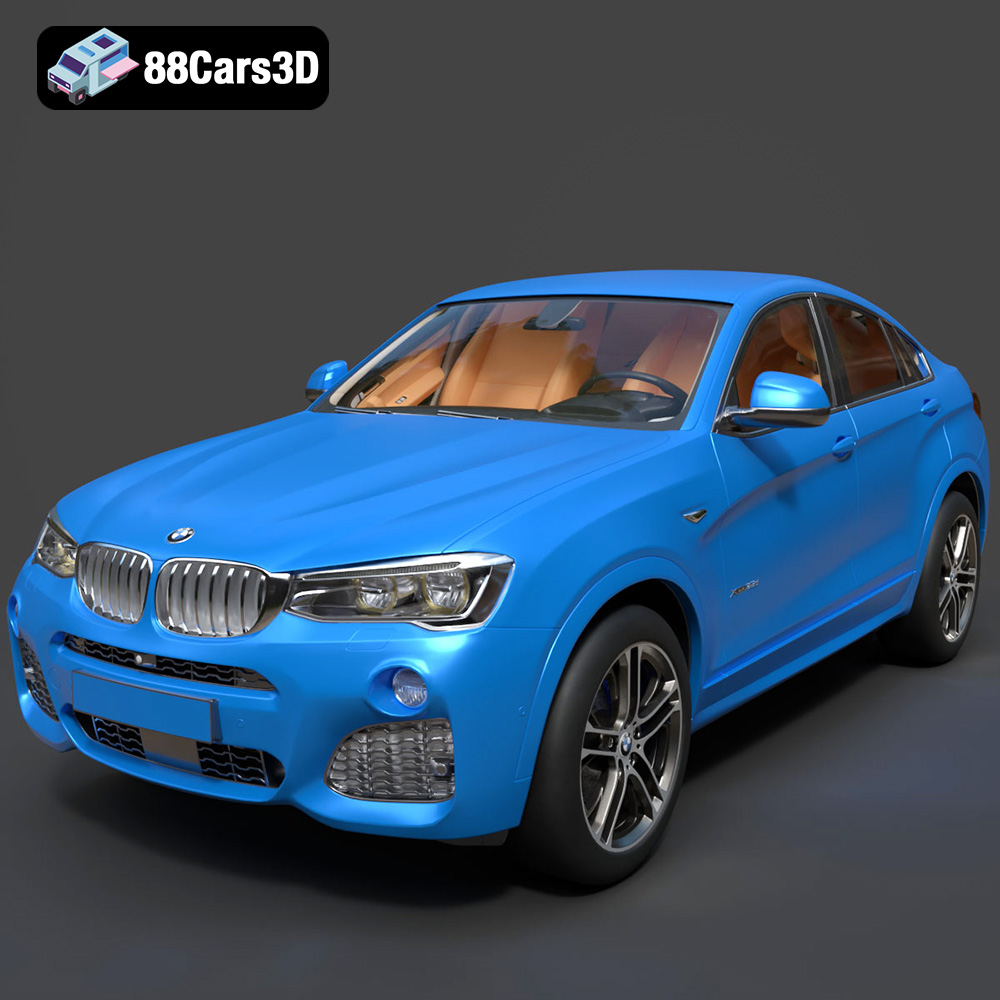
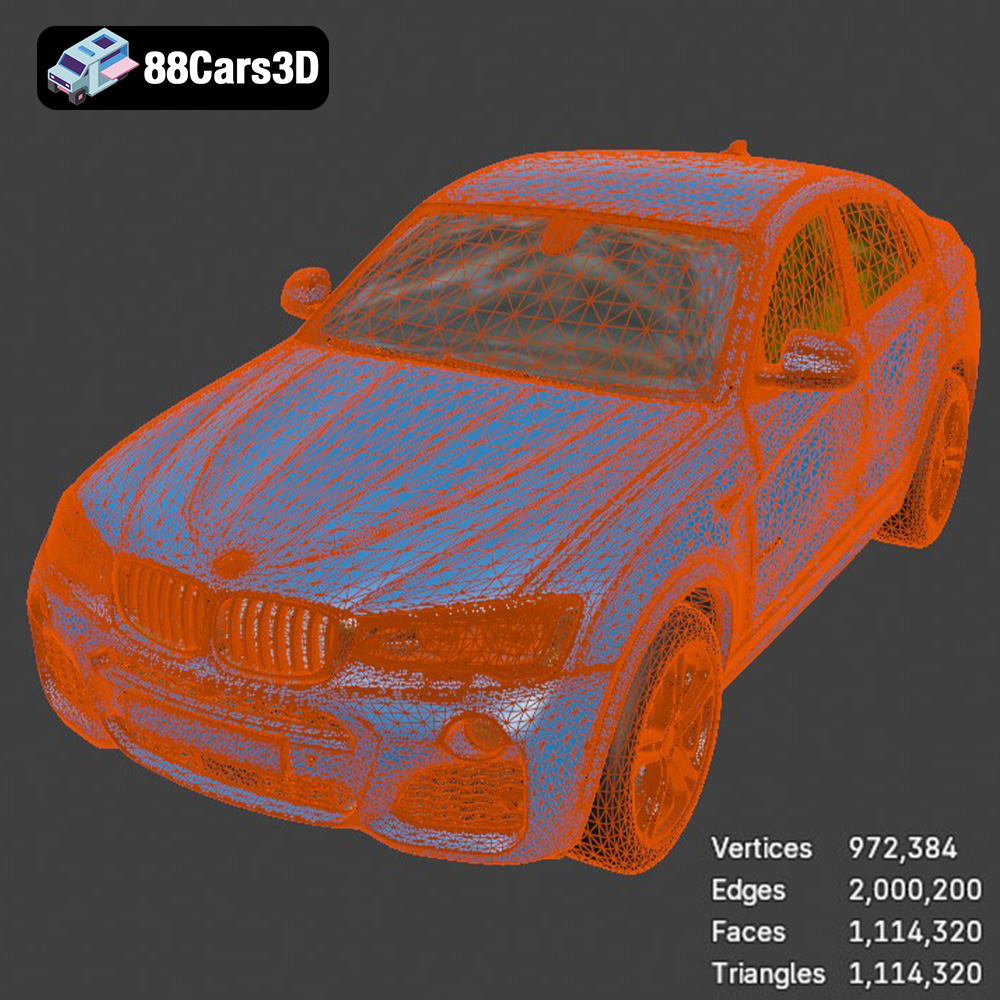
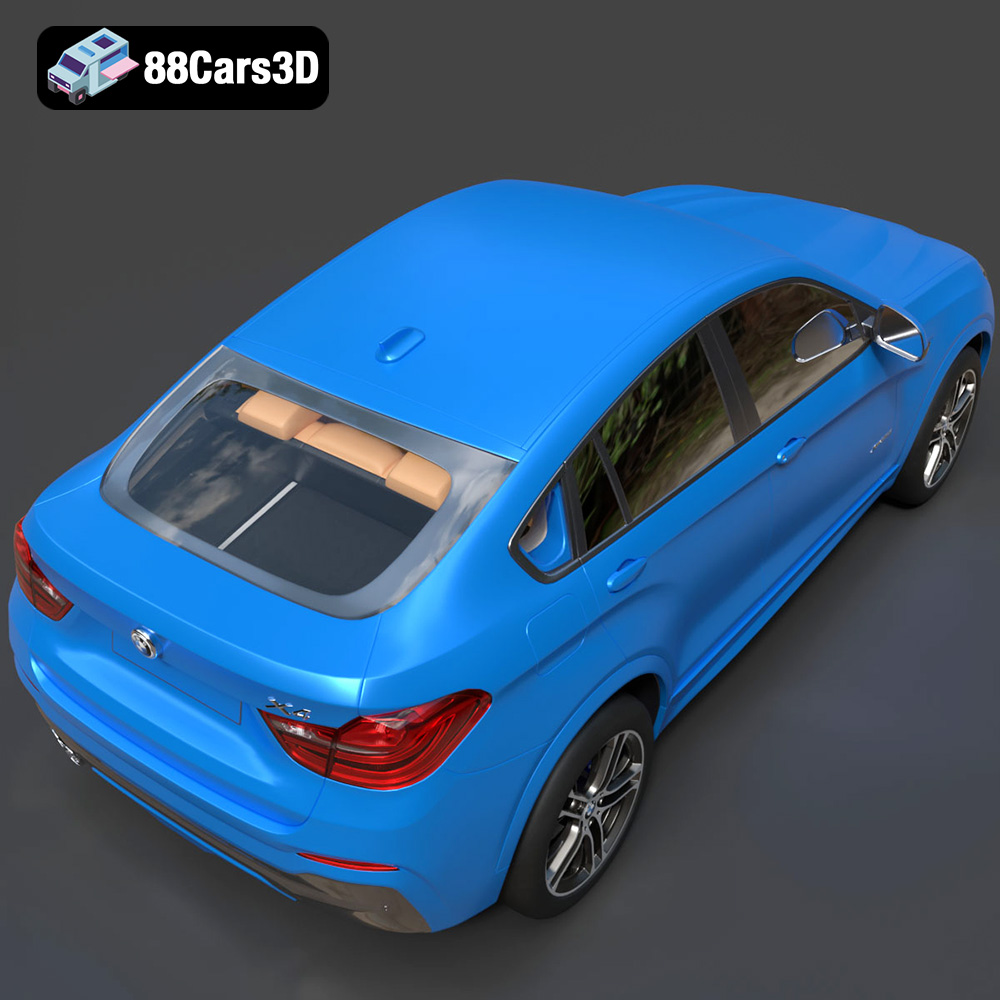
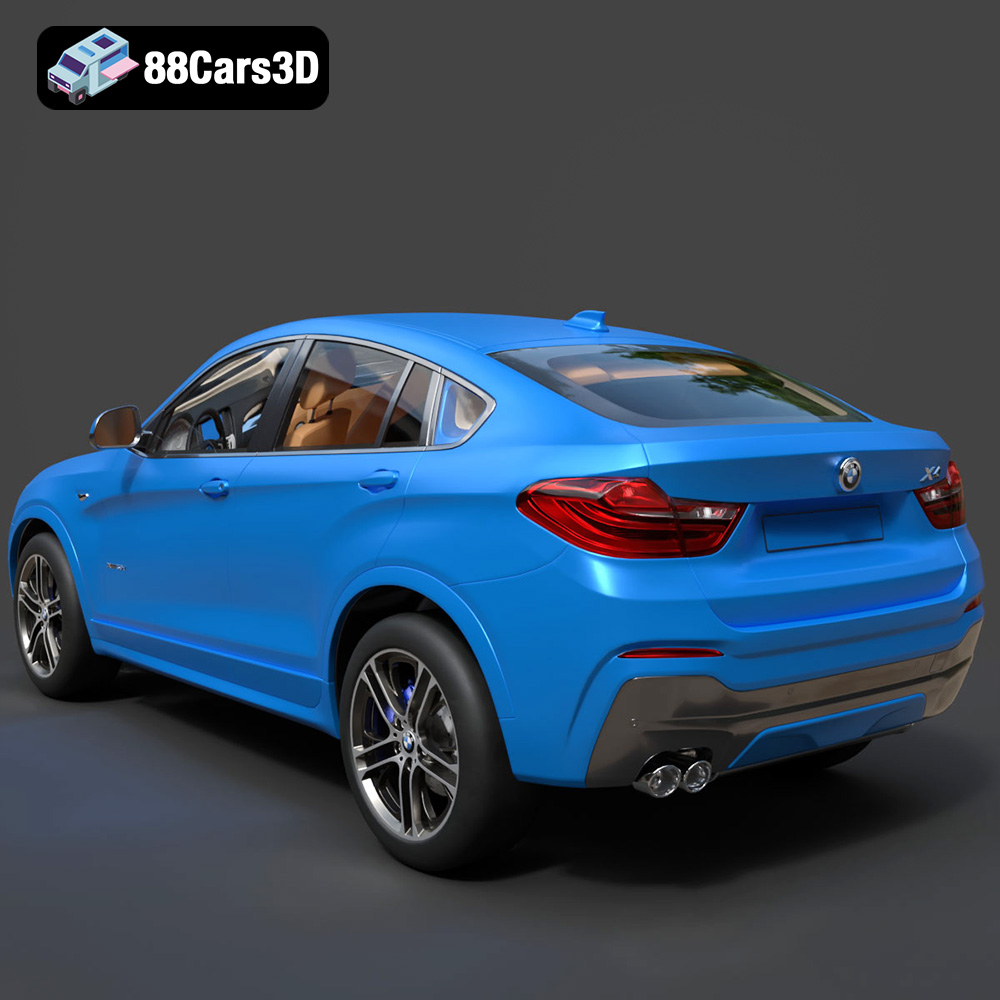
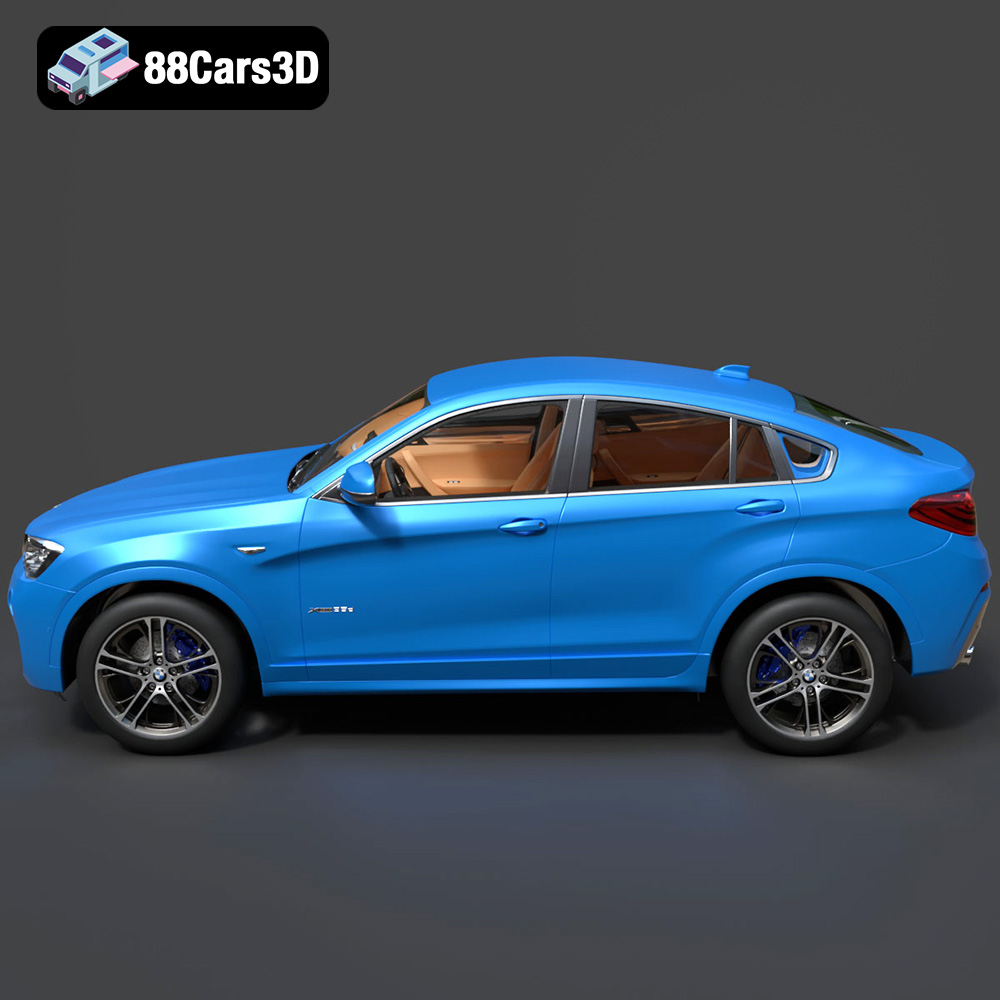
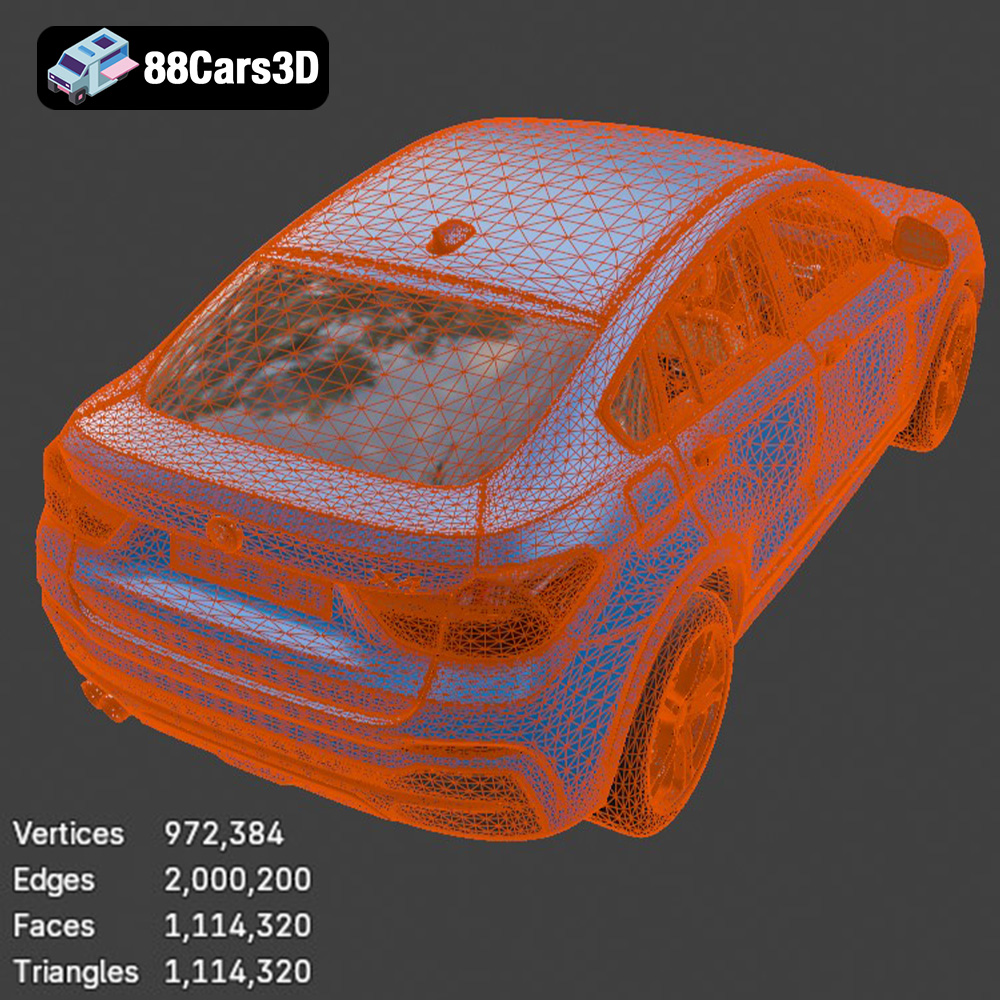
The first impression of any 3D car model comes from its exterior, and the BMW X4 model truly shines here. With an impressive 1,114,320 triangles, this model achieves unparalleled visual fidelity. While some might deem this “high-poly,” for modern real-time engines like Unreal Engine 5 utilizing technologies such as Nanite, or for high-end offline rendering, this level of detail is a distinct advantage. The high polygon count allows for incredibly smooth curvature, crisp edge definition, and accurate representation of complex surface topology without relying heavily on normal maps for intricate details.
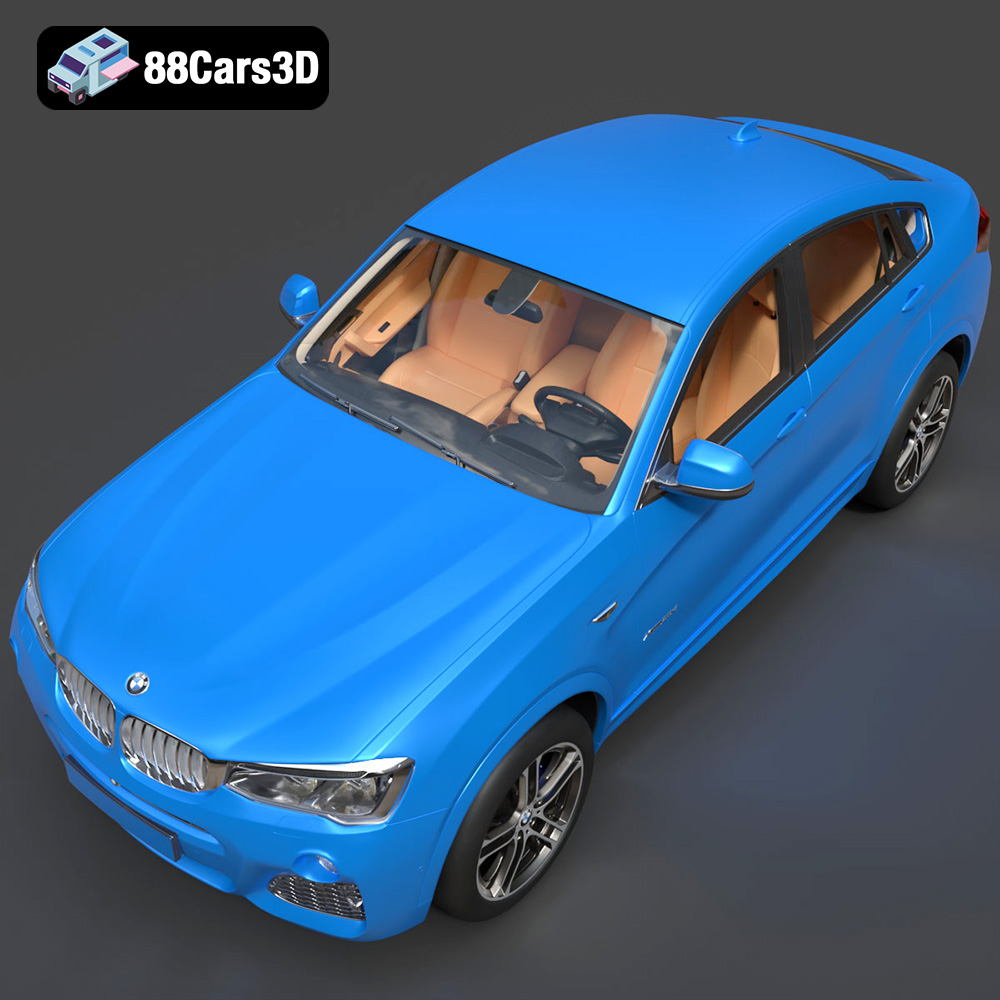
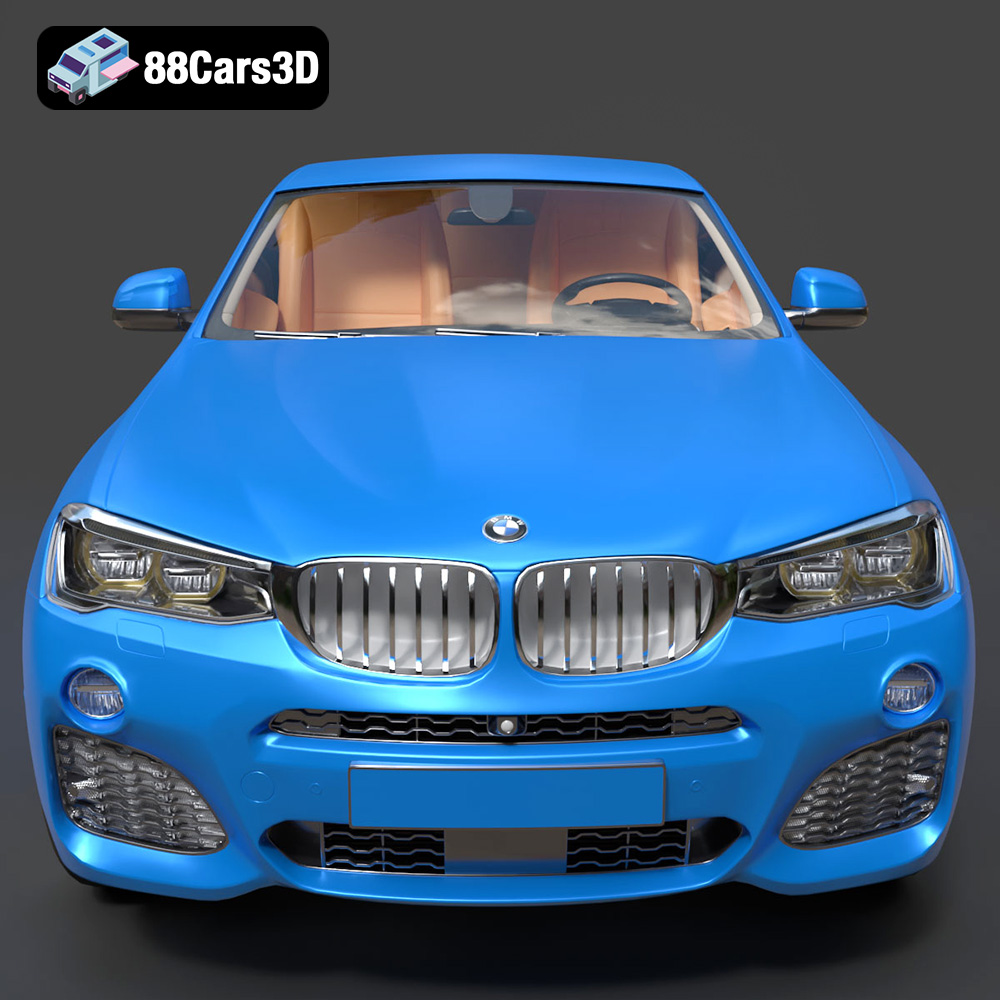
Key exterior features are meticulously recreated: the aggressive front fascia with the signature BMW kidney grille, muscular haunches, and the elegantly sloping roofline. Details extend to the intricate LED adaptive headlights and signature L-shaped 3D taillights, all contributing to the model’s photorealistic potential. The model also features premium M-Sport style alloy wheels with high-performance low-profile tires, and even visible high-performance braking and suspension details, ensuring authenticity from every angle.
Crucially, the model boasts real-world scale accuracy based on actual vehicle chassis dimensions. This is vital for architectural visualizations, automotive configurators, or any scenario where the car needs to interact realistically with its environment or other scale-accurate assets. The topology is carefully structured, ensuring smooth reflections across the body panels – a hallmark of quality in automotive rendering, as imperfect topology can lead to visible artifacts or “pinching” in highlights.
The quality doesn’t stop at the exterior. The BMW X4 3D Model extends its detailed approach to the cockpit and interior features, making it suitable for immersive experiences.
This level of interior detail is especially beneficial for applications requiring first-person views, such as virtual showrooms, driving simulators, or AAA game development where players can enter and interact within the vehicle. Despite the high overall polycount, the interior geometry is optimized where it matters, allowing for smooth performance in these demanding scenarios while retaining high visual quality for close-up shots.
For animators and game developers, the model’s structure is equally critical. The BMW X4 3D Model is designed with animation in mind, featuring:
These features, combined with the game-ready optimization and compatibility with major 3D software and real-time engines, position this asset as a powerful tool for professional pipelines. The “game-ready & optimized” designation at 1,114,320 triangles perfectly balances high-end visual realism with the performance requirements of modern engines, making it a versatile choice for a broad spectrum of projects.
The versatility of a high-quality 3D car model is best demonstrated by its seamless integration into various professional workflows. The BMW X4 3D Model from 88cars3d.com is engineered to excel in several key areas.
For professionals in automotive advertising, product visualization, or architectural rendering, photorealism is paramount. The `.max` file format, paired with industry-standard renderers like V-Ray or Corona Renderer in Autodesk 3ds Max, offers an ideal environment for achieving stunning results. Artists can leverage the model’s meticulously crafted geometry and robust material definitions to create breathtaking scenes:
The sheer detail of this model means less time spent modeling and more time focused on creative direction and rendering optimization, leading to superior final output for demanding clients. Assets from 88cars3d.com are curated to meet these exacting standards.
The modern game development landscape demands both visual fidelity and performance. The BMW X4 3D Model, with its optimized polycount and diverse file formats, is an excellent choice for real-time environments.
This model is built to be a strong foundation for any racing game, simulator, or general vehicular asset requirement, providing the perfect balance between visual impact and real-time performance.
Augmented Reality (AR), Virtual Reality (VR), and web-based 3D experiences are becoming increasingly prevalent, demanding lightweight yet visually compelling assets. The `.glb` format included with the BMW X4 3D Model is specifically tailored for these applications.
The compact nature and single-file structure of `.glb` make it incredibly efficient for streaming and real-time rendering on various devices, ensuring smooth performance even on mobile platforms, broadening the reach of your 3D content.
The utility of a high-quality 3D car model extends beyond purely digital realms, offering tangible possibilities through 3D printing and extensive customization options.
The inclusion of an `.stl` file for the BMW X4 3D Model opens up avenues for physical creation, allowing enthusiasts and professionals alike to bring a tangible representation of the digital asset to life.
This capability adds another layer of value, demonstrating the model’s robustness across both digital and physical fabrication methods.
A well-built 3D model isn’t just about what it is, but what it can become. The BMW X4 3D Model offers extensive customization possibilities, empowering artists to tailor it precisely to their project’s needs.
These customization options provide immense creative freedom, extending the lifespan and versatility of the asset across multiple projects without compromising its inherent quality.
Investing in premium 3D car models like the BMW X4 from 88cars3d.com is not merely a purchase; it’s a strategic decision that offers significant returns in terms of efficiency, quality, and creative potential for any professional.
The traditional approach to creating a highly detailed 3D car model from scratch is a labor-intensive and time-consuming process, often requiring hundreds of hours of expert modeling, UV mapping, and texturing. This can quickly become cost-prohibitive for many projects.
The caliber of a 3D model directly impacts the final output. Premium 3D car models set a high bar for realism and detail, which translates directly to the perceived quality of the entire project.
Ultimately, a high-quality asset like the BMW X4 3D Model from 88cars3d.com acts as a force multiplier, enhancing productivity and elevating the artistic and technical quality of any project it’s integrated into.
The world of 3D visualization is a testament to precision, artistry, and technical prowess. At its heart lies the demand for assets that not only captivate the eye but also empower the creator. The BMW X4 3D Model embodies this philosophy, offering a meticulously crafted digital representation of an iconic vehicle, designed to meet the rigorous demands of professional workflows.
From its stunning exterior and richly detailed interior to its game-ready optimization and comprehensive file format support—including .blend, .fbx, .obj, .glb, .stl, .ply, .unreal, and .max—this model is a versatile powerhouse. Whether you’re an automotive renderer striving for cinematic realism in 3ds Max, a game developer pushing visual boundaries in Unreal Engine, an AR/VR creator building immersive experiences, or a hobbyist bringing digital designs to life through 3D printing, the BMW X4 3D Model provides an exceptional foundation.
It represents an intelligent investment, saving valuable time and resources while consistently elevating the quality and impact of your projects. For professionals seeking top-tier 3D car models that deliver on both aesthetic and technical fronts, look no further than the curated selection at 88cars3d.com. This BMW X4 model is more than just a digital asset; it’s a gateway to new creative possibilities and an indispensable tool for achieving digital excellence.
The BMW X4 is a striking Sports Activity Coupe (SAC) that masterfully combines the robust capability of a premium SUV with the elegant, sloping roofline of a sports coupe. Renowned for its dynamic road presence, the X4 boasts an aggressive front fascia with the signature BMW kidney grille, muscular haunches, and a refined aerodynamic profile. Beneath its stylish exterior lies the promise of athletic performance, highlighted by its twin-tailpipe exhaust system and bold aerodynamic styling cues. This premium 3D model boasts an impressive 1,114,320 triangles, ensuring unparalleled visual fidelity and photorealistic accuracy. Despite the high polygon count, the topology is carefully structured to maintain smooth reflections and crisp edge loops, making it an excellent candidate for high-end rendering, cinematic animations, and modern real-time engines utilizing advanced geometry systems like Unreal Engine 5’s Nanite. Perfect for automotive visualizations, high-end commercial animations, architectural rendering, and AAA game development.
$37.50
.blend
.bmw
.fbx
.glb
.max
.obj
.ply
.rendering
.stl
.unreal
bmw-x4
car-3d-model
coupe-suv
game asset
game-ready
high poly
luxury car
optimized
SUV
VR/AR
x4