Get 20% OFF All Premium 3D & STL Models!

In the rapidly evolving landscapes of game development, cinematic production, architectural visualization, and interactive AR/VR experiences, the quality of 3D assets is paramount. A high-fidelity model can transform a conceptual design into a tangible reality, imbue a virtual world with breathtaking realism, or provide critical context for training and simulation. Creators are constantly searching for assets that not only look impressive but also perform flawlessly across diverse platforms and pipelines. This pursuit of digital excellence is where meticulously crafted 3D models become indispensable, bridging the gap between artistic vision and technical execution.
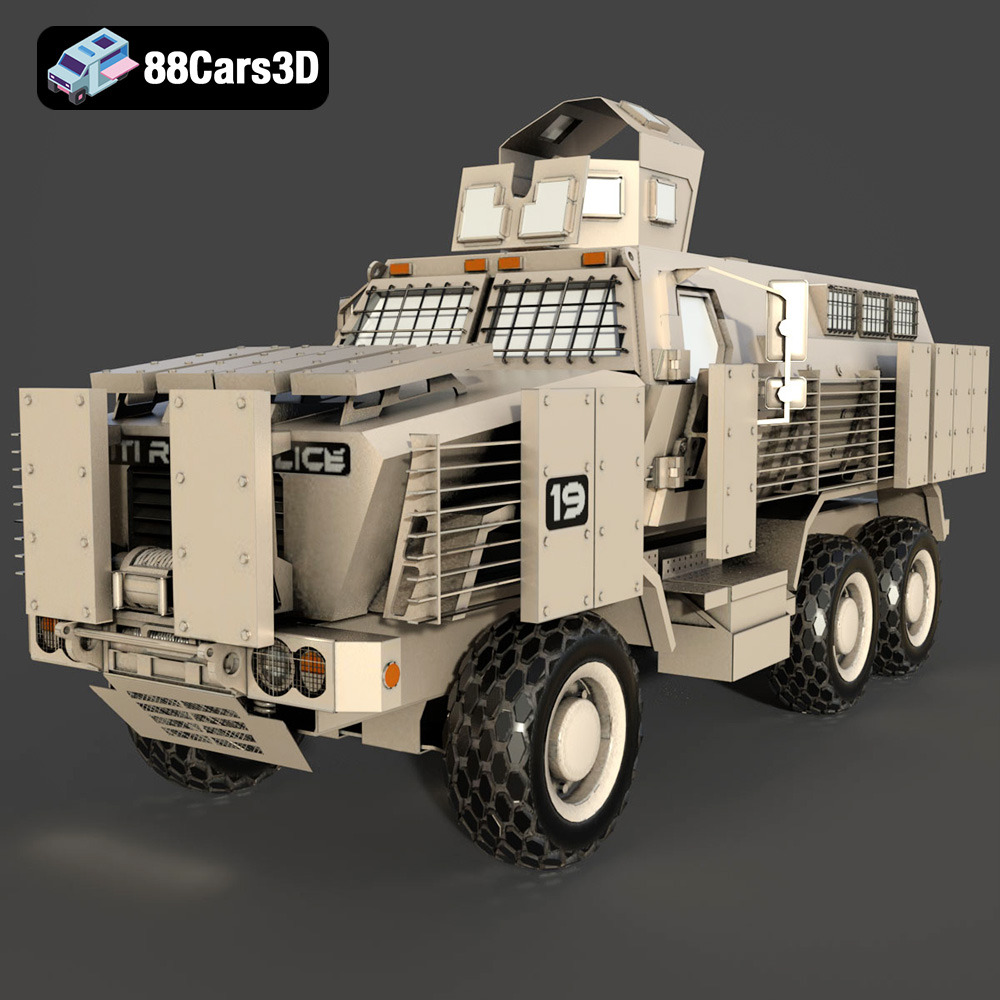
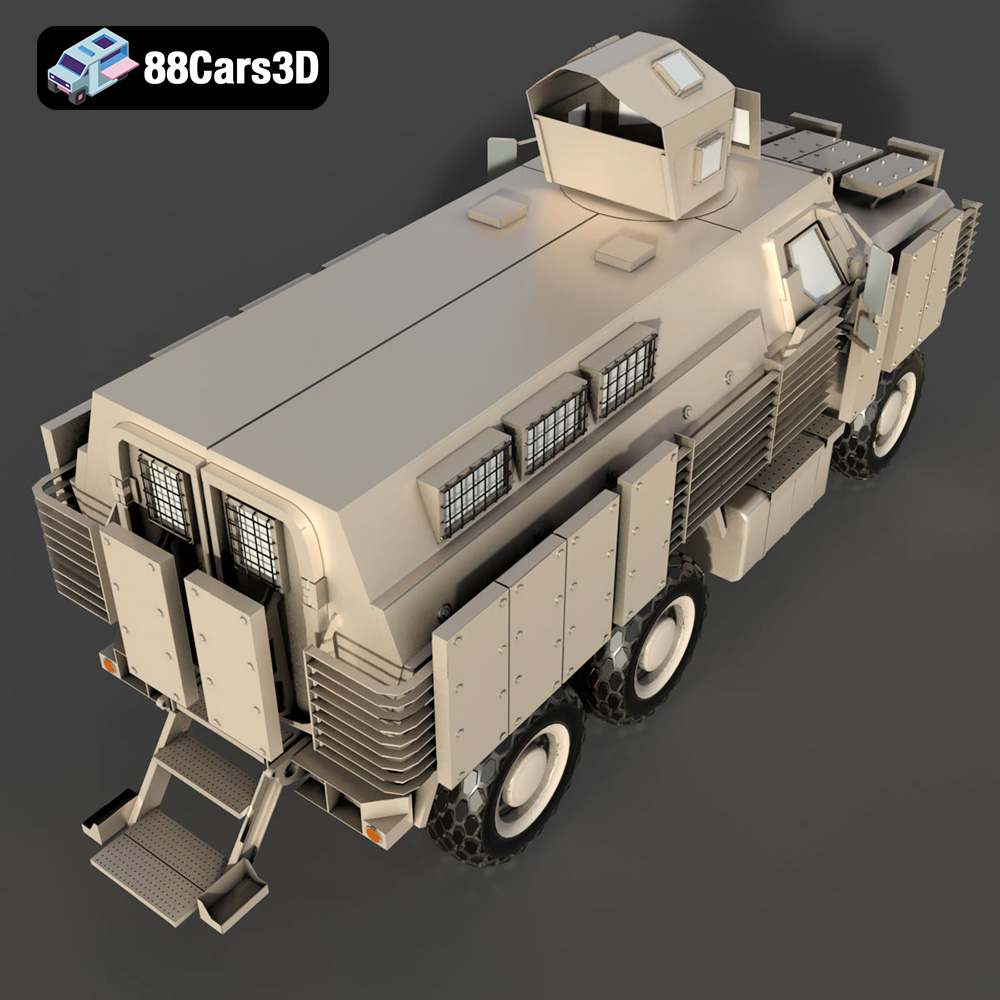
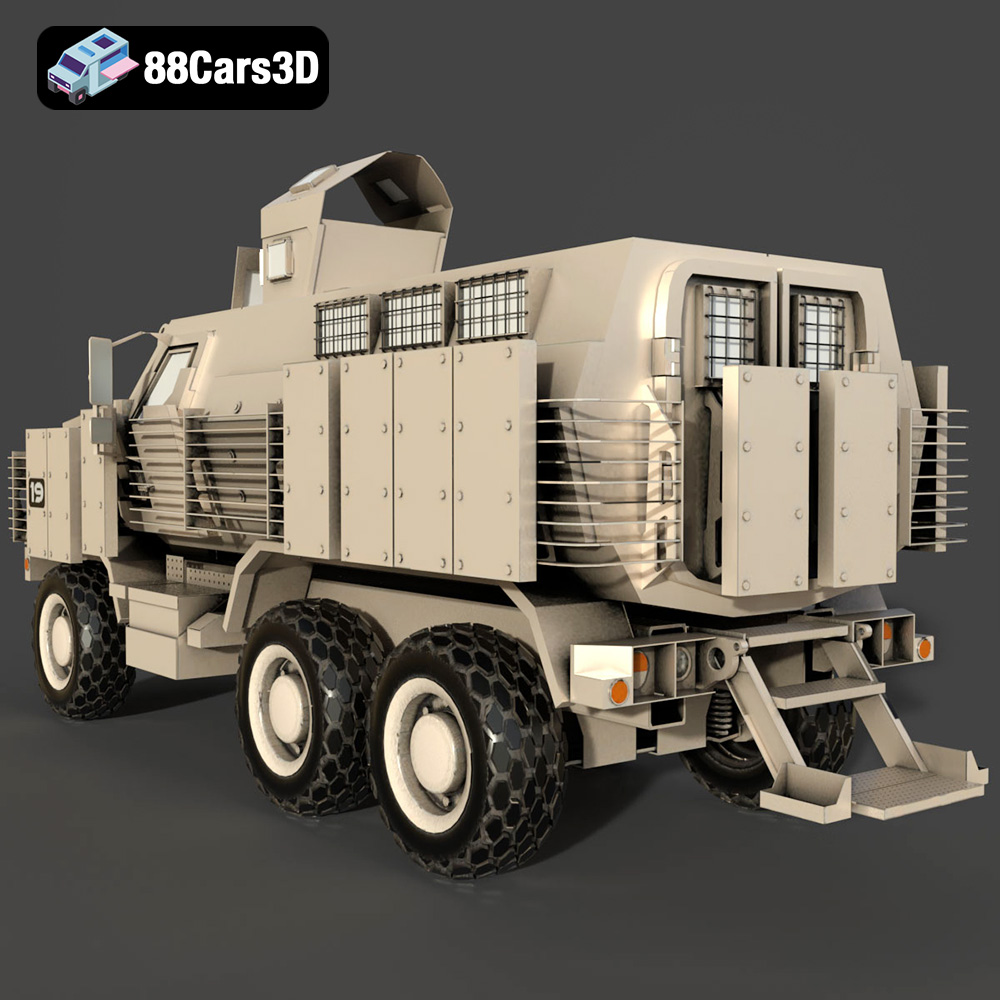
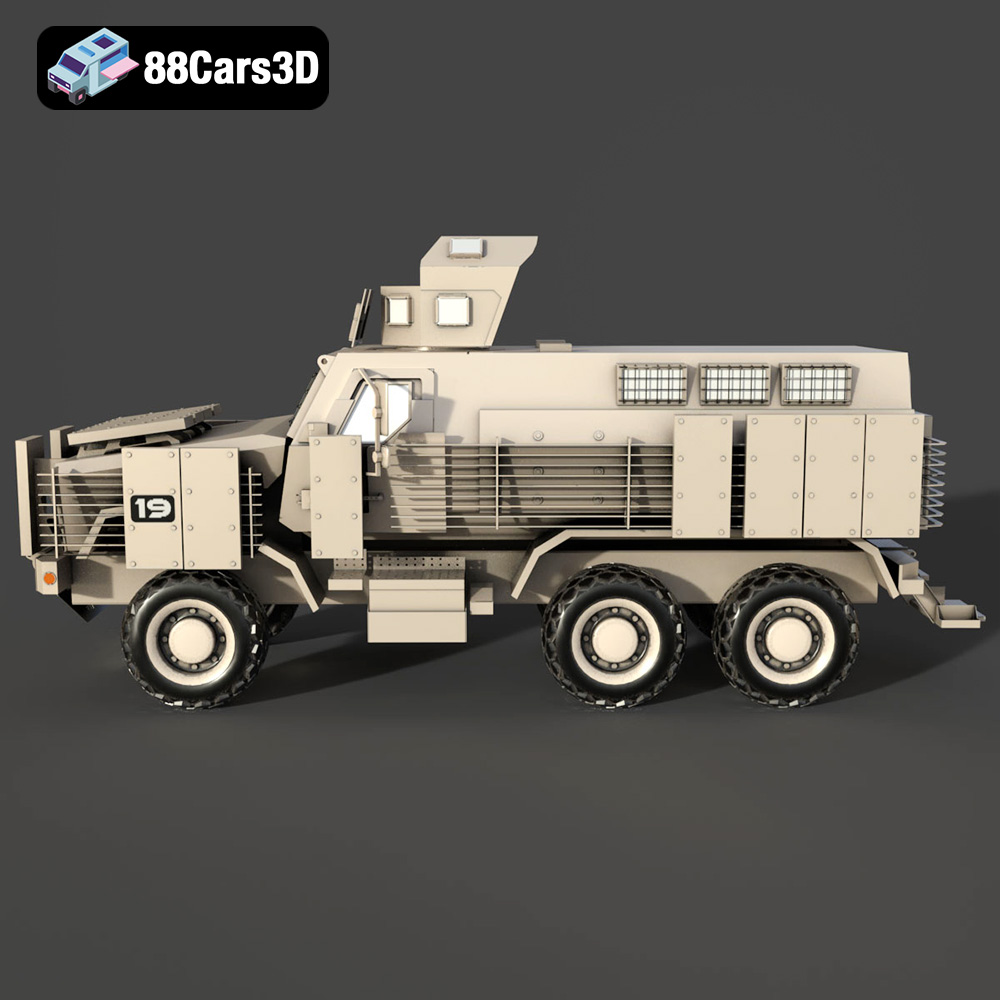
Few vehicles embody rugged utility and imposing design quite like the Caiman MRAP (Mine-Resistant Ambush Protected) military vehicle. Its iconic V-hull design and heavy-duty armor plating are testaments to survivability and tactical prowess. Translating such a complex, real-world machine into a fully functional and optimized 3D model requires a deep understanding of geometry, textures, and interoperability. The Caiman MRAP 2008 3D Model available on 88cars3d.com stands as a prime example of such a comprehensive asset, offering creators a robust foundation for a multitude of projects, from immersive combat simulations to detailed defense visualizations and even physical 3D prints.
The Mine-Resistant Ambush Protected vehicle class revolutionized military ground transport, prioritizing crew survivability in asymmetric warfare. The Caiman MRAP, introduced in 2008, quickly became a symbol of this innovation, known for its ability to withstand IEDs and direct ambushes. Its distinctive silhouette and robust engineering offer a compelling subject for digital artists and developers seeking authenticity.
Recreating a vehicle like the Caiman MRAP in 3D is more than just modeling its shape; it’s about capturing its essence. This includes everything from the subtle curves of its armored panels to the purposeful design of its heavy-duty suspension and exhaust system. In the digital realm, these details translate into visual cues that convey strength, resilience, and operational readiness. A well-executed 3D model of such a vehicle becomes a narrative tool, instantly communicating its function and presence within any virtual environment.
For applications such as military training simulations, tactical shooters, or cinematic war sequences, authenticity is non-negotiable. Users and audiences expect a high degree of accuracy in both appearance and behavior. Generic or poorly detailed military vehicles can break immersion and undermine the credibility of a project. This drives the demand for expertly crafted 3D car models and game assets that are not only visually convincing but also technically precise, providing correct proportions, functional parts for animation, and optimized geometry for real-time performance.
The versatility of a 3D model is often defined by the range and quality of its included file formats. Each format serves a specific purpose, offering unique advantages for different stages of the 3D pipeline—from initial modeling and texturing to real-time rendering, animation, and physical fabrication. The Caiman MRAP 2008 3D Model is exemplary in this regard, providing a comprehensive suite of formats to cater to almost any professional workflow. Understanding these formats is crucial for maximizing efficiency and ensuring seamless integration of your 3D car models and game assets.
The .blend file is Blender’s native format, encapsulating an entire scene with all its objects, materials, textures, animations, and even editor settings. For users deeply integrated into the Blender ecosystem, this is the ultimate format for complete editability. It ensures that the Caiman MRAP model retains all its original hierarchy, modifiers, UV maps, and material nodes exactly as intended by the creator. This makes it ideal for extensive customization, re-rigging, or further development within Blender before exporting to other platforms.
The .fbx (Filmbox) format, originally developed by Kaydara and now owned by Autodesk, has become an industry-standard for 3D data interchange. It’s incredibly versatile, supporting geometry, materials, textures, animations, and even skeletal deformation. .fbx is particularly ideal for transferring models between different 3D software packages (e.g., 3ds Max to Maya, or Blender to Unreal Engine/Unity) while preserving complex data. For the Caiman MRAP, an .fbx file ensures that the optimized mesh, proper pivot setups for animation (wheels, steering, suspension), and associated textures are readily accessible for real-time game development or cinematic rendering, making it a critical format for game assets.
The .obj (Wavefront Object) format is one of the oldest and most universally supported 3D file types. It primarily stores geometry (vertices, normals, texture coordinates, and faces) and can reference an external .mtl (material template library) file for material properties. While it doesn’t support animation or rigging, its simplicity and widespread compatibility make it an excellent choice for static mesh exchange across virtually all 3D software. The .obj version of the Caiman MRAP is perfect for artists who need a clean mesh to start from, especially if their workflow involves importing into less common 3D applications or for simple rendering tasks without complex animations.
.glb (GL Transmission Format Binary) is the binary version of .gltf, designed for efficient transmission and loading of 3D scenes and models in web and AR/VR applications. It packages geometry, textures, animations, and PBR (Physically Based Rendering) materials into a single, compact file. This “ready-to-use” nature makes it exceptionally suited for mobile AR experiences, browser-based 3D viewers, and lightweight VR training environments where fast loading and optimal performance are crucial. The Caiman MRAP in .glb format allows for immediate deployment in interactive web projects or AR/VR simulations without complex setup.
The .stl (STereoLithography) format is the de facto standard for 3D printing. It describes only the surface geometry of a 3D object using a collection of interconnected triangles. While it contains no color or material information, its simplicity makes it ideal for preparing models for additive manufacturing. For hobbyists or defense visualization firms looking to create a physical model of the Caiman MRAP, the .stl file is indispensable. It translates the digital asset into a printable blueprint, facilitating the creation of scale models or prototypes, leveraging the detailed exterior features for tangible output.
The .ply (Polygon File Format or Stanford Triangle Format) is another format for storing 3D data, often used in scientific and engineering applications, particularly for data from 3D scanners. It can store not only geometry but also color, transparency, normals, texture coordinates, and other properties associated with vertices and faces. While less common for direct game asset use, its precision and ability to store complex data make it valuable for CAD integration, re-engineering, or highly detailed visualization where mesh integrity and additional per-vertex data are critical.
The .unreal format, while not a universal standard, typically refers to an asset specifically prepared or packaged for direct import and optimal performance within Unreal Engine projects. This might involve pre-configured asset types, collision meshes, LODs (Levels of Detail), and material setups tailored to Unreal’s rendering pipeline. For developers leveraging the Caiman MRAP in Unreal Engine, this format minimizes conversion issues and ensures that the model’s game-ready optimization, proper pivot setup, and material assignments are instantly recognized, streamlining the development of military combat simulations or tactical shooters.
The .max format is Autodesk 3ds Max’s native file type. Like .blend, it stores an entire scene with all its elements, including geometry, modifiers, materials, lights, cameras, and animations, specific to the 3ds Max environment. For professionals working in 3ds Max for high-end rendering, complex animation, or architectural visualization, the .max file provides the fullest control over the Caiman MRAP model. It allows for advanced scene setup, rendering with specific renderers like V-Ray or Corona, and intricate animation sequences, making it invaluable for studio production.
The hallmark of a truly professional 3D model, especially for complex subjects like military vehicles, lies in its meticulous attention to detail combined with intelligent optimization. The Caiman MRAP 2008 3D Model from 88cars3d.com showcases this balance, delivering both visual fidelity and performance efficiency.
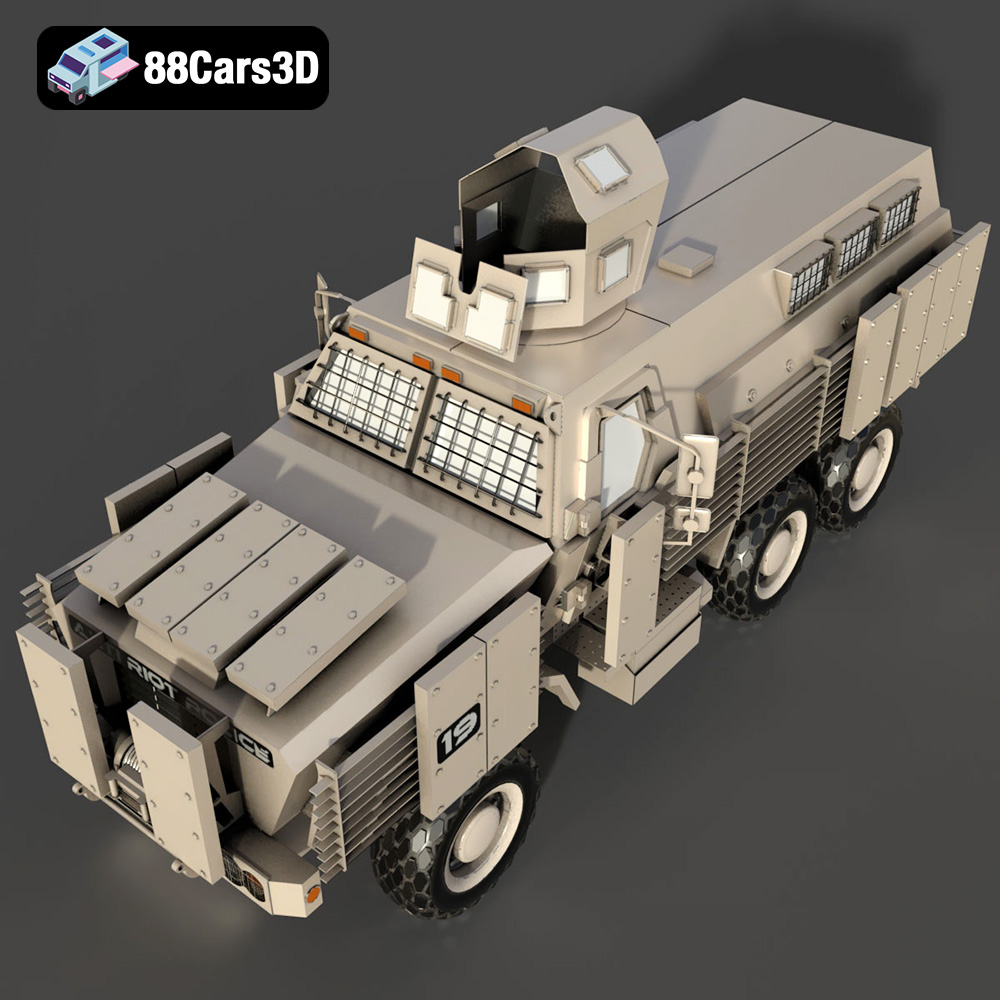
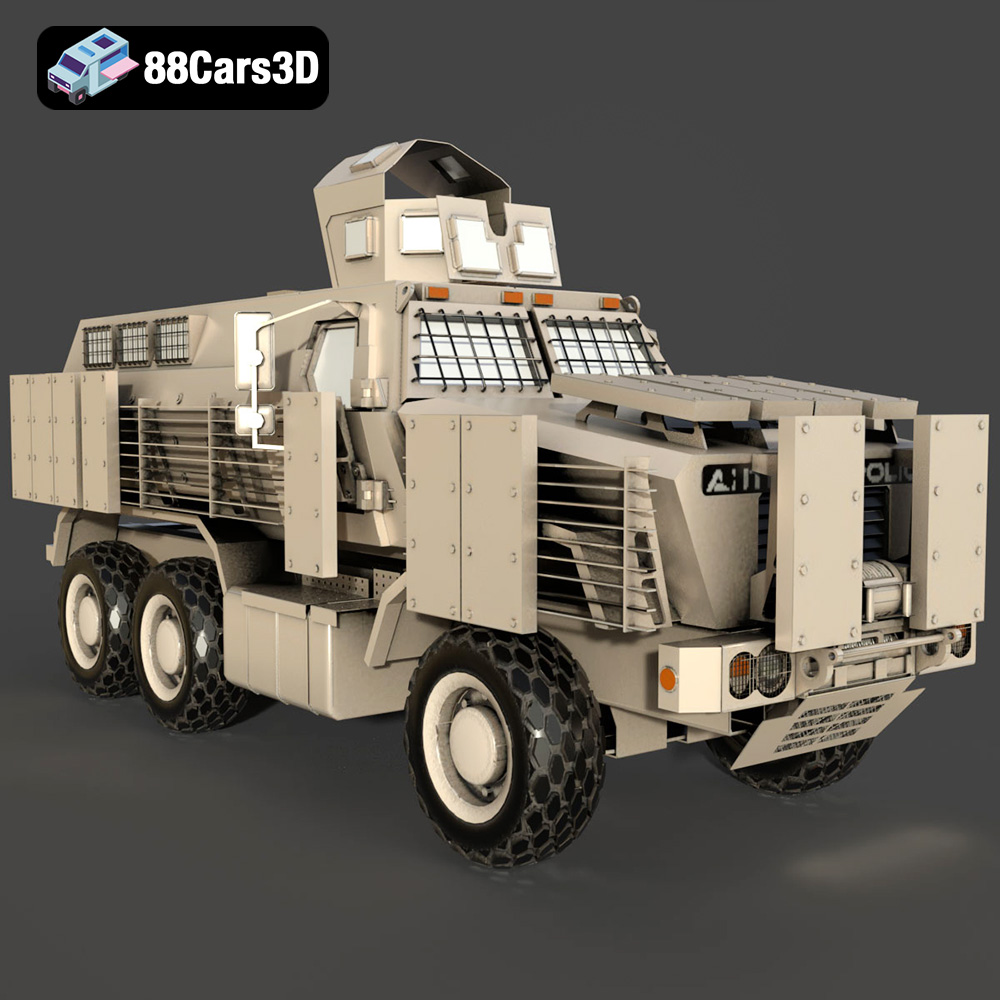
From the first glance, the Caiman MRAP’s digital replica impresses with its accuracy. The heavy-duty armored chassis geometry precisely matches the real-world proportions, crucial for believable visual effects and accurate simulations. Specific elements like the detailed heavy-duty diesel engine block, armored cooling grilles, and tactical exhaust routing designed for high-clearance environments are all faithfully reproduced. Military-spec blackout lighting, searchlights, and standard tactical headlights contribute to the authentic appearance. Furthermore, the massive run-flat tactical wheels with deep, aggressive off-road treads, along with the reinforced heavy-duty leaf spring and solid axle suspension details, demonstrate a commitment to capturing every functional aspect. Crucially for animation, components like wheels, suspension, turret, and steering are separated and feature proper pivot setups, enabling dynamic and realistic motion in any scene.
Beyond the formidable exterior, the interior of the Caiman MRAP 3D Model is equally detailed. It includes blast-mitigating troop seats and a commander station, vital for immersive first-person tactical gaming or VR training applications. A heavy-duty tactical steering wheel, reinforced column, military-grade instrument cluster, and digital comms displays are all present, along with robust pedals, levers, and a transmission shifter. The optimized geometry for the cockpit ensures excellent performance even when viewed up close, providing a truly immersive experience for virtual operators.
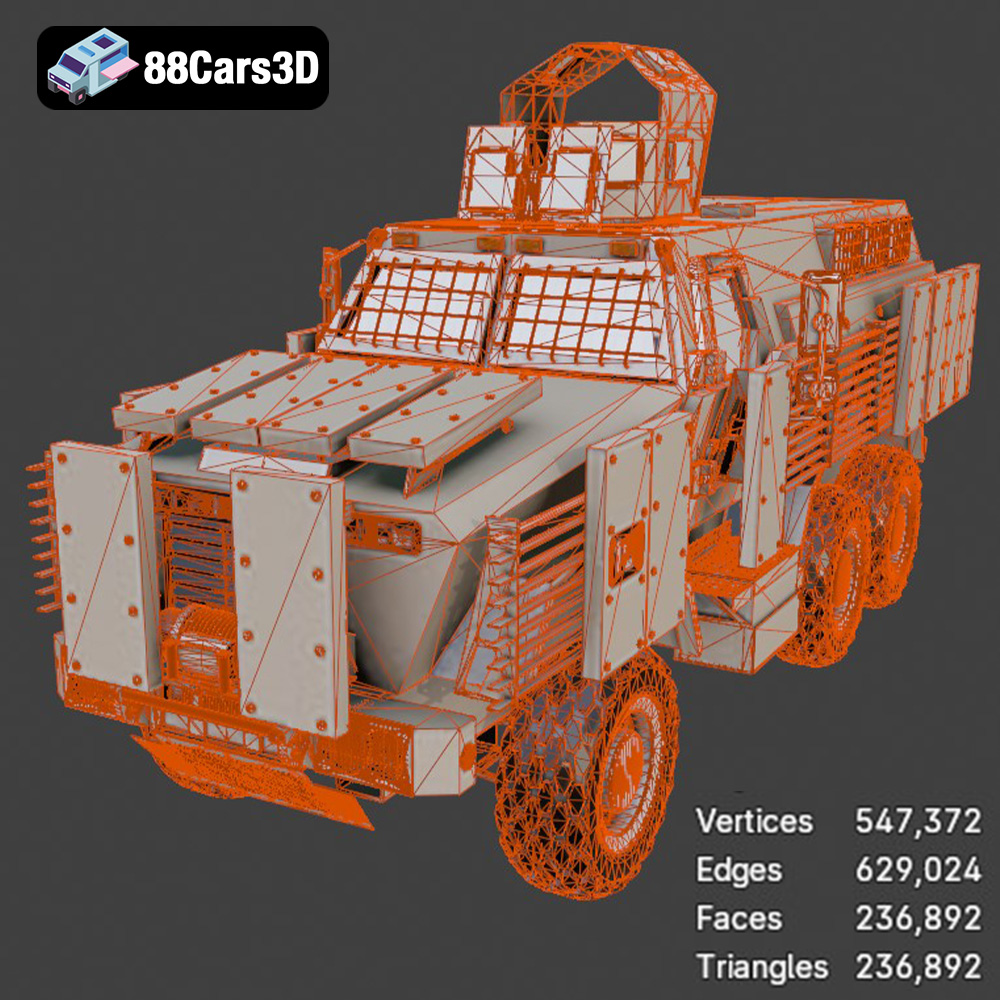
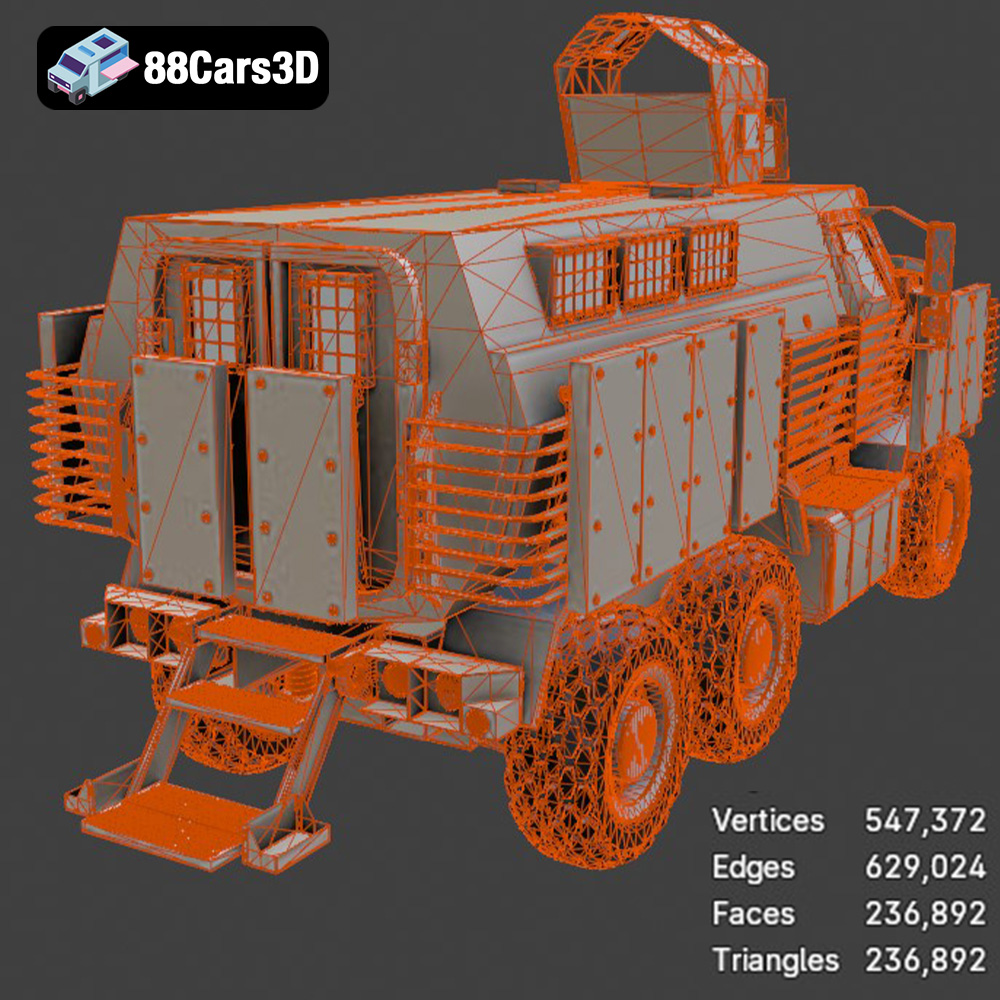
Achieving a perfect balance between visual realism and real-time performance is a constant challenge in 3D asset creation. With a triangle count of 236,892, this Caiman MRAP model strikes an ideal equilibrium. This polycount is sufficiently detailed to convey high-end visual fidelity for close-up renders and cinematics, yet optimized enough for seamless integration into real-time engines like Unreal Engine and Unity. This careful optimization ensures that game developers can deploy the asset in open-world combat games or tactical shooters without significantly impacting frame rates, while still delivering stunning visuals. The real-world scale accuracy further enhances its utility, ensuring it fits perfectly within any realistic environment.
The true value of a versatile 3D asset like the Caiman MRAP 2008 3D Model lies in its seamless integration into various professional pipelines. Its multi-format availability and optimized design make it a go-to choice for diverse applications, from high-stakes simulations to compelling digital narratives.
For game developers, the Caiman MRAP 2008 3D Model is an excellent game asset. Its game-ready optimization and appropriate triangle count (236,892) mean it can be directly imported into Unreal Engine or Unity. The inclusion of the .fbx format, along with a dedicated .unreal asset, streamlines the process significantly. Developers can utilize the separated components (wheels, suspension, turret, steering) with their proper pivot setups to create fully functional and animatable vehicles. This is crucial for implementing realistic physics, damage models, and interactive vehicle controls in open-world combat games, military simulators, or first-person tactical shooters. The optimized geometry for first-person POV in the cockpit further enhances immersion for players.
Beyond interactive experiences, the Caiman MRAP model excels in pre-rendered scenarios. For automotive rendering and cinematic production, the .max and .blend files provide full editing capabilities, allowing artists to leverage advanced rendering engines like V-Ray, Corona Renderer, or Cycles. The model’s accurate topology and real-world scale are ideal for creating photorealistic defense industry campaigns, compelling cinematic action scenes, or studio lighting setups. Artists can customize material finishes—from matte military-spec coatings to weathered and battle-damaged variants—and adapt lighting for daytime patrols or night-vision environments, crafting visually stunning narratives around the vehicle’s presence. The high detail in the exterior, including the diesel engine enclosure and reinforced exhaust system, shines through in high-resolution stills and animations.
The Caiman MRAP 3D Model is also perfectly suited for immersive AR/VR applications. With its optimized polycount and real-world scale, it can be seamlessly integrated into virtual training environments, tactical configurators, and mobile AR experiences. The .glb format, specifically designed for web and AR/VR, ensures efficient loading and smooth performance on these platforms. Imagine a VR military training application where recruits can interact with a virtual Caiman MRAP, studying its components, practicing maintenance procedures, or engaging in simulated tactical maneuvers. The ability to switch body/armor colors, modify tire textures, and adjust material finishes further enhances the training realism, offering dynamic and responsive visual feedback.
The journey of a 3D model doesn’t always end on a screen. For enthusiasts, collectors, and defense modelers, the ability to bring a digital asset into the physical world is a significant advantage. The Caiman MRAP 2008 3D Model provides this capability through its inclusion of the .stl file format, opening doors to hobbyist projects and detailed dioramas.
The .stl file of the Caiman MRAP is specifically designed for 3D printing. The product description recommends specific print settings, crucial for a successful physical output. Suggested scales like 1:35, 1:24, or 1:18 allow for various display sizes, catering to different modeling preferences. A layer height between 0.04–0.12 mm is advised, with resin printing recommended for capturing the fine tactical details such as communication antennas, grab handles, and the intricate rooftop turret. Attention to wall thickness (1.2–2.0 mm) ensures structural integrity, while an infill of 20–30% balances strength and material usage.
Proper support structures are mandatory for detailed parts like the exhaust, mirrors, antennas, and turret, preventing deformation during the printing process. Print orientation is also a key consideration; printing the armored frame angled helps with structural integrity, and printing wheels separately often yields better results for circular geometry and tread details. This meticulous preparation ensures that the printed model accurately reflects the digital asset’s fidelity.
Once printed, the physical Caiman MRAP model enters the realm of traditional modeling. Post-processing steps like sanding and priming are essential to smooth out layer lines and prepare the surface for painting. For ultimate authenticity, applying CARC (Chemical Agent Resistant Coating) military finishes is recommended. This allows hobbyists to recreate the vehicle in various authentic liveries—desert tan, woodland camo, or urban grey—and to weather the model with battle damage effects, truly bringing the Caiman MRAP to life as a tangible display piece or a centerpiece in a diorama, showcasing the versatility of premium 3D car models.
A high-quality 3D asset offers more than just its default state; it provides a canvas for creative exploration. The Caiman MRAP 2008 3D Model is engineered for extensive customization, allowing artists and developers to tailor it precisely to their project’s unique requirements. This adaptability ensures its relevance across a wide spectrum of applications, enhancing its utility as a valuable game asset or rendering component.
The ability to easily change body and armor colors is a fundamental customization. Whether a project demands a desert tan for arid environments, a woodland camo for forested regions, or an urban grey for cityscapes, the model’s materials can be readily adjusted. Beyond color, the texture properties can be modified to reflect different levels of wear and tear. Artists can create heavy mud variants for tires to simulate off-road operations or switch to dry dirt variants for cleaner environments. Adjusting material finishes to portray matte military-spec, weathered, or battle-damaged states adds significant realism and storytelling potential, allowing the Caiman MRAP to fit seamlessly into diverse narrative contexts.
The structural design of the Caiman MRAP 3D Model is inherently animation-friendly. With separate wheels, suspension, turret, and steering components, each equipped with proper pivot setups, animators can bring the vehicle to life with realistic motion. This includes simulating suspension travel over rough terrain, detailed wheel rotation, and precise steering actions. The rooftop turret can be articulated for targeting sequences, and grab handles could even be rigged for character interaction. This level of preparation simplifies the creation of dynamic scenes, such as convoys on patrol, high-speed chases, or tactical engagements, making the Caiman MRAP an invaluable asset for any project requiring animated military vehicles. Lighting can also be adapted for specific times of day or tactical situations, such as enabling night-vision environments, further enhancing its adaptability for various digital scenarios.
The creation and deployment of exceptional 3D assets are at the heart of modern digital content production. From immersive game worlds to compelling cinematic visuals and critical AR/VR training simulations, the demand for high-quality, versatile, and optimized 3D models continues to grow. The Caiman MRAP 2008 3D Model stands as a testament to this principle, embodying meticulous detail, technical precision, and broad compatibility.
Its comprehensive array of file formats—from .blend and .max for full editability, to .fbx for industry-standard exchange, .glb for AR/VR, and .stl for 3D printing—ensures that this powerful military vehicle asset can be integrated into virtually any professional workflow. Whether you’re developing a cutting-edge tactical shooter, producing a high-fidelity defense visualization, or crafting a detailed physical model, the Caiman MRAP offers an unparalleled foundation. Its balance of visual realism and game-ready optimization, coupled with extensive customization options, makes it an indispensable tool for any creator. For those seeking premium 3D car models and game assets, 88cars3d.com provides a curated selection of top-tier resources, enabling your visions to take digital form with confidence and quality.
The Caiman MRAP (Mine-Resistant Ambush Protected) is a legendary military vehicle renowned for its unparalleled survivability and rugged tactical aesthetic. Designed to withstand explosive devices and ambushes in hostile territories, it features a signature V-hull design, heavy-duty armor plating, and an imposing, high-clearance stance. This digital replica captures its iconic features meticulously, from the robust diesel engine enclosure and reinforced exhaust system to the intricate rooftop turret, grab handles, and communication antennas.
$14.99
.blend
.fbx
.glb
.max
.obj
.ply
.rendering
.stl
.tactical
.unreal
armored-vehicle
caiman
car-3d-model
game asset
game-ready
low-poly
military-vehicle
mrap
mrap-2008
optimized
VR/AR