Get 20% OFF All Premium 3D & STL Models!

In the fast-paced world of digital creation, the demand for high-fidelity 3D assets continues to soar across industries. From automotive design and marketing to immersive game development and sophisticated architectural visualization, the quality of a 3D model can significantly impact the final output and overall project efficiency. A meticulously crafted 3D car model is more than just a visual prop; it’s a foundational asset that informs design decisions, drives compelling narratives, and powers realistic interactive experiences.
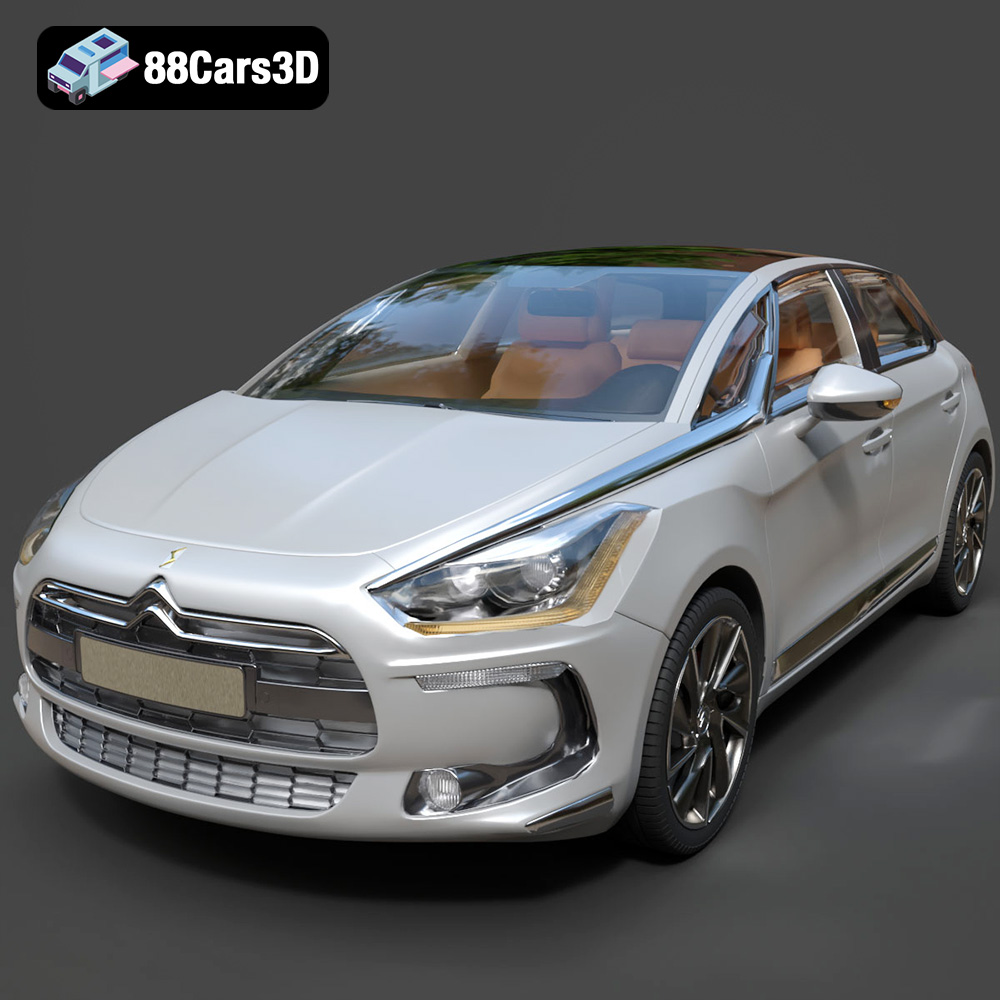
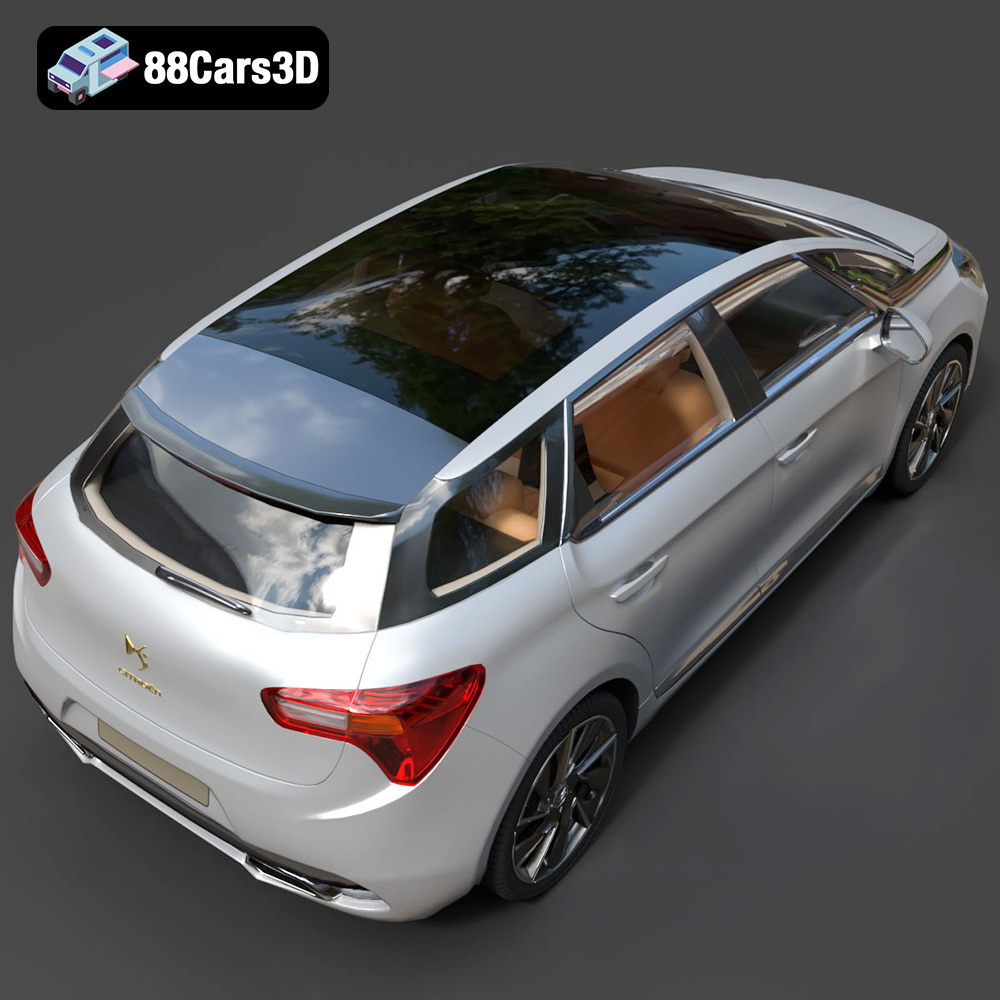
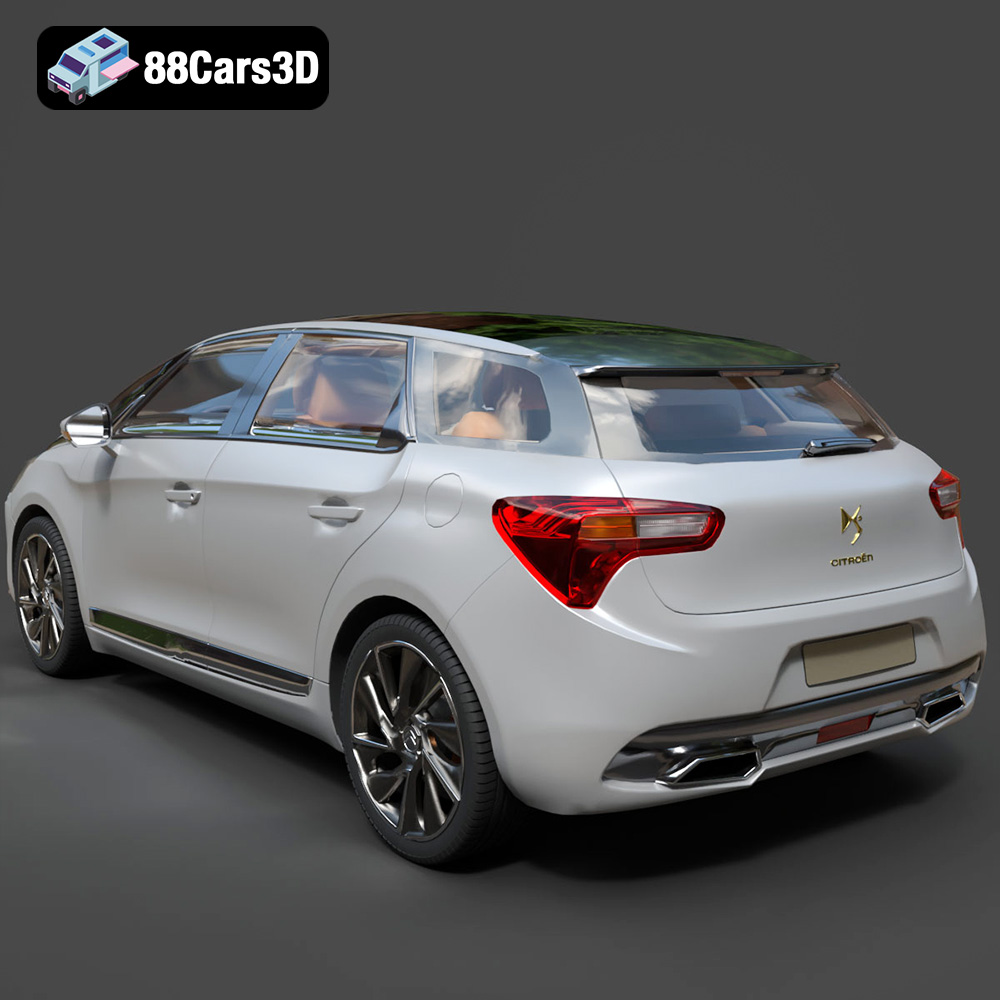
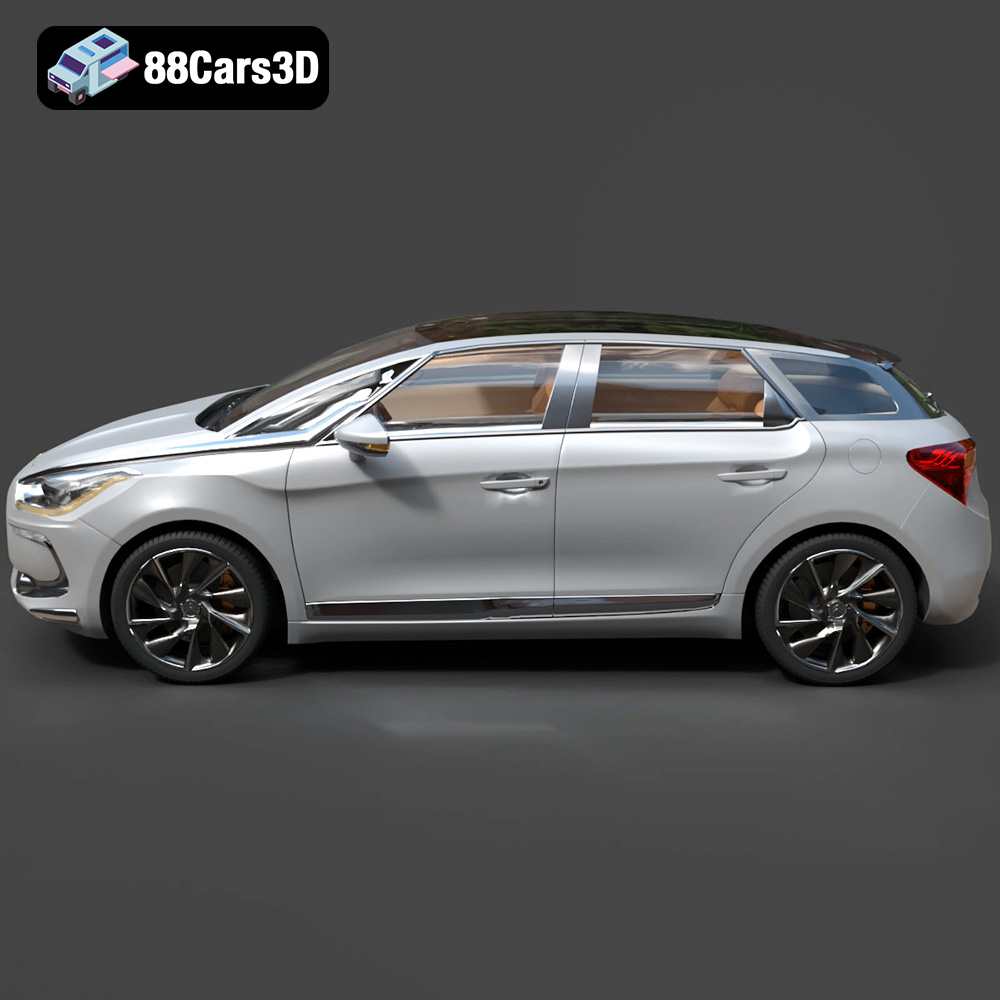
Understanding the intricate balance between aesthetic detail and technical optimization is crucial for professionals. It’s about leveraging models that not only look stunning but are also engineered for maximum versatility and performance within various software environments and real-time engines. Consider, for instance, a distinctive vehicle like the Citroen DS5. Its avant-garde French automotive design, characterized by striking, aviation-inspired styling and signature chrome “sabers,” demands a 3D representation that faithfully captures its unique essence. A premium 3D model of the Citroen DS5, such as the one available at 88cars3d.com, provides this very capability, offering an optimized asset ready for diverse applications, from high-end photorealistic renders to fluid real-time game environments. This kind of asset elevates projects, allowing creators to focus on innovation rather than struggling with basic asset creation.
The journey of a 3D model through various creative pipelines is heavily influenced by the file format in which it is stored. Each format is designed with specific use cases, compatibilities, and technical advantages in mind. Understanding these distinctions is paramount for any professional working with 3D car models, ensuring seamless integration and optimal performance. The Citroen DS5 3D model, for instance, offers a comprehensive suite of formats, highlighting its incredible versatility for any project.
The .blend format is the native file type for Blender, the powerful open-source 3D creation suite. When you download a .blend file, you’re not just getting a mesh; you’re getting a fully editable Blender scene. This includes the model’s geometry, materials (with PBR setups for Cycles and Eevee), textures, lighting, camera setups, animations, modifiers, and even custom scripts. For artists deeply integrated into the Blender ecosystem, this format offers unparalleled flexibility for further modification, rendering, or exporting to other formats while preserving all scene data. It’s ideal for deep customization of the Citroen DS5’s paint, interior, or even creating custom animations.
.fbx (Filmbox) stands as one of the most widely adopted proprietary file formats for 3D data exchange, especially prevalent in the game development and animation industries. Developed by Autodesk, FBX is excellent for transferring models, animations, cameras, and even character rigs between different 3D software applications and real-time engines like Unreal Engine and Unity. Its strength lies in its ability to encapsulate complex scene information while maintaining a relatively small file size. When importing the Citroen DS5 as an FBX, you can expect its geometry, UVs, materials (though material translation can sometimes be imperfect between software), and even its pivot points for animation to transfer cleanly, making it the go-to for production pipelines.
The .obj (Wavefront OBJ) format is a venerable, universally supported format for 3D geometry. It’s a simple, text-based file that describes the model’s vertices, faces, normals, and UV coordinates. While it doesn’t typically store advanced scene data like animations, lighting, or complex material definitions (it links to a separate .mtl file for basic material properties), its widespread compatibility makes it an excellent choice for basic mesh exchange across virtually any 3D software. For simple static renders or when starting fresh with materials in a new environment, the Citroen DS5 .obj provides a clean, compatible base.
.glb (GL Transmission Format Binary) is the binary version of glTF, a royalty-free specification for the efficient transmission and loading of 3D scenes and models by applications. It’s particularly optimized for real-time applications, AR/VR experiences, and web-based 3D viewers. A single .glb file can contain geometry, materials, textures, animations, and skeletal structures, making it highly self-contained and efficient. The Citroen DS5 .glb is perfect for embedding in a virtual showroom or an interactive product configurator on a website, offering rapid loading and excellent visual quality on mobile devices or in browser contexts.
The .stl (Stereolithography) format is the industry standard for 3D printing. It represents a 3D model as a series of connected triangles (a tessellation) without color, texture, or other CAD attributes. Its simplicity makes it universally readable by 3D printers and slicing software. While it doesn’t contain visual information, it precisely defines the outer surface of the object, which is exactly what a 3D printer needs. The Citroen DS5 .stl allows enthusiasts and professionals alike to bring a physical representation of the digital model to life, whether for display, prototyping, or scale model collections, adhering to the recommended print settings for optimal results.
.ply (Polygon File Format or Stanford Triangle Format) is a file format for storing graphical objects as a collection of polygons. It supports a wider range of properties than .obj or .stl, including color, transparency, confidence values, and texture coordinates for each vertex and face. It’s often used in academic and scientific fields for storing data from 3D scanners, CAD software, and medical imaging. While less common for general design work, the Citroen DS5 .ply file could be valuable for precise geometric analysis, reverse engineering, or integrating into specialized engineering workflows.
While not a standalone file format in the traditional sense, “.unreal” typically refers to an asset or a packaged scene specifically prepared for direct import or use within Unreal Engine. This often means the FBX has been properly imported, materials configured with Unreal’s PBR shaders, collision meshes added, and possibly LODs (Levels of Detail) generated. For assets like the Citroen DS5, an “.unreal” package implies it’s been optimized for performance within the engine, with proper scale, pivot points, and a ready-to-use material setup, significantly accelerating game development and real-time visualization projects.
The .max format is the native scene file for Autodesk 3ds Max, a leading software for 3D modeling, animation, and rendering in architectural visualization, game development, and film. A .max file contains all elements of a 3ds Max scene, including geometry, textures, materials (especially V-Ray, Corona, or standard Max materials), lights, cameras, animations, modifiers, and plugin-specific data. For professionals relying on 3ds Max for high-end automotive rendering or complex scene construction, the Citroen DS5 .max file provides the complete editable project, allowing for granular control over every aspect of the model and its integration into sophisticated scenes.
The availability of the Citroen DS5 in such a diverse array of formats from 88cars3d.com underscores its utility and adaptability, ensuring that no matter the project or software, artists and developers have the right tool for the job.
Automotive rendering is a specialized field that blends technical precision with artistic vision. It’s about transforming raw 3D car models into stunning, photorealistic images or animations that captivate audiences and convey brand identity. A high-quality asset like the Citroen DS5 3D model provides the perfect canvas for this process.
The pursuit of photorealism in rendering relies heavily on sophisticated rendering engines such as V-Ray or Corona in 3ds Max, or Cycles and Eevee in Blender. These engines use physically based algorithms to simulate light interaction with materials and environments. For the Citroen DS5, this means meticulously setting up materials for its distinct elements: the glossy, metallic paint finish, the reflective chrome “saber” trim pieces, the detailed glass of the LED lighting signatures, and the intricate textures of the alloy wheels. Every reflection, highlight, and shadow must behave as it would in the real world to truly bring the vehicle to life. Adjusting parameters like roughness, metallic values, and clear coat thickness for the car paint is critical to achieving that factory-fresh showroom look.
A car model rarely exists in isolation. Its environment plays a pivotal role in the final render. High Dynamic Range Images (HDRIs) are indispensable for simulating real-world lighting and reflections, wrapping the Citroen DS5 in believable ambient light and intricate environmental reflections on its sculpted bodywork. Beyond HDRIs, strategic placement of virtual studio lights, often in a three-point lighting setup, helps emphasize the car’s curves, lines, and unique design elements, like its distinctive front grille or dynamic dual exhaust. Integrating the model into an architectural visualization scene or a dynamic lifestyle setting requires careful consideration of shadows, reflections on the ground, and color grading to ensure the car looks perfectly grounded and natural within its surroundings.
The secret to a convincing render often lies in the details of its materials. The Citroen DS5 model is designed with meticulous attention to detail, enabling artists to craft stunning PBR (Physically Based Rendering) materials. This involves creating or sourcing high-resolution texture maps (Albedo/Base Color, Metallic, Roughness, Normal, Ambient Occlusion) that accurately represent surfaces. The chrome “sabers,” for example, require precise metallic and roughness values to reflect light like polished metal, while the interior features, such as the premium seating representations and the flat-bottomed steering wheel, demand textures that convey leather, fabric, and plastic with tactile realism. The ability to customize body colors, tire textures, and material finishes, as offered with this model, grants artists the creative freedom to adapt the car to any desired aesthetic or brand palette.
In the realm of game development, 3D car models aren’t just about visual appeal; they are about performance, interactivity, and immersive player experience. The Citroen DS5 3D model is specifically “game-ready,” showcasing an understanding of these critical requirements.
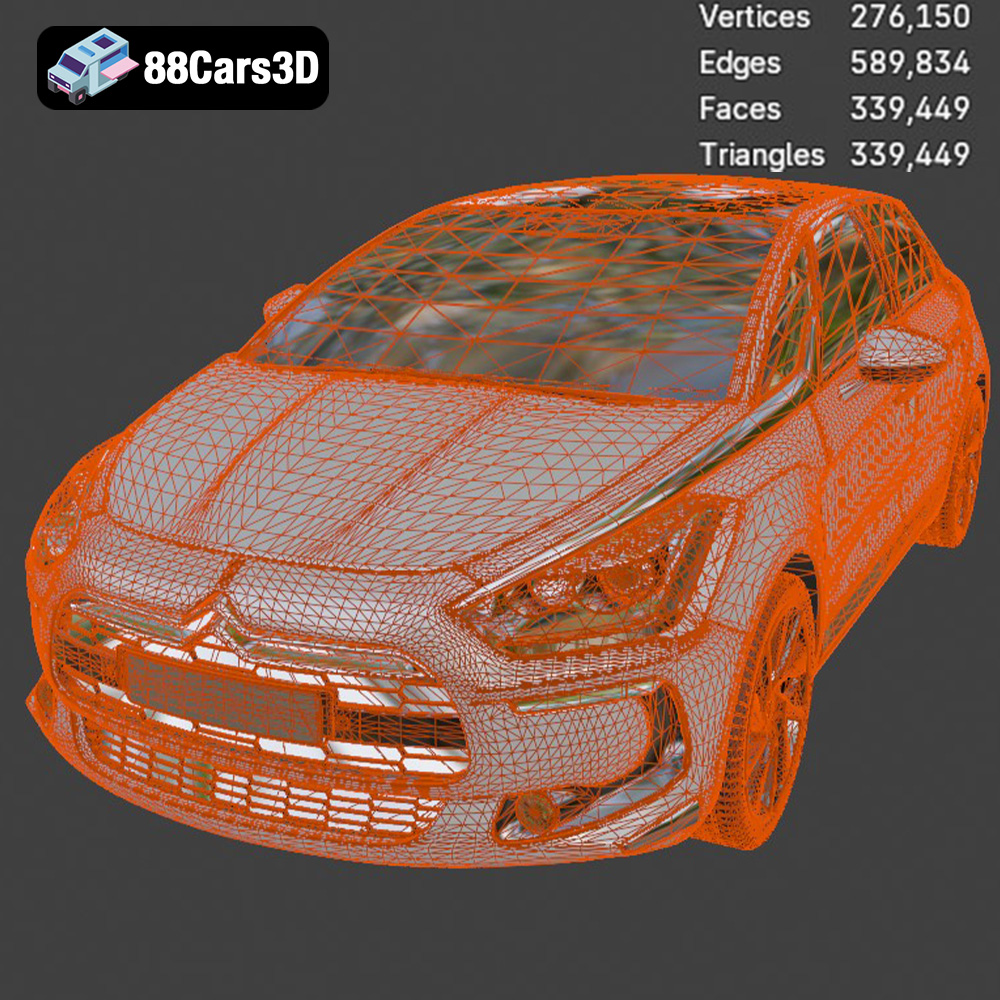
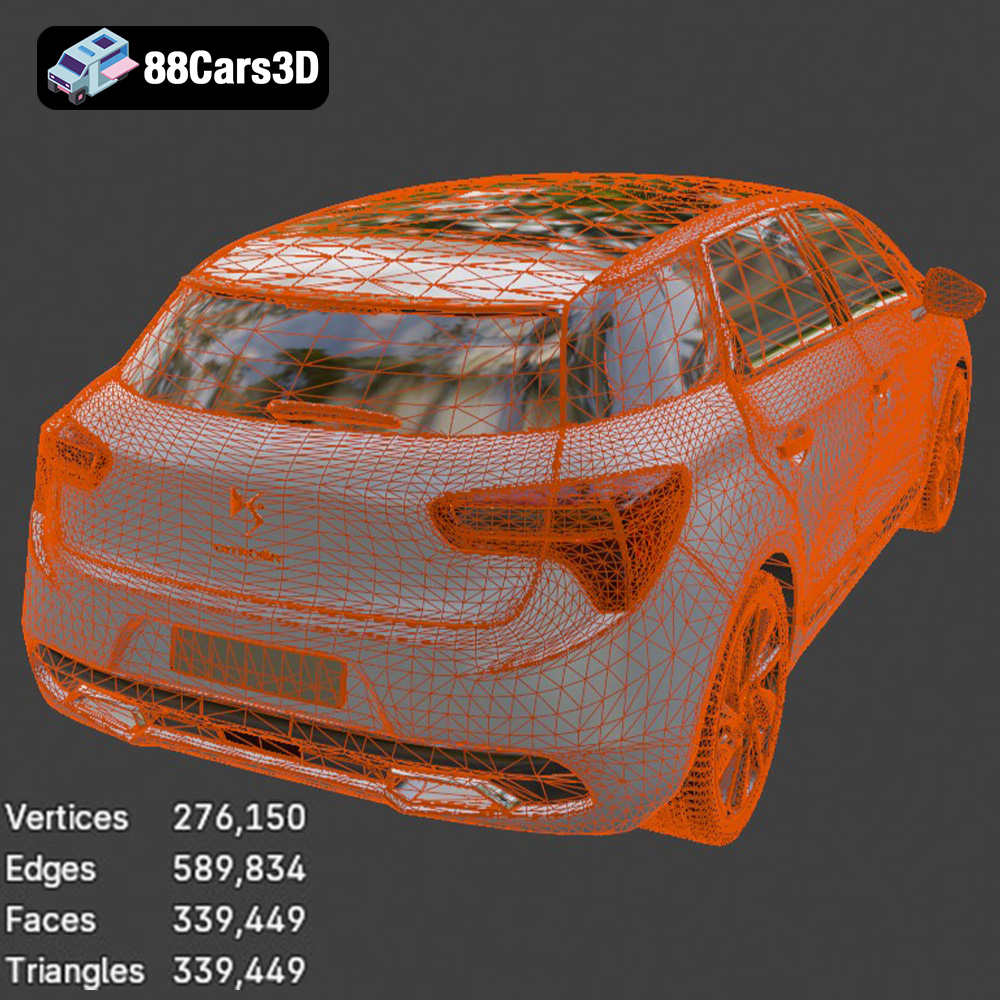
The listed triangle count of 339,449 for the Citroen DS5 strikes an excellent balance, making it suitable for modern real-time engines like Unreal Engine and Unity. This polycount is high enough to retain exceptional detail without bogging down rendering performance, crucial for open-world games, racing titles, and simulators where multiple vehicles might be on screen simultaneously. Optimizing for these engines goes beyond just polycount; it involves efficient UV mapping, properly baked normal maps to capture high-detail information on lower-poly meshes, and streamlined material setups using engine-specific PBR workflows. The “.unreal” format inclusion signifies its readiness for direct integration into Unreal Engine projects, saving developers valuable optimization time.
For a car model in a game, interactivity is key. The Citroen DS5 model features a “proper pivot setup for steering, wheel rotation, and suspension travel.” This technical detail is vital for developers, as it drastically simplifies the implementation of vehicle physics and animation systems. Correct pivot points mean less time spent on rigging and more time on fine-tuning realistic handling characteristics. Separated components for wheels, suspension, and steering allow for dynamic, independent movement, essential for realistic driving simulations and visually engaging in-game mechanics, like seeing the suspension compress over bumps or wheels turning accurately.
While not explicitly detailed in the product description, professional game assets often come with or are intended for the creation of LODs (Levels of Detail) and collision meshes. LODs are simplified versions of the model that automatically switch in and out based on the camera’s distance, drastically improving performance by rendering less detail for objects far away. Collision meshes are simplified, invisible versions of the car’s geometry used by the physics engine to detect impacts, preventing vehicles from clipping through terrain or other objects. While the Citroen DS5 model is highly optimized, these additional elements are standard practices that complement its game-ready nature, ensuring it performs flawlessly in complex game environments.
The utility of a high-quality 3D car model extends far beyond traditional rendering and game development, opening doors to cutting-edge applications in augmented reality, virtual reality, and even physical manufacturing. The versatile file formats offered with the Citroen DS5 3D model make it an ideal candidate for these diverse fields.
Augmented Reality (AR) and Virtual Reality (VR) are transforming how we interact with products and environments. A detailed 3D car model like the Citroen DS5 is perfect for creating immersive virtual showrooms, interactive configurators, or even mobile AR experiences where users can place a digital car into their real-world environment. The .glb format, specifically optimized for such applications, ensures rapid loading and smooth performance on various devices. Imagine a potential customer exploring the Citroen DS5’s aviation-inspired cockpit or customizing its body colors in a VR showroom, gaining a deeper, more engaging understanding of the vehicle than traditional photography could offer. These experiences are particularly impactful for showcasing unique features like the distinctive chrome “saber” trim or the detailed dual exhaust system.
The world of 3D printing offers a tangible connection to digital assets. The Citroen DS5 3D model is convertible to the .stl format, making it suitable for physical output. Hobbyists can print display-scale models (recommended scales: 1:12, 1:18, 1:24), while professionals can use it for rapid prototyping or even creating scale models for design reviews. The product description provides comprehensive 3D print settings, recommending resin printing for fine details, specific layer heights, infill percentages, and even post-processing tips like sanding, primer, and authentic factory colors. This foresight ensures that the digital precision translates into a high-quality physical object, faithfully reproducing the DS5’s sculpted bodywork and intricate details.
Beyond its automotive-centric applications, a well-modeled car is an invaluable prop for architectural visualization and general lifestyle rendering. Placing the Citroen DS5 into a modern urban driving scene, a luxury residential driveway, or an elegant showroom environment adds realism, scale, and a sense of dynamic life to an architectural render. Its “futuristic heritage” and “premium hatchback” appeal make it an excellent choice for depicting aspirational lifestyles and high-end urban settings. The model’s optimized geometry and detailed exterior features allow it to seamlessly integrate, enhancing the narrative and visual richness of any scene where a sophisticated vehicle is required.
In any professional creative pipeline, efficiency is paramount. Leveraging pre-built, high-quality 3D car models significantly streamlines workflows, allowing artists and developers to allocate more time to creativity and refinement rather than repetitive asset creation. The Citroen DS5 3D model from 88cars3d.com exemplifies this principle.
A key advantage of a professional 3D car model is its ability to integrate seamlessly into existing production pipelines. The comprehensive list of included file formats (.blend, .fbx, .obj, .glb, .stl, .ply, .unreal, .max) ensures compatibility with virtually any major 3D software platform or real-time engine. Whether a studio uses 3ds Max for architectural rendering, Blender for animation, or Unreal Engine for game development, the Citroen DS5 model is ready to be dropped in and used. This eliminates the time-consuming process of conversion, re-topologizing, or re-texturing, which can often be a bottleneck in demanding project schedules. The model’s real-world scale accuracy and proper pivot setup further reduce setup time, ensuring consistency across different projects and team members.
While pre-built, premium 3D models offer a robust foundation, the ability to customize them is crucial for meeting specific project requirements. The Citroen DS5 model provides ample customization options: artists can easily change body/tank colors, modify tire textures for different environments (e.g., off-road vs. street variants), adjust material finishes (matte, gloss, metallic), and adapt lighting to suit various scenes. This flexibility allows for rapid iteration and creative exploration without starting from scratch. For a brand campaign, for instance, a designer could quickly cycle through various factory colors or custom finishes to match brand guidelines, or adapt the lighting to mimic different times of day or weather conditions, all while maintaining the high fidelity of the original asset.
Consider a hypothetical scenario where an automotive marketing agency needs to create a virtual showroom for a new line of executive vehicles, including the Citroen DS5. Instead of commissioning a custom 3D model from scratch, which could take weeks and significant budget, they opt for the optimized Citroen DS5 3D model from 88cars3d.com.
1. Initial Setup (Days vs. Hours): The agency’s Unreal Engine team imports the “.unreal” ready asset. With pre-configured materials, accurate pivots for interactive elements, and optimized geometry, setup time is reduced from days (for a custom model requiring optimization) to mere hours.
2. Design Iteration: The client requests several color variations and different wheel options. Using the customization flexibility, the artists quickly generate multiple renders, changing body colors and material finishes, allowing for rapid client feedback and design iteration.
3. Interactive Elements: Thanks to the separated wheels, suspension, and steering components with proper pivots, the developers integrate interactive features like car door openings, wheel turns, and suspension bounce with minimal effort, enhancing the user’s immersion.
4. Final Delivery: The project is delivered ahead of schedule, showcasing the DS5 in photorealistic detail within an interactive virtual environment, all while staying within budget.
This scenario highlights how investing in high-quality, versatile 3D car models from platforms like 88cars3d.com can dramatically improve project timelines and resource allocation, enabling teams to focus on the higher-level creative aspects that truly differentiate their work.
In the dynamic landscape of 3D content creation, the foundational quality of your assets is a non-negotiable factor for success. Whether your goal is to produce breathtaking automotive rendering, develop immersive game assets, craft engaging AR/VR experiences, or create precision models for 3D printing, a premium 3D car model acts as a powerful accelerator for your creative vision.
The Citroen DS5 3D model stands as a prime example of such an asset. Its meticulous detail, from the signature chrome “sabers” to the aviation-inspired cockpit, combined with its optimized geometry and extensive range of file formats, makes it an incredibly versatile tool for professionals across various industries. It’s engineered to perform, whether balancing game-ready efficiency with high-end visual fidelity or providing a perfect base for physical prototyping.
By choosing professionally crafted 3D car models like those found on 88cars3d.com, you invest in efficiency, quality, and creative freedom. These assets not only save invaluable time and resources but also ensure that your projects consistently achieve the highest standards of realism and immersion. Embrace the power of optimized, versatile 3D models to elevate your next project, transforming ambitious concepts into stunning realities.
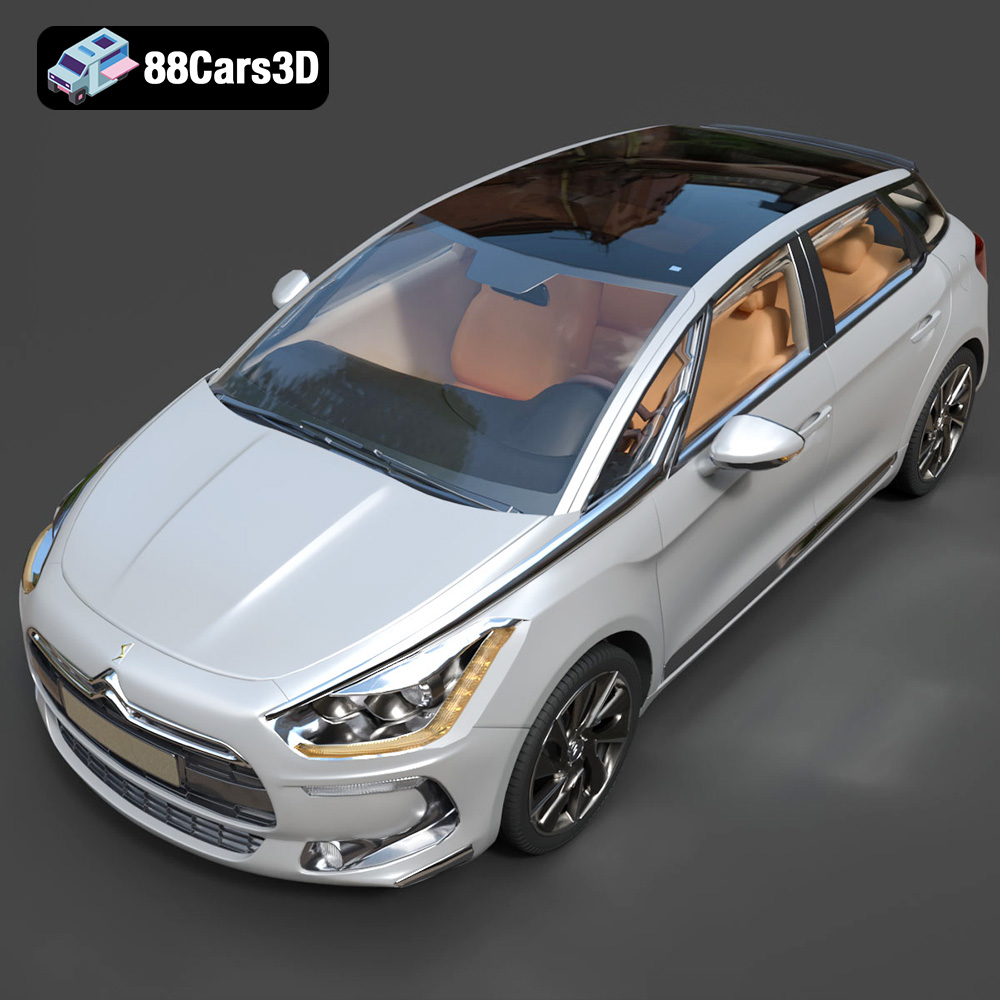
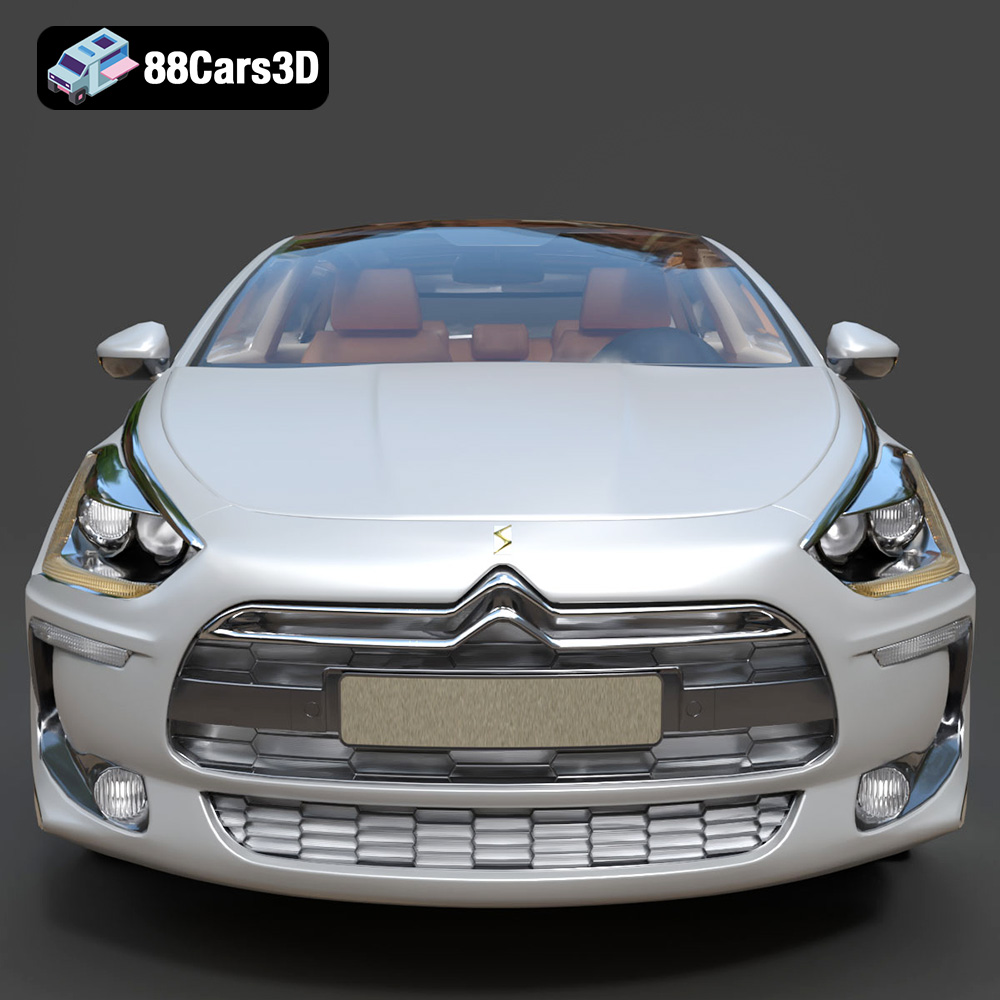
Experience avant-garde French automotive design with this highly detailed 3D model of the Citroen DS5. Renowned for its striking, aviation-inspired styling, the DS5 bridges the gap between a premium hatchback and a sleek executive estate. This model captures the vehicle’s iconic visual elements, most notably the signature chrome “sabers” that stretch seamlessly from the aggressive headlight clusters to the A-pillars. The sculpted bodywork, distinctive front grille, and dynamic dual exhaust setup are faithfully reproduced to reflect its luxurious and futuristic heritage. Engineered for maximum versatility, this 3D model features a meticulously optimized topology with a triangle count of 339,449, ensuring an impeccable balance between game-ready performance and high-end visual fidelity. Perfect for modern urban driving games, virtual automotive showrooms, architectural visualization scenes, and high-end lifestyle rendering.
$35.00
.blend
.citroen
.ds5
.fbx
.glb
.hatchback
.max
.obj
.ply
.rendering
.stl
.unreal
car-3d-model
executive-car
game asset
game-ready
low-poly
optimized
VR/AR