Get 20% OFF All Premium 3D & STL Models!

In the realm of automotive history, few vehicles command the presence and prestige of the Mercedes-Benz 600 W100 Pullman. An icon of luxury, a favored chariot of heads of state, and a testament to engineering prowess, the “Grand Mercedes” holds a special place in the hearts of enthusiasts and historians alike. Recreating such a legendary vehicle in the digital space demands an extraordinary level of detail, precision, and technical mastery. For 3D artists, game developers, architects, and visualization specialists, access to high-quality 3D car models like this is paramount for delivering compelling and realistic projects.
This comprehensive guide delves into the intricate world of utilizing a meticulously crafted digital representation of the Mercedes-Benz 600 W100 Pullman 1964 3D Model. We’ll explore its technical specifications, its versatility across various applications—from high-fidelity automotive rendering to real-time game assets and even 3D printing—and how it empowers professionals to achieve stunning results. Whether you’re aiming for cinematic realism or optimized interactive experiences, this model provides a robust foundation. Through a detailed look at file formats, workflows in popular software like 3ds Max, Blender, and Unreal Engine, and practical application scenarios, we aim to uncover the full potential of such a valuable digital asset, readily available from platforms like 88cars3d.com.
The choice of a 3D model file format is crucial, dictating compatibility, feature retention, and suitability for specific project pipelines. When acquiring a sophisticated asset like the Mercedes-Benz 600 W100 Pullman 1964 3D Model, understanding its various included formats is key to seamless integration into your workflow. Each format serves a unique purpose, optimized for different stages and applications in the 3D production pipeline.
The .blend format is the native file type for Blender, one of the most widely used open-source 3D creation suites. When you download a .blend file, you’re getting a complete Blender scene, which means it includes not just the mesh data but also materials, textures, lighting setups, cameras, and even animations or rigging if present. This format offers maximum editability within Blender, allowing artists to modify topology, adjust materials, or refine UVs with full access to the original project structure. It’s ideal for those working predominantly in Blender, providing a ready-to-render or ready-to-animate starting point for the Mercedes-Benz Pullman.
.fbx (Filmbox) stands as the undisputed industry standard for 3D data interchange. Developed by Autodesk, it’s highly compatible with almost every major 3D software package, including 3ds Max, Maya, Blender, Cinema 4D, and all leading game engines like Unreal Engine and Unity. FBX files can store a vast array of data beyond just mesh geometry, including materials, textures (often linked, not embedded), animations, rigs, cameras, and lights. For the Mercedes-Benz 600 W100 Pullman 3D Model, the .fbx format is the go-to for importing into real-time pipelines, ensuring that pivot points, hierarchical structures (like separate wheels and suspension components), and basic material assignments are preserved during transfer.
.obj (Wavefront OBJ) is a universal, widely supported format known for its simplicity and cross-software compatibility. It primarily stores geometry (vertices, normals, texture coordinates, and faces) and can link to an external .mtl (material library) file for basic material properties and texture references. While it doesn’t support animations, rigging, or scene information, its robust support for clean mesh data makes it excellent for static models. The .obj version of the Pullman is perfect for users who need a clean mesh to re-texture or re-rig in a different application, or for older software that may not support .fbx.
.glb (GL Transmission Format, binary) is a relatively newer format gaining immense popularity, especially in AR (Augmented Reality), VR (Virtual Reality), and web-based 3D applications. It’s an optimized, self-contained format that embeds textures and materials directly within the file, making it incredibly efficient for delivery over the internet. The glb format of the Mercedes-Benz Pullman 3D Model is highly suitable for quick previews, virtual showrooms in a browser, or integrating into mobile AR apps due to its small file size and real-time rendering capabilities.
.stl (Stereolithography) is the most common file format for 3D printing. It represents a 3D model as a series of connected triangles, describing only the surface geometry of an object without color, texture, or other CAD attributes. While simple, its ubiquity in the 3D printing world is unmatched. The .stl version of the Pullman is specifically tailored for physical output, allowing hobbyists and professionals to fabricate miniature replicas of this classic car, requiring specific attention to wall thickness, supports, and print orientation, as detailed in the product description.
.ply (Polygon File Format) is another format for storing 3D data, particularly popular for models derived from 3D scanners or for scientific and engineering applications. It can store a wider range of properties than .obj, including color at each vertex (vertex color), transparency, and normal vectors, offering high precision. While less common for pre-modeled assets like the Pullman, its inclusion ensures compatibility for specific workflows requiring detailed geometric analysis or data visualization, offering a robust mesh representation for the vehicle’s form.
The .unreal format, while not a standalone file extension in the same vein as .fbx or .obj, typically signifies an asset that has been pre-configured or optimized for direct import and use within Unreal Engine. This often means the included .fbx file has been specifically prepared, materials might have been approximated or optimized for Unreal’s PBR workflow, and pivot points are correctly aligned for engine functionalities. It ensures minimal setup time for developers aiming to integrate the Mercedes-Benz 600 W100 Pullman 1964 3D Model into their Unreal projects, saving valuable development time and ensuring engine compatibility right out of the box.
Finally, the .max format is the native file type for Autodesk 3ds Max, a powerful 3D modeling, animation, and rendering software. Similar to .blend, a .max file contains the complete scene, including all geometry, materials, lighting, cameras, animation data, and scene settings. It offers full editability within 3ds Max, making it the preferred choice for artists who wish to leverage 3ds Max’s extensive toolset for rendering, animation, or further customization of the Mercedes-Benz Pullman 3D Model. It provides the most comprehensive starting point for professionals entrenched in the 3ds Max ecosystem.
The digital craftsmanship of a premium 3D car model lies in its ability to faithfully reproduce every nuance of its real-world counterpart. The Mercedes-Benz 600 W100 Pullman 1964 3D Model exemplifies this dedication, capturing the essence of automotive luxury and historical significance. Its detailed product description highlights a balanced approach to visual fidelity and technical optimization, making it a versatile asset for a multitude of applications.
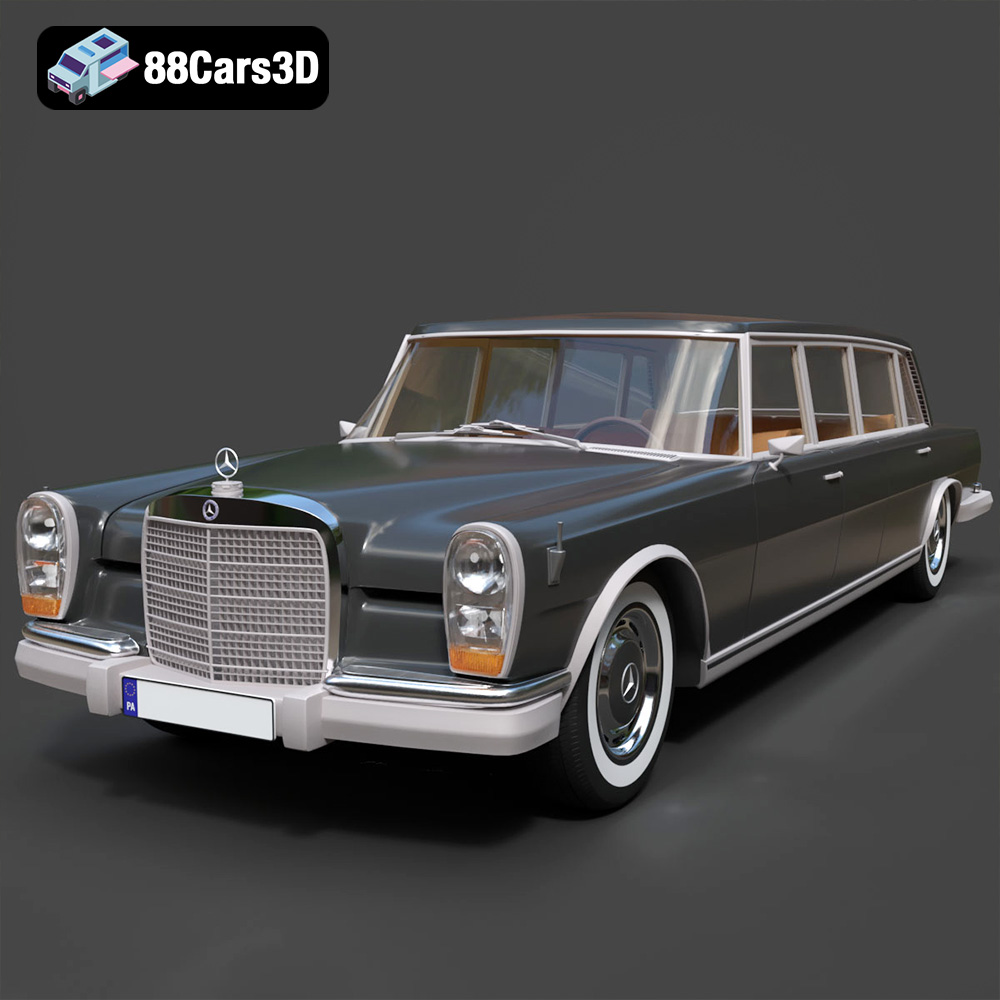
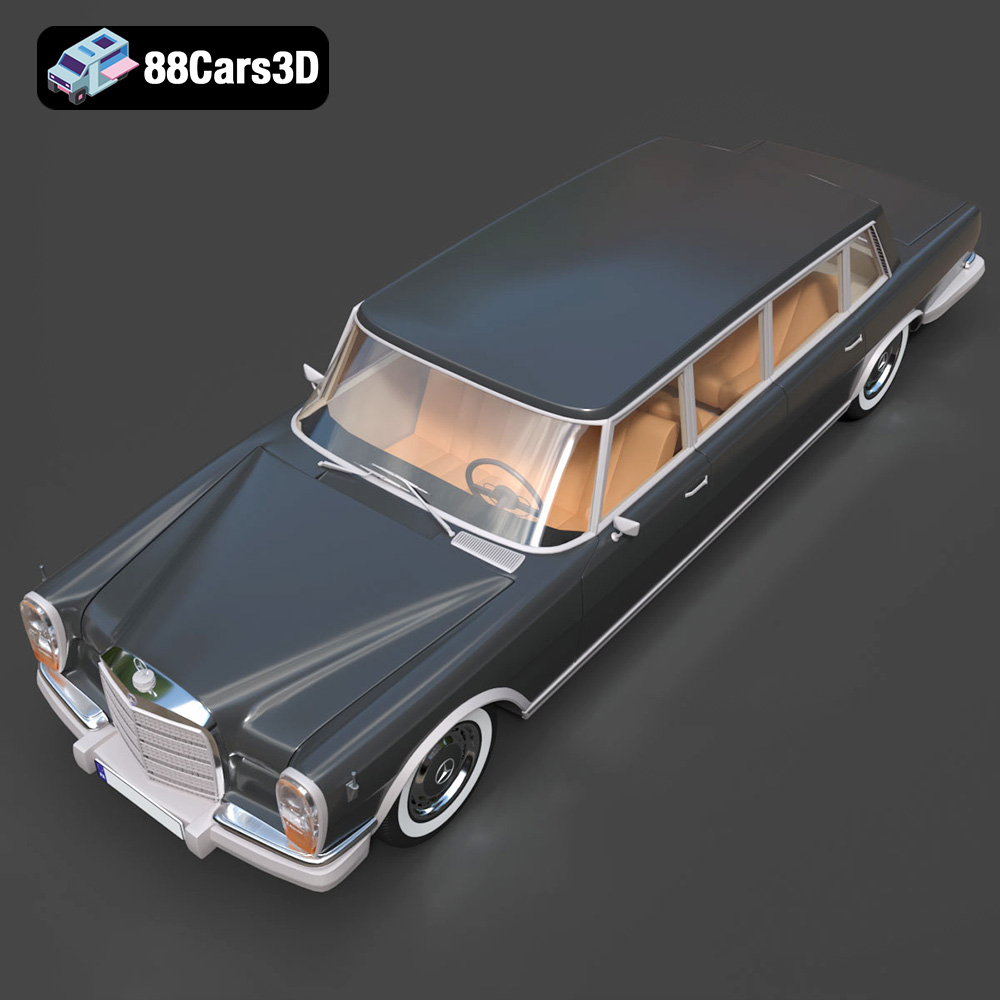
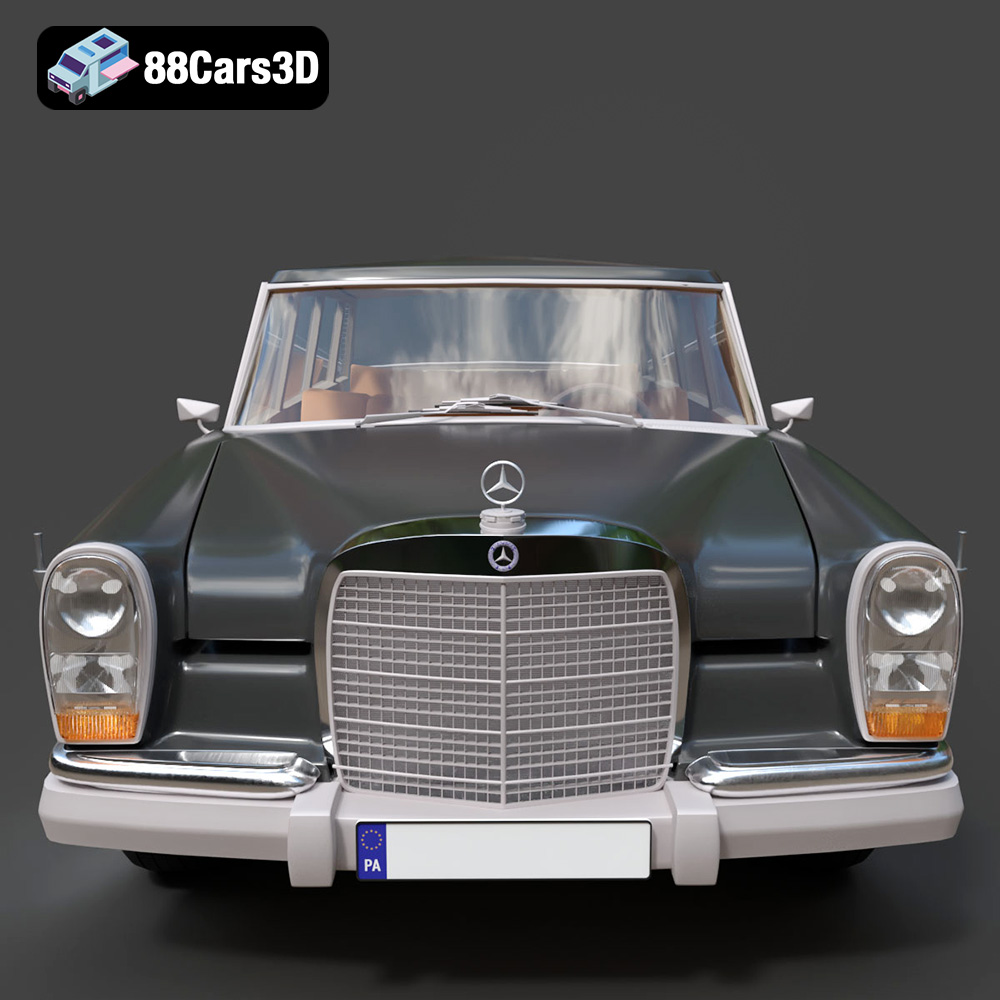
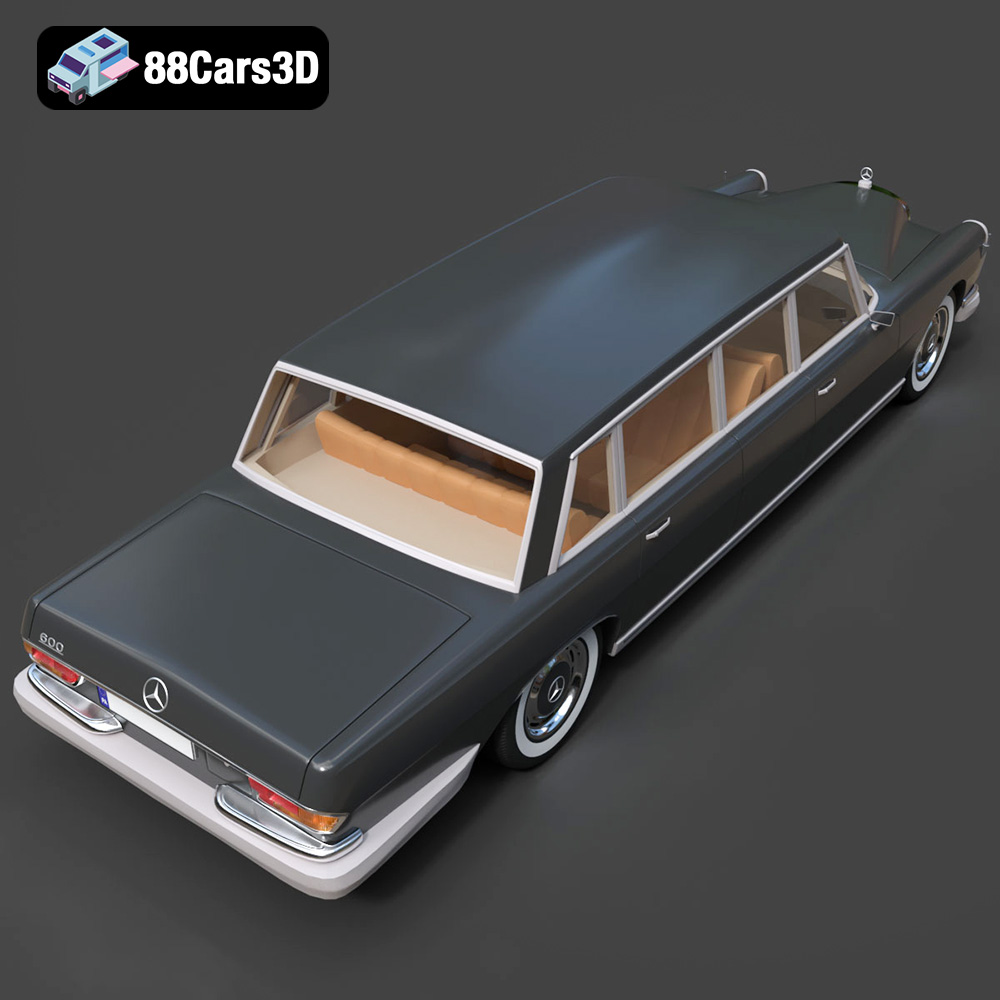
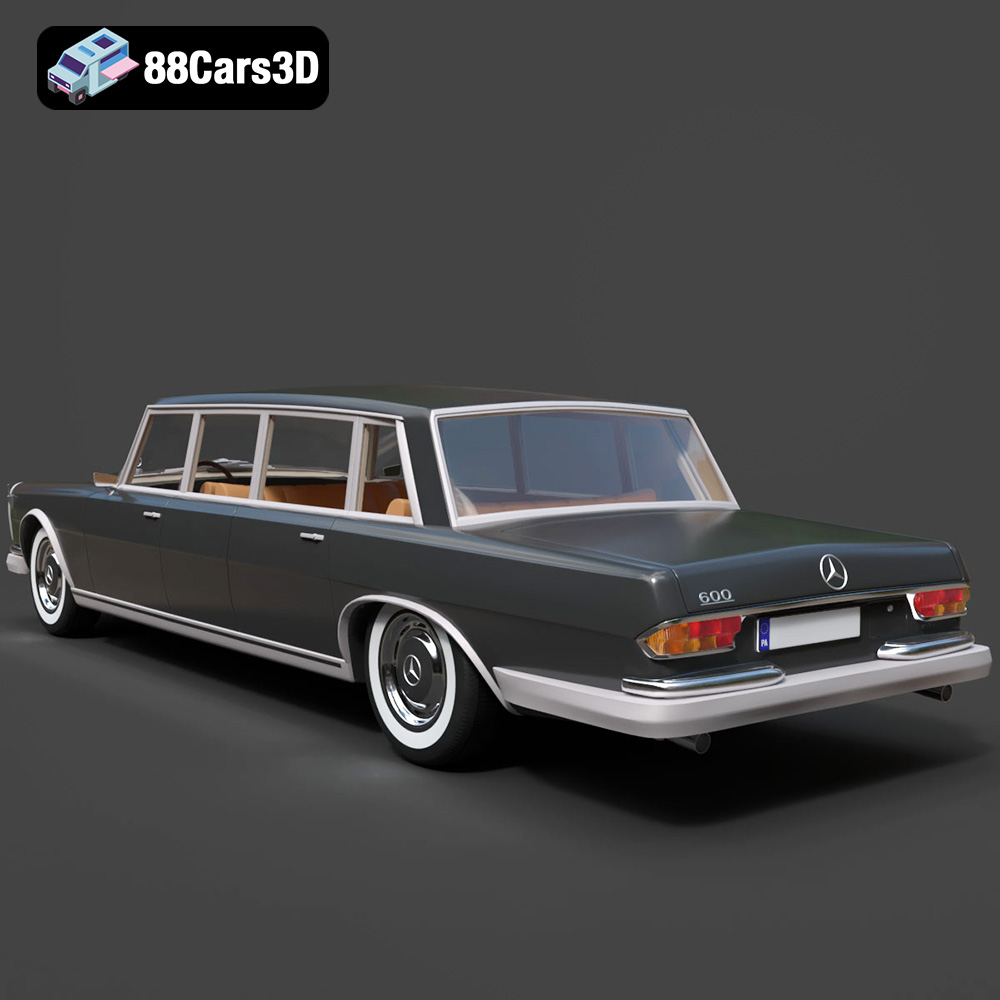
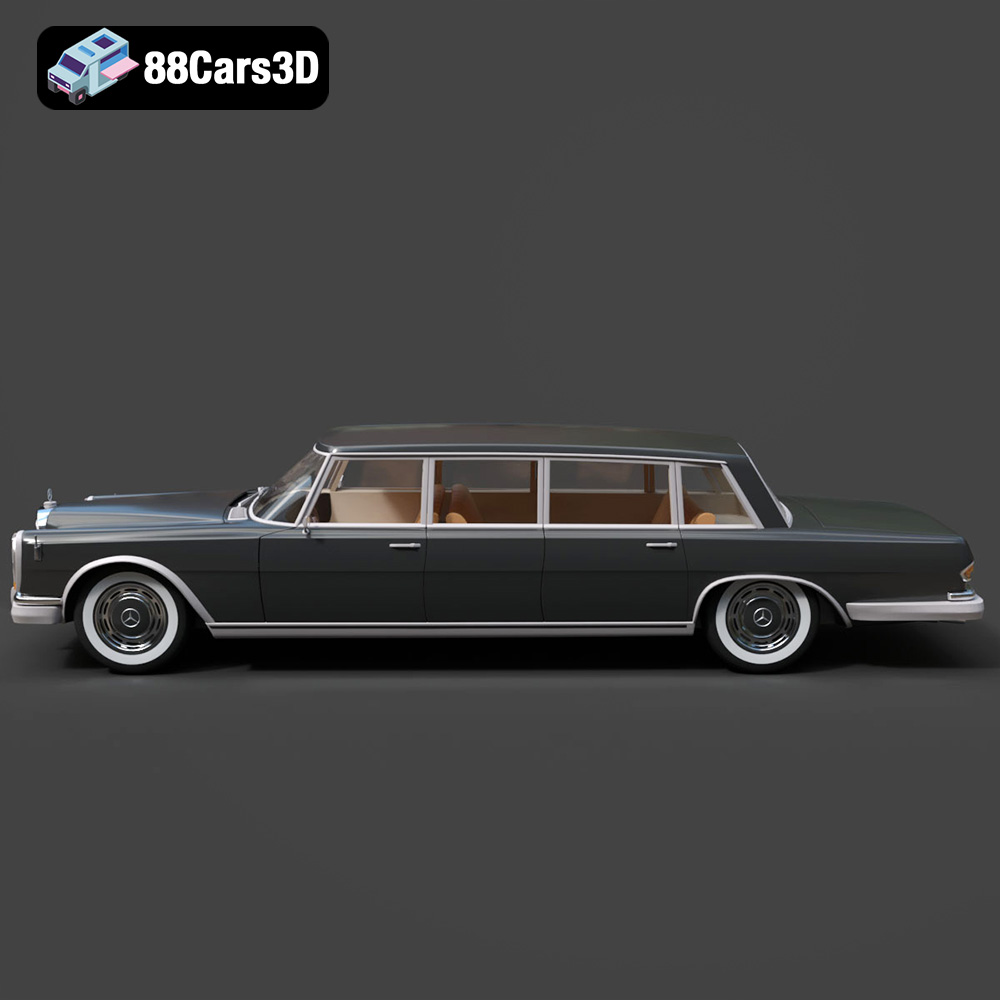
The iconic exterior of the Mercedes-Benz 600 W100 Pullman is brought to life with meticulous attention. The model accurately represents the elongated chassis geometry and proportions, which are crucial for capturing the vehicle’s imposing presence. Visual hallmarks like the formidable chrome front grille and classic vertical headlamps are rendered with precision, immediately communicating the car’s identity. Furthermore, specific details such as the dual rear exhaust system layout and authentic signature taillights contribute to its realism. The model even includes period-correct steel wheels and classic tires with distinctive whitewall details, adding to its vintage authenticity. For advanced simulation or animation, the inclusion of separate wheels, suspension, and steering components with proper pivot setups allows for realistic articulation, making it a highly functional asset for any project.
Stepping inside the digital Pullman, the luxurious rear passenger cabin and front driver seating arrangements are faithfully recreated. Artists can appreciate the authentic vintage steering wheel and column details, alongside a period-accurate wood-trim instrument cluster. Every control element, including pedals, levers, and the vintage shifter, contributes to an immersive experience. This level of interior detail is particularly important for projects requiring close-up shots, virtual tours, or even first-person POV in gaming, where the user directly interacts with or observes the interior environment.
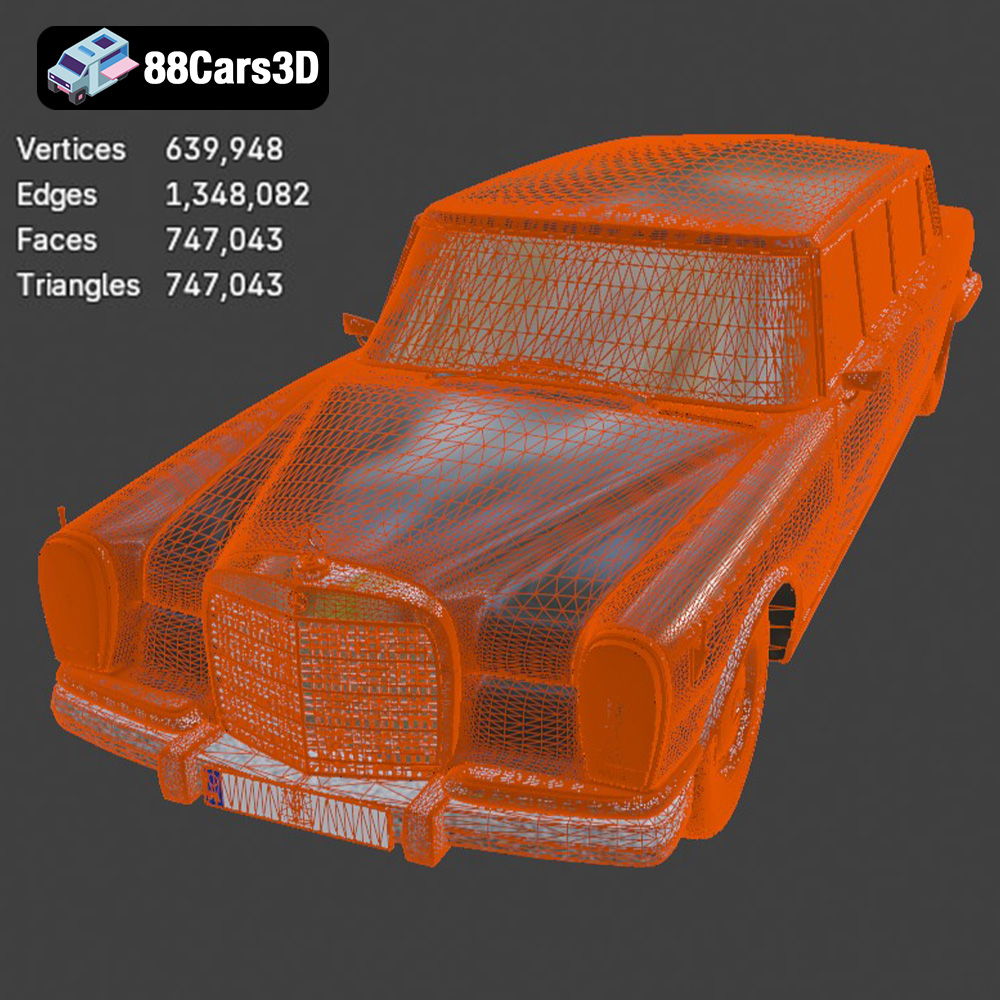
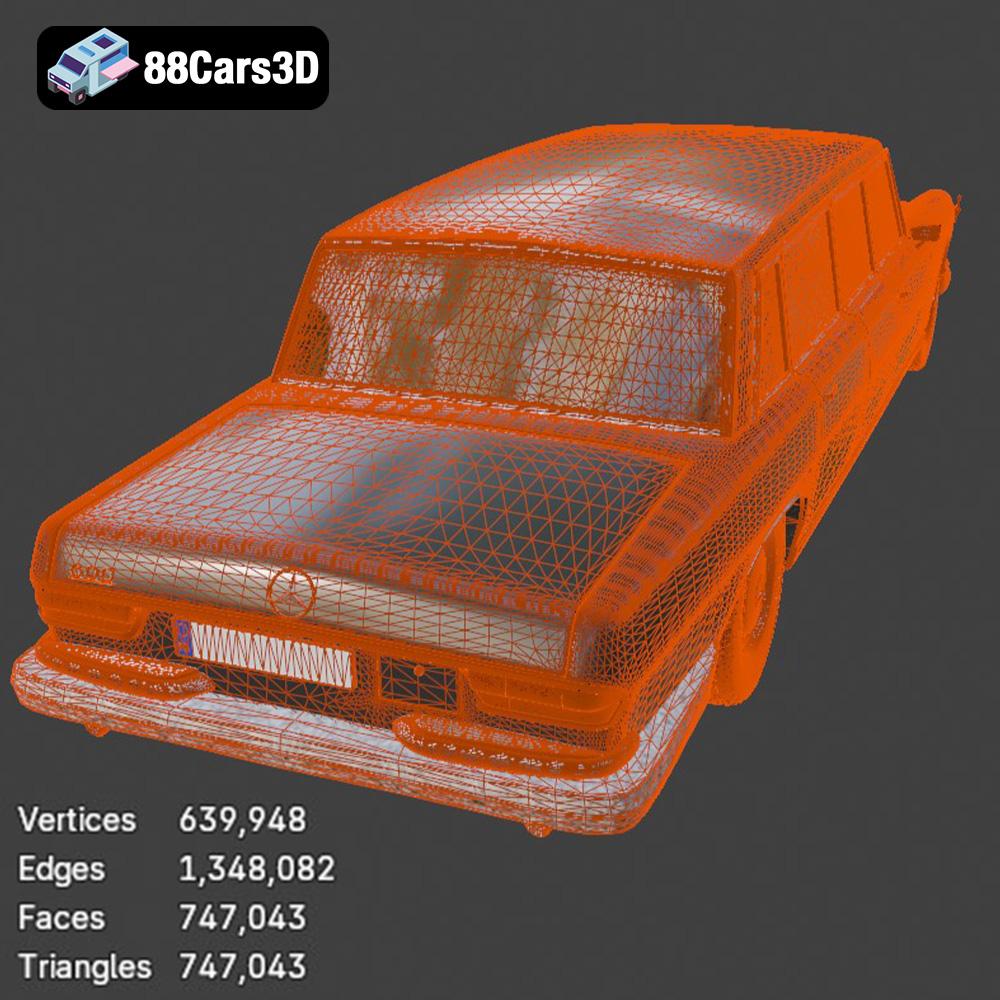
One of the standout advantages of this particular Mercedes-Benz 600 W100 Pullman 1964 3D Model is its technical optimization. Boasting 747,043 triangles, it achieves a remarkable balance between intricate detailing and performance. This polycount is sufficiently high to deliver exceptional visual fidelity for high-end automotive rendering, where realism is paramount, yet optimized enough to function smoothly as game assets within modern real-time engines like Unreal Engine and Unity. The model adheres to real-world scale accuracy, based on the actual vehicle chassis, ensuring correct proportions when integrated into larger scenes or alongside other assets. This combination of visual quality and performance makes it an ideal choice for professionals seeking efficiency without compromising on aesthetic appeal, further establishing 88cars3d.com as a source for reliable, high-quality 3D assets.
Automotive rendering is an art form, a blend of technical prowess and artistic vision aimed at showcasing vehicles in their best light. With a high-quality asset like the Mercedes-Benz 600 W100 Pullman 1964 3D Model, achieving breathtaking renders becomes an accessible reality. This model provides the necessary foundation for stunning visualizations, whether for advertising, film, or architectural presentations.
For artists working in 3ds Max or Blender, the provided .max and .blend files offer a seamless starting point. In 3ds Max, artists can leverage powerful rendering engines like V-Ray or Corona Renderer. The process typically involves importing the .max file, ensuring all linked textures are correctly assigned, and then setting up an appropriate lighting environment. This might include an HDRI (High Dynamic Range Image) for realistic global illumination combined with targeted studio lights to highlight specific contours of the Pullman’s bodywork. Similarly, in Blender, using the Cycles or Eevee rendering engines, the .blend file allows for direct manipulation of materials, shaders, and lighting. Artists can experiment with different PBR (Physically Based Rendering) workflows, creating metallic flakes for the paint, realistic reflections on chrome, and nuanced imperfections on glass, bringing a truly photorealistic quality to the final image.
Achieving truly exceptional automotive rendering goes beyond basic material application. For the Pullman, artists can explore advanced techniques to enhance realism. This includes layering materials to simulate clear coat paint over metallic flakes, adding subtle procedural dust or fingerprints for a lived-in look, or even incorporating displacement maps for intricate surface details not explicitly modeled. Lighting plays an equally crucial role. Beyond standard studio setups, artists can simulate real-world scenarios—a golden hour sunset, a rainy city street, or a stark, dramatic spotlight. The ability to manipulate separate components like wheels and suspension allows for dynamic camera angles that showcase the car’s detailed engineering, adding a layer of authenticity to the rendered output. By understanding these nuances, artists can transform the raw 3D model into an emotionally resonant piece of visual art, ready for high-impact campaigns or cinematic sequences.
The demand for high-quality game assets, particularly realistic 3D car models, is ever-increasing in game development and interactive experiences. The Mercedes-Benz 600 W100 Pullman 1964 3D Model is explicitly designed with this in mind, offering an optimized balance between visual fidelity and real-time performance, making it an excellent choice for dynamic digital worlds.
With its 747,043 triangles, the Pullman model is classified as “Game-Ready & Optimized,” making it an ideal candidate for integration into modern game engines like Unreal Engine. Using the .fbx format, developers can easily import the model, ensuring all mesh data, pivot points, and a hierarchical structure (like separate wheels and suspension) are maintained. Once in Unreal, the focus shifts to creating efficient and visually appealing materials using Unreal’s powerful material editor. This involves setting up PBR shaders for the body paint, chrome, glass, and interior fabrics, ensuring they react realistically to light within the game environment. To further optimize performance, developers can implement Level of Detail (LOD) meshes, where lower-poly versions of the car are rendered at greater distances, minimizing draw calls and maintaining smooth framerates. Additionally, creating custom collision meshes is crucial for realistic physics and player interaction within the game world, ensuring the Pullman handles and responds as expected.
Beyond traditional games, the Mercedes-Benz 600 W100 Pullman 1964 3D Model excels in AR/VR applications. Its optimized geometry and real-world scale make it perfect for immersive virtual showrooms, where potential customers can explore the vehicle in a 3D space, or for interactive configurators allowing customization of colors and finishes. The .glb format is particularly beneficial here, offering a compact, web-optimized asset that can be easily deployed in browser-based AR experiences or mobile VR applications. Imagine placing a life-sized Pullman in your driveway using AR, or stepping into a virtual dealership to inspect its luxurious interior details. These applications demand highly efficient assets that maintain visual quality, a balance that this model expertly achieves, opening new avenues for interactive automotive visualization.
The versatility of a well-crafted 3D model extends far beyond the screen. The Mercedes-Benz 600 W100 Pullman 1964 3D Model is not only designed for digital rendering and real-time engines but also for tangible creation through 3D printing and diverse advanced visualization scenarios, proving its utility across a broad spectrum of professional needs.
For enthusiasts and professionals interested in physical replicas, the inclusion of the .stl format makes the Pullman model 3D print-ready. The product description provides essential guidelines for successful printing: recommended scales (1:12, 1:18, 1:24), layer height (0.04–0.12 mm, with resin printing recommended for fine details), and crucial wall thickness considerations (1.2–2.0 mm). Proper support structures are vital for intricate parts like exhaust systems, mirrors, and handlebars, while specific print orientations, such as printing the frame angled, enhance structural integrity. Post-processing, including sanding, priming, and applying authentic factory colors with metallic finishes, allows for a stunning, accurate physical representation of this classic limousine. This tangible output offers unique opportunities for collectors, model makers, or even for creating physical prototypes in design studios.
The Mercedes-Benz 600 W100 Pullman 1964 3D Model is an exceptional asset for cinematic historical scenes, adding an unparalleled layer of authenticity to any digital narrative set in the mid-20th century. Imagine it in a period drama, a documentary reconstruction, or even a concept animation. Its detailed engine block representation and complex air suspension system details, though not always seen directly, contribute to the overall authenticity that discerning viewers appreciate. Moreover, in architectural visualization, this luxury limousine can elevate the realism of a high-end estate rendering or a classic urban streetscape. Placing such an iconic vehicle within an architectural context breathes life into a scene, providing scale, historical grounding, and an immediate sense of prestige. For agencies and studios seeking to enrich their visualization projects, acquiring high-quality 3D car models like this from 88cars3d.com significantly enhances production value.
Integrating a high-quality 3D car model into a professional pipeline requires more than just downloading a file; it involves a strategic approach to ensure optimal results. The Mercedes-Benz 600 W100 Pullman 1964 3D Model, with its comprehensive file format support, allows for versatile and efficient workflows across various industry applications.
Upon acquiring the model from 88cars3d.com, the first step is selecting the appropriate file format for your primary Digital Content Creation (DCC) software. If you’re using 3ds Max, the .max file provides a ready-to-use scene. For Blender users, the .blend file offers similar convenience. For those using other packages like Maya or Cinema 4D, the .fbx or .obj formats are ideal for import. Once imported, artists typically perform a quick check of scale and pivot points, although the Pullman model is designed with proper pivot setup for steering, wheel rotation, and suspension travel, minimizing this common setup task. Next, material assignment and texture linking are confirmed, ensuring that the stunning details like the imposing chrome grille and classic vertical headlamps are rendered with accurate reflections and surface properties. The detailed product description even highlights customization options, such as changing body colors or modifying tire textures, which can be easily implemented within your chosen DCC software to match specific project requirements.
The workflow then diverges based on the project’s end goal. For high-end automotive rendering, the focus shifts to lighting and camera setup. Artists will typically use HDRI environments combined with targeted lights to enhance the vehicle’s form and capture cinematic qualities. Post-processing in applications like Photoshop or Nuke can further elevate the render, adding lens effects, color grading, and atmospheric elements. For game development, the workflow involves additional steps like generating LODs for performance optimization, creating simple collision meshes for physics interactions, and setting up interactive elements via scripting or visual programming (e.g., blueprints in Unreal Engine) to animate doors, steering, or suspension. When preparing for AR/VR, the .glb format becomes invaluable for its lightweight, self-contained nature, ensuring efficient delivery and real-time performance on various devices. Each application leverages the robust foundation of the Pullman 3D model, adapting it to its unique technical and creative demands, showcasing the true versatility of expertly crafted 3D car models.
The digital age allows us to preserve and interact with automotive legends in ways previously unimaginable. The Mercedes-Benz 600 W100 Pullman 1964 3D Model stands as a testament to this capability, offering a meticulously crafted, technically optimized, and versatile asset for professionals across various creative industries. From its iconic exterior features like the imposing chrome front grille and classic vertical headlamps to the luxurious interior details and the faithful representation of the M100 6.3L V8 engine, every aspect of this “Grand Mercedes” has been thoughtfully translated into a high-fidelity digital form.
Whether your project demands photorealistic automotive rendering for advertising campaigns, a highly optimized game asset for cutting-edge real-time environments, an immersive experience for AR/VR applications, or a precise model for 3D printing, this Pullman model delivers. Its comprehensive file format support—including .blend, .fbx, .obj, .glb, .stl, .ply, .unreal, and .max—ensures seamless integration into virtually any professional workflow, making it an invaluable addition to any digital asset library. By choosing high-quality 3D car models like this, artists and developers empower themselves to create stunning visualizations and engaging interactive experiences that truly stand out.
Explore the possibilities and elevate your projects with exceptional 3D car models. Discover the Mercedes-Benz 600 W100 Pullman 1964 3D Model and a vast collection of other premium automotive assets, available now at 88cars3d.com.
The Mercedes-Benz 600 W100 Pullman (1964) is an iconic symbol of ultimate luxury, state prestige, and engineering excellence. Known as the “Grand Mercedes,” this legendary limousine was the vehicle of choice for royalty, celebrities, and political leaders. Key visual elements include its imposing chrome front grille, classic vertical headlamps, an elongated luxury wheelbase, and the representation of its sophisticated M100 6.3L V8 engine. This 3D model boasts an optimized topology with 747,043 triangles, delivering exceptional visual fidelity suited for high-end rendering and modern game engines. It is a highly optimized asset that perfectly balances intricate detailing with performance for game development, AR/VR experiences, animation, and architectural visualization.
$26.00
.blend
.fbx
.glb
.max
.obj
.ply
.rendering
.stl
.unreal
1964
600-w100-pullman
car-3d-model
classic-car
game asset
game-ready
luxury-limousine
mercedes-benz
optimized
VR/AR