Get 20% OFF All Premium 3D & STL Models!

In the vibrant realm of 3D artistry, where imagination merges with precision engineering, the demand for high-fidelity 3D car models has never been greater. From blockbuster games and cinematic advertising to immersive virtual reality experiences and detailed architectural visualizations, a meticulously crafted vehicle asset can elevate a project from good to truly exceptional. These digital masterpieces are more than just static objects; they are a confluence of design, technical prowess, and artistic interpretation, capturing the essence and soul of real-world automotive legends.
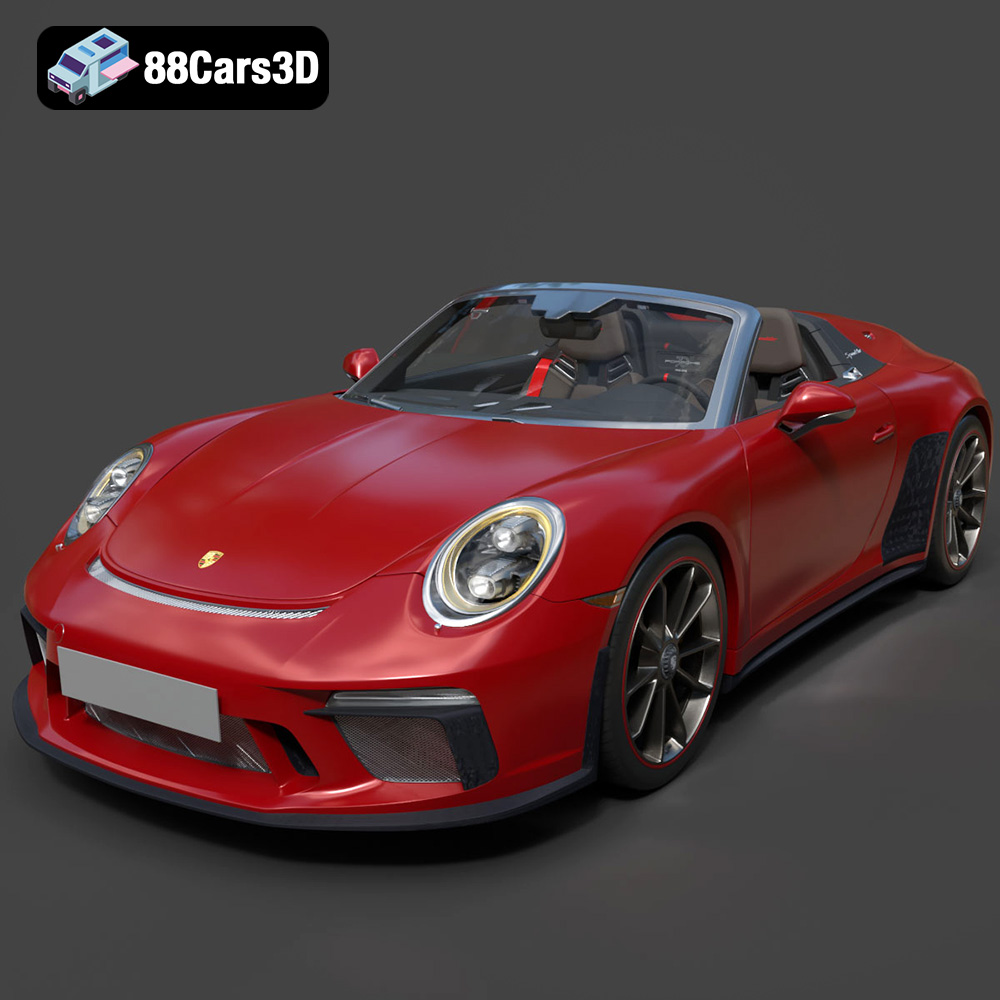
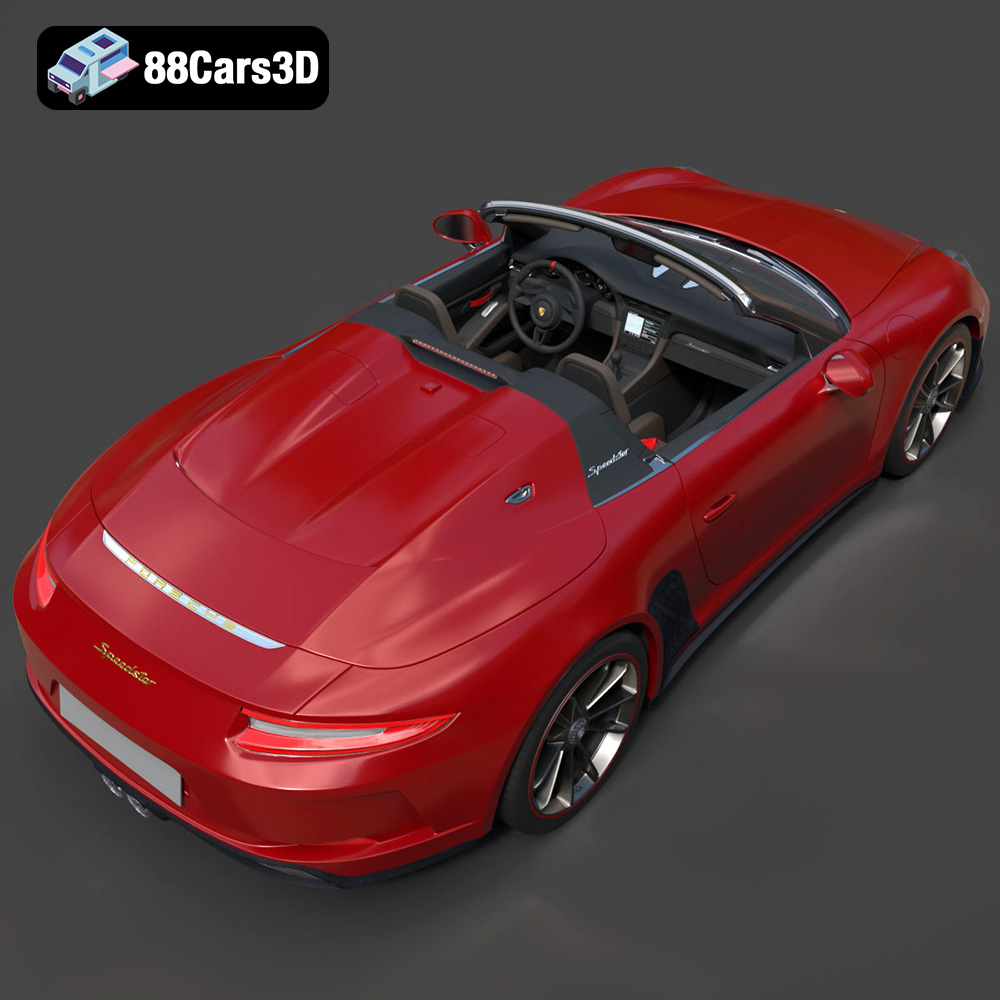
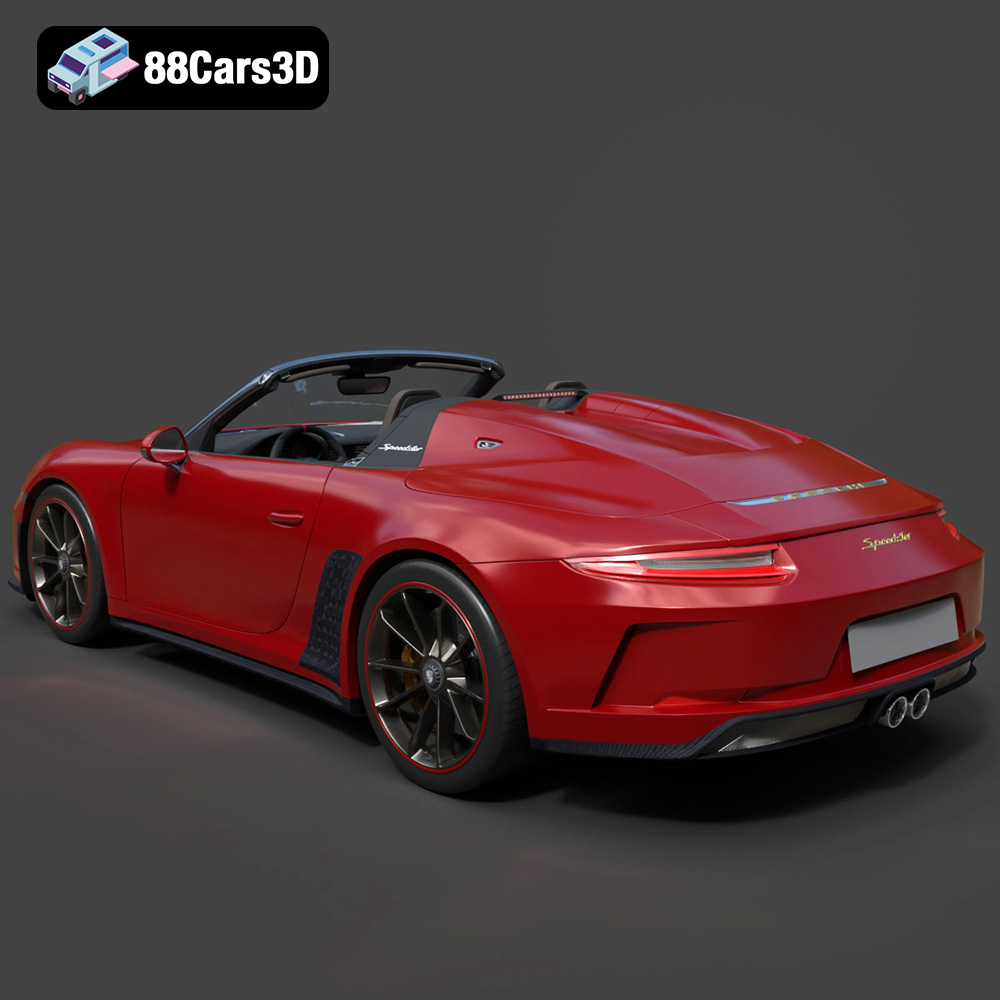
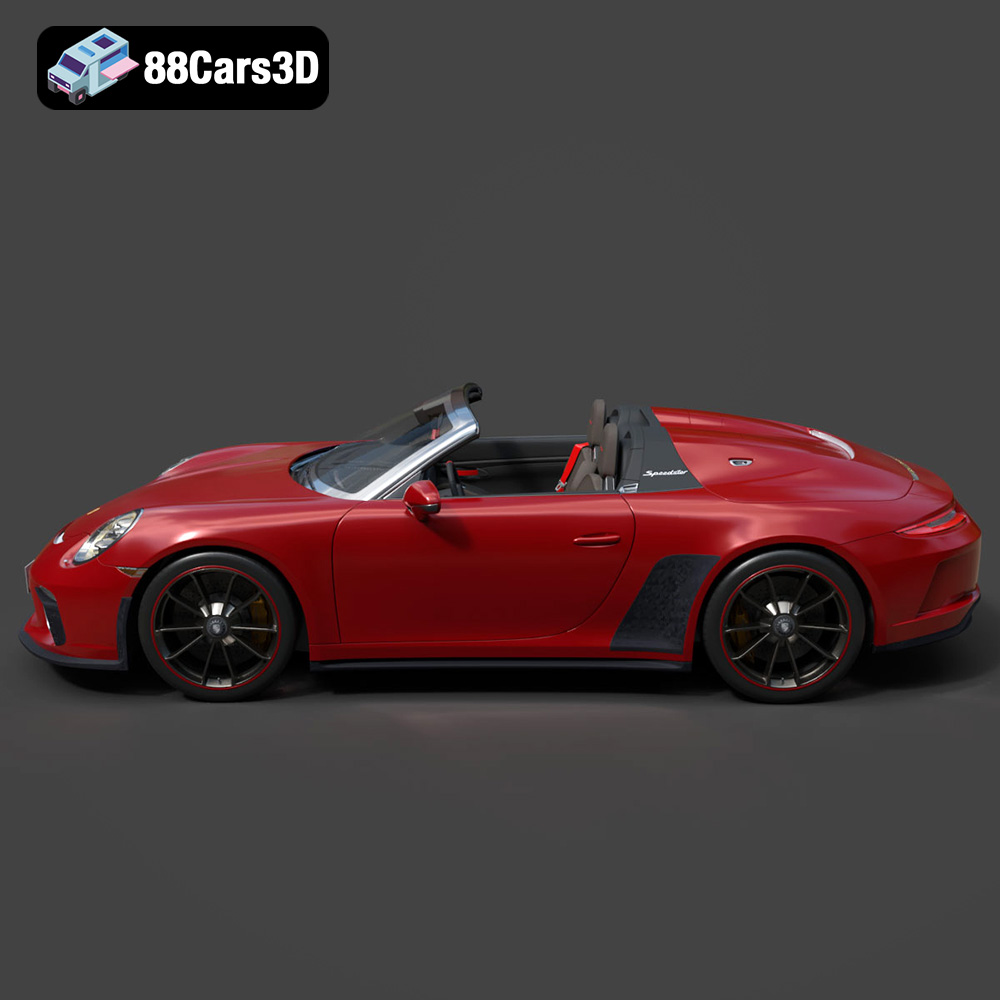
Today, we’re taking a deep dive into an outstanding example of such digital craftsmanship: the Porsche 911 Speedster 2019 3D Model, available for download on 88cars3d.com. This model isn’t just a pretty face; it’s a versatile, technically robust asset designed to meet the rigorous demands of professional 3D pipelines. The 2019 Porsche 911 Speedster itself is a celebration of heritage and performance, marking the spectacular finale of the 991 generation. Its iconic low-cut windshield, signature double-bubble rear deck, and naturally aspirated 4.0-liter flat-six engine are elements that resonate deeply with automotive enthusiasts. Translating such a revered vehicle into a high-quality 3D asset requires an understanding of both design aesthetics and technical optimization, ensuring it performs flawlessly whether rendered in a photorealistic studio scene or driven at speed in a virtual world.
Creating a compelling 3D scene, a hyper-realistic game environment, or a convincing product visualization hinges on the quality of its individual components. For automotive projects, the vehicle itself is often the star, and its digital representation must stand up to intense scrutiny. This isn’t just about looking good; it’s about technical integrity.
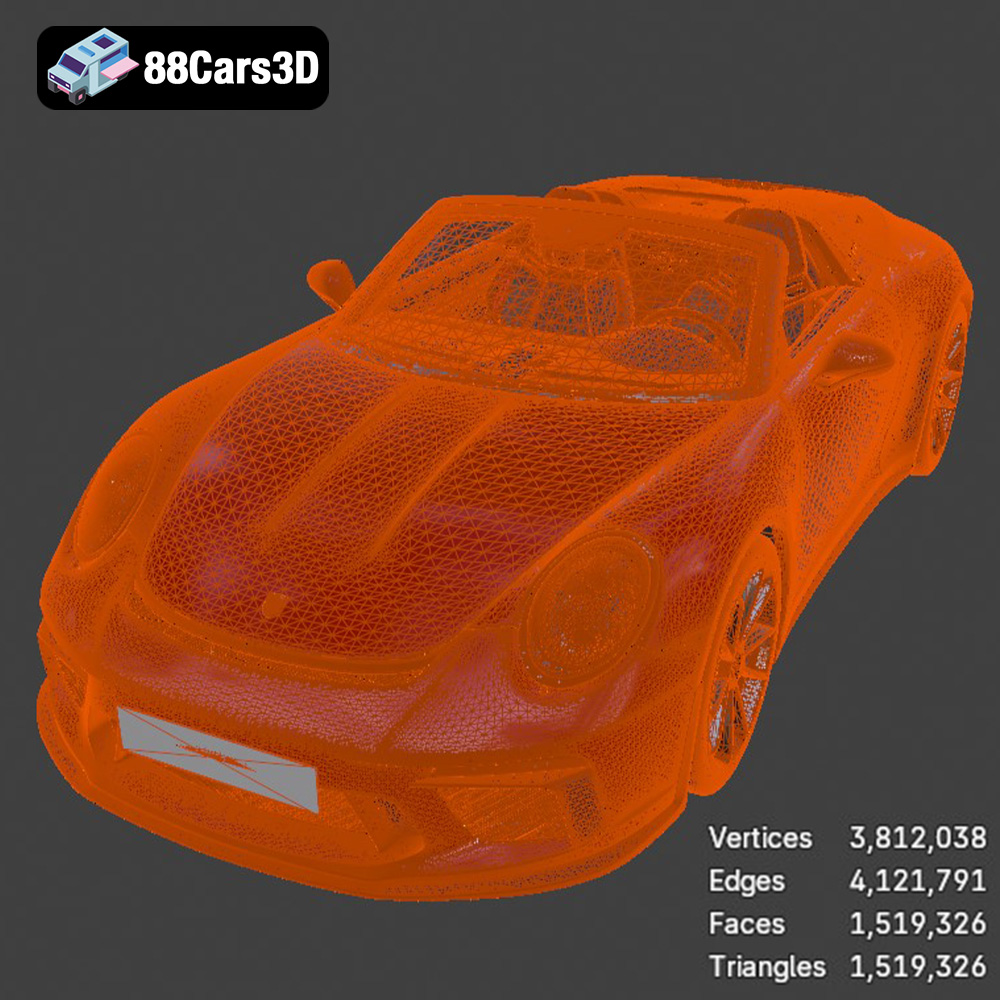
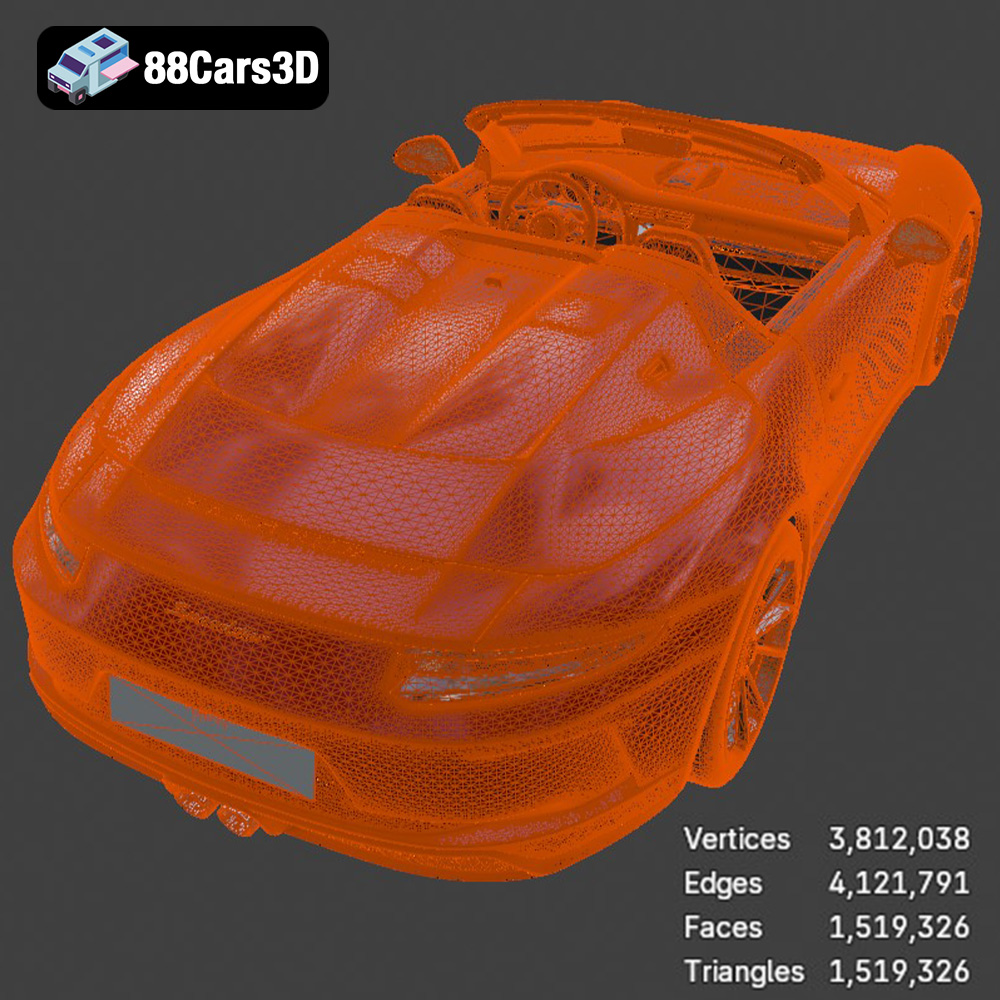
The term “high-fidelity” in 3D modeling refers to a model’s ability to accurately represent its real-world counterpart, often characterized by a rich polycount and clean, structured topology. The Porsche 911 Speedster 2019 3D model, with its 1,519,326 triangles, strikes an impressive balance. This level of detail ensures that even under extreme close-up rendering, subtle curves, sharp edges, and intricate details are perfectly preserved, preventing unsightly faceting or unnatural deformations. More importantly, a “structured topology” means the polygons are arranged in an optimized, flowing manner, making the model easier to UV unwrap, texture, rig for animation, and modify without introducing artifacts. This attention to detail is crucial for professional automotive rendering and game assets, where consistency and performance are paramount.
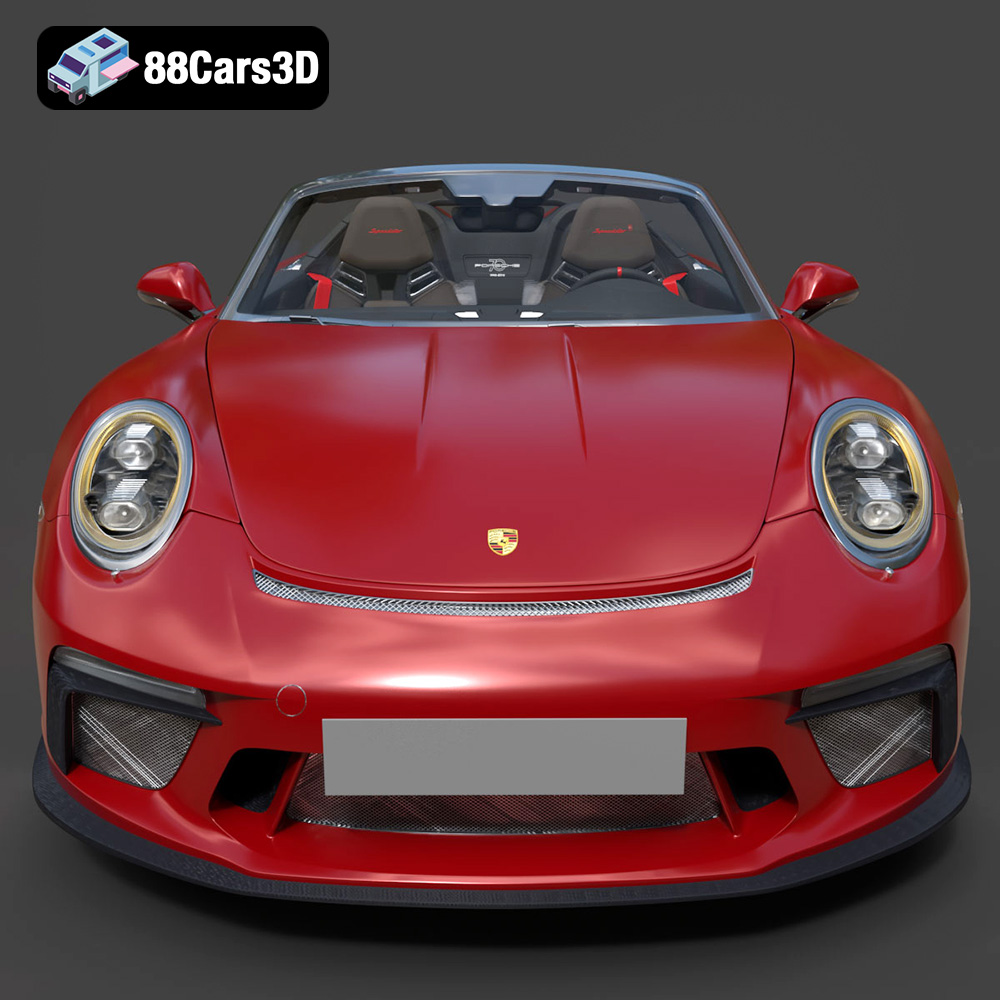
Beyond the raw geometry, photorealism is achieved through an exhaustive capture of real-world details. For this particular Speedster model, this includes everything from the intricate LED matrix headlights and sleek 3D taillight clusters to the signature dual-exit titanium exhaust system and the precise stitching on the carbon-fiber bucket seats. The inclusion of separate components for wheels, suspension, and steering isn’t merely aesthetic; it’s a technical necessity for dynamic animations and interactive simulations. Imagine a racing game where the suspension doesn’t compress or the wheels don’t turn independently – the illusion breaks. These features are meticulously engineered to deliver an authentic visual experience, bringing the pure essence of driving pleasure into the digital domain.
Choosing the correct file format for your 3D assets is a foundational decision that impacts workflow efficiency, compatibility, and the ultimate utility of your model across different software and platforms. The Porsche 911 Speedster 2019 3D model from 88cars3d.com offers a comprehensive suite of formats, each optimized for specific use cases. Understanding their nuances is key to leveraging your purchase to its full potential.
The `.blend` format is the native file type for Blender, the popular open-source 3D creation suite. When you download a `.blend` file, you’re not just getting geometry; you’re getting a fully editable Blender scene. This typically includes the model, its materials (often set up using Blender’s powerful node-based shader editor), textures, lighting, cameras, and potentially even animation data or modifiers. For artists and studios heavily invested in the Blender ecosystem, this format offers maximum flexibility for modifications, re-texturing, scene integration, and rendering within Blender’s Cycles or Eevee render engines. It’s ideal for those who want to dive deep into the model’s construction and adapt it precisely to their needs.
Autodesk’s `.fbx` (Filmbox) format is arguably the most widely adopted 3D interchange format in the industry, particularly for real-time pipelines. It excels at transferring not just geometry and UVs, but also materials, textures, bones, skinning, and animation data between different 3D applications like Maya, 3ds Max, Blender, Cinema 4D, and most importantly, game engines like Unreal Engine and Unity. For the Porsche 911 Speedster, the `.fbx` file is the go-to for importing into these engines, ensuring proper scaling, pivot points (critical for wheel rotation and steering), and material assignments are retained, making it an ideal choice for game development and interactive experiences where animation and performance are paramount.
The `.obj` (Wavefront Object) format is a simpler, yet highly robust and universally compatible file type. It primarily stores geometric data—vertices, faces, UV coordinates, and vertex normals. While it doesn’t typically embed animation or advanced material properties, it’s an excellent choice for transferring pure mesh data between virtually any 3D software. Textures are usually referenced via an accompanying `.mtl` (Material Template Library) file. The `.obj` version of the Porsche 911 Speedster ensures broad compatibility, making it a reliable fallback or primary choice for users of less common 3D applications or for scenarios where clean, unadulterated geometry is preferred for custom material setups.
The `.glb` (GL Transmission Format Binary) format is a relatively newer standard specifically designed for efficient transmission and loading of 3D scenes and models in web browsers, augmented reality (AR), and virtual reality (VR) applications. It is a self-contained, binary format that bundles geometry, materials, textures, and even animations into a single file, making it incredibly streamlined for quick deployment. For showcasing the Porsche 911 Speedster in a web-based configurator, an AR app on a smartphone, or a VR showroom, the `.glb` format provides the optimal balance of visual quality and performance, minimizing load times and maximizing accessibility.
`.stl` (Stereolithography) is the most common file format for 3D printing. Unlike other formats, `.stl` describes only the surface geometry of a 3D object using a collection of interconnected triangles, without any color, texture, or material information. The Porsche 911 Speedster in `.stl` format is crucial for hobbyists and professionals looking to physically manifest this stunning vehicle. It’s a “print-ready” mesh, optimized for accurate fabrication on FDM, SLA, or DLP 3D printers, allowing for tangible display models at various scales.
The `.ply` (Polygon File Format) is often used for storing 3D data from 3D scanners and for applications requiring high-precision mesh representation, such as CAD or scientific analysis. It can store a wider range of properties than `.obj`, including color per vertex, transparency, and normal data. While less common for general 3D asset exchange, its inclusion for the Speedster model indicates an emphasis on geometric fidelity, providing a robust option for specialized analytical or CAD-based workflows where precision and detailed attribute storage are important.
While `.unreal` is not a standalone file extension for direct import in the same way as `.fbx` or `.obj`, its inclusion implies an asset specifically structured, optimized, and potentially packaged for seamless integration into Unreal Engine. This could mean a pre-configured FBX file with specific import settings, a set of material instances, or even a `.uasset` file ready to be dropped into an Unreal project. It signifies that the model has undergone specific preparation to align with Unreal’s Physically Based Rendering (PBR) pipeline, proper collision generation, and level of detail (LOD) considerations, ensuring it is truly “engine-ready” for high-performance real-time environments without extensive post-import setup.
Similar to `.blend` for Blender, the `.max` format is the native file type for Autodesk 3ds Max. This provides a complete 3ds Max scene file, offering full editability of the model, its modifiers, materials (V-Ray, Corona, Arnold, etc.), lighting, and camera setups. For professionals working within a 3ds Max pipeline for high-end rendering, architectural visualization, or cinematic animation, the `.max` file ensures that all aspects of the original setup are preserved, allowing for advanced scene composition and rendering without loss of fidelity.
Together, these formats ensure that the Porsche 911 Speedster 2019 3D model is not just a beautiful asset, but a supremely flexible and accessible one, ready for any professional 3D challenge.
The exceptional detail and structural integrity of the Porsche 911 Speedster 2019 3D model are what set it apart. It’s a testament to rigorous modeling practices designed for ultimate versatility across disparate applications.
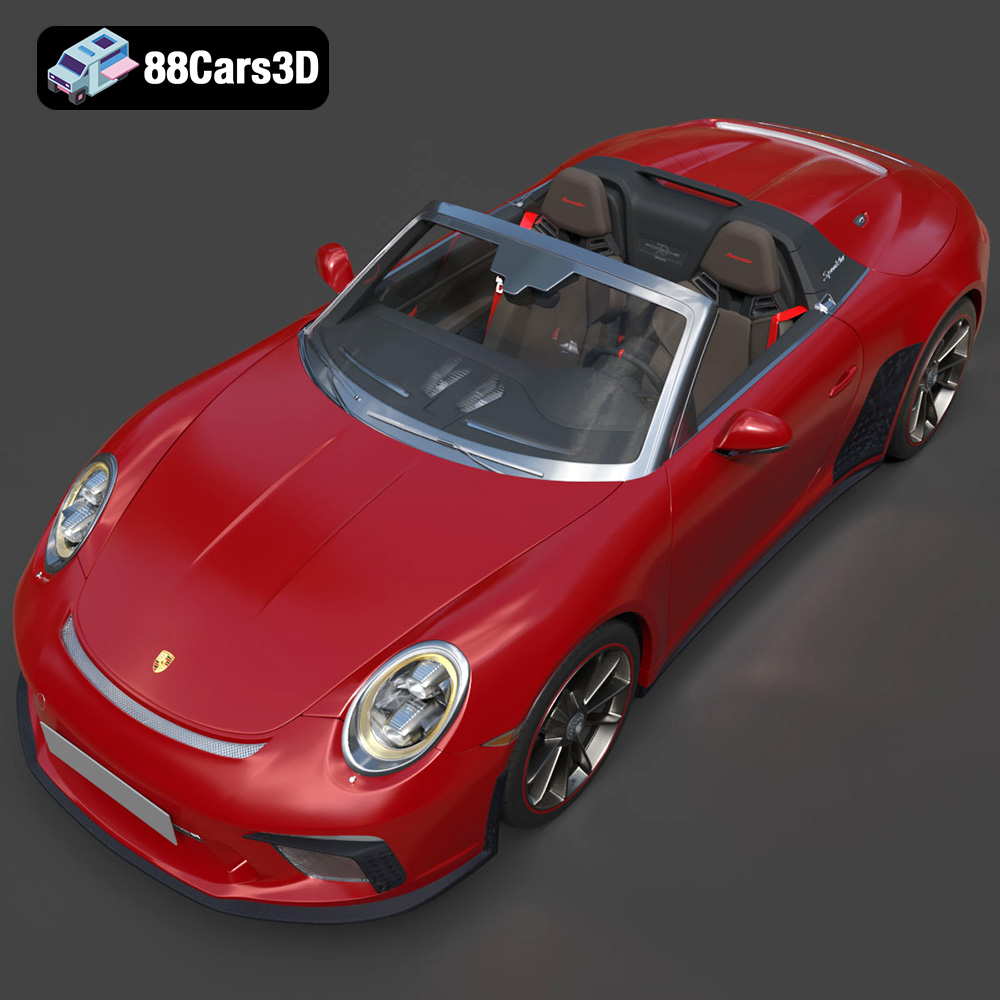
From the accurate frame geometry and low-slung proportions that define the Speedster’s aggressive stance to the intricate LED matrix headlights and sleek 3D taillight clusters, every exterior element has been meticulously crafted. The model boasts a highly detailed 4.0-liter naturally aspirated flat-six engine, an often-overlooked detail that adds significant depth for close-up renders or virtual engine bay explorations. Critical for dynamic scenarios are the separate wheels, suspension, and steering components. This modularity allows animators to accurately simulate wheel rotation, suspension travel, and precise steering actions, bringing the vehicle to life in a believable way. The center-lock forged alloy wheels with high-performance tires and ceramic composite brake calipers are not merely textures; they are distinct geometric elements, providing unparalleled visual realism and readiness for custom material assignments.
The interior of a vehicle is just as crucial as its exterior, especially for first-person perspectives in games or virtual showroom experiences. This Porsche model delivers an authentically modeled cockpit. Carbon-fiber bucket seats feature precise stitching details, a subtle yet powerful indicator of high-quality craftsmanship. The sport steering wheel and classic five-dial instrument cluster with a dominant central tachometer are faithfully recreated, complete with accurate multi-function dials and textures. Even the intricate center console, with its detailed manual gear shifter and tactile buttons, has optimized geometry. This level of interior detail ensures that the model is “optimized geometry for first-person POV in gaming,” making it perfect for driving simulators or interactive configurators where the user can truly inhabit the digital space.
A high-quality 3D car model is only as good as its integration into existing professional workflows. The Porsche 911 Speedster 3D model is built with compatibility and ease-of-use in mind, supporting major 3D software and real-time engines.
For artists working in 3ds Max or Blender, the provided `.max` and `.blend` files offer a seamless starting point. Importing the model into a rendering engine like V-Ray, Corona, Arnold (for 3ds Max), or Cycles/Eevee (for Blender) involves straightforward material setup. Using Physically Based Rendering (PBR) workflows, artists can easily assign high-resolution textures for body paint, glass, rubber, carbon fiber, and chrome to achieve photorealistic results. The model’s structured topology facilitates UV unwrapping if custom textures are desired. For studio shots, lighting setups can be adjusted to highlight the Speedster’s iconic lines and intricate details, making it ideal for brand campaigns or luxury lifestyle visualizations.
The “Game-Ready & Optimized” nature of this model, with its 1,519,326 triangles, is perfectly suited for modern real-time engines like Unreal Engine and Unity. The `.fbx` and `.unreal` formats are tailored for direct import. In Unreal, artists can import the FBX, create PBR material instances for various car parts, and apply textures. The proper pivot setup for steering, wheel rotation, and suspension travel is critical here; it allows developers to quickly integrate the model into a vehicle blueprint or physics system without complex rigging adjustments. For Unity, a similar process applies, leveraging its PBR shader pipeline. Even with a relatively high polycount, modern engines can handle this level of detail efficiently, especially with techniques like LODs (Levels of Detail) and optimized material shaders, ensuring smooth performance in open-world games or racing titles.
The utility of a detailed 3D car model extends far beyond static renders. It’s a foundational asset for creating engaging, interactive experiences across various platforms.
In the competitive world of game development, authenticity is key. The Porsche 911 Speedster 2019 model is an ideal candidate for high-speed racing simulations, luxury open-world games, and immersive driving simulators. Its optimized polycount strikes a perfect balance between visual realism and real-time performance. Developers can implement advanced vehicle physics, integrate engine sounds corresponding to its detailed 4.0-liter flat-six, and even allow for customization options like changing body colors or modifying tire textures directly within the game environment. The precise modeling of interior features also makes it perfect for first-person cockpit views, deepening player immersion.
Augmented Reality (AR) and Virtual Reality (VR) offer unparalleled opportunities for automotive brands and enthusiasts. Imagine stepping into a virtual showroom and walking around the Porsche 911 Speedster, examining every detail as if it were physically present. The `.glb` format is specifically optimized for these immersive experiences, allowing for efficient loading and display on AR/VR headsets and mobile devices. This model is perfect for virtual configurators where users can experiment with different factory colors, interior trims, and material finishes in real-time, offering a highly personalized and engaging pre-purchase experience.
The digital realm isn’t limited to screens. Thanks to advancements in 3D printing, a meticulously crafted 3D model can transcend the virtual and become a physical object. The inclusion of the `.stl` format for the Porsche 911 Speedster 2019 3D model opens up exciting possibilities for hobbyists, collectors, and prototyping.
For those looking to 3D print this iconic vehicle, the `.stl` file provides the necessary geometric data. The product description recommends specific scales (1:12, 1:18, 1:24), which are common for detailed display models. Resin printing (SLA/DLP) is highly recommended over FDM for achieving the fine details—like the grille textures, brake calipers, and interior elements—that this model possesses. Optimal layer heights (0.04–0.12 mm) are crucial for smooth surfaces. Furthermore, understanding the need for supports for overhangs (exhaust, mirrors) and careful print orientation (frame angled for structural integrity, wheels printed separately) are best practices to ensure a successful print. Post-processing, including sanding, priming, and applying authentic factory colors with metallic finishes, will bring the printed model to life, creating a stunning replica for any desk or display case.
Purchasing a high-quality 3D asset like the Porsche 911 Speedster 2019 from 88cars3d.com is an investment in your creative toolkit. Its inherent flexibility allows for extensive customization, ensuring its relevance across multiple projects and evolving design trends.
The model’s robust construction and separate components provide immense opportunities for customization. Artists can easily change body colors, experimenting with factory shades, custom paints, or even adding unique liveries. Modifying tire textures to switch between track-focused performance tires, street variants, or even custom tread patterns is straightforward. Material finishes—matte, gloss, metallic, or carbon fiber—can be adjusted to match specific visual styles or brand requirements. This flexibility means the same core model can serve multiple purposes, from a pristine studio render to a weathered, battle-scarred vehicle in a post-apocalyptic game, extending its lifespan and value.
As creative projects evolve, so too must their assets. The clean topology and distinct components of the Speedster model mean it can be easily adapted for future needs. Want to animate the doors opening? The separate components make it feasible. Need to integrate it into a new rendering pipeline with different material shaders? The well-defined UVs and robust geometry simplify the process. This inherent adaptability ensures that your investment in this premium 3D car model remains valuable over time, making it a cornerstone asset for any automotive visualization or game development studio.
The digital automotive landscape is continually pushing the boundaries of realism and immersion. At the heart of this innovation are exceptionally detailed and technically sound 3D car models. The Porsche 911 Speedster 2019 3D Model exemplifies this standard, offering an unparalleled blend of aesthetic fidelity and functional versatility.
Whether you’re a professional game developer seeking a high-performance vehicle asset, a visualization artist aiming for photorealistic renders, an AR/VR creator building immersive experiences, or a hobbyist dreaming of 3D printing your favorite supercar, this model delivers. Its comprehensive file formats—from editable native Blender and 3ds Max scenes to game-ready FBX and optimized GLB for web—ensure seamless integration into virtually any workflow. The meticulous attention to detail, from its exterior proportions and engine components to its authentically modeled cockpit and individual suspension parts, makes it a truly exceptional digital asset.
Investing in a high-quality 3D car model from a trusted source like 88cars3d.com streamlines your production pipeline, elevates your visual output, and empowers you to bring your most ambitious creative visions to life. The Porsche 911 Speedster 2019 is more than just a model; it’s a gateway to limitless digital possibilities, ready to drive your projects forward with style and precision.
The 2019 Porsche 911 Speedster is a masterpiece of modern automotive engineering mixed with rich heritage, marking the spectacular finale of the 991 generation. Renowned for its naturally aspirated 4.0-liter flat-six engine, unmistakable low-cut windshield, and signature double-bubble rear deck, this limited-edition roadster represents the purest essence of driving pleasure. Its aerodynamic styling, carbon fiber accents, and track-focused performance cues make it an iconic standout in any virtual environment.
This exceptionally detailed 3D model boasts a high-fidelity geometry with 1,519,326 triangles, delivering photorealistic visual quality that holds up under extreme close-up rendering while maintaining a structured topology. It is precisely engineered for top-tier visual fidelity across multiple platforms, ensuring seamless integration into game development, high-end AR/VR experiences, architectural visualization, and cinematic animations.
Perfect for high-speed racing simulations, luxury lifestyle visualizations, virtual configurators, and open-world automotive games.
.blend, .fbx, .obj, .glb, .stl, .ply, .unreal, .max
Tags:
porsche, 911-speedster, 2019, sports-car, luxury-car, supercar, game-ready, high-poly, optimized, car-3d-model, game-asset, rendering, vr-ar, blend, fbx, obj, glb, stl, ply, unreal, max
$37.50
.2019
.blend
.fbx
.glb
.max
.obj
.ply
.porsche
.rendering
.sports car
.stl
.supercar
.unreal
911-speedster
car-3d-model
game asset
game-ready
high poly
luxury car
optimized
VR/AR