Get 20% OFF All Premium 3D & STL Models!

In the dynamic realms of automotive design, game development, cinematic rendering, and immersive AR/VR experiences, the demand for truly exceptional 3D car models is constantly accelerating. Artists, developers, and visionaries alike understand that a mere approximation won’t suffice; authenticity, detail, and technical prowess are paramount. It’s not just about creating a visually appealing asset; it’s about crafting a digital twin that breathes life into virtual worlds, drives engaging gameplay, and elevates brand presence.
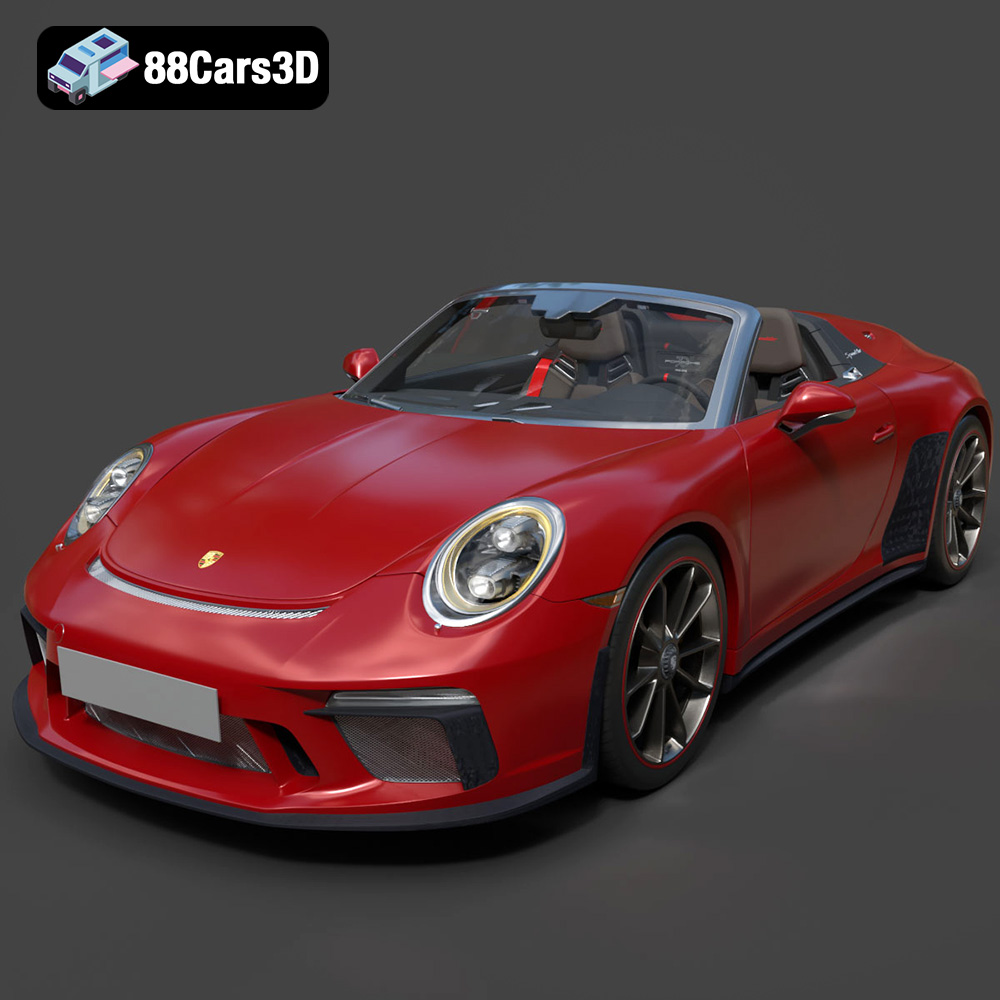
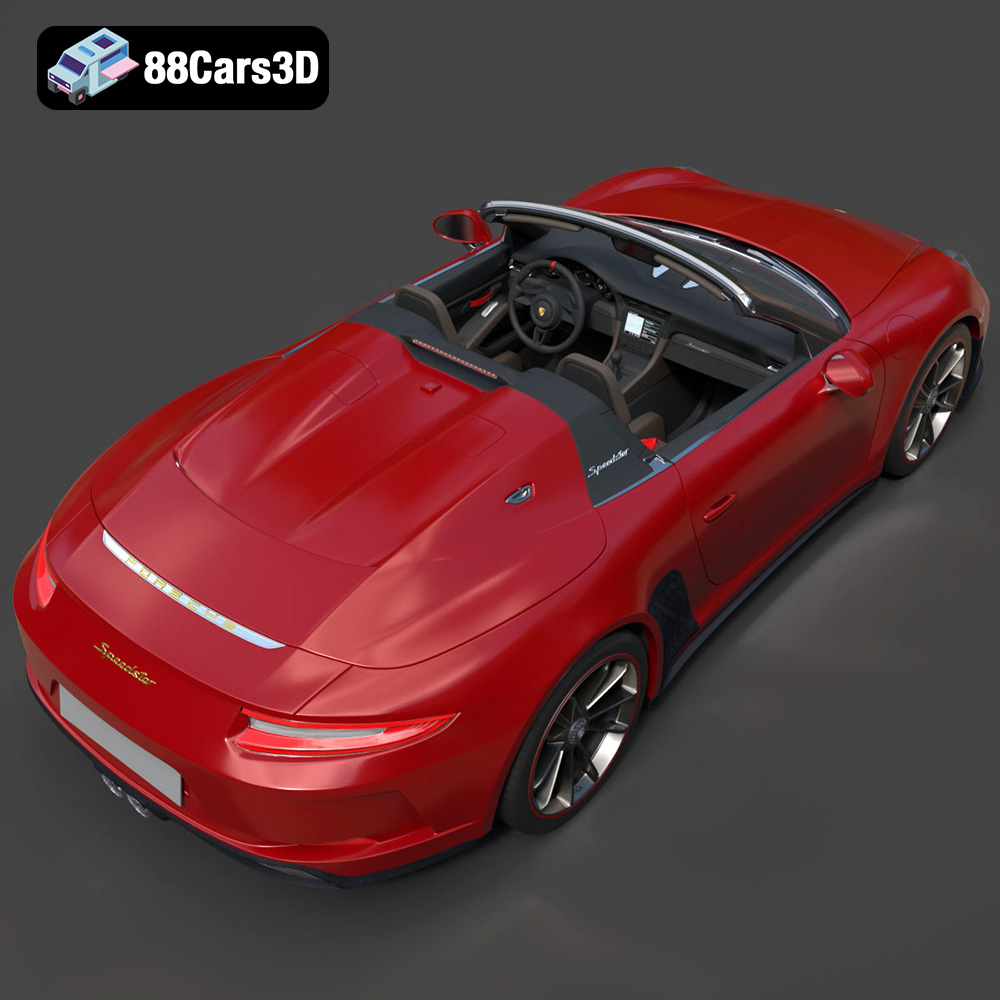
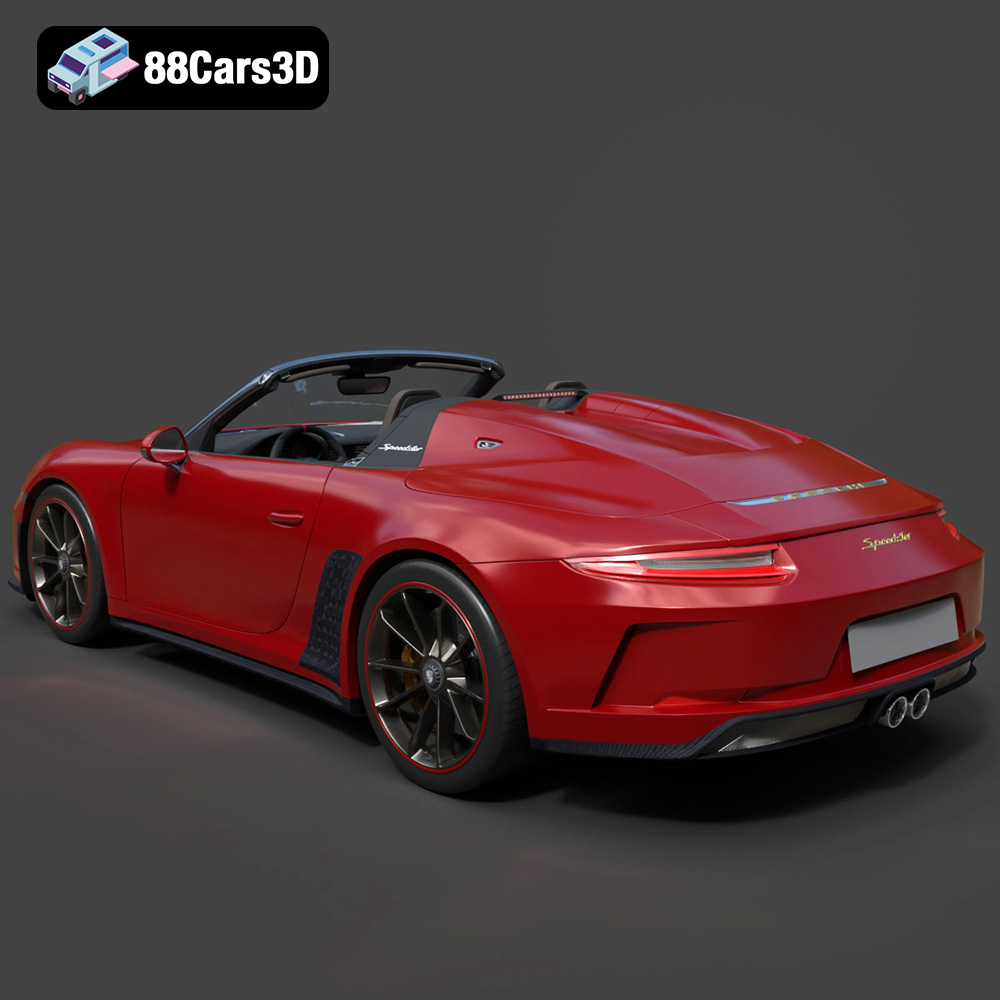
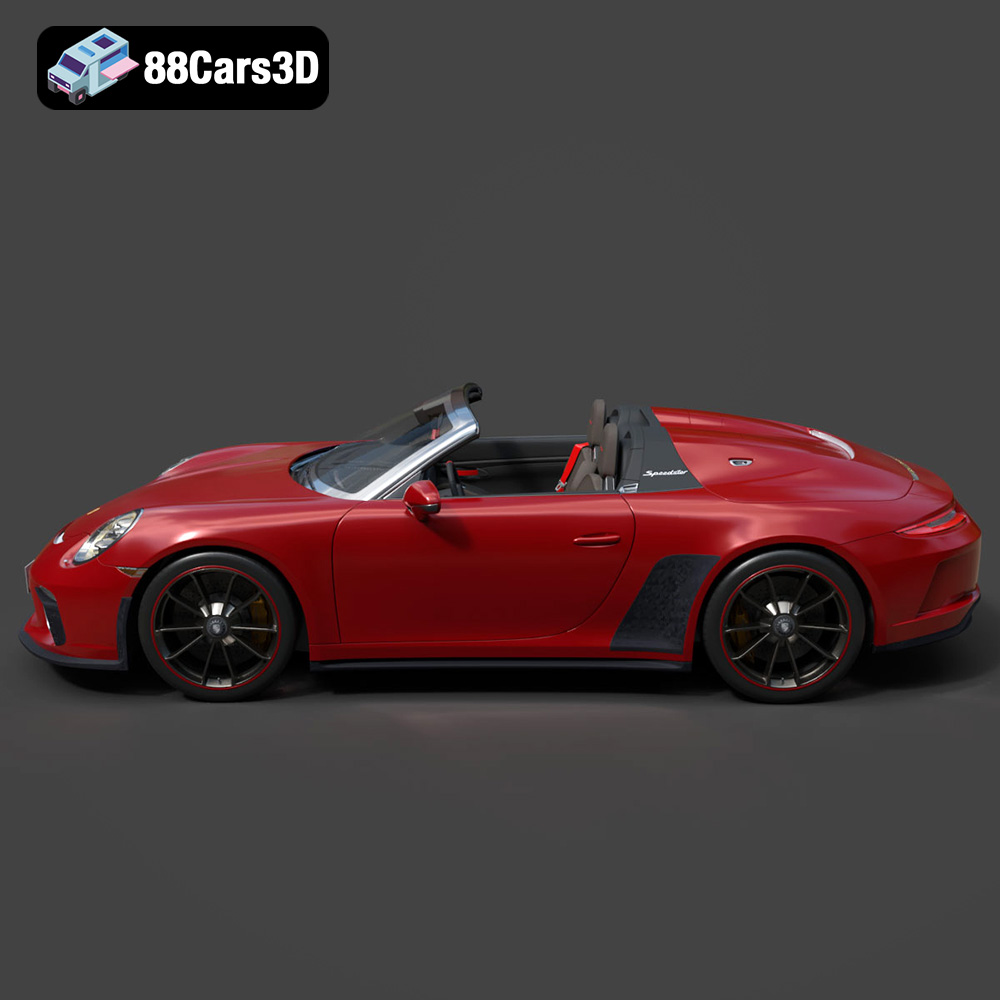
At the heart of this pursuit lies the meticulous artistry and engineering that goes into translating real-world automotive masterpieces into their digital counterparts. These aren’t just meshes and textures; they are complex data structures designed to perform under a myriad of technical specifications and creative demands. Today, we’ll delve into the intricate world of premium 3D car models, exploring their technical backbone, diverse applications, and the profound impact they have on various industries. As a prime example of this digital excellence, we’ll frequently reference the stunning Porsche 911 Speedster 2019 3D Model, a remarkable asset available on 88cars3d.com, which perfectly encapsulates the blend of heritage and cutting-edge design.
The journey of a 3D car model from creation to application involves navigating a landscape of various file formats, each with its unique strengths, compatibility, and intended use. Understanding these formats is crucial for professionals to ensure seamless integration into their workflows and achieve optimal results. The Porsche 911 Speedster 2019 3D Model, for instance, is offered in a comprehensive suite of formats, demonstrating its versatility.
The .blend file format is the native project file for Blender, the powerful open-source 3D creation suite. When you acquire a .blend file, you’re not just getting a mesh; you’re getting a fully editable Blender scene. This includes all geometry, materials (often set up with PBR shaders), textures, lighting, cameras, animation data, modifiers, and even scene settings. For artists and studios primarily working in Blender, this format offers the most flexibility for customization, rigging, animation, and rendering within their familiar environment. It allows for deep dives into the model’s construction, enabling extensive modifications to textures, materials, and even geometry.
.fbx (Filmbox) is a proprietary file format developed by Autodesk, serving as an invaluable intermediary for 3D content exchange between various software applications. It is particularly ideal for real-time pipelines such as Unreal Engine and Unity, and is widely adopted across game development, film production, and architectural visualization. An .fbx file can store extensive data including mesh geometry, materials, textures, animations (skeletal and blend shapes), cameras, and lights. Its robustness in preserving animation data and scene hierarchies makes it the go-to format for exporting animated 3D car models, ensuring that components like wheels and suspension can be accurately transferred for dynamic simulation.
.obj (Wavefront OBJ) is one of the oldest and most universally supported 3D file formats, making it an excellent choice for cross-software compatibility. It primarily stores geometry (vertices, normals, texture coordinates, and faces) and can reference external material (.mtl) and texture files. While it doesn’t support animation or rigging data, its simplicity and widespread compatibility mean almost any 3D software can import an .obj file. This makes it a reliable fallback or a primary choice when only the core mesh data is required, and artists prefer to rebuild materials and lighting in their target application.
.glb (GL Transmission Format Binary) is the binary version of the .gltf format, designed specifically for efficient transmission and loading of 3D scenes and models on the web and in AR/VR applications. It’s a single-file format that bundles geometry, materials, textures, animations, and other scene data into a compact package. Its optimization for real-time rendering and smaller file sizes makes it perfect for immersive web experiences, virtual product configurators, and mobile augmented reality, where quick loading and smooth performance are critical. The Porsche 911 Speedster 2019 3D Model in .glb format would be ideal for a virtual showroom experience on a website.
.stl (Stereolithography) is the standard file format for 3D printing and rapid prototyping. It describes only the surface geometry of a 3D object using a collection of interconnected triangles, without color, texture, or other CAD attributes. When aiming to bring a digital car model like the Speedster into the physical world, the .stl format is indispensable. It translates the detailed mesh into a printable form, ready for fabrication processes, from small-scale hobbyist models to intricate industrial prototypes. The clean, watertight mesh required for 3D printing makes the .stl format an essential output for physical visualization.
.ply (Polygon File Format or Stanford Triangle Format) is a versatile file format for storing 3D data from 3D scanners, CAD applications, and other sources. Similar to .obj, it describes a raw mesh, but it can also store additional properties for each vertex or face, such as color, transparency, normals, texture coordinates, and confidence values. This makes .ply particularly useful for precision applications like scientific visualization, engineering analysis, or when dealing with highly detailed scan data where rich attribute information is crucial. While less common for general 3D model distribution, its presence indicates a high level of detail and potential for specialized use cases.
While not a universal file format in the traditional sense, an “.unreal” asset typically refers to a file specifically packaged and optimized for direct import or use within Unreal Engine. This often implies that the .fbx or other source files have been processed, materials converted, and textures linked in a way that minimizes setup time for Unreal Engine users. It signifies a model that is truly “game-ready,” with proper pivot points, real-world scaling, and potentially even collision meshes or LODs pre-configured for seamless integration into a real-time environment. This makes deployment incredibly efficient for game developers.
Similar to .blend, .max is the native scene file format for Autodesk 3ds Max, a leading software in architectural visualization, broadcast animation, and game asset creation. A .max file contains all the elements of a 3ds Max project, including geometry, modifiers, materials, textures, lights, cameras, animation, and scene setup. For users entrenched in the 3ds Max ecosystem, this format offers the highest degree of editability and allows for full access to the original scene hierarchy and construction, making it ideal for high-end rendering and animation projects that might leverage V-Ray or Corona renderers.
Creating a premium 3D car model, such as the Porsche 911 Speedster 2019, is a complex endeavor that marries artistic skill with rigorous technical precision. It’s a process that begins with capturing every nuance of the physical vehicle and culminates in a digital asset that can perform flawlessly across diverse platforms.
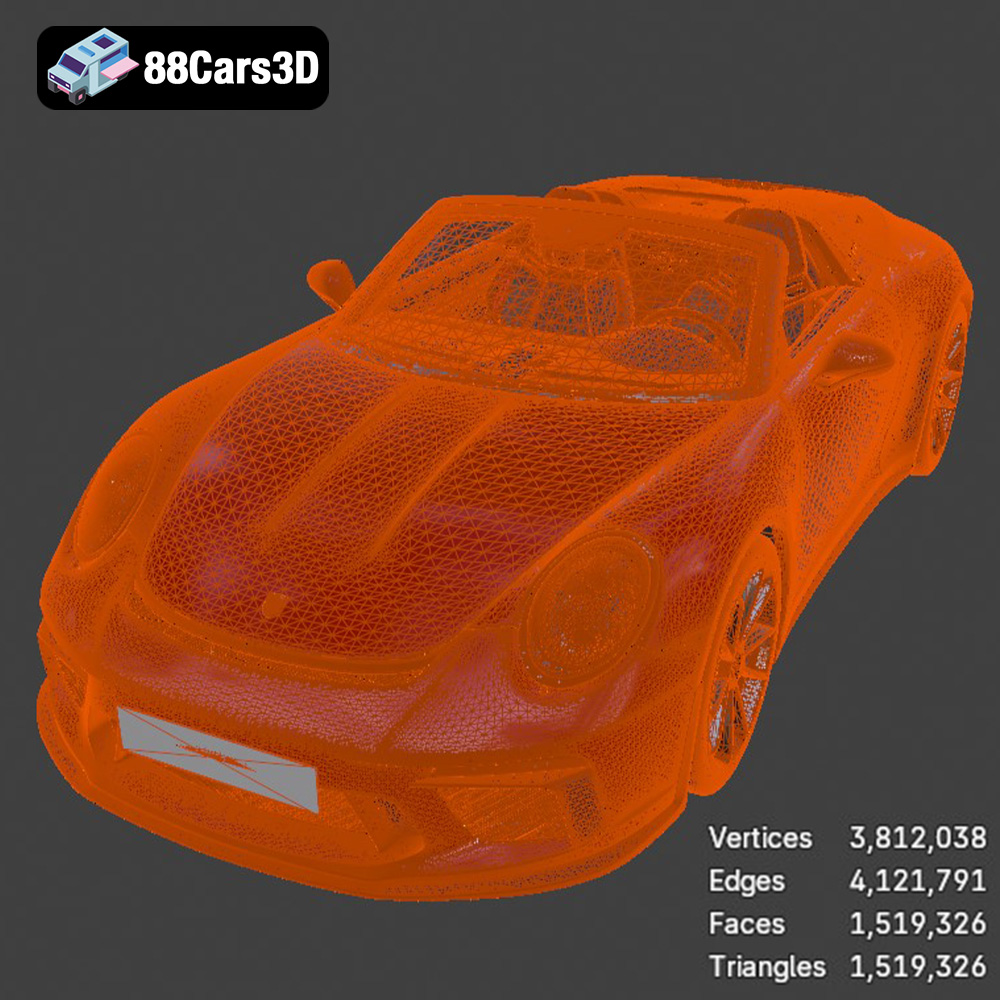
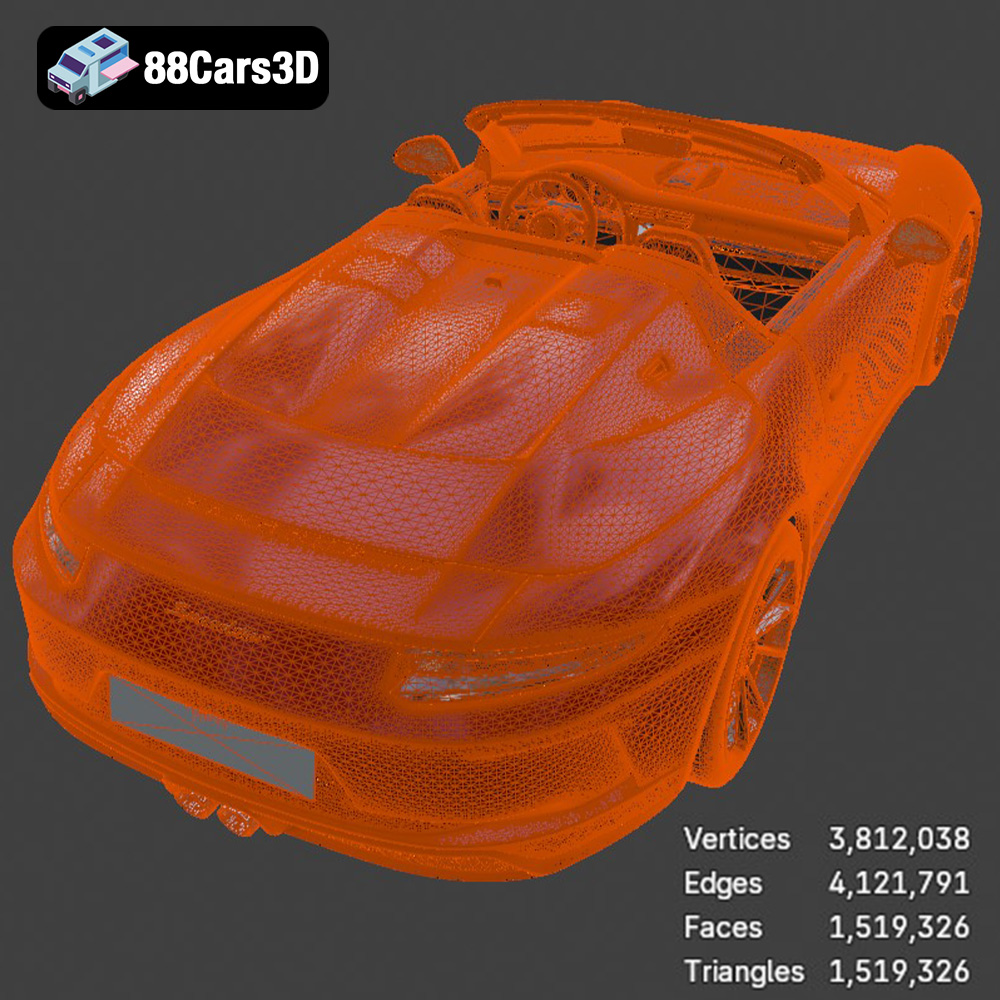
The foundation of any high-quality 3D car model lies in its geometry. This isn’t just about creating a recognizable shape; it’s about replicating the subtle design language, aerodynamic contours, and intricate details that define an automotive masterpiece. For a model like the Porsche 911 Speedster, artists often start with extensive reference materials—CAD data, blueprints, high-resolution photographs, and even physical scans—to ensure absolute fidelity. The result is a high-fidelity mesh, like the 1,519,326 triangles found in the Speedster model on 88cars3d.com, meticulously optimized for both visual quality and structured topology. This ensures that the model holds up under extreme close-up rendering while remaining efficient enough for real-time applications.
Every element, from the iconic low-cut windshield and signature double-bubble rear deck to the delicate vents and panel gaps, must be modeled with anatomical correctness. Separate components for wheels, suspension, and steering are crucial, not just for realism, but for enabling sophisticated animations and interactive elements in game engines or configurators.
Beyond the raw geometry, it’s the materials and textures that truly bring a 3D car model to life. Modern rendering relies heavily on Physically Based Rendering (PBR) workflows, where materials accurately simulate how light interacts with surfaces in the real world. This involves creating a suite of texture maps (albedo, normal, roughness, metallic, ambient occlusion, displacement) that define everything from the sheen of the paint to the subtle grain of carbon fiber and the luxurious texture of the interior leather. The Porsche 911 Speedster 2019 model showcases this with its realistic textures for the titanium exhaust system, intricate LED matrix headlights, and detailed high-performance tires. Achieving this level of realism requires not only skilled texturing but also precise UV unwrapping, ensuring that textures are mapped cleanly and efficiently across the entire model.
A truly versatile 3D car model must be optimized for its intended application without compromising visual quality. A model destined for cinematic rendering can often afford higher poly counts and more complex material setups than one designed for a mobile AR experience or a fast-paced racing game. The Porsche 911 Speedster 2019 3D Model strikes an impressive balance, with its 1,519,326 triangles being “Game-Ready & Optimized” for real-time engines like Unreal and Unity, while still delivering “high-end visual realism.” This optimization involves careful polygon reduction where necessary, the creation of Levels of Detail (LODs) for varying distances, and efficient material instancing to minimize draw calls. Furthermore, crucial technical specifications like real-world scale accuracy and proper pivot setups for animated parts (steering, wheel rotation, suspension travel) are integrated from the outset, ensuring seamless functionality across platforms.
The 2019 Porsche 911 Speedster represents the pinnacle of the 991 generation, a limited-edition roadster celebrated for its purity of driving pleasure. Translating such an iconic vehicle into a high-fidelity 3D model requires an unwavering commitment to detail, making the Porsche 911 Speedster 2019 3D Model an exemplary offering on 88cars3d.com.
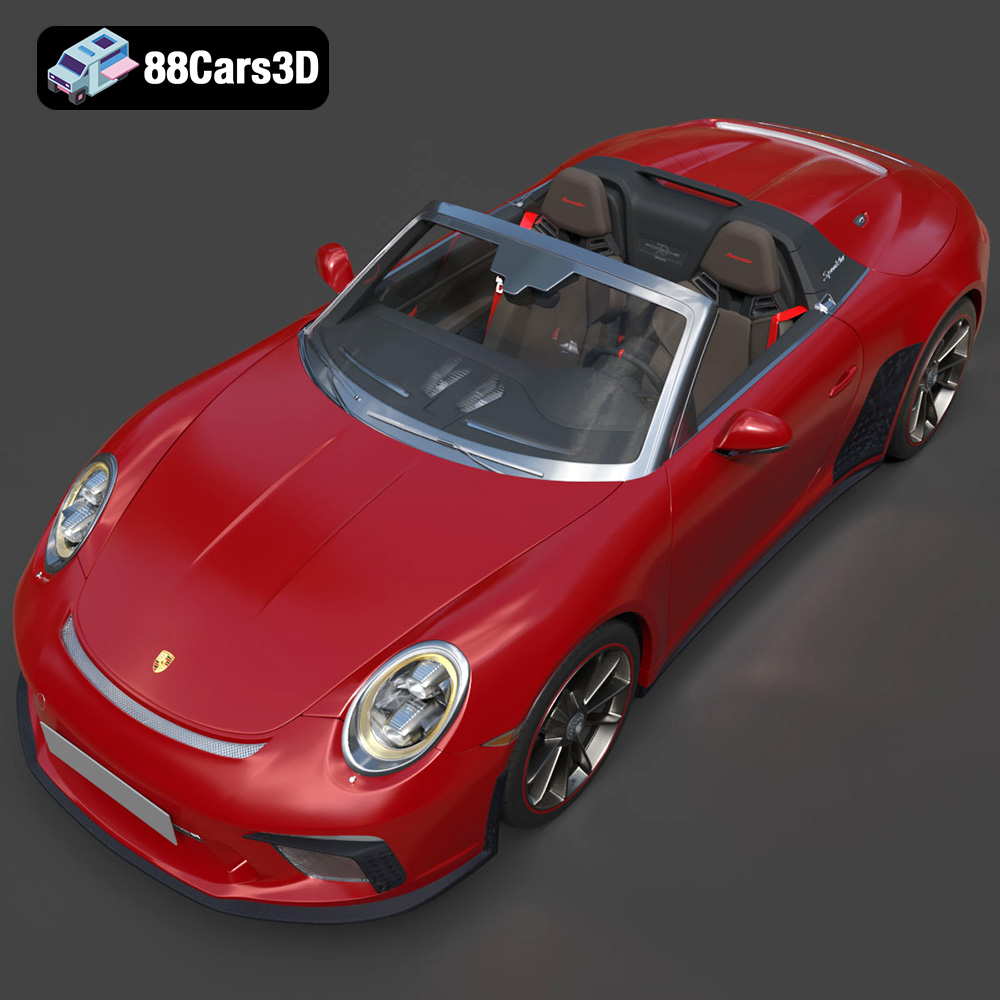
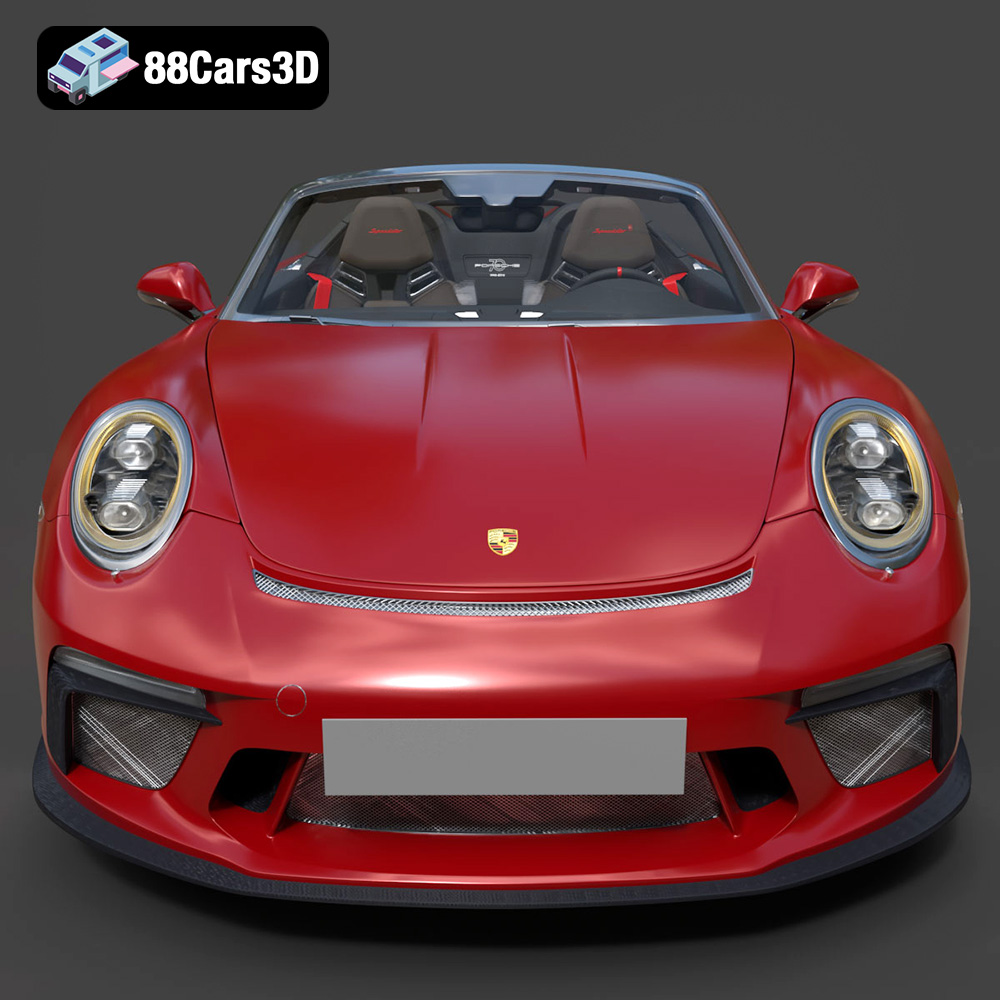
The digital rendition of the Speedster captures every curve and aerodynamic element that defines its aggressive yet elegant stance. From the accurate Porsche 911 Speedster frame geometry and low-slung proportions to the iconic dual-exit titanium exhaust system, every component reflects meticulous attention to detail. The intricate LED matrix headlights and sleek 3D taillight clusters are accurately modeled, contributing to the photorealistic visual quality. Furthermore, the model boasts center-lock forged alloy wheels with detailed high-performance tires and ceramic composite brake calipers, along with precision-modeled adaptive suspension details. The separation of wheels, suspension, and steering components is a critical technical advantage, facilitating realistic animation and dynamic simulations, which is indispensable for racing games and virtual configurators.
Stepping into the virtual cockpit of the Porsche 911 Speedster 2019 3D Model is an experience in itself. The interior features are authentically modeled to provide a truly immersive first-person POV, making it ideal for gaming and VR applications. This includes carbon-fiber bucket seats with precise stitching details, a sport steering wheel complete with accurate multi-function dials and textures, and the classic five-dial instrument cluster with its dominant central tachometer. The intricate center console with a detailed manual gear shifter and tactile buttons completes the authentic feel, ensuring that every interaction in a virtual environment feels genuine.
Beyond its visual fidelity, the Porsche 911 Speedster 2019 3D Model is engineered for performance. Its game-ready optimization, featuring 1,519,326 triangles, strikes a perfect balance between visual realism and efficiency for real-time engines like Unreal and Unity. This polycount ensures that the model can be integrated into high-speed racing simulations or open-world automotive games without significant performance overhead. Key technical advantages include real-world scale accuracy, based on actual vehicle chassis data, and a proper pivot setup for crucial components like steering, wheel rotation, and suspension travel. These features are critical for developers to implement realistic physics and dynamic animations, making it a highly desirable asset for professional game development.
The versatility of a high-quality 3D car model, especially one available in multiple formats like the Porsche 911 Speedster 2019 from 88cars3d.com, makes it an invaluable asset across a spectrum of professional applications.
For advertising agencies, automotive manufacturers, and design studios, photorealistic rendering is paramount. A detailed 3D car model serves as the cornerstone for creating stunning marketing materials, product configurators, and immersive brand experiences. Using software like 3ds Max with V-Ray or Corona, or Blender with Cycles, artists can place the Porsche 911 Speedster in any virtual environment – from a gleaming studio to a breathtaking scenic drive. The model’s high-fidelity geometry and PBR materials ensure that light interacts realistically, producing stunning reflections, accurate shadows, and a sense of tangible presence that is indistinguishable from photography. This is where the ability to change body colors, adjust material finishes (matte, gloss, metallic), and adapt lighting truly shines, allowing for endless creative iterations.
In game development, the line between cinematic quality and real-time performance is constantly blurring. Game engines like Unreal Engine and Unity rely on highly optimized assets that maintain visual integrity while running efficiently. The Porsche 911 Speedster 2019 3D Model, with its “game-ready” optimization and proper pivot setups, is perfectly suited for this demanding environment. Developers can import the model (often via .fbx or the specifically optimized .unreal format) and quickly integrate it into racing titles, open-world games, or even highly detailed simulators. The separate components allow for dynamic physics, responsive steering, and realistic suspension travel, enhancing the player experience and immersion. Its structured topology also facilitates the creation of LODs (Levels of Detail), ensuring smooth performance even with a large number of vehicles on screen.
Augmented Reality (AR) and Virtual Reality (VR) are transforming how consumers interact with products, especially in the automotive sector. Immersive virtual showrooms, interactive configurators, and mobile AR experiences demand 3D models that are optimized for performance on various devices. The .glb format, included with the Porsche 911 Speedster 2019 3D Model, is ideal for these applications due to its efficiency and comprehensive bundling of assets. Customers can explore the Speedster from every angle, customize its colors and finishes in real-time, or even place a life-sized virtual model in their driveway using AR. This level of engagement provides a powerful tool for marketing and sales, offering a new dimension to the customer journey.
Beyond screens, premium 3D models can leap into the physical world through 3D printing. The Porsche 911 Speedster 2019 3D Model, convertible to .stl format, allows enthusiasts, designers, and engineers to create tangible replicas. Whether it’s a 1:12 scale display model, an intricate 1:18 collector’s item, or a smaller 1:24 desk ornament, the digital precision translates into physical accuracy. For optimal results, resin printing is often recommended for fine details, with specific guidelines for layer height, wall thickness, infill, and supports. The ability to print separate components like wheels and frames, followed by post-processing steps such as sanding, priming, and applying authentic factory colors, transforms a digital asset into a stunning physical representation, bridging the gap between virtual and tangible.
A truly valuable 3D asset is not static; it’s a foundation for endless creative exploration. The Porsche 911 Speedster 2019 3D Model from 88cars3d.com offers a robust platform for extensive customization, enabling artists and developers to tailor it precisely to their project’s needs.
One of the most immediate and impactful customization options is the ability to change body and interior colors. Artists can quickly experiment with the Speedster’s original factory colors or explore custom finishes, from vibrant metallics to stealthy matte wraps. This flexibility extends to other materials as well, allowing for modifications to tire textures (e.g., swapping street variants for track-focused slicks), adjusting the glossiness of carbon fiber accents, or tweaking the reflectivity of chrome elements. Such material adaptability ensures the model can fit seamlessly into diverse visual narratives, whether it’s a high-octane racing scene or a sophisticated lifestyle advertisement.
The foresight in modeling separate components for the wheels, suspension, and steering is a major technical advantage. This allows animators to accurately simulate wheel rotation, steering input, and realistic suspension travel, bringing dynamic realism to cinematics and interactive simulations. Imagine the Speedster drifting around a corner, its suspension compressing and rebounding with authentic weight transfer – this level of detail is only possible when the underlying model is constructed with animation in mind. For game developers, this means less time spent rigging and more time on gameplay, as the model is already prepared for dynamic interactions.
Beyond individual component customization, the Porsche 911 Speedster 2019 3D Model is designed for seamless integration into larger scenes. Its real-world scale accuracy ensures it fits perfectly alongside other assets, whether it’s parked in an architectural visualization, speeding through a vast open-world game environment, or being showcased in a virtual studio. The optimized polycount allows for multiple instances of the model to be used without crippling performance, crucial for large-scale urban environments or racing grids. This scalability, combined with material flexibility, ensures that the model can serve as a cornerstone asset for a wide range of projects, from singular product showcases to complex virtual worlds.
The journey through the intricacies of premium 3D car models reveals a fascinating intersection of art, engineering, and digital innovation. From the meticulous crafting of geometry and the mastery of PBR materials to the strategic optimization for diverse platforms, every aspect contributes to creating assets that are not just visually stunning but also technically robust. The ability to navigate various file formats, each serving a specific purpose, underscores the versatility and professional utility of these digital creations.
The Porsche 911 Speedster 2019 3D Model stands as a testament to this digital excellence. Whether you’re an automotive designer striving for photorealistic renders, a game developer crafting the next racing sensation, an AR/VR innovator building immersive experiences, or a hobbyist bringing digital designs to life through 3D printing, this model offers the precision, detail, and adaptability required. Investing in such high-quality 3D car models streamlines workflows, enhances visual fidelity, and ultimately drives greater creative freedom and impactful results. For anyone seeking to elevate their projects with world-class automotive assets, exploring the meticulously curated collection at 88cars3d.com is an essential step.
The 2019 Porsche 911 Speedster is a masterpiece of modern automotive engineering mixed with rich heritage, marking the spectacular finale of the 991 generation. Renowned for its naturally aspirated 4.0-liter flat-six engine, unmistakable low-cut windshield, and signature double-bubble rear deck, this limited-edition roadster represents the purest essence of driving pleasure. Its aerodynamic styling, carbon fiber accents, and track-focused performance cues make it an iconic standout in any virtual environment.
This exceptionally detailed 3D model boasts a high-fidelity geometry with 1,519,326 triangles, delivering photorealistic visual quality that holds up under extreme close-up rendering while maintaining a structured topology. It is precisely engineered for top-tier visual fidelity across multiple platforms, ensuring seamless integration into game development, high-end AR/VR experiences, architectural visualization, and cinematic animations.
Perfect for high-speed racing simulations, luxury lifestyle visualizations, virtual configurators, and open-world automotive games.
.blend, .fbx, .obj, .glb, .stl, .ply, .unreal, .max
Tags:
porsche, 911-speedster, 2019, sports-car, luxury-car, supercar, game-ready, high-poly, optimized, car-3d-model, game-asset, rendering, vr-ar, blend, fbx, obj, glb, stl, ply, unreal, max
$37.50
.2019
.blend
.fbx
.glb
.max
.obj
.ply
.porsche
.rendering
.sports car
.stl
.supercar
.unreal
911-speedster
car-3d-model
game asset
game-ready
high poly
luxury car
optimized
VR/AR