Get 20% OFF All Premium 3D & STL Models!

In the demanding world of digital visualization, automotive design, and real-time graphics, the quality of a 3D asset can make or break a project. From breathtaking cinematic renders that capture every gleam and shadow, to immersive virtual reality experiences that place users directly in the driver’s seat, the foundation of success lies in meticulously crafted 3D car models. Professionals across industries are constantly seeking assets that combine unparalleled visual fidelity with optimized technical specifications, ensuring seamless integration into complex pipelines.
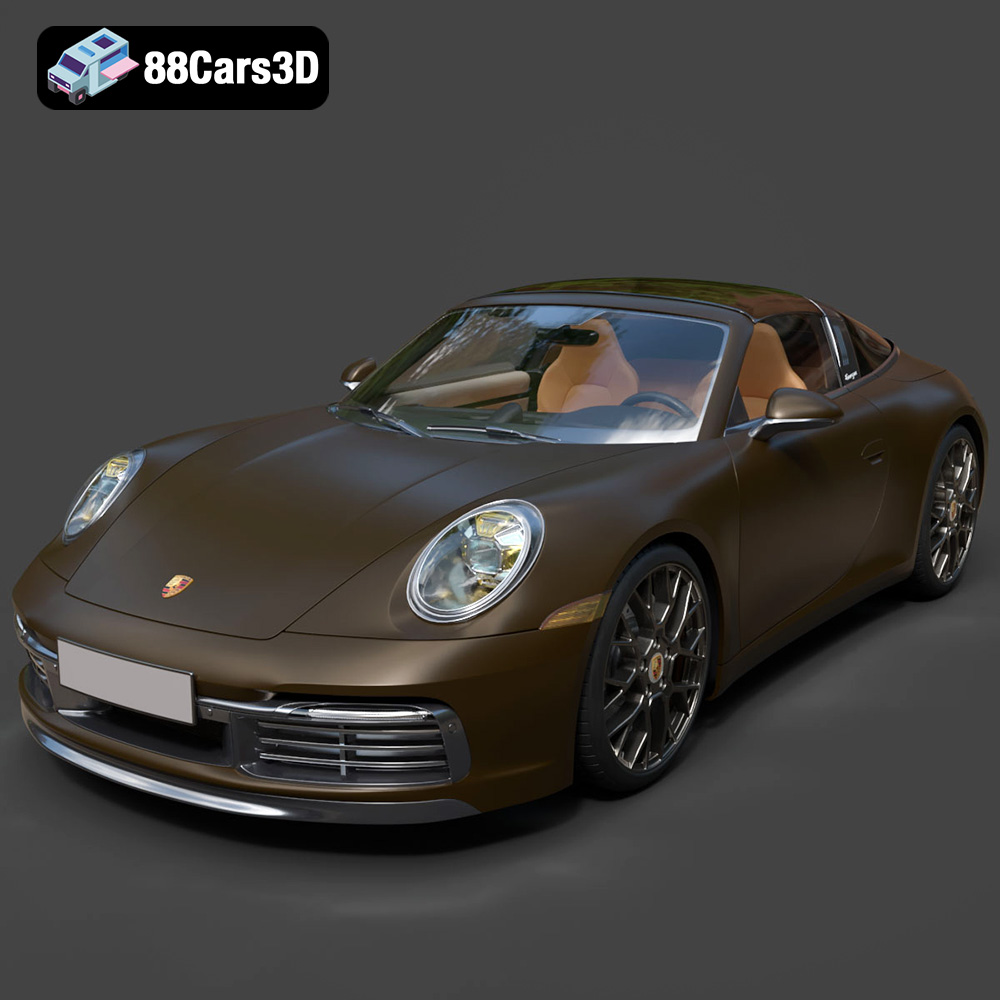
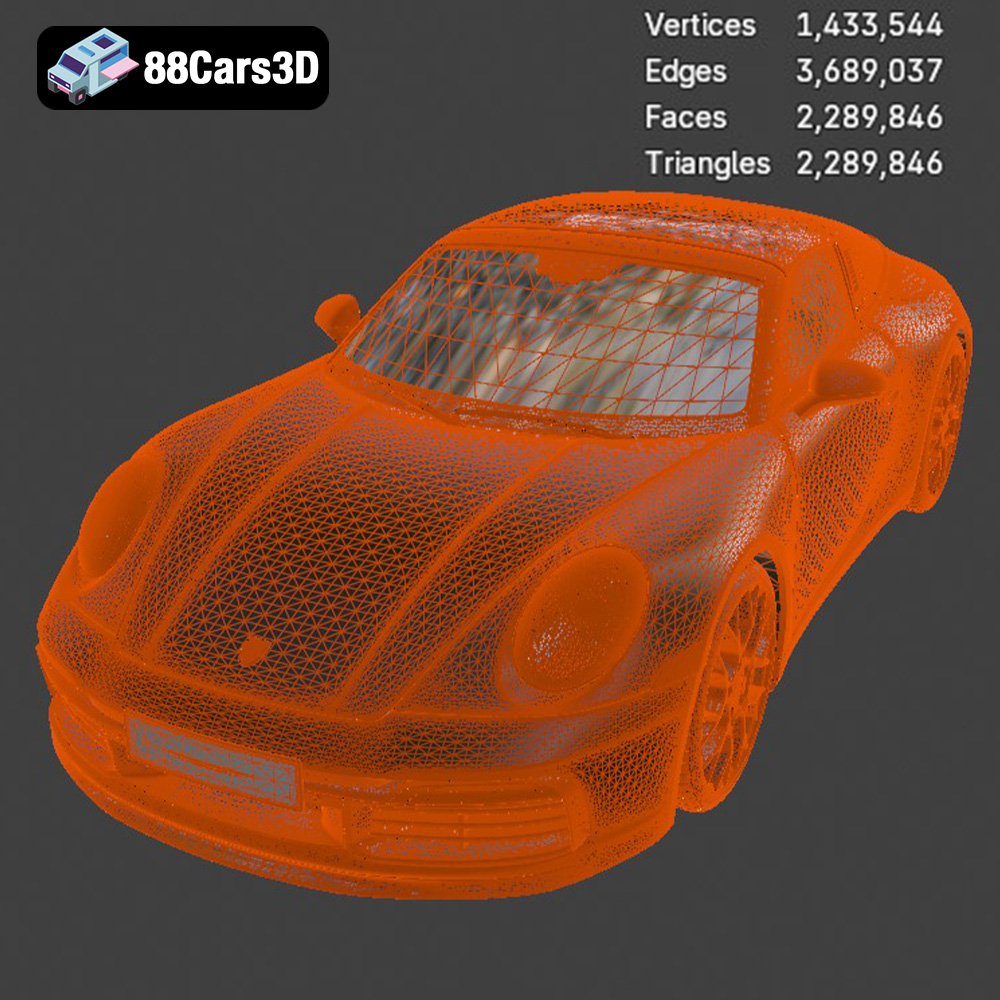
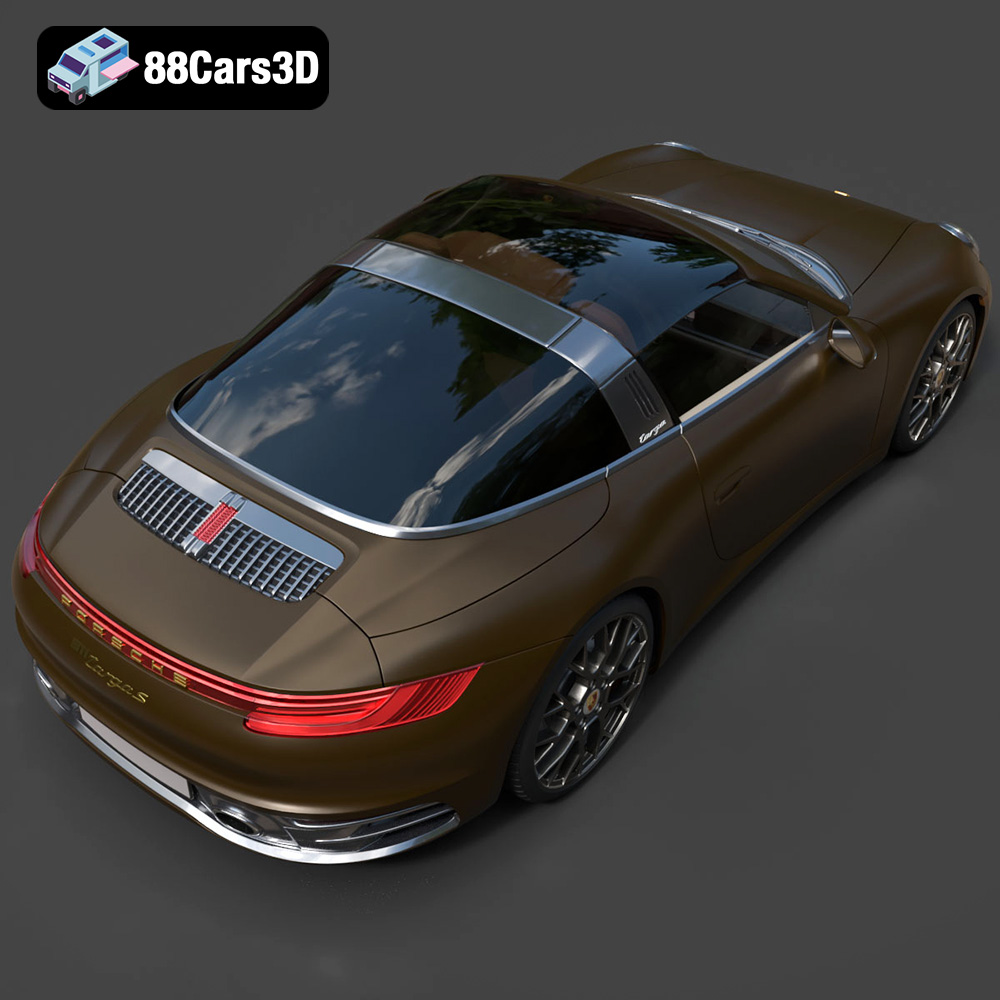
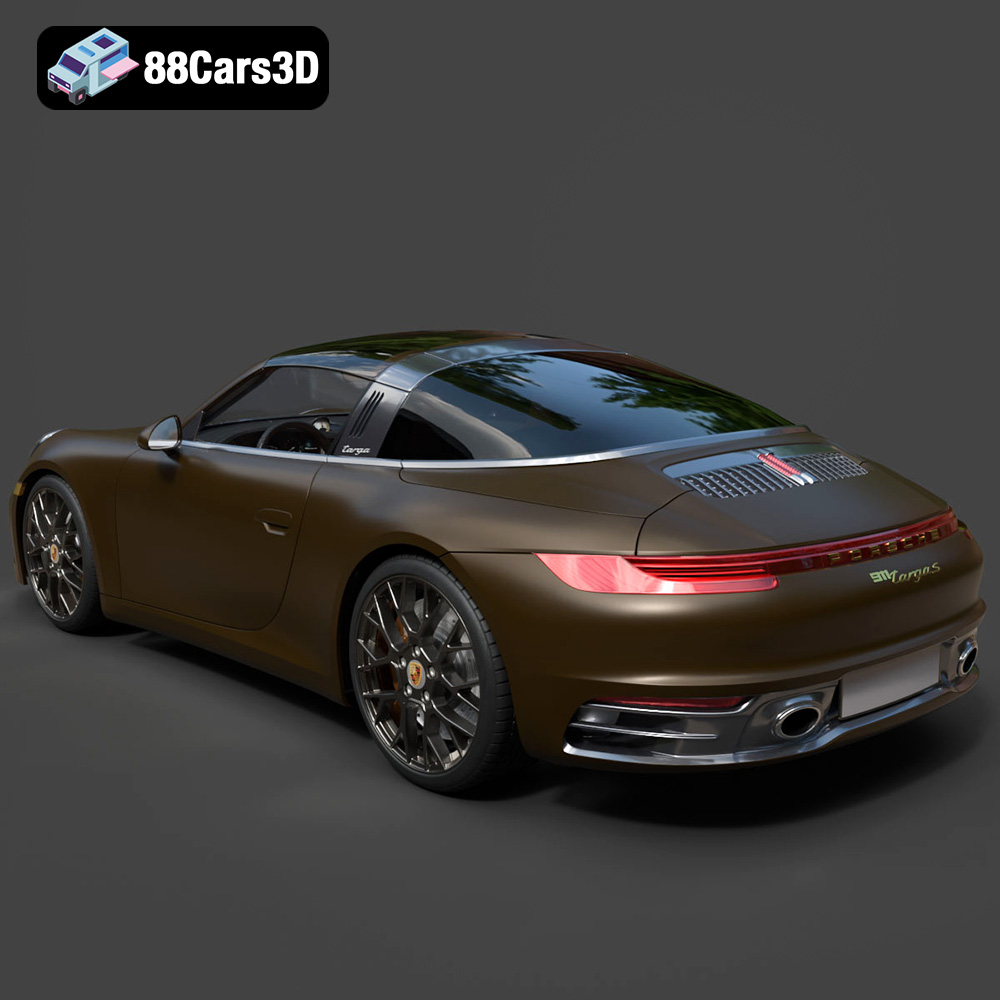
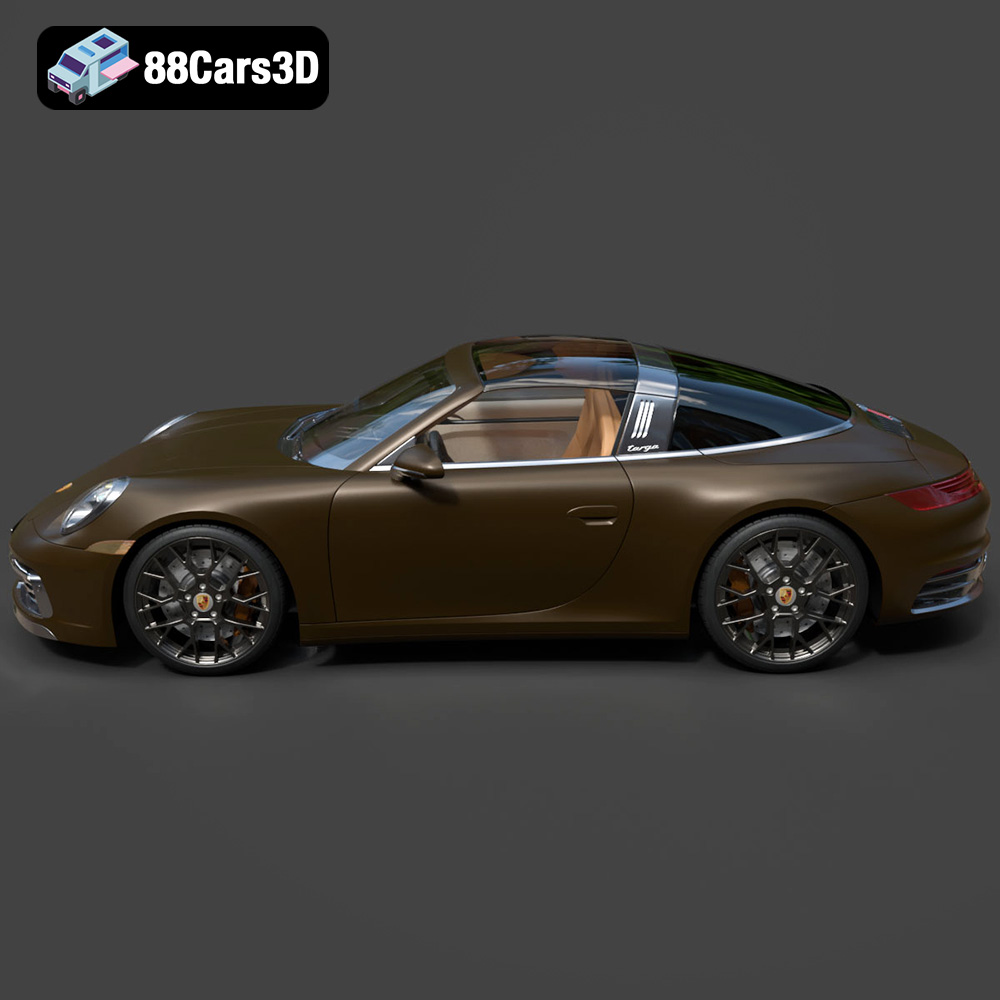
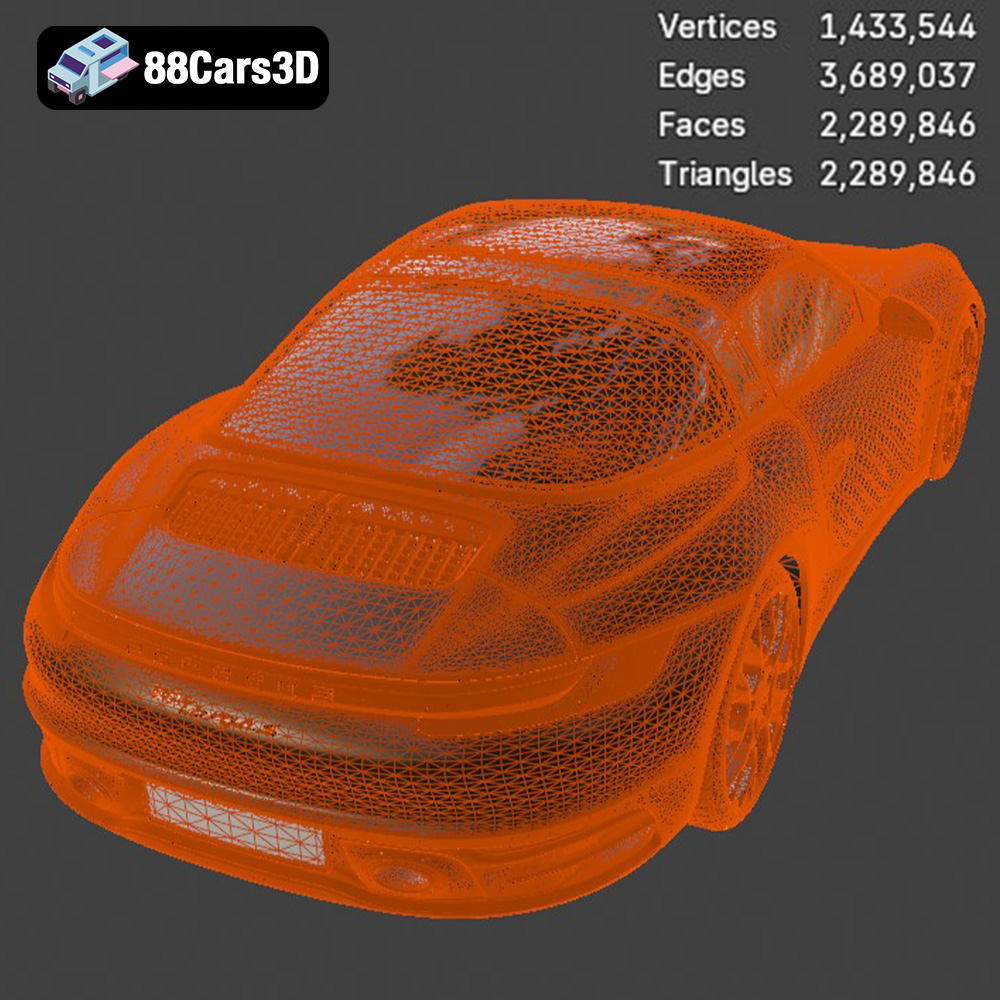
Today, we delve into the intricate details of what makes a premium 3D vehicle model indispensable for serious creators. We will explore the critical technical considerations, practical workflow integrations, and diverse applications that elevate projects from good to extraordinary. As our prime example, we’ll frequently reference the stunning Porsche 911 Targa 2019 3D Model, an exceptional asset available on 88cars3d.com, engineered to meet the most stringent professional standards. This model perfectly embodies the blend of classic styling and modern performance, captured with a breathtaking 2,289,846 triangle count, making it ideal for everything from high-end visualizations to next-gen game development.
Achieving photorealism in digital environments is an art form driven by technical precision. For automotive projects, the stakes are particularly high. Consumers, enthusiasts, and industry professionals alike possess an innate understanding of vehicle aesthetics, making even the slightest inaccuracy immediately apparent. A high-fidelity 3D car model is not just about looking good; it’s about accurately representing form, function, and the intricate engineering that defines a vehicle.
For designers and engineers, a robust 3D model serves as the ultimate bridge between initial concept sketches and a tangible, viewable representation. Before a physical prototype is ever built, accurate 3D models allow for exhaustive design reviews, aerodynamic simulations, and aesthetic evaluations. The ability to manipulate lighting, materials, and environments around a high-precision model like the Porsche 911 Targa 2019 empowers teams to refine every curve and surface, ensuring the final product aligns perfectly with the brand’s vision.
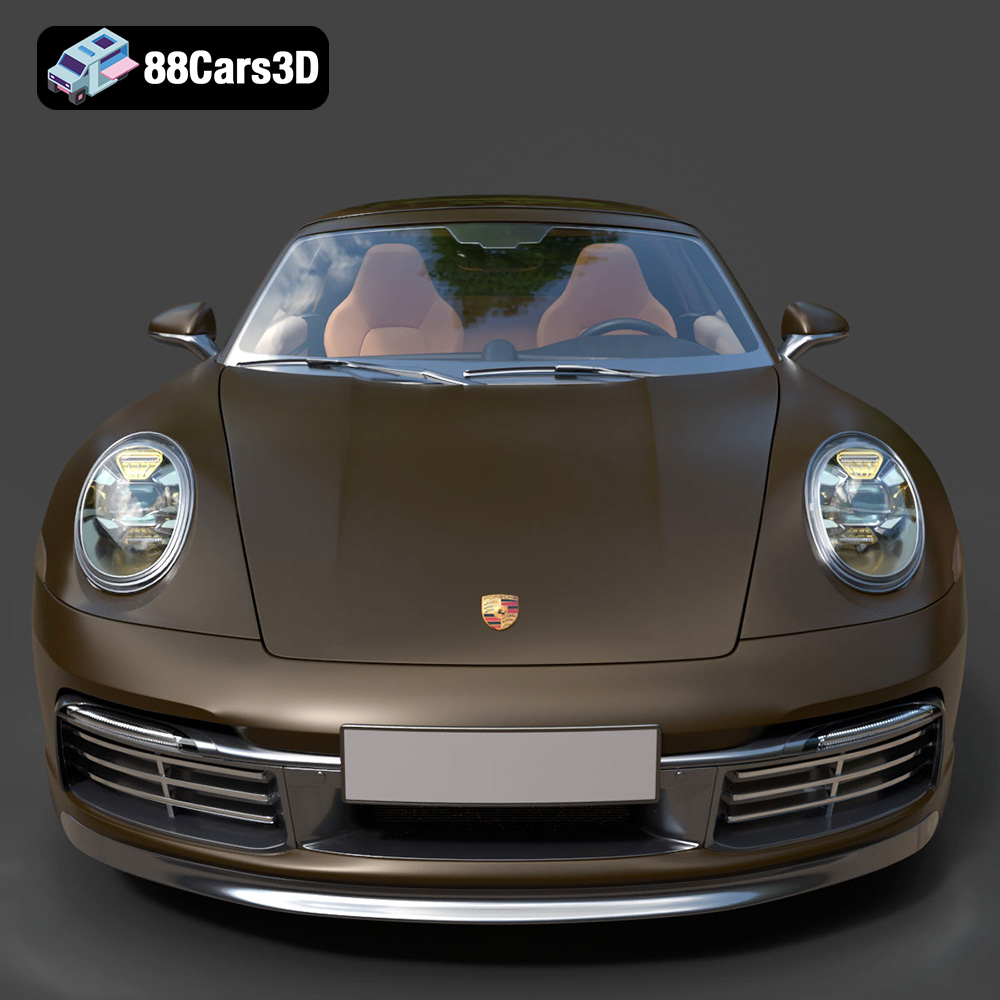
Automotive rendering demands an uncompromising commitment to authenticity. Marketing campaigns, product configurators, and architectural visualizations often feature vehicles as focal points, requiring them to look indistinguishable from their real-world counterparts. This means accurate reflections, realistic material shaders, proper panel gaps, and intricate details like tire tread patterns or brake caliper branding. A model like the Porsche 911 Targa 2019, with its meticulously crafted exterior features including signature LED matrix headlights and a detailed twin-turbo flat-six engine bay layout, provides the necessary raw data for renderers to achieve this level of realism, avoiding the “uncanny valley” effect that can plague lower-quality assets.
In the realm of real-time applications such as video games, virtual reality (VR), and augmented reality (AR), optimized yet detailed 3D car models are paramount. Performance is critical; an overly complex model can cripple frame rates, while a model lacking detail will break immersion. The challenge is striking a delicate balance. The Porsche 911 Targa 2019 3D Model, with its impressive 2,289,846 triangle count, is specifically engineered to be “Game-Ready,” offering exceptional visual fidelity without overburdening real-time engines like Unreal or Unity. This optimization is crucial for open-world games, racing simulators, and interactive virtual showrooms where smooth, high-quality visuals are expected.
The choice of file format for a 3D model is a fundamental technical decision that dictates compatibility, data integrity, and workflow efficiency across different software and platforms. Each format serves specific purposes, embedding various types of data from mesh geometry to materials, animations, and scene information. Understanding their nuances is crucial for any professional working with 3D car models.
The .blend format is Blender’s native file type, offering a comprehensive package for storing entire scene data. This includes not just the mesh geometry but also materials, textures, lighting, cameras, animations, physics simulations, and even custom scripts. For artists primarily working within Blender, this is the most efficient format as it preserves all editable aspects of the project, allowing for maximum flexibility and future modifications. When you download the Porsche 911 Targa 2019 3D Model in .blend format, you’re getting a fully editable Blender scene, ready for immediate use and extensive customization within the software.
.fbx (Filmbox) is arguably the most widely adopted proprietary 3D exchange format, developed by Autodesk. Its strength lies in its ability to store a vast array of 3D data, including geometry, materials, textures, rigging, skinning, and animations, in a format that can be read and written by most major 3D software applications and game engines. For transferring complex animated scenes, especially into Unreal Engine or Unity, .fbx is often the go-to choice due to its robust support for skeletal animation and hierarchy. The Porsche 911 Targa 2019 3D Model in .fbx format is therefore ideal for seamless integration into real-time pipelines and professional animation workflows.
The .obj (Wavefront OBJ) format is a much simpler, universal exchange format primarily focused on geometry. It stores vertex positions, UV coordinates, normals, and face information, often accompanied by a separate .mtl (material) file for basic material properties and texture references. While it doesn’t support rigging or animations, its simplicity and widespread support make it excellent for static mesh transfers between almost any 3D software. It’s a reliable fallback when other formats encounter compatibility issues and is particularly useful for initial asset transfers or when only the pure mesh data is required for sculpting or retopology. The .obj version of the Porsche 911 Targa 2019 offers cross-software compatibility, making it accessible to a broad range of users.
.glb (GL Transmission Format Binary) is the binary version of glTF, an open-standard, royalty-free specification for the efficient transmission and loading of 3D scenes and models by applications. It’s designed specifically for web-based 3D, augmented reality (AR), and virtual reality (VR) experiences. A .glb file encapsulates geometry, materials, textures, animations, and scene graph information into a single, compact binary file, making it incredibly efficient for streaming and display in browsers or mobile AR/VR environments. The Porsche 911 Targa 2019 3D Model in .glb format is therefore optimized for interactive virtual showrooms, configurators, and mobile AR applications where quick loading and broad platform compatibility are essential.
.stl (Stereolithography) is the de facto standard file format for 3D printing and computer-aided manufacturing. It represents a 3D model as a series of connected triangles, describing only the surface geometry of an object without color, texture, or other CAD attributes. While simple, its ubiquity in the 3D printing world is unmatched. For hobbyists or professionals looking to convert the digital Porsche 911 Targa 2019 into a physical model, the .stl format is precisely what’s needed. The provided model is convertible to .stl, with recommended print settings for various scales and details, highlighting its versatility.
The .ply (Polygon File Format) is another format used to store 3D data, particularly geometry data from 3D scanners. It can store a wide range of properties for each vertex, face, and edge, including color, transparency, surface normals, and texture coordinates. While less common for general 3D asset exchange than FBX or OBJ, it’s invaluable for applications requiring precise mesh data for CAD, reverse engineering, or detailed geometric analysis. The inclusion of .ply for the Porsche 911 Targa 2019 indicates an attention to precision, potentially useful for specialized engineering or research applications.
The .unreal format, or more accurately, assets packaged specifically for Unreal Engine, are pre-optimized and configured for Epic Games’ powerful real-time environment. These assets are often imported, textured, and set up within the engine, then saved as native Unreal assets (.uasset files). This means they are engine-ready, with proper material instances, collision meshes, LODs (Levels of Detail), and blueprint configurations already applied. Receiving the Porsche 911 Targa 2019 3D Model as an .unreal package significantly streamlines integration, allowing developers to drop it directly into their projects with minimal setup for immediate deployment in high-fidelity racing simulations or virtual production scenarios.
The .max format is Autodesk 3ds Max’s native scene file. Similar to Blender’s .blend, it saves the entire state of a 3ds Max project, including geometry, modifiers, materials, textures, lighting, cameras, animation, and rendering settings. For professionals operating within a 3ds Max pipeline, this format offers the most control and flexibility for animation, complex rendering setups (with V-Ray or Corona), and detailed scene composition. The availability of the Porsche 911 Targa 2019 3D Model in .max format ensures that users of this industry-standard software can leverage its full capabilities for advanced automotive rendering and visualization projects.
The true value of a premium 3D model lies in its meticulous construction and adherence to real-world specifications. The Porsche 911 Targa 2019 3D Model from 88cars3d.com exemplifies this commitment, offering a level of detail and optimization that sets it apart.
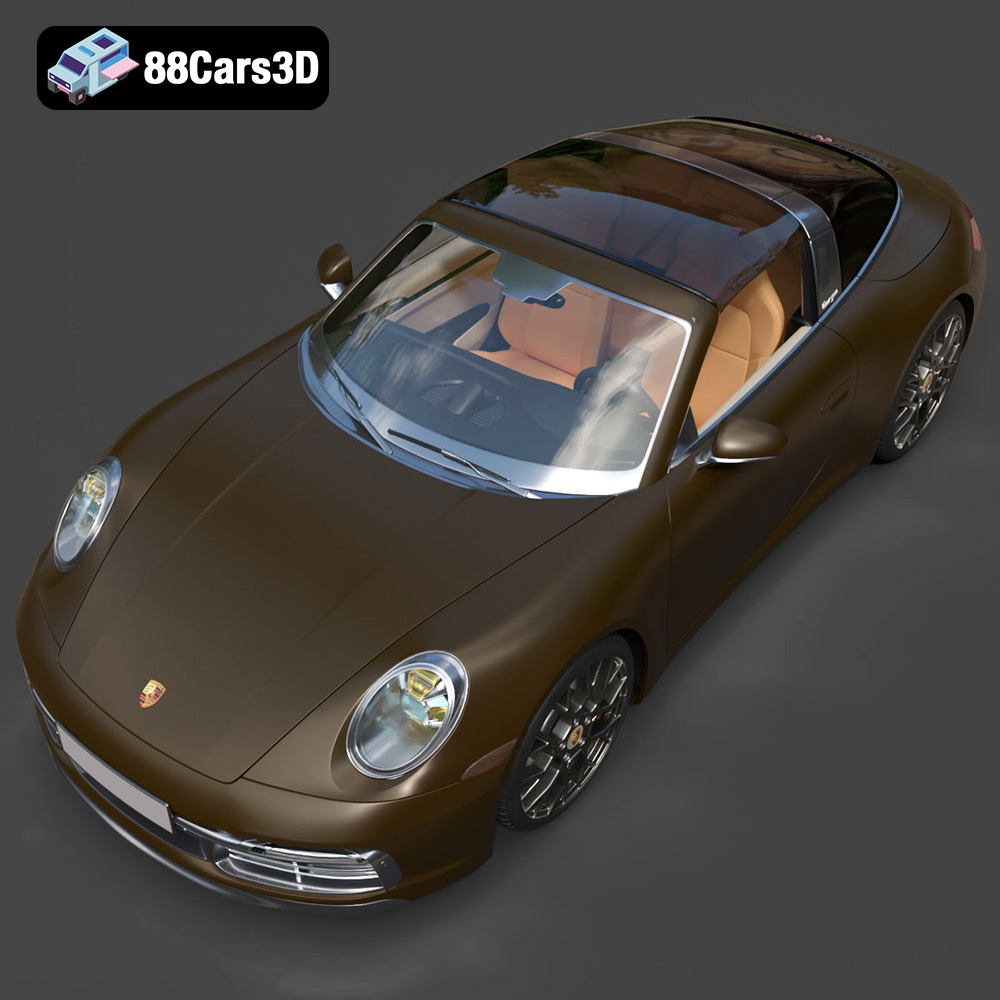
The exterior of this 3D Porsche 911 Targa is a masterclass in accurate digital reproduction. Every curve, panel line, and distinctive feature of the iconic 2019 model has been precisely replicated. The signature silver roll bar, the wraparound rear window, and the sleek aerodynamic curves are not merely approximations but accurate representations. Critical elements like the detailed twin-turbo flat-six engine bay layout, the aggressive dual-exhaust system with integrated rear aerodynamic diffuser, and the high-resolution alloy wheels with detailed brake calipers and cross-drilled rotors all contribute to an unparalleled sense of realism. Even the authentic suspension stance and aggressive wheel fitment are carefully considered, crucial for realistic ground contact and visual weight.
The attention to detail extends seamlessly into the cockpit. The interior of the Porsche 911 Targa 2019 3D Model is designed to immerse the viewer or player. Luxurious sport seats feature accurate stitching and premium leather bolster details, while the detailed steering wheel includes integrated drive mode selectors and paddle shifters. The high-fidelity instrument cluster, with its central analog tachometer and dual digital displays, perfectly mimics the real car. Furthermore, the precise center console with the PDK shifter, racing pedals, and authentic trim accents completes an interior that is not only visually stunning but also optimized geometry-wise for first-person POV in gaming and VR, ensuring a truly immersive experience.
Beyond visual appeal, the technical specifications underpin the model’s professional utility. With a remarkable 2,289,846 triangle count, the model strikes an optimal balance, delivering breathtaking visual fidelity suitable for cinematic rendering without becoming overly cumbersome for real-time applications. This “Game-Ready” optimization is a significant advantage. Crucially, the model adheres to real-world scale accuracy, based on the actual vehicle chassis, ensuring correct proportions when integrated into larger scenes or environments. Proper pivot setup for steering, wheel rotation, and suspension travel is also implemented, which is vital for animation, interactive simulations, and dynamic game physics, making it a truly versatile asset.
The versatility of the Porsche 911 Targa 2019 3D Model, available in multiple formats, ensures it can be seamlessly integrated into a wide range of professional 3D pipelines.
For architectural visualization, advertising, or cinematic production, 3ds Max combined with renderers like V-Ray or Corona remains a powerhouse. Using the .max format, artists can directly open the Porsche 911 Targa 2019 3D Model, benefiting from the full scene setup, potential material definitions, and object hierarchy. From there, it’s a matter of applying advanced physically based rendering (PBR) materials, setting up complex lighting environments (HDRI, studio lights), and fine-tuning camera angles to achieve photorealistic results. The model’s high triangle count and detailed geometry mean that even extreme close-ups on features like the LED headlights or alloy wheels will hold up under intense scrutiny, delivering the polished look clients expect.
In game development and virtual production, Unreal Engine is a dominant force. The availability of the Porsche 911 Targa 2019 as an .fbx or .unreal engine-ready asset is a game-changer. Developers can import the .fbx with all its embedded data, including mesh, materials, and potentially animation rigging, into Unreal Engine. Alternatively, the .unreal specific asset would offer even faster integration, often coming pre-configured with appropriate materials, LODs for performance scaling, and collision meshes. This allows for immediate use in racing titles, open-world environments, or even real-time configurators, leveraging Unreal’s advanced rendering capabilities and robust blueprint system for interactive elements like opening doors or controlling suspension. The optimized polycount ensures smooth framerates even in demanding scenarios.
Blender’s open-source nature and powerful toolset make it a favorite among independent artists and studios. The .blend file for the Porsche 911 Targa 2019 3D Model provides a fully editable scene, enabling complete creative control. Artists can easily customize body colors, modify tire textures, or adjust material finishes (matte, gloss, metallic) to fit specific project aesthetics. The separate wheels, suspension, steering components, and Targa roof mechanisms are set up for animation, allowing for dynamic sequences like driving shots, transforming the roof, or showcasing detailed suspension travel. Blender’s robust animation tools, combined with its Cycles or Eevee renderers, make it an excellent choice for cinematic sequences, product showcases, or personal portfolio pieces.
The utility of a high-quality 3D car model extends far beyond traditional screen-based rendering and gaming. Emerging technologies like AR/VR and additive manufacturing are finding new and exciting ways to leverage these assets.
For immersive AR/VR experiences, the Porsche 911 Targa 2019 3D Model is exceptionally well-suited. Its optimized geometry and real-world scale make it perfect for virtual showrooms where potential buyers can explore the car in a 1:1 environment, inspecting every detail of the exterior and interior. Using formats like .glb, the model can be seamlessly integrated into web-based AR configurators, allowing users to place the virtual car in their driveway or garage via a smartphone. In a VR setting, the detailed cockpit features, including the high-fidelity instrument cluster and accurate sport seats, offer an unparalleled sense of presence, enabling virtual test drives or interactive training simulations.
The ability to convert the digital model into a physical object via 3D printing opens up unique possibilities for display, prototyping, and educational purposes. While the native model is highly detailed, it can be converted to the .stl format for 3D printing. The product description for the Porsche 911 Targa 2019 3D Model even provides specific recommendations for 3D print settings, including recommended scales (1:12, 1:18, 1:24), layer height, wall thickness, and infill. Resin printing is specifically recommended for capturing the fine details, and guidance on supports and print orientation ensures structural integrity. Post-processing steps like sanding, primer, and authentic factory colors with metallic finishes can transform a raw print into a stunning miniature replica, showcasing the exquisite design of the Targa in a tangible form.
A premium 3D asset should not only be high quality out-of-the-box but also offer flexibility for customization and long-term utility. The Porsche 911 Targa 2019 3D Model excels in this regard, ensuring maximum return on investment for professionals.
The ability to customize is critical for any project. This 3D model allows for extensive modifications to suit diverse creative briefs. Artists can easily change body and tank colors to any desired hue, including authentic factory colors or custom metallic and matte finishes. This adaptability is invaluable for creating varied marketing assets, exploring different design aesthetics, or matching a vehicle to a specific brand identity within a visualization. Furthermore, modifying tire textures (e.g., swapping street variants for off-road options) and adapting lighting for different environments provides complete creative freedom, ensuring the model can fit seamlessly into any scene or mood.
The digital landscape is constantly evolving, with new rendering techniques, engine updates, and visualization demands emerging regularly. An asset like the Porsche 911 Targa 2019 3D Model, built with structured topology and offering broad file format compatibility, is inherently future-proof. Its clean geometry and organized structure make it easier to adapt to new technologies, create additional LODs for mobile platforms, or re-texture for next-generation rendering pipelines. This longevity ensures that the investment in a high-quality asset continues to pay dividends across multiple projects and over time, making it a reliable cornerstone for any professional’s 3D asset library, much like other quality 3D car models found on 88cars3d.com.
The pursuit of digital realism in automotive design, rendering, and game development hinges on the quality of underlying 3D assets. A truly professional 3D car model is more than just a pretty mesh; it is a meticulously engineered data package, optimized for performance, accuracy, and versatility across diverse applications and software environments. Understanding the technical specifications, file formats, and workflow integrations is essential for harnessing the full potential of these powerful tools.
The Porsche 911 Targa 2019 3D Model stands as an exemplary benchmark in this regard. Its impressive detail, optimized polycount, real-world accuracy, and comprehensive file format support (from .blend and .max for editable scenes, to .fbx and .unreal for game engines, and .glb for web/AR/VR, even .stl for 3D printing) make it an invaluable asset for any professional. Whether you’re crafting cinematic automotive rendering showcases, developing cutting-edge game assets, or building immersive AR/VR experiences, this model provides the foundation for unparalleled visual fidelity and seamless integration. For those seeking premium 3D car models that meet the highest industry standards, resources like 88cars3d.com offer a curated selection designed to elevate your projects.
Experience the perfect blend of classic styling and modern performance with the 2019 Porsche 911 Targa. Renowned for its iconic silver roll bar, wraparound rear window, and unmistakable 911 silhouette, this model captures the essence of Porsche’s legendary open-top grand tourer. It features meticulously crafted details including the signature LED matrix headlights, distinctive rear light strip, and the sleek aerodynamic curves that define the modern athletic stance. This premium 3D model boasts an impressive 2,289,846 triangle count, delivering breathtaking visual fidelity and uncompromising detail. Engineered for top-tier rendering while maintaining structured topology, it is perfect for high-end visualizations, virtual production, AR/VR experiences, and next-gen game development where absolute realism is paramount.
$37.50
.2019
.blend
.fbx
.glb
.max
.obj
.ply
.porsche
.rendering
.sports car
.stl
.unreal
911-targa
car-3d-model
game asset
game-ready
luxury car
optimized
VR/AR