Get 20% OFF All Premium 3D & STL Models!

The automotive industry has always been at the forefront of design and engineering, constantly pushing boundaries. In the digital realm, this pursuit of perfection translates into incredibly detailed and functional 3D models that serve a myriad of purposes – from breathtaking marketing renders and immersive virtual reality experiences to high-performance game assets and precise 3D prints. For professionals in these fields, the quality of a 3D car model isn’t just a luxury; it’s a critical component of success.
At 88cars3d.com, we understand this demand for excellence. We specialize in providing premium 3D vehicle assets that meet the rigorous standards of professional production pipelines. One prime example of this dedication to detail and versatility is the **Porsche Taycan 4S Cross Turismo 2021 3D Model**. This exquisite model embodies the perfect synthesis of electric performance and rugged versatility, meticulously translated into a digital format that empowers artists and developers to bring their visions to life with unparalleled realism. It’s more than just a model; it’s a foundation for countless creative applications, engineered to slot seamlessly into various technical workflows, from high-fidelity rendering to real-time engine integration.
Navigating the landscape of 3D software and engines requires a fundamental understanding of the various file formats used to store and exchange 3D data. Each format has its strengths, ideal use cases, and specific technical considerations. Selecting the correct format can significantly streamline your workflow and ensure optimal performance and fidelity.
The .blend file format is native to Blender, the powerful open-source 3D creation suite. A .blend file encapsulates an entire Blender project, including the 3D model geometry, materials, textures, lighting setups, camera positions, animations, physics simulations, and even custom scripts. For artists deeply integrated into the Blender ecosystem, this format offers maximum editability and flexibility. When you download a .blend file, you’re not just getting a model; you’re receiving a fully set-up scene that can be immediately opened, dissected, modified, and rendered within Blender without any loss of data. This makes it ideal for iterative design, detailed rigging, or scene composition where all elements are intended to remain editable within a single environment.
The .fbx (Filmbox) format, originally developed by Kaydara and now owned by Autodesk, has become one of the most widely adopted interchange formats in the 3D industry. Its strength lies in its ability to store not only geometry and materials but also complex data like animation, rigging, cameras, and lights in a single file. This makes it the go-to format for transferring assets between different 3D applications such as 3ds Max, Maya, Blender, and directly into game engines like Unreal Engine and Unity. When working with the Porsche Taycan 4S Cross Turismo 2021 3D model, the .fbx variant ensures that all pivot points for wheels, suspension, and steering, along with potential animation data, are preserved, making it truly “game-ready” for real-time pipelines.
The .obj (Wavefront Object) format is a foundational, universal 3D data format renowned for its broad compatibility. Almost every 3D software application can import and export .obj files. It primarily stores geometry (vertices, faces, normals, UV coordinates) and can reference external .mtl (Material Template Library) files for basic material properties. While it doesn’t support advanced features like animation or rigging, its simplicity and widespread adoption make it excellent for static mesh exchange, archival purposes, or when you need a clean mesh for sculpting or retopology. For scenarios where the primary concern is the precise 3D geometry of a model like the Porsche Taycan, .obj provides a reliable, universally readable option.
.glb (GLB format, often referred to as GL Transmission Format Binary) is the binary version of glTF (GL Transmission Format). It’s specifically designed for efficient transmission and loading of 3D scenes and models into web browsers, augmented reality (AR), and virtual reality (VR) applications. A .glb file packages geometry, materials, textures, and even animation into a single, compact file, making it incredibly easy to integrate into real-time web experiences. Its focus on performance and minimal file size makes it perfect for displaying the Porsche Taycan 4S Cross Turismo 2021 in online configurators, mobile AR apps, or interactive showrooms without sacrificing visual quality.
The .stl (STereoLithography) format is the standard file type for 3D printing. It describes only the surface geometry of a 3D object using a collection of interconnected triangles. It contains no color, texture, or material information, focusing solely on the shape required for fabrication. While not suitable for rendering or animation directly, its triangular mesh structure is precisely what 3D printers understand. For hobbyists or professionals looking to physically manifest the Porsche Taycan 4S Cross Turismo 2021, the .stl version provides the necessary data for slicing software to prepare the model for additive manufacturing, allowing for detailed physical replicas.
The .ply (Polygon File Format) is another format for storing 3D data, particularly useful for scanned data or when more advanced mesh properties are required than .obj offers. It can store a wider range of information, including color per vertex, normal vectors, and even transparency, making it suitable for applications that demand high precision in vertex-level data. While less common for general asset exchange than .fbx or .obj, it is valuable in scientific visualization, CAD, and certain analytical contexts where fine-grained mesh data is paramount. For the incredibly detailed geometry of a modern vehicle, the .ply format can preserve nuances sometimes lost in simpler formats.
While not a direct file extension like .fbx or .obj, the term .unreal refers to an asset specifically prepared and optimized for direct import into Unreal Engine projects. This often means the .fbx file has been exported with Unreal-specific settings, potentially including LODs (Levels of Detail), collision meshes, and material slots already configured to integrate efficiently with Unreal Engine’s PBR (Physically Based Rendering) workflow. An “Unreal-ready” asset like the Porsche Taycan 4S Cross Turismo 2021 model provided by 88cars3d.com ensures that it adheres to best practices for real-time performance, allowing developers to drop it into their scenes with minimal setup and immediate visual fidelity.
Similar to .blend for Blender, the .max file format is native to Autodesk 3ds Max, a leading software for 3D modeling, animation, rendering, and visualization. A .max file contains the complete scene data, including geometry, modifiers, materials, textures, lighting, cameras, animation timelines, and render settings. For artists and studios utilizing 3ds Max in their pipeline, this format offers the highest degree of editability and preservation of complex scene setups. The inclusion of a .max file for the Porsche Taycan 4S Cross Turismo 2021 model means that users of 3ds Max can leverage all its powerful features for custom animations, advanced rendering with engines like V-Ray or Corona, and intricate scene composition, making it invaluable for high-end automotive visualization and advertising.
The Porsche Taycan 4S Cross Turismo 2021 is a vehicle that commands attention, both on the road and in the digital domain. Translating such a sophisticated piece of automotive engineering into a high-fidelity 3D model requires immense skill and attention to detail. This model, available on 88cars3d.com, is a testament to what’s possible when passion meets precision, offering a digital asset that truly captures the essence of its real-world counterpart.
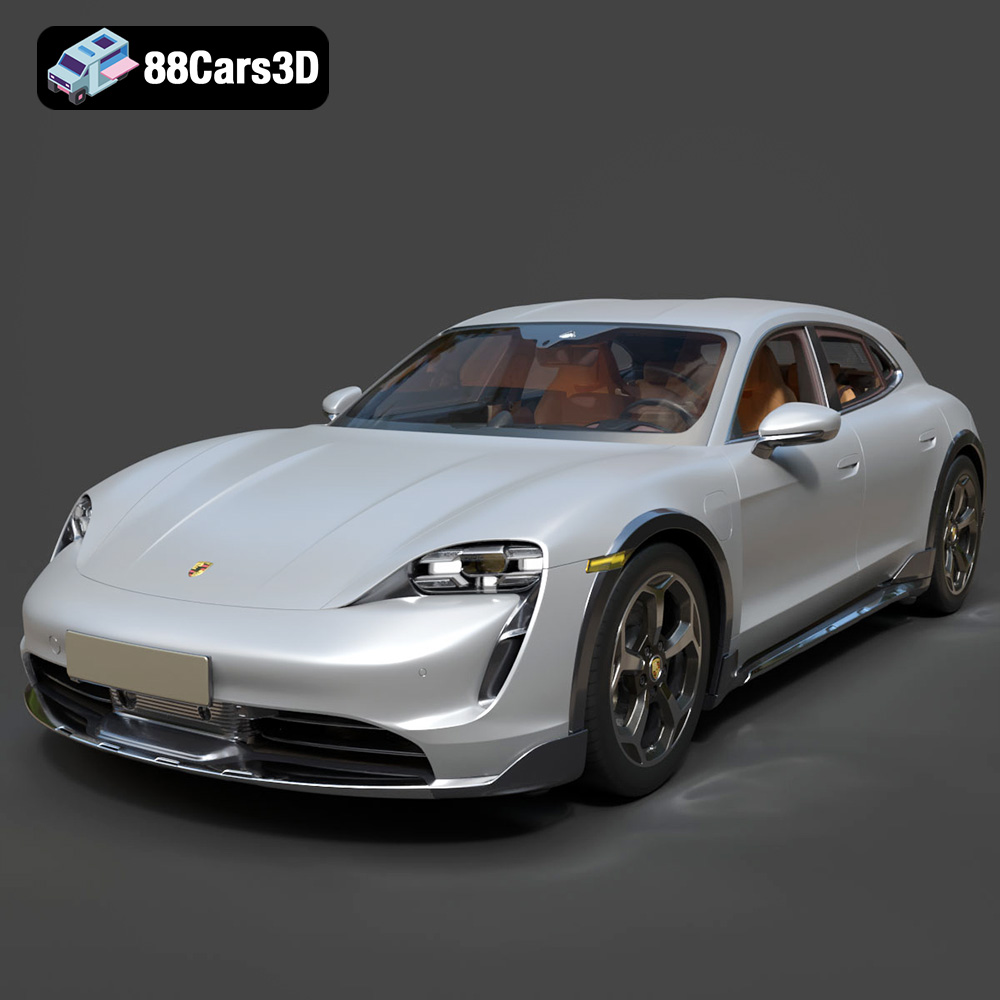
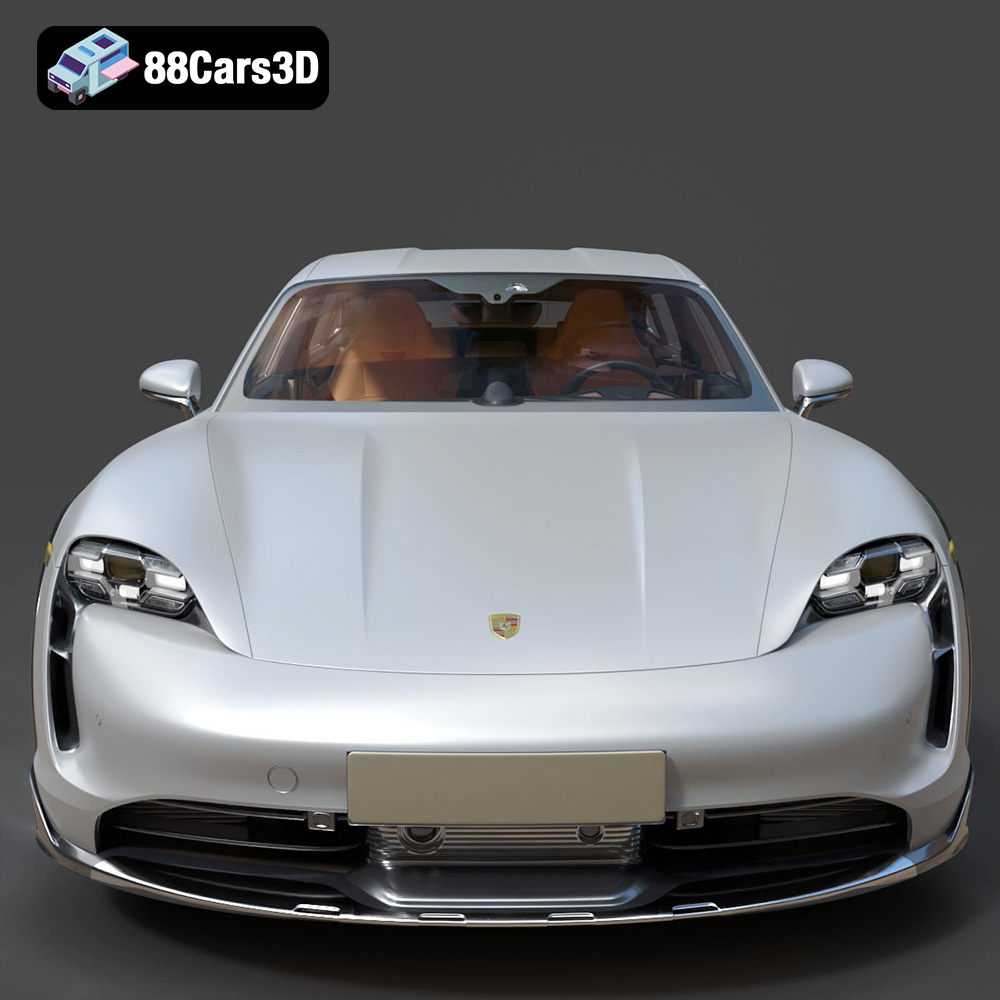
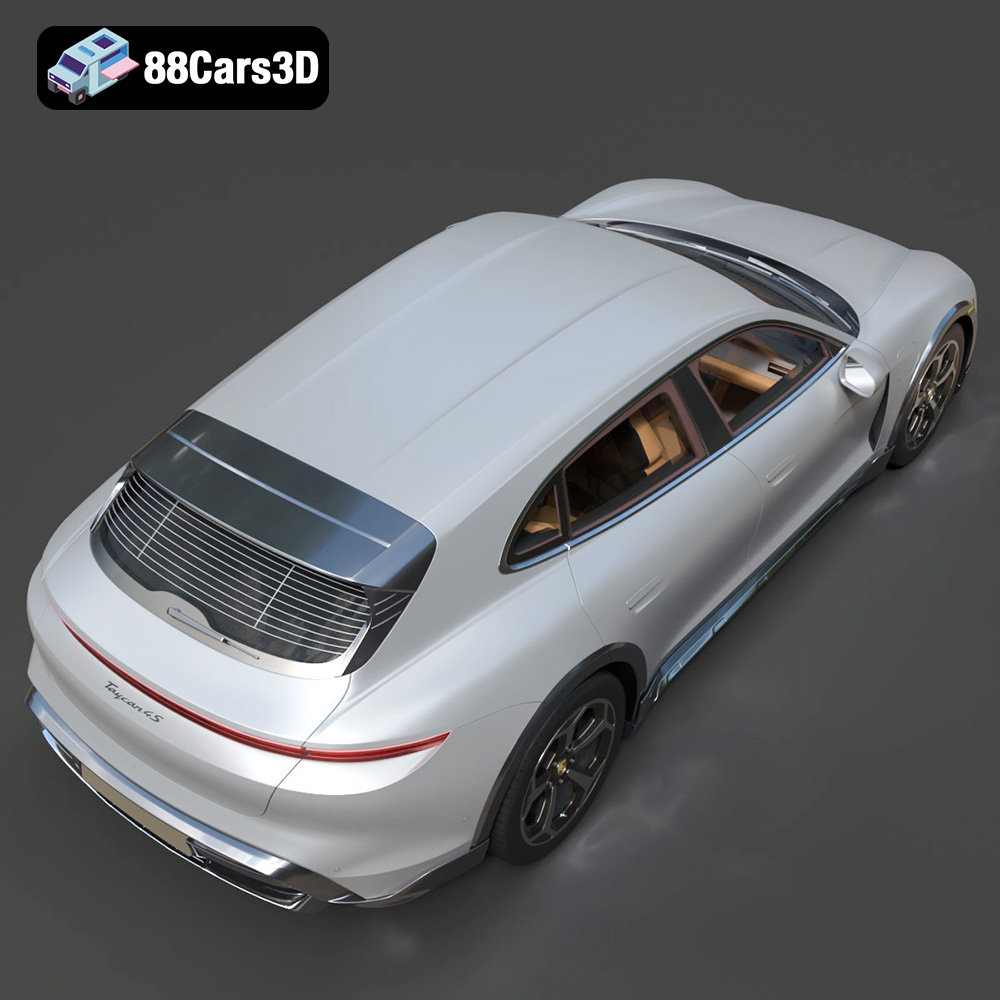
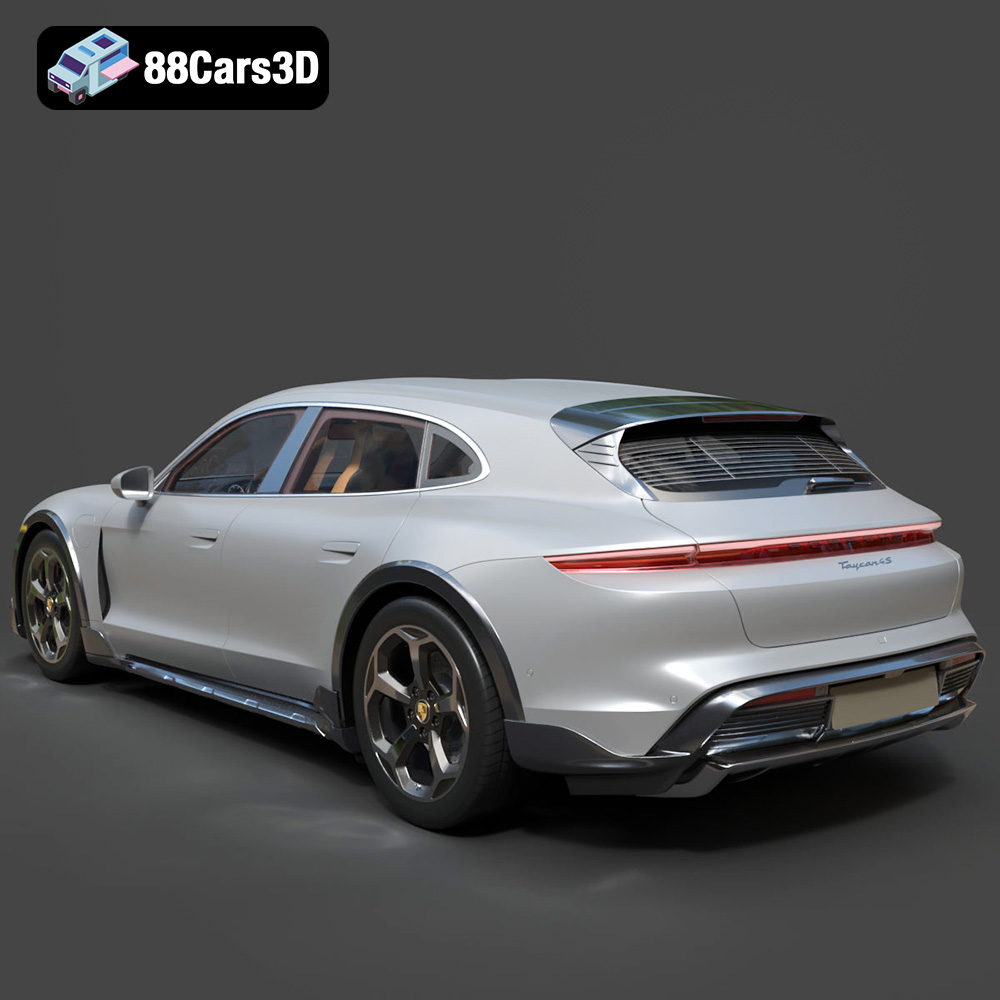
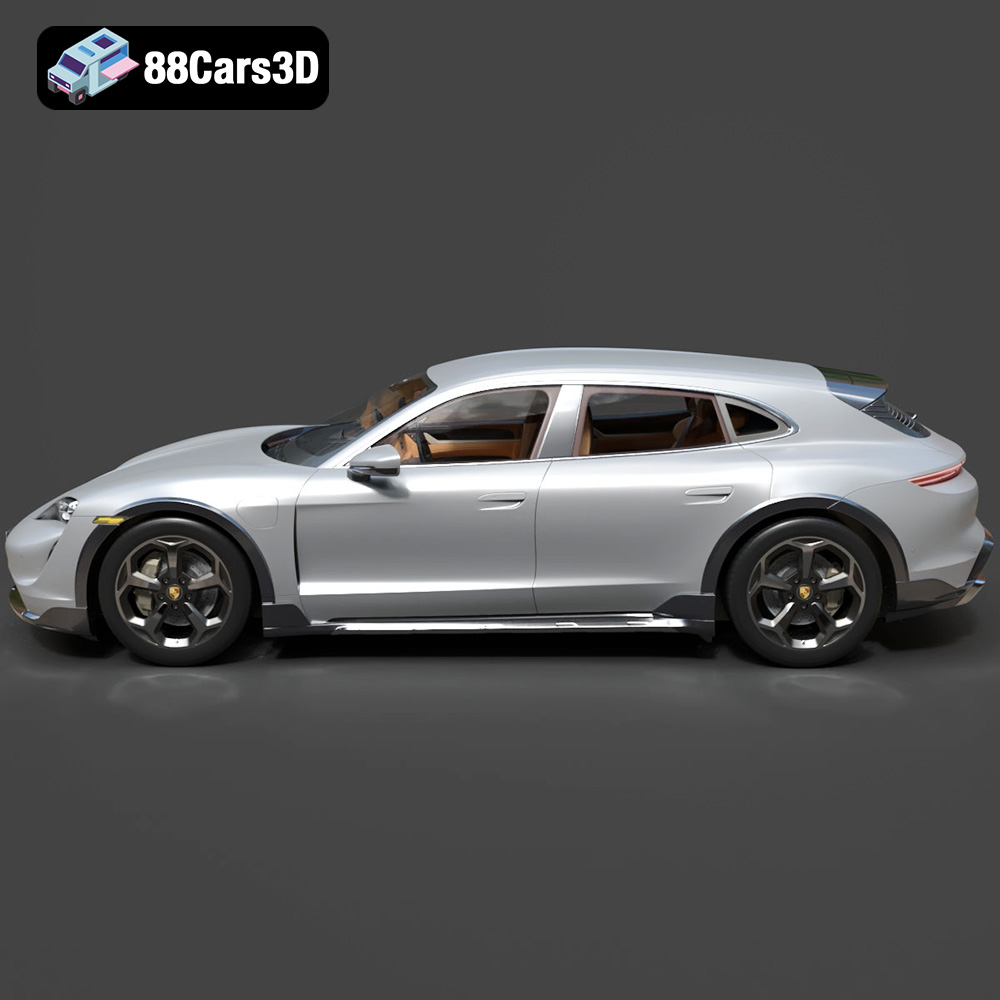
The distinctive shooting brake silhouette of the Taycan 4S Cross Turismo, with its increased headroom and cargo space, is faithfully reproduced in this 3D model. Every curve, every panel gap, and every design element has been meticulously sculpted. From the signature four-point LED matrix headlights that define Porsche’s modern aesthetic to the protective off-road design elements on the wheel arches and the muscular rear light strip, the model’s exterior is a perfect digital twin. The absence of traditional exhaust systems, a hallmark of its EV nature, is contrasted by a sleek, aerodynamically optimized rear diffuser and striking aero-style alloy wheels, all rendered with exceptional accuracy. This level of detail ensures that whether the model is placed in a dramatic studio render or a sprawling open-world game, its visual integrity remains impeccable.
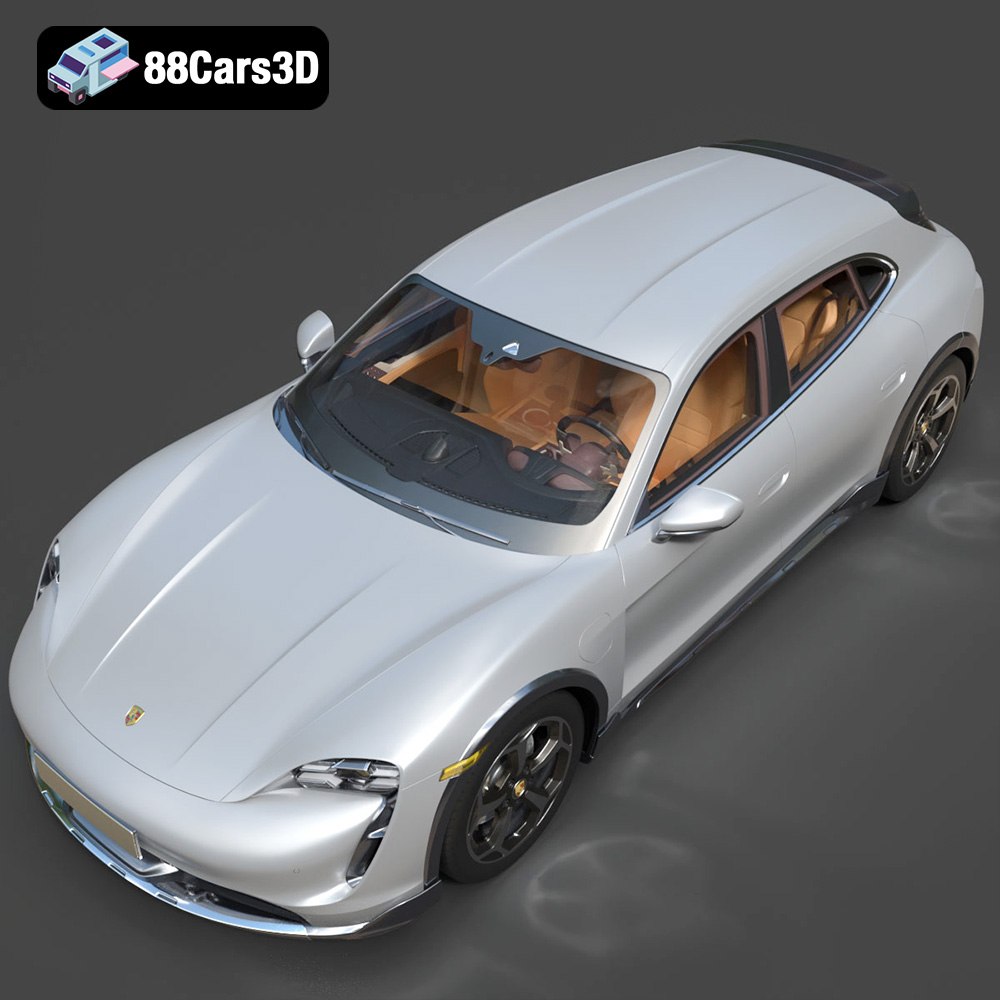
A car’s interior is just as crucial as its exterior, especially for applications like virtual showrooms, AR experiences, or first-person game perspectives. The Porsche Taycan 4S Cross Turismo 2021 3D model doesn’t disappoint, featuring a cockpit that is as luxurious and detailed as the real thing. Luxurious sport seats with precise stitching, an authentic contour, a multifunction GT sports steering wheel with a detailed drive mode selector, and the iconic curved digital instrument cluster are all present. The expansive passenger infotainment displays and the minimalist center console layout with its climate control screen and drive selector are also accurately modeled. This comprehensive interior ensures that the model holds up to close-up scrutiny, making it perfect for immersive experiences where users might explore the cabin interactively.
Beyond visual fidelity, a professional 3D car model must also be engineered for functional accuracy. The Taycan model boasts real-world scale, which is crucial for architectural visualizations, realistic simulations, and seamless integration into various digital environments. Crucially, the model includes separate wheels, suspension, and steering components, each with proper pivot setups. This thoughtful segmentation and pivot placement mean the model is animation-ready right out of the box, allowing for realistic steering, wheel rotation, and suspension travel without complex rigging from scratch. The adaptive air suspension details, calibrated for the Cross Turismo ride height, further enhance its authenticity, providing a robust foundation for dynamic visualizations.
High-quality 3D car models like the Porsche Taycan 4S Cross Turismo 2021 are indispensable tools across a spectrum of digital applications. Their versatility stems from their detailed construction and the flexibility of the provided file formats, allowing them to excel in both pre-rendered cinematic sequences and interactive real-time environments.
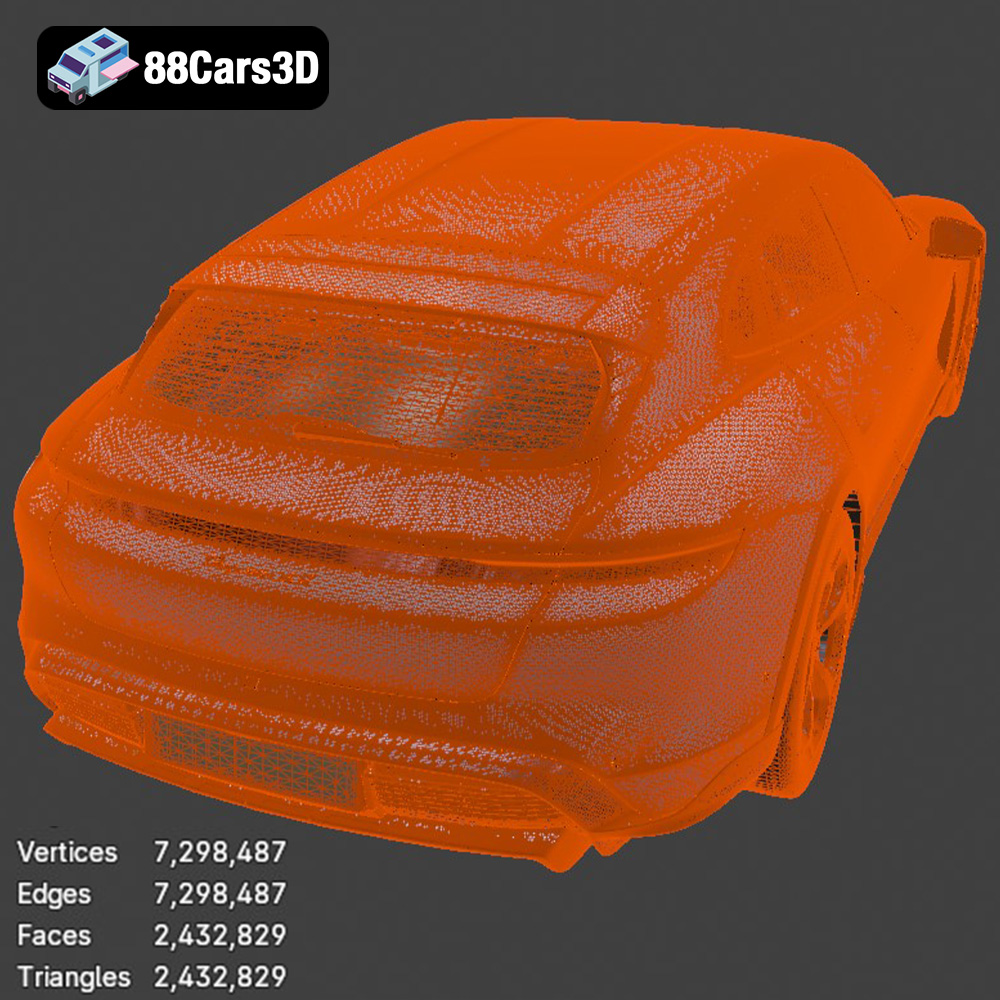
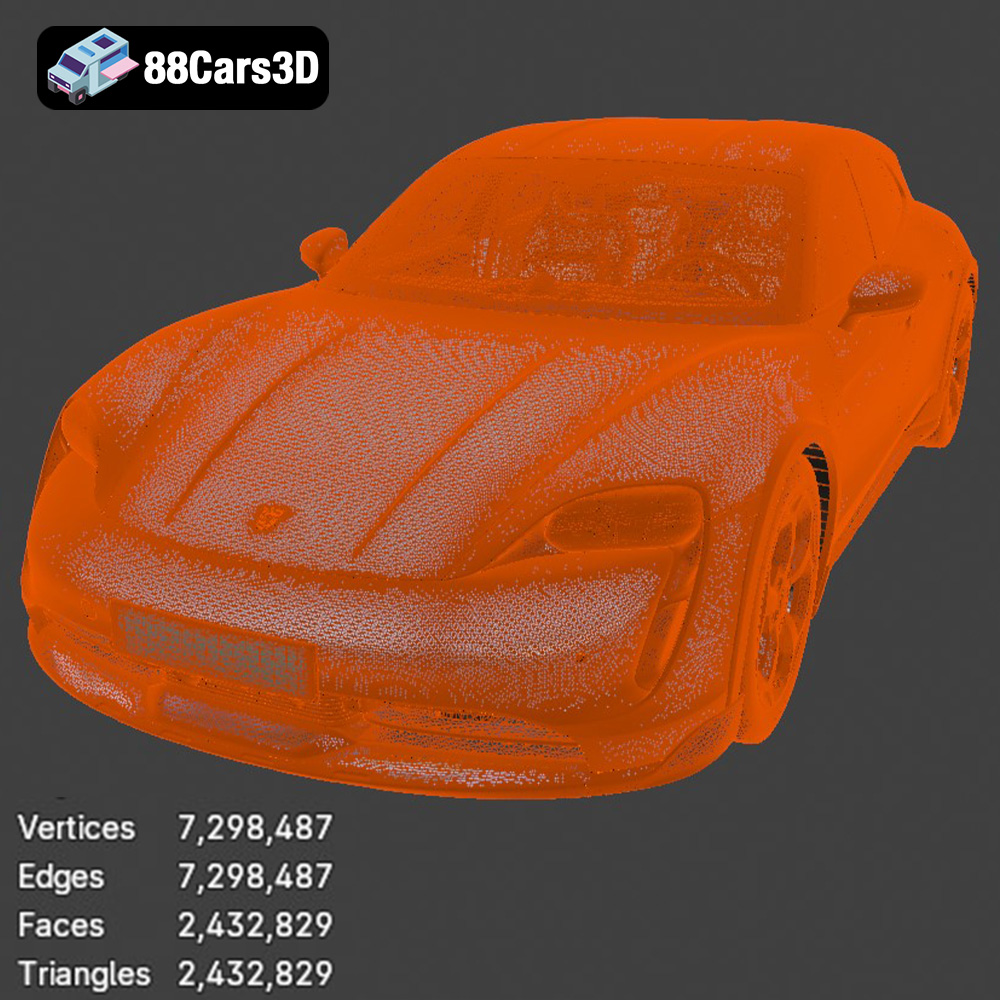
For game developers, especially those working on AAA racing titles, open-world games, or immersive simulators, the Porsche Taycan 4S Cross Turismo 2021 3D model is a treasure trove. With an impressive 2,432,829 triangles, it strikes a perfect balance, offering high-end visual realism while remaining optimized for real-time engines like Unreal Engine and Unity. When integrated into Unreal, developers can leverage its PBR materials for photorealistic rendering under various lighting conditions. Implementing Levels of Detail (LODs) is crucial for performance, where lower-polygon versions of the model automatically swap in when the vehicle is further from the camera, maintaining smooth framerates without compromising visual quality up close. The separate, pivot-ready components (wheels, steering, suspension) are invaluable for setting up physics-based vehicle locomotion and custom animation blueprints in Unreal Engine, allowing for realistic driving mechanics and visual feedback.
For advertising, product visualization, and cinematic productions, the demand for photorealistic imagery is paramount. The Porsche Taycan 4S Cross Turismo 2021 3D model, especially in its .max or .blend formats, provides an ideal starting point. Artists using 3ds Max with V-Ray or Corona Renderer, or Blender with Cycles or Eevee, can achieve stunning results. The model’s excellent topology reacts beautifully to studio and natural lighting environments, allowing for subtle reflections and refractions on the car’s paintwork, glass, and metallic accents. Customization options, such as changing body colors, modifying tire textures, or adjusting material finishes (matte, gloss, metallic), become straightforward. This empowers artists to create bespoke brand campaigns, lifestyle scenes, or configurator visualizations that showcase the vehicle in its best light, meeting the exacting standards of automotive marketing.
Augmented Reality (AR) and Virtual Reality (VR) applications are transforming how consumers interact with products, particularly in the automotive sector. Virtual showrooms, interactive configurators, and mobile AR experiences require models that are both visually rich and highly optimized for performance on various devices. The .glb format of the Porsche Taycan 4S Cross Turismo 2021 model is perfectly suited for these uses. Its compact, single-file nature allows for quick loading and smooth interaction in web-based AR/VR viewers. Imagine a customer exploring the Taycan’s exterior in AR on their driveway or stepping into a VR showroom to customize the interior, with every detail rendered faithfully. The model’s optimized geometry ensures that these immersive experiences are fluid and engaging, providing a truly next-generation way to interact with a digital vehicle.
Creating a truly professional 3D car model involves more than just aesthetic appeal; it demands a deep understanding of technical optimization to ensure scalability and performance across diverse applications. The Porsche Taycan 4S Cross Turismo 2021 3D model exemplifies this balanced approach.
The model’s stated 2,432,829 triangles is a substantial figure, indicating a high level of detail suitable for close-up renders and cinematic shots. However, in real-time applications like games or AR/VR, managing this polycount effectively is crucial. This is where Level of Detail (LOD) strategies come into play. A high-quality asset provides this detailed base mesh (LOD0), from which artists can generate progressively simpler versions (LOD1, LOD2, etc.). For instance, when the Taycan is far away in a game scene, a much lower-poly version is rendered, saving computational resources. As it approaches the camera, higher-detail LODs seamlessly transition in. This strategy ensures both visual fidelity when needed and optimal performance where it counts.
Clean and efficient UV mapping is non-negotiable for high-quality 3D models. The Taycan model features well-organized UV layouts that allow for crisp texture application without stretching or distortion. This is critical for conveying the realism of materials like paint, glass, rubber, and the intricate stitching on the interior seats. Physically Based Rendering (PBR) materials, which simulate how light interacts with surfaces in the real world, rely heavily on accurate UVs and well-authored texture maps (albedo, roughness, metallic, normal, ambient occlusion). The model’s structure is designed to support these advanced material setups, enabling artists to easily apply custom PBR shaders that react realistically to light, whether in a rendering engine or a game engine.
A vehicle model that is “animation-ready” significantly reduces production time. The Porsche Taycan 4S Cross Turismo 2021 model comes with separate wheels, suspension, and steering components, each with correctly placed pivot points. This means that a basic vehicle rig can be set up quickly, allowing for realistic steering, independent wheel rotation, and authentic suspension compression/extension. For more advanced animations, such as door openings, trunk lifts, or even intricate engine bay reveals (if applicable), the model’s clean topology and organized mesh structure provide a solid foundation for adding complex rigging without encountering geometry issues or deformation problems.
The versatility of a truly high-quality 3D model extends beyond digital screens. For enthusiasts, designers, or anyone wanting a tangible representation of their favorite vehicle, 3D printing offers an exciting avenue. The Porsche Taycan 4S Cross Turismo 2021 3D model, specifically its .stl format, is designed with this in mind, allowing for the creation of physical scale models.
When preparing the Taycan model for 3D printing, scaling is the first critical step. The recommended scales – 1:12, 1:18, or 1:24 – are standard for model cars, balancing detail with manageability. Before sending to the slicer, it’s often necessary to check the model for watertightness (no holes in the mesh) and ensure wall thickness meets the minimum requirements of the chosen printer and material. The product description recommends a wall thickness of 1.2–2.0 mm, which is vital for structural integrity during printing and post-processing. Tools within Blender or 3ds Max can assist in these pre-print checks and adjustments.
While FDM (Fused Deposition Modeling) printers can be used, resin printing (SLA/DLP) is highly recommended for a model as detailed as the Taycan. Resin printers offer superior resolution, allowing for finer details like panel lines, intricate headlight elements, and interior textures to be accurately reproduced with a layer height of 0.04–0.12 mm. Supports will be crucial for delicate parts such as side mirrors, suspension components, and front splitters, and the model’s frame should be printed at an angle for optimal structural integrity. Post-processing is where the model truly comes to life: sanding to smooth layer lines, applying primer for an even surface, and then painting with authentic factory colors, potentially with metallic finishes, will yield a stunning physical replica of the Porsche Taycan 4S Cross Turismo 2021.
The digital landscape for automotive design and visualization is constantly evolving, demanding assets that are not only visually stunning but also technically robust and versatile. The **Porsche Taycan 4S Cross Turismo 2021 3D Model** embodies this new standard, offering an exceptional blend of artistic fidelity and technical optimization across a comprehensive range of file formats. Whether you’re crafting a cinematic masterpiece, developing the next-generation racing game, building an immersive AR/VR experience, or even producing a detailed physical model, this asset provides the foundation you need.
Its meticulous exterior and interior detailing, combined with its animation readiness and game-optimized polycount, make it an invaluable addition to any professional’s toolkit. By providing formats like .blend, .fbx, .obj, .glb, .stl, .ply, .unreal, and .max, 88cars3d.com ensures that artists and developers have the flexibility to integrate this model seamlessly into virtually any workflow, maximizing efficiency and creative potential. Elevate your projects with high-quality 3D car models that stand up to the most demanding professional standards.
The Porsche Taycan 4S Cross Turismo 2021 represents the perfect synthesis of electric performance and rugged, real-world versatility. As an evolution of Porsche’s groundbreaking EV, this model features a distinctive shooting brake silhouette, offering increased headroom and cargo space alongside increased ground clearance. It is defined by iconic Porsche styling cues, including the signature four-point LED matrix headlights, protective off-road design elements on the wheel arches, and a muscular rear light strip. The absence of traditional exhaust systems is countered by a sleek, aerodynamically optimized rear diffuser and striking aero-style alloy wheels.
$37.50
.2021
.blend
.crossover
.ev
.fbx
.glb
.max
.obj
.ply
.porsche
.rendering
.stl
.unreal
car-3d-model
electric-car
game asset
game-ready
high poly
optimized
sports-wagon
taycan-4s-cross-turismo
VR/AR