Get 20% OFF All Premium 3D & STL Models!

In the dynamic world of digital content creation, where realism and performance are paramount, the demand for high-quality 3D car models has never been greater. Whether you’re a game developer striving for immersive vehicular combat, an automotive designer visualizing a new concept, or an architect integrating dynamic elements into a scene, the foundation of your success often lies in the fidelity of your assets. It’s not just about having a car; it’s about possessing a meticulously crafted digital twin that embodies every curve, every reflection, and every engineering detail of its real-world counterpart.
The journey from a physical vehicle to a flawless 3D representation is a testament to technical skill and artistic vision. It involves intricate topology, precise material calibration, and optimization for diverse platforms, from real-time game engines to high-fidelity cinematic renders. This pursuit of perfection is exactly what defines offerings from specialized marketplaces like 88cars3d.com, a hub for professional-grade assets designed to meet the rigorous demands of modern production pipelines.
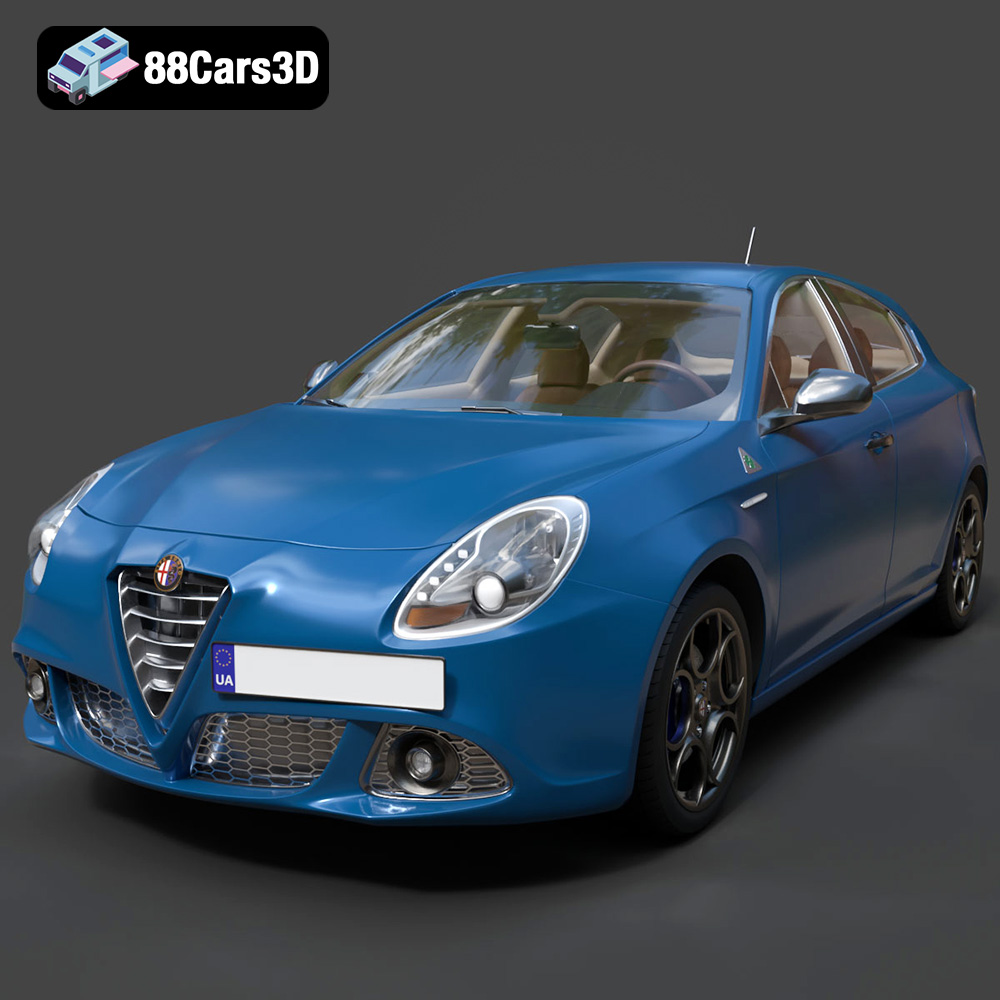
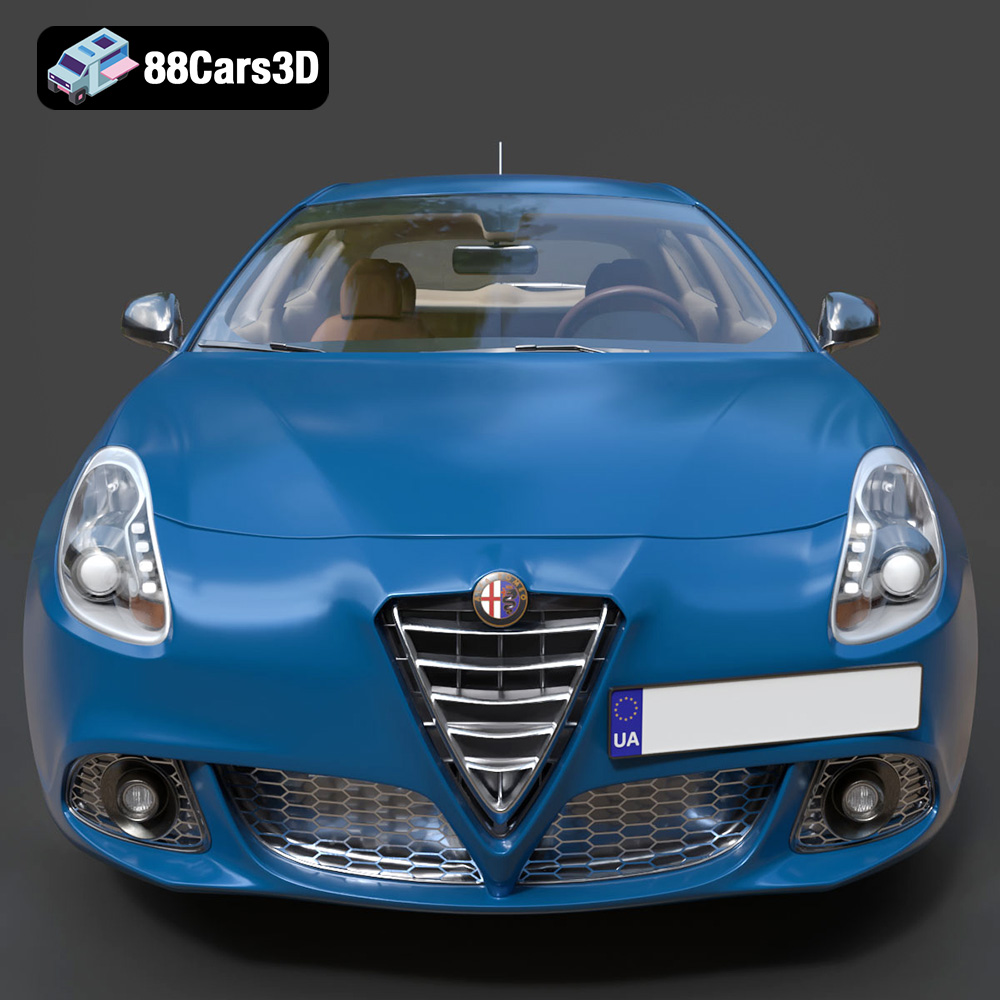
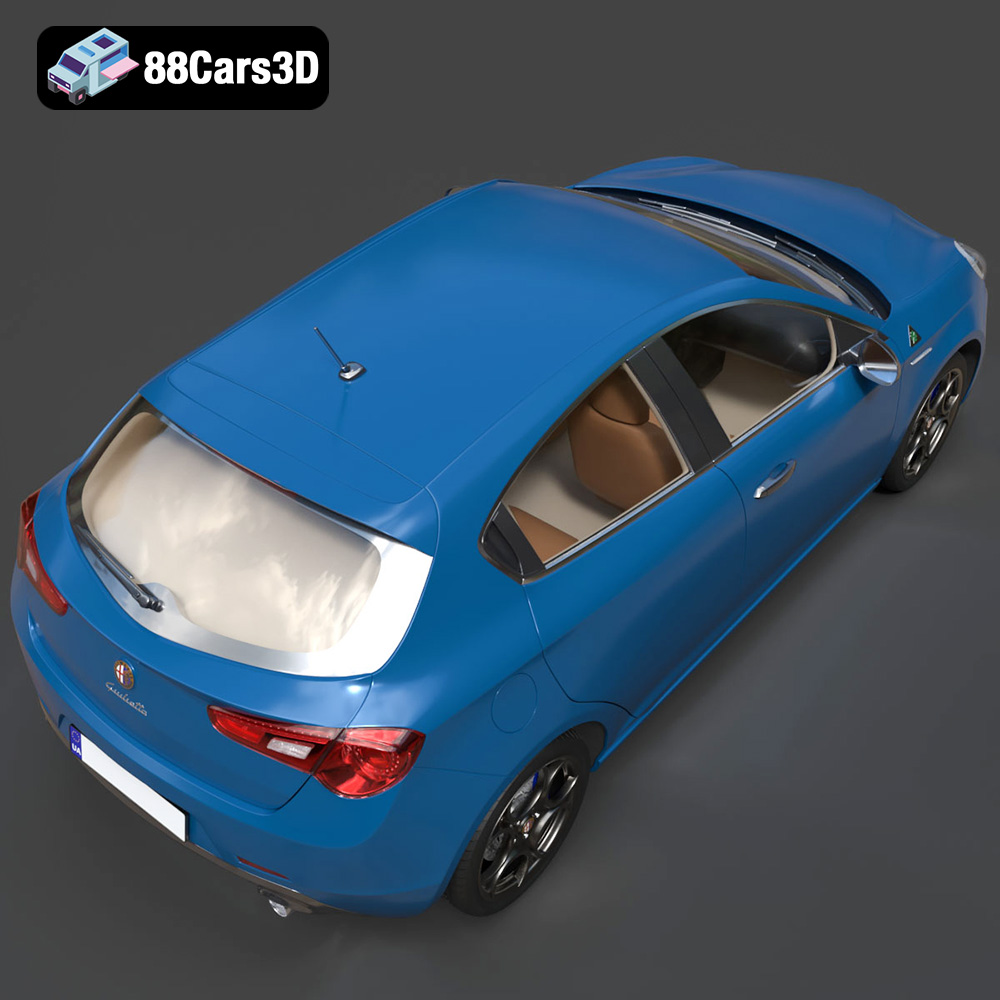
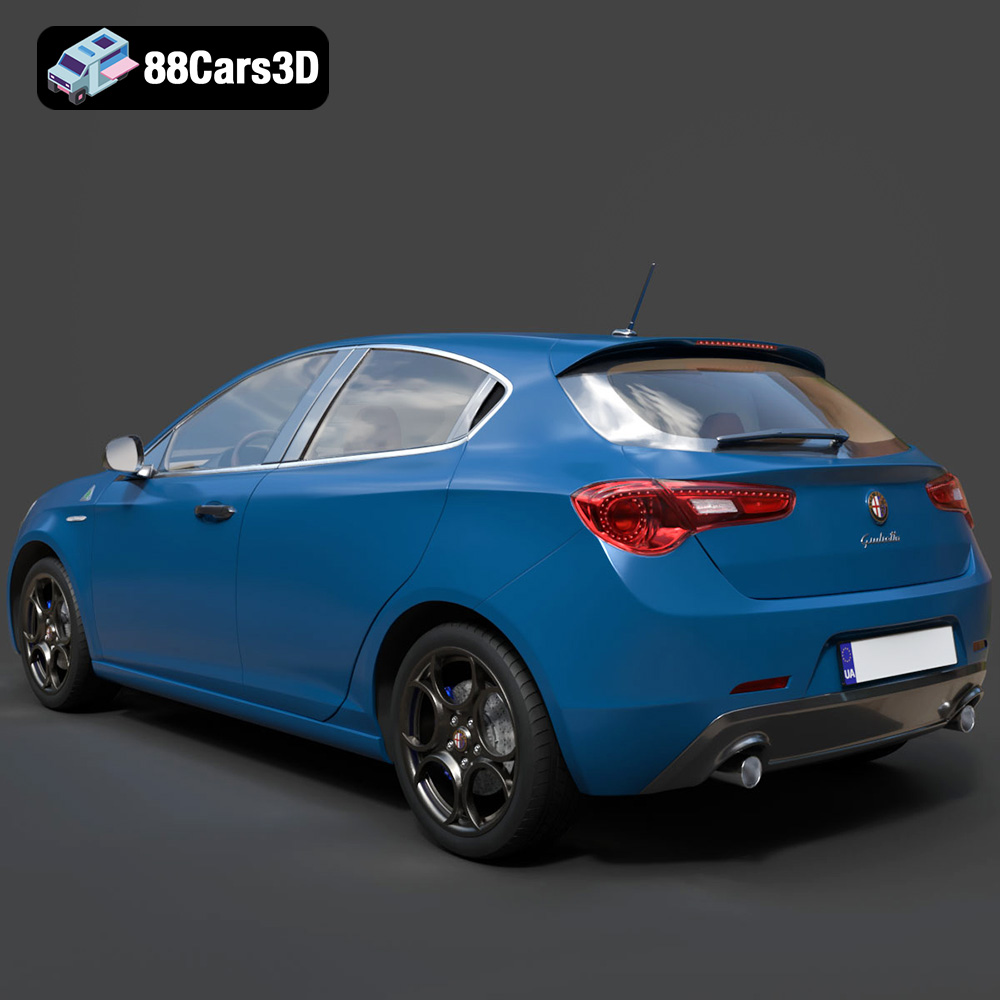
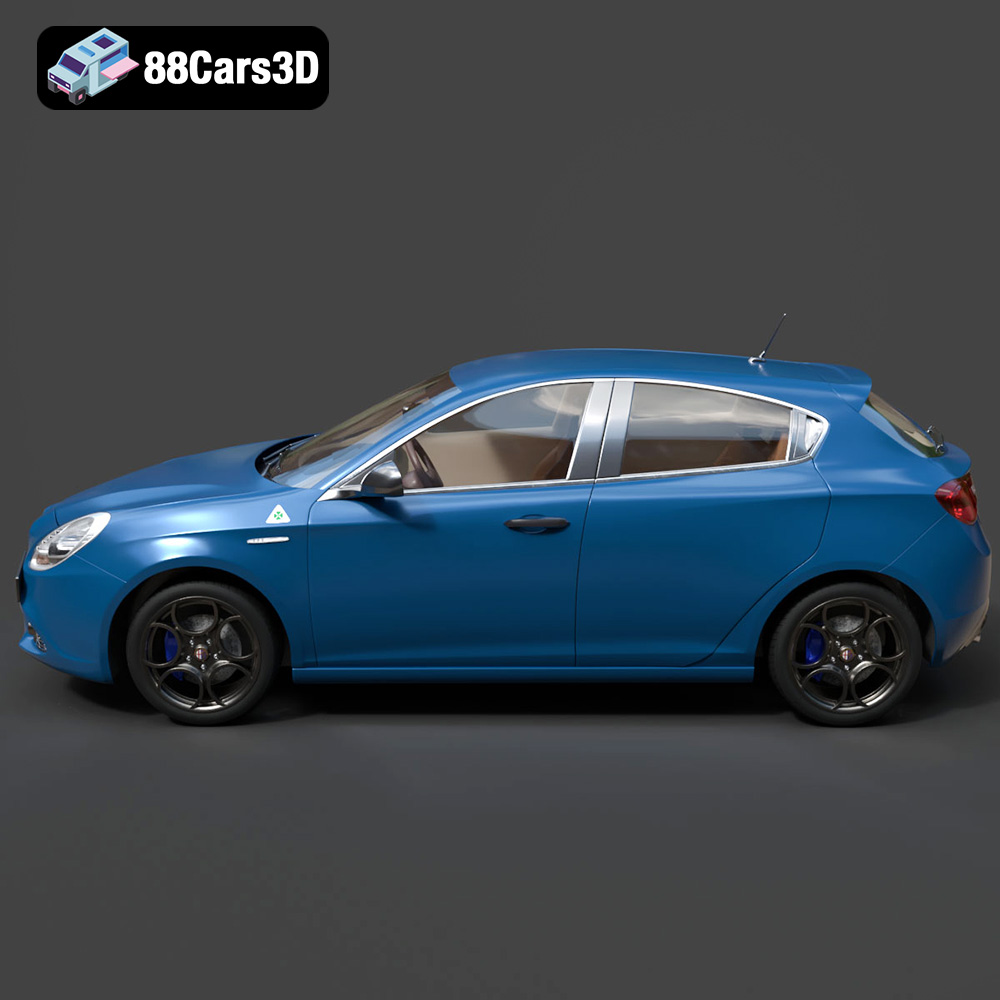
Consider, for instance, a model that effortlessly encapsulates both heritage and raw power: the Alfa Romeo Giulietta Quadrifoglio Verde 2014 3D model. This particular asset exemplifies the thrilling blend of Italian design and performance, meticulously captured for digital realms. Its iconic triangular scudetto front grille, aggressive aerodynamic profile, and distinctive styling cues are all brought to life with uncompromised visual fidelity. Such a model is more than just a static object; it’s a gateway to creating compelling narratives, engaging user experiences, and stunning visual presentations across a multitude of applications.
Creating a truly exceptional 3D car model is a complex endeavor that marries artistic sensibility with rigorous technical understanding. It goes far beyond simply mimicking shapes; it’s about understanding the underlying engineering, the interplay of light on different surfaces, and the subtle nuances that give a vehicle its character. The goal is to produce an asset that is not only visually stunning but also functionally robust for various digital environments.
The initial phase of 3D automotive modeling often begins with extensive research, gathering blueprints, photographic references, and technical specifications. Artists must translate complex two-dimensional data into a three-dimensional form, ensuring accurate proportions and maintaining design intent. This requires a deep understanding of automotive design principles, aerodynamics, and the manufacturing processes that define a car’s physical presence. For a model like the Alfa Romeo Giulietta Quadrifoglio Verde 2014, this means capturing the aggressive stance and elegant lines that are synonymous with the Alfa Romeo brand, ensuring every curve contributes to its iconic aesthetic.
Authenticity in 3D car models extends beyond just shape. It encompasses the fidelity of materials, the accuracy of reflections, and the subtle details that betray a model’s quality. High-quality PBR (Physically Based Rendering) materials are crucial for achieving photorealistic results, accurately simulating how light interacts with paint, glass, chrome, and rubber. UV mapping must be clean and organized, allowing for precise texture application without stretching or distortion. Furthermore, intricate details such as brake calipers, headlight internals, and even the stitching on interior upholstery must be faithfully recreated. This level of detail ensures that whether the model is viewed up close in a virtual showroom or as part of a dynamic scene in a game, its authenticity remains uncompromised.
Navigating the diverse landscape of 3D modeling often means grappling with numerous file formats, each tailored for specific workflows, software, and applications. A truly versatile 3D car model, such as the Alfa Romeo Giulietta Quadrifoglio Verde 2014 available on 88cars3d.com, will provide a comprehensive suite of formats, empowering artists and developers to integrate the asset seamlessly into their preferred pipeline. Understanding the strengths and ideal use cases for each format is crucial for maximizing efficiency and achieving the desired results.
Offering a diverse range of formats, as the Alfa Romeo Giulietta Quadrifoglio Verde 2014 3D model does, ensures maximum compatibility and utility, enabling professionals to leverage the asset across different tools and final deliverables without friction.
The true value of a premium 3D car model is not just in its looks but in its technical foundation. Professional workflows demand assets that are not only visually impressive but also optimized, accurate, and easily integrated into complex pipelines. The Alfa Romeo Giulietta Quadrifoglio Verde 2014 3D model stands as a prime example of an asset engineered for performance across the board.
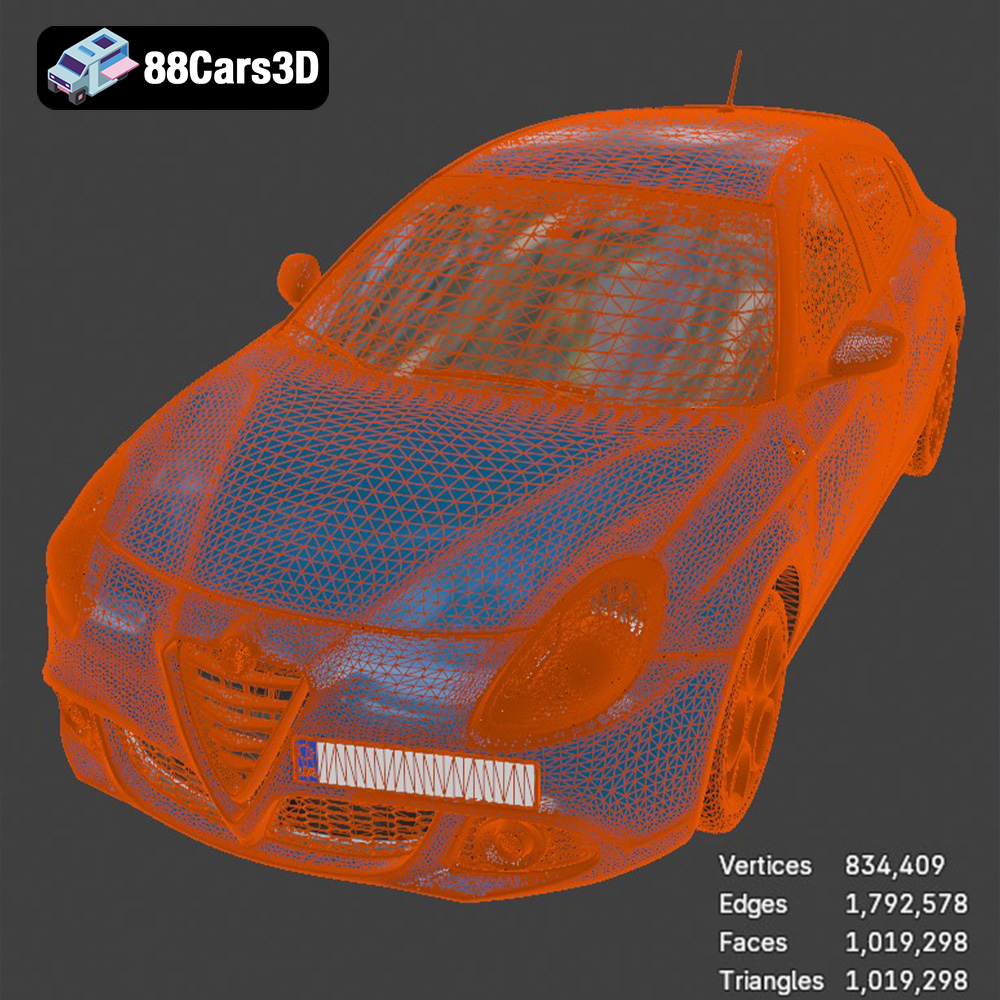
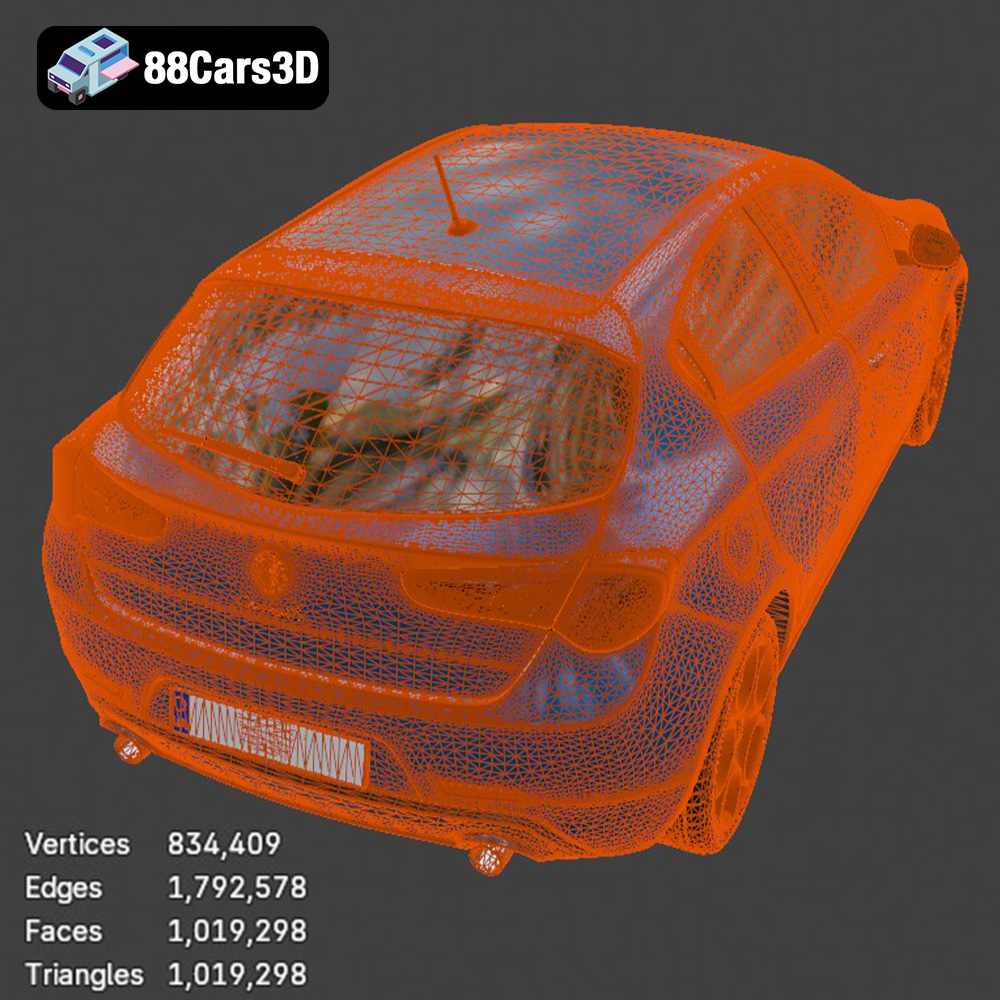
One of the most critical technical specifications for any 3D model is its polygon count, often expressed in triangles. For the Alfa Romeo Giulietta, boasting 1,019,298 triangles, a perfect balance has been struck. This figure is high enough to ensure uncompromised visual fidelity, capturing every subtle curve and sharp edge of the vehicle with exquisite detail. Yet, it remains optimized for real-time applications like game engines (Unreal, Unity), where performance is key. Such a meticulously structured geometry ensures seamless integration, delivering ultra-realistic reflections and stunning lighting dynamics without bogging down the rendering pipeline. This “game-ready” optimization is crucial for maintaining fluid frame rates in demanding virtual environments, making it an invaluable game asset.
Accuracy extends beyond visual detail to physical dimensions and functional articulation. The Alfa Romeo Giulietta model is built with real-world scale accuracy, based on actual vehicle chassis specifications. This ensures that when integrated into a scene, it fits perfectly alongside other real-world scaled objects, from architectural environments to other vehicles. Furthermore, it features proper pivot setups for crucial animated components like steering, wheel rotation, and suspension travel. This attention to mechanical detail means animators can easily rig and animate the car’s movements realistically, which is paramount for racing simulations, cinematic sequences, and interactive experiences.
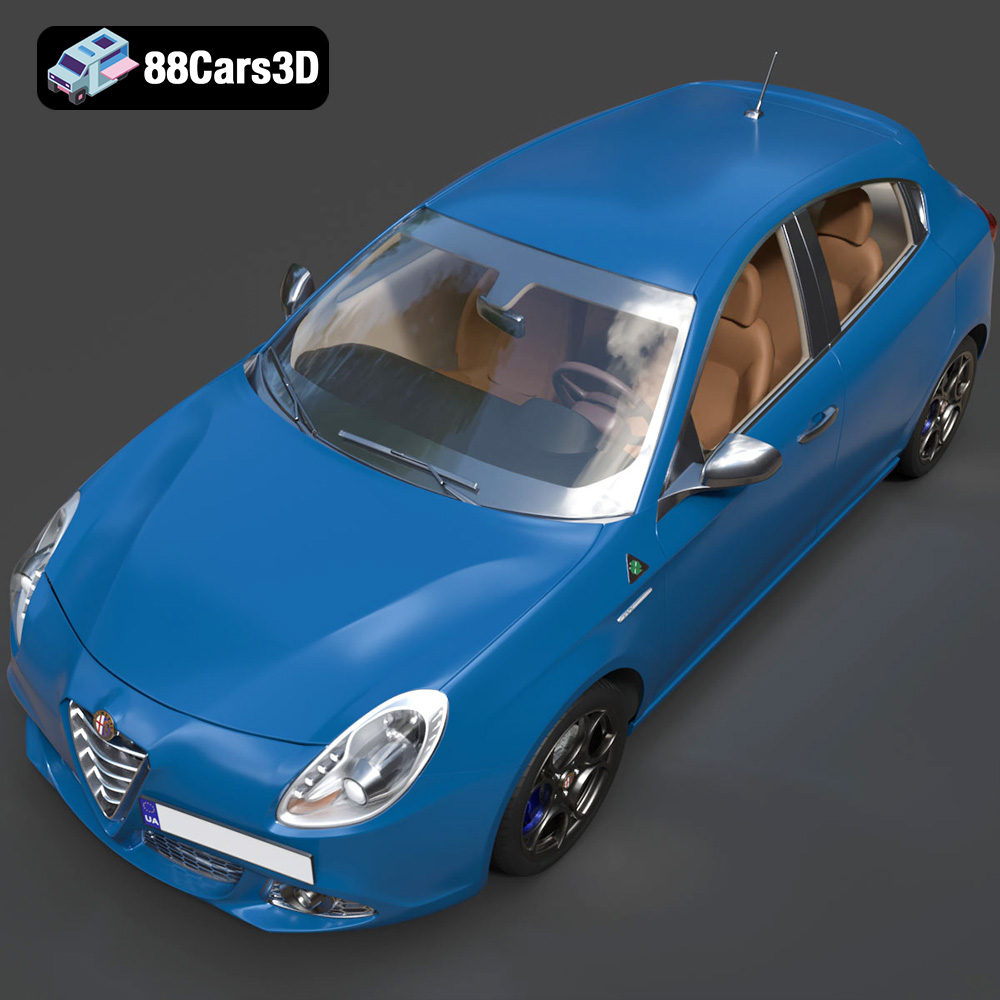
A truly comprehensive 3D car model doesn’t stop at the exterior. The Alfa Romeo Giulietta Quadrifoglio Verde model delivers a full spectrum of detail, inside and out. On the exterior, it includes an accurate frame geometry, the signature LED daytime running lights, distinct sweeping taillights, and classic five-hole telephone dial alloy wheels with branded brake calipers. Even the sport-tuned dual exhaust system with oversized chrome tips and the accurately modeled lowered sport suspension geometry are meticulously recreated. Inside, the cockpit features sport bucket seats with detailed Quadrifoglio Verde stitching, a leather-wrapped flat-bottomed sport steering wheel, deep-set twin-binnacle instrument cluster, and detailed aluminum sport pedals, climate controls, and gear shifter. This level of granular detail ensures that whether the model is showcased in a close-up studio render or experienced from a first-person perspective in a game, its authenticity is maintained.
The versatility of a high-quality 3D car model like the Alfa Romeo Giulietta Quadrifoglio Verde 2014 is evident in its wide array of applications across various industries. Its robust technical specifications and exceptional visual fidelity make it an invaluable asset for professionals seeking to push the boundaries of digital realism.
For game developers, the Alfa Romeo Giulietta Quadrifoglio Verde 2014 3D model is a prime example of a game asset ready for action. Its optimized polycount (1,019,298 triangles) strikes an ideal balance, providing stunning visual realism without compromising real-time performance. This makes it perfect for integration into demanding open-world games, high-octane racing titles, and ultra-realistic driving simulators built on engines like Unreal and Unity. The meticulous topology ensures smooth deformation and reflections, while pre-configured pivots for wheels and suspension simplify animation, allowing developers to focus on gameplay mechanics and immersive environments. The ability to deliver ultra-realistic reflections and stunning lighting dynamics in a real-time environment elevates the player’s experience, making every drive feel authentic.
In the realm of Augmented Reality (AR) and Virtual Reality (VR), immersive experiences are key. High-fidelity 3D car models are essential for creating compelling virtual showrooms, interactive configurators, and mobile AR applications. The Alfa Romeo Giulietta model is perfectly suited for these uses, allowing potential buyers to explore every angle of the car, customize colors and finishes, and even step inside a virtual cockpit before a physical prototype is even built. The inclusion of .glb format, optimized for browser-based and mobile display, further enhances its utility for these cutting-edge applications, facilitating seamless integration into webGL environments and mobile AR apps.
Beyond interactive experiences, the Alfa Romeo Giulietta model shines in traditional cinematic rendering and high-end visualization projects. Its detailed exterior and interior features make it excellent for brand campaigns, lifestyle scenes, and studio lighting setups where photorealism is paramount. Whether it’s showcasing the car in a sleek advertising spot, integrating it into an architectural visualization, or creating stunning concept art, the model’s uncompromised visual fidelity allows artists to produce breathtaking automotive rendering. The ability to adjust material finishes, change body colors, and modify tire textures provides immense creative flexibility, enabling the model to adapt to any artistic vision or marketing requirement.
The versatility of a well-constructed 3D model extends beyond digital screens, opening doors to the physical world through 3D printing. For enthusiasts and professionals alike, the ability to convert a high-fidelity digital asset into a tangible object is a fascinating prospect. The Alfa Romeo Giulietta Quadrifoglio Verde 2014 3D model is not just for rendering or gaming; it’s also designed with 3D printing in mind, allowing admirers to hold a piece of automotive artistry in their hands.
The .stl file format, included with the Alfa Romeo Giulietta model, is the industry standard for 3D printing. This format simplifies the complex 3D geometry into a series of interconnected triangles, which 3D printers can then interpret to build the object layer by layer. However, simply having an .stl file isn’t enough; the underlying model must be topologically sound and prepared with specific considerations for successful physical fabrication. The Alfa Romeo Giulietta model is designed to facilitate this, converting cleanly into a print-ready mesh.
For optimal results when 3D printing this particular model, several settings are recommended:
This attention to printability underscores the comprehensive nature of the Alfa Romeo Giulietta Quadrifoglio Verde 2014 3D model, making it a truly versatile game asset for both digital and physical endeavors.
In the professional realm, flexibility and adaptability are as crucial as initial quality. A high-end 3D car model must not only look superb out-of-the-box but also allow for extensive customization to fit specific project requirements. The Alfa Romeo Giulietta Quadrifoglio Verde 2014 3D model excels in this area, offering a rich set of options for artists and designers to tailor its appearance and integrate it seamlessly into any digital scene.
The ability to easily modify material properties and colors is fundamental for any automotive rendering project. With the Alfa Romeo Giulietta model, artists can effortlessly change body colors, choosing from authentic factory palettes or experimenting with custom finishes. This means the car can be rendered in a vibrant Rosso Alfa for a sporty campaign, or a subtle Grigio Magnesio for a sophisticated presentation. Beyond paint, users can modify tire textures, opting for sleek street variants for urban scenes or aggressive track variants for racing simulations. Adjusting material finishes—from matte to gloss to various metallic effects—allows for even greater realism and artistic expression, perfectly matching the desired mood or environment of the scene.
The true test of a 3D model’s adaptability lies in how well it responds to different lighting conditions and environments. A properly built model, like the Alfa Romeo Giulietta, will have clean UVs and well-defined PBR materials that react realistically to studio lighting setups, outdoor HDRIs, or even dynamic in-game lighting. This enables artists to adapt the model for diverse scenarios, whether it’s bathed in the golden hour sun, parked under neon city lights, or highlighted by professional studio strobes for a product showcase. The flexibility to adjust lighting not only enhances visual appeal but also allows the car to tell different stories, making it a dynamic storytelling tool within any project. This level of control reinforces its value as a premium automotive rendering asset.
The world of 3D modeling demands a synergy of technical precision and artistic flair, especially when it comes to the intricate details of automotive design. High-quality 3D car models are not merely visual assets; they are foundational components that enable immersive games, stunning visualizations, realistic AR/VR experiences, and even tangible 3D prints. The journey from concept to a fully realized digital car is a complex one, requiring expertise in geometry, materials, optimization, and format compatibility.
The Alfa Romeo Giulietta Quadrifoglio Verde 2014 3D model exemplifies the pinnacle of this craft. With its meticulous detail, balanced polygon count, real-world accuracy, and comprehensive file format support, it offers unparalleled versatility for professionals across various industries. From its game-ready optimization for Unreal and Unity to its print-ready STL format, and its adaptability for high-end automotive rendering, this model stands as a testament to what premium 3D assets can achieve. For those seeking to elevate their projects with truly exceptional 3D car models and game assets, exploring the curated selection at 88cars3d.com is a step towards achieving digital excellence.
Experience the thrilling blend of Italian design and performance with the Alfa Romeo Giulietta Quadrifoglio Verde (2014) 3D model. Capturing the essence of a true hot hatch, this model highlights the vehicle’s legendary heritage with its iconic triangular scudetto front grille, aggressive aerodynamic profile, and distinctive styling cues. Every curve and characteristic line has been meticulously modeled to reflect Alfa Romeo’s passion for automotive artistry, right down to the robust dual exhaust system and performance-oriented stance. Boasting a highly detailed topology with 1,019,298 triangles, this model offers uncompromised visual fidelity while retaining essential optimization for real-time applications. The meticulously structured geometry ensures seamless integration into major game engines, delivering ultra-realistic reflections and stunning lighting dynamics. Whether utilized in high-end automotive configurators, immersive VR experiences, or next-generation racing titles, this model guarantees exceptional performance and visual quality. Perfect for open-world game development, virtual reality showrooms, cinematic rendering, and high-quality 3D printing projects.
$37.50
.2014
.alfa-romeo
.blend
.fbx
.giulietta
.glb
.hot-hatch
.max
.obj
.ply
.rendering
.sports car
.stl
.unreal
car-3d-model
game asset
game-ready
optimized
quadrifoglio-verde
VR/AR