Get 20% OFF All Premium 3D & STL Models!

In the rapidly evolving landscape of digital content creation, the demand for high-fidelity 3D assets is more critical than ever. From blockbuster video games to cinematic architectural visualizations and immersive virtual reality experiences, a truly compelling project often hinges on the quality of its foundational elements. Nowhere is this more apparent than with automotive models, where intricate details and precise proportions can make or break the illusion of realism.
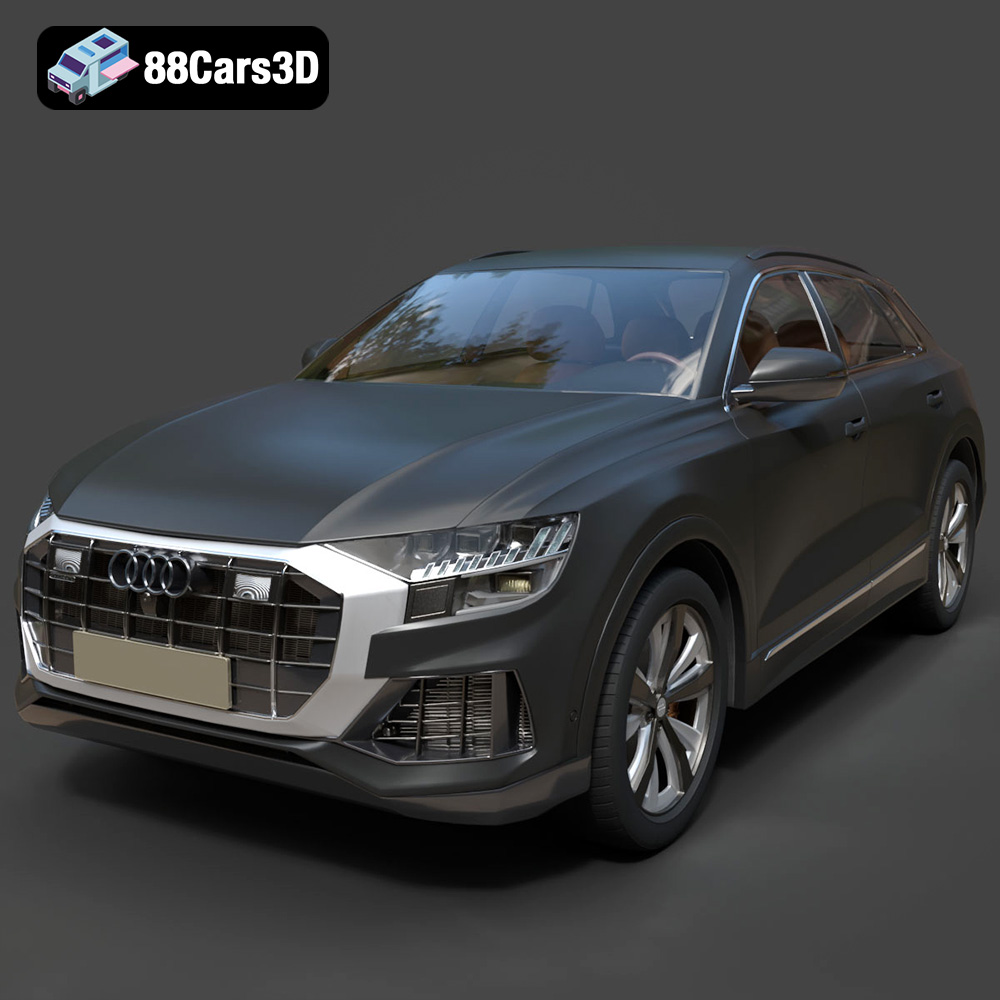
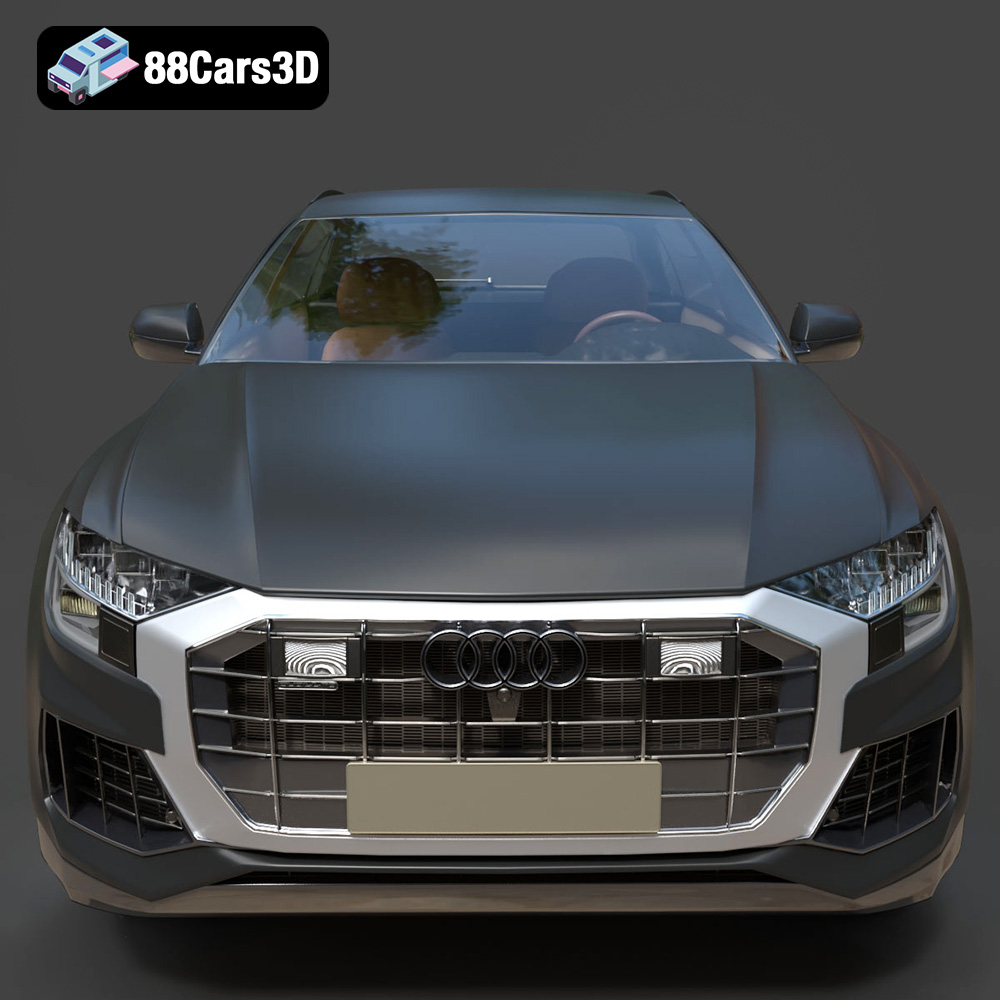
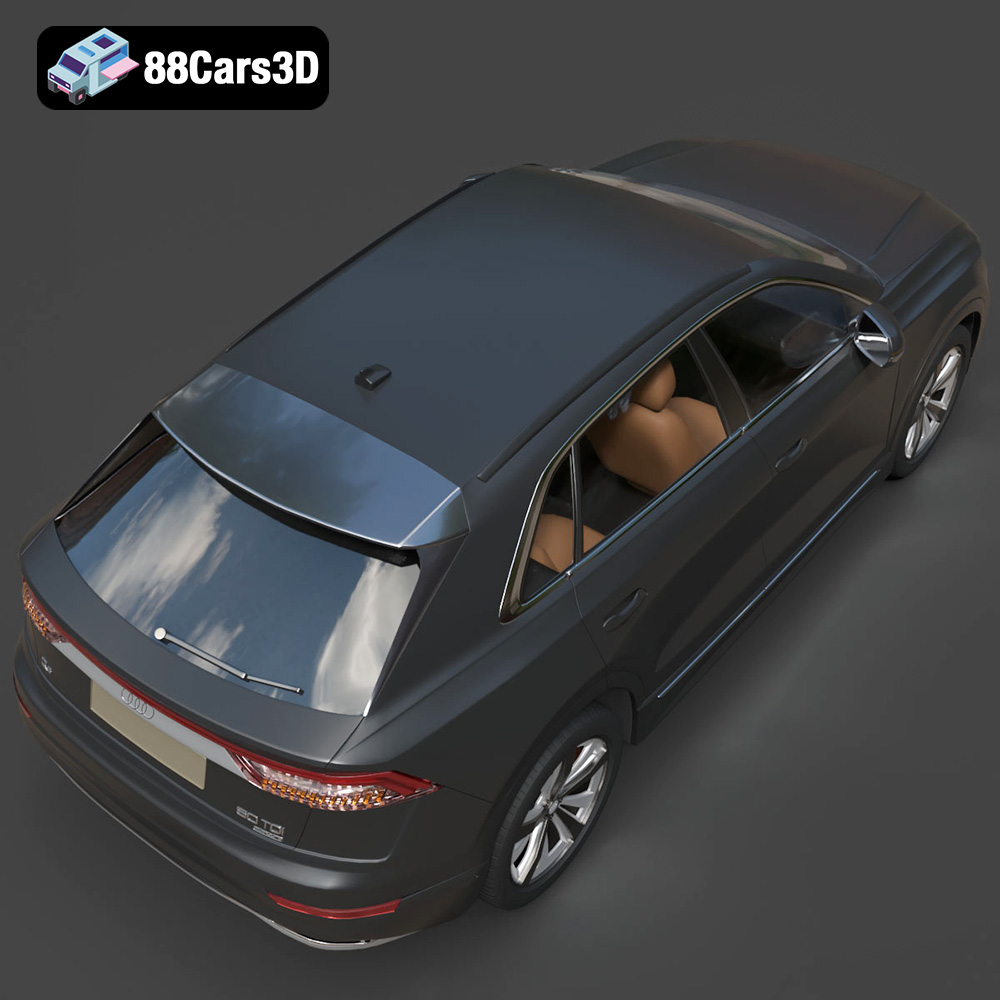
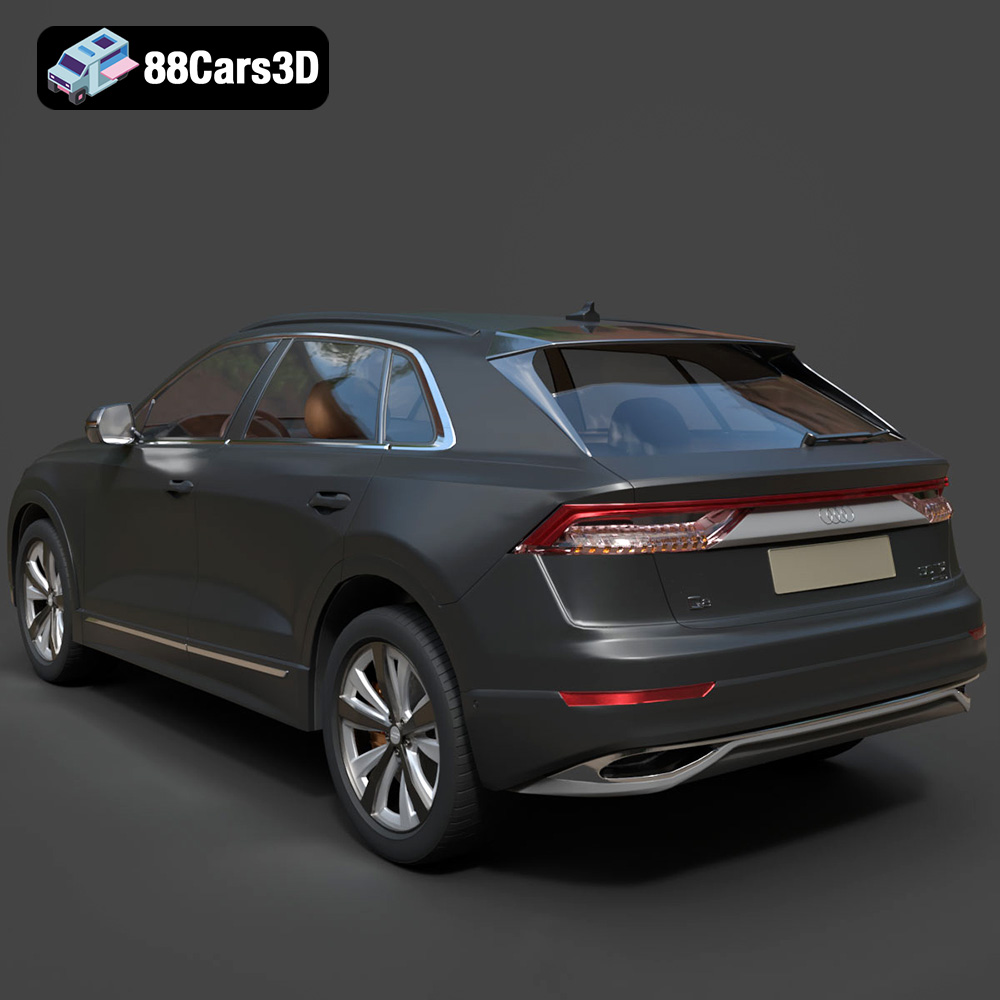
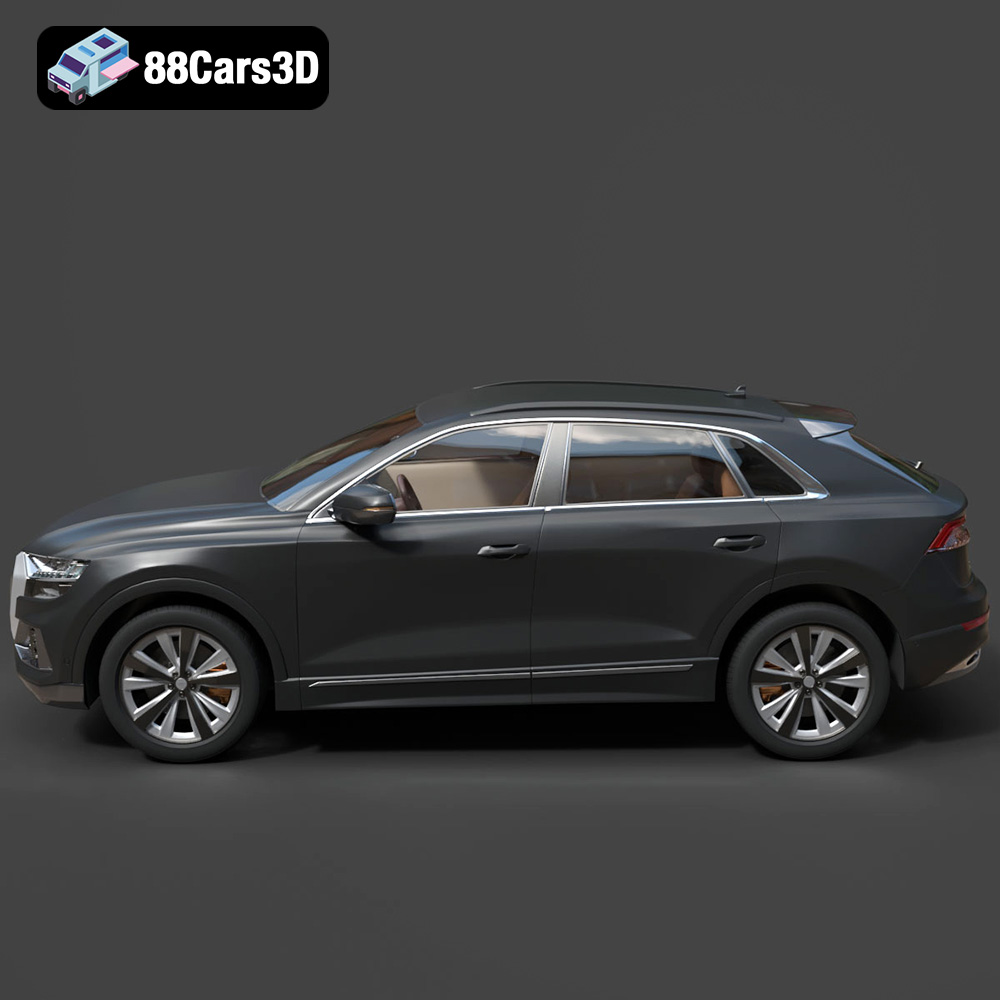
Today, we’re taking a closer look at a prime example of such a meticulously crafted asset: the Audi Q8 2018 3D Model. This particular model, available on 88cars3d.com, encapsulates the essence of modern luxury automotive design. The 2018 Audi Q8 itself is a statement, blending the aggressive stance of a large SUV with the sleek lines of a coupé, defined by its imposing octagonal Singleframe grille and advanced HD Matrix LED lighting. Translating such a complex, aesthetically rich vehicle into a digital form requires immense skill and attention to detail, creating a powerful tool for professionals across various industries.
The versatility of a 3D model is often determined by the file formats it supports. Different formats are optimized for distinct purposes, software compatibility, and pipelines. For professional 3D car models like the Audi Q8 2018, having a comprehensive suite of formats ensures maximum utility and integration into diverse workflows. Let’s break down the key formats included with this model and their primary applications:
The .blend format represents a fully editable Blender scene. It’s ideal for users entrenched in the Blender ecosystem, offering complete access to the model’s original scene structure, materials, textures, lighting setups, and any associated animations. Technical details typically include a full node-based material system, modifiers, and potentially custom scripts. For artists looking to dissect, modify, or re-render the Audi Q8 within Blender, this format provides the most flexibility, allowing for deep customization of materials, topology adjustments, or integration into existing Blender projects.
FBX (Filmbox) is a proprietary file format owned by Autodesk and has become an industry standard for 3D data interchange, particularly between DCC (Digital Content Creation) applications and game engines like Unreal Engine and Unity. An .fbx file can encapsulate geometry, materials, textures (often embedded or referenced), animations, cameras, and lights. For the Audi Q8 3D model, the .fbx is critical for transferring the model with its clean topology, UVs, and animation-ready pivots into real-time pipelines, ensuring a consistent transfer of data crucial for game assets and interactive experiences.
OBJ (or Wavefront .obj) is one of the oldest and most widely supported 3D file formats. It’s a universal format primarily used to store 3D geometry (vertices, faces, normals, UV coordinates). While it can reference external material files (.mtl) and textures, it does not typically embed animations or complex scene data. The .obj format for the Audi Q8 is excellent for fundamental cross-software compatibility, ensuring almost any 3D application can open and interpret the model’s core geometry, making it a reliable choice for archival purposes or as a clean starting point for new projects.
GLB (GL Transmission Format Binary) is a relatively newer format designed for efficient transmission and loading of 3D scenes and models in web and mobile environments, making it perfect for AR/VR applications. It’s a binary container that bundles 3D model data (geometry, materials, textures, animations) into a single file, optimizing for fast rendering and minimal file size. The .glb version of the Audi Q8 2018 is specifically tailored for immersive virtual showrooms, web-based configurators, and mobile AR experiences, where performance and quick load times are paramount.
STL (stereolithography) is the most common file format for 3D printing. It describes only the surface geometry of a 3D object using a collection of triangular facets, without any color, texture, or other CAD attributes. For hobbyists or professionals looking to bring the Audi Q8 3D model into the physical world, the .stl file is essential. It enables direct export to 3D printers, allowing for the creation of display-scale replicas, prototypes, or custom parts. The product details recommend specific scales and print settings, highlighting the practical application of this format.
PLY (Polygon File Format) is another format that stores 3D data, often used for representing 3D scanned data. It can store various properties beyond just geometry, such as color, transparency, and normals, on a per-vertex or per-face basis. While less common for general animation, the .ply format for the Audi Q8 can be beneficial for precision mesh analysis, CAD integration, or specific engineering visualization tasks where detailed vertex attributes are important.
The .unreal format implies an asset pre-packaged or specifically prepared for direct import into Unreal Engine. While Unreal primarily uses .fbx for static and skeletal meshes, an “.unreal” file might refer to a complete asset package or a specific import pipeline optimized for the engine, potentially including pre-configured materials, LODs, collision meshes, and blueprints, saving developers significant setup time. This format signifies an asset that is truly “game-ready” for one of the most powerful real-time engines in the industry.
Similar to .blend for Blender, the .max format is the native file format for Autodesk 3ds Max. It contains all scene data, including geometry, materials (often V-Ray, Corona, or Standard Max materials), textures, lighting, cameras, and animation data. For professionals using 3ds Max for high-end rendering, animation, or architectural visualization, the .max file of the Audi Q8 offers the most comprehensive control and flexibility, allowing for direct manipulation within a familiar and powerful rendering environment.
This extensive range of formats demonstrates the thoughtful design of the Audi Q8 2018 3D Model, ensuring it’s not just a beautiful asset, but a highly functional one for virtually any professional workflow.
Crafting a 3D model of a modern vehicle like the Audi Q8 isn’t merely about replicating its shape; it’s about creating a “digital twin” that embodies its essence, performance, and luxury. This process demands a deep understanding of automotive design principles, meticulous reference gathering, and advanced 3D modeling techniques.
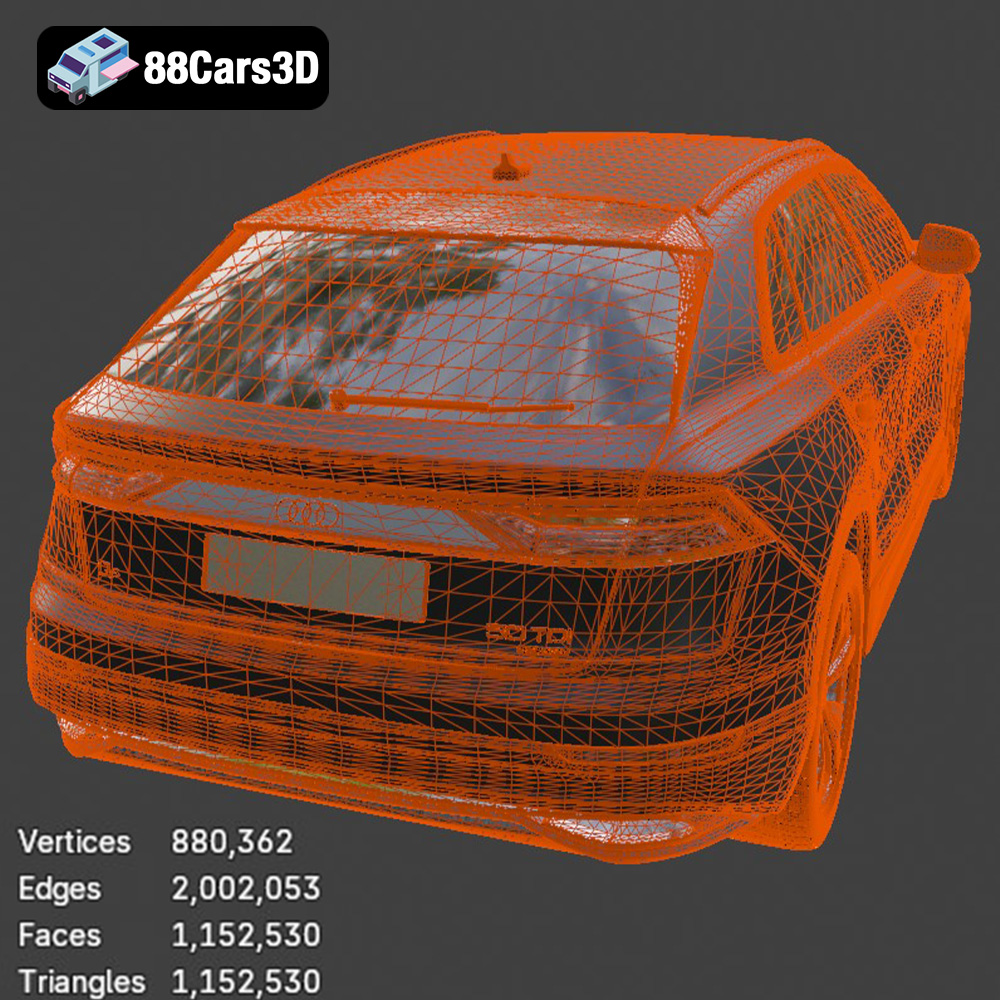
The Audi Q8 2018 is renowned for its distinctive exterior. Its imposing octagonal Singleframe grille, aggressive HD Matrix LED headlights, and the gently sloping roofline that defines its coupé-SUV silhouette are iconic. This 3D model captures these elements with exceptional accuracy. From the intricate detailing of the grille mesh to the precision of the integrated dual exhaust system and the robust wheel arch flares, every aspect is faithfully recreated. The model’s 1,152,530 triangle count is a testament to this level of detail, providing unparalleled visual fidelity without becoming unmanageably heavy for various applications. This balance is crucial for high-end automotive rendering where photorealism is paramount, as well as for real-time applications where performance is key.
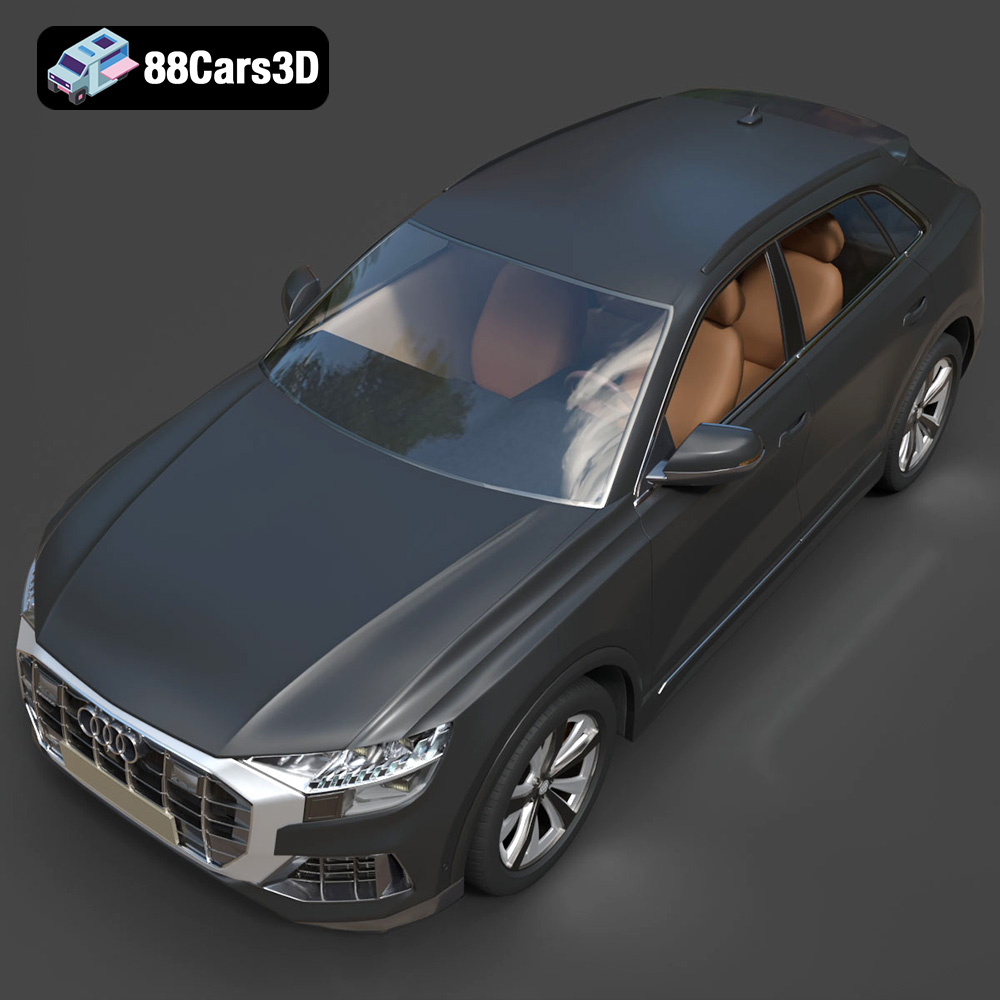
A luxury vehicle’s appeal extends far beyond its exterior. The interior, or cockpit, is where the driver and passengers truly experience the car. The Audi Q8 2018 3D Model does not disappoint here, offering a highly detailed interior that includes luxurious sport contour seats, the accurate multi-function steering wheel, the state-of-the-art digital dashboard (Virtual Cockpit), and the intuitive MMI touch response displays. Precision-modeled pedals, gear selector, and climate controls complete the immersive experience. This level of interior detail is vital for first-person views in gaming, virtual showrooms, and close-up lifestyle renders, ensuring the digital experience is as opulent as the real thing.
Beyond visual accuracy, a truly professional 3D car model must also be technically sound for animation and simulation. The Audi Q8 2018 model is built to real-world scale, a critical factor for integrating it into architectural visualizations or engineering simulations. Crucially, it features proper pivot setups for steering, wheel rotation, and suspension travel. This means the model is not just a static display piece; it’s ready for complex animations, vehicle dynamics simulations in games, or interactive configurators where precise movement is required.
High-quality 3D car models like the Audi Q8 2018 are indispensable tools for achieving stunning visual results in various rendering and visualization contexts. They form the core of compelling images and animations that drive marketing, design, and conceptualization.
For many automotive industry professionals, 3ds Max remains a go-to platform for high-end photorealistic rendering. Leveraging the .max file, artists can seamlessly integrate the Audi Q8 2018 model into sophisticated studio lighting setups. Using render engines like V-Ray or Corona, the detailed geometry and potential for premium texture mapping (PBR workflows) allow for the creation of breathtaking promotional images. Imagine a sleek studio shot highlighting the Q8’s muscular lines, or a dynamic animation showcasing its elegant interior. This workflow is central to brand campaigns and glossy magazine-style visuals.
Architectural visualization (ArchViz) often requires more than just buildings; it needs context and a sense of scale and luxury. The Audi Q8 2018 3D Model fits perfectly into this niche. Placing this premium SUV in front of a modern luxury home, a sophisticated office complex, or within an urban streetscape instantly elevates the scene’s realism and aspirational appeal. Whether working in Blender, 3ds Max, or other DCC applications, the model’s clean topology and accurate scale make it easy to integrate, adjust materials for environmental lighting, and become a focal point or a subtle accent in a larger visualization project.
One of the significant advantages of digital assets is the freedom they offer for customization. The Audi Q8 2018 model empowers artists to change body colors, explore various metallic finishes, or even adapt tire textures to suit different environments (e.g., street vs. off-road variants). This flexibility is paramount for client projects where specific branding colors are required, or for concept art where exploring different aesthetic possibilities is key. Adapting lighting and materials allows the model to seamlessly blend into diverse settings, from a sunny coastal drive to a moody urban night scene.
The “game-ready” optimization of the Audi Q8 2018 3D Model makes it a highly valuable asset for interactive experiences, where real-time performance is as important as visual quality. 88cars3d.com provides assets designed with these demanding environments in mind.
Game developers constantly seek assets that strike a balance between visual fidelity and performance. The Audi Q8 3D Model, with its 1,152,530 triangle count, achieves this balance. For Unreal Engine, developers can import the .fbx or the dedicated .unreal file, setting up PBR materials, collision meshes, and vehicle blueprints to bring the Q8 to life as a drivable asset in open-world games, racing simulators, or even architectural walkthroughs. Similarly, Unity users can leverage the .fbx for seamless integration, applying materials and setting up physics for realistic interaction. The optimized topology ensures that while the model looks stunning, it remains performant even in complex scenes, often utilizing Level of Detail (LOD) systems for further optimization.
Augmented Reality (AR) and Virtual Reality (VR) are transforming how consumers interact with products. The Audi Q8 2018 3D Model is perfectly suited for creating immersive virtual showrooms or interactive configurators. Using the .glb format, which is optimized for web and mobile AR/VR, developers can build experiences where users can explore the Q8’s exterior and interior in a virtual space, change colors, open doors, or even place the car in their real-world environment via AR. This capability is invaluable for automotive brands looking to offer cutting-edge digital sales and marketing tools.
For any interactive automotive experience, accurate physics and animation are non-negotiable. The proper pivot setup for steering, wheel rotation, and suspension travel in the Audi Q8 model is crucial here. Game developers can easily integrate these elements with physics engines to create realistic driving dynamics. Whether it’s a high-stakes racing game or a detailed vehicle simulation, the model provides the foundational structure for dynamic and believable movement, significantly reducing development time and effort.
The utility of premium 3D models extends beyond purely digital realms. The ability to transition from a digital asset to a tangible object opens up new avenues for prototyping, display, and hobbyist projects.
The inclusion of the .stl format for the Audi Q8 2018 3D Model is a game-changer for enthusiasts and professionals alike. This format is the universal standard for 3D printing, enabling users to convert the digital model into a physical replica. Imagine having a highly detailed scale model of the Audi Q8 sitting on your desk, a testament to modern digital fabrication. This functionality is particularly appealing for designers who want to hold a physical representation of their digital work or for collectors seeking unique, custom-made models.
To achieve a high-quality 3D print, understanding the technical specifications is key. The product description for the Audi Q8 model recommends specific print settings: scales of 1:12, 1:18, or 1:24, layer heights between 0.04–0.12 mm (with resin printing recommended for fine details), wall thickness of 1.2–2.0 mm, and 20–30% infill. Supports are necessary for intricate parts like mirrors and the exhaust system, and proper print orientation (frame angled, wheels separate) ensures structural integrity. After printing, post-processing such as sanding, priming, and painting with authentic factory colors and metallic finishes is crucial to bring the physical model to a showroom-quality standard, mirroring the visual fidelity of its digital counterpart.
The Audi Q8 2018 3D Model stands as a testament to the power and versatility of premium digital assets. From its meticulously recreated exterior and interior details to its game-ready optimization and comprehensive file format support, this model is engineered to meet the rigorous demands of professional workflows. Whether your goal is to produce stunning photorealistic renders, develop immersive game experiences, build interactive AR/VR applications, or even create a tangible 3D print, this model provides an exceptional foundation.
For artists, developers, and designers, investing in high-quality 3D car models like the Audi Q8 2018 means saving countless hours in modeling and texturing, allowing more time for creative refinement and project execution. The availability of this model and others on 88cars3d.com underscores a commitment to providing top-tier resources for the creative community. It’s more than just a 3D model; it’s a versatile tool designed to bring your digital visions to life with unparalleled realism and efficiency.
The 2018 Audi Q8 is a flagship luxury SUV that masterfully blends the elegance of a four-door luxury coupé with the practical versatility of a large SUV. Known for its imposing octagonal Singleframe grille, aggressive HD Matrix LED headlights, and a muscular, gently sloping roofline, the Q8 represents the pinnacle of modern German automotive design. This meticulously crafted 3D model captures the dynamic stance, premium aerodynamic styling, and sophisticated exterior detailing that makes the real-world vehicle a standout in the luxury crossover class.
Boasting a highly detailed 1,152,530 triangle count, this 3D model offers unparalleled visual fidelity and premium surfacing. Despite its high detail, the topology is carefully structured for optimal performance in high-end game development, architectural visualization, and automotive configurators. It serves as a perfect digital twin for both real-time engines and offline rendering pipelines.
Perfect for luxury architectural visualizations, high-end racing games, virtual automotive showrooms, and photorealistic lifestyle renders.
.blend, .fbx, .obj, .glb, .stl, .ply, .unreal, .max
Tags:
audi, q8, q8-2018, luxury-suv, coupe-suv, game-ready, optimized, car-3d-model, game-asset, rendering, vr-ar, blend, fbx, obj, glb, stl, ply, unreal, max
$37.50
.audi
.blend
.fbx
.glb
.luxury suv
.max
.obj
.ply
.q8
.rendering
.stl
.unreal
car-3d-model
coupe-suv
game asset
game-ready
optimized
q8-2018
VR/AR