Get 20% OFF All Premium 3D & STL Models!

In the dynamic world of digital visualization, the demand for exceptionally detailed and versatile 3D car models has never been higher. From breathtaking cinematic renders and cutting-edge game development to immersive AR/VR experiences and precision 3D printing, the ability to accurately represent an iconic vehicle in three dimensions is paramount. These digital assets serve as the backbone for creative projects, pushing the boundaries of realism and interaction. It’s not merely about modeling a car; it’s about capturing its essence, its engineering, and its soul in a format that empowers artists and developers alike.
One such automotive legend that continues to captivate enthusiasts is the 2008 Audi R8. A mid-engine sports car that elegantly balanced everyday usability with exotic performance, its distinctive lines, visible engine bay, and aggressive stance cemented its place as a modern classic. Creating a digital twin of such an iconic vehicle requires meticulous attention to detail and a profound understanding of 3D modeling principles. The Audi R8 2008 3D Model, available for download on 88cars3d.com, exemplifies this dedication, offering an unparalleled level of visual fidelity and technical optimization for a vast array of applications. This isn’t just a model; it’s a gateway to bringing your most ambitious automotive visions to life, tailored for everything from high-definition studio shots to interactive real-time environments.
The versatility of a 3D model often hinges on the array of file formats it supports. Each format is designed with specific use cases, software compatibilities, and data characteristics in mind. Understanding these distinctions is crucial for anyone working with 3D assets, ensuring smooth integration into various pipelines, from complex rendering projects to real-time game engines. The Audi R8 2008 3D Model from 88cars3d.com is exemplary in its broad format support, offering files that cater to nearly every professional need.
The .blend format is native to Blender, the powerful open-source 3D creation suite. When you receive a .blend file, you’re getting a complete Blender scene, often including not just the mesh data but also materials, textures, lighting setups, camera positions, animations, and even physics simulations. This format is ideal for users who primarily work in Blender and want full, editable access to the original project structure. It allows for effortless customization, modification of topology, tweaking of materials, and integration into existing Blender scenes without any data loss during import/export. For the Audi R8 model, the .blend file provides the ultimate flexibility for artists looking to dive deep into its structure and adapt it for unique artistic expressions or further development within Blender.
.fbx (Filmbox) is arguably the most widely used proprietary 3D file format for data interchange between various 3D applications, and it is particularly prevalent in game development. Developed by Autodesk, FBX supports not only mesh data (geometry, UVs, normals) but also complex elements like animation, rigging, skinning, materials, and even light and camera information. Its binary nature makes it efficient, and its robust support across software like 3ds Max, Maya, Blender, Unreal Engine, and Unity makes it an indispensable tool. For the Audi R8 2008 3D Model, the .fbx format ensures seamless migration into real-time environments or other DCC applications, retaining crucial animation pivots and material assignments necessary for dynamic scenes.
The .obj (Wavefront OBJ) format is a venerable, open-standard format that is recognized by almost every 3D software application. It primarily stores geometric data – vertices, faces, normals, and UV coordinates – and can reference external material (.mtl) files for basic color and texture information. While it doesn’t support animation or rigging, its simplicity and widespread compatibility make it an excellent choice for static mesh interchange, especially when cross-software compatibility is the top priority. For the Audi R8 model, the .obj provides a clean, universally accessible mesh that can be imported into virtually any 3D program for rendering or further manipulation, serving as a reliable baseline.
.glb (GL Transmission Format Binary) is the binary version of glTF, an open standard designed for efficient transmission and loading of 3D scenes and models by engines and applications. GLB bundles all assets – geometry, materials, textures, animations – into a single binary file, making it highly optimized for web-based 3D, augmented reality (AR), and virtual reality (VR) applications. Its compactness and performance-oriented design make it perfect for showcasing models interactively in browsers or deploying them on mobile AR/VR platforms. The Audi R8 in .glb format is tailor-made for immersive virtual showrooms or online configurators, ensuring quick loading times and broad accessibility.
The .stl (Stereolithography) format is the de facto standard for 3D printing. It represents a 3D model as a series of connected triangles, describing only the surface geometry of an object without color, texture, or other properties. While simple, its ubiquity in the 3D printing world means it’s universally accepted by slicer software. When preparing the Audi R8 for physical fabrication, the .stl file is what gets sent to the 3D printer, allowing hobbyists and professionals to bring the digital model into the physical realm. The specific recommendations for layer height, infill, and supports in the product description are directly applicable to optimizing an .stl print.
The .ply (Polygon File Format, or Stanford Triangle Format) is another format that describes 3D objects, typically used for storing point clouds and polygonal meshes from 3D scanners or for scientific visualization. It can store a variety of properties including color, transparency, normals, texture coordinates, and even reliability information. While less common for general interchange than FBX or OBJ, it’s valued for its precision and ability to handle complex data, making it useful in CAD, reverse engineering, and advanced analysis contexts. For specific technical applications of the Audi R8 model, .ply offers an alternative, robust representation.
The .unreal format typically refers to asset packages or exports specifically prepared for the Unreal Engine ecosystem. While Unreal Engine primarily imports .fbx, having an asset described as “.unreal” often implies it has been rigorously tested, optimized, and potentially even packaged within an Unreal project structure, ready for drag-and-drop integration. This can include pre-set material instances, collision meshes, LODs (Levels of Detail), and proper pivot points, saving developers significant time. The Audi R8 2008 3D Model, offered in this format, ensures a streamlined workflow for game developers aiming for peak performance and visual quality within Unreal Engine.
The .max format is the native file extension for Autodesk 3ds Max, a leading software for 3D modeling, animation, rendering, and visualization. Similar to .blend, a .max file contains a complete 3ds Max scene, including all geometry, textures, materials (especially V-Ray or Corona materials), lighting, cameras, animation data, and modifiers. It provides the most comprehensive access to the original scene setup and is essential for artists who use 3ds Max for high-end rendering, complex animation, or architectural visualization. For the Audi R8 2008 3D Model, the .max file unlocks the full potential for detailed studio renders and advanced scene construction within 3ds Max.
Capturing the essence of a legendary vehicle like the 2008 Audi R8 in a 3D model is a testament to the artist’s skill and technical prowess. This particular model, available on 88cars3d.com, doesn’t just replicate the vehicle’s form; it embodies its spirit, offering a digital asset that is both visually stunning and technically robust. It’s a prime example of how a high-quality 3D car model can elevate any project.
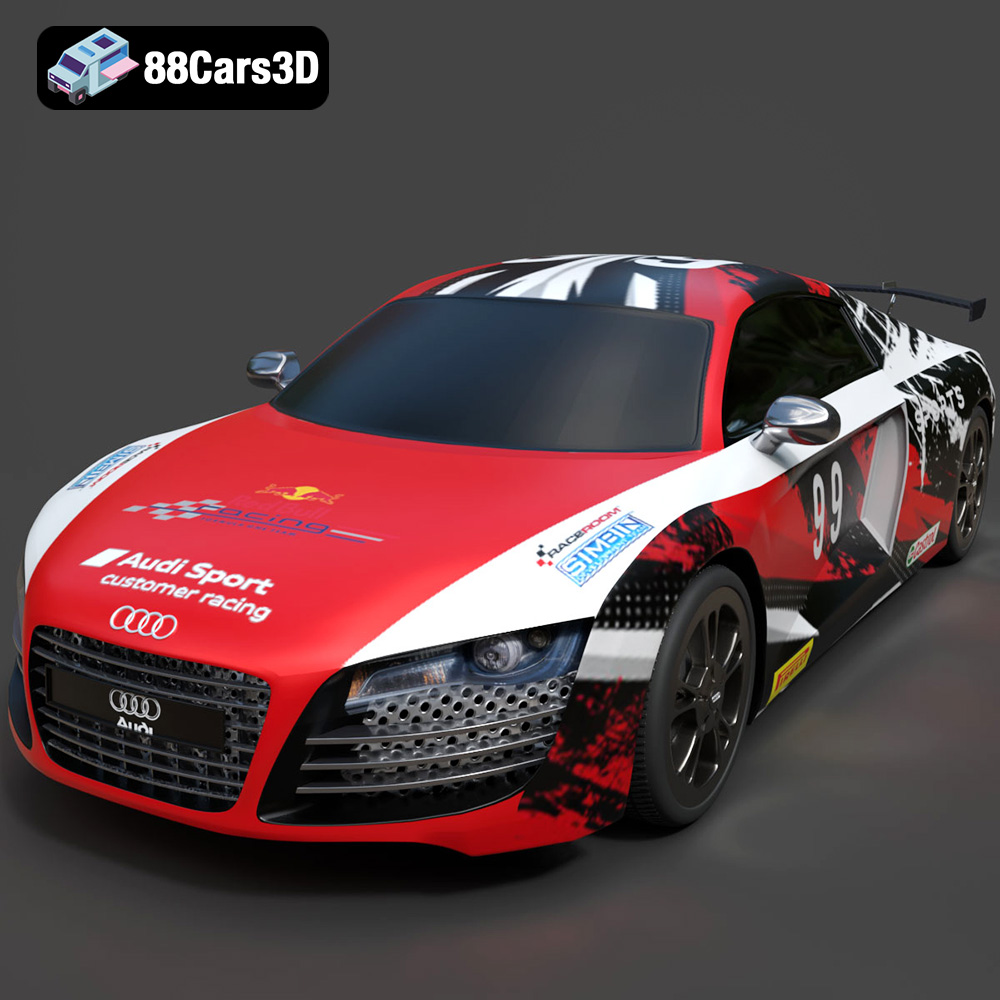
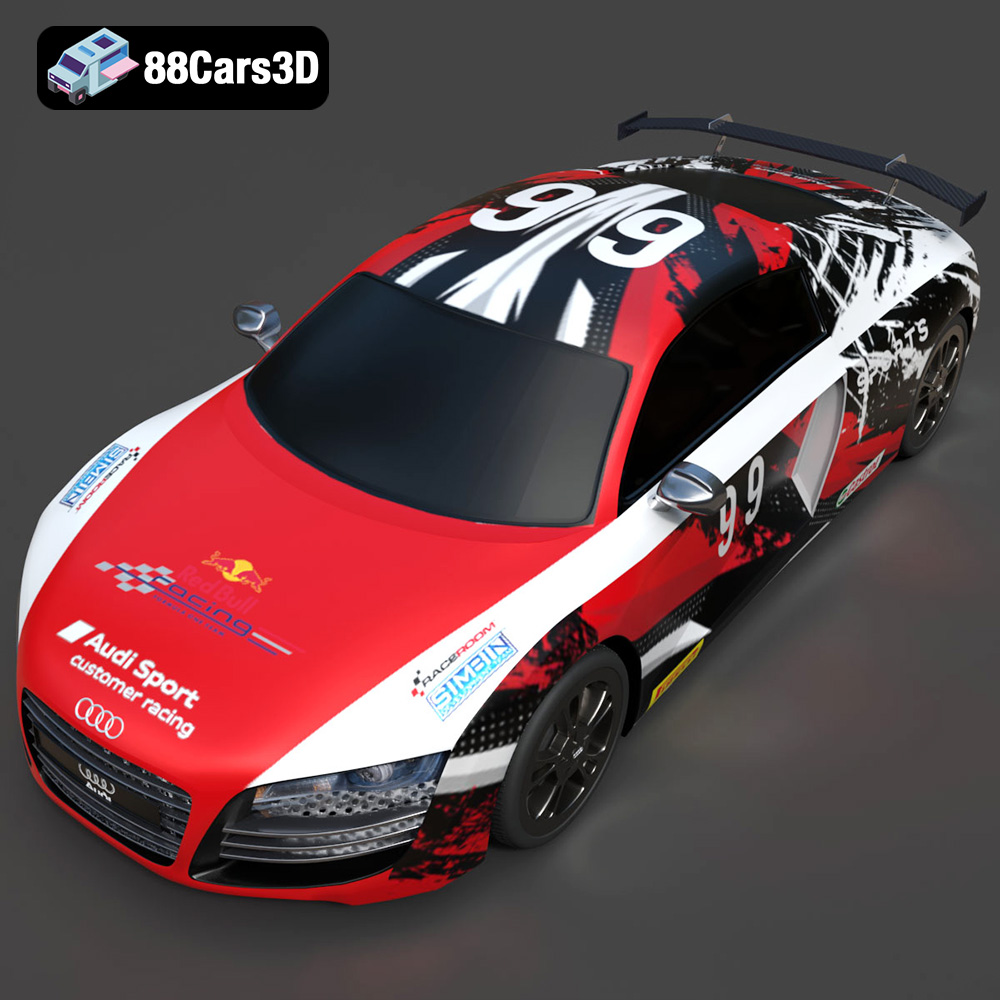
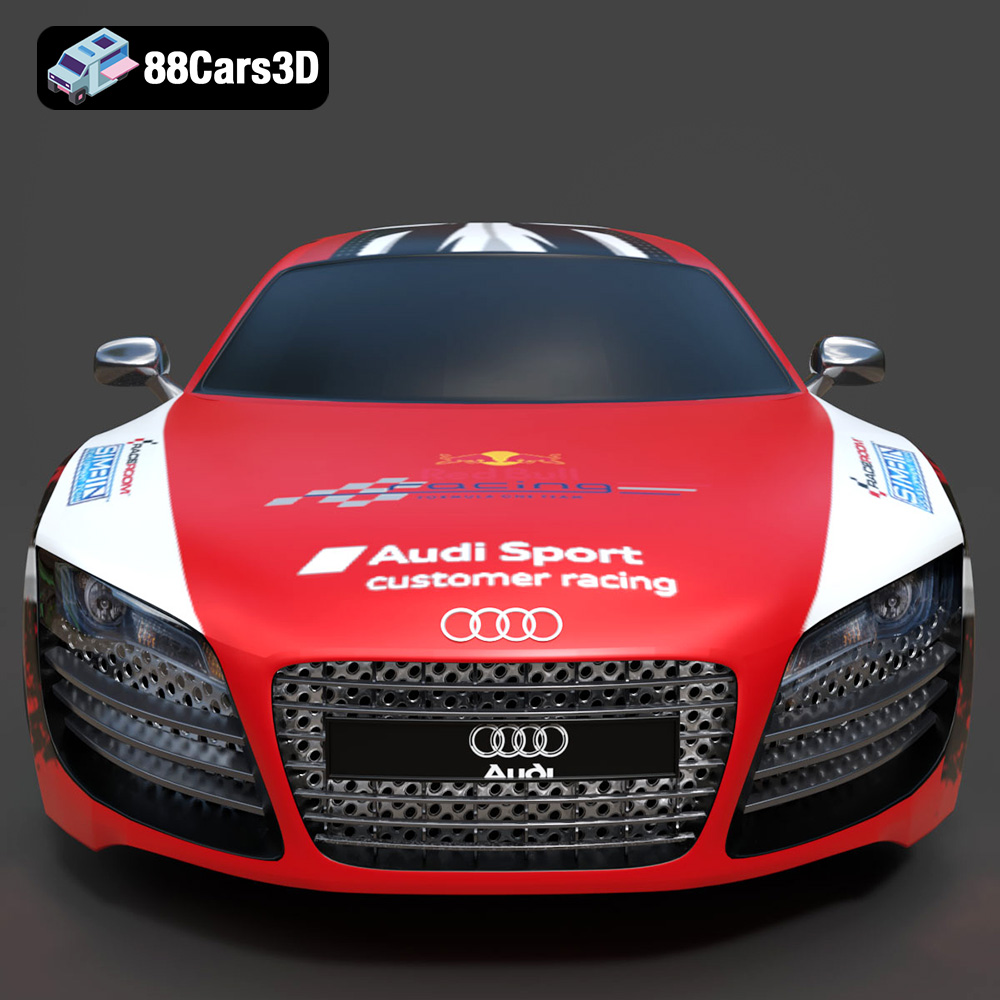
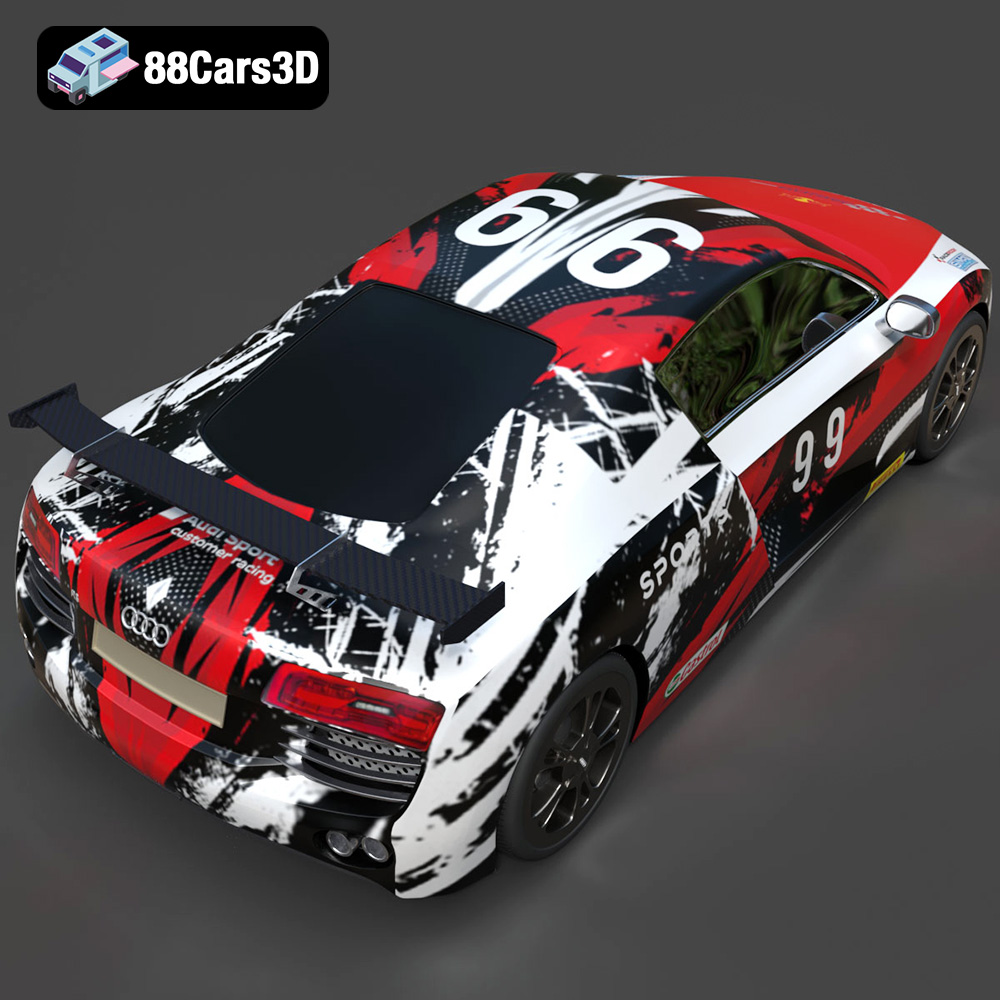
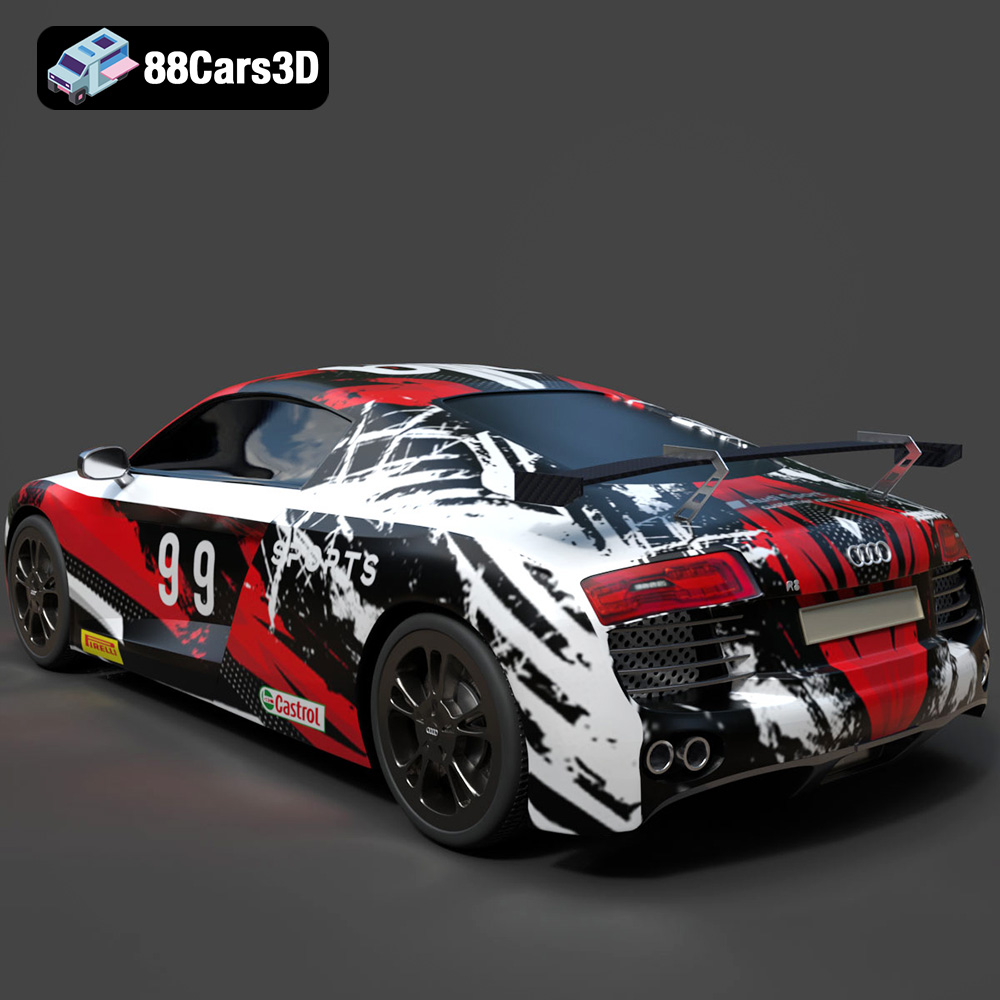
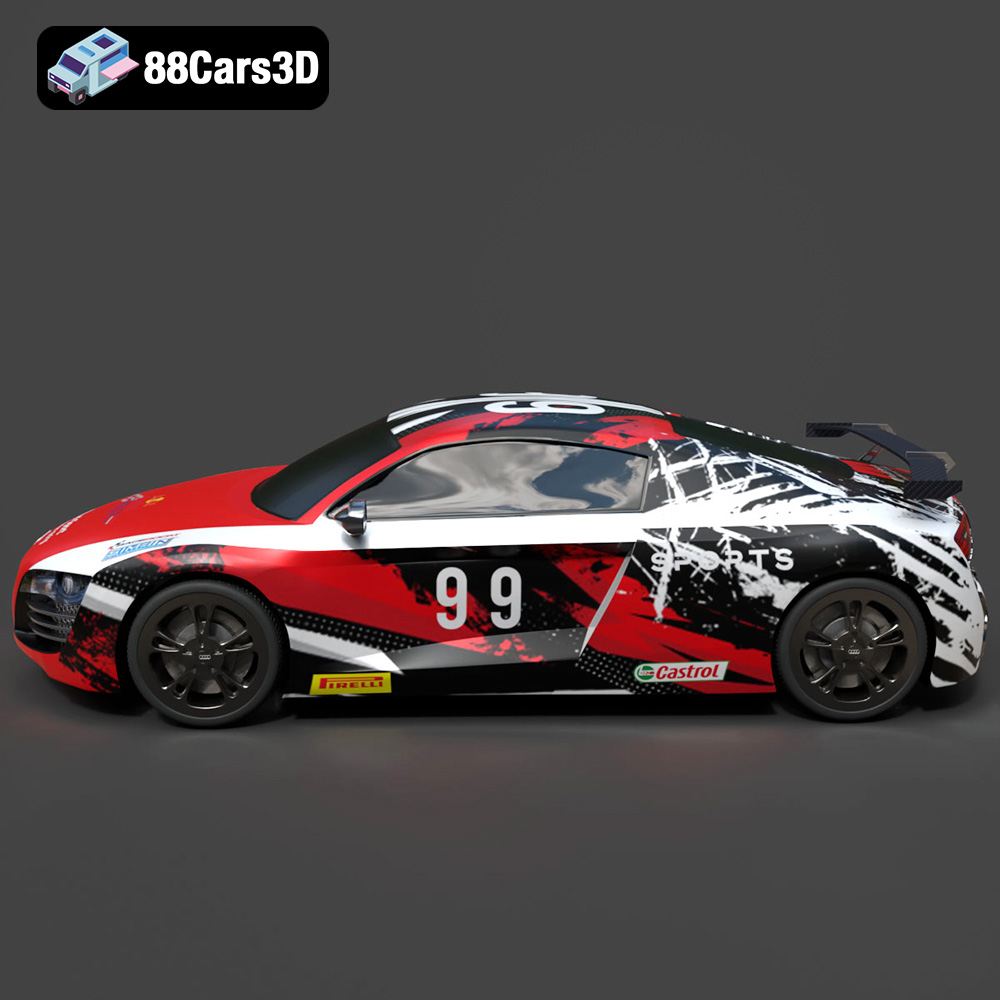
The 2008 Audi R8 is celebrated for its distinctive design, and this 3D model meticulously reproduces every iconic feature. From the aggressive stance and the instantly recognizable contrasting side blades to the signature LED daytime running lights, every curve and contour is accurately rendered. A true highlight is the breathtaking visible engine bay, showcasing the detailed 4.2L V8 mid-engine block through the rear glass hatch – a feature that makes the R8 so unique. The quad exhaust system, aggressive rear diffuser, and intricate taillight housings further enhance the exterior realism. Moving inside, the cockpit features deeply contoured sport seats with accurate stitching, a signature flat-bottomed sport steering wheel, and a driver-focused dual-cowl instrument cluster. Even intricate control details, including the iconic gated manual shifter and climate controls, are present, making it optimized for first-person perspectives in gaming and highly detailed interior renders.
Beyond static beauty, the Audi R8 2008 3D Model is engineered for dynamic applications. Its accurate frame geometry and proportions are built to real-world scale, ensuring authenticity in simulations and visualizations. Crucially, it features separate wheels, suspension components, and steering elements, each with properly set pivot points. This thoughtful design allows for realistic animation of steering, wheel rotation, and suspension travel, essential for racing simulators, cinematic sequences, and interactive configurators. The high-resolution multi-spoke alloy wheels, massive brake calipers, and cross-drilled rotors are not just visual details; they are integrated into the model’s animation-ready structure, providing a robust foundation for complex rigging and dynamic simulations.
A superior 3D car model is more than just a collection of polygons; it’s a foundational asset that drives professional production pipelines across various industries. The Audi R8 2008 3D Model’s comprehensive file format support and optimized topology make it an incredibly versatile tool for designers, artists, and developers working in diverse environments.
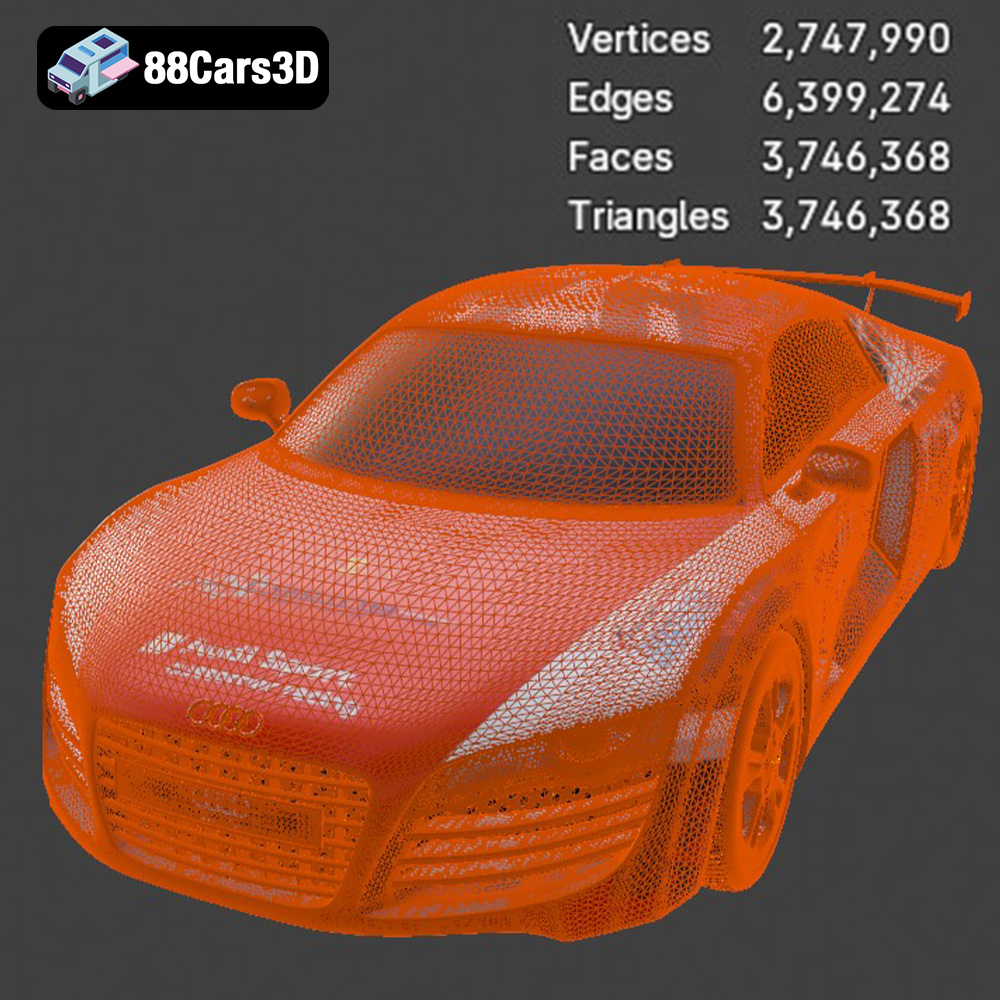
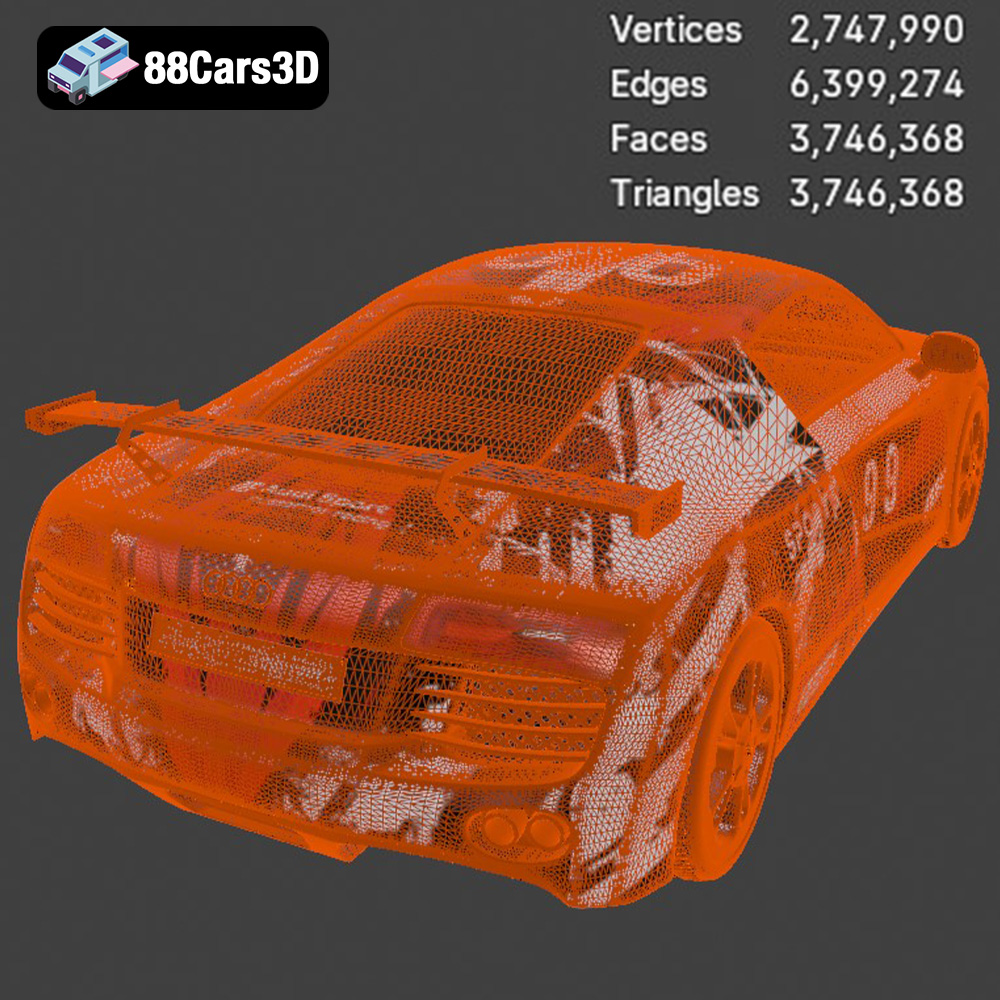
For high-end architectural visualizations, automotive advertising, or cinematic sequences, 3ds Max remains a powerhouse. Utilizing the .max file provided, artists gain full access to the model’s original structure, allowing for seamless integration with rendering engines like V-Ray or Corona Renderer. The process typically involves importing the model, applying or refining physically based rendering (PBR) materials to simulate realistic paint, glass, metal, and leather, then setting up sophisticated lighting environments. This might include studio HDRIs for product shots or complex exterior lighting rigs for environmental renders. The high-definition topology of 3,746,368 triangles in the Audi R8 model ensures that even extreme close-ups reveal impeccable detail, from the subtle reflections on the paintwork to the intricate textures of the interior upholstery. Proper UV mapping is critical here, allowing for precise texture application without stretching or distortion, which is well-handled in a model of this caliber.
In game development, balancing visual fidelity with real-time performance is a constant challenge. The Audi R8 2008 3D Model, described as “Game-Ready & Optimized,” strikes this balance perfectly. Its high-definition triangle count is suitable for modern real-time engines like Unreal Engine and Unity, particularly for hero vehicles or close-up shots in high-end racing titles or open-world games. For optimal performance across various platforms, developers would typically generate Levels of Detail (LODs) from this high-poly base. The .fbx and .unreal formats are ideal here, preserving crucial animation data, pivot points, and material assignments upon import. Developers can then integrate the model into their game physics systems, set up advanced PBR materials within the engine, and utilize the separate animated components (wheels, suspension, steering) for dynamic gameplay, allowing for realistic driving mechanics and visual feedback.
Blender’s versatility makes it a favorite for indie developers, small studios, and individual artists. The .blend file for the Audi R8 2008 3D Model provides a perfect starting point for extensive customization. Artists can easily modify body colors, experiment with different material finishes (matte, gloss, metallic), or even adapt the model for unique scene requirements. Blender’s robust toolset allows for advanced texture painting, procedural material generation, and even creating custom liveries. For those looking to integrate the model into a custom animation or a smaller game project, Blender offers the flexibility to retopologize parts for extreme optimization, re-rig for specific animation styles, or generate custom render passes for compositing, all while retaining access to the original high-fidelity asset.
The utility of a meticulously crafted 3D car model extends far beyond static images. The Audi R8 2008 3D Model is designed to be a multi-functional asset, ready for integration into interactive, immersive, and even physical productions.
For racing simulators and open-world games, vehicle authenticity is paramount to player immersion. The Audi R8 2008 3D Model, with its game-ready optimization and high-definition detail (3,746,368 triangles), offers a fantastic balance. Its real-world scale accuracy and properly set pivot points for steering and suspension are critical for accurate physics simulation. Imagine a player speeding through a digital landscape, the detailed cockpit rendering perfectly in first-person view, the wheels and suspension reacting realistically to every bump and turn. This level of detail, combined with optimized geometry, ensures that the car not only looks stunning but also behaves credibly within the game engine, contributing to an unparalleled driving experience. The model’s quality means less time spent on optimization and more time focused on gameplay mechanics and creative level design.
Augmented Reality (AR) and Virtual Reality (VR) are transforming how we interact with products. For automotive brands, virtual showrooms and configurators offer unparalleled opportunities for engagement. The Audi R8 2008 3D Model, particularly in its .glb format, is perfectly suited for these immersive applications. The .glb format is optimized for quick loading and efficient rendering on AR/VR platforms, allowing users to explore the R8 in a virtual space, walk around it, view its interior, or even place it in their real-world environment via AR. The high fidelity allows for accurate visual representation, giving potential customers a true sense of the vehicle’s presence and details before ever seeing a physical model. This capability opens doors for innovative marketing campaigns and interactive product presentations.
The ability to convert a digital model into a tangible object is one of the most exciting applications of 3D technology. The Audi R8 2008 3D Model’s inclusion of an .stl file specifically caters to 3D printing enthusiasts and professionals. While digital, the model is designed with structural integrity in mind, allowing for successful physical reproduction. The product description provides crucial 3D print settings: recommended scales (1:12, 1:18, 1:24), layer height (0.04–0.12 mm, with resin printing recommended for fine details), wall thickness, infill, and specific support requirements for delicate parts. Printing the frame angled enhances structural integrity, and printing wheels separately allows for greater detail and easier post-processing. After printing, hobbyists can sand, prime, and paint their physical R8 model with authentic factory colors and metallic finishes, creating a bespoke collectible straight from the digital realm.
Achieving a balance between breathtaking visual realism and efficient performance is the hallmark of a truly professional 3D asset. The Audi R8 2008 3D Model embodies this principle, making it suitable for a wide range of demanding applications.
The model boasts a high-definition topology of 3,746,368 triangles. While this is a substantial count, it’s a deliberate choice to ensure unparalleled visual fidelity for close-up rendering and cinematic shots. For real-time applications like games or AR/VR, where performance is critical, this high-poly model serves as an excellent master asset. Developers would typically generate multiple Levels of Detail (LODs) from this base. LODs are progressively lower-polygon versions of the model that swap in as the object moves further from the camera, significantly reducing the computational load without a noticeable drop in visual quality. The clean edge flow and structural optimization of the original high-poly model make this LOD generation process much more efficient and effective, ensuring smooth transitions and consistent visual integrity across distances.
Proper UV mapping is as crucial as the geometry itself. UVs (texture coordinates) dictate how 2D textures are wrapped onto the 3D surface, and a well-unwrapped model is essential for applying detailed PBR (Physically Based Rendering) materials. The Audi R8 model likely comes with clean, organized UVs, allowing for the application of high-resolution textures for paint, carbon fiber, leather, glass, and metal. The customization options mentioned – changing body/tank colors, modifying tire textures, adjusting material finishes – are all facilitated by robust UV mapping and a well-structured material system. This allows artists to effortlessly swap out textures or tweak material parameters to achieve different looks, from factory-fresh gloss to a rugged, race-worn matte finish, without having to redo the underlying mesh.
Accuracy in 3D modeling goes beyond visual appeal; it’s about adherence to real-world dimensions and physical properties. The Audi R8 2008 3D Model is built to real-world scale accuracy, based on the actual vehicle chassis. This seemingly minor detail is profoundly important for applications involving physics simulations, architectural visualizations, and engineering analysis. In game development, accurate scale is vital for realistic collision detection and vehicle handling. In AR, it ensures the virtual car appears correctly sized in a real environment. For simulations, precise dimensions directly influence how the model interacts with virtual forces like gravity, drag, and impacts, leading to more credible and immersive experiences. The accurate suspension geometry and ride height further contribute to this realism, providing a solid foundation for dynamic interactions.
As technology continues to advance, the role of high-quality 3D car models in various industries is only set to expand. They are not just tools for today but foundational assets for tomorrow’s innovations.
The evolution of real-time rendering, cloud computing, and advanced AI-driven design tools is continually pushing the boundaries of what’s possible with 3D assets. Expect to see even more sophisticated applications, from hyper-realistic virtual test drives that incorporate haptic feedback to generative design processes that leverage existing high-fidelity models. The demand for detailed, optimized, and versatile 3D car models will only intensify, making assets like the Audi R8 2008 3D Model indispensable for studios and individual creators striving to stay at the forefront of automotive visualization and interaction. These models are the building blocks for new forms of digital engagement, brand storytelling, and interactive product experiences.
Marketplaces like 88cars3d.com play a critical role in this evolving landscape by making such high-quality assets accessible to a broader audience. Professional-grade 3D car models, once the exclusive domain of large studios, are now available to indie developers, freelance artists, and even hobbyists. This democratization of high-fidelity assets empowers creators to produce stunning work without the prohibitive time and cost associated with modeling every detail from scratch. By providing models like the Audi R8 2008 3D Model with extensive format support and meticulous optimization, 88cars3d.com significantly lowers the barrier to entry for producing world-class digital content, fostering innovation and creativity across the entire spectrum of 3D production.
The world of 3D modeling is a fusion of art and engineering, where creativity meets technical precision. High-quality 3D car models are at the very heart of this intersection, serving as versatile assets for rendering, game development, AR/VR, and 3D printing. The Audi R8 2008 3D Model, available on 88cars3d.com, stands as a prime example of this excellence, offering unparalleled detail, robust optimization, and broad file format compatibility.
From its meticulously sculpted exterior and detailed interior to its game-ready topology and animation-friendly components, this model is designed to meet the rigorous demands of professional workflows. Understanding the nuances of different 3D file formats, from the native flexibility of .blend and .max to the universal compatibility of .fbx and the web-optimized .glb, ensures that creators can leverage this asset across virtually any platform. Whether you’re crafting a cinematic masterpiece in 3ds Max, building an immersive racing simulator in Unreal Engine, or bringing a physical replica to life with a 3D printer, this Audi R8 model provides the essential foundation.
Investing in a high-fidelity 3D car model from a reputable source like 88cars3d.com not only saves invaluable production time but also elevates the quality of your final output. It’s a strategic decision that empowers creators to focus on their artistic vision and technical execution, secure in the knowledge that their foundational assets are of the highest caliber. Explore the possibilities and drive your projects to new levels of realism and immersion with the Audi R8 2008 3D Model.
The 2008 Audi R8 is a legendary mid-engine sports car that redefined everyday supercar usability. Instantly recognizable by its iconic contrasting side blades, aggressive stance, and signature LED daytime running lights, the R8 seamlessly blends German engineering precision with exotic aesthetics. The model captures the breathtaking visible engine bay, beautifully sculpted aerodynamic curves, and the distinct front grille that made it a modern classic. Boasting a high-definition topology with 3,746,368 triangles, this 3D model offers unparalleled visual fidelity. While highly detailed for close-up rendering and studio shots, it maintains excellent edge flow and structural optimization for high-end gaming, cinematic animations, and immersive AR/VR experiences. Perfect for high-fidelity racing simulators, architectural visualizations, virtual automotive showrooms, and cinematic renders.
$37.50
.2008
.audi
.blend
.fbx
.glb
.max
.obj
.ply
.r8
.rendering
.sports car
.stl
.supercar
.unreal
car-3d-model
game asset
game-ready
high poly
mid-engine
optimized
VR/AR