Get 20% OFF All Premium 3D & STL Models!

In the dynamic world of digital content creation, the demand for highly realistic and optimized 3D car models has never been greater. Whether you’re a game developer crafting an immersive open-world experience, an architect visualizing a bustling urban street scene, or a marketing specialist preparing a cutting-edge AR/VR product showcase, the quality of your automotive assets can make or break the visual integrity of your project. These essential components provide not just visual fidelity but also the critical foundation for engaging interactions and believable simulations.
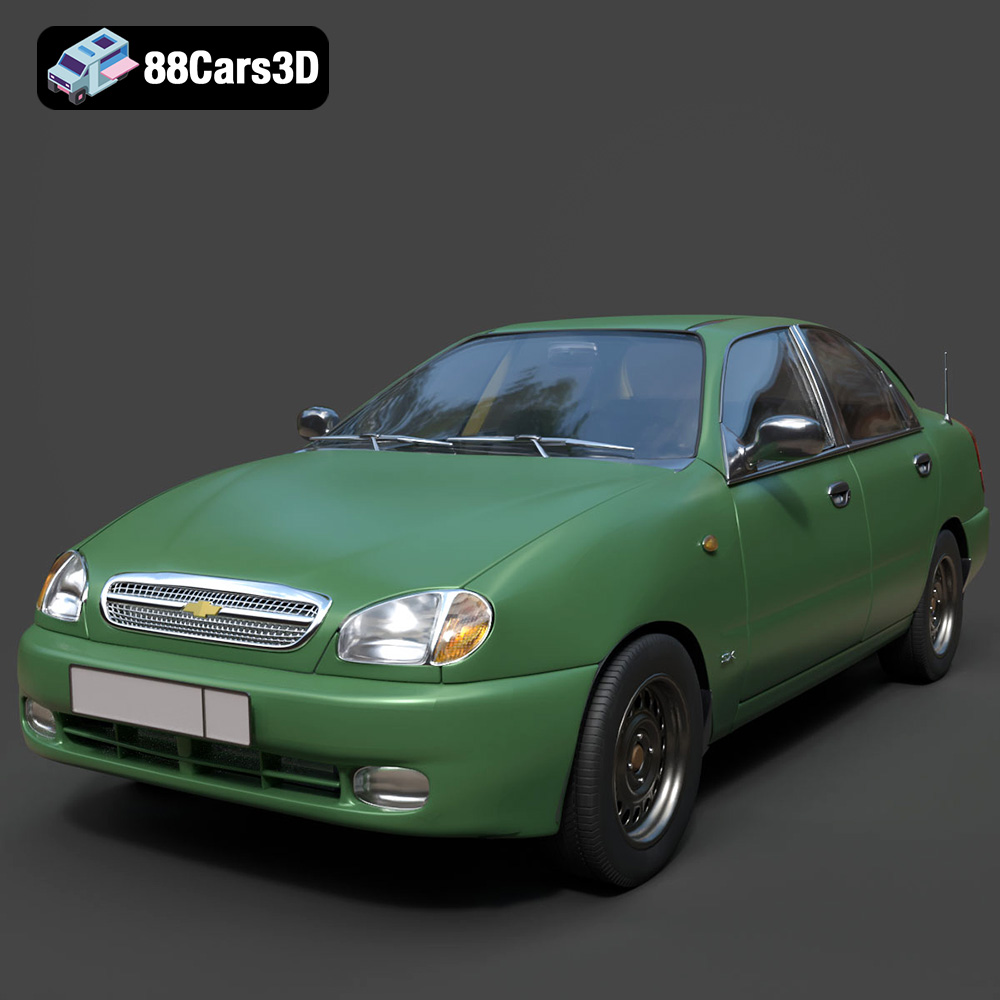
Today, we’re taking a closer look at what goes into creating and utilizing such assets, exemplifying these principles with a versatile offering: the Chevrolet Lanos 2008 3D Model. This particular model isn’t just a faithful recreation of a well-known subcompact sedan; it’s a prime example of an asset meticulously designed to bridge the gap between high-fidelity rendering and real-time performance. Its robust technical specifications and broad file format compatibility make it an invaluable addition to any professional’s toolkit, providing the perfect vehicle (pun intended!) for exploring the intricate details of modern 3D asset integration.
One of the most crucial aspects of working with 3D models, especially complex automotive assets like the Chevrolet Lanos 2008, is understanding the various file formats available. Each format serves a specific purpose, catering to different software, workflows, and output requirements. Selecting the correct format can significantly streamline your production pipeline, optimize performance, and ensure compatibility across diverse platforms. The Chevrolet Lanos 2008 3D Model, available on 88cars3d.com, exemplifies this versatility by offering a comprehensive suite of formats, empowering artists and developers with maximum flexibility.
The .blend file format is Blender’s native project file. It encapsulates an entire Blender scene, including all mesh data, materials, textures, lighting, animation, and even physics simulations. For artists primarily working in Blender, this format offers the most complete and editable version of the 3D model. When you download the Chevrolet Lanos 2008 3D Model in .blend, you gain access to the original project file, allowing for intricate modifications, material adjustments, animation setup, and direct integration into other Blender projects without any loss of data fidelity. It’s ideal for deep customization and leveraging Blender’s powerful ecosystem.
.fbx (Filmbox) is arguably the most widely adopted proprietary file format for 3D data exchange, especially within animation, game development, and real-time pipelines. Developed by Autodesk, it supports not only geometry and materials but also rigging, skinning, animation, and cameras. Its robust nature makes it an excellent choice for transferring animated automotive assets like the Lanos into game engines such like Unreal Engine and Unity, or between different 3D software packages like Maya, 3ds Max, and Cinema 4D. The .fbx version of the Lanos model ensures that all critical elements like separate wheels and suspension components are preserved for animation.
.obj (Wavefront OBJ) is a classic, universally supported geometric data format. While it primarily stores mesh data (vertices, normals, UV coordinates, and faces), it references external .mtl files for material definitions. .obj files are known for their simplicity and broad compatibility across virtually all 3D applications. They are excellent for static mesh transfers where advanced features like animation or complex rigging are not required, or when you need a clean mesh to start a new material and animation setup from scratch in a different software. The .obj format for the Chevrolet Lanos 2008 provides a reliable, clean mesh foundation for any project.
.glb (GL Transmission Format Binary) is an increasingly popular, royalty-free specification for 3D models designed for efficient transmission and loading in web-based applications, AR/VR experiences, and mobile platforms. It bundles geometry, materials, textures, and animation into a single, self-contained binary file, making it highly optimized for web browsers and real-time viewers. For deploying the Chevrolet Lanos 2008 in an AR app or a web configurator, the .glb format is indispensable.
The .unreal file, or more accurately, assets imported and packaged within an Unreal Engine project, refers to the engine-ready state of a model. While not a standalone file format in the traditional sense, providing “unreal” as an included format implies a pre-optimized, engine-ready asset structure, often derived from .fbx, with materials, textures, and collision setups already configured for direct use within Unreal Engine. This significantly reduces setup time for game developers using the Lanos in their projects.
.stl (Stereolithography) is the de-facto standard file format for 3D printing. It represents a 3D object as a series of connected triangles, describing only the surface geometry without color, texture, or material information. The .stl version of the Chevrolet Lanos 2008 3D Model is specifically provided for those looking to bring the digital model into the physical world, enabling hobbyists and professionals to 3D print scale replicas. This format is crucial for manufacturing and rapid prototyping workflows.
.ply (Polygon File Format) is another format primarily used for storing 3D data from 3D scanners, CAD software, or scientific applications. It can store a wider range of properties than .stl, including color, transparency, normals, and texture coordinates, in addition to simple mesh data. While less common for general 3D asset exchange compared to .fbx or .obj, the .ply format offers precision and detail for specific engineering, analysis, or niche visualization tasks.
Finally, the .max file format is the native scene file for Autodesk 3ds Max. Similar to .blend for Blender, it contains the complete 3ds Max scene, including geometry, materials, lighting, animation, and plugins specific to 3ds Max. For users embedded in the 3ds Max ecosystem, the .max version of the Chevrolet Lanos 2008 provides the fullest fidelity and editability within that software, allowing for advanced rendering setups, complex animation sequences, and integration into existing 3ds Max pipelines without conversion complexities.
Creating a high-quality 3D car model, such as the Chevrolet Lanos 2008 offered on 88cars3d.com, involves much more than simply pushing polygons. It’s a meticulous blend of artistic skill, technical precision, and an understanding of how the model will be used across various digital mediums. The goal is to capture not just the aesthetic but the functional essence of the vehicle, ensuring it performs optimally whether viewed up close in a cinematic render or as part of a bustling real-time game environment.
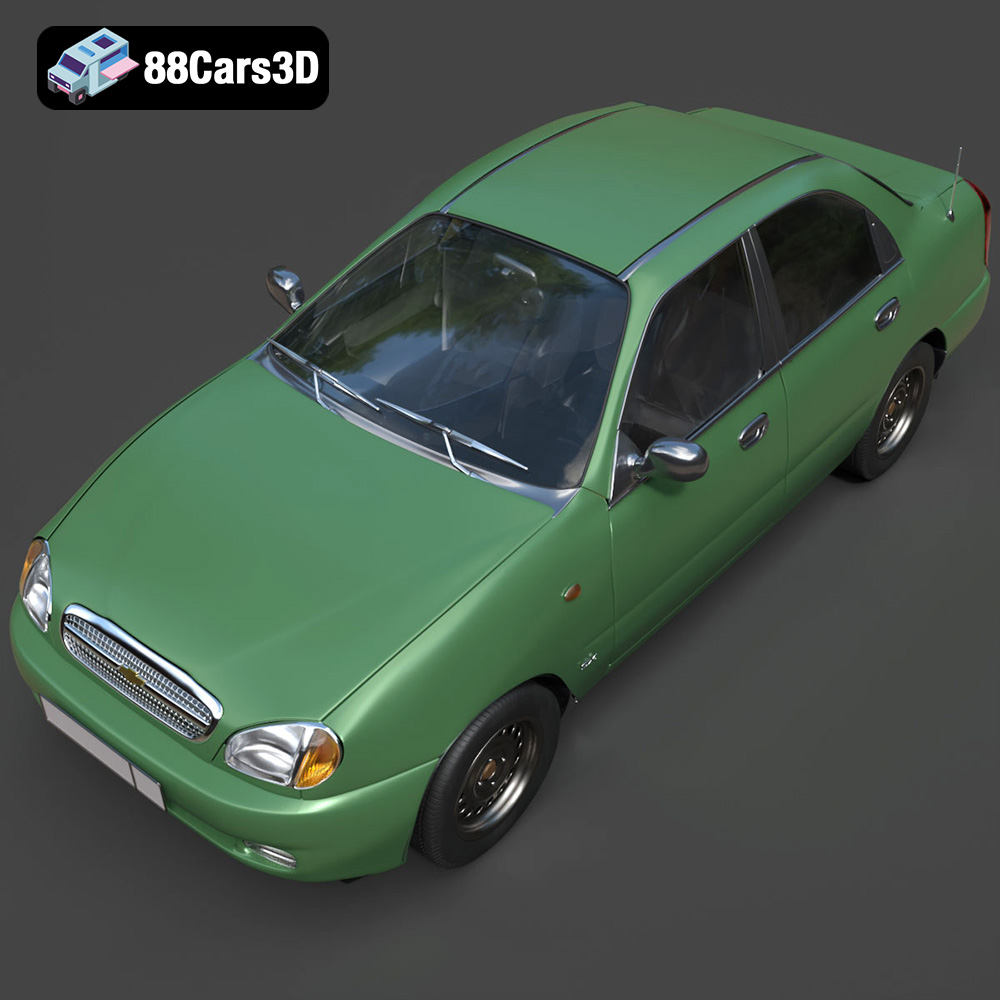
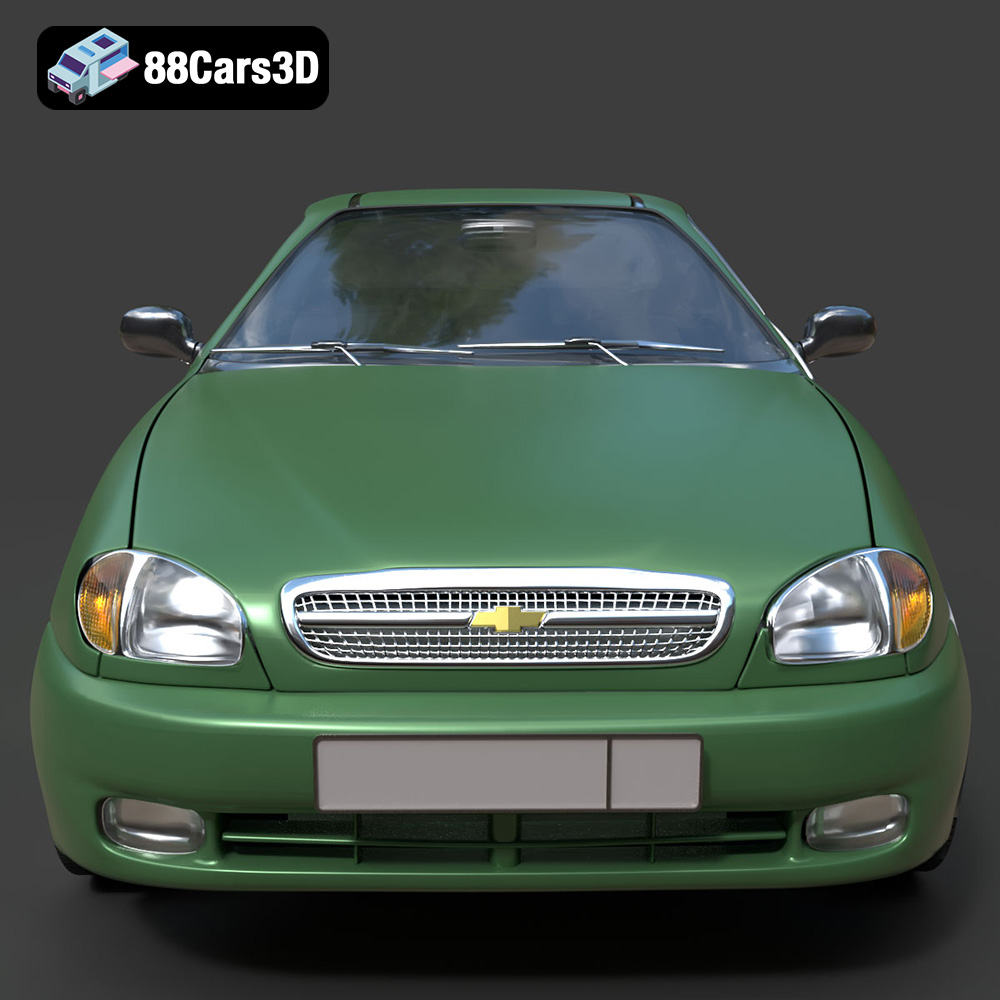
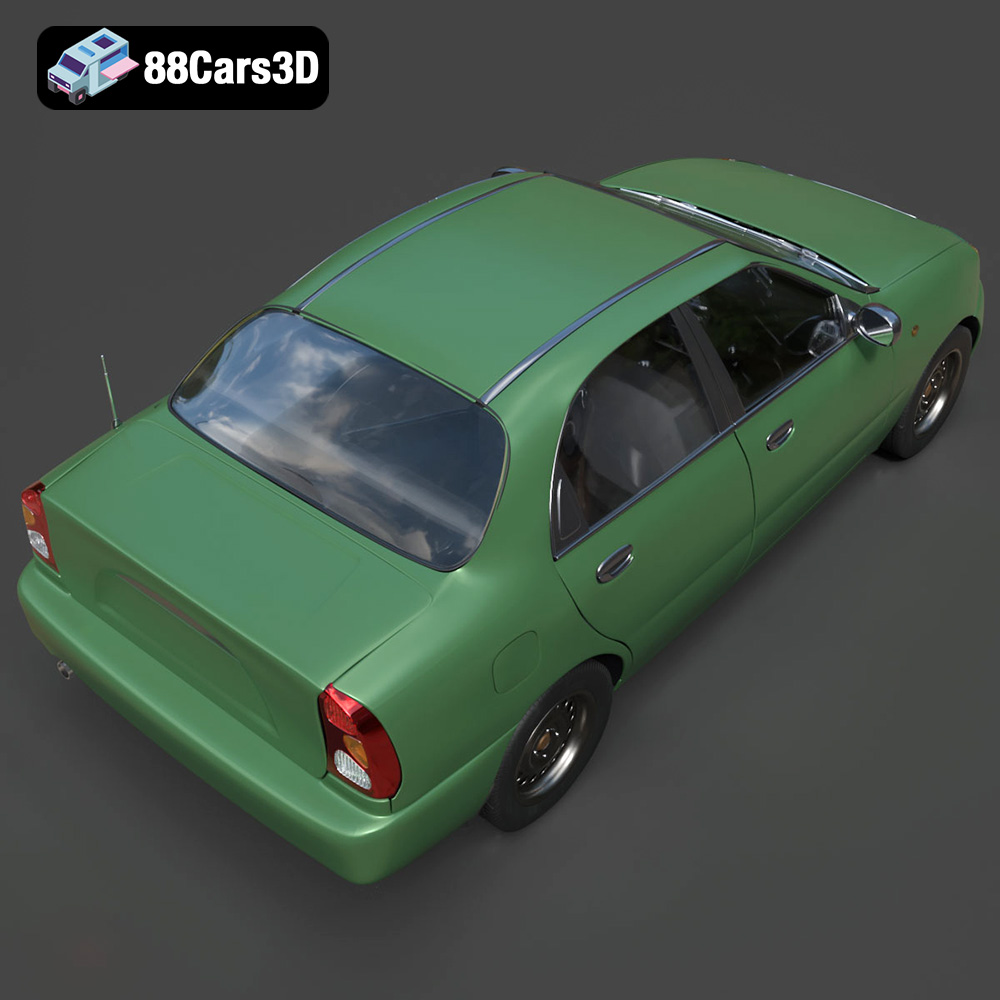
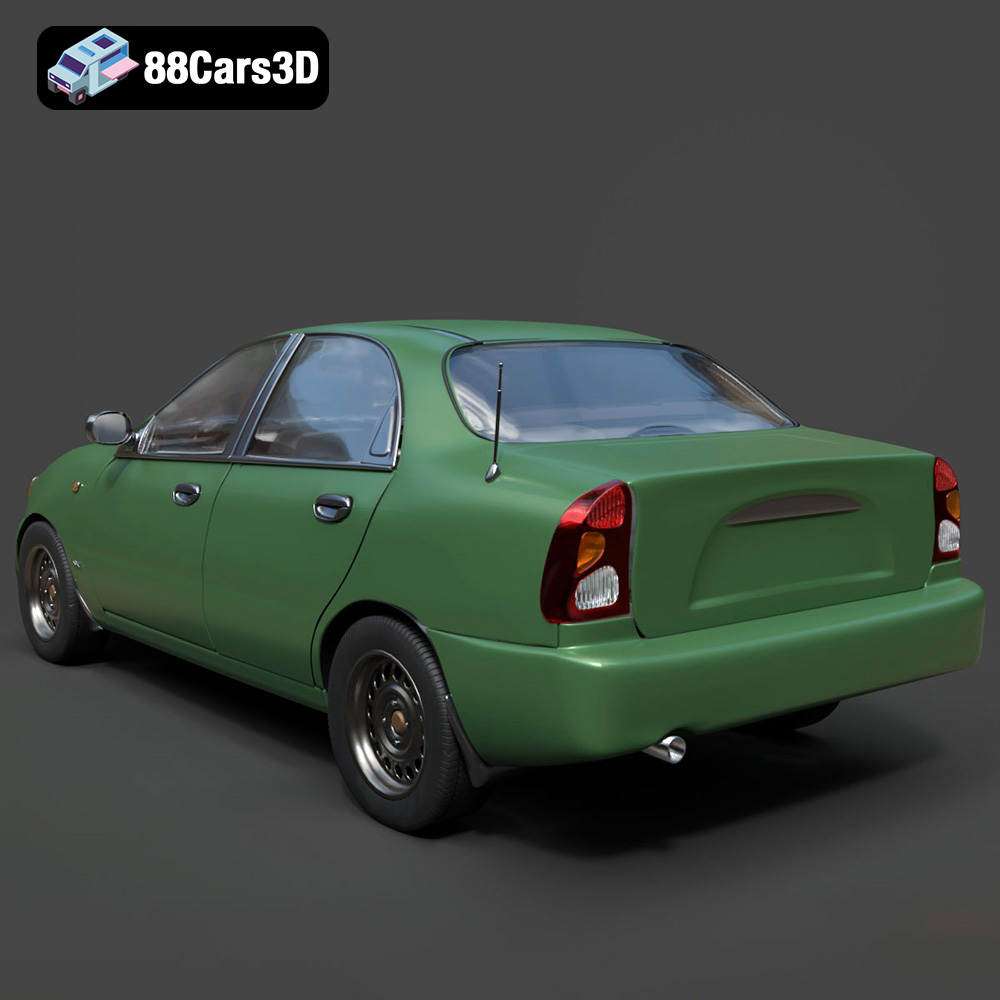
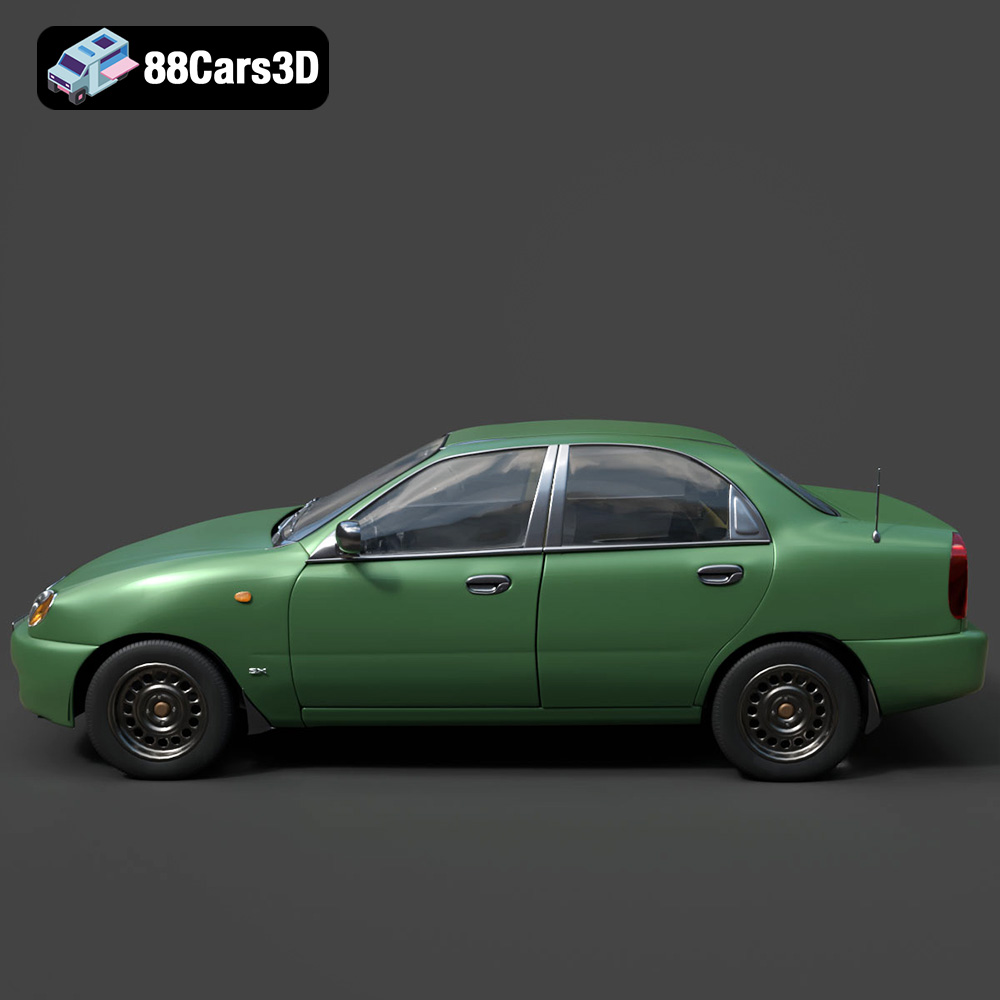
The exterior of any automotive 3D model is often its most scrutinized element. For the Chevrolet Lanos 2008, this means faithfully recreating its smooth aerodynamic lines, the modest front grille, and its classic utilitarian styling. This attention to detail extends to components like authentic headlight and taillight housings with internal reflectors, factory-spec wheels, hubcaps, and realistic tire treads. Even the undercarriage features like the standard factory exhaust system and detailed strut and rear beam suspension are accurately modeled. This granular detail ensures that the model holds up under intense scrutiny, from extreme close-up renders to dynamic camera movements in animations.
While often overlooked in broader scenes, a detailed interior is paramount for first-person perspectives in gaming, virtual tours, or close-up marketing visuals. The Chevrolet Lanos 2008 excels here with its standard cloth seat details, accurate steering wheel and column design, and a detailed instrument cluster complete with speed, tachometer, and fuel gauges. Precise control details, including pedals, the gear shifter, and the center console, further enhance the sense of realism. This optimized geometry for first-person POV makes it an ideal choice for driving simulators and open-world games where players might interact with or directly experience the vehicle’s interior.
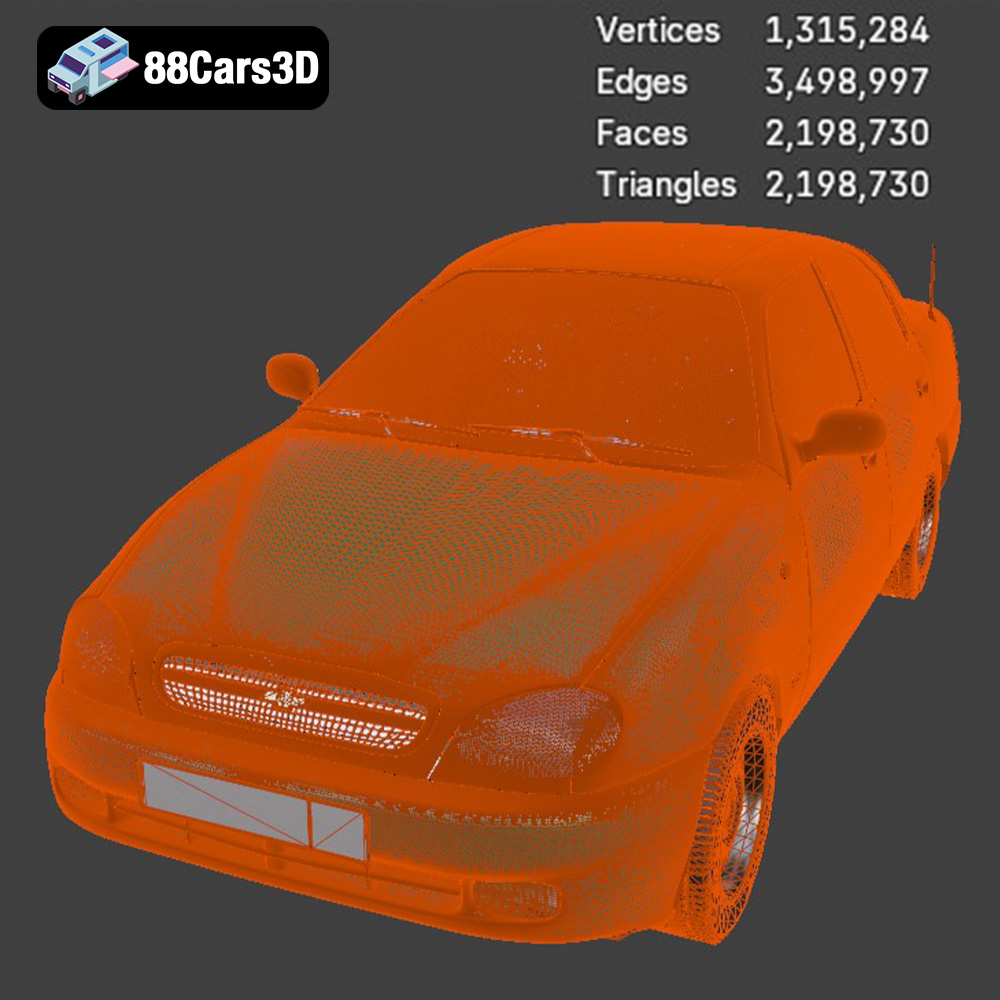
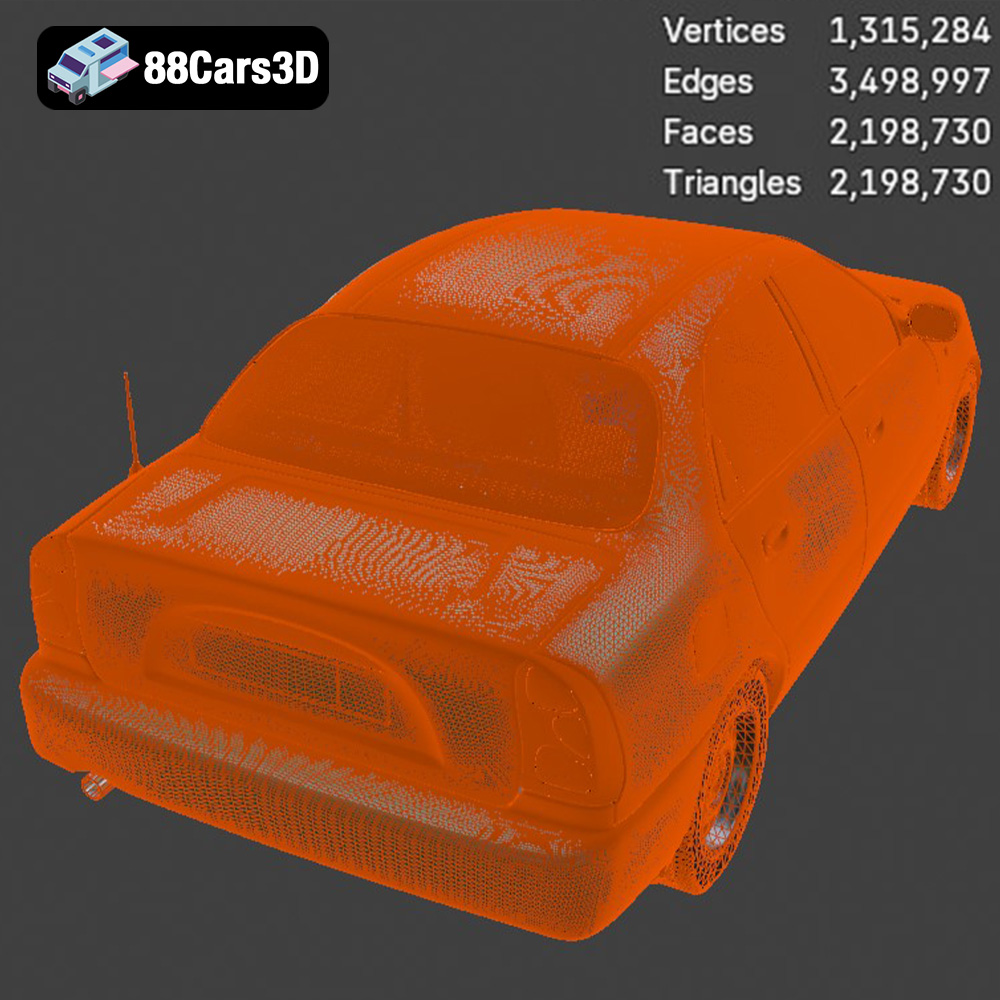
Achieving a balance between visual fidelity and performance is a constant challenge in 3D modeling. The Chevrolet Lanos 2008 3D Model addresses this by boasting a topology of 2,198,730 triangles. This polycount is meticulously chosen to deliver exceptional visual fidelity suitable for close-up renders, capturing every curve and detail, while simultaneously offering structured geometry that performs remarkably well in modern real-time environments like Unreal Engine and Unity. This “game-ready” optimization ensures that the model can be integrated into scenes without bogging down frame rates, a critical factor for interactive applications and large-scale digital worlds.
The true value of a well-crafted 3D model lies in its adaptability across various professional applications. The Chevrolet Lanos 2008 3D Model is designed with this versatility in mind, offering solutions for several key industries that rely on high-quality 3D car models.
For game developers, finding the right balance between visual realism and optimized performance is paramount. The Chevrolet Lanos 2008, with its 2,198,730 triangles, strikes this perfect balance, making it ideal for open-world games, racing titles, and simulators. Its game-ready optimization ensures smooth integration into engines like Unreal Engine and Unity. Furthermore, with separate wheels, suspension, and steering components, the model is built for animation, allowing for realistic driving physics and interactive elements crucial for immersive gameplay. Imagine populating a vast urban environment with authentic traffic or creating a detailed driving simulator where every component moves as it would in reality.
Architectural visualization (ArchViz) and product rendering often benefit from contextual elements that bring scenes to life. Placing a realistic car model, such as the Chevrolet Lanos 2008, in front of a newly designed building or within a lifestyle render instantly adds scale, realism, and a sense of habitation. Its accurate real-world scale and detailed exterior make it an excellent choice for brand campaigns, lifestyle scenes, and studio lighting setups, effectively grounding abstract designs in relatable reality. The ability to easily customize body colors and material finishes further enhances its utility for these diverse visual narratives.
The burgeoning fields of Augmented Reality (AR) and Virtual Reality (VR) demand highly optimized yet visually stunning assets. The Chevrolet Lanos 2008 is perfect for immersive virtual showrooms, configurators, and mobile AR experiences. Its efficient geometry and high visual fidelity, particularly when exported in formats like .glb, ensure smooth performance even on less powerful hardware, while still delivering a compelling visual experience. Imagine a prospective buyer exploring the Lanos in their driveway through an AR app, or a virtual walkthrough where the vehicle is part of the interactive environment.
Beyond its primary applications, the Chevrolet Lanos 2008 3D Model is engineered for broad compatibility, offering a pathway to both hyper-realistic digital renders and tangible physical objects through 3D printing. This versatility underscores the comprehensive nature of premium 3D car models available today.
For high-end rendering, the detailed geometry of the Lanos provides an excellent foundation. Artists working in 3ds Max, Blender, or other rendering suites can leverage advanced material setups to achieve photo-realistic results. This includes adjusting material finishes for matte, gloss, or metallic looks, and accurately simulating car paint shaders, glass reflections, and tire textures. Proper lighting setup, from studio environments to dynamic outdoor scenes, can dramatically enhance the model’s visual impact. The ability to change body colors and modify tire textures (e.g., off-road vs. street variants) directly within your software allows for endless creative freedom, ensuring the Chevrolet Lanos 2008 perfectly fits the mood and aesthetic of any scene.
The design of the Chevrolet Lanos 2008 3D Model specifically includes separate wheels, suspension, and steering components. This thoughtful breakdown is crucial for animation and simulation projects. With proper pivot setup for steering, wheel rotation, and suspension travel, animators can create incredibly realistic driving sequences. This capability extends to complex physics simulations in game engines or dedicated simulation software, allowing for believable vehicle dynamics. Whether it’s a car chase in a cinematic or a precision driving test in a simulator, the Lanos model is engineered for dynamic, interactive engagement.
One of the most exciting alternative applications for 3D models is 3D printing. The Chevrolet Lanos 2008 3D Model is convertible to the .stl format, making it directly suitable for 3D printing, catering to display-scale hobbyists or those creating physical prototypes. The recommended print settings are precise: scales of 1:12, 1:18, or 1:24, with fine layer heights (0.04–0.12 mm, preferably with resin printing for superior detail), and wall thicknesses of 1.2–2.0 mm. Specific instructions for infill (20–30%), support requirements for intricate parts like the exhaust and mirrors, and optimal print orientation (frame angled, wheels separately) ensure successful prints. Post-processing, including sanding, primer, and authentic factory colors with metallic finishes, allows for a truly professional physical model.
In a competitive digital landscape, the distinction between good and great often hinges on the quality of your assets. Investing in premium 3D car models is not merely an expense; it’s a strategic decision that saves invaluable development time and elevates the visual impact of your projects significantly.
The time and expertise required to model a vehicle as detailed and optimized as the Chevrolet Lanos 2008 from scratch are substantial. By sourcing high-quality, pre-built 3D car models from marketplaces like 88cars3d.com, artists and developers can drastically reduce production cycles. These models come game-ready, with proper pivot setups, real-world scale accuracy, and geometry optimized for performance and visual fidelity across multiple platforms. This allows your team to focus on creativity, scene composition, and interactive elements rather than the labor-intensive process of foundational asset creation.
A truly versatile 3D model offers more than just out-of-the-box utility; it provides extensive customization options. The Chevrolet Lanos 2008 3D Model exemplifies this with its capacity for material adjustments (matte, gloss, metallic), color changes (factory or custom), and even tire texture modifications. This adaptability ensures that while you’re leveraging a pre-made asset, you can still infuse it with your unique project’s aesthetic and requirements, making it seamlessly integrate into diverse scenarios without looking generic. Whether you’re aiming for a pristine showroom look or a weathered urban vehicle, the flexibility is built-in.
The world of 3D content creation continues to evolve at an incredible pace, driven by demands for ever-increasing realism and efficiency. High-quality 3D car models are an indispensable component of this evolution, serving as the backbone for everything from blockbuster video games to cutting-edge AR/VR experiences and photo-realistic architectural visualizations. The Chevrolet Lanos 2008 3D Model stands as a testament to the meticulous craftsmanship and technical foresight required in modern asset development. Its comprehensive file format support, from .blend and .max for intricate software-specific workflows to .fbx and .glb for universal compatibility and real-time deployment, ensures it’s ready for any challenge. Its detailed interior and exterior, coupled with optimized geometry, make it a versatile choice for professionals across multiple industries.
Ultimately, choosing expertly crafted assets like the Chevrolet Lanos 2008 3D Model from reputable sources like 88cars3d.com empowers creators to achieve stunning results, accelerate their workflows, and bring their digital visions to life with unparalleled realism and efficiency. Whether you’re rendering, animating, or even 3D printing, the right asset can truly drive your project forward.
The Chevrolet Lanos represents the essence of practical, everyday driving. With its straightforward and recognizable subcompact sedan silhouette, this economic vehicle is a staple in many urban landscapes around the world. The model faithfully recreates the smooth aerodynamic lines, signature modest front grille, and classic utilitarian styling that defines the Lanos. This highly detailed 3D model boasts a topology of 2,198,730 triangles, delivering exceptional visual fidelity suitable for close-up renders while offering a structured geometry that performs well in modern environments. Designed with game development, AR/VR, animation, and high-end visualization in mind, it provides a highly realistic automotive asset for any digital project. Perfect for urban street scenes, driving simulators, open-world traffic population, and architectural visualization.
$86.50
.2008
.blend
.chevrolet
.fbx
.glb
.lanos
.max
.obj
.ply
.rendering
.sedan
.stl
.unreal
car-3d-model
compact-car
game asset
game-ready
low-poly
optimized
VR/AR