Get 20% OFF All Premium 3D & STL Models!

In the bustling arteries of our digital worlds, from the sprawling metropolises of open-world games to the tranquil streetscapes of architectural visualizations, transportation plays a pivotal role. The subtle hum of traffic, the dynamic flow of vehicles, and the intricate details of each passing car contribute significantly to the immersion and realism of any scene. For 3D artists, game developers, animators, and architects, the demand for exceptionally detailed and technically robust 3D car models is higher than ever. These aren’t just props; they are integral storytelling elements, demanding meticulous attention to geometry, materials, and optimization.
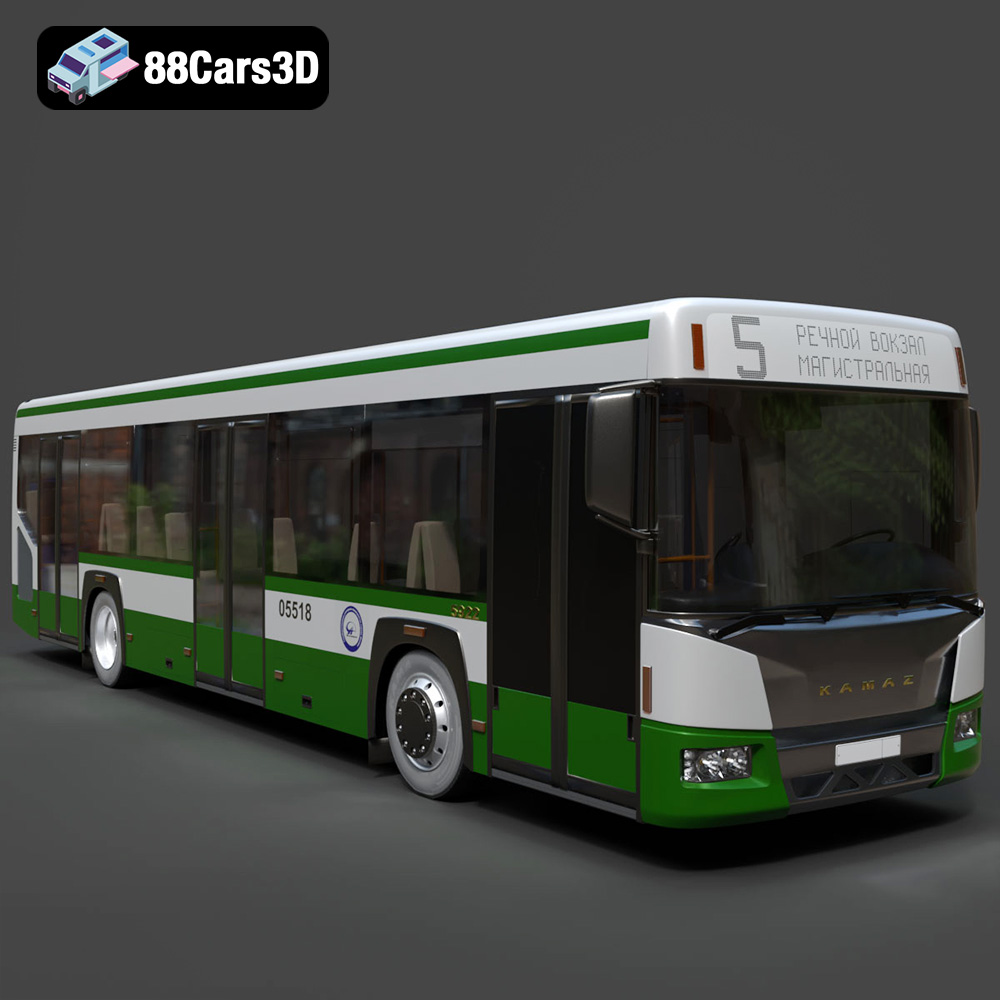
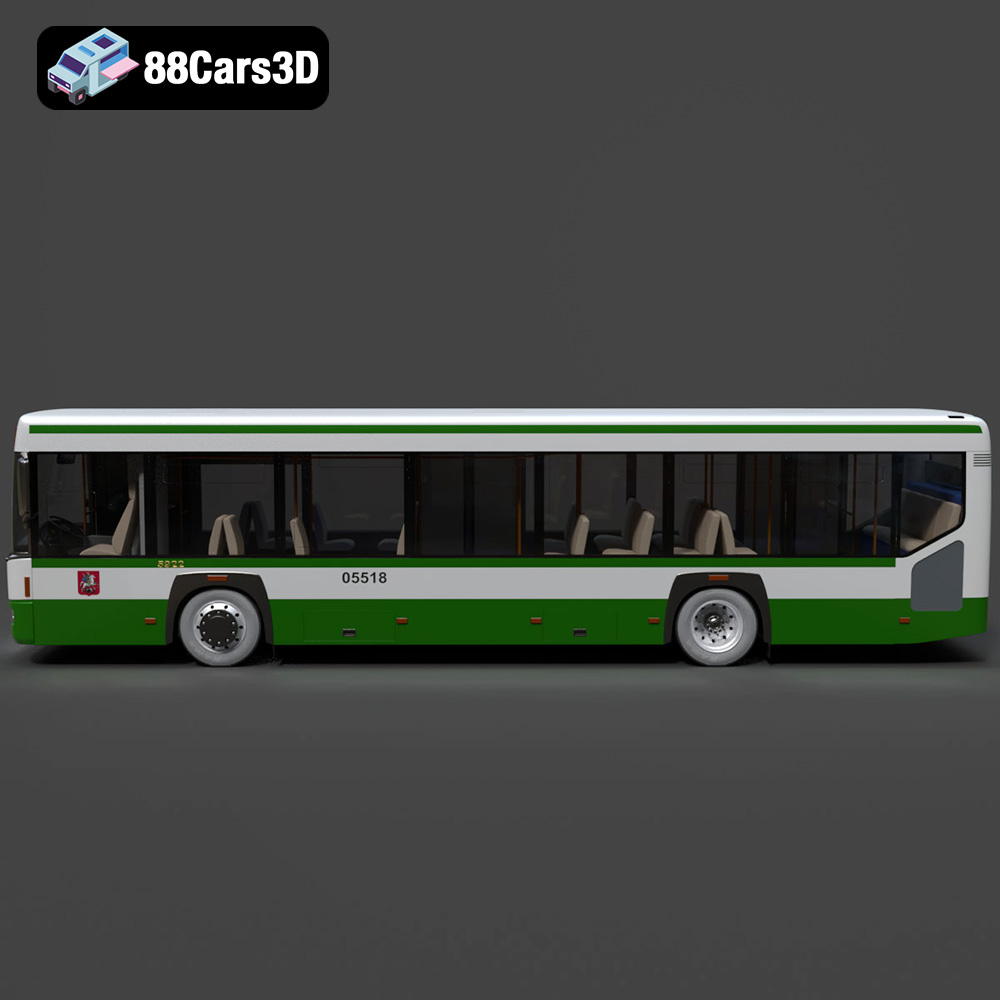
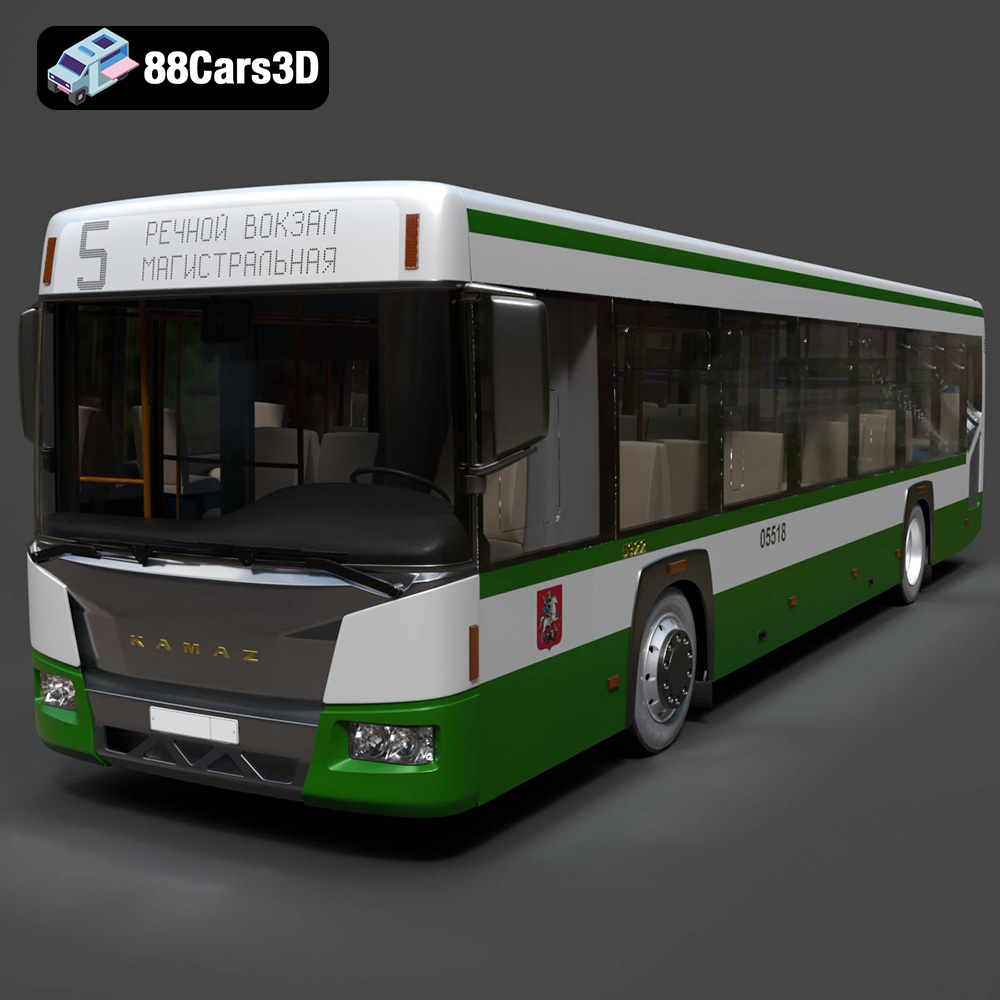
Today, we’re diving deep into an exemplary asset that truly embodies this ethos: the City Bus 08 3D Model. This model isn’t just a representation; it’s a meticulously crafted digital twin, ready to inject unparalleled realism into a diverse array of projects. Its high-fidelity design, robust technical specifications, and broad compatibility make it an indispensable tool for anyone serious about creating compelling digital experiences. From its iconic boxy silhouette optimized for city streets to its detailed pneumatic doors and roof-mounted HVAC systems, every element is designed to elevate your scene.
Creating a convincing 3D vehicle, especially one as complex and ubiquitous as a city bus, is a testament to skilled 3D artistry. It requires a profound understanding of industrial design, engineering principles, and the nuances of how light interacts with materials. The City Bus 08, available at 88cars3d.com, is a prime example of such dedication, delivering an asset that seamlessly blends realism with technical prowess.
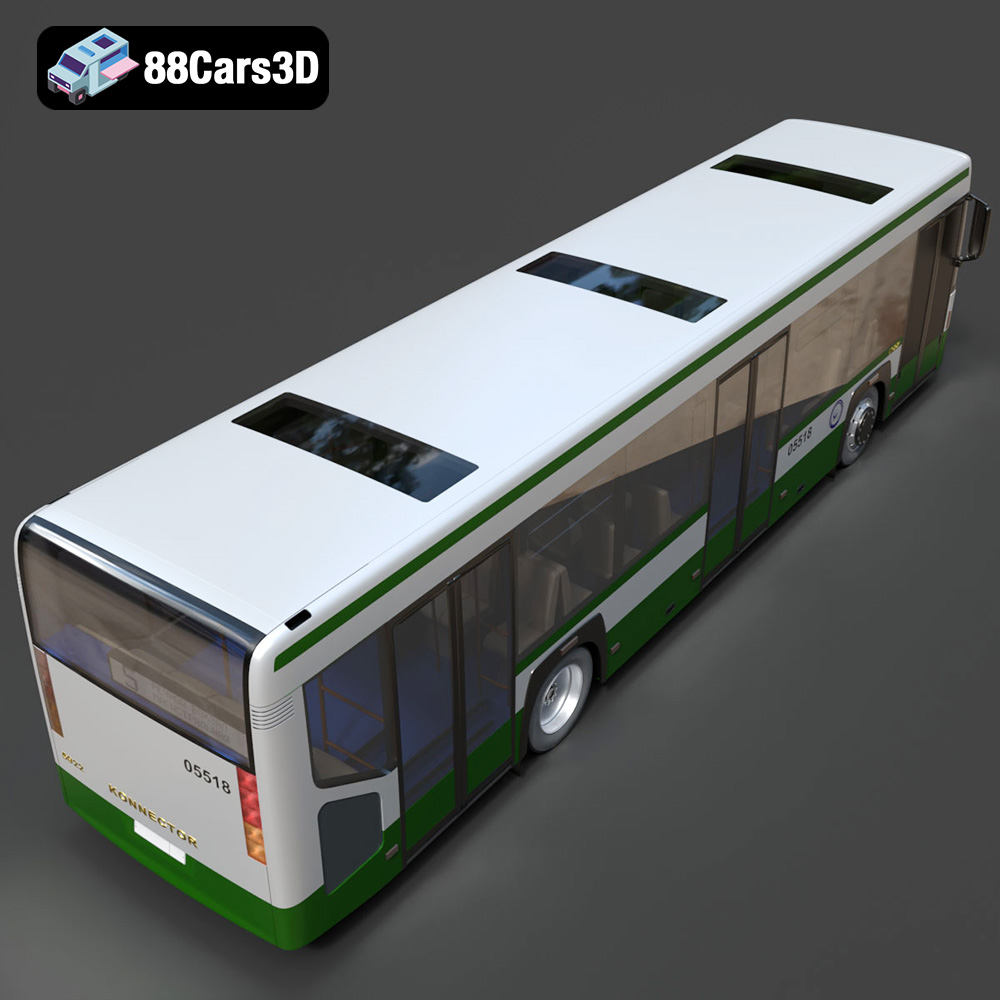
The exterior of a city bus is a symphony of utilitarian design, built for durability and passenger throughput. The City Bus 08 3D Model meticulously captures this functional aesthetic. Its accurate frame geometry and transit proportions immediately convey authenticity. Artists will appreciate the detailed engine compartment and venting grilles, which often go unnoticed in casual observation but are critical for close-up renders and detailed animations. The heavy-duty commercial exhaust and undercarriage systems add another layer of realism, essential for ground-level shots or undercarriage inspections in a simulator.
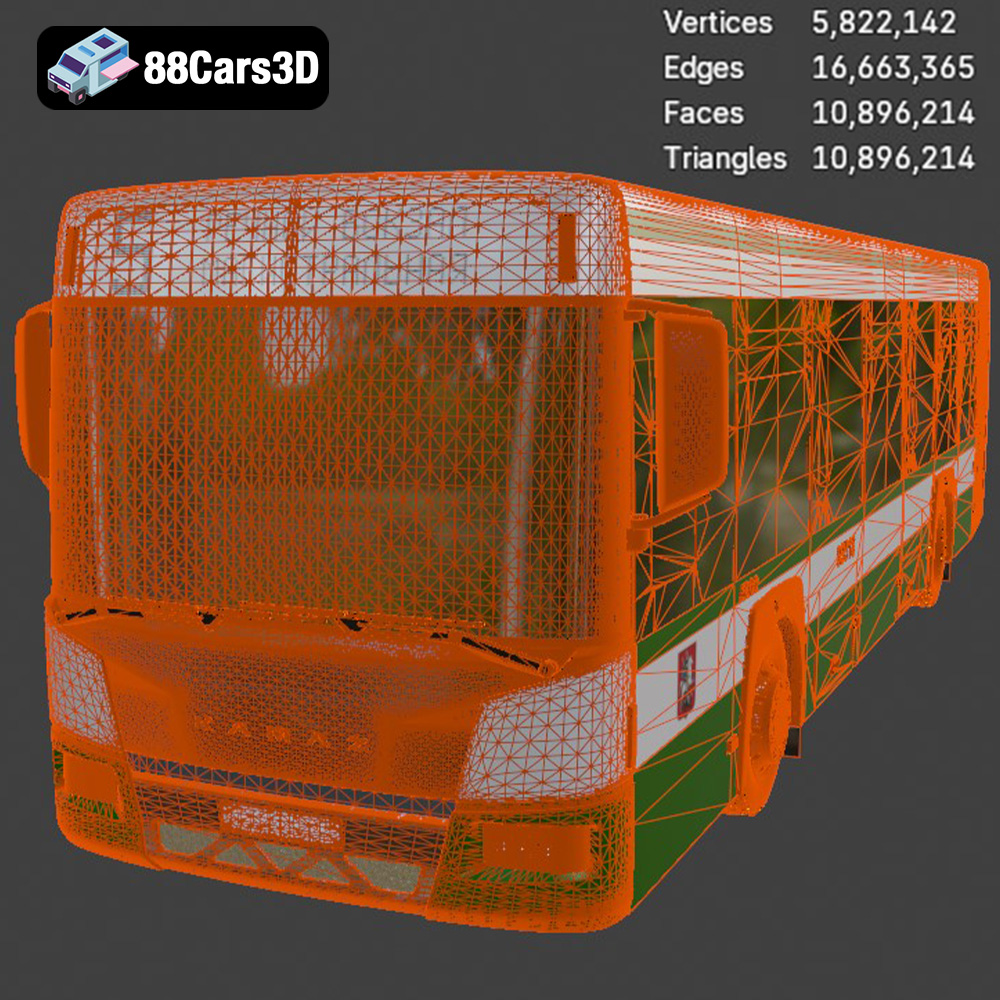
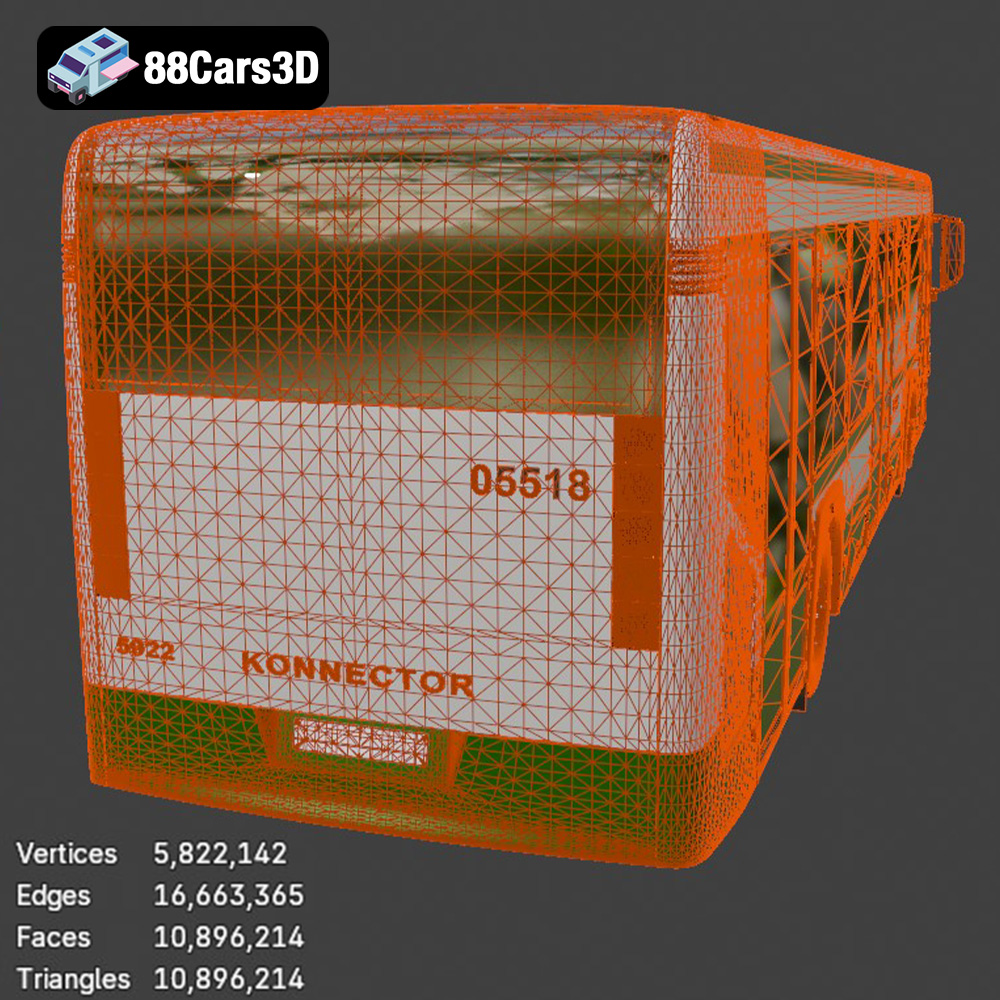
Lighting is crucial, and this model delivers with realistic LED-style headlights, taillights, and clearance markers, ready for dynamic illumination setups. The commercial transit wheels and heavy-duty urban tires are not merely cylindrical shapes; they feature intricate tread patterns and hub details that withstand scrutiny. Furthermore, the inclusion of air suspension and heavy axle details, along with separate wheels, suspension, and steering components, signals a model designed for true animation flexibility. This level of granular detail, contributing to an impressive 10,896,214 triangle count, ensures that the bus looks convincing from any angle, whether it’s a static background asset or the focal point of a cinematic sequence.
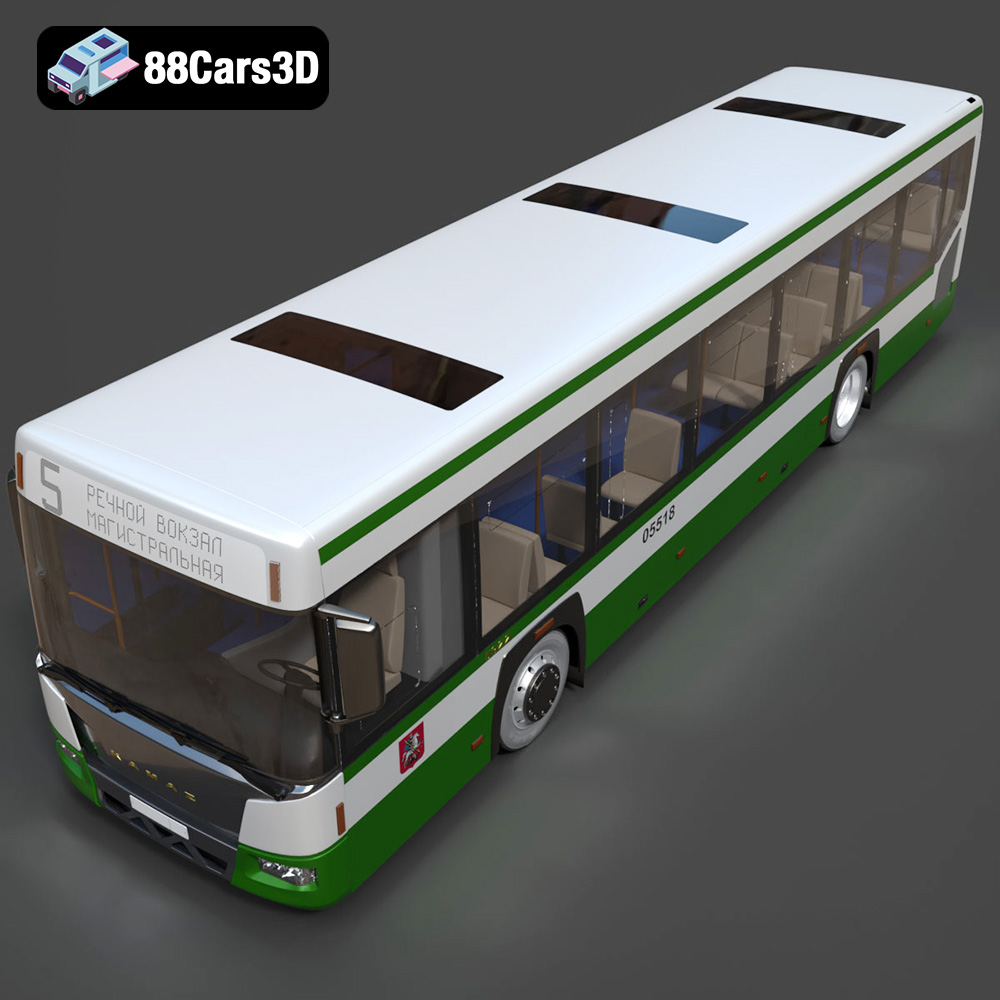
While the exterior draws the eye, the interior often defines the immersive experience, particularly in applications like game development or AR/VR. The City Bus 08 excels here with a detailed passenger seating layout and transit handrails, instantly recognizable to anyone who has ridden public transport. For transit simulator games, the driver’s cabin is paramount, and this model delivers a realistic steering column and dashboard. A comprehensive instrument cluster and ticketing equipment are present, alongside control details such as pneumatic door levers, pedals, and switches. This level of interior optimization is specifically designed for first-person POV in transit simulators, ensuring that players or viewers feel truly embedded within the environment. Such meticulous attention to both exterior and interior makes this one of the most comprehensive 3D car models available.
Navigating the diverse landscape of 3D software and applications means understanding the various file formats that govern how 3D data is stored, shared, and utilized. The City Bus 08 3D Model from 88cars3d.com offers an extensive range of formats, ensuring maximum compatibility and utility across virtually any professional workflow. Each format serves a specific purpose, catering to different stages of production and diverse end-uses.
The `.blend` file format is the native format for Blender, a powerful and increasingly popular open-source 3D creation suite. When you download the City Bus 08 in `.blend` format, you’re not just getting the mesh; you’re receiving a fully editable Blender scene. This includes all the materials, textures, lighting setups, and any associated modifiers or animation data within a single, self-contained file. For artists working primarily in Blender, this means immediate access to the model in its native environment, allowing for effortless customization, material tweaks using Blender’s node editor, and direct integration into ongoing Blender projects. It offers the highest degree of flexibility for those committed to the Blender ecosystem.
`.fbx` (Filmbox) is arguably the most widely used proprietary 3D file format for transferring models, animations, and scenes between different 3D applications and game engines. It’s the go-to format for pipelines involving Unreal Engine, Unity, and other real-time applications because it efficiently stores mesh data, textures, skeletal animation, and PBR (Physically Based Rendering) material properties. The City Bus 08 in `.fbx` format is ideal for game developers who need a robust asset that can be imported directly into their engine, often with materials largely preserved, ready for in-engine shading adjustments and rigging for vehicle dynamics. Its widespread support makes it a critical interoperability format.
`.obj` (Wavefront Object) is a universal, open-standard format recognized by almost every 3D modeling, animation, and rendering application. It’s a simple, text-based format primarily used for storing geometric data—vertices, normals, texture coordinates, and faces. While it doesn’t embed materials directly, it typically references an accompanying `.mtl` (Material Template Library) file that defines basic material properties and texture maps. For the City Bus 08, the `.obj` format provides excellent cross-software compatibility, making it a reliable choice for artists who need to import the model into less common software or when the primary goal is mesh manipulation and re-texturing from scratch.
`.glb` (GL Transmission Format Binary) is an increasingly important format optimized for AR, VR, and web-based 3D applications. It’s a binary version of GLTF, which is designed to be a compact, efficient, and runtime-deliverable format. A `.glb` file is self-contained, embedding all necessary mesh data, textures, and animation into a single file, making it incredibly easy to share and display on the web or in mobile AR/VR experiences without complex external dependencies. For showcasing the City Bus 08 in a virtual showroom or an interactive web configurator, `.glb` offers unparalleled performance and ease of deployment.
`.stl` (Stereolithography) is the standard format for 3D printing. It represents 3D objects as a series of connected triangles (a tessellation of the surface), describing only the surface geometry of a 3D object without any color, texture, or material information. The City Bus 08 3D Model, when converted to `.stl`, becomes a printable blueprint. This format is crucial for hobbyists, engineers, and product designers looking to bring digital models into the physical world. It emphasizes watertight meshes and proper surface normal orientation to ensure a successful print, as detailed in the product’s 3D print settings.
`.ply` (Polygon File Format or Stanford Triangle Format) is often used to store 3D data from 3D scanners, supporting a wider range of properties beyond just geometry, such as color, transparency, normals, and even confidence values per vertex. While less common for direct artistic creation than `.fbx` or `.obj`, its inclusion for the City Bus 08 suggests its potential for specialized applications like CAD, engineering analysis, or detailed reconstruction tasks where precision mesh data is paramount.
The `.unreal` format (often referring to assets packaged specifically for Unreal Engine, not a standalone file extension in the traditional sense, but rather a collection of files optimized for the engine) indicates an asset that has been pre-configured or even exported directly from Unreal Engine’s asset pipeline. For the City Bus 08, this means the model is likely structured with proper scaling, materials, and perhaps even basic collision setups or LODs (Levels of Detail) that are immediately compatible with Unreal Engine projects, streamlining the workflow for game developers aiming for a real-time environment.
`.max` is the native file format for Autodesk 3ds Max, a leading software for 3D modeling, animation, rendering, and compositing. Providing the City Bus 08 in `.max` format gives users full access to the original project file, including all modifiers, lights, cameras, and renderer-specific settings (e.g., V-Ray or Corona if used). This format is essential for professional studios using 3ds Max as their primary DCC (Digital Content Creation) tool, offering complete control over the asset for complex animations, high-end automotive rendering, and detailed scene compositions.
The comprehensive array of file formats for the City Bus 08 highlights its versatility and the foresight of its creators. No matter your preferred software or end application, there’s a format tailored to your needs, minimizing conversion headaches and maximizing workflow efficiency.
When discussing 3D car models, especially those designed for high-end applications, the term “poly count” often comes up. For the City Bus 08, its 10,896,214 triangle count is a significant indicator of its visual fidelity and the specific use cases it targets. This isn’t just a number; it represents a commitment to unparalleled detail, but also necessitates a clear understanding of its implications.
A triangle count exceeding 10 million places the City Bus 08 firmly in the category of ultra-high-definition models. This level of detail is paramount for scenarios where photorealism is the ultimate goal: cinematic rendering, detailed architectural visualizations, and specialized simulation environments. Imagine a close-up shot in an animated film where every rivet, every seam, and every nuanced curve of the bus needs to hold up under intense scrutiny – a high poly count makes this possible without relying heavily on normal maps or complex displacement.
While the product description proudly states “Game-Ready & Optimized,” it’s crucial to understand this in the context of “next-gen engines (Unreal, Unity).” For traditional, lower-spec game development, a 10 million poly asset would be far too heavy for real-time performance. However, for cutting-edge titles running on powerful hardware, or for hero assets in virtual reality experiences where absolute immersion is key, such a high poly count can be leveraged effectively, especially when combined with sophisticated LOD (Level of Detail) systems. The “careful topology” mentioned in the description is vital here, ensuring that despite its density, the mesh is clean, allowing for efficient rendering and potential future retopology if needed for lower-poly versions.
Beyond visual fidelity, technical accuracy is paramount for professional applications. The City Bus 08 boasts real-world scale accuracy, based on actual commercial bus chassis. This is not just an aesthetic choice; it’s a functional one. For architectural visualization, ensuring a vehicle’s scale is correct is fundamental to establishing realistic spatial relationships. In game development and simulation, accurate scaling affects physics, collision detection, and the overall believability of interactions within the environment.
Furthermore, the model’s proper pivot setup for steering, wheel rotation, and suspension travel is a game-changer for animators and simulation developers. Instead of manually guessing pivot points or struggling with complex rigging, these components are already configured for direct manipulation. This facilitates the creation of dynamic, realistic animations, whether the bus is navigating a tight turn in a game or demonstrating its suspension system in a technical presentation. This attention to mechanical detail significantly reduces setup time and enhances the professional quality of any animated sequence.
The true value of a premium 3D asset like the City Bus 08 is realized through its seamless integration into diverse professional workflows. From creating stunning static renders to building interactive digital experiences, its robust design and comprehensive file formats ensure versatility.
For artists specializing in automotive rendering and architectural visualization, the City Bus 08 3D Model offers an unparalleled foundation. Using software like 3ds Max (with the included `.max` file) or Blender (with the `.blend` file), artists can set up intricate scenes with ease. The high polygon count means that even extreme close-ups of the bus’s bodywork, windows, or intricate undercarriage details will hold up without pixelation or loss of form.
The workflow typically involves:
The City Bus 08 becomes a crucial element in creating immersive cityscapes, adding a dynamic and authentic layer to static architectural designs or marketing materials for smart-city campaigns.
The gaming industry continually pushes the boundaries of graphical fidelity, and assets like the City Bus 08 are at the forefront of this evolution. For game developers utilizing Unreal Engine, the inclusion of `.fbx` and `.unreal` formats provides a streamlined path to integration.
The workflow for game development might involve:
The City Bus 08 is precisely the kind of detailed asset that enables next-generation gaming experiences, offering a balance of stunning visuals and the flexibility required for real-time interactivity.
Augmented Reality (AR) and Virtual Reality (VR) applications demand highly optimized and visually rich 3D assets to create truly immersive experiences. The `.glb` format included with the City Bus 08 is specifically tailored for this purpose, offering a compact and web-friendly package.
Here’s how it fits:
The City Bus 08, with its blend of fidelity and optimization, is perfectly poised to enhance these emerging immersive technologies, providing a realistic anchor in virtual and augmented realities.
While the primary use for 3D car models is often digital, the growing accessibility of 3D printing has opened up exciting new avenues for bringing these virtual creations into the physical world. The City Bus 08 3D Model is designed with this potential in mind, offering an `.stl` format that caters directly to the burgeoning community of 3D printing enthusiasts and professionals.
The `.stl` format simplifies the process of translating complex 3D geometry into a language that 3D printers can understand. When you download the City Bus 08 in `.stl`, you are essentially receiving a triangulated mesh ready for slicing and printing. This allows hobbyists, diorama builders, and even prototyping engineers to create tangible representations of this detailed public transit vehicle.
However, moving from a high-fidelity digital model to a successful physical print requires careful consideration of 3D print settings. The product description provides excellent guidance:
This comprehensive guidance demonstrates how the City Bus 08 can transcend its digital origins, offering tangible value for collectors, model makers, and educational purposes.
Even the most meticulously crafted 3D car models benefit from a degree of adaptability. Professional projects often require unique branding, specific visual cues, or environmental variations. The City Bus 08 3D Model provides extensive customization options, empowering artists to tailor the asset to their precise needs without compromising its core quality.
The ability to customize a 3D asset significantly extends its lifespan and utility across multiple projects. For the City Bus 08, these options are particularly valuable for urban-themed productions:
These customization options transform the City Bus 08 from a static asset into a versatile platform for creative expression, ensuring it remains relevant and adaptable to an evolving range of professional demands.
In the complex tapestry of digital content creation, the quality of individual assets often dictates the overall success and immersion of a project. The City Bus 08 3D Model stands as a shining example of what truly high-fidelity, meticulously engineered 3D car models can achieve. From its breathtaking exterior and interior details to its staggering poly count, every aspect has been carefully considered to meet the demanding requirements of modern rendering, game development, AR/VR, and even 3D printing.
Its comprehensive technical specifications, including real-world scale and pre-configured animation pivots, significantly streamline professional workflows in 3ds Max, Blender, Unreal Engine, and beyond. Moreover, the extensive array of included file formats – from `.blend` and `.max` for full editability to `.fbx` and `.unreal` for real-time engines, `.glb` for immersive web experiences, and `.stl` for physical fabrication – ensures that this asset is truly universal.
Whether you are crafting a hyper-realistic cinematic sequence, building the next generation of open-world games, designing an interactive urban visualization, or simply seeking to print a detailed model for your collection, the City Bus 08 offers a robust and flexible solution. Assets of this caliber are not merely tools; they are foundational elements that empower artists and developers to push the boundaries of digital realism. Explore this exceptional model and many other high-quality 3D car models at 88cars3d.com, and elevate your next project to new heights of visual excellence.
The City Bus 08 represents the backbone of modern urban public transportation, featuring a highly realistic transit design, passenger-focused ergonomics, and an iconic boxy silhouette optimized for city streets. This versatile commercial vehicle model highlights key visual elements including large panoramic transit windows, detailed pneumatic doors, roof-mounted HVAC systems, and typical city transport styling cues.
This 3D model boasts an impressive 10,896,214 triangle count, offering unprecedented visual fidelity and ultra-high-definition details. While heavily detailed, its careful topology makes it a standout asset for high-end cinematic rendering, architectural visualization, and specialized simulation environments where photorealism is paramount.
Perfect for urban city street scenes, transit simulator games, cinematic background traffic, and architectural visualizations.
.blend, .fbx, .obj, .glb, .stl, .ply, .unreal, .max
Tags:
city-bus, bus, public-transit, passenger-bus, commercial-vehicle, high-poly, realistic, game-ready, optimized, vehicle-3d-model, game-asset, rendering, vr-ar, blend, fbx, obj, glb, stl, ply, unreal, max
$90.00
.blend
.bus
.fbx
.glb
.max
.obj
.ply
.rendering
.stl
.unreal
city-bus
commercial-vehicle
game asset
game-ready
high poly
optimized
passenger-bus
public-transit
realistic
vehicle-3d-model
VR/AR